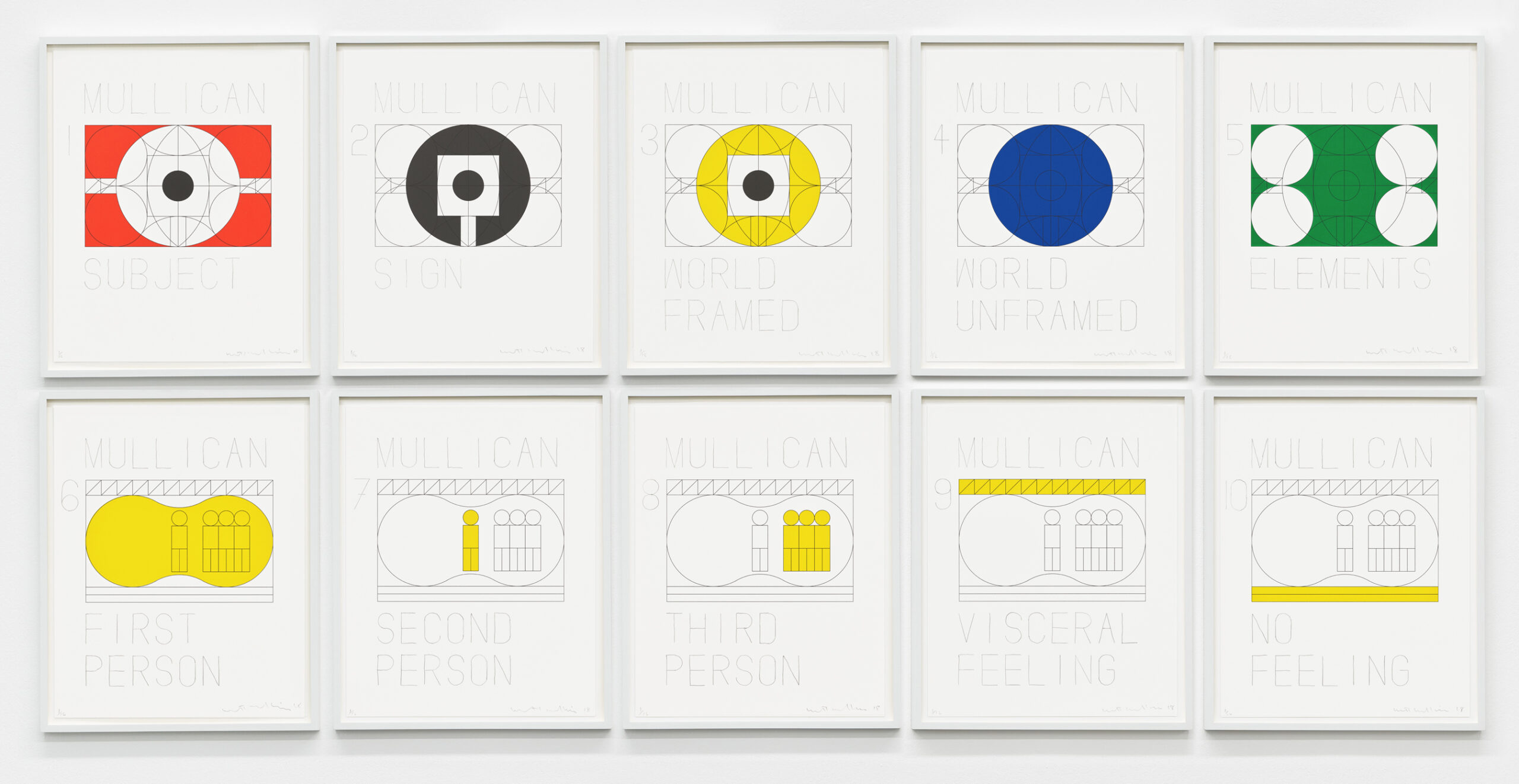
WORLD FRAMED
Zeitgenössische Zeichenkunst der Sammlung Schering Stiftung im Kupferstichkabinett
 | |
|---|---|
| Editor(s) | For the Kupferstichkabinett, Staatliche Museen zu Berlin: Jenny Graser |
| Author(s) | Andreas Schalhorn, Jenny Graser, Sophia Nava |
| Design | Matthias Hübner, possible books |
| Size | 22,5 x 30 cm |
| Cover | Softcover with flaps |
| Pages | 176 |
| Illustrations | 125 |
| Language(s) | German |
| ISBN | 978-3-96912-128-3 |
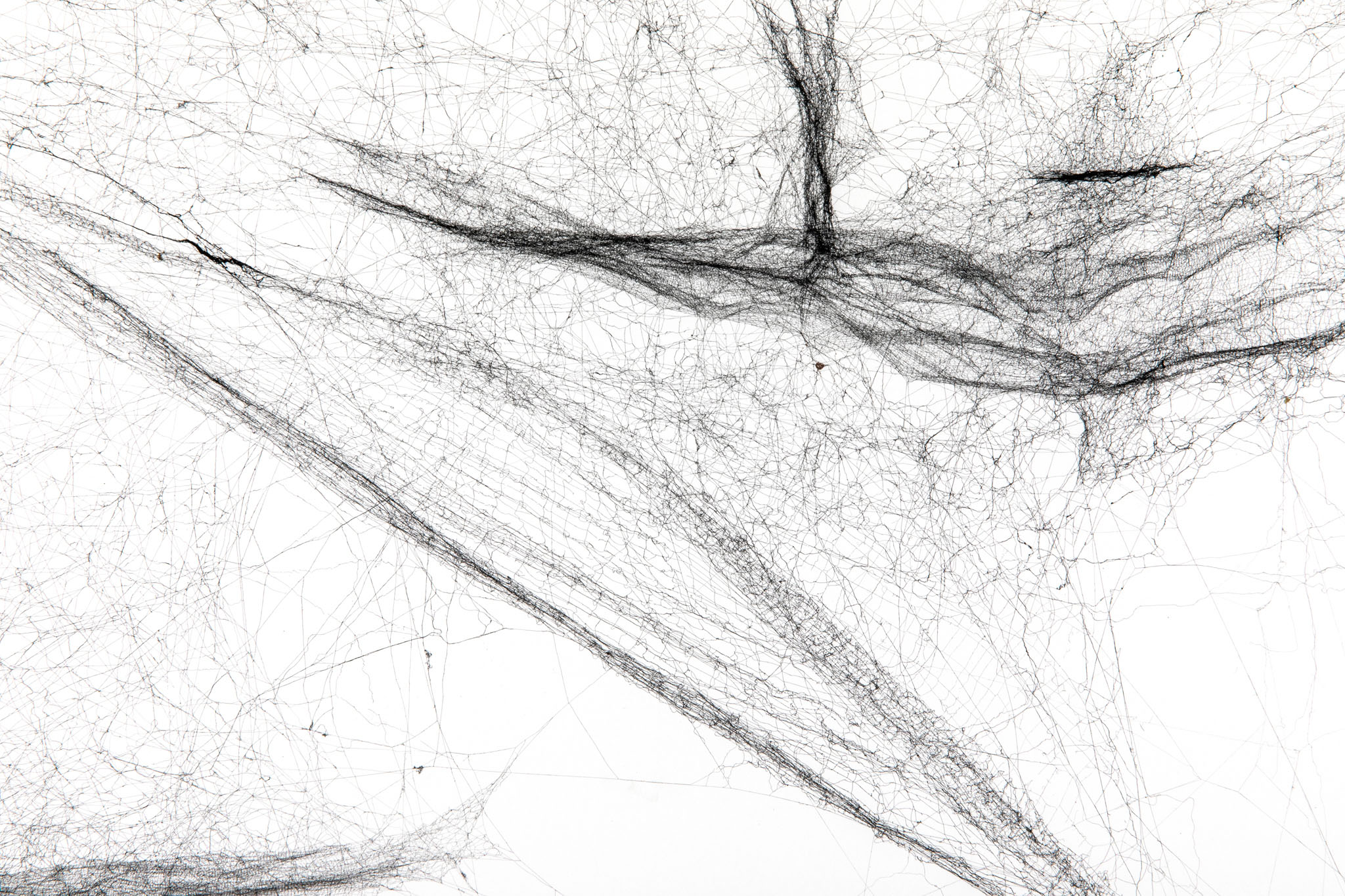
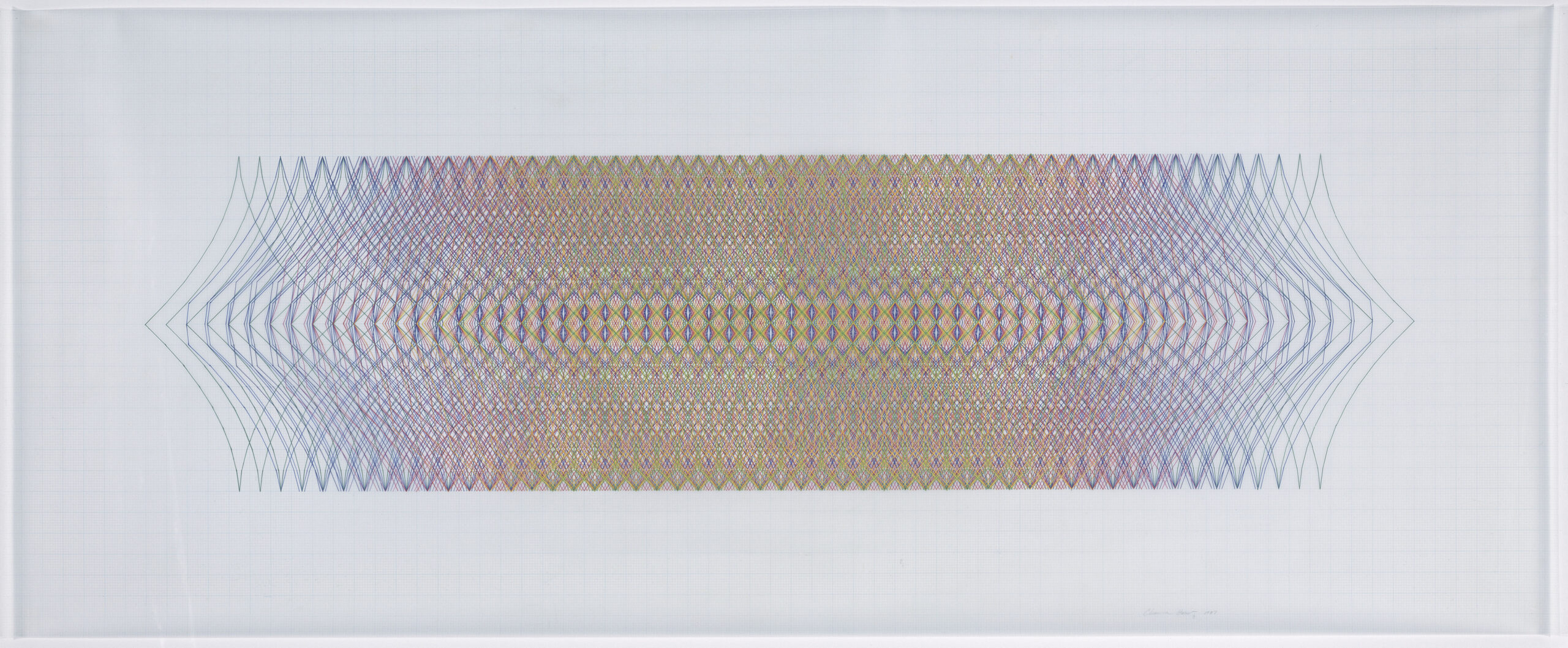
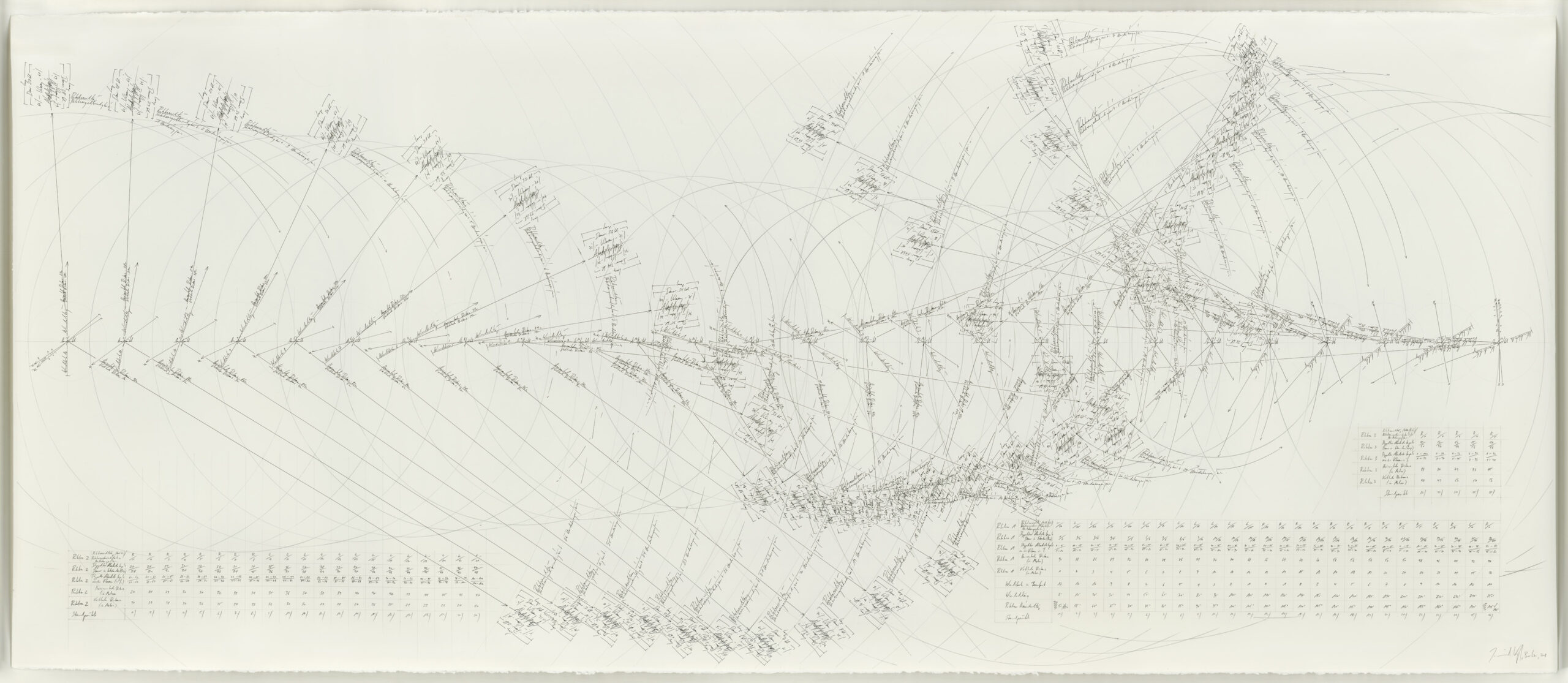
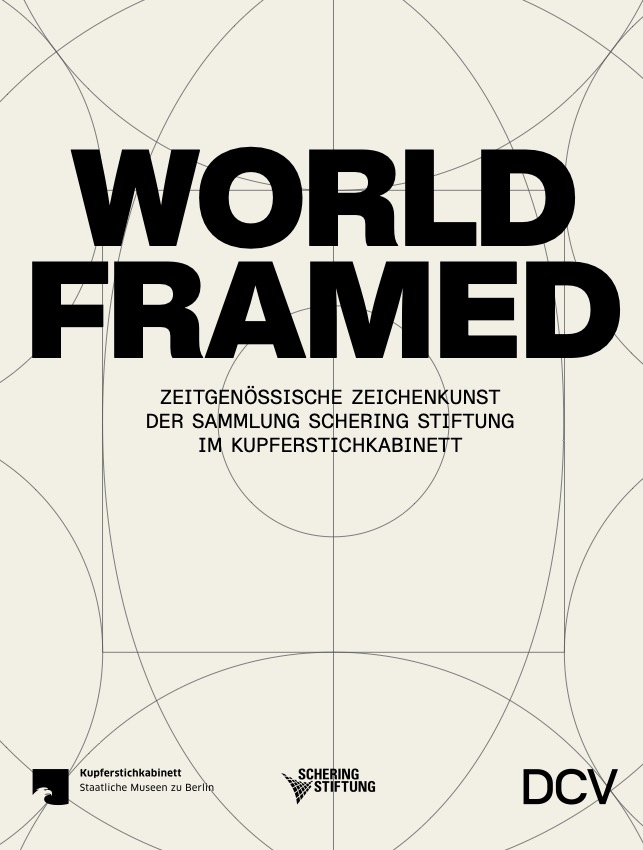
In 2008, the Schering Stiftung began acquiring outstanding contemporary works on paper for the Kupferstichkabinett (Museum of Prints and Drawings) in Berlin. The collection, which has since grown to 130 nonfigurative drawings and a small number of prints, emphasizes the close conjunction of art and science. The holdings also reflect central tendencies in the art of drawing: in addition to exploring the line and its multifaceted formulation, artists shed light on the bounds of their medium and its expansions and undertake forays into inter-media art within drawing. The lavishly designed publication WORLD FRAME—the title is borrowed from a work by the artist Matt Mullican—presents the works acquired thanks to this partnership. It inquires into how artists translate their perceptions of their world into pictures and which contexts and discourses inform those pictures. Which perspectives, which ideas frame the segment of reality an artist observes?
“World Framed,” exhibition, Kupferstichkabinett, Staatliche Museen zu Berlin, July 7–October 8, 2023
More books
-

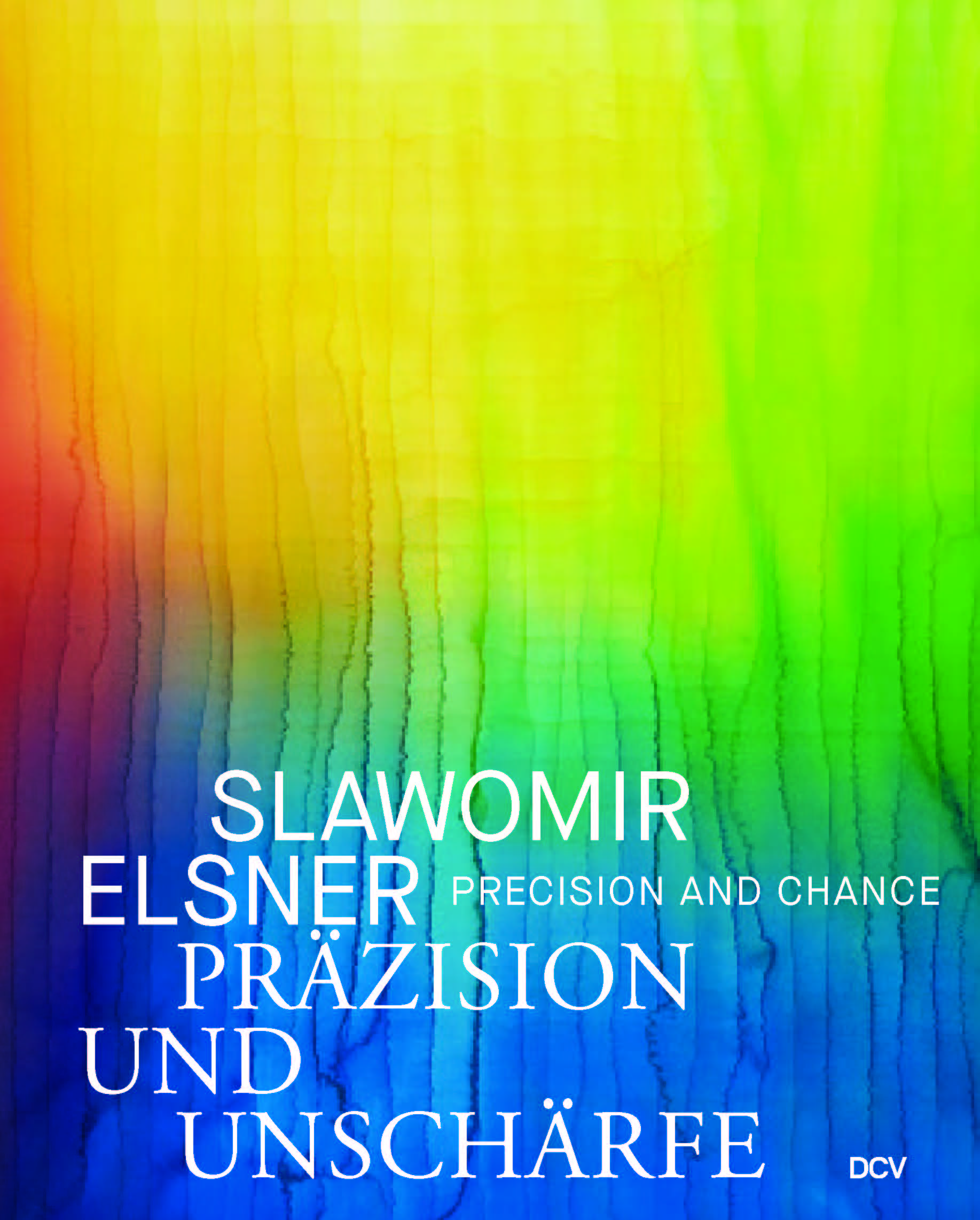
Slawomir Elsner
Precision and Chance38€ Add to cartComplex Processes of Abstraction
International audiences know Sławomir Elsner (b. Wodzisław Śląski, Poland, 1976; lives and works in Berlin) for his naturalistic paintings and abstract watercolors, but it was his brilliantly executed colorful drawings that made him famous. The technique of his work in crayons is as formidable as it is singular and underlies his many adaptations of legendary works from the history of painting that seem blurry but are actually drawn in accurate lines.
More generally, Elsner’s art probes the effect of different media and the stories they tell. He interrogates the images they transport and challenges the consumers to subject their own visual experiences to a similar critical review. Do pictures represent reality or distort it? That is the question that guides his inquiries.
Elsner works almost exclusively in series. What makes this book special is that it includes an index in which eleven of these bodies of work are reproduced in their entirety. The Old Masters series alone comprises 143 works made in the years after 2014. It is complemented by the series Windows on the World (2008–2010), Feuerwerk- und Luftabwehr (2004), Unsere Sonnen (2004–2005), the watercolors of Tagstücke and Nachtstücke (2014–2021), and others.
Many of the works frame accidents, disasters, wars, nuclear tests, or other horrible events. By harnessing the means of art to detach their depiction from a documentary setting, Sławomir Elsner achieves an unrivaled degree of aestheticization; his works are fascinating at first glance, only to fill the beholder with a creeping dread.
-

Sebastian Stöhrer
Residents40€ Add to cartIf there’s an artist whose oeuvre merits the title “creation,” it is Sebastian Stöhrer. Shaping clay—essentially, soil—he molds his “residents”: colorful and friendly-looking sculptural beings, some of them enhanced with sticks or branches reminiscent of limbs. Despite their air of levity and humor, they are not the products of mere momentary inspiration or a whim. It takes decades of dedicated experimentation with the kiln based on the millennia-old art of ceramics as well as expert knowledge of chemistry and physics to create such colors and shapes. Stöhrer has been called an alchemist, and indeed he has made it his mission to vindicate this researcher’s craft, an ancestor of the natural sciences. Alchemy, like Stöhrer’s oeuvre, combines pure rationality with coincidence and a scintilla of magic. The artist plays an intuitive and sensual game with his clay and the virtually incalculable chromaticity of the glazes—chaos, anarchy, and irrepressible urges being an integral dimension of all creation. In Stöhrer’s “residents,” we encounter the embodiments of that creation: likenesses of ourselves and perhaps also heralds of a future more good-natured version.
-

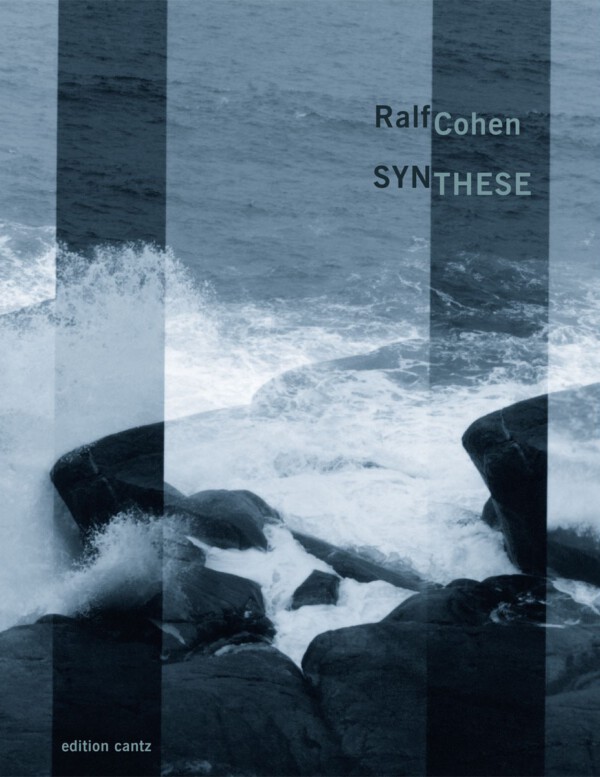
Ralf Cohen
Synthese25€ Add to cartThe First Comprehensive Overview of the Work of the Photo Artist from 1972 to the Present Day
Ralf Cohen (b. 1949, Solingen; lives and works in Karlsruhe) makes use of the entire material complex of photographic image production for his own creative purposes. He works exclusively with analog processes and explores the limits of the medium with a variety of experiments in the darkroom, altering his photographs through solarization, long-term exposure, light/dark reversal, chromatic filtering, and further manual processing. This comprehensive volume presents Cohen’s works, from the high-contrast black-and-white architectural photographs of the early period and the work groups of people in cities from the late 1980s to the latest photographic series with their enigmatic light effects, seemingly glowing planetary surfaces, hails of stars, and fantastical islands. Ralf Cohen’s fascinating cosmos of imagery breaks viewing habits and, with his imaginary universes, opens up a new perception of the world.
-

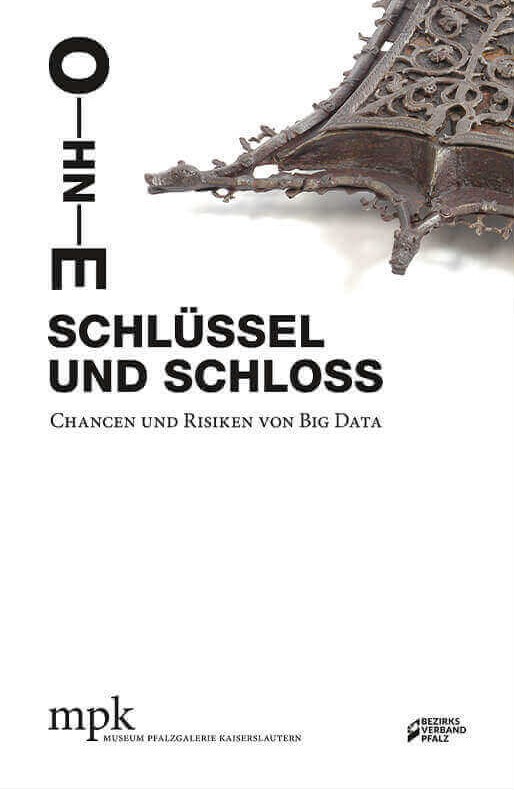
Ohne Schlüssel und Schloss
Chancen und Risiken von Big Data19,90€ Add to cartVon Kunsthandwerk zu digitaler Verschlüsselung
An jeder Haustür ziehen wir Grenzen, wir schließen auf und schließen ab. Und noch in jüngster Vergangenheit war eindeutig, was als Verschlusssache galt. Ganz anders stellt sich diese Frage im IT-Zeitalter. Ausgehend von der kunsthandwerklichen Sammlung des Museum Pfalzgalerie Kaiserslautern wird deutlich, wie in früheren Jahrhunderten über mechanisch und symbolisch aufwendig gestaltete Schlösser, Schränke oder auch Reliquienbehältnisse Distanzen austariert wurden. Sie alle sind sichtbares Vehikel für die bewusste Wahrnehmung von innen und außen, zugehörig und ausgegrenzt, wissend und unwissend oder öffentlich und privat. Für Big Data gilt dies in keiner Weise mehr. Beim Digitalen werden Serviceleistungen mit Datenerhebungen verbunden, deren weiteren Einsatzbereiche wir weder unmittelbar verstehen noch überblicken können. Historische, technologische und philosophische Überlegungen bieten wichtige Beträge zur aktuellen Debatte und Einschätzung der Risiken und Chancen von Big Data.
-
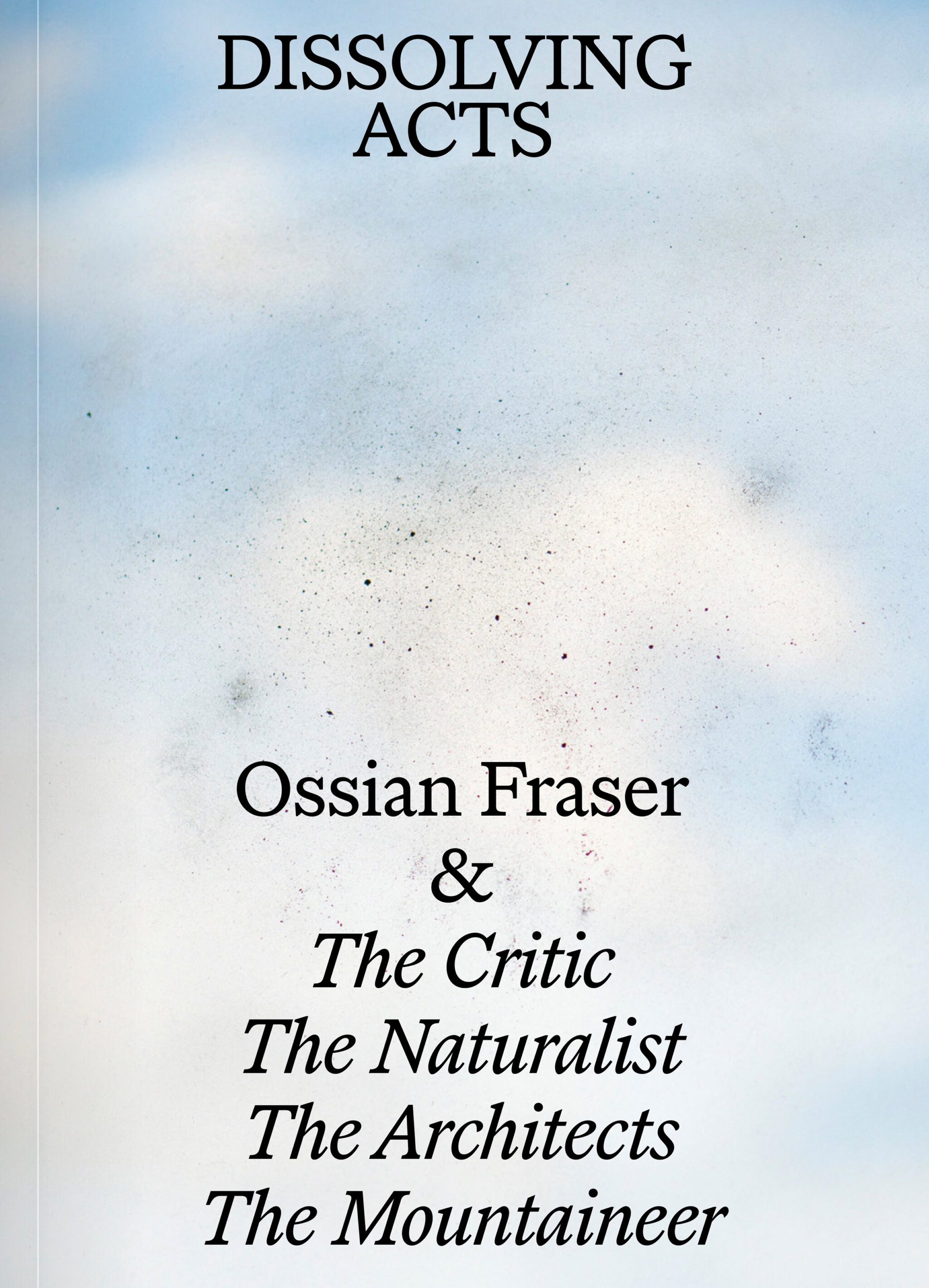
Ossian Fraser
DISSOLVING ACTS38€ Add to cartOssian Fraser (b. Edinburgh, 1983; lives in Munich and Berlin) molds and captures evanescent moments. Working with volatile materials such as water, dust, or light, the artist exposes the latent potentials of unremarkable situations in the urban fabric and natural scenes. A tunnel in a city, a rock face in the mountains become points of departure and elementary components of his site-specific interventions, which he records in photographs. The book is the first to offer comprehensive insight into Fraser’s artistic practice. Series of pictures showcasing his conceptual and poetic pieces alternate with conversations that not only demarcate the framework in which his art operates, but also touch on the great issues of our time.
Ossian Fraser studied fine arts and sculpture at the Alanus University of Arts and Social Sciences, Bonn, from 2006 until 2009 and at the Weißensee Kunsthochschule, Berlin, from 2009 until 2013, rounding out his education in Albrecht Schäfer’s master class in 2013–2014.
-

Andreas Wegner
Wir fahren mit der Schneckenpost, weil die uns keinen Pfennig kost50€ Add to cartThe art of Andreas Wegner is an inquiry into capitalist urbanity. His interventions explore alternative models for urban interaction, trade, city development, traffic, or the use of public space. Inspired by Joseph Beuys’s social sculpture and Charles Fourier’s social utopias, Wegner founded, e.g. a cooperative department store in Berlin, a grocery store in Vienna, and conducted real estate business as a form of creative resistance. This monograph illustrates the artist’s most important projects with ample imagery, essays by renowned authors, interviews, and his own texts. Alongside collective initiatives, installations, photography, film, and sculpture, painting remains a constant in Wegner’s oeuvre to this day.
-
Leszek Skurski
Catalogue raisonné Vol. 1: Works from 1990–202459€ Add to cartLeszek Skurski (b. Gdańsk, 1973; lives and works in Fulda and Mallorca) is known for his singular and immediately recognizable white paintings. Small black and gray figures emerge from the white landscapes, always set in relation to one another, in pairs or groups. Exposed on the expansive and boundless-seeming plane, they silently tell a story that remains as open-ended as the pictures. In a few spare brushstrokes or lines drawn with the palette knife, Skurski’s superb neoimpressionism deftly captures the atmosphere that weighs down on his characters and holds his compositions in suspense.
The extensive monograph presents over two thousand works from more than three decades. Essays embed the various bodies of work in their art-historical contexts.
-
Simone Haack
HAIR30€ Add to cartSimone Haack (b. 1978 in Rotenburg/Wümme, lives and works in Berlin) has always made the inwards legible in the outer appearance of her figures in her painting. This is also the case in her block of works in the exhibition of the same name, Hair. Already in the late 17th century, magic and superstition were attributed to hair. In it one suspected the whole power of the soul. The artist, who was formed in the painting class of Katharina Grosse and Karin Kneffel, symbolically reveals the fragility of the DNA of human beings through her hair landscapes, which are sometimes placed macroscopically in the picture in the spirit of a New Magic Realism. At the same time, her accompanying exhibition publication always also tells of the triangle of tension of physical as well as psychological existence, which in her case runs through the painterly psychoanalysis.
-

Filip Henin
10€ Add to cartThe events captured in Filip Henin’s (b. Mayen, 1986; lives and works in Berlin) paintings are set in a world beyond time and place, as though on an empty stage prepared for a Samuel Beckett production. It is virtually impossible to say whether a picture shows a coastal region or a craggy slope up in the mountains, whether a field of blue represents the sea or a band of open sky. Henin strips landscapes down no less than human figures, subtracting specific features to isolate basic forms that might be found in the hill country around his hometown in western Germany or in Tuscany. His work integrates quotations from antiquity, Romantic landscape painting, and postmodernism as well as Italian Transavanguardia, the mysticism of Francesco Clemente and Sandro Chia, and the figurative painting of the 1990s. Without veering into drama or pathos, he harnesses two utterly antithetical energies: the reflection on painting and the history of art and the need to be simple.
-

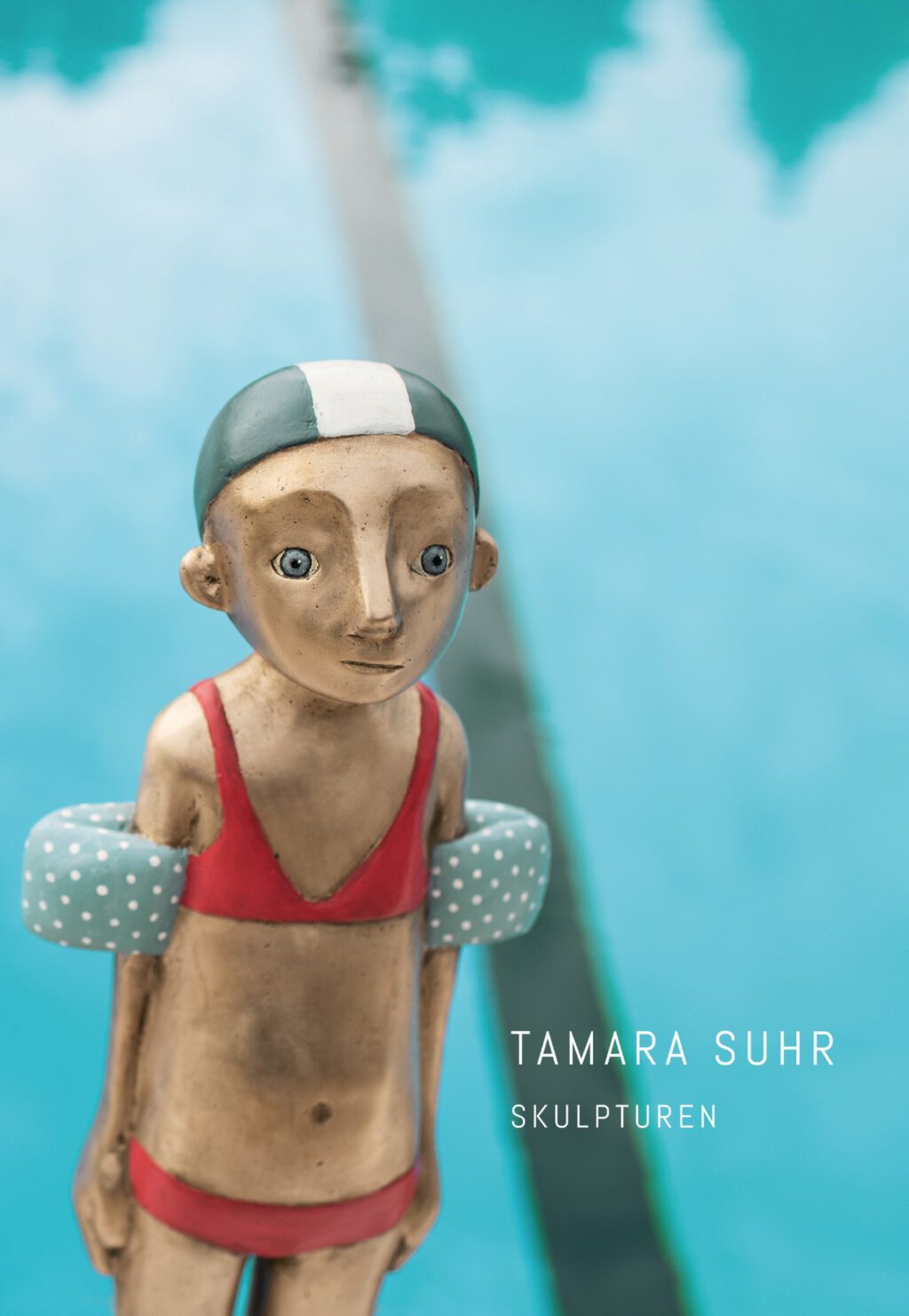
Tamara Suhr
Skulpturen24€ Add to cartHesitant yet Immediately Present
As a sculptor, Tamara Suhr (b. 1968, Tübingen; lives and works in Ludwigsburg) has devoted herself unswervingly to the human figure. Her subjects are figures of children whose hesitancy always embodies a certain curiosity, a sense of expectation. In their form reduced to the essential, indeed almost archaic, they radiate calm and serenity—supported by balance with regard to both the motif and possible associations. In their small size and vulnerability, Suhr’s figurative sculptures, painstakingly crafted in bronze, seem apparently in need of protection, yet they appear strong and courageous. They stand, gaze, crouch, fish, swim or balance. They are present, in the here and now, a symbol for the children of the world.
-

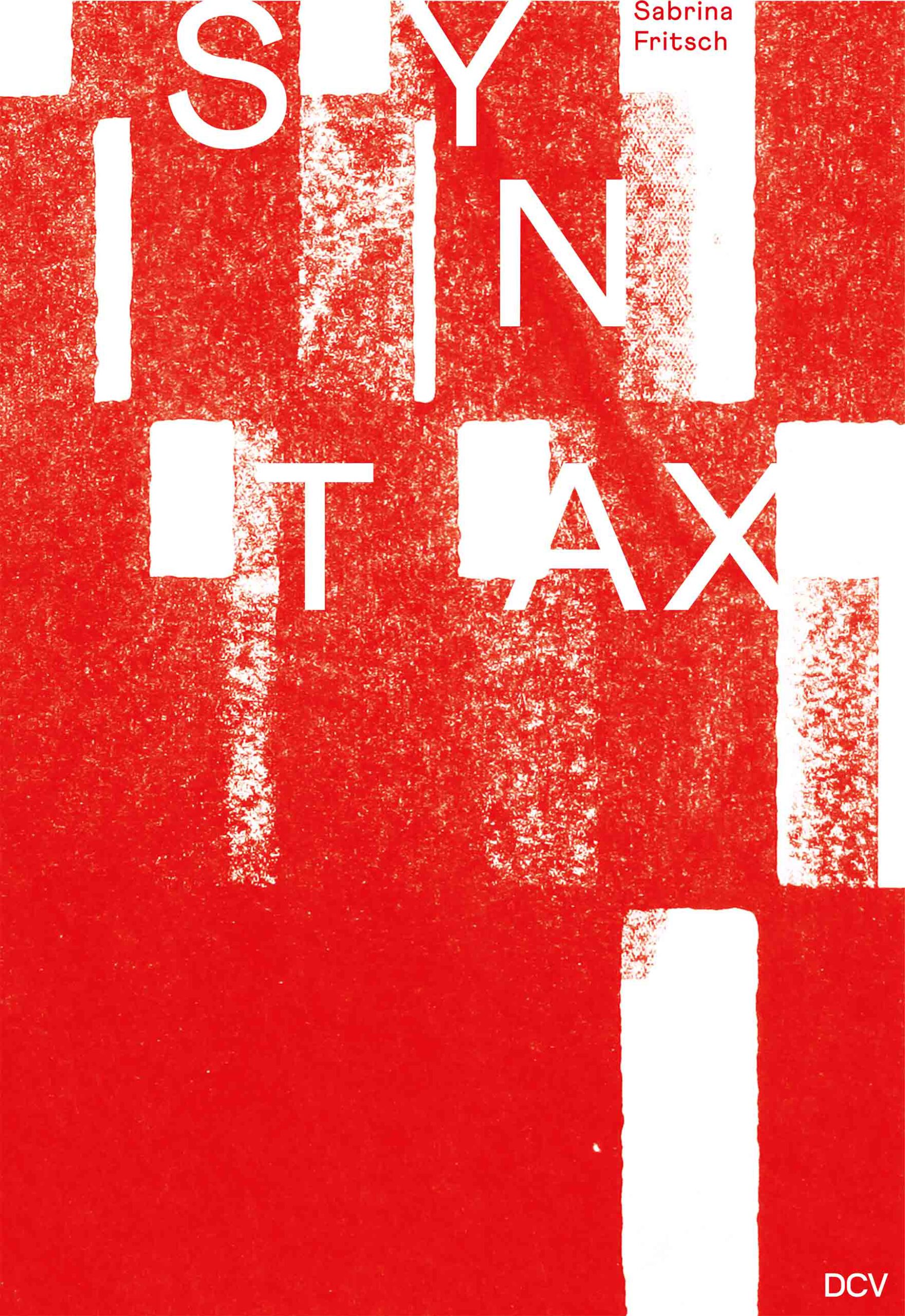
Sabrina Fritsch
syntaxerror28€ Add to cartSabrina Fritsch’s (b. Neunkirchen/Saar, 1979; lives and works in Cologne) paintings explore the potentials of the compositional process and the mechanisms of perception. Many of them feature coarse structures, textile surfaces, and delicate superimpositions. In this publication, Fritsch, who was recently appointed professor at the Düsseldorf Academy of Fine Arts, presents a résumé of the painterly oeuvre she has developed since her graduation from the same school in 2008. It encompasses two related books, each of which undertakes a structured study of a major strand in Fritsch’s art. One offers a chronological survey of a representative selection of works created between 2008 and 2019 that illustrate her playful and experimental engagement with the constituents of the painted picture: the picture-as-object, the organization of pictorial space, and the phenomenology of physical color. In addition to works on canvas boasting a wide variety of applications of materials and paint, it also covers serial variations in prints. The other showcases three exhibitions and bodies of work dating from 2020 and 2021 that are dedicated to the three color systems RGB, black-and-white (BAW), and CMYK.
-

Justine Otto
New Traditionalists38€ Add to cartJustine Otto (b. Zabrze, Poland, 1974; lives and works in Hamburg and Berlin) is one of the most promising artists on the contemporary painting scene. An aficionado of the absurd, she unfolds a metaphysical-psychedelic and often gaudily lustrous cosmos in pictures in which representation clashes with abstraction. In her early work, girls, women, and animals were here preferred subjects; more recently, she has painted heroes—the protagonists in myths of masculinity. After generals, officers, and strategists, she has now turned her attention to cowboys, who appear on horseback or resting under a tree, musical instrument in hand.
Justine Otto studied fine art and painting with Peter Angermann and Michael Krebber at the State Academy of Fine Arts (Städelschule) in Frankfurt am Main and obtained an MFA in 2003. She also worked as a scene designer at Städtische Bühnen Frankfurt, the city’s municipal theater company. Her paintings are held by collections including the Hessisches Landesmuseum, Darmstadt; Museum Franz Gertsch, Burgdorf, Switzerland; and the Phillips Collection, Washington, D.C.
-

The Art of Society
1900–194529€ Add to cartThe Collection of the Nationalgalerie, Berlin
The Neue Nationalgalerie in Berlin, the last building designed by Mies van der Rohe, has been closed a full six years for refurbishment. To mark its reopening the museum is presenting the highlights of its classical modernist collection under the title The Art of Society, 1900–1945. Visionary, critical, resigned or utopian, the paintings and sculptures bear witness to art’s dialogue with prevailing social conditions – from the German Empire to the First World War, the Weimar Republic and ultimately National Socialism. The catalogue documenting all works in the exhibition traces the major artistic tendencies during the first half of the 20th century in thirteen chapters. The Art of Society, 1900–1945 offers a renewed encounter with works by Edvard Munch, Ernst Ludwig Kirchner, Tamara de Lempicka, Lotte Laserstein, Otto Dix, George Grosz, Max Beckmann, and many others that is as captivating as it is illuminating.
Click here for the German edition.
-
Clemens Krauss
Antidot | Gegengift40€ Add to cartClemens Krauss restlessly shuttles across history; his vehicles are painting, video art, sculpture, and performance. Yet Krauss is not “just” an artist, he is also a psychoanalyst and physician. As such, he has first-hand experience of time as the defining factor of existence, daring him to play with it. The bosom of painting is where he feels safest after his hazardous excursions back into his youth and forward into death. Executed in thick paints, his work is physical, material, which is also to say, it exists in time: everything passes away, even the picture. Evanescent, more than anything, are encounters of the sort Krauss stages as part of his psychoanalytical practice; all that remains is the indelible impression they leave. To be indelible, to recall the past, while also “letting happen what has never happened,” as he puts it, these are the ambitions he pursues in his art. Preserved between the covers of the present catalogue and reproduced in thousands of copies, his works now fan out in an instant to circulate for an indeterminate period of time among countless hands, whence they will effortlessly penetrate the barriers of our inner lives to bring us one step closer to transcendence.
-

Pensive Images
16 Artists in Dialogue with W. G. Sebald35€ Add to cartOn Memories and Temporalities
Pensive Images examines the complex and invariably singular relationships through which images and memories are inextricably linked. The book relates to the work of the German writer W. G. Sebald (b. 1944, Wertach; d. 2011, Norfolk), especially to four fictional stories he published between 1990 and 2001, in which he inserted non-captioned blackand- white photographs of uncertain provenance and nature into the text like memories punctuating ways reminiscent of his writing. It brings together 16 artists who, in ways reminiscent of Sebald’s approach, explored the realms of memory and past from the perspective of experience and intertwining temporalities.
With works by Mathieu Kleyebe Abonnenc, Dove Allouche, Lonnie van Brummelen / Siebren de Haan, Moyra Davey, Tacita Dean, Jason Dodge, Félix González-Torres, Ian Kiaer, Jochen Lempert, Zoe Leonard, Helen Mirra, Dominique Petitgand, John Stezaker, Danh Vo and Tris Vonna-Michell.
-
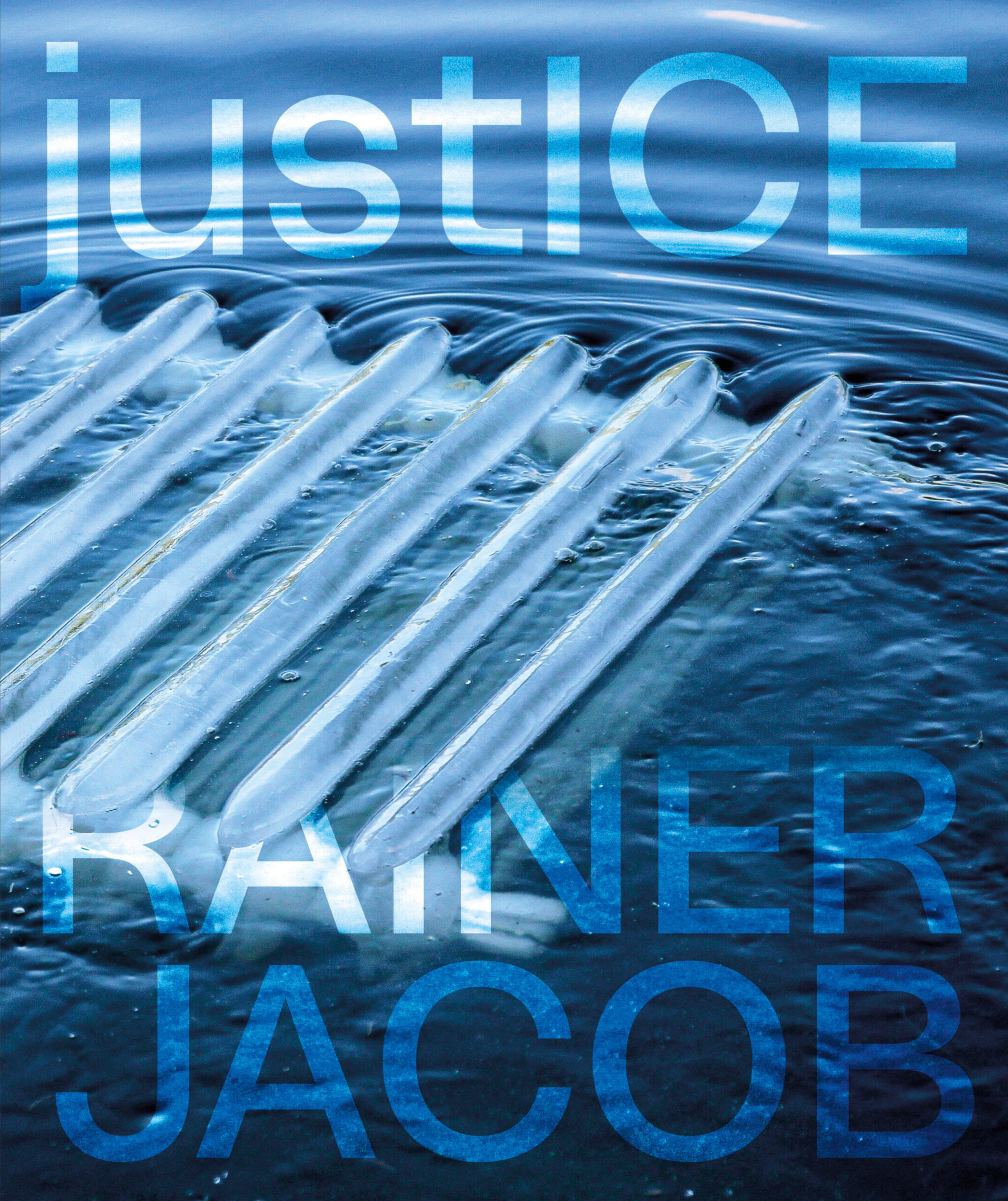
Rainer Jacob
justICE30€ Add to cartRainer Jacob (b. Jena, 1970; lives and works in Leipzig) has anonymously installed objects made of ice in public settings in cities including Berlin, Leipzig, Paris, Moscow, Oslo, Prague, and Budapest since 2013. He then allows them to dematerialize and records the process in photographs. Radiators, wall outlets, QR codes, and the Duchampian pissoir are among his recurrent motifs. The impermanence of the ice objects builds bridges to street art, Fluxus, and action art. Critical observations on the unequal distribution of resources and political power in contemporary society, his works reflect on our perceptions and question the idea of originality in art while also probing the outer limits of sculpture.
The publication showcases the ice objects of the past ten years, embedding them in a decade that has marked a sea change in the life of humankind: JustICE captures an artist’s distinctive perspective on societal processes.
-

Agostino Iacurci
10€ Add to cartAgostino Iacurci’s (b. Foggia, Italy, 1986; lives and works in Berlin) paintings, sculptures, installations, and murals are based on vegetal forms and botanical subjects. Lucid compositions in radiant colors unfurl fantastical ornaments that transcend the division between figuration and abstraction and the hierarchical distinctions of applied art, design, fine art, and folk art. His central theme is the painted garden, in which he stages plants, humans, architecture, geometry, and decoration in a fashionably theatrical landscape. In Iacurci, the interpenetration of nature and civilization is real, integrating mythological motifs from across the history of art and culture, from antiquity to futurism and postmodernism, into his singular style.
Agostino Iacurci studied fine arts at the Accademia di Belle Arti in Rome. Since 2009, he has realized numerous large-format murals and installations for public and private institutions. He has also worked with international brands including Apple, Adidas, Hermès, and Starbucks.
-

Maria Braune
Keep Away From Fire28€ Add to cartMaria Braune’s (b. Berlin, 1988; lives and works in Munich and Bamberg) work revolves around a material she developed; named Migma, it consists of eight different renewable natural resources. She heats it, then casts and molds it in a process that continues for weeks. The resulting sculptures and installations sprawl throughout the space like sensuous organisms. Associations of growth and symbiosis emerge, but discontinuities and disintegration come into view as well. Braune’s creative process is part of an ecosystem and thoroughly anchored in the now. Her material is a vitally alive substance to which she responds in an immediate engagement, connecting it to mythological and narrative significations and setting it in relation to her own world.
Maria Braune studied woodcarving at the Fachhochschule für Bildhauerei in Berchtesgaden, Germany, in 2009–2011, then fine arts with Hermann Pitz at the Academy of Fine Arts Munich, where she graduated in 2017.
-

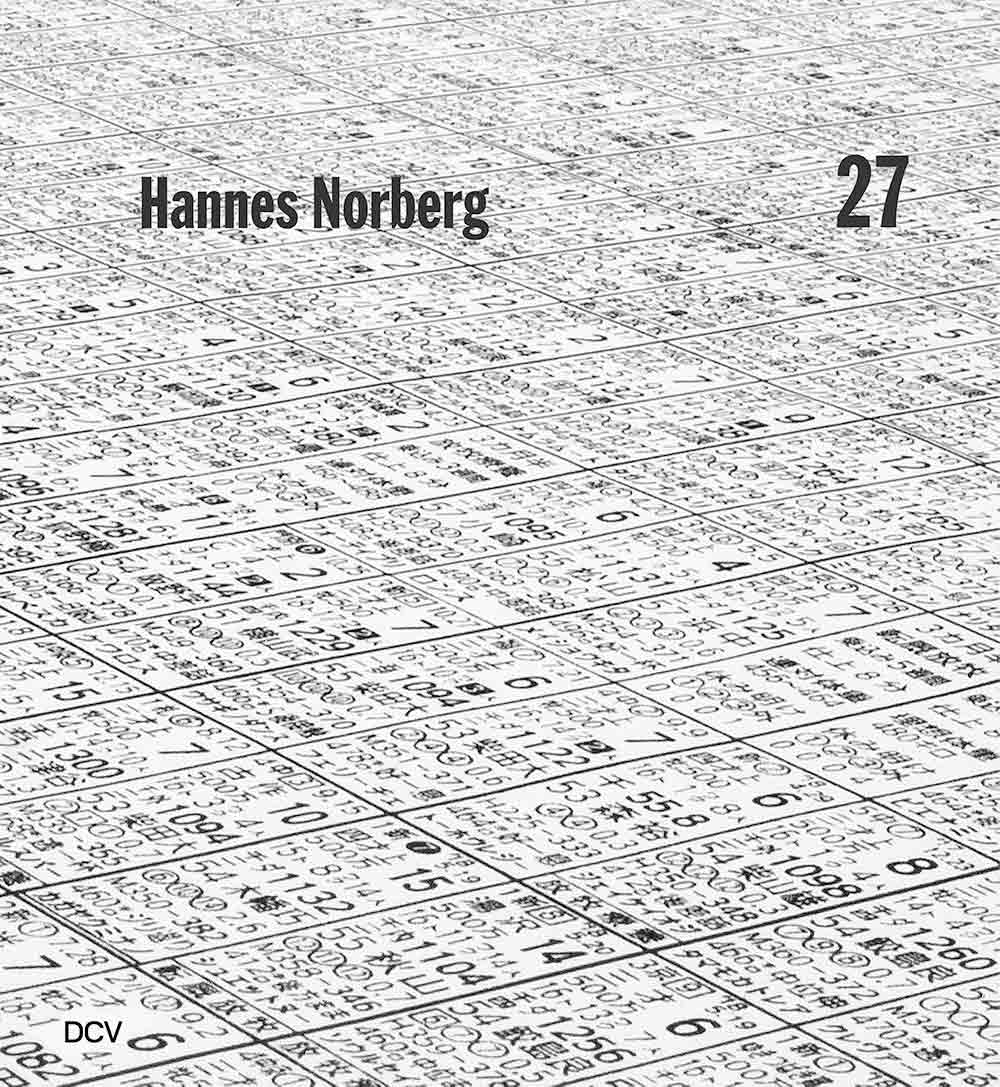
Hannes Norberg
2728€ Add to cartThe Ideal of Simplicity, Clarity and Timelessness
To make his photographs, Hannes Norberg (b. 1969, Worms; lives and works in Düsseldorf) constructs artificial spaces that integrate elements of painting, drawing, collage, and sculpture. Rather than reproducing selected details of an existing reality, his works make empty space and the play of light and shadow their point of departure. In his most recent pieces, the artist has focused on samples of typography that he collected on his travels and in numerous libraries all over the world and subjected to graphical redaction. Captured in natural light in his studio, his pictures showcase the quiet beauty of writing and paper, while their landscape-like aura gestures toward their place of origin. Designed by the artist himself, the book marks the public première of a selection of twenty-seven new photographs.
Hannes Norberg studied fine arts at the Kunstakademie Düsseldorf and was an artist-in-residence in Paris, New York, Florence, São Paulo, Xiamen and Seoul.
- Release December 2025
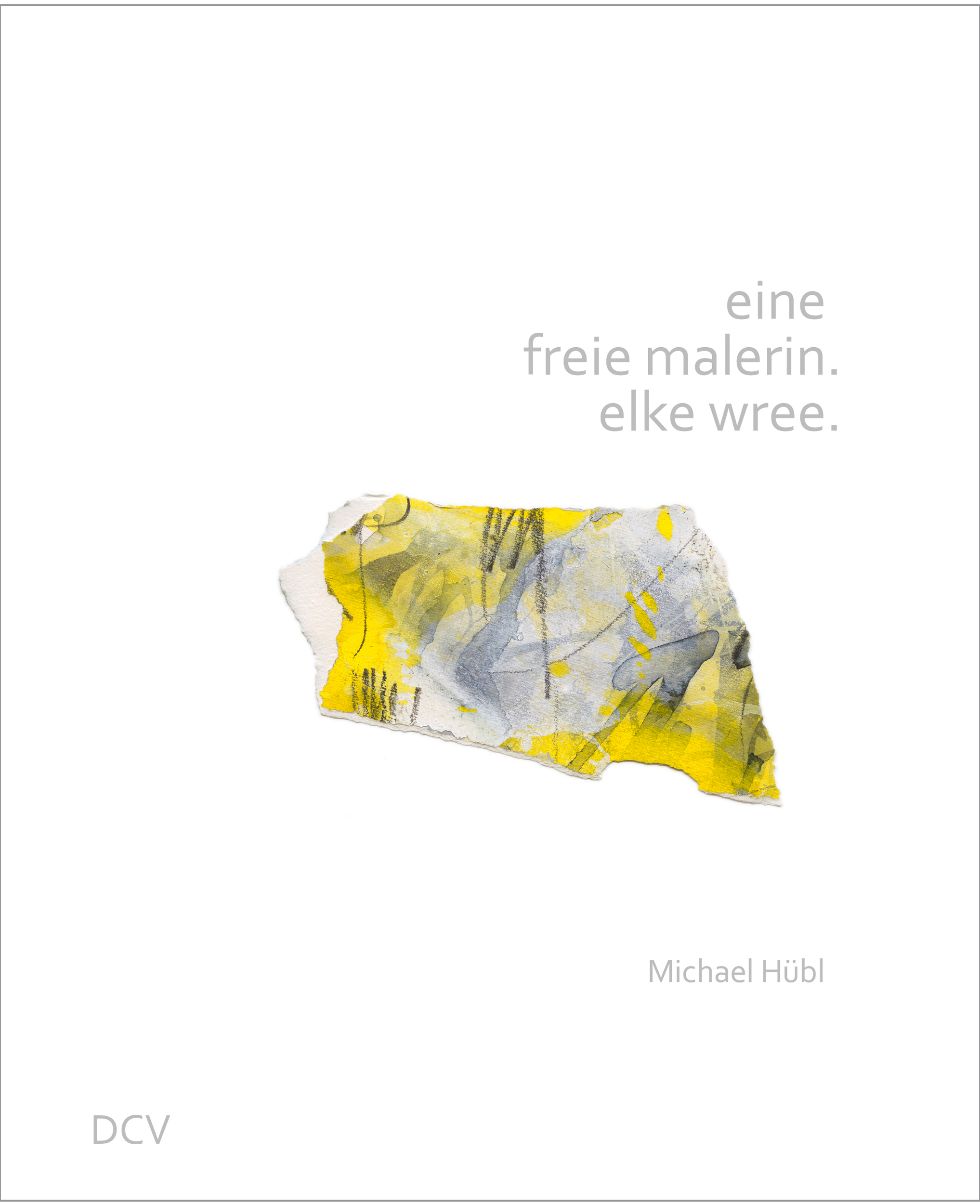
eine freie malerin.
elke wree.26€ Add to cartThe painter Elke Wree’s career (born 1940, lives in Karlsruhe) was defined by the debates of the post-war era. Art was considered a search for truth and intended to reveal the existentially essential. Fundamental questions were: Realism or abstraction? Genuine or fake? This book provides insight into the search for an authentic, contemporary visual language. Wree’s formative teachers in Karlsruhe and Berlin are discussed, as are her changing social environments and the rapid societal changes. Wree’s paintings were always nature-inspired abstraction with overlapping color spaces and painting gestures. Wree groups her pictures with terms such as condensations and clearings, in-between lands, or traces of light and time. This volume is simultaneously a biography, panorama, analysis, and homage.