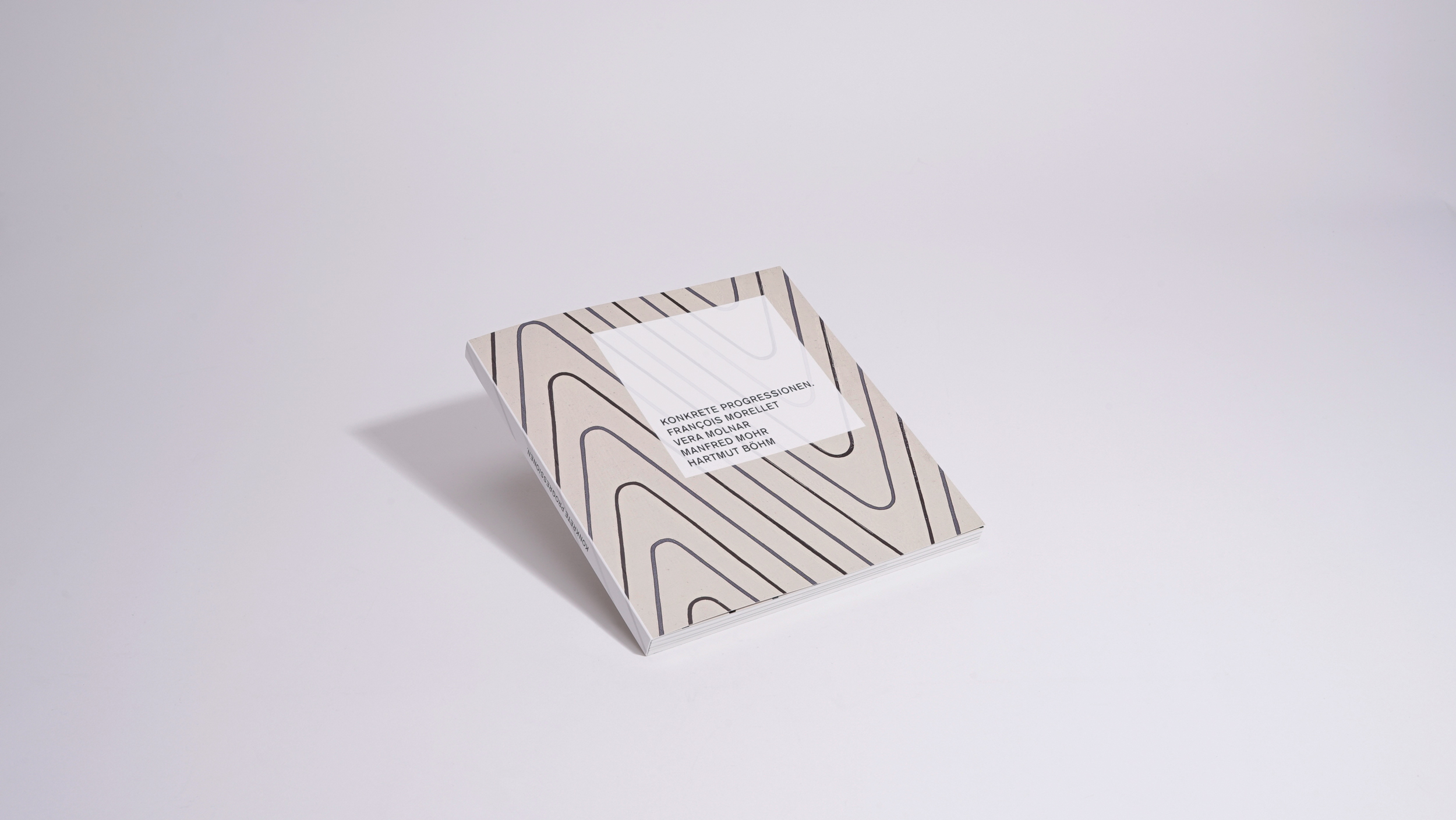
Konkrete Progressionen
François Morellet & Vera Molnar, Manfred Mohr & Hartmut Böhm
 | |
|---|---|
| Editor(s) | Holger Kube Ventura |
| Author(s) | Holger Kube Ventura |
| Design | Thomas Schmid |
| Size | 19 x 21 cm |
| Cover | Softcover |
| Pages | 144 |
| Illustrations | 70 |
| Language(s) | German |
| ISBN | 978-3-96912-138-2 |
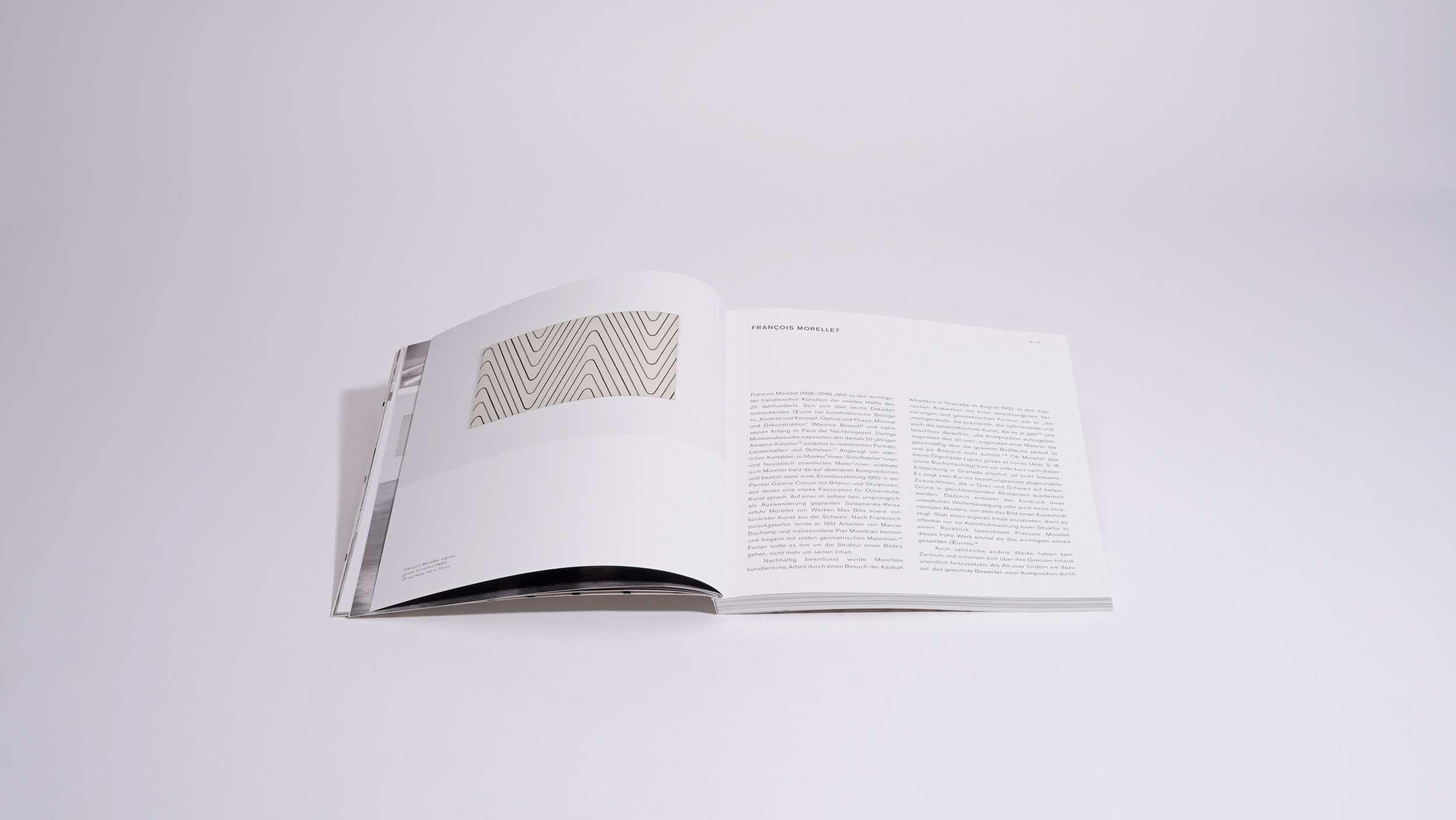
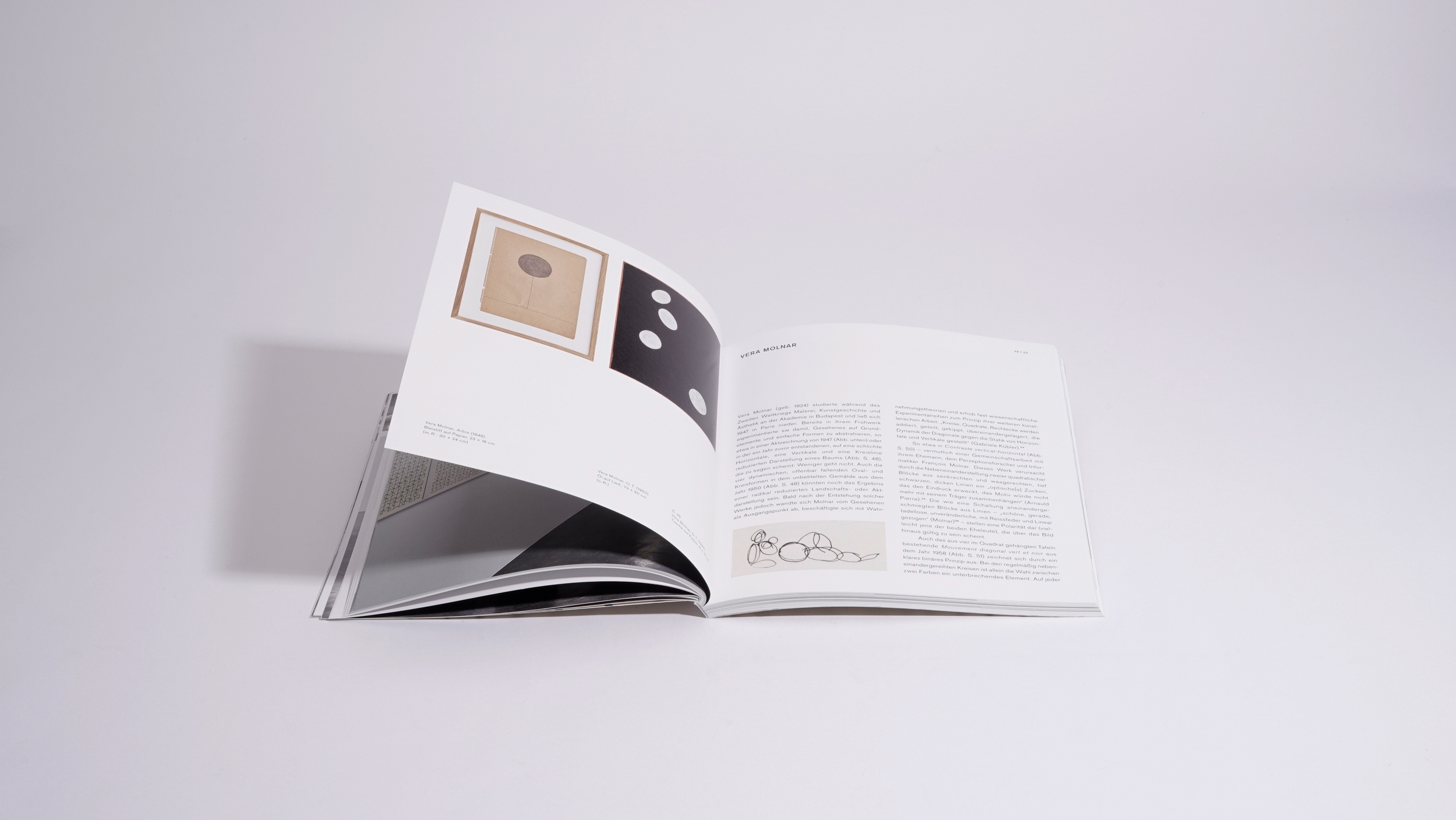
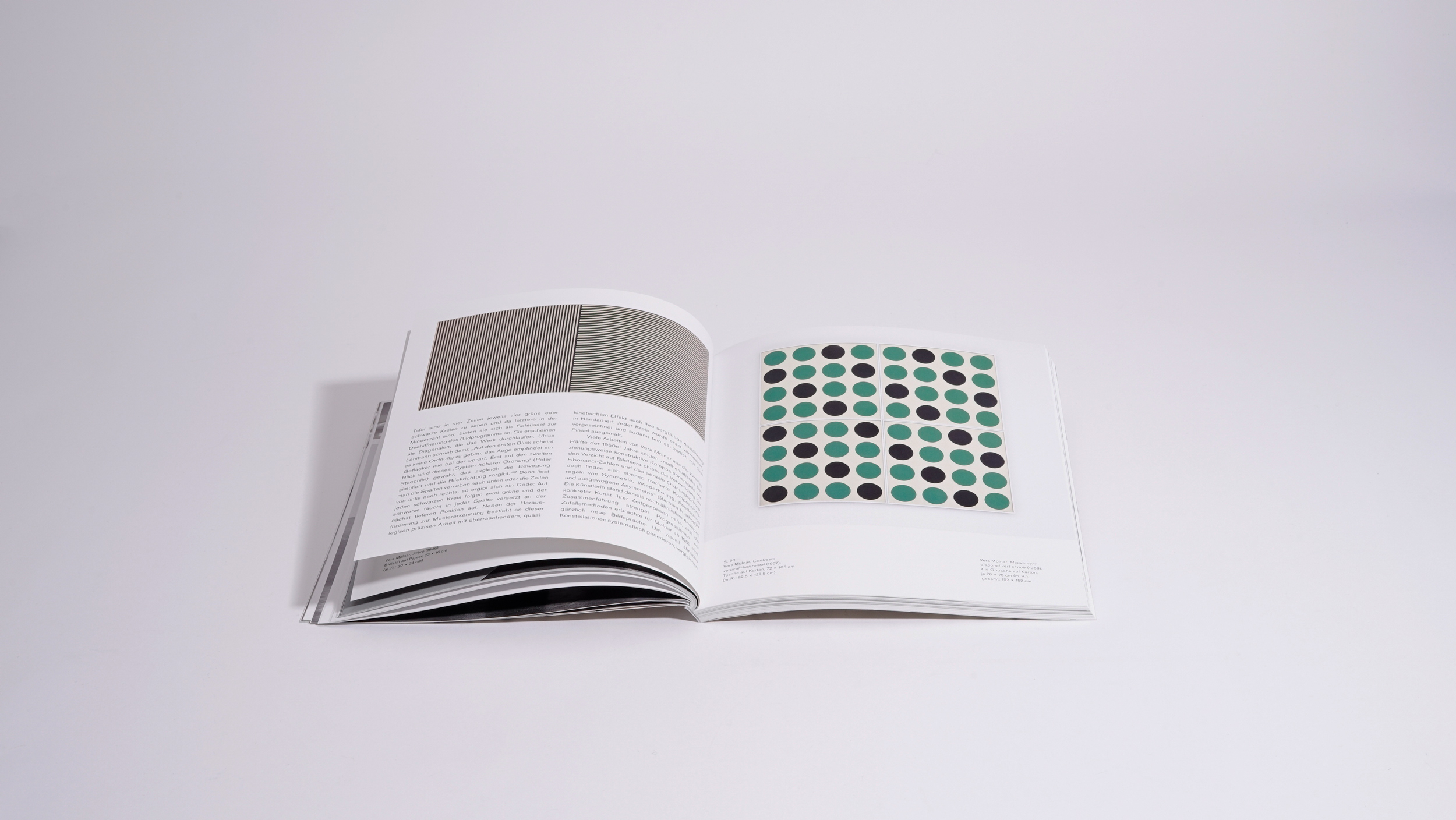
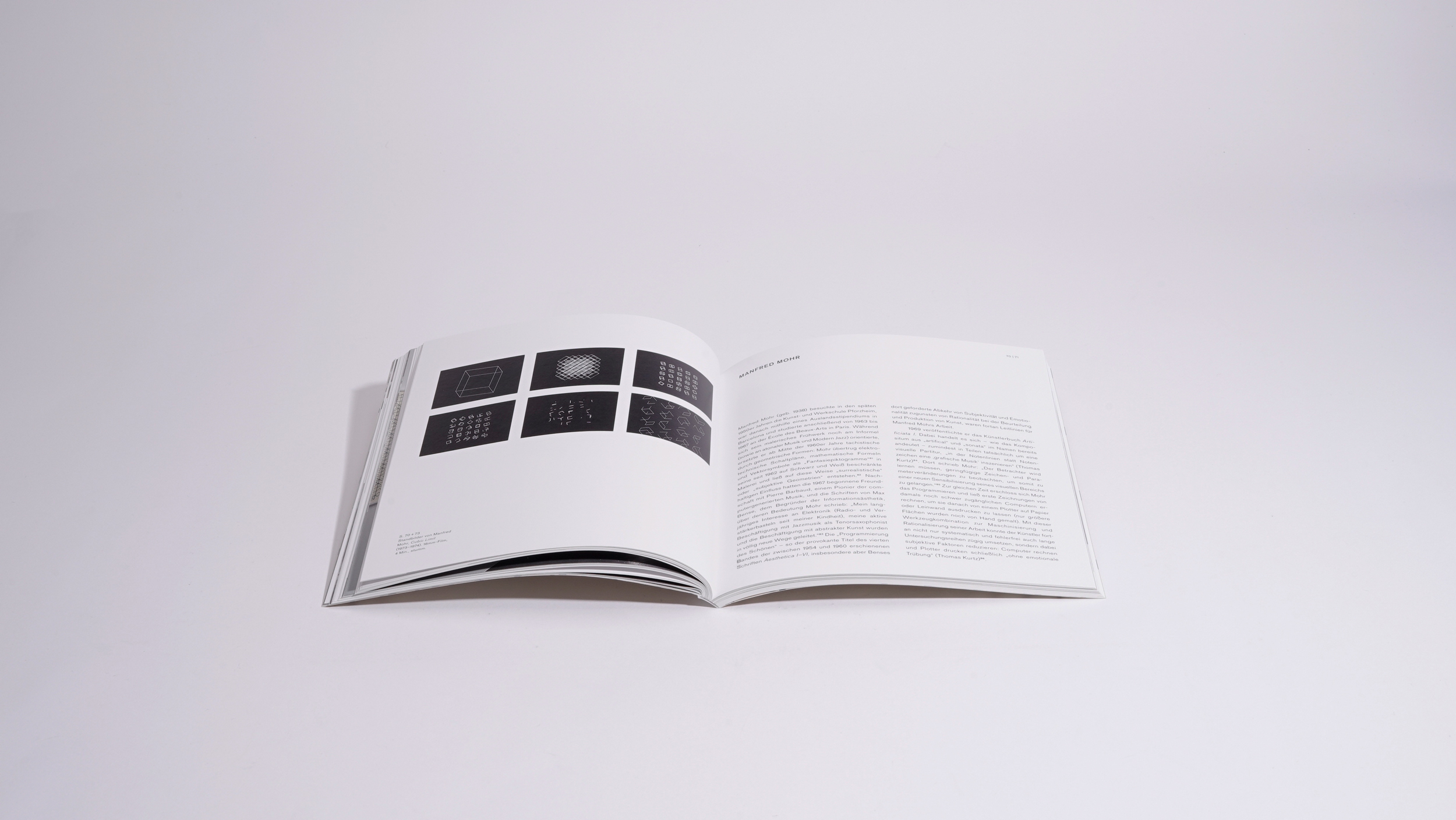
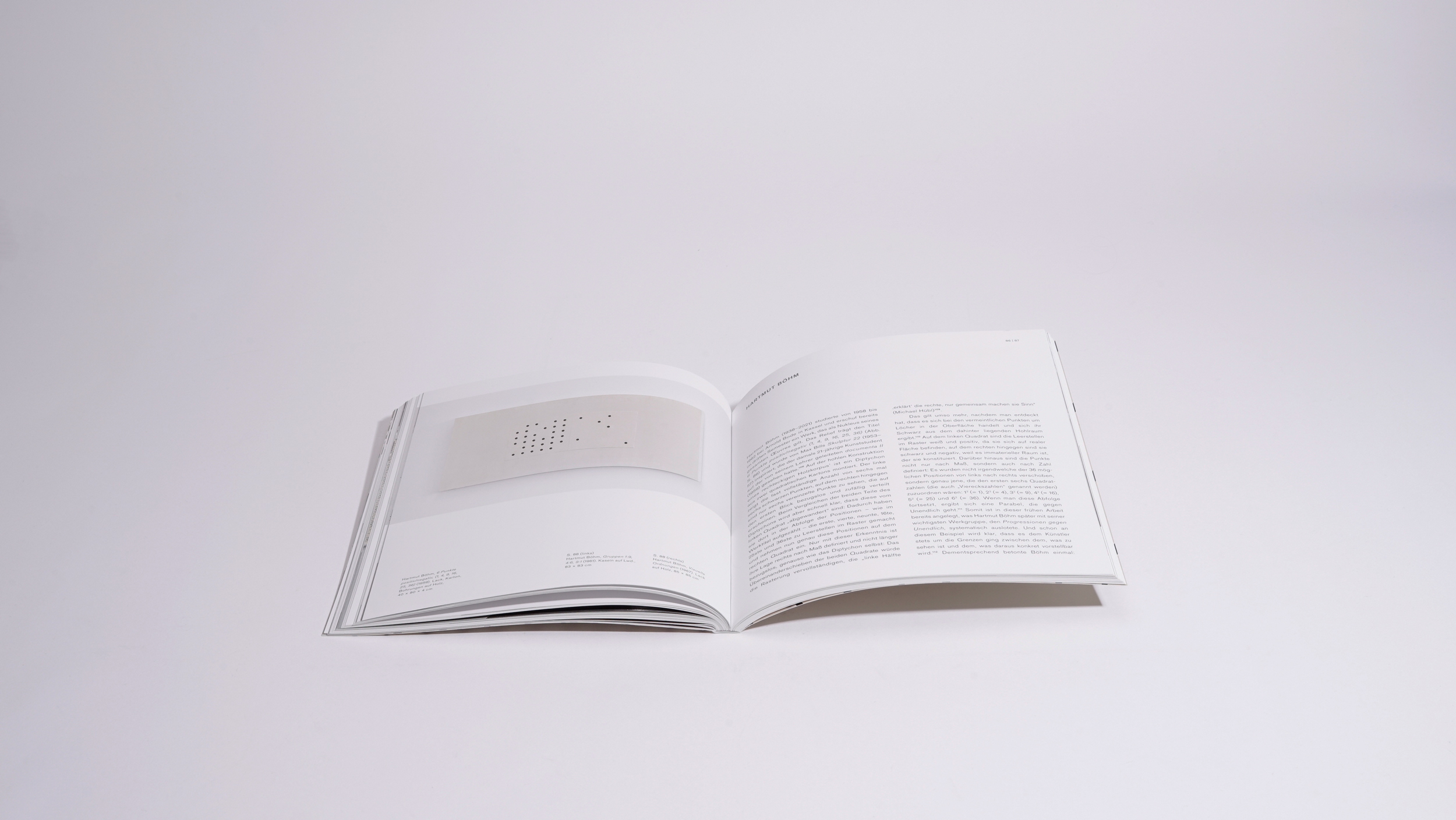
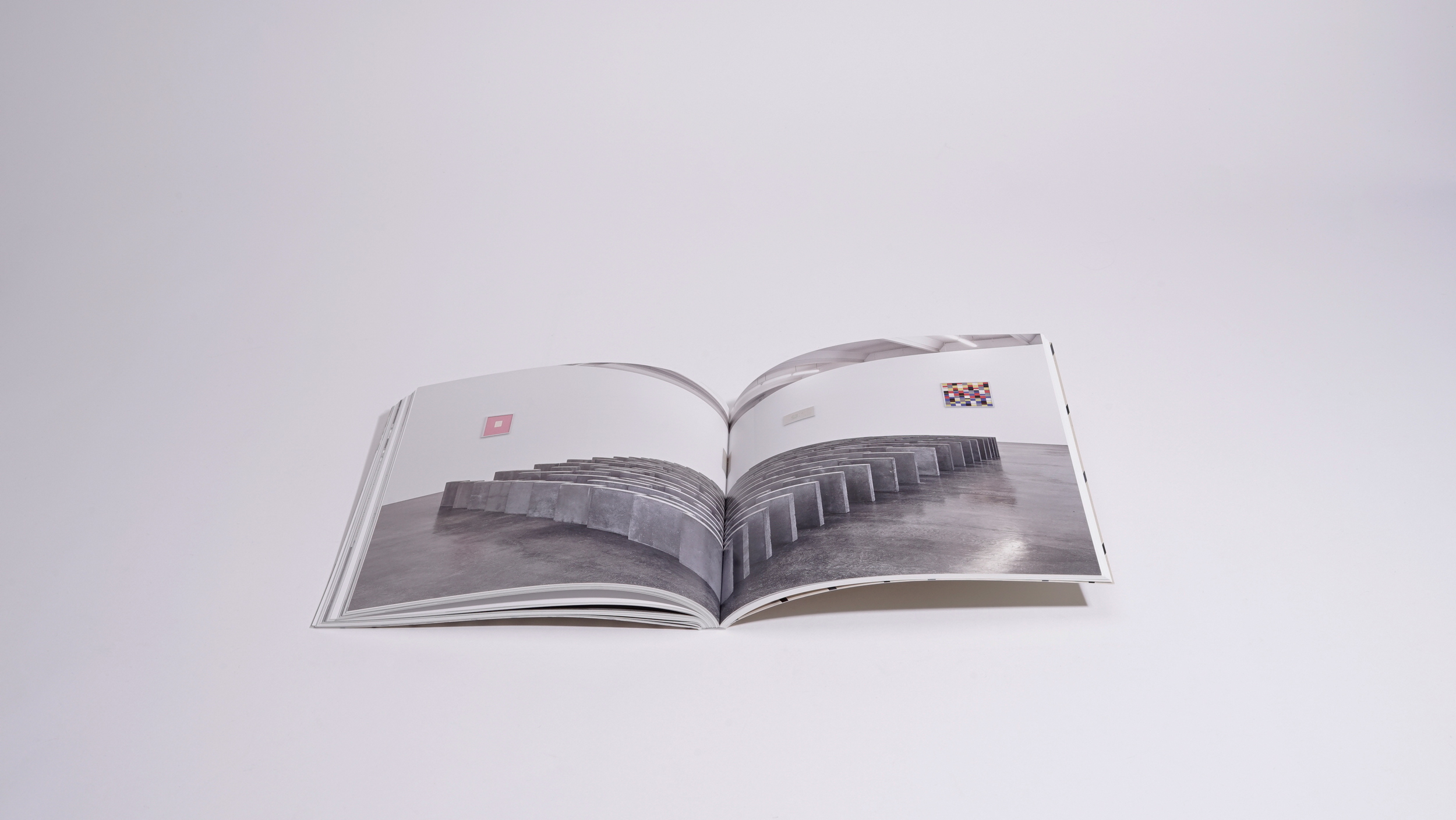
Thanks to a generous donor, the Kunstmuseum Reutlingen | konkret welcomed a number of outstanding works to its collection in 2022. Titled Konkrete Progressionen, the first exhibition to showcase a selection from the gift features four internationally renowned artists whose works are derived from mathematical or geometric procedures: the concrete systematists Hartmut Böhm (1938–2021) and François Morellet (1926–2016) and the pioneers of computer-generated art Manfred Mohr (1938–) and Vera Molnar (1924–).
The book documents the serial paintings, drawings, collages, wall objects, and monumental installations and environments of steel beams or concrete blocks. The works play concrete games with the beholder’s ability to recognize patterns in binary contrasts or layered grids. They show sine waves, vector series, hypercubes, and markings derived from the circular constant π or the Fibonacci sequence—and in each instance demonstrate primarily how the basis of calculation takes on a life of its own.
The exhibition at the Kunstmuseum Reutlingen runs until April 14, 2024.
More books
-

Thomas Lehnerer
Grott18€ Add to cartA Facsimile by the Theologian and Artist
The genesis of images is a central aspect of the work of the Munich-based theologian and artist Thomas Lehnerer (b. Munich, 1955; d. ibid., 1995). In drawings and sculptures, as well as in spatial and conceptual works, the production of images creates a counter-world to our own lives. By transferring fundamental experiences of human existence into art, Lehnerer creates an equivocal, anthropological space for observation and reflection. The artist’s book Grott, published in 1986, contains ambiguous elements. All drawings are positioned on the right page. In the not yet dried state, a double image was formed on the left side, which relativizes the “primary image.” The depictions of animals, people, and the environment were drawn nearly without interruption from a single line. In this style of continuous movement, the overall image can be traced back to its beginning. For Lehnerer, it was important to understand human (self-)consciousness from the perspective of the history of evolution, since there are countless models of thought and belief within this narrative. Grott refers in the title, as well as in the drawings, to the charged relationship between the earthly and the spiritual.
-

Karlheinz Bux
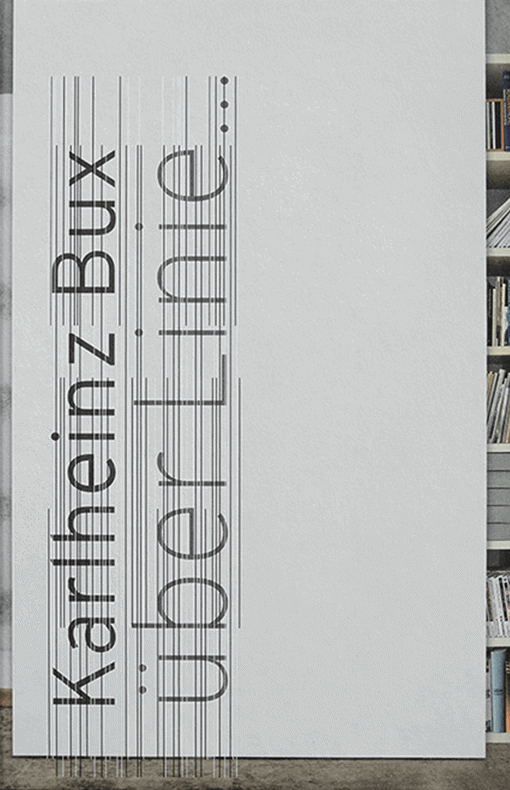
über Linie …15€ Add to cartClarity, Complexity, and Linearity
The defining artistic means in the work of Karlheinz Bux (b. 1952 in Ulm, lives and works in Karlsruhe) is the line. As edges and folds, they determine vertically oriented sculptures, which simultaneously convey compactness and openness, dynamism and repose. In Bux’s pencil drawings and photo-based works, they form the subject of the image in the form of complex linear structures. This present book documents the artist’s large-format works and provides insight into his oeuvre, with texts by Michael Hübl, Christine Reeh-Peters, and Carmela Thiele.
Karlheinz Bux studied at the State Academy of Fine Arts Karlsruhe and taught as a lecturer at Pforzheim University and as a visiting professor at the Mainz University of Applied Sciences. His works are represented in private and public collections, including the Staatliche Kunsthalle Karlsruhe, the Hurrle Collection, and the Würth Collection.
-

Horst Keinig
Scoop29€ Add to cartAn Artist Book Setting New Visual Processes in Motion
Around the year 2009, Horst Keining (b. 1949, Hattingen; lives and works in Düsseldorf) began to create blurred contours with the help of a small spray gun used without stencil. Up to four partially superimposed pictorial planes result in the oscillation and almost three-dimensional pulsation of the pictorial space. In interplay with a contrasting juxtaposition of strongly contoured images, his works convey a completely new visual experience. Since the resulting “blur effect” shrinks due to the reduction, this artist book places an essential accent on the reproduction of image details in their original size, followed by a full image of the picture.
- Out of stock

Voré
Stückwerk Mensch18€ Read moreHistorically Anchored Installations with Current Political References
The sculptures by Voré (b. 1941 in Karlsruhe, lives and works in Ettlingen) reflect the artist’s examination of the conditions of human existence and the human state of mind. Finely polished forms, splinters, and rough fractures become a statement of content and at the same time constitute the formal tension of the respective object. The process of creation can be seen in the rough remaining parts and traces of the various tools. Parallel and closely related to this, drawings and collages are created as independent works or as components of installations. Formal impulses of the sculptural concept are taken up, graphically processed, and projected back into the sculptural work. The present volume presents projects from six decades with numerous illustrations.
-

On Trickling Away
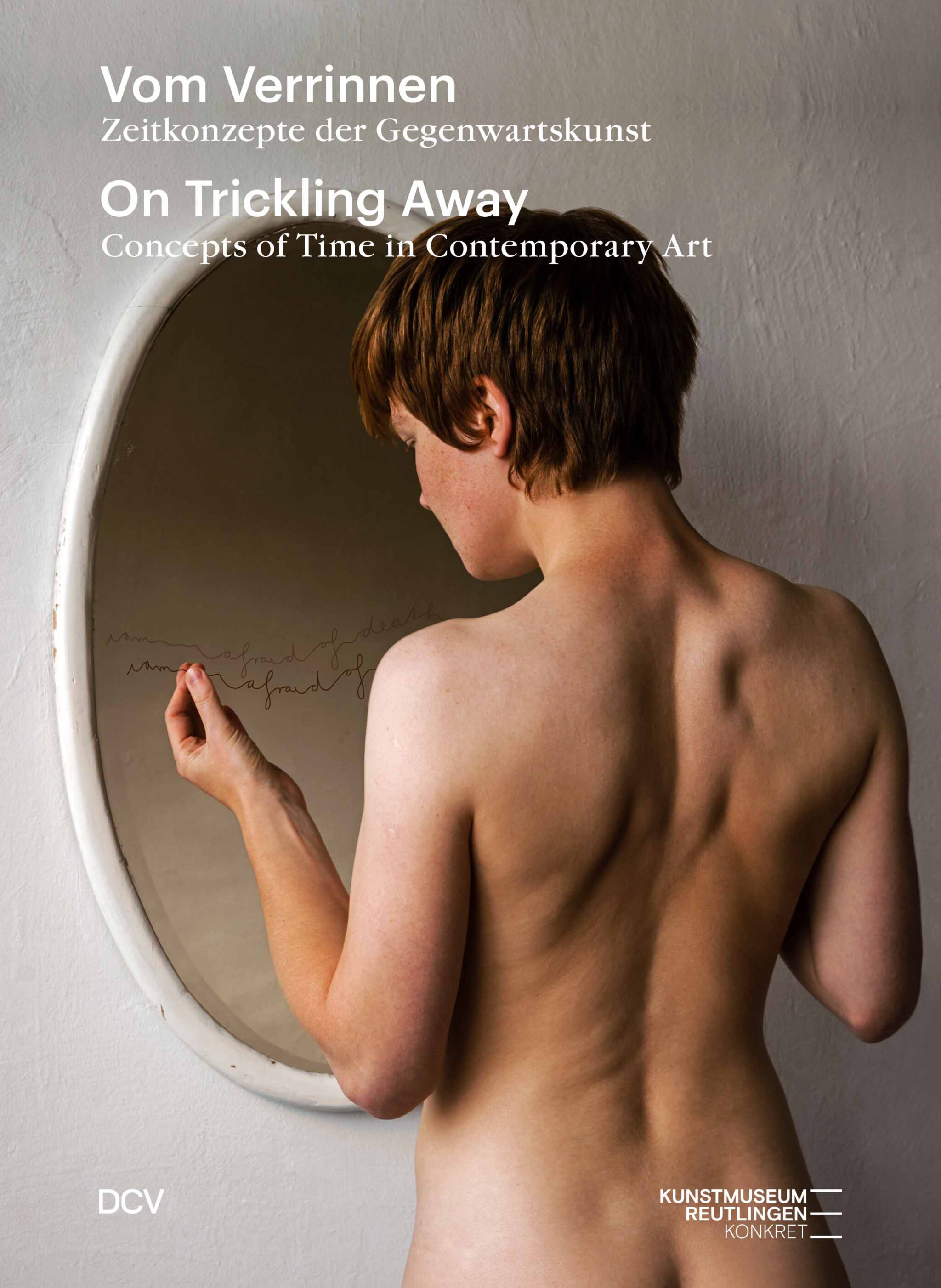
Concepts of Time in Contemporary Art30€ Add to cartTime, like space, is one of the key coordinates of human existence. The great mysteries of our lives revolve around it, only to remain unresolved when death inevitably ends our days. What is time’s role in art? The vanitas, a genre that was popular with painters in the seventeenth century, is hardly the earliest form that artists have devised to grapple with it. Holger Kube Ventura’s book On Trickling Away. Concepts of Time in Contemporary Art presents the ideas of contemporary artists who approach time from diverse angles. In the twenty-first century, their interest appears to have shifted from visualizations of future raptures to visions of slowness, of the distension, repetition, and standstill of moments in time. Bernard Aubertin (FR), Inge Dick (AT), Rom Gaastra (NL), Gosbert Gottmann (DE), Tommi Grönlund & Petteri Nisunen (FI), Manuela Kasemir (DE), Timo Klos (DE), Dimitry Orlac (FR), George Rickey (US), Patrik Söderlund & Visa Suonpää (FI), and John Woodman (UK) hone our awareness of how subjective the passage of time is and convey vivid experiences of its trickling away.
-

Larissa Kikol
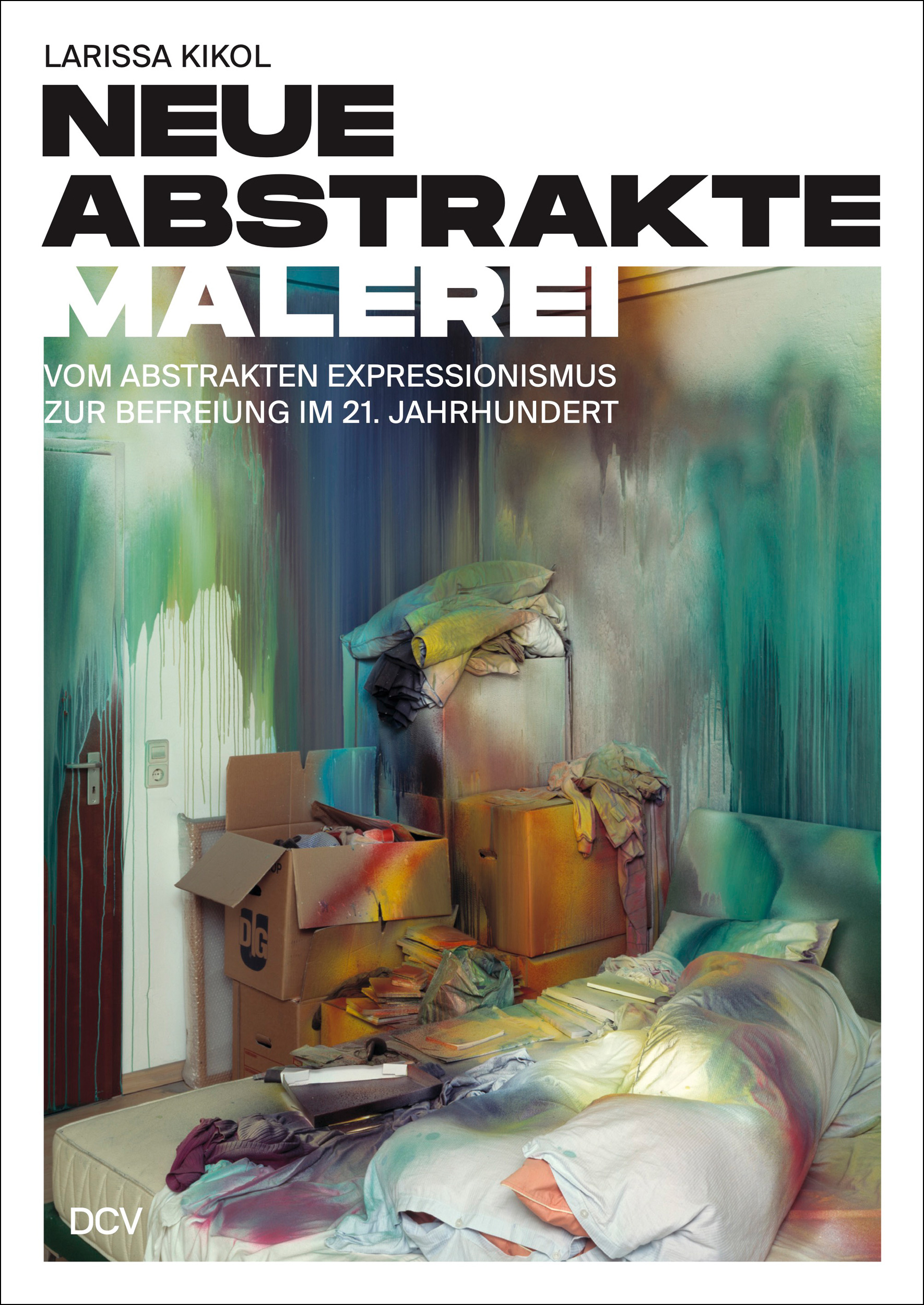
Neue abstrakte Malerei26€ Add to cartAbstract painting has reinvented itself: rid of political and ideological burdens, it now stands for pure creative autonomy. From the Abstract Expressionism of the postwar era to today’s expansive ease—in essays and conversations, Larissa Kikol sheds light on how this art form broke free of the narratives that attended its emergence and performed a “great reset.” From the seminal innovations of Katharina Grosse or Albert Oehlen and radically subjectivist approaches in Cecily Brown or André Butzer to cutting-edge tendencies like Dirty Minimalism and Post Vandalism, the book presents thrilling insights into a painting that puts emotion, color, and shapes center stage. An inspiring look at the renaissance of abstract art in the 21st century and a must-have reference work for all art lovers.
Artists: Frederic Anderson, Karla Black, Frank Bowling, Andreas Breunig, Jenny Brosinski, Cecily Brown, André Butzer, Diamonds Crew, Willehad Eilers, Jadé Fadojutimi, Helen Frankenthaler, Katharina Grosse, Antwan Horfee, Aneta Kajzer, Joan Mitchell, Michael Müller, Oscar Murillo, NEU, NUG, Albert Oehlen, David Ostrowski, Over, Daisy Parris, Marco Pariani, Jackson Pollock, Christopher Wool
-

Nam Kim
10€ Add to cartThe large-format paintings of Nam Kim (born 1991 in the US, lives in Vienna) are inhabited by chunky androgynous, naked figures, which gently blend with the vegetation, light and shadows, or ornaments around them. “The figures resonate with fluid grace, caught in the intimate moment between thought and touch.” (R. Grunenberg) Here, the human body is equal to its natural environs and not separate. Kim begins her paintings with zones of gestural abstraction, from which the characters grow like plants into her compositions. Kim grew up in Korea and her painting practice combines elements of Asian traditions (in art and theater) with Western art history and virtuality. This book presents her works of the last three years and includes an insightful essay by Robert Grunenberg.
-

Maxim Gunga
10€ Add to cartThe painter Maxim Gunga is utterly unafraid of physicality. His canvas is a riot of oil paints huddling up against one another, fusing like the beasts, the humans, and the urban landscape of Berlin that serve him as motifs. Body and soul, animal nature and architecture, the profane and the sacred, subculture and mass culture—everything interpenetrates in Gunga’s paintings in large formats, melded into hybrid bodies. The result is an ecstatic intimacy, a flowing of colors and more or less abstracted dynamic forms toward their primal state, toward the matrix, toward pure energy: eternal transformation. It makes sense, then, that his pictures also amalgamate diverse styles and periods in the history of painting. He borrows from (Neo-)Expressionism, from Art Brut, from Baselitz, Lüpertz, the Neue Wilde, from modernism and Fauvism, from van Gogh and Matisse. His pinpoint brushwork, which reveals his extensive training, interweaves art history with our contemporary lifeworld and our affects. All the specters of the past and the present come to meet us in the pictures gathered in this catalogue, in a frenzy of the senses, in the primordial soup of Berlin, into which we dive with joyful abandon.
-

Philip Loersch
POW – PORTRAITIST OF WRITING34€ Add to cartPhilip Loersch (b. Aachen, 1980; lives and works near Munich) combines painstaking imitations of printed writing with hyperrealist colored-pencil drawings; for instance, he transfers pages from encyclopedias not only onto paper, but also onto three-dimensional objects such as soapstone. His works reveal the fragility of truth and authenticity while commenting with subversive irony on the postmodern disintegration of the idea of originality. His art has been exhibited at renowned institutions like Kunsthaus Zürich, Museum Kunstpalast Düsseldorf, and Hamburger Kunsthalle. He has won numerous fellowships and awards, including the Kunstpreis Berlin für Bildende Kunst. This monograph gathers his works created between 2016 and today.
-

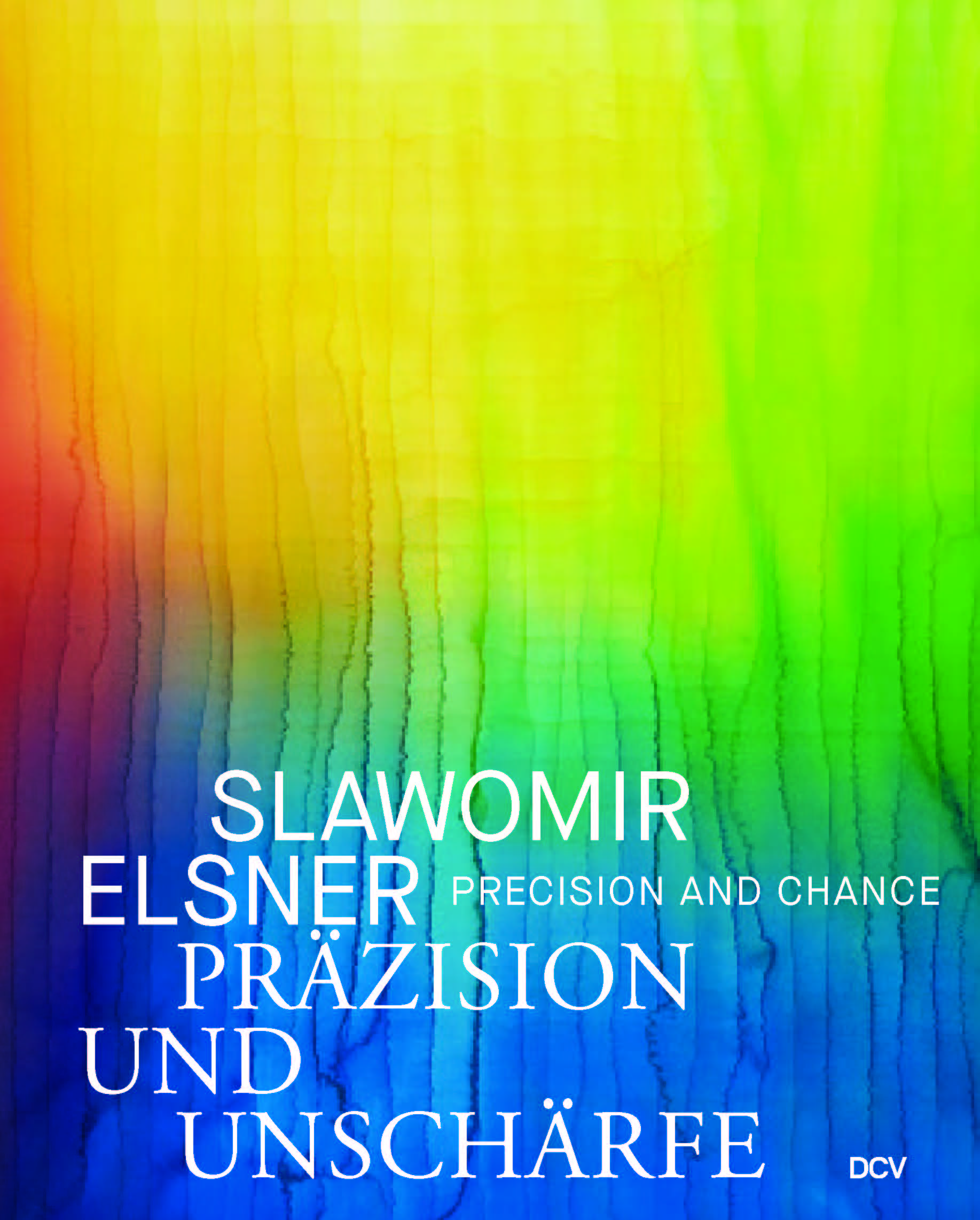
Slawomir Elsner
Precision and Chance38€ Add to cartComplex Processes of Abstraction
International audiences know Sławomir Elsner (b. Wodzisław Śląski, Poland, 1976; lives and works in Berlin) for his naturalistic paintings and abstract watercolors, but it was his brilliantly executed colorful drawings that made him famous. The technique of his work in crayons is as formidable as it is singular and underlies his many adaptations of legendary works from the history of painting that seem blurry but are actually drawn in accurate lines.
More generally, Elsner’s art probes the effect of different media and the stories they tell. He interrogates the images they transport and challenges the consumers to subject their own visual experiences to a similar critical review. Do pictures represent reality or distort it? That is the question that guides his inquiries.
Elsner works almost exclusively in series. What makes this book special is that it includes an index in which eleven of these bodies of work are reproduced in their entirety. The Old Masters series alone comprises 143 works made in the years after 2014. It is complemented by the series Windows on the World (2008–2010), Feuerwerk- und Luftabwehr (2004), Unsere Sonnen (2004–2005), the watercolors of Tagstücke and Nachtstücke (2014–2021), and others.
Many of the works frame accidents, disasters, wars, nuclear tests, or other horrible events. By harnessing the means of art to detach their depiction from a documentary setting, Sławomir Elsner achieves an unrivaled degree of aestheticization; his works are fascinating at first glance, only to fill the beholder with a creeping dread.
-

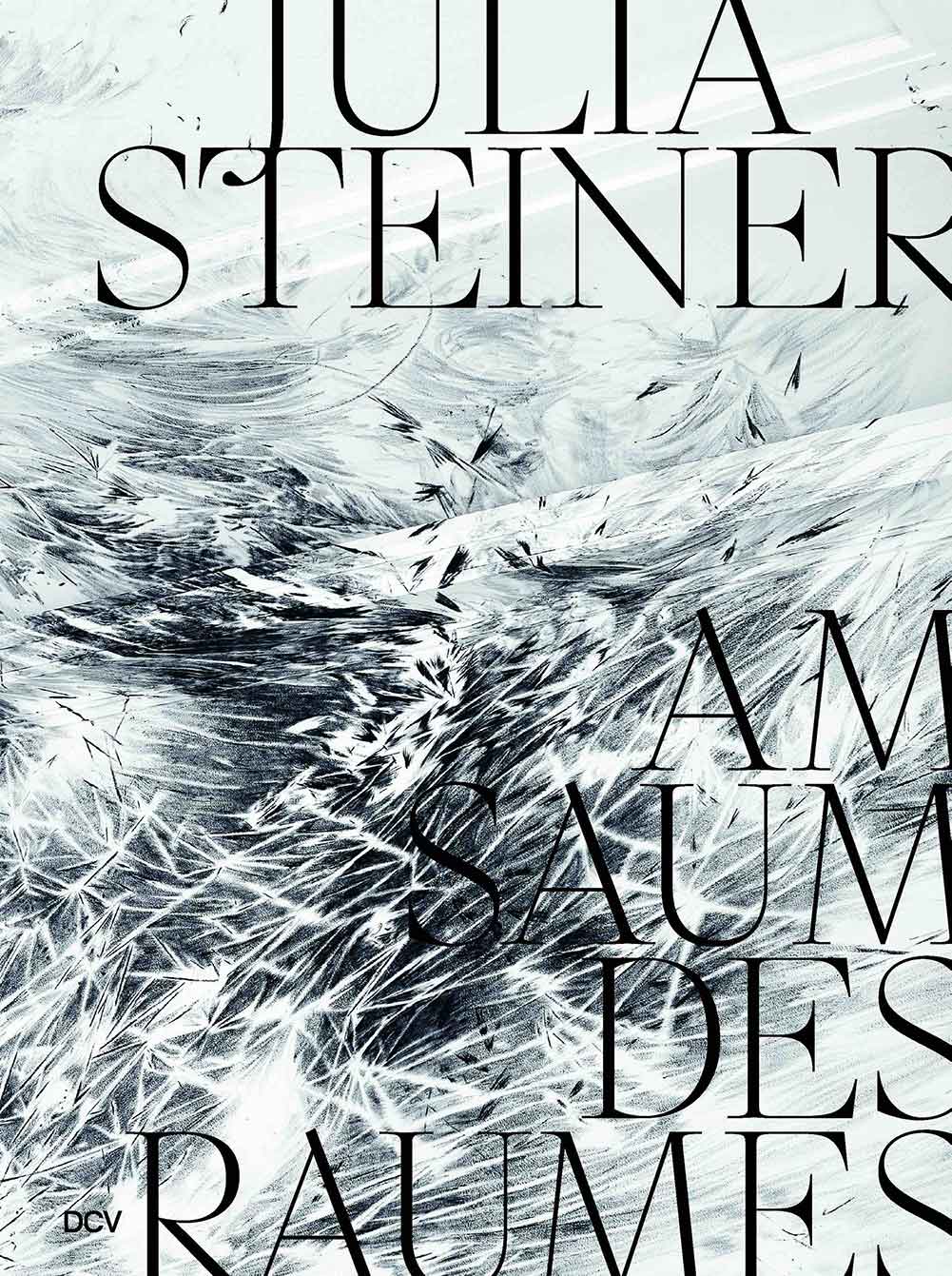
Julia Steiner
Am Saum des Raumes24€ Add to cartExpansive Worlds
The pencil drawings of Julia Steiner (b. Büren zum Hof, Switzerland, 1982; lives and works in Basel) are monumental in size. And yet they exude an air of delicacy and evanescence, sprawling across the edges of the paper and taking possession of the space around them. Processes frozen in an instant—like wind sweeping through clouds, light piercing the night, or the ground breaking apart—erupt with unexpected vigor. The beholder believes that he has identified a motif, only to lose sight of it a moment later in the abstraction of the painterly drawing. The artist’s oeuvre lays out a cosmos of images that crack and burst into pieces, explode and implode. The present book accompanies Julia Steiner’s first institutional solo exhibition in Germany.
Julia Steiner studied at the Bern University of the Arts (HKB) from 2002 until 2007, with a semester abroad at the Berlin University of the Arts in 2005. In 2018–19, she held an interim professorship at the Braunschweig University of Art (HBK), leading the drawing class. Steiner’s work has won her several accolades, including the 2009 Swiss Art Award and the 2017 STRABAG Artaward International (Vienna).
- Release February 2026
Tim David Trillsam
Willkommen im Panoptikum38€ Add to cartWith his idiosyncratic figurative bronze sculptures Tim David Trillsam (born 1985 in the Swabian Alb) has hit a nerve. The artist’s “self memorials” ask the viewer to remember the transience and illusion of this very self. Although Trillsam employs a loaded material that evokes many great sculptors before him, his own sculptures resist the past. His figures are tangibly protagonist of the present and they provoke with their exaggerated sensuality, twisted bodies, and oversized hands and feet. “The oversizing is programmatic. As is the skeptical approach to the human species. Trillsam proceeds as a thoughtful questioner with doubt yet also irritation,” writes Dorothee Baer-Bogenschütze. Her in-depth art-historical analysis is part of this forthcoming book about Trillsam’s oeuvre since 2012.
-
Emil Nolde
A Critical Approach by Mischa Kuball40€ Add to cartWhat is Visible and What is Not
Mischa Kuball (b. 1959, Düsseldorf; lives and works in Düsseldorf) investigates public and institutional spaces and the social and political discourses that shape them. At the invitation of the Draiflessen Collection and with support from the Nolde Stiftung, the conceptual artist grappled with the life and oeuvre of the painter Emil Nolde (1867–1956) and created a body of work titled Nolde/critique/Kuball. In piece after piece, Kuball drains Nolde’s works of the colors that made the Expressionist famous, challenging the beholder’s preconceptions and examining perception and its constituent processes. Laid out in black and white, the book accordingly directs our attention not only to what a picture shows, but also to how structures and organizing principles emerge into view.
Mischa Kuball has been professor of public art at the Kunsthochschule für Medien Köln, and associate professor of media art at the Staatliche Hochschule für Gestaltung/ZKM Karlsruhe since 2007.
Note: This publication is released in German, English and Dutch. When ordering, please let us know which edition you would like to receive. Use the annotation box on the checkout page.
-

Roland Schappert
Liebe +–24€ Add to cartRoland Schappert’s Liebe+– is a poetic voyage into the mysterious and paradoxical landscapes of love. Combining an unrelenting eye with lyrical precision, Schappert captures the fragile equilibrium between intimacy and distance, between the longing for union and the need for detachment. The +– in the title is a symbolic shorthand for the ambivalence of love: attraction and repulsion, delight and pain, their constant interplay defining the dynamic of love.
The terse and sometimes aphoristic writings enter into a dialogue with the author’s artful and enigmatic pictures and sculptures—text images sewn out of strings of beads or painted in Champagne chalk that subtly mirror and refract the emotional tension of the poems. Nimbly balancing on the fine line between devotion and disaffection, Schappert’s verses are interspersed with ironic allusions to our digital and urban contemporary world.
By forging a symbiosis of poetry and image, this artist’s book charts a world unto itself in which the boundaries between I and you blur and subject and object are fused in a collective we. It invites us to contemplate love with a fresh eye—as tender touch and fractious idea, as a play of expectation and disappointment that we begin anew every day.
‘Love in the age of social media and dating apps, but not from a Gen Z perspective – but from someone who has known this feeling for much longer. And who brings his experiences – which are certainly representative of many – in ever new combinations of text and images into a form that makes reading and viewing a memorable experience.’ – Wolfgang Ullrich
- Release February 2026

Werner Hahn
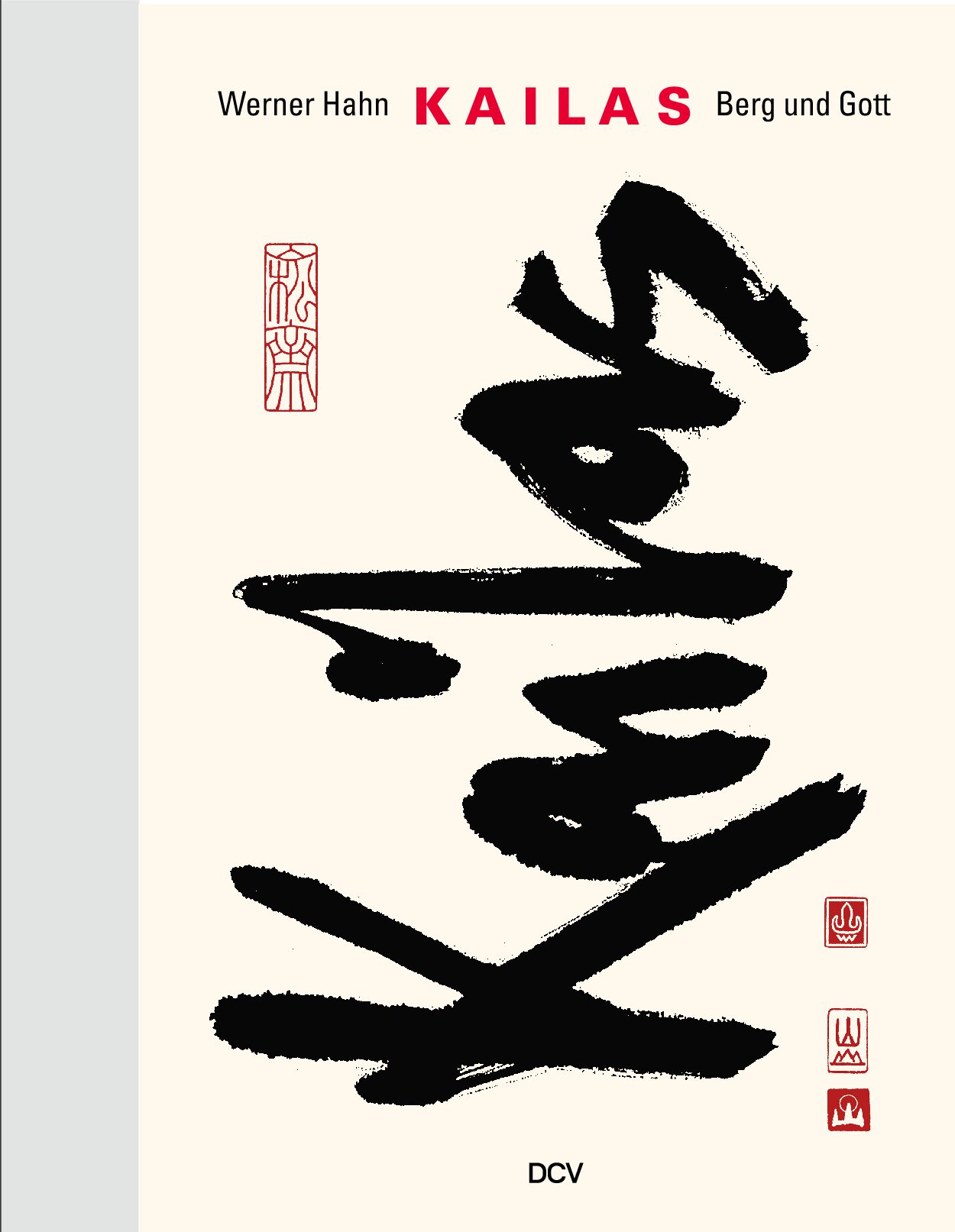
Kailas. Berg und Gott72€ Add to cartKailas is far more than just a mountain—it is a symbol of spiritual quest, transcendence, and enlightenment. In this book, the painter and photographer Werner Hahn (b. Karlsbad, now Czech Republic, 1944) approaches the holiest peak in Asia from a unique perspective: as an artist, traveler, and profound connoisseur of its cultural history. This book interweaves art, mythology, and historical accounts from Buddhism and Hinduism. Hahn’s personal travel experiences, complemented by reflections on Western travel literature and spiritual sources, enter into a dialogue with ancient traditions, revealing Kailas as a place of both deep personal experience and artistic contemplation. A visual pilgrimage to one of the most significant mountains in the world.
-
Kay Rosen
NOW AND THEN35€ Add to cartKay Rosen (b. Corpus Christi, TX, 1943; lives in New York City and Gary, IN) has made art out of language since the 1970s. She garnered international acclaim with wall pieces spelling individual words, phrases, or strings of letters, often on a vast scale. Her works combine minimalist form, aesthetic force, and clever ideas in compelling ways. By modulating their arrangement and typographic and color design, the artist puts irritating twists on everyday terms and expressions. Subtle alterations often yield striking effects. Through punning, reframing, and onomatopoeic exploration, Rosen continually unearths unexpected layers of meaning. Released on occasion of the artist’s eightieth birthday, the publication presents wall pieces, paintings, drawings, prints, and video stills, inviting readers to discover or rediscover a multifaceted oeuvre that blends lightness and humor with analytical acumen in singular fashion.
Kay Rosen obtained a B.A. in linguistics, Spanish, and French at Tulane University’s Newcomb College in New Orleans, LA, in 1965. She then taught Spanish at Indiana University in Gary while attending studio classes at the School of the Art Institute of Chicago, where she subsequently taught for twenty-four years.
-

Glückliche Tage
32€ Add to cartWe see in contrasts. Freedom from pain follows pain, and felicity is the more radiant after a period of misfortune. Happiness, that is to say, displaces unhappiness and is perhaps its recompense; what is certain is that, as antonyms, they are (at least in this world) inconceivable without each other. The contrast they form also underlies the tensions inherent in the works in this catalogue. Some take us straight from the pinnacle of happiness down into the abyss, while in others the gradients of ascent or descent are so gentle that no culmination is perceptible. What all oeuvres gathered in the book have in common is that they furnish the human being, a social creature, with an experience of resonance. Happiness and unhappiness reverberate between the art and the beholders, leaving, in the best case, a lasting impression. Opening the catalogue—a metaphor for the human condition materialized in paper—one overhears this serenely melancholy echo of the works.
Artists: Rui Chafes, Tamara Eckhardt, Nan Goldin, Felix Gonzalez-Torres, Barbara Hammer, Carsten Höller, Ken Lum, Johanna von Monkiewitsch, Yoko Ono, Heike Weber, Stefan Wissel
With contributions by: Yevgenia Belorusets, Nell Sophie Bender, Elias Bendfeldt, Laura Berestecki, Annabella Ernst, Annika Gaeth, Hristina Georgieva, Markus Heinzelmann, Malwin Kraßnigg, Max Florian Kühlem, Natascha Laurier, Martin Middeke, Navaz Roomi-Mirhosseini, Vanessa Joan Müller, Julia Neumann, Martin Paul, Caroline Planert, Maike Prause, Arne Rautenberg, Kira Sophie Röller, Gina Marie Schwenzfeier
-

Sonja Yakovleva
10€ Add to cartSonja Yakovleva (b. Potsdam, 1989; lives and works in Frankfurt am Main) uses pornographic representations and images from the internet as templates for papercuts, some in large formats, that grapple with personal and public stories about women, power relations, sexuality, and violence. The silhouettes show popular motifs that have served to ingrain fairy tales, myths, and ideologies in the collective consciousness from the colonial era to modernism and the early twenty-first century. Yakovleva, whose art is often associated with sex-positive feminism, appropriates this folkloristic visual idiom and hybridizes and sexualizes it. Dessous and strap-on dildos, for example, figure as preserved specimens of butterflies and insects, bringing historic scientific expeditions to mind. Yet her work also addresses the capitalist urge to categorize, evaluate, and market every kink.
-

Gregor Hildebrandt
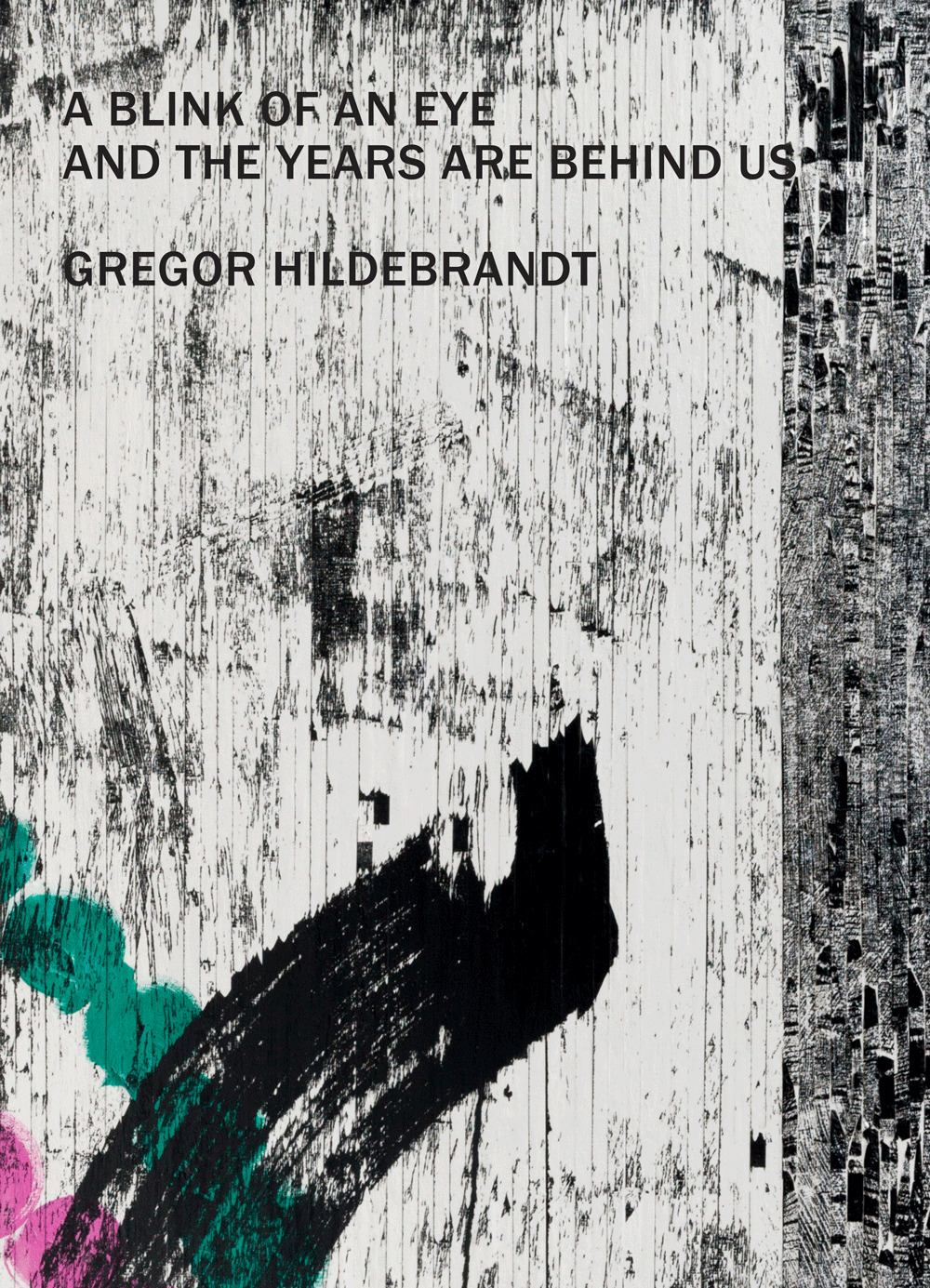
A Blink of an Eye and the Years are Behind us48€ Add to cartFor the past two decades, Gregor Hildebrandt (b. Bad Homburg, 1974; lives and works in Berlin) has transformed analog audiotapes, cassettes, and records into collages, sculptures, panel paintings, and installations. Melding visual art with music, he has charted a complex creative vision crossing boundaries of medium and genre that he continually refines. Before using a tape, he records selected music—typically a single song—on it, whose lyrics he quotes in the work’s title. The artist’s output draws on his personal repertoire of bands that share a romantic narrative of loneliness and a melancholy keynote. The same attitude toward life is reflected in Hildebrandt’s work. The book offers insight into all periods of the artist’s oeuvre and is rounded out by archival materials from Hildebrandt’s studio, his project space Grzegorzki Shows, and the music label Grzegorzki Records that illustrate his creative process.
Gregor Hildebrandt studied at Kunsthochschule Mainz from 1995 until 1999 and at the Berlin University of the Arts from 1999 until 2002. He was a fellow of the Deutsches Studienzentrum in Venice in 2003 and worked in Vienna on a fellowship from the German Academic Exchange Service in 2005–06. He has been professor of painting and graphic art at the Academy of Fine Arts in Munich since 2015.
-

Stephan Kaluza
Das Rheinprojekt48€ Add to cartReinterpreting the Classical Panorama
The mythical character of the Rhine as a ‘German symbol’ has long been of profound interest to poets and visual artists. Today, however, the Rhine has lost the aura of a great romantic river along much of its course: from Basel to Rotterdam, it serves as a high-volume shipping lane, and sprawling industrial installations line its banks.
At the dawn of the new millennium, Stephan Kaluza (b. Bad Iburg, 1964; lives and works in Düsseldorf) went on an almost eight-months-long walking tour, following the Rhine from its source at the foot of Piz Badus in Switzerland to its debouchment into the North Sea near Rotterdam. During this thousand-mile trek along the river’s right bank, he stopped every minute—after between two and three hundred feet—to take a photograph of the opposite shore. In this way, his camera compiled a painstaking record of the Rhine in 21,449 individual shots. Digitally assembled in a single six-inch-tall composite image, the pictures form a two-and-a-half-mile stream.
What Kaluza created in this project would have been inconceivable before the development of digital photography, which made the seamless presentation of the pictures in a single panoramic band possible. What is more, the computers capable of processing the enormous quantities of data did not arrive until a few years ago. It took the artist’s assistants a full two years just to edit the images. Harnessing digital technology, Kaluza creates for photography what had been the exclusive precinct of painting: a sweeping holistic perspective. A large number of the fascinating panorama photographs were published in the imposing tome Der Rhein in 2007. Das Rheinprojekt now presents a freshly composed selection from this treasure trove.
Stephan Kaluza received a comprehensive education in Düsseldorf in the 1990s, studying photography at the city’s University of Applied Sciences, art history at the Academy of Fine Arts, and history and philosophy at Düsseldorf University. Since 1995, his work has been shown at numerous galleries in Seoul, Shanghai, Jerusalem, Los Angeles, Berlin and elsewhere. Kaluza’s plays have been performed in Düsseldorf, Berlin, and Stuttgart.