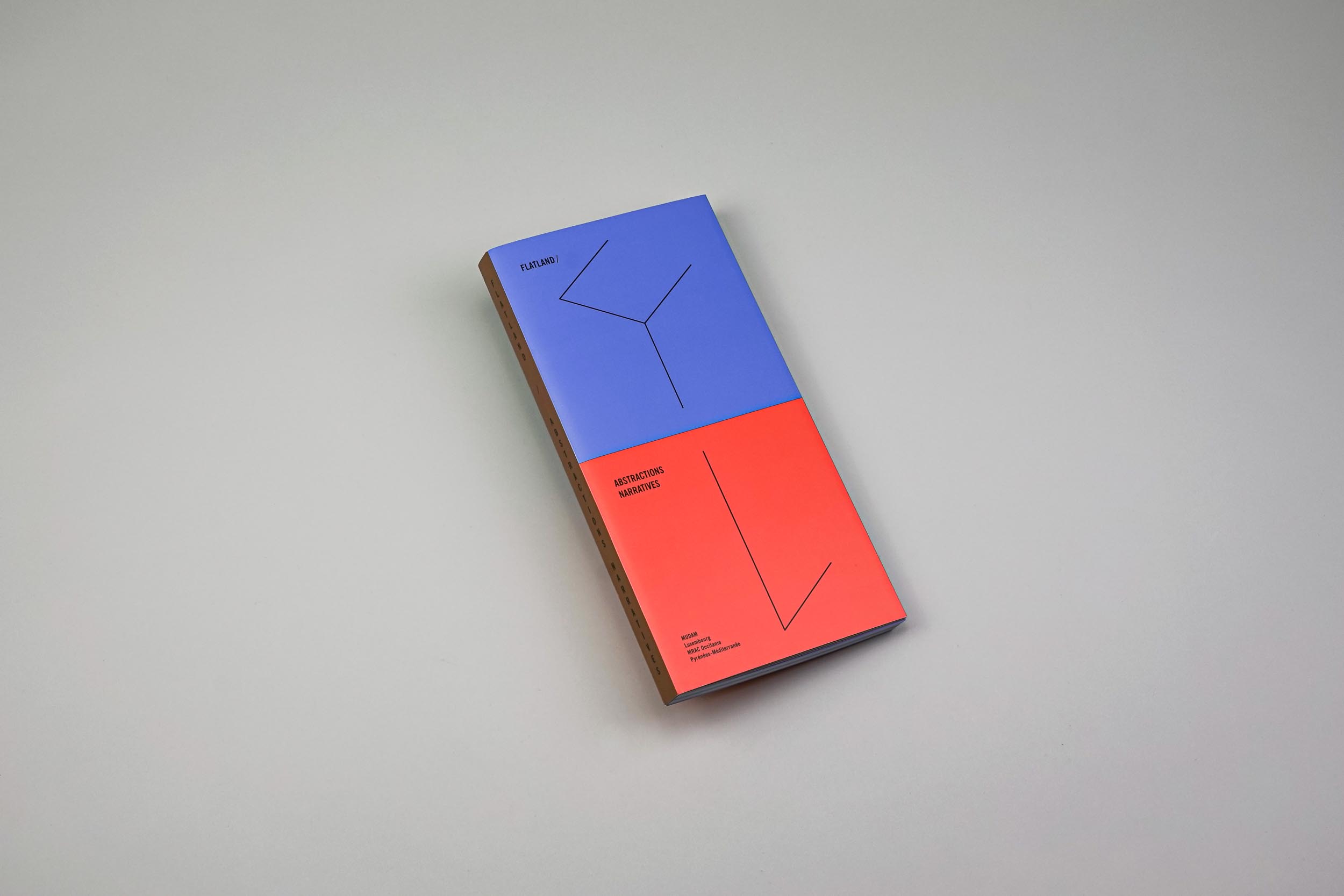
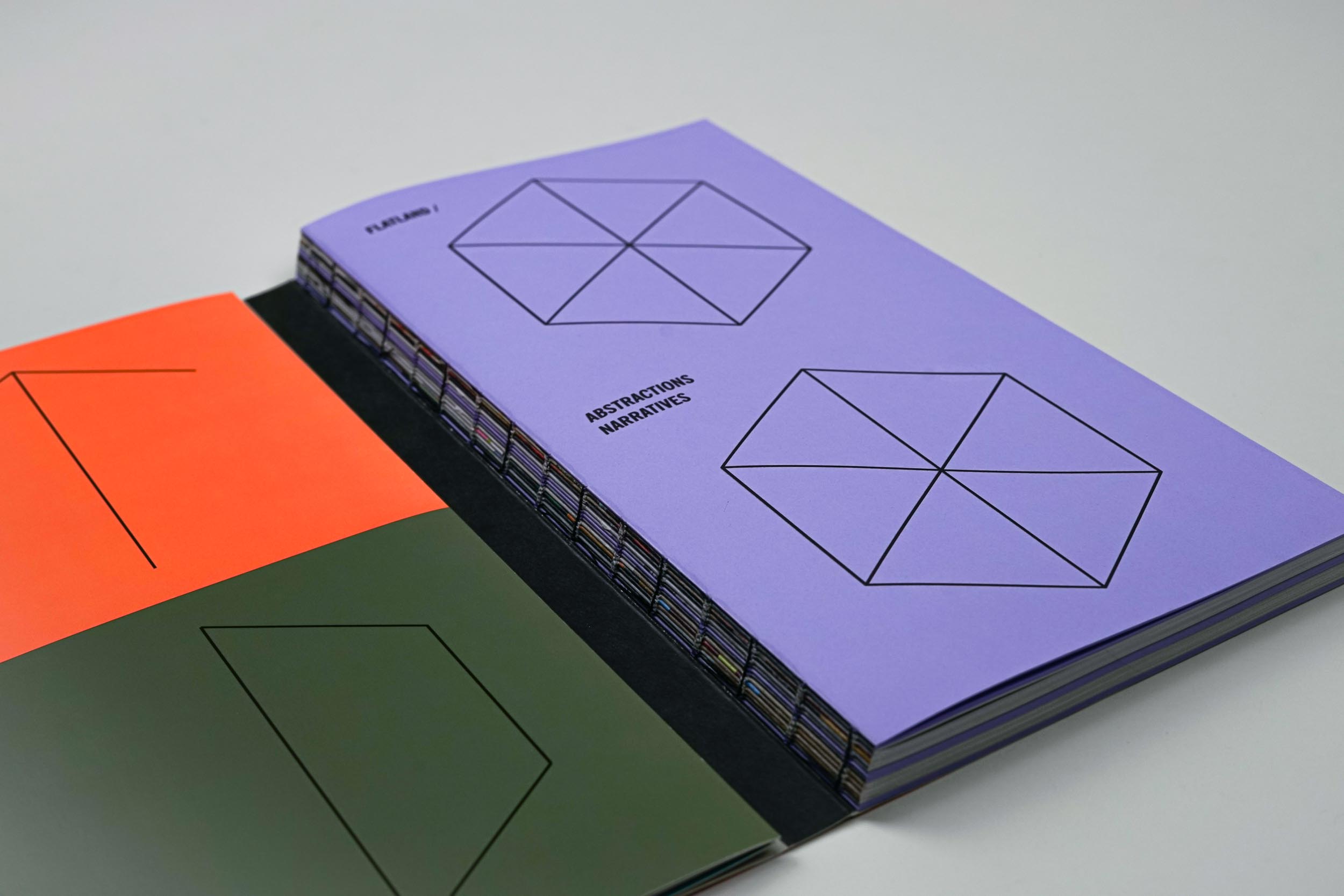
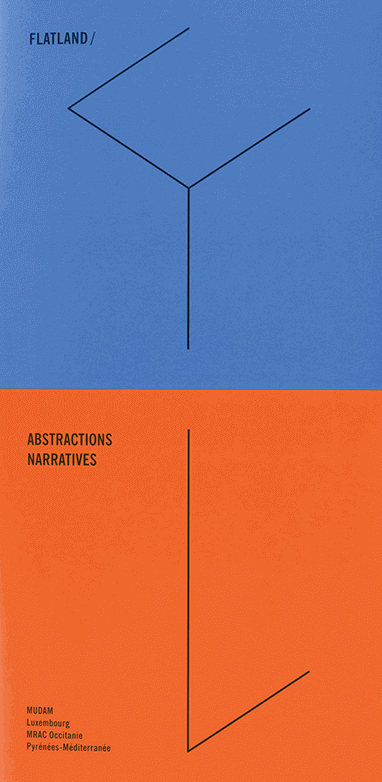
Flatland
 | |
|---|---|
| Editor(s) | Musée Régional d‘Art Contemporain Occitanie, Mudam Luxembourg – Musée d'Art Moderne, Grand-Duc-Jean |
| Author(s) | Marianne Derrien, Sarah Ihler-Meyer, Vincent Pécoil, Klaus Speidel |
| Design | Fanette Mellier |
| Size | 15 x 30 cm |
| Pages | 224 |
| Illustrations | 200 |
| Cover | Softcover in Swiss brochure with flaps |
| Language(s) | English, French |
| ISBN | 978-3-942924-21-4 | Out of stock |
Between the Dimensions
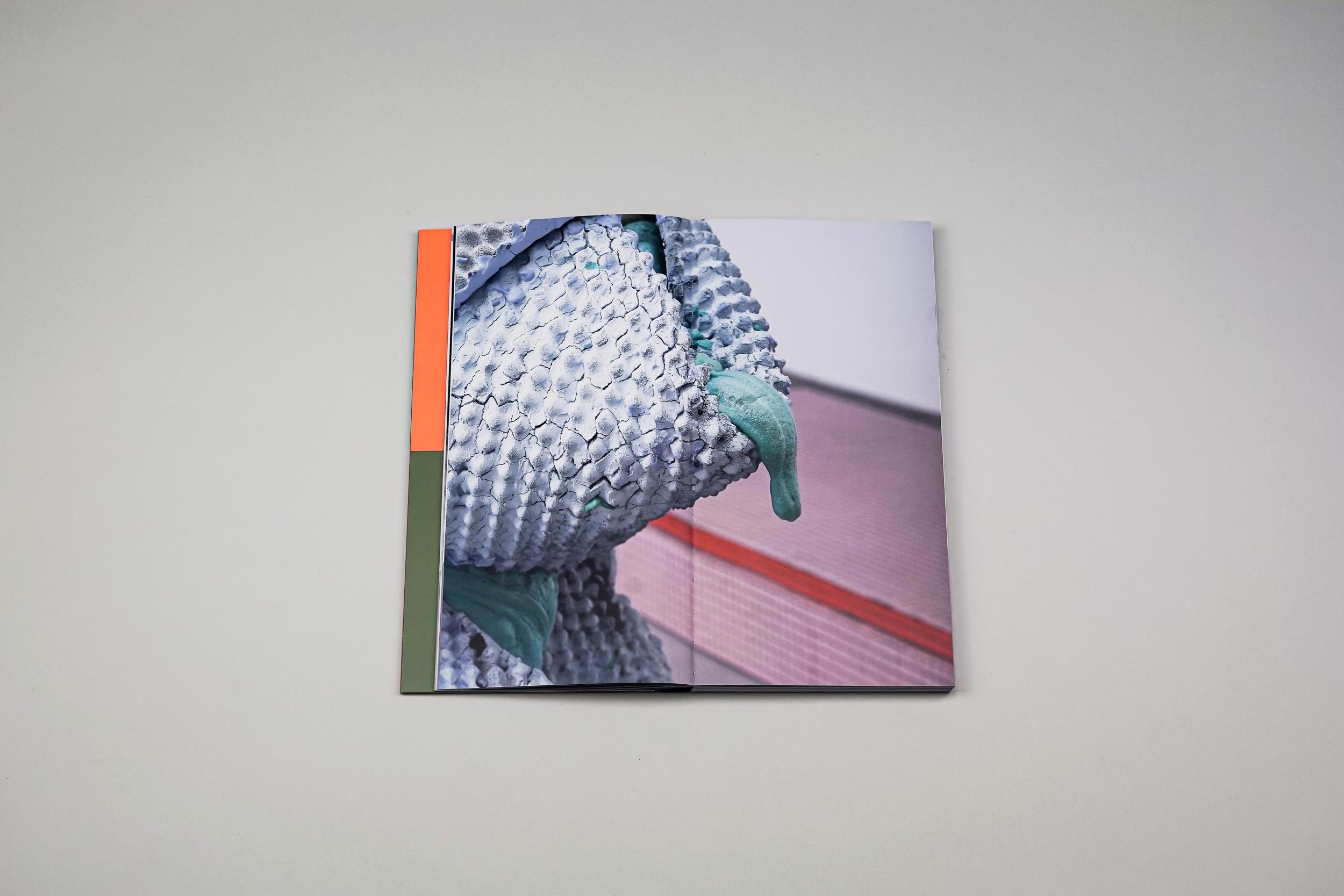
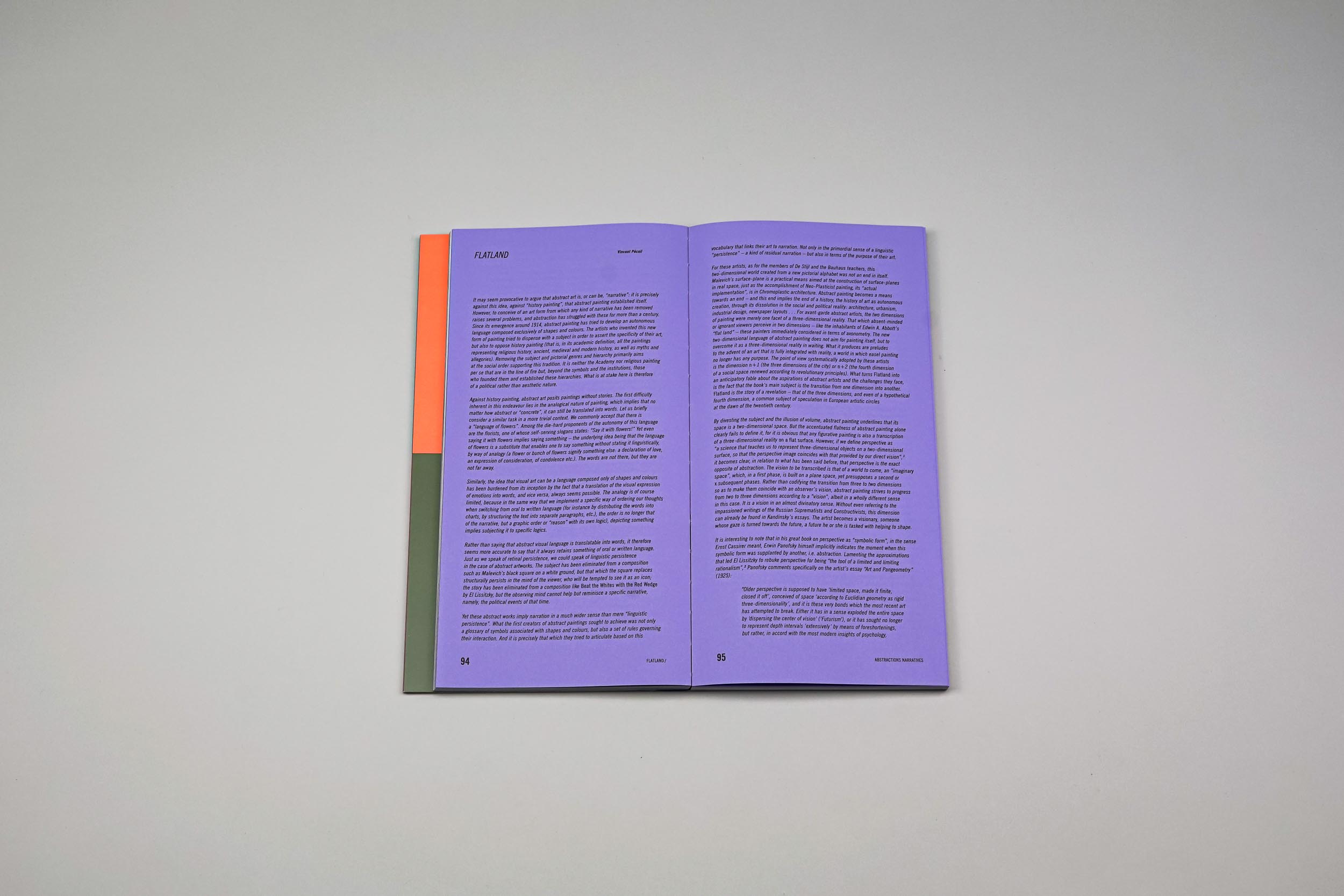
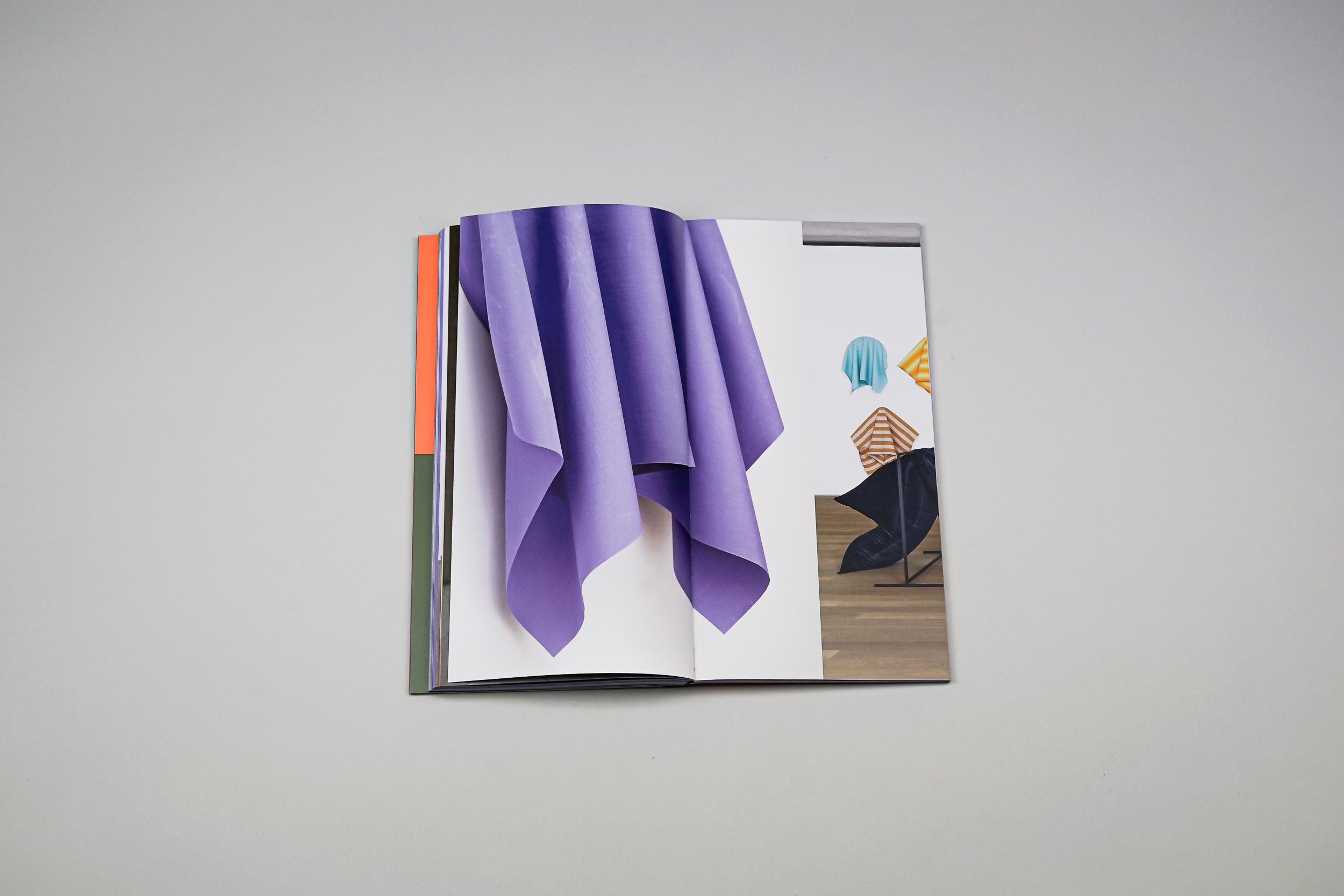
The title of this book quotes a literary work by Edwin A. Abbott that was first published in 1884 and gradually gained considerable fame: an allegorical satire whose protagonists are geometric figures, narrated by a square that relates its discovery of a three-dimensional world. Flatland examines the ways in which artists have found inspiration in the formal vocabularies of abstraction since the 1960s. The lavishly designed book gathers works from the past six decades that challenge orthodox interpretations of abstraction.
Contributing artists: Laëtitia Badaut Haussmann, Francis Baudevin, Philippe Decrauzat, Marie-Michelle Deschamps, Angela Detanico / Rafael Lain, Hoël Duret, Sylvie Fanchon, Liam Gillick, Mark Hagen, Christian Hidaka, Sonia Kacem, Tarik Kiswanson, Vera Kox, Sarah Morris, Reinhard Mucha, Damián Navarro, Camila Oliveira Fairclough, Bruno Peinado, Julien Prévieux, Eva Taulois, John Tremblay, Pierre Vadi, Elsa Werth, Raphaël Zarka
Out of stock
Out of stock
More books
-

Wyatt Kahn
Paintings and Sculptures36€ Add to cartWyatt Kahn’s (b. New York, 1983; lives and works in New York) work hovers between two and three dimensions, reviving aspects of American 1960s Minimal Art. In the tradition of minimalist abstraction, his multipart paintings seem devoid of content, but their construction is a sophisticated choreography of geometric shapes. Instead of delineating them on the canvas itself, he transforms them into physical elements composed of canvas stretched over strips of wood that he mounts on the wall as reliefs, making the latter an integral part of the composition. Working on the interface between painting and sculpture, the artist also references Ellsworth Kelly’s single and multiple shaped canvases.
Wyatt Kahn’s works are held by major collections including the Metropolitan Museum of Art, New York; the Museum of Modern Art, New York; the Whitney Museum of American Art, New York; the Centre Pompidou, Paris; the Museum of Contemporary Art, Los Angeles; the Dallas Museum of Art; the Museum of Contemporary Art, Chicago; and the Albright-Knox Art Gallery, Buffalo.
-
Ann Wolff
Observations and Reflections44€ Add to cart“Art is coming from my inside. I am working as its servant.—I let it out not thinking too much—using my hands and gesture—choosing a material to put it on place. I do not use the art. It is using me.“
Ann Wolff (b. Lübeck, 1937; lives and works in Visby and Kyllaj, Sweden) has ranked among the most significant and most influential glass artists on the international scene for over five decades. Yet she has also worked in bronze, aluminum, nickel silver, and concrete, creating abstract as well as figurative sculptures, and produced a sizable oeuvre on paper: pastels, drawings, and fine art prints. Ann Wolff enrolled at the legendary Ulm School of Design in the 1950s to study visual communication with Otl Aicher. From 1993 until 1998, she was professor of “materials-related design” at the University of Fine Arts (HFBK) in Hamburg. Her works, which have garnered an array of prizes, have been shown in numerous solo exhibitions and are held by renowned public and private collections all over the world.
- Out of stock

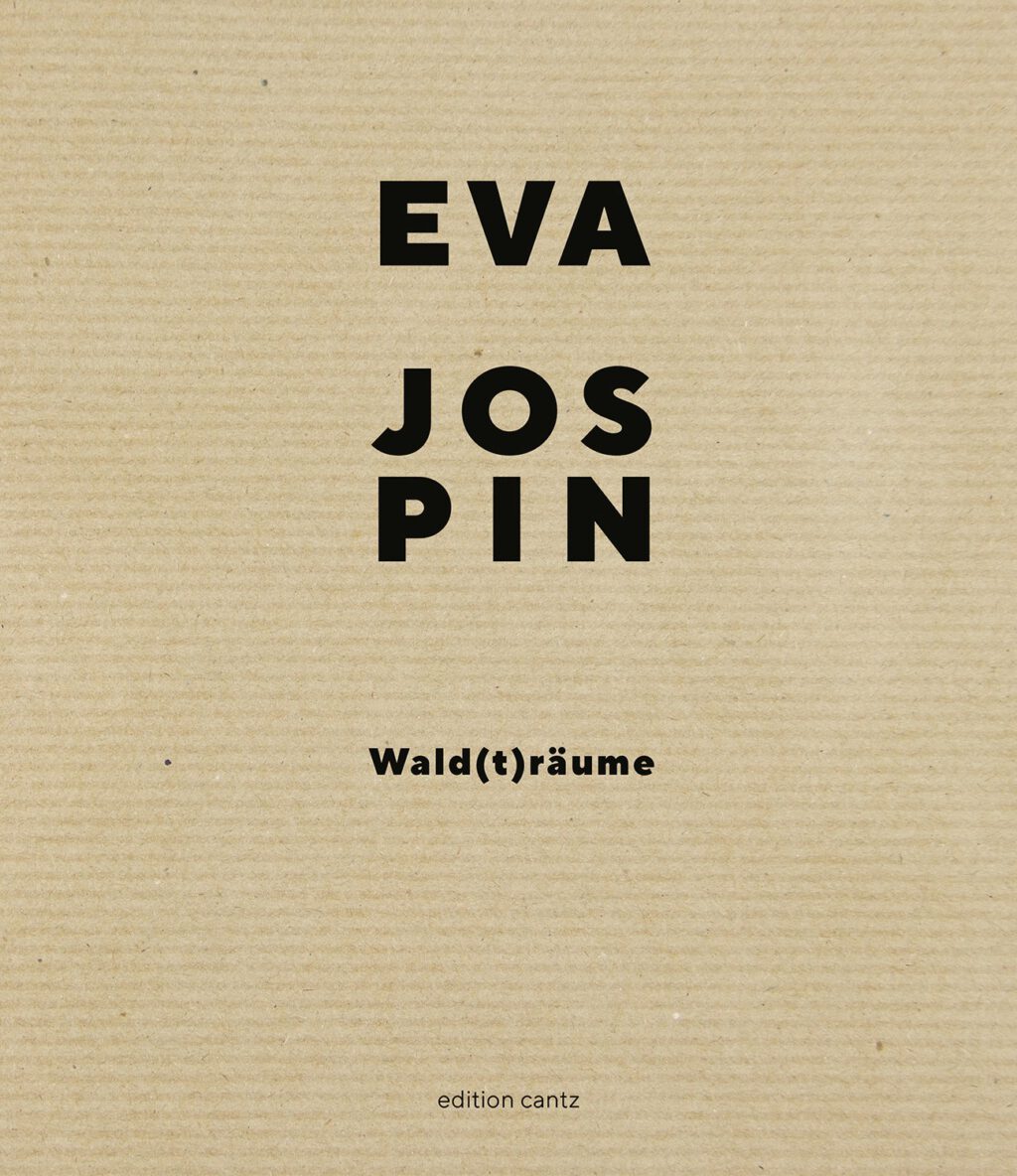
Eva Jospin
Wald(t)räume22€ Read moreThe Forest as a Place of Longing: Eva Jospin’s Magical Corrugated Cardboard Sculptures
The French artist Eva Jospin (b. 1975, Paris; lives and works in Paris) cuts and layers corrugated cardboard to create sculptures and reliefs. Handcraft and precision are essential aspects of her work. The artist retains the original color of the cardboard, since, for her, the material itself already contains sufficient color variations and nuances. The recurring motif is the forest — consisting of numerous trunks, branches, and twigs in extreme density and interspersed with black shadows. They suggest depth and stimulate the viewer’s imagination. Eva Jospin does not reproduce nature one to one, but conveys the feelings of fear, anarchy, or freedom that it triggers: The forest as a universal place of longing.
-

The Art of Society
1900–194529€ Add to cartThe Collection of the Nationalgalerie, Berlin
The Neue Nationalgalerie in Berlin, the last building designed by Mies van der Rohe, has been closed a full six years for refurbishment. To mark its reopening the museum is presenting the highlights of its classical modernist collection under the title The Art of Society, 1900–1945. Visionary, critical, resigned or utopian, the paintings and sculptures bear witness to art’s dialogue with prevailing social conditions – from the German Empire to the First World War, the Weimar Republic and ultimately National Socialism. The catalogue documenting all works in the exhibition traces the major artistic tendencies during the first half of the 20th century in thirteen chapters. The Art of Society, 1900–1945 offers a renewed encounter with works by Edvard Munch, Ernst Ludwig Kirchner, Tamara de Lempicka, Lotte Laserstein, Otto Dix, George Grosz, Max Beckmann, and many others that is as captivating as it is illuminating.
Click here for the German edition.
-
Mihai Olos
42€ Add to cartMihai Olos (b. Ariniș, Romania, 1940; d. Endingen am Kaiserstuhl, 2015) ranks among the most fascinating artists of the second half of the twentieth century. His adaptations of the formal vocabulary pioneered by Constantin Brâncuși are unrivaled in their creative originality. His works evince an utterly novel approach to the combination of materials from the culture of rural Romania with the visual strategies of modernism. His formidable oeuvre engages with conceptual and minimal art and comprises paintings, drawings, and sculptures, sometimes in the dimensions of land-art projects, as well as performances and poetry. Despite the constraints imposed by the communist system, his art and travels—during which he also met his kindred spirit Joseph Beuys—were dedicated to the unerring pursuit of his vision of social sculpture and radical utopian architecture.
-

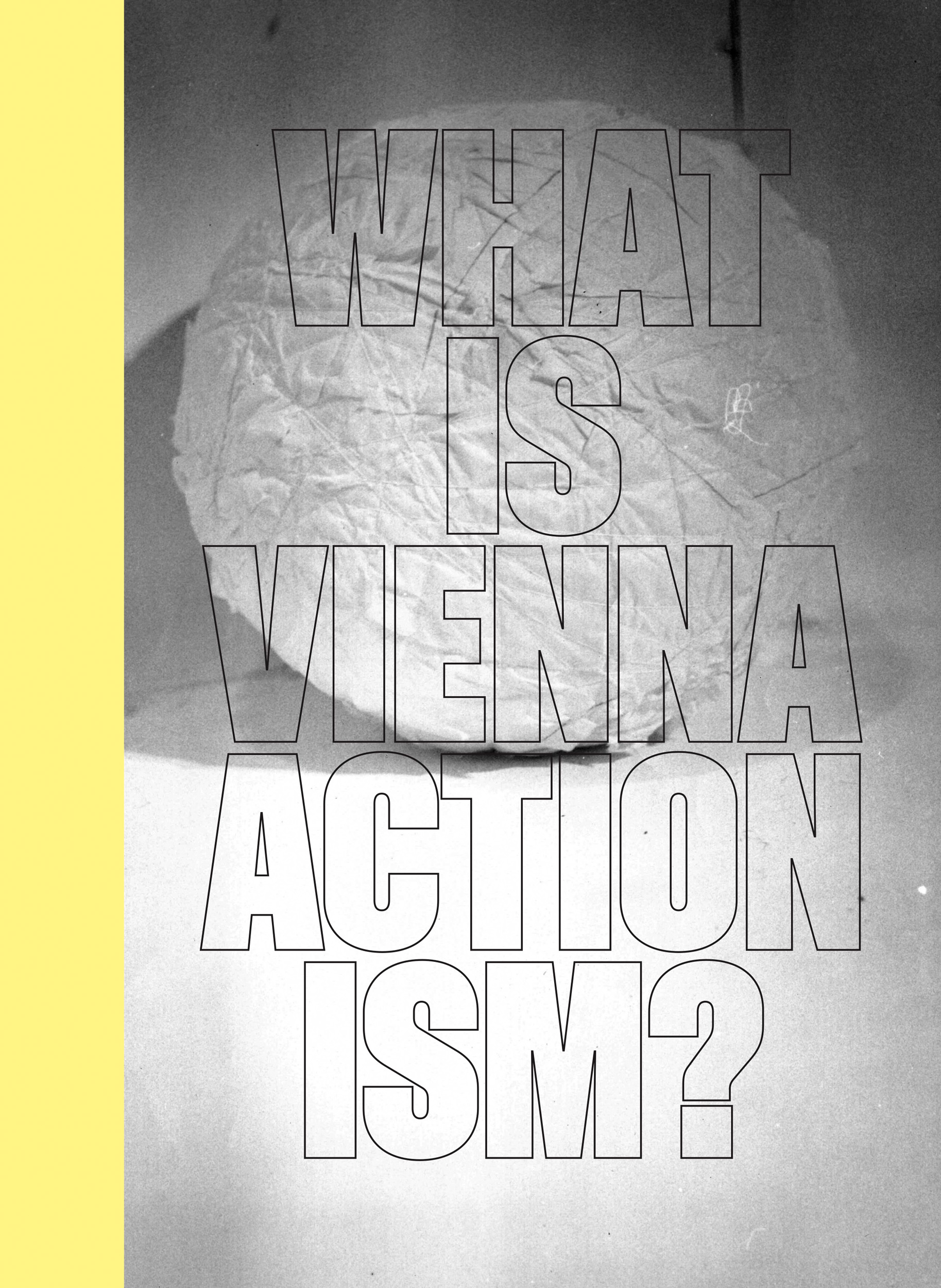
What is Vienna Actionism?
50€ Add to cartBlows were dealt. An artist exposed and cut himself, others urinated in glasses, daubed themselves with dirt, and masturbated over the Austrian flag. Meanwhile, music was playing, including the national anthem; someone read pornographic writings. Vienna in the late 1960s: what had started in the artists’ homes and studios was now brough out on the grand stage, and taboos were broken in full view of the public.
The Vienna Actionism Museum’s first publication is dedicated to the idea of Vienna Actionism in the dynamic context of abstract realism, Fluxus, and the international Happening scene. The book relates the story of one of art history’s most influential art movements, spearheaded by the Actionists Günter Brus and Otto Muehl, Hermann Nitsch and Rudolf Schwarzkogler.
-

Thomas Lehnerer
Freies Spiel44€ Add to cartThe function of art in human existence
Throughout his short life, the Munich-based theologian and artist Thomas Lehnerer (1955–1995) did not take the existence of art for granted. In his writings, above all in Methode der Kunst (Methods of Art), he developed a concept of art in the continuation of key texts from the fields of aesthetics, cultural theory, and art history, which can also be found in his own artistic work. The small-format figurative sculptures by Lehnerer, as well as his drawings, watercolors, and early installations, follow theoretical premises and address comprehensive themes of human existence. The present volume documents his examination of human existence, which is deepened by the inclusion of cultural historical figures and idols.
-

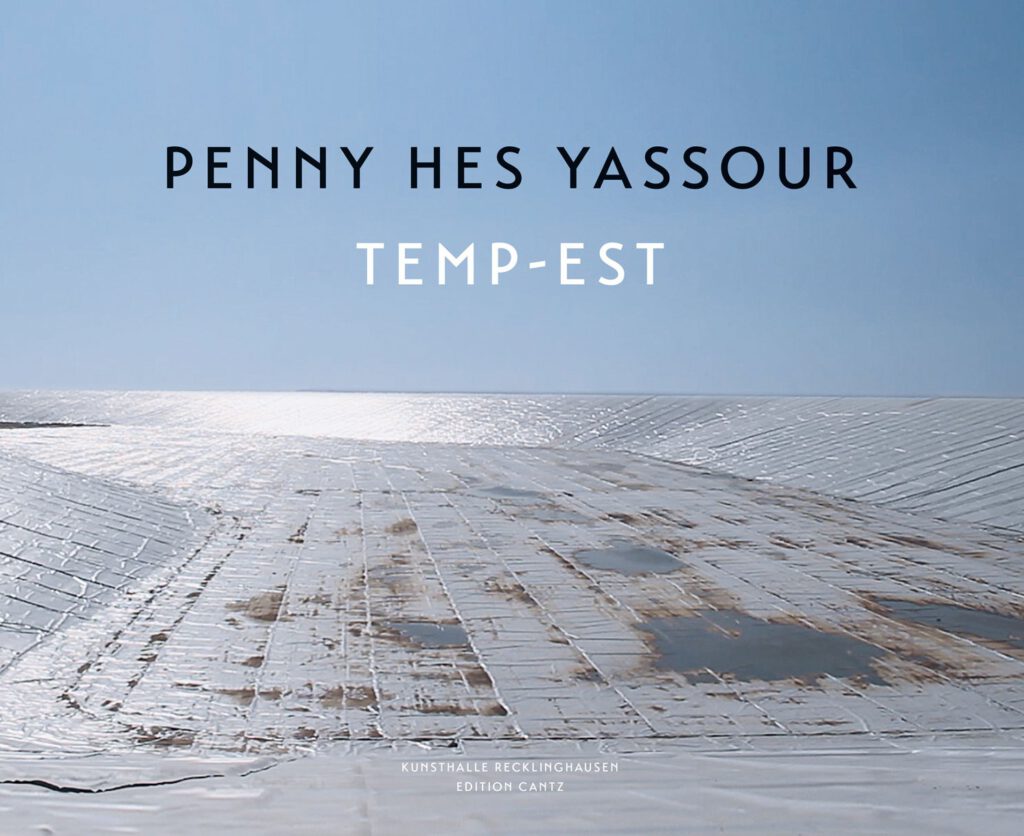
Penny Hes Yassour
Temp-Est24€ Add to cartA Monograph about the Award-Winning Israeli Artist
Penny Hes Yassour (b. 1950, lives and works at kibbutz En-Harod Ihud) tells stories and keeps history alive, explores the boundary between remembering and forgetting. In her installations she combines sound, image, and a multi-part world of objects into narrative mise-en-scènes of great poetic power. Hes Yassour leads the viewer through the Jordan Valley with its many watchtowers, accompanies the transformation of the landscape in a gigantic, stagelike water basin, and documents the flight of bats in a narrow, labyrinthine spatial installation. The book published on the occasion of the artist’s first exhibition in Germany provides comprehensive insights into her subtle artistic work.
-

Fahar Al-Salih
Beyond Fairy Tales39€ Add to cartBridges between East and West
The protection and sense of belonging one feels where one is at home, and what it is like to lose both of them: these are central concerns in the art of Fahar Al-Salih (b. Belgrade, 1964; lives and works in Karlsruhe). Having grown up in Kuwait, where a classical education in visual art was inconceivable, Al-Salih came late to his métier; Markus Lüpertz was among his teachers, and he completed his education in Hermann Nitsch’s master class. Seeing himself as a “bridge-builder” between the cultures of the Arab world and Europe, Al-Salih probes the different lived realities in which his itinerant biography has been set. No more linear than his path through life, his oeuvre is defined by subjects to which he keeps returning in a kind of cyclical motion. This publication offers unprecedented insight into Al-Salih’s creative approach and his articulations of individual yearnings, the comforts of safety, and political and social upheavals. His work achieves a deft interweaving of global perspectives and migrant realities.
-

Jan Zöller
Ritual Believer40€ Add to cartJan Zöller’s (b. Haslach, 1992; lives and works in Karlsruhe) paintings, sculptures, and installations probe the discrepancy between economic production and the spiritual and magical dimension of art. The artist’s book Ritual Believer surveys the so-called charcoal paintings series, created between 2019 and 2023. For these works, the artist paints directly in charcoal on the unprimed canvas, making it impossible to correct “blunders.” Another distinguishing feature is the virtual absence of color; the austerity of the compositions contrasts with Zöller’s other, often intensely colorful paintings. The motifs that are the hallmark of his oeuvre—birds, running legs—are complemented by writing and text. Another aspect of this shift is that the works’ titles play a central part and almost figure as a creative element in their own right. For the text in the book, the artist sent the titles of the works shown to his brother, who wove them into a story. An appendix presents scanned archival materials. Notebooks and zines Zöller produced between 2015 and 2017 provide interesting insight into how he finds his motifs and his compositional process.
Jan Zöller studied with Marijke van Warmerdam and Leni Hoffmann at the Akademie der Bildenden Künste Karlsruhe from 2012 until 2017 and with Jean-Marc Bustamante and Götz Arndt at the École Nationale Supérieure des Beaux-Arts de Paris in 2016.
-

Fiona Rae
Row Paintings24€ Add to cartElements of Energy and Complexity
Fiona Rae’s (b. Hong Kong, 1963; lives and works in London) abstract paintings attracted the attention of broad audiences when she participated in the legendary exhibition Freeze at London’s Docklands in 1988. It put her on the map as an early member of the group known as Young British Artists, who would revolutionize not only the English art world. To this day, Rae’s distinctive creations, which are rooted in a conceptual engagement with the problems and potentials of abstract painting, have remained prominent and seminal contributions to the field. In 2011, she was appointed professor of painting at the Royal Academy, one of the first women to hold this position. The catalogue is the first to feature the most important pictures from this period: the Row Paintings. They mark the inception of the artist’s internationally acclaimed oeuvre. An essay by Terry R. Myers offers an appraisal of the Row Paintings’ significance in their historic context as well as the contemporary discourse of painting.
-

Olaf Breuning
Paintings37€ Add to cartThe multimedia artist Olaf Breuning (b. Schaffhausen, Switzerland, 1970; lives and works in Upstate New York) has built a multifaceted oeuvre in installation art, photography, video, sculpture, drawing, and performance that questions contemporary reality. In a recent series of paintings, he playfully grapples with pressing concerns such as global warming. Like his earlier work, the new ensemble manifests his unorthodox approach. Breuning devised a unique painterly technique involving large-format wooden stamps with which he presses paint onto the canvas. The result is unconventional and fresh.
The publication—the first book dedicated exclusively to Breuning’s paintings—presents two dozen pictures as well documentation of the production process in the form of wooden stamps and sculptures. A dialogue between Katharina Beisiegel, director of the Kirchner Museum, Davos, and Gianni Jetzer, designated director of the Kunstmuseum St. Gallen, delves into parallels and differences between the oeuvres of Ernst Ludwig Kirchner and Olaf Breuning.
Breuning trained as a photographer in Winterthur from 1988 until 1993 and completed a master class in photography from 1992 until 1995. In 1995–1996, he was enrolled in a postgraduate program at today’s Zurich University of the Arts. He has had solo exhibitions at the NRW-Forum, Düsseldorf; the Palais de Tokyo, Paris; the Chisenhale Gallery, London; and the Zentrum Paul Klee, Berne. He participated in the 2008 Whitney Biennial and has had work in group exhibitions at the Museum of Modern Art, New York; the Centre Pompidou, Paris; the Haus der Kunst, Munich; Kunsthalle Zürich; the Walker Art Center, Minneapolis; the Jeu de Paume, Paris; the KW Institute for Contemporary Art, Berlin; the Whitechapel Gallery, London; and the Mori Art Museum, Tokyo.
-

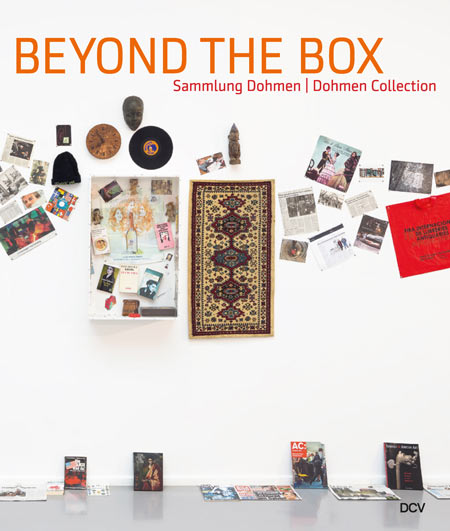
Beyond the Box
Dohmen Collection30€ Add to cartBreaking the Mold of Convention
Presenting installations, sculptures, objects, and paintings from Mexico, Cuba, West Africa, Israel, Bulgaria, Russia, South Korea, and Japan, rounded out by extraordinary works from the U.S. and Europe, this selection from the Dohmen Collection features artists from countries that did not typically register on “Western” art radars until fifteen years ago. It was the seminal documenta 11 (2002), curated by a team led by Okwui Enwezor, that ushered in a departure from the contemporary art world’s entrenched geopolitical ideas. This book showcases a treasure that has long been ahead of its time yet did not attract public attention: the private collection of Werner Dohmen, a physician in Aachen. It includes works by Mariana Castillo Deball, Wim Delvoye, Jimmie Durham, Diango Hernández, Rodney McMillian, Pavel Pepperstein, Nora Turato, Haegue Yang, and other artists who continue to provoke audiences, ask probing questions, and prompt fresh thinking.
Dr. med. Werner Dohmen has been head of the board of Neuer Aachener Kunstverein since 1988. In addition to building his own collection, he has been a committed supporter of the intercultural project No es arte, which advocates for the return of goldwork of the pre-Colombian Tairona people that was stolen from sacred sites during the colonial conquest of South America.
-

Stephan Kaluza
Fragmente eines Ängstlichen28€ Add to cartA Novel on Coping with Guilt or the Feeling of Having Violated Life
The filmmaker Castner and the anthropologist Pollock not only share the similarity of their names with those of Castor and Pollux, the fabled twins of Greek myth, but also a hard fate: an irreparable guilt whose motifs run through the entire novel. Pollock is forced to admit to himself that, in his role as a scientist, he was involved in a genocide against indigenous people in Panama; Castner, meanwhile, tries to get a handle on his bouts of excessive hypochondria. In episodic flashbacks and an interview that gradually turns into an emotional dispute between them, the two characters analyze the minutiae of their life stories and arrive at a surreal insight.
Castor and Pollux were known in antiquity as the patrons of sailors, who took their bearings from the twins’ constellation. That is why water figures in this novel as the element that unites all narrative planes. Water—like life—will fill any vacant space regardless of shape and adapt to all circumstances.
Stephan Kaluza (b. Bad Iburg, 1964; lives and works in Düsseldorf) is a visual artist, working in the media of photography and painting, and a writer whose output includes plays, novels, and nonfiction books. The philosophy of nature is a central theme in both Kaluza’s art and his fiction.
-
Franziska Opel
Close and Cold32€ Add to cartWith sex toys, the potential for misinterpretation and ill-advised use is vast, as countless slapstick comedies illustrate. Steering clear of quick laughs, Franziska Opel deftly harnesses this anarchic power of misunderstanding to explode our perceptions and worldview. Her works are painstakingly planned experimental arrangements in which she modifies or deforms mundane objects as well as those sex toys in subtle ways or powers them up in series, making us see them with fresh eyes. They cast a spell over us with their sensual allure, while our associative circuits processing what we see spark a certain sense of irritation. Curiosity, attraction, bewilderment, shame—expertly staged in photographs for this catalogue, the works elicit a wide range of emotions. Their energizing contradictions are elaborated by contributions from gifted writers: standalone poetic-narrative writings that reflect on several key aspects of Opel’s art in offhanded yet challenging ways.
-

Francis Alÿs
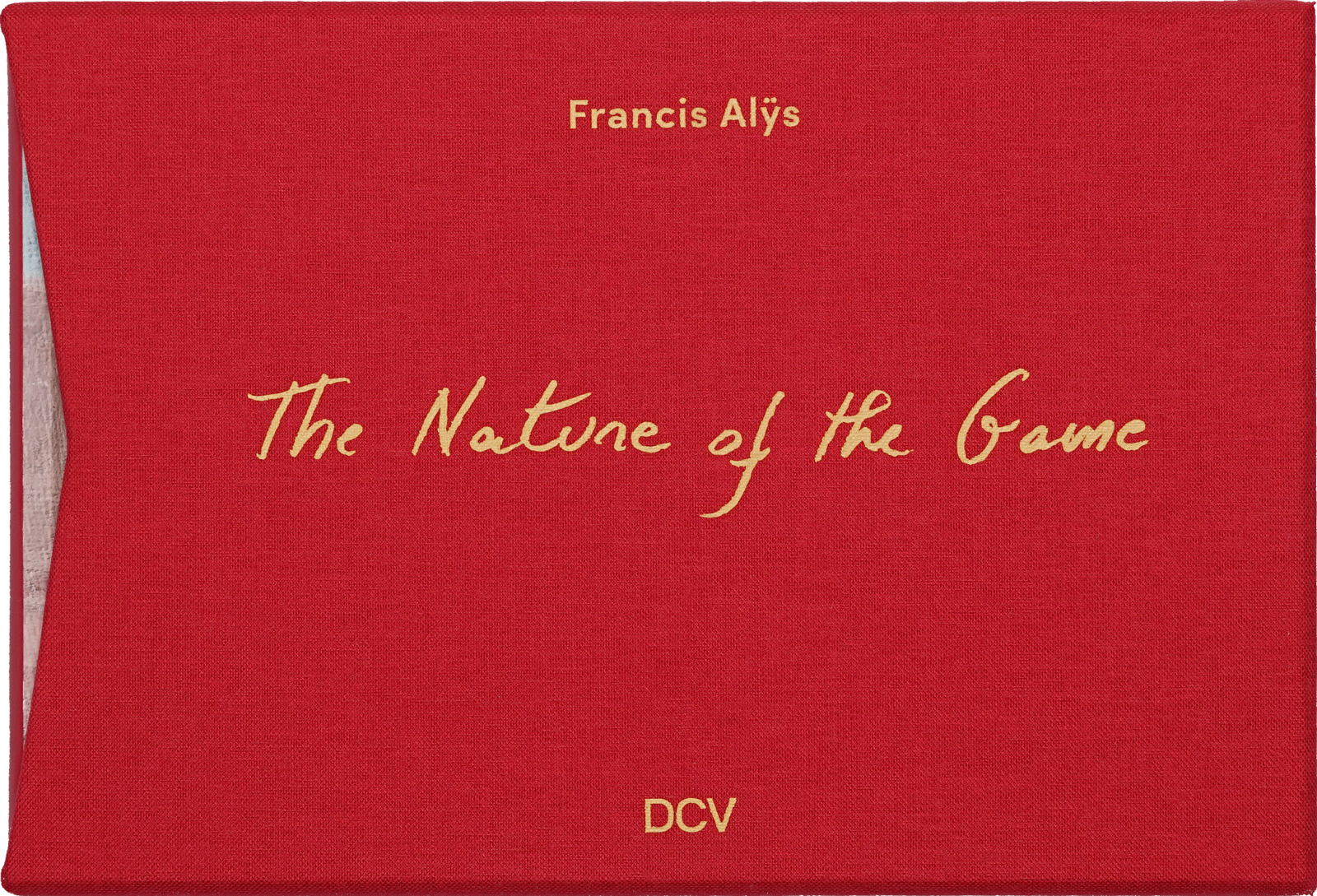
The Nature of the Game
Special Edition60€ Add to cartSPECIAL EDITION in clothbound slipcase
The Belgian artist Francis Alÿs (b. Antwerp, 1959) makes work that is as multifaceted as it is poetically subversive. Straddling the line between performative conceptual art and community intervention, his films and drawings chart the political and social realities of urban spaces. One of his most imposing long-term projects is Children’s Games, for which he documents children playing all over the world, from Paris and Mexico City to the Yezidi refugee camp Sharya in Iraq. The richly illustrated book contains ideas and sketches he compiled in preparation for this series. It lets us glimpse into the engine room of his artistic practice, revealing key elements of his filmic poetics. An essay by the ethnographer and filmmaker David MacDougall embeds Alÿs’s observations of children’s play in the contexts of childhood studies as well as the history of ethnographic documentary film.
Francis Alÿs (b. Antwerp, 1959) is widely regarded as one of the foremost artists working today. His oeuvre, which has garnered numerous prizes and been featured in solo exhibitions around the world, encompasses films, photographs, performances, drawings, and paintings, many of them explorations of the social and political realities of urban spaces. Since 1986, Alÿs, who trained as an architect, has lived in Mexico City, where he moved after the major earthquake of 1985 to help in the rebuilding effort.
Francis Alÿs – The Nature of the Game is the official publication of the Belgian pavilion at the 59th Biennale di Venezia, curated by Hilde Teerlinck.
- Out of stock

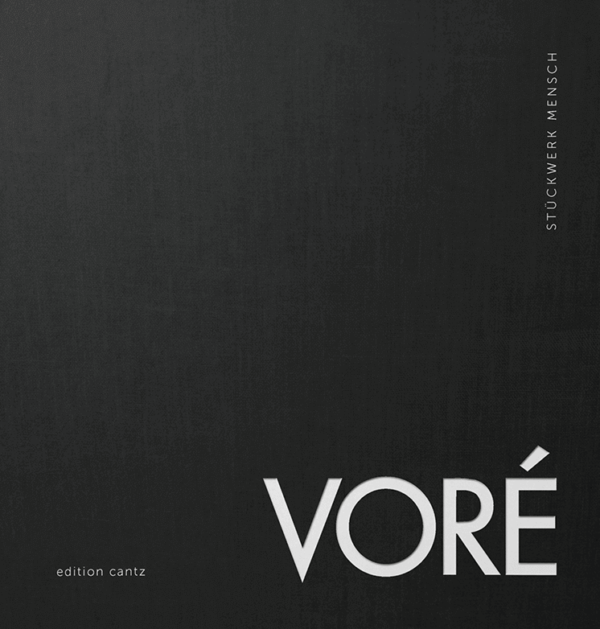
Voré
Stückwerk Mensch18€ Read moreHistorically Anchored Installations with Current Political References
The sculptures by Voré (b. 1941 in Karlsruhe, lives and works in Ettlingen) reflect the artist’s examination of the conditions of human existence and the human state of mind. Finely polished forms, splinters, and rough fractures become a statement of content and at the same time constitute the formal tension of the respective object. The process of creation can be seen in the rough remaining parts and traces of the various tools. Parallel and closely related to this, drawings and collages are created as independent works or as components of installations. Formal impulses of the sculptural concept are taken up, graphically processed, and projected back into the sculptural work. The present volume presents projects from six decades with numerous illustrations.
-
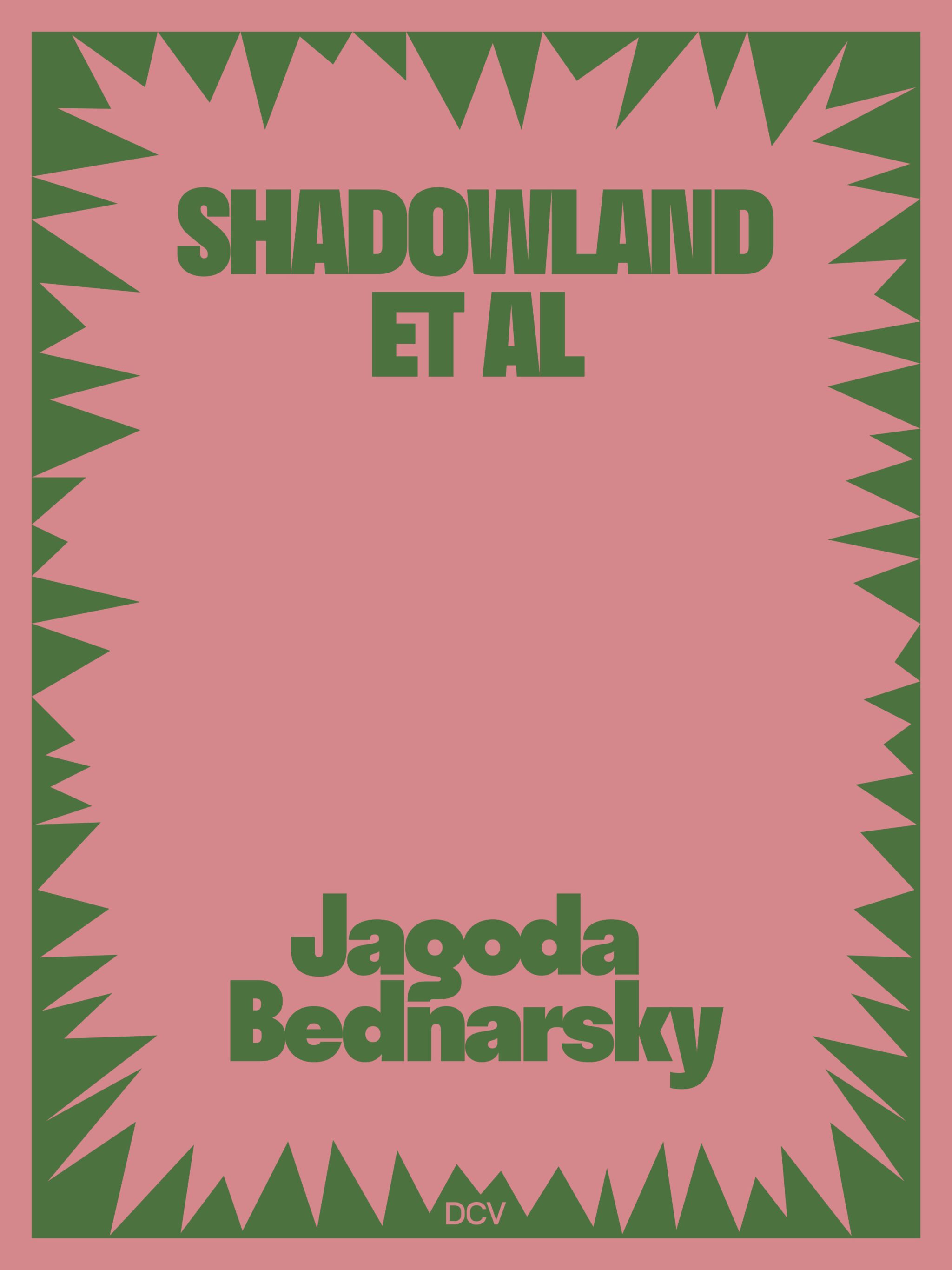
Jagoda Bednarsky
SHADOWLAND ET AL40€ Add to cartJagoda Bednarsky’s (b. Złotoryja, Poland, 1988; lives and works in Berlin) paintings are pop-cultural and nostalgic borrowings that she transfers into the grotesque register, with allusions to stereotyped role models between hypermasculinity and matriarchy. Unfurling pastel-colored hillscapes composed of breasts, breast pumps, vulvas, figures from Greek myth, and motifs from flora and fauna, Bednarsky’s Shadowland series interrogates traditional ideas of femininity and motherhood. The depiction of the female breast serves as a metaphor referring to the titular “Shadowland,” where this part of the body is still perceived as a sexualized object rather than as natural. The title, one might note, is borrowed from a culture magazine first published in New York in 1919 in which the artist spotted Art Deco illustrations that became a vital source of inspiration. Despite the dense aggregation of fraught symbols and referential gestures, the sensual, poetic, and richly imaginative works exude a lightness that stems from their translucency and subtle irony.
The comprehensive volume presents Bednarsky’s works from between 2018 and 2023 and a singular conversation with the artist.
Jagoda Bednarsky studied fine arts, first at Kunsthochschule Kassel (2008–2009), then at HfBK Städelschule, Frankfurt am Main, with Michael Krebber and Monika Baer (2009–2014).
-
Ruth Wolf-Rehfeldt – Wie eine Spinne im Netz
38€ Add to cartRuth Wolf-Rehfeldt (b. Wurzen, Germany, 1932; lives in Berlin) is one the few East German female artists who devoted themselves to graphic art produced on the typewriter. Working on her trusty “Erika,” she arranged letters, digits, commas, and plus signs to compose imaginative visual creations. Under her hands, the black and red characters were transformed into poetic verbal images, gently undulating waves, serial patterns, and architectonic or figurative formations. Sometimes verging on concrete poetry, these typewritings also evince unmistakable affinities with conceptual and minimalist art. In the 1980s, the artist expanded on them in collages that recall Hannah Höch’s Dadaist visual montages. With her graphic work, Wolf-Rehfeldt was also an active participant in the GDR’s mail-art program: she sent the typewritings to artists beyond the impassable borders of her country, building an extensive network of correspondences that spanned the globe.
The richly illustrated monograph underscores the diversity and contemporary relevance of Wolf-Rehfeldt’s works, which were created in the shadow of the Cold War and address the fragility of peace as well as early manifestations of the environmental devastation wrought by the industrial age.
-

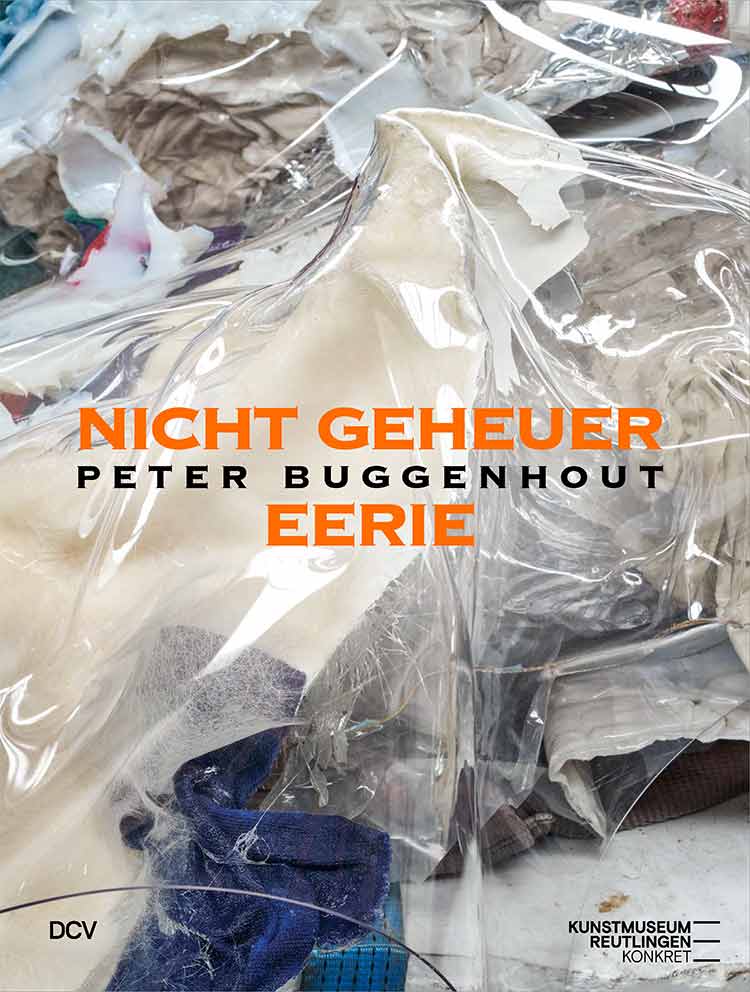
Peter Buggenhout
Eerie28€ Add to cartAn Autonomous Counterpart
The renowned sculptor Peter Buggenhout (b. 1963, Dendermonde, Belgium; lives and works in Ghent) describes his hybrid pieces as “abject things” that defy classification and even the label “work of art.” He aggregates and manipulates found and discarded objects as well as both technical and organic materials including pig blood, cow stomachs, and horsehair until he achieves a certain degree of abstraction. Buggenhout’s sculptures confront the beholder as creatures that are somehow “off,” exuding an eerie atmosphere by allowing something sinister to rise to the surface that, it appears, lurks just behind the façades of the physical world: vestiges of humanity, society’s sedimented refuse. The book presents a comprehensive survey of his growing oeuvre; it is the first publication to cover his most recent creations in marble.
Peter Buggenhout’s art has been featured at the Palais de Tokyo, Paris; the MoMA PS1, New York; the 2014 Taipei Biennial; and elsewhere.