X x X
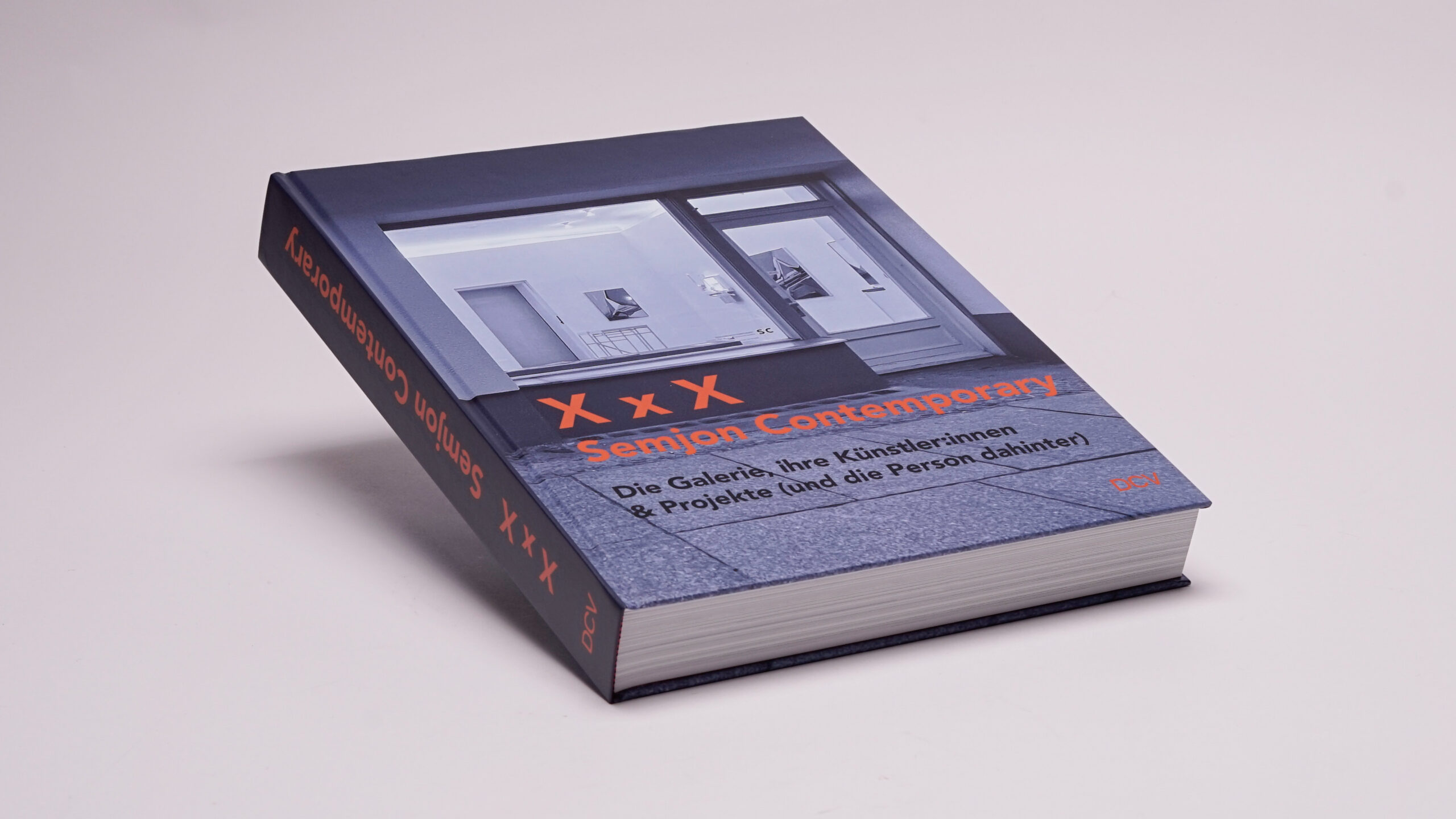
Semjon Contemporary
 | |
|---|---|
| Editor(s) | Semjon Contemporary |
| Author(s) | Semjon H. N. Semjon, Jan Maruhn |
| Design | Frank Zimmer, Semjon H. N. Semjon |
| Cover | Hardcover |
| Size | 23 x 30 cm |
| Pages | 448 |
| Illustrations | 809 |
| Language(s) | German, English |
| ISBN | 978-3-96912-112-2 | Release November 2022 |
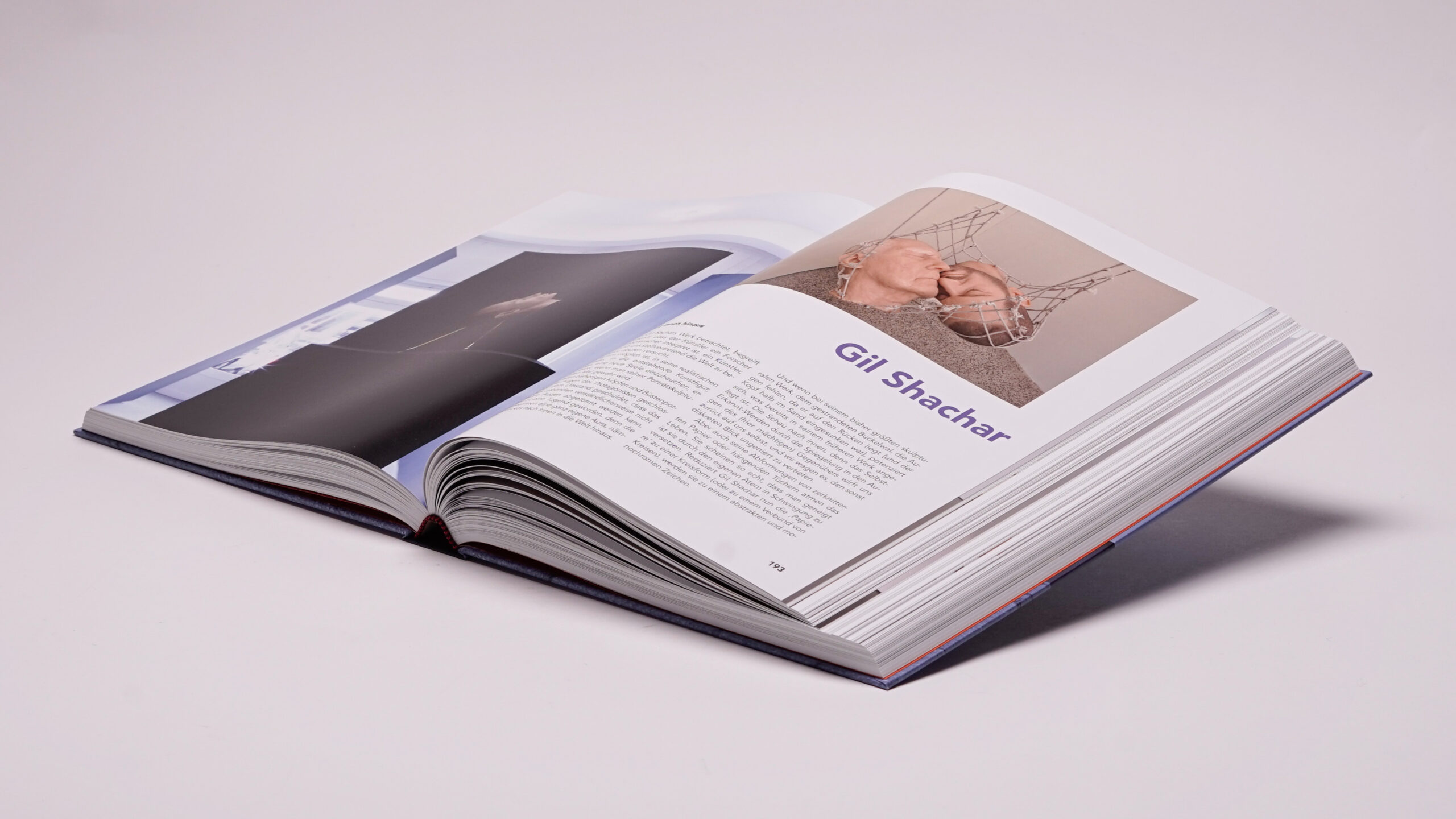
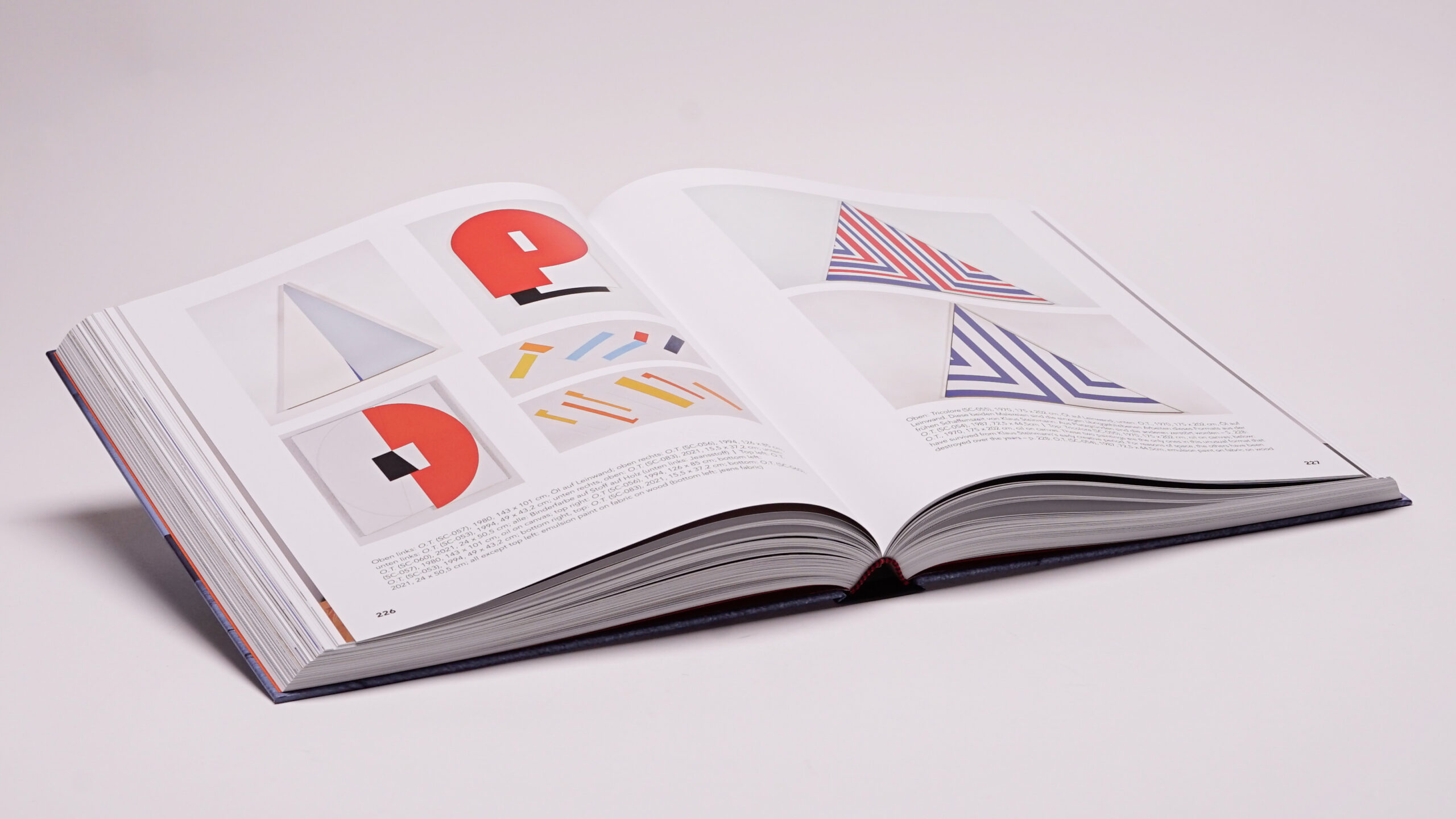
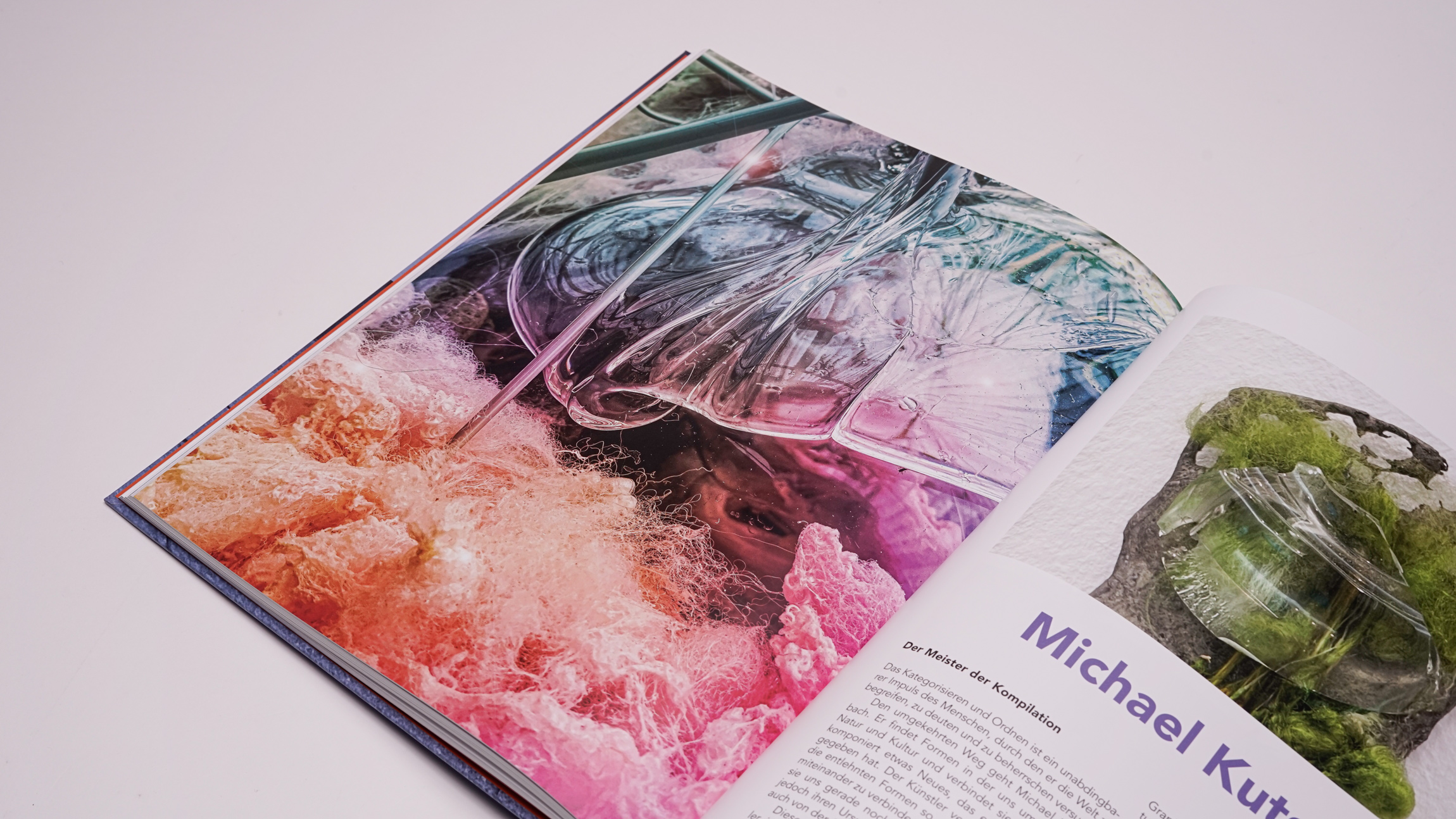
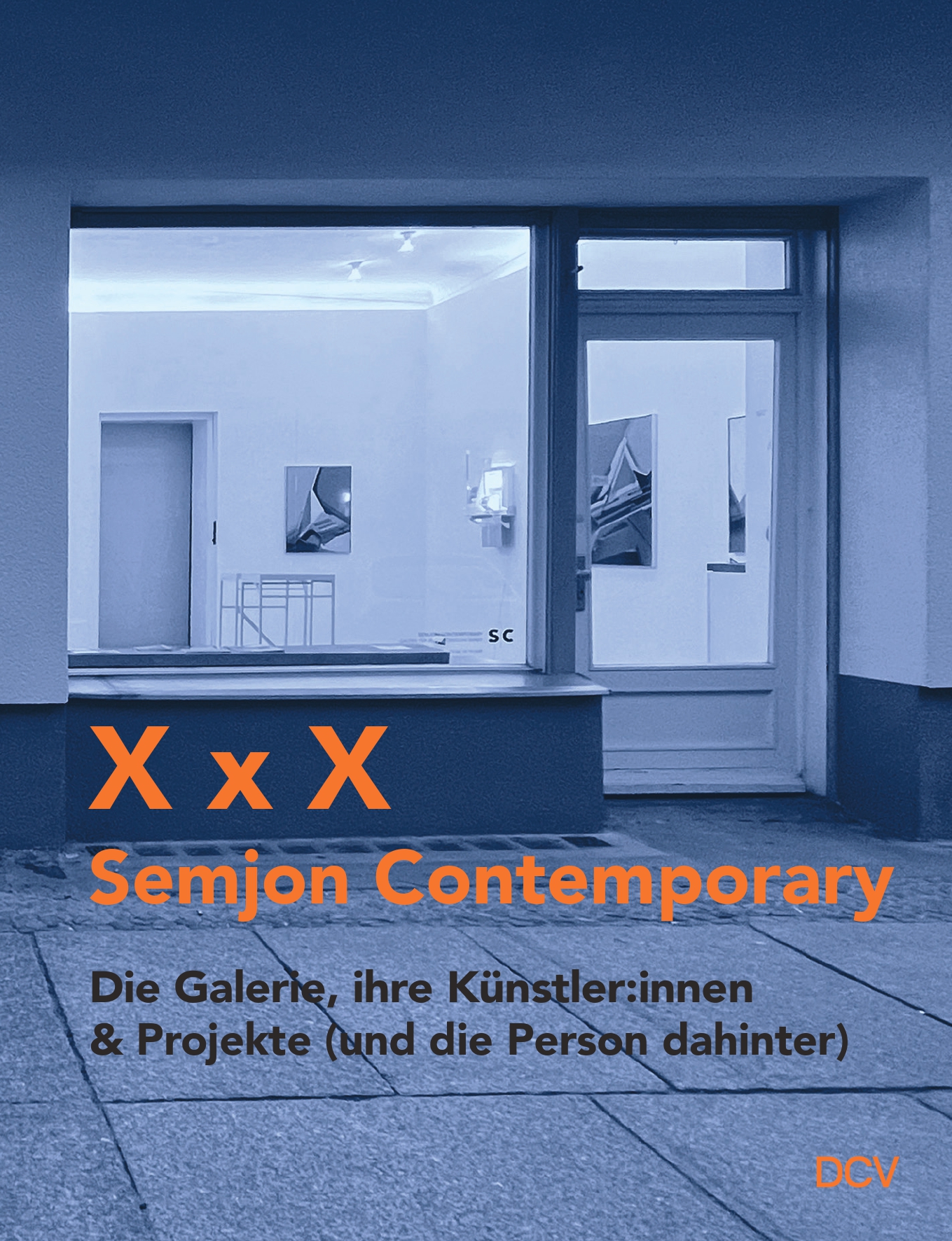
Founded by Semjon H. N. Semjon in 2011, the gallery Semjon Contemporary has built a distinctive and singular profile that has earned it an unrivaled position in the art world. It represents international positions in contemporary art that, their divergences notwithstanding, are united by the extraordinary intelligence of their engagement with the material. The result is an unmistakable visual language that permits of no modification of established choices. Despite the considerable differences of material, technique, and expression, the artists’ works enter into dialogue with one another, as parallel solo presentations and special exhibitions showcasing numerous visiting artists have demonstrated.
The book features Colin Ardley, Edward L. Buchanan, Takayuki Daikoku, Dittmar Danner aka Krüger, Ute Essig, Experimental Setup (Kata Hinterlechner and Bosko Gastager’s collective moniker), Katja Flint, Andreas Fux, Dave Grossmann, Renate Hampke, Marc von der Hocht, Nataly Hocke, Michael Kutschbach, Henrik U. Müller, Cornelia Nagel, Susanne Knaack, Katja Kollowa, Susanne Pomrehn, Thomas Prochnow, Dirk Rathke, Ursula Sax, Gerda Schütte, Gil Shachar, Li Silberberg, Karina Spechter, Klaus Steinmann, Stefan Thiel, Hitomi Uchikura, Royden Watson, and Bettina Weiß in dedicated chapters. It is rounded out by statements from collectors including Thomas Lenhart, Cornelie Kunkat, Gabriele Quandt, Roland Schnell, Nobert Fuhr and Klaus Werner, Roswitha and Jürgen König, and Helmut Ließ. Remarks by art critics and scholars and an interview with Semjon by Jan Maruhn provide additional insight into the gallery’s work.
Release November 2022
More books
-

CHRISTIAN ROTHMANN
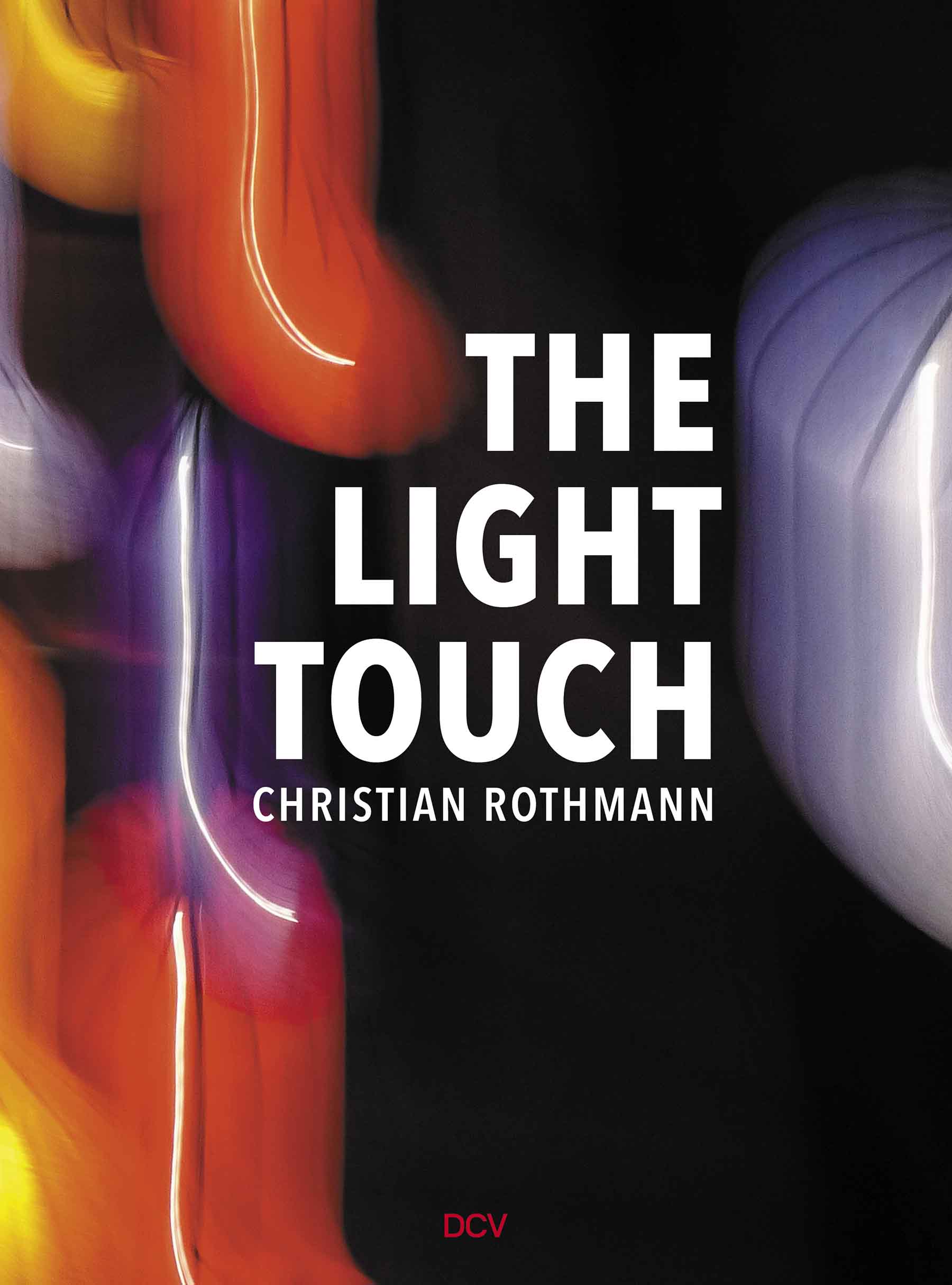
The Light Touch45€ Add to cartA Monograph of Curiosity
Christian Rothmann (b. Kędzierzyn, Poland, 1954; lives and works in Berlin) is an artistic jack-of-all-trades, a builder of bridges between cultures, and a restless globetrotter and traveler across time. He takes photographs wherever he goes, especially when he is on the road, gathering documentaries with a creative edge, spontaneous yet powerfully symbolic pictures, or conceptual series. His motifs have included basketball hoops in the most unbelievable places, toys in restaurants and stores, exotic dishes, and—in the sequence Legs of the World—beautiful legs, of real-world women, but also of advertising-poster idols and art objects. He has a special knack for recruiting accomplices from all age groups and across social and cultural differences, as for his series you and me or Mother & Daughter. Fierce large-format paintings and delicate watercolors on small paper formats from Rothmann’s studio in Berlin-Kreuzberg complement his long-term photographic projects. The Light Touch presents the artist’s variegated visual art on almost five hundred pages.
-

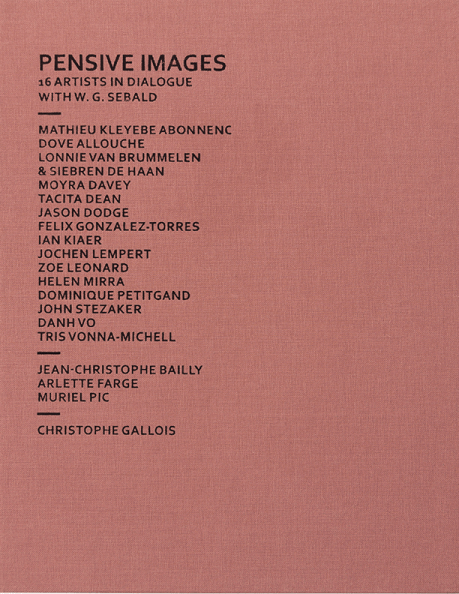
Pensive Images
16 Artists in Dialogue with W. G. Sebald35€ Add to cartOn Memories and Temporalities
Pensive Images examines the complex and invariably singular relationships through which images and memories are inextricably linked. The book relates to the work of the German writer W. G. Sebald (b. 1944, Wertach; d. 2011, Norfolk), especially to four fictional stories he published between 1990 and 2001, in which he inserted non-captioned blackand- white photographs of uncertain provenance and nature into the text like memories punctuating ways reminiscent of his writing. It brings together 16 artists who, in ways reminiscent of Sebald’s approach, explored the realms of memory and past from the perspective of experience and intertwining temporalities.
With works by Mathieu Kleyebe Abonnenc, Dove Allouche, Lonnie van Brummelen / Siebren de Haan, Moyra Davey, Tacita Dean, Jason Dodge, Félix González-Torres, Ian Kiaer, Jochen Lempert, Zoe Leonard, Helen Mirra, Dominique Petitgand, John Stezaker, Danh Vo and Tris Vonna-Michell.
-

Ion Bitzan
48€ Add to cartThe painter and object artist Ion Bitzan (b. Limanu, 1924; d. Bucharest, 1997) belonged to the generation of Romanian artists who, in the 1960s and 1970s, broke through their country’s isolation to connect to the international avant-garde. His creativity and the quality of his artistic experiments, which drew inspiration from conceptual art, Dada, and other sources, made him a leading figure in the Romanian art of the Ceaușescu era. This book also sheds light on the complex relationship between artistic innovation and political (propaganda) art behind the Iron Curtain during this period, in which nothing was ever black or white. Bitzan represented Romania at the Venice (1964) and São Paulo Biennales (1967, 1969, 1981). In 2017, the National Museum of Contemporary Art (MNAC) in Bucharest mounted a major retrospective of his oeuvre.
-

Pat Steir & Ugo Rondinone
Waterfalls & Clouds20€ Add to cartThe imposing installation Waterfalls & Clouds consists of three sculptures by the Swiss artist Ugo Rondinone (b. Brunnen, Switzerland, 1964; lives and works in New York) and nineteen paintings by the American Pat Steir (b. Newark, NJ, 1940; lives and works in New York). The three large gray monoliths of concrete, sand, and gravel bear the titles Faces, Look, and Twisted and are part of a series of twenty works created in 2018. They are surrounded by nineteen tall and narrow black oil paintings titled Flags for Ugo #1 through #19 (2021); with colorful or white paint streaming down the canvases, they hark back to Steir’s Waterfall series from the 1980s. A symbiotic relationship connects the works: the sculptures, in which erosion is integral to the art, embody time, while the pictures symbolize gravity and hence nature as such.
-

Heike Negenborn
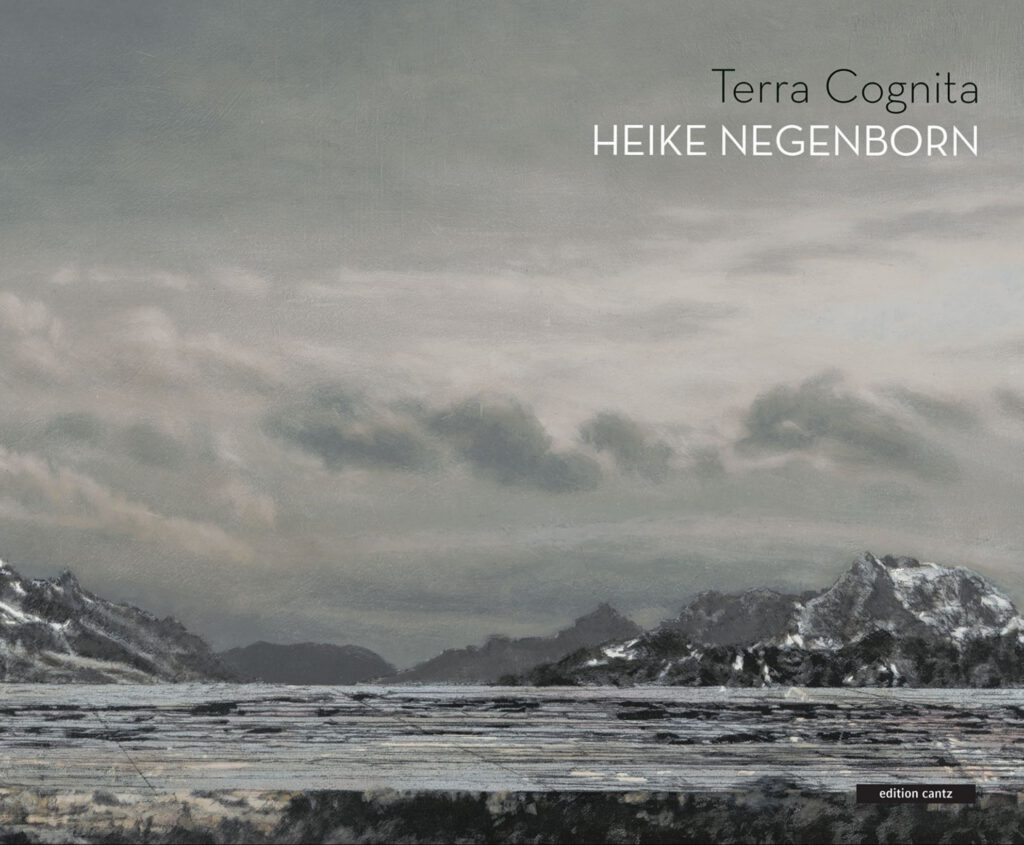
Terra Cognita24€ Add to cartLebensraum of our Time: Contemporary Landscape Painting
The central theme of Heike Negenborn (b. 1964, Bad Neuenahr-Ahrweiler; lives and works in Windesheim) is the seen lebensraum. In reference to seventeenth-century Dutch landscape painting, her works stand in a specific tradition of capturing reality. With her new group of works titled Net-Scape – Landscape in Transition, Negenborn transfers art historical references into contemporary images. The artist is interested in the possibilities of media transfer and the increasing appropriation of analog reality by the digital image. The present volume provides impressive insights into the developments of the landscape painter from 2007 to 2020.
Heike Negenborn studied fine arts at Austin College, Texas, Art Education at Johannes Gutenberg Universität Mainz, and Painting and Printmaking at the Akademie für Bildende Künste Mainz.
-

Angelika J. Trojnarski
Noble Earth38€ Add to cartAngelika J. Trojnarski (born 1979 in Mrągowo/Polen; lives and works in Düsseldorf) examines facets of nature through an ecological, scientific, poetic study of their phenomena. Through a process centered on painting, her art articulates allegorical relationships between some of the most significant contentions of our time: humans and nature, strength and fragility, crisis and hope. She expresses a desire to understand nature by reproducing its workings, pointing to its incredible might while underscoring its increasing fragility. Trojnarski overlays raw canvases with paper fragments, employing brushwork and collage to apply materials like graphite or soot, generating a source of energy and suspense through color and contrast. The monograph offers an overview of the last decade of Trojnarski’s work.
Angelika J. Trojnarski 2006–2013 studies at Kunstakademie Düsseldorf. 2006–2009 Painting with Jörg Immendorff, Markus Lüpertz and Herbert Brandl, from 2010 Free Art with Andreas Gursky.
-
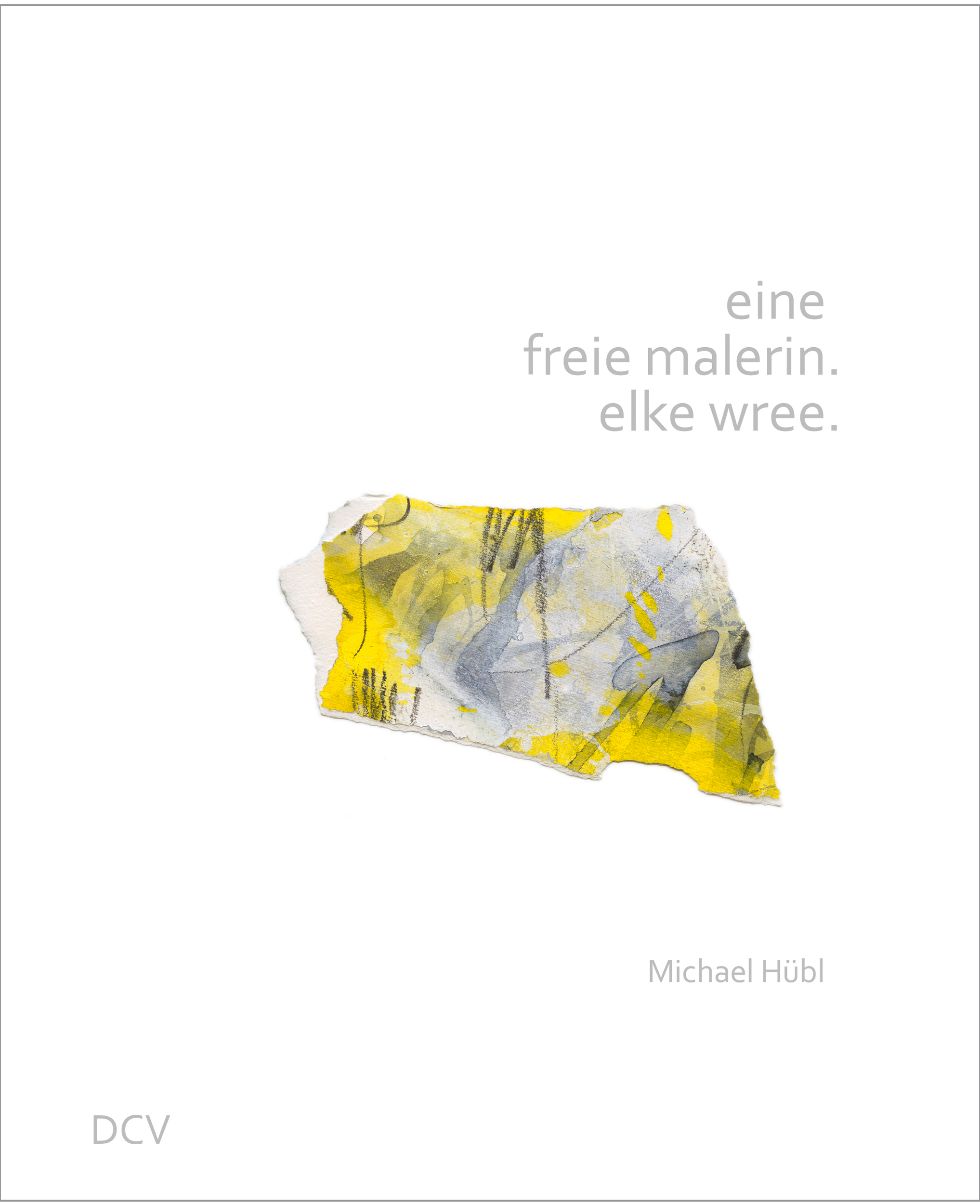
eine freie malerin.
elke wree.26€ Add to cartThe painter Elke Wree’s career (1940–2025) was defined by the debates of the post-war era. Art was considered a search for truth and intended to reveal the existentially essential. Fundamental questions were: Realism or abstraction? Genuine or fake? This book provides insight into the search for an authentic, contemporary visual language. Wree’s formative teachers in Karlsruhe and Berlin are discussed, as are her changing social environments and the rapid societal changes. Wree’s paintings were always nature-inspired abstraction with overlapping color spaces and painting gestures. Wree groups her pictures with terms such as condensations and clearings, in-between lands, or traces of light and time. This volume is simultaneously a biography, panorama, analysis, and homage.
-

Jörg Heieck
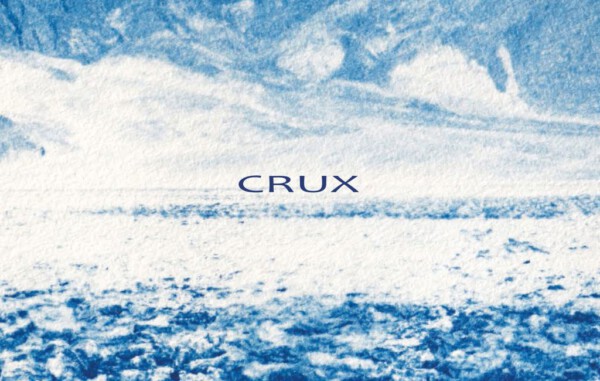
CRUX29€ Add to cartTwo Fascinating Series of Works by the Photographer and Physicist
Expertly wielding the vintage photographic technique of the cyanotype, Jörg Heieck (b. 1964, Münster; lives and works in Kaiserslautern) transmutes nature into a fascinating play of shades of blue and defamiliarized shapes. Desolate sceneries, barren landscapes—the first series gathered in the book was created in the Sahara, Iceland, and Spitsbergen. Humanity has reached a crossroads: can we avert the destruction of the planet? Contrasting this symbolic crux, the second section presents populated intersections replete with signage from China, Japan, Russia, Israel, India, Greece, and Georgia. With these panoramas of urban life standing as a counterpoint to the abstraction in the photographs in the first section, the book offers insight into the artist’s extraordinary oeuvre.
Jörg Heieck has a PhD in physics and worked for many years as a researcher at Agfa, Kodak, and the ITER nuclear fusion reactor project. His art has been shown in numerous countries, including at the Goethe-Institutes in Damascus and Beirut, the Aleppo International Photo Festival, the Wilhelm-Hack-Museum, Ludwigshafen, and Kunsthalle Mannheim.
-

Ottmar Hörl
Second Life – 100 Arbeiter14,80€ Add to cartThe Workman Sculptures at Völklinger Hütte Steelworks
Sculptures on topics of everyday life are at the center of the work of Ottmar Hörl (b. 1950, Nauheim; lives and works in Frankfurt/Main and Wertheim). His major projects gained international recognition, they are based on the artist’s concept of art as a communication model. For the Völklingen Ironworks World Heritage Site, Hörl conceived the sculpture project Second Life, which features 100 figures modeled on the Völklingen ironworker with helmet and work clothes. The book documents the impressive project that focuses on the universal theme of the Völklingen Ironworks: work and the working people.
-

Isabelle Graw
In einer anderen Welt. Notizen 2014–201726€ Add to cartPersonal Observation as an Analytical Lens on Society
Isabelle Graw (b. 1962, Hamburg; lives in Berlin) is publisher of the magazine Texte zur Kunst and has been professor of art theory at the Staatliche Hochschule für bildende Künste – Städelschule in Frankfurt am Main since 2002. In this book, she branches out from her work as an art historian and critic to offer reflections on a wide range of observations from her own life. Never before has Graw addressed her readers more frankly than in these 160 notes.
“She is blindingly frank, addressing the questions that envelop her days: waxing salons, the arrival of Syrian refugees in Germany, exhibitions and grief, electoral and family politics. Subtly, Graw reveals how impressions and beliefs arise out of circumstance.”
Chris Kraus, American filmmaker and author of I Love Dick“In crisp and striking vignettes, this book shows how self-scrutiny and minute observation of the world intermesh and form the dense web of her analysis. This is a unique and original book, literary, psychological and sociological, all at once.”
Eva Illouz, French-Israeli sociologist -
Wyatt Kahn
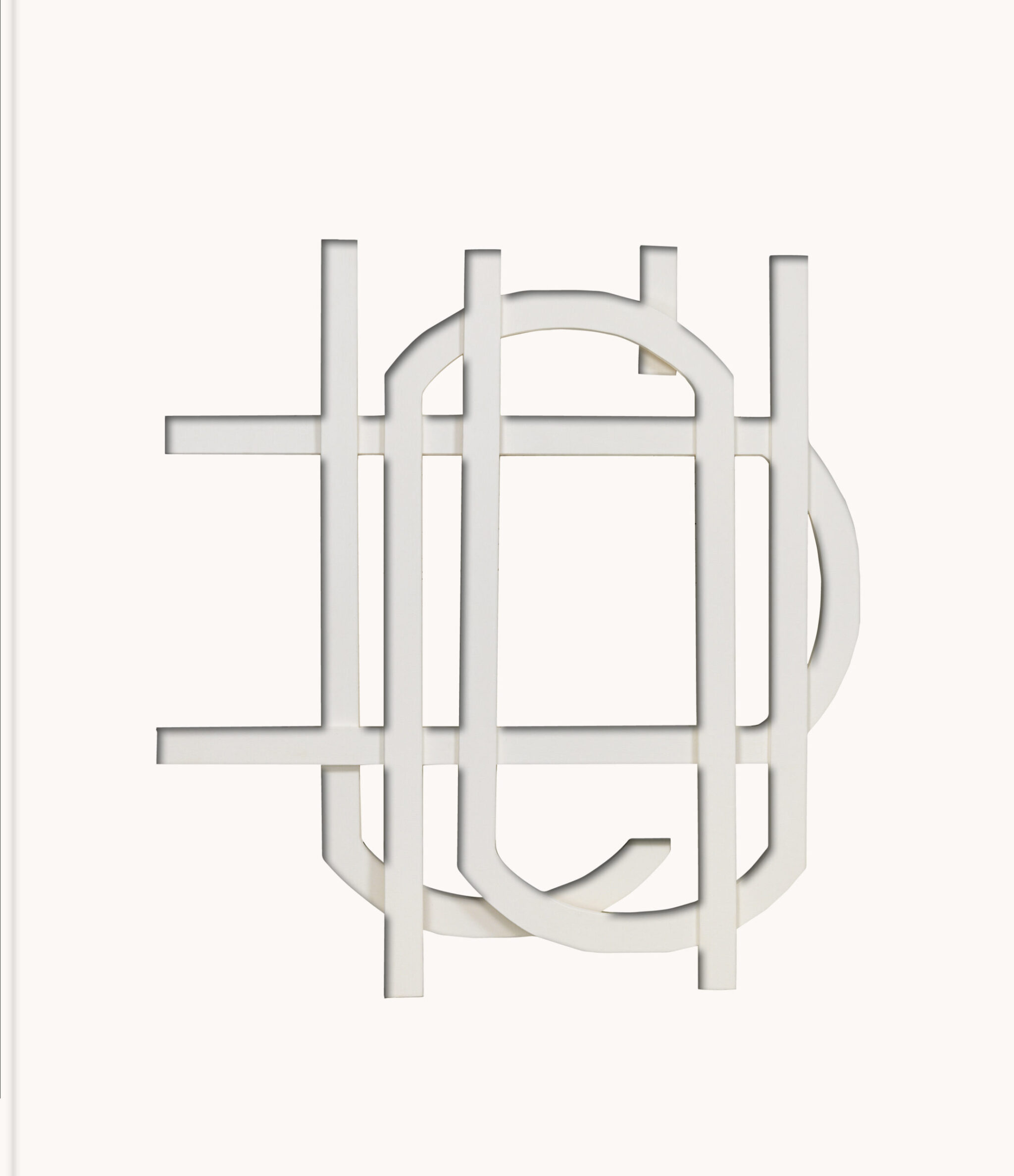
Paintings and Sculptures36€ Add to cartWyatt Kahn’s (b. New York, 1983; lives and works in New York) work hovers between two and three dimensions, reviving aspects of American 1960s Minimal Art. In the tradition of minimalist abstraction, his multipart paintings seem devoid of content, but their construction is a sophisticated choreography of geometric shapes. Instead of delineating them on the canvas itself, he transforms them into physical elements composed of canvas stretched over strips of wood that he mounts on the wall as reliefs, making the latter an integral part of the composition. Working on the interface between painting and sculpture, the artist also references Ellsworth Kelly’s single and multiple shaped canvases.
Wyatt Kahn’s works are held by major collections including the Metropolitan Museum of Art, New York; the Museum of Modern Art, New York; the Whitney Museum of American Art, New York; the Centre Pompidou, Paris; the Museum of Contemporary Art, Los Angeles; the Dallas Museum of Art; the Museum of Contemporary Art, Chicago; and the Albright-Knox Art Gallery, Buffalo.
-
Spaces Embodied (ENGLISH)
Draiflessen Collection32€ Add to cartWe live in spaces that we shape in accordance with our own ideas. Our everyday lives leave traces in them that speak to our habits. Spaces promise shelter and belonging, but they can also instill a sense of constraint. We grow into the spaces we inhabit—and they in turn become expressions of our personalities. Conversely, spaces, depending on their architecture and location, inform our existence. RÄUME HAUTNAH gathers works of art that, rather than conceiving of the human sphere and the spatial domain as separate, comprehend them in their complex entanglements: in bodily experience, emotional dependency, or the instinctive need for protection. An essay by Olesja Nein, the project’s curator, offers an introduction to the exhibition and takes the reader on a tour, describing each artist’s space of activity and supplying helpful information. Philipp Zitzlsperger, meanwhile, zooms in on a key aspect of the art in the exhibition, the imprint as an artistic technique with a distinctive aura, and illuminates its origins and significance since the dawn of modernism.
Artists: Absalon, Shannon Bool, Heidi Bucher, Eileen Gray, Do Ho Suh, Mary Mattingly, Tracey Snelling, Francesca Woodman
- Out of stock

Karsten Födinger
Toward a Radical Sculpture42€ Read moreHarnessing the Formative Power of Gravity
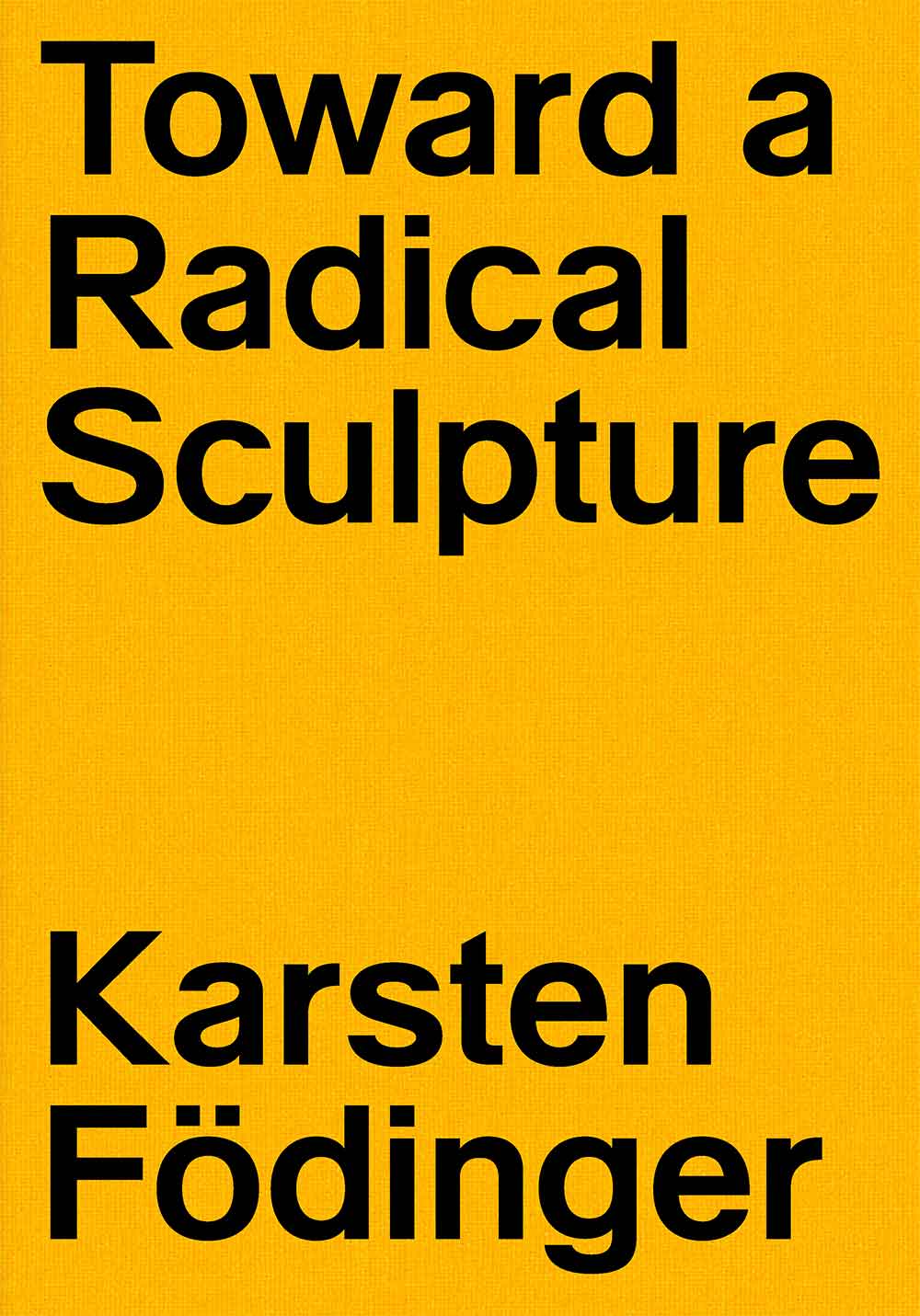
Typically made of basic construction materials, the works of Karsten Födinger (b. Mönchengladbach, Germany, 1978; lives and works in Berlin) bridge the divide between architecture and sculpture. Ideas relating to the durability and load-bearing capacity of structures are a key interest in his creative process. Besides large sculptures destined for interior settings, Födinger makes striking sculptural interventions in public spaces that take inspiration from the specific site and always engage with its historical and cultural context. Untainted by romanticism, his sculptures symbolize the approach to a foreseeable end that is hastened by the uncontrolled exploitation of the earth’s resources. With numerous illustrations and essays, this first extensive monograph on the artist presents a comprehensive survey of his sizable oeuvre.
Födinger’s works have been presented in numerous solo exhibitions, including at Antenna Space, Shanghai, and the Palais de Tokyo, Paris. In 2012, he was awarded the Baloise Art Prize at Art Basel Statements.
-
On Trickling Away
Concepts of Time in Contemporary Art30€ Add to cartTime, like space, is one of the key coordinates of human existence. The great mysteries of our lives revolve around it, only to remain unresolved when death inevitably ends our days. What is time’s role in art? The vanitas, a genre that was popular with painters in the seventeenth century, is hardly the earliest form that artists have devised to grapple with it. Holger Kube Ventura’s book On Trickling Away. Concepts of Time in Contemporary Art presents the ideas of contemporary artists who approach time from diverse angles. In the twenty-first century, their interest appears to have shifted from visualizations of future raptures to visions of slowness, of the distension, repetition, and standstill of moments in time. Bernard Aubertin (FR), Inge Dick (AT), Rom Gaastra (NL), Gosbert Gottmann (DE), Tommi Grönlund & Petteri Nisunen (FI), Manuela Kasemir (DE), Timo Klos (DE), Dimitry Orlac (FR), George Rickey (US), Patrik Söderlund & Visa Suonpää (FI), and John Woodman (UK) hone our awareness of how subjective the passage of time is and convey vivid experiences of its trickling away.
-

Ed Sommer
Planetare Allianz22€ Add to cartA Monograph on the Pioneer of Op Art
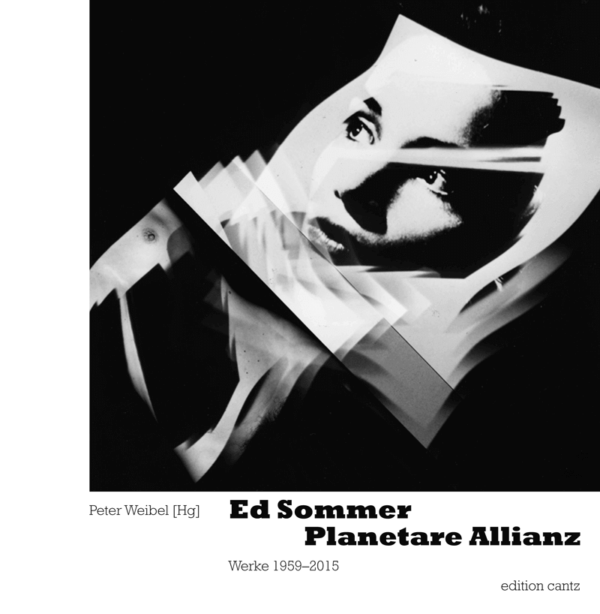
The complex and extraordinary work of the Schwäbisch Gmünd-based artist Ed Sommer (1932–2015), who preferred to call himself a Bildsprachenmaler (painter of visual imagery), includes metal objects, formations of acrylic glass, gestural painting, erotic films, projection photography, dialogical portraits, and spoken texts. In 2014, the ZKM | Center for Art and Media Karlsruhe added a large number of works by the artist to its collection. This publication now presents the collection holdings, supplemented by further works by Ed Sommer.
Ed Sommer, together with his artist friend Marc Adrian, was one of the most important representatives of op and kinetic art and received considerable attention in the 1970s with his films and photographs.
-
Rainer Jacob
justICE30€ Add to cartRainer Jacob (b. Jena, 1970; lives and works in Leipzig) has anonymously installed objects made of ice in public settings in cities including Berlin, Leipzig, Paris, Moscow, Oslo, Prague, and Budapest since 2013. He then allows them to dematerialize and records the process in photographs. Radiators, wall outlets, QR codes, and the Duchampian pissoir are among his recurrent motifs. The impermanence of the ice objects builds bridges to street art, Fluxus, and action art. Critical observations on the unequal distribution of resources and political power in contemporary society, his works reflect on our perceptions and question the idea of originality in art while also probing the outer limits of sculpture.
The publication showcases the ice objects of the past ten years, embedding them in a decade that has marked a sea change in the life of humankind: JustICE captures an artist’s distinctive perspective on societal processes.
-

Horst Schwitzki (1932–2016)
Eine Werkmonografie38€ Add to cart“I have my place in concrete painting!”
Horst Schwitzki’s (b. Marburg/Lahn, 1932; d. Frankfurt/Main, 2016) talent was recognized early on by renowned painters including Arnold Bode and Fritz Winter. During his studies at the Werkakademie, today’s Kunsthochschule, in Kassel, Schwitzki came into contact with concrete art. The network he built there opened doors for him, leading to exhibitions with prestigious galleries such as Rolf Ricke’s and Rudolf Zwirner’s. By the 1970s, however, he found himself compelled to make a living by working first as a graphic artist for an advertising agency and then as a construction draftsman. Although these day jobs left him little time for painting, he kept working on his art until 2010. This book is the first to present a comprehensive survey of Schwitzki’s oeuvre, which spans almost six decades and shows him continually devising novel creative solutions within the formal repertoire of concretion. The biography, rounded out by statements from contemporaries, colleagues, and friends, offers profound insights into the highs and lows of an artist’s life that stands as a characteristic example of the experiences of the generation born in the 1930s.
-

Cornelia Baltes
Dingbats44€ Add to cartCornelia Baltes’s (b. Mönchengladbach, 1978; lives and works in Berlin) paintings and installation straddle the divide between abstraction and figuration. Her pictures are inspired by observations of mundane details—apparel, body parts, or facial expressions—that she pares down to simple lines and shapes. Rendered in vibrant colors and gestural fields, they hint at a narrative in the pictorial space. Baltes works with steadily modulated color gradients, on which she places thick and assertive marks. She often interrogates the painted picture’s function, by painting on the wall beyond the rectangle of the canvas, by hanging a picture in the middle of the room as an object in its own right or laying it out on the floor. Her works blend Pop Art and minimalism with an intensity and dynamic energy—and, sometimes, unmistakable flashes of humor—that cannot fail to captivate the beholder.
This book is the first comprehensive monograph on the artist’s oeuvre.
Cornelia Baltes studied at Bergische Universität Wuppertal in 2000–2003 and at Folkwang Universität der Künste, Essen, in 2003–2006, before rounding out her education at the Slade School of Fine Art, London, in 2009–2011.
- temporarily not available

Andreas Eriksson
Read moreAll is related, from the outside in. Look what’s behind it.
Andreas Eriksson (b. 1975 in Björsäter, lives and works in Medelplana, Sweden) is one of Sweden’s most notable contemporary artists. His artistic practice is based on a traditional painterly language, but he constantly expands this field to also encompass a vast production of textile works. He examines different histories through conceptual twists and turns in sculpture and prints. This monograph, the artist’s first, seeks to explain and illustrate Eriksson’s development and thoughts behind the meandering array of works he produces. It is a close look behind the canvas.
Andreas Eriksson studied at the Royal Academy of Fine Arts in Stockholm from 1993 to 1998 and represented Sweden with the Nordic Pavilion at the 54. Biennale di Venezia. His most comprehensive solo exhibition to date took place in 2014 at Bonniers Konsthall, Stockholm.
-
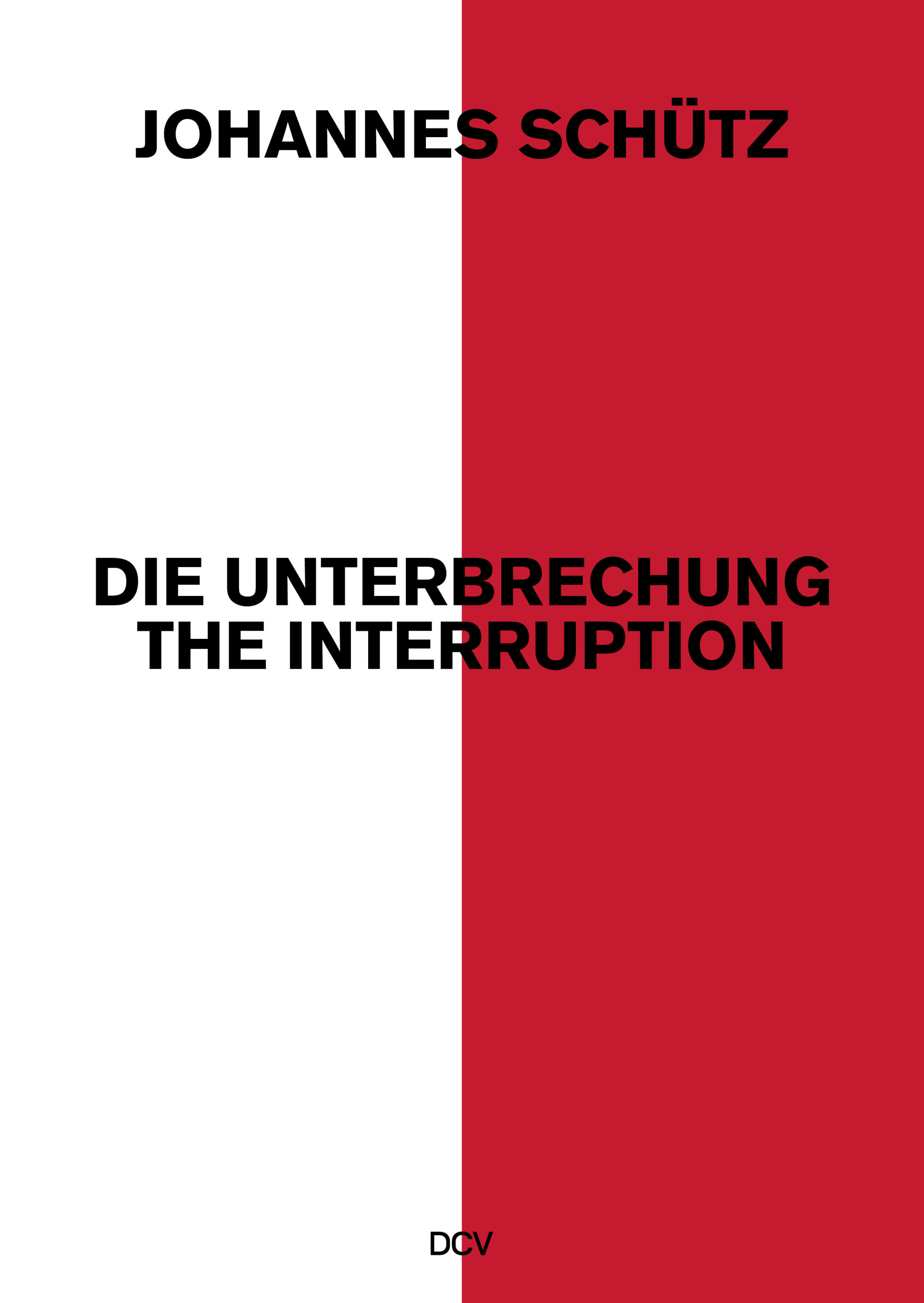
Johannes Schütz
Die Unterbrechung / The Interruption48€ Add to cartJohannes Schütz (b. Frankfurt am Main, 1950; lives in Berlin) is one of the best-known stage designers and directors working today. His style may be characterized as “simple, clean, and radical.” All major theatres and opera houses in the German-speaking countries and beyond have showcased Schütz’s work. He trained with Wilfried Minks and created his first stage setting for Luc Bondy in 1971. His career then took him to Berlin’s Schillertheater and the Kammerspiele in Munich, later he became head of stage design at the Bremer Theater and the Schauspielhaus Bochum. Schütz taught scenography at the ZKM Center for Art and Media Karlsruhe from 1992 until 1998 and has been professor of stage design at the Düsseldorf Academy of Fine Arts since 2010.
In his book Die Unterbrechung, he meets Annette Storr to discuss his new work for the stage, which is documented by maquettes and photographs and, most often, by stills from the performances. The productions represented include Penthesilea by Heinrich von Kleist, Landestheater Salzburg, 2018; Hamlet by William Shakespeare, Schauspielhaus Bochum, 2019; Reich des Todes by Rainald Goetz, Deutsches Schauspielhaus Hamburg, 2020; Richard II by William Shakespeare, Burgtheater, Vienna, 2021; and Der Idiot by Dostoevsky, Thalia Theater, Hamburg, 2021.