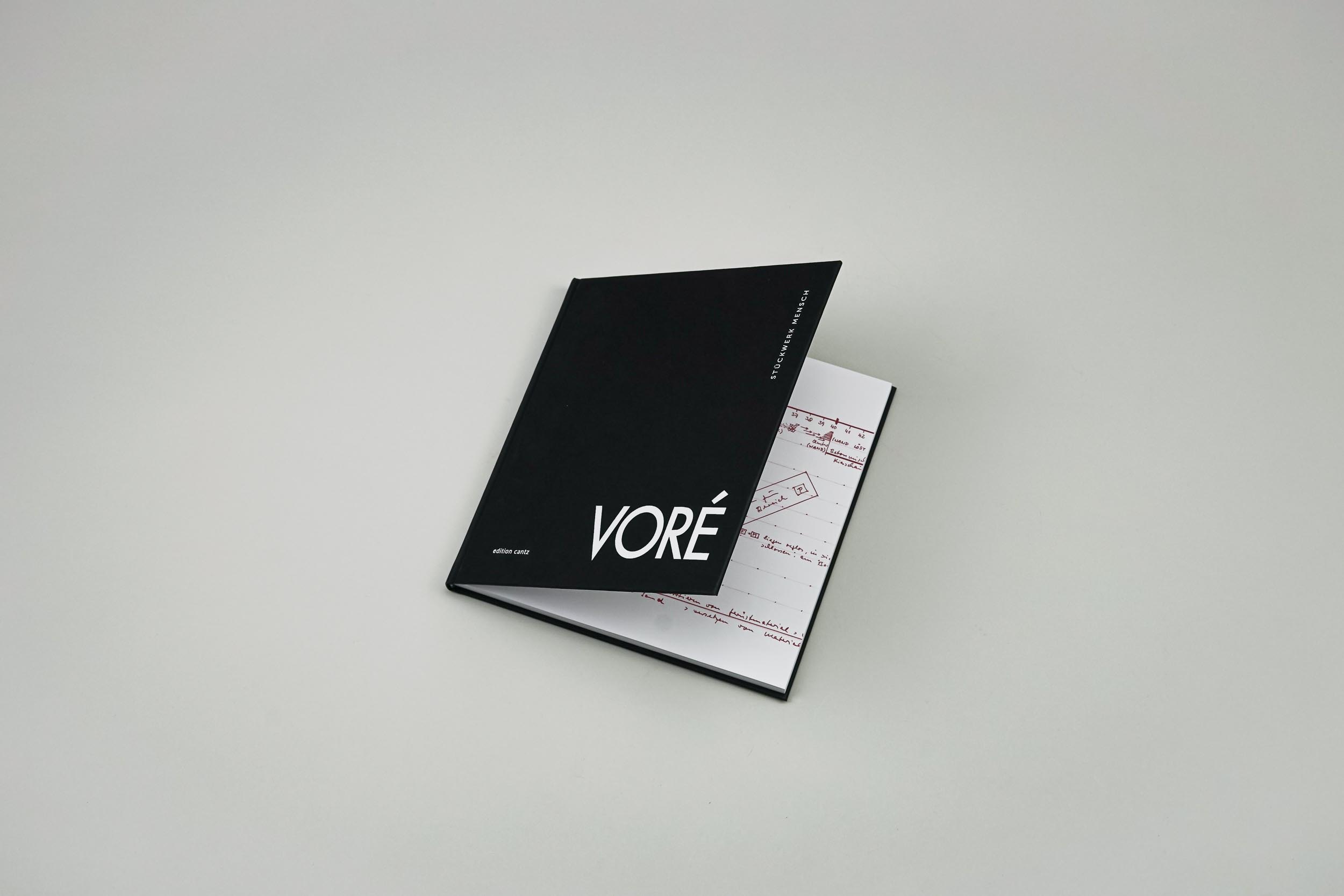
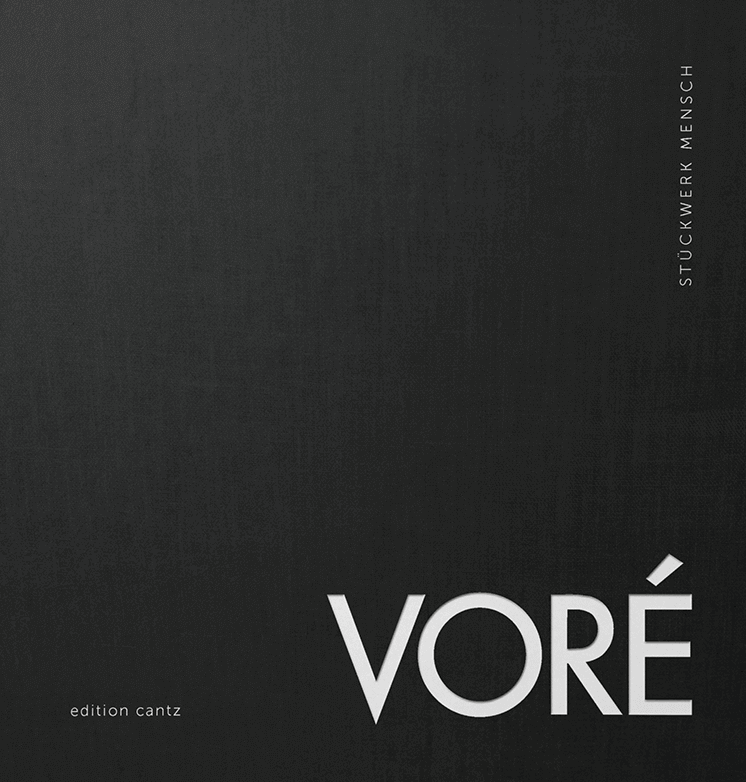
Voré
Stückwerk Mensch
 | |
|---|---|
| Author(s) | Leoni Arnold, Herbert Köhler, Maria Männig, Voré |
| Design | Christian Ertel, Karlsruhe |
| Size | 21 x 21 cm |
| Pages | 108 |
| Illustrations | 260 |
| Cover | Hardcover |
| Language(s) | German |
| ISBN | 978-3-947563-17-3 | Out of stock |
Historically Anchored Installations with Current Political References
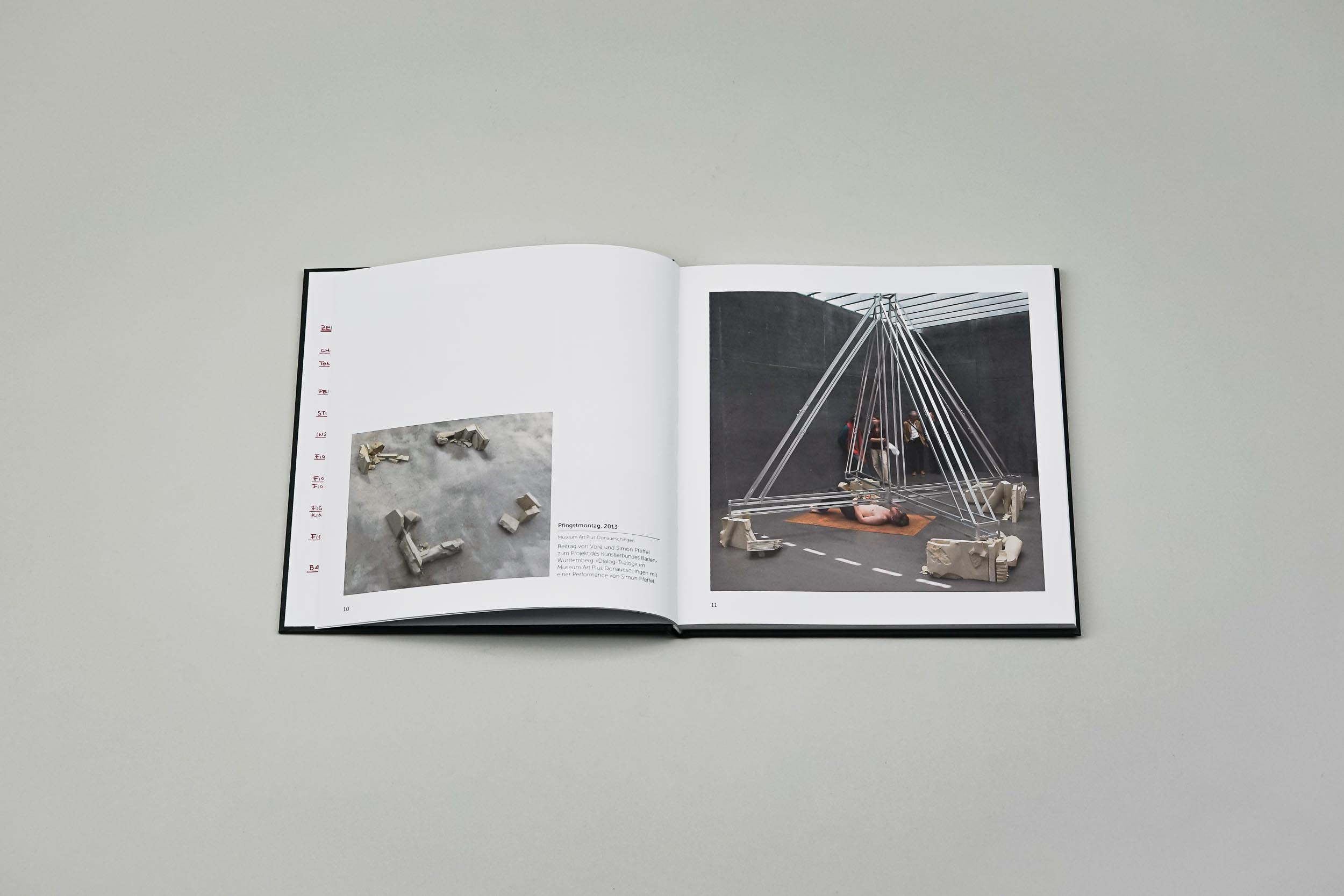
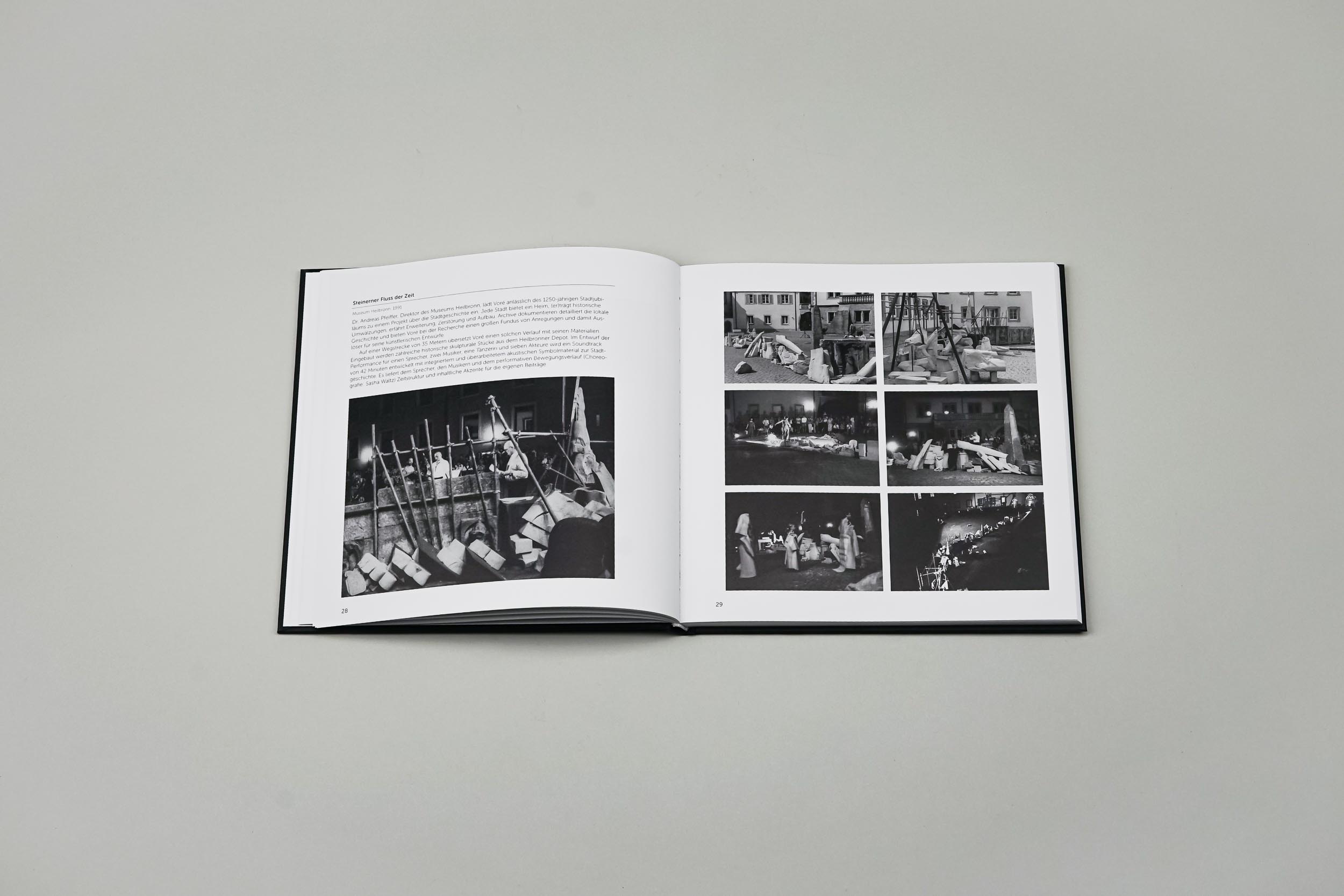
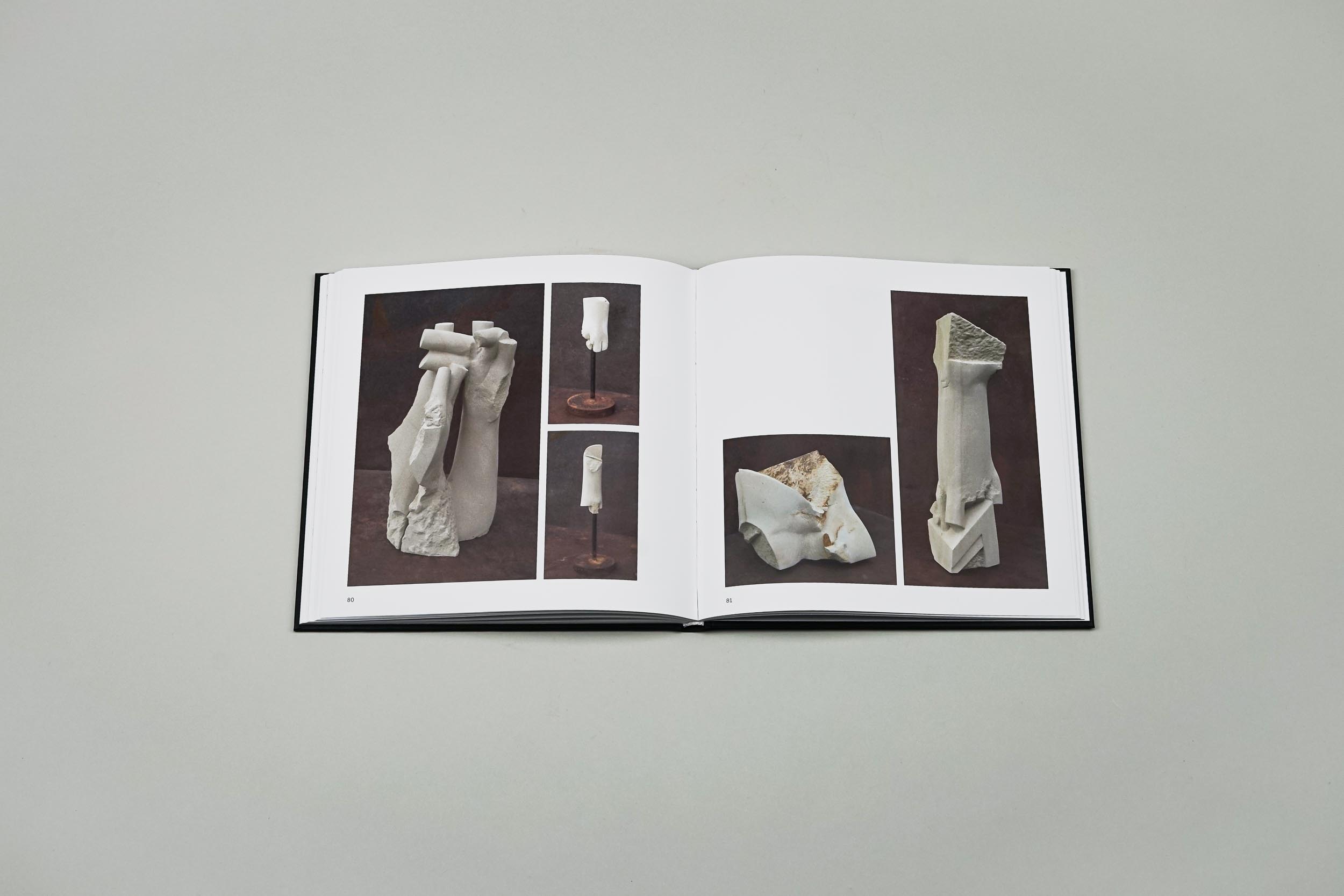
The sculptures by Voré (b. 1941 in Karlsruhe, lives and works in Ettlingen) reflect the artist’s examination of the conditions of human existence and the human state of mind. Finely polished forms, splinters, and rough fractures become a statement of content and at the same time constitute the formal tension of the respective object. The process of creation can be seen in the rough remaining parts and traces of the various tools. Parallel and closely related to this, drawings and collages are created as independent works or as components of installations. Formal impulses of the sculptural concept are taken up, graphically processed, and projected back into the sculptural work. The present volume presents projects from six decades with numerous illustrations.
Out of stock
Out of stock
More books
-

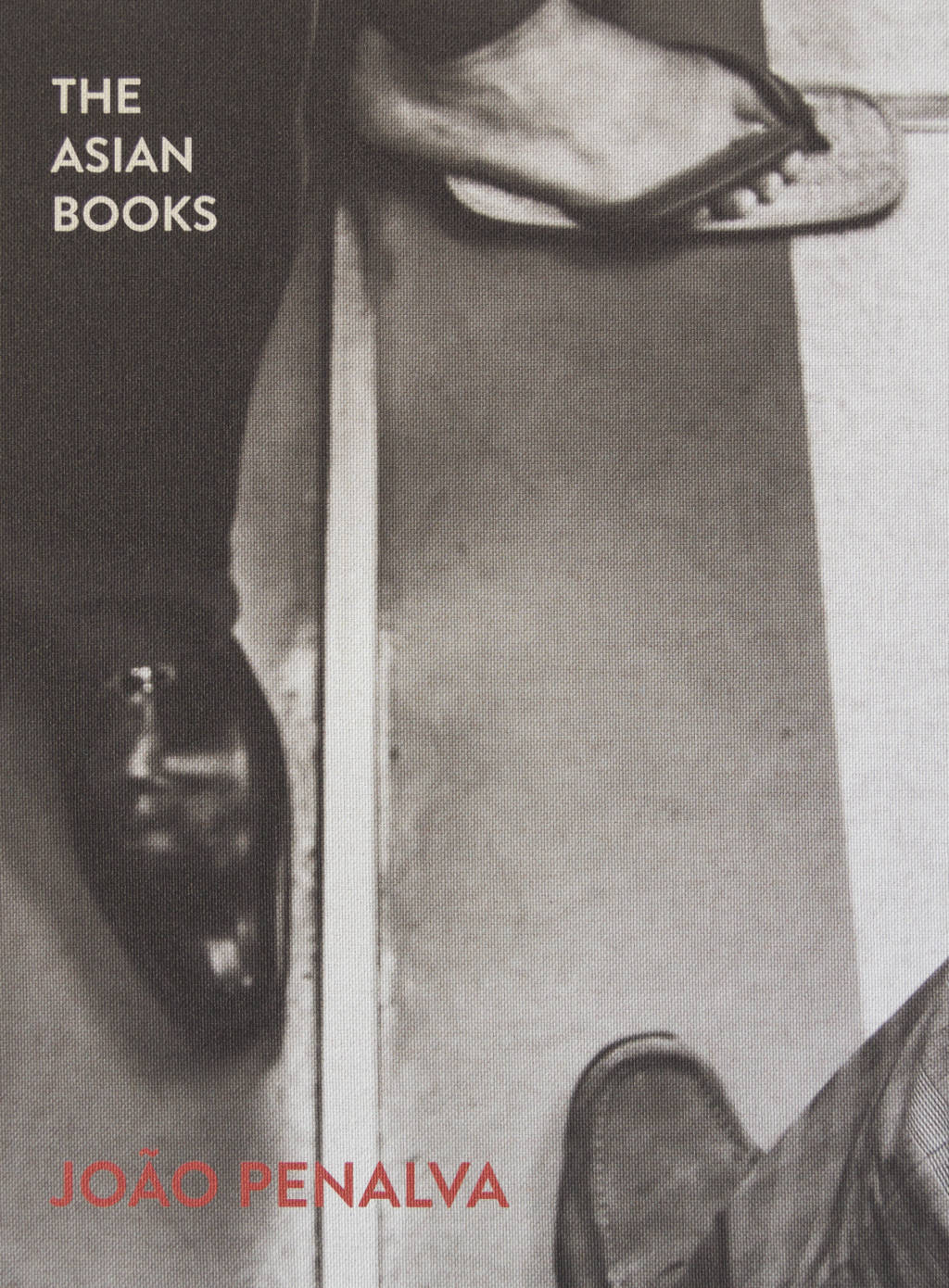
João Penalva
The Asian Books40€ Add to cartThe First Survey on the Exceptional Artist Books of João Penalva
Since 2007 João Penalva (b. 1949, Lissabon; lives and works in London) has exhibited large format unbound books, printed with archival inks on fine art paper, displayed on tables with chairs, to be handled freely. Each one is published in an edition of three and one artist’s proof. Those whose content relate to Asia, whether factually or fictionally, are collected here for the first time: Taipei Story, 2007; Portraits: Machines and Kabuki Wigs, 2009; The Toshiba Book of Happiness, 2009; Hello? Are you there?, 2009; Michio Harada, 2015; Boro, 2017.
João Penalva studied Fine Art at the Chelsea School of Art in London. His works have been shown in manifold international exhibitions. Penalva represented Portugal 2001 at the Venice Biennale and 1996 at the São Paulo Biennale.
-

Verena Issel
Yellow Pages. Installations and their individual components45€ Add to cartVerena Issel’s installations feel friendly and inviting, they are soft, round, colorful—we cannot but smile when we look at them. The sculptures and pictures she makes for them are replicas, sometimes laced with irony, of familiar objects from nature and culture—palm trees, ancient columns, and more—which she manufactures out of materials that surround us in everyday life and the domestic sphere such as an old bag, foamed plastic fragments, or a drainpipe. They are awkward giants, monochrome, simplified, two- and three-dimensional forms that wish us no ill. Taking a closer look, we realize that they embody what has been lost, that they are a plastic version of what we are destroying or have destroyed already: nature, obviously, but also ourselves and our cultural and social achievements. Their merriment and sympathy are tinged with melancholy, and the loss is doubly painful when we consider that the sculptures and graphic art are filled with no more than an imitation of life, and an exaggerated one. This catalogue presents a survey of Issel’s diverse and sprawling oeuvre. Expertly choreographed shots of the colorful works convey vivid impressions of her installations.
-

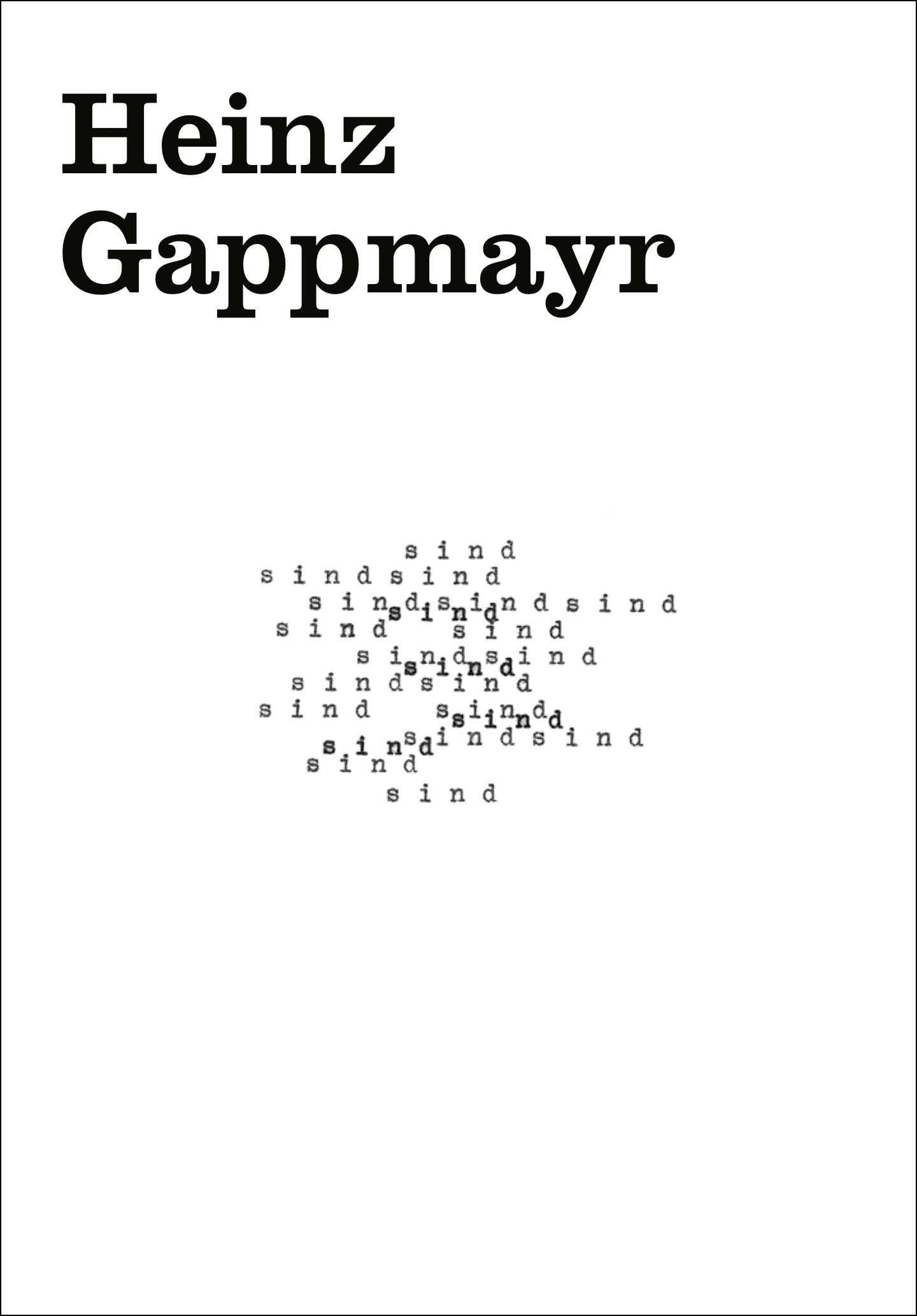
Cahier #1
Heinz Gappmayr22€ Add to cartDo we think in images or in language? Can writing visualize time? Heinz Gappmayr (1925-2010) was interested in text as a spatial event and in letters as architecture. Although his works were often presented in the context of Visual Poetry, Gappmayr himself preferred the more neutral term text to lyricism. His understanding of written language as a conceptual medium and typography as an indicator of physicality was closer to Lawrence Weiner’s approach than to that of the Concrete Poets. This volume accompanies an exhibition at the Tiroler Landesmuseum and includes Gappmayer’s most important art-in-architecture projects, as well as a complete notebook from 1961, with commentary by Gaby Gappmayr, the artist’s daughter. A conversation with her provides valuable philosophical insights into her father’s work.
-
Spaces Embodied (ENGLISH)
Draiflessen Collection32€ Add to cartWe live in spaces that we shape in accordance with our own ideas. Our everyday lives leave traces in them that speak to our habits. Spaces promise shelter and belonging, but they can also instill a sense of constraint. We grow into the spaces we inhabit—and they in turn become expressions of our personalities. Conversely, spaces, depending on their architecture and location, inform our existence. RÄUME HAUTNAH gathers works of art that, rather than conceiving of the human sphere and the spatial domain as separate, comprehend them in their complex entanglements: in bodily experience, emotional dependency, or the instinctive need for protection. An essay by Olesja Nein, the project’s curator, offers an introduction to the exhibition and takes the reader on a tour, describing each artist’s space of activity and supplying helpful information. Philipp Zitzlsperger, meanwhile, zooms in on a key aspect of the art in the exhibition, the imprint as an artistic technique with a distinctive aura, and illuminates its origins and significance since the dawn of modernism.
Artists: Absalon, Shannon Bool, Heidi Bucher, Eileen Gray, Do Ho Suh, Mary Mattingly, Tracey Snelling, Francesca Woodman
-

GABRIELE BASCH, GESA LANGE
UND_NEWS_FROM_NOW_HERE18€ Add to cartBeyond Painting
Gabriele Basch’s (b. 1964, Bad Homburg; lives and works in Berlin) cut-outs and Gesa Lange’s (b. 1972, Tongeren, Belgium; lives and works in Hamburg) drawings are meditations on construction and deconstruction as well as doubts and how to overcome them. Both artists expand the range of painting: Basch, with incisions into the medium and a creative handling of the tinged shadows that transform the painted panel into a wall-mounted object; Lange, by embroidering her canvases with colorful threads that open up the pictorial space on all sides. The book presents works by both artists, initiating an animated and dynamic dialogue between their nonrepresentational visual idioms. Gabriele Basch is professor of painting at the Hochschule für Angewandte Wissenschaften Hamburg. Gesa Lange is professor of graphic art at the Hochschule für Angewandte Wissenschaften Hamburg. She has received the Kunsthalle Rostock Prize and other awards.
-
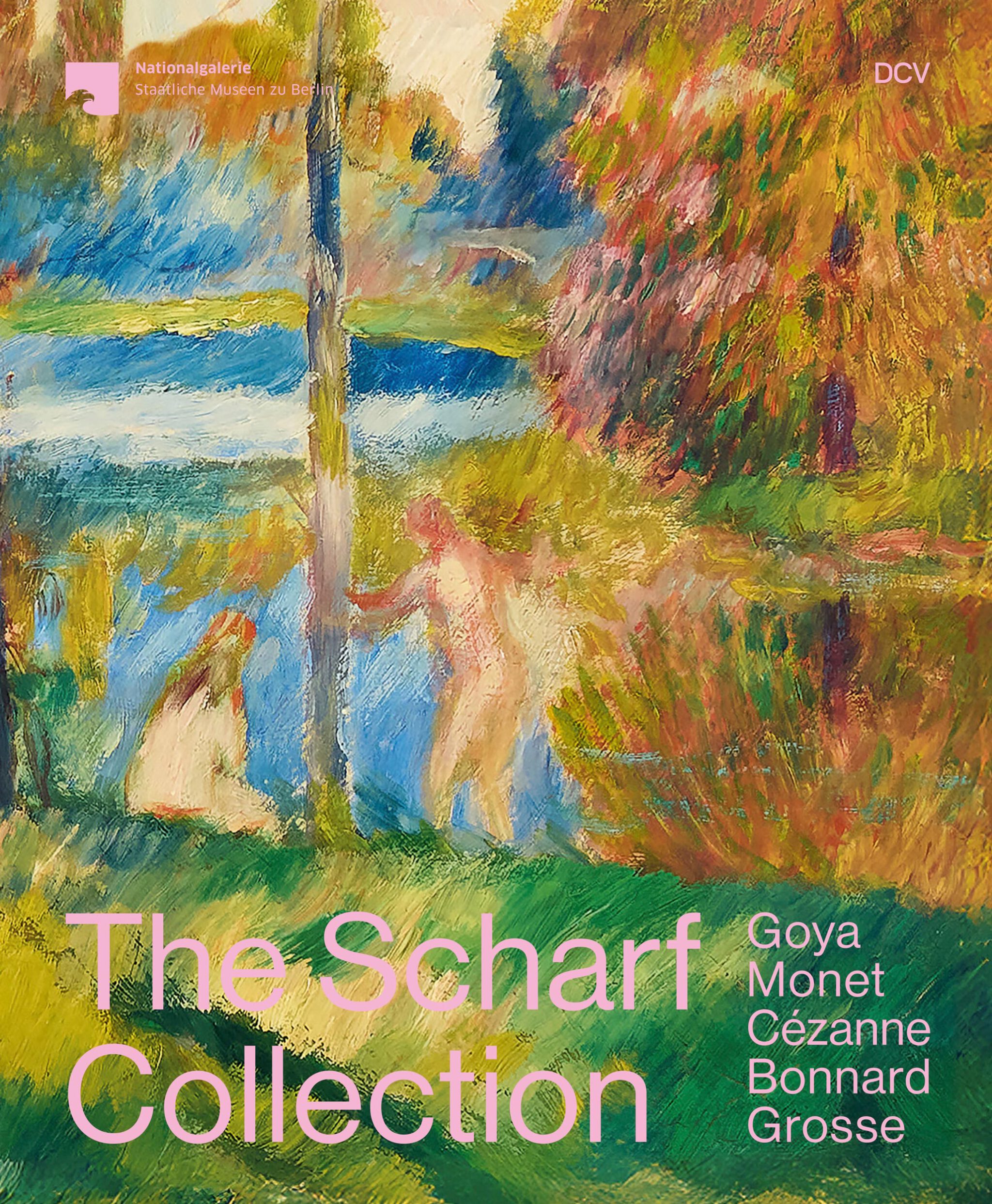
The Scharf Collection.
Goya – Monet – Cézanne – Bonnard – Grosse48€ Add to cartThe Scharf Collection is a German private collection of French art from the nineteenth and twentieth centuries and international contemporary art. Now in its fourth generation, it continues a branch of the renowned Otto Gerstenberg Collection in Berlin, which encompasses everything from the beginnings of modernism, represented by Francisco de Goya, to the French avant-garde of the second half of the nineteenth century with Gustave Courbet, Edgar Degas and the entire graphic oeuvre of Henri de Toulouse-Lautrec. The richly illustrated catalog accompanies the collection’s first comprehensive exhibition at the Alte Nationalgalerie – Staatliche Museen zu Berlin and the Kunstpalast in Düsseldorf.
-
Simone Haack
HAIR30€ Add to cartSimone Haack (b. 1978 in Rotenburg/Wümme, lives and works in Berlin) has always made the inwards legible in the outer appearance of her figures in her painting. This is also the case in her block of works in the exhibition of the same name, Hair. Already in the late 17th century, magic and superstition were attributed to hair. In it one suspected the whole power of the soul. The artist, who was formed in the painting class of Katharina Grosse and Karin Kneffel, symbolically reveals the fragility of the DNA of human beings through her hair landscapes, which are sometimes placed macroscopically in the picture in the spirit of a New Magic Realism. At the same time, her accompanying exhibition publication always also tells of the triangle of tension of physical as well as psychological existence, which in her case runs through the painterly psychoanalysis.
-

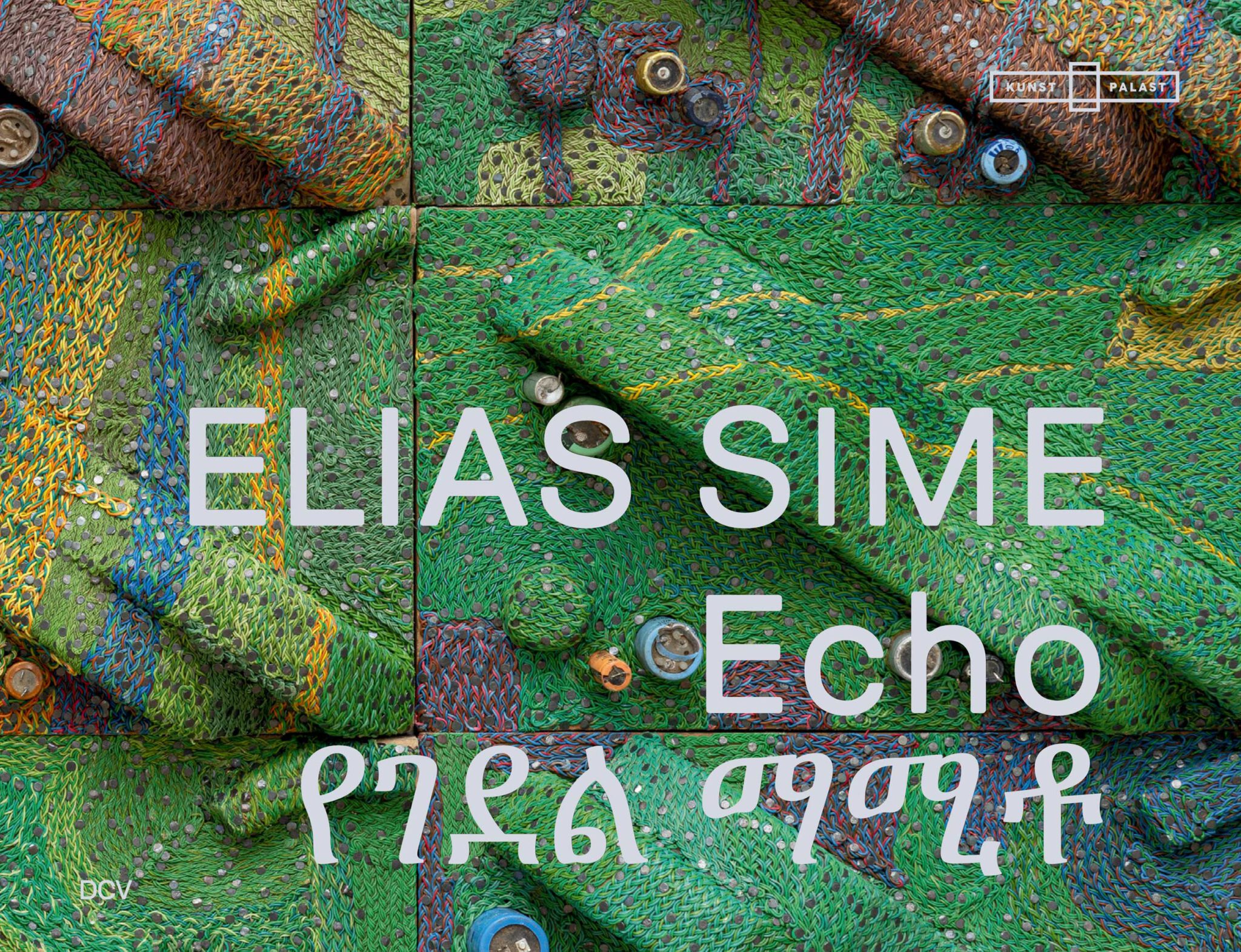
Elias Sime
Echo የገደል ማሚቶ35€ Add to cartEthiopia’s multi-award-winning artist Elias Sime (born 1968 in Addis Ababa) impresses with monumental wall reliefs made of ornamentally interwoven wires and cables or sawn-up circuit boards. For years, together with his team, he has been tirelessly
reworking discarded electronic components into complex and colorful assemblages. In doing so, he draws on traditional Ethiopian techniques of weaving, braiding and carving. Sime is interested in the “biography of the material” and each collage is a search for traces (of the local and global past). The artist obtains the electronic waste, which the countries of the global North are known to like to “dispose of” in the African continent, from the flea markets in Addis Ababa. His friezes are monuments both to the throwaway society and to global networking and interaction.
Echo የገደል ማሚቶ, a richly illustrated book, gives an overview over the artist’s fascinating career and is published on the occasion of the solo show at the Kunstpalast Düsseldorf. The volume includes insightful essays by Felicity Korn and Andria Hickey as well as an important conversation with Hans-Ulrich Obrist from 2016. Also discussed is the Zoma Museum complex, which was initiated by Sime (together with the curator Meskerem Assegued)—a total work of art that is exemplary for sustainability and community building.
-

Roland Schappert
Coronasehnsucht14€ Add to cartThe coronavirus pandemic hit us in a time of disparate foci of attention. A fundamental lack of comprehension and hate speech contrast sharply with an unspoken consonance of ideas as well as feelings. What do reality, statistics, love, and yearnings do to us? They are playing a game with reality, sans fiction. Relationships sustain our lives. What was unmistakable before is now manifest, with stark certainty. Are we ready for loving dissension? Can we bear to think only as far ahead as we can see? How do our emotions answer these questions, and how does our intellect? The Cologne visual artist and writer Roland Schappert retraces his personal voyage through this sun-kissed rain-drenched time. The book is a diary-like tour de force of digital amorous overtures, an attempt to explain the world of art via WhatsApp, and the real challenges of life as a single artist in a major German city in precarious circumstances.
-

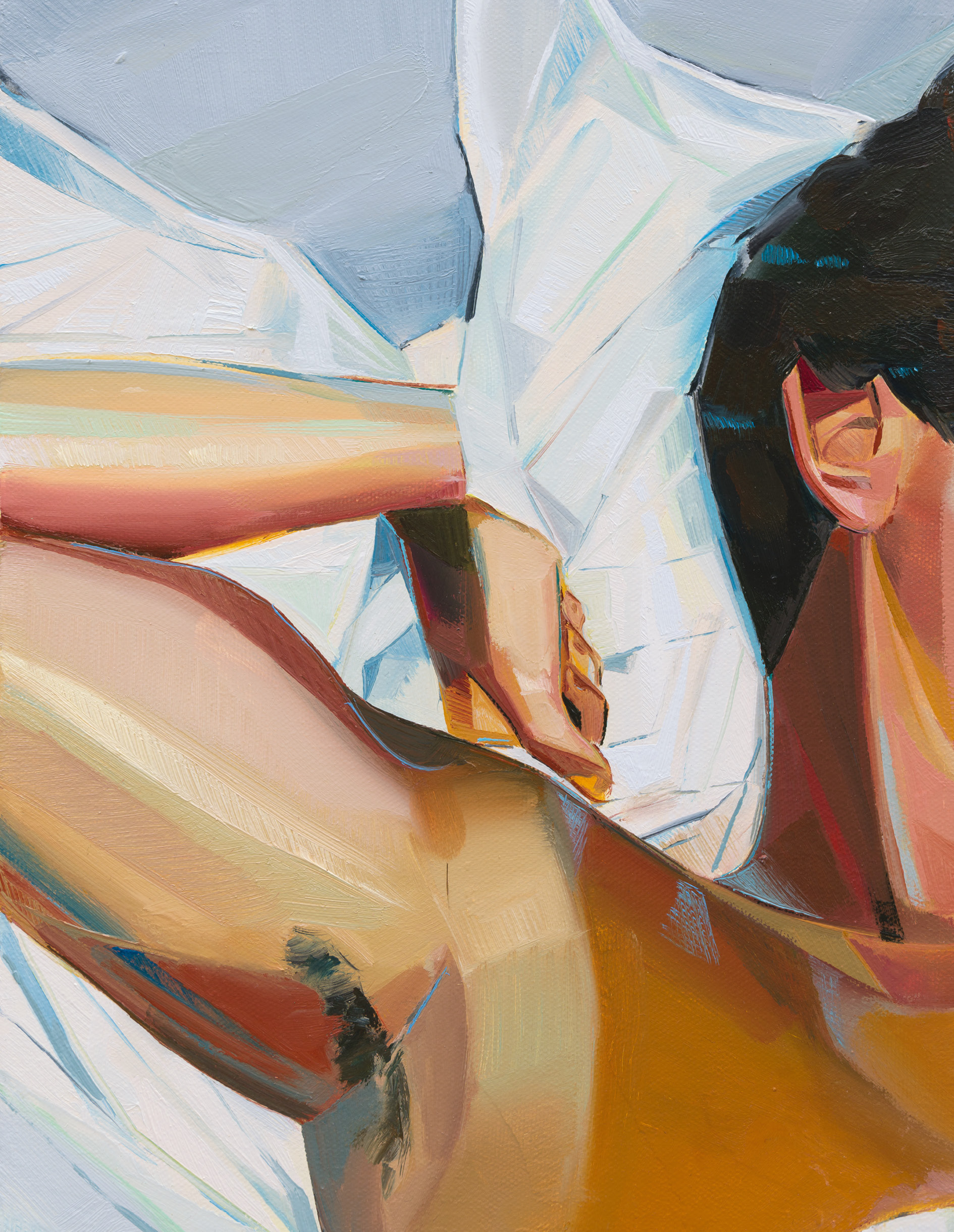
Logan T. Sibrel
But I’m Different50€ Add to cartLogan T. Sibrel’s (born 1986 in Jasper, IN, lives and works in Brooklyn, NY) paintings and drawings depict moments of great joy and beauty, but also fear, sadness, desire and aggression. Frequently only part of the mostly male figures is depicted. Sibrel’s cropping can feel simultaneously intimate and alienating—fragmentary stories are told that touch you through their authenticity and vulnerability. Sibrel’s artistic maneuvers include overlapping, shifted perspectives, and text fragments that appear like snippets of overheard conversations and thus create a collage effect.
This book is the artist’s first comprehensive publication with works from the last twenty months. While the first part presents the artist’s paintings, the second part presents his drawings with the edges of the backing paper digitally removed so that it looks as if the images were drawn directly into the book.
Logan T. Sibrel completed his bachelor’s degree at Indiana University in Bloomington in 2009 and his master’s degree at Parsons New School of Design in New York in 2011. His most recent solo exhibitions include In Another Life and Galerie Thomas Fuchs (Stuttgart, DE) and Brake For Your Sweetheart at Auxier Kline (New York, NY).
-

Silke Eva Kästner
Panta Rhei36€ Add to cartSilke Eva Kästner (lives and works in Berlin and Uckermark) developed her creative approach while traveling in India, New York, and Japan. She creates temporary on-site paintings as well as conceptual pieces in which the viewer comes upon prepared materials and becomes part of—or even alters—the picture. Kästner documents these encounters in photographs or filmic traces out of which she compiles films in the editing suite. Probing the potentials of painting as communication, she foregrounds the active intervention and process. In the gallery no less than the urban scene, Kästner places painting in relation to architecture in order to frame it in varying perspectives.
The monograph offers insight into the foci of Kästner’s art; the works are grouped in chapters rather than arranged in chronological sequence. This structure makes the book a space of experience that gives the reader a vivid sense of her ephemeral creations.
After studying with Katharina Grosse at the Weißensee School of Art and Design Berlin, Silke Eva Kästner won the Mart Stam Prize; she honed her craft in India on a NaFöG fellowship and in New York on a yearlong DAAD fellowship. Funding support from the Institut für Auslandsbeziehungen (ifa) enabled her to initiate an ongoing exchange project between Kashmir and Berlin. Her work has been on view at numerous institutions including the Schirn Kunsthalle Frankfurt; the Devi Art Foundation, Delhi; Berlinische Galerie, Berlin; the Queens Museum of Art, New York; Künstlerhaus Bethanien, Berlin; and the Haus der Kulturen der Welt, Berlin.
-
Rainer Jacob
justICE30€ Add to cartRainer Jacob (b. Jena, 1970; lives and works in Leipzig) has anonymously installed objects made of ice in public settings in cities including Berlin, Leipzig, Paris, Moscow, Oslo, Prague, and Budapest since 2013. He then allows them to dematerialize and records the process in photographs. Radiators, wall outlets, QR codes, and the Duchampian pissoir are among his recurrent motifs. The impermanence of the ice objects builds bridges to street art, Fluxus, and action art. Critical observations on the unequal distribution of resources and political power in contemporary society, his works reflect on our perceptions and question the idea of originality in art while also probing the outer limits of sculpture.
The publication showcases the ice objects of the past ten years, embedding them in a decade that has marked a sea change in the life of humankind: JustICE captures an artist’s distinctive perspective on societal processes.
- Out of stock

Hans Karl Zeisel
Hundred and more34,95€ Read morePossibilities of concrete art
What is possible without turning away from the cocrete? In the Bauhaus tradition, the typographer, graphic artist, designer and author Hans Karl Zeisel opens up countless design options with basic forms. His wooden cuboids demand a humorous approach to sculpture. They are creativity training, study tools and meditation game all in once. A playful experiment that reveals the diversity of concrete art.
-

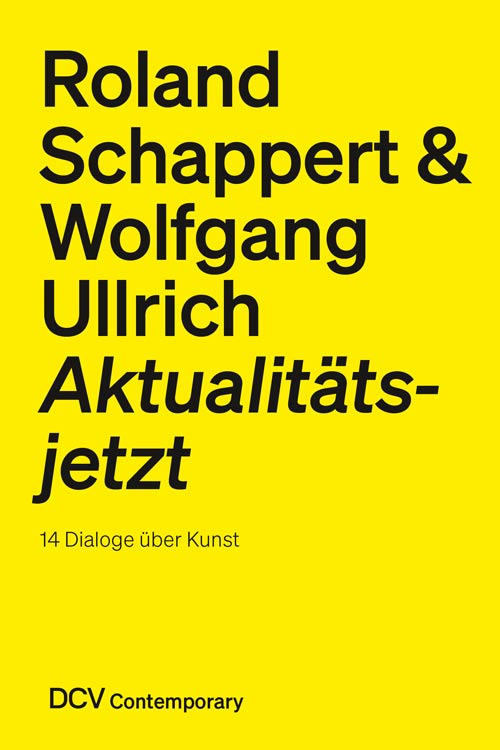
Roland Schappert & Wolfgang Ullrich
Aktualitätsjetzt16€ Add to cartPhilistinism, climate change, legitimation discourses—in a tour de force sustained by profound knowledge of the phenomena in question, AKTUALITÄTSJETZT blazes trails through the jungle of contemporary art and its current debates. Over the course of two years, the art scholar and author Wolfgang Ullrich initiated 14 dialogues on Schappert’s word paintings, murals, and interventions. Their distinctive formal features and conceptual and substantial dimensions inspired illuminating conversations that range far beyond the specific works to explore today’s art world and questions of the philosophy of art and the sociology of culture. The best volume of dialogues on art since David Sylvester’s interviews with Francis Bacon.
-

Cornelia Baltes
Dingbats44€ Add to cartCornelia Baltes’s (b. Mönchengladbach, 1978; lives and works in Berlin) paintings and installation straddle the divide between abstraction and figuration. Her pictures are inspired by observations of mundane details—apparel, body parts, or facial expressions—that she pares down to simple lines and shapes. Rendered in vibrant colors and gestural fields, they hint at a narrative in the pictorial space. Baltes works with steadily modulated color gradients, on which she places thick and assertive marks. She often interrogates the painted picture’s function, by painting on the wall beyond the rectangle of the canvas, by hanging a picture in the middle of the room as an object in its own right or laying it out on the floor. Her works blend Pop Art and minimalism with an intensity and dynamic energy—and, sometimes, unmistakable flashes of humor—that cannot fail to captivate the beholder.
This book is the first comprehensive monograph on the artist’s oeuvre.
Cornelia Baltes studied at Bergische Universität Wuppertal in 2000–2003 and at Folkwang Universität der Künste, Essen, in 2003–2006, before rounding out her education at the Slade School of Fine Art, London, in 2009–2011.
-

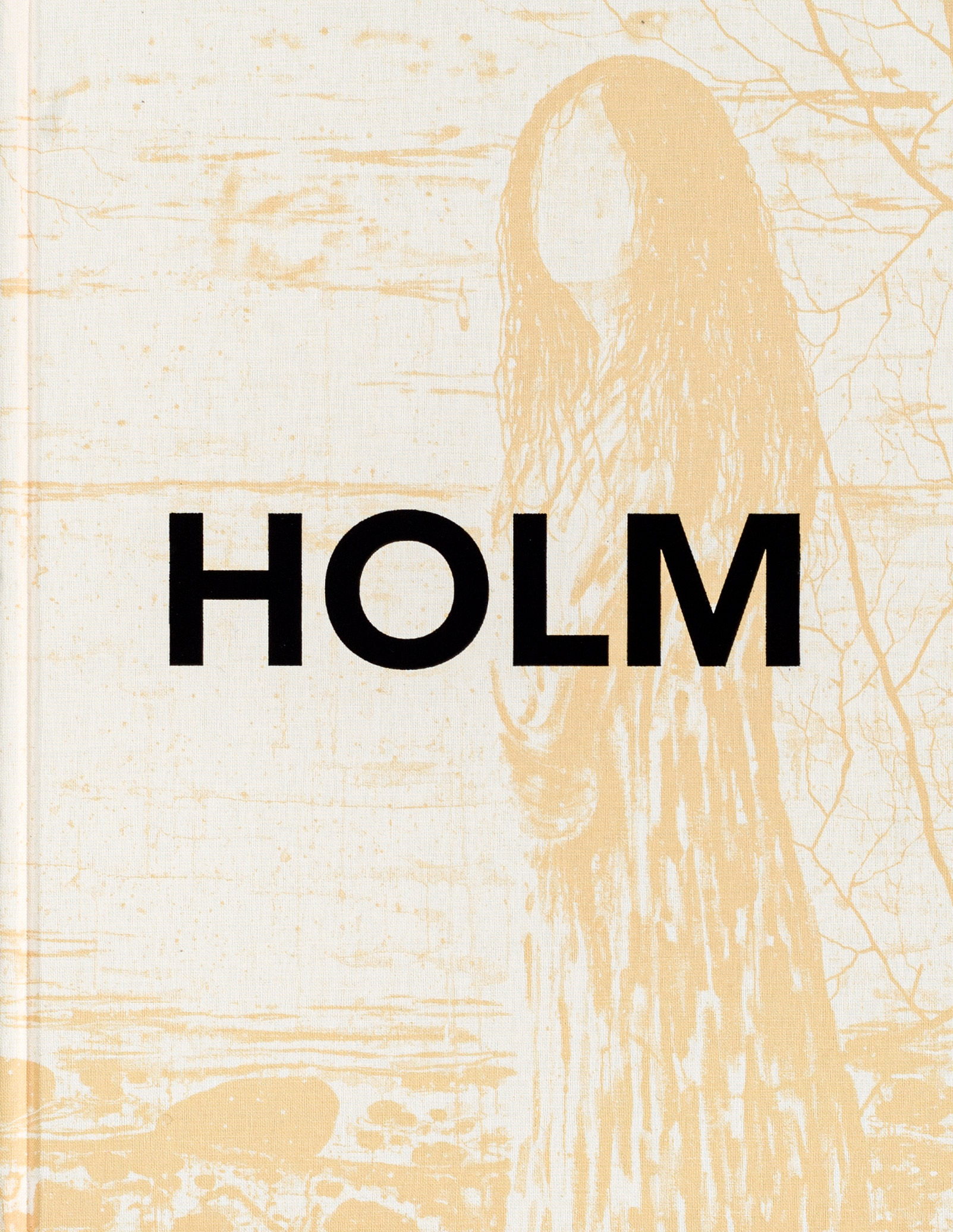
René Holm
45€ Add to cartRené Holm goes for the big picture, painting the ambivalence of human existence and our relationship with nature. Some of his protagonists are physically naked, and all embody an interior life through their poses. The faceless figures function as screens onto which the beholders can project their own feelings, as symbols of universal human experiences. That is why, Holm notes, people very often recognize themselves in his protagonists. The effect is in part due to the forest, the setting of all pictures in this catalogue, which has been Holm’s studio and preferred backdrop for decades. It is where he finds the twilight that glows in all of our souls: woodlands nourish and menace us, they are home to helpful fairies and nasty demons, one can find life and death alike in them. He translates the sublime of the forest—a central motif in the Romantics—into a contemporary visual idiom. In his pursuit of this endeavor, he has recently ventured a radical aesthetic change: instead of using thick paints as before, he now applies the pigments to the canvas in thinner and drier layers. The book illustrates this spectacular fresh start, carrying us off into the depths of the soul and mysterious woodlands.
-

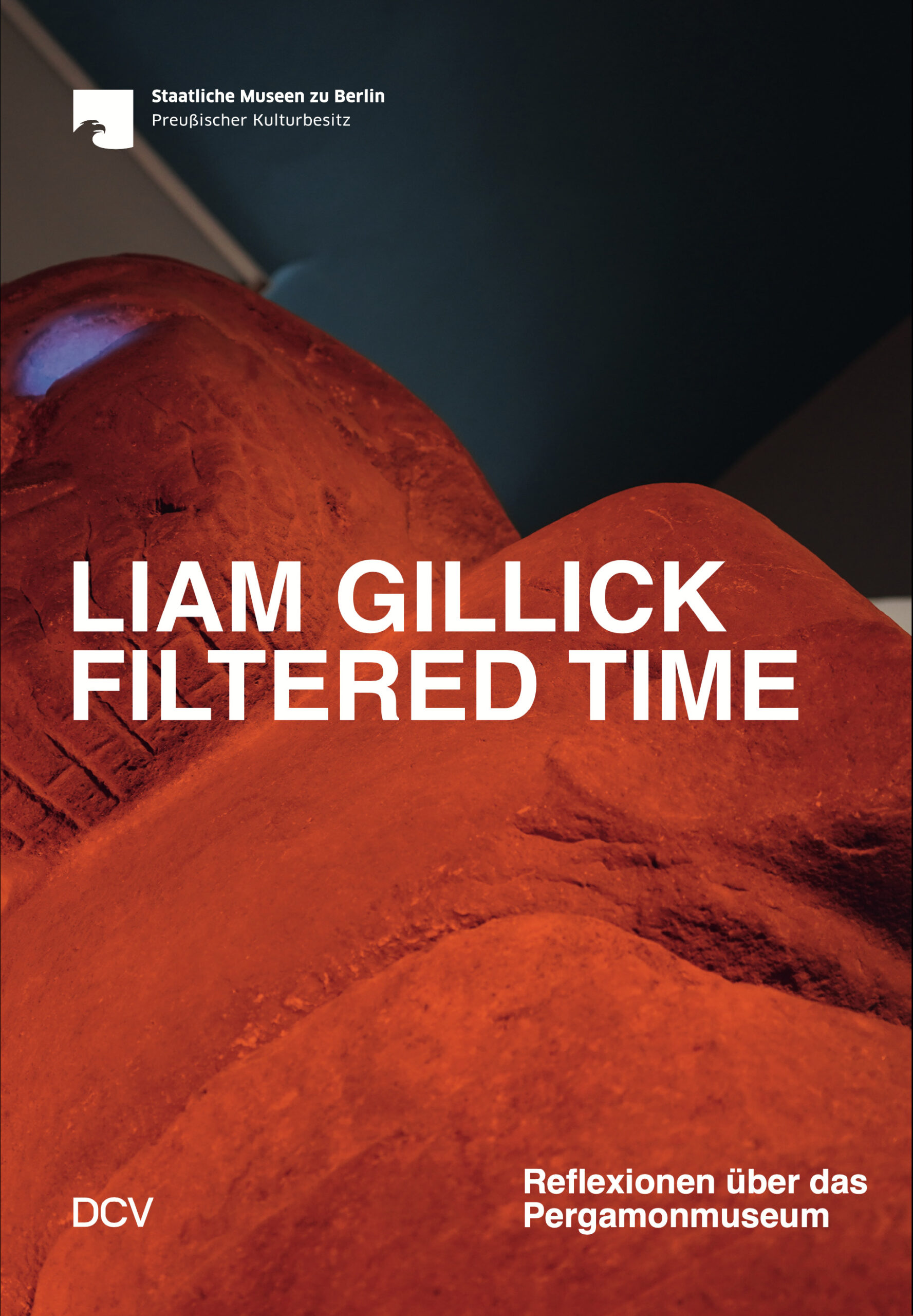
Liam Gillick
Filtered Time (GERMAN)28€ Add to cartThe sculptor and object artist Liam Gillick (b. Aylesbury, UK, 1964; lives and works in New York) has created an intervention titled Filtered Time for the historic galleries of the Pergamon Museum in Berlin. Projections of light and color and acoustic effects condense six thousand years of cultural history into an immersive spatial experience. Gillick initiates a conversation between the iconic Processional Way and the Ishtar Gate from Babylon, the monumental sculptures of Tell Halaf, and other exhibits, engendering new layers of meaning across all historical periods. The first joint project of the Vorderasiatisches Museum and the Hamburger Bahnhof—Nationalgalerie der Gegenwart makes for a singular visual and sensory experience. Designed by the artist himself, the publication not only documents the richly colorful production, but also provides insight into the eventful history of the museum, which is approaching its centennial.
Liam Gillick studied at the Hertfordshire College of Art in 1983–1984 and at Goldsmiths, University of London from 1984 until 1987. Gillick is a prolific published writer as well, producing essays, reviews, fiction, and theatrical scenarios.
-

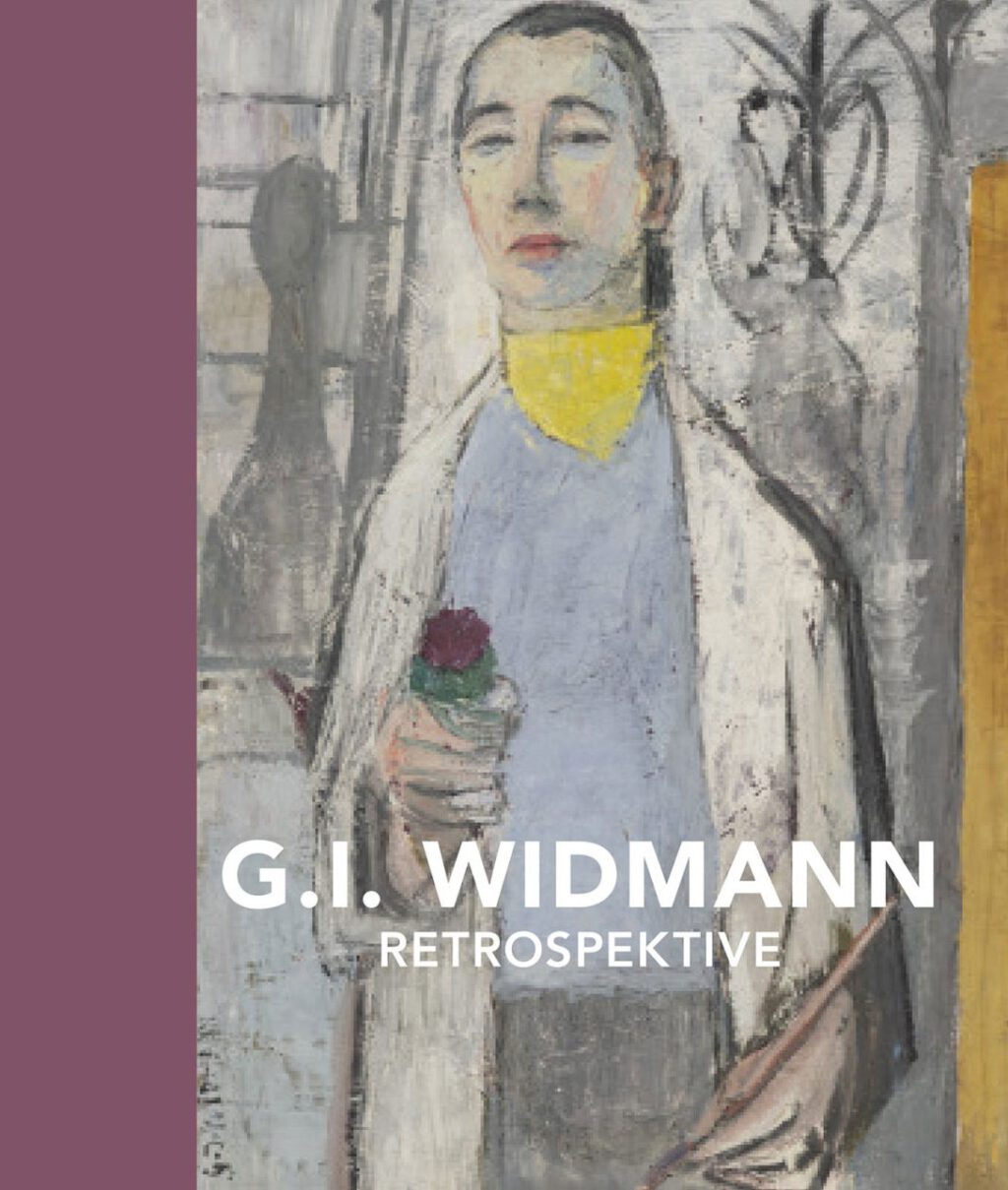
G. I. Widmann
Retrospektive24€ Add to cartA Tribute to the 100th Birthday. One of the Important Figurative Positions of the Young Federal Republic of Germany
She was an unusual painter who sought to hide her gender behind a pseudonym, while at the same time addressing her own circumstances as an independent artist and single mother in her large-format canvases. Gudrun Irene Widmann (b. 1919, Reutlingen; d. 2011, Reutlingen) created an oeuvre that lays claim to being one of the most important figurative positions of the 1950s and ’60s. This retrospective volume pays testimony to a strong personality and sheds light not only on her self-image as an artist but also on the influences of society and personal contexts — representative of the situation of female artists in general.
Gudrun Irene Widmann studied at the academies in Düsseldorf, Stuttgart, and Vienna during the Second World War. She worked in her own studio in her hometown of Reutlingen until her death.
- Release January 2026
PULS 22
36€ Add to cartPULS, an initiative of Bukarest’s National Museum for Contemporary Art (MNAC) began during the COVID-crisis. Since then, the museum supports Romanian artists by biennially purchasing more than 100 relevant creative works, carefully selected from a large pool of submissions by a democratic jury of artists and art professionals. PULS22 showcases in book-form MNAC’s most recent acquisitions and their subsequent exhibition. This volume, like the former PULS20, is an exciting panoramic snapshot of the country’s dynamic multigenerational art scene. The installation shots speak of an outstanding exhibition and the potential for future loans to curated shows elsewhere.
-

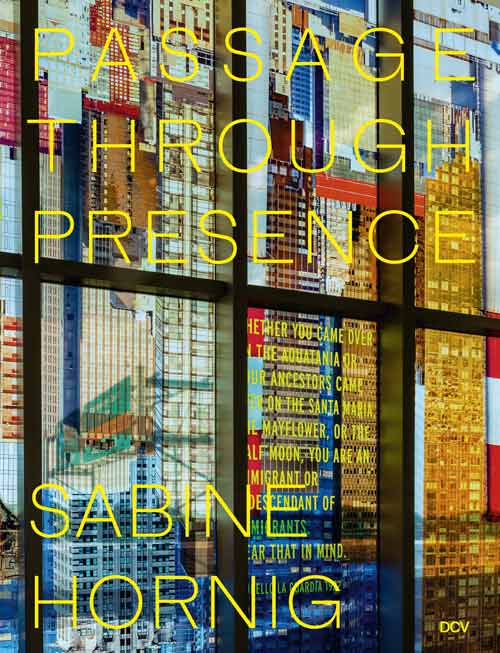
Sabine Hornig
Passage through Presence45€ Add to cartLayered Spacetimes in Large Formats
Sabine Hornig (b. 1964; lives and works in Berlin) has earned international acclaim with sculptures, photographs, and architectural interventions that interweave image, perspective, and space in distinctive ways. Her works feature translucent pictorial planes on glass panes; integrating these sculptural elements into the setting, she creates environments in which meaning unfolds as viewers allow their gazes—and themselves—to wander. For her new works, which engage with architecture, the artist superimposes enormous photographs on entire façades and concourses. This publication is the first to put the focus on Sabine Hornig’s art in three dimensions, detailing her process from the building of sculptural models and the combination with transparent photographic layers to her creation of works in public settings. It showcases her largest installation to date, at LaGuardia Airport in New York City, which she discusses in a conversation with Nicholas Baume, director and chief curator, Public Art Fund, New York.