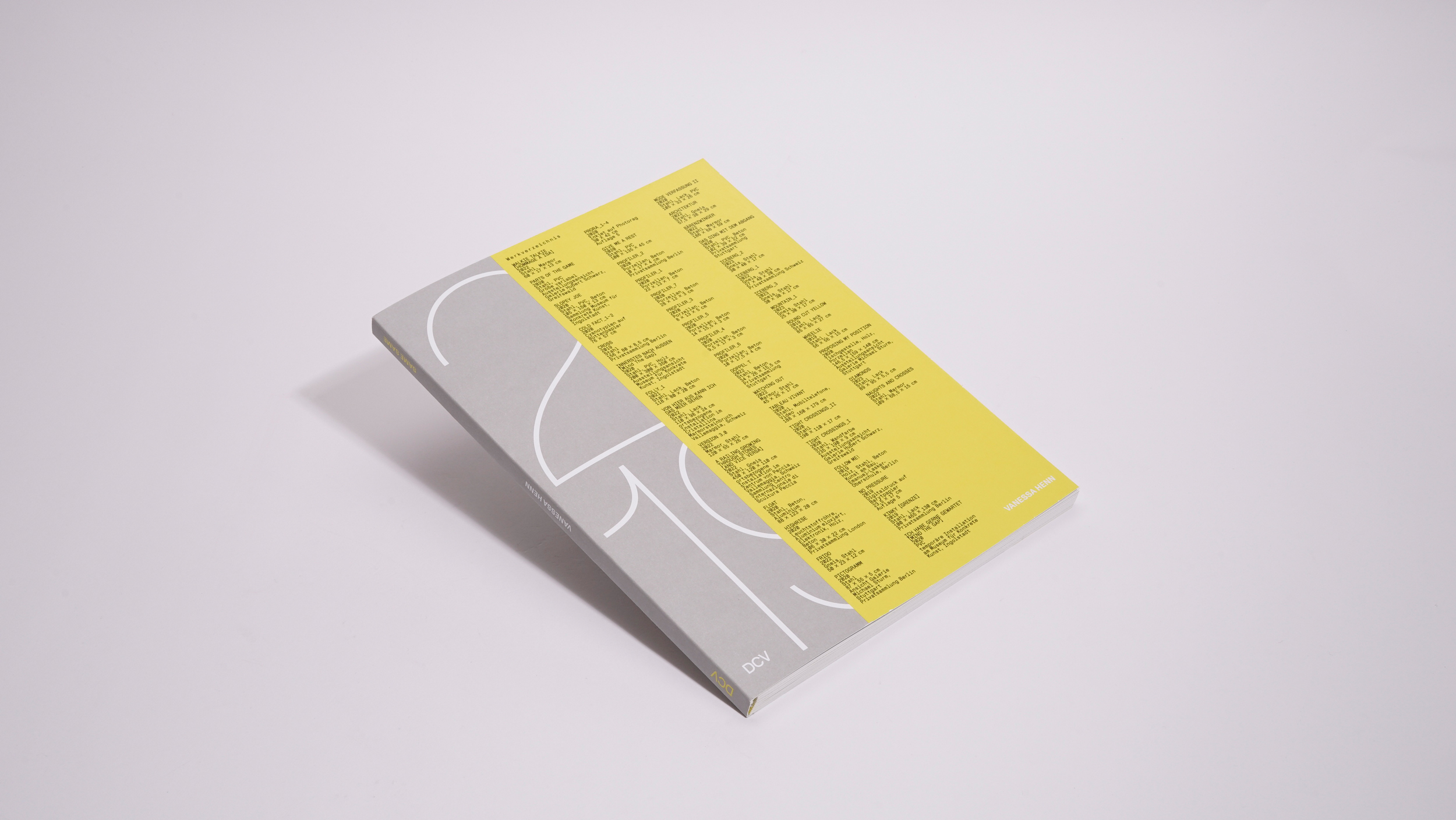
Vanessa Henn
Same Same
 | |
|---|---|
| Editor(s) | Simone Schimpf |
| Author(s) | Ralf Christofori, Simone Schimpf |
| Design | Studio Jung, Gilbert Schneider |
| Size | 20,5 x 26,5 cm |
| Cover | Swiss brochure |
| Pages | 132 |
| Illustrations | 94 |
| Language(s) | German, English |
| ISBN | 978-3-96912-174-0 |
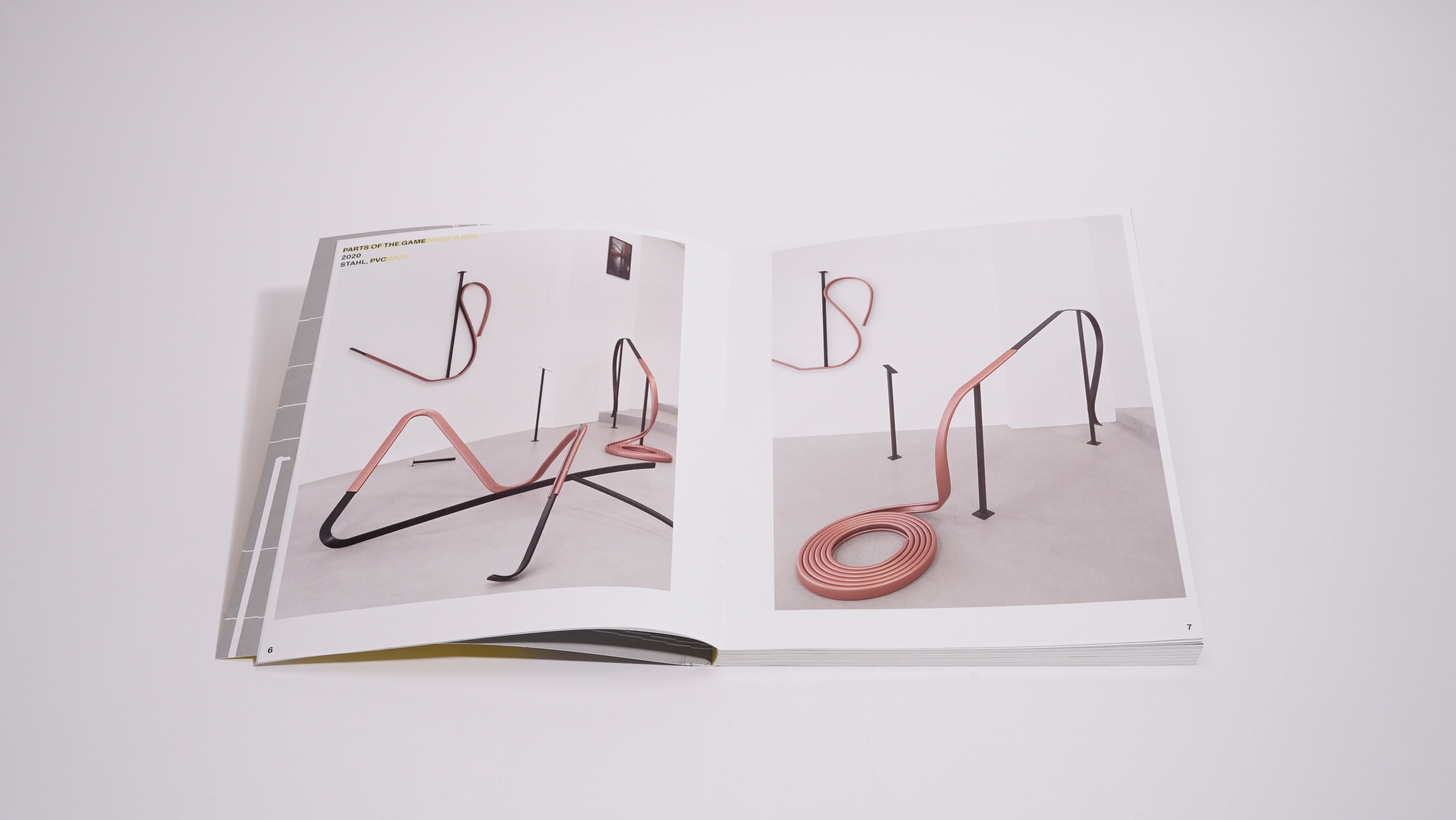
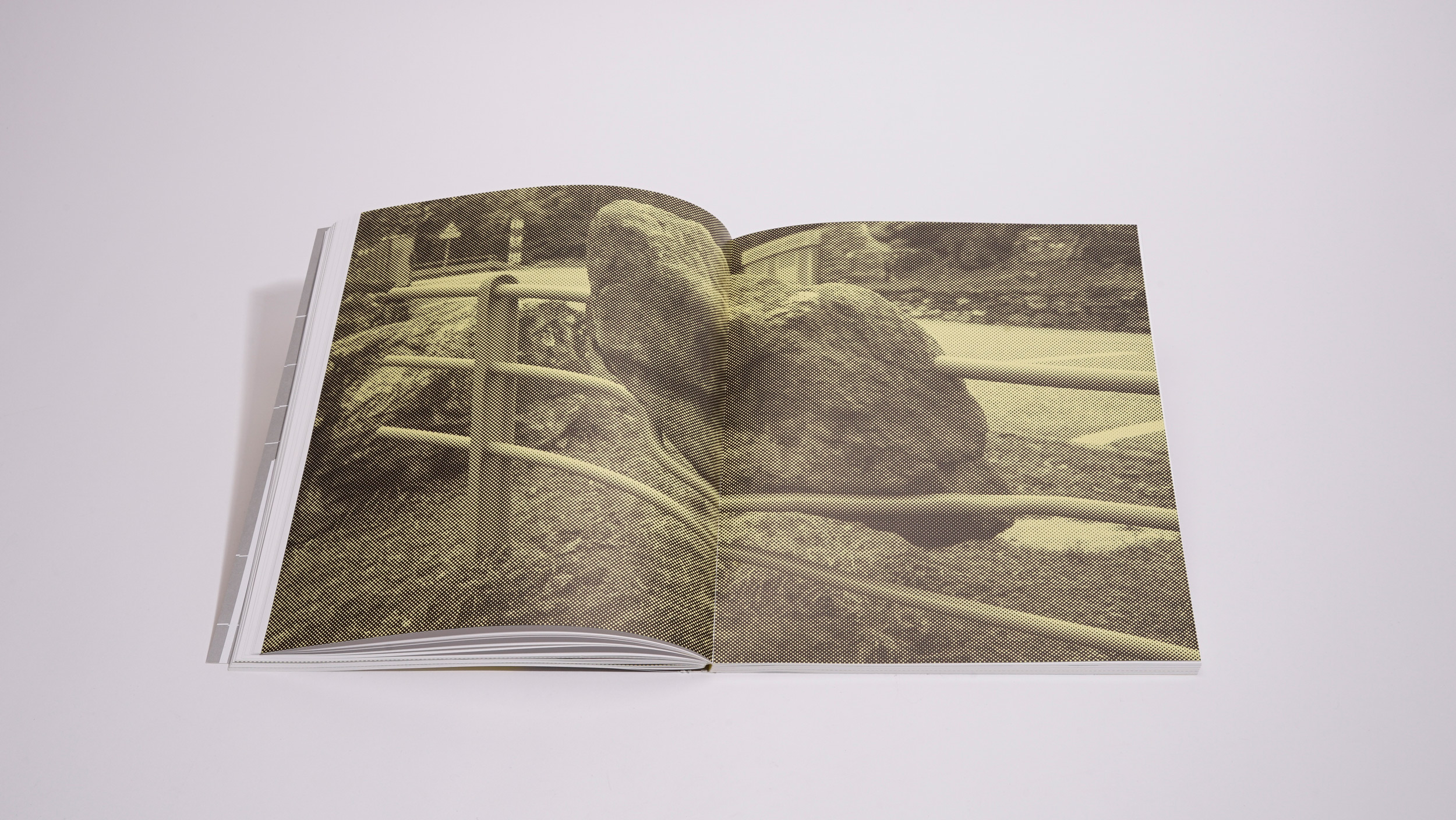
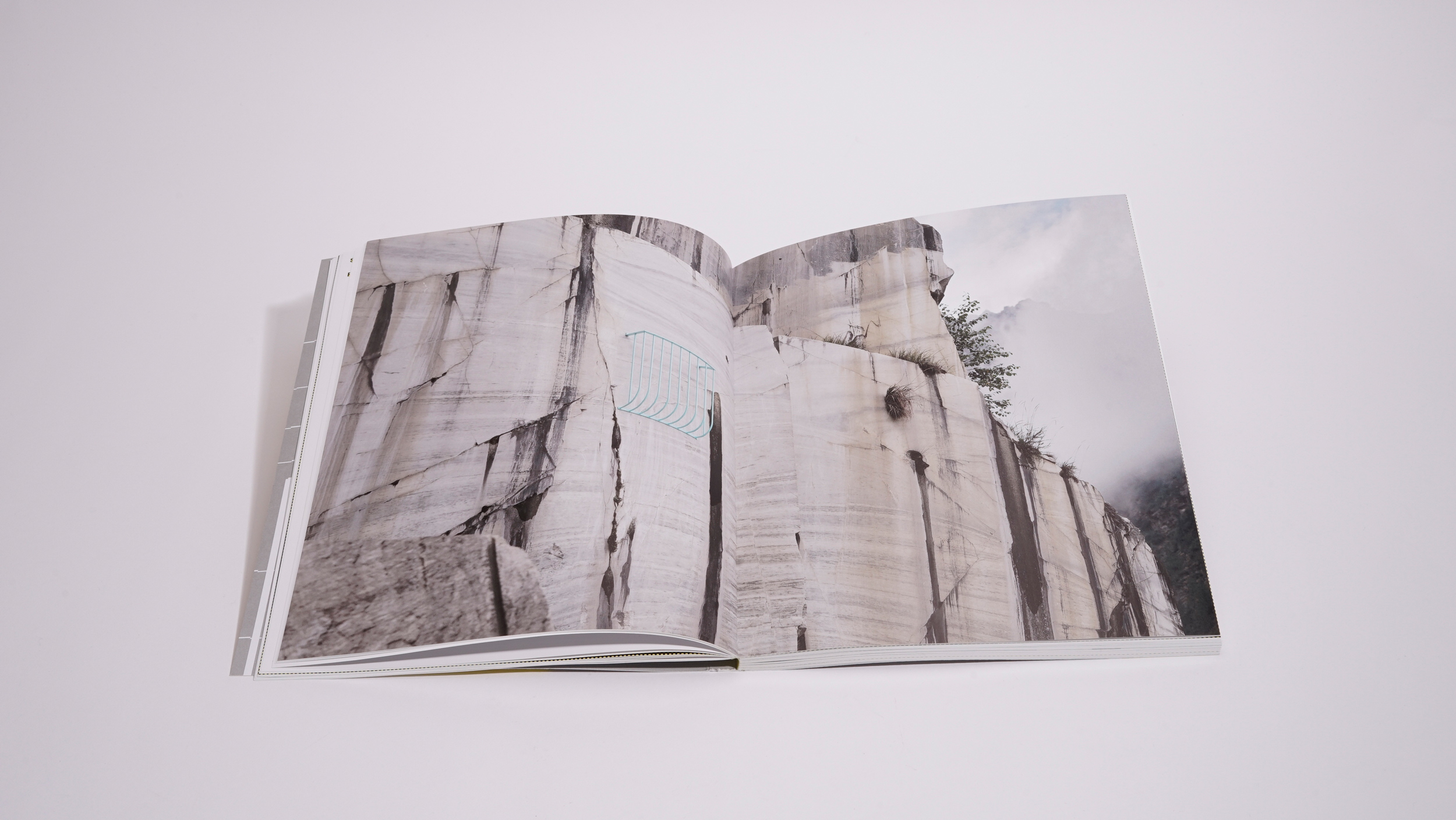
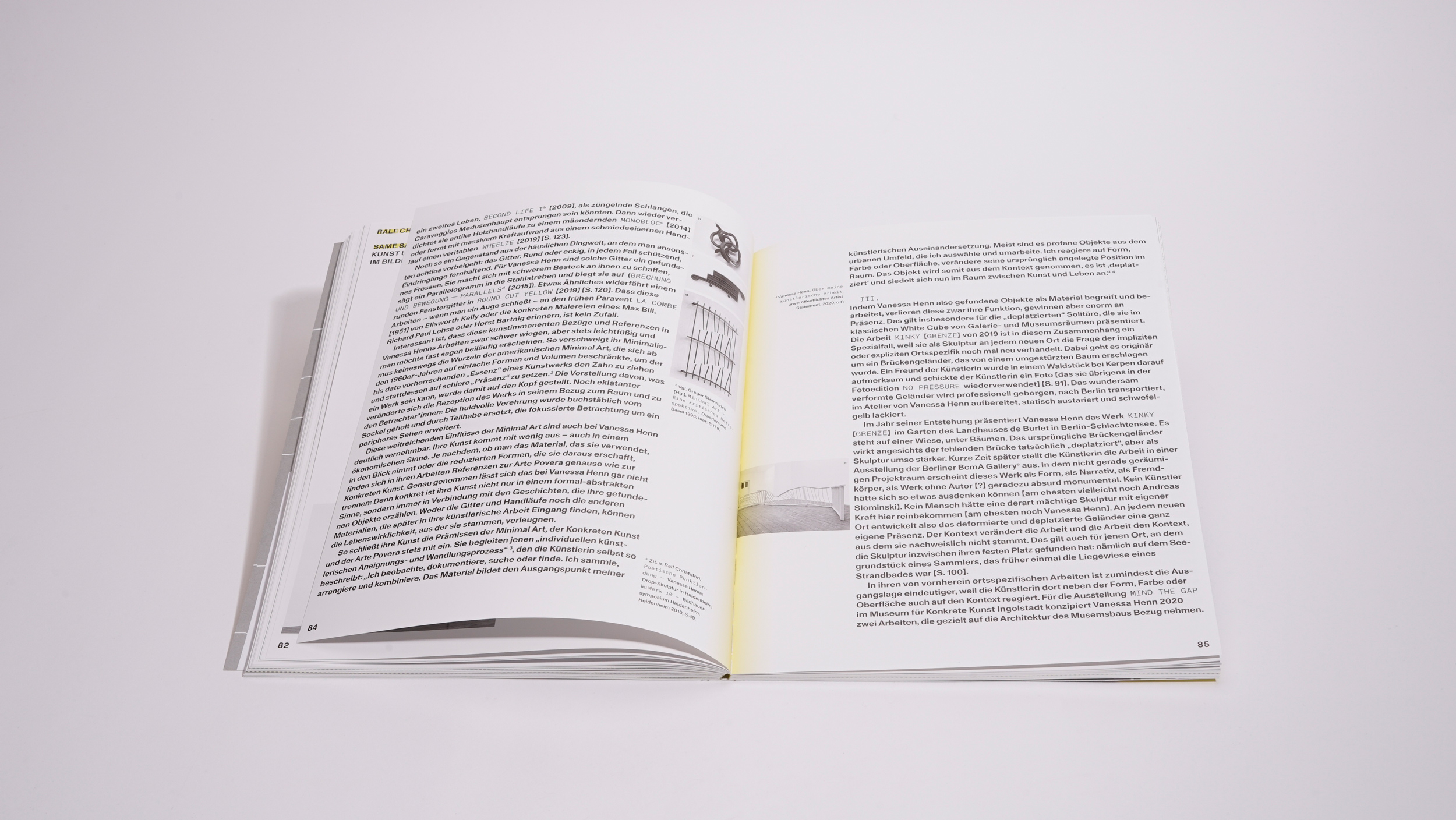
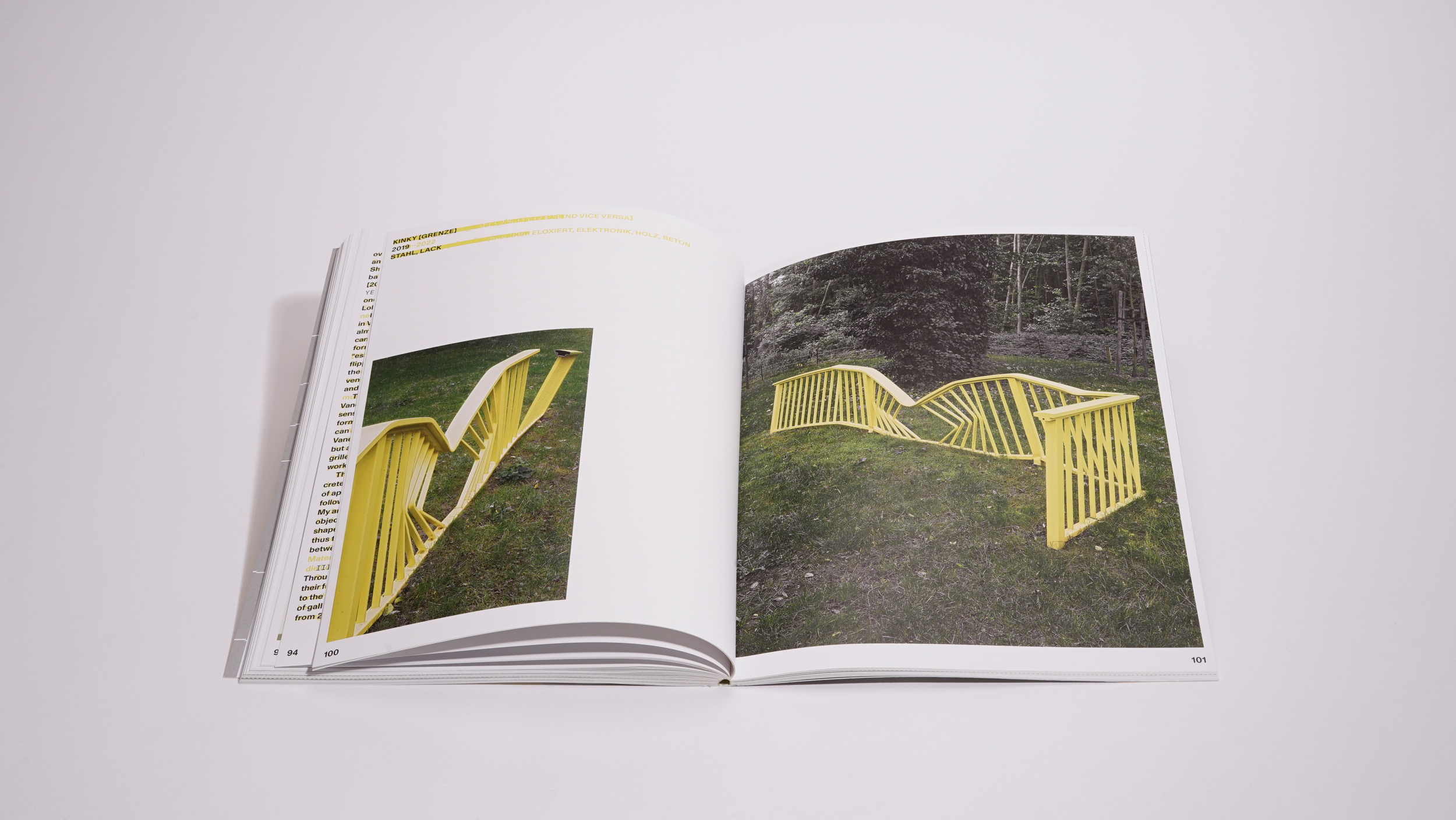
Vanessa Henn’s (b. Stuttgart, 1970; lives and works in Berlin) objects and installations blend formal reduction with playful comedy. The handrails she makes out of a wide variety of materials run along walls, project into rooms, trace spirals, mark lines or arcs, and often solicit our active engagement. Besides banisters, her oeuvre, which straddles the line between architecture and sculpture, also comprises bridges, stairs, and fences. All her creations are energized by the tension between the static work of art and its dynamic environment, which the artist resolves by integrating her works into the goings-on of everyday life. A guardrail that runs perpendicular to a flight of stairs or abruptly ends in the ceiling or floor is relieved of its function; rather than helping us go where we are going, it is a companion who invites us on a stroll into the imaginary and uncertain. And that is what makes Vanessa Henn’s art so alluring.
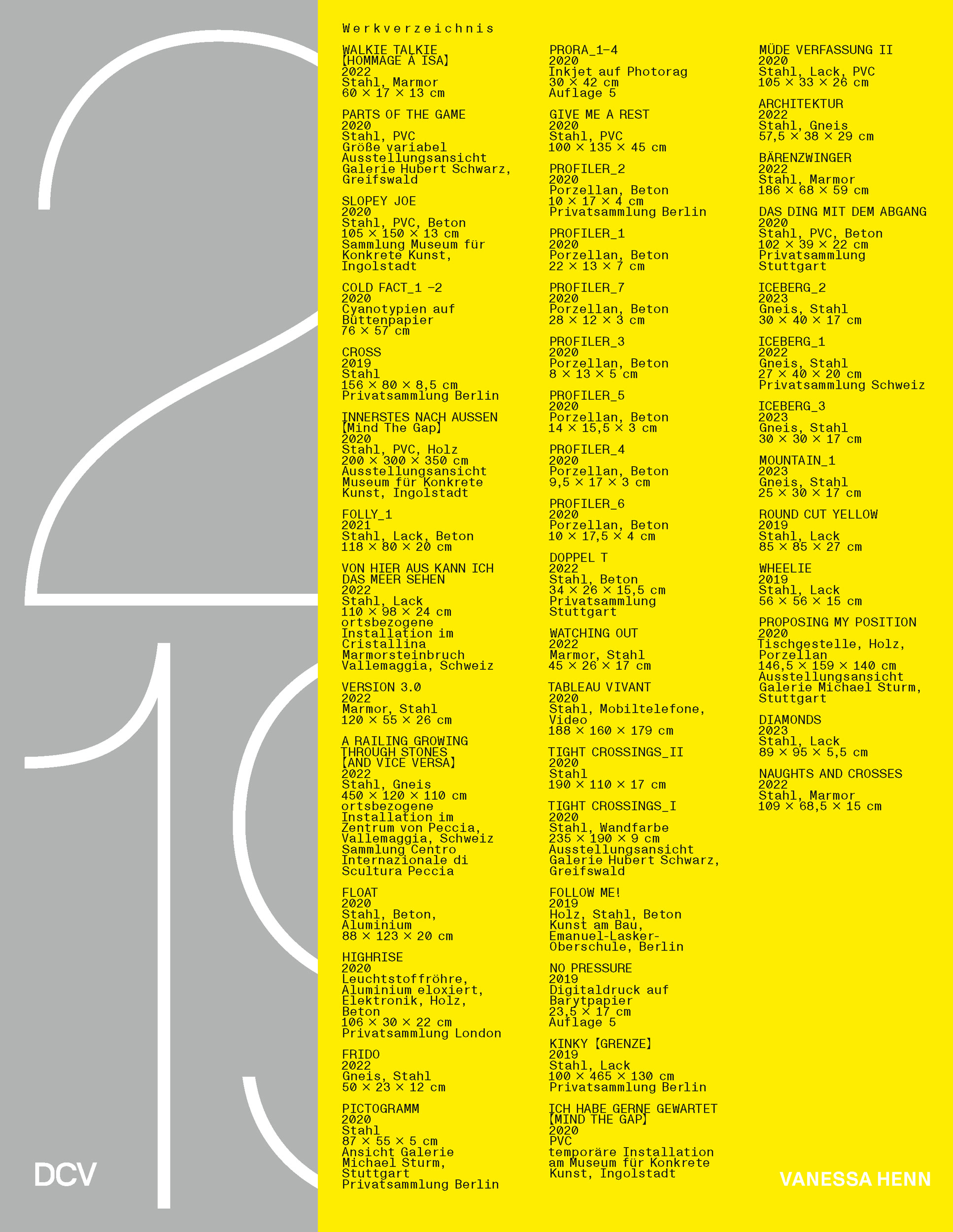
The book presents Vanessa Henn’s latest works from the years 2019-2023.
Vanessa Henn studied sculpture at the State Academy of Fine Arts Stuttgart (1992–2001) and at Edinburgh College of Art (1995–1996) and completed a Master of Fine Art at the University of Canterbury School of Fine Art in Christchurch, New Zealand (1999–2000).
More books
- Out of stock

Hans Karl Zeisel
Hundred and more34,95€ Read morePossibilities of concrete art
What is possible without turning away from the cocrete? In the Bauhaus tradition, the typographer, graphic artist, designer and author Hans Karl Zeisel opens up countless design options with basic forms. His wooden cuboids demand a humorous approach to sculpture. They are creativity training, study tools and meditation game all in once. A playful experiment that reveals the diversity of concrete art.
-

Silke Eva Kästner
Panta Rhei36€ Add to cartSilke Eva Kästner (lives and works in Berlin and Uckermark) developed her creative approach while traveling in India, New York, and Japan. She creates temporary on-site paintings as well as conceptual pieces in which the viewer comes upon prepared materials and becomes part of—or even alters—the picture. Kästner documents these encounters in photographs or filmic traces out of which she compiles films in the editing suite. Probing the potentials of painting as communication, she foregrounds the active intervention and process. In the gallery no less than the urban scene, Kästner places painting in relation to architecture in order to frame it in varying perspectives.
The monograph offers insight into the foci of Kästner’s art; the works are grouped in chapters rather than arranged in chronological sequence. This structure makes the book a space of experience that gives the reader a vivid sense of her ephemeral creations.
After studying with Katharina Grosse at the Weißensee School of Art and Design Berlin, Silke Eva Kästner won the Mart Stam Prize; she honed her craft in India on a NaFöG fellowship and in New York on a yearlong DAAD fellowship. Funding support from the Institut für Auslandsbeziehungen (ifa) enabled her to initiate an ongoing exchange project between Kashmir and Berlin. Her work has been on view at numerous institutions including the Schirn Kunsthalle Frankfurt; the Devi Art Foundation, Delhi; Berlinische Galerie, Berlin; the Queens Museum of Art, New York; Künstlerhaus Bethanien, Berlin; and the Haus der Kulturen der Welt, Berlin.
-

Emmanuel Bornstein / Lotte Laserstein
Pensée20€ Add to cartHow do artists’ identities and the histories of their families influence their art? Where might a creative affinity sustained by a legacy of trauma take an artist? Lotte Laserstein (1898–1993) and Emmanuel Bornstein (b. 1986) are connected by such a bond, tied by Bornstein’s grandmother, a Résistance fighter and, like Lotte Laserstein, a Jew who survived the Nazis. Bornstein discovered Laserstein’s works by coincidence and without knowing of this connection, and he was fascinated right away: “It was actually what I’d been trying to make for years!” There are in fact parallels between their oeuvres—both feature people who are waiting and flower bouquets, and a melancholy aspect and a subtle menace can be felt in both. Yet there are also discrepancies, and the dialogue between their works would be far less inspiring without them: Bornstein’s omnipresent toxic cadmium, which contrasts with Laserstein’s muted tones; the paint application; the brushwork. What the artists have in common, in any case, is that Sweden became their abode in times of danger and painting, their only true home. This catalog celebrates their creative homecoming.
-

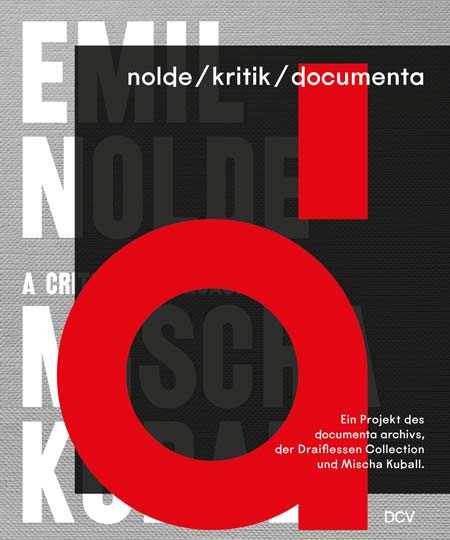
nolde/kritik/documenta (German)
42€ Add to cartEmil Nolde (1867–1956) ranks among the best-known classic modernists. Contemporary perceptions of the artist and his oeuvre are informed by mythmaking as well as its deconstruction. After the Second World War, Nolde himself and art historians of the time portrayed him as a victim of Nazi persecution. More recent critics have drawn attention to his anti-Semitic views and his opportunism in his dealings with the Nazi authorities.
With support from the Nolde Foundation, Seebüll, the Düsseldorf-based conceptual artist Mischa Kuball (b. 1959) delved into the documentary record to shed light on this profoundly ambivalent figure and frame a critical perspective on Emil Nolde’s output and actions. The first fruits of his endeavors were shown at the Draiflessen Collection, Mettingen, in the winter of 2020–2021.
Kuball continued his research at the invitation of the documenta archive, Kassel. Based on his findings, the exhibition project “nolde / kritik / documenta” illuminates the ways in which life and oeuvre are interwoven and inquires into the contradictions of modernism, which Emil Nolde as a man and artist may be said to have embodied. The focus of the new project is on the staging of Nolde’s works at the first three editions of the documenta exhibition series (1955, 1959, 1964), which were instrumental to establishing the “Nolde myth.”
An enlarged and revised edition of the catalogue “nolde / kritik / documenta” is released in conjunction with the exhibition at the Fridericianum, Kassel (December 9, 2022–February 19, 2023).
Mischa Kuball has been professor of public art at the Academy of Media Arts Cologne and associate professor of media art at the Karlsruhe University of Arts and Design/ZKM since 2007.
-

Brandon Lipchik
10€ Add to cartIn recent years, a Wagnerian night has settled over Brandon Lipchik’s (b. Erie, PA, 1993; lives and works in Brooklyn, NY, and Berlin) pictures. Moons rise; beasts and titans populate a homogeneous world of swimming pools, white picket fences, and neatly mowed lawns. Synthesized on a computer screen and then transferred to canvas by hand, the artist’s paintings revolve around the backyard as a mythically fraught scene of popular culture. The garishly lit multiperspectival pictures replicate characteristic shots from 1980s gay porn films and quote a clean American Apparel look. Lipchik subjects men’s bodies, spaces, plants, objects, and animals to digital deconstruction, obtaining rudimentary and abstract shapes. Staring at smartphones or gazing on water surfaces, his characters recall early digital animations and seem oddly hollow, like empty avatars waiting to be filled with new speculative content.
-

Judit Reigl
Kraftfelder / Centers of Dominance28€ Add to cartBeginning in the 1950s, Judit Reigl (b. Kapuvár, Hungary, 1923; d. Marcoussis, France, 2020) builds a singular creative oeuvre between abstraction and figuration, between Surrealism and gestural painting. After studying art in Budapest, Reigl flees Hungary in 1950; arriving in Paris, she is introduced to André Breton, who organizes her first exhibition in 1954. Under the influence of the École de Paris, she branches out into écriture automatique, then shifts toward free expression. Like her contemporaries Jackson Pollock and Helen Frankenthaler in New York, she lays out ever larger unprimed canvases on the floor and works them with a brush, her fingers, or other instruments. After 1966, bodily shapes emerge from her abstractions, and figures reappear in the pictures.
On occasion of Reigl’s centenary and the gift of three major works, the Neue Nationalgalerie mounts the artist’s first solo exhibition at a museum in Germany. The book surveys the oeuvre of one of the most important protagonists of European art in the second half of the twentieth century.
Judit Reigl studied painting at the Academy of Fine Arts in Budapest from 1942 until 1945 and was a fellow at the Hungarian Academy in Rome in 1947–48. From 1950 onwards, she lived and worked in France.
-

Cahier 002
Silke Wagner. bürgersteig22€ Add to cartBetween 2001 and 2002, a VW bus bearing the inscription “Lufthansa Deportation Class” was on display in various German cities. It was part of the provocative bürgersteig action by Silke Wagner (born 1968, lives in Frankfurt) about Lufthansa providing aircraft for deportation purposes. The bus sparked heated debates and became a vehicle for activist networking and communication among citizens. The participatory art project was groundbreaking at the time in its collaboration with civil justice initiatives. Cahier 002 documents bürgersteig for the first time with all its aspects, disclosing the sources for the action as well as material on the legal conflicts that followed the project.
- out of stock

Drucksache Bauhaus
38€ Add to cartThe Early Years of the Weimar Print Workshop
At the Staatliches Bauhaus in Weimar, the print workshop began operation in the spring of 1919 as the first workshop. Printmaking corresponded to the basic idea of the Bauhaus in that it realized the unity of art and craftsmanship in an ideal manner. With the groundbreaking project Bauhaus-Drucke. Neue Europaeische Graphik, four portfolios were created in which forty-five representatives of the European artistic avant-garde participated. In the announcement brochure of 1921, it stated: “The many who do not yet know about the work of the Bauhaus, and who cannot know, are to be made aware of us through this work.” The book presents the portfolios published between 1921 and 1924, together with other works printed at the Bauhaus by Lyonel Feininger, Wassily Kandinsky, and Oskar Schlemmer. The Stuttgarter Prolog also sheds light on the influence of Adolf Hölzel, whose students and later Bauhaus masters Oskar Schlemmer and Johannes Itten brought many of his ideas to the Bauhaus.
- Out of stock

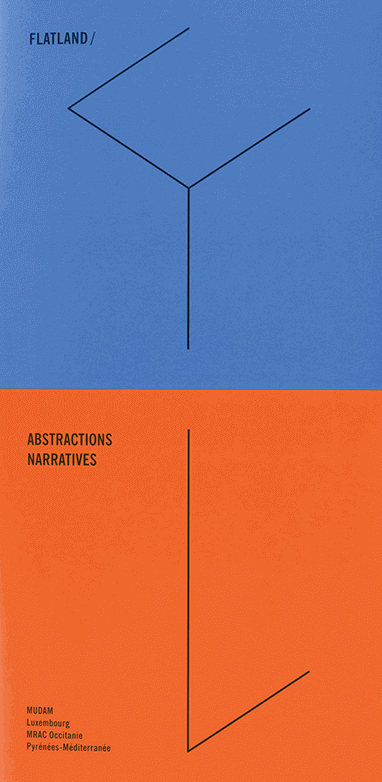
Flatland
35€ Read moreBetween the Dimensions
The title of this book quotes a literary work by Edwin A. Abbott that was first published in 1884 and gradually gained considerable fame: an allegorical satire whose protagonists are geometric figures, narrated by a square that relates its discovery of a three-dimensional world. Flatland examines the ways in which artists have found inspiration in the formal vocabularies of abstraction since the 1960s. The lavishly designed book gathers works from the past six decades that challenge orthodox interpretations of abstraction.
Contributing artists: Laëtitia Badaut Haussmann, Francis Baudevin, Philippe Decrauzat, Marie-Michelle Deschamps, Angela Detanico / Rafael Lain, Hoël Duret, Sylvie Fanchon, Liam Gillick, Mark Hagen, Christian Hidaka, Sonia Kacem, Tarik Kiswanson, Vera Kox, Sarah Morris, Reinhard Mucha, Damián Navarro, Camila Oliveira Fairclough, Bruno Peinado, Julien Prévieux, Eva Taulois, John Tremblay, Pierre Vadi, Elsa Werth, Raphaël Zarka
-

Thyra Schmidt
Über Diebe und die Liebe. On Thieves and Love.15€ Add to cartAn artist’s book, an artist’s text
On twenty-two large-format typographic sheets, Thyra Schmidt (b. 1974, Pinneberg; lives and works in Düsseldorf) develops a narrative featuring moments in an amorous relationship. Thoughts and encounters between “her” and “him” are captured in poetically constructed, fragmentary units of meaning. Imaginary images are conjured in the mind’s eye: Close-ups and intimate insights into a delicate web of interpersonal incidents. Personal observations and experiences form the starting point of this artistic exploration of love. Yet the focus of her work is not on autobiographical rendering, but rather on the tracking down of elementary structures, a general understanding of intimacy.
-

Africa
in the View of the Photographers19,90€ Add to cartContemporary Photography from Africa
Stereotypes still dominate the Western image of Africa; we tend to know little about cities like Lagos, Porto-Novo, or Kinshasa. The book presents photographs by African artists who tell stories from everyday life in the metropolises, of the unruliness of nature and industry, of traces of the past and pop culture. Osborne Macharia, for example, interweaves Kenya’s cultural identity with fictional Afro-futuristic plots; Yoriyas documents the small moments of life in his native Casablanca in pictures that have been picked up by the New York Times, National Geographic, and Vogue; Alice Mann’s intimate essays in portraiture, meanwhile, explore ideas about the making of pictures as a collaborative act. With additional works by Ilan Godfrey, Fabrice Monteiro, Kibuuka Mukisa Oscar, Léonard Pongo, and Fethi Sahraoui, the book offers a profoundly original survey of African realities.
-

James Francis Gill
Catalogue Raisonné of Original Prints, Vol. 139€ Add to cartThe Catalogue Raisonné of the Co-Founder of American Pop Art
James Francis Gill (b. 1935, Tahoka; lives and works in Texas) is one of the most important artists of American Pop Art. His paintings, often based on photographs, provide an unusually personal approach to the icons of the 1950s and 60s. Gill suddenly became Hollywood’s most celebrated artist when his Marilyn Triptych was added to the permanent collection of The Museum of Modern Art in New York in 1962 – even before the works of Andy Warhol. Through friendships with celebrities such as John Wayne, Martin Luther King, and Marlon Brando, Gill became the contemporary artist-witness of an entire generation. Nevertheless, he kept his distance from the exuberant Hollywood of the time and surprisingly withdrew in 1972, only to reappear on the art market thirty years later. This catalogue raisonné in two volumes impressively documents his work from the early political motifs to the Pop Art icons of his late work.
-

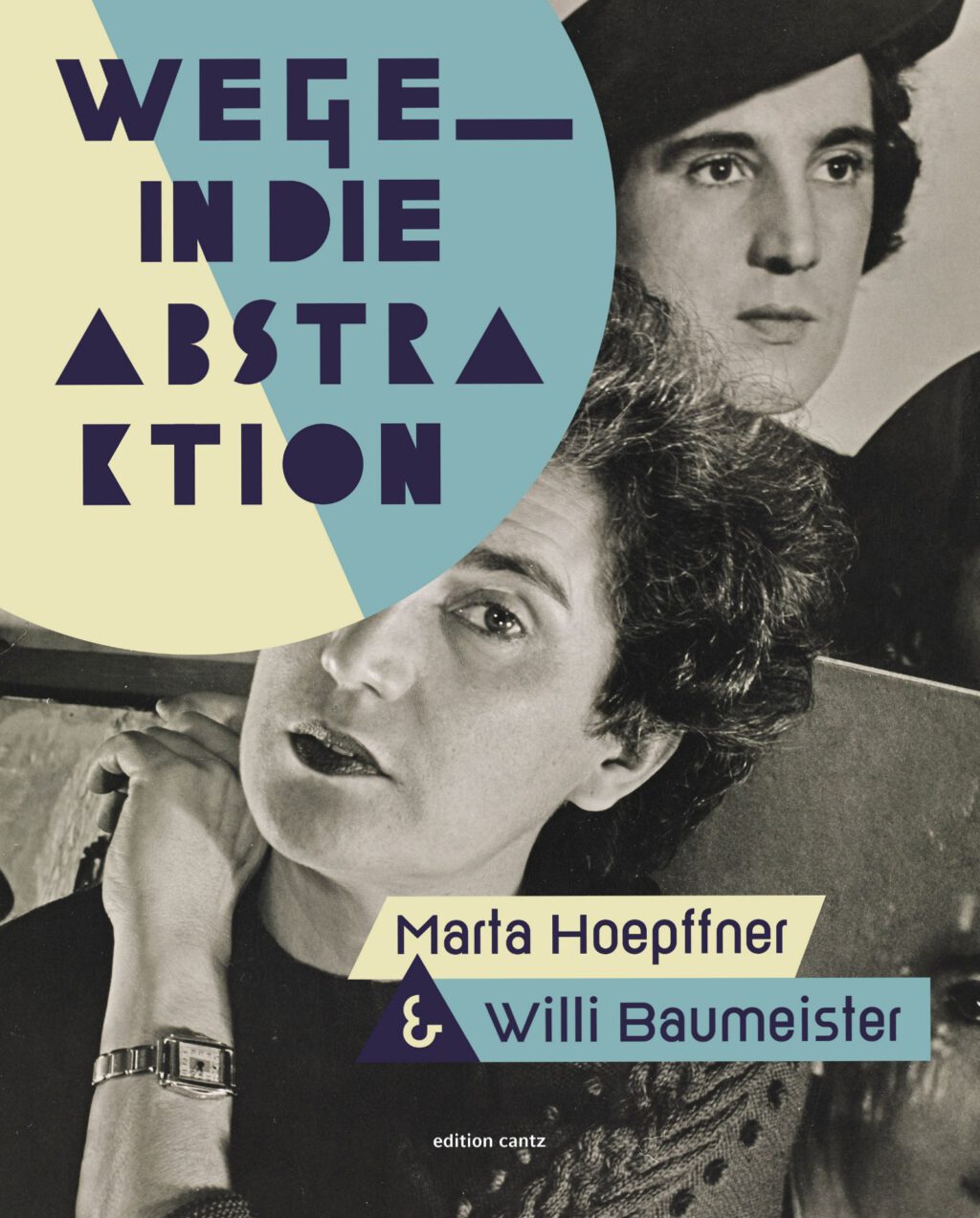
Wege in die Abstraktion
Marta Hoepffner und Willi Baumeister24,90€ Add to cartUnknown Influences of Modern Painting and Photography
Marta Hoepffner (b. 1912, Pirmasens; d. 2000, Lindenberg) is considered a pioneer of experimental photography. For the first time, this book compares the artist’s early photographic experiments, portraits, and color photographic studies with the paintings of Willi Baumeister (b. 1889, Stuttgart, d. 1955 Stuttgart). As professor at the Frankfurter Kunstschule – today’s Städelschule – Baumeister had a decisive influence on the development of his student Hoepffner. An extraordinary book that presents more than fifty works from the 1910s to the 1970s.
Marta Hoepffner’s works have been exhibited at, among others, the Centre Georges Pompidou in Paris, the San Francisco Museum of Modern Art, and the National Portrait Gallery in London. Willi Baumeister studied at the Kunstakademie in Stuttgart and was a member of the influential November Group. He was defamed as “degenerate” during the Nazi regime and is now considered one of the outstanding artists of modernism.
-

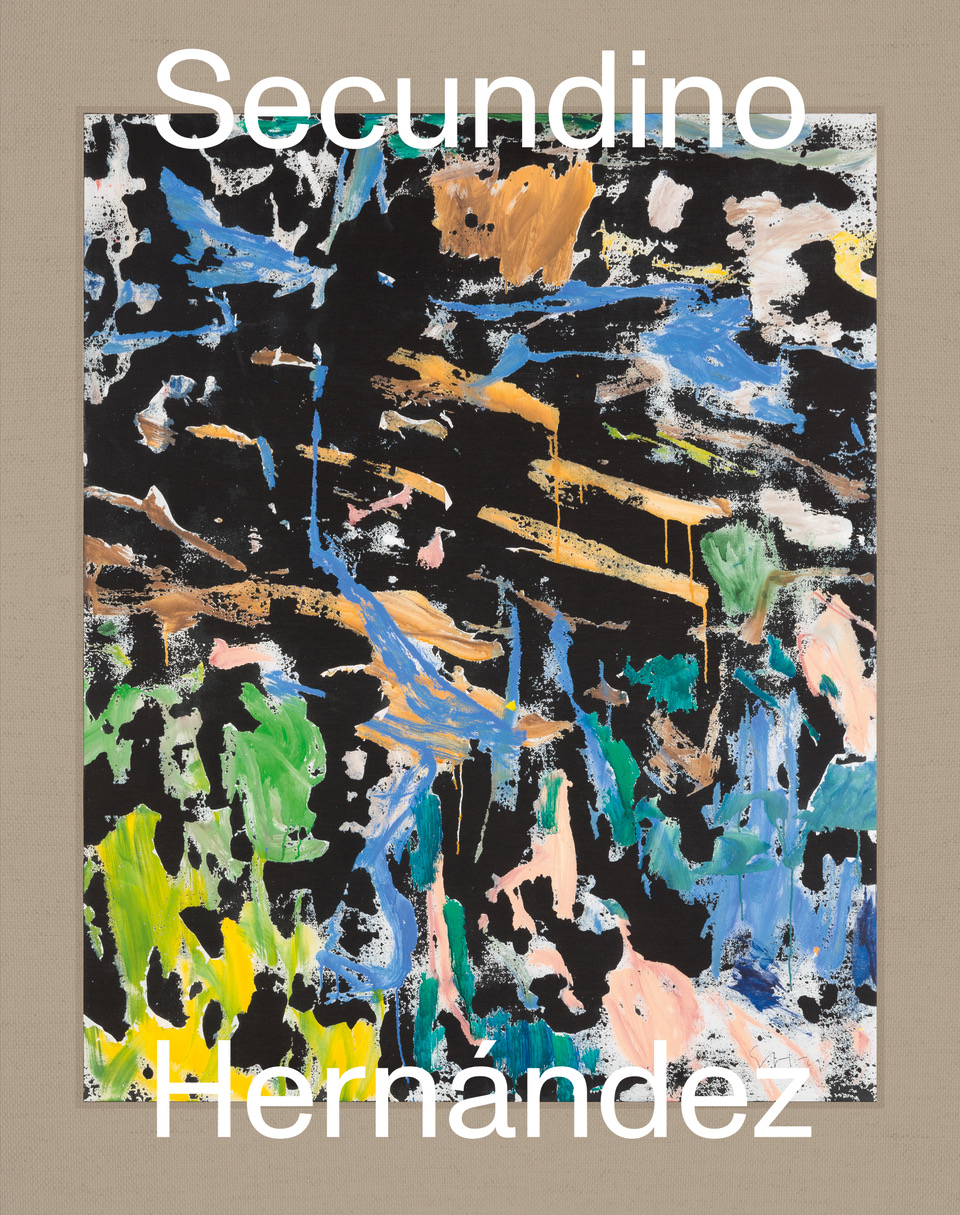
Secundino Hernández
Miettinen Collection36€ Add to cartSecundino Hernández’s (b. Madrid, 1975; lives and works in Madrid und Berlin) paintings and works on paper blend figuration and abstraction, the linearity of drawing and exuberant color, minimalism and gesture. Slowly and methodically moving across the canvas, Hernández sets down sinuous lines and marks, using a brush or applying the paint straight from the tube before rinsing and scratching off the surfaces. The resulting compositions feel organized yet charged with explosive energy and evince manifold references: a physicality reminiscent of Action Painting, cartoon-style terse figuration, and passages that bring to mind Old Masters and especially the Spaniards El Greco and Velázquez. As Hernández observes, his works “may look like Action Painting or Expressionism, but they represent a profound and painstaking scrutiny of these visual idioms, a way of articulating my own contemporary perspective on certain aesthetic movements.”
Secundino Hernández studied at the Universidad Complutense de Madrid from 1995 until 2000 and at the Royal Spanish Academy in Rome in 2005–2006.
-

Konrad Mühe
Guide38€ Add to cartAn Artist’s Book as an “Optical Illusion”
Konrad Mühe’s (b. Karl-Marx-Stadt, East Germany, 1982; lives and works in Berlin) works interrogate the construction of our identities by uncovering the technological and media apparatuses that sustain it and confronting it with the autonomous lives of objects. Their basic formal principle is the installation hybridizing sculpture and digital moving image, with a particular focus on the projector and the interaction of pedestal or suspension and projection screen. Where the classical black box in the movie theater or exhibition venue seeks to conceal the technical equipment in favor of an immersive visual experience, Mühe brings it to the fore and sets it out in the gallery space as sculpture and installation. Yet his works also undercut the conventional display regime in the white cube: the process of projection emerges as the true creative medium and subject. This book acts as a descriptive illustrated Guide to Mühe’s projects.
Konrad Mühe was Hito Steyerl’s master student and trained at the Berlin University of the Arts and the Burg Giebichenstein University of Art and Design Halle. His works have been featured at numerous film festivals including the 61st Berlinale and in exhibitions at Kunsthalle Düsseldorf, the Moscow Museum of Modern Art, and elsewhere.
-

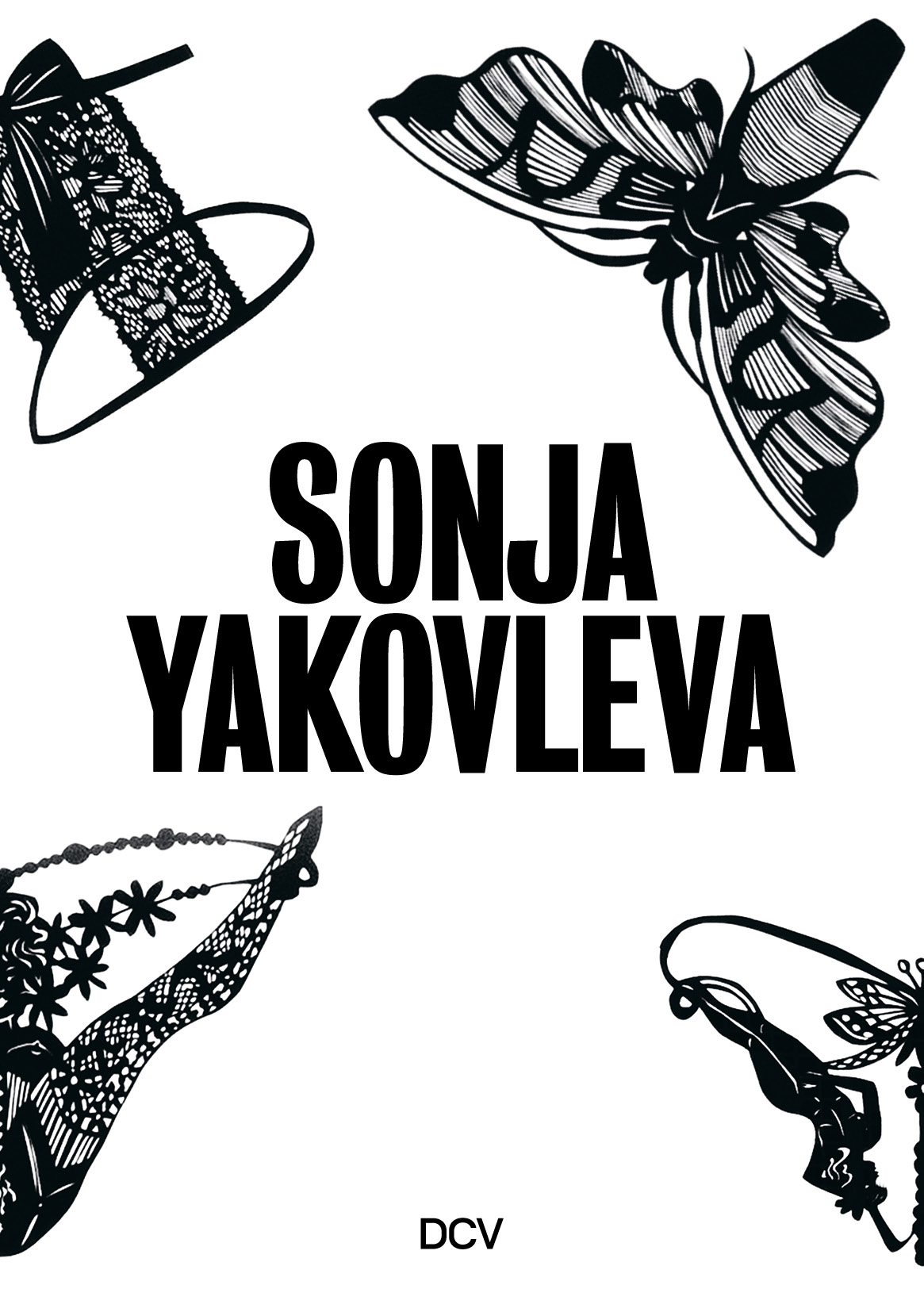
Sonja Yakovleva
10€ Add to cartSonja Yakovleva (b. Potsdam, 1989; lives and works in Frankfurt am Main) uses pornographic representations and images from the internet as templates for papercuts, some in large formats, that grapple with personal and public stories about women, power relations, sexuality, and violence. The silhouettes show popular motifs that have served to ingrain fairy tales, myths, and ideologies in the collective consciousness from the colonial era to modernism and the early twenty-first century. Yakovleva, whose art is often associated with sex-positive feminism, appropriates this folkloristic visual idiom and hybridizes and sexualizes it. Dessous and strap-on dildos, for example, figure as preserved specimens of butterflies and insects, bringing historic scientific expeditions to mind. Yet her work also addresses the capitalist urge to categorize, evaluate, and market every kink.
-

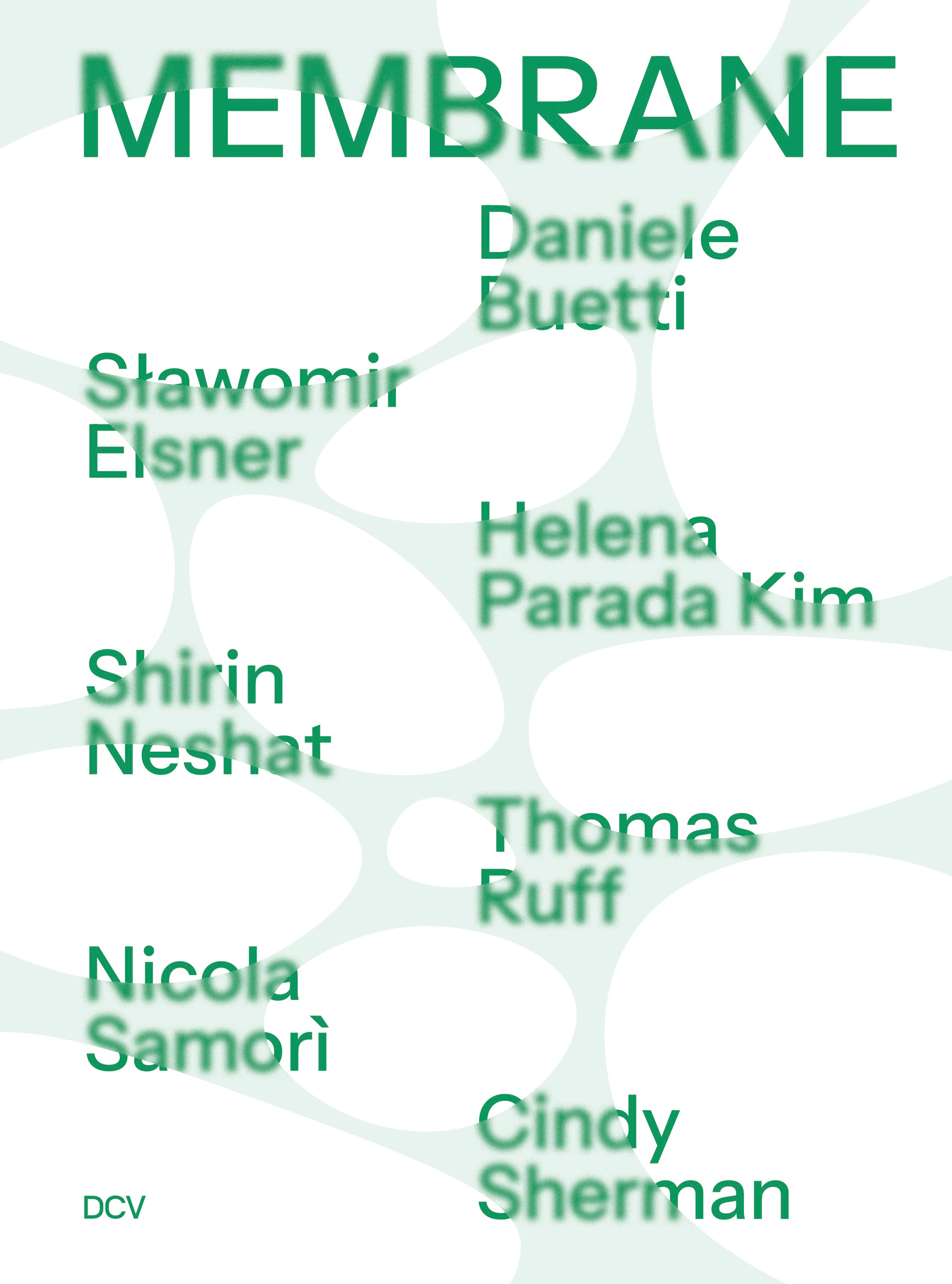
Membrane
38€ Add to cartMembrane documents an eponymous exhibition at the Neue Galerie Gladeck as well as the gallery’s architectural extension. The works of the 7 invited artists are engaged to explore skin in a broader sense—membrane also encompasses clothing, veiling, and masking from various cultural perspectives. Well-known portraits by Thomas Ruff, Shirin Neshat, and Cindy Sherman appear in a new light alongside Helena Parade Kim’s exploration of iconographic and ceremonial fashion codes, Daniel Buetti’s critique of the commercialized body, and Nicola Samorì’s exploration of skin in historical masterpieces. The membrane concept also inspired the exterior and interior surfaces of the new gallery building, and an interesting text by the architect reveals his approach.
Artists: Daniele Buetti, Sławomir Elsner, Shirin Neshat, Helena Parada Kim, Thomas Ruff, Nicola Samorì & Cindy Sherman
-

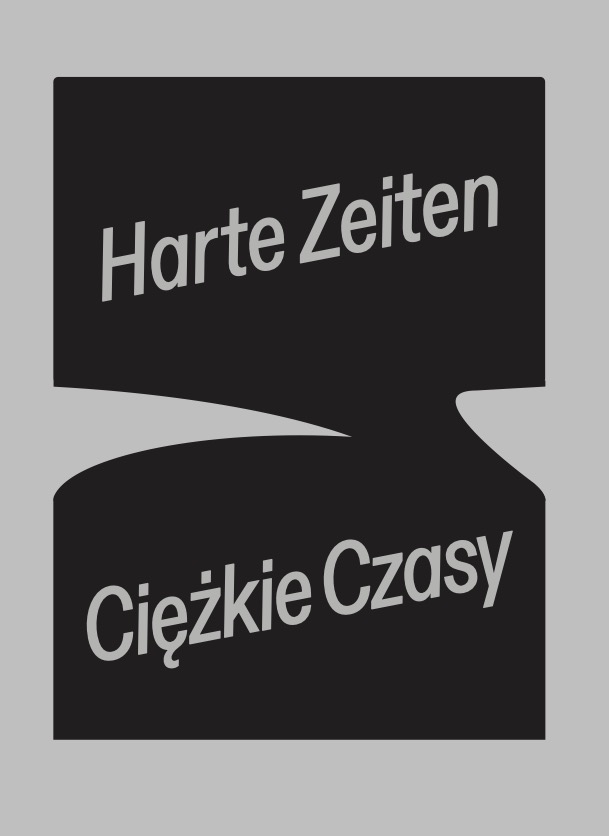
Harte Zeiten
Ciężkie Czasy34€ Add to cartIncreasingly pressing global political and societal challenges are always also rewarding subjects of creative engagement, and sometimes artists devise anticipative approaches to real-world problems.
Harte Zeiten—Ciężkie Czasy is a cooperative venture launched by Künstlerbund Baden-Württemberg; Port25—Raum für Gegenwartskunst, Mannheim; and Galeria Miejska bwa, Bydgoszcz, Poland. It showcases works by altogether ten Polish and ten German contemporary artists. Putting the principle that art knows no boundaries into practice, the publication, with statements from Wolfgang Ullrich, Joanna Kiliszek, Schamma Schahadat, and others as well as documentation of the symposium held in September 2021, inspires forward-looking reflections on the conditions in which cultures thrive and similarities and differences between the two countries and beyond.
-

WORLD FRAMED
Zeitgenössische Zeichenkunst der Sammlung Schering Stiftung im Kupferstichkabinett38€ Add to cartIn 2008, the Schering Stiftung began acquiring outstanding contemporary works on paper for the Kupferstichkabinett (Museum of Prints and Drawings) in Berlin. The collection, which has since grown to 130 nonfigurative drawings and a small number of prints, emphasizes the close conjunction of art and science. The holdings also reflect central tendencies in the art of drawing: in addition to exploring the line and its multifaceted formulation, artists shed light on the bounds of their medium and its expansions and undertake forays into inter-media art within drawing. The lavishly designed publication WORLD FRAME—the title is borrowed from a work by the artist Matt Mullican—presents the works acquired thanks to this partnership. It inquires into how artists translate their perceptions of their world into pictures and which contexts and discourses inform those pictures. Which perspectives, which ideas frame the segment of reality an artist observes?
“World Framed,” exhibition, Kupferstichkabinett, Staatliche Museen zu Berlin, July 7–October 8, 2023
-

Tamara Suhr
Skulpturen24€ Add to cartHesitant yet Immediately Present
As a sculptor, Tamara Suhr (b. 1968, Tübingen; lives and works in Ludwigsburg) has devoted herself unswervingly to the human figure. Her subjects are figures of children whose hesitancy always embodies a certain curiosity, a sense of expectation. In their form reduced to the essential, indeed almost archaic, they radiate calm and serenity—supported by balance with regard to both the motif and possible associations. In their small size and vulnerability, Suhr’s figurative sculptures, painstakingly crafted in bronze, seem apparently in need of protection, yet they appear strong and courageous. They stand, gaze, crouch, fish, swim or balance. They are present, in the here and now, a symbol for the children of the world.