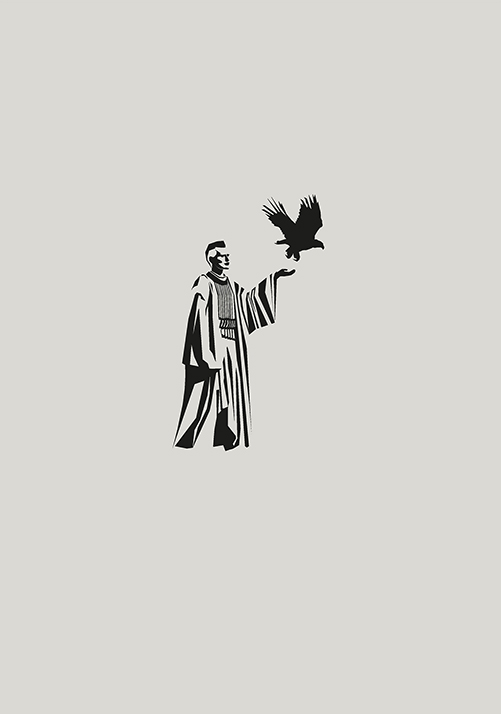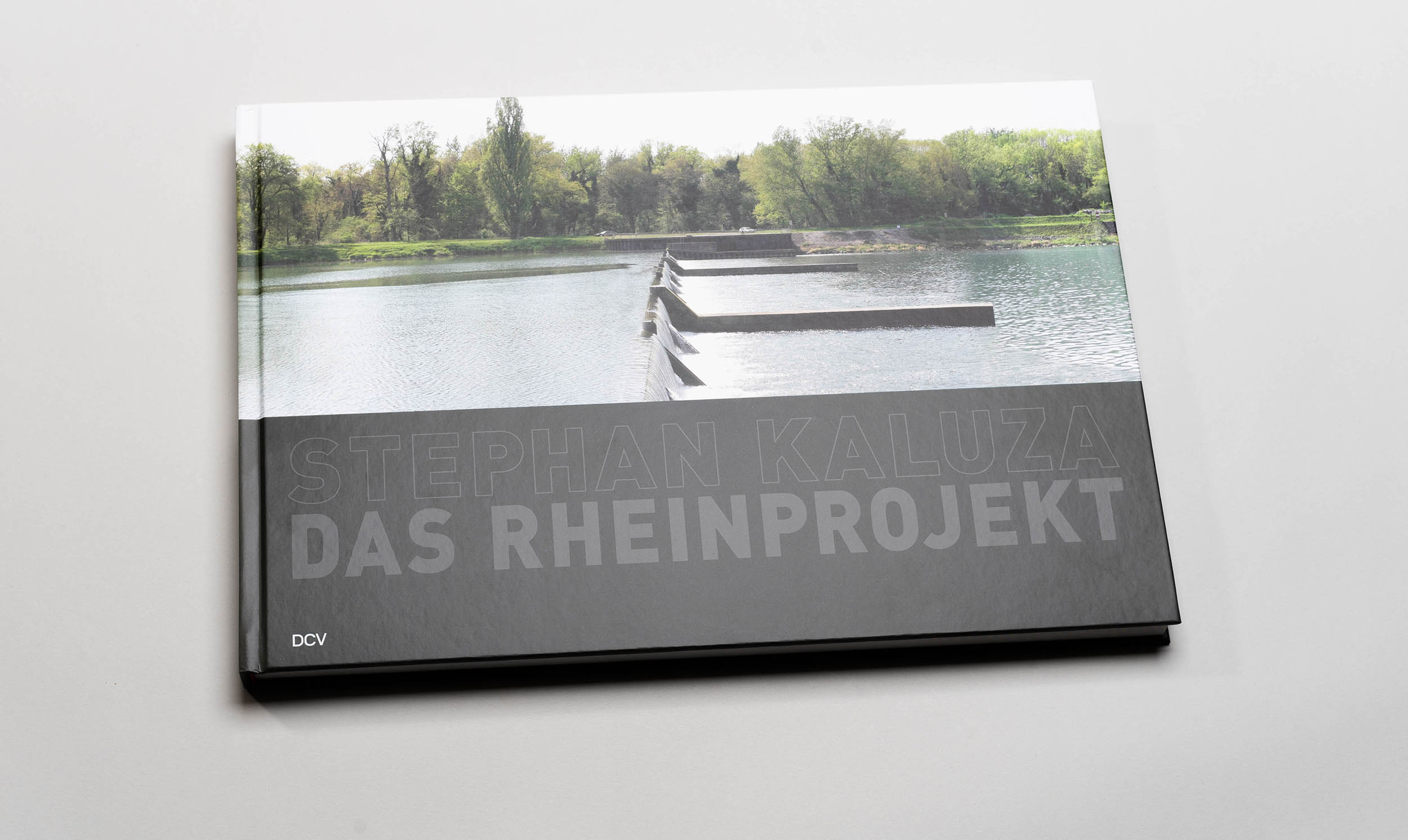
Stephan Kaluza
Das Rheinprojekt
 | |
|---|---|
| Author(s) | Matthias Fechter, Jürgen Raap, Georg Schiller, Uwe Schmitz |
| Design | Rat und Tat Werbeagentur GmbH, Düsseldorf |
| Cover | Hardcover |
| Size | 37 × 26,5 cm |
| Pages | 240 |
| Illustrations | 30 |
| Language(s) | German |
| ISBN | 978-3-96912-027-9 |
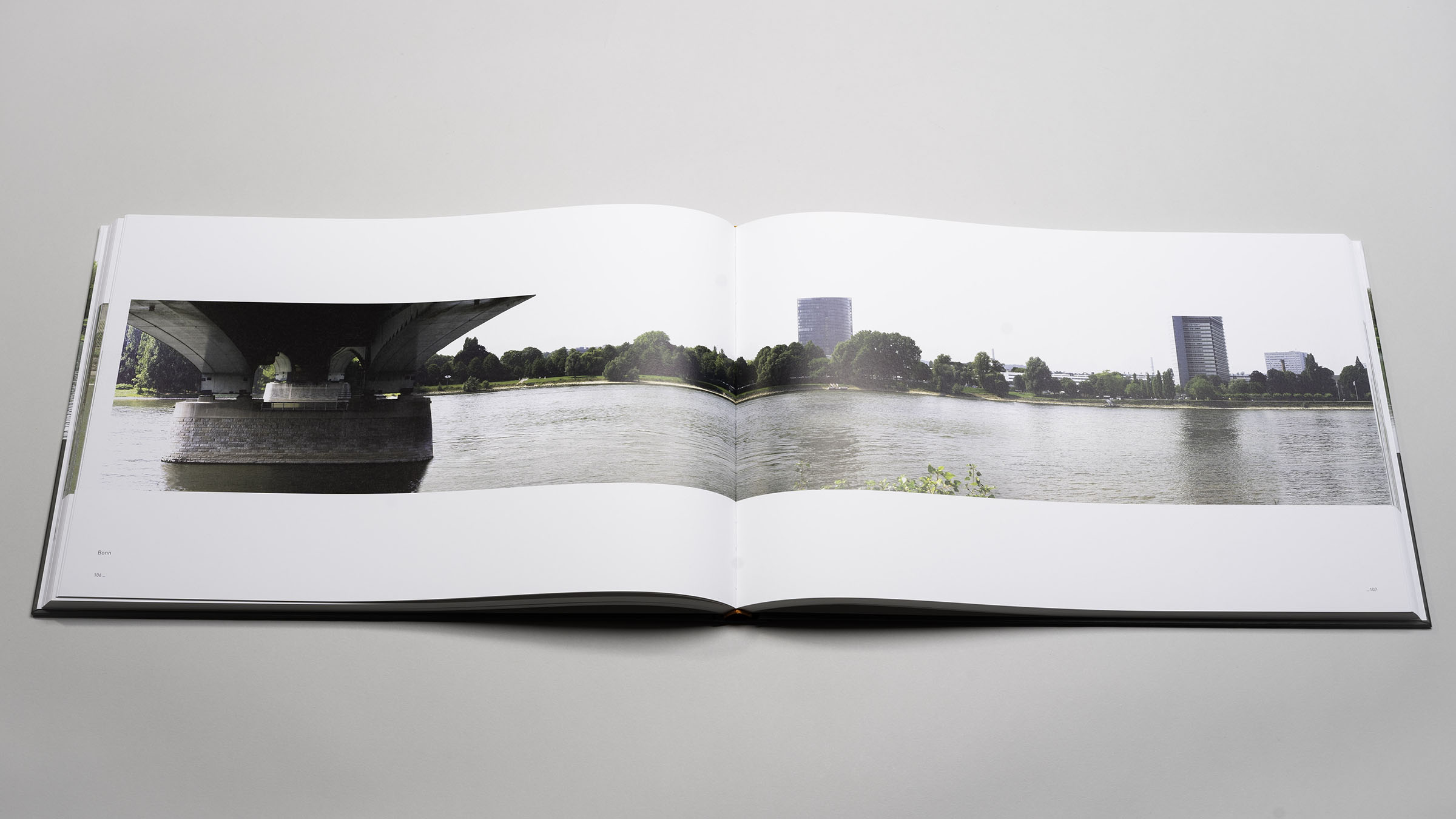
Reinterpreting the Classical Panorama
The mythical character of the Rhine as a ‘German symbol’ has long been of profound interest to poets and visual artists. Today, however, the Rhine has lost the aura of a great romantic river along much of its course: from Basel to Rotterdam, it serves as a high-volume shipping lane, and sprawling industrial installations line its banks.
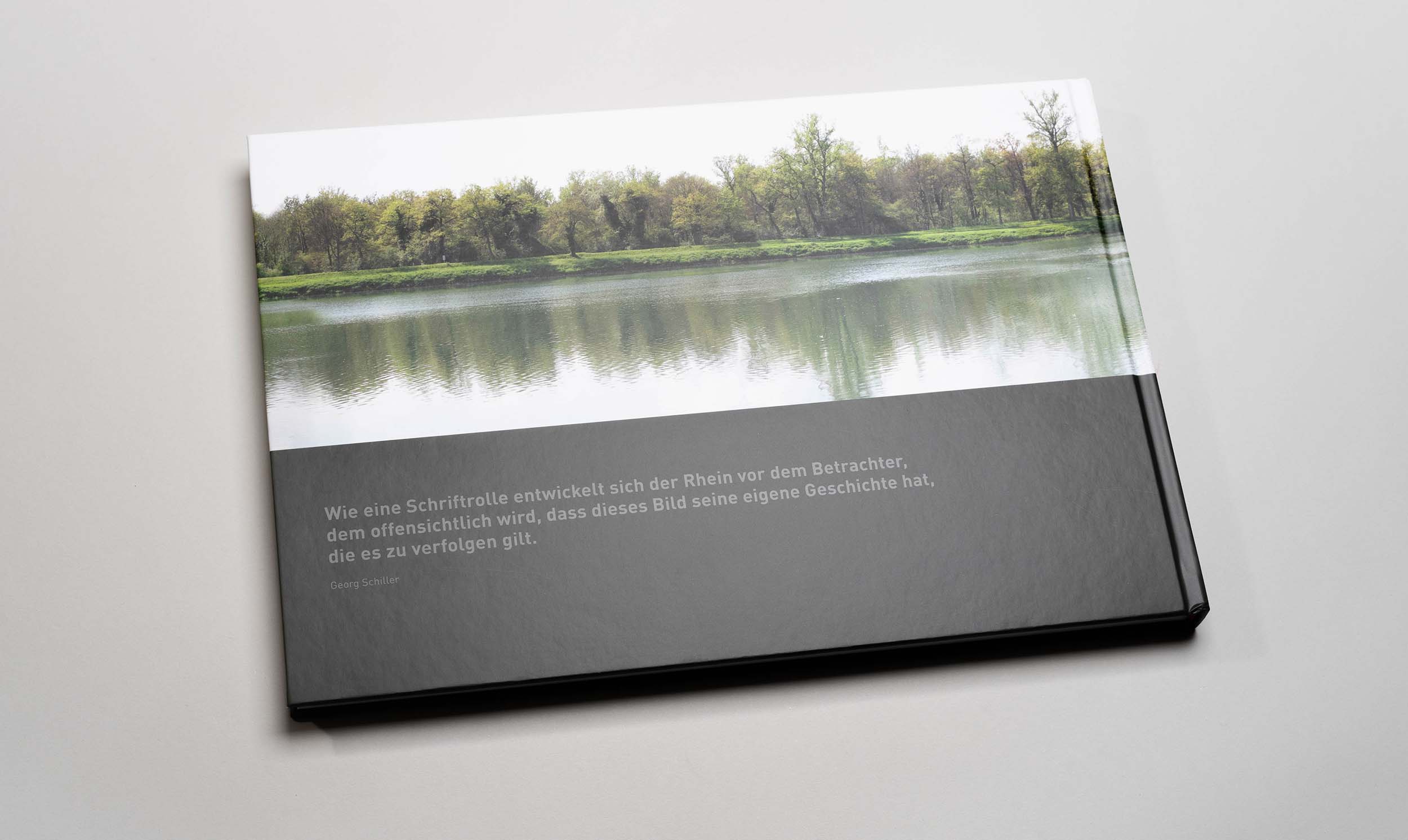
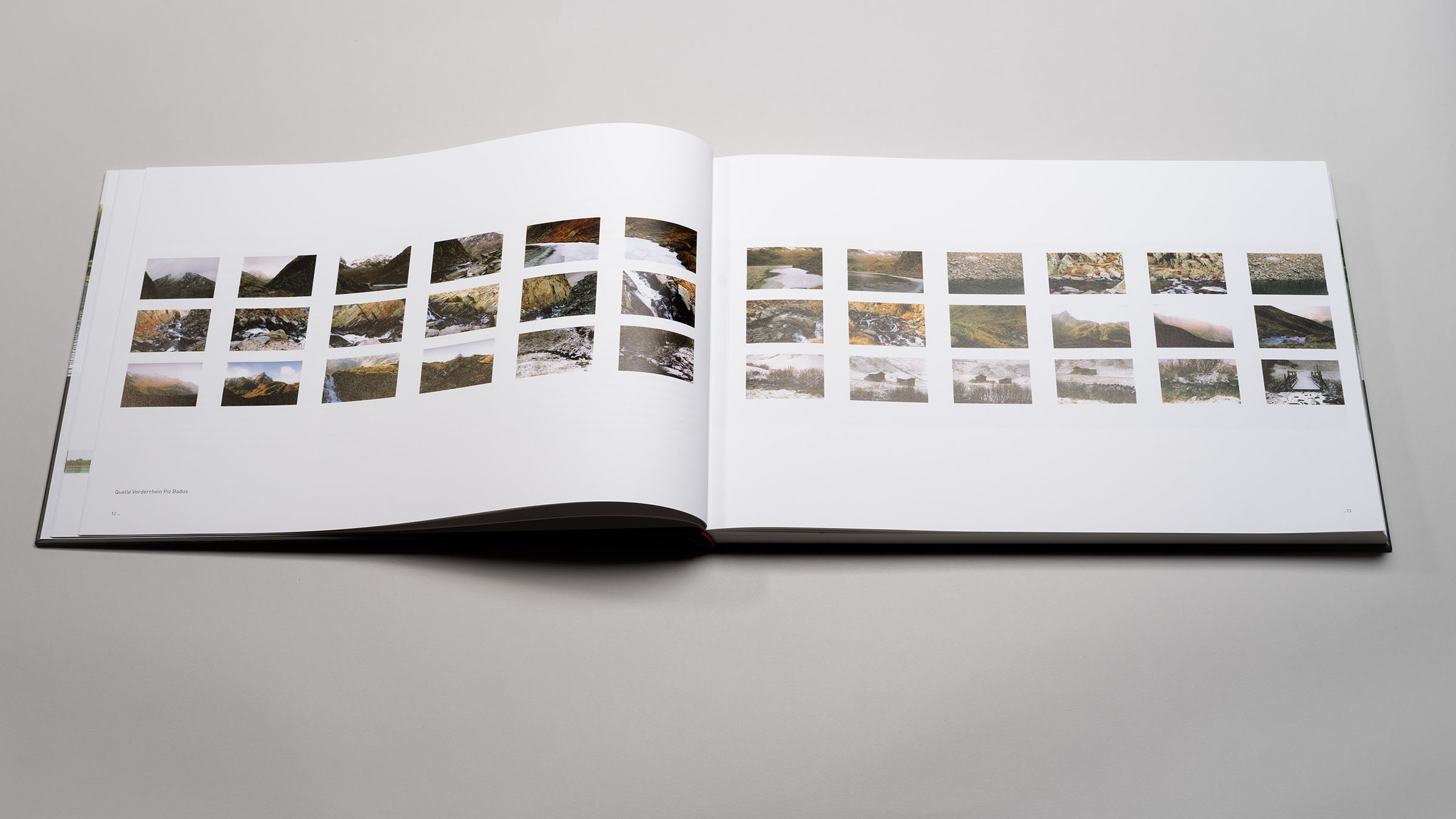
At the dawn of the new millennium, Stephan Kaluza (b. Bad Iburg, 1964; lives and works in Düsseldorf) went on an almost eight-months-long walking tour, following the Rhine from its source at the foot of Piz Badus in Switzerland to its debouchment into the North Sea near Rotterdam. During this thousand-mile trek along the river’s right bank, he stopped every minute—after between two and three hundred feet—to take a photograph of the opposite shore. In this way, his camera compiled a painstaking record of the Rhine in 21,449 individual shots. Digitally assembled in a single six-inch-tall composite image, the pictures form a two-and-a-half-mile stream.
What Kaluza created in this project would have been inconceivable before the development of digital photography, which made the seamless presentation of the pictures in a single panoramic band possible. What is more, the computers capable of processing the enormous quantities of data did not arrive until a few years ago. It took the artist’s assistants a full two years just to edit the images. Harnessing digital technology, Kaluza creates for photography what had been the exclusive precinct of painting: a sweeping holistic perspective. A large number of the fascinating panorama photographs were published in the imposing tome Der Rhein in 2007. Das Rheinprojekt now presents a freshly composed selection from this treasure trove.
Stephan Kaluza received a comprehensive education in Düsseldorf in the 1990s, studying photography at the city’s University of Applied Sciences, art history at the Academy of Fine Arts, and history and philosophy at Düsseldorf University. Since 1995, his work has been shown at numerous galleries in Seoul, Shanghai, Jerusalem, Los Angeles, Berlin and elsewhere. Kaluza’s plays have been performed in Düsseldorf, Berlin, and Stuttgart.
More books
-

Karin Hochstatter
gegengerade20€ Add to cartA Provocation of Vision between Surface and Depth
In her sculptural works, Karin Hochstatter (b. 1960, Cologne; lives and works in Cologne) deals with forms and their dissolution, as well as the perceptual mechanisms that arise from this. Everyday materials from high-tech production processes, such as construction products and foils, become fragile and expansive structures that question both our way of seeing and our notion of sculpture. The book documents her more recent works since 2012, which always exist as singular events in space and never appear a second time in the same way.
Karin Hochstatter studied Visual Art at the Kunstakademie Düsseldorf and Philosophy at Heinrich-Heine- Universität Düsseldorf. Since 1998, she has been a visiting professor and lecturer at universities in Germany and the USA.
-

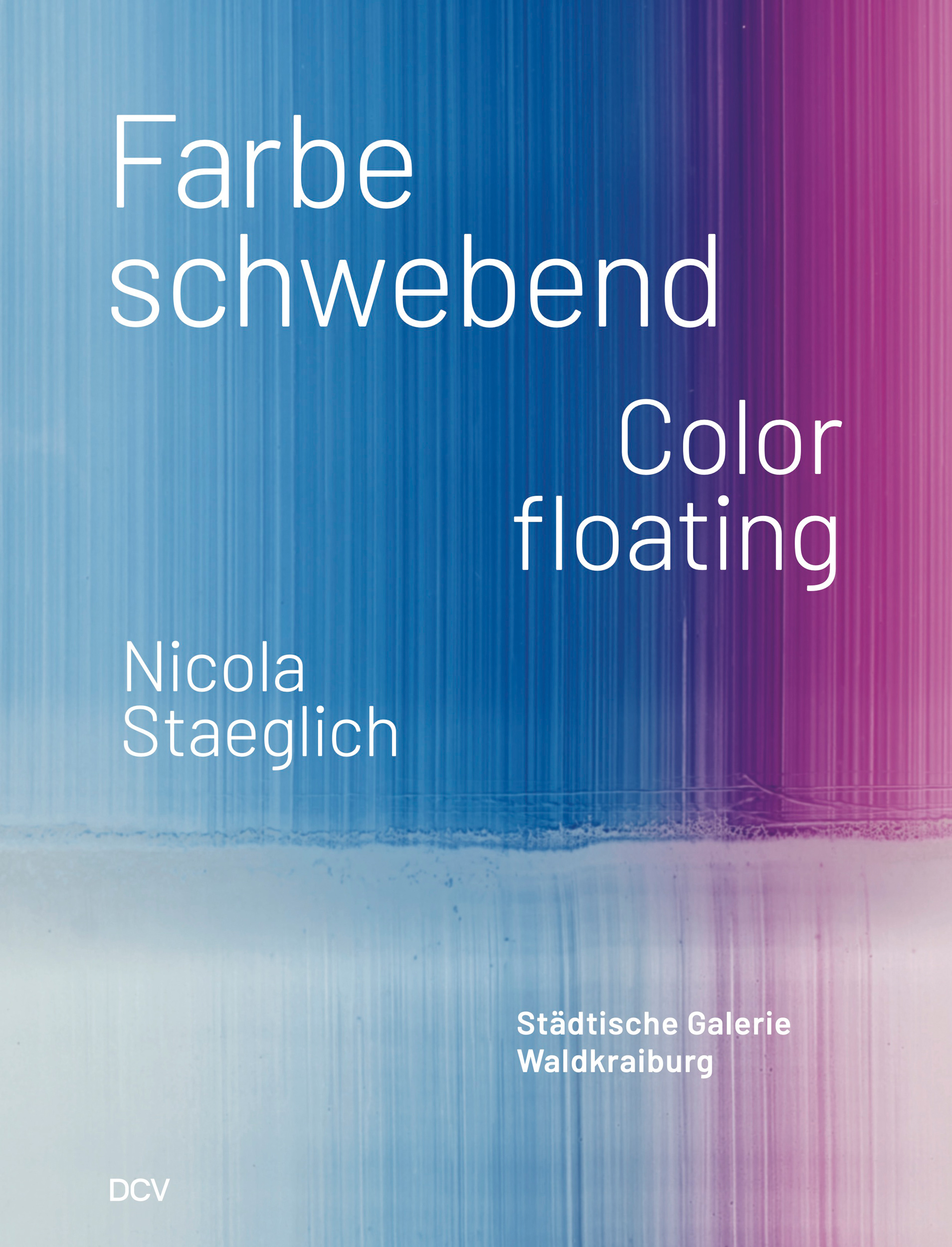
Nicola Staeglich – Farbe schwebend / Color floating
22€ Add to cart“The more slowly one approaches Staeglich’s works, the more they reveal.” Stephan Berg
Nicola Staeglich transforms color and traces of the act of painting into complex pictorial spaces that exude light and make time visible. Using an extra-wide brush, she applies luminous oil paints to (semi-) transparent foils and solid support media made from acrylic glass. Each movement of her body leaves a distinct mark on the paintings. Once the works are placed in the exhibition space, they absorb their environment and ambient light as well as the eye. The artist’s experimental approach generates a rich dynamic: paint hovers in mid-air, disembodied, while a constant oscillation between color and surface, between pictorial body and setting unlocks novel dimensions in space and time. The picture continually coalesces in the eye of the beholder, metamorphosing as the angle of incidence shifts and the mind parses the traces and strata of paint. Even in printed form, Staeglich’s works convey a rousing vitality.
The catalogue accompanies Staeglich’s solo exhibition at Städtische Galerie Waldkraiburg.
-

Angelika J. Trojnarski
Noble Earth38€ Add to cartAngelika J. Trojnarski (born 1979 in Mrągowo/Polen; lives and works in Düsseldorf) examines facets of nature through an ecological, scientific, poetic study of their phenomena. Through a process centered on painting, her art articulates allegorical relationships between some of the most significant contentions of our time: humans and nature, strength and fragility, crisis and hope. She expresses a desire to understand nature by reproducing its workings, pointing to its incredible might while underscoring its increasing fragility. Trojnarski overlays raw canvases with paper fragments, employing brushwork and collage to apply materials like graphite or soot, generating a source of energy and suspense through color and contrast. The monograph offers an overview of the last decade of Trojnarski’s work.
Angelika J. Trojnarski 2006–2013 studies at Kunstakademie Düsseldorf. 2006–2009 Painting with Jörg Immendorff, Markus Lüpertz and Herbert Brandl, from 2010 Free Art with Andreas Gursky.
-

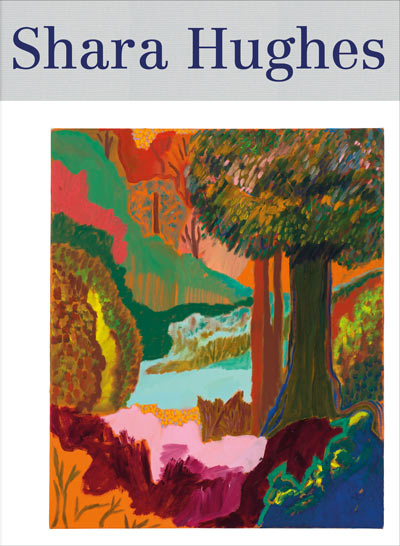
Shara Hughes
58€ Add to cartBoisterous Compositions
At first glance, Shara Hughes’s (b. Atlanta, GA., 1981; lives and works in Brooklyn) colorful and extravagant landscapes are chock full of everything we love in famous paintings: the palette of Henri Matisse or David Hockney, the stylistic inventiveness of Edvard Munch or Paul Cézanne, the painterly gestures of Philip Guston or Josh Smith, perhaps even van Gogh’s brushwork. She quotes this masculine tradition in landscape painting deliberately and unabashedly. This monograph is the first to present a comprehensive overview of Shara Hughes’s work.
Shara Hughes graduated from the Rhode Island School of Design and later attended the Skowhegan School of Painting & Sculpture in Madison, ME. She has had solo shows at the Arts Club, London, the Metropolitan Opera, New York, and the Museum of Contemporary Art of Georgia, Atlanta. In 2017, she participated in the Whitney Biennial, New York.
-

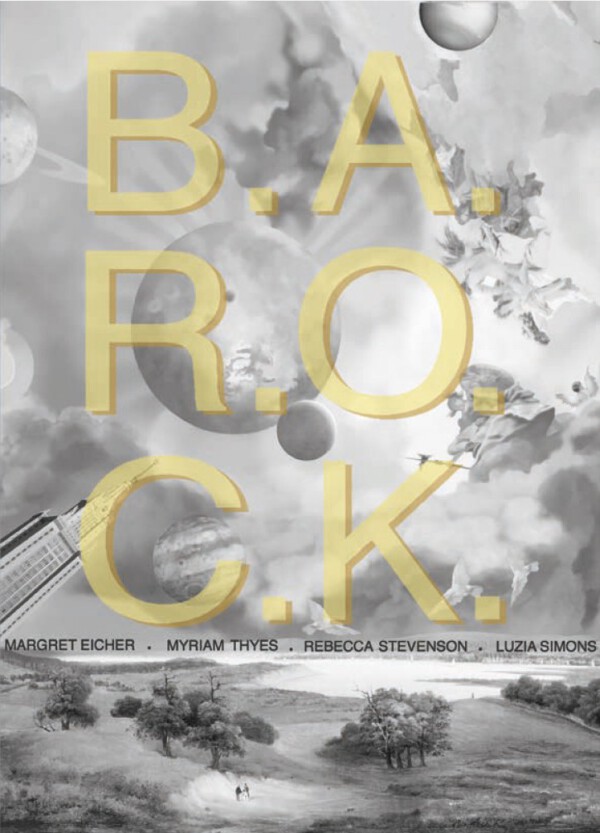
B.A.R.O.C.K.
24,80€ Add to cartArtistic Interventions in the Caputh Palace. Contemporary Parallels to the Baroque Era
Four international women artists spent more than three years studying Caputh Palace near Potsdam and creating works specifically for this magnificent location. The tapestries by Margret Eicher (b. 1955, Viersen; lives and works in Berlin), the floral scans by Luzia Simons (b. 1953, Quixadá, Brazil; lives and works in Berlin), the wax sculptures by Rebecca Stevenson (b. 1971; lives and works in London), and the ceiling painting projections by Myriam Thyes (b. 1963, Luxembourg; lives and works in Düsseldorf) blend into the surrounding space both naturally and surprisingly. With twelve double-page collages, the large-sized catalog is an artistic commentary on the ambitious project.
-

Barthélémy Toguo
10€ Add to cartBarthélémy Toguo’s art is a call for community and love, but there is nothing naïve about it. His paintings, graphic art, sculptures, performances, and installations explicitly grapple with colonialism, migration, and inequality; he directs our attention to the devastations wrought by humans, to the slow deaths of nature and cultures. But he does not dwell in this abyss. He aspires to something greater: to create work that establishes non-hierarchical connections; to build, as he puts it, a “world of solidarity and generosity” that knows neither ego nor identity, a community of all forms of life that flourish and pass away so that new living beings can sprout from their remains—Endless Blossoms. His choice of words and the aesthetic of the works gathered in this catalogue suggest that he is not alone in this undertaking. He stands with Ellen Gallagher, Wangechi Mutu, Louise Bourgeois, Marlene Dumas, and Kiki Smith. With them and with all of us, Toguo envisions a colorful future, a universe of exuberant energy and joie de vivre.
- English edition not available anymore

YAEL BARTANA
THE BOOK OF MALKA GERMANIARead moreShe Is Hope. She Is the Leader. She Is the Messiah. She Is History. She Is Fake.
The video artist Yael Bartana (b. Kfar Yehezkel, Israel, 1970; lives and works in Amsterdam and Berlin) makes work that explores the visual language of identity and the politics of commemoration. The critical scrutiny of collective expectations of political or religious salvation is a central concern in her art. In the video installation Malka Germania—Hebrew for “Queen Germany”—Bartana creates alternative realities from the German-Jewish past and present that bring scenes of the collective unconscious to light. The publication follows the epiphany of Malka Germania, a female redeemer figure, in five chapters whose layout is modeled on that of the Talmud, the central text in Rabbinical Judaism. This organization reflects the polyphonic complexity, rich nuance, and ambivalence that the work casts into visuals and underscores that there is no simple answer. The book includes an interview with the artist and contributions by Sami Berdugo, Christina von Braun, Michael Brenner, Max Czollek, and others. It is published on occasion of the exhibition Yael Bartana—Redemption Now at the Jewish Museum Berlin.
Yael Bartana studied at the Bezalel Academy of Arts and Design, Jerusalem, the School of Visual Arts, New York, and the Rijksakademie van beeldende kunsten, Amsterdam. Her work is held by collections all over the world and has been presented in solo exhibitions at venues including the Stedelijk Museum, Amsterdam, the Pérez Art Museum Miami, and the Moderna Museet, Malmö.
Click here for the German edition.
-

Judit Reigl
Kraftfelder / Centers of Dominance28€ Add to cartBeginning in the 1950s, Judit Reigl (b. Kapuvár, Hungary, 1923; d. Marcoussis, France, 2020) builds a singular creative oeuvre between abstraction and figuration, between Surrealism and gestural painting. After studying art in Budapest, Reigl flees Hungary in 1950; arriving in Paris, she is introduced to André Breton, who organizes her first exhibition in 1954. Under the influence of the École de Paris, she branches out into écriture automatique, then shifts toward free expression. Like her contemporaries Jackson Pollock and Helen Frankenthaler in New York, she lays out ever larger unprimed canvases on the floor and works them with a brush, her fingers, or other instruments. After 1966, bodily shapes emerge from her abstractions, and figures reappear in the pictures.
On occasion of Reigl’s centenary and the gift of three major works, the Neue Nationalgalerie mounts the artist’s first solo exhibition at a museum in Germany. The book surveys the oeuvre of one of the most important protagonists of European art in the second half of the twentieth century.
Judit Reigl studied painting at the Academy of Fine Arts in Budapest from 1942 until 1945 and was a fellow at the Hungarian Academy in Rome in 1947–48. From 1950 onwards, she lived and worked in France.
-

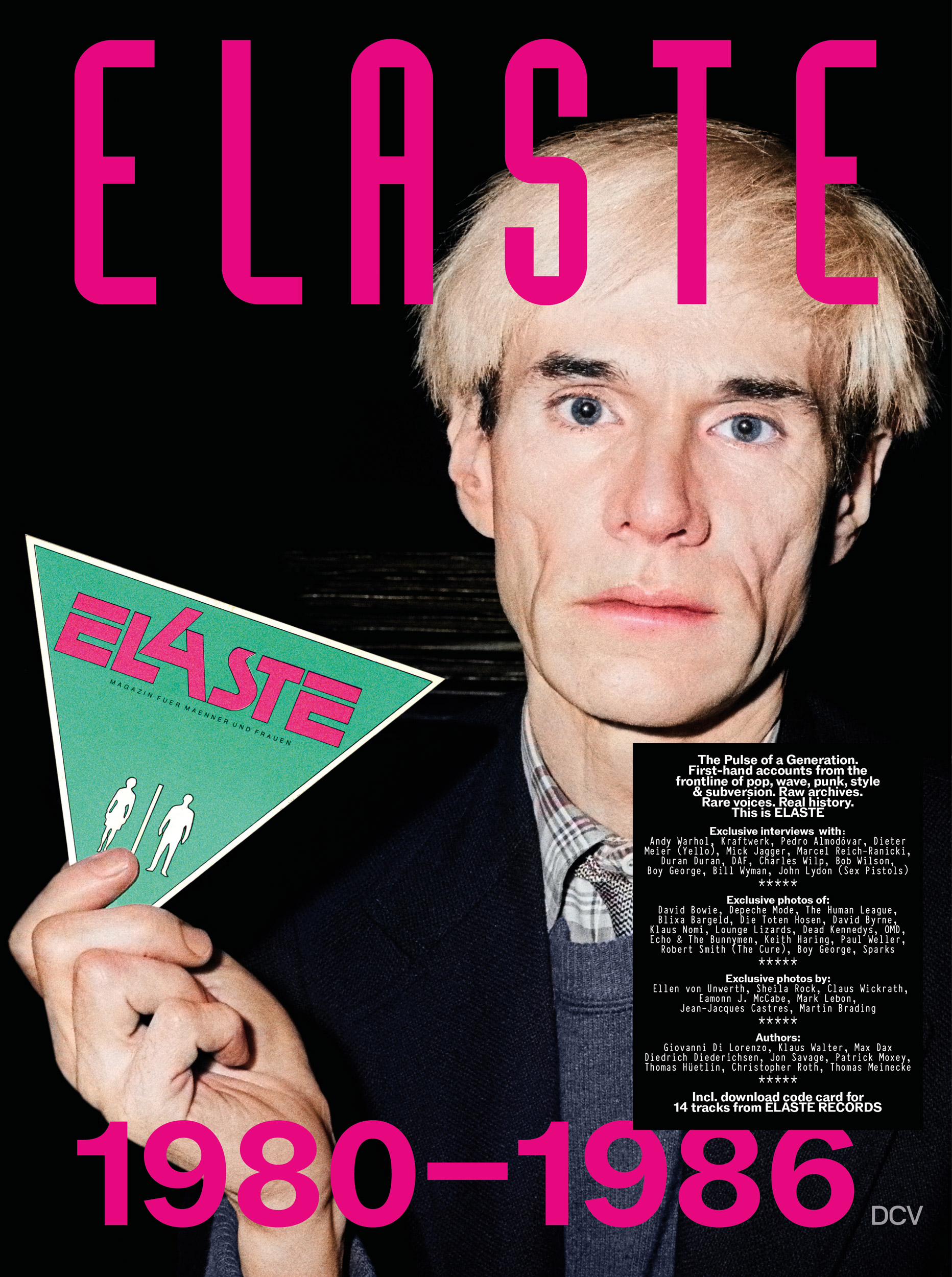
ELASTE
1980 – 198649€ Add to cartThe story of ELASTE is the story of a movement – that of the New Wave generation in West Germany. Founded in 1980 in Hanover, the magazine was a beacon of cultural revolt and the first glossy indie magazine of the Federal Republic: self-published, a statement somewhere between pop avant-garde, subversion, and a sharp sense of style. Among those who shaped the look and spirit of the magazine were Jon Savage, Ellen von Unwerth, and Diedrich Diederichsen. No other magazine operated at the intersection of music, fashion, and society quite like ELASTE — with headliners such as Warhol, The Rolling Stones, and Kraftwerk. This book by the magazine’s editors Thomas Elsner and Michael Reinboth, looks back — at the pioneering spirit, the minds, and the stories behind the magazine.
Incl. download code card for 14 tracks from ELASTE RECORDS
- Out of stock

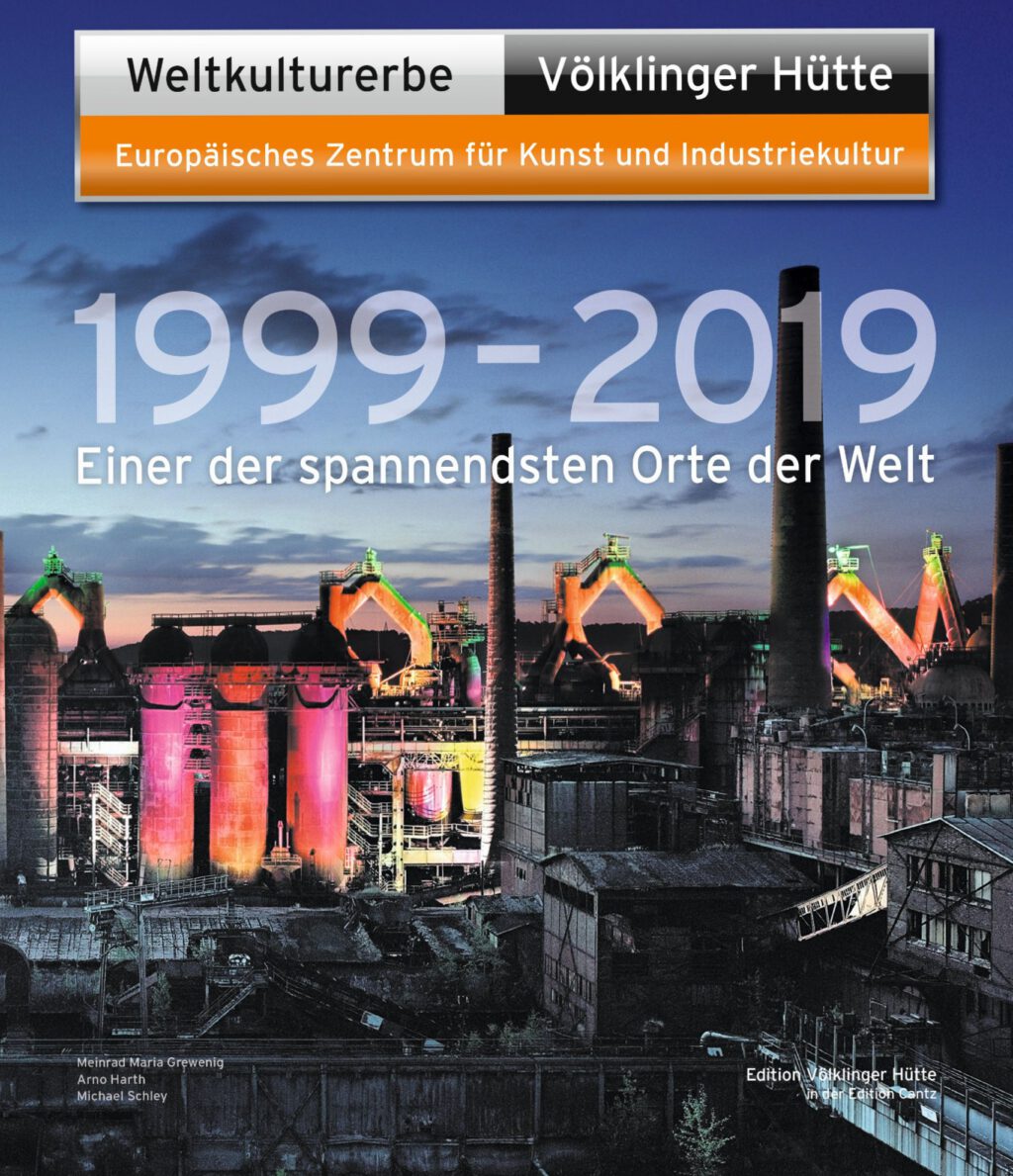
Weltkulturerbe Völklinger Hütte 1999 – 2019
29,90€ Read moreDie Geschichte einer neuen Industriekultur
Die Völklinger Hütte gehört zu den wichtigsten Industriedenkmälern der Welt. Mit herausragenden Ausstellungen und Veranstaltungen ist das Kulturprojekt weit über die Grenzen des Saarlands hinaus bekannt geworden. Der Künstler Ottmar Hörl konzipierte hier sein großangelegtes Skulpturenprojekt 100 Arbeiter und Christian Boltanskis Installation in der Sinteranlage wurde zum hochemotionalen Erinnerungsort für die hier verpflichteten Zwangsarbeiter. Noch bis zum Jahr 1986 war die Völklinger Eisenhütte in Betrieb und wurde 1994 als erstes Industriekulturdenkmal aus der Hochphase der Industrialisierung in die renommierte Liste des UNESCO-Weltkulturerbes aufgenommen. Das Buch zum 25. Jubiläum dieser Auszeichnung zeigt die vielfältigen und eindrucksvollen Aufnahmen einer Transformation – vom größten Schrotthaufen Europas zum Begnungszentrum der Menschen mit der Kunst. Es dokumentiert die gelungene Umstrukturierung einer hochproduktiven Eisenverhüttungsstätte zu einem Ort für Kultur im 21. Jahrhundert.
-
On Trickling Away
Concepts of Time in Contemporary Art30€ Add to cartTime, like space, is one of the key coordinates of human existence. The great mysteries of our lives revolve around it, only to remain unresolved when death inevitably ends our days. What is time’s role in art? The vanitas, a genre that was popular with painters in the seventeenth century, is hardly the earliest form that artists have devised to grapple with it. Holger Kube Ventura’s book On Trickling Away. Concepts of Time in Contemporary Art presents the ideas of contemporary artists who approach time from diverse angles. In the twenty-first century, their interest appears to have shifted from visualizations of future raptures to visions of slowness, of the distension, repetition, and standstill of moments in time. Bernard Aubertin (FR), Inge Dick (AT), Rom Gaastra (NL), Gosbert Gottmann (DE), Tommi Grönlund & Petteri Nisunen (FI), Manuela Kasemir (DE), Timo Klos (DE), Dimitry Orlac (FR), George Rickey (US), Patrik Söderlund & Visa Suonpää (FI), and John Woodman (UK) hone our awareness of how subjective the passage of time is and convey vivid experiences of its trickling away.
-
eine freie malerin.
elke wree.26€ Add to cartThe painter Elke Wree’s career (1940–2025) was defined by the debates of the post-war era. Art was considered a search for truth and intended to reveal the existentially essential. Fundamental questions were: Realism or abstraction? Genuine or fake? This book provides insight into the search for an authentic, contemporary visual language. Wree’s formative teachers in Karlsruhe and Berlin are discussed, as are her changing social environments and the rapid societal changes. Wree’s paintings were always nature-inspired abstraction with overlapping color spaces and painting gestures. Wree groups her pictures with terms such as condensations and clearings, in-between lands, or traces of light and time. This volume is simultaneously a biography, panorama, analysis, and homage.
-
Jan Zöller
Keine Zeit zum Baden38€ Add to cartJan Zöller’s (b. Haslach im Kinzigtal, 1992; lives and works in Karlsruhe) art brims with personal references and experiences that he translates into his distinctive personal visual idiom. His paintings are theatrical arrangements for which he draws on a multifarious repertoire of motifs. Zöller’s first monograph Keine Zeit zum Baden presents new works engaging with the exhibition space such as a floating installation with blue tiles from the exhibition of the same title at Städtische Galerie Ostfildern and videos and large-format paintings from the cycle Badebrunnen that were created between 2019 and 2022. The bathtubs in the pictures hint at private moments of relaxation; the fountains, at the “eternal cycle” of nature. The title Keine Zeit zum Baden (No Time for Bathing), then, gestures toward the subjects of the works, but also suggest the dilemma of striking a healthy balance between life, work, and one’s vocation.
Jan Zöller studied with Marijke van Warmerdam und Leni Hoffmann at the State Academy of Fine Arts Karlsruhe from 2012 until 2017 and with Jean-Marc Bustamante at the École Nationale Supérieure des Beaux-Arts de Paris in 2016. He won the Federal Prize for Art Students of the Bundeskunsthalle, Bonn, in 2018, followed by Stiftung Kunstfonds’s working fellowship in 2021.
-

Hans Hofmann
Chimbote24€ Add to cartExpressive Forms between Art and Architecture
As an exponent of Abstract Expressionism, Hans Hofmann (b. Weißenburg, Germany, 1880; d. New York, USA, 1966) ranks among the preeminent artists of the twentieth century. As a teacher at his Hans Hofmann School of Fine Arts, which he founded in 1933 after emigrating to the United States, he exerted a formative influence over a generation of young painters. With Arshile Gorky, Willem de Kooning, Jackson Pollock, and others, he was a member of the illustrious New York School, a loose association of visual artists. In 1950 he was spending time in Europe and collaborated with the architects Josep Lluís Sert and Paul Lester Wiener on designs for colorful wall paintings to be executed on buildings in Chimbote, Peru. The urban masterplan they developed for the city’s post-World War II expansion was never realized, and so Hofmann’s intensely colorful works in large formats have been known only to specialists. The selection gathered in this book together with drawings and a city plan provides focused insight into a visionary project.
-
Sebastian Stöhrer
Residents40€ Add to cartIf there’s an artist whose oeuvre merits the title “creation,” it is Sebastian Stöhrer. Shaping clay—essentially, soil—he molds his “residents”: colorful and friendly-looking sculptural beings, some of them enhanced with sticks or branches reminiscent of limbs. Despite their air of levity and humor, they are not the products of mere momentary inspiration or a whim. It takes decades of dedicated experimentation with the kiln based on the millennia-old art of ceramics as well as expert knowledge of chemistry and physics to create such colors and shapes. Stöhrer has been called an alchemist, and indeed he has made it his mission to vindicate this researcher’s craft, an ancestor of the natural sciences. Alchemy, like Stöhrer’s oeuvre, combines pure rationality with coincidence and a scintilla of magic. The artist plays an intuitive and sensual game with his clay and the virtually incalculable chromaticity of the glazes—chaos, anarchy, and irrepressible urges being an integral dimension of all creation. In Stöhrer’s “residents,” we encounter the embodiments of that creation: likenesses of ourselves and perhaps also heralds of a future more good-natured version.
-

Ilit Azoulay
Facts and Tales. Truth be Told120€ Add to cartIn an era in which multiple perspectives and oral histories are increasingly vital, Facts and Tales—Truth Be Told delves into the haunting work of Ilit Azoulay. The artist, who was born in Jaffa in 1972, transforms objects, archives, and museum holdings into vessels, challenging traditional hierarchies of knowledge. In her most recent solo exhibition Mere Things at the Jewish Museum, New York, Azoulay presents works that probe the delicate balance between factual representation and nuanced storytelling.
The publication accompanying the exhibition includes archival pages, the artist’s notes, and depictions of the works as well as an introduction by curator Shira Backer and an essay by the art critic, curator, and writer Sarit Shapira, who passed away in 2018. Titled Houses of Junk and Specters: On Ilit Azoulay’s Early Works, it underscores the importance of honoring both factual accuracy and oral histories and invites readers to explore the complex interplay between concrete evidence and the rich and nuanced stories.
Azoulay has devised a singular method to shed light on the blanks in hegemonic narratives and expose them. As though to produce an extortion letter, she clips her pictures from archival materials and photographs of the walls of abandoned buildings and composes them in collages interweaving a multiplicity of views. The resulting works question the exclusive truth claim of museum expertise and reveal its constructed quality. The catalog of her works, designed as a box replete with texts and images, reflects this approach, aiming to dismantle established narratives and open up diverse perspectives.
Box containing 6 different standalone publications, limited edition of 500 copies
THIS PUBLICATION WAS MADE POSSIBLE BY THE GENEROUS SUPPORT OF THE GALLERY LOHAUS SOMINSKY, MUNICH
- temporarily not available

Dissonance
Platform GermanyRead moreA Changed Vision—New Painting from Germany
Post-reunification Germany has emerged as an important forum for international painting. The generation of artists born in the 1970s and 1980s eschew alignment with collective tendencies and resist clearly definable influences. Meanwhile, their art has registered the cultural and sociological dislocations and divergences since the fall of the Iron Curtain with seismographic precision.
The editors of Dissonance – Platform Germany present eighty-one of the most significant painters living and working in Germany in the past two decades. They have the courage of strong opinions, turn the spotlight on unsuspected treasures, and tease out the unexpected value in aesthetically thrilling achievements of programmatic pluralism. A vital survey of one of the most exciting chapters in the more recent history of art in Germany.
Some of the presented artists have graciously agreed to allow DCV to release limited editions of their works, which you can find here.
-
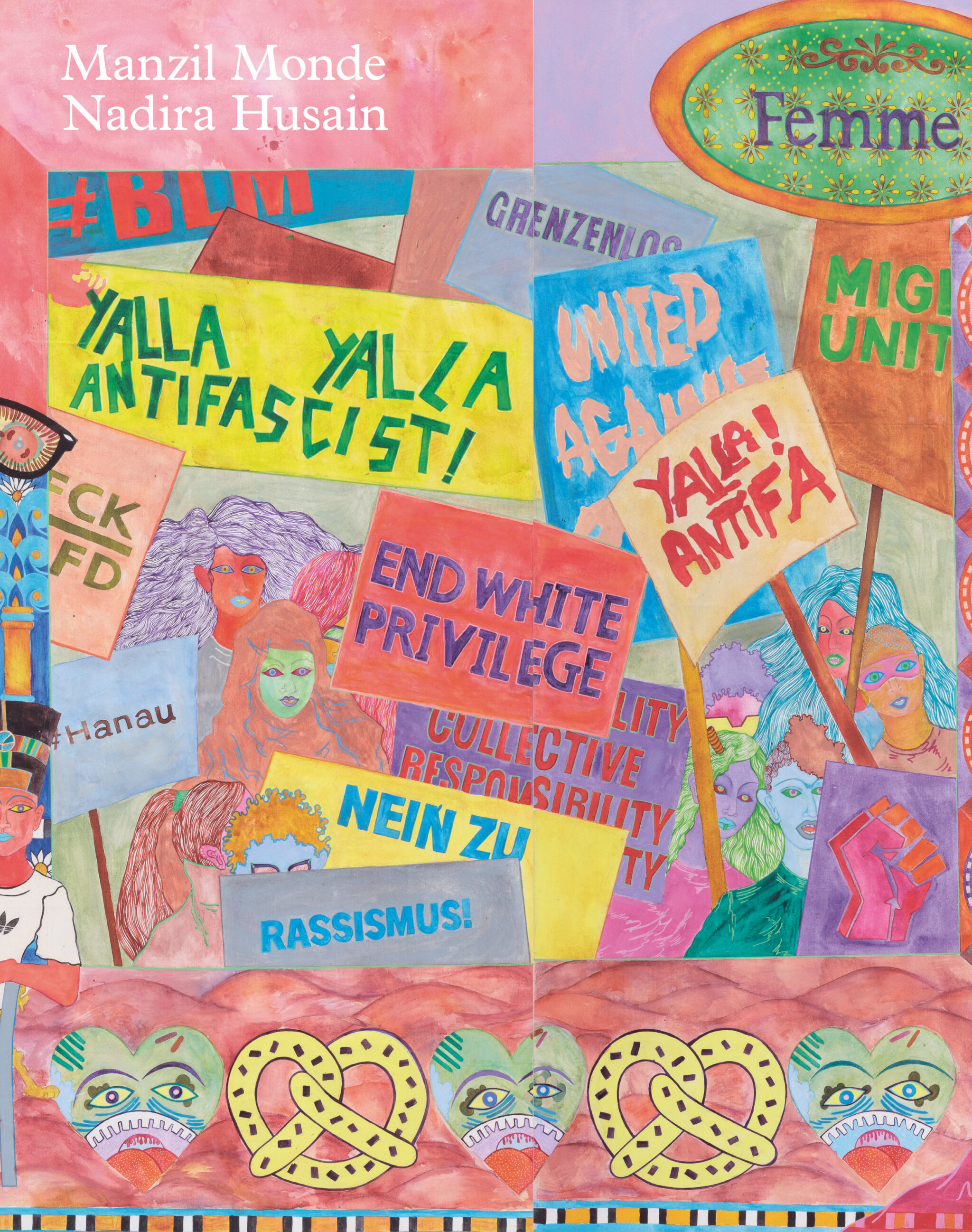
Nadira Husain
Manzil Monde30€ Add to cartNadira Husain’s (b. Paris, 1980; lives and works in Berlin, Paris, and Hyderabad) work combines figures, symbols, and ornaments from different cultures in complex imageries that reflect her own multicultural experience. To achieve a harmonious, though by no means placid, coexistence of all elements, the artist harnesses painting, drawing, printing processes, traditional artisan practices, and a range of materials including textile and ceramics, recognizing no hierarchy of media or genre. Hybridization and the translocation of motifs serve her to tease out similarities as well as divergences between myth and pop culture: the Indian deity, the cartoon character, and the fashion label appear as equals in the universe of her art.
The book contains several essays that explore Nadira Husain’s oeuvre as a significant contribution to the discourse around postmigration, transculturality, and feminism in contemporary art.
Nadira Husain studied at the École nationale supérieure des beaux-arts in Paris and the University of British Columbia in Vancouver. She is currently a visiting professor at the Berlin University of the Arts, where she co-teaches with the Belarusian artist Marina Naprushkina.
-
Sprache/Text/Bild
32€ Add to cartSpoken words, writing, and images originate in social and cultural contexts and so are fraught with meanings, are vehicles of values and norms. They inevitably also demarcate boundaries, serving to class people as members of groups or outsiders. This adds to the urgency of the question of what can in fact be said and shown, and who or what determines those limits. The present catalog addresses these concerns through a survey of eminent art of the twentieth and twenty-first centuries. The works gathered in it speak to mechanisms of inclusion and exclusion, to categorizations and the narratives that were created to sustain them. And they remind us that these phenomena are human-made, which is also to say, susceptible to change—that we share responsibility for them.
Artists: John Baldessari, Maria Bartuszová, Alice Bidault, Alejandro Cesarco, Ayşe Erkmen, Nadine Fecht, Gary Hill, Janice Kerbel, Gabriel Kladek, Gordon Parks, The National AIDS Memorial, Markus Vater, Gillian Wearing
-

Sabine Hornig
Passage through Presence45€ Add to cartLayered Spacetimes in Large Formats
Sabine Hornig (b. 1964; lives and works in Berlin) has earned international acclaim with sculptures, photographs, and architectural interventions that interweave image, perspective, and space in distinctive ways. Her works feature translucent pictorial planes on glass panes; integrating these sculptural elements into the setting, she creates environments in which meaning unfolds as viewers allow their gazes—and themselves—to wander. For her new works, which engage with architecture, the artist superimposes enormous photographs on entire façades and concourses. This publication is the first to put the focus on Sabine Hornig’s art in three dimensions, detailing her process from the building of sculptural models and the combination with transparent photographic layers to her creation of works in public settings. It showcases her largest installation to date, at LaGuardia Airport in New York City, which she discusses in a conversation with Nicholas Baume, director and chief curator, Public Art Fund, New York.