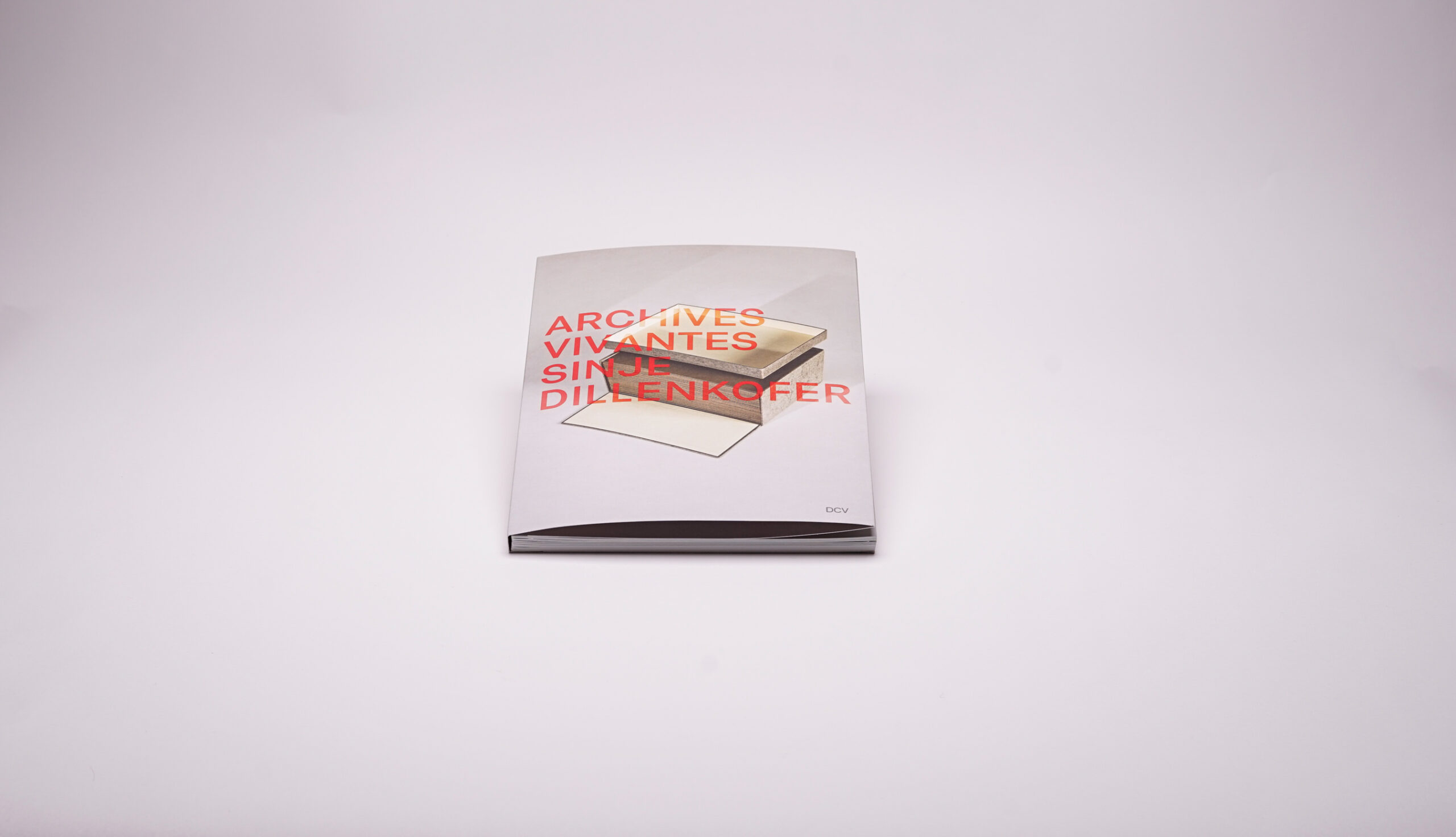
Sinje Dillenkofer
Archives Vivantes
 | |
|---|---|
| Editor(s) | Ingeborg Domes, Museum bei der Kaiserpfalz, Ingelheim am Rhein |
| Author(s) | Johannes Meinhardt, Peter Weibel |
| Design | Philippa Walz |
| Size | 21,5 x 31 cm |
| Cover | Swiss open spine gatefold brochure |
| Pages | 106 (and 40 pages text brochure) |
| Illustrations | 55 |
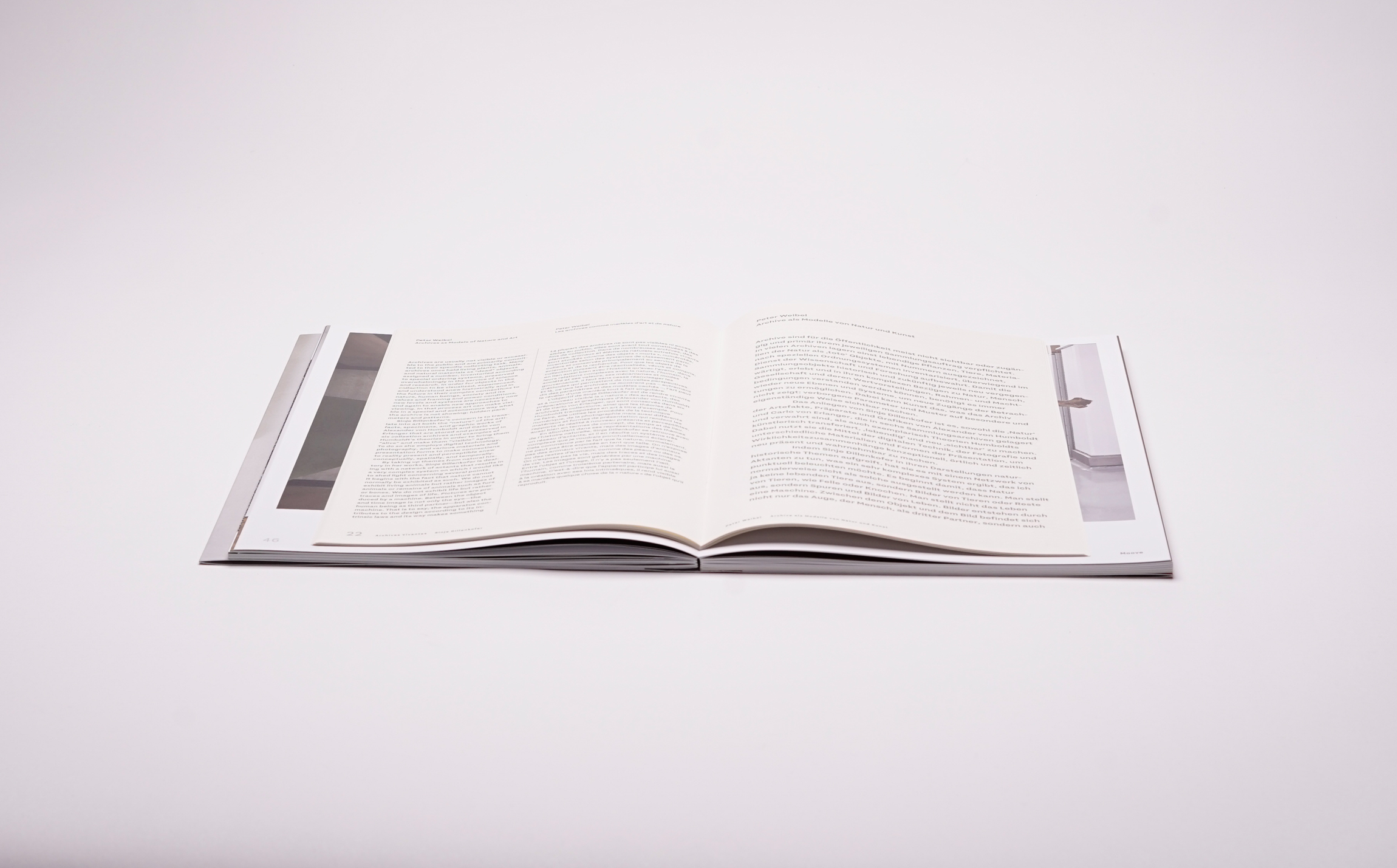
| Language(s) | German, English, French |
| ISBN | 978-3-96912-110-8 |
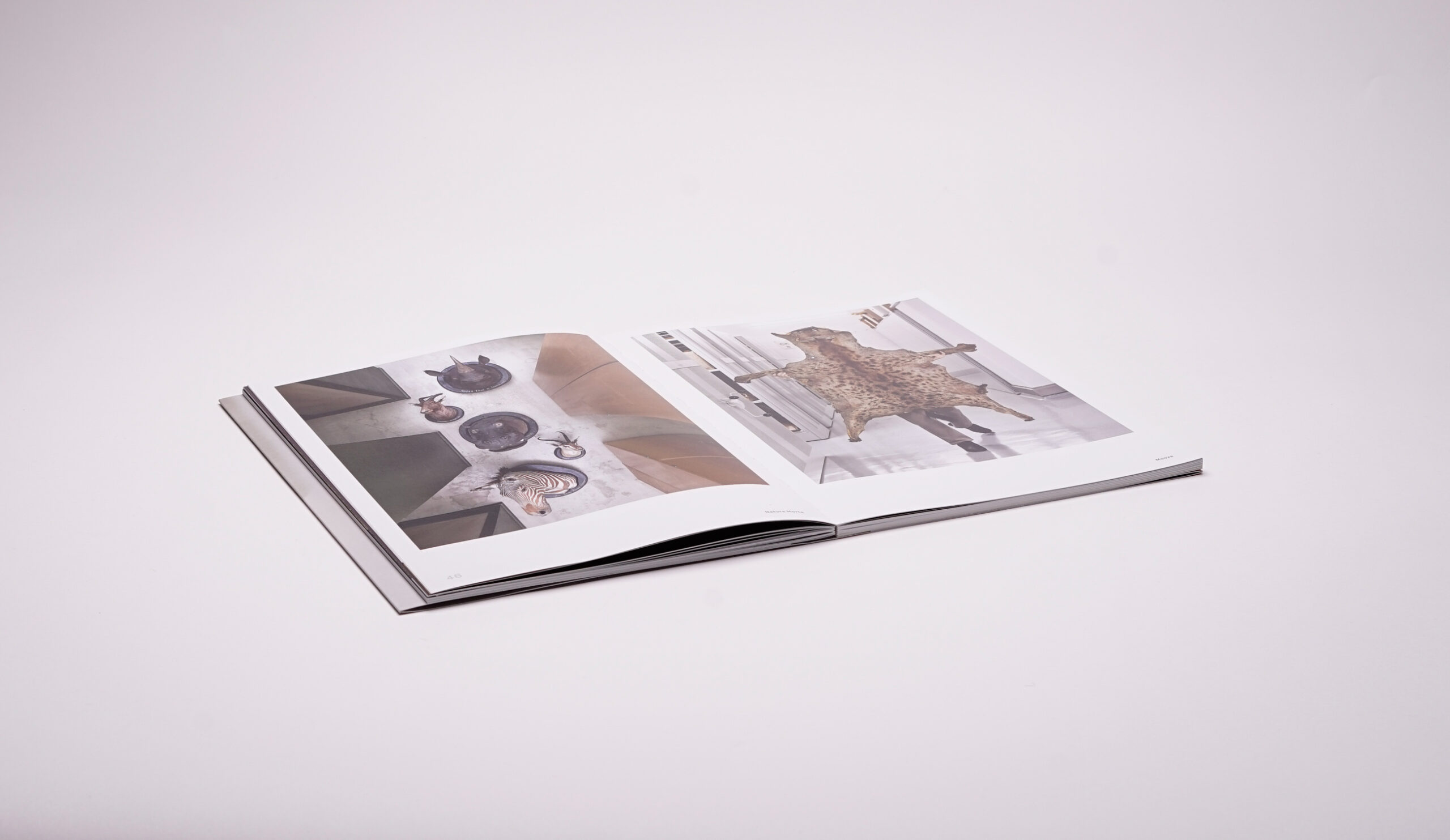
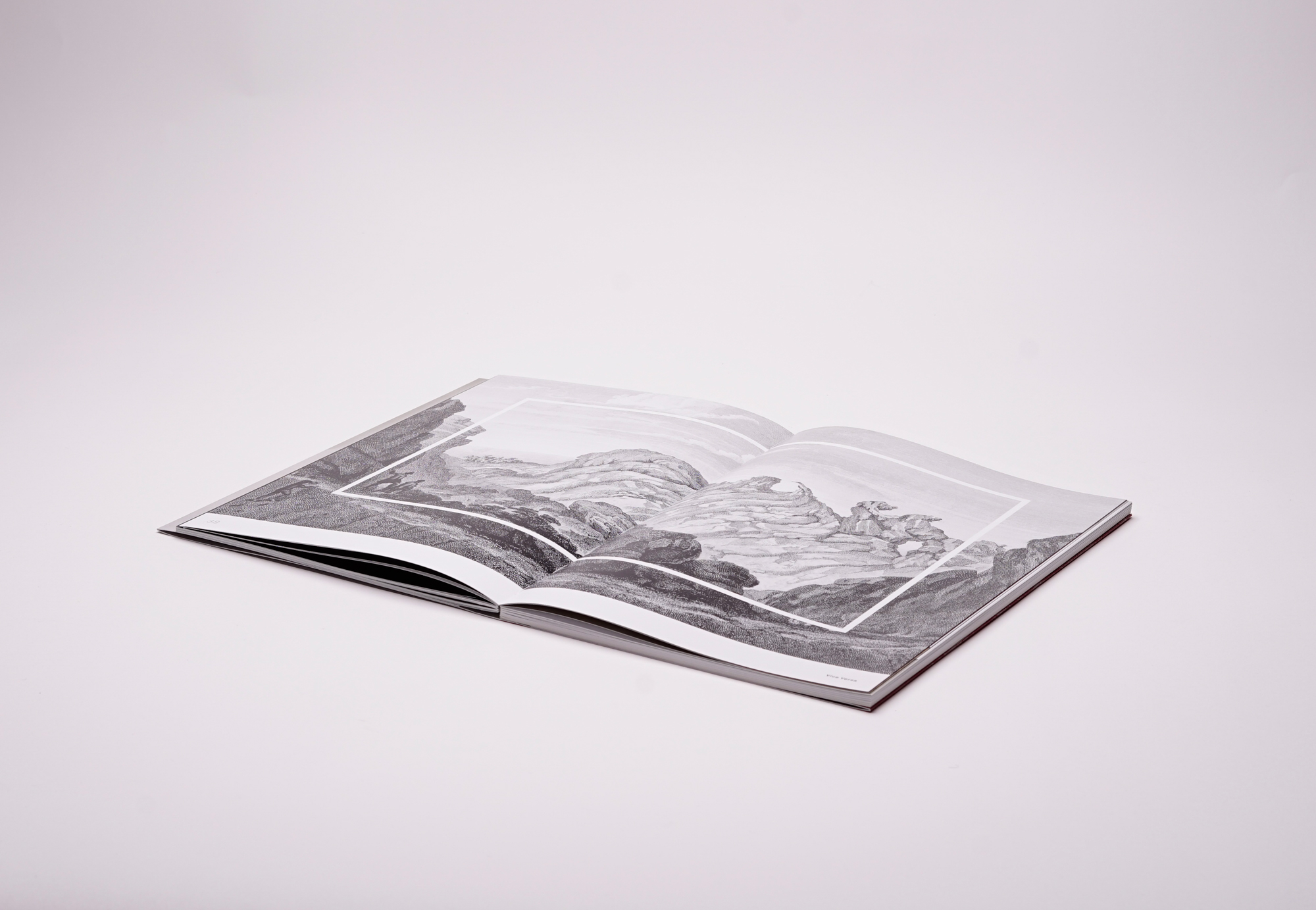
Sinje Dillenkofer’s (b. Neustadt a.d.W., 1959) body of work ARCHIVES VIVANTES inquires into the idea of the “archive,” harnessing the means of visual art to allow us to see and perceive what the archive does not reveal. With staged photographs that combine conceptual rigor with a wide spectrum of creative techniques and devices, Dillenkofer’s pictorial essay turns the spotlight on specimens, artifacts, graphic art, and writings compiled by the explorer and naturalist Alexander von Humboldt (1769–1859) and the ornithologist Carlo von Erlanger (1872–1904). Examining the archive as a model of nature and reality as well as a mirror of “human nature,” the artist develops compositional ideas inspired by the peculiar features of the objects in the collections in visual analogies, pictorial spaces, and spatial compositions. Animals and plants that died long ago “in the service of science” are vividly embodied through the distinctive use of light and shadow. The resulting pictures consider the archive in a new context, framed by our complex relationships with nature, humankind, society and its values and ideals, circumstances and constellations of power. The pictures were taken in six German collection archives: at the Museum bei der Kaiserpfalz Ingelheim, the Naturhistorisches Museum Mainz, the Senckenberg Forschungsinstitut und Naturmuseum Frankfurt, the Stadtmuseum Berlin, and the Stuttgart State Museum of Natural History. Dillenkofer was the first artist to be invited by the Berlin State Library—Prussian Cultural Heritage to translate Humboldt’s American travel diaries into art.
Sinje Dillenkofer studied at the Stuttgart State Academy of Art and Design and has taught at universities and art academies. Her work is held by the Victoria & Albert Museum in London, the ZKM | Center for Art and Media Karlsruhe, the Staatsgalerie Stuttgart, and the Berlinische Galerie, among others.
More books
-

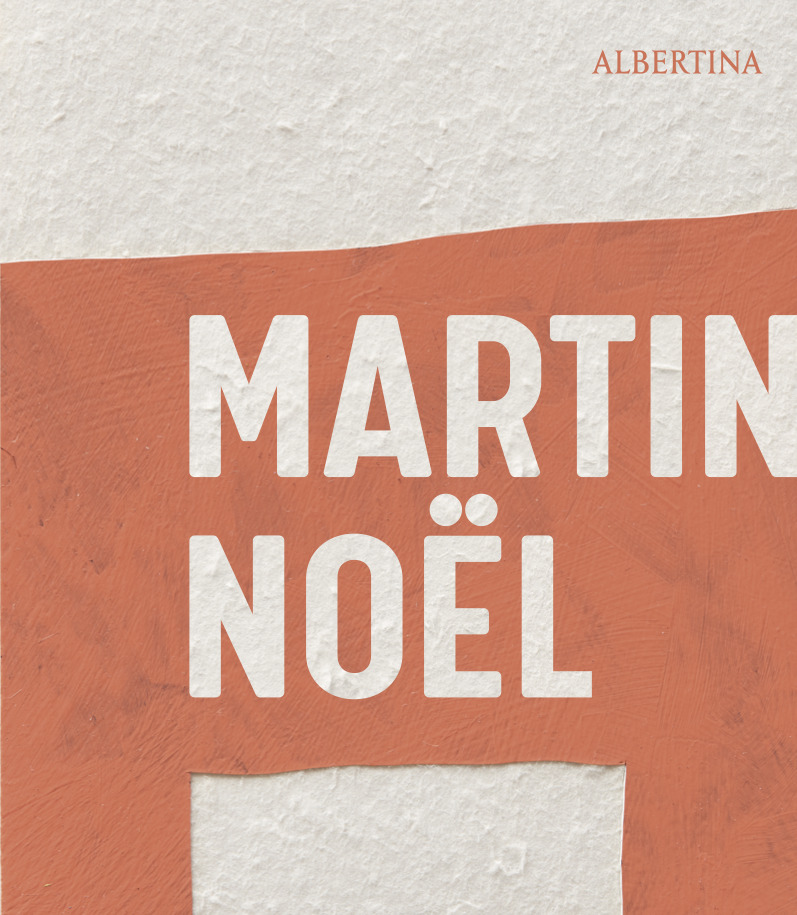
Martin Noël
The Retrospective38€ Add to cartThe Protagonist of the Modern Woodcut
The German painter, draftsman, and graphic artist Martin Noël (b. Berlin, 1956; d. Bonn, 2010) played a leading role in reviving the linocut and the woodcut, two techniques that had long been eclipsed by other media. In his large-format works on paper, he staked out a widely regarded and distinctive position in contemporary art. Noël was especially interested in the compositional relationship between line and surface. Released on occasion of the retrospective of his oeuvre at the Albertina, Vienna, this book presents an overview of the most important periods in the artist’s creative evolution, with an emphasis on the woodcut carved into the printing plate and the woodblock’s subsequent emancipation as an art object in its own right. Particular attention is paid to the application of ink to the surface and its painterly structure as well as the picture’s migration from object to canvas. The resulting paintings are exemplary of Noël’s late oeuvre.
Martin Noël studied graphic art and painting at what is now the Cologne University of Arts and Sciences. His art garnered numerous prizes and other honors, including fellowships from Kunststiftung NRW, Stiftung Kunstfonds, and Letter Stiftung. Works by Noël are in the German Federal Collection of Contemporary Art, Kunstsammlung Chemnitz, and the collection of Museum Pfalzgalerie Kaiserslautern.
-

Larissa Kikol
SIGNED. Unterwegs mit der 1UP-Crew und Moses & Taps18€ Add to cartWho owns the city? It is a question to which graffiti artists and politicians have very different answers. 1UP and Moses & Taps are international stars of the scene, realizing radical creative concepts in spectacular actions. The art critic Larissa Kikol shadowed them on their nocturnal forays for three years and gathered her experiences in a book that has become a singular tribute to the graffiti scene. It lets us witness the genesis of the artists’ works on the knife’s edge between civil disobedience, criminal liability, and an irrepressible freedom. Traveling throughout Germany, Kikol records absorbing dialogues that reflect the contrast between different worlds: the legal and the illegal art worlds, painting and protest. Always on the hop and in danger of being discovered and arrested, she ventures beyond the bounds of permissible art, into subway tunnels, up on roofs, across switchyards. A portrait emerges of Germany and Berlin and the power relations that shape our society.
Larissa Kikol (b. 1986) works as a freelance art critic, art scholar, and writer. She writes for Die Zeit, Spiegel Online, Art, Kunstzeitung, Mare, Monopol Online, and Kunstforum International. In 2016, she won C/O Berlin’s international Talents award in the art criticism category. She teaches and lectures at art schools and universities in Germany and France.
Kikol studied stage design and dramaturgy in Berlin-Weißensee and obtained a Ph.D. in art studies from the Karlsruhe University of Arts and Design. She lives and works in Marseille and Cologne.
-

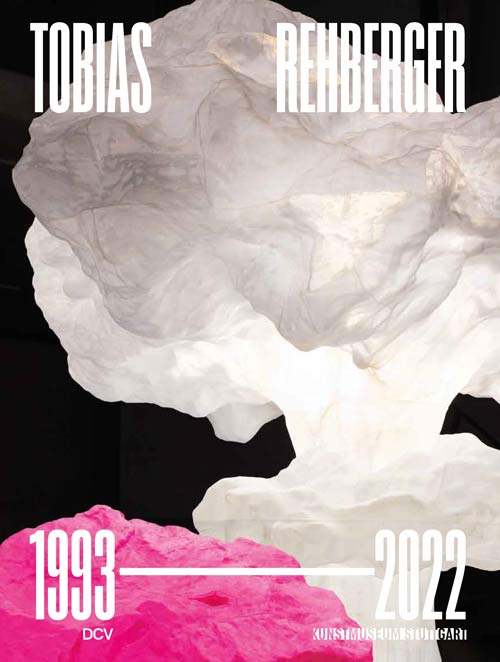
Tobias Rehberger
1993–202244€ Add to cartIn his sculptural work, Tobias Rehberger (b. Esslingen, 1966; lives and works in Frankfurt/Main) connects strategies from different, also non-art disciplines. His interiors meant to be taken into service have established him as one of the most influential artists of his generation. In 2022, the Kunstmuseum Stuttgart will honor Rehberger with a grand exhibition that will feature some of the most important bodies of work from the past three decades. The accompanying book makes a signal contribution to the ongoing critical engagement with his art.
Tobias Rehberger studied with Thomas Bayrle and Martin Kippenberger at the Städelschule in Frankfurt from 1987 until 1992 and later returned to his alma mater as a professor. He has had numerous solo shows in Germany and abroad and, in 2009, furnished the central cafeteria at the 53rd Venice Biennale, which won him a Golden Lion.
-

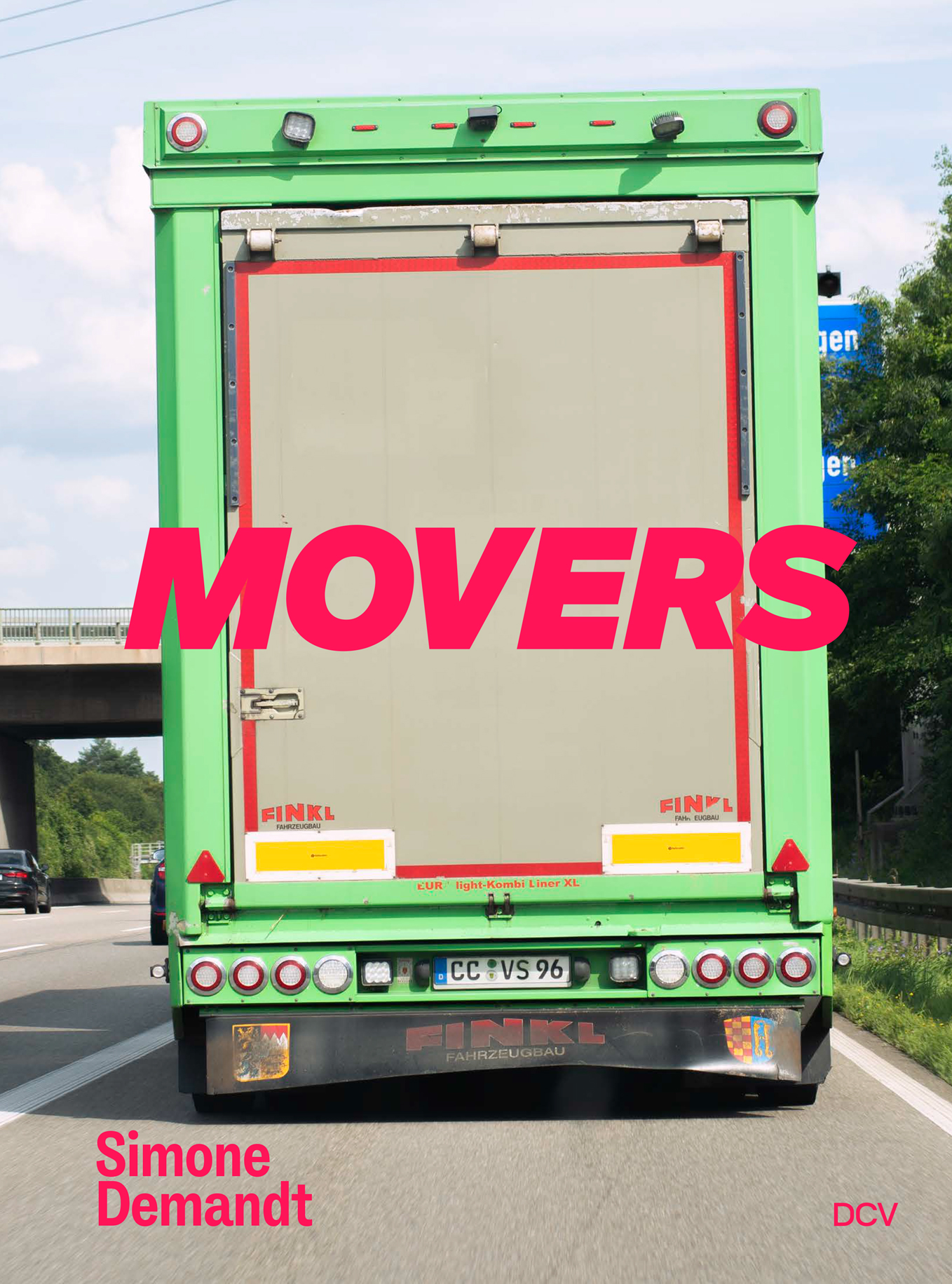
Simone Demandt
Movers / Beweger38€ Add to cartMotorways are Europe’s lifelines. The products we buy every day arrive on supermarket shelves after traveling along these arteries on the backs of thousands of trucks steered by hard-working drivers. Glancing up into the cabs of their hulking vehicles, we can just barely make out their heads sticking up above the steering wheels. In this overdue volume, Simone Demandt lets us see more of the heroes of the road who confidently posed for her camera. The pictures demonstrate Demandt’s knack for discovering “the intimate in the anonymous and the narrative element in the matter-of-factly” (Matthias Winzen). She has condensed the truckdrivers’ lifeworld into documentary black-and-white shots in which she shows these people as whole persons and individuals—very different from how we perceive them when they’re in the next lane. Movers lets us peek into the cabs through Demandt’s nonjudgmental lens, broadening our horizons hardly less than travelling would and helping us overcome our prejudices about teamsters. If you’ve always wanted to know whom we really have to thank for those never-empty supermarket shelves, you should not miss out on this book.
-

Pharaonengold
3.000 Jahre altägyptische Hochkultur27,50€ Add to cartThe Mysterious World of the Pharaohs and their Magical Relationship to Gold
Hardly any other culture fascinates as much as the high culture of ancient Egypt. At its center were the pharaohs, those legendary kings who, according to the beliefs of the ancient Egyptians, descended directly from the gods. Gold was ascribed a special symbolic and religious power; it stood for eternity and indestructibility and, as the “flesh of the gods,” was a sacred metal. The book brings together 150 exhibits from pharaonic tombs from the Old Kingdom of the Third Dynasty (circa 2680 B.C.E.) and the oldest gold statue of an Egyptian pharaoh to Tutankhamun and Horemheb (circa 1330–1310 B.C.E.).
-

nolde/kritik/documenta (English)
42€ Add to cartEmil Nolde (1867–1956) ranks among the best-known classic modernists. Contemporary perceptions of the artist and his oeuvre are informed by mythmaking as well as its deconstruction. After the Second World War, Nolde himself and art historians of the time portrayed him as a victim of Nazi persecution. More recent critics have drawn attention to his anti-Semitic views and his opportunism in his dealings with the Nazi authorities.
With support from the Nolde Foundation, Seebüll, the Düsseldorf-based conceptual artist Mischa Kuball (b. 1959) delved into the documentary record to shed light on this profoundly ambivalent figure and frame a critical perspective on Emil Nolde’s output and actions. The first fruits of his endeavors were shown at the Draiflessen Collection, Mettingen, in the winter of 2020–2021.
Kuball continued his research at the invitation of the documenta archive, Kassel. Based on his findings, the exhibition project “nolde / kritik / documenta” illuminates the ways in which life and oeuvre are interwoven and inquires into the contradictions of modernism, which Emil Nolde as a man and artist may be said to have embodied. The focus of the new project is on the staging of Nolde’s works at the first three editions of the documenta exhibition series (1955, 1959, 1964), which were instrumental to establishing the “Nolde myth.”
An enlarged and revised edition of the catalogue “nolde / kritik / documenta” is released in conjunction with the exhibition at the Fridericianum, Kassel (December 9, 2022–February 19, 2023).
Mischa Kuball has been professor of public art at the Academy of Media Arts Cologne and associate professor of media art at the Karlsruhe University of Arts and Design/ZKM since 2007.
-

SOMA
Collective SineUmbra18€ Add to cartOn the Disappearance of Italian Culture
Under the collective label SineUmbra, the artists Luisa Eugeni (b. Assisi, Italy, 1987; lives and works in Berlin) and Mattia Bonafini (b. Legnago, Italy, 1980; lives and works in Bremen) develop interdisciplinary projects that they realize as sprawling multimedia installations comprising video projections, sound, and performative elements. The point of departure for their project SOMA was Pier Paolo Pasolini’s 1975 essay Disappearance of the Fireflies, which probes the wrenching transformation that Italian society and the country’s very landscapes have undergone since the 1960s. SOMA melds performance art, the visitors’ movements, geography, and psychology in a space of experience that speaks to all senses for an exploration of the impact that traumata inflicted on individuals and communities by natural disasters and social changes have on the human soul and perceptual capacities. In keeping with the artists’ collective and dynamic creative vision, the catalogue embeds the multimedia installation in a context fleshed out by rich photographic documentation and numerous texts.
On occasion of the master class graduate exhibition at the Bremen University of the Arts in 2019, the two artists were awarded the renowned Karin Hollweg Prize for Fine Art. The publication accompanies their first solo show at Kunsthalle Bremen.
-

Michael Williams
Make Plans God Applauds42€ Add to cartMichael Williams (b. Doylestown, Pa., U.S., 1978; lives and works in Los Angeles, Ca.) is known for paintings whose source materials have been subjected to both analog and digital processes in an effort to render the fragmented nature of our existence today. During the lockdown, he created six large-format collage paintings. To make these modern history paintings, he mounted paper printouts on canvases and reworked the pictures with paint. They are, in short, classic collages, as in the exhilarating days of DADA, when the photographic image from newspapers first transmigrated into art. Michael Williams studied fine arts at Washington University, St. Louis, and has exhibited widely, including at the Wiener Secession, Vienna, and the Museum of Modern Art, New York.
-

Art in a Conflicted World
34€ Add to cartTrans-European Perspectives in the Age of Cultural Fragmentation
Since the turn of the millennium, much of the world has become an increasingly unstable and dissonant place. Sharp disruptions define many aspects of our social, cultural, and political relations. Art in a Conflicted World addresses this evolving reality, featuring critical positions articulated by visual artists and writers from Ukraine, Russia, and Great Britain—regions embroiled in extraordinary strife and upheaval. The publication takes a frank look at these multifaceted states of social dissonance and reflects them in diverse artistic and literary inquiries and responses. The contributions are the fruits of an interdisciplinary fellowship program at Kulturstiftung Schloss Wiepersdorf that offers the participants an opportunity to gain fresh creative and cultural insights, test ways of engaging with complexity, and develop models for the future that transcend national boundaries.
The publication presents works by Sarah Dobai, Nikita Kadan, Ali Eisa, and Sebastian Lloyd Rees (Lloyd Corporation) as well as writings by Alisa Ganieva and Tanya Zaharchenko.
The project was mentored by Wolfgang Tillmans, Tom McCarthy, Katharina Raabe, and Mark Gisbourne and received funding support from the German Federal Foreign Office.
-
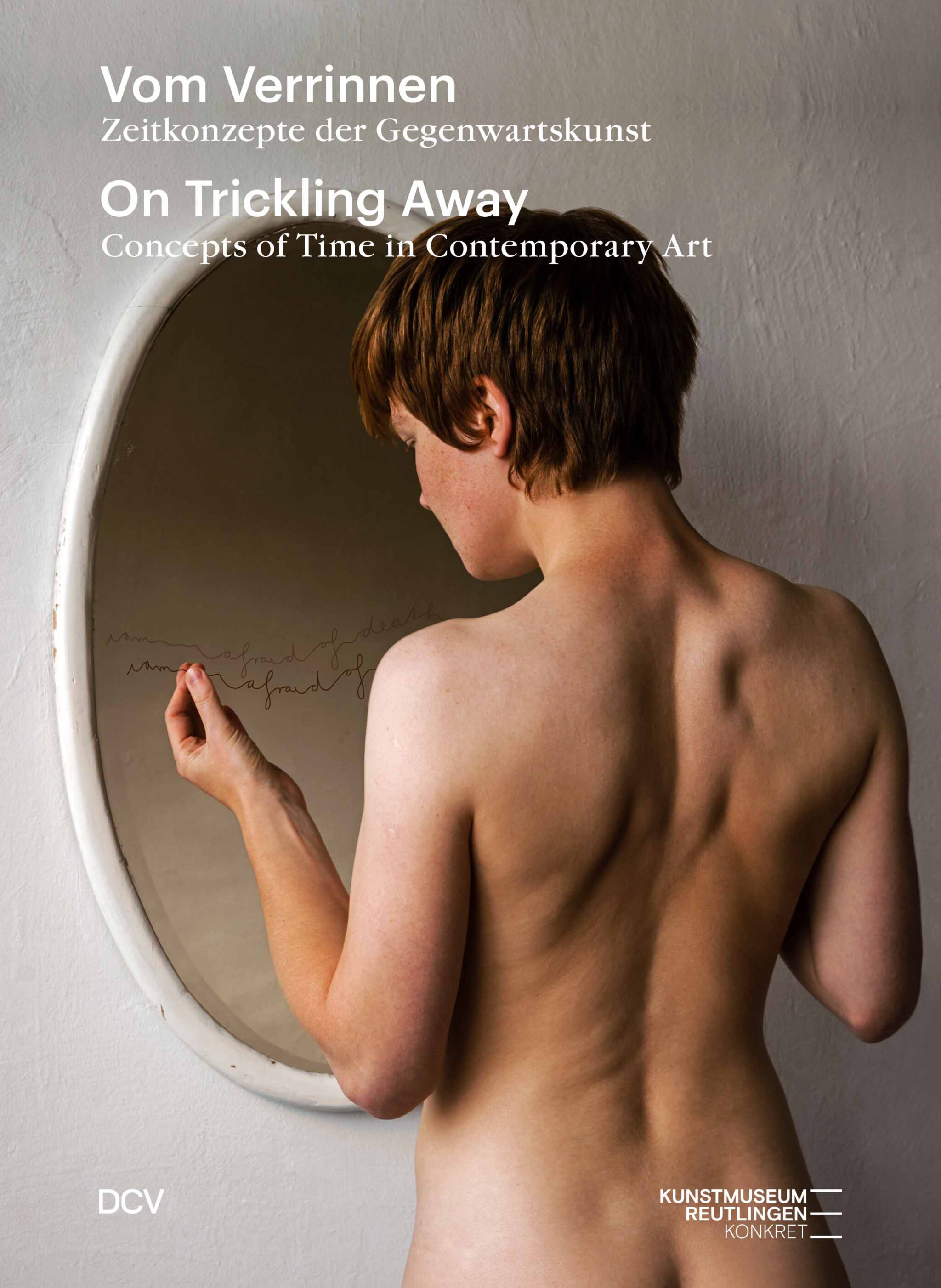
On Trickling Away
Concepts of Time in Contemporary Art30€ Add to cartTime, like space, is one of the key coordinates of human existence. The great mysteries of our lives revolve around it, only to remain unresolved when death inevitably ends our days. What is time’s role in art? The vanitas, a genre that was popular with painters in the seventeenth century, is hardly the earliest form that artists have devised to grapple with it. Holger Kube Ventura’s book On Trickling Away. Concepts of Time in Contemporary Art presents the ideas of contemporary artists who approach time from diverse angles. In the twenty-first century, their interest appears to have shifted from visualizations of future raptures to visions of slowness, of the distension, repetition, and standstill of moments in time. Bernard Aubertin (FR), Inge Dick (AT), Rom Gaastra (NL), Gosbert Gottmann (DE), Tommi Grönlund & Petteri Nisunen (FI), Manuela Kasemir (DE), Timo Klos (DE), Dimitry Orlac (FR), George Rickey (US), Patrik Söderlund & Visa Suonpää (FI), and John Woodman (UK) hone our awareness of how subjective the passage of time is and convey vivid experiences of its trickling away.
- Release February 2026

Fidel Martínez
Todesfuge. Das Leben des Dichters Paul Celan26€ Add to cartThe Spanish graphic artist Fidel Martínez Nadal’s (b. Seville, 1979) graphic novel Todesfuge recounts the life of Paul Celan (1920–1970), one of the most eminent lyric poets of the twentieth century. The narrative interweaves biographical and literary aspects of Celan’s life, including his Jewish identity, his lifelong trauma as a Holocaust survivor, and his acclaimed poem Todesfuge. Martínez’s expressive and somber illustrations visualize Celan’s struggles with feelings of guilt, memory, and his creative efforts to find words for the unspeakable. An artistically brilliant homage to Paul Celan’s oeuvre, Todesfuge is an impressive contribution to the engagement with the Shoah in the medium of the graphic novel pioneered by Art Spiegelman.
-

Fabian Treiber
For a While Longer34€ Add to cartUnstable Prototypes of a Reality We Know
Fabian Treiber’s (b. Ludwigsburg, 1986; lives and works in Stuttgart) paintings show what appear to be interiors while interrogating subjective projections and our perceptions of reality. The artificial spaces bear witness to human existence even though there are no people to be seen. In his still lifes, Treiber negotiates classical questions of painting: form and structure, color and composition, representation of space and organization of the surface. His paintings primarily implement formal rather than narrative decisions. This lets the artist provoke a deliberate breach in which the ostensibly fallacious emerges as the essential quality of painting—the effect is that of works that seem somehow off but are actually just right.
Fabian Treiber studied painting and intermedia design at the Stuttgart State Academy of Art and Design (ABK Stuttgart). His works have won him a Karl Schmidt Rottluff Fellowship; he was also a finalist for the 2021 Hans Purrmann Grand Prize. He has had numerous solo shows, including at Kunsthalle Nürnberg, Nuremberg; Kunstverein Ludwigsburg; and Galerie Ruttkowski;68, Cologne; and contributed to group exhibitions at Kunsthalle Düsseldorf; Villa Merkel—Galerien der Stadt Esslingen a.N.; and Staatliche Kunsthalle Baden-Baden. For a while longer is published on occasion of his first solo exhibition at Haverkampf Galerie.
-

Franziska Windisch
Walk with a wire14€ Add to cartThe interweaving of traces, sounds, and movements in an impressive work of sound art
The narrow brown magnetic tape of an audio cassette runs through a half-opened hand, slides through the fingers, is palpated in constant motion, and finally falls to the ground. The hand and its touching, particles of sand and small stones leave their traces and, when the tape is played, generate a multi-layered soundscape with crackling and background noises.
In her performative action in the ruins of the city of Messene in the Peloponnese region of Greece, Franziska Windisch (b. 1983) thematizes aspects of repetition and recording. Her artistic examination of the vestiges of the ancient urban space, the reciprocal transition from traces to writing in her video documentation, and the graphic element of the line visible on the ground lead to a reflection on temporality, dissolution, and decay. -

Anders Goldfarb
Passed Remains35€ Add to cartAbandoned Gas Stations and Burned-Out Buildings
In 1986 when Anders Goldfarb (b. 1954 in Brooklyn, lived and worked in Brooklyn, NY) moved to Greenpoint, he was a young photographer with a master of fine arts degree from State University of New York at New Paltz. In moving to Williamsburg, he joined a growing number of young artists seeking the low rents of what was then a declining neighborhood of light industrial buildings and working-class residences. Working with black and white film, and a medium format Rolleiflex camera, Goldfarb began photographing in 1987 in Williamsburg and Greenpoint, riding his bike around the area and looking for the peculiar beauty of sidings, peeling paint and razor wire. Goldfarb’s photographs provide a valuable historical record of these neighborhoods prior to their demolition and gentrification. His subjects are metaphors for loss and vulnerability and distill moments in time that are destined for demise.
-
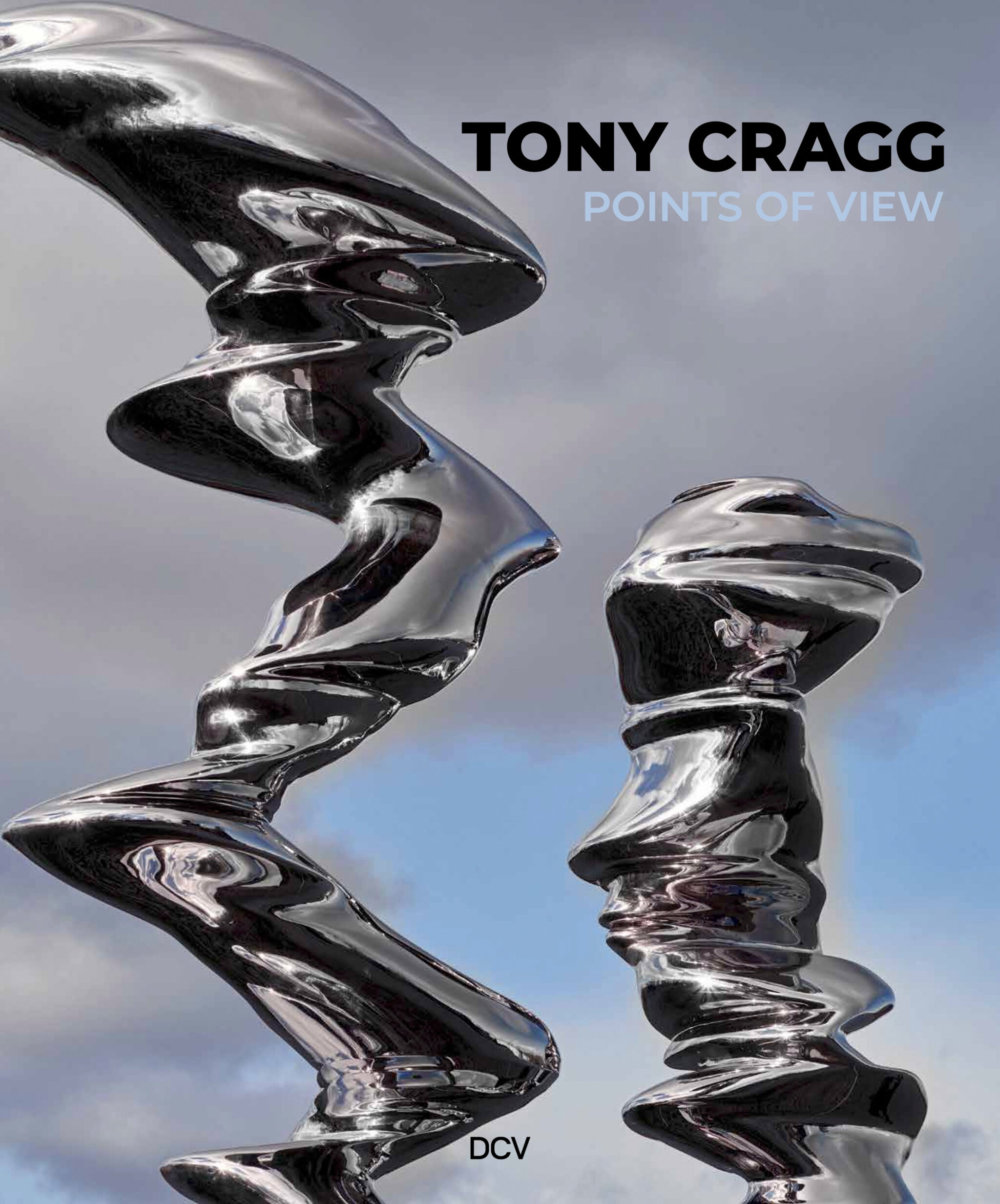
Tony Cragg
Points of View24€ Add to cartThe biomorphic and monumental sculptures of British sculptor Tony Cragg (born 1949, lives in Wuppertal) impress with their virtuosity and their dynamic appearance. They might even evoke movement, as if they are still becoming. Often exhibited outdoors, and in church or museum contexts, they blend into their surroundings like organic entities. Since the 1960s, Cragg’s search for sculptural form manifested through methods like layering and stacking existing materials, rearrangement, and assemblage. He now employs both traditional and new technologies and materials, yet his sculptures have to be seen in clear contrast to normative, repetitive industrial production. This book documents Cragg’s 2025 exhibition in the Anhaltische Gemäldegalerie Dessau.
-

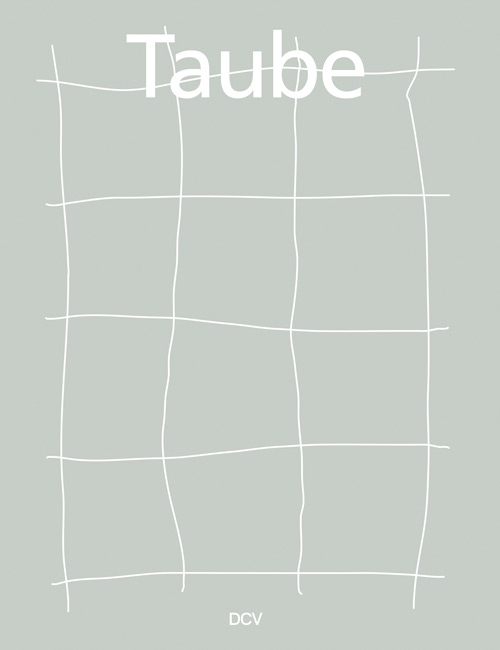
Taube
18€ Add to cartHuman, City, Pigeon
Public perceptions of the pigeon have shifted drastically over the past centuries. In the 1700s, it was welcomed as a guest who commanded humans’ unfailing solicitude; today, by contrast, it is often perceived as a nuisance. It has become an animal that defaces squares and buildings. Why does the pigeon in the settings of our daily lives prompt feelings of loathing and fascination, but also indifference? Jens Gerber’s photographs undertake an expedition into the city of the pigeons. Rounded out by essays by Marina Rüdiger and Laurens Schlicht, the book illuminates the subject of the city pigeon from the perspectives of photography, science, and literature, and explores the question of how pigeons shape the built environment and how the latter informs their behavior in turn.
-
ODOR
Immaterial Sculptures40€ Add to cartThe effect of odor is immediate. Smells arouse feelings in us, put us in moods, awaken recollections. They color the other senses and shape our perceptions more profoundly than we are aware. Scents create closeness and distance at the same time. They become imprinted on our memories and consolidate our experiences. And yet their existence in the world of three dimensions remains invisible, and the act of picking up a scent is fleeting.
The publication Odor—Immaterial Sculptures zooms in on the power of smells. Contributions from curators, artists, scientists, and scholars frame a variety of perspectives on this evanescent phenomenon, examining the olfactory sense and the qualities of the immaterial. Full-page plates conceived by the artists provide additional information, imagery, and contexts around the individual works, which put odor as an olfactory and spatial experience at the center of the engagement with art. The works operate between the poles of time and space, individual and community, consciousness and the subconscious, visibility and invisibility, the everyday and the miraculous, the sense of self and the perceptions of others, presence and absence, life and death.
Artists : Jason Dodge, Carsten Höller, Koo Jeong A, Oswaldo Maciá, Teresa Margolles, Pamela Rosenkranz, Sissel Tolaas, Clara Ursitti, Luca Vitone
-

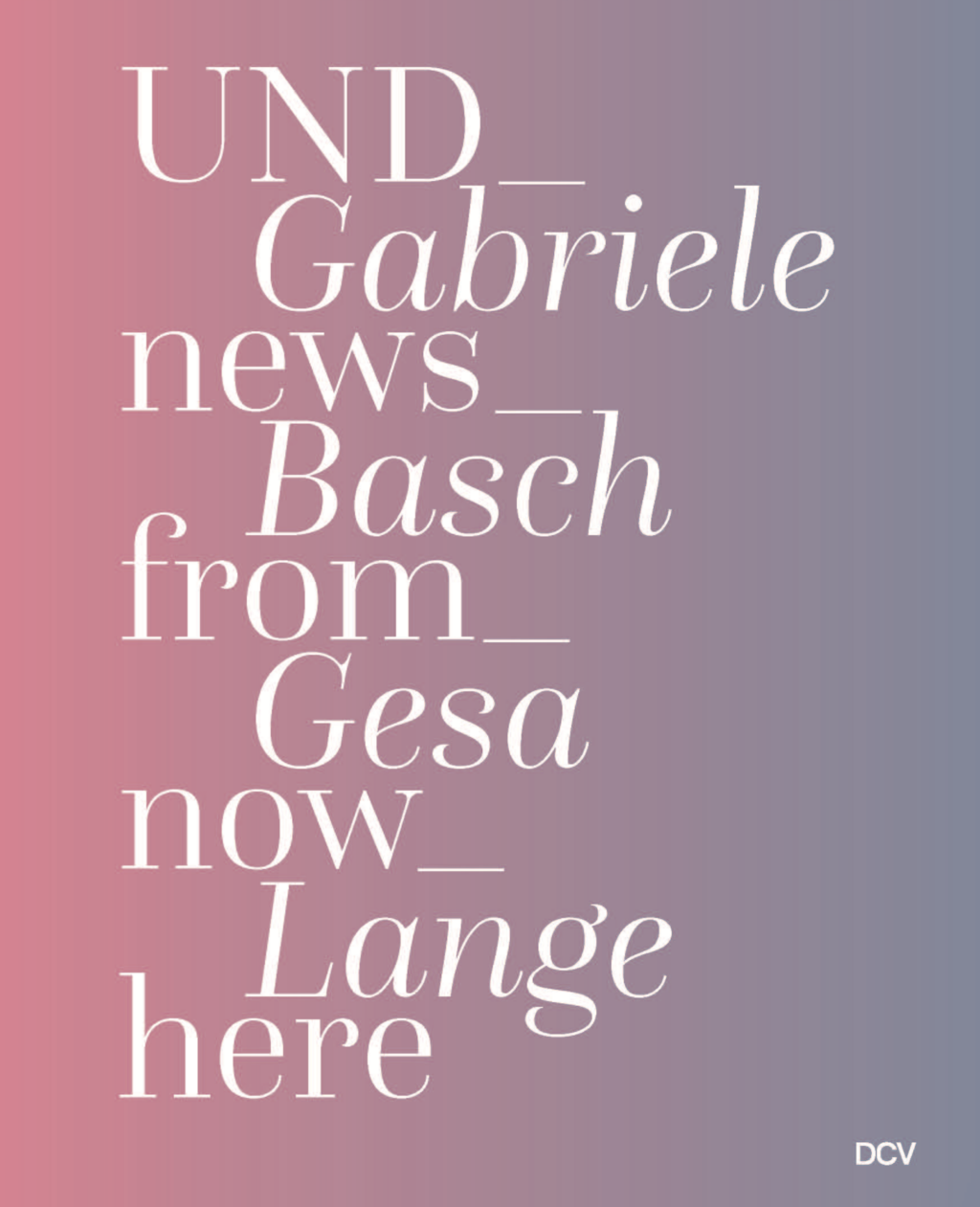
GABRIELE BASCH, GESA LANGE
UND_NEWS_FROM_NOW_HERE18€ Add to cartBeyond Painting
Gabriele Basch’s (b. 1964, Bad Homburg; lives and works in Berlin) cut-outs and Gesa Lange’s (b. 1972, Tongeren, Belgium; lives and works in Hamburg) drawings are meditations on construction and deconstruction as well as doubts and how to overcome them. Both artists expand the range of painting: Basch, with incisions into the medium and a creative handling of the tinged shadows that transform the painted panel into a wall-mounted object; Lange, by embroidering her canvases with colorful threads that open up the pictorial space on all sides. The book presents works by both artists, initiating an animated and dynamic dialogue between their nonrepresentational visual idioms. Gabriele Basch is professor of painting at the Hochschule für Angewandte Wissenschaften Hamburg. Gesa Lange is professor of graphic art at the Hochschule für Angewandte Wissenschaften Hamburg. She has received the Kunsthalle Rostock Prize and other awards.
-

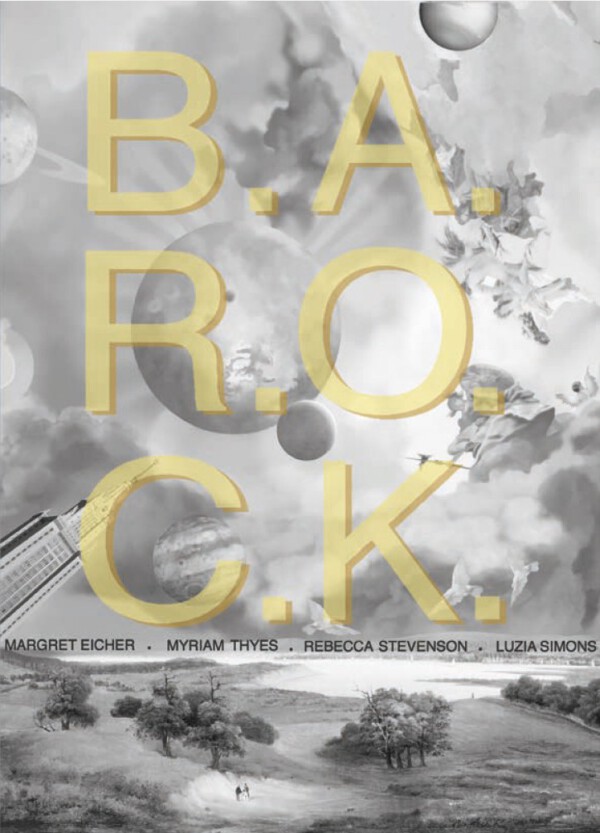
B.A.R.O.C.K.
24,80€ Add to cartArtistic Interventions in the Caputh Palace. Contemporary Parallels to the Baroque Era
Four international women artists spent more than three years studying Caputh Palace near Potsdam and creating works specifically for this magnificent location. The tapestries by Margret Eicher (b. 1955, Viersen; lives and works in Berlin), the floral scans by Luzia Simons (b. 1953, Quixadá, Brazil; lives and works in Berlin), the wax sculptures by Rebecca Stevenson (b. 1971; lives and works in London), and the ceiling painting projections by Myriam Thyes (b. 1963, Luxembourg; lives and works in Düsseldorf) blend into the surrounding space both naturally and surprisingly. With twelve double-page collages, the large-sized catalog is an artistic commentary on the ambitious project.
- Out of stock

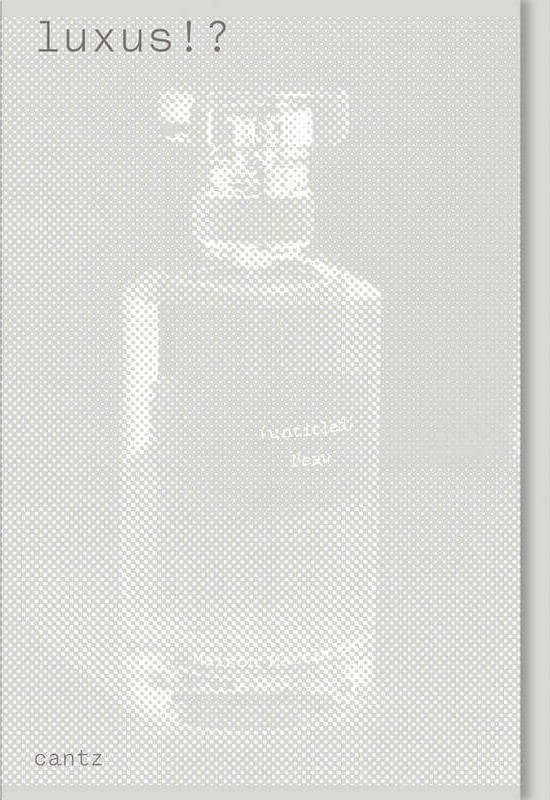
Luxus?!
34€ Read moreWhat is luxury today? How do designers perform the magic of transforming a utilitarian object into a must-have? Where does consumerism shade into obsession? When does more-is-more give way to less-is-more?
Luxury means breaking with convention, and this book showcases—and spawns—a cornucopia of ideas, products, and positions around luxury, featuring influential thinkers from the worlds of design, science, art, and society. The cultural theorists Wolfgang Ullrich and Lambert Wiesing exchange letters on the concept of luxury; Montblanc’s creative director Zaim Kamal lays out future strategies; the artist Jonathan Meese pens a gold manifesto; and Bazon Brock inquires into the asceticism of luxury. We live in a world full of things that resemble one another so closely that the only difference is how they are marketed. What might the precious objects of the future look like? The book presents examples from aspiring designers such as the fashion student Victoria Reize, whose collection counters luxury with arch defiance. Design, we learn, is not just about creating supreme values. Luxury is limitation and longevity, scarcity and refinement, yearning and sensuality.
With works by Assemble, Jake and Dinos Chapman, Daniel Chodowiecki, Kai Löffelbein, Jonathan Meese, Olaf Nicolai, Marcel Odenbach, Tobias Rehberger and Anna Skladmann.