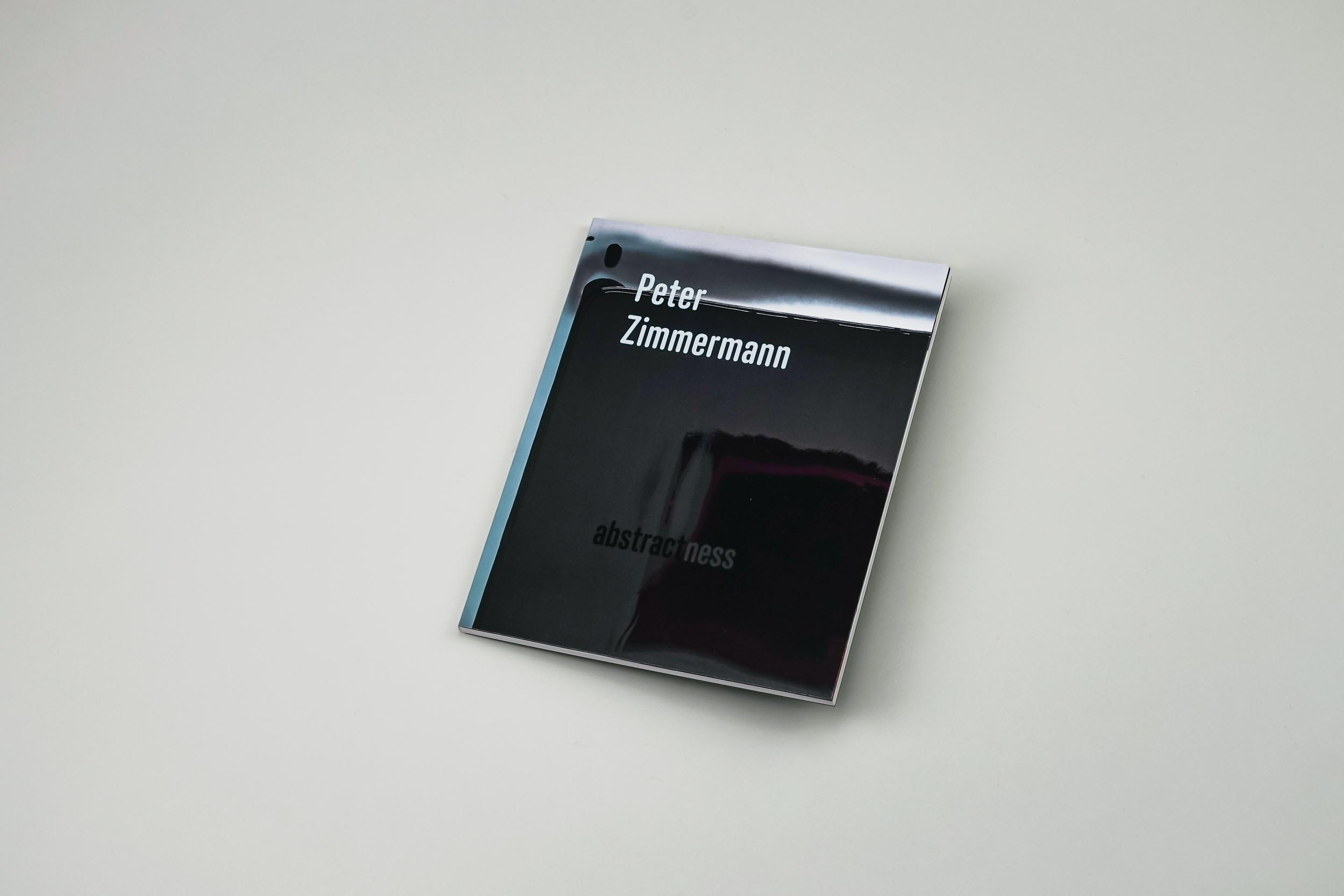
Peter Zimmermann
abstractness
 | |
|---|---|
| Editor(s) | Leopold-Hoesch-Museum |
| Author(s) | Anja Dorn, Markus Mascher |
| Design | buchtypo |
| Size | 21 x 25 cm |
| Pages | 112 |
| Illustrations | 100 |
| Cover | Softcover with flush cut |
| Language(s) | German, English |
| ISBN | 978-3-947563-65-4 |
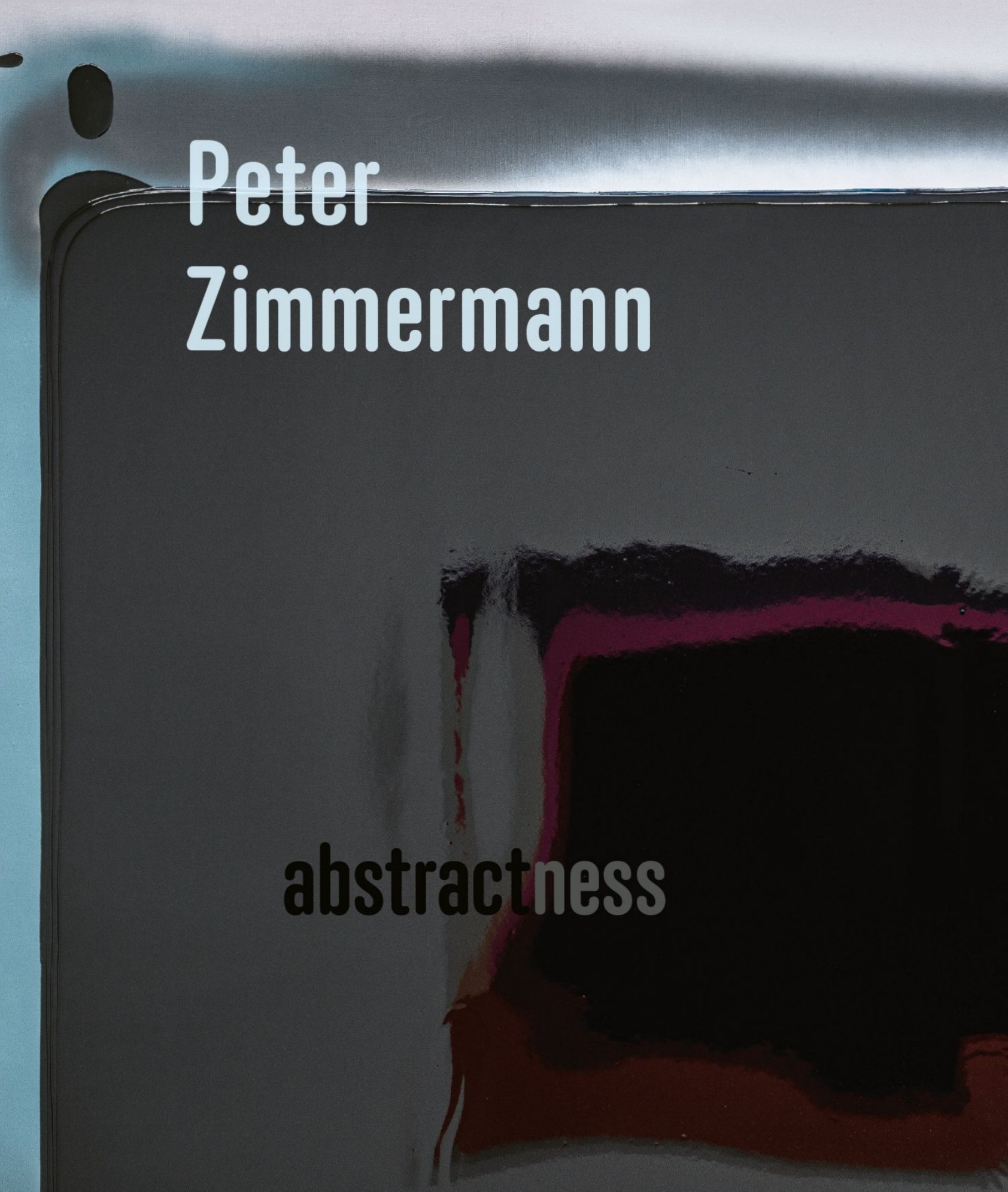
Treading the Limits of Originality
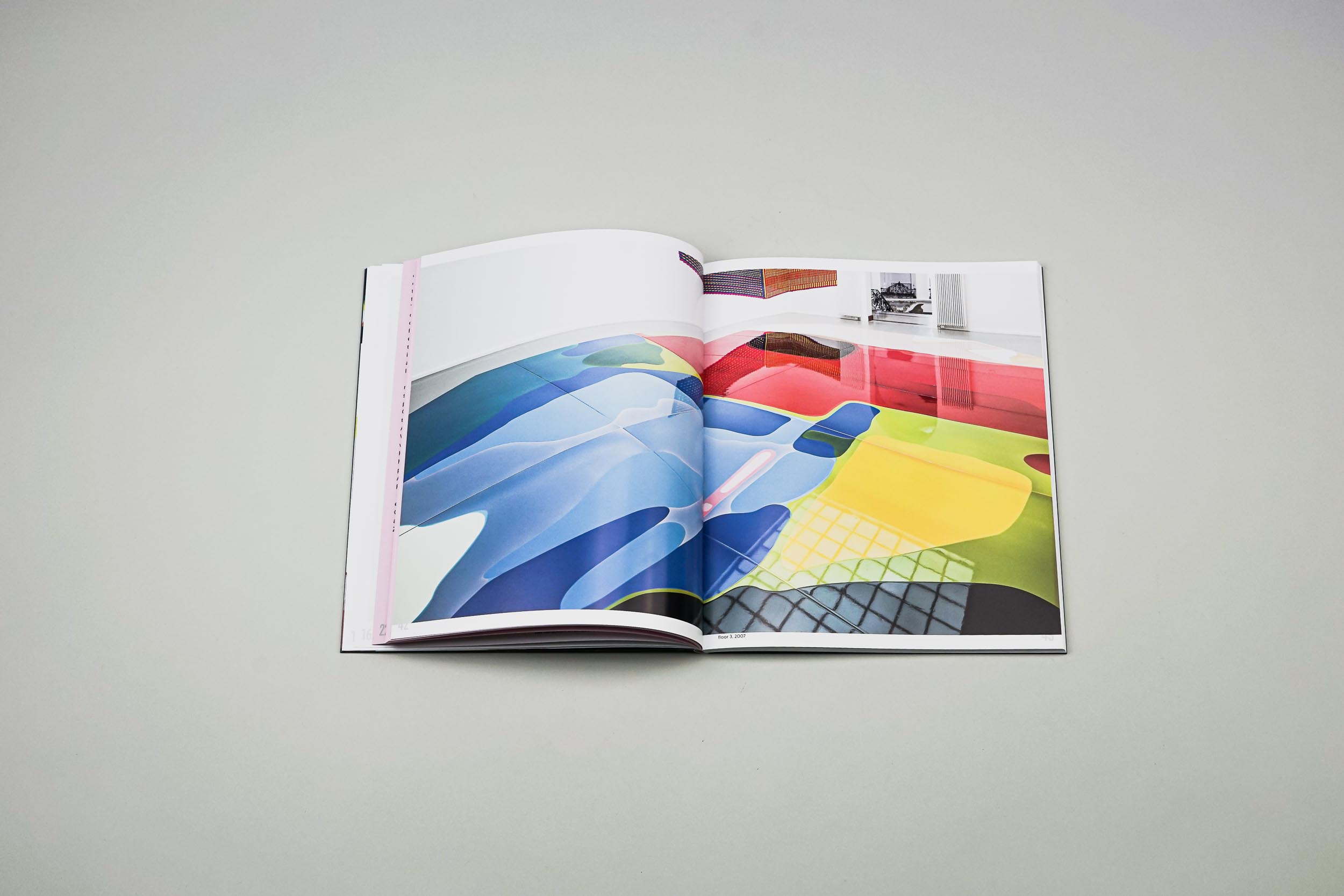
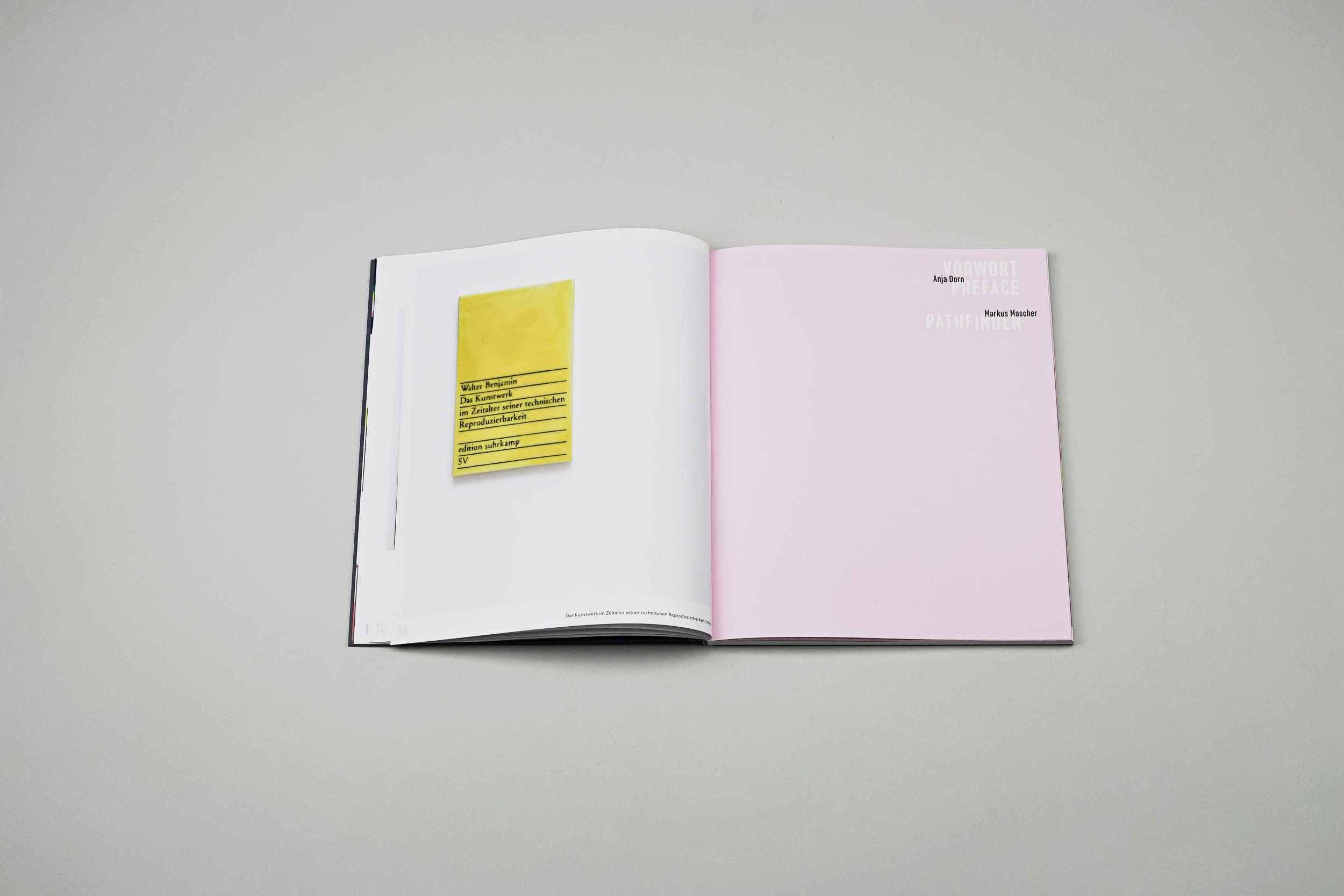
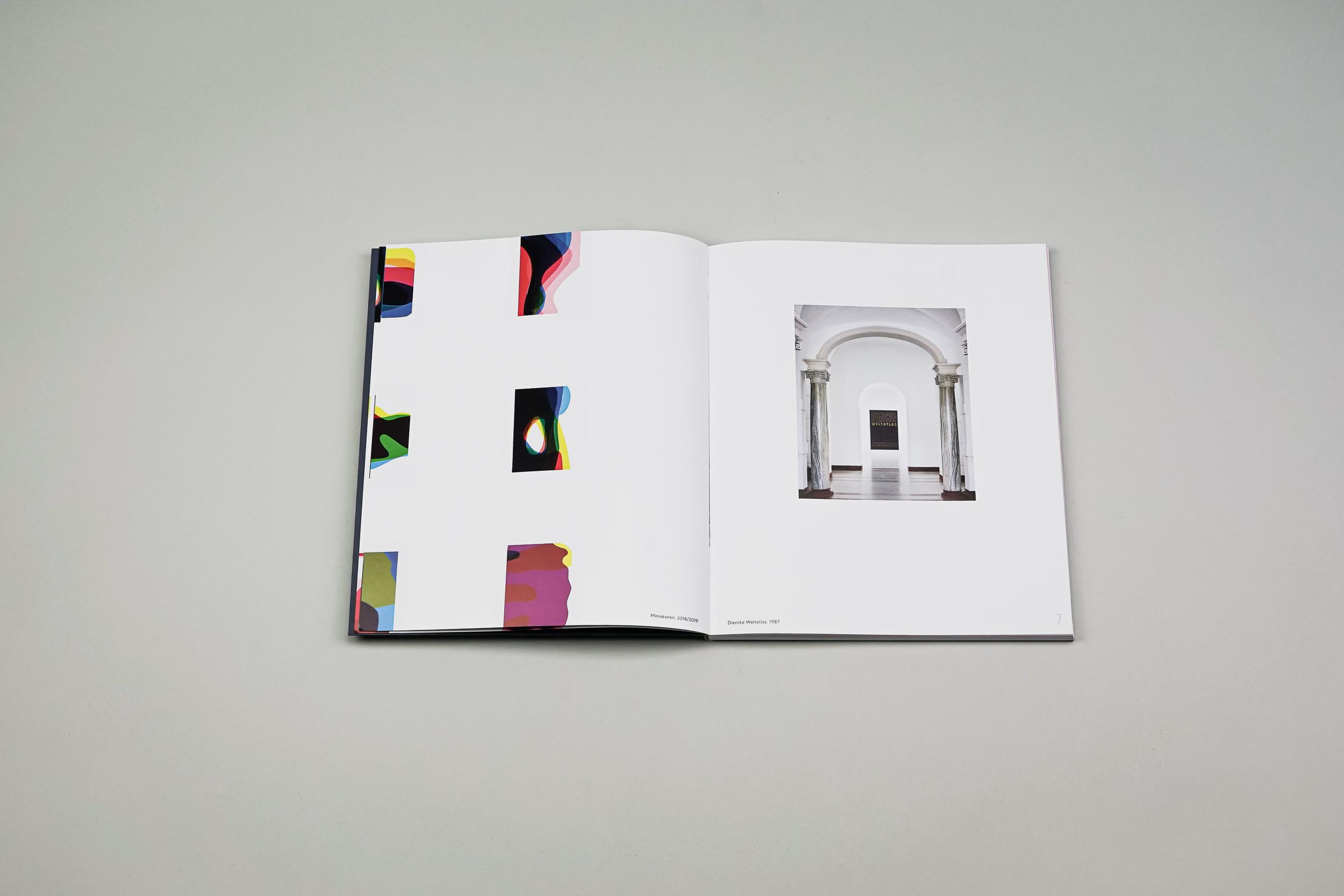
Peter Zimmermann (b. 1956, Freiburg; lives and works in Cologne) is one of the most important conceptual media artists. With his work, he consistently experiments with visual reproduction techniques and gained international recognition in the late 1980s with his Book Cover Paintings: motifs from book covers such as that of the Diercke Weltatlas or the Polyglott travel guides, which Zimmermann transfers to the canvas with oil and epoxy resins. The relationship between original and copy is the central theme of his work, with which he addresses the ambivalence of artistic and digital authorship. This monograph brings together early works and a selection of current productions.
Peter Zimmermann studied at the Staatliche Akademie der Bildenden Künste Stuttgart and was professor at the Kunsthochschule für Medien Köln, Cologne, from 2002 to 2007.
More books
-

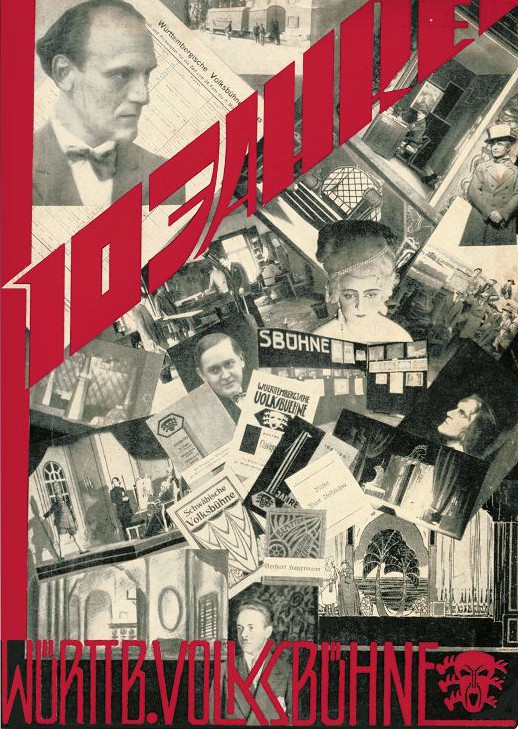
10 Jahre Württembergische Volksbühne
Reprint der Festschrift von 192915€ Add to cartCentennial Publication of the Württembergische Landesbühne Esslingen
In 2019, the Württembergische Landesbühne Esslingen (WLB)—one of the oldest regional theatres in Germany—is celebrating its 100th anniversary. On the occasion of this anniversary, the tenth commemorative publication by the Württembergische Volksbühne from 1929 is being reprinted. The unique document of the time visualizes in a special way the important role that the topics of cultural education and culture in rural areas, which are still relevant today, played in the young Weimar Republic immediately after the First World War. The brochure also documents both the mission and the daily work of the theater. In addition, the reprint is complemented by an essay from Joachim J. Halbekann, the principal of municipal archive of Esslingen, providing—for the first time in the history of the WLB—a comprehensive historical essay that examines the time betweeen 1919 and 1933/34.
-

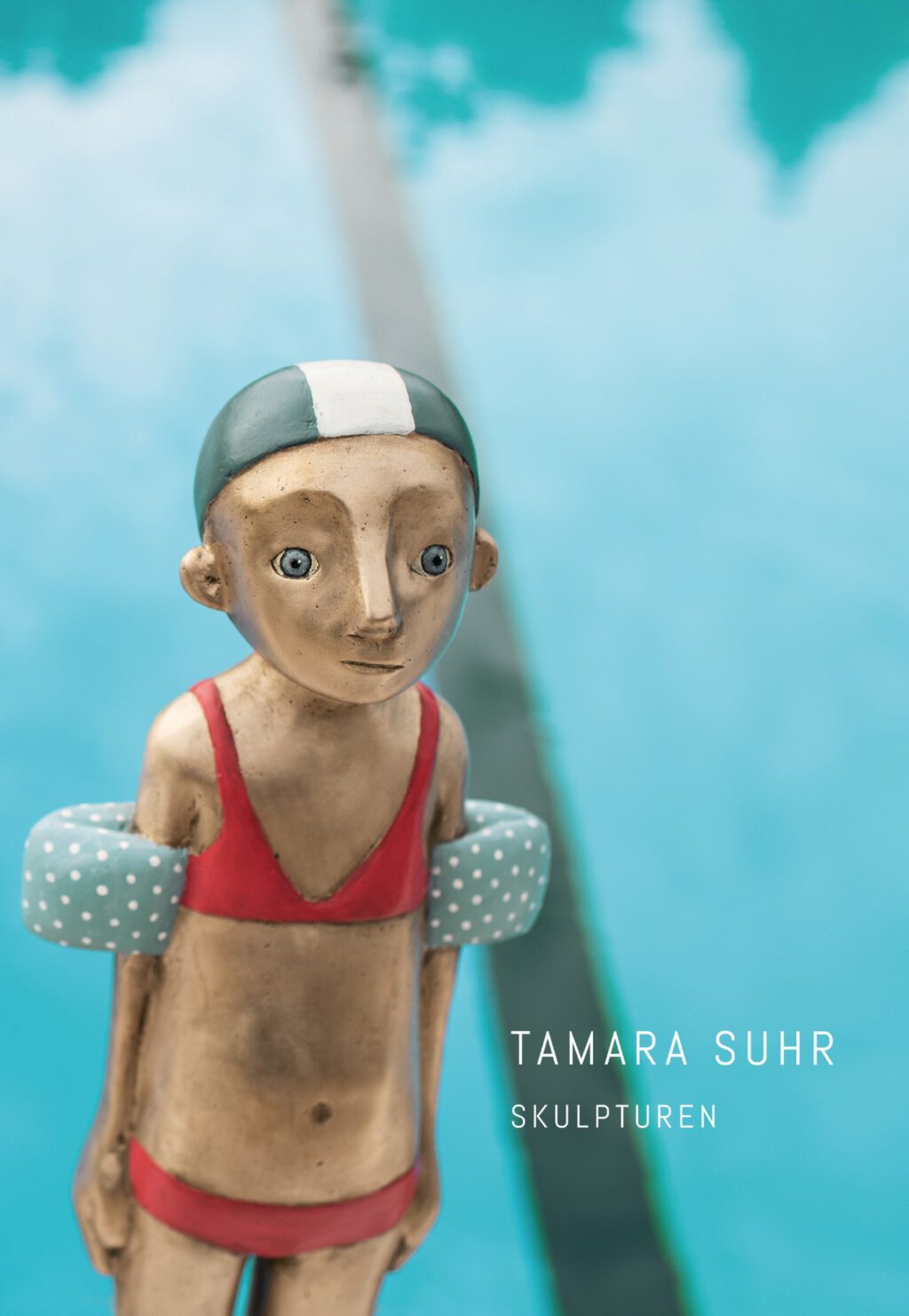
Tamara Suhr
Skulpturen24€ Add to cartHesitant yet Immediately Present
As a sculptor, Tamara Suhr (b. 1968, Tübingen; lives and works in Ludwigsburg) has devoted herself unswervingly to the human figure. Her subjects are figures of children whose hesitancy always embodies a certain curiosity, a sense of expectation. In their form reduced to the essential, indeed almost archaic, they radiate calm and serenity—supported by balance with regard to both the motif and possible associations. In their small size and vulnerability, Suhr’s figurative sculptures, painstakingly crafted in bronze, seem apparently in need of protection, yet they appear strong and courageous. They stand, gaze, crouch, fish, swim or balance. They are present, in the here and now, a symbol for the children of the world.
- temporarily not available

MEUSER
Works 2012–2023 (ENGLISH)Read moreEver since his studies with Joseph Beuys and Erwin Heerich, since his first exhibitions – for instance at ‘Kippenberger’s Office’ in 1979 – Meuser (b. Essen 1947, lives and works in Karlsruhe) has been a solitaire. His sculptures are unyielding and unruly, just as much as they are vulnerable and tender. They are witty and heart-touchingly charming.
Meuser finds his material in the scrapyard. Confidently and empathically, he reinstates form and dignity to the remnants and vestiges of industrial society. As a romantic, he grants things a life of their own and turns them into self-reliant protagonists, once more. Unwaveringly, he works to re-poetize a standardized and maltreated world.
The lavishly designed monograph is published on the occasion of Meuser’s 75th birthday, presenting works and exhibitions from the past ten years. Eight international authors and scholars create a dazzling mosaic and reveal how Meuser boldly holds his own in face of Duchamp, Minimalism, and Social Sculpture. An open-ended outlook.
Meuser studied 1968–1976 at Art Academy, Düsseldorf with Joseph Beuys and Erwin Heerich. 1991 he received the ars viva award. 1992-2015 professorship at Academy of Fine Art, Karlsruhe.
Since 1976, numerous institutional solo and group exhibitions and works in international collections: Bundeskunsthalle, Bonn; Deichtorhallen, Hamburg; documenta IX / Fridericianum, Kassel; Fundació Joan Miró, Barcelona; Joanneum, Graz; Kunsthalle Düsseldorf; Museum of Contemporary Art, Monterrey; Martin-Gropius-Bau, Berlin; Museum Abteiberg, Mönchengladbach; Museum Folkwang, Essen; Museum moderner Kunst Stiftung Ludwig, Vienna; Museum Morsbroich, Leverkusen; Rijksmuseum Twenthe, Enschede; Sakip Sabanci Museum, Istanbul; Städtische Galerie, Karlsruhe; Vanhaerents Art Collection, Brussels; ZKM | Museum für Neue Kunst, Karlsruhe.
-

Horst Schwitzki (1932–2016)
Eine Werkmonografie38€ Add to cart“I have my place in concrete painting!”
Horst Schwitzki’s (b. Marburg/Lahn, 1932; d. Frankfurt/Main, 2016) talent was recognized early on by renowned painters including Arnold Bode and Fritz Winter. During his studies at the Werkakademie, today’s Kunsthochschule, in Kassel, Schwitzki came into contact with concrete art. The network he built there opened doors for him, leading to exhibitions with prestigious galleries such as Rolf Ricke’s and Rudolf Zwirner’s. By the 1970s, however, he found himself compelled to make a living by working first as a graphic artist for an advertising agency and then as a construction draftsman. Although these day jobs left him little time for painting, he kept working on his art until 2010. This book is the first to present a comprehensive survey of Schwitzki’s oeuvre, which spans almost six decades and shows him continually devising novel creative solutions within the formal repertoire of concretion. The biography, rounded out by statements from contemporaries, colleagues, and friends, offers profound insights into the highs and lows of an artist’s life that stands as a characteristic example of the experiences of the generation born in the 1930s.
-

Simone Demandt
Movers / Beweger38€ Add to cartMotorways are Europe’s lifelines. The products we buy every day arrive on supermarket shelves after traveling along these arteries on the backs of thousands of trucks steered by hard-working drivers. Glancing up into the cabs of their hulking vehicles, we can just barely make out their heads sticking up above the steering wheels. In this overdue volume, Simone Demandt lets us see more of the heroes of the road who confidently posed for her camera. The pictures demonstrate Demandt’s knack for discovering “the intimate in the anonymous and the narrative element in the matter-of-factly” (Matthias Winzen). She has condensed the truckdrivers’ lifeworld into documentary black-and-white shots in which she shows these people as whole persons and individuals—very different from how we perceive them when they’re in the next lane. Movers lets us peek into the cabs through Demandt’s nonjudgmental lens, broadening our horizons hardly less than travelling would and helping us overcome our prejudices about teamsters. If you’ve always wanted to know whom we really have to thank for those never-empty supermarket shelves, you should not miss out on this book.
-
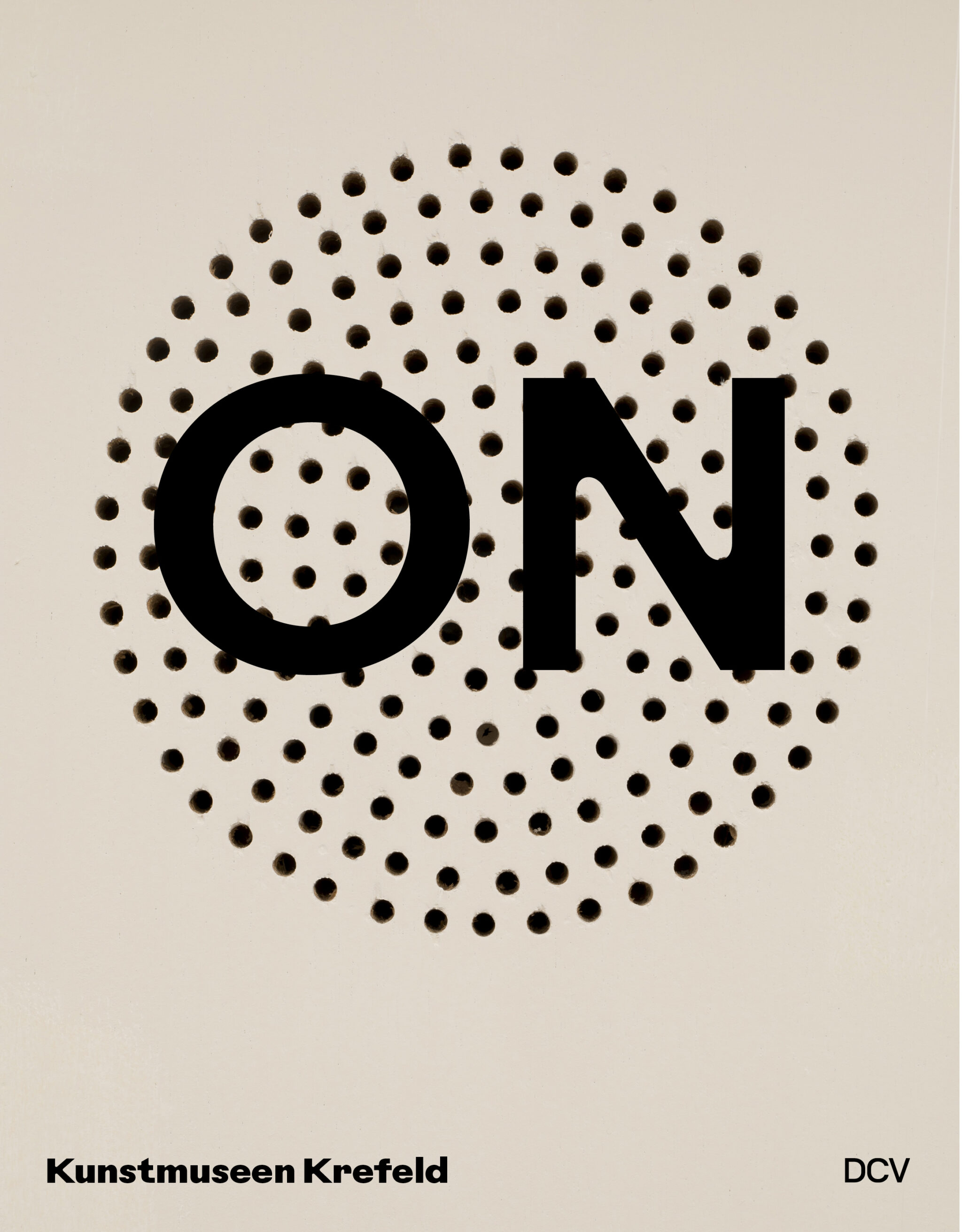
On Air
Der Klang des Materials in der Kunst der 1950er bis 1970er Jahre40€ Add to cartOn Air showcases a distinctive art form, the sound sculpture, retracing its evolution from the early 1950s, when artists begin dismantling the conventional boundaries of art, to the early 1970s. In no more than a quarter-century, the range of possible answers to the question “What is art?” grows vastly larger. Propelled by the idea of the work of art as a machine and instrument, sounds, noises, tones, vibrations, silence, words, breath become a “tangible” sculptural material. Artists enrich visual perception by adding the acoustic dimension, interweave seeing and hearing, explore time and space with fresh zeal. In emerging artistic genres such as performance, installation, or media art, sound is an integral component of the work. The book focuses on sound objects by Yaakov Agam, Joseph Beuys, Hermann Goepfert, Yves Klein, Jannis Kounellis, Bruce Nauman, Robert Rauschenberg, Jean Tinguely, David Tudor, Timm Ulrichs, and others.
With five scholarly essays and numerous illustrations and notes on individual works, the comprehensive publication offers an attractive introduction to the subject.
-
Franziska Opel
Close and Cold32€ Add to cartWith sex toys, the potential for misinterpretation and ill-advised use is vast, as countless slapstick comedies illustrate. Steering clear of quick laughs, Franziska Opel deftly harnesses this anarchic power of misunderstanding to explode our perceptions and worldview. Her works are painstakingly planned experimental arrangements in which she modifies or deforms mundane objects as well as those sex toys in subtle ways or powers them up in series, making us see them with fresh eyes. They cast a spell over us with their sensual allure, while our associative circuits processing what we see spark a certain sense of irritation. Curiosity, attraction, bewilderment, shame—expertly staged in photographs for this catalogue, the works elicit a wide range of emotions. Their energizing contradictions are elaborated by contributions from gifted writers: standalone poetic-narrative writings that reflect on several key aspects of Opel’s art in offhanded yet challenging ways.
- Out of stock

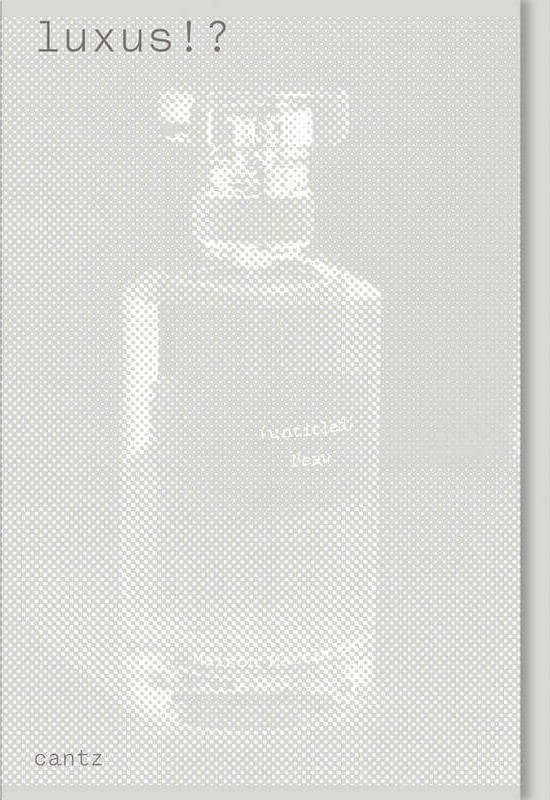
Luxus?!
34€ Read moreWhat is luxury today? How do designers perform the magic of transforming a utilitarian object into a must-have? Where does consumerism shade into obsession? When does more-is-more give way to less-is-more?
Luxury means breaking with convention, and this book showcases—and spawns—a cornucopia of ideas, products, and positions around luxury, featuring influential thinkers from the worlds of design, science, art, and society. The cultural theorists Wolfgang Ullrich and Lambert Wiesing exchange letters on the concept of luxury; Montblanc’s creative director Zaim Kamal lays out future strategies; the artist Jonathan Meese pens a gold manifesto; and Bazon Brock inquires into the asceticism of luxury. We live in a world full of things that resemble one another so closely that the only difference is how they are marketed. What might the precious objects of the future look like? The book presents examples from aspiring designers such as the fashion student Victoria Reize, whose collection counters luxury with arch defiance. Design, we learn, is not just about creating supreme values. Luxury is limitation and longevity, scarcity and refinement, yearning and sensuality.
With works by Assemble, Jake and Dinos Chapman, Daniel Chodowiecki, Kai Löffelbein, Jonathan Meese, Olaf Nicolai, Marcel Odenbach, Tobias Rehberger and Anna Skladmann.
-

Stephan Kaluza
Fragmente eines Ängstlichen28€ Add to cartA Novel on Coping with Guilt or the Feeling of Having Violated Life
The filmmaker Castner and the anthropologist Pollock not only share the similarity of their names with those of Castor and Pollux, the fabled twins of Greek myth, but also a hard fate: an irreparable guilt whose motifs run through the entire novel. Pollock is forced to admit to himself that, in his role as a scientist, he was involved in a genocide against indigenous people in Panama; Castner, meanwhile, tries to get a handle on his bouts of excessive hypochondria. In episodic flashbacks and an interview that gradually turns into an emotional dispute between them, the two characters analyze the minutiae of their life stories and arrive at a surreal insight.
Castor and Pollux were known in antiquity as the patrons of sailors, who took their bearings from the twins’ constellation. That is why water figures in this novel as the element that unites all narrative planes. Water—like life—will fill any vacant space regardless of shape and adapt to all circumstances.
Stephan Kaluza (b. Bad Iburg, 1964; lives and works in Düsseldorf) is a visual artist, working in the media of photography and painting, and a writer whose output includes plays, novels, and nonfiction books. The philosophy of nature is a central theme in both Kaluza’s art and his fiction.
-

Anaïs Horn
Fading14€ Add to cartThe mystery of love and its language, translated into a photographic discourse
The starting point for the series by Anaïs Horn, which the artist, who works in Vienna and Paris, began in 2013 and now comprises eighty photographs, is the book Fragments d’un discours amoureux (Fragments of a Language of Love) by the French philosopher and author Roland Barthes. Terms such as “asceticism,” “magic,” “yearning,” “venerable,” and “unfathomable” serve Horn as models for her staged photographs. The linguistic “figures,” from which Barthes developed his “discourse” in an open structure, find their counterparts in views of people, landscapes, objects, and spaces. The result is a cosmos of images that is as non-binding as it is intimate, as touching as it is light, as vulnerable as it is challenging, and appears to be infinitely expandable. Viewed together, fragments of collective experiences and cultural codes of our notions of love become visible.
-
Tim Eitel
Propositions for Afterimages 2015–202436€ Add to cartTim Eitel initiates an exchange between recollection and painting. The work on his pictures, he says, is “a conversation about reality and memory” in which he engages the canvas. In the course of this dialogue, Eitel reflects on personal experiences, creating a standalone figural-abstract reality that needs to be internally consistent—the canvas has a strong will of its own. That makes the scenes depicted in his paintings analogues or afterimages of a situation rather than renditions of it. They are characterized by a certain openness that enables the beholders to inject their own recollections into the pictorial space as well. The dialogue between canvas and artist thus gives way to a colloquy between audience and finished work. Not by coincidence, many of the paintings by Eitel gathered in this catalog show people in museums: these scenes facilitate the leap into the pictorial space. The beholders have experienced a situation like the one shown in the pictures in the past or are experiencing it right now, and so they are already at the heart of the works; they become part of the painting, and the picture becomes a particle of their recollection.
- temporarily not available

David Hockney: Insights
Reflecting the Tate CollectionRead moreDavid Hockney (born 1937 in Bradford) is one of the most influential and technically versatile artists living today. This new publication gathers some of his most defining work from the 1960s to the present, including major works in the Tate collection. From early graphic cycles, double portraits and iconic pool paintings through to his photo collages, plein air landscapes, iPad drawings, and multimedia installations, the volume documents central themes and genres in Hockney’s oeuvre, as well as his constant experimentation.
Original essays by renowned critics and commentators illuminate the artist’s search for new forms of expression, the topographical and biographical reference points of his work, the technical innovation of his painting and printmaking, as well as his approach to new media.
-

Sonja Yakovleva
10€ Add to cartSonja Yakovleva (b. Potsdam, 1989; lives and works in Frankfurt am Main) uses pornographic representations and images from the internet as templates for papercuts, some in large formats, that grapple with personal and public stories about women, power relations, sexuality, and violence. The silhouettes show popular motifs that have served to ingrain fairy tales, myths, and ideologies in the collective consciousness from the colonial era to modernism and the early twenty-first century. Yakovleva, whose art is often associated with sex-positive feminism, appropriates this folkloristic visual idiom and hybridizes and sexualizes it. Dessous and strap-on dildos, for example, figure as preserved specimens of butterflies and insects, bringing historic scientific expeditions to mind. Yet her work also addresses the capitalist urge to categorize, evaluate, and market every kink.
-

Katja Aufleger
Schwindelerregende Höhen30€ Add to cartOn a Razor’s Edge: Evanescent Moments
Katja Aufleger’s (b. Oldenburg, 1983; lives and works in Berlin) works bring instants of suspense and uncertainty into focus in a variety of aesthetic forms. Their nuclei are typically everyday phenomena and physical models, which she combines with a range of concepts from cultural history and psychology. The publication presents several series, some of which capture explosive tensions. Among them are photographs of homemade Molotov cocktails for which the artist set perfume flacons on fire, making this most recent series a probing exploration of the potentials of material aesthetics and emotion. With an introductory essay by Julia Katharina Thiemann.
Katja Aufleger studied visual art the University of Fine Arts Hamburg (HFBK), where Andreas Slominski, Matt Mullican, and Michael Diers were her teachers.
-

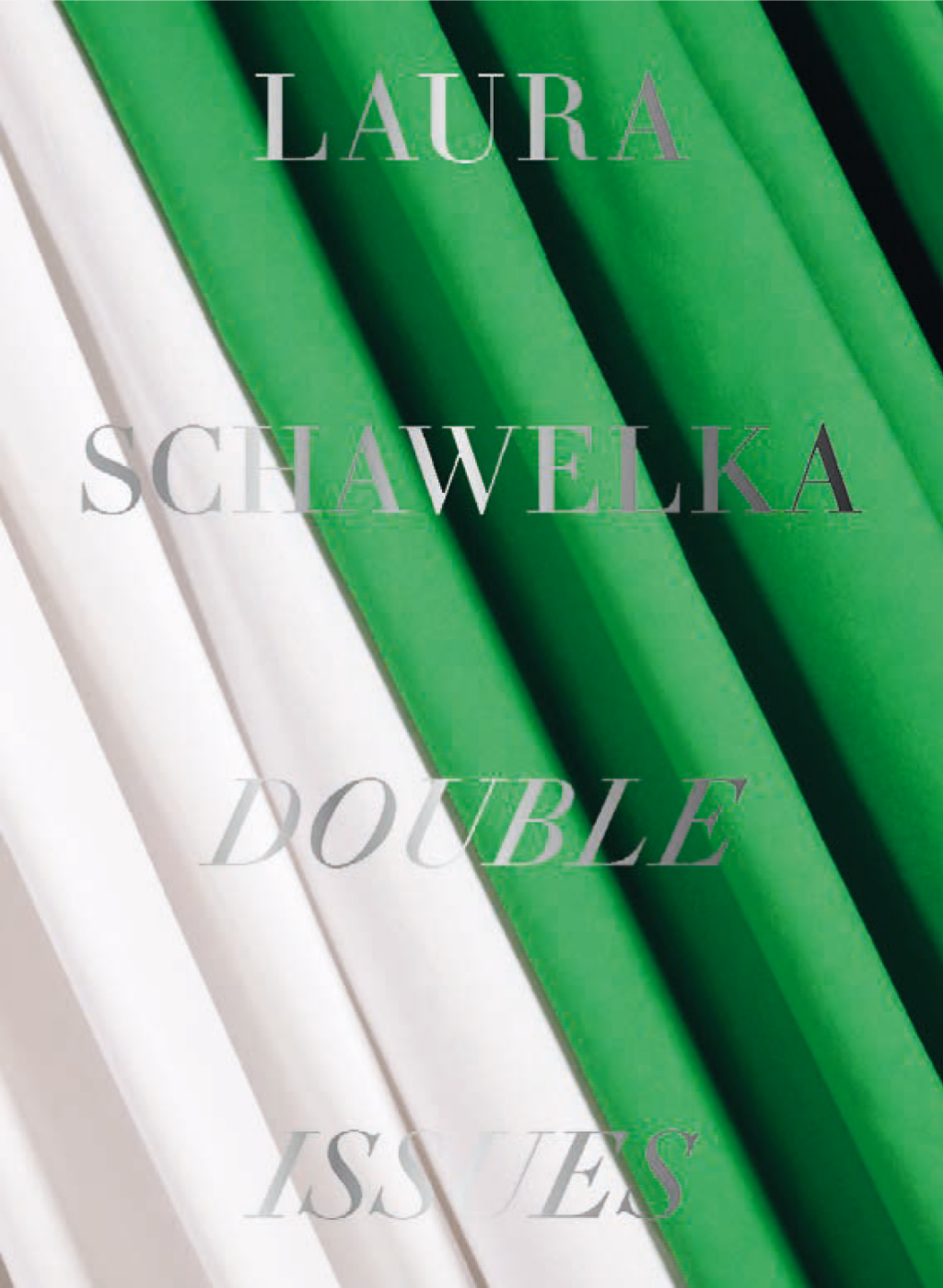
Laura Schawelka
Double Issues24€ Add to cartSales Spaces without Merchandise
In her installations, Laura Schawelka (b. 1988, Munich; lives and works in Berlin) makes use of photography, video, and sculpture in a multilayered dialogue. In her latest works, the artist focuses on the role of photography in the development of modern consumer society. What does it mean if goods are only communicated through other goods, such as computers, cell phones, tablets? If this withholding of the genuine object is precisely what prompts the desire for it? The artist creates sales spaces without merchandise, in which images, photographs, and videos have replaced consumer goods of any kind.
Laura Schawelka studied at the Städelschule in Frankfurt am Main as a student of Tobias Rehberger master-class. In 2015, she was awarded the Master of Fine Arts at the California Institute of the Arts in Los Angeles, and in 2017 she moved to Paris as the recipient of a studio bursary of Hessische Kulturstiftung.
-

GABRIELE BASCH, GESA LANGE
UND_NEWS_FROM_NOW_HERE18€ Add to cartBeyond Painting
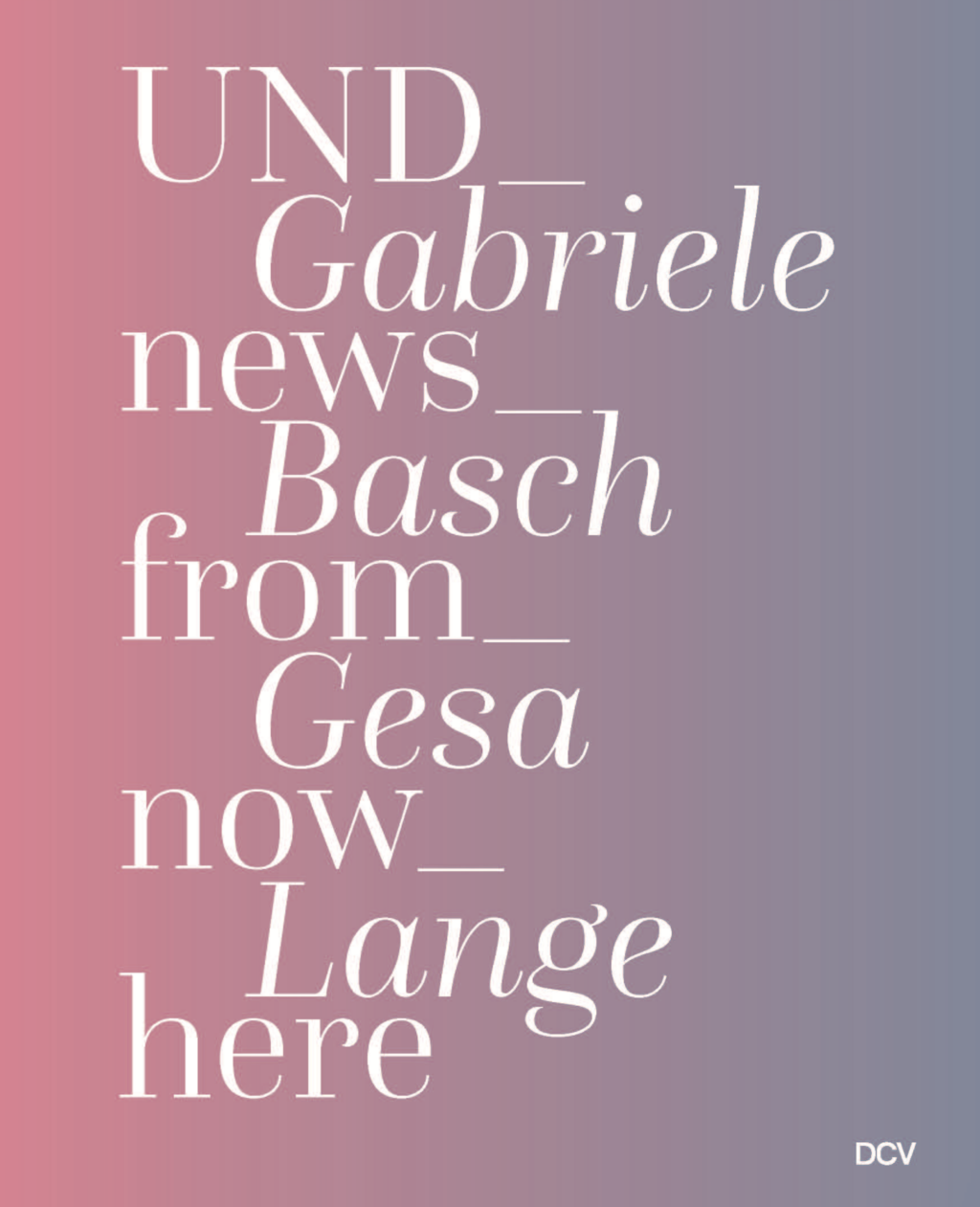
Gabriele Basch’s (b. 1964, Bad Homburg; lives and works in Berlin) cut-outs and Gesa Lange’s (b. 1972, Tongeren, Belgium; lives and works in Hamburg) drawings are meditations on construction and deconstruction as well as doubts and how to overcome them. Both artists expand the range of painting: Basch, with incisions into the medium and a creative handling of the tinged shadows that transform the painted panel into a wall-mounted object; Lange, by embroidering her canvases with colorful threads that open up the pictorial space on all sides. The book presents works by both artists, initiating an animated and dynamic dialogue between their nonrepresentational visual idioms. Gabriele Basch is professor of painting at the Hochschule für Angewandte Wissenschaften Hamburg. Gesa Lange is professor of graphic art at the Hochschule für Angewandte Wissenschaften Hamburg. She has received the Kunsthalle Rostock Prize and other awards.
-

Marion Anna Simon
Gemaltes Kaddisch14€ Add to cartAn artist paints the Kaddish
In roughly 330 self-portraits, Marion Anna Simon (b. 1972, Bitburg; lives and works in Cologne) dares to undertake an unusual transcription of Jewish prayer as a sign of mourning. On January 7, 2017, one day after the death of her mother, Marion Anna Simon began work on her painted Kaddish. What initially began as a very personal process of grieving quickly developed into an artistic concept: Roughly 330 painted and drawn self-portraits were created within eleven months—in daily notes, with acrylic and watercolor, pencil and ballpoint pen, oil crayon and pastel, on paper and canvas, wallpaper and cardboard, in lined exercise books and cheap notepads. Marion Anna Simon’s cycle explores her own face as a place of mourning and self-affirmation, documenting an artistic ritual beyond the Jewish prohibition of images and patriarchal attributions to sons in the tradition of the sanctification prayer for the memory of the dead.
-

Konrad Mühe
Guide38€ Add to cartAn Artist’s Book as an “Optical Illusion”
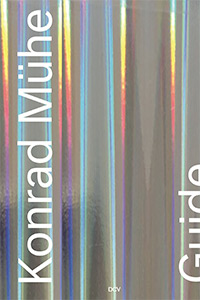
Konrad Mühe’s (b. Karl-Marx-Stadt, East Germany, 1982; lives and works in Berlin) works interrogate the construction of our identities by uncovering the technological and media apparatuses that sustain it and confronting it with the autonomous lives of objects. Their basic formal principle is the installation hybridizing sculpture and digital moving image, with a particular focus on the projector and the interaction of pedestal or suspension and projection screen. Where the classical black box in the movie theater or exhibition venue seeks to conceal the technical equipment in favor of an immersive visual experience, Mühe brings it to the fore and sets it out in the gallery space as sculpture and installation. Yet his works also undercut the conventional display regime in the white cube: the process of projection emerges as the true creative medium and subject. This book acts as a descriptive illustrated Guide to Mühe’s projects.
Konrad Mühe was Hito Steyerl’s master student and trained at the Berlin University of the Arts and the Burg Giebichenstein University of Art and Design Halle. His works have been featured at numerous film festivals including the 61st Berlinale and in exhibitions at Kunsthalle Düsseldorf, the Moscow Museum of Modern Art, and elsewhere.
- Release February 2026
Tim David Trillsam
Willkommen im Panoptikum38€ Add to cartWith his idiosyncratic figurative bronze sculptures Tim David Trillsam (born 1985 in the Swabian Alb) has hit a nerve. The artist’s “self memorials” ask the viewer to remember the transience and illusion of this very self. Although Trillsam employs a loaded material that evokes many great sculptors before him, his own sculptures resist the past. His figures are tangibly protagonist of the present and they provoke with their exaggerated sensuality, twisted bodies, and oversized hands and feet. “The oversizing is programmatic. As is the skeptical approach to the human species. Trillsam proceeds as a thoughtful questioner with doubt yet also irritation,” writes Dorothee Baer-Bogenschütze. Her in-depth art-historical analysis is part of this forthcoming book about Trillsam’s oeuvre since 2012.
-

Hans Karl Zeisel
Hundred and more34,95€ Add to cartPossibilities of Concrete Art
What is possible without turning away from the cocrete? In the Bauhaus tradition, the typographer, graphic artist, designer and author Hans Karl Zeisel opens up countless design options with basic forms. His wooden cuboids demand a humorous approach to sculpture. They are creativity training, study tools and meditation game all in once. A playful experiment that reveals the diversity of concrete art.