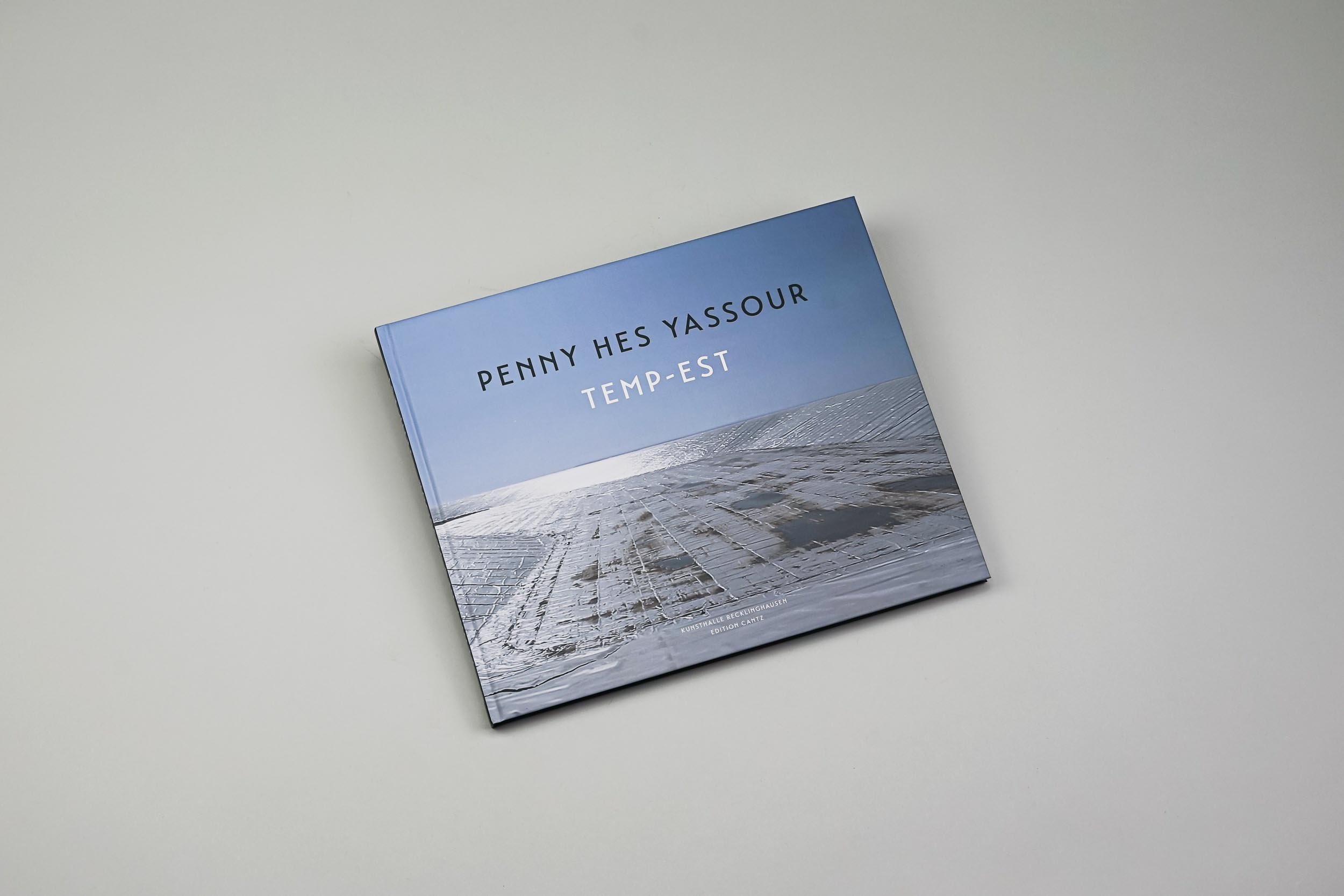
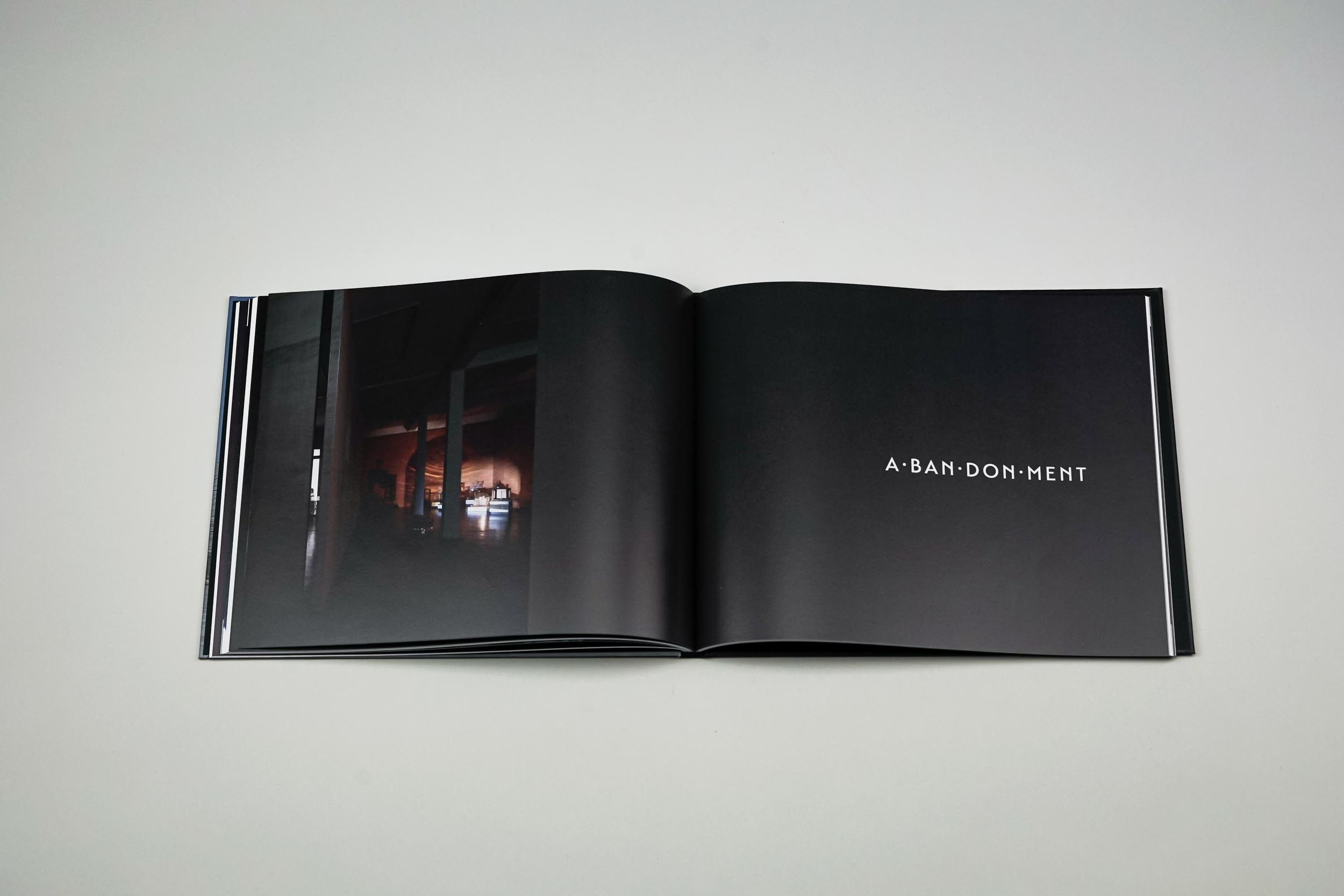
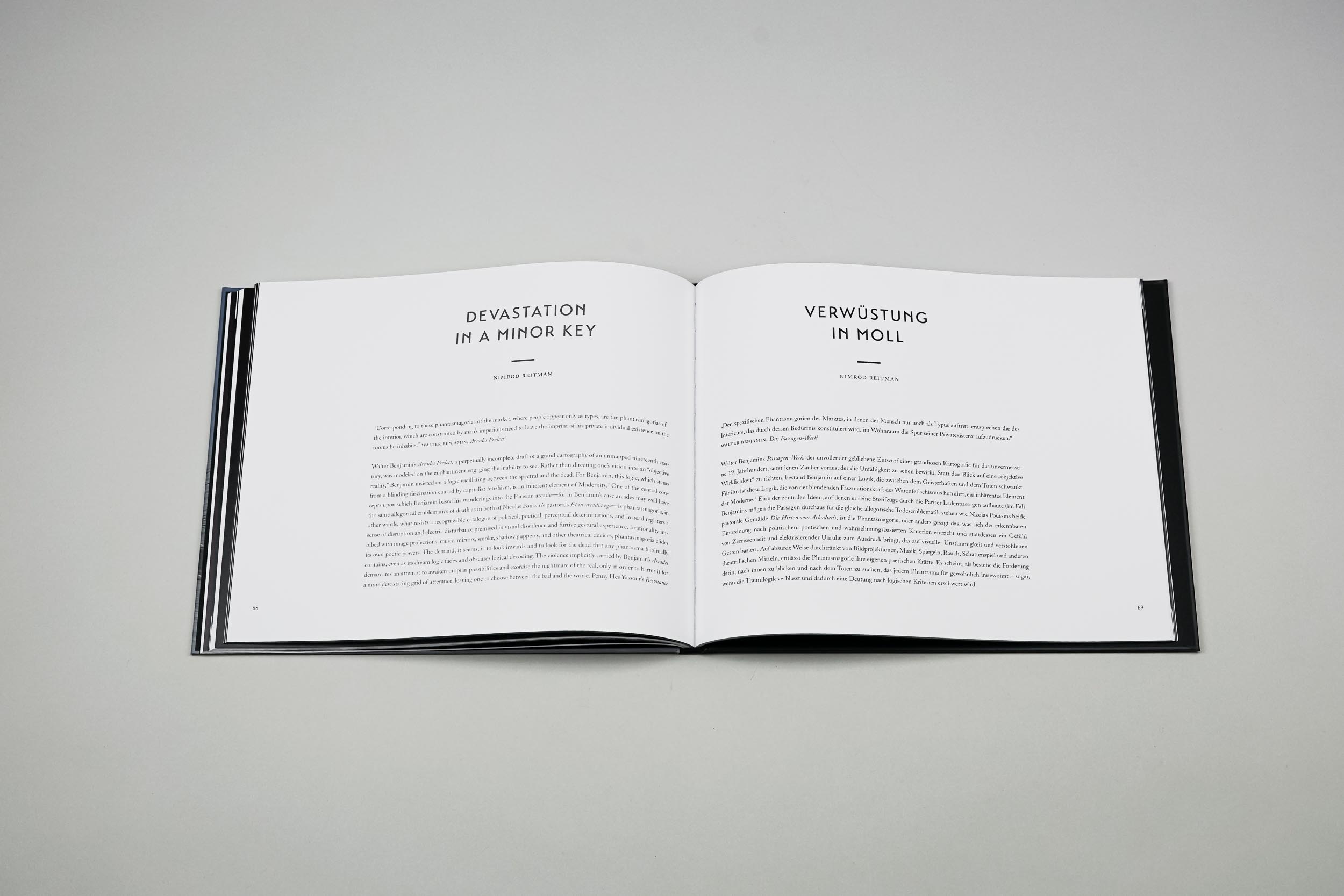
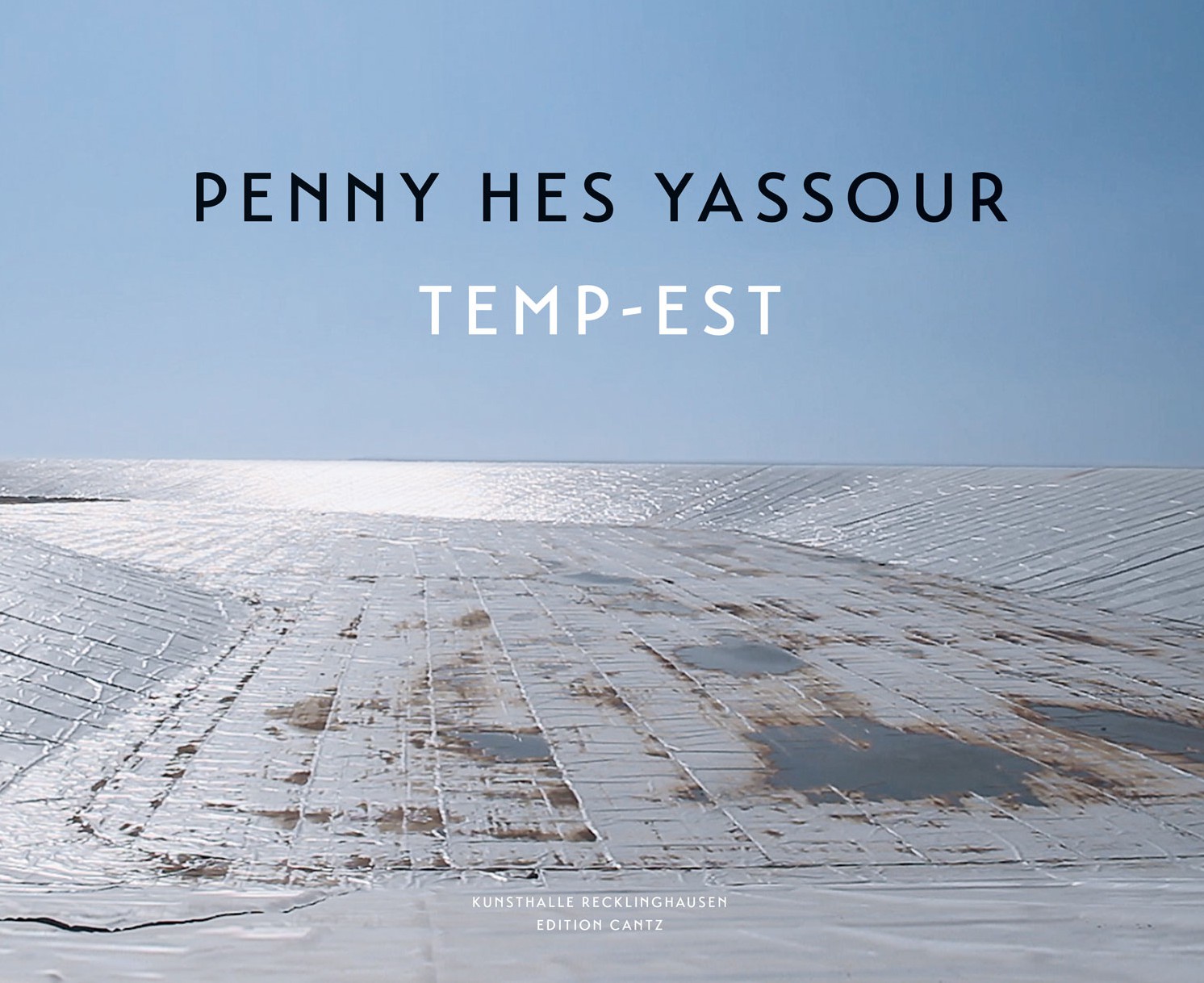
Penny Hes Yassour
Temp-Est
 | |
|---|---|
| Editor(s) | Hans-Jürgen Schwalm |
| Author(s) | Galia Bar Or, Hans-Jürgen Schwalm, Nimrod Reitmann |
| Design | Ute Lübbeke, Cologne |
| Size | 29,5 x 24 cm |
| Pages | 96 |
| Illustrations | 80 |
| Cover | Hardcover |
| Language(s) | German, English |
| ISBN | 978-3-947563-48-7 |
A Monograph about the Award-Winning Israeli Artist
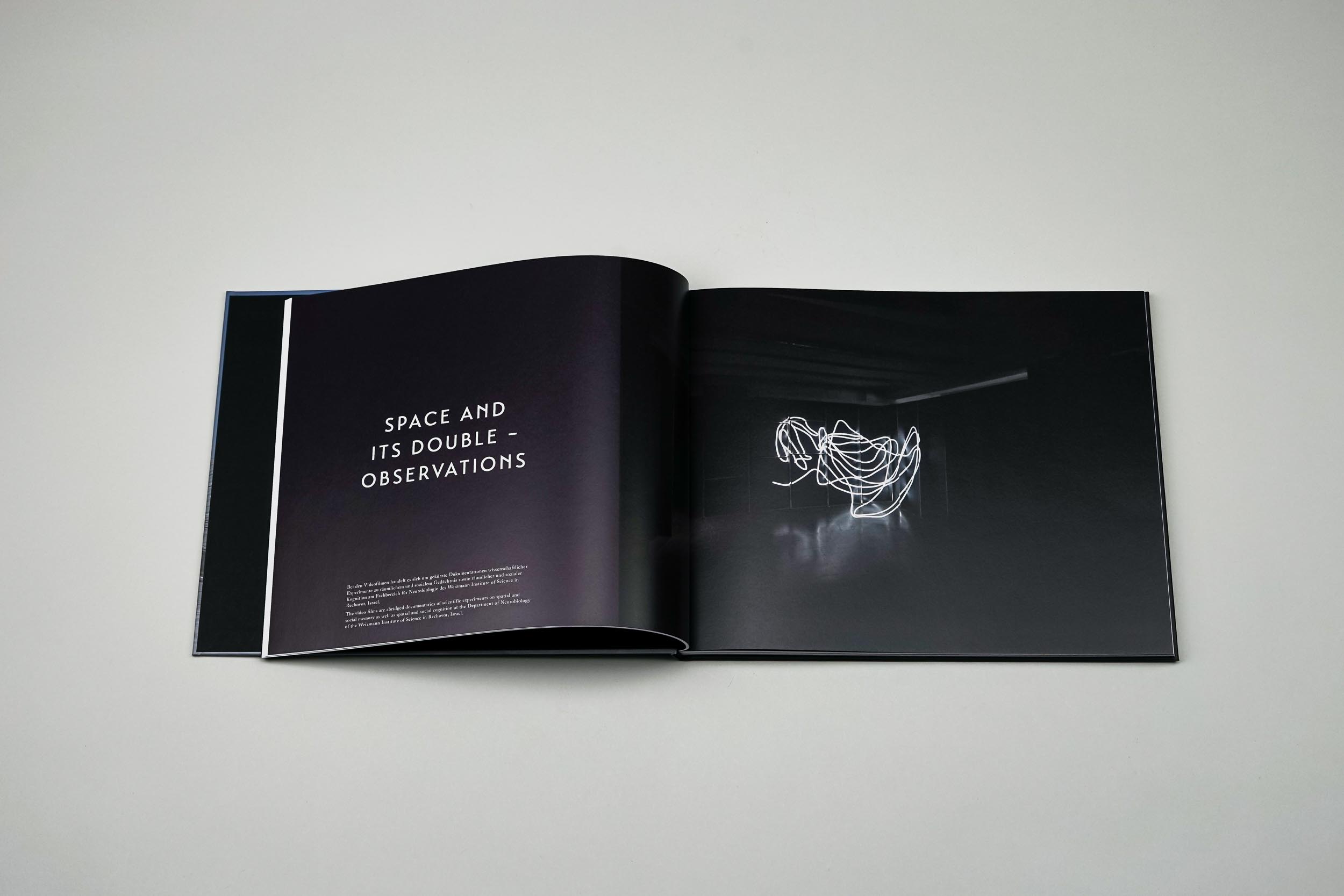
Penny Hes Yassour (b. 1950, lives and works at kibbutz En-Harod Ihud) tells stories and keeps history alive, explores the boundary between remembering and forgetting. In her installations she combines sound, image, and a multi-part world of objects into narrative mise-en-scènes of great poetic power. Hes Yassour leads the viewer through the Jordan Valley with its many watchtowers, accompanies the transformation of the landscape in a gigantic, stagelike water basin, and documents the flight of bats in a narrow, labyrinthine spatial installation. The book published on the occasion of the artist’s first exhibition in Germany provides comprehensive insights into her subtle artistic work.
More books
- Release Spring 2026

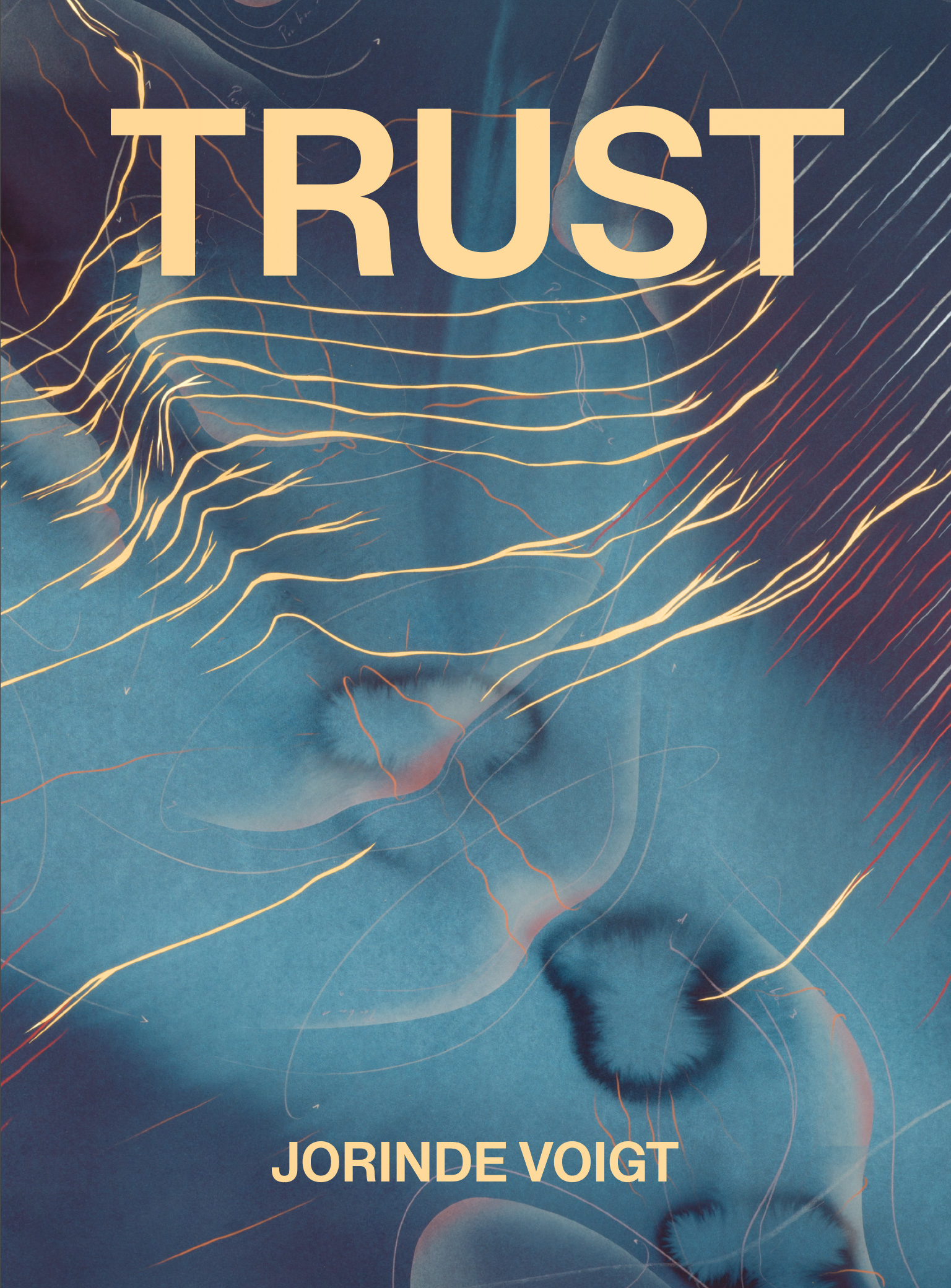
Jorinde Voigt
Trust42€ Add to cartJorinde Voigt (b. Frankfurt am Main 1977, lives and works in Berlin), declared about the title of the book “Trust is a hybrid of longing for something and the engagement to reach it”. Voigt has thus decided to compile her works, which she realized from May 2019 to spring 2021, under the sign of confidence, connectedness, reliability and integrity. Many of the works presented place themselves in the continuity of those in Immersion, a book that brought together works from the period 2018-2019.
In the extensive volume Trust, sculptures and mobiles are shown alongside the works on paper for which she is known – here immersed in a pigment bath and then worked on with pastel, ink, India ink, oil pastels and gold leaf–.
Jorinde Voigt studied philosophy and modern German literature at the University of Göttingen from 1996. In 1998 she moved to Berlin and studied sociology, philosophy and general and comparative literature at the Free University of Berlin. 1999-2003 she studied art in multimedia at the University of the Arts with Christiane Möbus and visual arts and photography with Katharina Sieverding, whose master student she became in 2004. 2014-2019 she was professor of conceptual drawing and painting at the Academy of Fine Arts Munich. Since 2019 she is professor at the Hamburg University of Fine Arts.
-

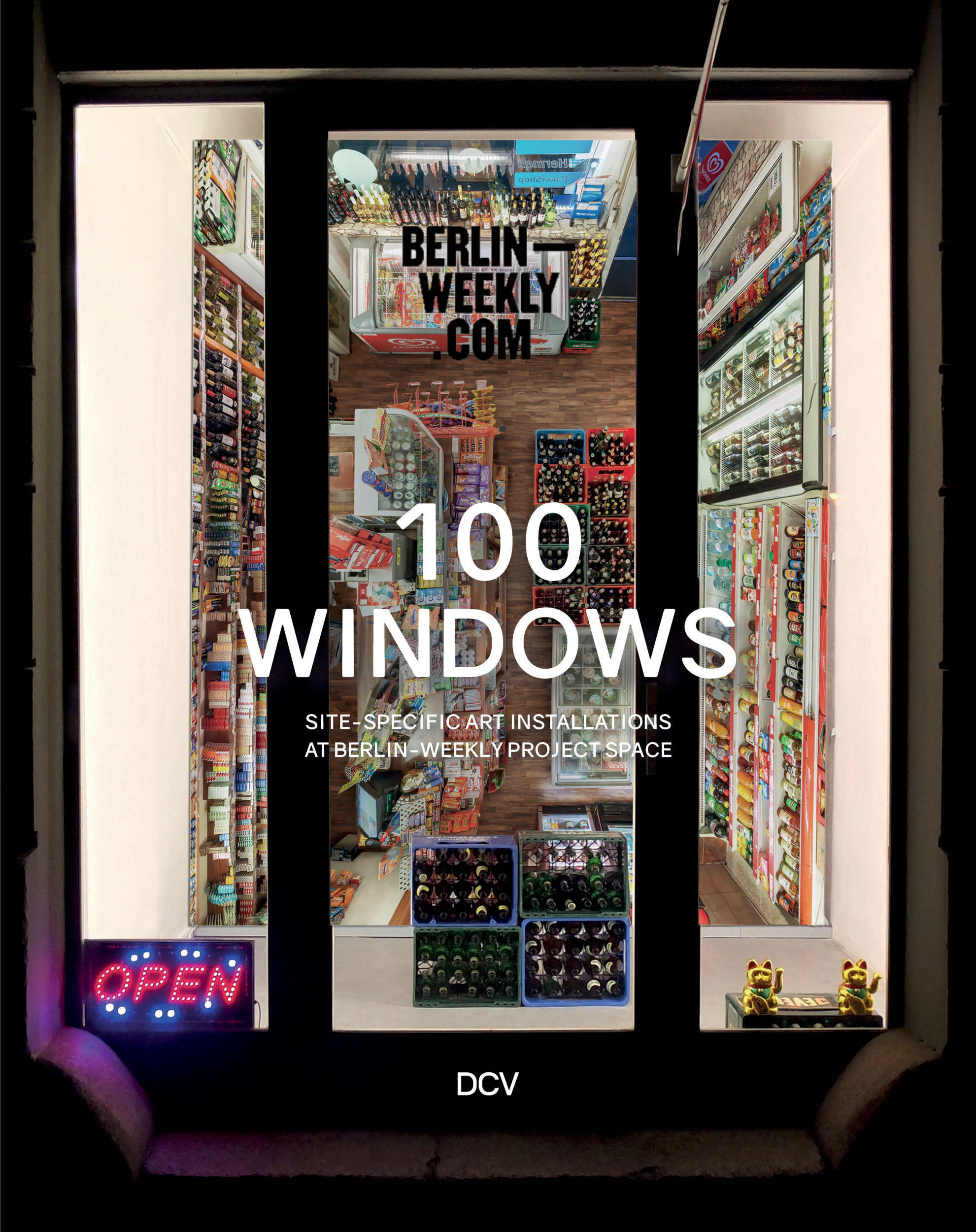
100 Windows
Site-specific art installations at Berlin-Weekly project space28€ Add to cartEstablished in 2010 by Stefanie Seidl in a former gateway for horse-drawn carriages that is now enclosed by glazing at both ends, the project space BERLIN-WEEKLY offers the narrow yet exceptionally tall display space to artists as a highly visible public stage for installations that respond to the setting or site. Its unilateral orientation toward the street makes BERLIN-WEEKLY a creative intervention into the urban fabric that harnesses the shopwindow format. The book presents 100 selected window installations to illustrate the widely diverse ways in which individual artists have engaged with the venue, time and again transforming the unusually shaped small space.
With works by: Menno Aden, Alexandra Baumgartner, Isabelle Borges, Astrid Busch, Simon Faithfull, Moritz Frei, Max Frisinger, Wolfgang Flad, Dagmara Genda, Andreas Greiner & Armin Keplinger, Sabine Groß, Marc van der Hocht, Sabine Hornig, Irène Hug, Bettina Khano, Julia Kissina, Nikolaus List, Ulrike Mohr, Virginie Mosse, Piotr Nathan, Katja Pudor, Philip Topolovac, Inken Reinert, Sophia Schama, Geerten Verheus, Sinta Werner, Barbara Wille, and others
- Release February 2026

Fidel Martínez
Todesfuge. Das Leben des Dichters Paul Celan26€ Add to cartThe Spanish graphic artist Fidel Martínez Nadal’s (b. Seville, 1979) graphic novel Todesfuge recounts the life of Paul Celan (1920–1970), one of the most eminent lyric poets of the twentieth century. The narrative interweaves biographical and literary aspects of Celan’s life, including his Jewish identity, his lifelong trauma as a Holocaust survivor, and his acclaimed poem Todesfuge. Martínez’s expressive and somber illustrations visualize Celan’s struggles with feelings of guilt, memory, and his creative efforts to find words for the unspeakable. An artistically brilliant homage to Paul Celan’s oeuvre, Todesfuge is an impressive contribution to the engagement with the Shoah in the medium of the graphic novel pioneered by Art Spiegelman.
-
Jan Zöller
Keine Zeit zum Baden38€ Add to cartJan Zöller’s (b. Haslach im Kinzigtal, 1992; lives and works in Karlsruhe) art brims with personal references and experiences that he translates into his distinctive personal visual idiom. His paintings are theatrical arrangements for which he draws on a multifarious repertoire of motifs. Zöller’s first monograph Keine Zeit zum Baden presents new works engaging with the exhibition space such as a floating installation with blue tiles from the exhibition of the same title at Städtische Galerie Ostfildern and videos and large-format paintings from the cycle Badebrunnen that were created between 2019 and 2022. The bathtubs in the pictures hint at private moments of relaxation; the fountains, at the “eternal cycle” of nature. The title Keine Zeit zum Baden (No Time for Bathing), then, gestures toward the subjects of the works, but also suggest the dilemma of striking a healthy balance between life, work, and one’s vocation.
Jan Zöller studied with Marijke van Warmerdam und Leni Hoffmann at the State Academy of Fine Arts Karlsruhe from 2012 until 2017 and with Jean-Marc Bustamante at the École Nationale Supérieure des Beaux-Arts de Paris in 2016. He won the Federal Prize for Art Students of the Bundeskunsthalle, Bonn, in 2018, followed by Stiftung Kunstfonds’s working fellowship in 2021.
-

CHRISTIAN ROTHMANN
The Light Touch45€ Add to cartA Monograph of Curiosity
Christian Rothmann (b. Kędzierzyn, Poland, 1954; lives and works in Berlin) is an artistic jack-of-all-trades, a builder of bridges between cultures, and a restless globetrotter and traveler across time. He takes photographs wherever he goes, especially when he is on the road, gathering documentaries with a creative edge, spontaneous yet powerfully symbolic pictures, or conceptual series. His motifs have included basketball hoops in the most unbelievable places, toys in restaurants and stores, exotic dishes, and—in the sequence Legs of the World—beautiful legs, of real-world women, but also of advertising-poster idols and art objects. He has a special knack for recruiting accomplices from all age groups and across social and cultural differences, as for his series you and me or Mother & Daughter. Fierce large-format paintings and delicate watercolors on small paper formats from Rothmann’s studio in Berlin-Kreuzberg complement his long-term photographic projects. The Light Touch presents the artist’s variegated visual art on almost five hundred pages.
-

Art in a Conflicted World
34€ Add to cartTrans-European Perspectives in the Age of Cultural Fragmentation
Since the turn of the millennium, much of the world has become an increasingly unstable and dissonant place. Sharp disruptions define many aspects of our social, cultural, and political relations. Art in a Conflicted World addresses this evolving reality, featuring critical positions articulated by visual artists and writers from Ukraine, Russia, and Great Britain—regions embroiled in extraordinary strife and upheaval. The publication takes a frank look at these multifaceted states of social dissonance and reflects them in diverse artistic and literary inquiries and responses. The contributions are the fruits of an interdisciplinary fellowship program at Kulturstiftung Schloss Wiepersdorf that offers the participants an opportunity to gain fresh creative and cultural insights, test ways of engaging with complexity, and develop models for the future that transcend national boundaries.
The publication presents works by Sarah Dobai, Nikita Kadan, Ali Eisa, and Sebastian Lloyd Rees (Lloyd Corporation) as well as writings by Alisa Ganieva and Tanya Zaharchenko.
The project was mentored by Wolfgang Tillmans, Tom McCarthy, Katharina Raabe, and Mark Gisbourne and received funding support from the German Federal Foreign Office.
-

Fabian Treiber
For a While Longer34€ Add to cartUnstable Prototypes of a Reality We Know
Fabian Treiber’s (b. Ludwigsburg, 1986; lives and works in Stuttgart) paintings show what appear to be interiors while interrogating subjective projections and our perceptions of reality. The artificial spaces bear witness to human existence even though there are no people to be seen. In his still lifes, Treiber negotiates classical questions of painting: form and structure, color and composition, representation of space and organization of the surface. His paintings primarily implement formal rather than narrative decisions. This lets the artist provoke a deliberate breach in which the ostensibly fallacious emerges as the essential quality of painting—the effect is that of works that seem somehow off but are actually just right.
Fabian Treiber studied painting and intermedia design at the Stuttgart State Academy of Art and Design (ABK Stuttgart). His works have won him a Karl Schmidt Rottluff Fellowship; he was also a finalist for the 2021 Hans Purrmann Grand Prize. He has had numerous solo shows, including at Kunsthalle Nürnberg, Nuremberg; Kunstverein Ludwigsburg; and Galerie Ruttkowski;68, Cologne; and contributed to group exhibitions at Kunsthalle Düsseldorf; Villa Merkel—Galerien der Stadt Esslingen a.N.; and Staatliche Kunsthalle Baden-Baden. For a while longer is published on occasion of his first solo exhibition at Haverkampf Galerie.
-

Stephan Kaluza
Die dritte Natur14€ Add to cartThe Nature of Art as Totality and Idyll
The philosophy of nature is central to the artist Stephan Kaluza’s (b. Bad Iburg, 1964; lives and works in Düsseldorf) work. As he sees it, there exists a succession of different natures: first nature is Kaluza’s designation for a world as immediately felt by (early) humans, part of an encompassing and close-range experiential totality they labeled ‘nature’ and perceived as a physical, but also spiritual and emotional concatenation of events. Second nature is stripped down to an objective and utilitarian quality; nature becomes a resource, the basis of life, the environment. In a kind of linguistic turn, speech mediates a surrogate, an alternative world, that positions nature as culture’s opposite; the former becomes replaceable in favor of latter. Yet this culture is far from devoid of yearnings for the immediacy that it has lost, and so develops an ‘artificial idyllic nature’ in turn. This third nature of the arts—a purely human nature—harks back to the archetypes of a first nature in escapism and totalized immersion.
-
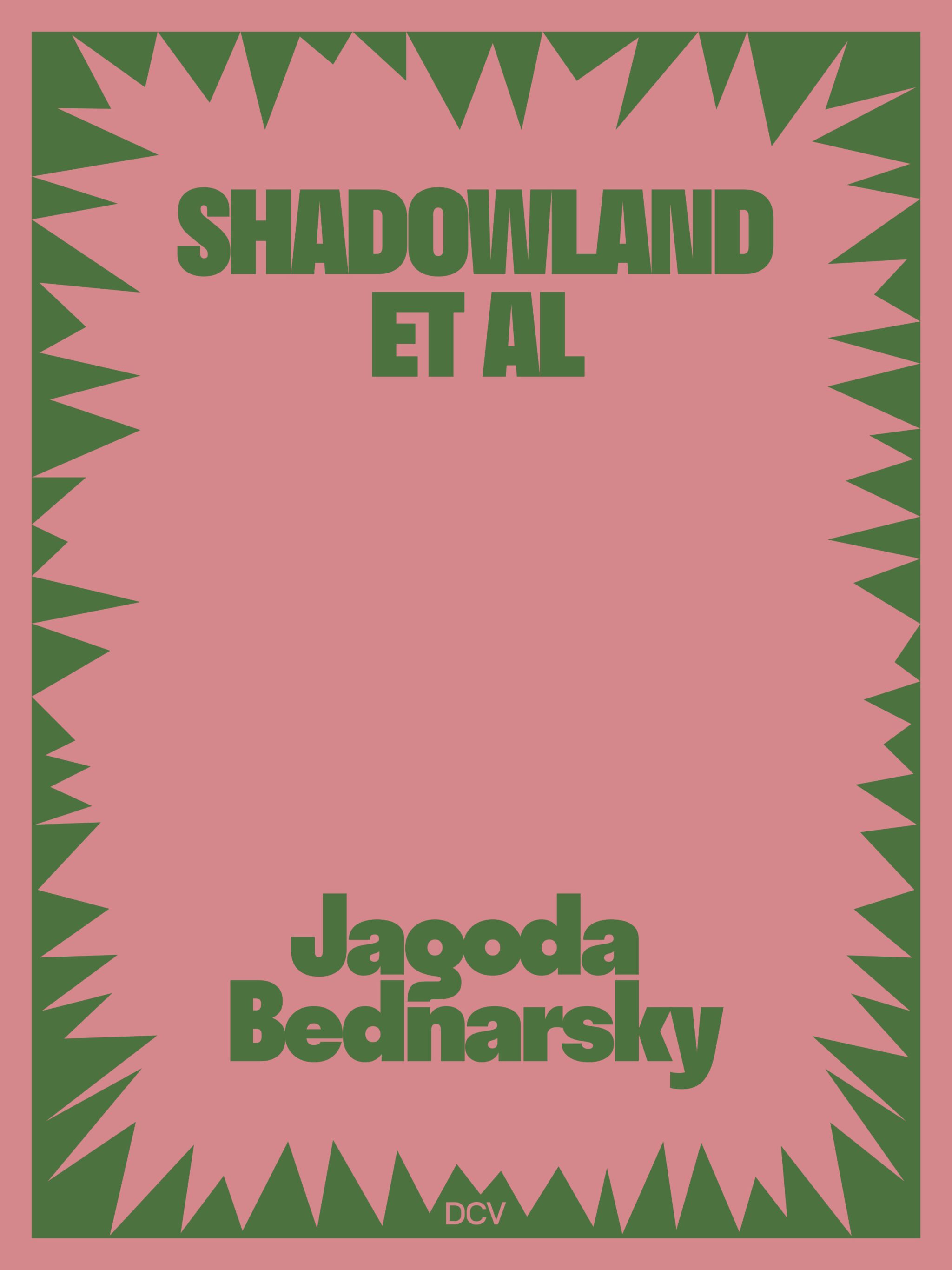
Jagoda Bednarsky
SHADOWLAND ET AL40€ Add to cartJagoda Bednarsky’s (b. Złotoryja, Poland, 1988; lives and works in Berlin) paintings are pop-cultural and nostalgic borrowings that she transfers into the grotesque register, with allusions to stereotyped role models between hypermasculinity and matriarchy. Unfurling pastel-colored hillscapes composed of breasts, breast pumps, vulvas, figures from Greek myth, and motifs from flora and fauna, Bednarsky’s Shadowland series interrogates traditional ideas of femininity and motherhood. The depiction of the female breast serves as a metaphor referring to the titular “Shadowland,” where this part of the body is still perceived as a sexualized object rather than as natural. The title, one might note, is borrowed from a culture magazine first published in New York in 1919 in which the artist spotted Art Deco illustrations that became a vital source of inspiration. Despite the dense aggregation of fraught symbols and referential gestures, the sensual, poetic, and richly imaginative works exude a lightness that stems from their translucency and subtle irony.
The comprehensive volume presents Bednarsky’s works from between 2018 and 2023 and a singular conversation with the artist.
Jagoda Bednarsky studied fine arts, first at Kunsthochschule Kassel (2008–2009), then at HfBK Städelschule, Frankfurt am Main, with Michael Krebber and Monika Baer (2009–2014).
-

Jan Muche
Agora42€ Add to cartTracing the Wear of the Life of Labor
The visual art of Jan Muche (b. 1975, Herford; lives and works in Berlin) revolves around forms that bring to mind structural steelwork, giant industrial installation components, or scaffolding. His constructivist-abstract paintings and sculptures look back on steel as a symbol of industrialization and the working class, which featured in unflappably cheerful and adulatory depictions that were characteristic of the twentieth century’s ideologies – Communism, Stalinism, National Socialism, actually existing Socialism. Muche’s roughhewn aesthetic combines proletarian charm with the spirit of onward and upward, taking the beholder to regions not untinged by dissonance. This book, supported by the Leinemann-Stiftung für Bildung und Kunst, brings his reflections on the significance of work and the impact of digital technology on physical toil as well as his engagement with yesteryear’s “heroes of labor” into focus.
Jan Muche trained as lithographer and studied with Karl Horst Hödicke at the Hochschule der Künste Berlin.
-

Stephan Kaluza
Das Rheinprojekt48€ Add to cartReinterpreting the Classical Panorama
The mythical character of the Rhine as a ‘German symbol’ has long been of profound interest to poets and visual artists. Today, however, the Rhine has lost the aura of a great romantic river along much of its course: from Basel to Rotterdam, it serves as a high-volume shipping lane, and sprawling industrial installations line its banks.
At the dawn of the new millennium, Stephan Kaluza (b. Bad Iburg, 1964; lives and works in Düsseldorf) went on an almost eight-months-long walking tour, following the Rhine from its source at the foot of Piz Badus in Switzerland to its debouchment into the North Sea near Rotterdam. During this thousand-mile trek along the river’s right bank, he stopped every minute—after between two and three hundred feet—to take a photograph of the opposite shore. In this way, his camera compiled a painstaking record of the Rhine in 21,449 individual shots. Digitally assembled in a single six-inch-tall composite image, the pictures form a two-and-a-half-mile stream.
What Kaluza created in this project would have been inconceivable before the development of digital photography, which made the seamless presentation of the pictures in a single panoramic band possible. What is more, the computers capable of processing the enormous quantities of data did not arrive until a few years ago. It took the artist’s assistants a full two years just to edit the images. Harnessing digital technology, Kaluza creates for photography what had been the exclusive precinct of painting: a sweeping holistic perspective. A large number of the fascinating panorama photographs were published in the imposing tome Der Rhein in 2007. Das Rheinprojekt now presents a freshly composed selection from this treasure trove.
Stephan Kaluza received a comprehensive education in Düsseldorf in the 1990s, studying photography at the city’s University of Applied Sciences, art history at the Academy of Fine Arts, and history and philosophy at Düsseldorf University. Since 1995, his work has been shown at numerous galleries in Seoul, Shanghai, Jerusalem, Los Angeles, Berlin and elsewhere. Kaluza’s plays have been performed in Düsseldorf, Berlin, and Stuttgart.
-

Elias Sime
Echo የገደል ማሚቶ35€ Add to cartEthiopia’s multi-award-winning artist Elias Sime (born 1968 in Addis Ababa) impresses with monumental wall reliefs made of ornamentally interwoven wires and cables or sawn-up circuit boards. For years, together with his team, he has been tirelessly
reworking discarded electronic components into complex and colorful assemblages. In doing so, he draws on traditional Ethiopian techniques of weaving, braiding and carving. Sime is interested in the “biography of the material” and each collage is a search for traces (of the local and global past). The artist obtains the electronic waste, which the countries of the global North are known to like to “dispose of” in the African continent, from the flea markets in Addis Ababa. His friezes are monuments both to the throwaway society and to global networking and interaction.
Echo የገደል ማሚቶ, a richly illustrated book, gives an overview over the artist’s fascinating career and is published on the occasion of the solo show at the Kunstpalast Düsseldorf. The volume includes insightful essays by Felicity Korn and Andria Hickey as well as an important conversation with Hans-Ulrich Obrist from 2016. Also discussed is the Zoma Museum complex, which was initiated by Sime (together with the curator Meskerem Assegued)—a total work of art that is exemplary for sustainability and community building.
-
Francesca Martí
Passage and Presence42€ Add to cartFrancesca Martí’s (b. Sóller, Mallorca; lives in Mallorca and Stockholm) art revolves around themes like transformation, communication, and deformation, the power of self-determination, the instability of memory, and the effects of the chaos caused by migration and the migration prompted by chaos. In a collaborative process, a multitude of performers, dancers, and musicians help make her vision a reality. The book presents performances, sculptures, and visual works from Francesca Martí’s most important exhibitions in Spain, Germany, the Netherlands, Slovakia, and China. The portraits of the various series the artist has developed over the past ten years, including Cocoon, Planet of Fusions, Migrant Angel, Dreamers & Believers, Copper and Flux, are rounded out by her drawings, photographs, and making-of shots from her studio in Mallorca.
-

Fritz Overbeck und Hermine Overbeck-Rohte
Der Briefwechsel38€ Add to cartIntimate Glimpses from the Marriage of Two Worpswede Artists
In the final years of the nineteenth century, numerous painters settled in the village at the foot of Weyerberg hill, followed by young women who took classes with the local artists. Fritz Overbeck (b. Bremen, 1869; d. Bröcken near Vegesack, 1909) and Hermine Overbeck-Rohte (b. Walsrode, 1869; d. Bremen, 1937) became one of Worpswede’s husband-and-wife creative duos, though their union has been less celebrated than those of Otto Modersohn and Paula Becker or Rainer Maria Rilke and Clara Westhoff. Like the stories of their more famous neighbors, theirs exemplifies life and work in the artists’ colony, but also the dogged struggle for equality in the creative professions. Yet unlike those other relationships, theirs did not break up over the conflict between art and marital life; it lasted until Fritz Overbeck’s tragic early death. In a first, this book contains virtually the entire extant correspondence between the Overbeck-Rohtes in unabridged form and with numerous annotations. Offering fresh and nuanced insight into the lives and oeuvres of its protagonists, it makes for moving and entertaining reading.
-
ODOR
Immaterial Sculptures40€ Add to cartThe effect of odor is immediate. Smells arouse feelings in us, put us in moods, awaken recollections. They color the other senses and shape our perceptions more profoundly than we are aware. Scents create closeness and distance at the same time. They become imprinted on our memories and consolidate our experiences. And yet their existence in the world of three dimensions remains invisible, and the act of picking up a scent is fleeting.
The publication Odor—Immaterial Sculptures zooms in on the power of smells. Contributions from curators, artists, scientists, and scholars frame a variety of perspectives on this evanescent phenomenon, examining the olfactory sense and the qualities of the immaterial. Full-page plates conceived by the artists provide additional information, imagery, and contexts around the individual works, which put odor as an olfactory and spatial experience at the center of the engagement with art. The works operate between the poles of time and space, individual and community, consciousness and the subconscious, visibility and invisibility, the everyday and the miraculous, the sense of self and the perceptions of others, presence and absence, life and death.
Artists : Jason Dodge, Carsten Höller, Koo Jeong A, Oswaldo Maciá, Teresa Margolles, Pamela Rosenkranz, Sissel Tolaas, Clara Ursitti, Luca Vitone
-

Hans Karl Zeisel
Hundred and more34,95€ Add to cartPossibilities of Concrete Art
What is possible without turning away from the cocrete? In the Bauhaus tradition, the typographer, graphic artist, designer and author Hans Karl Zeisel opens up countless design options with basic forms. His wooden cuboids demand a humorous approach to sculpture. They are creativity training, study tools and meditation game all in once. A playful experiment that reveals the diversity of concrete art.
- temporarily not available

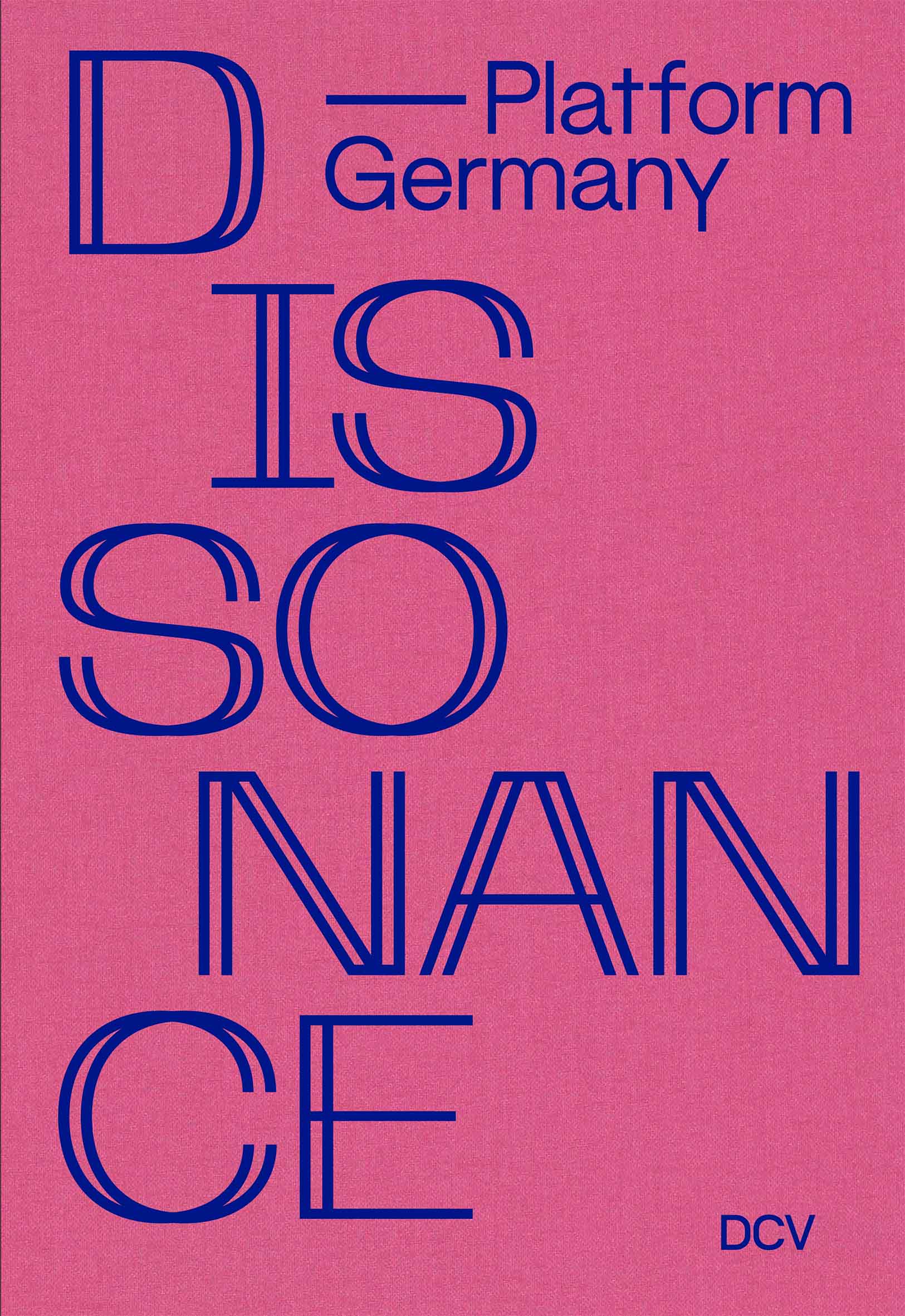
Dissonance
Platform GermanyRead moreA Changed Vision—New Painting from Germany
Post-reunification Germany has emerged as an important forum for international painting. The generation of artists born in the 1970s and 1980s eschew alignment with collective tendencies and resist clearly definable influences. Meanwhile, their art has registered the cultural and sociological dislocations and divergences since the fall of the Iron Curtain with seismographic precision.
The editors of Dissonance – Platform Germany present eighty-one of the most significant painters living and working in Germany in the past two decades. They have the courage of strong opinions, turn the spotlight on unsuspected treasures, and tease out the unexpected value in aesthetically thrilling achievements of programmatic pluralism. A vital survey of one of the most exciting chapters in the more recent history of art in Germany.
Some of the presented artists have graciously agreed to allow DCV to release limited editions of their works, which you can find here.
- Release July 2023

Martha Rosler
32€ Add to cartThe American conceptual artist and pioneer of critical feminism Martha Rosler (b. 1943 in Brooklyn, NY, lives and works in Brooklyn, NY) has influenced numerous contemporary artists with the radicalism of her artistic position. Rosler’s work is always political and examines questions of power and violence, the ideals of beauty and their demolition, and the purported contrasts between war and consumption. For her sociocritical collages and videos, Rosler uses found pictorial material that has already been published. The artist delights in working with photos from public sources like magazines and newspapers, which she processes and arranges in new contexts in order to visualize inequality and protest. Following on from Rosler’s iconic series House Beautiful: Bringing the War Home (ca. 1967–1972), at the heart of the publication lies the confrontation with warlike disputes as conveyed in the media, together with the associated dissonance between the private and the political.
Martha Rosler received a Bachelor of Arts from Brooklyn College in 1965 and a Master of Arts from the University of California, San Diego in 1985. In 1975 she began to write reviews for Artforum and other art magazines. She teaches at School of Arts of Rutgers University in New Brunswick, New Jersey.
-

Anna Virnich
10€ Add to cartAnna Virnich’s (b. Berlin, 1984; lives and works in Berlin) works resemble a speculative narrative. The artist has collected fabrics, garments, and bedspreads since her childhood, which she cuts up, exposes to the elements, dyes, and sometimes paints on to construct pictures and spaces. Her works are paintings and objects at once and defined by a powerful physical presence in conjunction with a ghostly emptiness. They recall Helen Frankenthaler’s liquefied chromatic landscapes, Paul Thek’s post-minimalist physicality, and the silver-foil transcendence of Andy Warhol’s Factory. Everything in Virnich’s art is a shell or membrane through which something filters in or out, “a part of emerging networks and an exchange of substances, technology, bodies, imageries, of the light of the eyes,” as Baptist Ohrtmann writes. Gathered, the textiles unfold an abstract tale of becoming and passing away, of painting, birth, artificiality, and science fiction.
-

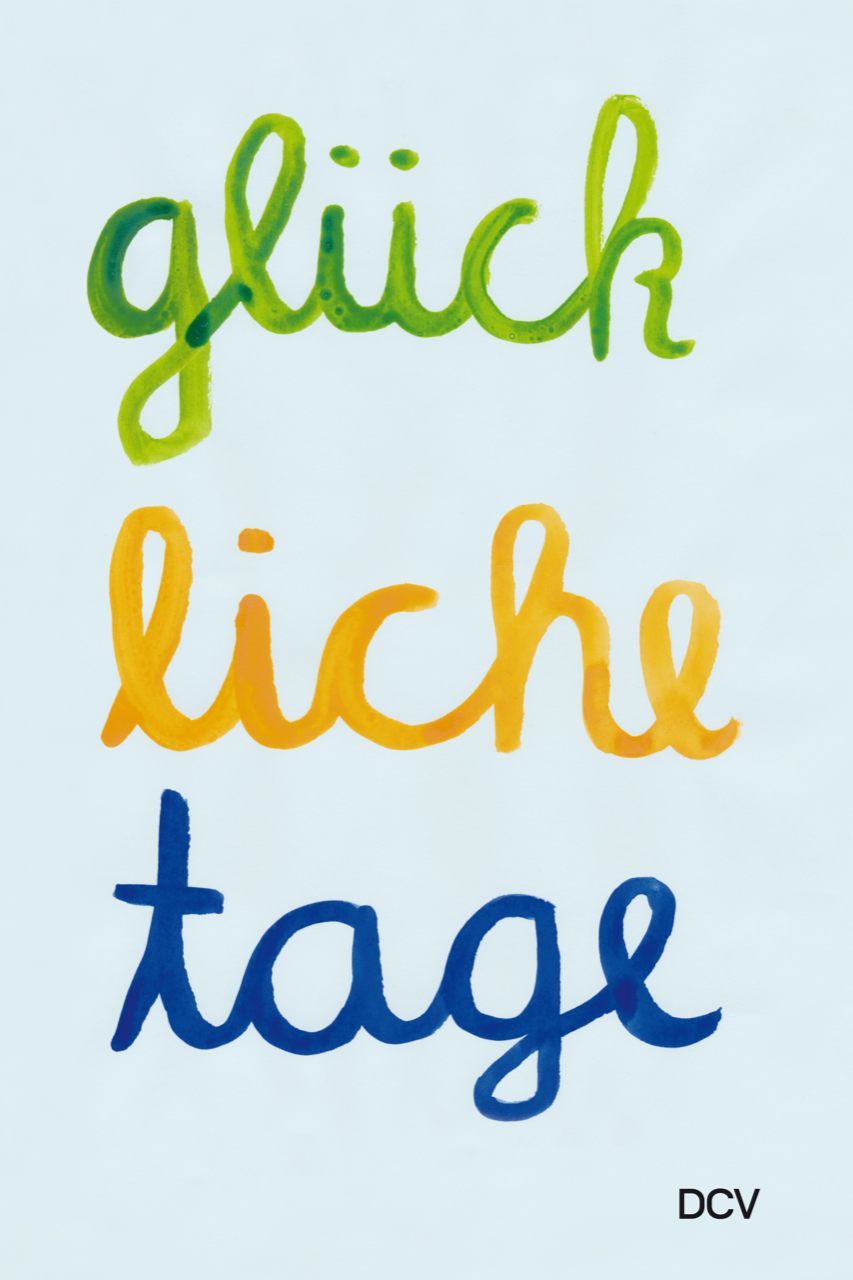
Glückliche Tage
32€ Add to cartWe see in contrasts. Freedom from pain follows pain, and felicity is the more radiant after a period of misfortune. Happiness, that is to say, displaces unhappiness and is perhaps its recompense; what is certain is that, as antonyms, they are (at least in this world) inconceivable without each other. The contrast they form also underlies the tensions inherent in the works in this catalogue. Some take us straight from the pinnacle of happiness down into the abyss, while in others the gradients of ascent or descent are so gentle that no culmination is perceptible. What all oeuvres gathered in the book have in common is that they furnish the human being, a social creature, with an experience of resonance. Happiness and unhappiness reverberate between the art and the beholders, leaving, in the best case, a lasting impression. Opening the catalogue—a metaphor for the human condition materialized in paper—one overhears this serenely melancholy echo of the works.
Artists: Rui Chafes, Tamara Eckhardt, Nan Goldin, Felix Gonzalez-Torres, Barbara Hammer, Carsten Höller, Ken Lum, Johanna von Monkiewitsch, Yoko Ono, Heike Weber, Stefan Wissel
With contributions by: Yevgenia Belorusets, Nell Sophie Bender, Elias Bendfeldt, Laura Berestecki, Annabella Ernst, Annika Gaeth, Hristina Georgieva, Markus Heinzelmann, Malwin Kraßnigg, Max Florian Kühlem, Natascha Laurier, Martin Middeke, Navaz Roomi-Mirhosseini, Vanessa Joan Müller, Julia Neumann, Martin Paul, Caroline Planert, Maike Prause, Arne Rautenberg, Kira Sophie Röller, Gina Marie Schwenzfeier