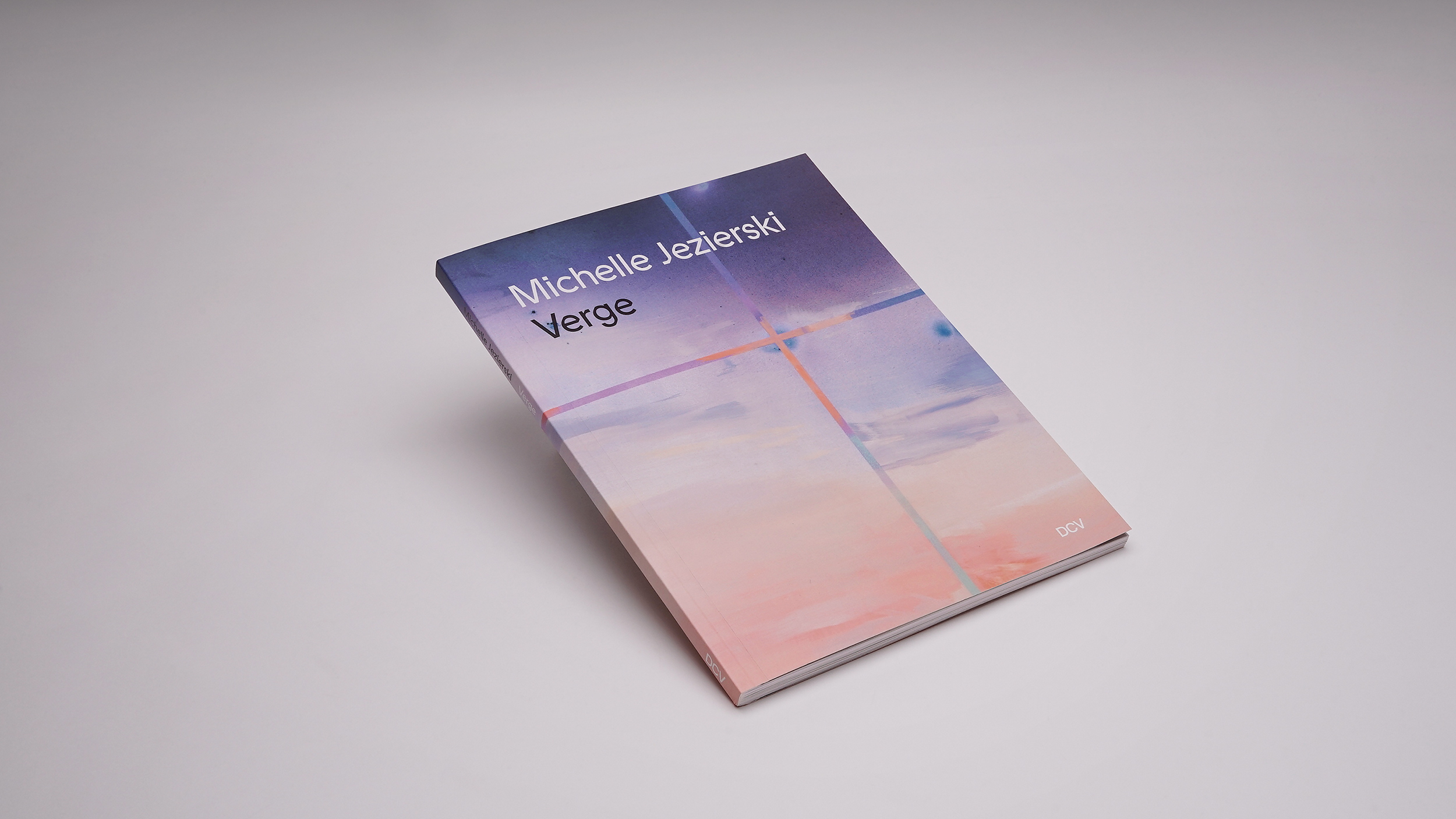

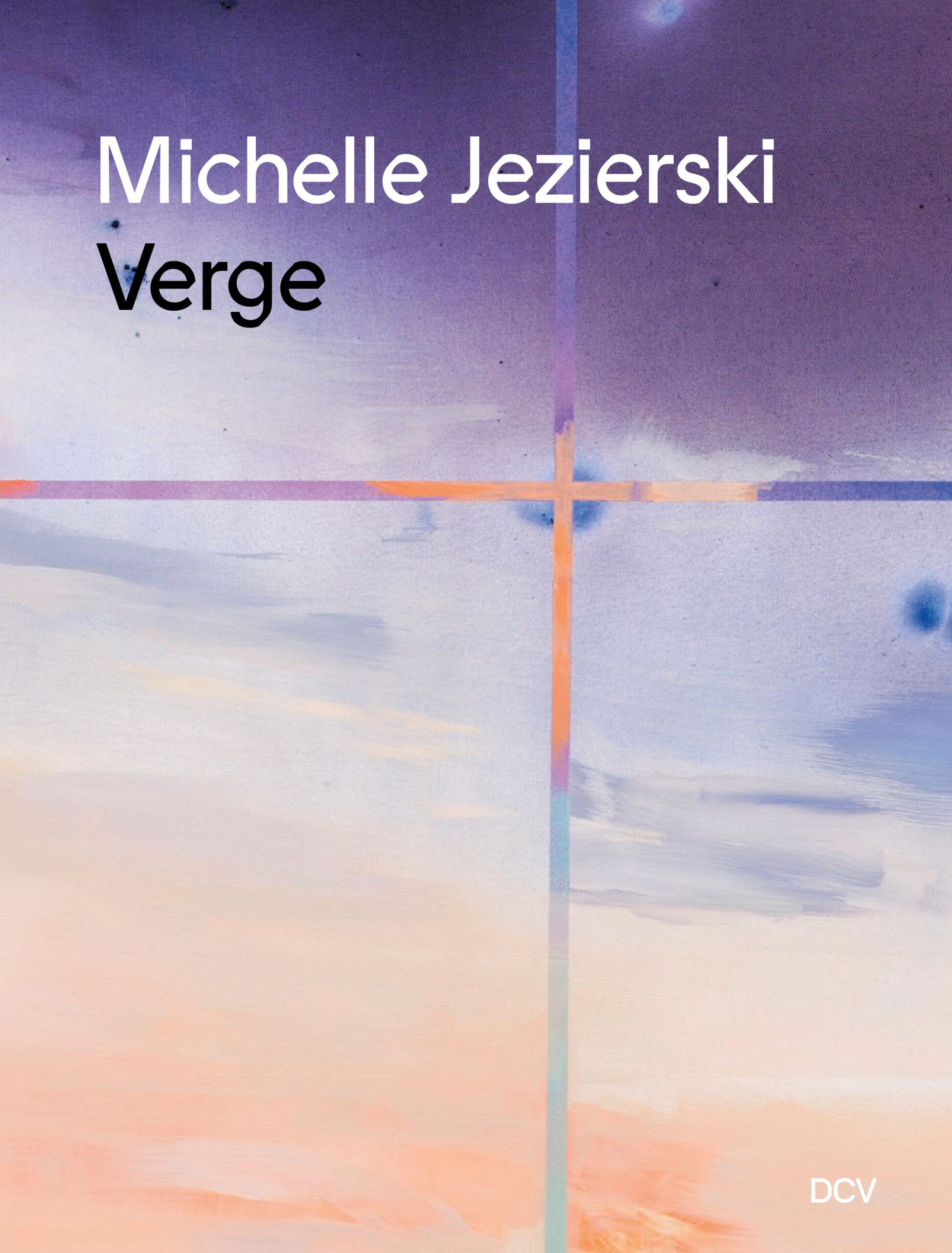
Michelle Jezierski
Verge
 | |
|---|---|
| Editor(s) | Christine Nippe, Bezirksamt Steglitz-Zehlendorf von Berlin |
| Author(s) | Duncan Ballantyne-Way, Christine Nippe |
| Design | Katharina Tauer |
| Size | 19 x 25 cm |
| Cover | Softcover |
| Pages | 96 |
| Illustrations | 69 |
| Language(s) | German, English |
| ISBN | 978-3-96912-207-5 |
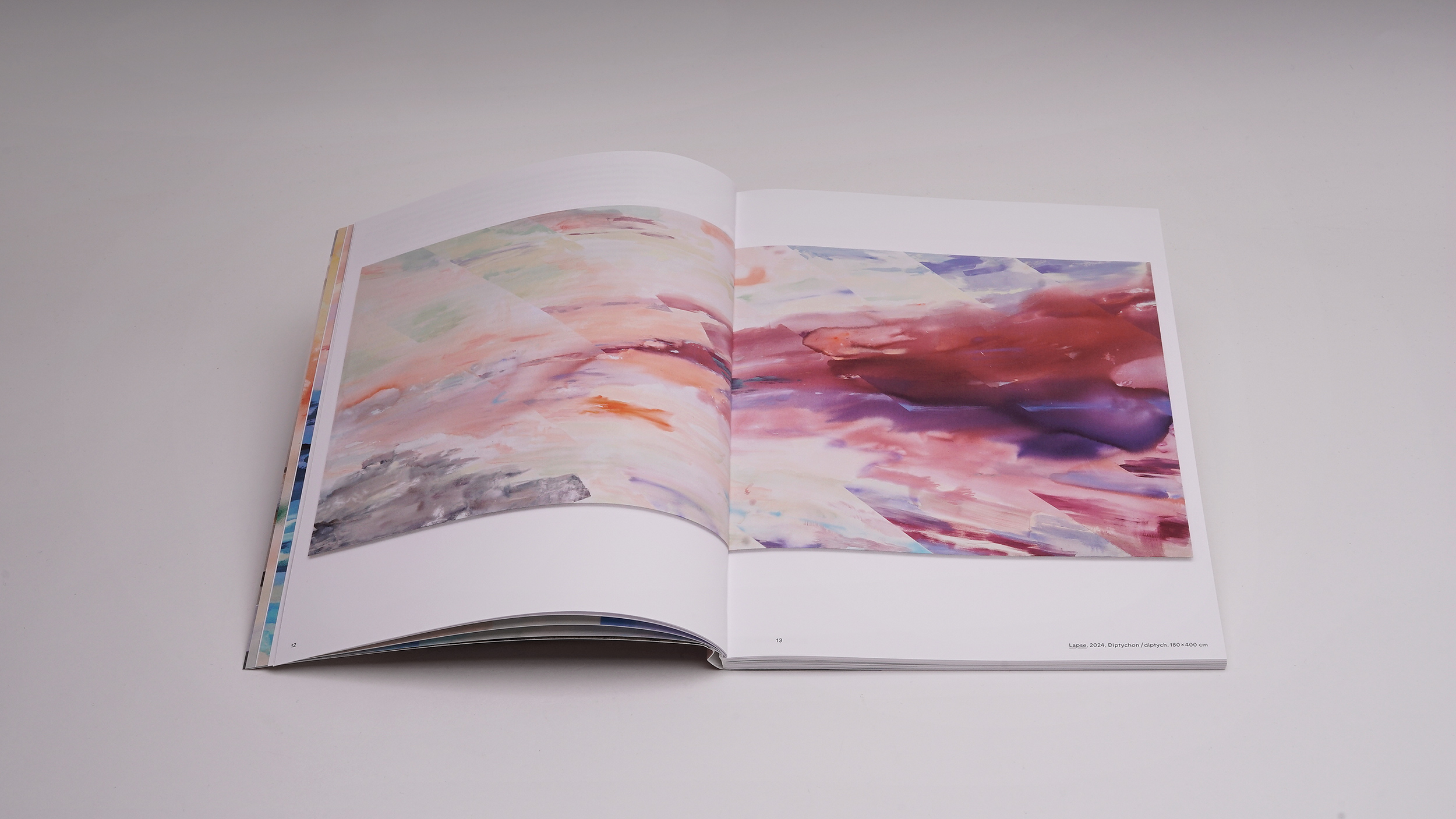
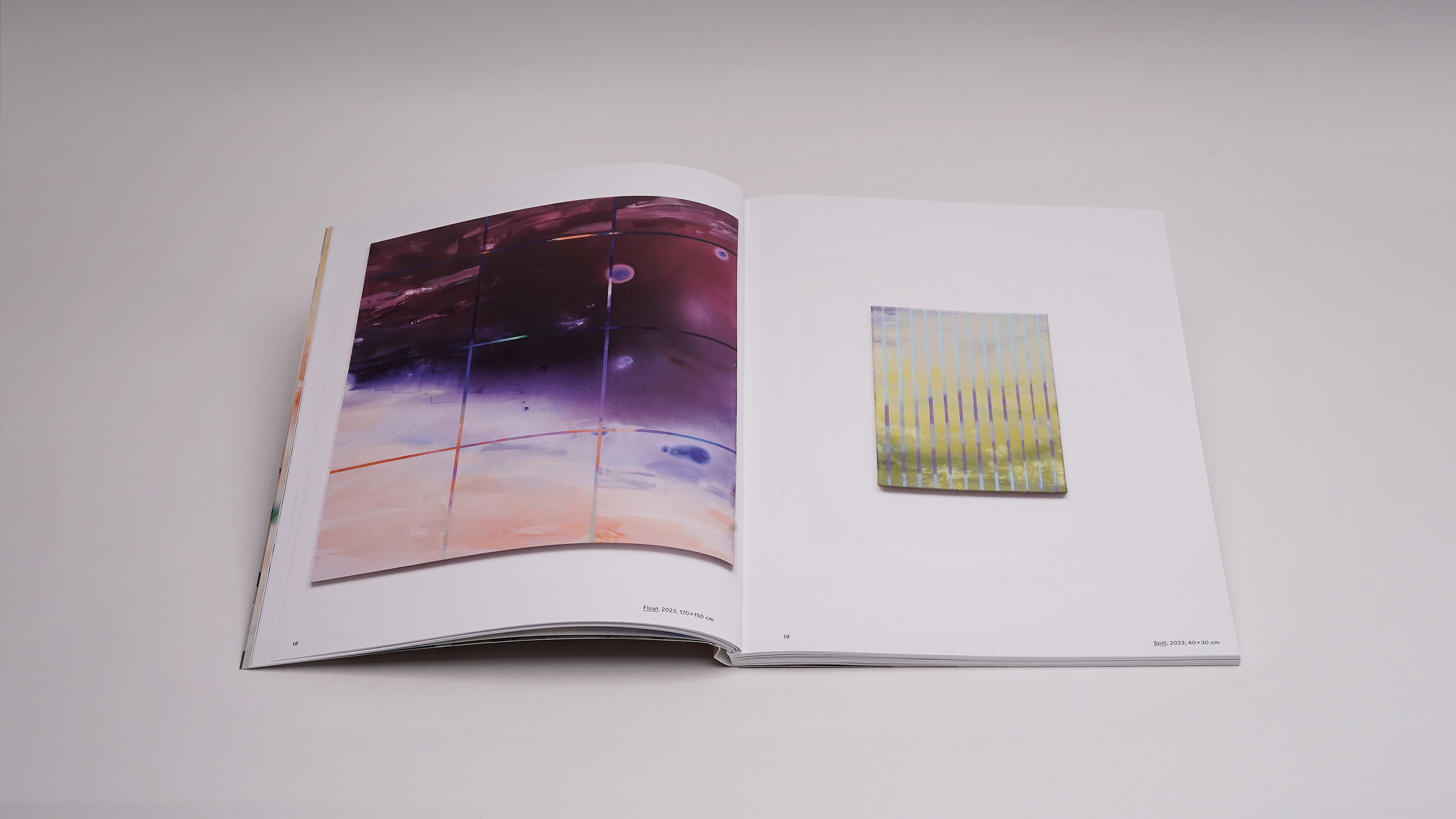
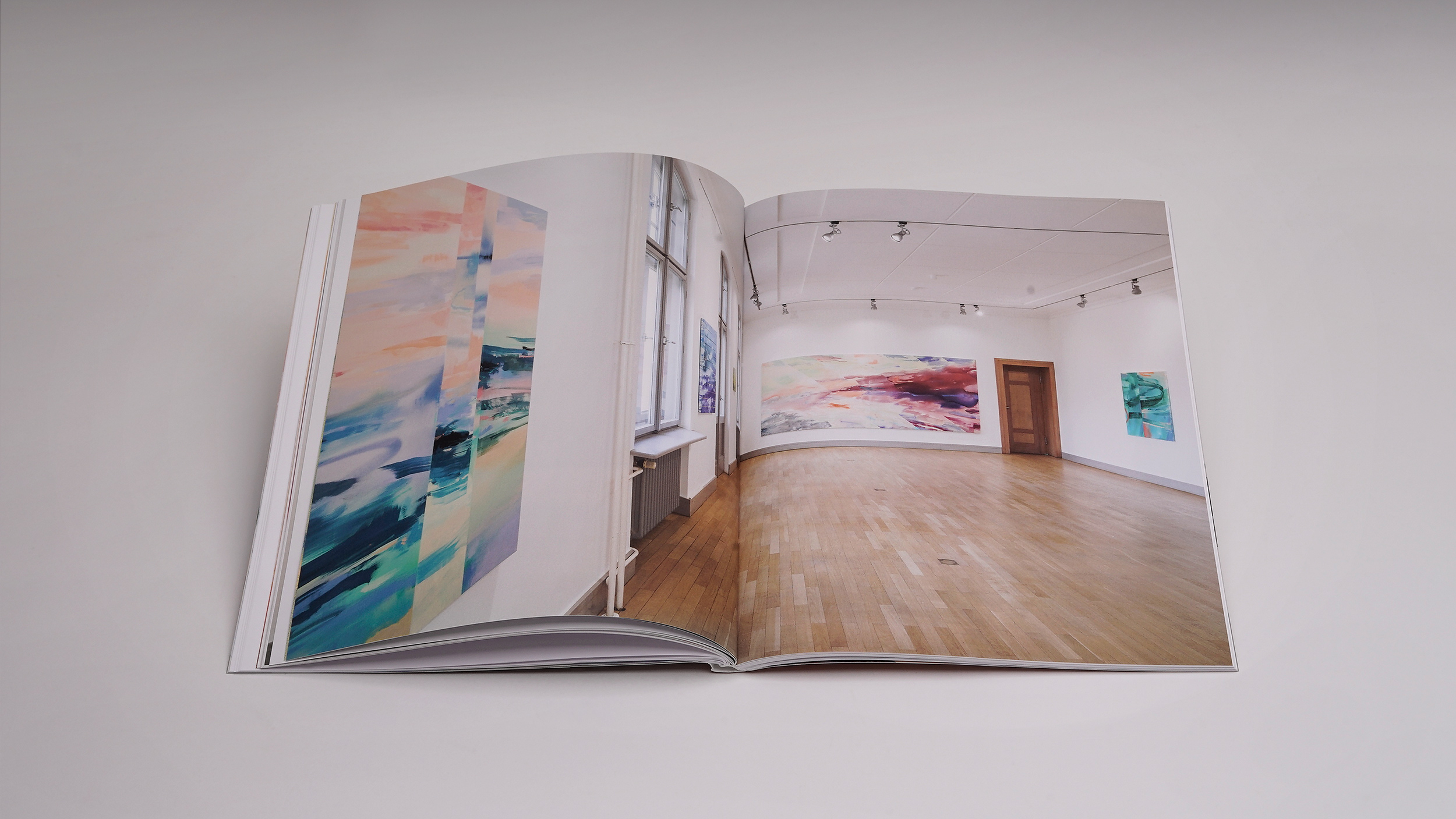
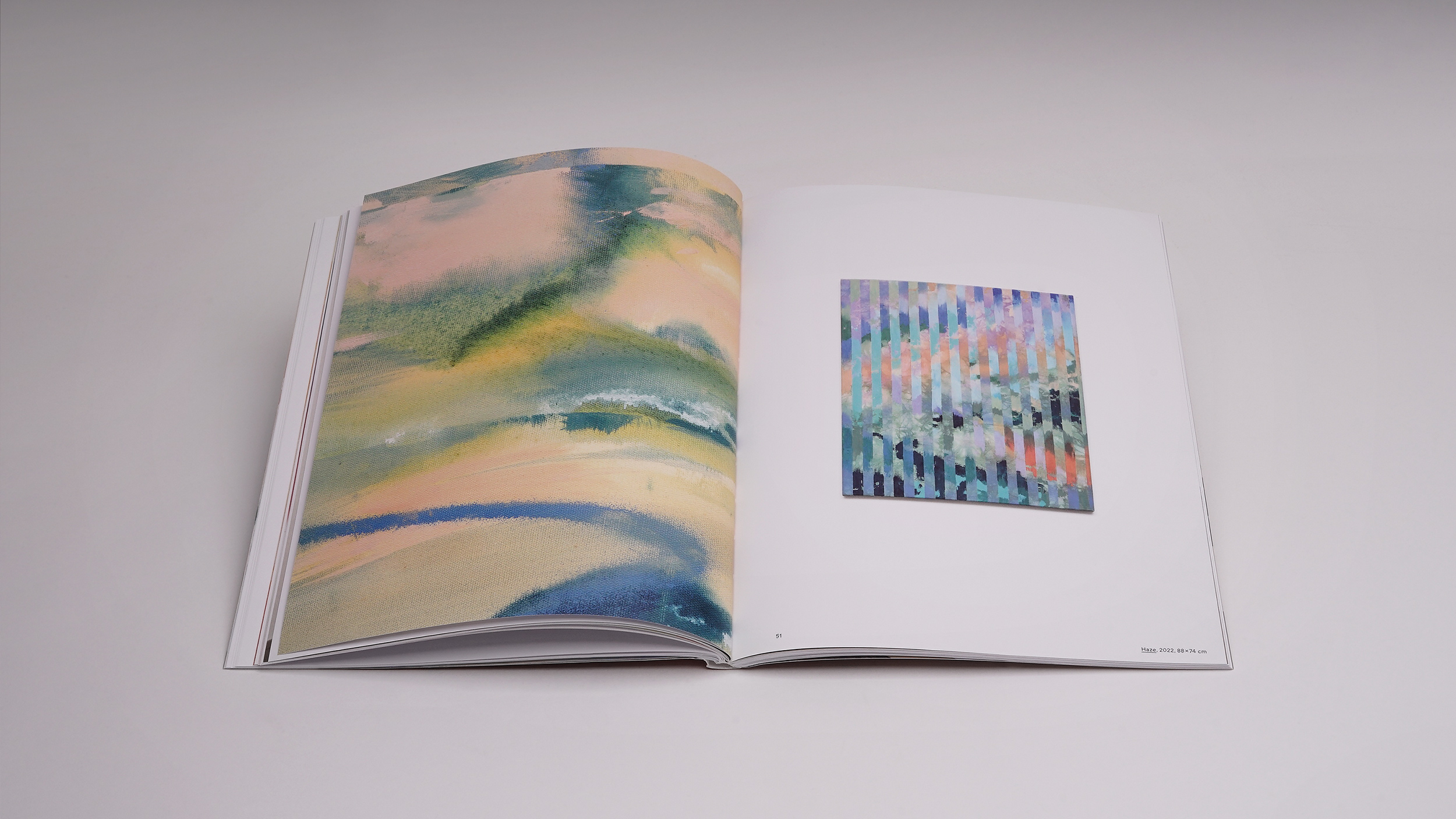
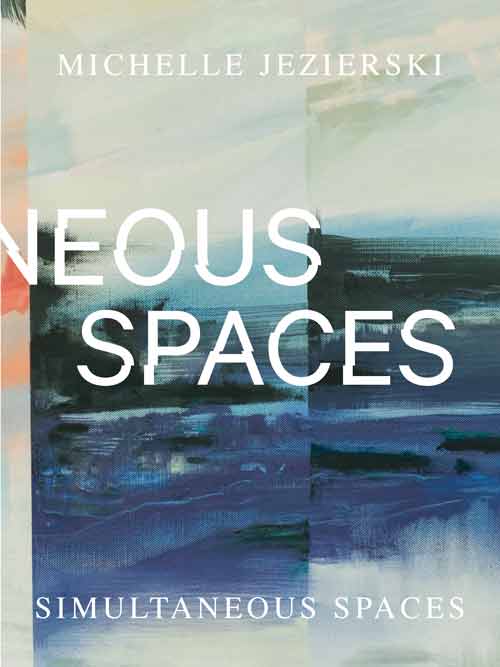
How does a simple line become a horizon? When do we begin to see colors and shapes as a landscape? Michelle Jezierski’s painting homes in on the tipping point at which our perception begins to oscillate between color/surface and space/representation. At that very point, she captures the essence of the landscape as such, which is not a concrete place but a metaphor for inner states of affairs. To get there, Jezierski distills what she sees in her surroundings down to the elements of painting—shapes and colors—which just barely intimate a pictorial space while persistently drifting toward abstraction. The defining feature of her technique is that she layers several pictorial planes and spaces on the canvas in staggered arrangements. “Perpetually discovering new ways to unsettle the visual space,” as she puts it, she engenders ruptures and structures that open up multiple perspectives and a portal for reflection on one’s own perception. Above all, however, the cuts lend her pictures a peculiar rhythm that powerfully pulls in the gaze, making the reader paging through this catalogue forget time and space.
You may also like…
-

Michelle Jezierski
Simultaneous Spaces34€ Add to cartMichelle Jezierski’s (b. Berlin, 1981; lives and works in Berlin) paintings unfurl simultaneous spaces that are awash in light. Contrasts between bright and dark and muted as well as lucent hues engender a singular atmosphere characterized by depth and dynamism. The artist is as invested in the perception of these constructed spaces as in the capaciousness of natural landscapes. In her paintings, luminous colors and geometric disturbances achieve shifting balances between the extremes of order and chaos, light and shadow, interior and exterior, structure and flux. Simultaneous Spaces, the artist’s first comprehensive monograph, presents forty-five works painted between 2017 and 2022.
Michelle Jezierski studied with Tony Cragg at the Berlin University of Arts and graduated from Valérie Favre’s class in 2008. She also received a fellowship for a semester abroad at Cooper Union, New York, where she studied with Amy Sillman.
More books
-

6 U L
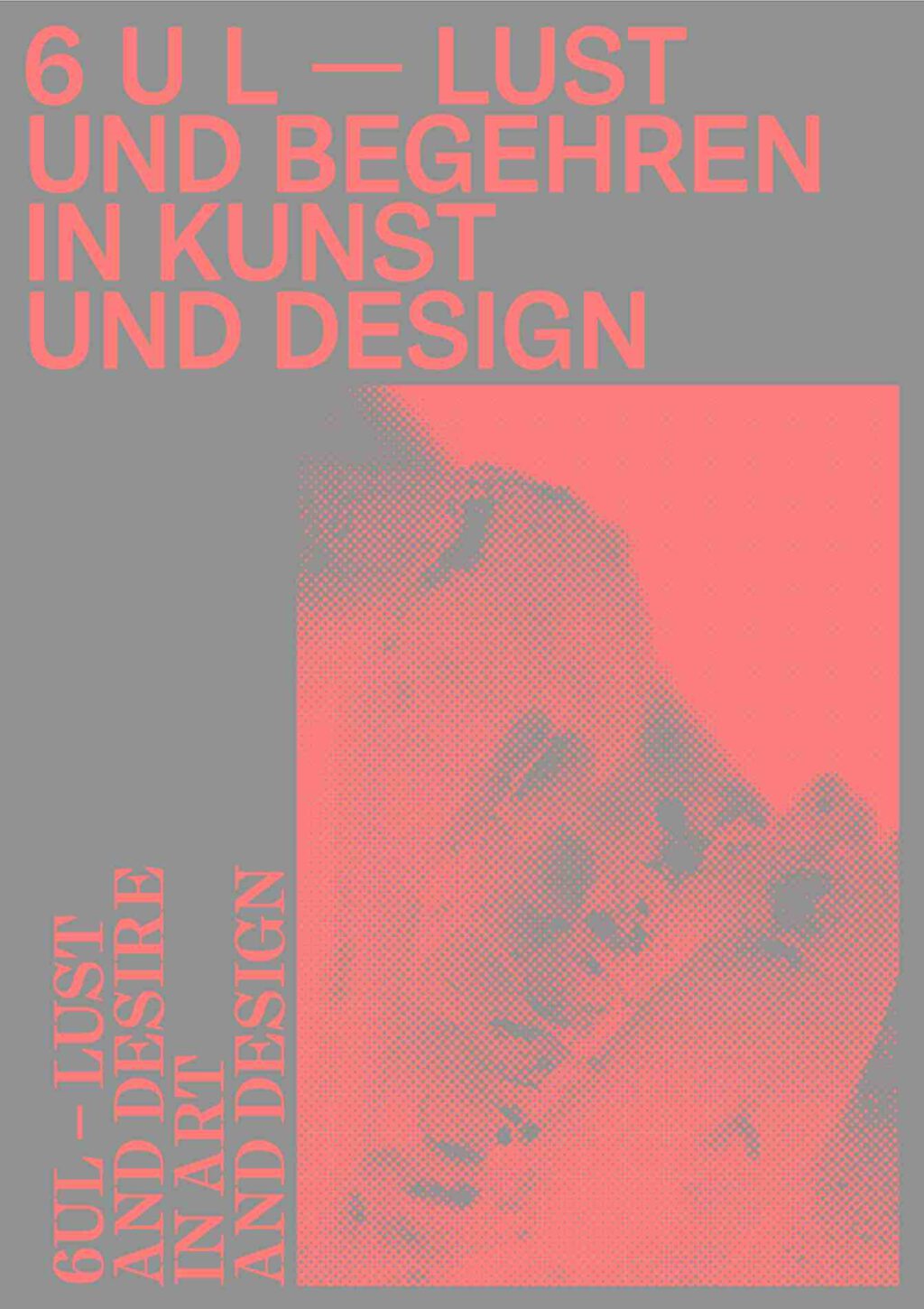
Lust and Desire in Art and Design28€ Add to cart“Whose Jizz is this?” Sechs-u-ell: to make sense of the publication title, trust your college German and your phonetic ear. “Sexual,” here, comprises the entire broad spectrum of what we associate with carnal pleasure. Lust, desire, ecstasy, repression, obsession—the world of art, fashion, and design abounds with specimens of eroticism and sexuality in their infinite variety, shopworn stereotypes be damned. Looking back on the thorough revision of society’s ideas about sexuality in the past three decades, the book inquires into how the works of visual artists, fashion creatives, and designers reflect today’s public debates over biological and social gender roles, power structures, and sexual violence or the fading of taboos over sexual practices. With works and designs by Walter Van Beirendonck, Monica Bonvicini, Tracey Emin, Hans-Peter Feldmann, Jürgen Klauke, Peaches, Cindy Sherman, Kara Walker, Vivienne Westwood, and many more. This book documents a grand exhibition scheduled for the past summer at the GRASSI Museum of Applied Arts, Leipzig, which had to be canceled due to the Covid-19 pandemic.
-

Bilder des Wohnens
18€ Add to cartThe Cognitive Registers of Photography
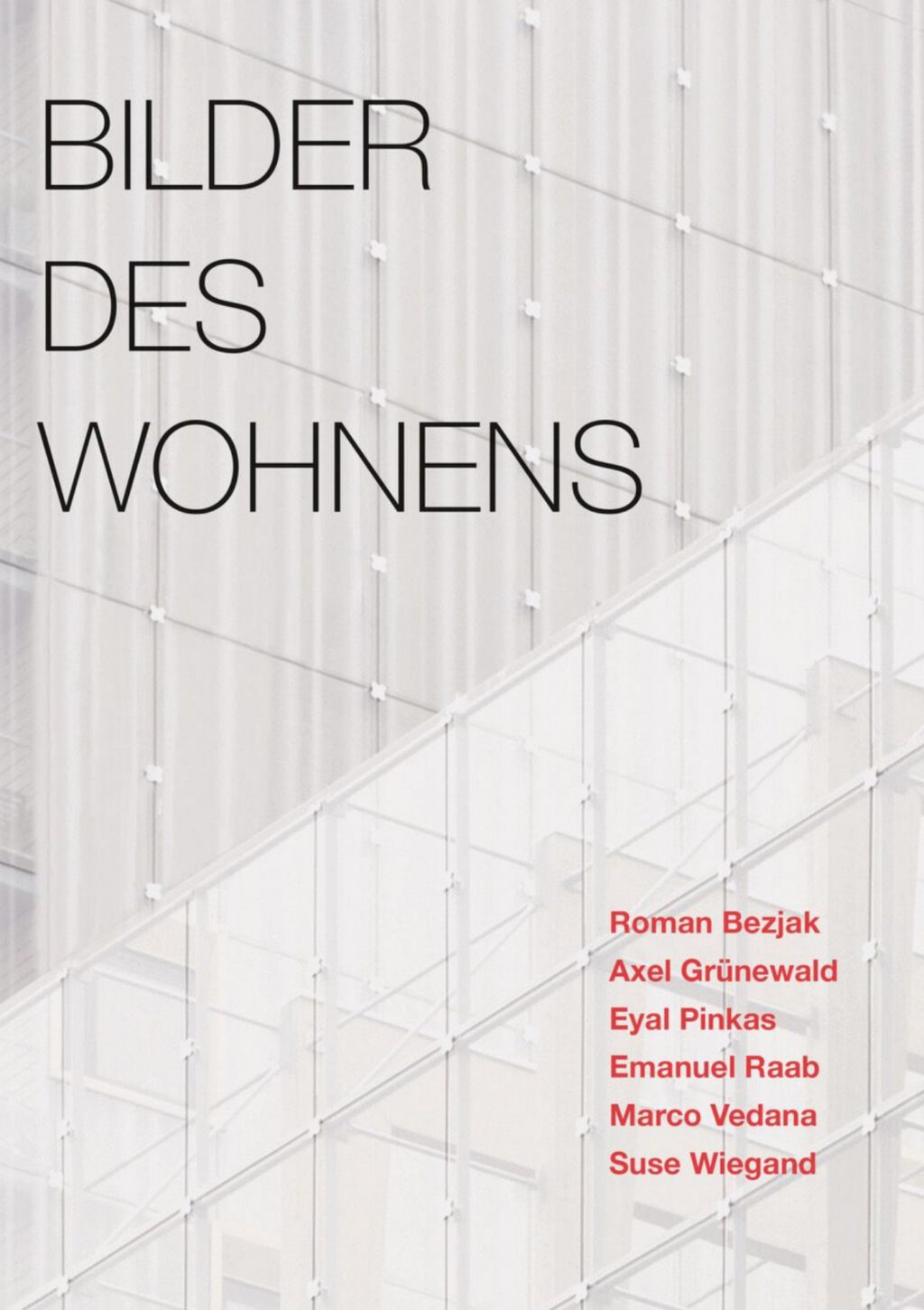
All over the world, housing shortages and living conditions are urgent concerns of political and academic debates. Scholars at the FH Bielefeld conducted a three-year research project on Bilder des Wohnens. Architekturen im Bild, focusing on questions of the representation of space and hybrid forms of visualization between documentation and staging as well as photography as an archive of architectural knowledge and tool in the planning process. The book draws on studies of twentieth-century social utopias such as Tashkent, Uzbekistan, an embodiment of the urban-planning ideal of Soviet modernism, and explorations of social and cultural spaces along the coasts of northern Morocco and southern Spain, as well as a photographic typology of urban fabrics in Germany and other sociocultural studies that grapple with the significance of living spaces today.
-

SOMA
Collective SineUmbra18€ Add to cartOn the Disappearance of Italian Culture
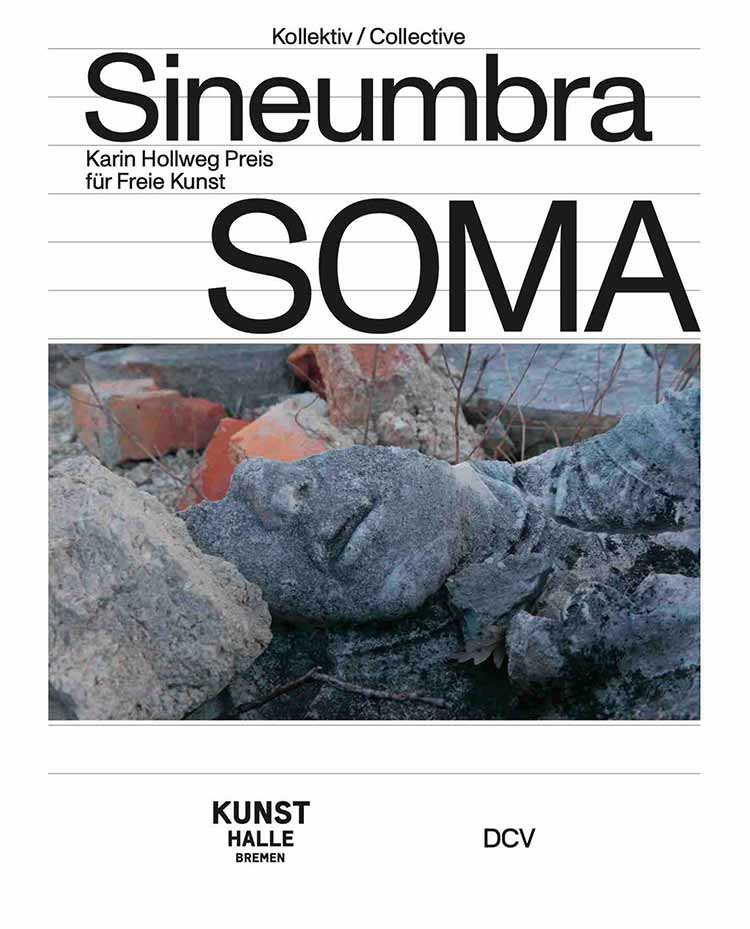
Under the collective label SineUmbra, the artists Luisa Eugeni (b. Assisi, Italy, 1987; lives and works in Berlin) and Mattia Bonafini (b. Legnago, Italy, 1980; lives and works in Bremen) develop interdisciplinary projects that they realize as sprawling multimedia installations comprising video projections, sound, and performative elements. The point of departure for their project SOMA was Pier Paolo Pasolini’s 1975 essay Disappearance of the Fireflies, which probes the wrenching transformation that Italian society and the country’s very landscapes have undergone since the 1960s. SOMA melds performance art, the visitors’ movements, geography, and psychology in a space of experience that speaks to all senses for an exploration of the impact that traumata inflicted on individuals and communities by natural disasters and social changes have on the human soul and perceptual capacities. In keeping with the artists’ collective and dynamic creative vision, the catalogue embeds the multimedia installation in a context fleshed out by rich photographic documentation and numerous texts.
On occasion of the master class graduate exhibition at the Bremen University of the Arts in 2019, the two artists were awarded the renowned Karin Hollweg Prize for Fine Art. The publication accompanies their first solo show at Kunsthalle Bremen.
-

Konrad Mühe
Guide38€ Add to cartAn Artist’s Book as an “Optical Illusion”
Konrad Mühe’s (b. Karl-Marx-Stadt, East Germany, 1982; lives and works in Berlin) works interrogate the construction of our identities by uncovering the technological and media apparatuses that sustain it and confronting it with the autonomous lives of objects. Their basic formal principle is the installation hybridizing sculpture and digital moving image, with a particular focus on the projector and the interaction of pedestal or suspension and projection screen. Where the classical black box in the movie theater or exhibition venue seeks to conceal the technical equipment in favor of an immersive visual experience, Mühe brings it to the fore and sets it out in the gallery space as sculpture and installation. Yet his works also undercut the conventional display regime in the white cube: the process of projection emerges as the true creative medium and subject. This book acts as a descriptive illustrated Guide to Mühe’s projects.
Konrad Mühe was Hito Steyerl’s master student and trained at the Berlin University of the Arts and the Burg Giebichenstein University of Art and Design Halle. His works have been featured at numerous film festivals including the 61st Berlinale and in exhibitions at Kunsthalle Düsseldorf, the Moscow Museum of Modern Art, and elsewhere.
-

Larissa Fassler
Building Worlds20€ Add to cartThe drawings and sculptures of Larissa Fassler (born 1975 in Canada, lives in Berlin) both document and question the modern metropolis, its public squares, train stations, and functional buildings. Fassler researches her chosen locations extensively in city archives and online. She tracks trends such as economic disparity, gentrification, homelessness, or drug consumption. She supplements these statistical facts with her own subjective survey methods, such as repeatedly visiting and observing the sites. All of the information gathered finds its way into Fassler’s complex cartographic drawings and sculptures, which reflect the socioeconomic and geopolitical challenges of our time. This book accompanies Fassler’s exhibition at the Kunstverein Lingen.
-

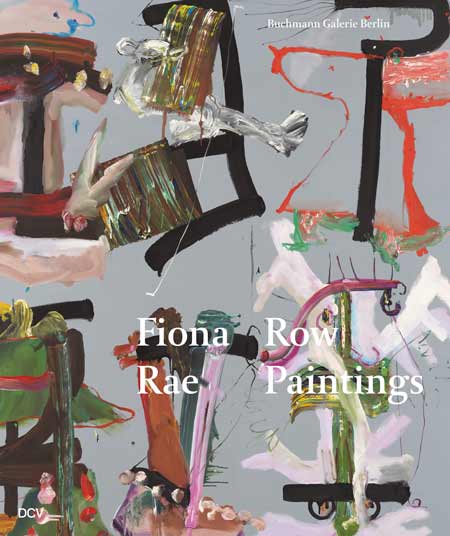
Fiona Rae
Row Paintings24€ Add to cartElements of Energy and Complexity
Fiona Rae’s (b. Hong Kong, 1963; lives and works in London) abstract paintings attracted the attention of broad audiences when she participated in the legendary exhibition Freeze at London’s Docklands in 1988. It put her on the map as an early member of the group known as Young British Artists, who would revolutionize not only the English art world. To this day, Rae’s distinctive creations, which are rooted in a conceptual engagement with the problems and potentials of abstract painting, have remained prominent and seminal contributions to the field. In 2011, she was appointed professor of painting at the Royal Academy, one of the first women to hold this position. The catalogue is the first to feature the most important pictures from this period: the Row Paintings. They mark the inception of the artist’s internationally acclaimed oeuvre. An essay by Terry R. Myers offers an appraisal of the Row Paintings’ significance in their historic context as well as the contemporary discourse of painting.
-

Horst Keinig
Scoop29€ Add to cartAn Artist Book Setting New Visual Processes in Motion
Around the year 2009, Horst Keining (b. 1949, Hattingen; lives and works in Düsseldorf) began to create blurred contours with the help of a small spray gun used without stencil. Up to four partially superimposed pictorial planes result in the oscillation and almost three-dimensional pulsation of the pictorial space. In interplay with a contrasting juxtaposition of strongly contoured images, his works convey a completely new visual experience. Since the resulting “blur effect” shrinks due to the reduction, this artist book places an essential accent on the reproduction of image details in their original size, followed by a full image of the picture.
-

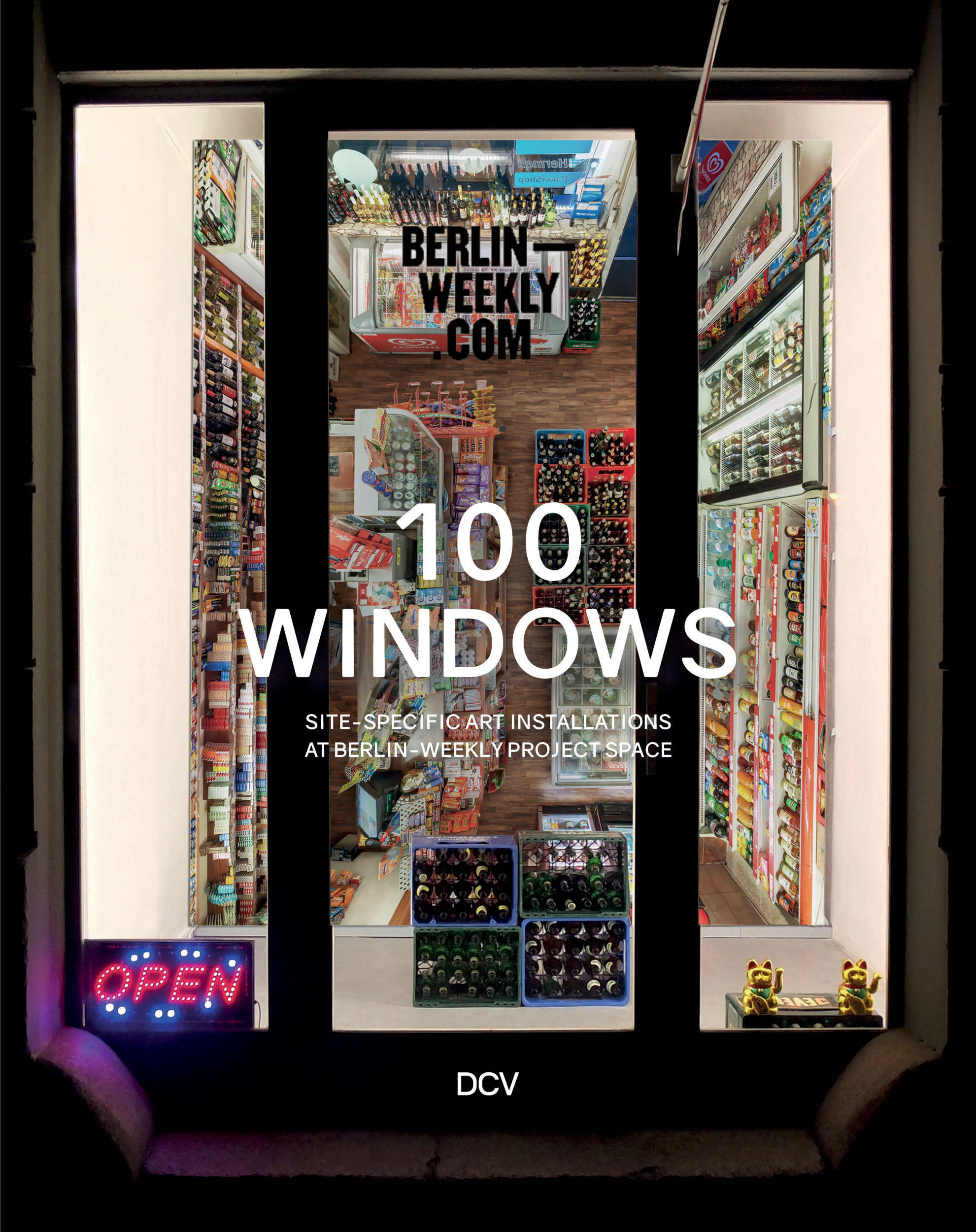
100 Windows
Site-specific art installations at Berlin-Weekly project space28€ Add to cartEstablished in 2010 by Stefanie Seidl in a former gateway for horse-drawn carriages that is now enclosed by glazing at both ends, the project space BERLIN-WEEKLY offers the narrow yet exceptionally tall display space to artists as a highly visible public stage for installations that respond to the setting or site. Its unilateral orientation toward the street makes BERLIN-WEEKLY a creative intervention into the urban fabric that harnesses the shopwindow format. The book presents 100 selected window installations to illustrate the widely diverse ways in which individual artists have engaged with the venue, time and again transforming the unusually shaped small space.
With works by: Menno Aden, Alexandra Baumgartner, Isabelle Borges, Astrid Busch, Simon Faithfull, Moritz Frei, Max Frisinger, Wolfgang Flad, Dagmara Genda, Andreas Greiner & Armin Keplinger, Sabine Groß, Marc van der Hocht, Sabine Hornig, Irène Hug, Bettina Khano, Julia Kissina, Nikolaus List, Ulrike Mohr, Virginie Mosse, Piotr Nathan, Katja Pudor, Philip Topolovac, Inken Reinert, Sophia Schama, Geerten Verheus, Sinta Werner, Barbara Wille, and others
-

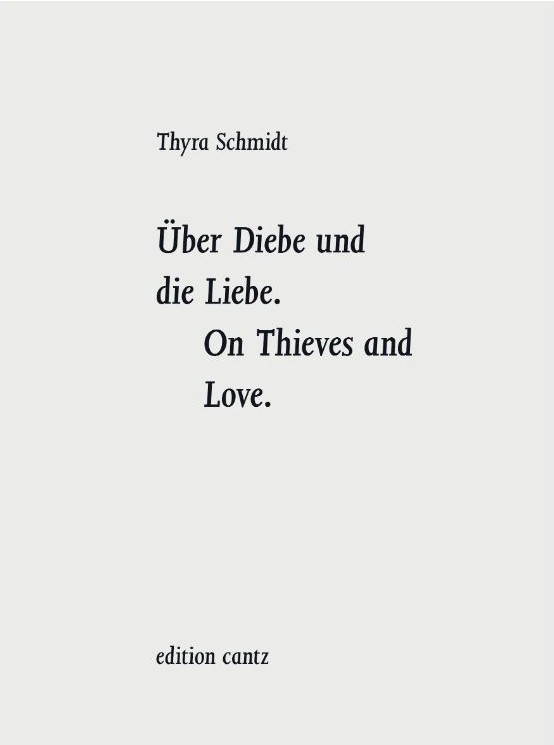
Thyra Schmidt
Über Diebe und die Liebe. On Thieves and Love.15€ Add to cartAn artist’s book, an artist’s text
On twenty-two large-format typographic sheets, Thyra Schmidt (b. 1974, Pinneberg; lives and works in Düsseldorf) develops a narrative featuring moments in an amorous relationship. Thoughts and encounters between “her” and “him” are captured in poetically constructed, fragmentary units of meaning. Imaginary images are conjured in the mind’s eye: Close-ups and intimate insights into a delicate web of interpersonal incidents. Personal observations and experiences form the starting point of this artistic exploration of love. Yet the focus of her work is not on autobiographical rendering, but rather on the tracking down of elementary structures, a general understanding of intimacy.
- Release February 2026

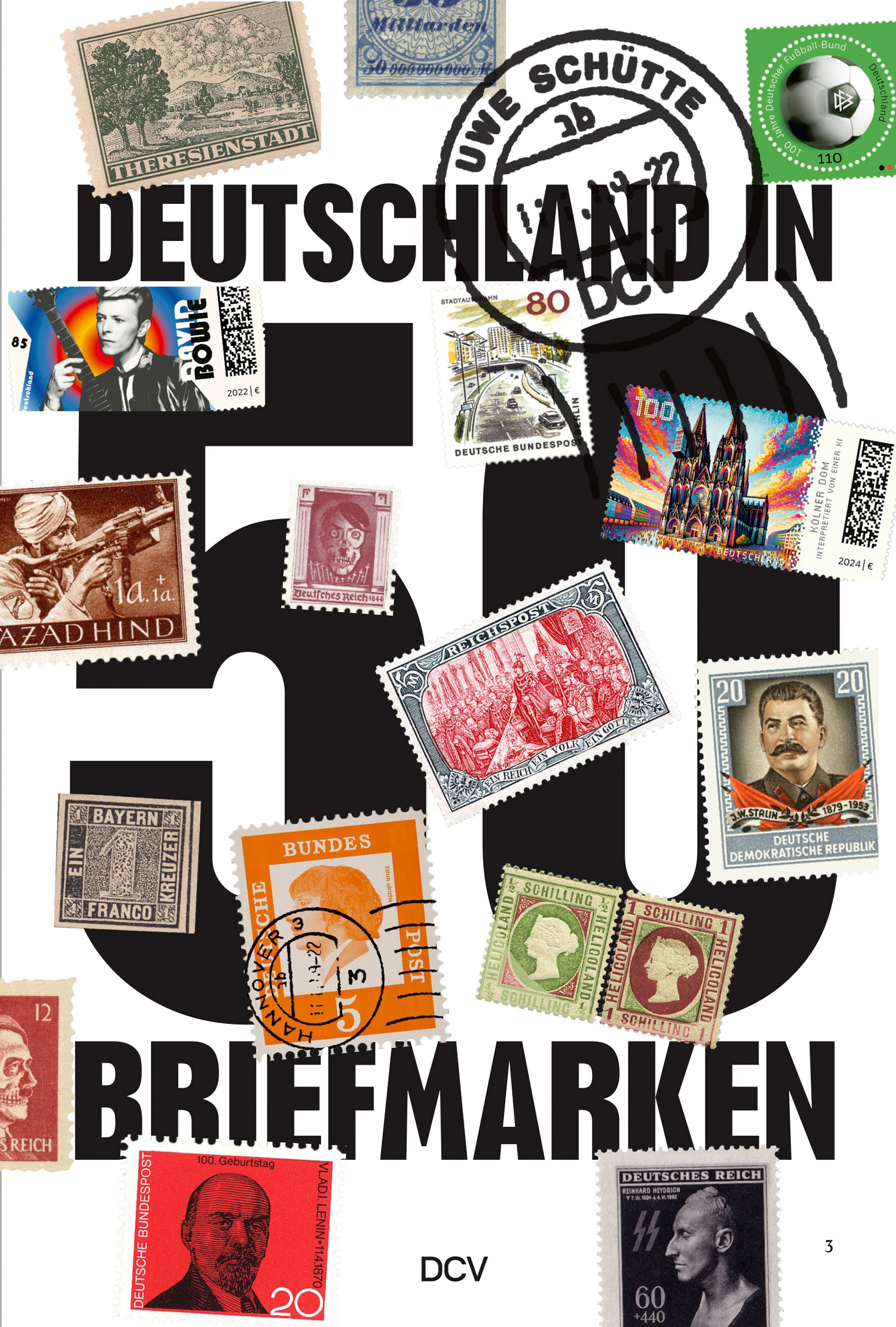
Uwe Schütte
Deutschland in 50 Briefmarken24€ Add to cartThe postage stamp, the avid philatelist Walter Benjamin prophesied in 1928, would “not survive the twentieth century.” Time, then, for a look back: in fifty essays, Uwe Schütte embarks on a voyage through 175 years of German postal history to decode the mentalities that shaped it. Analyzing the visual language of the stamps and their significance for Germany’s collective memory, from the One kreuzer black to Deutsche Post’s cutting-edge crypto-stamp, he shows how the stamp broke the shackles of its function as a proof of postage paid to emerge in the early twentieth century as a medium of mass-circulation miniature-format graphic art. It went on to serve as an instrument of propaganda, was collected and counterfeited, and proved a capacious mirror of discourses in society.
The cultural essayist Uwe Schütte, born in Sauerland in 1967 and a philatelist since childhood, completed his doctorate in German Literature under W.G. Sebald. After two decades as a university lecturer in England, he now lives and works in Berlin. His work includes more than 30 books dealing with extremist art and occultism as well as advanced pop culture and contemporary literature.
-

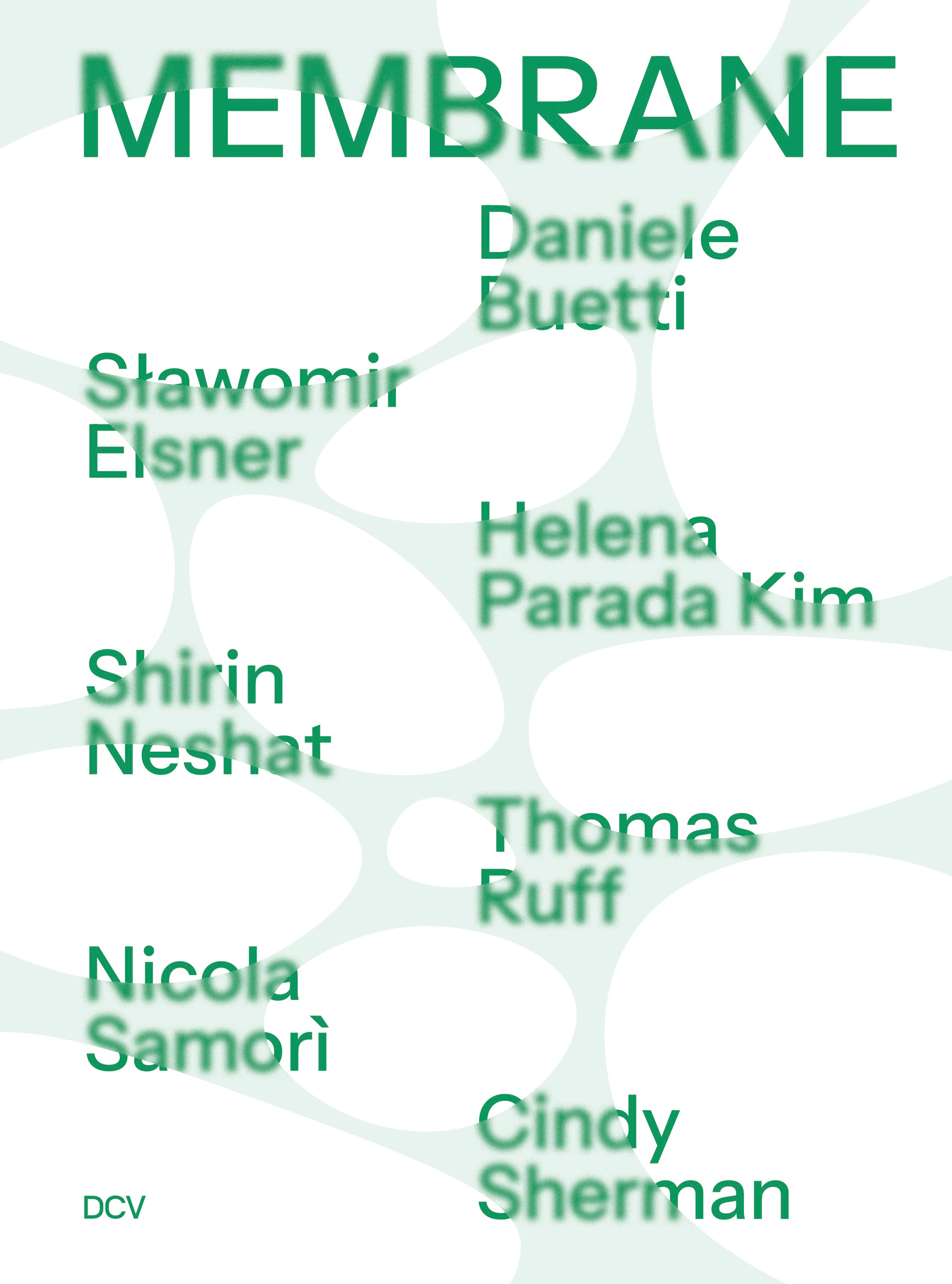
Membrane
38€ Add to cartMembrane documents an eponymous exhibition at the Neue Galerie Gladeck as well as the gallery’s architectural extension. The works of the 7 invited artists are engaged to explore skin in a broader sense—membrane also encompasses clothing, veiling, and masking from various cultural perspectives. Well-known portraits by Thomas Ruff, Shirin Neshat, and Cindy Sherman appear in a new light alongside Helena Parade Kim’s exploration of iconographic and ceremonial fashion codes, Daniel Buetti’s critique of the commercialized body, and Nicola Samorì’s exploration of skin in historical masterpieces. The membrane concept also inspired the exterior and interior surfaces of the new gallery building, and an interesting text by the architect reveals his approach.
Artists: Daniele Buetti, Sławomir Elsner, Shirin Neshat, Helena Parada Kim, Thomas Ruff, Nicola Samorì & Cindy Sherman
-

Harte Zeiten
Ciężkie Czasy34€ Add to cartIncreasingly pressing global political and societal challenges are always also rewarding subjects of creative engagement, and sometimes artists devise anticipative approaches to real-world problems.
Harte Zeiten—Ciężkie Czasy is a cooperative venture launched by Künstlerbund Baden-Württemberg; Port25—Raum für Gegenwartskunst, Mannheim; and Galeria Miejska bwa, Bydgoszcz, Poland. It showcases works by altogether ten Polish and ten German contemporary artists. Putting the principle that art knows no boundaries into practice, the publication, with statements from Wolfgang Ullrich, Joanna Kiliszek, Schamma Schahadat, and others as well as documentation of the symposium held in September 2021, inspires forward-looking reflections on the conditions in which cultures thrive and similarities and differences between the two countries and beyond.
-
Jenny Brosinski
Things I’ve Never Said58€ Add to cartJenny Brosinski’s (b. Celle, 1984; lives and works in Berlin) paintings in large formats look like uncoordinated abstract compositions with traces of wear deliberately left in place. This brings their materiality to the fore and reveals the creative process. Expressive oil paint on unprimed canvas, spray-painted lines, typographic elements, shoeprints, or pieces of masking tape on the canvas: on the one hand, these are experiments and statements; on the other hand, they are engagements with painting as such. The artist added sculpture to her repertoire in 2019, making figurative and sometimes colorfully painted imaginary beasts in bronze or stone—more evidence of her subtle sense of humor, which also manifests itself in her pictures and especially in their titles. The extensive monograph offers profound and comprehensive insight into Brosinski’s oeuvre.
Jenny Brosinski studied illustration and animation at the Weißensee Kunsthochschule, Berlin, the École supérieure des arts décoratifs, Strasbourg, and the Hamburg University of Applied Sciences. She completed her education with a master class in Berlin in 2010.
-
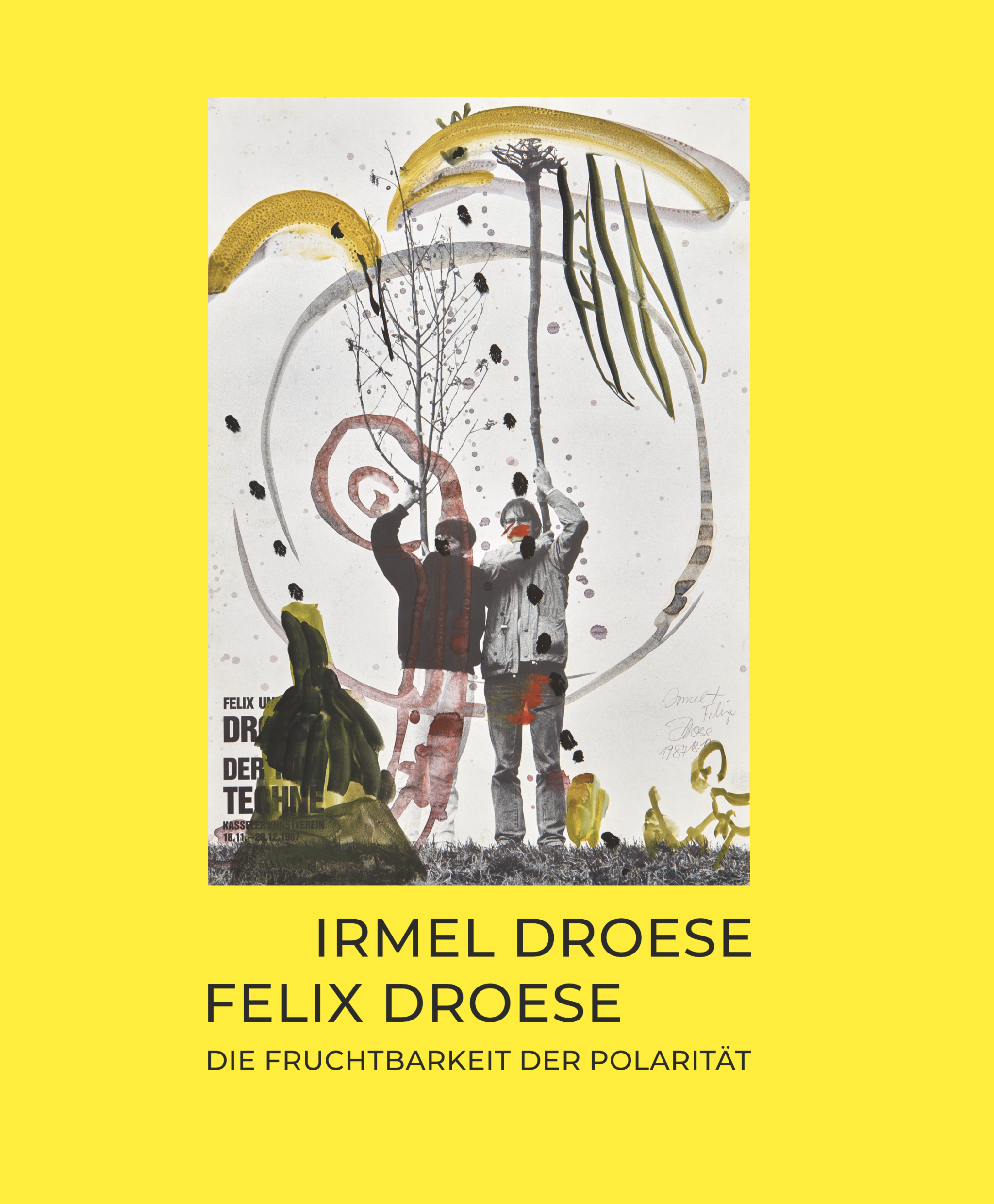
Irmel Droese. Felix Droese
Die Fruchtbarkeit der Polarität28€ Add to cartA Tribute to the Artist Couple
Irmel Droese (b. 1943, Landsberg an der Warthe) and Felix Droese (b. 1950, Singen/Hohentwiel) first met in 1970, when both were students in Joseph Beuys’s class at the Kunstakademie Düsseldorf. In a decades-long partnership in life and art, they have built oeuvres that, both each for itself and in dialogue with each other, scrutinize a rapidly changing reality. Irmel Droese creates expressive stage characters, sculptural oil paper figures, and depictions of humans on paper, while Felix Droese’s diverse ensembles and large-format papercuts grapple with money, economic questions, and the rising predominance of commercial considerations. His art gained international renown with his participation in documenta 7 in 1982 and the 43rd Biennale di Venezia in 1988. Designed in close collaboration with the artists, the publication documents their separate and joint oeuvres, drawing attention to societal questions.
-
Liam Gillick
Filtered Time (ENGLISH)28€ Add to cartThe sculptor and object artist Liam Gillick (b. Aylesbury, UK, 1964; lives and works in New York) has created an intervention titled Filtered Time for the historic galleries of the Pergamon Museum in Berlin. Projections of light and color and acoustic effects condense six thousand years of cultural history into an immersive spatial experience. Gillick initiates a conversation between the iconic Processional Way and the Ishtar Gate from Babylon, the monumental sculptures of Tell Halaf, and other exhibits, engendering new layers of meaning across all historical periods. The first joint project of the Vorderasiatisches Museum and the Hamburger Bahnhof—Nationalgalerie der Gegenwart makes for a singular visual and sensory experience. Designed by the artist himself, the publication not only documents the richly colorful production, but also provides insight into the eventful history of the museum, which is approaching its centennial.
Liam Gillick studied at the Hertfordshire College of Art in 1983–1984 and at Goldsmiths, University of London from 1984 until 1987. Gillick is a prolific published writer as well, producing essays, reviews, fiction, and theatrical scenarios.
-

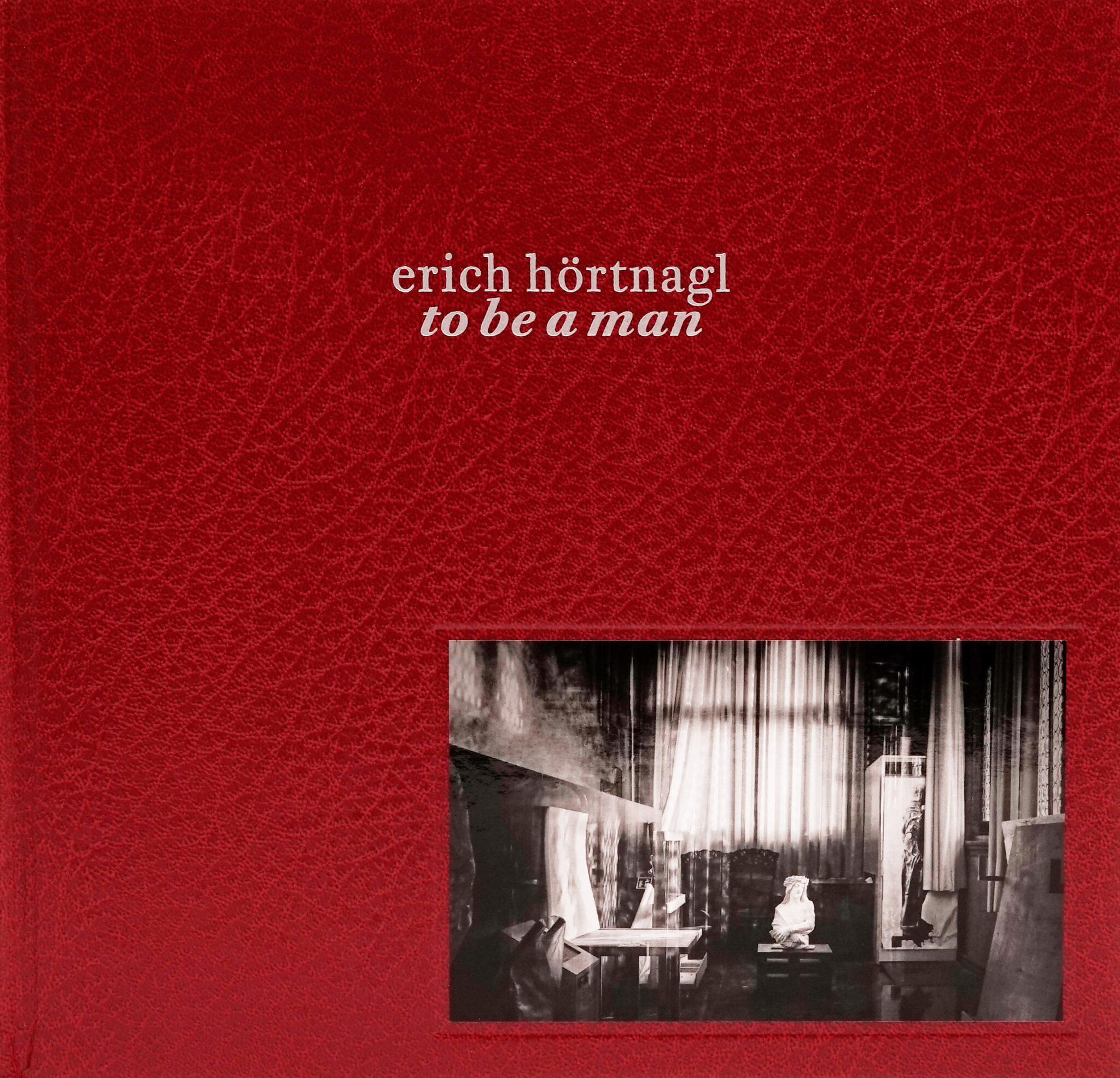
Erich Hörtnagl
to be a man38€ Add to cart“A photograph is a secret about a secret. The more it tells you, the less you know.” The witty remark, attributed to Diane Arbus, succinctly captures the twofold code at work in Erich Hörtnagl’s (b. Innsbruck, 1950) pictures. Aesthetically appealing photographs, mostly in black and white, show men (and women) in a wide variety of cultural, social, and religious contexts: from Swedish bikers and drag queens to monks in Myanmar, from Turkish belly dancers to Tyrolean performers in traditional attire. What looks at first glance like a conventional photobook soon reveals itself to be a brilliantly staged interactive riddle around clichéd notions of masculinity with positive and negative connotations, around gender roles and persistent stereotypes. With the deftly composed visual meta-narrative in to be a man, Hörtnagl, a seasoned theater and film director, lures us into a trap, and the only way out is by taking the challenge head-on: by engaging in self-reflection and questioning our own prejudices and ideas.
-

Fritz Overbeck und Hermine Overbeck-Rohte
Der Briefwechsel38€ Add to cartIntimate Glimpses from the Marriage of Two Worpswede Artists
In the final years of the nineteenth century, numerous painters settled in the village at the foot of Weyerberg hill, followed by young women who took classes with the local artists. Fritz Overbeck (b. Bremen, 1869; d. Bröcken near Vegesack, 1909) and Hermine Overbeck-Rohte (b. Walsrode, 1869; d. Bremen, 1937) became one of Worpswede’s husband-and-wife creative duos, though their union has been less celebrated than those of Otto Modersohn and Paula Becker or Rainer Maria Rilke and Clara Westhoff. Like the stories of their more famous neighbors, theirs exemplifies life and work in the artists’ colony, but also the dogged struggle for equality in the creative professions. Yet unlike those other relationships, theirs did not break up over the conflict between art and marital life; it lasted until Fritz Overbeck’s tragic early death. In a first, this book contains virtually the entire extant correspondence between the Overbeck-Rohtes in unabridged form and with numerous annotations. Offering fresh and nuanced insight into the lives and oeuvres of its protagonists, it makes for moving and entertaining reading.
- temporarily not available

Norbert Bisky
Im FreienRead moreThe beauty of male bodies, hedonism, bold colors—Norbert Bisky (b. Leipzig, 1970; lives and works in Berlin) is widely regarded as the most successful exponent of contemporary figurative painting in Germany. Now the artist has created a series of seventeen works on canvas and paper based on associations sparked by the oeuvre of the Expressionist Max Pechstein (1881–1955). The title “Im Freien” not only refers to the scenes they depict, which play out under the open sky; Bisky—who grew up in East Germany, which is to say, in what he calls “circumstances that were not free”—also grapples with the question of what liberty means to us today and what we do with it. The preoccupation with freedom led both painters to a quest for a personal utopia. Pechstein found it in the South Seas, where he had visited Palau, then a German colony, in 1914; the archipelago seemed paradisiacal to him, an idyll far removed from political and social reality. Bisky, by contrast, focuses less on the exotic landscape than on its residents, whom he stages as individual members of a globalized society.
Norbert Bisky enrolled at Humboldt-Universität in Berlin in 1994 to read German literature and art history but switched to the Berlin University of the Arts before year’s end; he studied painting with Georg Baselitz and entered Baselitz’s master class in 1999. He was a visiting professor at the Haute école d’art et de design, Geneva, in 2008–2010 and at the Braunschweig University of Art (HBK) in 2016–2018.
-

Ohne Schlüssel und Schloss
Chancen und Risiken von Big Data19,90€ Add to cartVon Kunsthandwerk zu digitaler Verschlüsselung
An jeder Haustür ziehen wir Grenzen, wir schließen auf und schließen ab. Und noch in jüngster Vergangenheit war eindeutig, was als Verschlusssache galt. Ganz anders stellt sich diese Frage im IT-Zeitalter. Ausgehend von der kunsthandwerklichen Sammlung des Museum Pfalzgalerie Kaiserslautern wird deutlich, wie in früheren Jahrhunderten über mechanisch und symbolisch aufwendig gestaltete Schlösser, Schränke oder auch Reliquienbehältnisse Distanzen austariert wurden. Sie alle sind sichtbares Vehikel für die bewusste Wahrnehmung von innen und außen, zugehörig und ausgegrenzt, wissend und unwissend oder öffentlich und privat. Für Big Data gilt dies in keiner Weise mehr. Beim Digitalen werden Serviceleistungen mit Datenerhebungen verbunden, deren weiteren Einsatzbereiche wir weder unmittelbar verstehen noch überblicken können. Historische, technologische und philosophische Überlegungen bieten wichtige Beträge zur aktuellen Debatte und Einschätzung der Risiken und Chancen von Big Data.
-

Sam Falls
After Life45€ Add to cartSam Falls (b. San Diego, 1984; lives and works in New York) delegates the authorship of his works to the phenomena of nature. Applying water-reactive dry pigments or plant parts to support media like canvas, aluminum, or tiles and then exposing them to the effects of sun, rain, and wind at selected sites for extended periods, he deliberately integrates the agency of chance into his art. The playful yet conceptually rigorous process is a metaphor for the impermanence of all bodily existence. Falls’s symbiotic work with nature and its elements evinces references to the technique of the photogram as well as land art. Melding diverse media—photography, sculpture, and painting—he bridges the gulf between artist, object, and beholder.
Sam Falls studied at Reed College in Portland, Maine, and at the International Center of Photography Bard in New York. He has had numerous solo exhibitions, including at the Hammer Museum, Los Angeles, the Mori Museum, Tokyo, and Frankfurter Kunstverein.