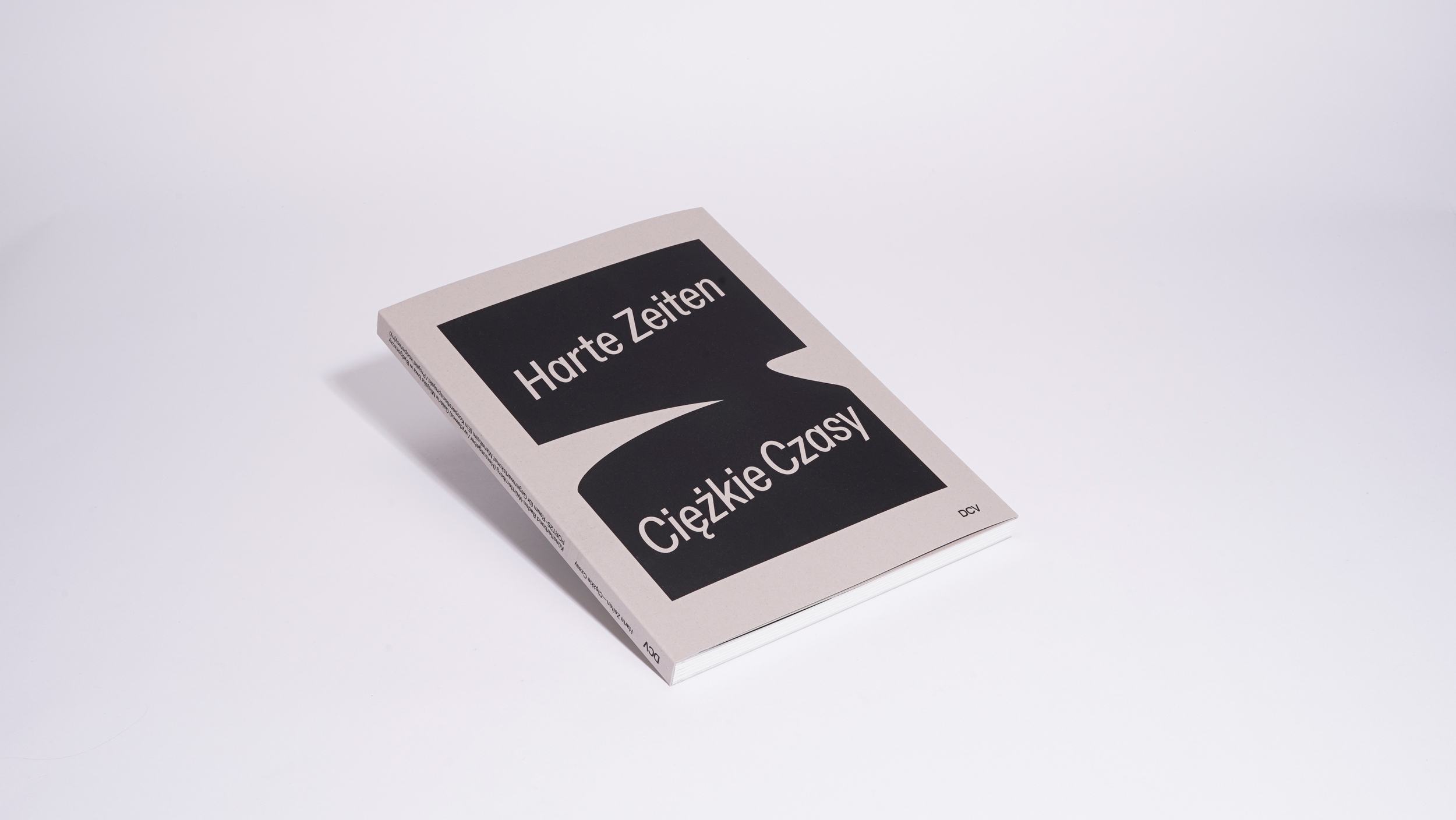
Harte Zeiten
Ciężkie Czasy
 | |
|---|---|
| Editor(s) | |
| Author(s) | Wolfgang Ullrich, Joanna Kiliszek, Paulina Olszewska, Schamma Schahadat, Simone Rueß |
| Design | Bureau Progressiv, Stuttgart |
| Size | 22 x 30 cm |
| Cover | Softcover |
| Pages | 224 |
| Illustrations | 175 |
| Language(s) | Deutsch, Polnisch |
| ISBN | 978-3-96912-158-0 |
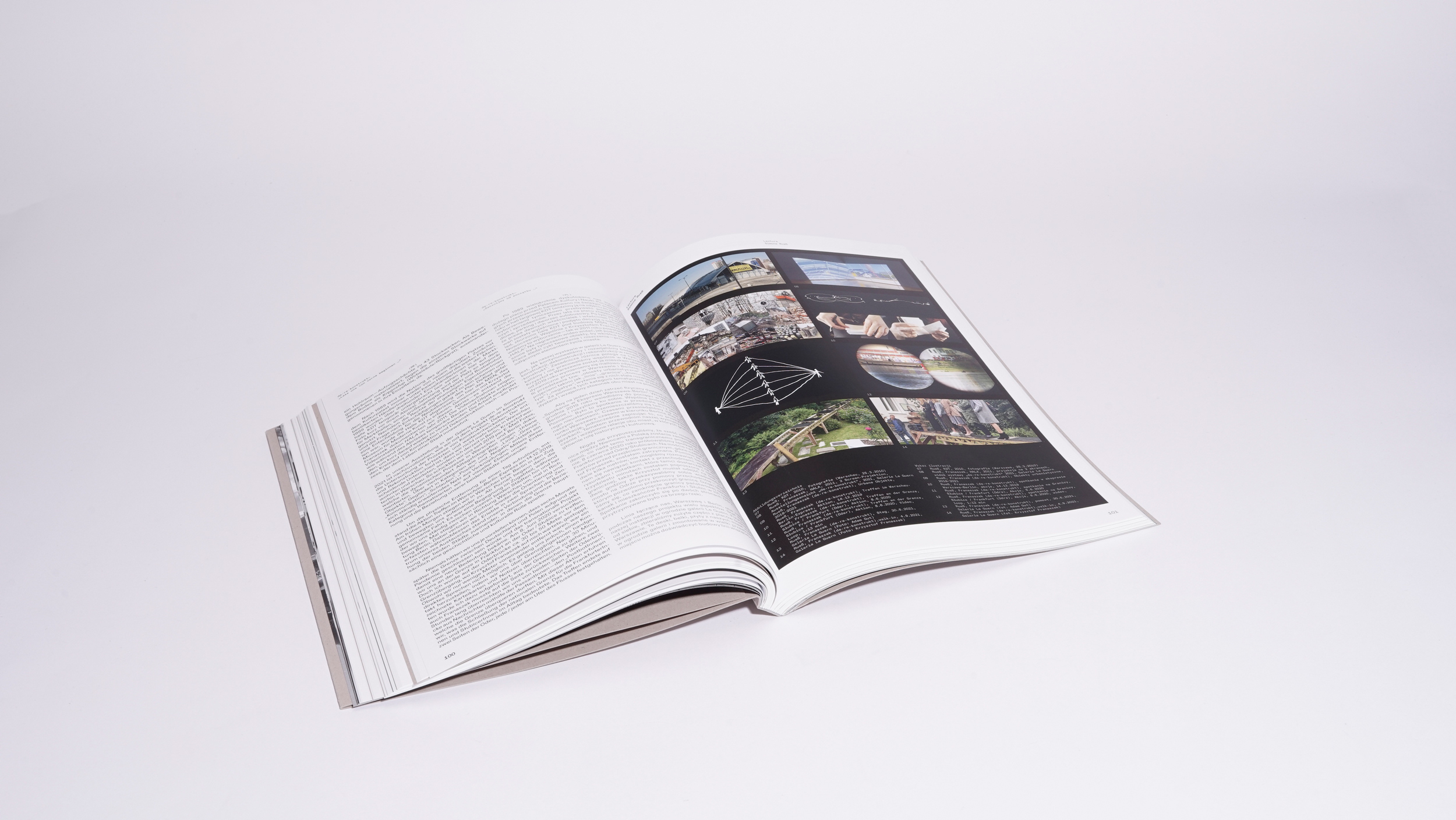
Increasingly pressing global political and societal challenges are always also rewarding subjects of creative engagement, and sometimes artists devise anticipative approaches to real-world problems.
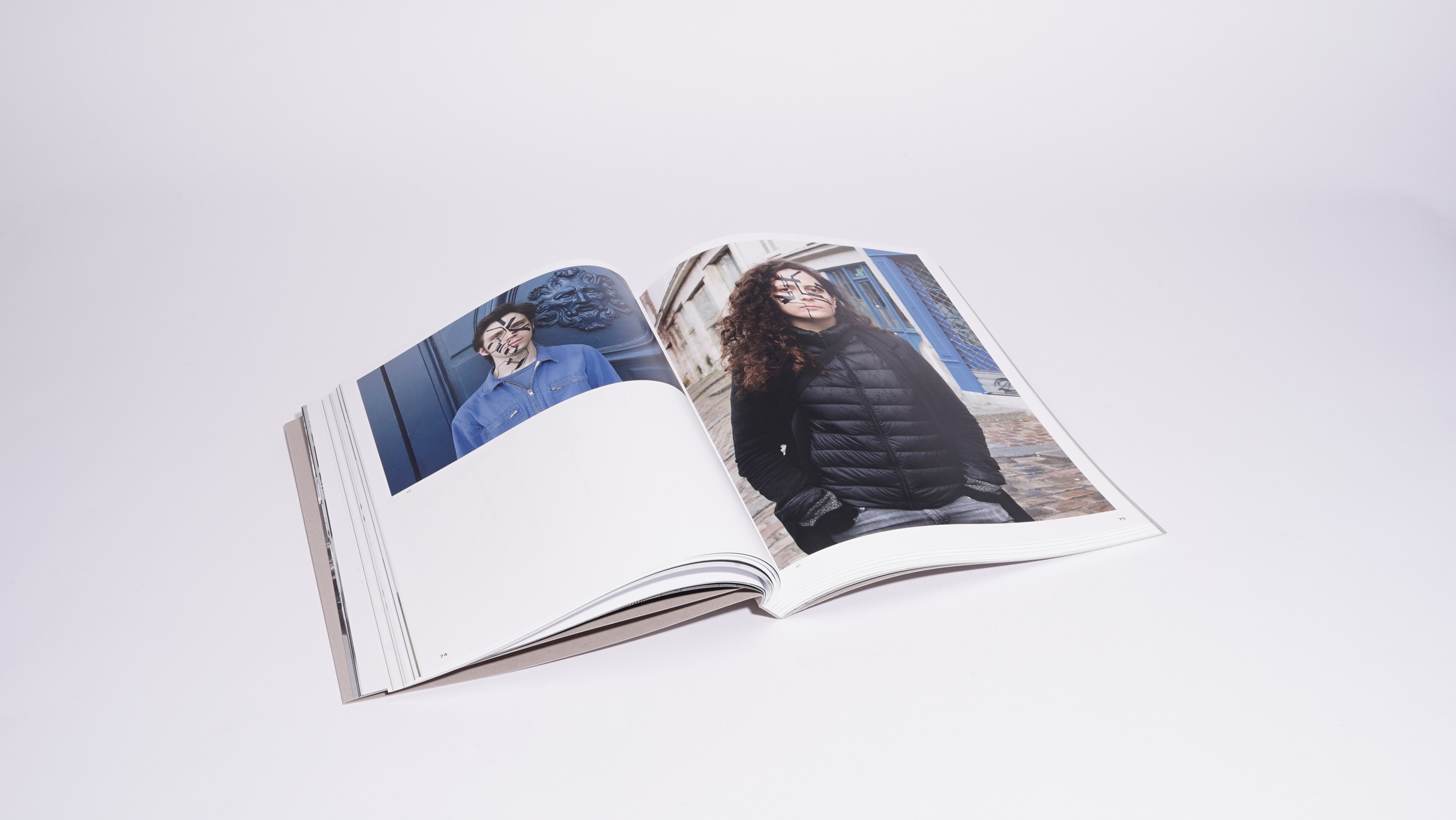
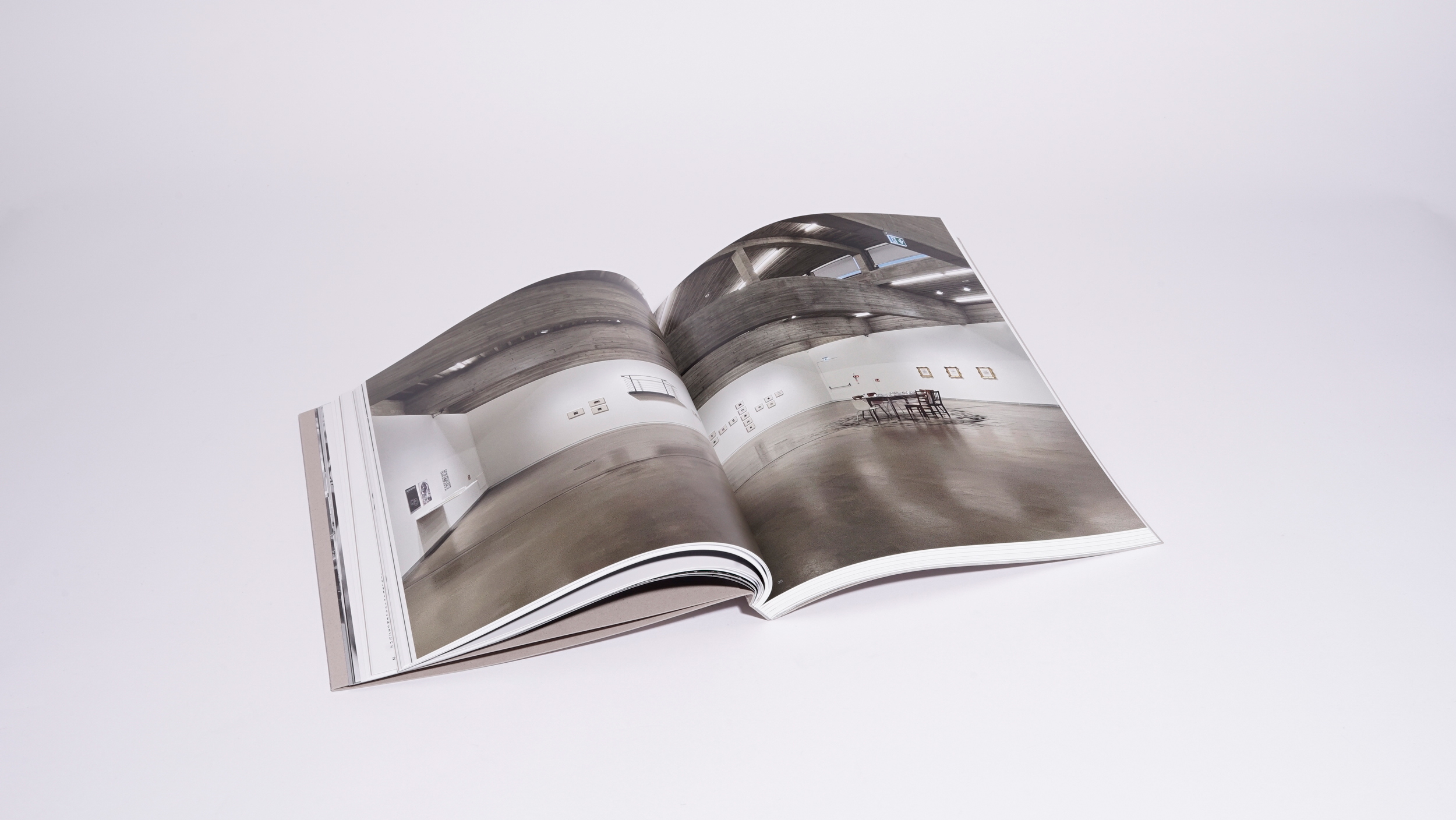
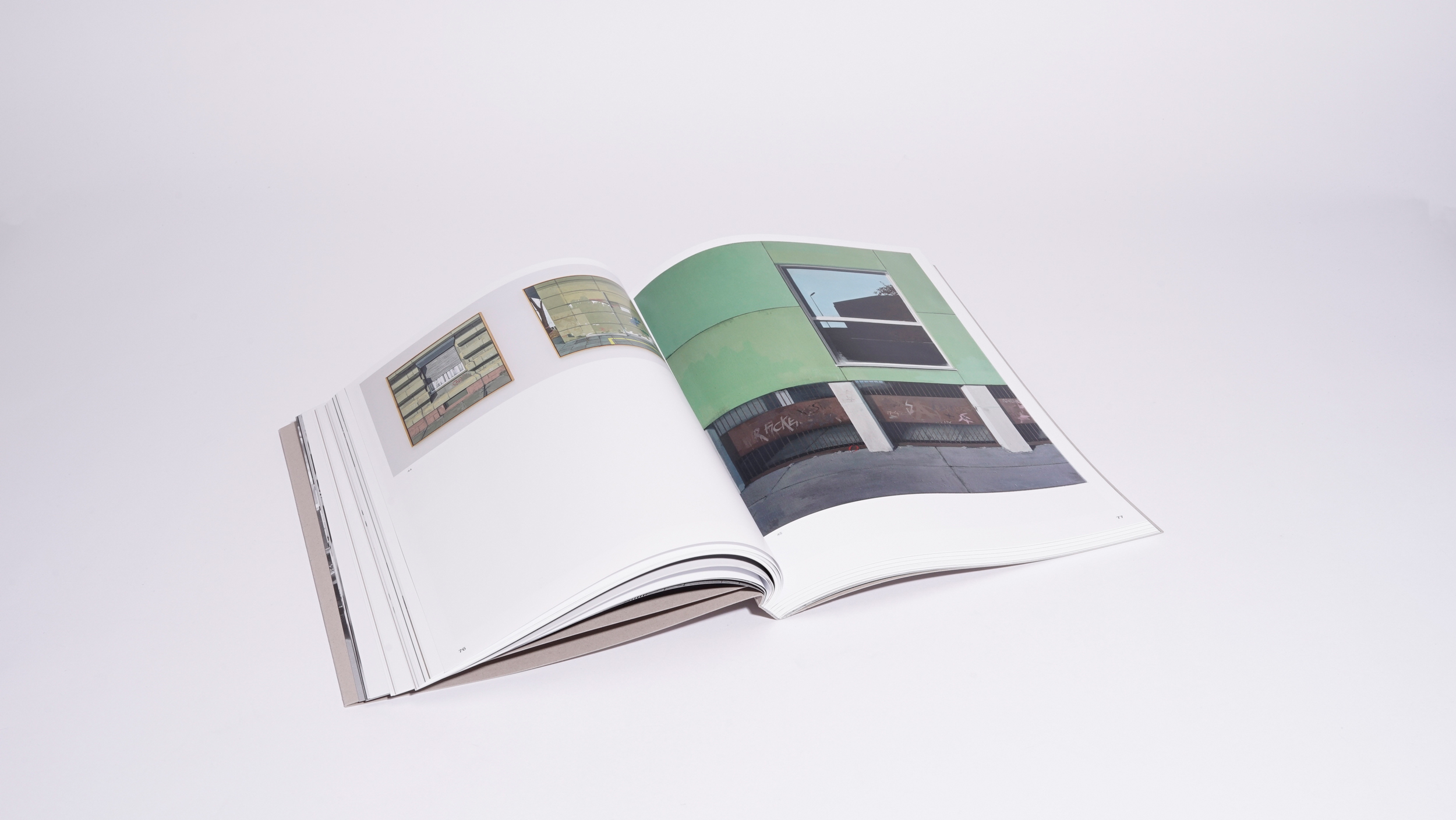
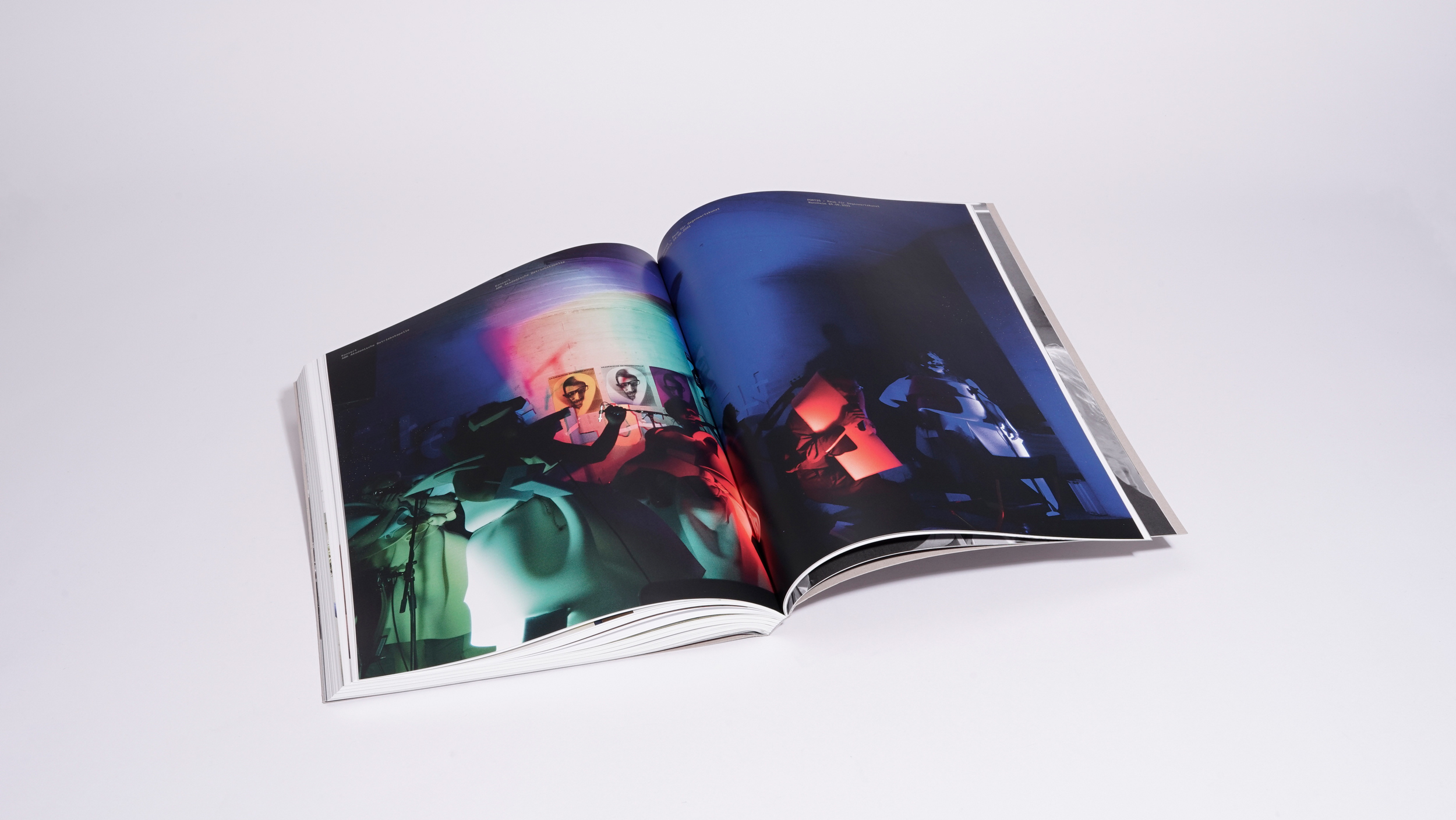
Harte Zeiten—Ciężkie Czasy is a cooperative venture launched by Künstlerbund Baden-Württemberg; Port25—Raum für Gegenwartskunst, Mannheim; and Galeria Miejska bwa, Bydgoszcz, Poland. It showcases works by altogether ten Polish and ten German contemporary artists. Putting the principle that art knows no boundaries into practice, the publication, with statements from Wolfgang Ullrich, Joanna Kiliszek, Schamma Schahadat, and others as well as documentation of the symposium held in September 2021, inspires forward-looking reflections on the conditions in which cultures thrive and similarities and differences between the two countries and beyond.
More books
-

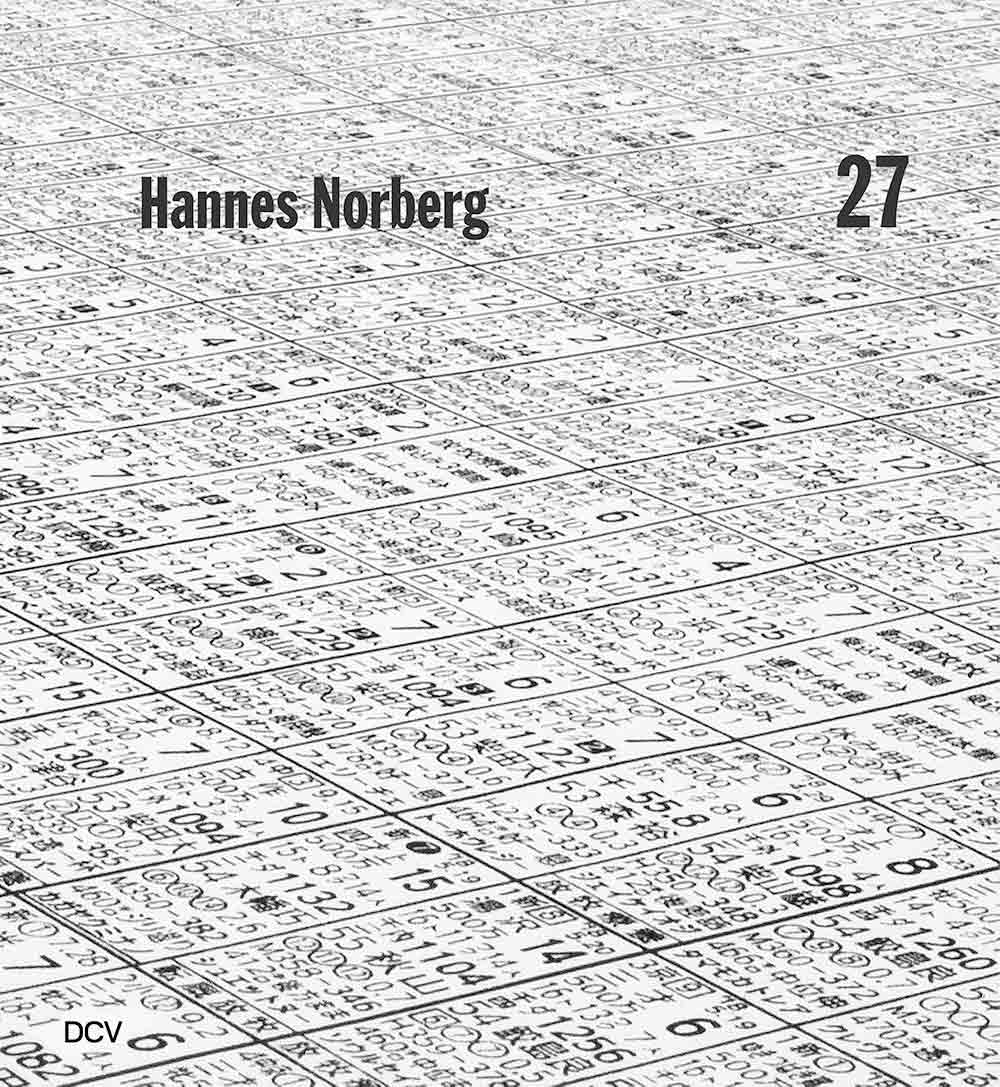
Hannes Norberg
2728€ Add to cartThe Ideal of Simplicity, Clarity and Timelessness
To make his photographs, Hannes Norberg (b. 1969, Worms; lives and works in Düsseldorf) constructs artificial spaces that integrate elements of painting, drawing, collage, and sculpture. Rather than reproducing selected details of an existing reality, his works make empty space and the play of light and shadow their point of departure. In his most recent pieces, the artist has focused on samples of typography that he collected on his travels and in numerous libraries all over the world and subjected to graphical redaction. Captured in natural light in his studio, his pictures showcase the quiet beauty of writing and paper, while their landscape-like aura gestures toward their place of origin. Designed by the artist himself, the book marks the public première of a selection of twenty-seven new photographs.
Hannes Norberg studied fine arts at the Kunstakademie Düsseldorf and was an artist-in-residence in Paris, New York, Florence, São Paulo, Xiamen and Seoul.
-

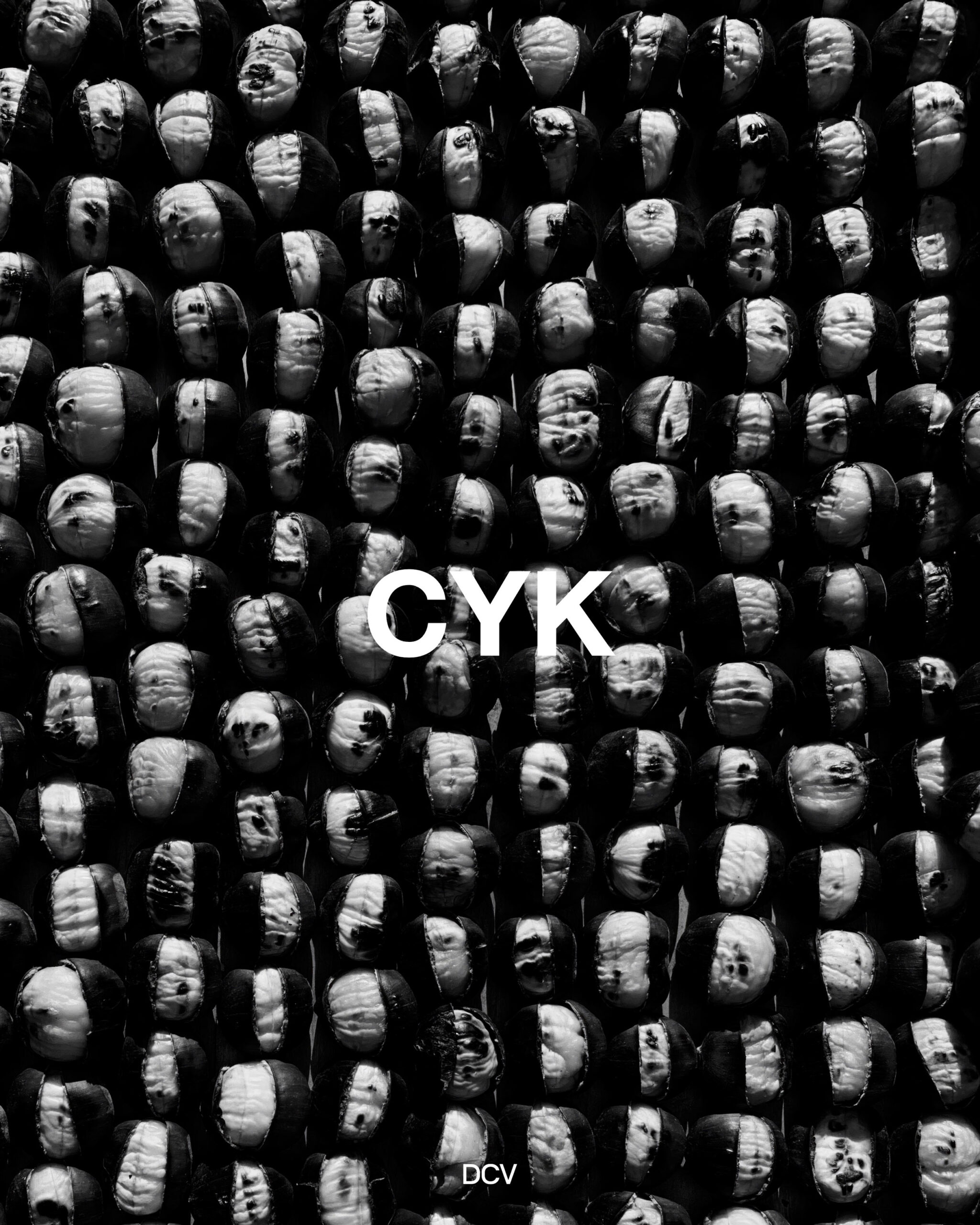
Can Yasar Köklü
CYK55€ Add to cartThe young photographer, graphic designer, and filmmaker Can Yasar Köklü (b. Schwelm, 2003; lives and works in Brooklyn) grew up between Cologne and Istanbul and currently studies at New York’s renowned Pratt Institute. In his first publication CYK—an artist’s book featuring breathtakingly beautiful photographs and personal writings—he explores his experiences growing up, the traditions that inform his art, and his feelings in three different cultures: “Heimat” charts his native Germany, where he spent most of his life; “Memleket” is dedicated to Turkey, where his roots are; and “Home” presents the impressions Köklü gathered during a year in high school in Los Angeles and now in New York, where he continues his education. Driven by a passion for storytelling, he captures singular—fascinating and deeply moving—moments in time.
-
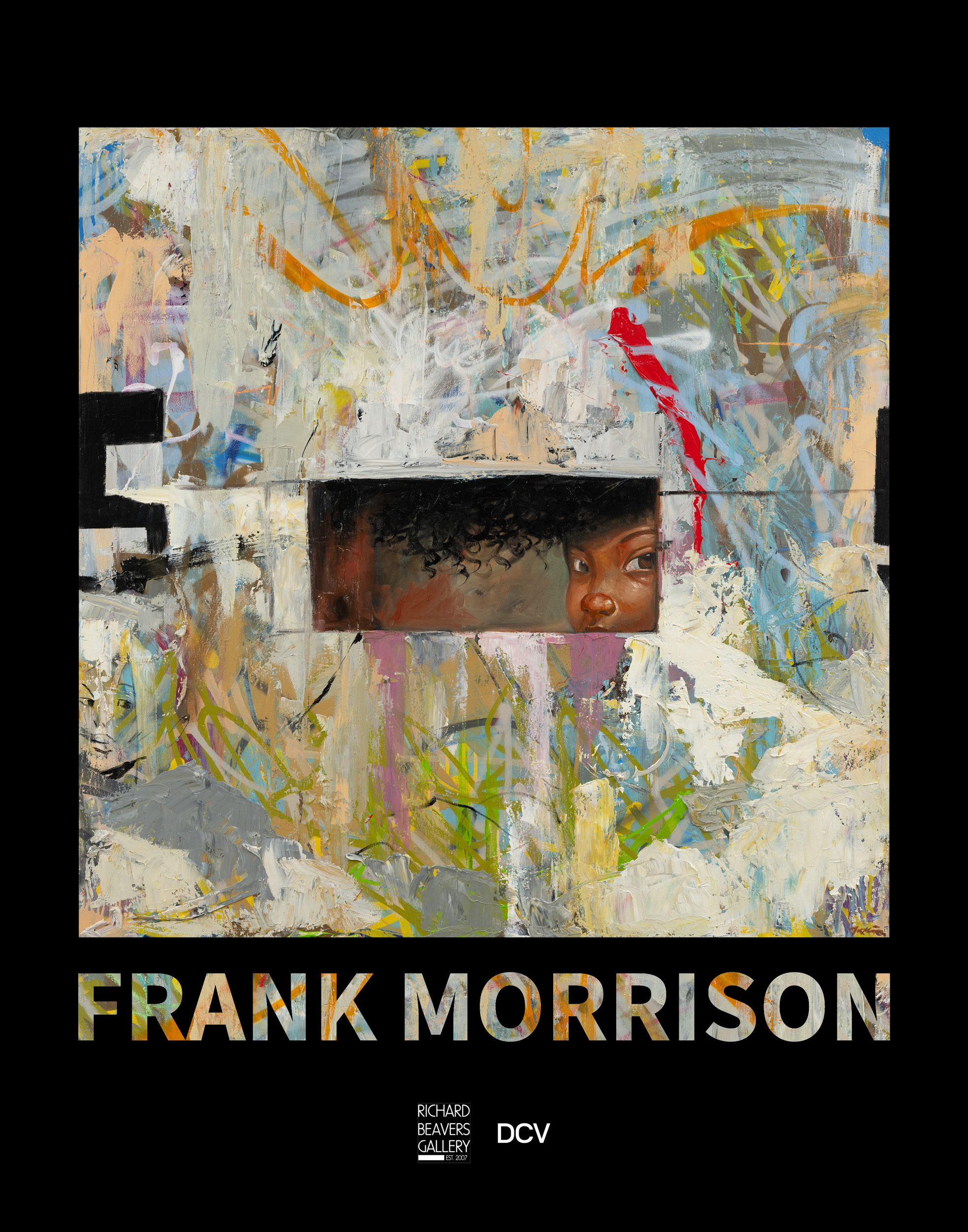
Frank Morrison
38€ Add to cartFrank Morrison’s (b. 1971, lives in Atlanta) dynamic urban-mannerist images celebrate Black Americans’ resilience and dignity in everyday life. A child born into the realities of America’s structural inequities, the painter and illustrator knows firsthand that creativity and community have always found ways to rise, thriving even in the face of exclusion. Hip-hop and graffiti are resistance. Rather than repeating the old stories of struggle, this book celebrates the beauty, ingenuity, and strength that have always lived in marginalized neighborhoods. The book documents Morrison’s recent exhibitions, one of which is dedicated to young people, with frame-braking images that interweave narrative forms of pop art: an explosive tribute to genius flourishing in the architecture of exclusion.
-

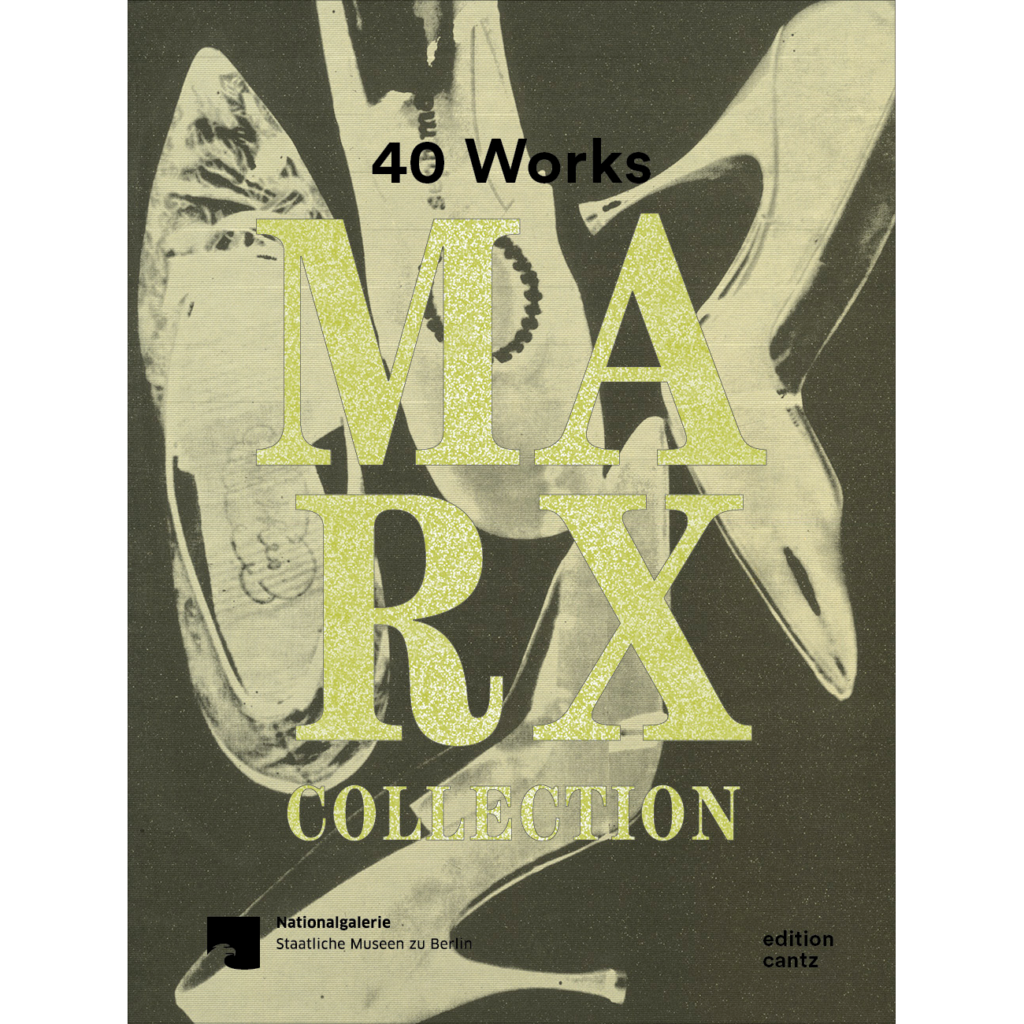
Marx Collection
40 Works29€ Add to cartSelected works from one of the most renowned collections of modern and contemporary art in Germany
Marx Collection – 40 Works is the first publication on this collection that focuses on important individual works. The selection ranges from the early 1960s to the present, encompassing one of the most exciting periods in recent art history. An illustrated chronicle provides background information on the historical context of the Marx Collection and its exhibition at the Nationalgalerie in Berlin. With work by Matthew Barney, Georg Baselitz, Joseph Beuys, Ross Bleckner, Francesco Clemente, Martin Disler, Rainer Fetting, Dan Flavin, Günther Förg, Peter Halley, Keith Haring, Candida Höfer, Donald Judd, Anish Kapoor, William Kentridge, Anselm Kiefer, Jeff Koons, Roy Lichtenstein, Richard Long, Gerhard Merz, Robert Rauschenberg, Ugo Rondinone, Thomas Ruff, Julian Schnabel, Cindy Sherman, Thomas Struth, Sam Taylor-Johnson, Cy Twombly, Andy Warhol, Rachel Whiterea
Dies ist die englische Ausgabe, hier geht’s zur deutschen Ausgabe
-
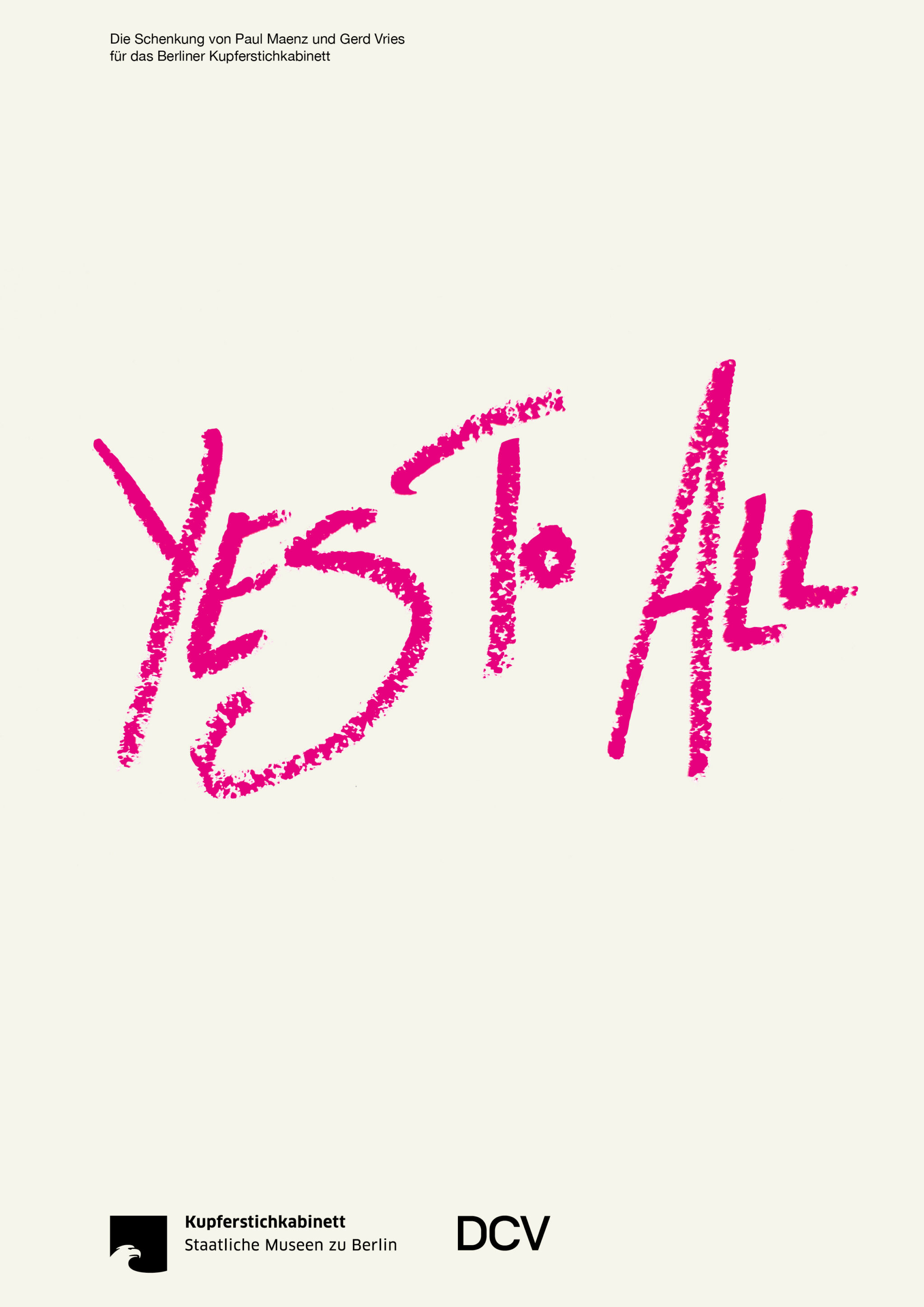
Yes To All
Die Schenkung Paul Maenz Gerd Vries42€ Add to cartThe catalog accompanying the exhibition YES TO ALL offers profound insight into a collection of over nine hundred works on paper—from postcards and drawings to photographs and posters—that was gifted to the Kupferstichkabinett in 2022, with subsequent additions over the years until 2025. The donors are Paul Maenz and Gerd de Vries, who ran a gallery for contemporary art in Cologne until 1990 and chaperoned the evolution of avant-garde art from the conceptualism of the late 1960s to the neo-expressive painting of the 1980s. The most recent works in the collection date from 2024. Several essays and a conversation with the donors invite the reader to experience the stylistic and thematic polyphony of Western art in the late twentieth and early twenty-first centuries in new ways.
-

Lars Breuer
The Love of the Gods32€ Add to cartThe art of Lars Breuer (b. Aachen, 1974; lives and works in Düsseldorf and Cologne) is set apart by its broad spectrum of systems of reference. In his large-format installations, text-based works in his own typography draw connections to literature and art history. They are complemented by figurative and abstract paintings and photographs.
In The Love of the Gods, Breuer presents 104 C-prints of photographs for which he pointed the camera’s lens into the barrels of disused rifles, pistoles, revolvers, and cannons. The pictures were taken on the artist’s travels to Athens, Bangkok, Buenos Aires, Copenhagen, Leverkusen, Ingolstadt, Melbourne, New York, Oslo, and Phnom Penh, in museums, palaces, and public squares. Breuer’s conceptual and meticulously sober-minded approach yields almost abstract compositions showing nothing but the round muzzles and the dark interiors of the weapons on a deep-black ground. We see only a ring-shaped ornament until it dawns on us that it is part of a lethal implement. A cruel constant of human existence stares us in the face: humans behind these weapons were perpetrators, humans in front of these weapons were victims. Lars Breuer’s turn the spotlight on what the aura of the ornaments conceals: they have wrought death.
-

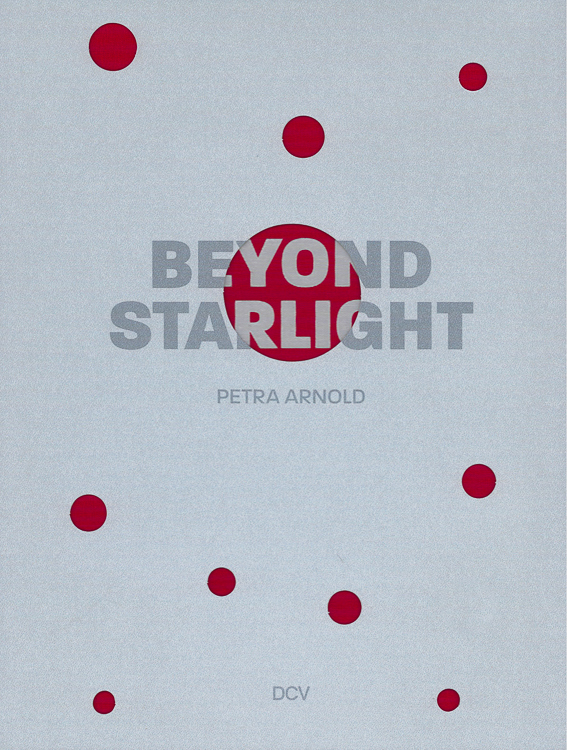
Petra Arnold
Beyond Starlight39,90€ Read moreThe Fischer Family of Circus Artists: A Photographic Long-term Observation
For more than a decade, the photographer Petra Arnold has shadowed the Zirkus Starlight troupe and the Fischers, a family of performers, taking analog photographs, mostly black-and-white, of their life behind the scenes. When she began the project, the Fischers were a large family, with thirty grandchildren. Over time, the company has had to downsize – the business environment is difficult, and few people can make a living as circus artists these days. Arnold’s photographs peek behind the curtain for a study of an existence between circus family and family circus – mostly outside the limelight. The portraits and unstaged scenes are documents of contemporary history and draw attention to the steady decline of circus culture.
-
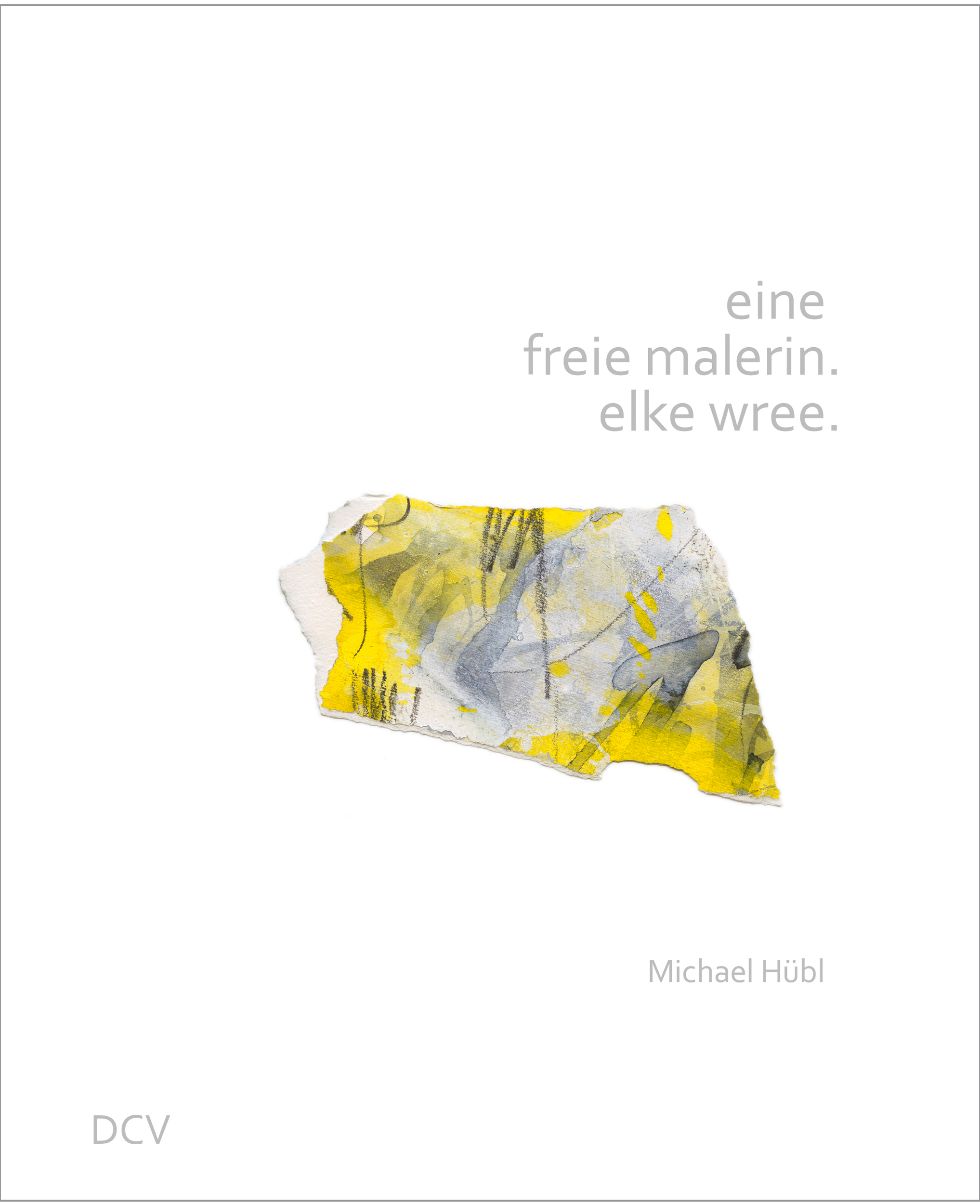
eine freie malerin.
elke wree.26€ Add to cartThe painter Elke Wree’s career (1940–2025) was defined by the debates of the post-war era. Art was considered a search for truth and intended to reveal the existentially essential. Fundamental questions were: Realism or abstraction? Genuine or fake? This book provides insight into the search for an authentic, contemporary visual language. Wree’s formative teachers in Karlsruhe and Berlin are discussed, as are her changing social environments and the rapid societal changes. Wree’s paintings were always nature-inspired abstraction with overlapping color spaces and painting gestures. Wree groups her pictures with terms such as condensations and clearings, in-between lands, or traces of light and time. This volume is simultaneously a biography, panorama, analysis, and homage.
-

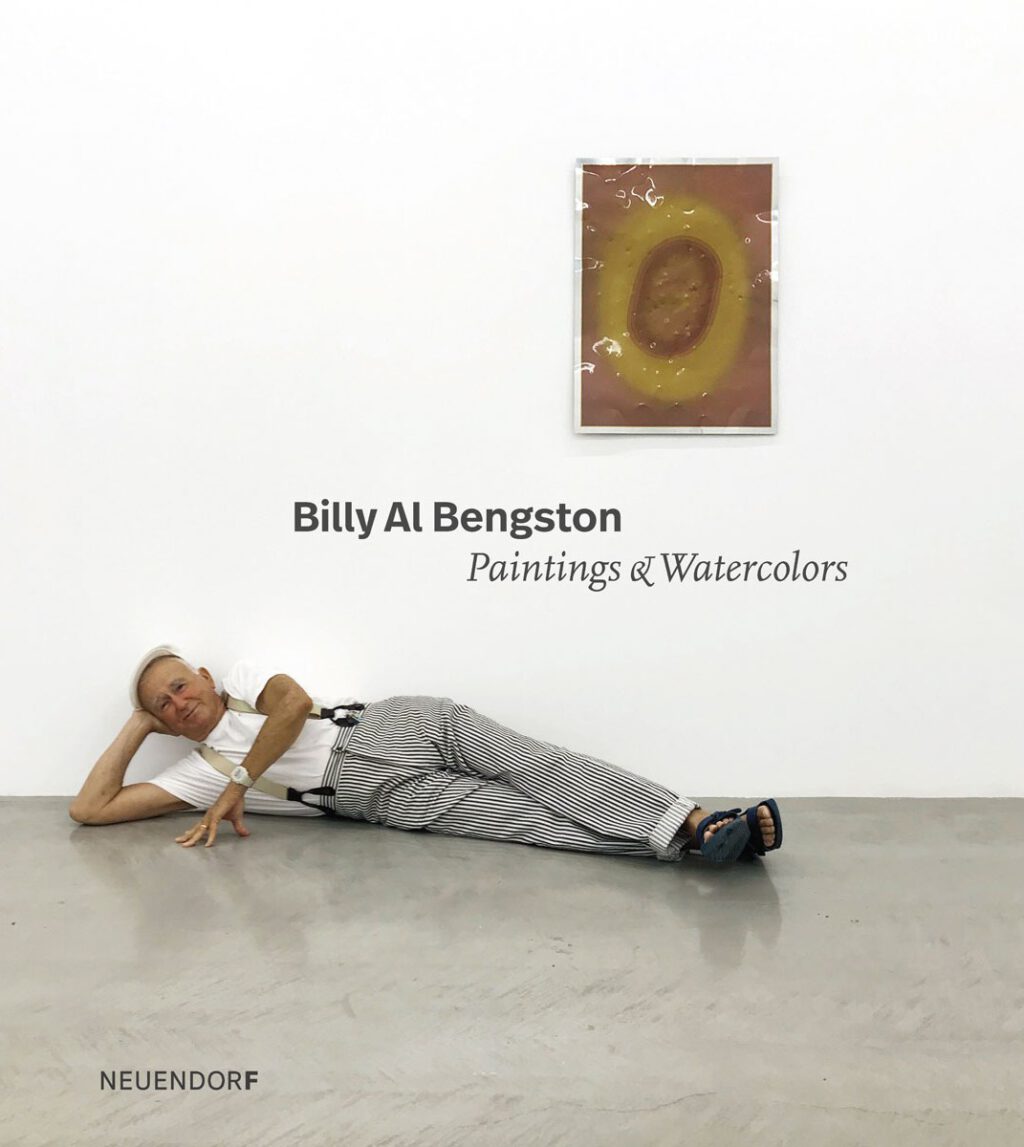
Billy Al Bengston
Paintings & Watercolors48€ Add to cartThe First Monograph on the Californian Pop Artist Since More Than Thirty Years
Billy Al Bengston (b. 1934, Dodge City; lives and works in Venice, California, and Honolulu, Hawaii) is the very personification of the cheerful, carefree attitude towards life in California – with his work as well as his person: a former surfer and motorcycle racer, an extravagant artist and key figure of West Coast Pop Art. After studying at the California College of Arts and Crafts and the Otis Art Institute, he exhibited at the legendary Ferus Gallery in 1957 and was the central figure among a group of artists that included Frank Gehry, Edward Kienholz, Ed Ruscha, and Ken Price. BAB, as he apostrophizes himself, inserts car and motorcycle parts as motifs into his otherwise abstract paintings, using lacquer and spray paint instead of oil, and aluminum panels with at times dented surfaces instead of the traditional canvas. Art and lifestyle combine to create the individual “Bengston iconography” of California Cool.
-

Claudia Fährenkemper
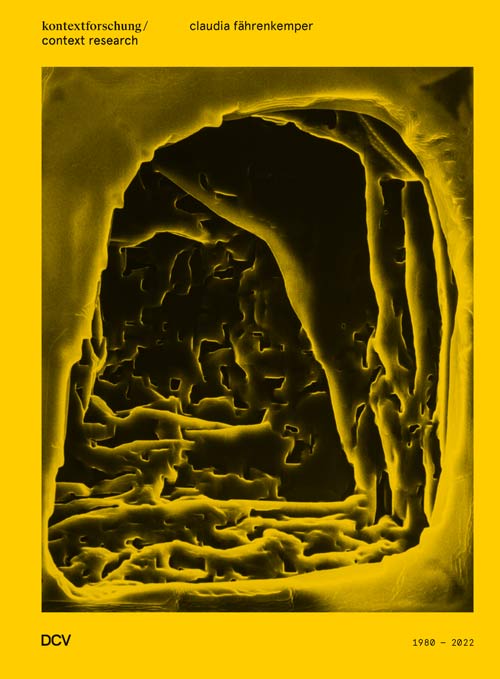
Kontextforschung / context research 1980–202268€ Add to cartClaudia Fährenkemper (b. Castrop-Rauxel, 1959; lives in Steinheim/Westfalen) photographs enormous as well as minuscule objects using scanning electron microscopes to produce images that are as fascinating as they are disconcerting. The play with extreme scales yields fantastic visual worlds: American desert and canyon landscapes, the giant industrial machinery of open-pit mines in Germany, insects, plant seeds, crystals, and plankton, plus historic armaments from Europe and Japan. The lavishly designed book is the first to gather works from her entire oeuvre, which now spans four decades. Surveying the most important of Fährenkemper’s conceptual series, it reveals unexpected interconnections between disparate motifs on vastly different scales from nature, technology, science, and cultural history.
Claudia Fährenkemper studied at Fachhochschule Köln, today’s Cologne University of Applied Sciences, where Arno Jansen was her teacher, and with Bernd and Hilla Becher and Nan Hoover at the Düsseldorf Academy of Fine Arts. Her photographs are held by numerous museum collections, including at the Kunstmuseum Bonn, the National Gallery of Canada, and the Margulies Collection, Miami.
-
Alexandra Tretter
24€ Add to cartThe art of Alexandra Tretter (*1988) is as deep as it is playful. Owing just as much to the gentle spirituality of Hilma af Klint’s late geometries as it does to Sonia Delaunay’s exuberant disc paintings, almost bursting with sheer chromatic pleasure. Her compassionately designed artist’s book combines monumental paintings with intimate works on paper, all of which are imbued with the contexts of Tretter’s own life as an artist, as a woman, as a mother.
Her kaleidoscopic figurations unfold from a center at rest in itself and multiply in symmetry and asymmetry towards all sides. She contrasts the circular form, the unchanging basic element of her compositions, with the oval, which constantly strives beyond itself, transforming itself in ever-new permutations from one figure into the next, into eyes, mouths, breasts, petals or vulvas.
Her images strive for composure, unfold and blossom, only to let go of all gestalt-like form. Once gained stability is instantly pushed into turmoil. Colors flare up violently or flow delicately about, lighten or shade each other, carry or throw each other off course. Tretter equally realizes materialization and dissolution as basic principles of her painting.
Whereby all, what her images absorb, preserve and release, is experience, growth and slow maturing. Her paintings are “figurations of affection”, in which each individual turns towards something else, doubts or grows, at times turns away or surrenders all the more consciously. They question everything, start anew and yet find their way back to themselves, into their very own.
-

Born in the Woods
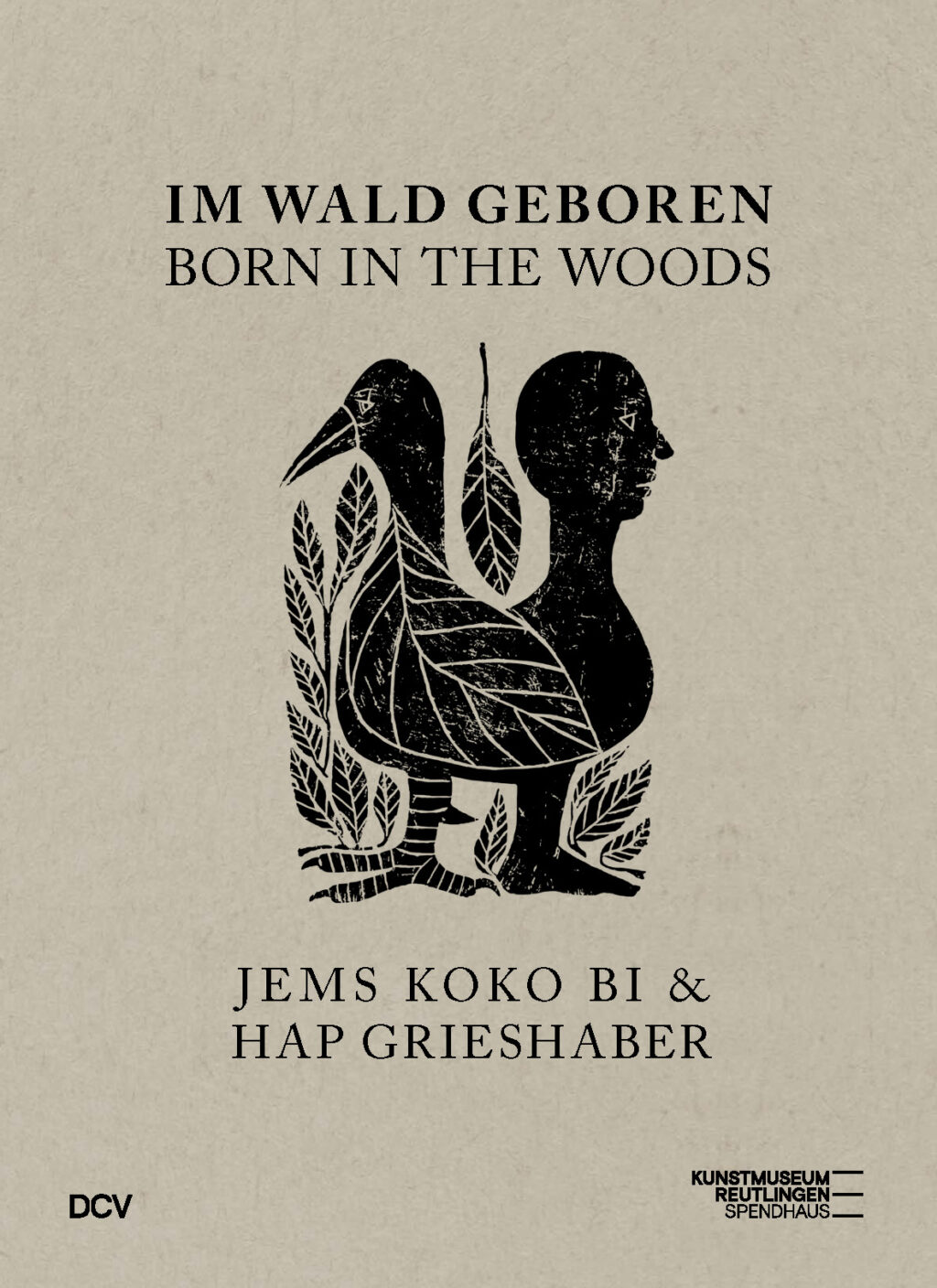
Jems Koko Bi & HAP Grieshaber24€ Add to cartThe Political Substance of Wood
Jems Koko Bi (b. Sinfra, Côte d’Ivoire, 1966; lives and works in Kaarst, Germany, Dakar, and Abidjan) is world-renowned for the monumental wood sculptures he creates using a machine saw. This book juxtaposes his most recent body of works with the large-format woodcuts of HAP Grieshaber (b. Rot an der Rot, Germany, 1909; d. Eningen unter Achalm, 1981). Although the two artists never met, their oeuvres are characterized by similar themes, values, and materials. The central concern is the fate of the forests and its momentous political and social implications: Grieshaber’s woodcuts articulate his principled opposition to the predatory exploitation of nature in the 1970s—an issue that is more relevant than ever today in light of the climate crisis and the Fridays for Future movement. Koko Bi’s figural groups bring this tradition of political art into our time, making a global and universally compelling case for a sustainable husbandry of our resources.
Jems Koko Bi studied at the Institut National Supérieur des Arts et de l’Action Culturelle (INSAAC), Abidjan, and the Düsseldorf Academy of Fine Arts. His work has been exhibited widely, including at the Centre Pompidou, Paris; at documenta 13; the Havana Biennial; and several Venice Biennials and Dakar Biennials. In 2019, he founded the forest biennial Abidjan Green Arts.
HAP Grieshaber studied advertising art at the Staatliche Kunstgewerbeschule, Stuttgart. His work is regarded as a signal contribution to the renewal of the woodcut medium in the twentieth century. He participated in documentas I, II, and III, held a professorship at the State Academy of Fine Arts Karlsruhe, and was honored with numerous awards and retrospectives.
-

Sonia Gomes
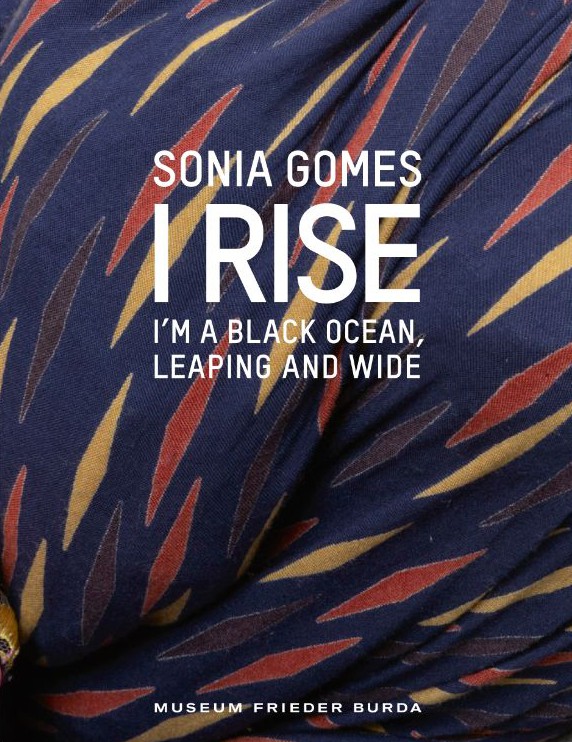
I Rise – I’m a Black Ocean, Leaping and WideRead more“My Work is Black, it is Feminine, and it is Marginal. I‘m a Rebel.”
The biomorphic sculptures of Sonia Gomes (b. 1948, Caetanópolis, Brazil; lives and works in Belo Horizonte, Brazil) have an eerie, almost magical presence. As the daughter of a black mother and a white textile industrialist, she grew up between two worlds. But the African culture and spirituality of her mother and grandmother, as well as an interest in rituals, processions, and myths, made a lasting impact on her life and her later work as an artist. As a teenager, Gomes began deconstructing textiles and items of clothing to create her own style and to make both items for practical use and craft objects. Having previously participated in the 56th Biennale di Venezia in 2015, Sonia Gomes now counts among the most influential artists in Brazil.
-
Ossian Fraser
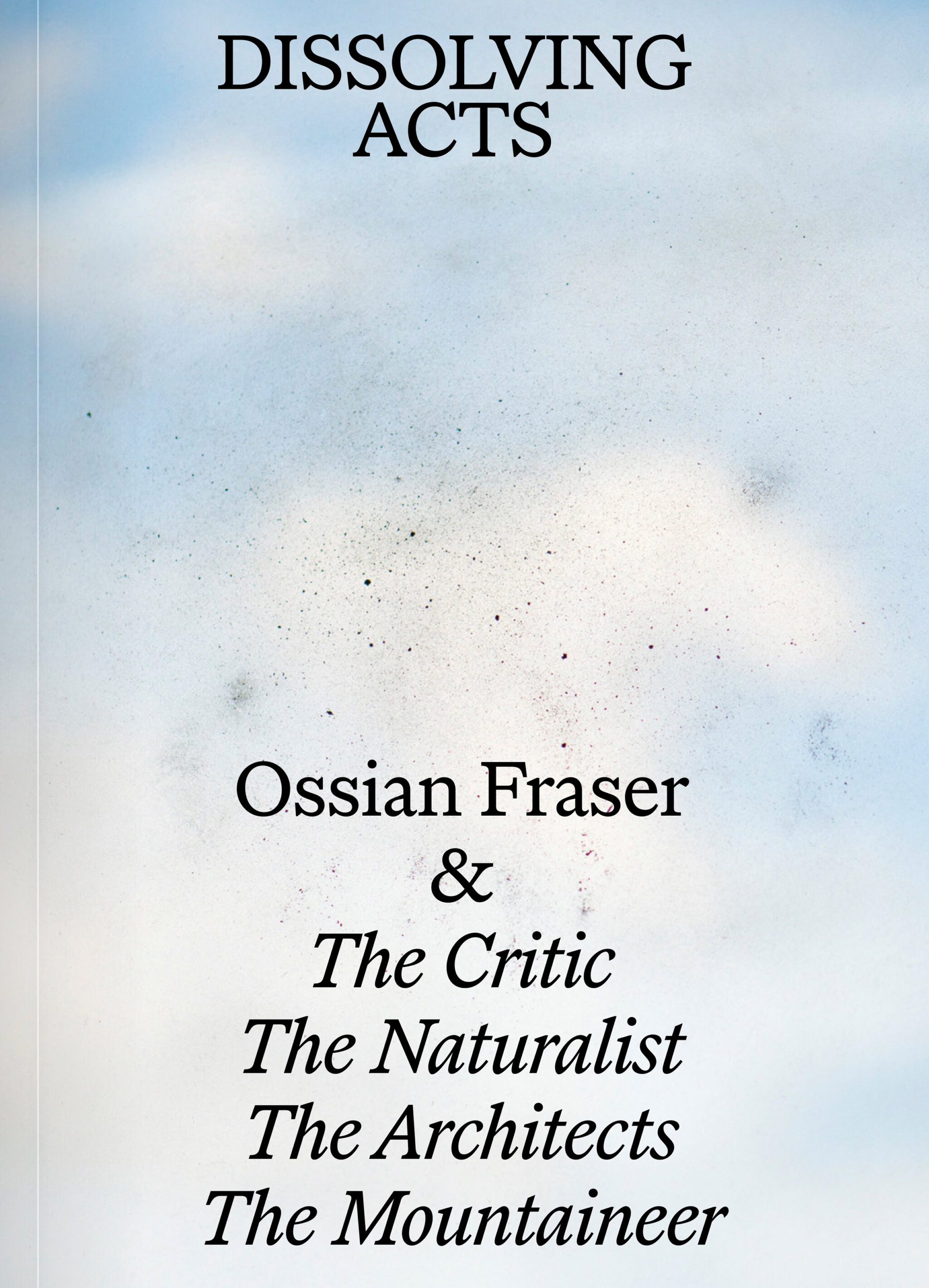
DISSOLVING ACTS38€ Add to cartOssian Fraser (b. Edinburgh, 1983; lives in Munich and Berlin) molds and captures evanescent moments. Working with volatile materials such as water, dust, or light, the artist exposes the latent potentials of unremarkable situations in the urban fabric and natural scenes. A tunnel in a city, a rock face in the mountains become points of departure and elementary components of his site-specific interventions, which he records in photographs. The book is the first to offer comprehensive insight into Fraser’s artistic practice. Series of pictures showcasing his conceptual and poetic pieces alternate with conversations that not only demarcate the framework in which his art operates, but also touch on the great issues of our time.
Ossian Fraser studied fine arts and sculpture at the Alanus University of Arts and Social Sciences, Bonn, from 2006 until 2009 and at the Weißensee Kunsthochschule, Berlin, from 2009 until 2013, rounding out his education in Albrecht Schäfer’s master class in 2013–2014.
-

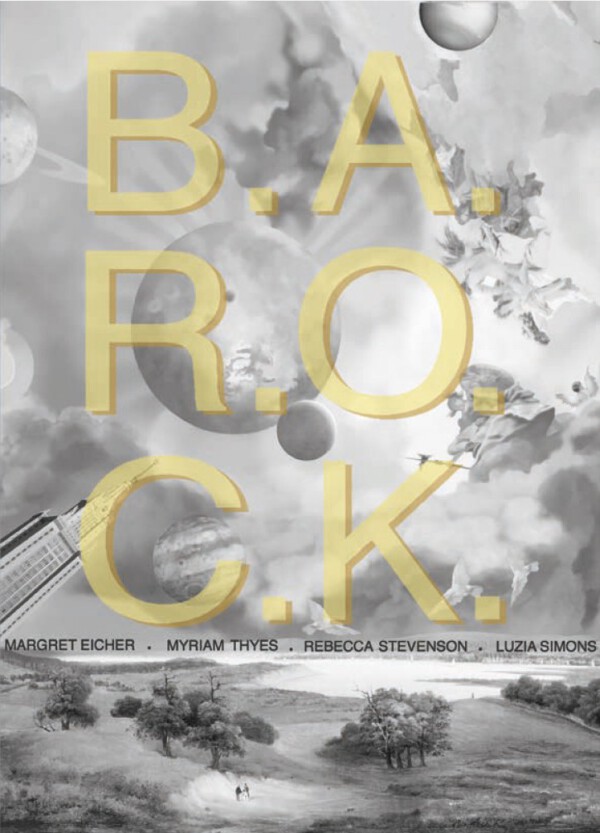
B.A.R.O.C.K.
24,80€ Add to cartArtistic Interventions in the Caputh Palace. Contemporary Parallels to the Baroque Era
Four international women artists spent more than three years studying Caputh Palace near Potsdam and creating works specifically for this magnificent location. The tapestries by Margret Eicher (b. 1955, Viersen; lives and works in Berlin), the floral scans by Luzia Simons (b. 1953, Quixadá, Brazil; lives and works in Berlin), the wax sculptures by Rebecca Stevenson (b. 1971; lives and works in London), and the ceiling painting projections by Myriam Thyes (b. 1963, Luxembourg; lives and works in Düsseldorf) blend into the surrounding space both naturally and surprisingly. With twelve double-page collages, the large-sized catalog is an artistic commentary on the ambitious project.
-

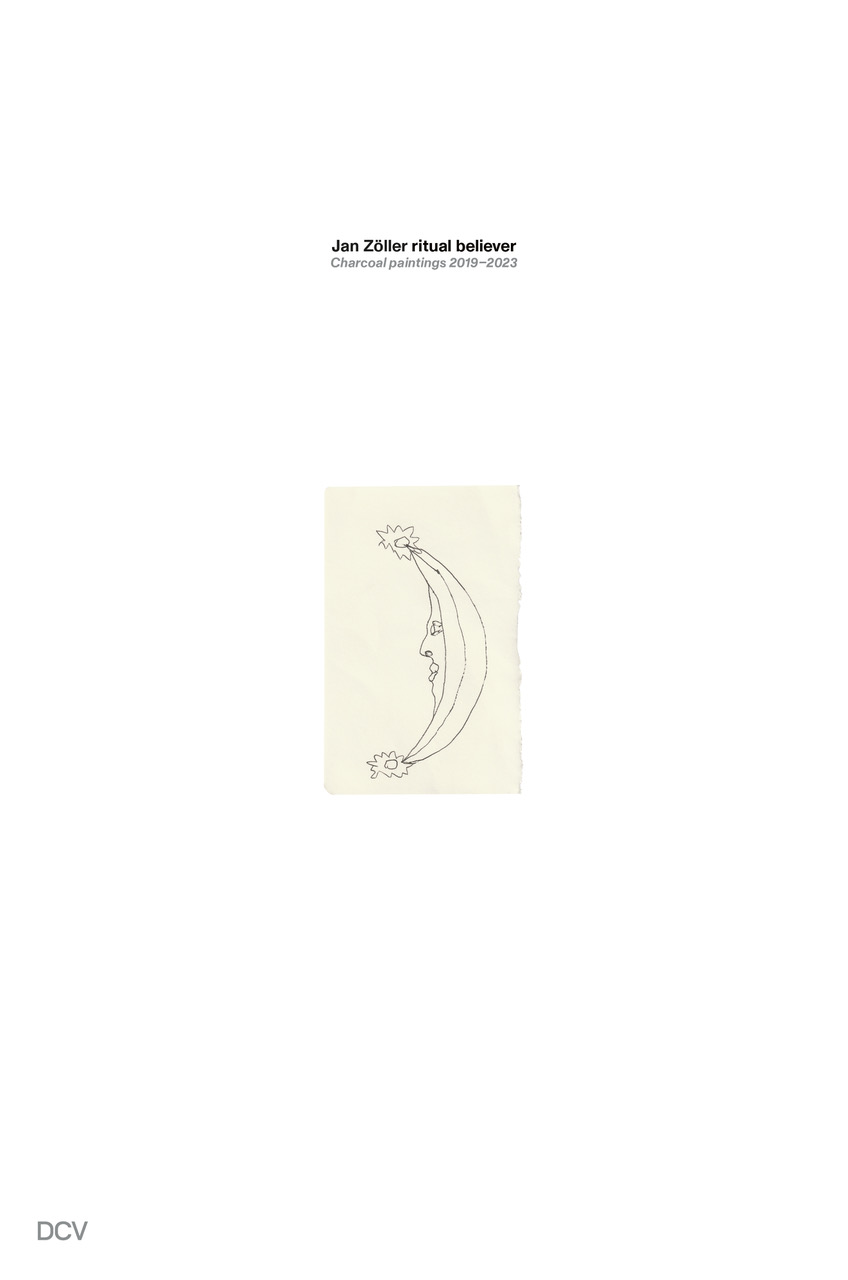
Jan Zöller
Ritual Believer40€ Add to cartJan Zöller’s (b. Haslach, 1992; lives and works in Karlsruhe) paintings, sculptures, and installations probe the discrepancy between economic production and the spiritual and magical dimension of art. The artist’s book Ritual Believer surveys the so-called charcoal paintings series, created between 2019 and 2023. For these works, the artist paints directly in charcoal on the unprimed canvas, making it impossible to correct “blunders.” Another distinguishing feature is the virtual absence of color; the austerity of the compositions contrasts with Zöller’s other, often intensely colorful paintings. The motifs that are the hallmark of his oeuvre—birds, running legs—are complemented by writing and text. Another aspect of this shift is that the works’ titles play a central part and almost figure as a creative element in their own right. For the text in the book, the artist sent the titles of the works shown to his brother, who wove them into a story. An appendix presents scanned archival materials. Notebooks and zines Zöller produced between 2015 and 2017 provide interesting insight into how he finds his motifs and his compositional process.
Jan Zöller studied with Marijke van Warmerdam and Leni Hoffmann at the Akademie der Bildenden Künste Karlsruhe from 2012 until 2017 and with Jean-Marc Bustamante and Götz Arndt at the École Nationale Supérieure des Beaux-Arts de Paris in 2016.
-

Africa
in the View of the Photographers19,90€ Add to cartContemporary Photography from Africa
Stereotypes still dominate the Western image of Africa; we tend to know little about cities like Lagos, Porto-Novo, or Kinshasa. The book presents photographs by African artists who tell stories from everyday life in the metropolises, of the unruliness of nature and industry, of traces of the past and pop culture. Osborne Macharia, for example, interweaves Kenya’s cultural identity with fictional Afro-futuristic plots; Yoriyas documents the small moments of life in his native Casablanca in pictures that have been picked up by the New York Times, National Geographic, and Vogue; Alice Mann’s intimate essays in portraiture, meanwhile, explore ideas about the making of pictures as a collaborative act. With additional works by Ilan Godfrey, Fabrice Monteiro, Kibuuka Mukisa Oscar, Léonard Pongo, and Fethi Sahraoui, the book offers a profoundly original survey of African realities.
-

Ilit Azoulay
Facts and Tales. Truth be Told120€ Add to cartIn an era in which multiple perspectives and oral histories are increasingly vital, Facts and Tales—Truth Be Told delves into the haunting work of Ilit Azoulay. The artist, who was born in Jaffa in 1972, transforms objects, archives, and museum holdings into vessels, challenging traditional hierarchies of knowledge. In her most recent solo exhibition Mere Things at the Jewish Museum, New York, Azoulay presents works that probe the delicate balance between factual representation and nuanced storytelling.
The publication accompanying the exhibition includes archival pages, the artist’s notes, and depictions of the works as well as an introduction by curator Shira Backer and an essay by the art critic, curator, and writer Sarit Shapira, who passed away in 2018. Titled Houses of Junk and Specters: On Ilit Azoulay’s Early Works, it underscores the importance of honoring both factual accuracy and oral histories and invites readers to explore the complex interplay between concrete evidence and the rich and nuanced stories.
Azoulay has devised a singular method to shed light on the blanks in hegemonic narratives and expose them. As though to produce an extortion letter, she clips her pictures from archival materials and photographs of the walls of abandoned buildings and composes them in collages interweaving a multiplicity of views. The resulting works question the exclusive truth claim of museum expertise and reveal its constructed quality. The catalog of her works, designed as a box replete with texts and images, reflects this approach, aiming to dismantle established narratives and open up diverse perspectives.
Box containing 6 different standalone publications, limited edition of 500 copies
THIS PUBLICATION WAS MADE POSSIBLE BY THE GENEROUS SUPPORT OF THE GALLERY LOHAUS SOMINSKY, MUNICH
-

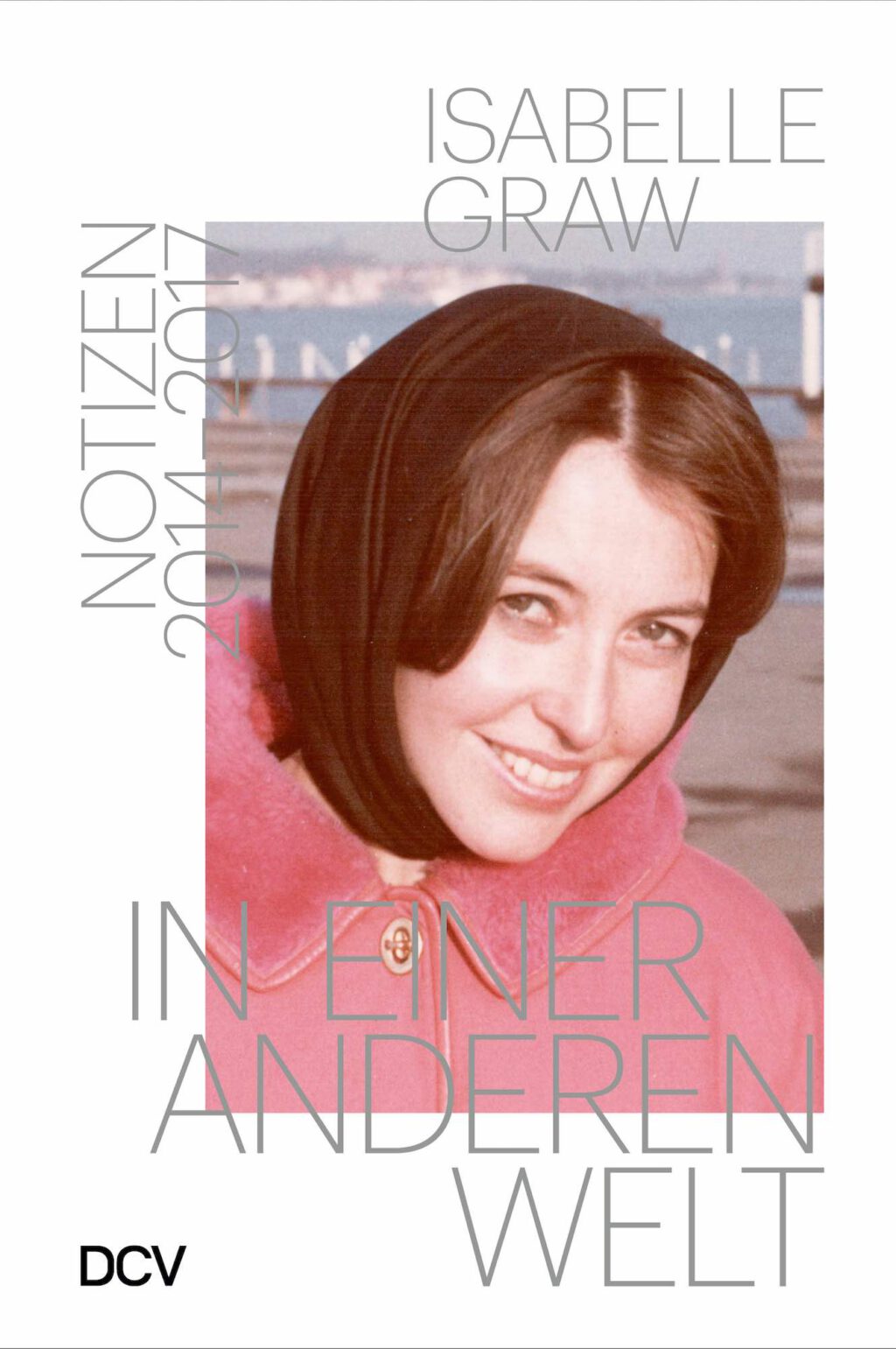
Isabelle Graw
In einer anderen Welt. Notizen 2014–201726€ Add to cartPersonal Observation as an Analytical Lens on Society
Isabelle Graw (b. 1962, Hamburg; lives in Berlin) is publisher of the magazine Texte zur Kunst and has been professor of art theory at the Staatliche Hochschule für bildende Künste – Städelschule in Frankfurt am Main since 2002. In this book, she branches out from her work as an art historian and critic to offer reflections on a wide range of observations from her own life. Never before has Graw addressed her readers more frankly than in these 160 notes.
“She is blindingly frank, addressing the questions that envelop her days: waxing salons, the arrival of Syrian refugees in Germany, exhibitions and grief, electoral and family politics. Subtly, Graw reveals how impressions and beliefs arise out of circumstance.”
Chris Kraus, American filmmaker and author of I Love Dick“In crisp and striking vignettes, this book shows how self-scrutiny and minute observation of the world intermesh and form the dense web of her analysis. This is a unique and original book, literary, psychological and sociological, all at once.”
Eva Illouz, French-Israeli sociologist -
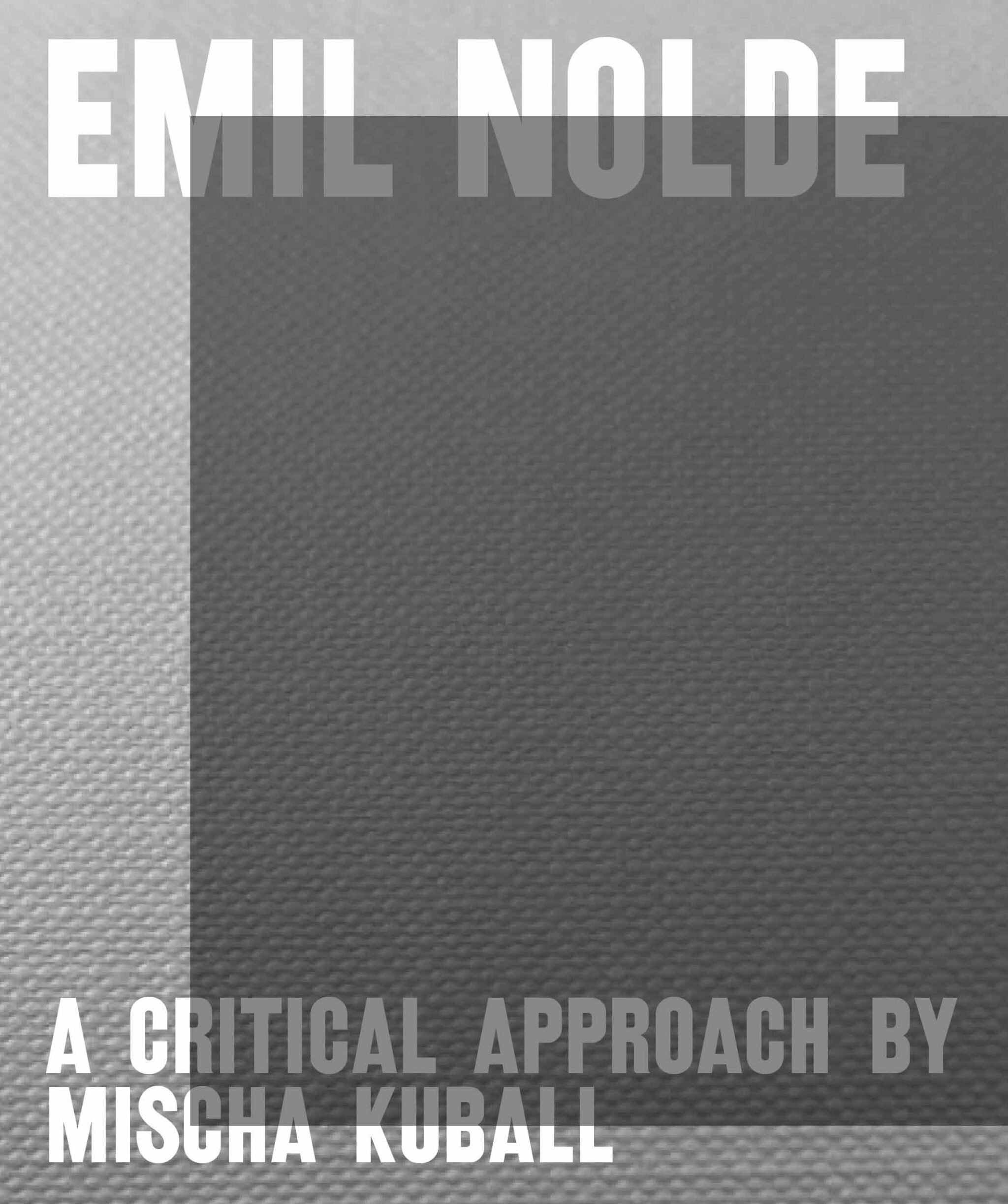
Emil Nolde
A Critical Approach by Mischa Kuball40€ Add to cartWhat is Visible and What is Not
Mischa Kuball (b. 1959, Düsseldorf; lives and works in Düsseldorf) investigates public and institutional spaces and the social and political discourses that shape them. At the invitation of the Draiflessen Collection and with support from the Nolde Stiftung, the conceptual artist grappled with the life and oeuvre of the painter Emil Nolde (1867–1956) and created a body of work titled Nolde/critique/Kuball. In piece after piece, Kuball drains Nolde’s works of the colors that made the Expressionist famous, challenging the beholder’s preconceptions and examining perception and its constituent processes. Laid out in black and white, the book accordingly directs our attention not only to what a picture shows, but also to how structures and organizing principles emerge into view.
Mischa Kuball has been professor of public art at the Kunsthochschule für Medien Köln, and associate professor of media art at the Staatliche Hochschule für Gestaltung/ZKM Karlsruhe since 2007.
Note: This publication is released in German, English and Dutch. When ordering, please let us know which edition you would like to receive. Use the annotation box on the checkout page.