Francis Alÿs
The Nature of the Game
 | |
|---|---|
| Author(s) | David MacDougall |
| Design | Cristina Paoli · Periferia |
| Size | 18,5 x 11,5 cm |
| Cover | Hardcover |
| Pages | 208 |
| Illustrations | 90 |
| Language(s) | English, Dutch |
| ISBN | 978-3-96912-072-9 |
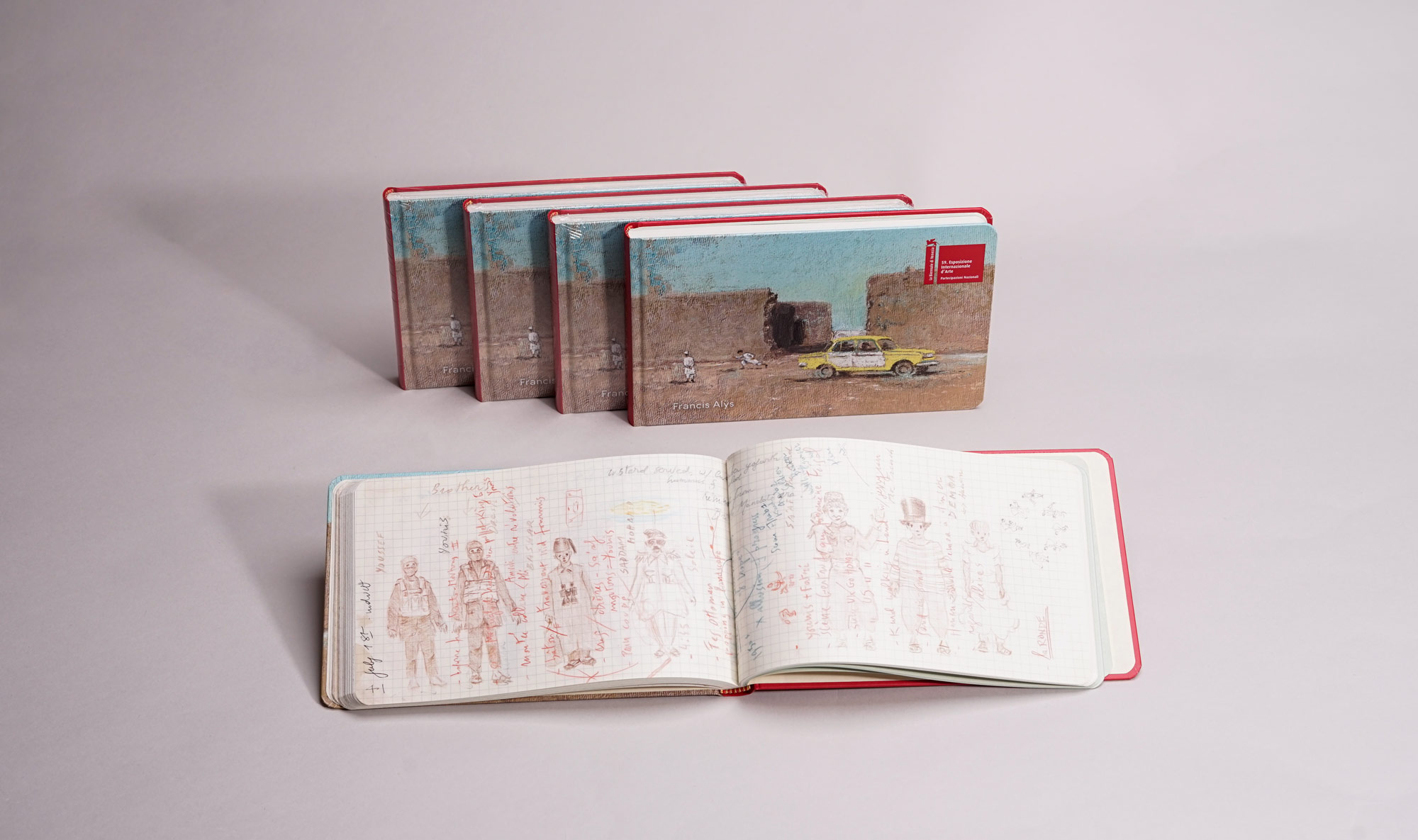
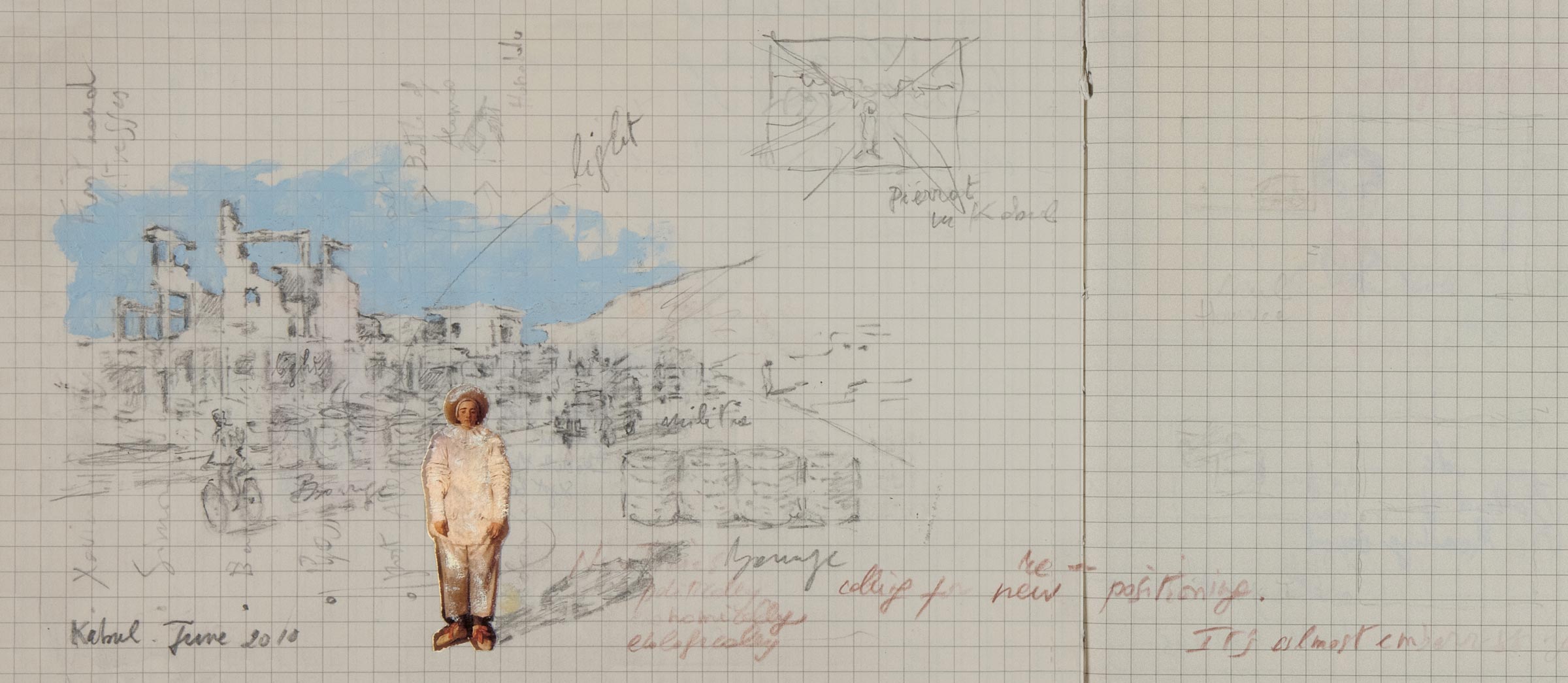
The Belgian artist Francis Alÿs (b. Antwerp, 1959) makes work that is as multifaceted as it is poetically subversive. Straddling the line between performative conceptual art and community intervention, his films and drawings chart the political and social realities of urban spaces. One of his most imposing long-term projects is Children’s Games, for which he documents children playing all over the world, from Paris and Mexico City to the Yezidi refugee camp Sharya in Iraq. The richly illustrated book contains ideas and sketches he compiled in preparation for this series. It lets us glimpse into the engine room of his artistic practice, revealing key elements of his filmic poetics. An essay by the ethnographer and filmmaker David MacDougall embeds Alÿs’s observations of children’s play in the contexts of childhood studies as well as the history of ethnographic documentary film.
Francis Alÿs (b. Antwerp, 1959) is widely regarded as one of the foremost artists working today. His oeuvre, which has garnered numerous prizes and been featured in solo exhibitions around the world, encompasses films, photographs, performances, drawings, and paintings, many of them explorations of the social and political realities of urban spaces. Since 1986, Alÿs, who trained as an architect, has lived in Mexico City, where he moved after the major earthquake of 1985 to help in the rebuilding effort.
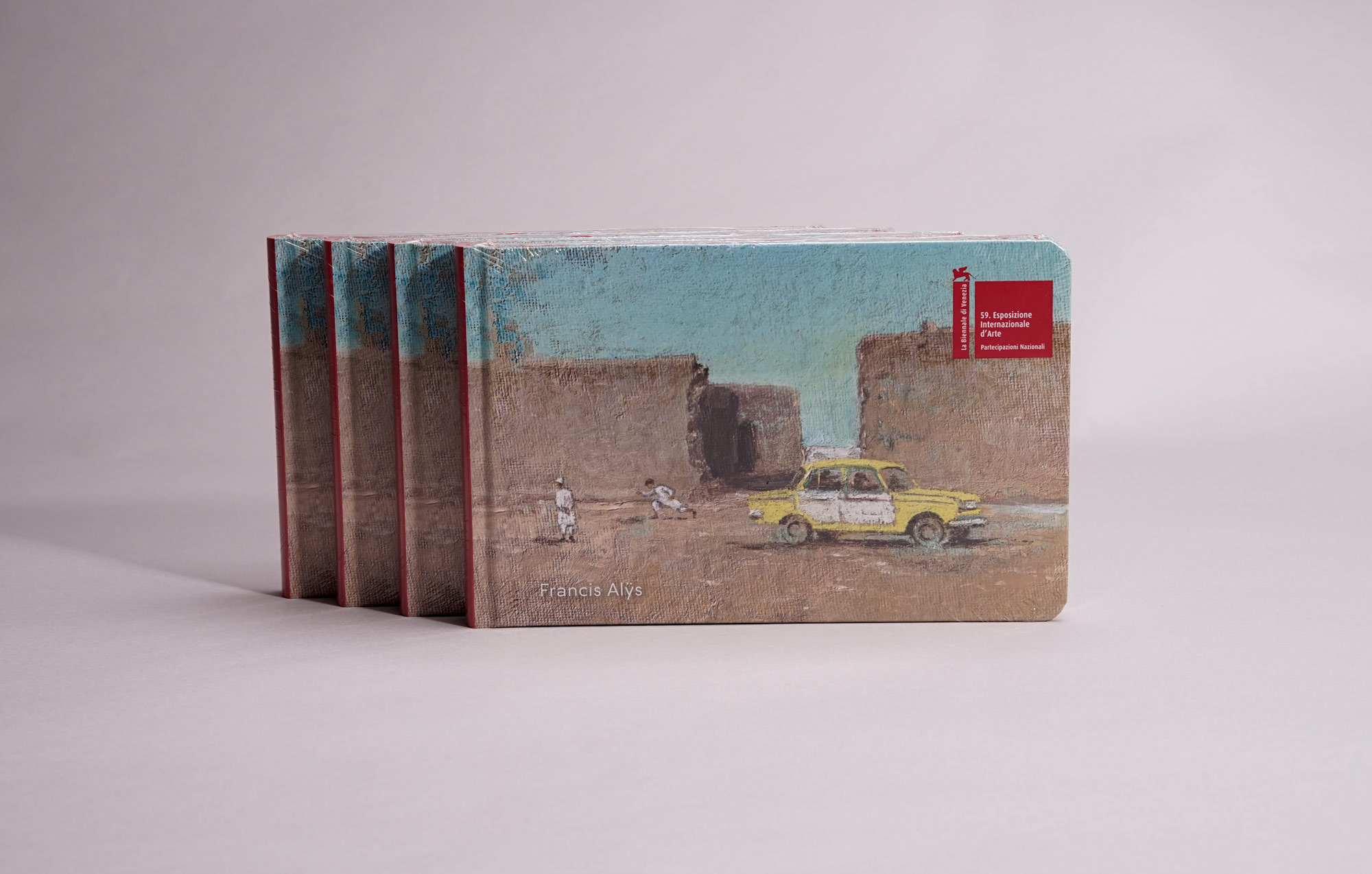
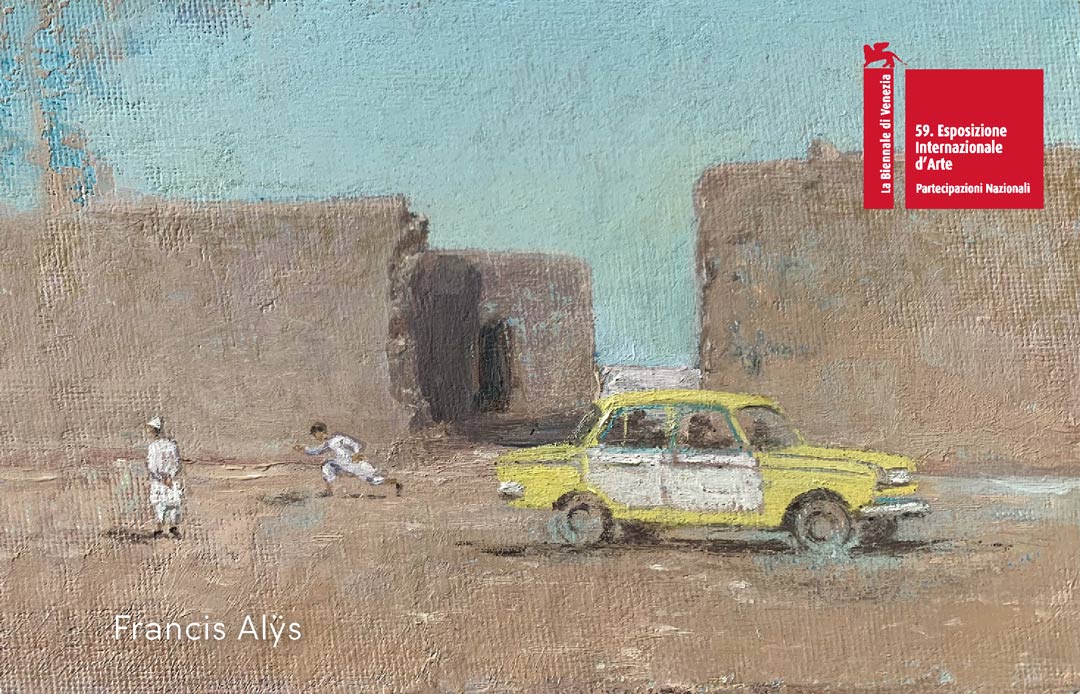
Francis Alÿs – The Nature of the Game is the official publication of the Belgian pavilion at the 59th Biennale di Venezia, curated by Hilde Teerlinck.
More books
-

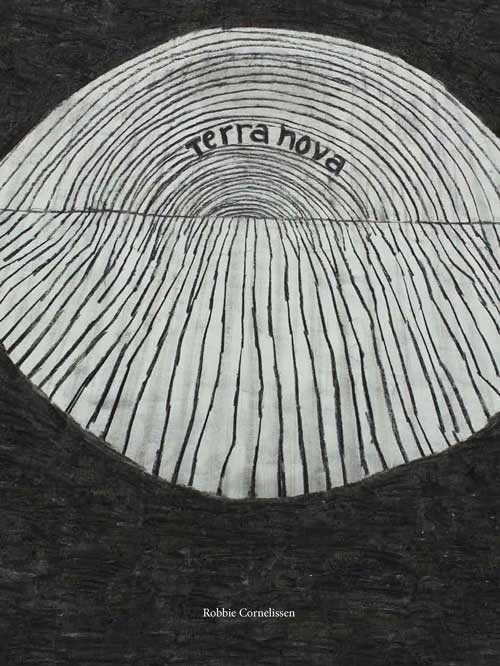
Robbie Cornelissen
Terra Nova28€ Add to cartFuturistic / Fantastic
The Dutch artist Robbie Cornelissen’s (b. Utrecht, 1954; lives and works in Utrecht) oeuvre is endowed with unusual narrative power. His architectonic drawings in enormous formats, which often exude a futuristic aura, typically show deserted libraries, waiting halls, factory floors, or other oversized spaces. In alternation with his work on paper, the artist creates animated films out of thousands of drawings. This publication presents 250 drawings from Cornelissen’s new film Terra Nova, which explores an urgent contemporary concern: humanity’s responsibility for the earth and the open question of its long-term survival on the planet.
Robbie Cornelissen studied biology and ecology at Rijksuniversiteit Utrecht and at Vrije Akademie, Den Haag, and the Gerrit Rietveld Academie, Amsterdam. His work has been shown at Centraal Museum Utrecht, Hamburger Kunsthalle, the 11th Biennale de Lyon, and elsewhere.
- Release January 2026

Bettina Buck
Finding Form45€ Add to cartThe German sculptor Bettina Buck (1974-2017) called attention to herself with her “performative sculptures,” which she often presented vis-à-vis museal objects. Buck’s preferred materials came from the hardware store: corrugated cardboard, ceramic tiles, pressed foam, or plastic foil, which are all not meant to last. Out of these materials she created a kind of changeable and transient “protagonists,” who didn’t have a final form but rather emphasized the actual process of finding form (as well as losing form). In a provocative action in 2015, Buck dragged an oversized foam bloc through a museum collection and let it rest next to famous artworks, which gained a new dynamic in this interplay. Buck herself said once that her works were meant to “simultaneously attract and alienate the viewer.” In the exhibition space the objects should “create a tremor, a vibration and a conversation with its surroundings.”
Finding Form, a posthumous monograph presents Bucks complete sculptural works on over 300 pages and contains texts by Phyllida Barlow, Paolo Icaro, Cecilia Canziani, and Andrea Maria Popelka. The book was conceived and published by the artist’s estate, Bureau Bettina Buck.
-

Judit Reigl
Kraftfelder / Centers of Dominance28€ Add to cartBeginning in the 1950s, Judit Reigl (b. Kapuvár, Hungary, 1923; d. Marcoussis, France, 2020) builds a singular creative oeuvre between abstraction and figuration, between Surrealism and gestural painting. After studying art in Budapest, Reigl flees Hungary in 1950; arriving in Paris, she is introduced to André Breton, who organizes her first exhibition in 1954. Under the influence of the École de Paris, she branches out into écriture automatique, then shifts toward free expression. Like her contemporaries Jackson Pollock and Helen Frankenthaler in New York, she lays out ever larger unprimed canvases on the floor and works them with a brush, her fingers, or other instruments. After 1966, bodily shapes emerge from her abstractions, and figures reappear in the pictures.
On occasion of Reigl’s centenary and the gift of three major works, the Neue Nationalgalerie mounts the artist’s first solo exhibition at a museum in Germany. The book surveys the oeuvre of one of the most important protagonists of European art in the second half of the twentieth century.
Judit Reigl studied painting at the Academy of Fine Arts in Budapest from 1942 until 1945 and was a fellow at the Hungarian Academy in Rome in 1947–48. From 1950 onwards, she lived and worked in France.
- Out of stock

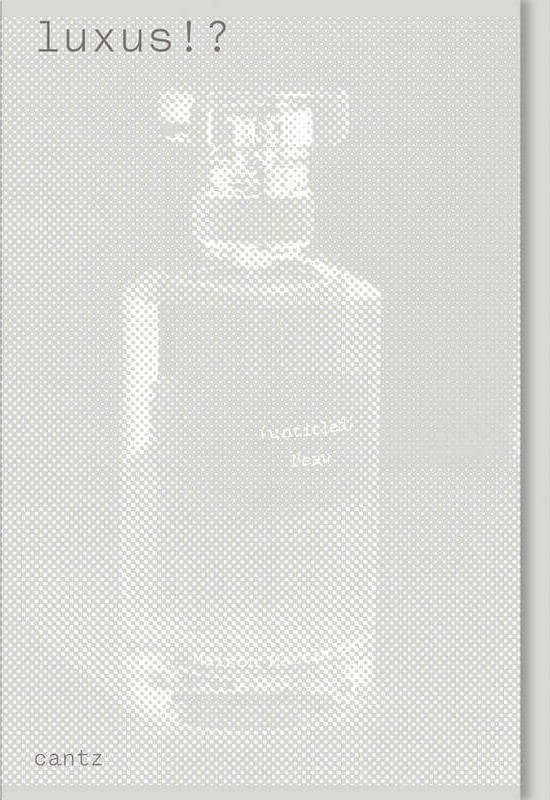
Luxus?!
34€ Read moreWhat is luxury today? How do designers perform the magic of transforming a utilitarian object into a must-have? Where does consumerism shade into obsession? When does more-is-more give way to less-is-more?
Luxury means breaking with convention, and this book showcases—and spawns—a cornucopia of ideas, products, and positions around luxury, featuring influential thinkers from the worlds of design, science, art, and society. The cultural theorists Wolfgang Ullrich and Lambert Wiesing exchange letters on the concept of luxury; Montblanc’s creative director Zaim Kamal lays out future strategies; the artist Jonathan Meese pens a gold manifesto; and Bazon Brock inquires into the asceticism of luxury. We live in a world full of things that resemble one another so closely that the only difference is how they are marketed. What might the precious objects of the future look like? The book presents examples from aspiring designers such as the fashion student Victoria Reize, whose collection counters luxury with arch defiance. Design, we learn, is not just about creating supreme values. Luxury is limitation and longevity, scarcity and refinement, yearning and sensuality.
With works by Assemble, Jake and Dinos Chapman, Daniel Chodowiecki, Kai Löffelbein, Jonathan Meese, Olaf Nicolai, Marcel Odenbach, Tobias Rehberger and Anna Skladmann.
-

Sibylle Springer
Ferne Spiegel / Distant Mirrors35€ Add to cartThe paintings of Sibylle Springer (born 1975, lives in Bremen) focus on the role of women in the art world of the digital age. For her portrait series Feed, she has painted 40 female artists to date, based on staged photographs from their Instagram feeds. “Is social media an instrument of emancipation, or does it even lead to new forms of objectification?” (Kohout) In Wait for It, Springer copied pop stars from the internet, but used a silver paint that oxidizes the canvases, thus aging the eternally youthful icons before our eyes—precisely what digital image control seeks to prevent. In her more recent textile objects, Springer interweaves female artists of the past and present. This informative book accompanies her exhibition at the Kunstverein Bremen.
Die Malerei von Sibylle Springer (geb. 1975, lebt in Bremen) widmet sich der Rolle von Frauen in der Kunstwelt des digitalen Zeitalters. Für ihre Portraitserie Feed malte sie bisher 40 Künstlerinnen, basierend auf fotografischen Selbstinszenierungen aus deren Instagram-Feeds. “Sind Soziale Medien Instrumente der Emanzipation oder führen sie gar zu neuen Formen der Objektifizierung?” (Kohout) Für Wait for It kopierte Springer Popstars aus dem Netz, aber benutzte ein die Leinwände oxidierendes Silber, das die ewig-jungen Ikonen vor unseren Augen altern lässt, gerade das, was digitale Imagekontrolle zu verhindern sucht. In neueren, textilen Objekten verknüpft Springer Künstlerinnen der Vergangenheit und Gegenwart. Dieses informative Buch begleitet ihre Ausstellung im Kunstverein Bremen.
FERNE SPIEGEL / DISTANT MIRRORS
KUNSTHALLE BREMEN
UNTIL JANUARY 11, 2026 - temporarily not available

MEUSER
Works 2012–2023 (ENGLISH)Read moreEver since his studies with Joseph Beuys and Erwin Heerich, since his first exhibitions – for instance at ‘Kippenberger’s Office’ in 1979 – Meuser (b. Essen 1947, lives and works in Karlsruhe) has been a solitaire. His sculptures are unyielding and unruly, just as much as they are vulnerable and tender. They are witty and heart-touchingly charming.
Meuser finds his material in the scrapyard. Confidently and empathically, he reinstates form and dignity to the remnants and vestiges of industrial society. As a romantic, he grants things a life of their own and turns them into self-reliant protagonists, once more. Unwaveringly, he works to re-poetize a standardized and maltreated world.
The lavishly designed monograph is published on the occasion of Meuser’s 75th birthday, presenting works and exhibitions from the past ten years. Eight international authors and scholars create a dazzling mosaic and reveal how Meuser boldly holds his own in face of Duchamp, Minimalism, and Social Sculpture. An open-ended outlook.
Meuser studied 1968–1976 at Art Academy, Düsseldorf with Joseph Beuys and Erwin Heerich. 1991 he received the ars viva award. 1992-2015 professorship at Academy of Fine Art, Karlsruhe.
Since 1976, numerous institutional solo and group exhibitions and works in international collections: Bundeskunsthalle, Bonn; Deichtorhallen, Hamburg; documenta IX / Fridericianum, Kassel; Fundació Joan Miró, Barcelona; Joanneum, Graz; Kunsthalle Düsseldorf; Museum of Contemporary Art, Monterrey; Martin-Gropius-Bau, Berlin; Museum Abteiberg, Mönchengladbach; Museum Folkwang, Essen; Museum moderner Kunst Stiftung Ludwig, Vienna; Museum Morsbroich, Leverkusen; Rijksmuseum Twenthe, Enschede; Sakip Sabanci Museum, Istanbul; Städtische Galerie, Karlsruhe; Vanhaerents Art Collection, Brussels; ZKM | Museum für Neue Kunst, Karlsruhe.
-

Michael Williams
New Paintings40€ Add to cartAwkward Uncertainty
Michael Williams (b. 1978, Doylestown, Pa.; lives and works in Los Angeles) makes work that interrogates the history of painting, often by dismantling its components into their constituent parts. His pictures employ form to reflect on the complexity and contradictions of modern life. He works on canvas, availing himself of a range of techniques including oil painting, collage, and inkjet prints. In his new works, Williams examines the relationship between painting and photography, transferring the chilly aloofness that is characteristic of the latter onto the former. The photographic “negative” yields a smooth canvas disencumbered of its painterly qualities and the medium’s historic ballast. The book includes several foldout plates that illustrate Williams’s creative approach, and a brief essay by his Austrian fellow painter Tobias Pils.
Michael Williams studied fine arts at Washington University, St. Louis, and has exhibited widely, including at the Wiener Secession, Vienna, and the Museum of Modern Art, New York.
-

WORLD FRAMED
Zeitgenössische Zeichenkunst der Sammlung Schering Stiftung im Kupferstichkabinett38€ Add to cartIn 2008, the Schering Stiftung began acquiring outstanding contemporary works on paper for the Kupferstichkabinett (Museum of Prints and Drawings) in Berlin. The collection, which has since grown to 130 nonfigurative drawings and a small number of prints, emphasizes the close conjunction of art and science. The holdings also reflect central tendencies in the art of drawing: in addition to exploring the line and its multifaceted formulation, artists shed light on the bounds of their medium and its expansions and undertake forays into inter-media art within drawing. The lavishly designed publication WORLD FRAME—the title is borrowed from a work by the artist Matt Mullican—presents the works acquired thanks to this partnership. It inquires into how artists translate their perceptions of their world into pictures and which contexts and discourses inform those pictures. Which perspectives, which ideas frame the segment of reality an artist observes?
“World Framed,” exhibition, Kupferstichkabinett, Staatliche Museen zu Berlin, July 7–October 8, 2023
-

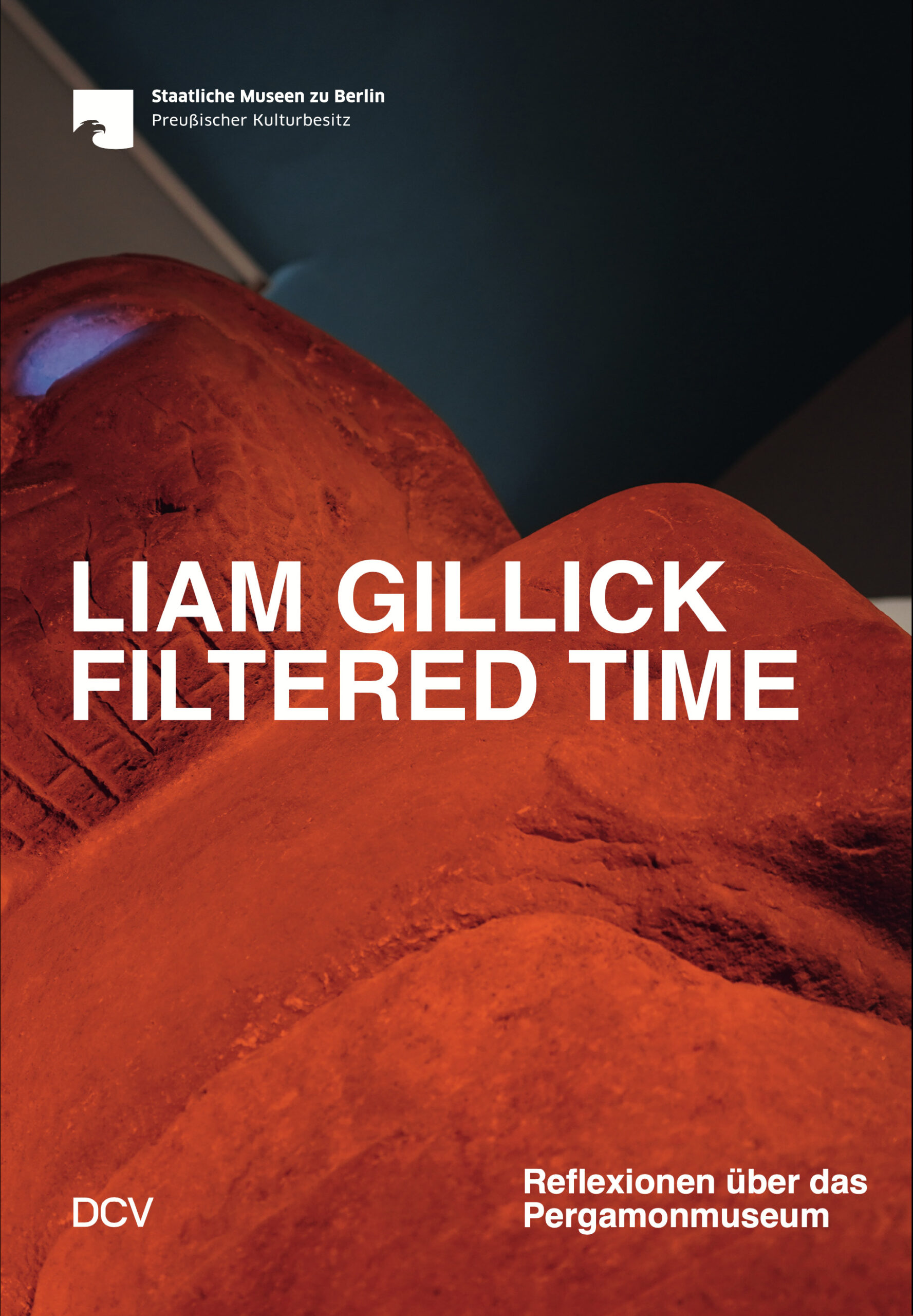
Liam Gillick
Filtered Time (GERMAN)28€ Add to cartThe sculptor and object artist Liam Gillick (b. Aylesbury, UK, 1964; lives and works in New York) has created an intervention titled Filtered Time for the historic galleries of the Pergamon Museum in Berlin. Projections of light and color and acoustic effects condense six thousand years of cultural history into an immersive spatial experience. Gillick initiates a conversation between the iconic Processional Way and the Ishtar Gate from Babylon, the monumental sculptures of Tell Halaf, and other exhibits, engendering new layers of meaning across all historical periods. The first joint project of the Vorderasiatisches Museum and the Hamburger Bahnhof—Nationalgalerie der Gegenwart makes for a singular visual and sensory experience. Designed by the artist himself, the publication not only documents the richly colorful production, but also provides insight into the eventful history of the museum, which is approaching its centennial.
Liam Gillick studied at the Hertfordshire College of Art in 1983–1984 and at Goldsmiths, University of London from 1984 until 1987. Gillick is a prolific published writer as well, producing essays, reviews, fiction, and theatrical scenarios.
-

Jan Zöller
10€ Add to cartJan Zöller’s (b. Haslach, 1992; lives and works in Karlsruhe) art has the aura of a jerry-rigged, cosmic, comedic theater. Flames gutter, pant legs and elbows dance, run, and go up in fire. Wells, basins, and tubs are central motifs, symbolizing communal settings, but also the circulation of vital energies, of human and economic interconnections. Zöller’s paintings take fractured or antiquated systems, today’s art world among them, and reforge them into something new. In painting, he reflects on what being an artist means to him, driven by an interest less in a dialogue with art history or other contemporary painters than in the psychosocial relationships and conditions that inform his work. His paintings, sculptures, and installations probe the discrepancy between economic production and the spiritual and magical dimension of art.
- temporarily not available
CLARA MOSCH
and early art events in the GDRRead moreThe legendary producer-run gallery Clara Mosch and the artists’ group of the same title that gathered around it were founded in Karl-Marx-Stadt (today’s Chemnitz) in 1977 and existed until 1982. The catchy name was an acronym of the contributors’ last names: CLA = Carlfriedrich Claus, RA = Thomas Ranft and Dagmar Ranft-Schinke, MO = Michael Morgner, SCH = Gregor-Torsten Schade. As the founders of the first producers’ gallery in the GDR and creators of diverse oeuvres, the group’s artists rank among the foremost exponents of avant-garde art in East Germany. The book presents works of art, limited editions, and posters as well as photographs from the Ralf-Rainer Wasse archive in the collections of the Lindenau-Museum in Altenburg. One thematic focus is on Clara Mosch’s land-art happenings and plein-air pieces. The unconventional actions attest to the group’s stated objective of building greater awareness of the ongoing devastation of the local environment. Forty years after the fact, Clara Mosch’s work has lost none of its relevance and urgency.
-
Julius Hofmann
Western Philosophies35€ Add to cartJulius Hofmann (b. Göttingen, 1983; lives and works near Göttingen) has mastered the traditional aspects of painting and commands a broad repertoire of creative techniques. This expertise enables him to call conventional painting in question by combining it with the aesthetic of 1990s computer graphics. The simple and often grotesque symbolism of the imperfect digital imagery contrasts with a perfectionistic figurative painting. This approach lends his pictures a disconcerting and unexpected quality.
Western Philosophies is an episode in Hofmann’s ongoing work confronting consumerist society with its dark secrets and its indifference. Meanwhile, his creative process is also an exploration of the artist’s personal fears and frustrations. In depicting his figures, landscapes, and machines, he draws our attention to the painterly originality of structures and surfaces. The protagonists, to his mind, play a subordinate role, typically serving him as vehicles—he is more interested in the “how” than in the “what.”
Julius Hofmann studied painting with Neo Rauch and Heribert C. Ottersbach at the Academy of Fine Arts Leipzig (HGB) from 2005 until 2011. His work is represented in international collections and institutions.
-

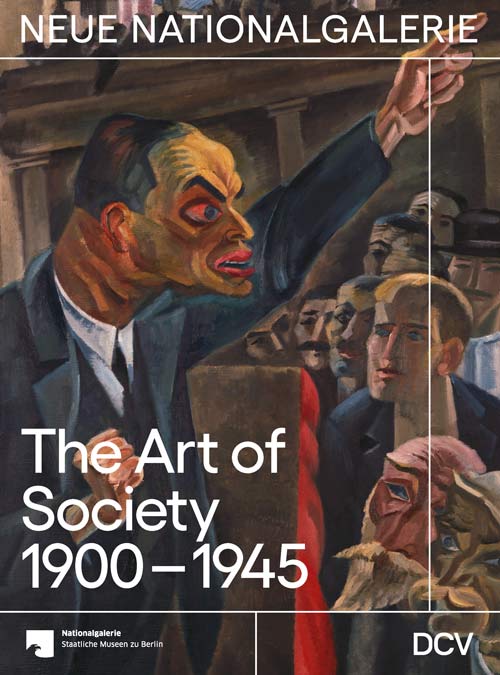
The Art of Society
1900–194529€ Add to cartThe Collection of the Nationalgalerie, Berlin
The Neue Nationalgalerie in Berlin, the last building designed by Mies van der Rohe, has been closed a full six years for refurbishment. To mark its reopening the museum is presenting the highlights of its classical modernist collection under the title The Art of Society, 1900–1945. Visionary, critical, resigned or utopian, the paintings and sculptures bear witness to art’s dialogue with prevailing social conditions – from the German Empire to the First World War, the Weimar Republic and ultimately National Socialism. The catalogue documenting all works in the exhibition traces the major artistic tendencies during the first half of the 20th century in thirteen chapters. The Art of Society, 1900–1945 offers a renewed encounter with works by Edvard Munch, Ernst Ludwig Kirchner, Tamara de Lempicka, Lotte Laserstein, Otto Dix, George Grosz, Max Beckmann, and many others that is as captivating as it is illuminating.
Click here for the German edition.
-
Sebastian Stöhrer
Residents40€ Add to cartIf there’s an artist whose oeuvre merits the title “creation,” it is Sebastian Stöhrer. Shaping clay—essentially, soil—he molds his “residents”: colorful and friendly-looking sculptural beings, some of them enhanced with sticks or branches reminiscent of limbs. Despite their air of levity and humor, they are not the products of mere momentary inspiration or a whim. It takes decades of dedicated experimentation with the kiln based on the millennia-old art of ceramics as well as expert knowledge of chemistry and physics to create such colors and shapes. Stöhrer has been called an alchemist, and indeed he has made it his mission to vindicate this researcher’s craft, an ancestor of the natural sciences. Alchemy, like Stöhrer’s oeuvre, combines pure rationality with coincidence and a scintilla of magic. The artist plays an intuitive and sensual game with his clay and the virtually incalculable chromaticity of the glazes—chaos, anarchy, and irrepressible urges being an integral dimension of all creation. In Stöhrer’s “residents,” we encounter the embodiments of that creation: likenesses of ourselves and perhaps also heralds of a future more good-natured version.
-

Birgitta Thaysen
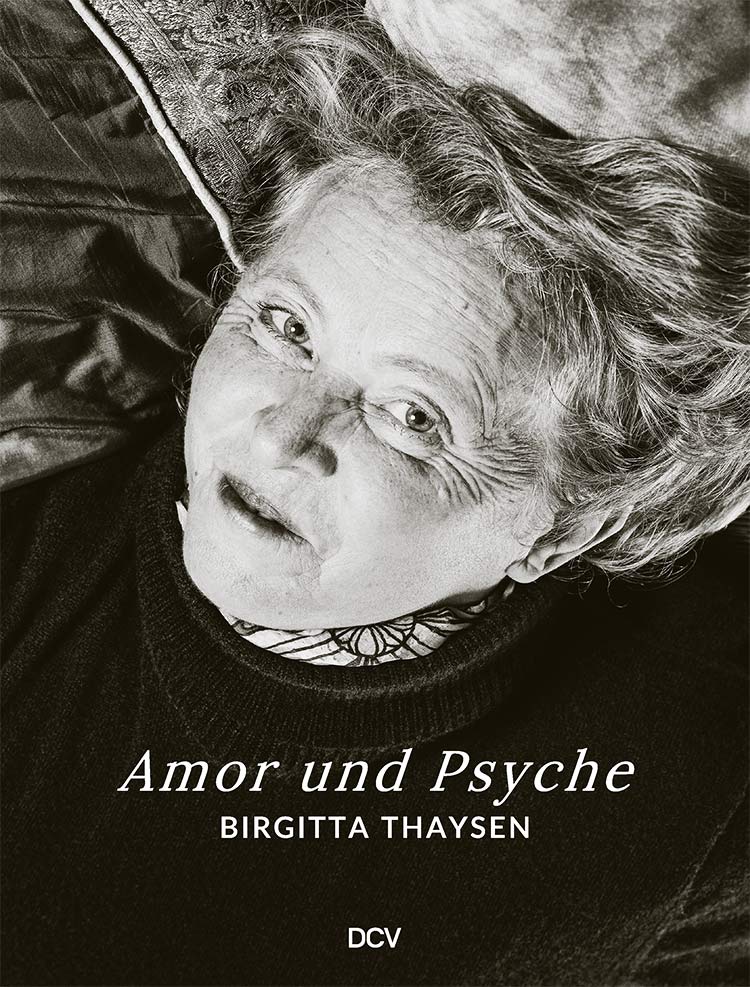
Amor and Psyche24€ Add to cartAspects of Love
The fine art photographer Birgitta Thaysen (b. Gelsenkirchen, Germany, 1962; lives and works in Düsseldorf) studied with Bernd and Hilla Becher at the Düsseldorf Academy of Fine Arts and in Nan Hoover’s master class. Her photographic oeuvre encompasses urban motifs as well as likenesses of humans. In black-and-white portrait shots, she revisits the ancient myth of Amor and Psyche; embodiments of the yearning for love and the bafflements of the soul, the title characters have long been vehicles for variegated interpretations in visual art. Thaysen chose to shoot her portraits at Künstlerverein Malkasten, Düsseldorf, where the tale is present in an adaptation as a lavishly made wallpaper from the nineteenth century. She captured the protagonists lying on the floor, bedded on cushions, their heads upside down, for a vertiginous exploration of states of mind between self-abandonment and doubt.
Birgitta Thaysen studied art with Bernd and Hilla Becher at the Düsseldorf Academy of Fine Arts. Her conceptual photographic series have been seen by wide audiences in numerous exhibitions.
-
Feuer und Farbe
Gemälde und Grafiken von Walter Jacob35€ Add to cartWalter Jacob (1893-1964) was a painter whose oeuvre and life reflected the discontinuities of the twentieth century in condensed form. Contemplative natural scenes and the self-portraits were constants to which he hewed throughout his career; in stylistic terms, however, his oeuvre could hardly be more contradictory. Working first in the Impressionist, then in the Expressionist style, he eventually forged a form of expression tending toward abstraction, although he rejected modernist painting throughout his life. The Nazis considered his early work “degenerate,” which led him—a committed National Socialist and active member of the SA—to adapt not just his ideological convictions, but also his aesthetics to the new era: starting in the mid-1930s, he produced naturalistic depictions, sometimes suggestive of the New Objectivity, of “popular” motifs like landscapes, animals, soldiers, and more. Tellingly, though, the backs of some of his canvases are taken up by works that suggest the pleasure he took in experimenting with color and form. The same tension is palpable in the abstract landscapes of his late oeuvre. This catalog gathers works to retrace Jacob’s checkered career, complemented by (art) historical essays that embed his output in its context.
-
Emmanuel Bornstein / Lotte Laserstein
Pensée20€ Add to cartHow do artists’ identities and the histories of their families influence their art? Where might a creative affinity sustained by a legacy of trauma take an artist? Lotte Laserstein (1898–1993) and Emmanuel Bornstein (b. 1986) are connected by such a bond, tied by Bornstein’s grandmother, a Résistance fighter and, like Lotte Laserstein, a Jew who survived the Nazis. Bornstein discovered Laserstein’s works by coincidence and without knowing of this connection, and he was fascinated right away: “It was actually what I’d been trying to make for years!” There are in fact parallels between their oeuvres—both feature people who are waiting and flower bouquets, and a melancholy aspect and a subtle menace can be felt in both. Yet there are also discrepancies, and the dialogue between their works would be far less inspiring without them: Bornstein’s omnipresent toxic cadmium, which contrasts with Laserstein’s muted tones; the paint application; the brushwork. What the artists have in common, in any case, is that Sweden became their abode in times of danger and painting, their only true home. This catalog celebrates their creative homecoming.
-
Ossian Fraser
DISSOLVING ACTS38€ Add to cartOssian Fraser (b. Edinburgh, 1983; lives in Munich and Berlin) molds and captures evanescent moments. Working with volatile materials such as water, dust, or light, the artist exposes the latent potentials of unremarkable situations in the urban fabric and natural scenes. A tunnel in a city, a rock face in the mountains become points of departure and elementary components of his site-specific interventions, which he records in photographs. The book is the first to offer comprehensive insight into Fraser’s artistic practice. Series of pictures showcasing his conceptual and poetic pieces alternate with conversations that not only demarcate the framework in which his art operates, but also touch on the great issues of our time.
Ossian Fraser studied fine arts and sculpture at the Alanus University of Arts and Social Sciences, Bonn, from 2006 until 2009 and at the Weißensee Kunsthochschule, Berlin, from 2009 until 2013, rounding out his education in Albrecht Schäfer’s master class in 2013–2014.
-

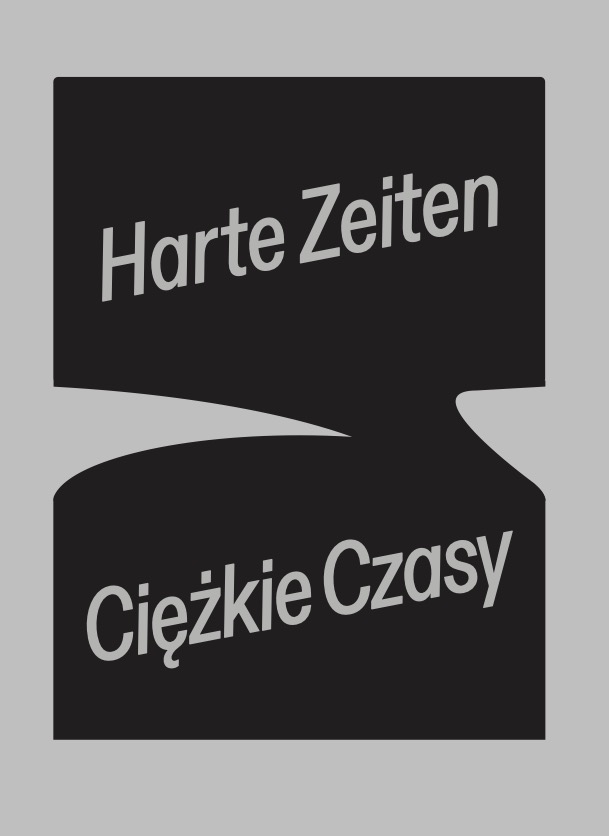
Harte Zeiten
Ciężkie Czasy34€ Add to cartIncreasingly pressing global political and societal challenges are always also rewarding subjects of creative engagement, and sometimes artists devise anticipative approaches to real-world problems.
Harte Zeiten—Ciężkie Czasy is a cooperative venture launched by Künstlerbund Baden-Württemberg; Port25—Raum für Gegenwartskunst, Mannheim; and Galeria Miejska bwa, Bydgoszcz, Poland. It showcases works by altogether ten Polish and ten German contemporary artists. Putting the principle that art knows no boundaries into practice, the publication, with statements from Wolfgang Ullrich, Joanna Kiliszek, Schamma Schahadat, and others as well as documentation of the symposium held in September 2021, inspires forward-looking reflections on the conditions in which cultures thrive and similarities and differences between the two countries and beyond.
- Out of Stock

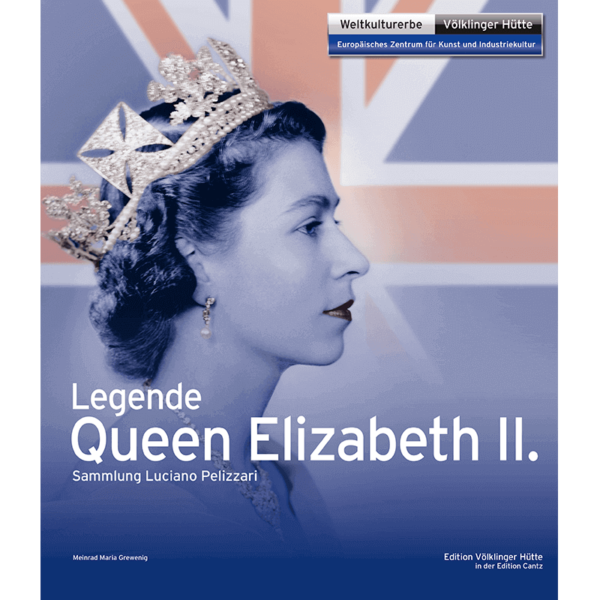
Queen Elizabeth II
Sammlung Luciano Pelizzari27,50€ Read moreErinnerungsstücke einer Legende
Im Leben von Elisabeth II. (geb. 21. April 1926 in London) spiegelt sich eine ganze Epoche. Die britische Königin hat alle deutschen Bundeskanzler und sämtliche englischen Premierminister von Winston Churchill bis Boris Johnson erlebt. Sie ist die am häufigsten abgebildete Person des 20. und 21. Jahrhunderts. Das Buch präsentiert Fotos, Gemälde, Briefmarken und Münzen aus der Kollektion von Luciano Pelizzari, einer der größten Sammlungen dieser Art weltweit. Es zeigt die Queen als Mensch und Monarchin, dokumentiert ihr Zusammentreffen mit bedeutenden Persönlichkeiten und Ereignissen ihrer Regierungszeit und präsentiert sie in zahlreichen Darstellungen aus Kunst und Kultur.