Filip Henin
 | |
|---|---|
| Editor(s) | Robert Grunenberg |
| Author(s) | Oliver Koerner von Gustorf |
| Design | OOR Studio, Berlin; Vladimir Llovet |
| Size | 15 x 21 cm |
| Cover | Softcover |
| Pages | 40 |
| Illustrations | 26 |
| Language(s) | German, English |
| ISBN | 978-3-96912-131-3 |
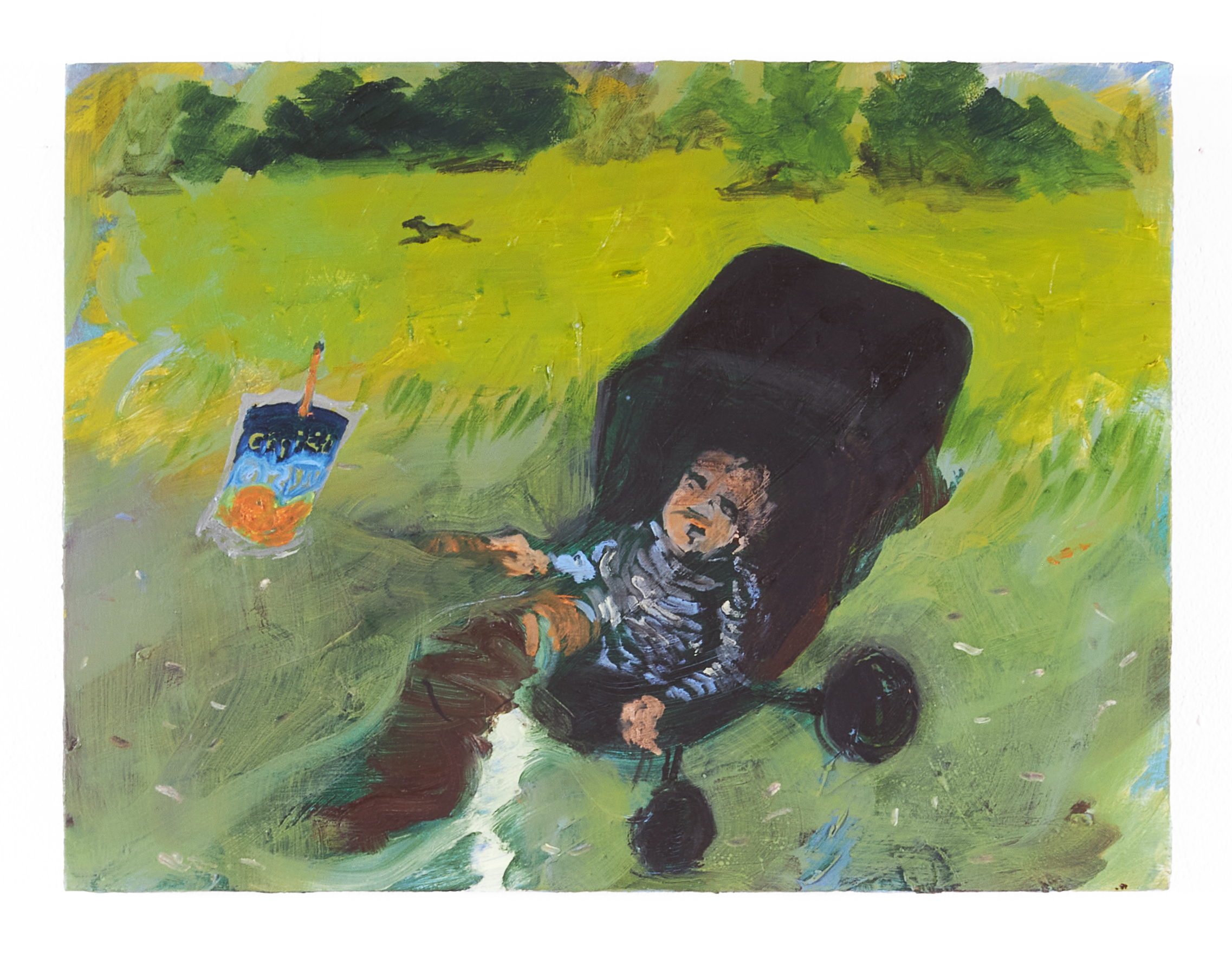
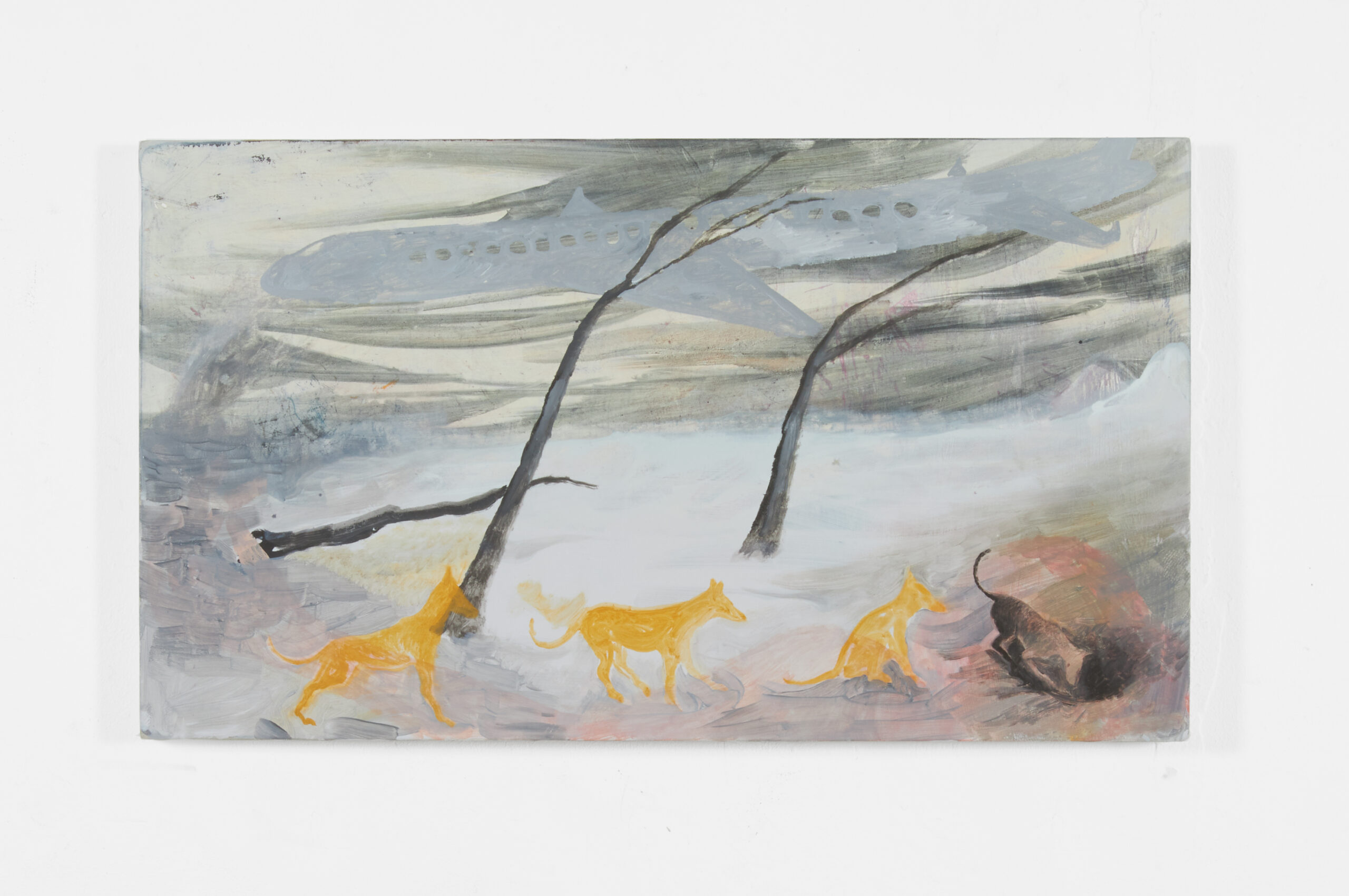
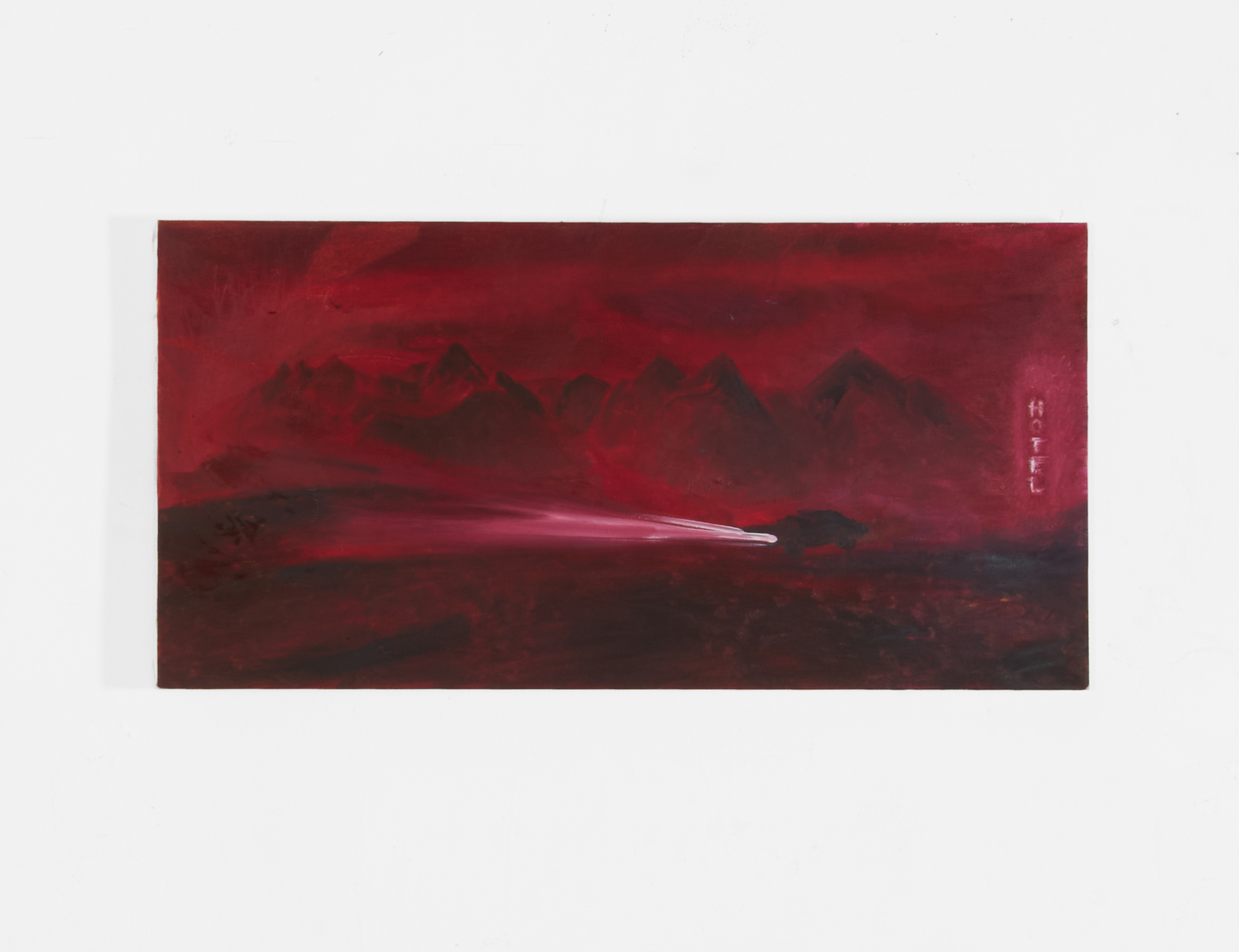
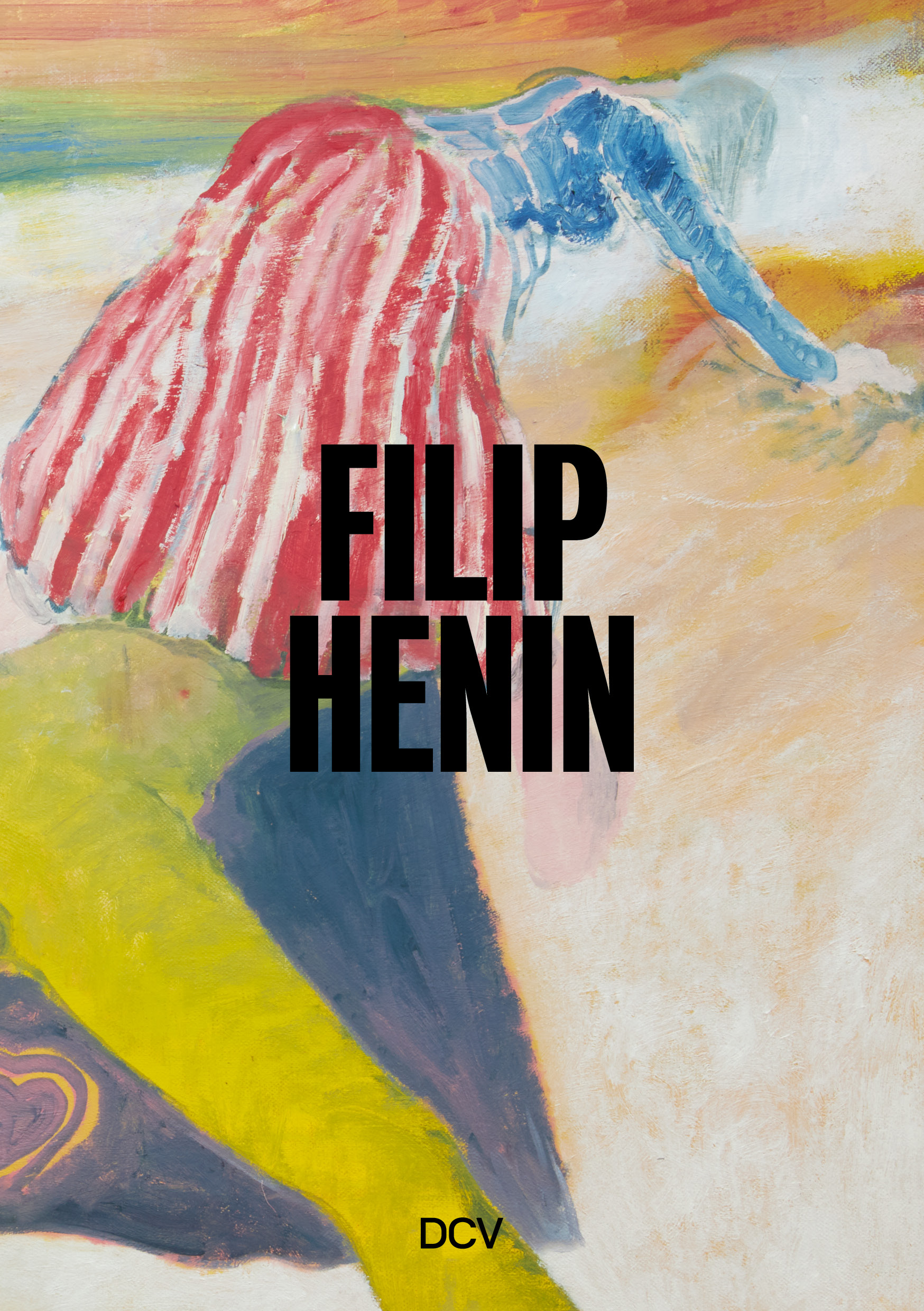
The events captured in Filip Henin’s (b. Mayen, 1986; lives and works in Berlin) paintings are set in a world beyond time and place, as though on an empty stage prepared for a Samuel Beckett production. It is virtually impossible to say whether a picture shows a coastal region or a craggy slope up in the mountains, whether a field of blue represents the sea or a band of open sky. Henin strips landscapes down no less than human figures, subtracting specific features to isolate basic forms that might be found in the hill country around his hometown in western Germany or in Tuscany. His work integrates quotations from antiquity, Romantic landscape painting, and postmodernism as well as Italian Transavanguardia, the mysticism of Francesco Clemente and Sandro Chia, and the figurative painting of the 1990s. Without veering into drama or pathos, he harnesses two utterly antithetical energies: the reflection on painting and the history of art and the need to be simple.
More books
-

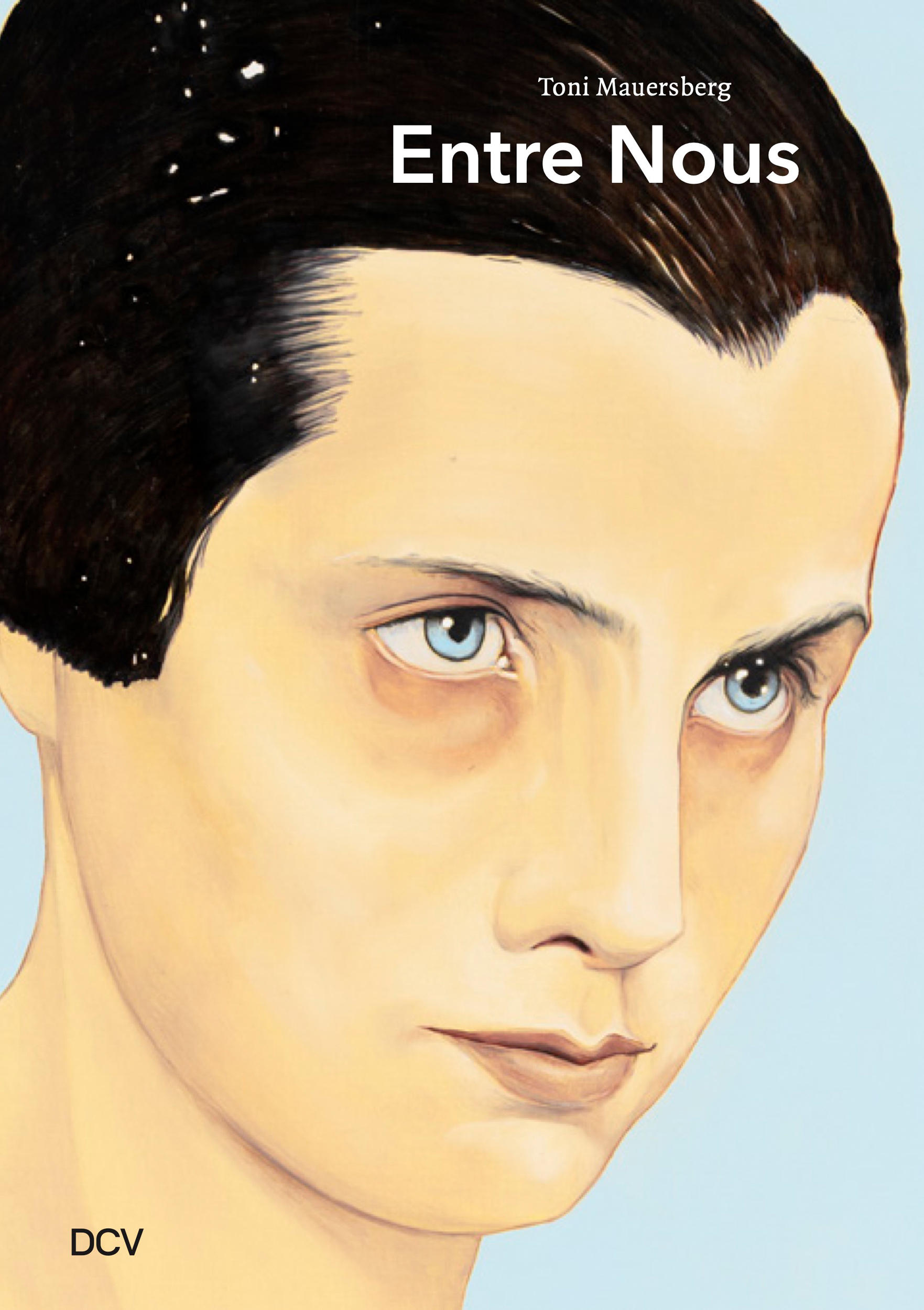
Toni Mauersberg
Entre Nous28€ Add to cartToni Mauersberg (b. Hannover, 1989; lives and works in Berlin) is interested in the different layers of a picture’s signification: there is, in the first instance, what it depicts; then the larger tradition in which it is grounded; and finally, the conditions of its genesis. She employs a range of painterly strategies and techniques to uncover the potentials of paintings as a medium of understanding, insight, and storytelling. The question that animates her art is how it is possible, in this post-religious, post-rational, and post-individual age, to be one’s own person. In her most recent series, Pas de Deux, Mauersberg investigates the complex visual language of abstract painting, which originated in part in a quest for new ways of representing spirituality and emancipation. Combining nonrepresentational pictures with portraits, she draws attention to how both are products of “making,” composed of nothing but color, while enlarging their interpretative ambits. The dialogue between the paintings is meant to help the beholders chart their own course as they unlock what appear to be hidden laws encoded in pictures.
Toni Mauersberg studied Jewish studies at Freie Universität Berlin in 2008–2012 and fine arts with Leiko Ikemura at the Berlin University of the Arts from 2009. In 2017, she was Michael Müller’s master student.
-

Clemens Krauss
Antidot | Gegengift40€ Add to cartClemens Krauss restlessly shuttles across history; his vehicles are painting, video art, sculpture, and performance. Yet Krauss is not “just” an artist, he is also a psychoanalyst and physician. As such, he has first-hand experience of time as the defining factor of existence, daring him to play with it. The bosom of painting is where he feels safest after his hazardous excursions back into his youth and forward into death. Executed in thick paints, his work is physical, material, which is also to say, it exists in time: everything passes away, even the picture. Evanescent, more than anything, are encounters of the sort Krauss stages as part of his psychoanalytical practice; all that remains is the indelible impression they leave. To be indelible, to recall the past, while also “letting happen what has never happened,” as he puts it, these are the ambitions he pursues in his art. Preserved between the covers of the present catalogue and reproduced in thousands of copies, his works now fan out in an instant to circulate for an indeterminate period of time among countless hands, whence they will effortlessly penetrate the barriers of our inner lives to bring us one step closer to transcendence.
-

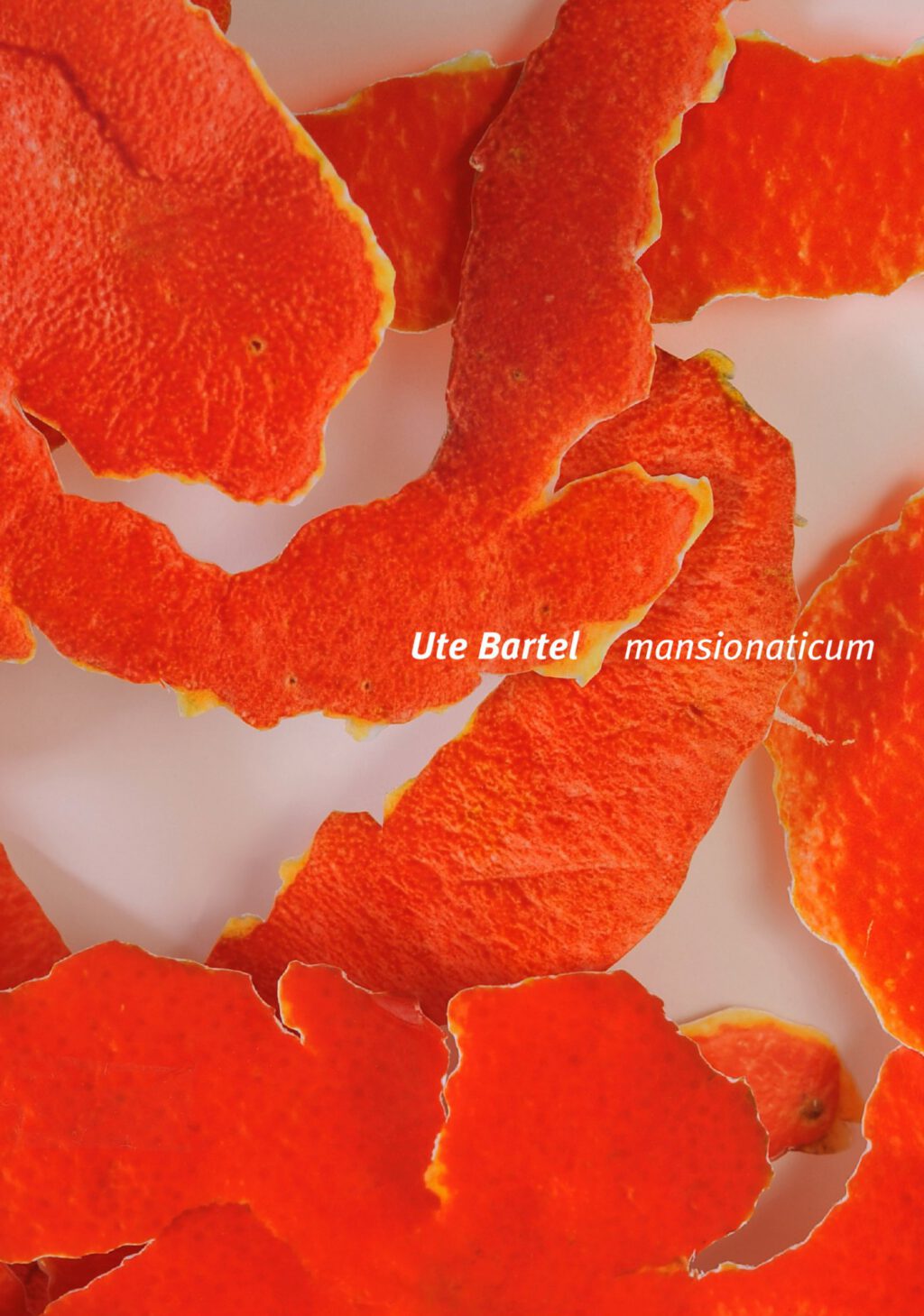
Ute Bartel
mansionaticum25€ Add to cartAn unreal view of reality
In her works, Ute Bartel (b. 1961, Halle; lives and works in Cologne) deals with everyday circumstances, the “mansionaticum.” A term which at first glance seems epochal, but etymologically simply means “belonging to the household.” In a concrete confrontation with particular places and situations, she is interested in things in and of themselves, in their formal characteristics, such as their forms, colors, and structures. Using analog and digital techniques, she creates collages, objects, and works that project into the respective space. This generously illustrated monograph presents structures of familiar and yet unknown realities marked by highly pronounced forms and bold colors and provides comprehensive insight into one of the focal points of the artist’s oeuvre.
Ute Bartel studied at the Kunstakademie Münster, where she was a master student of Reiner Ruthenbeck. Her works have been widely exhibited at, among others, the Kunstverein Speyer, the Deichtorhallen Hamburg, and the Westfälischer Kunstverein, Münster.
-

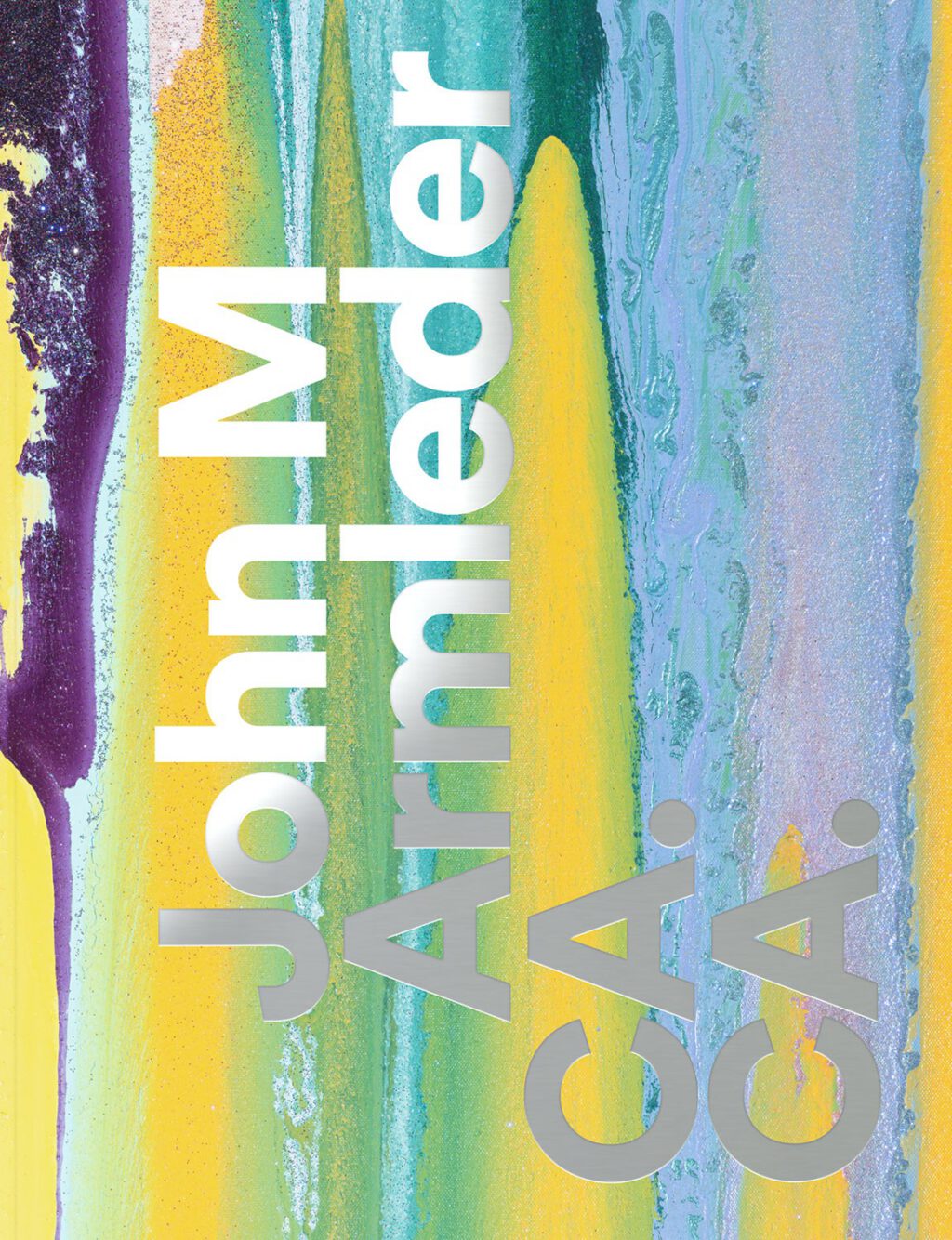
John M Armleder
CA. CA.19€ Add to cartCommentaries on our Present Day Realities and the Status of Art
John M Armleder (b. 1948, Geneva; lives and works in Geneva and New York) is one of the most influential contemporary conceptual, performance and object artists. The profound and the banal, control and coincidence, high culture and everyday life coalesce in Armleder’s work to create a unique experience. The works of the Swiss – often humorous or ironically twisted commentaries on contemporary reality – draw on the formal repertoire of Classical Modernism, as well as on video and design. The book focuses on large-scale, site-specific installations and wall pieces, showing in detail the broad spectrum of Armleder’s work.
John M Armleder studied at the École des Beaux-Arts in Geneva. He represented Switzerland 1986 at the 42nd Biennale di Venezia and participated in documenta 8 one year later. His work has been exhibited at the Museum of Modern Art, New York, Palais de Tokyo, Paris, and Belvedere, Vienna, amongst others.
-

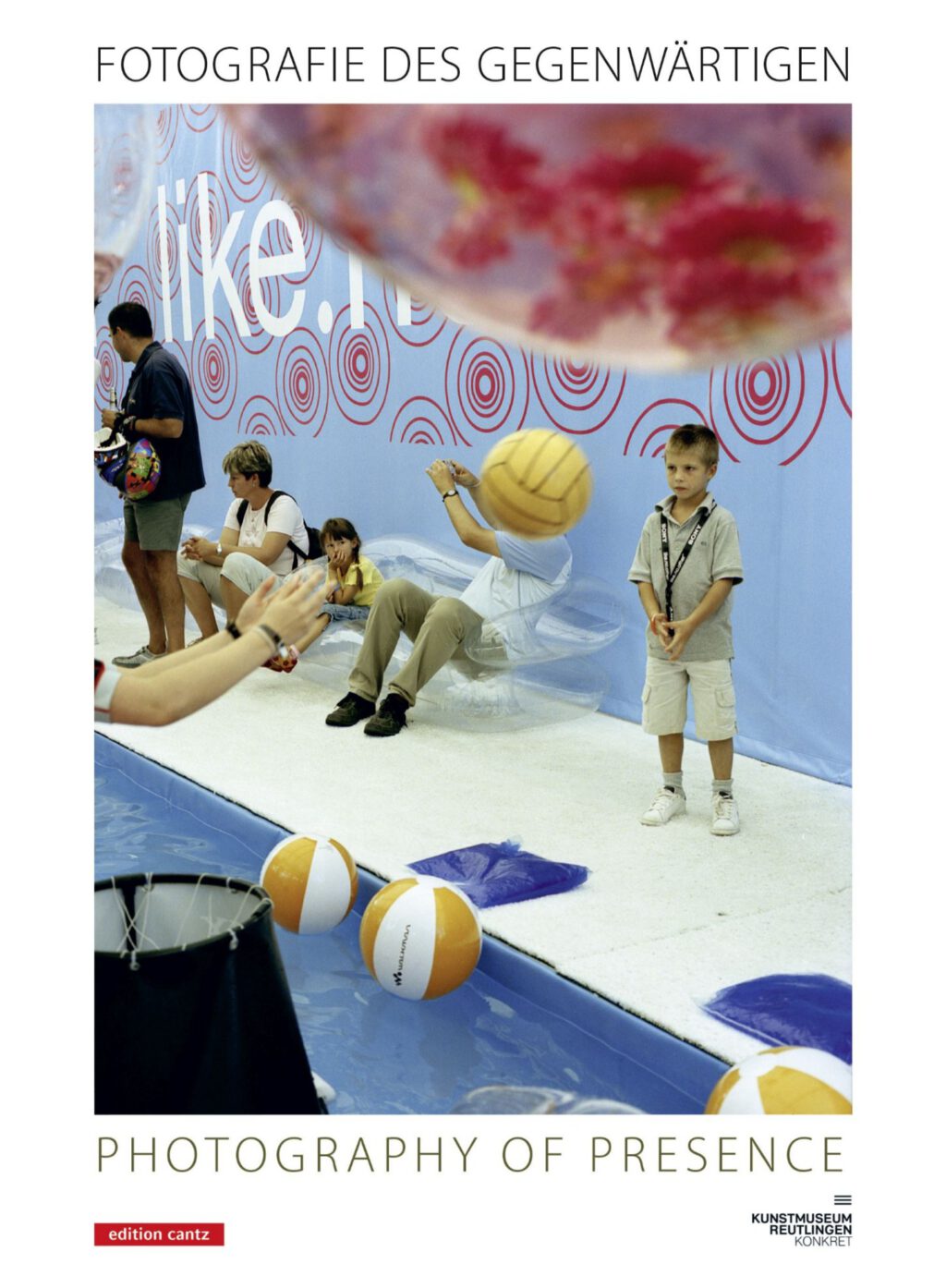
Photography of Presence
24€ Add to cartThe Importance of the Moment in Artistic Photography
Can photographs exist which represent concrete places? In view of the daily flood of images, this question seems superfluous at first. Only on closer inspection does the distance between the visual experience of places and the media images generated from them become apparent. “There is nothing in this world that does not have a decisive moment,” Henri Cartier-Bresson once stated. The present volume examines this decisive moment and explores the question of how artistic photography can describe the gap between spatial reality and photographic image and make the present at the time the photograph was taken visible.
With works by Viktoria Binschtok, Julian Faulhaber, Mareike Foecking, Stephanie Kiwitt, Nikolaus Koliusis, Barbara Probst, and Wolfgang Zurborn as well as texts by Holger Kube Ventura.
-

Sabine Hornig
Passage through Presence45€ Add to cartLayered Spacetimes in Large Formats
Sabine Hornig (b. 1964; lives and works in Berlin) has earned international acclaim with sculptures, photographs, and architectural interventions that interweave image, perspective, and space in distinctive ways. Her works feature translucent pictorial planes on glass panes; integrating these sculptural elements into the setting, she creates environments in which meaning unfolds as viewers allow their gazes—and themselves—to wander. For her new works, which engage with architecture, the artist superimposes enormous photographs on entire façades and concourses. This publication is the first to put the focus on Sabine Hornig’s art in three dimensions, detailing her process from the building of sculptural models and the combination with transparent photographic layers to her creation of works in public settings. It showcases her largest installation to date, at LaGuardia Airport in New York City, which she discusses in a conversation with Nicholas Baume, director and chief curator, Public Art Fund, New York.
-

What is Vienna Actionism?
50€ Add to cartBlows were dealt. An artist exposed and cut himself, others urinated in glasses, daubed themselves with dirt, and masturbated over the Austrian flag. Meanwhile, music was playing, including the national anthem; someone read pornographic writings. Vienna in the late 1960s: what had started in the artists’ homes and studios was now brough out on the grand stage, and taboos were broken in full view of the public.
The Vienna Actionism Museum’s first publication is dedicated to the idea of Vienna Actionism in the dynamic context of abstract realism, Fluxus, and the international Happening scene. The book relates the story of one of art history’s most influential art movements, spearheaded by the Actionists Günter Brus and Otto Muehl, Hermann Nitsch and Rudolf Schwarzkogler.
-
Rainer Jacob
justICE30€ Add to cartRainer Jacob (b. Jena, 1970; lives and works in Leipzig) has anonymously installed objects made of ice in public settings in cities including Berlin, Leipzig, Paris, Moscow, Oslo, Prague, and Budapest since 2013. He then allows them to dematerialize and records the process in photographs. Radiators, wall outlets, QR codes, and the Duchampian pissoir are among his recurrent motifs. The impermanence of the ice objects builds bridges to street art, Fluxus, and action art. Critical observations on the unequal distribution of resources and political power in contemporary society, his works reflect on our perceptions and question the idea of originality in art while also probing the outer limits of sculpture.
The publication showcases the ice objects of the past ten years, embedding them in a decade that has marked a sea change in the life of humankind: JustICE captures an artist’s distinctive perspective on societal processes.
-

Emmanuel Bornstein
Wildwechsel25€ Add to cartLike the deer that tests our vigilance by suddenly crossing the road, Emmanuel Bornstein’s (b. Toulouse, 1986; lives and works in Berlin) art, which is rarely winsome and often disturbing, forces us to grapple with reality. In his earlier work, the German-French artist often focused on the Holocaust and the Second World War, creating pictures profoundly informed by his own family’s story. Exploring Berlin, the epicenter of that dark history, inspired searching meditations in series that turned the spotlight on traces of what had happened. More recently, Bornstein has sought to disentangle his art from subjective experience, shifting his focus to the analysis and reconstruction of contemporary events. Wildwechsel retraces the evolution of his oeuvre as reflected in his biography, which exemplifies the cultural exchange between Germany and France.
Emmanuel Bornstein studied painting first at the École Nationale Supérieure des Beaux-Arts de Paris, then at the Berlin University of the Arts. His works are held in numerous private and institutional collections in New York, Paris, Berlin, Vienna, Madrid, and Istanbul.
-
Johannes Schütz
Die Unterbrechung / The Interruption48€ Add to cartJohannes Schütz (b. Frankfurt am Main, 1950; lives in Berlin) is one of the best-known stage designers and directors working today. His style may be characterized as “simple, clean, and radical.” All major theatres and opera houses in the German-speaking countries and beyond have showcased Schütz’s work. He trained with Wilfried Minks and created his first stage setting for Luc Bondy in 1971. His career then took him to Berlin’s Schillertheater and the Kammerspiele in Munich, later he became head of stage design at the Bremer Theater and the Schauspielhaus Bochum. Schütz taught scenography at the ZKM Center for Art and Media Karlsruhe from 1992 until 1998 and has been professor of stage design at the Düsseldorf Academy of Fine Arts since 2010.
In his book Die Unterbrechung, he meets Annette Storr to discuss his new work for the stage, which is documented by maquettes and photographs and, most often, by stills from the performances. The productions represented include Penthesilea by Heinrich von Kleist, Landestheater Salzburg, 2018; Hamlet by William Shakespeare, Schauspielhaus Bochum, 2019; Reich des Todes by Rainald Goetz, Deutsches Schauspielhaus Hamburg, 2020; Richard II by William Shakespeare, Burgtheater, Vienna, 2021; and Der Idiot by Dostoevsky, Thalia Theater, Hamburg, 2021.
-
Julius Hofmann
Western Philosophies35€ Add to cartJulius Hofmann (b. Göttingen, 1983; lives and works near Göttingen) has mastered the traditional aspects of painting and commands a broad repertoire of creative techniques. This expertise enables him to call conventional painting in question by combining it with the aesthetic of 1990s computer graphics. The simple and often grotesque symbolism of the imperfect digital imagery contrasts with a perfectionistic figurative painting. This approach lends his pictures a disconcerting and unexpected quality.
Western Philosophies is an episode in Hofmann’s ongoing work confronting consumerist society with its dark secrets and its indifference. Meanwhile, his creative process is also an exploration of the artist’s personal fears and frustrations. In depicting his figures, landscapes, and machines, he draws our attention to the painterly originality of structures and surfaces. The protagonists, to his mind, play a subordinate role, typically serving him as vehicles—he is more interested in the “how” than in the “what.”
Julius Hofmann studied painting with Neo Rauch and Heribert C. Ottersbach at the Academy of Fine Arts Leipzig (HGB) from 2005 until 2011. His work is represented in international collections and institutions.
-

Glückliche Tage
32€ Add to cartWe see in contrasts. Freedom from pain follows pain, and felicity is the more radiant after a period of misfortune. Happiness, that is to say, displaces unhappiness and is perhaps its recompense; what is certain is that, as antonyms, they are (at least in this world) inconceivable without each other. The contrast they form also underlies the tensions inherent in the works in this catalogue. Some take us straight from the pinnacle of happiness down into the abyss, while in others the gradients of ascent or descent are so gentle that no culmination is perceptible. What all oeuvres gathered in the book have in common is that they furnish the human being, a social creature, with an experience of resonance. Happiness and unhappiness reverberate between the art and the beholders, leaving, in the best case, a lasting impression. Opening the catalogue—a metaphor for the human condition materialized in paper—one overhears this serenely melancholy echo of the works.
Artists: Rui Chafes, Tamara Eckhardt, Nan Goldin, Felix Gonzalez-Torres, Barbara Hammer, Carsten Höller, Ken Lum, Johanna von Monkiewitsch, Yoko Ono, Heike Weber, Stefan Wissel
With contributions by: Yevgenia Belorusets, Nell Sophie Bender, Elias Bendfeldt, Laura Berestecki, Annabella Ernst, Annika Gaeth, Hristina Georgieva, Markus Heinzelmann, Malwin Kraßnigg, Max Florian Kühlem, Natascha Laurier, Martin Middeke, Navaz Roomi-Mirhosseini, Vanessa Joan Müller, Julia Neumann, Martin Paul, Caroline Planert, Maike Prause, Arne Rautenberg, Kira Sophie Röller, Gina Marie Schwenzfeier
-

Claudia Fährenkemper
Kontextforschung / context research 1980–202268€ Add to cartClaudia Fährenkemper (b. Castrop-Rauxel, 1959; lives in Steinheim/Westfalen) photographs enormous as well as minuscule objects using scanning electron microscopes to produce images that are as fascinating as they are disconcerting. The play with extreme scales yields fantastic visual worlds: American desert and canyon landscapes, the giant industrial machinery of open-pit mines in Germany, insects, plant seeds, crystals, and plankton, plus historic armaments from Europe and Japan. The lavishly designed book is the first to gather works from her entire oeuvre, which now spans four decades. Surveying the most important of Fährenkemper’s conceptual series, it reveals unexpected interconnections between disparate motifs on vastly different scales from nature, technology, science, and cultural history.
Claudia Fährenkemper studied at Fachhochschule Köln, today’s Cologne University of Applied Sciences, where Arno Jansen was her teacher, and with Bernd and Hilla Becher and Nan Hoover at the Düsseldorf Academy of Fine Arts. Her photographs are held by numerous museum collections, including at the Kunstmuseum Bonn, the National Gallery of Canada, and the Margulies Collection, Miami.
-

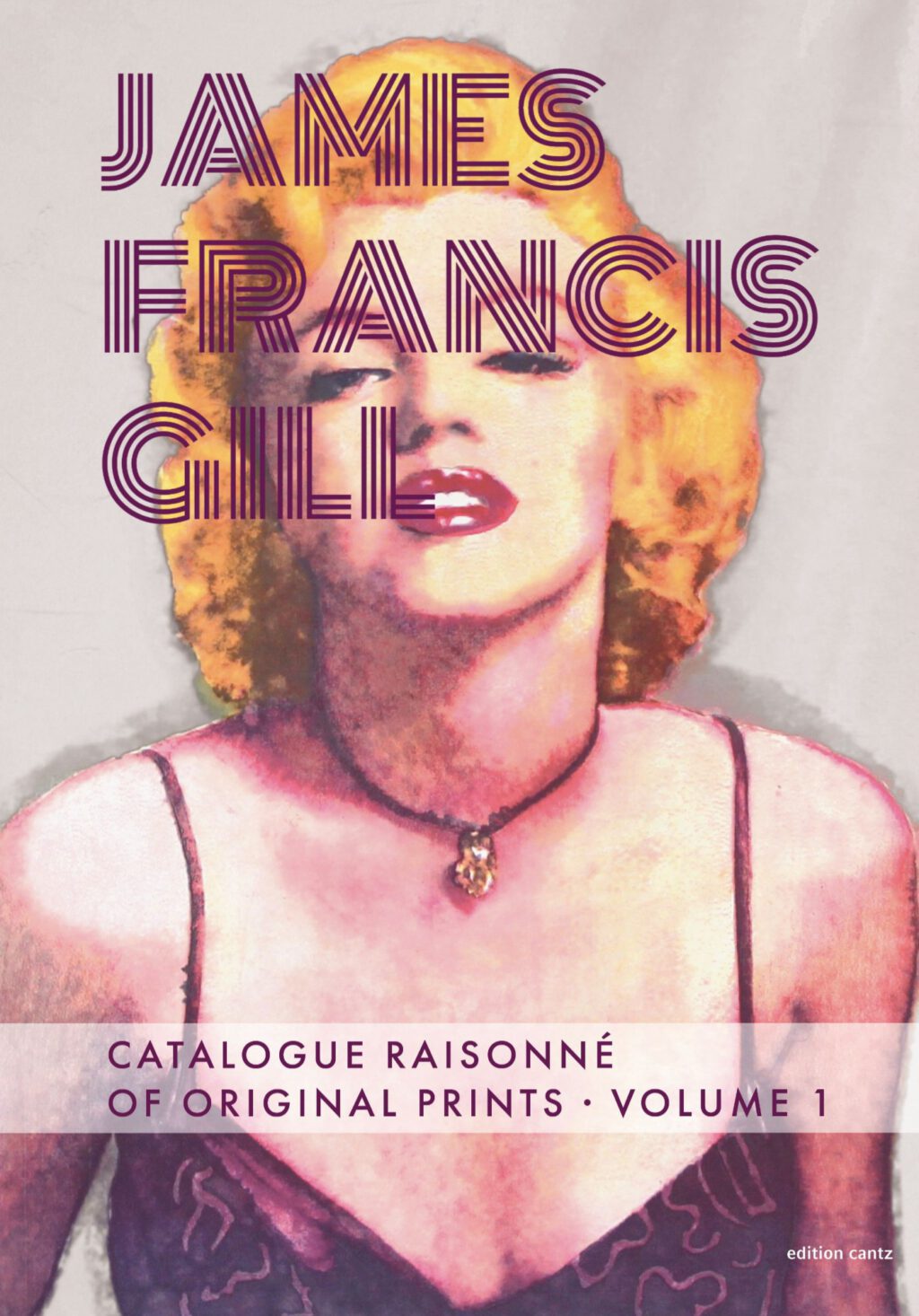
James Francis Gill
Catalogue Raisonné of Original Prints, Vol. 139€ Add to cartThe Catalogue Raisonné of the Co-Founder of American Pop Art
James Francis Gill (b. 1935, Tahoka; lives and works in Texas) is one of the most important artists of American Pop Art. His paintings, often based on photographs, provide an unusually personal approach to the icons of the 1950s and 60s. Gill suddenly became Hollywood’s most celebrated artist when his Marilyn Triptych was added to the permanent collection of The Museum of Modern Art in New York in 1962 – even before the works of Andy Warhol. Through friendships with celebrities such as John Wayne, Martin Luther King, and Marlon Brando, Gill became the contemporary artist-witness of an entire generation. Nevertheless, he kept his distance from the exuberant Hollywood of the time and surprisingly withdrew in 1972, only to reappear on the art market thirty years later. This catalogue raisonné in two volumes impressively documents his work from the early political motifs to the Pop Art icons of his late work.
- temporarily not available

Shara Hughes
Day by Day by DayRead moreGraphic Manifestations of the Unconscious
The painter Shara Hughes (b. Atlanta, GA, 1981; lives and works in Brooklyn, NY, USA) is one of the rising stars of the American arts scene. Her colorful imaginary landscapes, executed in a radiant palette and with an expressive gesture, pay homage to the Symbolists, the Fauves, and the Expressionists, whose artful handling of lighting and depth she deftly emulates. In an intuitive approach, Hughes applies paints to the canvas that match her present state of mind. She calls her pictures “emotional landscapes” and notes that she does not know what will happen next; her work on them touches on a vulnerable boundary. The lavish book presents numerous works on paper, most of them in large formats, and contains an essay by the New York-based art critic Andrew Russeth.
Shara Hughes graduated from the Rhode Island School of Design and later attended the Skowhegan School of Painting & Sculpture in Madison, ME. She has had solo shows at the Arts Club, London, the Newport Art Museum, the Metropolitan Opera, New York, and the Museum of Contemporary Art of Georgia, Atlanta. In 2017, her work was included in the Whitney Biennial at the Whitney Museum of American Art, New York.
-

Justine Otto
New Traditionalists38€ Add to cartJustine Otto (b. Zabrze, Poland, 1974; lives and works in Hamburg and Berlin) is one of the most promising artists on the contemporary painting scene. An aficionado of the absurd, she unfolds a metaphysical-psychedelic and often gaudily lustrous cosmos in pictures in which representation clashes with abstraction. In her early work, girls, women, and animals were here preferred subjects; more recently, she has painted heroes—the protagonists in myths of masculinity. After generals, officers, and strategists, she has now turned her attention to cowboys, who appear on horseback or resting under a tree, musical instrument in hand.
Justine Otto studied fine art and painting with Peter Angermann and Michael Krebber at the State Academy of Fine Arts (Städelschule) in Frankfurt am Main and obtained an MFA in 2003. She also worked as a scene designer at Städtische Bühnen Frankfurt, the city’s municipal theater company. Her paintings are held by collections including the Hessisches Landesmuseum, Darmstadt; Museum Franz Gertsch, Burgdorf, Switzerland; and the Phillips Collection, Washington, D.C.
-

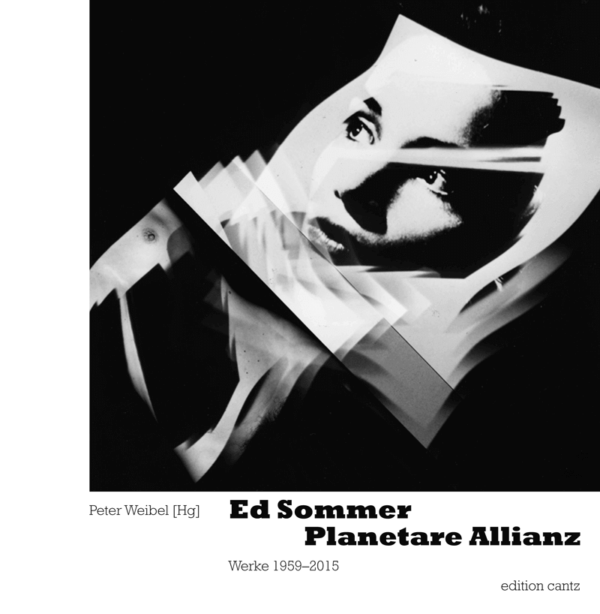
Ed Sommer
Planetare Allianz22€ Add to cartA Monograph on the Pioneer of Op Art
The complex and extraordinary work of the Schwäbisch Gmünd-based artist Ed Sommer (1932–2015), who preferred to call himself a Bildsprachenmaler (painter of visual imagery), includes metal objects, formations of acrylic glass, gestural painting, erotic films, projection photography, dialogical portraits, and spoken texts. In 2014, the ZKM | Center for Art and Media Karlsruhe added a large number of works by the artist to its collection. This publication now presents the collection holdings, supplemented by further works by Ed Sommer.
Ed Sommer, together with his artist friend Marc Adrian, was one of the most important representatives of op and kinetic art and received considerable attention in the 1970s with his films and photographs.
-

Franziska Windisch
Walk with a wire14€ Add to cartThe interweaving of traces, sounds, and movements in an impressive work of sound art
The narrow brown magnetic tape of an audio cassette runs through a half-opened hand, slides through the fingers, is palpated in constant motion, and finally falls to the ground. The hand and its touching, particles of sand and small stones leave their traces and, when the tape is played, generate a multi-layered soundscape with crackling and background noises.
In her performative action in the ruins of the city of Messene in the Peloponnese region of Greece, Franziska Windisch (b. 1983) thematizes aspects of repetition and recording. Her artistic examination of the vestiges of the ancient urban space, the reciprocal transition from traces to writing in her video documentation, and the graphic element of the line visible on the ground lead to a reflection on temporality, dissolution, and decay. -

Austin Eddy
Selected poems40€ Add to cartSince 2018, the American painter and sculptor Austin Eddy (b. Boston, 1986; lives and works in Brooklyn) has probed the manifestations of modern painting in a world between abstraction and figuration. As a child and teenager, Eddy immersed himself in the imageries of comics, cartoons, and record covers. In the early 2010s, he studied in Chicago with Barbara Rossi, who had been one of the Chicago Imagists in the 1960s. The deconstruction of everyday objects into innumerable forms and hues became his central theme. Eddy’s works play with luminous colors, overlaid textures, animated bird motifs, and abstract planes of light while grappling with a human existence defined by loss and the passage of time. Situated on the margins of reality, his paintings and sculptures are like visual poems, celebrating the evanescent instant that exists only for a second before fading into the past.
Austin Eddy completed a BFA at the School of the Art Institute of Chicago in 2010.
-

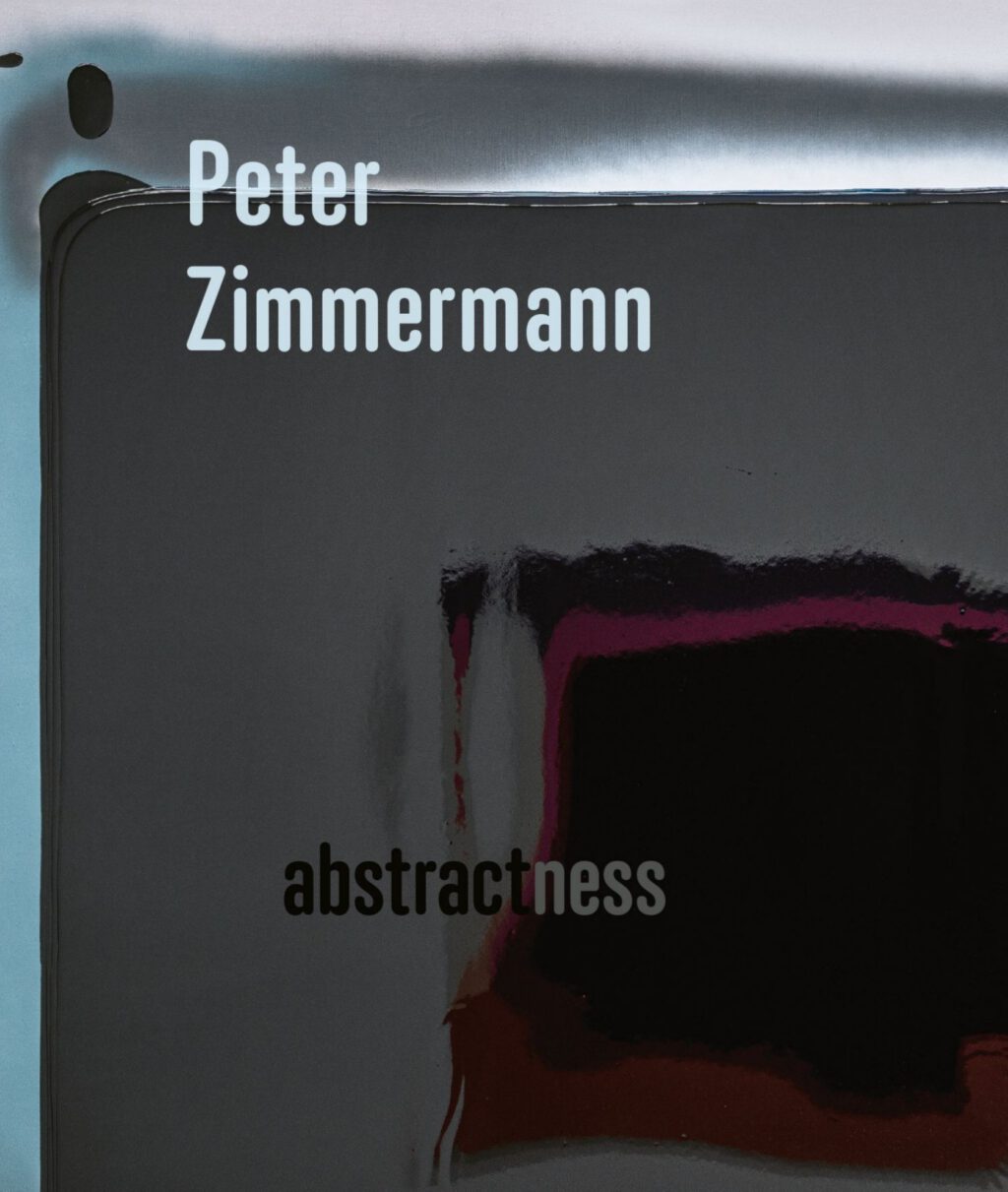
Peter Zimmermann
abstractness26€ Add to cartTreading the Limits of Originality
Peter Zimmermann (b. 1956, Freiburg; lives and works in Cologne) is one of the most important conceptual media artists. With his work, he consistently experiments with visual reproduction techniques and gained international recognition in the late 1980s with his Book Cover Paintings: motifs from book covers such as that of the Diercke Weltatlas or the Polyglott travel guides, which Zimmermann transfers to the canvas with oil and epoxy resins. The relationship between original and copy is the central theme of his work, with which he addresses the ambivalence of artistic and digital authorship. This monograph brings together early works and a selection of current productions.
Peter Zimmermann studied at the Staatliche Akademie der Bildenden Künste Stuttgart and was professor at the Kunsthochschule für Medien Köln, Cologne, from 2002 to 2007.