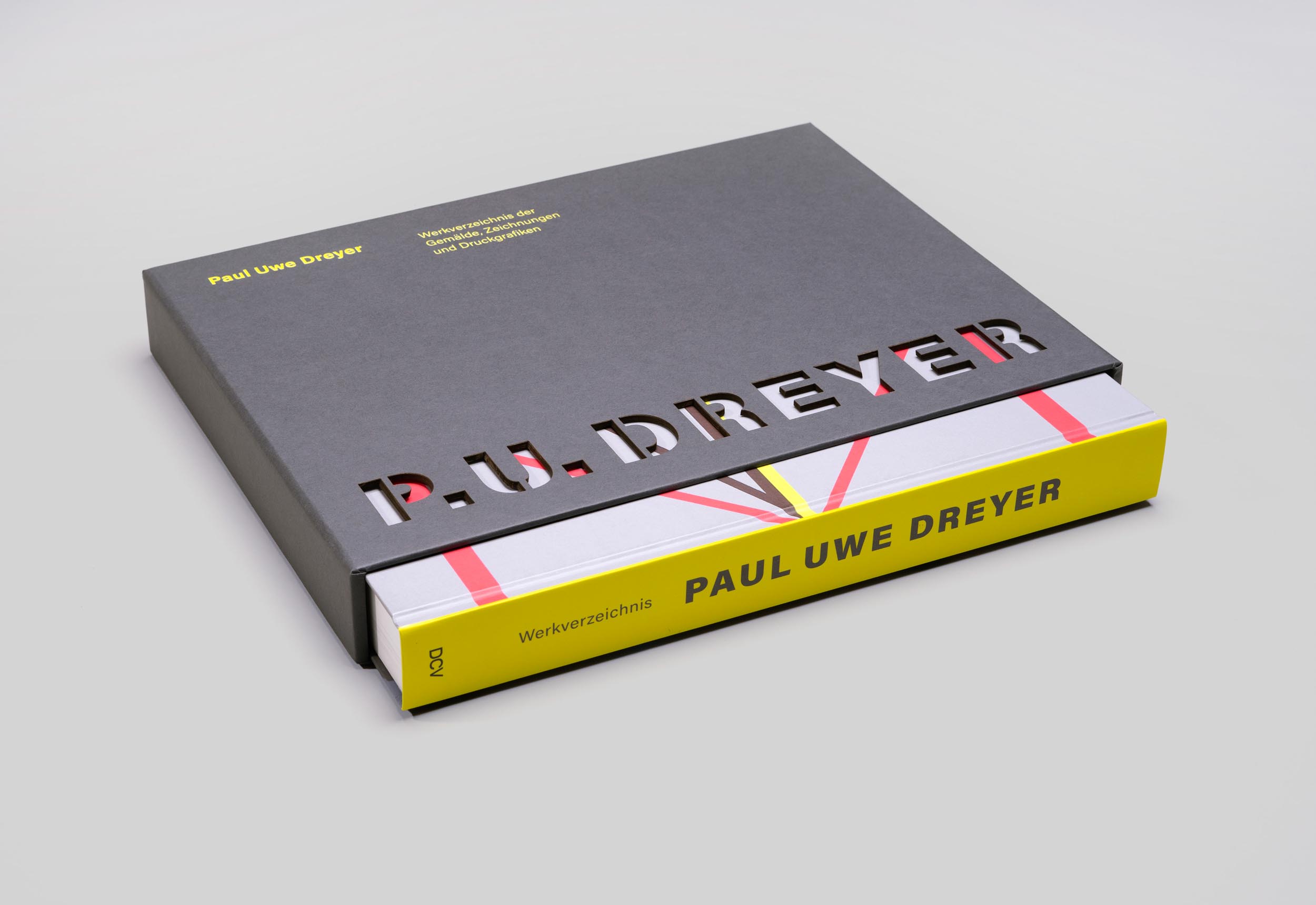
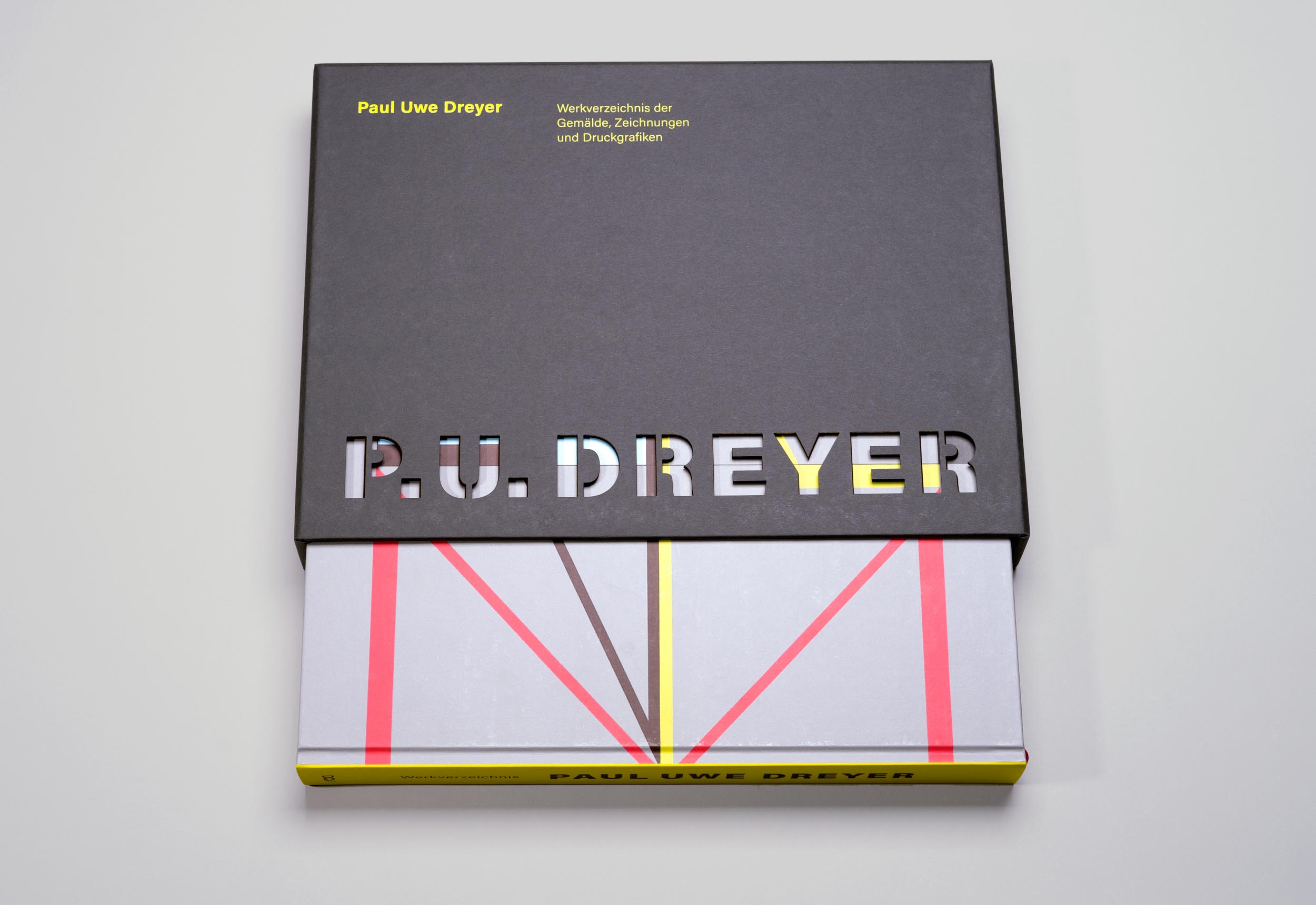
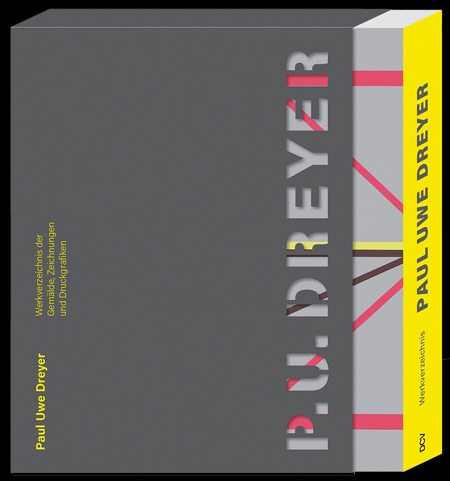
Paul Uwe Dreyer
Werkverzeichnis der Gemälde, Zeichnungen und Druckgrafiken
 | |
|---|---|
| Editor(s) | Anja Rumig |
| Author(s) | Andreas Baur, Anja Rumig, Bernhard Kerber, Dorit Schäfer, Heinz Fuchs, Holger Kube Ventura, Reinhard Döhl, Simone Schimpf, Ulrike Gauss |
| Design | Nathalie Baumann |
| Cover | Hardcover in slipcase with die-cut |
| Size | 32 × 24,5 cm |
| Pages | 384 |
| Illustrations | 670 color and 30 b/w |
| Language(s) | English, German |
| ISBN | 978-3-947563-71-5 | Release September 2021 |
A Painter, Draftsman, and Draftsman of Concrete Art
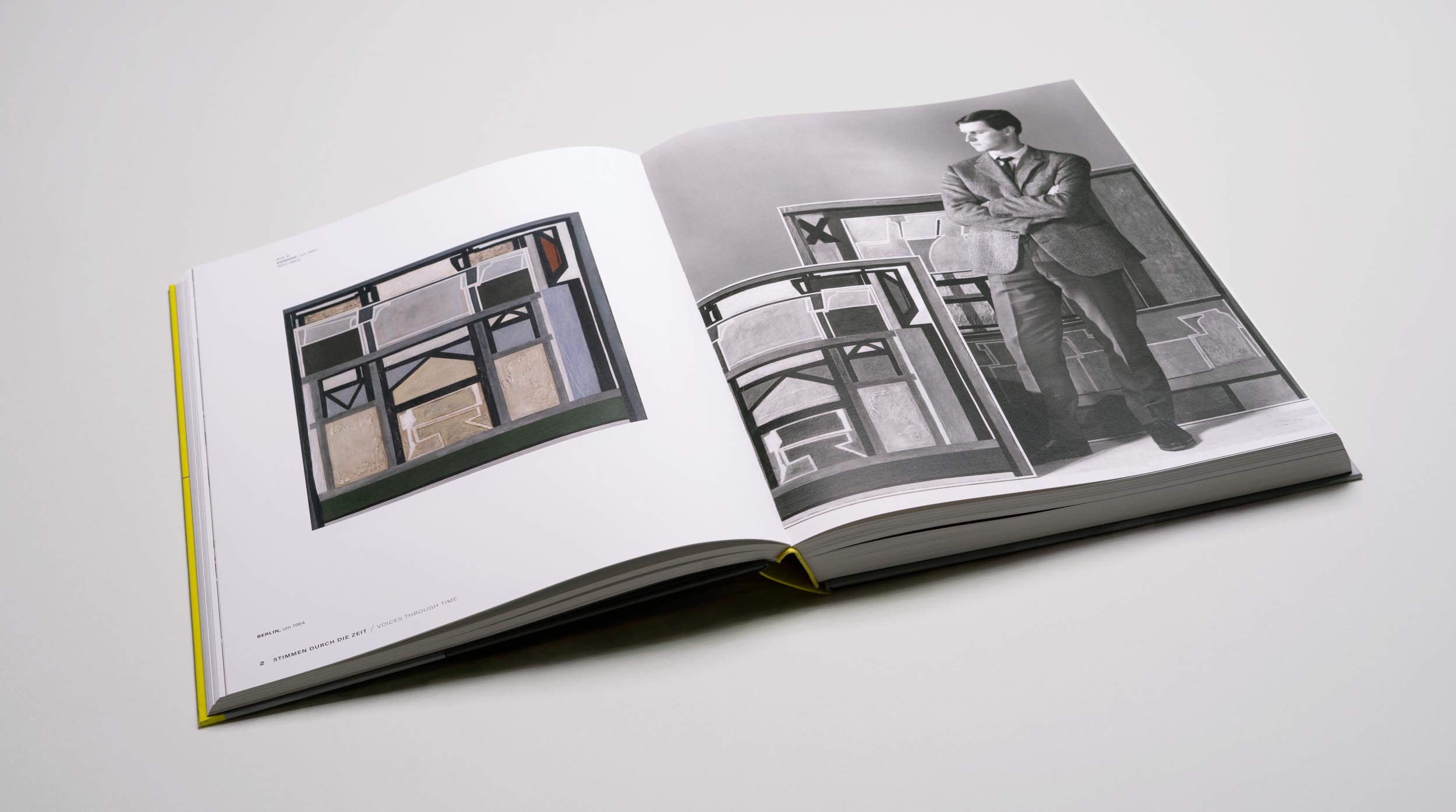
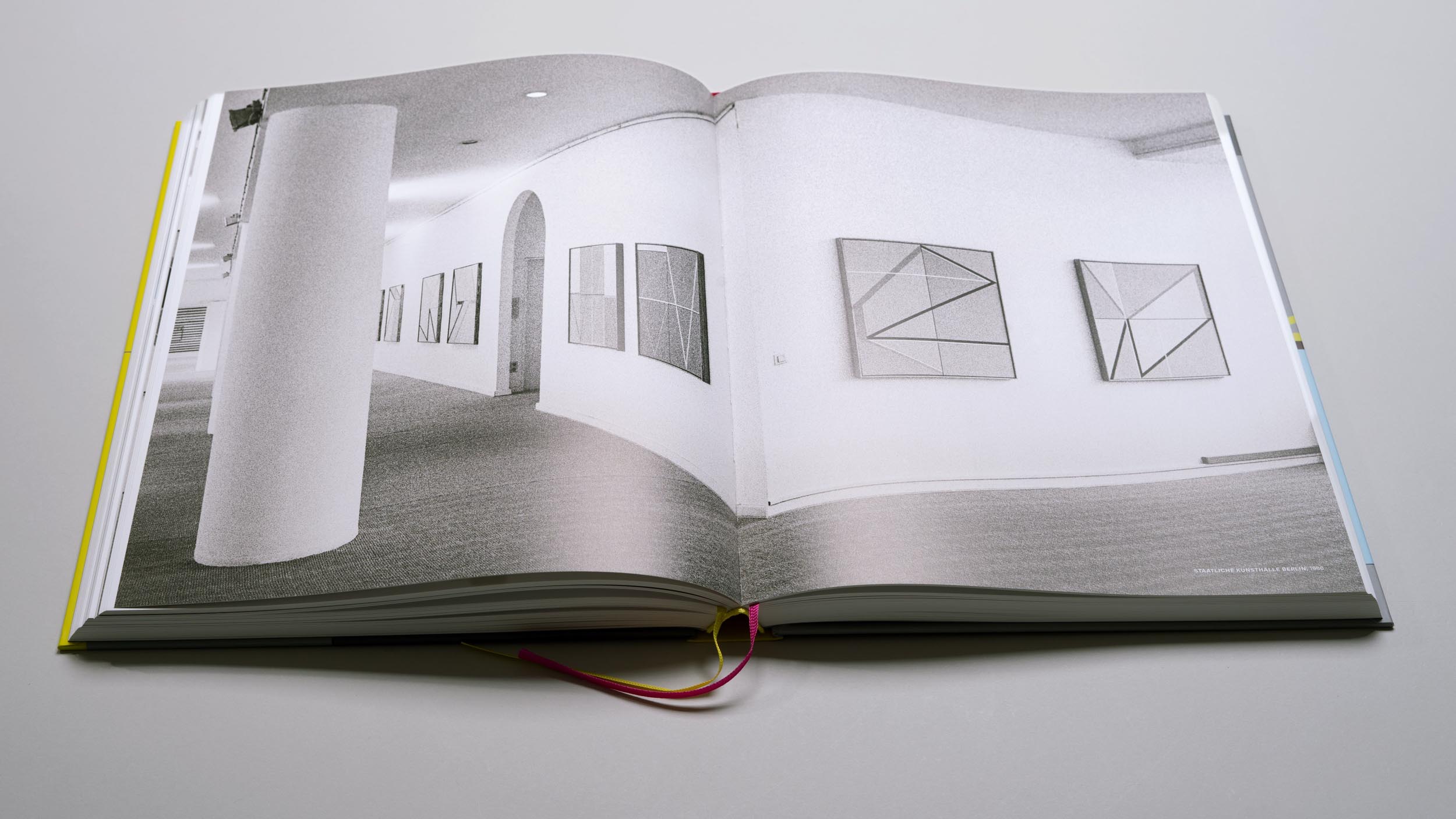
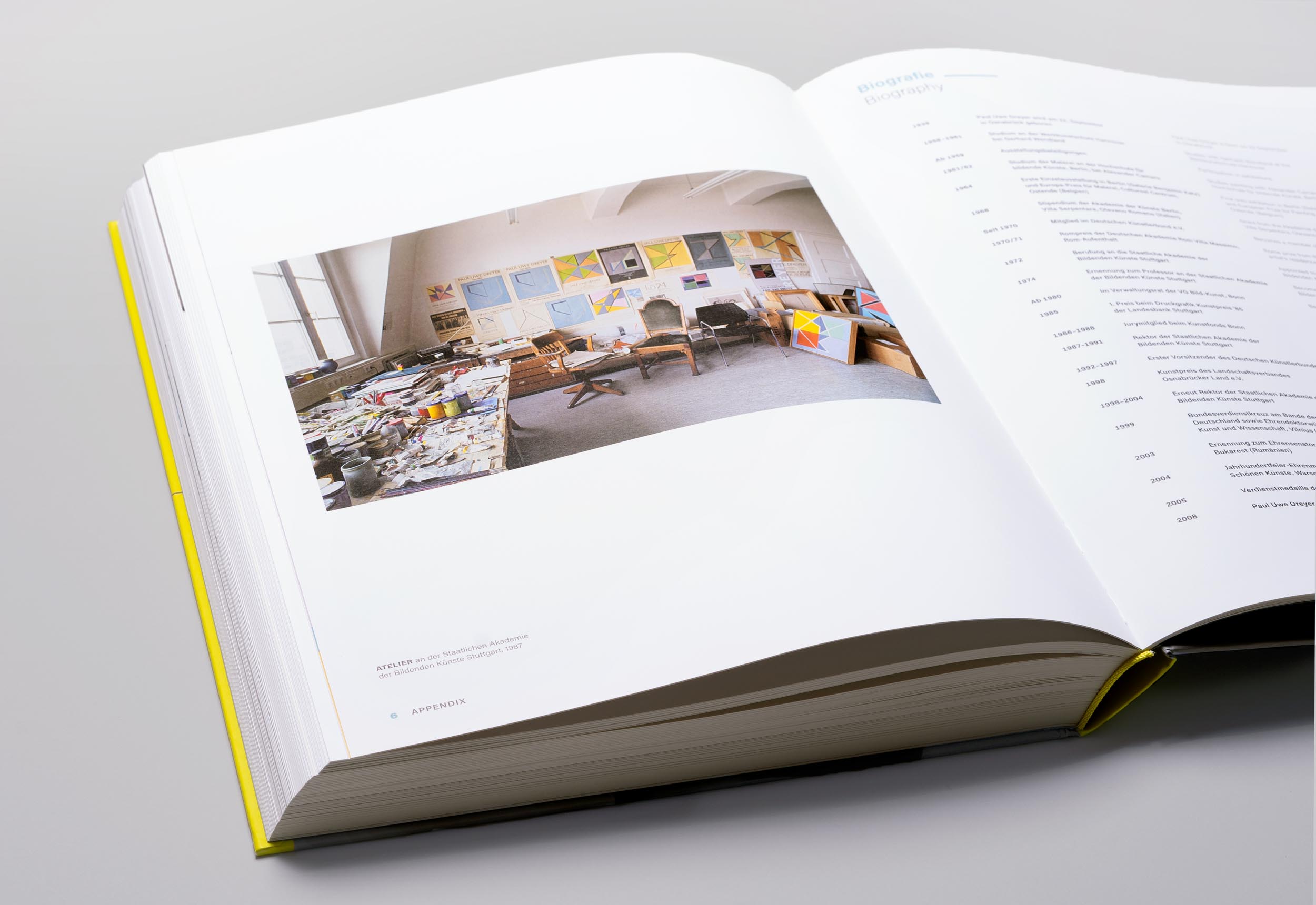
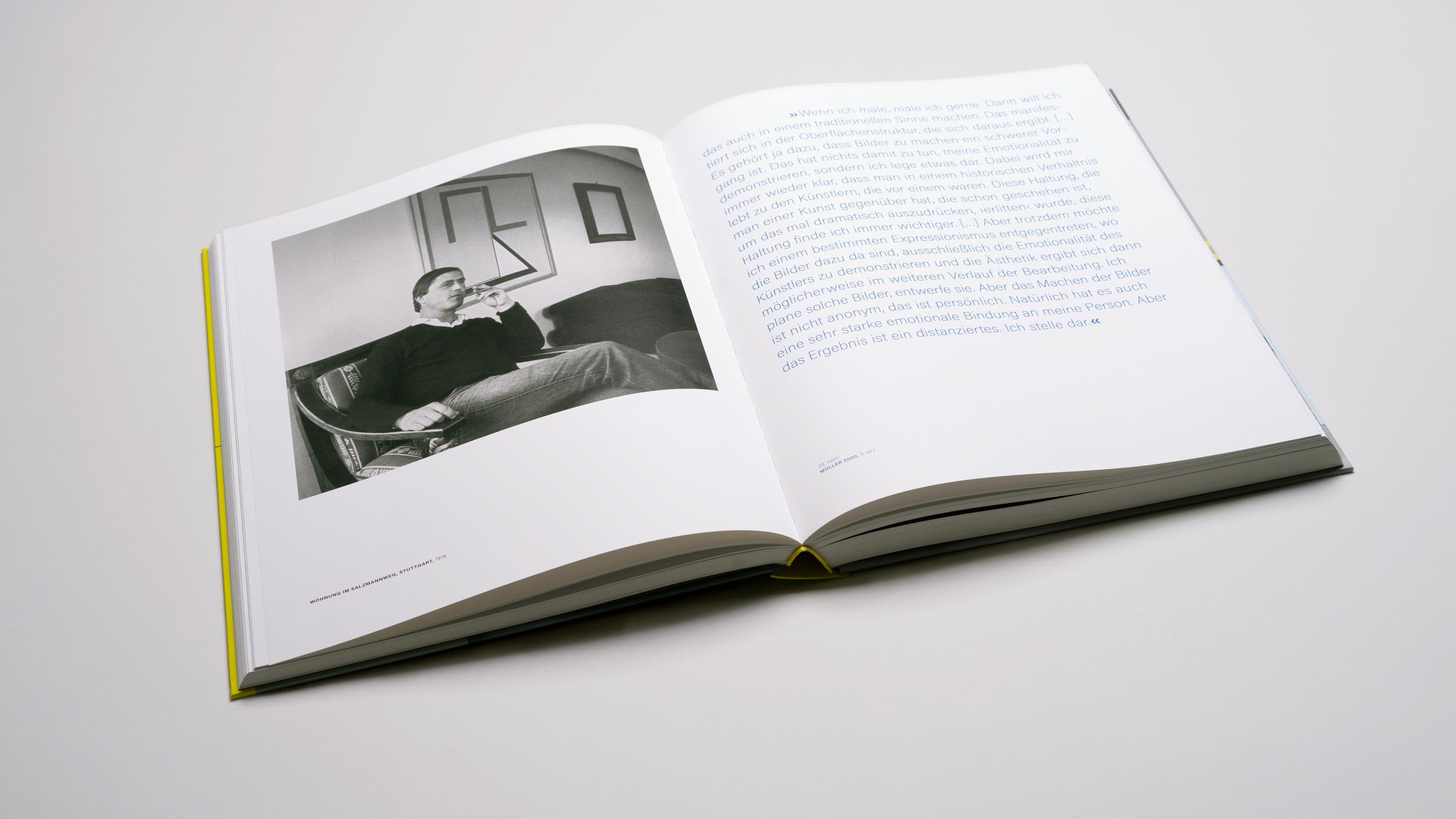
Paul Uwe Dreyer (b. 1939, Osnabrück; d. 2008, Stuttgart) taught painting as a professor at the Staatliche Akademie der Bildenden Künste Stuttgart for more than three decades. His oeuvre shows the hallmarks of geometric constructive art: inspired by subjective experiences of reality, Dreyer’s compositions visualize the dialectics of organizing principles and their potentials for variation, a guiding interest that is already evident in his early work since the 1960s and especially in the pairs and series of pictures he begins creating in the early 1970s. His art unfolds a fascinatingly dynamic yet nonhierarchical dialogue between colors, surfaces, and lines. The chronological catalogue raisonné reveals the consistency with which motifs evolve from his early to his late oeuvre, from architectural, figural, and ornamental tokens through elements resembling symbols and icons to complex penetrations of spaces.
Release September 2021
More books
-

Lars Breuer
The Love of the Gods32€ Add to cartThe art of Lars Breuer (b. Aachen, 1974; lives and works in Düsseldorf and Cologne) is set apart by its broad spectrum of systems of reference. In his large-format installations, text-based works in his own typography draw connections to literature and art history. They are complemented by figurative and abstract paintings and photographs.
In The Love of the Gods, Breuer presents 104 C-prints of photographs for which he pointed the camera’s lens into the barrels of disused rifles, pistoles, revolvers, and cannons. The pictures were taken on the artist’s travels to Athens, Bangkok, Buenos Aires, Copenhagen, Leverkusen, Ingolstadt, Melbourne, New York, Oslo, and Phnom Penh, in museums, palaces, and public squares. Breuer’s conceptual and meticulously sober-minded approach yields almost abstract compositions showing nothing but the round muzzles and the dark interiors of the weapons on a deep-black ground. We see only a ring-shaped ornament until it dawns on us that it is part of a lethal implement. A cruel constant of human existence stares us in the face: humans behind these weapons were perpetrators, humans in front of these weapons were victims. Lars Breuer’s turn the spotlight on what the aura of the ornaments conceals: they have wrought death.
-

Jakob Ganslmeier
Lovely Planet. Polen / Poland16€ Add to cartAn Unconventional and Humorous Guide to a Country of Contrasts
In 2015, the photographer Jakob Ganslmeier (b. Munich, 1990; lives and works in Berlin) went on an extended tour of Poland in search of shots that captured the country’s social realities and way of life at a time of wrenching changes. The title of his project evokes associations with Lonely Planet, one of the world’s best-selling series of travel guides, and the artist took inspiration from the format of the popular books, where recommendations for readers exploring strange lands are grouped by categories. Crisscrossing Poland—he covered over ten thousand kilometers—Ganslmeier encountered widely different people and draws our attention to places that would never make it into a guidebook. His pictures show a country of extremes, between boomtown optimism and decline, consumerism and poverty, gleaming façades and bleak village streets.
Jakob Ganslmeier studied at the Ostkreuzschule für Fotografie, Berlin, and at the Bielefeld University of Applied Sciences. His pictures, which have garnered numerous awards, are frequently featured in leading German media and have been shown in exhibitions in Germany and abroad, including at the Brandenburgisches Landesmuseum für moderne Kunst, Cottbus, the Nobel Peace Center, Oslo, the Triennale der Photographie Hamburg, and the Fondation Calouste Gulbenkian, Paris.
-

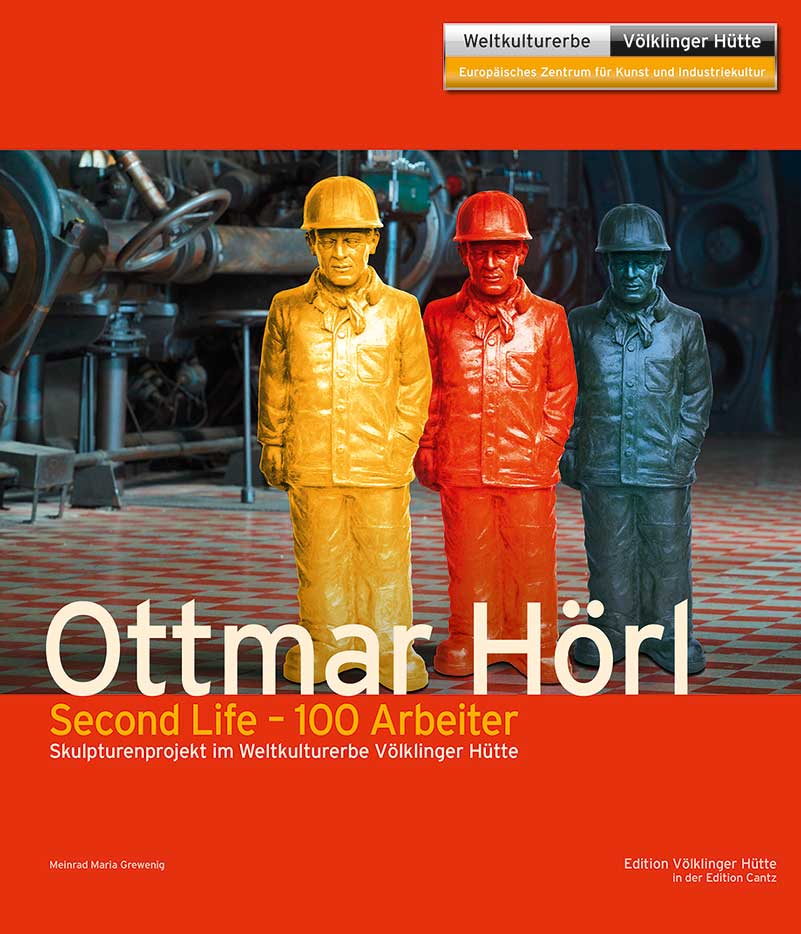
Ottmar Hörl
Second Life – 100 Arbeiter14,80€ Add to cartThe Workman Sculptures at Völklinger Hütte Steelworks
Sculptures on topics of everyday life are at the center of the work of Ottmar Hörl (b. 1950, Nauheim; lives and works in Frankfurt/Main and Wertheim). His major projects gained international recognition, they are based on the artist’s concept of art as a communication model. For the Völklingen Ironworks World Heritage Site, Hörl conceived the sculpture project Second Life, which features 100 figures modeled on the Völklingen ironworker with helmet and work clothes. The book documents the impressive project that focuses on the universal theme of the Völklingen Ironworks: work and the working people.
-

Martin Noël
The Retrospective38€ Add to cartThe Protagonist of the Modern Woodcut
The German painter, draftsman, and graphic artist Martin Noël (b. Berlin, 1956; d. Bonn, 2010) played a leading role in reviving the linocut and the woodcut, two techniques that had long been eclipsed by other media. In his large-format works on paper, he staked out a widely regarded and distinctive position in contemporary art. Noël was especially interested in the compositional relationship between line and surface. Released on occasion of the retrospective of his oeuvre at the Albertina, Vienna, this book presents an overview of the most important periods in the artist’s creative evolution, with an emphasis on the woodcut carved into the printing plate and the woodblock’s subsequent emancipation as an art object in its own right. Particular attention is paid to the application of ink to the surface and its painterly structure as well as the picture’s migration from object to canvas. The resulting paintings are exemplary of Noël’s late oeuvre.
Martin Noël studied graphic art and painting at what is now the Cologne University of Arts and Sciences. His art garnered numerous prizes and other honors, including fellowships from Kunststiftung NRW, Stiftung Kunstfonds, and Letter Stiftung. Works by Noël are in the German Federal Collection of Contemporary Art, Kunstsammlung Chemnitz, and the collection of Museum Pfalzgalerie Kaiserslautern.
-

Konrad Mühe
Guide38€ Add to cartAn Artist’s Book as an “Optical Illusion”
Konrad Mühe’s (b. Karl-Marx-Stadt, East Germany, 1982; lives and works in Berlin) works interrogate the construction of our identities by uncovering the technological and media apparatuses that sustain it and confronting it with the autonomous lives of objects. Their basic formal principle is the installation hybridizing sculpture and digital moving image, with a particular focus on the projector and the interaction of pedestal or suspension and projection screen. Where the classical black box in the movie theater or exhibition venue seeks to conceal the technical equipment in favor of an immersive visual experience, Mühe brings it to the fore and sets it out in the gallery space as sculpture and installation. Yet his works also undercut the conventional display regime in the white cube: the process of projection emerges as the true creative medium and subject. This book acts as a descriptive illustrated Guide to Mühe’s projects.
Konrad Mühe was Hito Steyerl’s master student and trained at the Berlin University of the Arts and the Burg Giebichenstein University of Art and Design Halle. His works have been featured at numerous film festivals including the 61st Berlinale and in exhibitions at Kunsthalle Düsseldorf, the Moscow Museum of Modern Art, and elsewhere.
-

Konkrete Progressionen
François Morellet & Vera Molnar, Manfred Mohr & Hartmut Böhm15€ Add to cartThanks to a generous donor, the Kunstmuseum Reutlingen | konkret welcomed a number of outstanding works to its collection in 2022. Titled Konkrete Progressionen, the first exhibition to showcase a selection from the gift features four internationally renowned artists whose works are derived from mathematical or geometric procedures: the concrete systematists Hartmut Böhm (1938–2021) and François Morellet (1926–2016) and the pioneers of computer-generated art Manfred Mohr (1938–) and Vera Molnar (1924–).
The book documents the serial paintings, drawings, collages, wall objects, and monumental installations and environments of steel beams or concrete blocks. The works play concrete games with the beholder’s ability to recognize patterns in binary contrasts or layered grids. They show sine waves, vector series, hypercubes, and markings derived from the circular constant π or the Fibonacci sequence—and in each instance demonstrate primarily how the basis of calculation takes on a life of its own.
The exhibition at the Kunstmuseum Reutlingen runs until April 14, 2024.
-

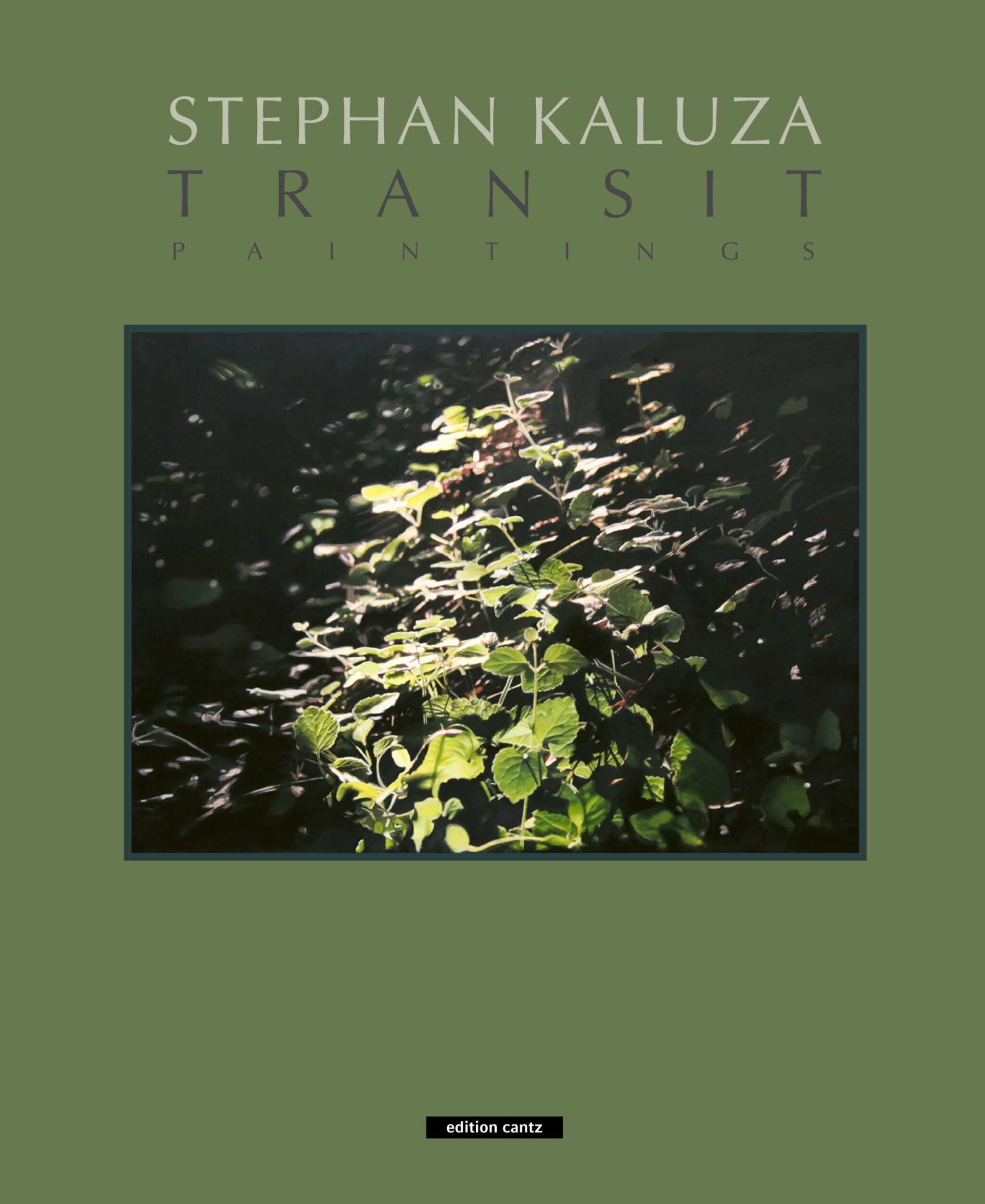
Stephan Kaluza & Dieter Nuhr
Transit42€ Add to cartLandscapes in a Dialogue between Painting and Photography
At first glance, Stephan Kaluza’s (b. 1964, Bad Iburg; lives and works in Düsseldorf) photorealist paintings might be still lifes, portraits of pristine nature. Yet they actually show battlefields and other scenes of past horrors. The idyll in his pictures positively appeals to our vigilance to resist the impression of profound peace. The same ambiguity lies at the heart of the photographs of Dieter Nuhr (b. 1960, Wesel; lives and works in Ratingen). Nuhr, who is also widely known as a comedian, has contributed pictures that are carefully focused renditions of seemingly serendipitous discoveries from his travels in Nepal, Bolivia, India, and Sudan. In their timelessness, Nuhr’s photographs are akin to the locales in Kaluza’s works, which, disburdened of the heavy weight of their histories, reemerge as straightforward natural landscapes. The lavishly illustrated two-volume edition presents the fruits of a collaboration between two artists united by their shared preoccupation with the dialectic of ephemerality and permanence.
-

Digitale Skulptur
Follow the unknown19,80€ Add to cartCrossing the BNorders of the Tangible
For the first time in art history a competition for the Digital Sculpture Award was announced. What is a digital sculpture anyway? Where are the boundaries between real and virtual worlds? With the advent of digitally generated images, the conditions for our perception and the parameters of our viewing habits are changed. Through the interactive involvement of the viewer, software-controlled image phenomena such as virtual environments lead to an exploring vision. The book presents and documents innovative works, which were conceived for the international competition, initiated by the Museum Ulm.
With works by Morehshin Allahyari, Giulia Bowinkel & Friedemann Banz, Jörg Brinkmann, George Crîngaşu, Nieves de la Fuente Gutiérrez, Marcel Karnapke, Leonard Kern, Nicolò Krättli + Jann Erhard, Martina Menegona and Marjan Moghaddam.
-

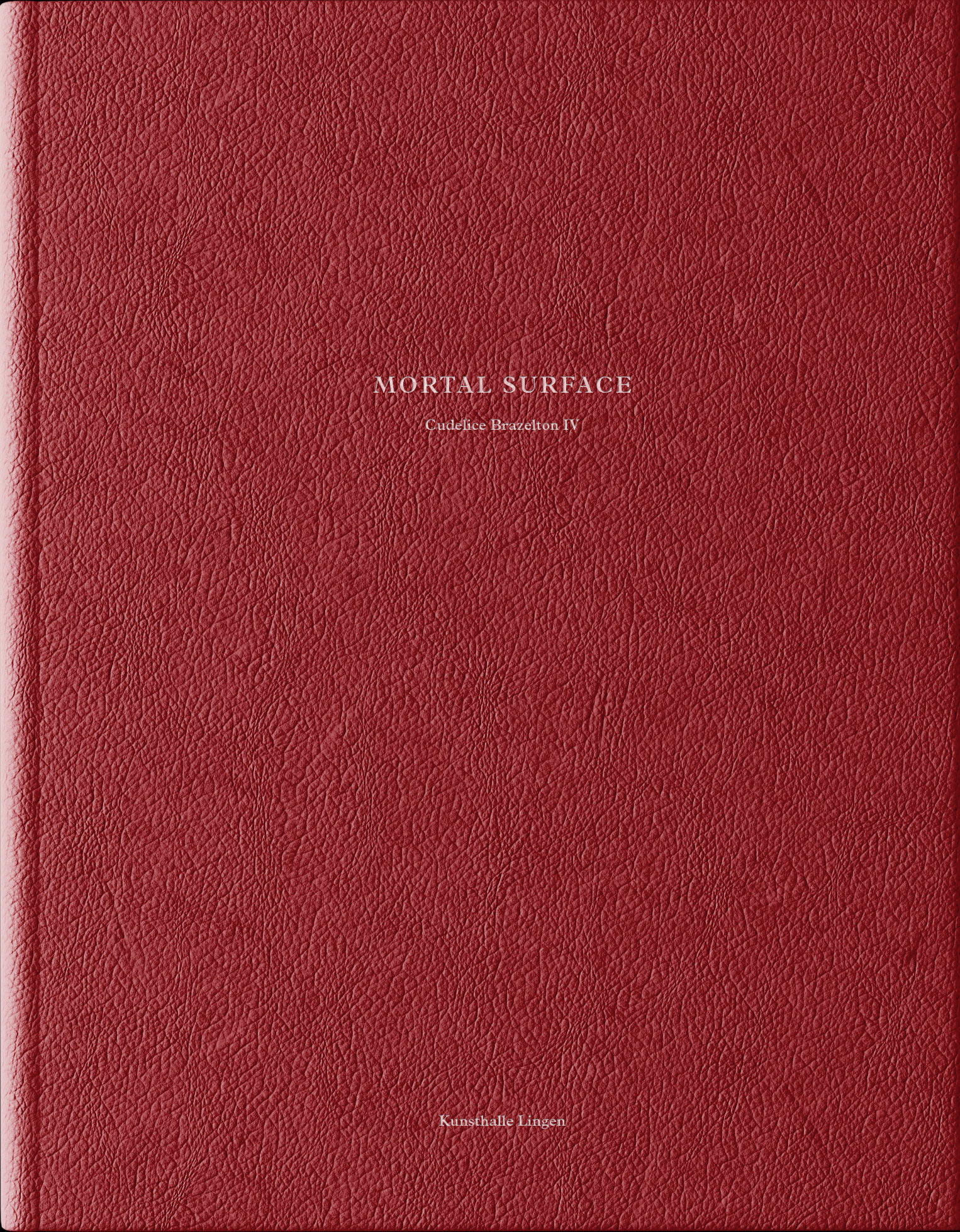
Cudelice Brazelton IV
Mortal Surface35€ Add to cartCudelice Brazelton IV’s works are magnets. He uses them to glean what he finds in the urban landscape, in the street, in factories and studios: fabric, leather, metal, cardboard, and all sorts of implements. He arranges these materials and things atop one another and side by side in collages, assemblages, and sculptures, staging encounters also between the contexts in which they originated and what he calls their “undercurrents,” their subtexts. Such frames of reference, including that of the exhibition space, play a key role in his art, an aspect he will occasionally engage quite explicitly, creating site-specific works for some settings. This makes the space the context and a part of the piece, sometimes physically so, as when Brazelton works directly on the walls. The recent works gathered in this catalogue were displayed in a former railcar repair workshop. It is hard to imagine a more industrial, “metallic” environment. There, as between the covers of this catalogue, Brazelton’s works appear to their fullest advantage, becoming veritable magnets drawing the gaze.
-

Stephan Kaluza
Die dritte Natur14€ Add to cartThe Nature of Art as Totality and Idyll
The philosophy of nature is central to the artist Stephan Kaluza’s (b. Bad Iburg, 1964; lives and works in Düsseldorf) work. As he sees it, there exists a succession of different natures: first nature is Kaluza’s designation for a world as immediately felt by (early) humans, part of an encompassing and close-range experiential totality they labeled ‘nature’ and perceived as a physical, but also spiritual and emotional concatenation of events. Second nature is stripped down to an objective and utilitarian quality; nature becomes a resource, the basis of life, the environment. In a kind of linguistic turn, speech mediates a surrogate, an alternative world, that positions nature as culture’s opposite; the former becomes replaceable in favor of latter. Yet this culture is far from devoid of yearnings for the immediacy that it has lost, and so develops an ‘artificial idyllic nature’ in turn. This third nature of the arts—a purely human nature—harks back to the archetypes of a first nature in escapism and totalized immersion.
- Release January 2026
Valentina Jaffé
Dripping Folds and Melting States23€ Add to cartDripping Folds and Melting States is published in conjunction with the young artist Valentina Jaffé’s most extensive institutional solo exhibition to date. Blending artist’s book and catalogue, the volume gathers works from the past five years by Jaffé, who lives and works in the Rhine–Neckar metropolitan region. Taking an interdisciplinary and inter-media approach, she continually refines the conception of collage that is central to her art. Her creative universe is informed by intersections, imbrications, and the exploration of in-between states—by the concurrence of mutability and constancy.
Created out of long-fibered paper and awash in color, the artist’s visual spaces are transformed with each new environment and have an air of breathing membranes. Her ceramics, meanwhile, play with contrasts of hardness and softness, fragility and stability, coldness and warmth. The book reflects Jaffé’s multifaceted experimentation and is enhanced by scholarly contributions by Carolin Heel and Fedra Benoli, who add depth to her engagement with space, body, and material.
-

Kai Schiemenz
Priel38€ Add to cartTidal creeks are watercourses that crisscross coastal mudflats. Running between sandbars, they flush deposits out into the sea with the falling tide, and when the tide rises, the water flows back in. In other works, tidal creeks are effectively rivers in the sea. Delving into the implications of this idea, the book presents Kai Schiemenz’s (b. Erfurt, 1966; lives and works in Berlin) major works and projects of the past four years. The publication offers insight into the provenance of selected bodies of work and their genesis. Kai Schiemenz’s art examines the city, spaces, and architecture. His small-format sculptures are self-contained creations that combine digital technologies with natural materials like wood or paper. At the same time, they function as models for expansive installations and outdoor and indoor architectures in which Schiemenz orchestrates sight lines to construct spaces whose permeability makes the audience an integral aspect of the work. If his sculptures are architecture, his exhibitions are landscapes in which the visitors encounter one another as they would in a park. Their central question, time and again, concerns the impact of the built environment and urban landscapes on their inhabitants.
-
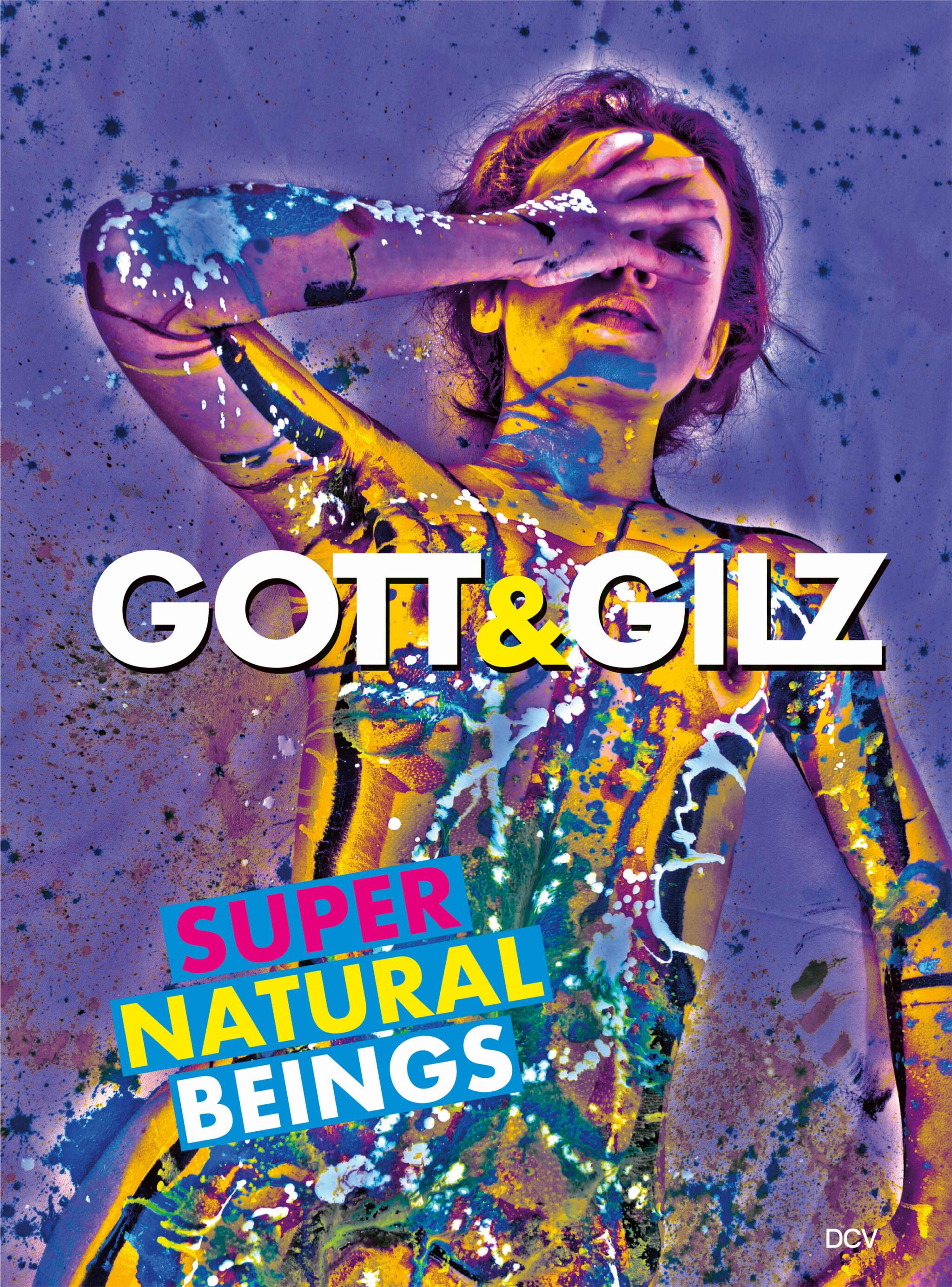
GOTT&GILZ
Supernatural Beings54€ Add to cartGOTT&GILZ clothe provocative nudity into the guise of art-historical classics
The female nude is a constant of art history whose vicissitudes illustrate changing forms of representation and the wild swings of public morality. Many a nude was initially condemned as smut only to be reclassified a few years later as beautiful and becoming and inducted into the hallowed halls (the opposite has also happened). GOTT&GILZ’s photographic paintings build on this long tradition of depictions of naked women by men—theirs is the proverbial “male gaze.” It is a debt they are quick to acknowledge, with nods to Klimt, Schiele, Pollock, et al. No wonder some have responded to their work with kneejerk indignation. Unlike in those art-historical references, then, the impudence lies not in the shattering of traditional norms of representation but in quoting them: the past as affront. The women in the pictures as well as the artists themselves flaunt their desires, shamelessly and relentlessly confronting us with the historic roots of our social and psychological realities.
Freedom is the key idea in the two artists’ oeuvre: the freedom to be authentic and express oneself without shame. Their subtly provocative play with aesthetic conventions and taboos has not only made a splash on the arts scene, it has also prompted vital discussions about gender roles, body images, and the right to sexual self-determination.
By letting it all hang out, they allow us to see ourselves as we are instead of presenting a picture of what we (supposedly) should be like. The insolence of it!
-

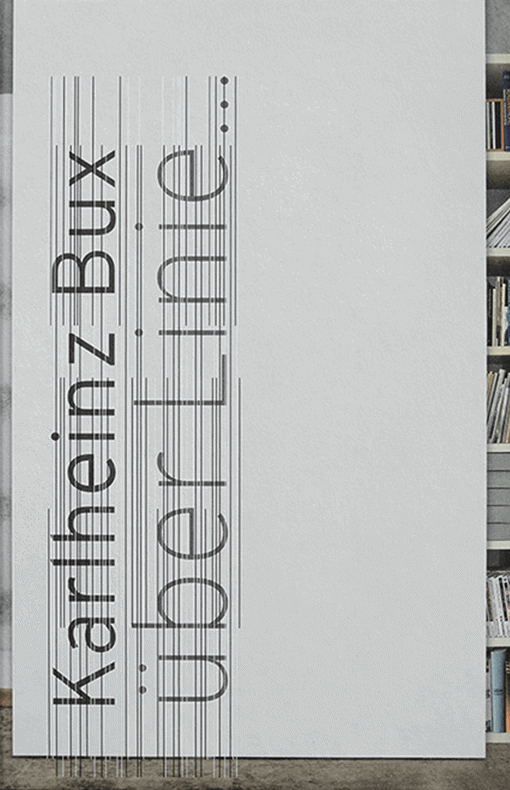
Karlheinz Bux
über Linie …15€ Add to cartClarity, Complexity, and Linearity
The defining artistic means in the work of Karlheinz Bux (b. 1952 in Ulm, lives and works in Karlsruhe) is the line. As edges and folds, they determine vertically oriented sculptures, which simultaneously convey compactness and openness, dynamism and repose. In Bux’s pencil drawings and photo-based works, they form the subject of the image in the form of complex linear structures. This present book documents the artist’s large-format works and provides insight into his oeuvre, with texts by Michael Hübl, Christine Reeh-Peters, and Carmela Thiele.
Karlheinz Bux studied at the State Academy of Fine Arts Karlsruhe and taught as a lecturer at Pforzheim University and as a visiting professor at the Mainz University of Applied Sciences. His works are represented in private and public collections, including the Staatliche Kunsthalle Karlsruhe, the Hurrle Collection, and the Würth Collection.
-

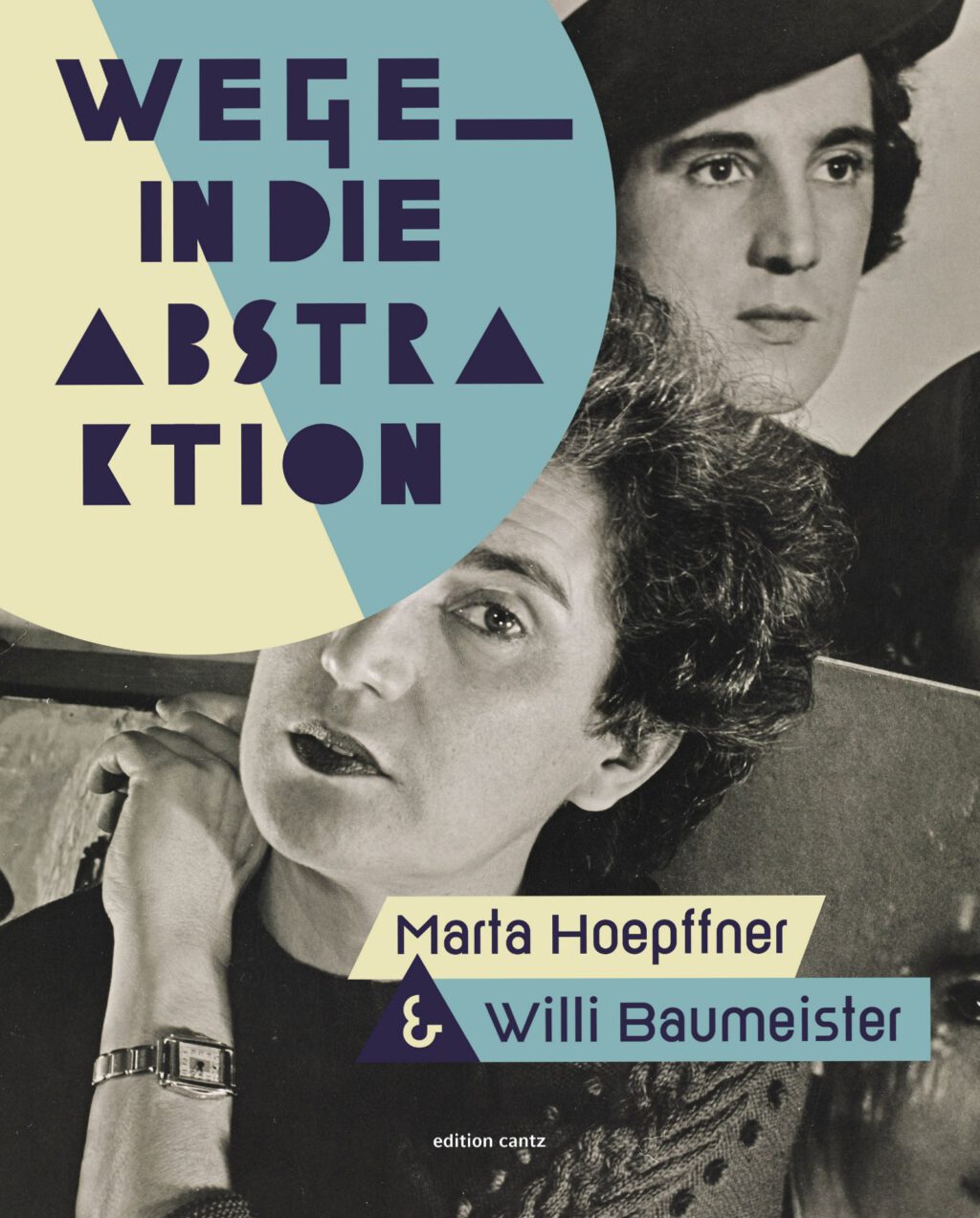
Wege in die Abstraktion
Marta Hoepffner und Willi Baumeister24,90€ Add to cartUnknown Influences of Modern Painting and Photography
Marta Hoepffner (b. 1912, Pirmasens; d. 2000, Lindenberg) is considered a pioneer of experimental photography. For the first time, this book compares the artist’s early photographic experiments, portraits, and color photographic studies with the paintings of Willi Baumeister (b. 1889, Stuttgart, d. 1955 Stuttgart). As professor at the Frankfurter Kunstschule – today’s Städelschule – Baumeister had a decisive influence on the development of his student Hoepffner. An extraordinary book that presents more than fifty works from the 1910s to the 1970s.
Marta Hoepffner’s works have been exhibited at, among others, the Centre Georges Pompidou in Paris, the San Francisco Museum of Modern Art, and the National Portrait Gallery in London. Willi Baumeister studied at the Kunstakademie in Stuttgart and was a member of the influential November Group. He was defamed as “degenerate” during the Nazi regime and is now considered one of the outstanding artists of modernism.
-
DAWN OF HUMANITY – ART IN PERIODS OF UPHEAVAL
37€ Add to cartThe book and exhibition present works from the first two decades of the twentieth century from the Kunstmuseum Bonn’s collection in dialogue with contemporary creative positions. What the works have in common across the distance of a century is their genesis in, and reflection on, a time of major social and political crisis. Back then, life had been profoundly changed by the industrial revolution; nowadays, climate change, wars, and the rising political power of right-wing ideologies are transforming the life of our communities. The presentation conceives art as a tool that lets us interrogate the world and imparts fresh intellectual impulses, and so also plays an active part in our societies. The title Menschheitsdämmerung – Dawn of Humanity – is borrowed from the poetry anthology of the same title released by Kurt Pinthus in 1919, which samples the Expressionist lyric poetry of the young century in four chapters: “Downfall and Outcry”; “Love Human Beings”; “Awakening of the Heart”; “Entreaty and Indignation.” Florian Illies, who already wrote an afterword for the 2019 centenary edition of Menschheitsdämmerung – the bestselling poetry anthology in the history of German literature – contributed the keynote essay in the book.
Artists: Nevin Aladağ, Francis Alÿs, Kader Attia, Yael Bartana, Rebekka Benzenberg, Monica Bonvicini, Andrea Bowers, Heinrich Campendonk, Louisa Clement, Max Ernst, Georg Herold, Franz M. Jansen, Alexej von Jawlensky, Käthe Kollwitz, Wilhelm Lehmbruck, Max Liebermann, August Macke, Helmuth Macke, Goshka Macuga, Marie von Malachowski-Nauen, Carlo Mense, Zanele Muholi, Heinrich Nauen, Grace Ndiritu, Anys Reimann, Deborah Roberts, Daniel Scislowski, Paul Adolf Seehaus, Tschabalala Self, Monika Sosnowska, William Straube, Emma Talbot, Hans Thuar, Lawrence Weiner
-

Katja Aufleger
Schwindelerregende Höhen30€ Add to cartOn a Razor’s Edge: Evanescent Moments
Katja Aufleger’s (b. Oldenburg, 1983; lives and works in Berlin) works bring instants of suspense and uncertainty into focus in a variety of aesthetic forms. Their nuclei are typically everyday phenomena and physical models, which she combines with a range of concepts from cultural history and psychology. The publication presents several series, some of which capture explosive tensions. Among them are photographs of homemade Molotov cocktails for which the artist set perfume flacons on fire, making this most recent series a probing exploration of the potentials of material aesthetics and emotion. With an introductory essay by Julia Katharina Thiemann.
Katja Aufleger studied visual art the University of Fine Arts Hamburg (HFBK), where Andreas Slominski, Matt Mullican, and Michael Diers were her teachers.
- Out of stock

Luxus?!
34€ Read moreWhat is luxury today? How do designers perform the magic of transforming a utilitarian object into a must-have? Where does consumerism shade into obsession? When does more-is-more give way to less-is-more?
Luxury means breaking with convention, and this book showcases—and spawns—a cornucopia of ideas, products, and positions around luxury, featuring influential thinkers from the worlds of design, science, art, and society. The cultural theorists Wolfgang Ullrich and Lambert Wiesing exchange letters on the concept of luxury; Montblanc’s creative director Zaim Kamal lays out future strategies; the artist Jonathan Meese pens a gold manifesto; and Bazon Brock inquires into the asceticism of luxury. We live in a world full of things that resemble one another so closely that the only difference is how they are marketed. What might the precious objects of the future look like? The book presents examples from aspiring designers such as the fashion student Victoria Reize, whose collection counters luxury with arch defiance. Design, we learn, is not just about creating supreme values. Luxury is limitation and longevity, scarcity and refinement, yearning and sensuality.
With works by Assemble, Jake and Dinos Chapman, Daniel Chodowiecki, Kai Löffelbein, Jonathan Meese, Olaf Nicolai, Marcel Odenbach, Tobias Rehberger and Anna Skladmann.
-

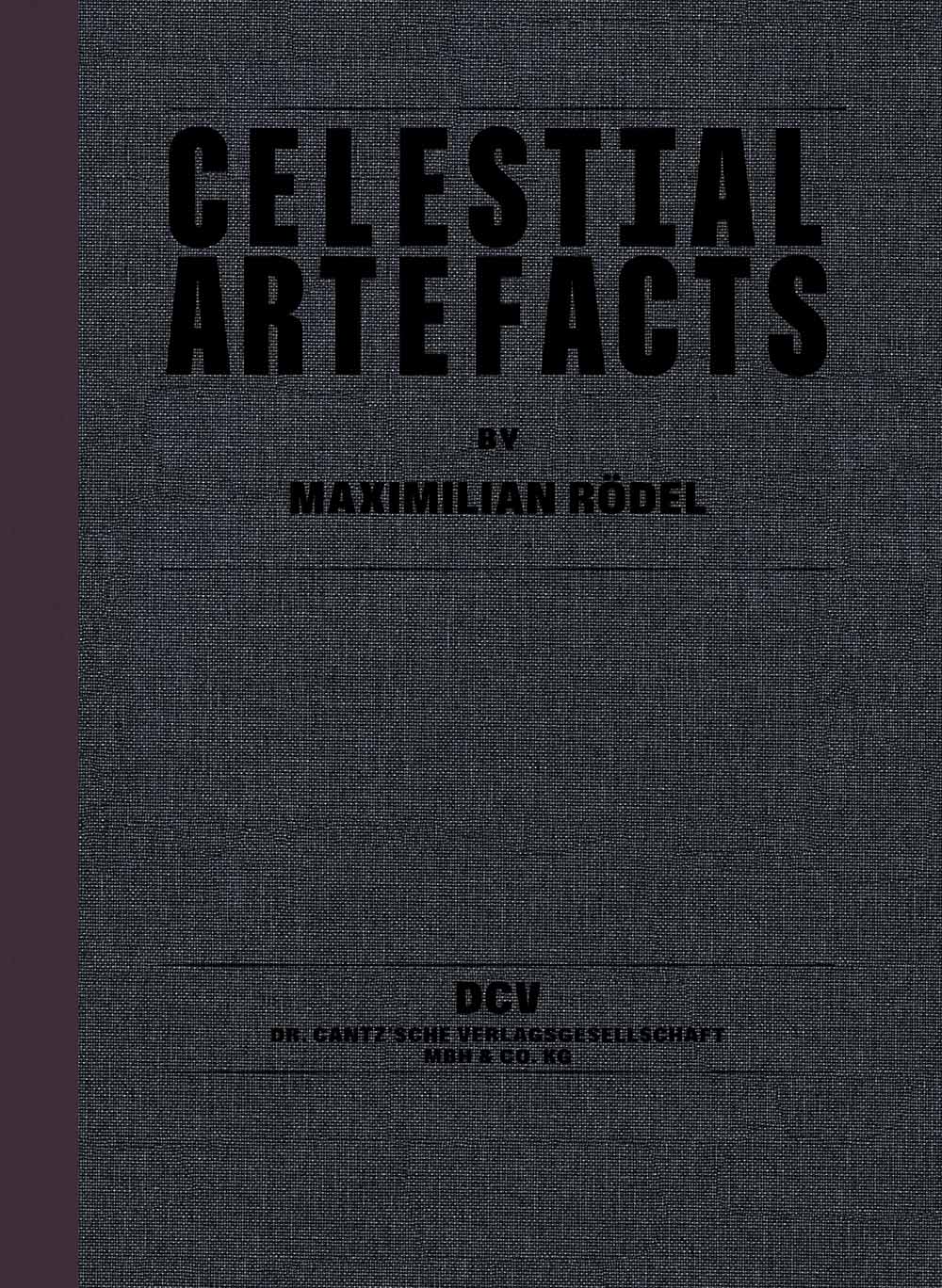
Maximilian Rödel
Celestial Artefacts50€ Add to cart“One must break free from wanting something and confine oneself instead to being something.” — Maximilian Rödel
Inky black, apricot, magenta, and a pastel purple: apparent monochromes, the paintings of Maximilian Rödel (b. Braunschweig, 1984; lives and works in Berlin) actually do not just traverse color spectrums; in a sense, they chart horizons of experience. To contemplate them is to embark on a voyage through space and time. Foreground and background are one, depth and surface at once; an undertow makes itself felt in which the nuances of color interweave, blur into one another, shimmer, flare up. The artist describes his pictures as an unfocused energy that already exists; he merely uncovers it.
The first publication on Rödel’s work presents the exhibition Celestial Artefacts at Neuer Aachener Kunstverein, with an emphasis on the Prehistoric Sunsets series (2018–2021). It is complemented by reproductions of selected works and an extensive index that also includes details from earlier series that are relevant in the context. Aperçus contributed by Rafael Horzon and Leif Randt and writings on art by Domenico de Chirico, Lena Fließbach, Stefanie Gerke, Philipp Hindahl, and Maurice Funken add another dimension to the paintings.
-

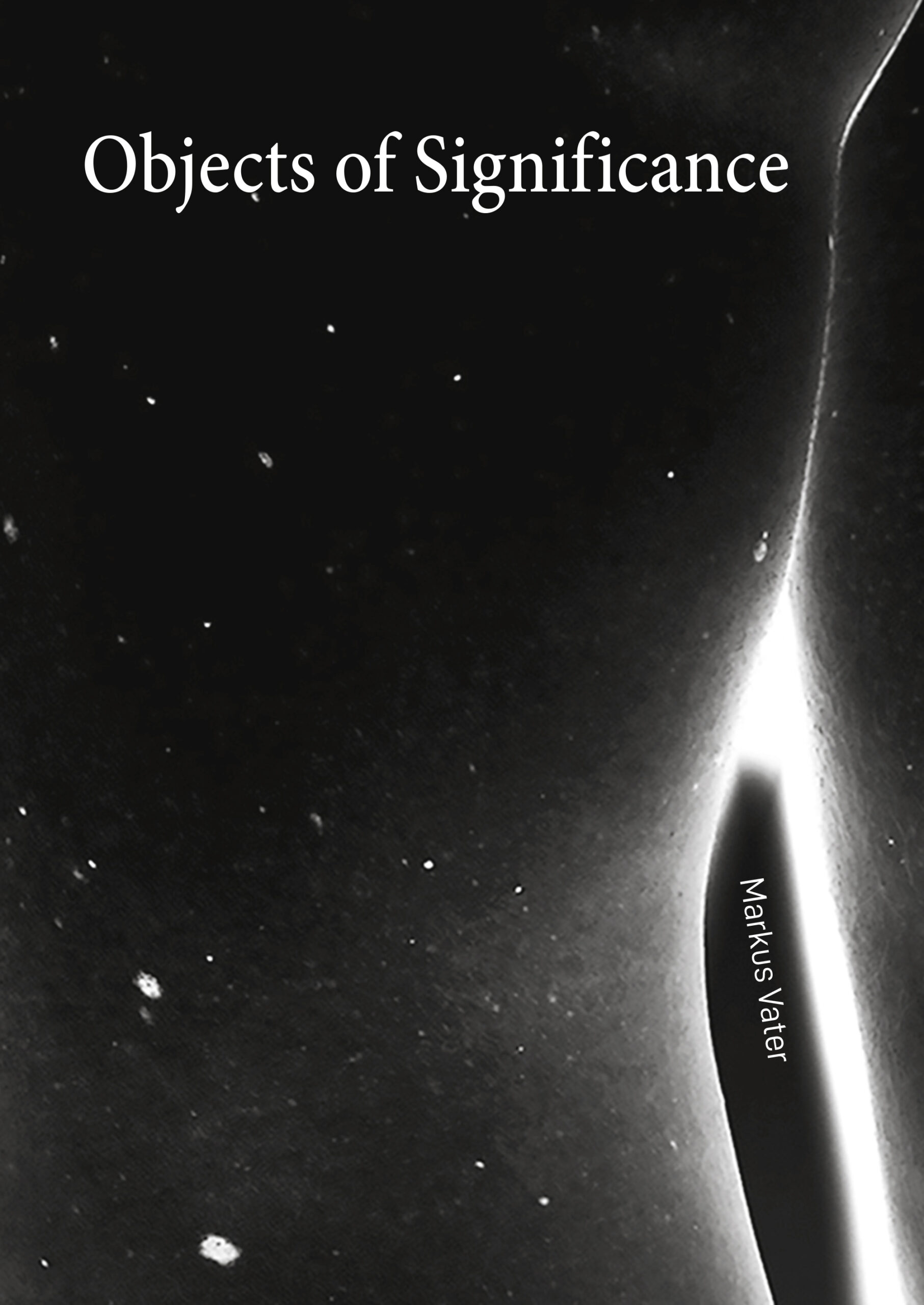
Markus Vater
Objects of Significance32€ Add to cartObjects of Significance is an artist’s book that grew out of a series of photographs and writings which Markus Vater (b. Dusseldorf, 1970; lives and works in London and Dusseldorf) collected over several years. They show and describe what matters to the artist: objects fraught with meaning, questions, relationships, memories. It is a creative and philosophical book, as funny as it is serious, delving into questions like: What do you see when you close your eyes and turn your head toward the sun? Or: How much does a cloud weigh? Vater has interviewed the North Sea for the book and ponders the wind. He sheds light on the conditions in which art comes into being and meditates on what holes are.