Alexander Ruthner
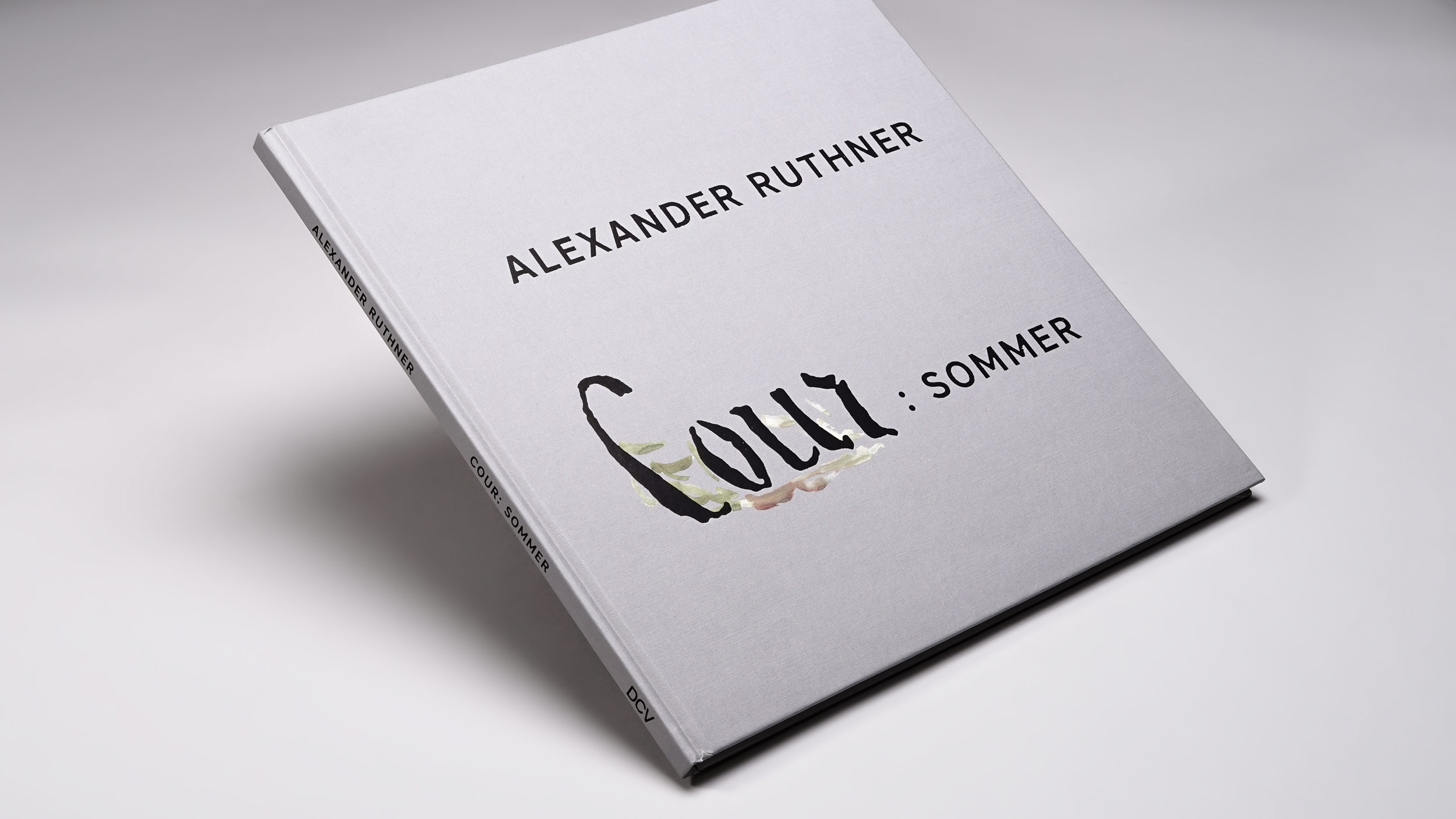
Cour: Sommer
 | |
|---|---|
| Editor(s) | Philipp Haverkampf, Carolin Leistenschneider |
| Author(s) | Alexander Ruthner, Elisabeth von Samsonow |
| Design | Alexander Ruthner |
| Cover | Hardcover |
| Size | 30 x 30 cm |
| Pages | 64 |
| Illustrations | 20 |
| Language(s) | German, English |
| ISBN | 978-3-96912-054-5 |
Contemplating Nature in a Reduced-Mobility Environment
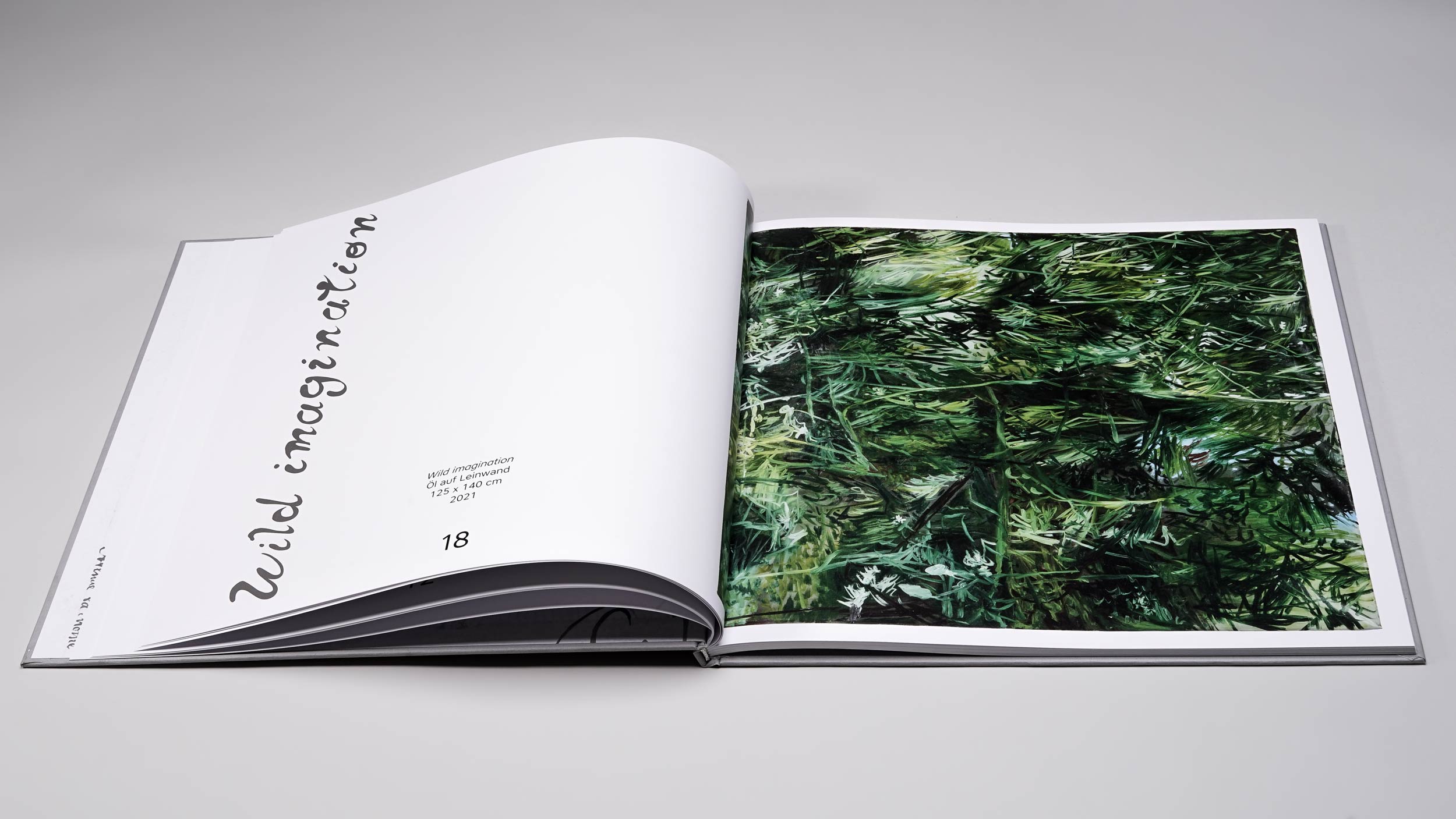
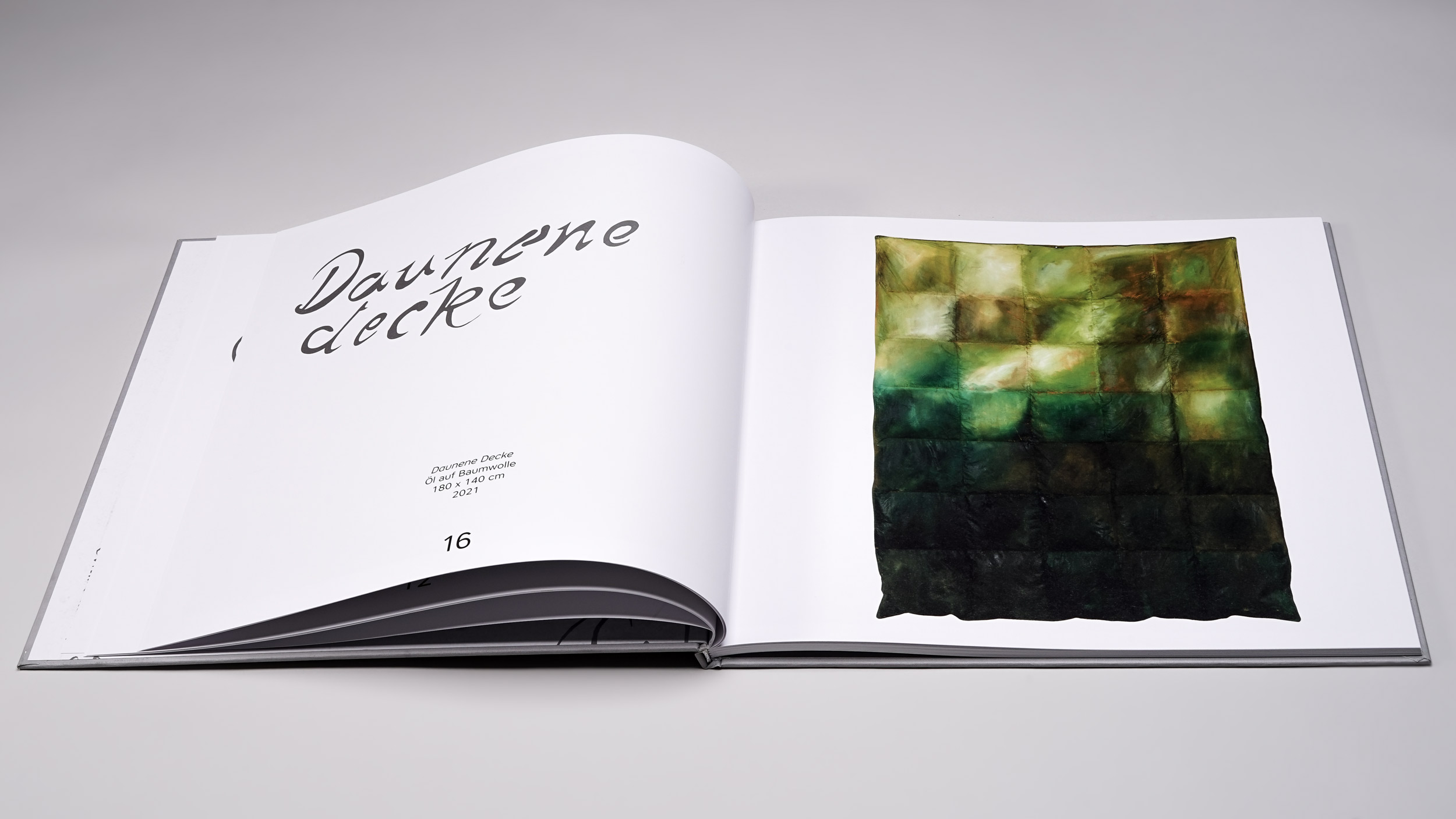
“The events of the year 2021, which was defined by lockdowns, the pandemic, and restrictions, has brought out the resonance in my pictures of Gustave Courbet’s realism,” Alexander Ruthner (b. Vienna, 1982; lives and works in Vienna) says about his most recent works: oil paintings featuring lush green vegetation and veritable down comforters painted all-over in saturated color gradients. The works will make their public début as the publication is released in the summer of 2021, hence the word “Sommer” in the title. The other word, “Cour,” is a nod to the first syllable of the French painter’s name as well as French for “court,” a term the artist creatively reinterprets as a synonym for the solitary “castle of the mind” to which we have retreated under pandemic conditions. Ruthner, who studied with Peter Kogler, Daniel Richter, and Albert Oehlen, revisits the boscage and pasture painting of past eras in new works that propose a distinctive personal interpretation of that tradition’s charm.
Alexander Ruthner’s work has been shown at Kunsthalle Wien, the Whitechapel Gallery, London, and the National Museum of Montenegro, among other venues.
Description
“The events of the year 2021, which was defined by lockdowns, the pandemic, and restrictions, has brought out the resonance in my pictures of Gustave Courbet’s realism,” Alexander Ruthner (b. Vienna, 1982; lives and works in Vienna) says about his most recent works: oil paintings featuring lush green vegetation and veritable down comforters painted all-over in saturated color gradients. The works will make their public début as the publication is released in the summer of 2021, hence the word “Sommer” in the title. The other word, “Cour,” is a nod to the first syllable of the French painter’s name as well as French for “court,” a term the artist creatively reinterprets as a synonym for the solitary “castle of the mind” to which we have retreated under pandemic conditions. Ruthner, who studied with Peter Kogler, Daniel Richter, and Albert Oehlen, revisits the boscage and pasture painting of past eras in new works that propose a distinctive personal interpretation of that tradition’s charm.
Alexander Ruthner’s work has been shown at Kunsthalle Wien, the Whitechapel Gallery, London, and the National Museum of Montenegro, among other venues.
Additional information
| | |
|---|---|
| Editor(s) | Philipp Haverkampf, Carolin Leistenschneider |
| Author(s) | Alexander Ruthner, Elisabeth von Samsonow |
| Design | Alexander Ruthner |
| Cover | Hardcover |
| Size | 30 x 30 cm |
| Pages | 64 |
| Illustrations | 20 |
| Language(s) | German, English |
| ISBN | 978-3-96912-054-5 |
More books
-

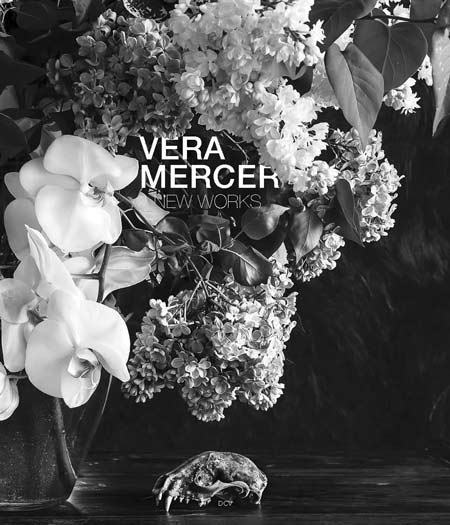
Vera Mercer
New Works28€ Add to cartBeauty and Melancholy, Joie de Vivre and Vanity
The American photographer Vera Mercer’s (b. Berlin, 1936; lives and works in Omaha and Paris) oeuvre defies easy summary. She started taking pictures in Paris in the 1960s, making portraits of her then husband Daniel Spoerri—who, like she, was initially training as a dancer—and other members of the Fluxus group and Nouveaux Réalistes, including Emmett Williams and Robert Filiou, Jean Tinguely and Jacques Villeglé. Around the same time, she also photographed Andy Warhol and Marcel Duchamp for various magazines; her friends Eva Aeppli and Niki de Saint Phalle were among her favorite sitters.
In the 1970s, she took a long creative hiatus: after moving to Omaha, Nebraska, she poured all her energy into starting a number of restaurants and developing an entire downtown neighborhood. But then, in the early years of the new millennium, she returned to photography, capturing breathtaking neo-baroque still lifes featuring flowers, fruits, freshly killed game, antique glasses, and illuminating candles in large formats.
Vera Mercer’s fourth monograph presents her most recent opulent still lifes in color, as well as a novelty in her oeuvre: restrained black-and-white flower pictures and portraits realized as small-format platinum prints.
-

André Butzer
Miettinen Collection30€ Add to cartAndré Butzer (b. Stuttgart, 1973; lives in Berlin) rose to renown with pictures he describes as “science fiction expressionism” and iconic characters like the “Peace Siemense,” the “Men of Shame,” or the “Woman” as well as seemingly abstract compositions. Artistic predecessors he admires and emulates include Walt Disney, Edvard Munch, Henri Matisse, Friedrich Hölderlin, and Henry Ford. Butzer’s utopian artistic vision is anchored in the fictional place “NASAHEIM”, a kind of pilgrimage destination in outer space. Yet his paintings should not be mistaken for illustrations of narrative structures; they articulate something that could not be said before. Similes of a sort, they embody the forever recurring extremes of history as emblems of human existence.
André Butzer briefly studied at the Merz Akademie, Stuttgart, before enrolling at the Hamburg University of Fine Arts (HFBK), from which he was expelled after two semesters in 1996. He went on to found the autonomous and anti-institutional Akademie Isotrop (1996–2000), where over twenty artists including Markus Selg, Jonathan Meese, and, in loose association, John Bock trained one another. In 2001, Butzer teamed up with Björn Dahlem to establish the Institute for SDI Dream Research.
-

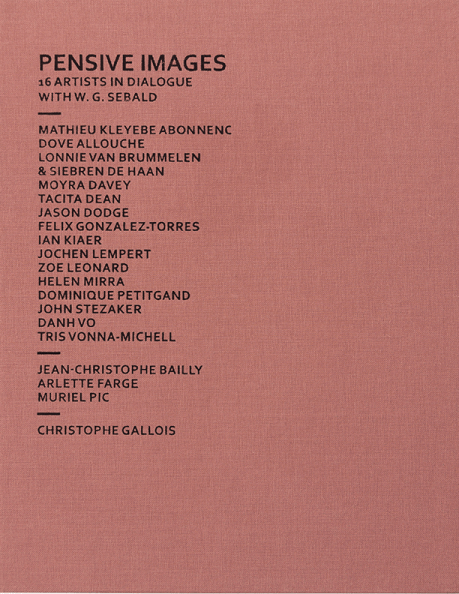
Pensive Images
16 Artists in Dialogue with W. G. Sebald35€ Add to cartOn Memories and Temporalities
Pensive Images examines the complex and invariably singular relationships through which images and memories are inextricably linked. The book relates to the work of the German writer W. G. Sebald (b. 1944, Wertach; d. 2011, Norfolk), especially to four fictional stories he published between 1990 and 2001, in which he inserted non-captioned blackand- white photographs of uncertain provenance and nature into the text like memories punctuating ways reminiscent of his writing. It brings together 16 artists who, in ways reminiscent of Sebald’s approach, explored the realms of memory and past from the perspective of experience and intertwining temporalities.
With works by Mathieu Kleyebe Abonnenc, Dove Allouche, Lonnie van Brummelen / Siebren de Haan, Moyra Davey, Tacita Dean, Jason Dodge, Félix González-Torres, Ian Kiaer, Jochen Lempert, Zoe Leonard, Helen Mirra, Dominique Petitgand, John Stezaker, Danh Vo and Tris Vonna-Michell.
-

Katja Aufleger
Schwindelerregende Höhen30€ Add to cartOn a Razor’s Edge: Evanescent Moments
Katja Aufleger’s (b. Oldenburg, 1983; lives and works in Berlin) works bring instants of suspense and uncertainty into focus in a variety of aesthetic forms. Their nuclei are typically everyday phenomena and physical models, which she combines with a range of concepts from cultural history and psychology. The publication presents several series, some of which capture explosive tensions. Among them are photographs of homemade Molotov cocktails for which the artist set perfume flacons on fire, making this most recent series a probing exploration of the potentials of material aesthetics and emotion. With an introductory essay by Julia Katharina Thiemann.
Katja Aufleger studied visual art the University of Fine Arts Hamburg (HFBK), where Andreas Slominski, Matt Mullican, and Michael Diers were her teachers.
-
Emil Nolde
A Critical Approach by Mischa Kuball40€ Add to cartWhat is Visible and What is Not
Mischa Kuball (b. 1959, Düsseldorf; lives and works in Düsseldorf) investigates public and institutional spaces and the social and political discourses that shape them. At the invitation of the Draiflessen Collection and with support from the Nolde Stiftung, the conceptual artist grappled with the life and oeuvre of the painter Emil Nolde (1867–1956) and created a body of work titled Nolde/critique/Kuball. In piece after piece, Kuball drains Nolde’s works of the colors that made the Expressionist famous, challenging the beholder’s preconceptions and examining perception and its constituent processes. Laid out in black and white, the book accordingly directs our attention not only to what a picture shows, but also to how structures and organizing principles emerge into view.
Mischa Kuball has been professor of public art at the Kunsthochschule für Medien Köln, and associate professor of media art at the Staatliche Hochschule für Gestaltung/ZKM Karlsruhe since 2007.
Note: This publication is released in German, English and Dutch. When ordering, please let us know which edition you would like to receive. Use the annotation box on the checkout page.
-

Jenny Michel
Doors, Windows and Cells38€ Add to cartThe Detritus of Our Society
For around two decades, the artist Jenny Michel (b. Worms, 1975; lives and works in Berlin) has devoted herself to minute particles such as dust, cobwebs, and electromagnetic fields in space. Her fascination with orders of knowledge, symbolism, and utopian visions is reflected by installations, drawings, prints, and sculptures that she exhibits in carefully composed sprawling ensembles. Aggregating fantastic fragments of the world manufactured from paper, adhesive tape, staples, and other industrially made small parts, Michel builds disconcertingly dense structures—human knowledge is transformed into the debris of civilization, its legibility lost beneath palimpsestic layers of meanings and resignifications. The extensive monograph surveys major series in the artist’s oeuvre and presents new works on paper.
Jenny Michel studied at Kunsthochschule Kassel and the Academy of Fine Arts Vienna. Her work has been on view at Museum Wiesbaden, the Draiflessen Collection, the Schirn Kunsthalle, Frankfurt, and Berlinische Galerie, among other venues. In 2010, Michel was honored with the HAP Grieshaber Prize.
-

Susanne Rottenbacher
Radiationen40€ Add to cartIn expansive compositions in light, Susanne Rottenbacher (b. Göttingen, 1969; lives and works in Berlin) visualizes the fire of life in its timebound and fluid dimension. Plotinus called fire the “spiritual potency of beauty.” Pursuing a similar vision, Rottenbacher’s works orchestrate light as energy in space. To this end, the artist, who studied light and stage design in the United States and the United Kingdom, creates weightless luminous choreographies realized in colorful LED technology in combination with acrylic glass as a translucent vehicle of form. The results are installations in three dimensions that are deeply silent yet unfold in a magical ecstasy of light.
In Christian sacred architecture, light has been deployed and perceived since the Middle Ages as the aesthetic equivalent of the divine mind’s lucidity. The history of light art, by contrast, is much younger, going back to the years after the First World War. Having built her creative practice over the past fifteen years, Rottenbacher not only continues a century-old tradition of light art in Europe and the U.S.; her works also anticipate a future in which humanity will have room for feelings no less than for scientific knowledge.
-

Franziska Windisch
Walk with a wire14€ Add to cartThe interweaving of traces, sounds, and movements in an impressive work of sound art
The narrow brown magnetic tape of an audio cassette runs through a half-opened hand, slides through the fingers, is palpated in constant motion, and finally falls to the ground. The hand and its touching, particles of sand and small stones leave their traces and, when the tape is played, generate a multi-layered soundscape with crackling and background noises.
In her performative action in the ruins of the city of Messene in the Peloponnese region of Greece, Franziska Windisch (b. 1983) thematizes aspects of repetition and recording. Her artistic examination of the vestiges of the ancient urban space, the reciprocal transition from traces to writing in her video documentation, and the graphic element of the line visible on the ground lead to a reflection on temporality, dissolution, and decay. - Out of stock

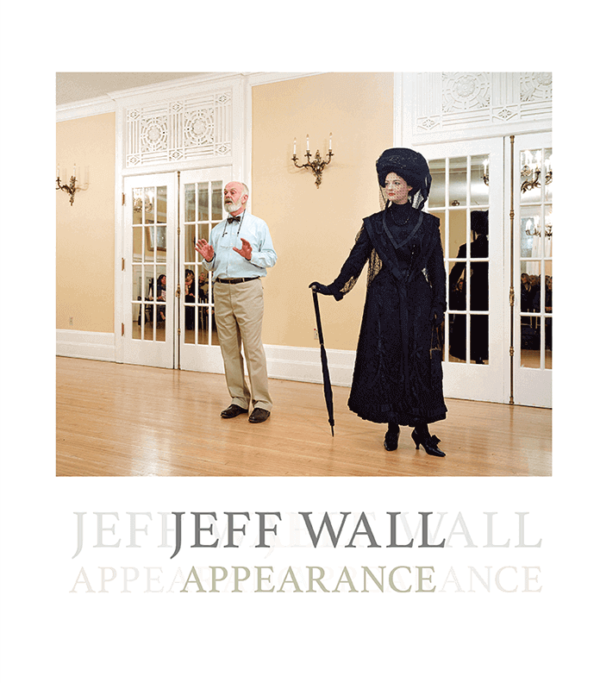
Jeff Wall
AppearanceRead moreA New Perspective on the Work of the Photo Artist
The trademark of Jeff Wall (b. 1946, Vancouver; lives and works in Vancouver) are large-scale backlit light boxes, which appear like carefully composed film stills. The art historian ties his works in manifold ways to art history and, due to his elaborate arrangements, is often compared to modern masters. Many pictures by Jeff Wall are inspired by novels or stories and condense into intentional stagings of the everyday. With a special focus on constellations which present the medium photography like a search for traces, the book allows a new perspective on the artist’s works which have up until now rarely been shown in exhibitions.
Jeff Wall studied art history at the University of British Columbia, Vancouver, and at the Courtauld Institute of Art, London. His works are exhibited internationally, for example at the Museum of Modern Art, New York, Tate Modern, London, and the Art Institute of Chicago. In 2008 he received the Audain-Award for his life work.
-

Liam Gillick
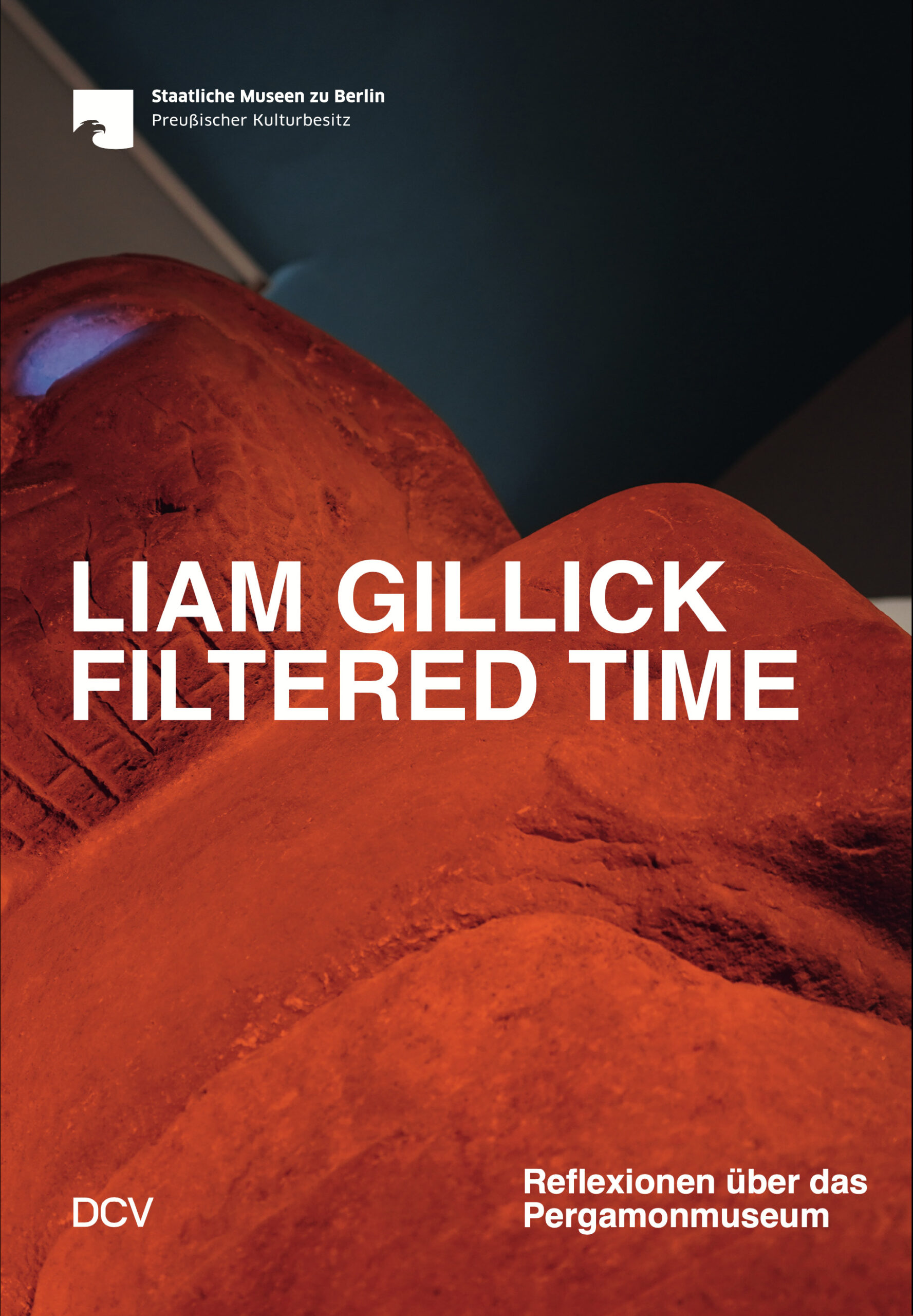
Filtered Time (GERMAN)28€ Add to cartThe sculptor and object artist Liam Gillick (b. Aylesbury, UK, 1964; lives and works in New York) has created an intervention titled Filtered Time for the historic galleries of the Pergamon Museum in Berlin. Projections of light and color and acoustic effects condense six thousand years of cultural history into an immersive spatial experience. Gillick initiates a conversation between the iconic Processional Way and the Ishtar Gate from Babylon, the monumental sculptures of Tell Halaf, and other exhibits, engendering new layers of meaning across all historical periods. The first joint project of the Vorderasiatisches Museum and the Hamburger Bahnhof—Nationalgalerie der Gegenwart makes for a singular visual and sensory experience. Designed by the artist himself, the publication not only documents the richly colorful production, but also provides insight into the eventful history of the museum, which is approaching its centennial.
Liam Gillick studied at the Hertfordshire College of Art in 1983–1984 and at Goldsmiths, University of London from 1984 until 1987. Gillick is a prolific published writer as well, producing essays, reviews, fiction, and theatrical scenarios.
-

Martin Noël
The Retrospective38€ Add to cartThe Protagonist of the Modern Woodcut
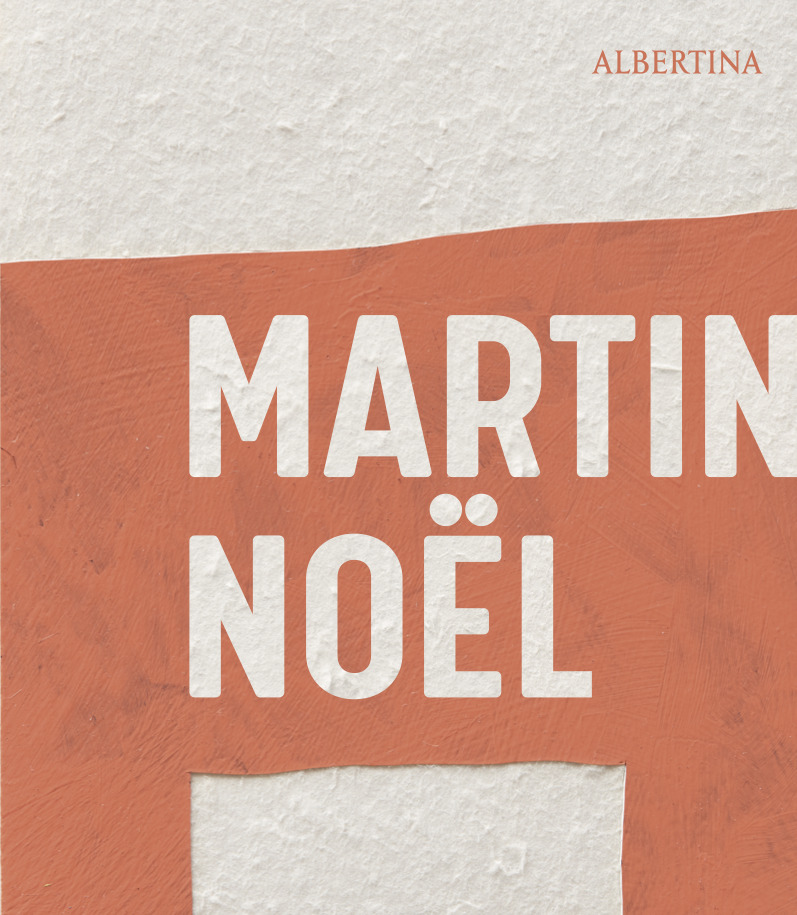
The German painter, draftsman, and graphic artist Martin Noël (b. Berlin, 1956; d. Bonn, 2010) played a leading role in reviving the linocut and the woodcut, two techniques that had long been eclipsed by other media. In his large-format works on paper, he staked out a widely regarded and distinctive position in contemporary art. Noël was especially interested in the compositional relationship between line and surface. Released on occasion of the retrospective of his oeuvre at the Albertina, Vienna, this book presents an overview of the most important periods in the artist’s creative evolution, with an emphasis on the woodcut carved into the printing plate and the woodblock’s subsequent emancipation as an art object in its own right. Particular attention is paid to the application of ink to the surface and its painterly structure as well as the picture’s migration from object to canvas. The resulting paintings are exemplary of Noël’s late oeuvre.
Martin Noël studied graphic art and painting at what is now the Cologne University of Arts and Sciences. His art garnered numerous prizes and other honors, including fellowships from Kunststiftung NRW, Stiftung Kunstfonds, and Letter Stiftung. Works by Noël are in the German Federal Collection of Contemporary Art, Kunstsammlung Chemnitz, and the collection of Museum Pfalzgalerie Kaiserslautern.
-

Hans Karl Zeisel
Hundred and more34,95€ Add to cartPossibilities of Concrete Art
What is possible without turning away from the cocrete? In the Bauhaus tradition, the typographer, graphic artist, designer and author Hans Karl Zeisel opens up countless design options with basic forms. His wooden cuboids demand a humorous approach to sculpture. They are creativity training, study tools and meditation game all in once. A playful experiment that reveals the diversity of concrete art.
-
Anna Leonhardt
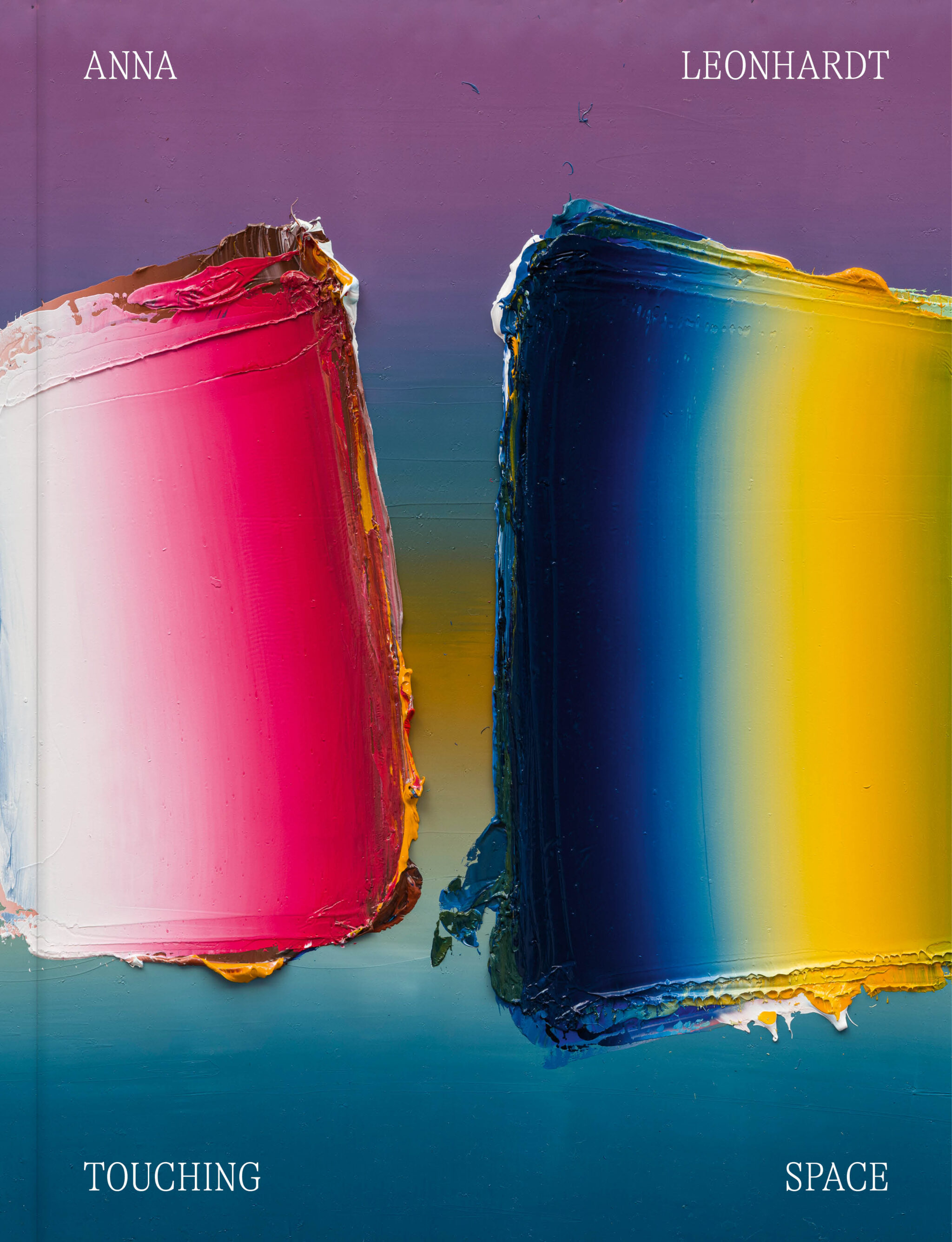
Touching Space34€ Add to cartAnna Leonhardt’s (b. Pforzheim, 1981; lives and works in New York and Leipzig) paintings probe her own experiences and moods, while also referencing works of literature and quoting phenomena in the history of her craft. Abstract surfaces composed of numerous layers that break the two-dimensional bounds of the canvas engender a physical and imagined space that is further expanded by the interrelations between the pictorial elements, an imaginary communication with other works of art, and the beholders. The publication Touching Space presents Anna Leonhardt’s most recent works. A compendium of writings on the subject of space by the phenomenologist Franz Xaver Baier and the artist’s correspondence with the curator Sophia Pietryga complement the imposing illustrations. The book is released in conjunction with the eponymous solo exhibition at Galerie She BAM! Laetitia Gorsy, Leipzig.
Anna Leonhardt studied painting and graphic art at the Dresden University of Fine Arts (HfBK) from 2002–2008, completing her education with postgraduate training with Ralf Kerbach until 2010.
-

Ugo Rondinone
winter, spring, summer, fall20€ Add to cartUgo Rondinone (b. Brunnen, Switzerland, 1964; lives and works in New York) is one of the most accomplished artists of his generation. For three decades, the conceptual and installation artist has built an oeuvre grappling with themes of time and impermanence, day and night, reality and fiction, nature and culture. Spanning diverse media—painting, sculpture, film, and installation art—his work is rooted in the transformation of outward reality into a subjective and emotionally charged world within, harnessing a multifaceted system of inspirations and references from German Romanticism to American Land Art and international pop culture. Balancing the mundane with the spiritual, the artist conjures suggestive atmospheres that capture the contemporary mood.
This book gathers four exhibitions of Ugo Rondinone’s work in 2021: a wall . a door . a tree . a lightbulb . winter at theSørlandets Kunstmuseum (SKMU), Kristiansand, Norway; a sky . a sea . distant mountains . horses . spring at Sadie Coles hq, London; a rainbow . a nude . bright light . summer at Kamel Mennour, Paris; and a low sun . golden mountains . fall at Galerie Krobath, Vienna.
- temporarily not available

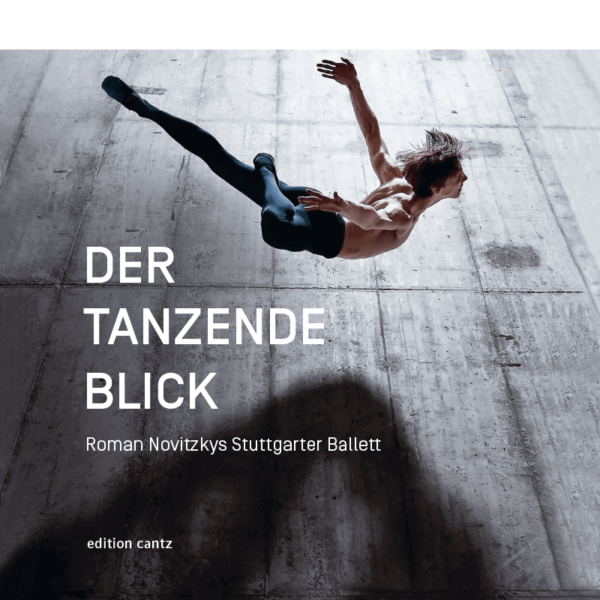
Der tanzende Blick
Roman Novitzkys Stuttgarter BallettRead moreWeightlessness, Grace, Emotions
The photographs by Roman Novitzky (b. 1984 in Bratislava) reveal the entire vocabulary of dance—and yet convey much more than this. With his camera, the first soloist of the Stuttgart Ballet not only captures hidden moments in rehearsal or from the side stage, but also opens the door to his own cosmos for the viewer. He depicts sweat and tension, doubt and euphoria, and gives the audience intimate insight behind the scenes of the Stuttgart Ballet. Roman Novitzky’s first monograph comprises more than sixty photographs of the ballet hall, the cloakroom, and guest performances. It not only stands for his two passions, dance and photography, but also describes his photographic approach, shaped by years of dance experience, which gives the viewer familiar insights into his everyday surroundings.
-
Pat Steir & Ugo Rondinone
Waterfalls & Clouds20€ Add to cartThe imposing installation Waterfalls & Clouds consists of three sculptures by the Swiss artist Ugo Rondinone (b. Brunnen, Switzerland, 1964; lives and works in New York) and nineteen paintings by the American Pat Steir (b. Newark, NJ, 1940; lives and works in New York). The three large gray monoliths of concrete, sand, and gravel bear the titles Faces, Look, and Twisted and are part of a series of twenty works created in 2018. They are surrounded by nineteen tall and narrow black oil paintings titled Flags for Ugo #1 through #19 (2021); with colorful or white paint streaming down the canvases, they hark back to Steir’s Waterfall series from the 1980s. A symbiotic relationship connects the works: the sculptures, in which erosion is integral to the art, embody time, while the pictures symbolize gravity and hence nature as such.
- Shortlist German Photo Book Award 2019/2020

Arina Dähnick
The MIES Project45€ Add to cartIn the Footsteps of Ludwig Mies van der Rohe
In her photographic works, Arina Dähnick (b. 1965, Krefeld; lives and works in Berlin) deals with urbanity, spatial reality and visual perception. She discovered the architecture of Ludwig Mies van der Rohe in 2012, when, after a thunderstorm, she perceived the Neue Nationalgalerie in a both fascinating and paradoxical spatial experience of boundless vastness – and a simultaneous feeling of being held. From then on she photographed the building under various conditions until its closure in 2015, afterwards following in Mies van der Rohe’s footsteps from Berlin to Brno, from Chicago to New York. Dähnick captured his most famous buildings – including the Villa Tugendhat, the Seagram Building, and the Lake Shore Drive Apartments – in impressive photo series, which have been exhibited during the Chicago Architecture Biennial amongst others. The book was awarded the silver medal of the Deutscher Fotobuchpreis.
-
Franziska Opel
Close and Cold32€ Add to cartWith sex toys, the potential for misinterpretation and ill-advised use is vast, as countless slapstick comedies illustrate. Steering clear of quick laughs, Franziska Opel deftly harnesses this anarchic power of misunderstanding to explode our perceptions and worldview. Her works are painstakingly planned experimental arrangements in which she modifies or deforms mundane objects as well as those sex toys in subtle ways or powers them up in series, making us see them with fresh eyes. They cast a spell over us with their sensual allure, while our associative circuits processing what we see spark a certain sense of irritation. Curiosity, attraction, bewilderment, shame—expertly staged in photographs for this catalogue, the works elicit a wide range of emotions. Their energizing contradictions are elaborated by contributions from gifted writers: standalone poetic-narrative writings that reflect on several key aspects of Opel’s art in offhanded yet challenging ways.
-
Alexandra Tretter
24€ Add to cartThe art of Alexandra Tretter (*1988) is as deep as it is playful. Owing just as much to the gentle spirituality of Hilma af Klint’s late geometries as it does to Sonia Delaunay’s exuberant disc paintings, almost bursting with sheer chromatic pleasure. Her compassionately designed artist’s book combines monumental paintings with intimate works on paper, all of which are imbued with the contexts of Tretter’s own life as an artist, as a woman, as a mother.
Her kaleidoscopic figurations unfold from a center at rest in itself and multiply in symmetry and asymmetry towards all sides. She contrasts the circular form, the unchanging basic element of her compositions, with the oval, which constantly strives beyond itself, transforming itself in ever-new permutations from one figure into the next, into eyes, mouths, breasts, petals or vulvas.
Her images strive for composure, unfold and blossom, only to let go of all gestalt-like form. Once gained stability is instantly pushed into turmoil. Colors flare up violently or flow delicately about, lighten or shade each other, carry or throw each other off course. Tretter equally realizes materialization and dissolution as basic principles of her painting.
Whereby all, what her images absorb, preserve and release, is experience, growth and slow maturing. Her paintings are “figurations of affection”, in which each individual turns towards something else, doubts or grows, at times turns away or surrenders all the more consciously. They question everything, start anew and yet find their way back to themselves, into their very own.
-

René Holm
Let me be your everlasting light25€ Add to cartLight is the theme of the new paintings by René Holm (b. Esbjerg, 1967). Faceless protagonists traversing symbolic forests with leafless trees occurred already in previous works, stripping them of individual or local signifiers and moving them into a spiritual and universal realm. Skulls with burning candles in Still lifes symbolize the fragility of life and unavoidability of death. Holm goes a step further and makes his figures carry the symbols in their hands or even has them become themselves live “still lifes” with burning candles on their backs. The presence of death is not a picture to behold from afar but a truth to be aware of and carry with us every day. The burning candles also mean that we’re here with our sorrow as well as our light. We must burn to shine. This book accompanies the artist’s gallery exhibition Let me be your everlasting light in Horsens, Denmark.