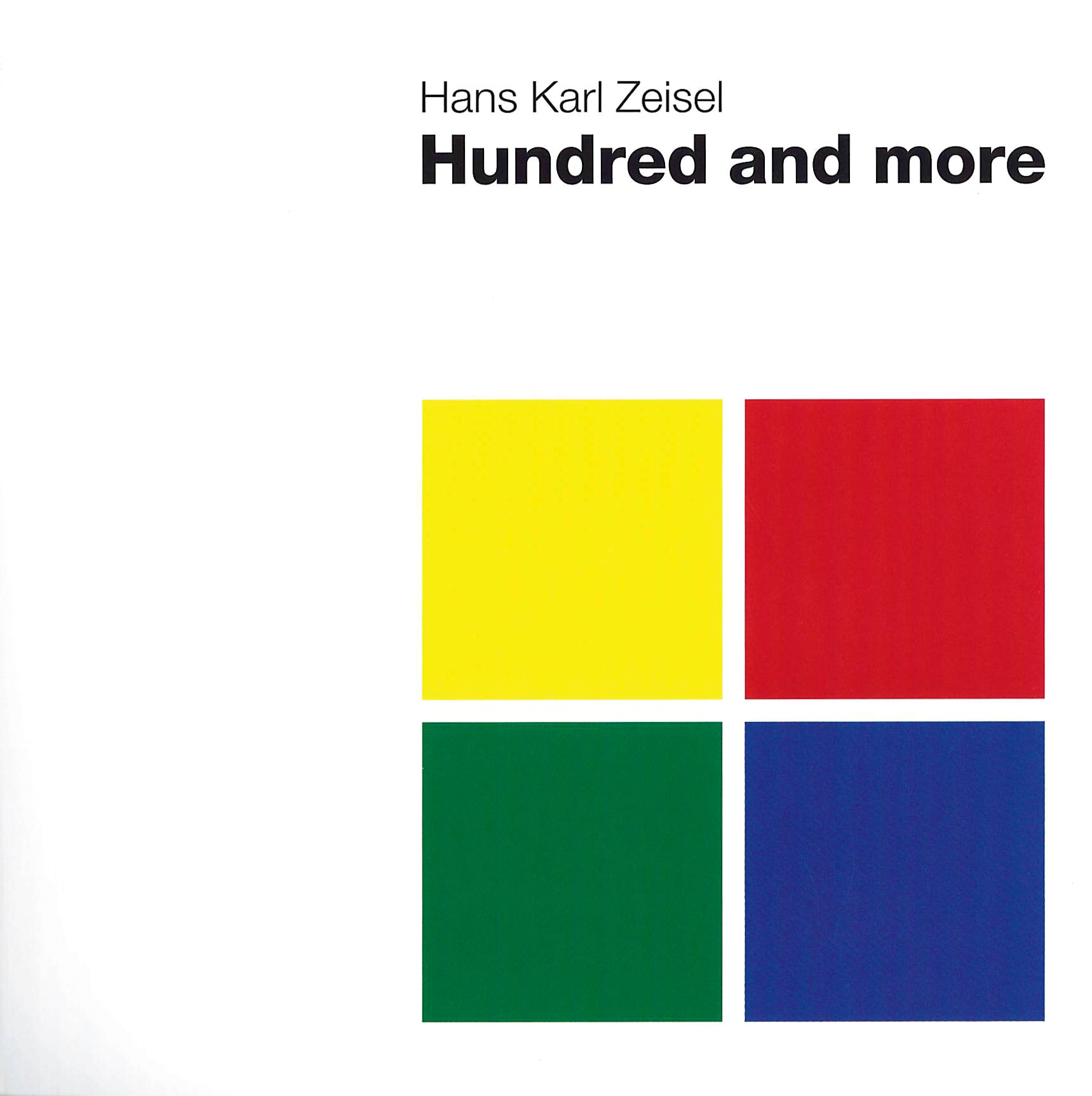
Hans Karl Zeisel
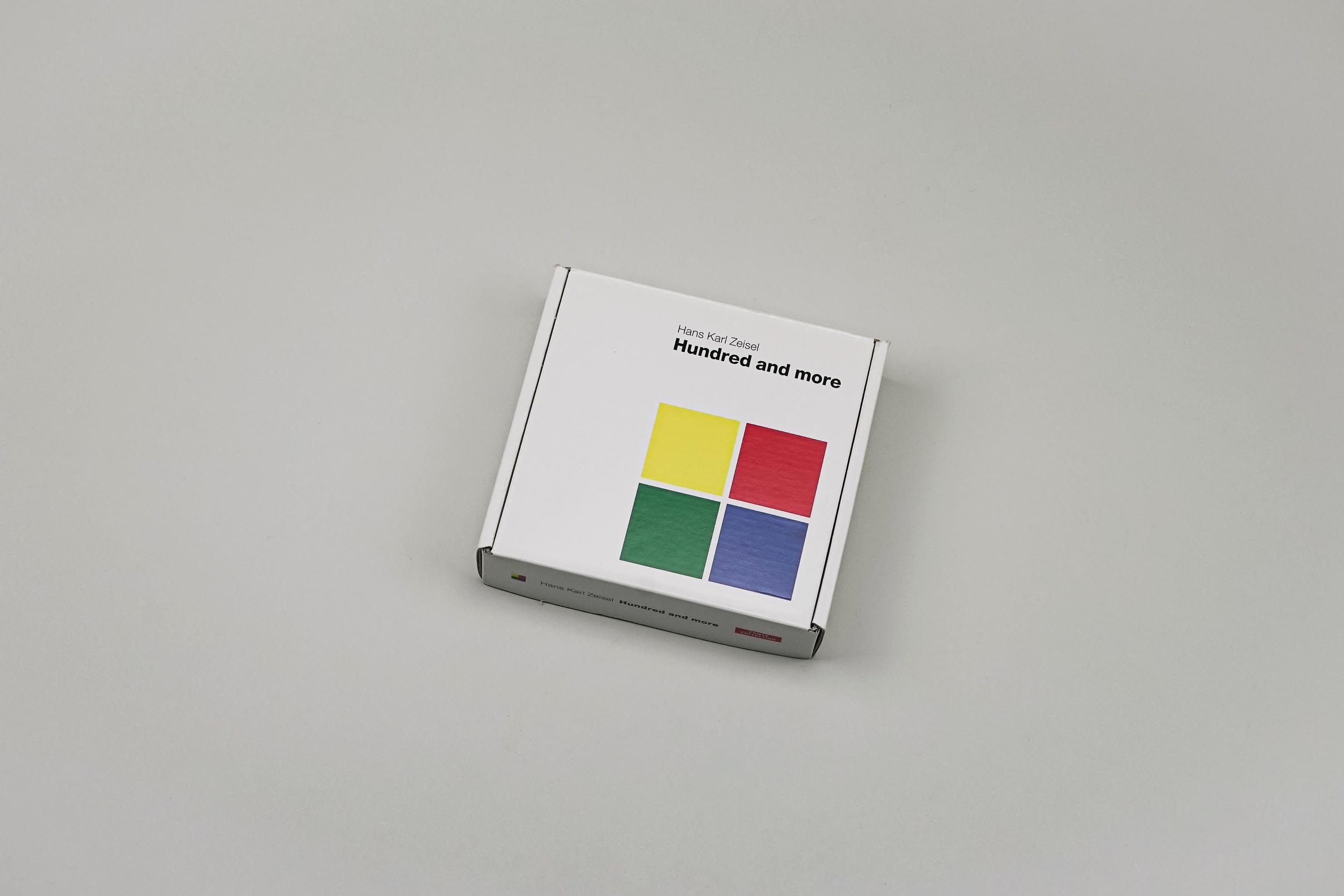
Hundred and more
 | |
|---|---|
| Author(s) | Hans Karl Zeisel |
| Design | Hans Karl Zeisel, Pia Viola Zeisel |
| Size | 14,8 x 14,8 cm |
| Pages | 228 |
| Illustrations | 100 |
| Cover | Softcover in a box with four wooden blocks |
| Language(s) | German, English |
| ISBN | 978-3-942924-29-0 |
Possibilities of Concrete Art
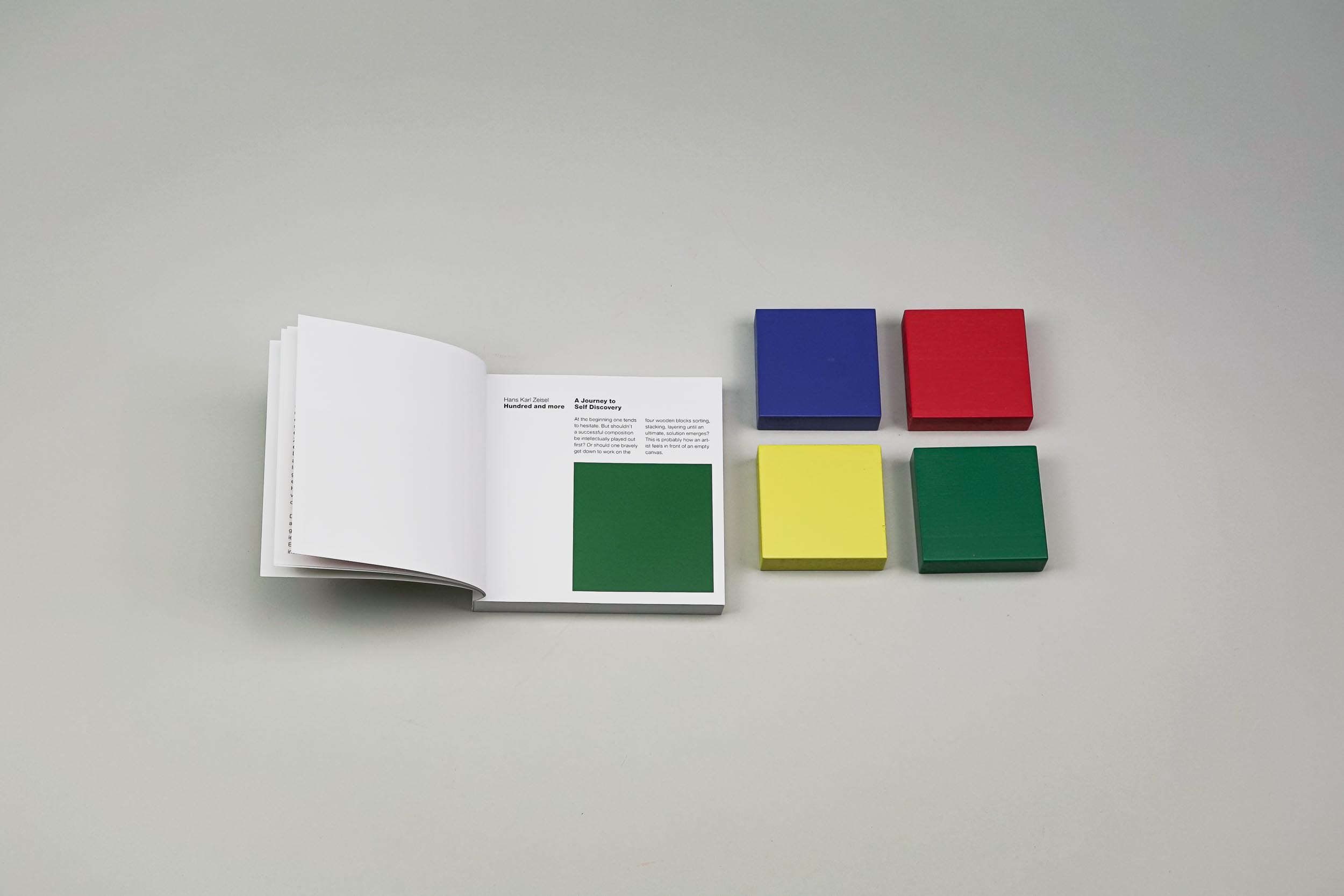
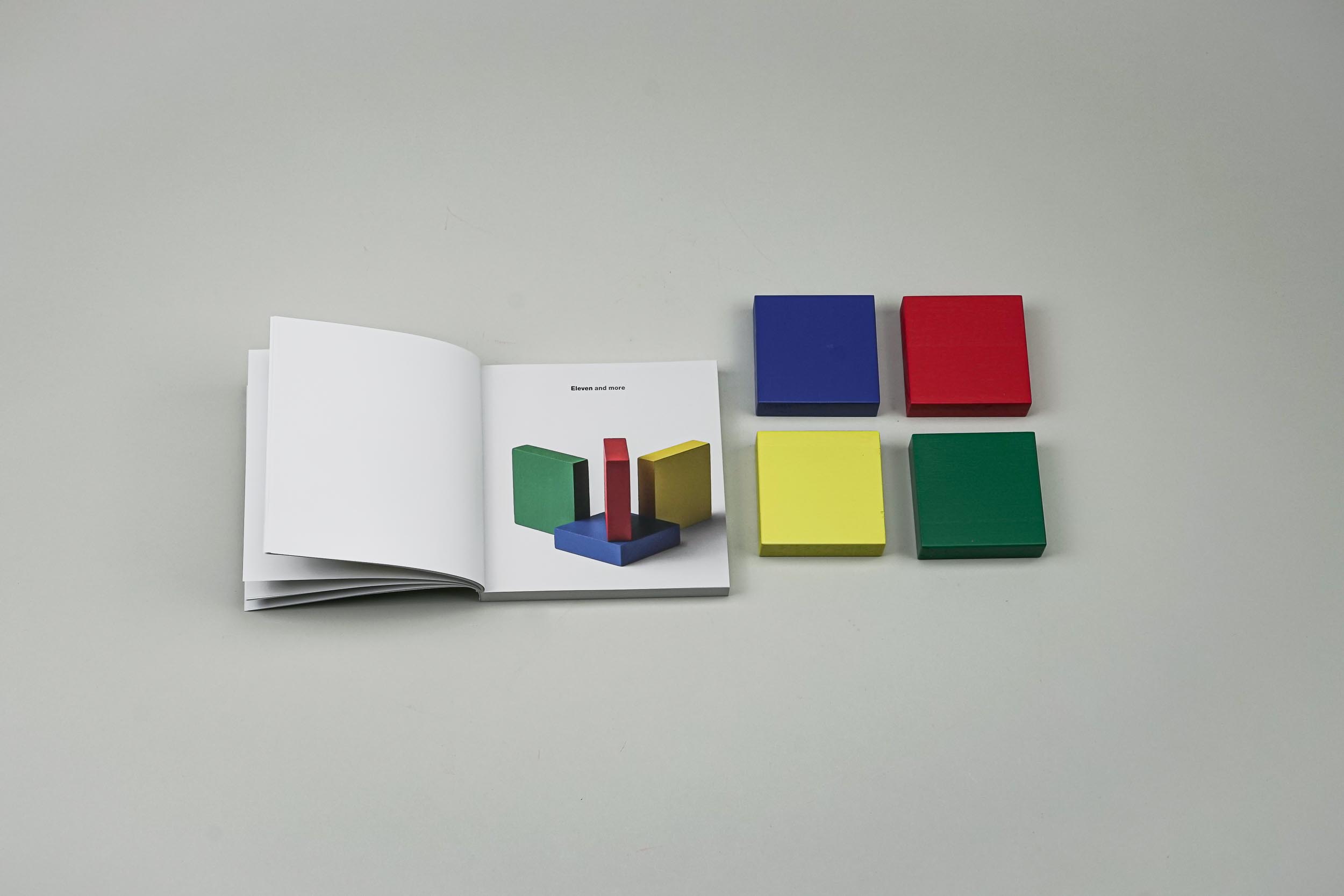
What is possible without turning away from the cocrete? In the Bauhaus tradition, the typographer, graphic artist, designer and author Hans Karl Zeisel opens up countless design options with basic forms. His wooden cuboids demand a humorous approach to sculpture. They are creativity training, study tools and meditation game all in once. A playful experiment that reveals the diversity of concrete art.
More books
-

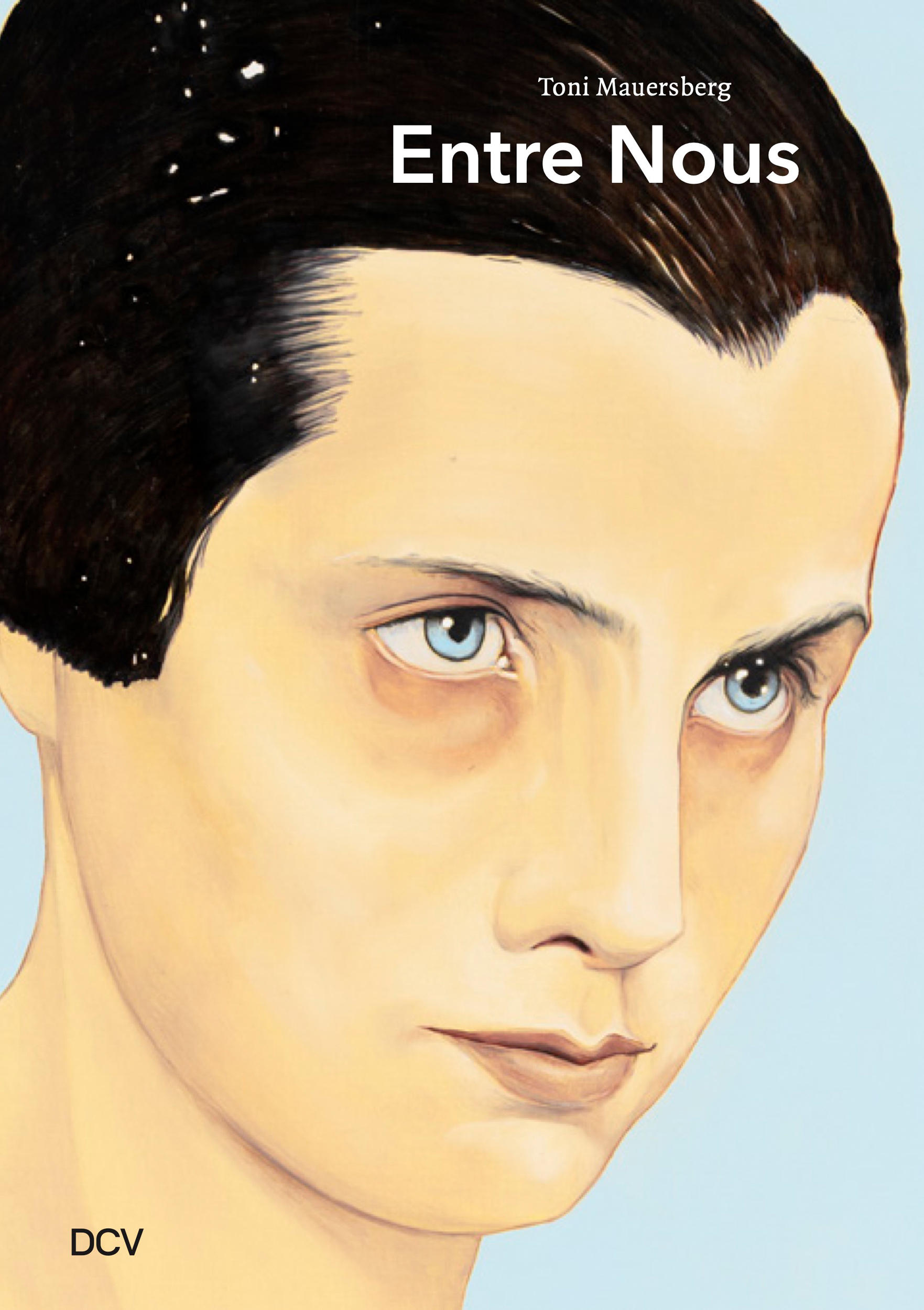
Toni Mauersberg
Entre Nous28€ Add to cartToni Mauersberg (b. Hannover, 1989; lives and works in Berlin) is interested in the different layers of a picture’s signification: there is, in the first instance, what it depicts; then the larger tradition in which it is grounded; and finally, the conditions of its genesis. She employs a range of painterly strategies and techniques to uncover the potentials of paintings as a medium of understanding, insight, and storytelling. The question that animates her art is how it is possible, in this post-religious, post-rational, and post-individual age, to be one’s own person. In her most recent series, Pas de Deux, Mauersberg investigates the complex visual language of abstract painting, which originated in part in a quest for new ways of representing spirituality and emancipation. Combining nonrepresentational pictures with portraits, she draws attention to how both are products of “making,” composed of nothing but color, while enlarging their interpretative ambits. The dialogue between the paintings is meant to help the beholders chart their own course as they unlock what appear to be hidden laws encoded in pictures.
Toni Mauersberg studied Jewish studies at Freie Universität Berlin in 2008–2012 and fine arts with Leiko Ikemura at the Berlin University of the Arts from 2009. In 2017, she was Michael Müller’s master student.
- Release July 2023

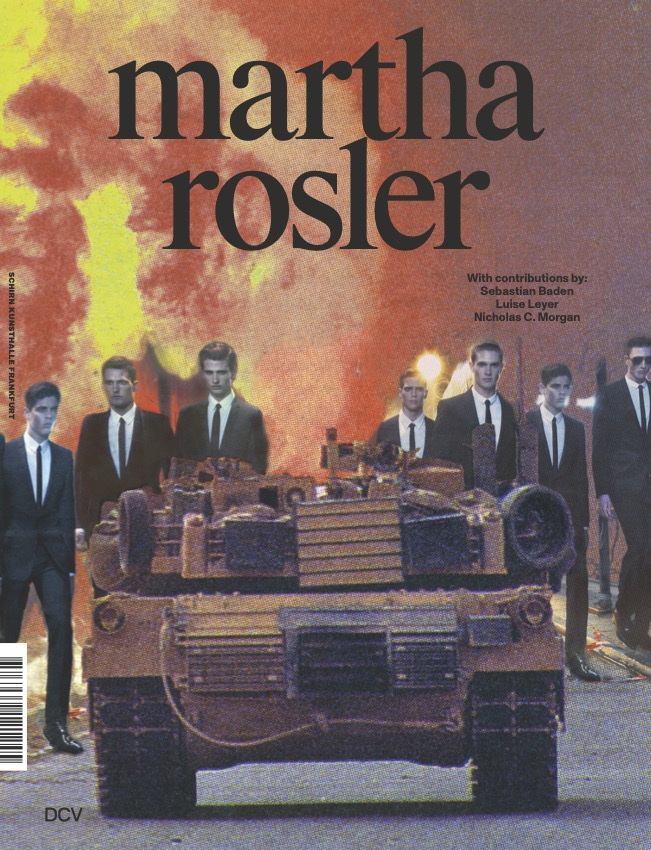
Martha Rosler
32€ Add to cartThe American conceptual artist and pioneer of critical feminism Martha Rosler (b. 1943 in Brooklyn, NY, lives and works in Brooklyn, NY) has influenced numerous contemporary artists with the radicalism of her artistic position. Rosler’s work is always political and examines questions of power and violence, the ideals of beauty and their demolition, and the purported contrasts between war and consumption. For her sociocritical collages and videos, Rosler uses found pictorial material that has already been published. The artist delights in working with photos from public sources like magazines and newspapers, which she processes and arranges in new contexts in order to visualize inequality and protest. Following on from Rosler’s iconic series House Beautiful: Bringing the War Home (ca. 1967–1972), at the heart of the publication lies the confrontation with warlike disputes as conveyed in the media, together with the associated dissonance between the private and the political.
Martha Rosler received a Bachelor of Arts from Brooklyn College in 1965 and a Master of Arts from the University of California, San Diego in 1985. In 1975 she began to write reviews for Artforum and other art magazines. She teaches at School of Arts of Rutgers University in New Brunswick, New Jersey.
-

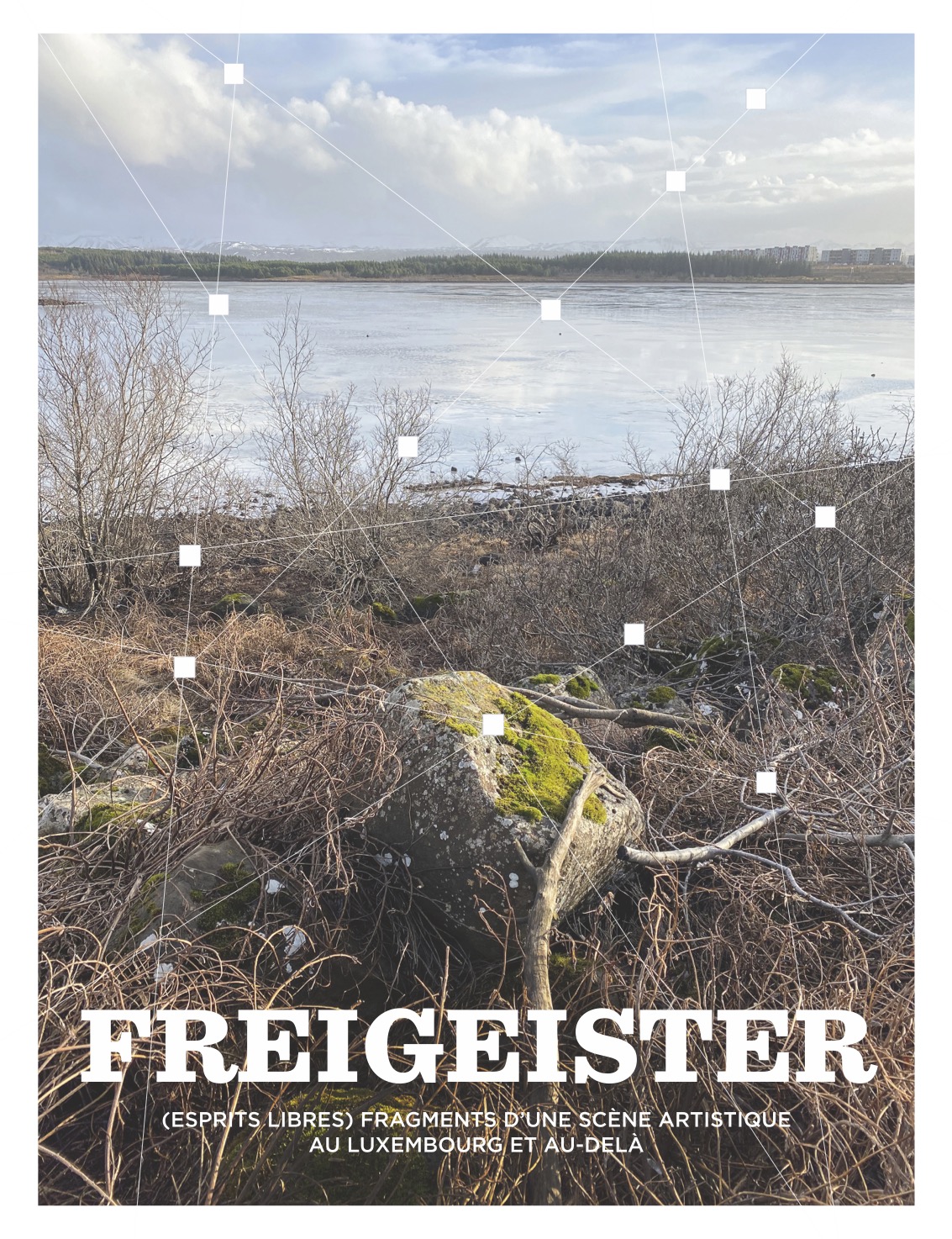
FREIGEISTER
FRAGMENTS OF AN ART SCENE IN LUXEMBOURG AND BEYOND35€ Add to cartThinking Otherwise—the Mudam in Luxembourg at Fifteen
A free spirit, Friedrich Nietzsche wrote, is someone who “thinks otherwise than is expected of him in consideration of his origin, surroundings, position, and office, or by reason of the prevailing contemporary views” (Human, All Too Human,1878). As the German philosopher saw it, one must seek to become “untimely” and remain a “stranger” to one’s time in order to question its premises. This view to states of alienation unites the positions of fourteen young Luxembourgish artists in Freigeister, the publication accompanying the celebrations on occasion of the fifteenth anniversary of the Musée d’Art Moderne Grand-Duc Jean.
In recent years, Luxembourg’s art scene has grappled in a wide variety of ways with the challenges that come with the small yet economically successful country’s ongoing transformation. Charting realities between the familiar and the unknown, the artists featured in Freigeister employ photography, painting, and installation as well as film, sculpture, printmaking, and performance art to paint a carefully considered but by no means dispassionate portrait of today’s society in an effort to build bridges between identity and the future.
The book presents works by Yann Annicchiarico, Laurianne Bixhain, Aline Bouvy, Marco Godinho, Sophie Jung, Catherine Lorent, Filip Markiewicz, Karolina Markiewicz & Pascal Piron, Claudia Passeri, Daniel Reuter, Nina Tomàs, Daniel Wagener, and Jeff Weber.
-

Sebastian Stöhrer
Residents40€ Add to cartIf there’s an artist whose oeuvre merits the title “creation,” it is Sebastian Stöhrer. Shaping clay—essentially, soil—he molds his “residents”: colorful and friendly-looking sculptural beings, some of them enhanced with sticks or branches reminiscent of limbs. Despite their air of levity and humor, they are not the products of mere momentary inspiration or a whim. It takes decades of dedicated experimentation with the kiln based on the millennia-old art of ceramics as well as expert knowledge of chemistry and physics to create such colors and shapes. Stöhrer has been called an alchemist, and indeed he has made it his mission to vindicate this researcher’s craft, an ancestor of the natural sciences. Alchemy, like Stöhrer’s oeuvre, combines pure rationality with coincidence and a scintilla of magic. The artist plays an intuitive and sensual game with his clay and the virtually incalculable chromaticity of the glazes—chaos, anarchy, and irrepressible urges being an integral dimension of all creation. In Stöhrer’s “residents,” we encounter the embodiments of that creation: likenesses of ourselves and perhaps also heralds of a future more good-natured version.
-

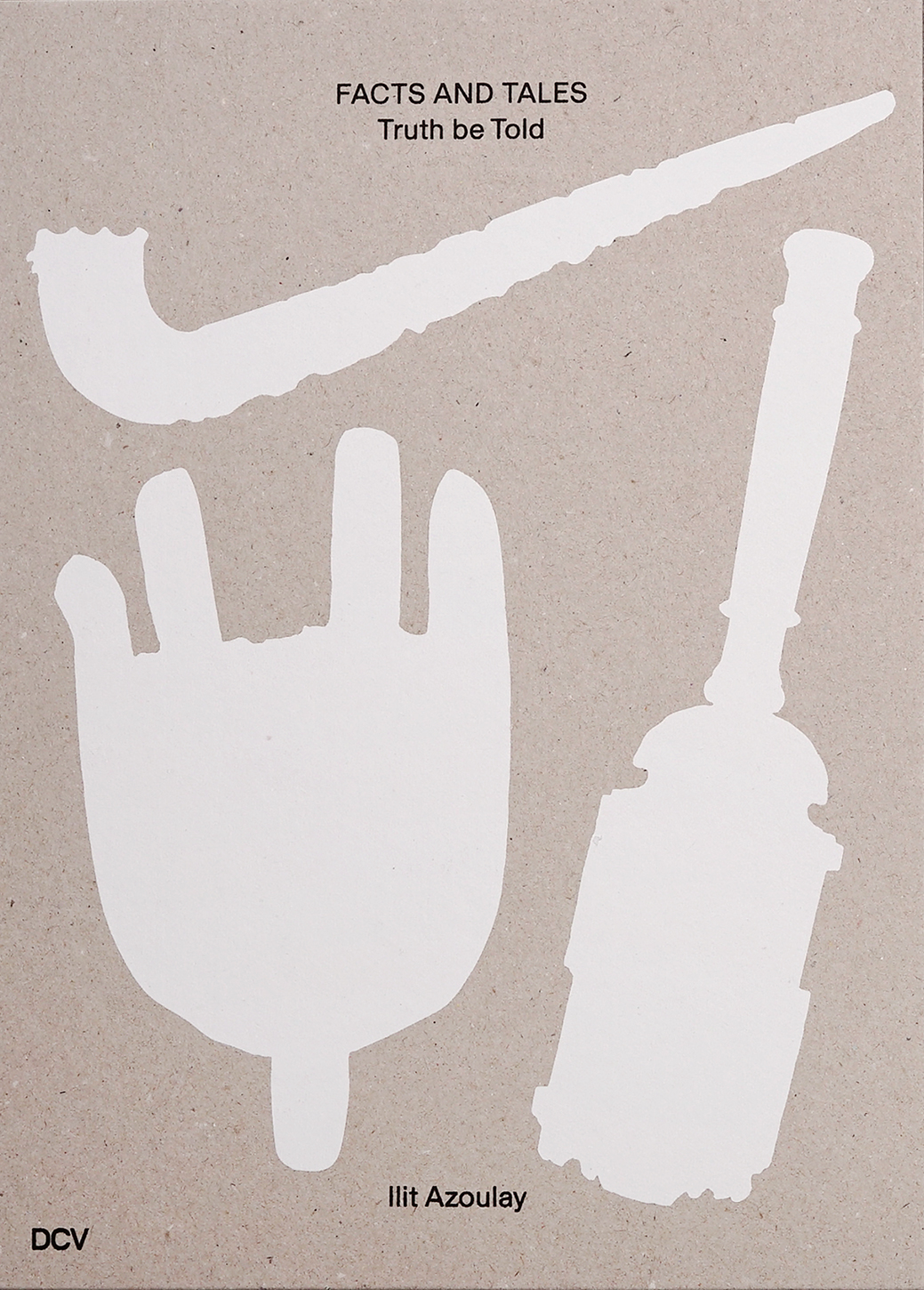
Ilit Azoulay
Facts and Tales. Truth be Told120€ Add to cartIn an era in which multiple perspectives and oral histories are increasingly vital, Facts and Tales—Truth Be Told delves into the haunting work of Ilit Azoulay. The artist, who was born in Jaffa in 1972, transforms objects, archives, and museum holdings into vessels, challenging traditional hierarchies of knowledge. In her most recent solo exhibition Mere Things at the Jewish Museum, New York, Azoulay presents works that probe the delicate balance between factual representation and nuanced storytelling.
The publication accompanying the exhibition includes archival pages, the artist’s notes, and depictions of the works as well as an introduction by curator Shira Backer and an essay by the art critic, curator, and writer Sarit Shapira, who passed away in 2018. Titled Houses of Junk and Specters: On Ilit Azoulay’s Early Works, it underscores the importance of honoring both factual accuracy and oral histories and invites readers to explore the complex interplay between concrete evidence and the rich and nuanced stories.
Azoulay has devised a singular method to shed light on the blanks in hegemonic narratives and expose them. As though to produce an extortion letter, she clips her pictures from archival materials and photographs of the walls of abandoned buildings and composes them in collages interweaving a multiplicity of views. The resulting works question the exclusive truth claim of museum expertise and reveal its constructed quality. The catalog of her works, designed as a box replete with texts and images, reflects this approach, aiming to dismantle established narratives and open up diverse perspectives.
Box containing 6 different standalone publications, limited edition of 500 copies
THIS PUBLICATION WAS MADE POSSIBLE BY THE GENEROUS SUPPORT OF THE GALLERY LOHAUS SOMINSKY, MUNICH
-
ELMGREEN & DRAGSET
READ48€ Add to cartThroughout their careers, the artist duo Elmgreen & Dragset (Michael Elmgreen, b. Copenhagen, Denmark, 1961, and Ingar Dragset, b. Trondheim, Norway, 1969, live and work in Berlin) have eschewed the traditional “White Cube” exhibition format by creating large-scale installations and staging narrative situations in which autobiographical quotes blend with fictional stories and cultural references.
For the solo exhibition READ, Elmgreen & Dragset have transformed Kunsthalle Praha into a minimalist version of a modern public library to prompt reflections on our relationship with physical books and knowledge in the age of digital media. With new works by Elmgreen & Dragset as well as performances, videos, collages, paintings, and sculptures by other artists, READ also probes the relation between books and the making of art.
This richly illustrated publication documents the dynamic interaction between language, books, and art. With contributions from renowned scholars and a curatorial text by Elmgreen & Dragset.
-

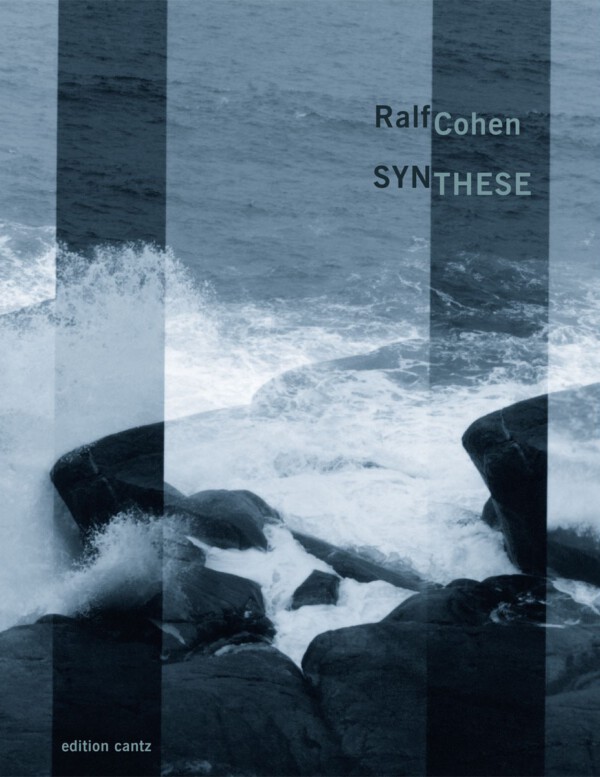
Ralf Cohen
Synthese25€ Add to cartThe First Comprehensive Overview of the Work of the Photo Artist from 1972 to the Present Day
Ralf Cohen (b. 1949, Solingen; lives and works in Karlsruhe) makes use of the entire material complex of photographic image production for his own creative purposes. He works exclusively with analog processes and explores the limits of the medium with a variety of experiments in the darkroom, altering his photographs through solarization, long-term exposure, light/dark reversal, chromatic filtering, and further manual processing. This comprehensive volume presents Cohen’s works, from the high-contrast black-and-white architectural photographs of the early period and the work groups of people in cities from the late 1980s to the latest photographic series with their enigmatic light effects, seemingly glowing planetary surfaces, hails of stars, and fantastical islands. Ralf Cohen’s fascinating cosmos of imagery breaks viewing habits and, with his imaginary universes, opens up a new perception of the world.
- Out of stock

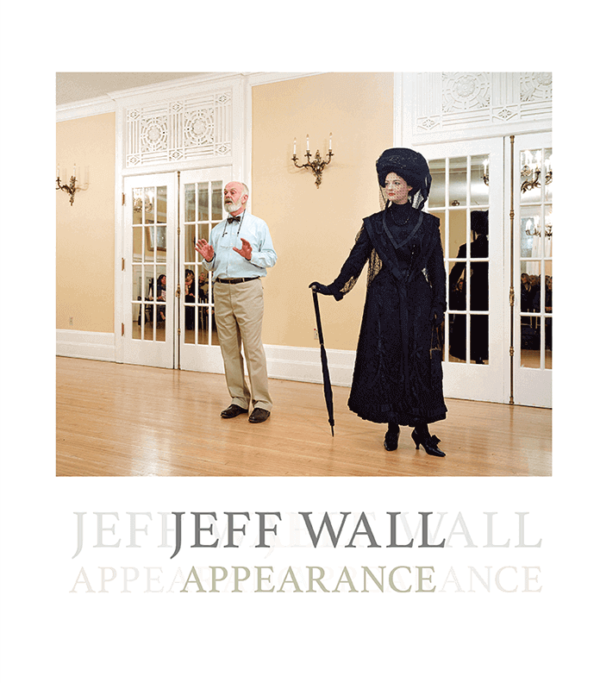
Jeff Wall
AppearanceRead moreA New Perspective on the Work of the Photo Artist
The trademark of Jeff Wall (b. 1946, Vancouver; lives and works in Vancouver) are large-scale backlit light boxes, which appear like carefully composed film stills. The art historian ties his works in manifold ways to art history and, due to his elaborate arrangements, is often compared to modern masters. Many pictures by Jeff Wall are inspired by novels or stories and condense into intentional stagings of the everyday. With a special focus on constellations which present the medium photography like a search for traces, the book allows a new perspective on the artist’s works which have up until now rarely been shown in exhibitions.
Jeff Wall studied art history at the University of British Columbia, Vancouver, and at the Courtauld Institute of Art, London. His works are exhibited internationally, for example at the Museum of Modern Art, New York, Tate Modern, London, and the Art Institute of Chicago. In 2008 he received the Audain-Award for his life work.
-
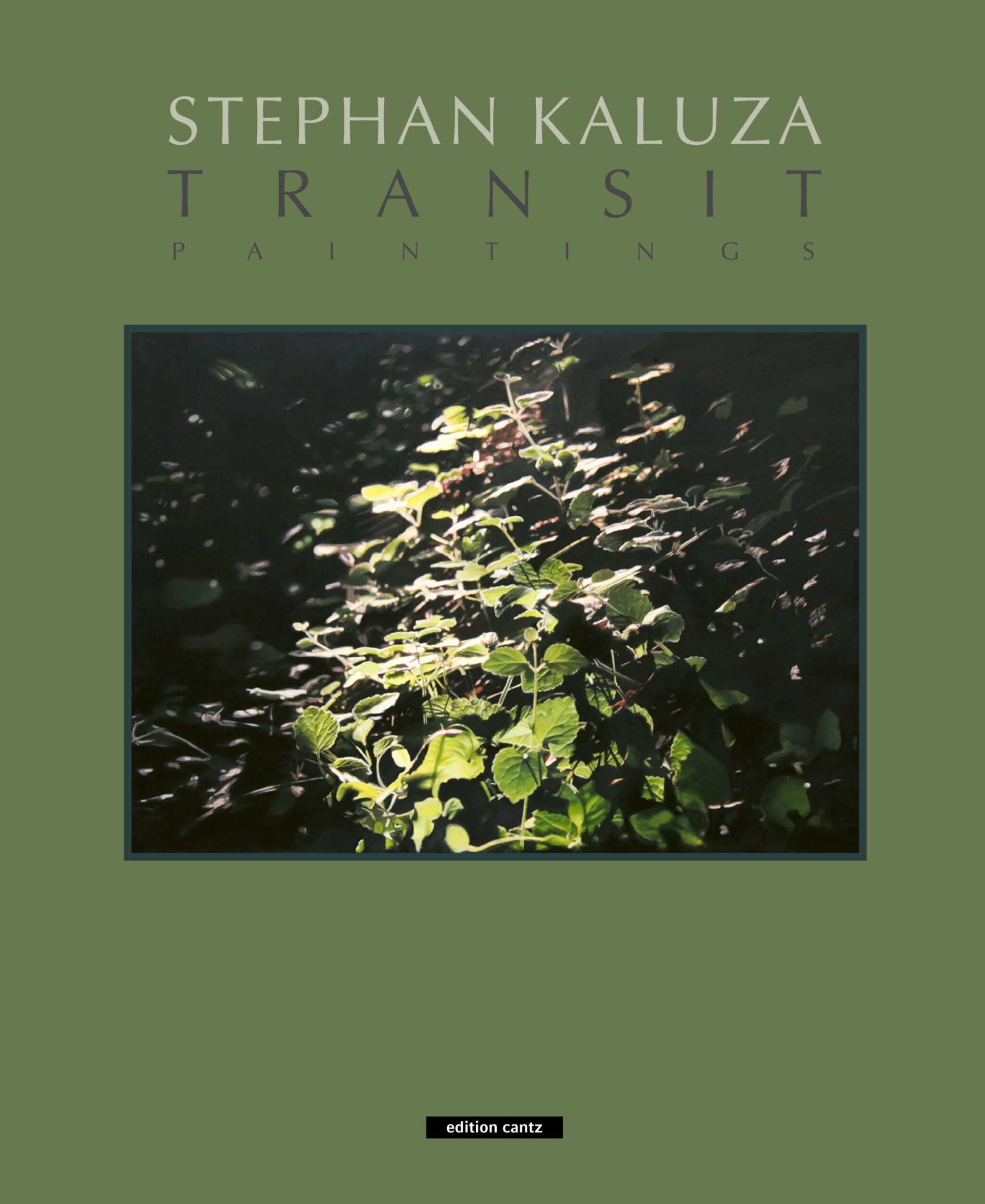
Stephan Kaluza & Dieter Nuhr
Transit42€ Add to cartLandscapes in a Dialogue between Painting and Photography
At first glance, Stephan Kaluza’s (b. 1964, Bad Iburg; lives and works in Düsseldorf) photorealist paintings might be still lifes, portraits of pristine nature. Yet they actually show battlefields and other scenes of past horrors. The idyll in his pictures positively appeals to our vigilance to resist the impression of profound peace. The same ambiguity lies at the heart of the photographs of Dieter Nuhr (b. 1960, Wesel; lives and works in Ratingen). Nuhr, who is also widely known as a comedian, has contributed pictures that are carefully focused renditions of seemingly serendipitous discoveries from his travels in Nepal, Bolivia, India, and Sudan. In their timelessness, Nuhr’s photographs are akin to the locales in Kaluza’s works, which, disburdened of the heavy weight of their histories, reemerge as straightforward natural landscapes. The lavishly illustrated two-volume edition presents the fruits of a collaboration between two artists united by their shared preoccupation with the dialectic of ephemerality and permanence.
- Release January 2026

Bettina Buck
Finding Form45€ Add to cartThe German sculptor Bettina Buck (1974-2018) called attention to herself with her “performative sculptures,” which she often presented vis-à-vis museal objects. Buck’s preferred materials came from the hardware store: corrugated cardboard, ceramic tiles, pressed foam, or plastic foil, which are all not meant to last. Out of these materials she created a kind of changeable and transient “protagonists,” who didn’t have a final form but rather emphasized the actual process of finding form (as well as losing form). In a provocative action in 2015, Buck dragged an oversized foam bloc through a museum collection and let it rest next to famous artworks, which gained a new dynamic in this interplay. Buck herself said once that her works were meant to “simultaneously attract and alienate the viewer.” In the exhibition space the objects should “create a tremor, a vibration and a conversation with its surroundings.”
Finding Form, a posthumous monograph presents Bucks complete sculptural works on over 300 pages and contains texts by Phyllida Barlow, Paolo Icaro, Cecilia Canziani, and Andrea Maria Popelka. The book was conceived and published by the artist’s estate, Bureau Bettina Buck.
-

Kensise Anders
10€ Add to cartKensise Anders’s work grapples with the reality of Black people’s lives. Born in Haiti, she was adopted by a German family when she was two. After a difficult childhood, with stints in a psychiatric institution and a boarding school, she eventually found art as a medium that lets her work through her experiences. She uses the crochet needle to create masks with which she ironically appropriates white identities and play carpets that show the world of her childhood—apartment blocks, streets; the “hole,” as she calls this environment. She also arranges crocheted threads on the canvas as though they were brushstrokes. One series of pictures is dedicated to a Black doll; another, to naked female bodies, including the artist’s own, with references to Courbet’s L’Origine du monde (1866). The works are acts of resistance to the prudishness of whites. Black dolls became popular in this country during the colonial era and never quite went away, like the racism in our society and in our heads. Anders’s weapon against that racism is the crochet needle, which she wields patiently and with flair as well as the necessary radicalism.
-

Female Gaze
From Virtual to Reality25€ Add to cartWorks of Art Take a Stance
The “female gaze” embodies a stance that is the polar opposite of the “male gaze.” The latter term came into use in the movie and advertising industries in the 1970s to describe the fact that women typically appear in films in supporting roles, as accessories to men, rather than as protagonists. The male gaze originated in a patriarchal society that has begun to change. The female gaze champions a modern form of emancipation that challenges men to abandon entrenched structures. Much more importantly, it encourages women to become aware of the strength that lies in their femininity and make it the source of their own creative expression and their own perspective on the world. For many years, the writer Silke Tobeler has visited artists in their studios, collecting the photographs she took there and her conversations with her hosts on her blog, Female Gaze.
-

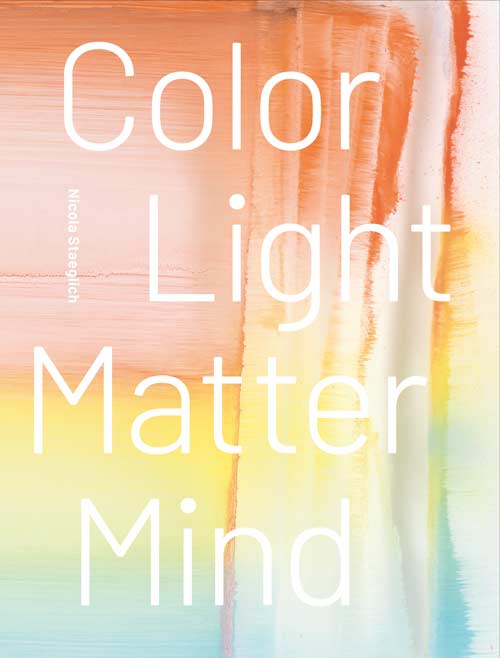
Nicola Staeglich
Color Light Matter Mind36€ Add to cart“This painting springs from the ambition to paint color into the air.” (Ulrich Loock)
Nicola Staeglich’s (b. Oldenburg, 1970; lives and works in Berlin) work with color achieves a distinctive intermediate state between physical presence and atmospheric radiance. She stages painting now as a performative action with broad propositions in color, now as an installation in three dimensions with multilayered translucent painted panels. Color Light Matter Mind is Staeglich’s first monograph, setting recent works in relation to her earlier output (1998–2021). From the spiral-shaped reliefs to her Liquid Lights, the artist opens up a fresh dimension for color.
Nicola Staeglich studied at the Städelschule, Frankfurt, the Academy of Fine Arts Mainz, and the Chelsea College of Art, London. She won numerous fellowships and has been professor of painting/graphic art at the Hochschule der bildenden Künste Essen since 2015. Her work has been presented in numerous solo exhibitions in Germany and abroad and is held by private and public collections.
-

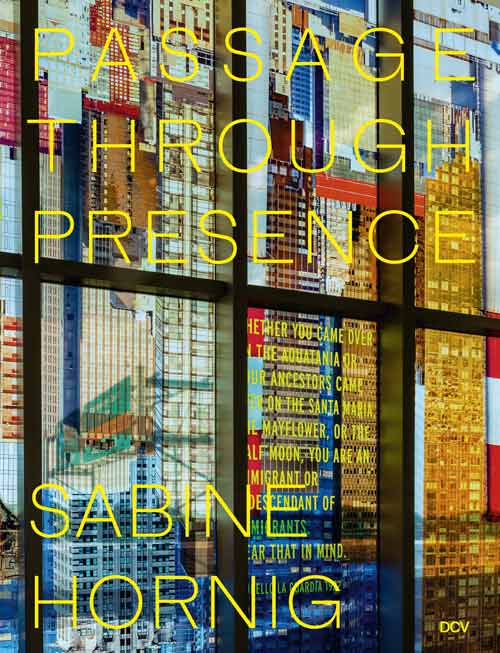
Sabine Hornig
Passage through Presence45€ Add to cartLayered Spacetimes in Large Formats
Sabine Hornig (b. 1964; lives and works in Berlin) has earned international acclaim with sculptures, photographs, and architectural interventions that interweave image, perspective, and space in distinctive ways. Her works feature translucent pictorial planes on glass panes; integrating these sculptural elements into the setting, she creates environments in which meaning unfolds as viewers allow their gazes—and themselves—to wander. For her new works, which engage with architecture, the artist superimposes enormous photographs on entire façades and concourses. This publication is the first to put the focus on Sabine Hornig’s art in three dimensions, detailing her process from the building of sculptural models and the combination with transparent photographic layers to her creation of works in public settings. It showcases her largest installation to date, at LaGuardia Airport in New York City, which she discusses in a conversation with Nicholas Baume, director and chief curator, Public Art Fund, New York.
-
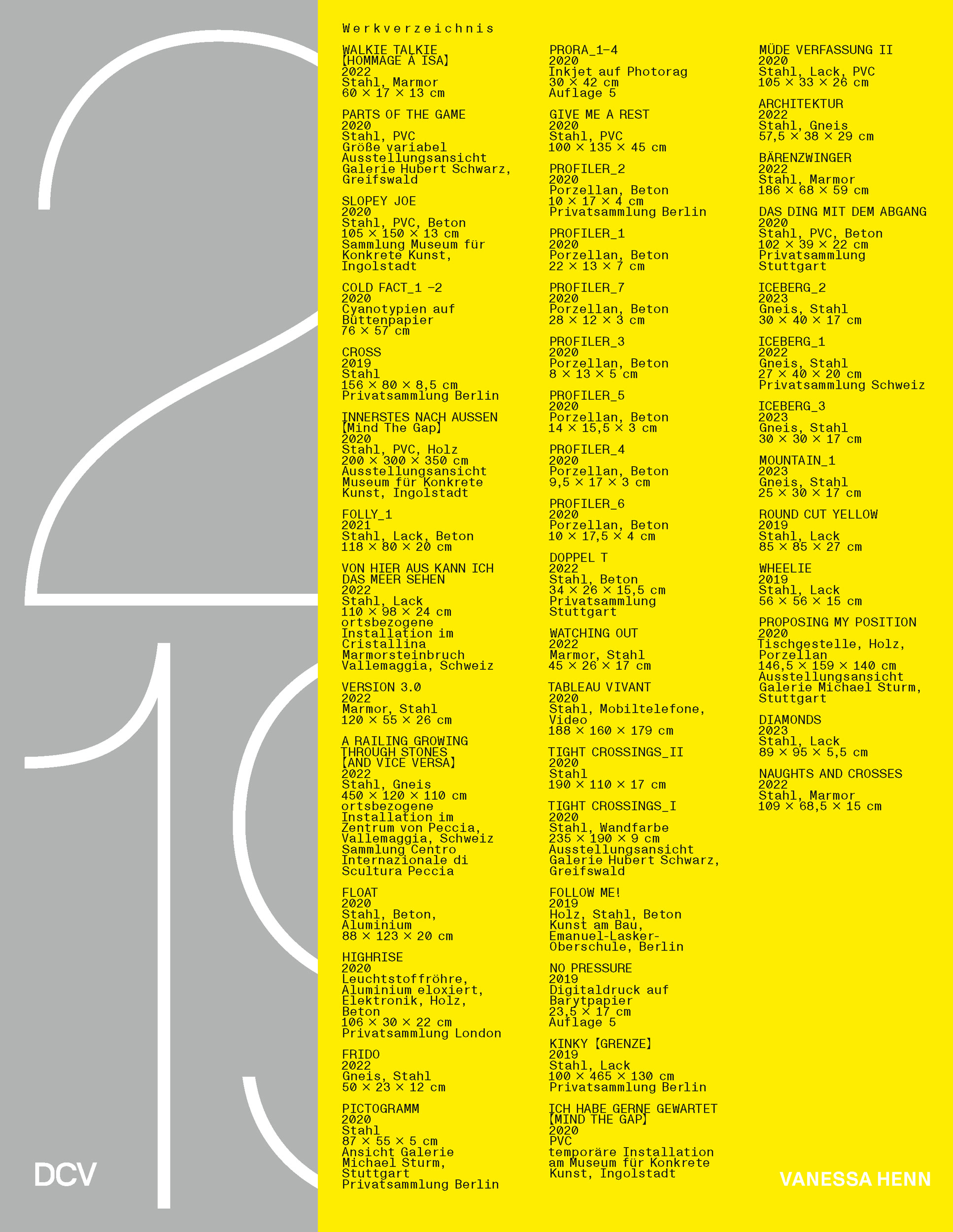
Vanessa Henn
Same Same35€ Add to cartVanessa Henn’s (b. Stuttgart, 1970; lives and works in Berlin) objects and installations blend formal reduction with playful comedy. The handrails she makes out of a wide variety of materials run along walls, project into rooms, trace spirals, mark lines or arcs, and often solicit our active engagement. Besides banisters, her oeuvre, which straddles the line between architecture and sculpture, also comprises bridges, stairs, and fences. All her creations are energized by the tension between the static work of art and its dynamic environment, which the artist resolves by integrating her works into the goings-on of everyday life. A guardrail that runs perpendicular to a flight of stairs or abruptly ends in the ceiling or floor is relieved of its function; rather than helping us go where we are going, it is a companion who invites us on a stroll into the imaginary and uncertain. And that is what makes Vanessa Henn’s art so alluring.
The book presents Vanessa Henn’s latest works from the years 2019-2023.
Vanessa Henn studied sculpture at the State Academy of Fine Arts Stuttgart (1992–2001) and at Edinburgh College of Art (1995–1996) and completed a Master of Fine Art at the University of Canterbury School of Fine Art in Christchurch, New Zealand (1999–2000).
-
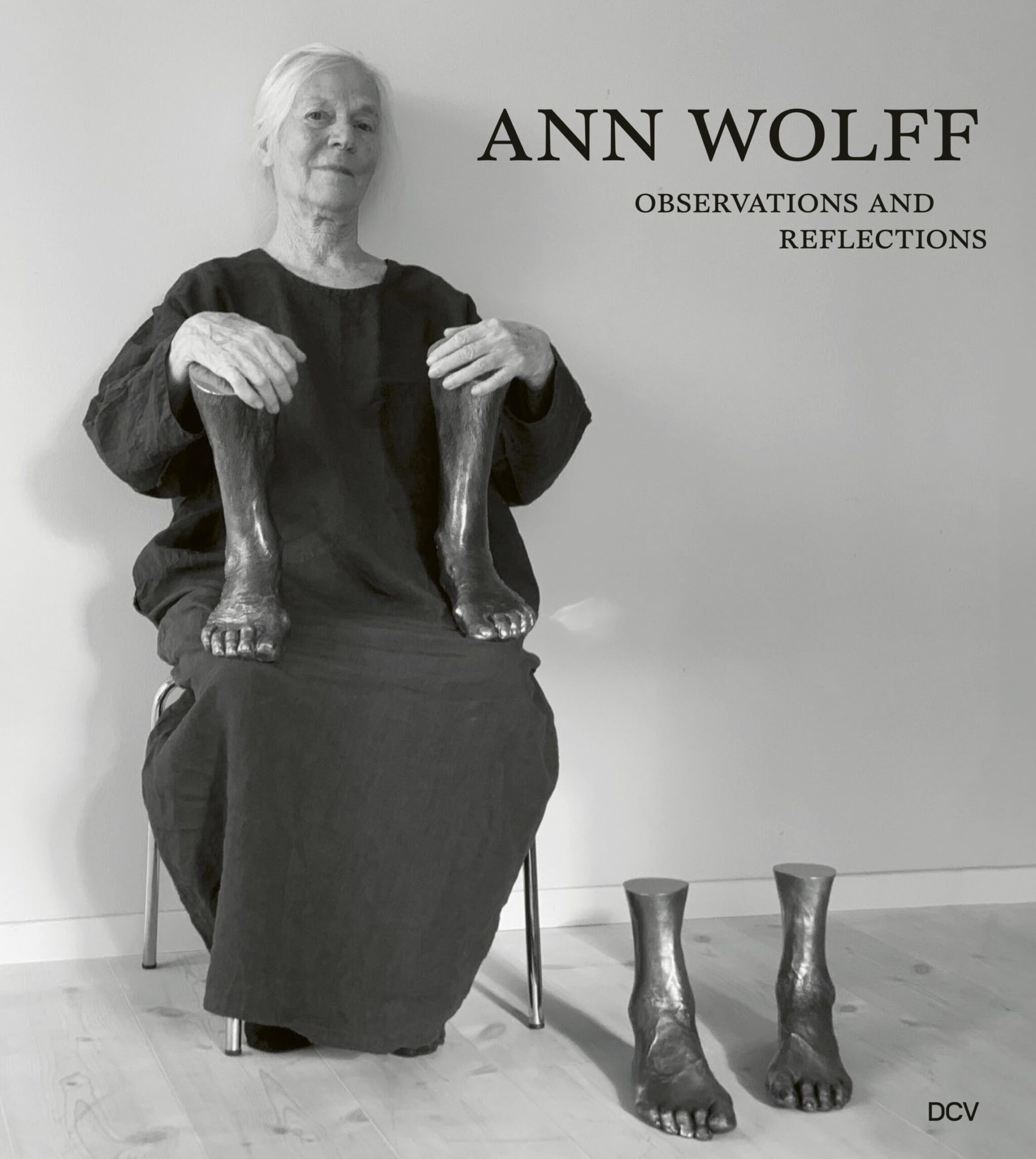
Ann Wolff
Observations and Reflections44€ Add to cart“Art is coming from my inside. I am working as its servant.—I let it out not thinking too much—using my hands and gesture—choosing a material to put it on place. I do not use the art. It is using me.“
Ann Wolff (b. Lübeck, 1937; lives and works in Visby and Kyllaj, Sweden) has ranked among the most significant and most influential glass artists on the international scene for over five decades. Yet she has also worked in bronze, aluminum, nickel silver, and concrete, creating abstract as well as figurative sculptures, and produced a sizable oeuvre on paper: pastels, drawings, and fine art prints. Ann Wolff enrolled at the legendary Ulm School of Design in the 1950s to study visual communication with Otl Aicher. From 1993 until 1998, she was professor of “materials-related design” at the University of Fine Arts (HFBK) in Hamburg. Her works, which have garnered an array of prizes, have been shown in numerous solo exhibitions and are held by renowned public and private collections all over the world.
- Out of stock

Idee – Entwurf – Konzept
48€ Read moreArt in the Preliminary and Provisional Stage
In this sumptuous volume, Künstlerbund Baden-Württemberg, the association of visual artists in Baden-Württemberg, puts the focus on visualizations of inchoate impulses, spontaneous flashes of inspiration, and the euphoria of that first spark rather than the painstaking process of hammering out a work. Structured as a complex compendium comprising contributions by more than 240 artists, the book highlights the experimental circumstances in which the individual creative mind experiences the nascency of ideas—without regard for the specialized skills and technical accomplishment that distinguish the finished work. Perfunctory sketches, doodles, drawings, notes and material collages, photographs and other media images provide insight into very intimate stages of the creative process that are not usually revealed to visitors to an exhibition of contemporary art.
- Release Spring 2026

Jorinde Voigt
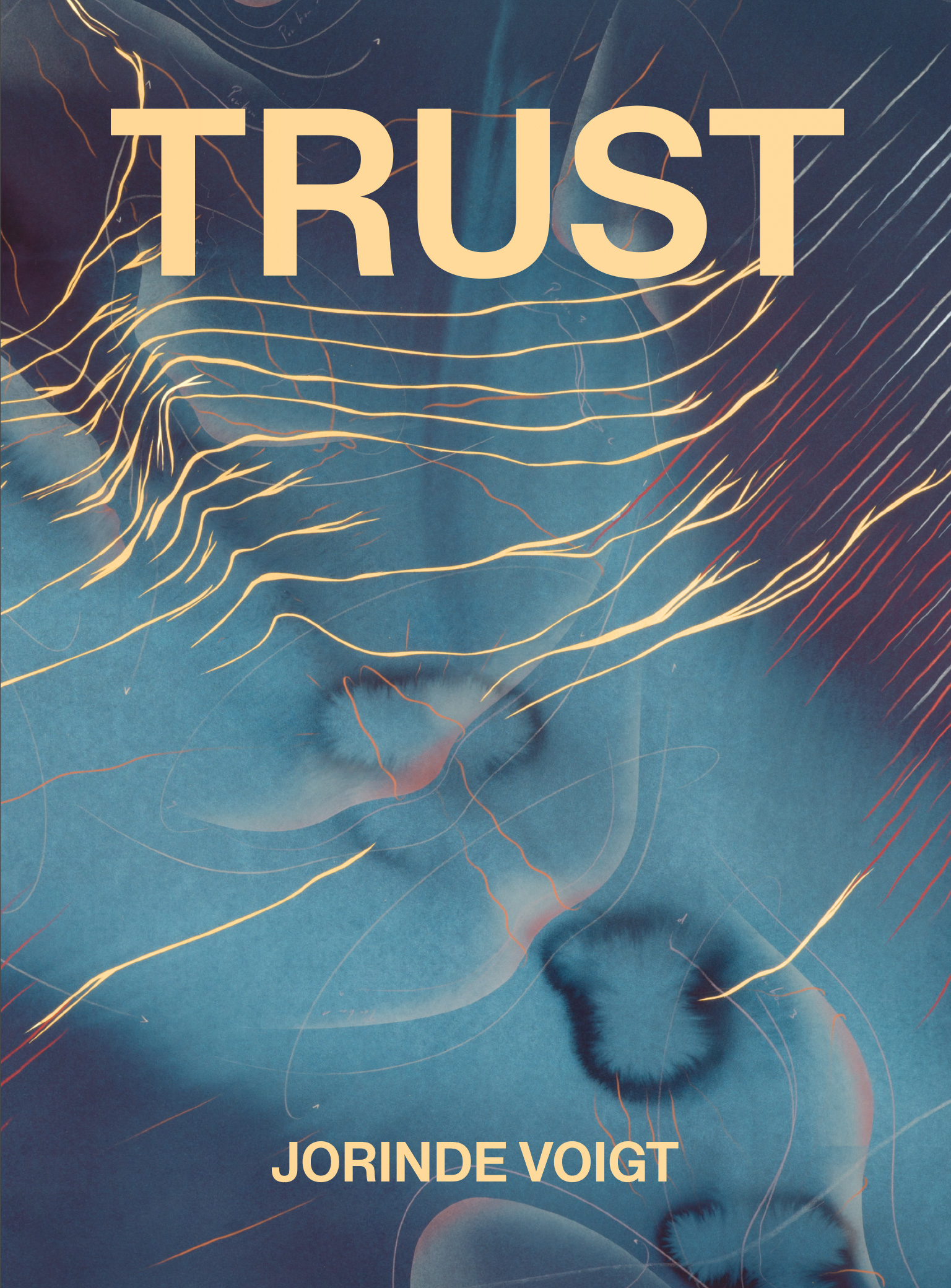
Trust42€ Add to cartJorinde Voigt (b. Frankfurt am Main 1977, lives and works in Berlin), declared about the title of the book “Trust is a hybrid of longing for something and the engagement to reach it”. Voigt has thus decided to compile her works, which she realized from May 2019 to spring 2021, under the sign of confidence, connectedness, reliability and integrity. Many of the works presented place themselves in the continuity of those in Immersion, a book that brought together works from the period 2018-2019.
In the extensive volume Trust, sculptures and mobiles are shown alongside the works on paper for which she is known – here immersed in a pigment bath and then worked on with pastel, ink, India ink, oil pastels and gold leaf–.
Jorinde Voigt studied philosophy and modern German literature at the University of Göttingen from 1996. In 1998 she moved to Berlin and studied sociology, philosophy and general and comparative literature at the Free University of Berlin. 1999-2003 she studied art in multimedia at the University of the Arts with Christiane Möbus and visual arts and photography with Katharina Sieverding, whose master student she became in 2004. 2014-2019 she was professor of conceptual drawing and painting at the Academy of Fine Arts Munich. Since 2019 she is professor at the Hamburg University of Fine Arts.
-

Taube
18€ Add to cartHuman, City, Pigeon
Public perceptions of the pigeon have shifted drastically over the past centuries. In the 1700s, it was welcomed as a guest who commanded humans’ unfailing solicitude; today, by contrast, it is often perceived as a nuisance. It has become an animal that defaces squares and buildings. Why does the pigeon in the settings of our daily lives prompt feelings of loathing and fascination, but also indifference? Jens Gerber’s photographs undertake an expedition into the city of the pigeons. Rounded out by essays by Marina Rüdiger and Laurens Schlicht, the book illuminates the subject of the city pigeon from the perspectives of photography, science, and literature, and explores the question of how pigeons shape the built environment and how the latter informs their behavior in turn.
-
Ossian Fraser
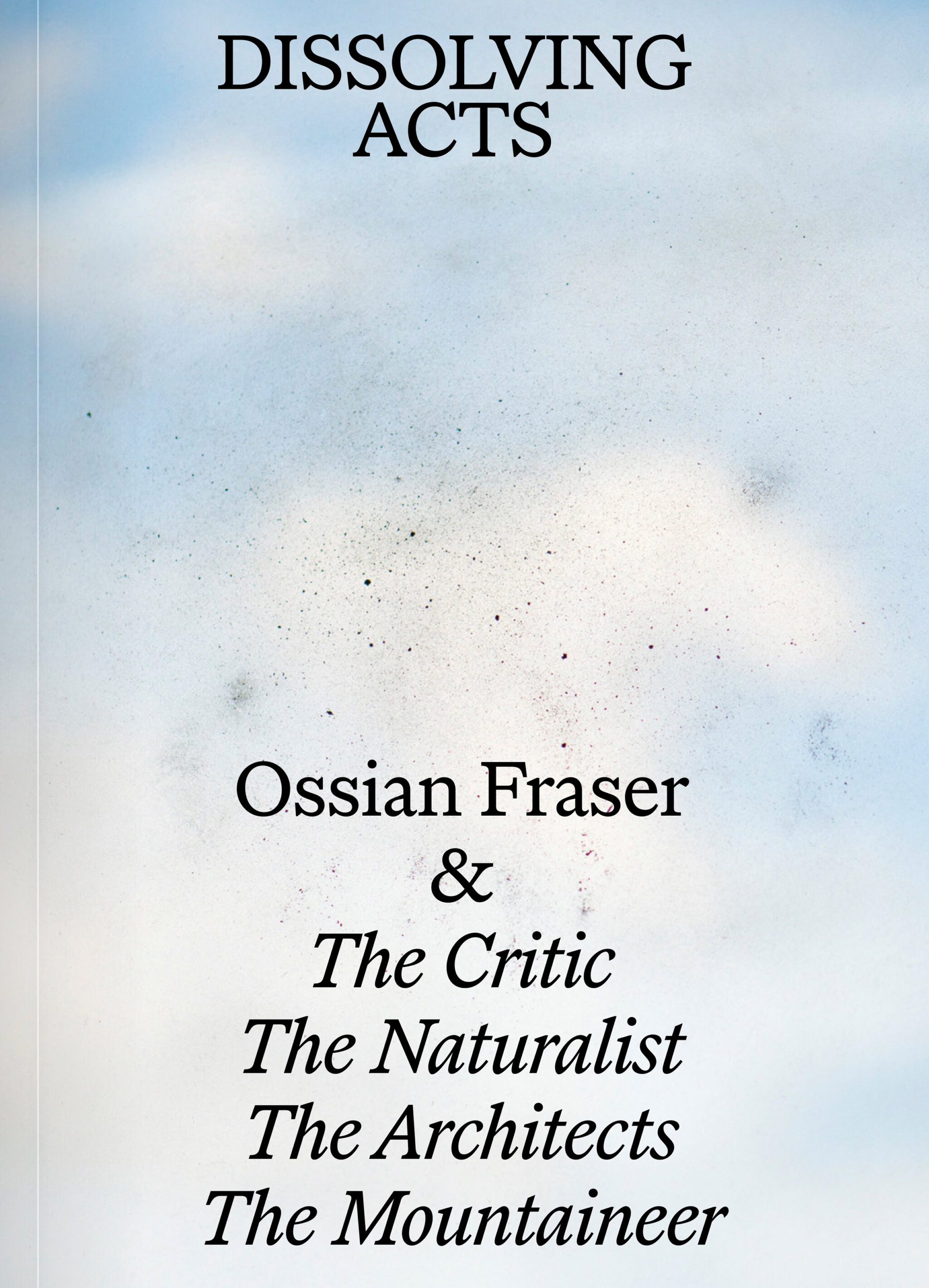
DISSOLVING ACTS38€ Add to cartOssian Fraser (b. Edinburgh, 1983; lives in Munich and Berlin) molds and captures evanescent moments. Working with volatile materials such as water, dust, or light, the artist exposes the latent potentials of unremarkable situations in the urban fabric and natural scenes. A tunnel in a city, a rock face in the mountains become points of departure and elementary components of his site-specific interventions, which he records in photographs. The book is the first to offer comprehensive insight into Fraser’s artistic practice. Series of pictures showcasing his conceptual and poetic pieces alternate with conversations that not only demarcate the framework in which his art operates, but also touch on the great issues of our time.
Ossian Fraser studied fine arts and sculpture at the Alanus University of Arts and Social Sciences, Bonn, from 2006 until 2009 and at the Weißensee Kunsthochschule, Berlin, from 2009 until 2013, rounding out his education in Albrecht Schäfer’s master class in 2013–2014.