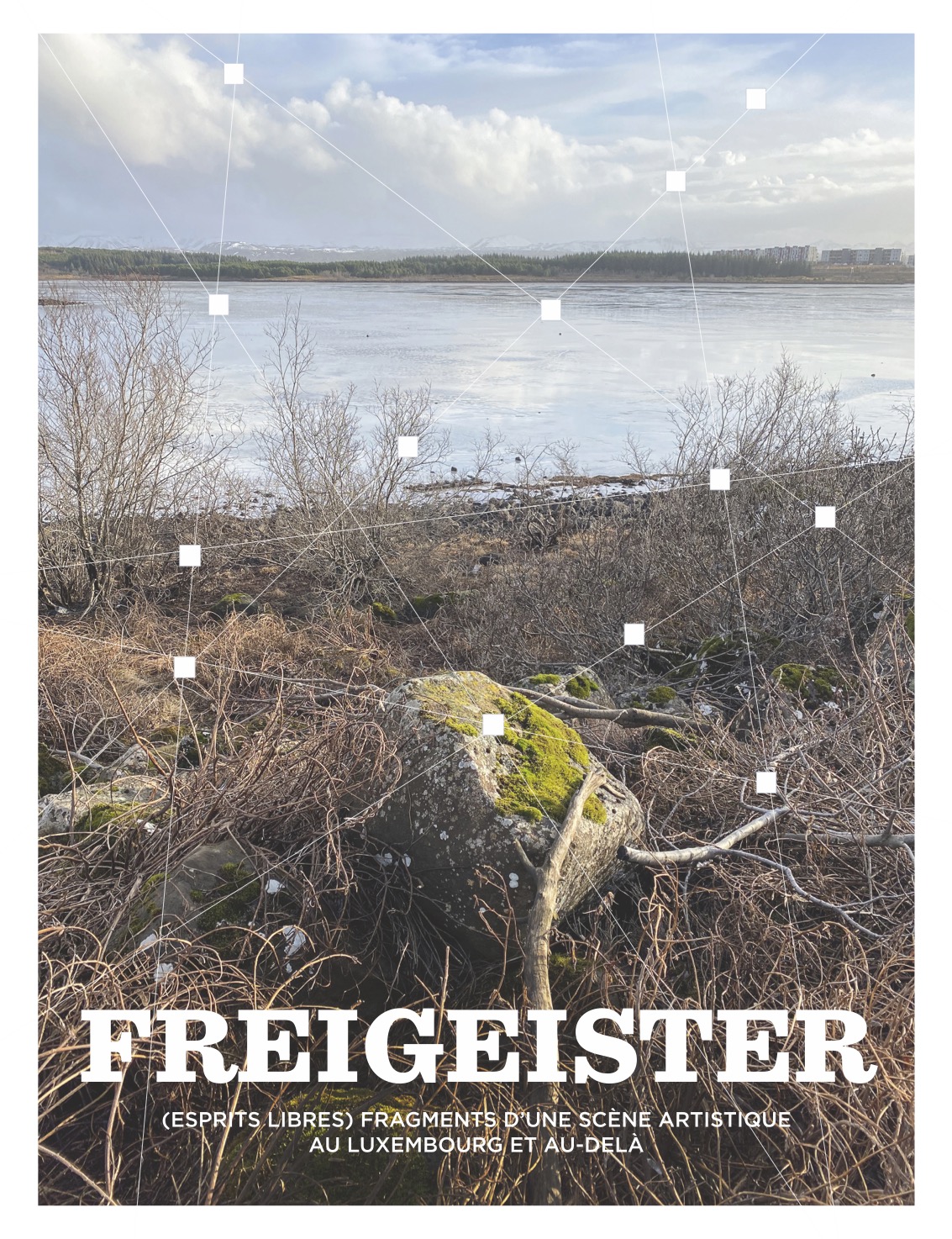
FREIGEISTER
FRAGMENTS OF AN ART SCENE IN LUXEMBOURG AND BEYOND
 | |
|---|---|
| Editor(s) | Sarah Beaumont, Marie-Noëlle Farcy, Christophe Gallois, Clément Minighetti |
| Author(s) | Jean Portante, Nathalie Roelens, Carole Schmit, François Thiry, Valérie Tholl, Sarah Beaumont, Marie-Noëlle Farcy, Christophe Gallois, Clément Minighetti, Magali Nachtergael, |
| Design | Florence Richard |
| Cover | Softcover |
| Size | 20 x 26 cm |
| Pages | 256 |
| Illustrations | 150 |
| Language(s) | English, French |
| ISBN | 978-3-96912-065-1 |
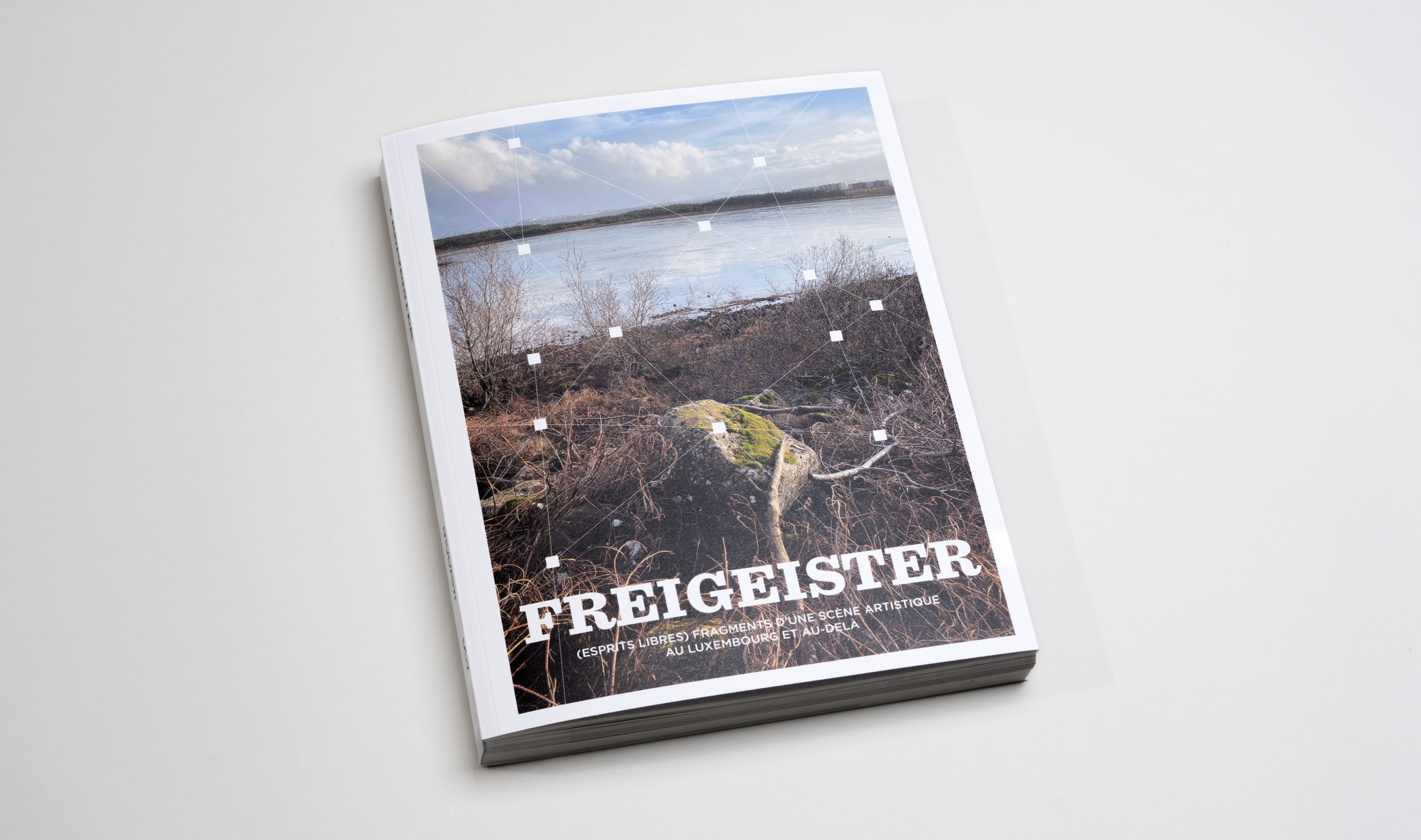
Thinking Otherwise—the Mudam in Luxembourg at Fifteen
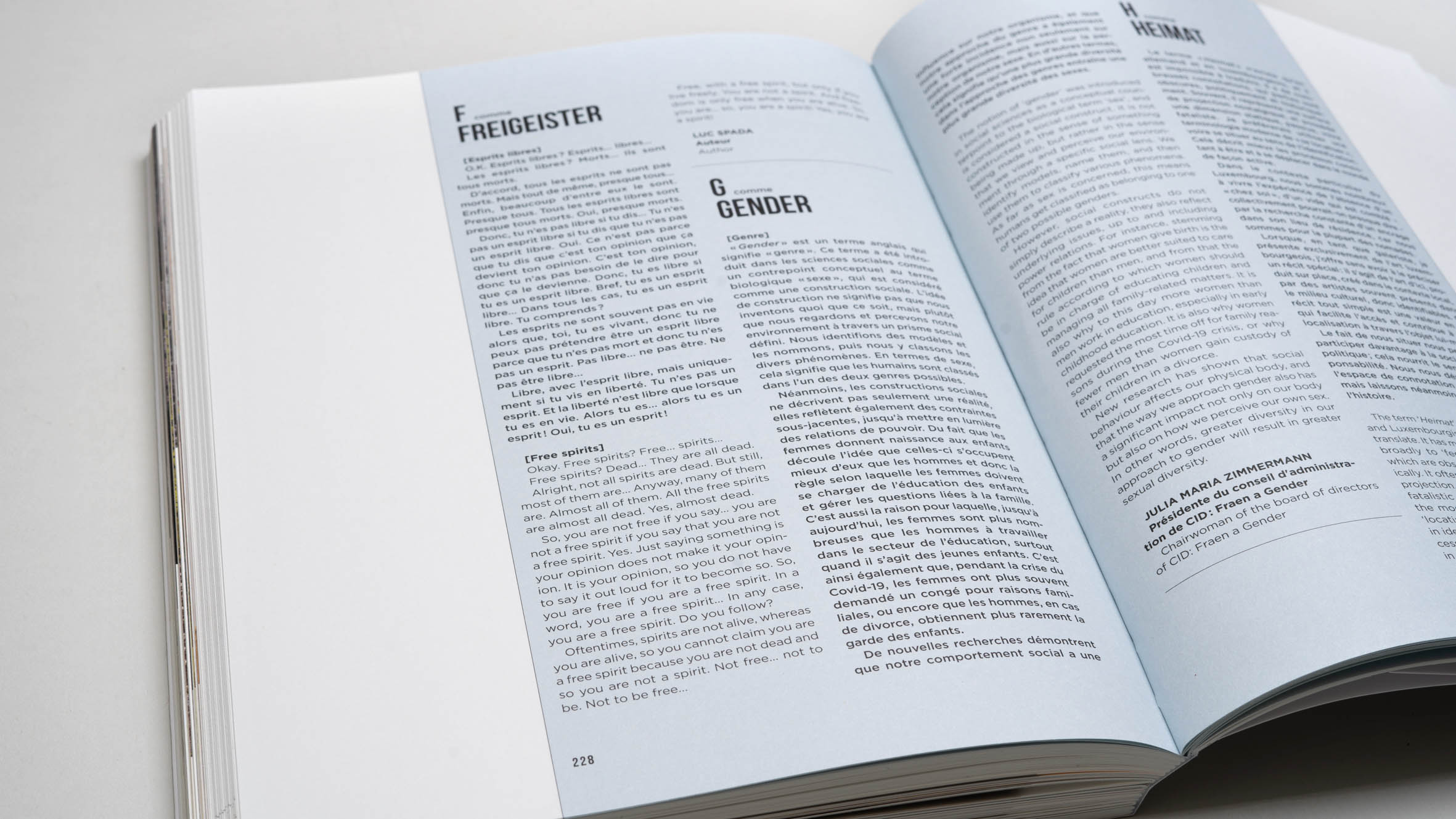
A free spirit, Friedrich Nietzsche wrote, is someone who “thinks otherwise than is expected of him in consideration of his origin, surroundings, position, and office, or by reason of the prevailing contemporary views” (Human, All Too Human,1878). As the German philosopher saw it, one must seek to become “untimely” and remain a “stranger” to one’s time in order to question its premises. This view to states of alienation unites the positions of fourteen young Luxembourgish artists in Freigeister, the publication accompanying the celebrations on occasion of the fifteenth anniversary of the Musée d’Art Moderne Grand-Duc Jean.
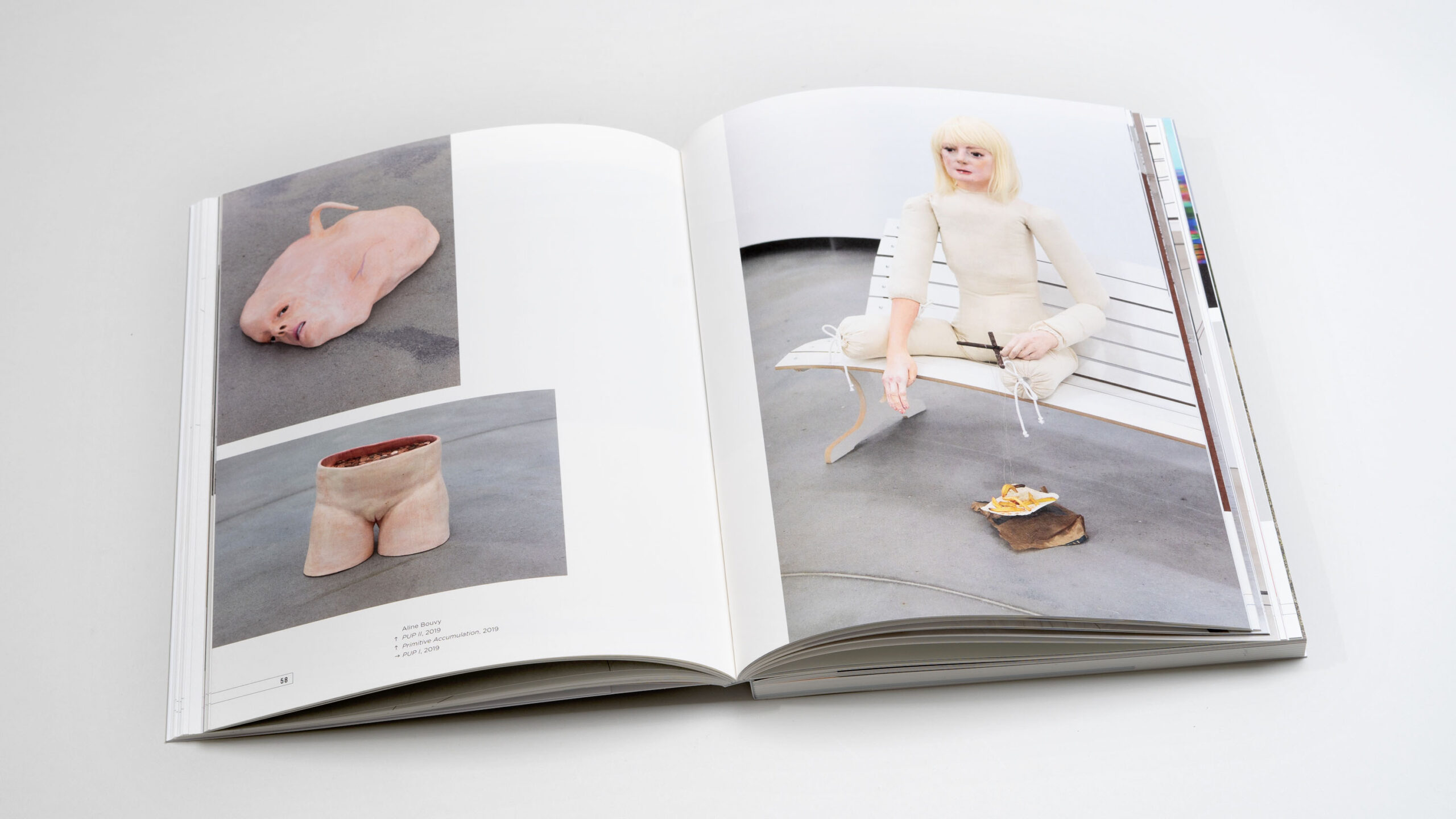
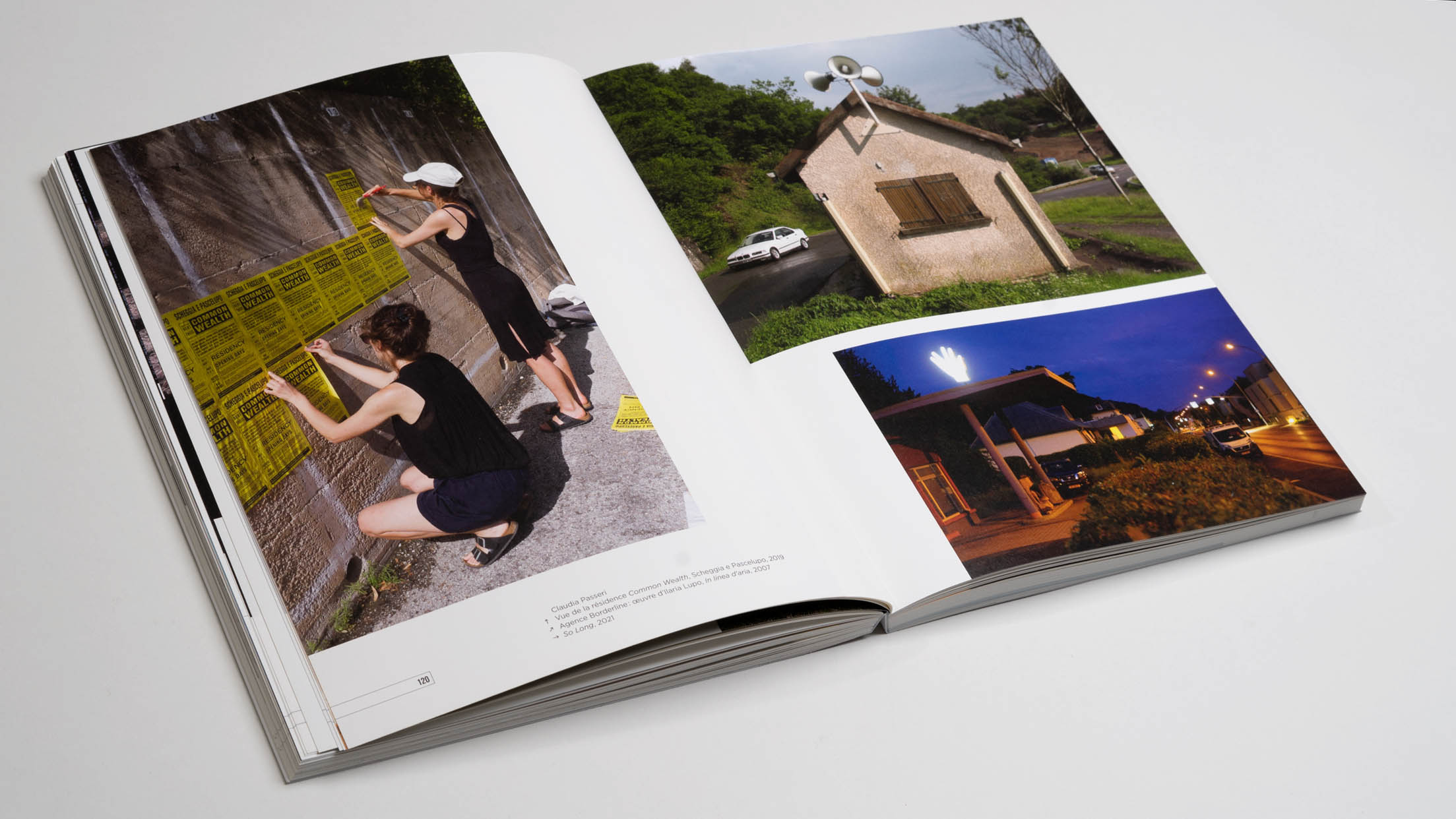
In recent years, Luxembourg’s art scene has grappled in a wide variety of ways with the challenges that come with the small yet economically successful country’s ongoing transformation. Charting realities between the familiar and the unknown, the artists featured in Freigeister employ photography, painting, and installation as well as film, sculpture, printmaking, and performance art to paint a carefully considered but by no means dispassionate portrait of today’s society in an effort to build bridges between identity and the future.
The book presents works by Yann Annicchiarico, Laurianne Bixhain, Aline Bouvy, Marco Godinho, Sophie Jung, Catherine Lorent, Filip Markiewicz, Karolina Markiewicz & Pascal Piron, Claudia Passeri, Daniel Reuter, Nina Tomàs, Daniel Wagener, and Jeff Weber.
More books
-

André Butzer
Miettinen Collection30€ Add to cartAndré Butzer (b. Stuttgart, 1973; lives in Berlin) rose to renown with pictures he describes as “science fiction expressionism” and iconic characters like the “Peace Siemense,” the “Men of Shame,” or the “Woman” as well as seemingly abstract compositions. Artistic predecessors he admires and emulates include Walt Disney, Edvard Munch, Henri Matisse, Friedrich Hölderlin, and Henry Ford. Butzer’s utopian artistic vision is anchored in the fictional place “NASAHEIM”, a kind of pilgrimage destination in outer space. Yet his paintings should not be mistaken for illustrations of narrative structures; they articulate something that could not be said before. Similes of a sort, they embody the forever recurring extremes of history as emblems of human existence.
André Butzer briefly studied at the Merz Akademie, Stuttgart, before enrolling at the Hamburg University of Fine Arts (HFBK), from which he was expelled after two semesters in 1996. He went on to found the autonomous and anti-institutional Akademie Isotrop (1996–2000), where over twenty artists including Markus Selg, Jonathan Meese, and, in loose association, John Bock trained one another. In 2001, Butzer teamed up with Björn Dahlem to establish the Institute for SDI Dream Research.
-

Roland Schappert
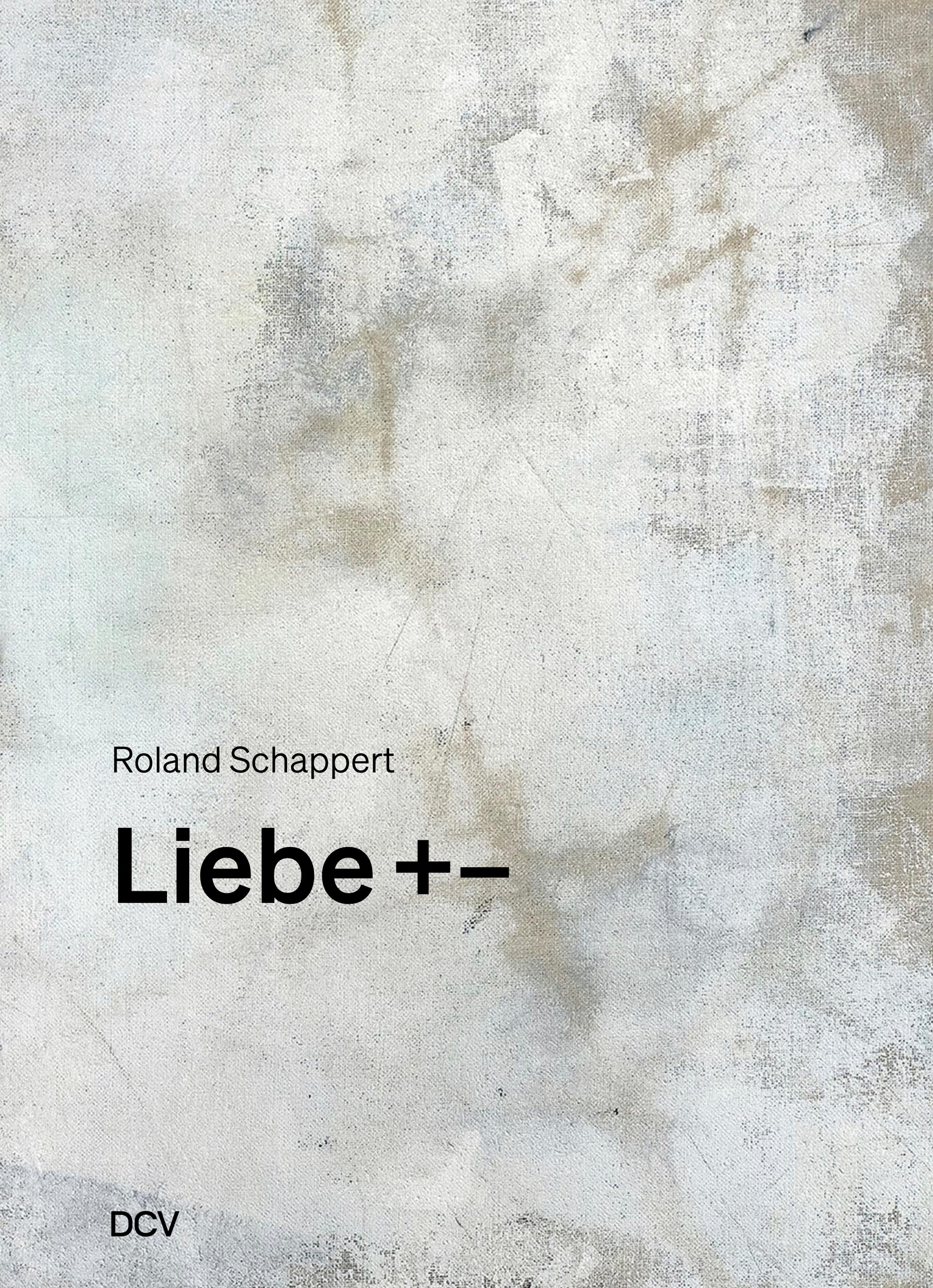
Liebe +–24€ Add to cartRoland Schappert’s Liebe+– is a poetic voyage into the mysterious and paradoxical landscapes of love. Combining an unrelenting eye with lyrical precision, Schappert captures the fragile equilibrium between intimacy and distance, between the longing for union and the need for detachment. The +– in the title is a symbolic shorthand for the ambivalence of love: attraction and repulsion, delight and pain, their constant interplay defining the dynamic of love.
The terse and sometimes aphoristic writings enter into a dialogue with the author’s artful and enigmatic pictures and sculptures—text images sewn out of strings of beads or painted in Champagne chalk that subtly mirror and refract the emotional tension of the poems. Nimbly balancing on the fine line between devotion and disaffection, Schappert’s verses are interspersed with ironic allusions to our digital and urban contemporary world.
By forging a symbiosis of poetry and image, this artist’s book charts a world unto itself in which the boundaries between I and you blur and subject and object are fused in a collective we. It invites us to contemplate love with a fresh eye—as tender touch and fractious idea, as a play of expectation and disappointment that we begin anew every day.
‘Love in the age of social media and dating apps, but not from a Gen Z perspective – but from someone who has known this feeling for much longer. And who brings his experiences – which are certainly representative of many – in ever new combinations of text and images into a form that makes reading and viewing a memorable experience.’ – Wolfgang Ullrich
-

Karlheinz Bux
über Linie …15€ Add to cartClarity, Complexity, and Linearity
The defining artistic means in the work of Karlheinz Bux (b. 1952 in Ulm, lives and works in Karlsruhe) is the line. As edges and folds, they determine vertically oriented sculptures, which simultaneously convey compactness and openness, dynamism and repose. In Bux’s pencil drawings and photo-based works, they form the subject of the image in the form of complex linear structures. This present book documents the artist’s large-format works and provides insight into his oeuvre, with texts by Michael Hübl, Christine Reeh-Peters, and Carmela Thiele.
Karlheinz Bux studied at the State Academy of Fine Arts Karlsruhe and taught as a lecturer at Pforzheim University and as a visiting professor at the Mainz University of Applied Sciences. His works are represented in private and public collections, including the Staatliche Kunsthalle Karlsruhe, the Hurrle Collection, and the Würth Collection.
-

Kensise Anders
10€ Add to cartKensise Anders’s work grapples with the reality of Black people’s lives. Born in Haiti, she was adopted by a German family when she was two. After a difficult childhood, with stints in a psychiatric institution and a boarding school, she eventually found art as a medium that lets her work through her experiences. She uses the crochet needle to create masks with which she ironically appropriates white identities and play carpets that show the world of her childhood—apartment blocks, streets; the “hole,” as she calls this environment. She also arranges crocheted threads on the canvas as though they were brushstrokes. One series of pictures is dedicated to a Black doll; another, to naked female bodies, including the artist’s own, with references to Courbet’s L’Origine du monde (1866). The works are acts of resistance to the prudishness of whites. Black dolls became popular in this country during the colonial era and never quite went away, like the racism in our society and in our heads. Anders’s weapon against that racism is the crochet needle, which she wields patiently and with flair as well as the necessary radicalism.
-
Emmanuel Bornstein / Lotte Laserstein
Pensée20€ Add to cartHow do artists’ identities and the histories of their families influence their art? Where might a creative affinity sustained by a legacy of trauma take an artist? Lotte Laserstein (1898–1993) and Emmanuel Bornstein (b. 1986) are connected by such a bond, tied by Bornstein’s grandmother, a Résistance fighter and, like Lotte Laserstein, a Jew who survived the Nazis. Bornstein discovered Laserstein’s works by coincidence and without knowing of this connection, and he was fascinated right away: “It was actually what I’d been trying to make for years!” There are in fact parallels between their oeuvres—both feature people who are waiting and flower bouquets, and a melancholy aspect and a subtle menace can be felt in both. Yet there are also discrepancies, and the dialogue between their works would be far less inspiring without them: Bornstein’s omnipresent toxic cadmium, which contrasts with Laserstein’s muted tones; the paint application; the brushwork. What the artists have in common, in any case, is that Sweden became their abode in times of danger and painting, their only true home. This catalog celebrates their creative homecoming.
-
ELMGREEN & DRAGSET
READ48€ Add to cartThroughout their careers, the artist duo Elmgreen & Dragset (Michael Elmgreen, b. Copenhagen, Denmark, 1961, and Ingar Dragset, b. Trondheim, Norway, 1969, live and work in Berlin) have eschewed the traditional “White Cube” exhibition format by creating large-scale installations and staging narrative situations in which autobiographical quotes blend with fictional stories and cultural references.
For the solo exhibition READ, Elmgreen & Dragset have transformed Kunsthalle Praha into a minimalist version of a modern public library to prompt reflections on our relationship with physical books and knowledge in the age of digital media. With new works by Elmgreen & Dragset as well as performances, videos, collages, paintings, and sculptures by other artists, READ also probes the relation between books and the making of art.
This richly illustrated publication documents the dynamic interaction between language, books, and art. With contributions from renowned scholars and a curatorial text by Elmgreen & Dragset.
- Release November 2022

X x X
Semjon Contemporary50€ Add to cartFounded by Semjon H. N. Semjon in 2011, the gallery Semjon Contemporary has built a distinctive and singular profile that has earned it an unrivaled position in the art world. It represents international positions in contemporary art that, their divergences notwithstanding, are united by the extraordinary intelligence of their engagement with the material. The result is an unmistakable visual language that permits of no modification of established choices. Despite the considerable differences of material, technique, and expression, the artists’ works enter into dialogue with one another, as parallel solo presentations and special exhibitions showcasing numerous visiting artists have demonstrated.
The book features Colin Ardley, Edward L. Buchanan, Takayuki Daikoku, Dittmar Danner aka Krüger, Ute Essig, Experimental Setup (Kata Hinterlechner and Bosko Gastager’s collective moniker), Katja Flint, Andreas Fux, Dave Grossmann, Renate Hampke, Marc von der Hocht, Nataly Hocke, Michael Kutschbach, Henrik U. Müller, Cornelia Nagel, Susanne Knaack, Katja Kollowa, Susanne Pomrehn, Thomas Prochnow, Dirk Rathke, Ursula Sax, Gerda Schütte, Gil Shachar, Li Silberberg, Karina Spechter, Klaus Steinmann, Stefan Thiel, Hitomi Uchikura, Royden Watson, and Bettina Weiß in dedicated chapters. It is rounded out by statements from collectors including Thomas Lenhart, Cornelie Kunkat, Gabriele Quandt, Roland Schnell, Nobert Fuhr and Klaus Werner, Roswitha and Jürgen König, and Helmut Ließ. Remarks by art critics and scholars and an interview with Semjon by Jan Maruhn provide additional insight into the gallery’s work.
-

Roland Schappert & Wolfgang Ullrich
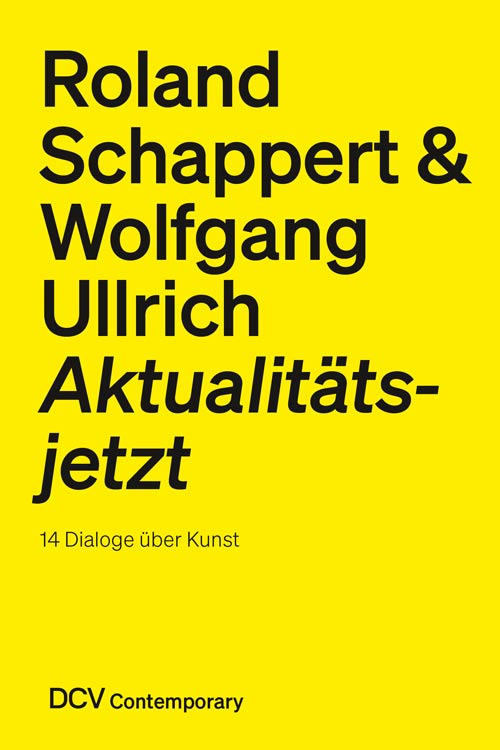
Aktualitätsjetzt16€ Add to cartPhilistinism, climate change, legitimation discourses—in a tour de force sustained by profound knowledge of the phenomena in question, AKTUALITÄTSJETZT blazes trails through the jungle of contemporary art and its current debates. Over the course of two years, the art scholar and author Wolfgang Ullrich initiated 14 dialogues on Schappert’s word paintings, murals, and interventions. Their distinctive formal features and conceptual and substantial dimensions inspired illuminating conversations that range far beyond the specific works to explore today’s art world and questions of the philosophy of art and the sociology of culture. The best volume of dialogues on art since David Sylvester’s interviews with Francis Bacon.
-

Adrian Schiess
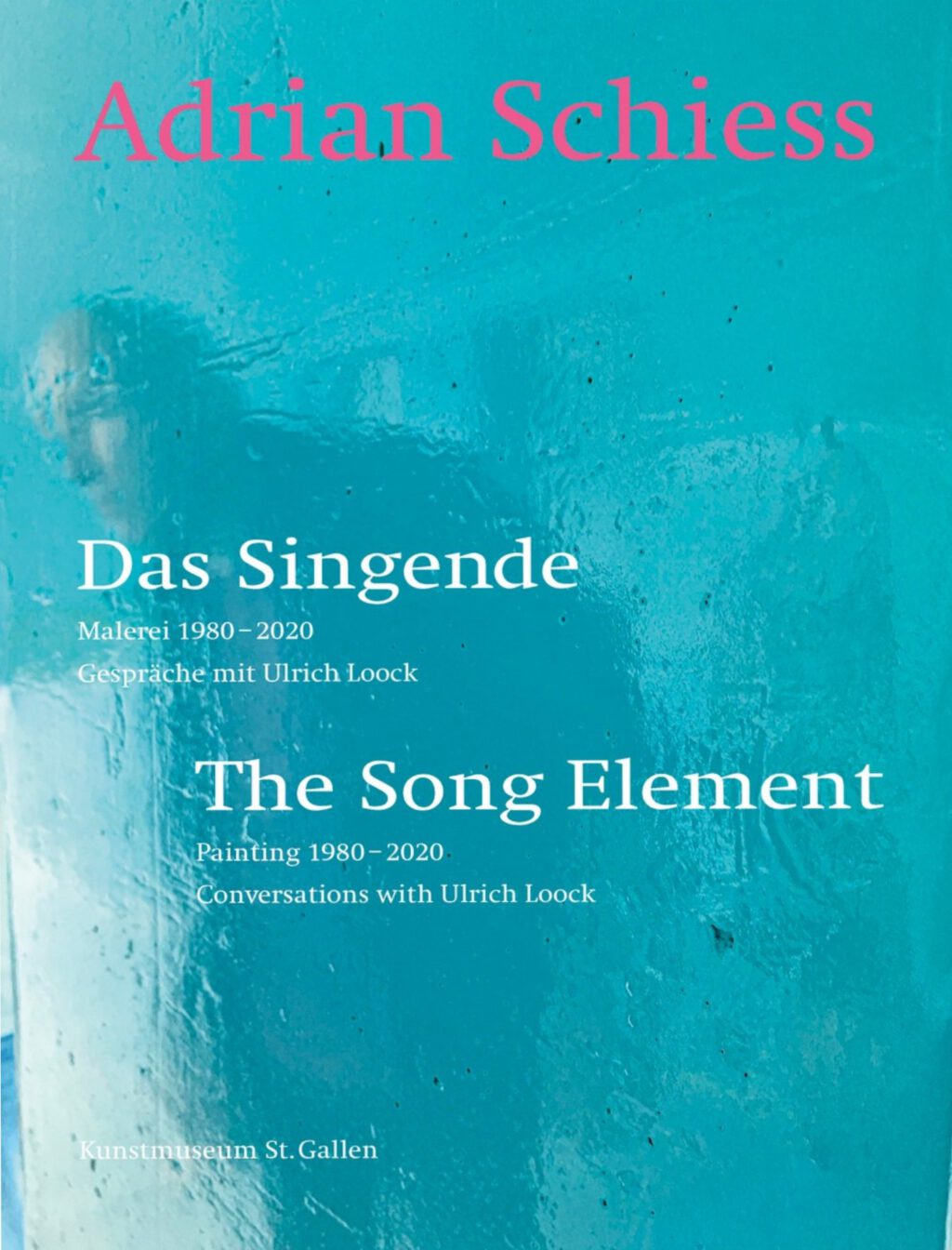
The Song Element68€ Add to cartThe Renowned Swiss Artist and His Work in Its Architectural Setting
Smoothly painted panels laid out on the floor have earned Adrian Schiess (b. 1959, Zurich; lives and works in Mouans-Sartoux, France) international renown. His objects, which may be placed in a room as desired, are conceived as platforms of creative engagement with the appearance and disappearance of painting. They have become integral components of buildings by world-famous architects including Norman Foster and Herzog & de Meuron. For this book, Schiess has compiled spectacular series of photographs and extensive conversations that probe the peculiar quality of his work: hybrid and fluctuating and yet always utterly distinctive. It is the first publication to put the focus on this essential aspect of his output, documenting works created between 1993 and 2018.
Adrian Schiess studied at the Kunstgewerbeschule Zürich and trained as a graphic designer. His works were on display at the 44th Biennale di Venezia and at documenta IX.
-

Etsu Egami
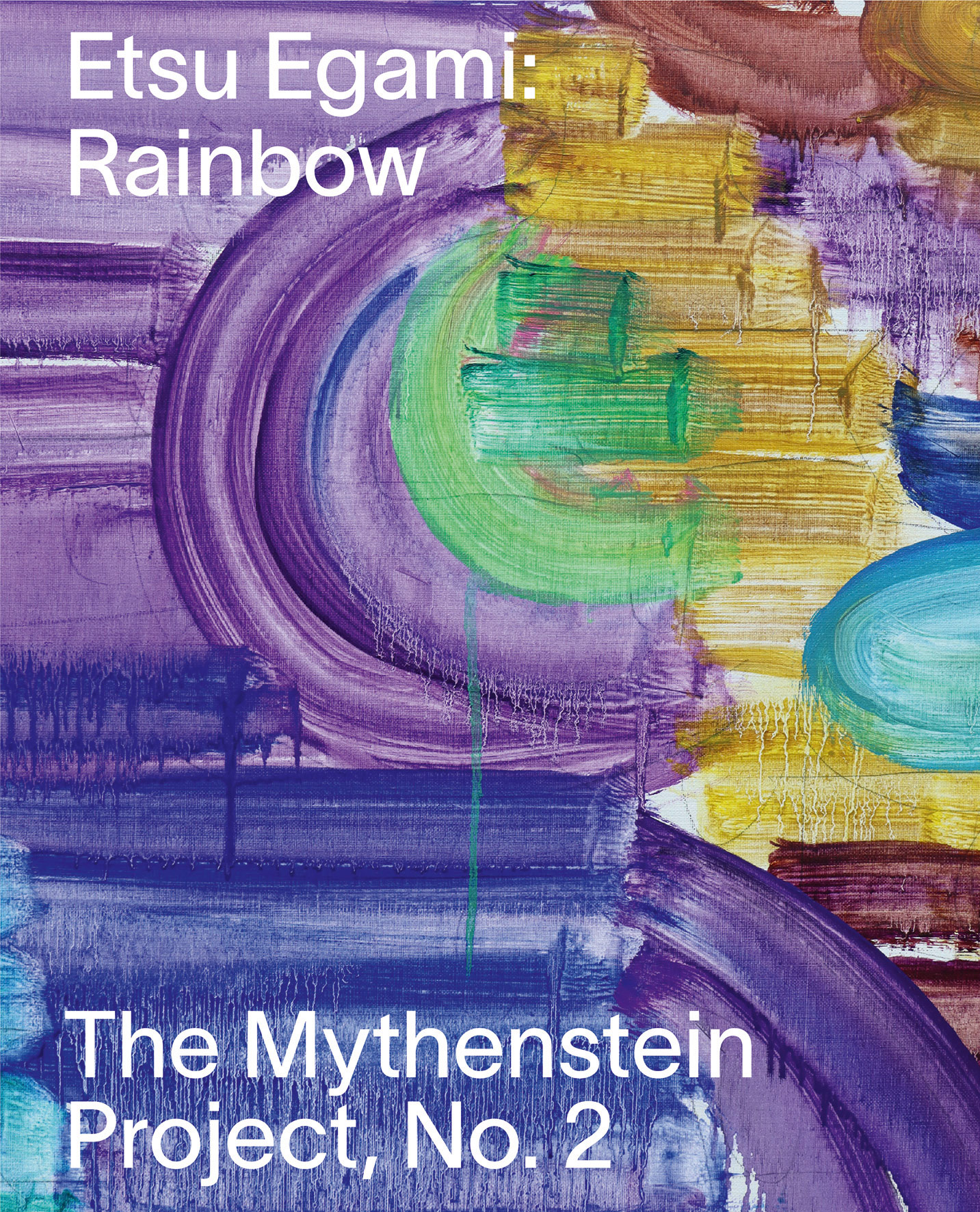
Rainbow18€ Add to cartWhat is worth talking about in art eludes language. Aesthetic experience is without words, like a human encounter that touches upon our innermost being. Etsu Egami is interested in the margins of understanding, where the communication of ideas and feelings threatens to fail, where forms become illegible. That is the point on which she homes in with her brush, which she wields in a rough calligraphic style, putting almost translucent oil paints on the canvas. Spectral faces emerge that dissolve into abstraction; abstract forms, beheld from the corner of one’s eye, momentarily coalesce into a likeness. Painting, to Egami, is a physical and performative act, the brush an extension of her arm, bringing a picture into being in sweeping rhythmical motions. As we contemplate her work, that momentum imparts itself to us: first our eyes begin to wander, then we feel our bodies stir, and finally the spirit, too, pulsates in the rhythm of the brush. Gathering Egami’s most outstanding works, this catalogue is a universal invitation to join a peculiar dance, an arc of light the artist traces across all barriers to understanding and that speaks to our senses.
-
Clemens Krauss
Antidot | Gegengift40€ Add to cartClemens Krauss restlessly shuttles across history; his vehicles are painting, video art, sculpture, and performance. Yet Krauss is not “just” an artist, he is also a psychoanalyst and physician. As such, he has first-hand experience of time as the defining factor of existence, daring him to play with it. The bosom of painting is where he feels safest after his hazardous excursions back into his youth and forward into death. Executed in thick paints, his work is physical, material, which is also to say, it exists in time: everything passes away, even the picture. Evanescent, more than anything, are encounters of the sort Krauss stages as part of his psychoanalytical practice; all that remains is the indelible impression they leave. To be indelible, to recall the past, while also “letting happen what has never happened,” as he puts it, these are the ambitions he pursues in his art. Preserved between the covers of the present catalogue and reproduced in thousands of copies, his works now fan out in an instant to circulate for an indeterminate period of time among countless hands, whence they will effortlessly penetrate the barriers of our inner lives to bring us one step closer to transcendence.
-

Cudelice Brazelton IV
Mortal Surface35€ Add to cartCudelice Brazelton IV’s works are magnets. He uses them to glean what he finds in the urban landscape, in the street, in factories and studios: fabric, leather, metal, cardboard, and all sorts of implements. He arranges these materials and things atop one another and side by side in collages, assemblages, and sculptures, staging encounters also between the contexts in which they originated and what he calls their “undercurrents,” their subtexts. Such frames of reference, including that of the exhibition space, play a key role in his art, an aspect he will occasionally engage quite explicitly, creating site-specific works for some settings. This makes the space the context and a part of the piece, sometimes physically so, as when Brazelton works directly on the walls. The recent works gathered in this catalogue were displayed in a former railcar repair workshop. It is hard to imagine a more industrial, “metallic” environment. There, as between the covers of this catalogue, Brazelton’s works appear to their fullest advantage, becoming veritable magnets drawing the gaze.
-

Jürgen Claus
To the Oceans with Imagination18€ Add to cartThe Sea as a Space of Artistic Experience
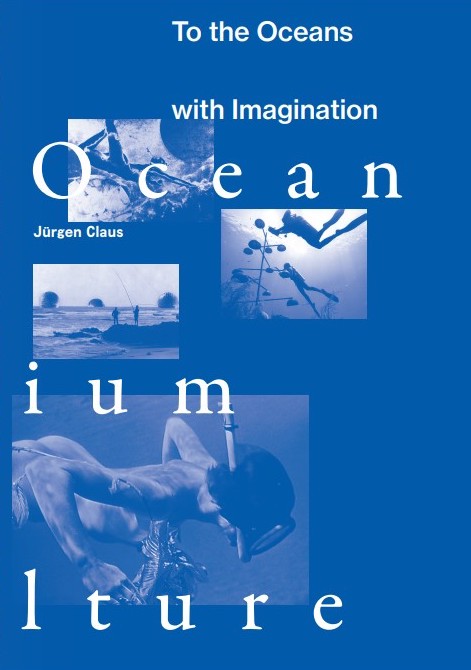
Jürgen Claus’s (b. 1935, Berlin; lives and works in Aachen and Baelen, Belgium) oeuvre encompasses paintings, films, light and solar installations, and underwater art. He is also a prolific writer on art, with theoretical works that have sold over 100,000 copies. “Jürgen Claus is the first one to see the ocean through an artist’s rather than a scientist’s lens,” Michel Ragon writes. In this book, Claus intertwines his experiences working on the fascinating underwater installations with a pressing contemporary concern: the global efforts to restore the seas to health. The publication combines visual art, architecture, poetry, and music for a multifaceted engagement with the world’s oceans.
Jürgen Claus majored in theater studies at the Universität München and was a research associate at the Massachusetts Institute of Technology (MIT) and professor of media art at the Kunsthochschule für Medien Köln, Cologne.
- English edition not available anymore

YAEL BARTANA
THE BOOK OF MALKA GERMANIARead moreShe Is Hope. She Is the Leader. She Is the Messiah. She Is History. She Is Fake.
The video artist Yael Bartana (b. Kfar Yehezkel, Israel, 1970; lives and works in Amsterdam and Berlin) makes work that explores the visual language of identity and the politics of commemoration. The critical scrutiny of collective expectations of political or religious salvation is a central concern in her art. In the video installation Malka Germania—Hebrew for “Queen Germany”—Bartana creates alternative realities from the German-Jewish past and present that bring scenes of the collective unconscious to light. The publication follows the epiphany of Malka Germania, a female redeemer figure, in five chapters whose layout is modeled on that of the Talmud, the central text in Rabbinical Judaism. This organization reflects the polyphonic complexity, rich nuance, and ambivalence that the work casts into visuals and underscores that there is no simple answer. The book includes an interview with the artist and contributions by Sami Berdugo, Christina von Braun, Michael Brenner, Max Czollek, and others. It is published on occasion of the exhibition Yael Bartana—Redemption Now at the Jewish Museum Berlin.
Yael Bartana studied at the Bezalel Academy of Arts and Design, Jerusalem, the School of Visual Arts, New York, and the Rijksakademie van beeldende kunsten, Amsterdam. Her work is held by collections all over the world and has been presented in solo exhibitions at venues including the Stedelijk Museum, Amsterdam, the Pérez Art Museum Miami, and the Moderna Museet, Malmö.
Click here for the German edition.
-
GOTT&GILZ
Supernatural Beings54€ Add to cartGOTT&GILZ clothe provocative nudity into the guise of art-historical classics
The female nude is a constant of art history whose vicissitudes illustrate changing forms of representation and the wild swings of public morality. Many a nude was initially condemned as smut only to be reclassified a few years later as beautiful and becoming and inducted into the hallowed halls (the opposite has also happened). GOTT&GILZ’s photographic paintings build on this long tradition of depictions of naked women by men—theirs is the proverbial “male gaze.” It is a debt they are quick to acknowledge, with nods to Klimt, Schiele, Pollock, et al. No wonder some have responded to their work with kneejerk indignation. Unlike in those art-historical references, then, the impudence lies not in the shattering of traditional norms of representation but in quoting them: the past as affront. The women in the pictures as well as the artists themselves flaunt their desires, shamelessly and relentlessly confronting us with the historic roots of our social and psychological realities.
Freedom is the key idea in the two artists’ oeuvre: the freedom to be authentic and express oneself without shame. Their subtly provocative play with aesthetic conventions and taboos has not only made a splash on the arts scene, it has also prompted vital discussions about gender roles, body images, and the right to sexual self-determination.
By letting it all hang out, they allow us to see ourselves as we are instead of presenting a picture of what we (supposedly) should be like. The insolence of it!
-

Jan Zöller
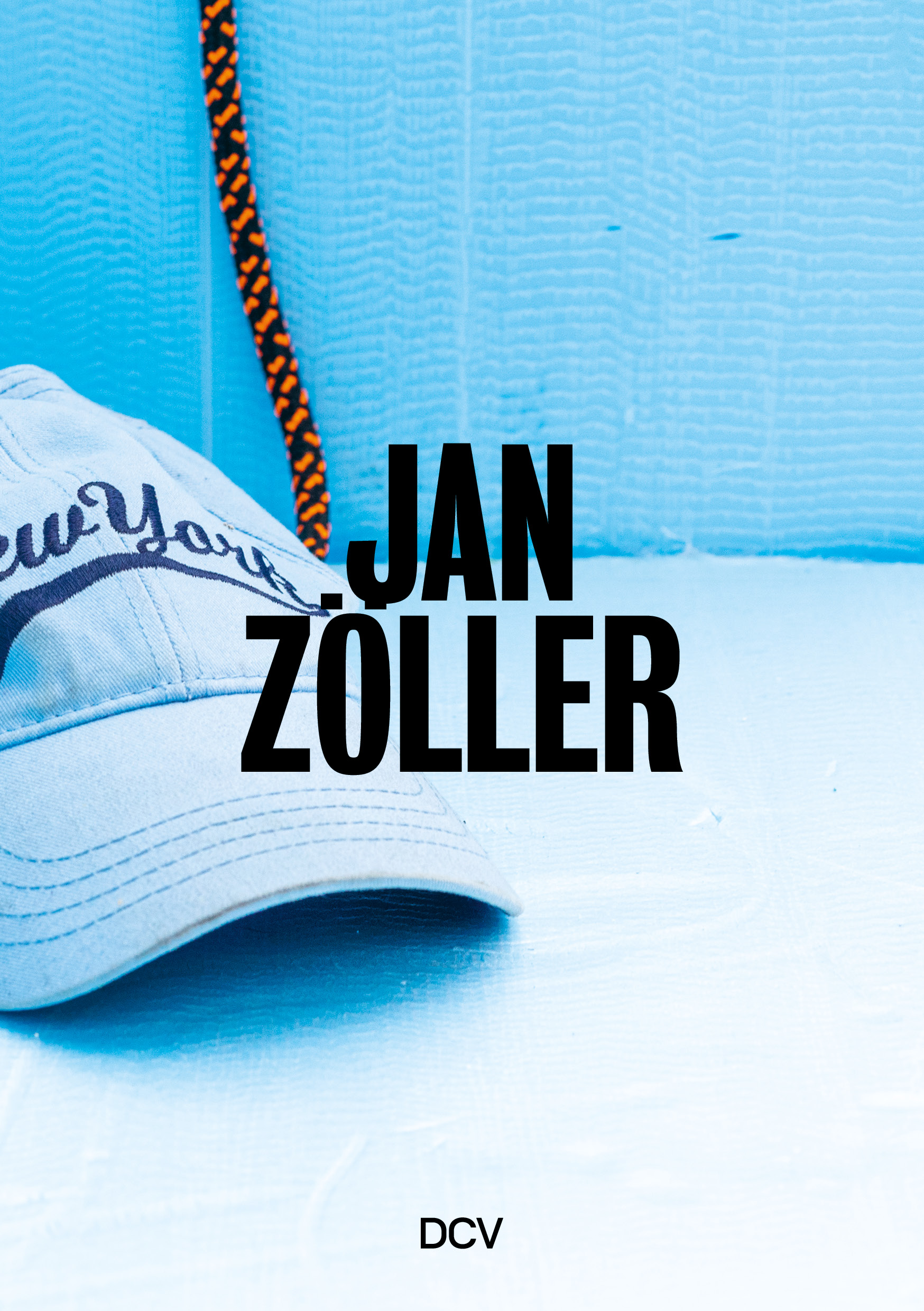
10€ Add to cartJan Zöller’s (b. Haslach, 1992; lives and works in Karlsruhe) art has the aura of a jerry-rigged, cosmic, comedic theater. Flames gutter, pant legs and elbows dance, run, and go up in fire. Wells, basins, and tubs are central motifs, symbolizing communal settings, but also the circulation of vital energies, of human and economic interconnections. Zöller’s paintings take fractured or antiquated systems, today’s art world among them, and reforge them into something new. In painting, he reflects on what being an artist means to him, driven by an interest less in a dialogue with art history or other contemporary painters than in the psychosocial relationships and conditions that inform his work. His paintings, sculptures, and installations probe the discrepancy between economic production and the spiritual and magical dimension of art.
-

Thomas Lehnerer
Freies Spiel44€ Add to cartThe function of art in human existence
Throughout his short life, the Munich-based theologian and artist Thomas Lehnerer (1955–1995) did not take the existence of art for granted. In his writings, above all in Methode der Kunst (Methods of Art), he developed a concept of art in the continuation of key texts from the fields of aesthetics, cultural theory, and art history, which can also be found in his own artistic work. The small-format figurative sculptures by Lehnerer, as well as his drawings, watercolors, and early installations, follow theoretical premises and address comprehensive themes of human existence. The present volume documents his examination of human existence, which is deepened by the inclusion of cultural historical figures and idols.
-

Călin Dan
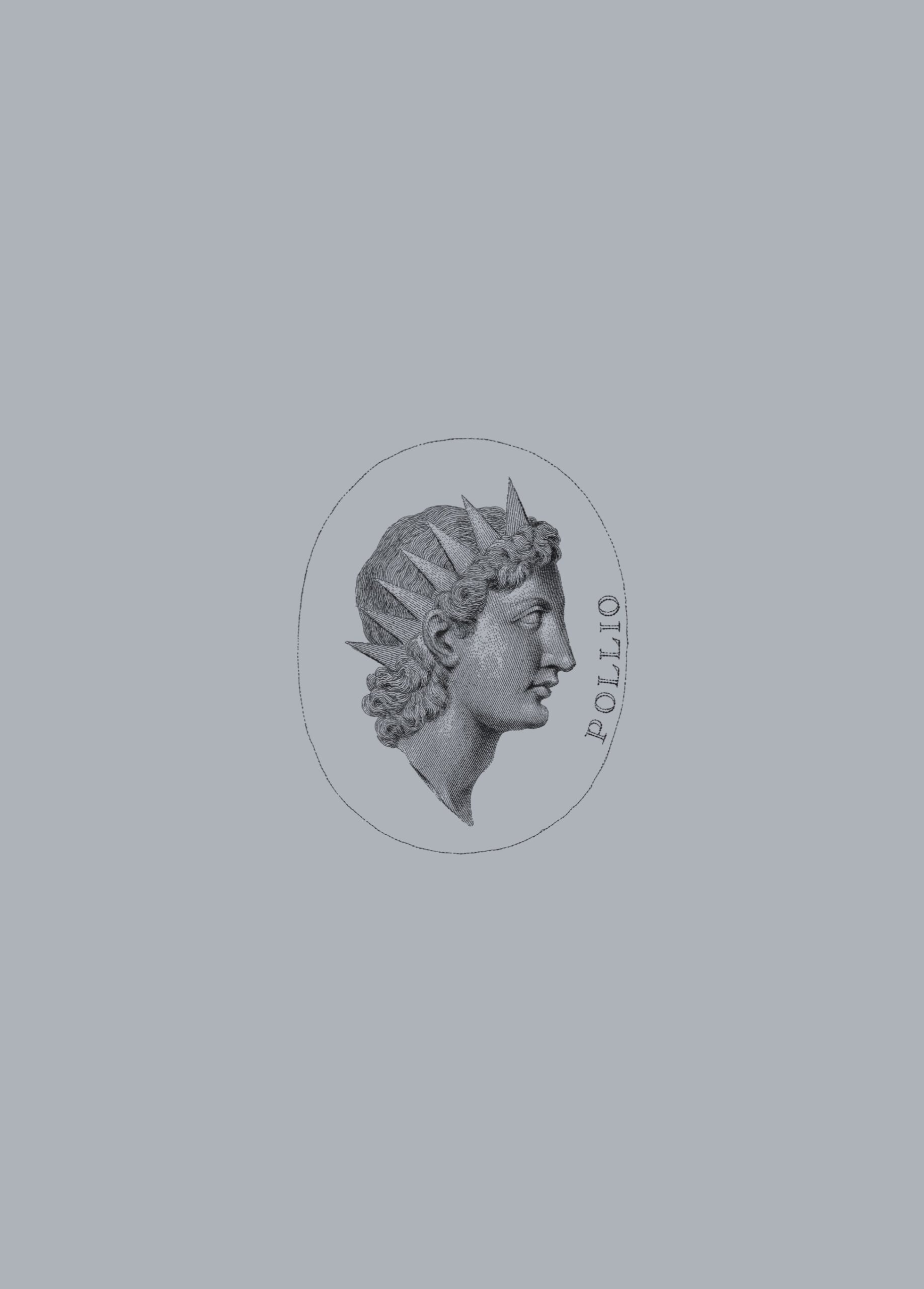
POLLIO34€ Add to cartThe oeuvre of the Romanian artist Călin Dan (b. Arad, Romania, 1955; lives and works in Bucharest) shows the influences of conceptual and minimal art. His book Pollio surveys his creative practice of the past decade, which straddles the media of installation and performance art, film, photography, and sculpture and is enriched by his work as an art historian, writer, and curator. In addition to the titular body of work, which wrestles with the Roman historian Gaius Asinius Pollio, the volume also documents the exhibition Alzheimer (2017). Călin Dan is a founding member of the artists’ group subREAL. His work was showcased at the Istanbul (1993), Venice (1993, 1999, 2001), São Paulo (1994), and Sydney Biennales (2006). He has been director of the National Museum of Contemporary Art (MNAC) in Bucharest since 2014.
-

The Art of Society
1900–194529€ Add to cartThe Collection of the Nationalgalerie, Berlin
The Neue Nationalgalerie in Berlin, the last building designed by Mies van der Rohe, has been closed a full six years for refurbishment. To mark its reopening the museum is presenting the highlights of its classical modernist collection under the title The Art of Society, 1900–1945. Visionary, critical, resigned or utopian, the paintings and sculptures bear witness to art’s dialogue with prevailing social conditions – from the German Empire to the First World War, the Weimar Republic and ultimately National Socialism. The catalogue documenting all works in the exhibition traces the major artistic tendencies during the first half of the 20th century in thirteen chapters. The Art of Society, 1900–1945 offers a renewed encounter with works by Edvard Munch, Ernst Ludwig Kirchner, Tamara de Lempicka, Lotte Laserstein, Otto Dix, George Grosz, Max Beckmann, and many others that is as captivating as it is illuminating.
Click here for the German edition.
-

Simone Demandt
Movers / Beweger38€ Add to cartMotorways are Europe’s lifelines. The products we buy every day arrive on supermarket shelves after traveling along these arteries on the backs of thousands of trucks steered by hard-working drivers. Glancing up into the cabs of their hulking vehicles, we can just barely make out their heads sticking up above the steering wheels. In this overdue volume, Simone Demandt lets us see more of the heroes of the road who confidently posed for her camera. The pictures demonstrate Demandt’s knack for discovering “the intimate in the anonymous and the narrative element in the matter-of-factly” (Matthias Winzen). She has condensed the truckdrivers’ lifeworld into documentary black-and-white shots in which she shows these people as whole persons and individuals—very different from how we perceive them when they’re in the next lane. Movers lets us peek into the cabs through Demandt’s nonjudgmental lens, broadening our horizons hardly less than travelling would and helping us overcome our prejudices about teamsters. If you’ve always wanted to know whom we really have to thank for those never-empty supermarket shelves, you should not miss out on this book.