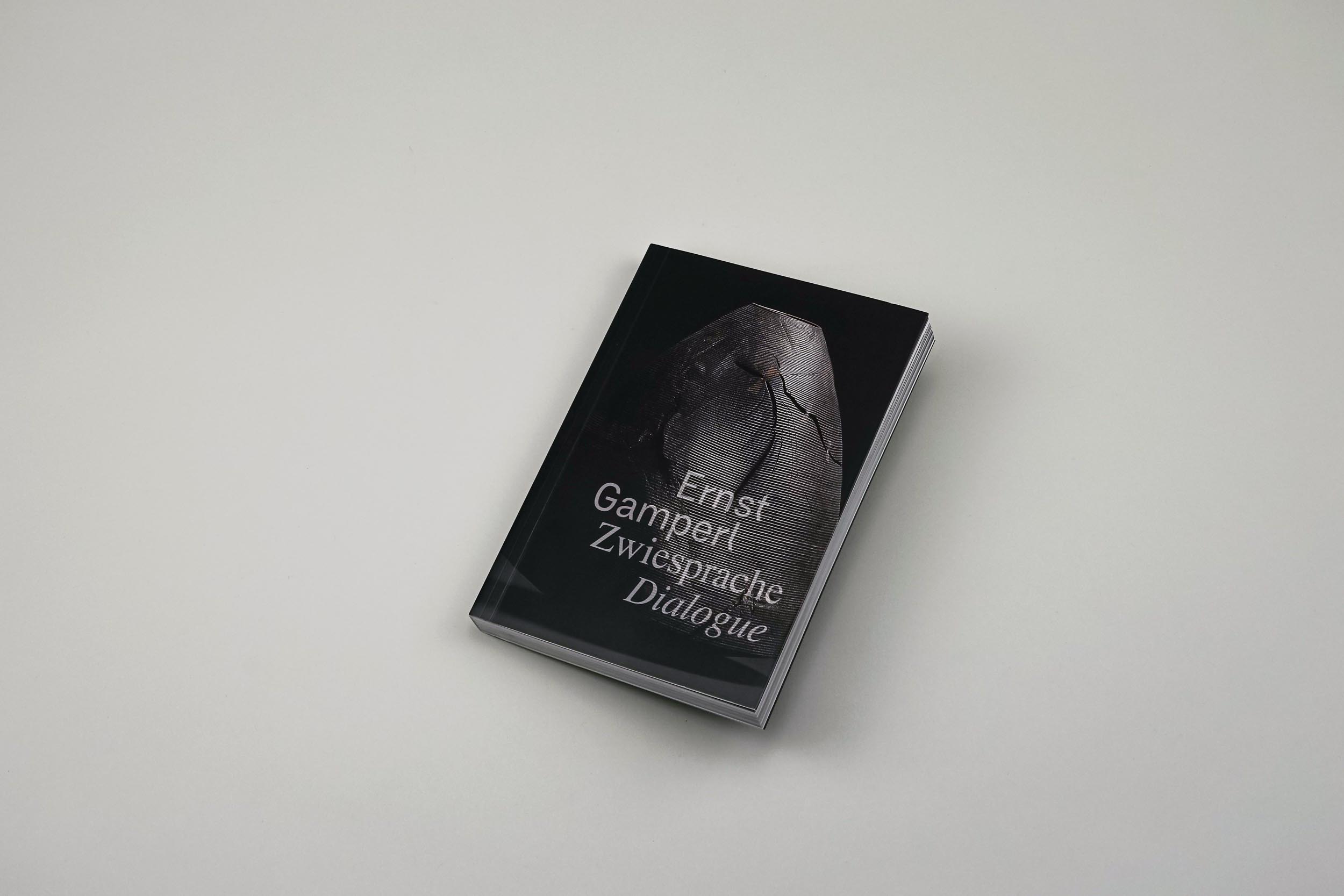
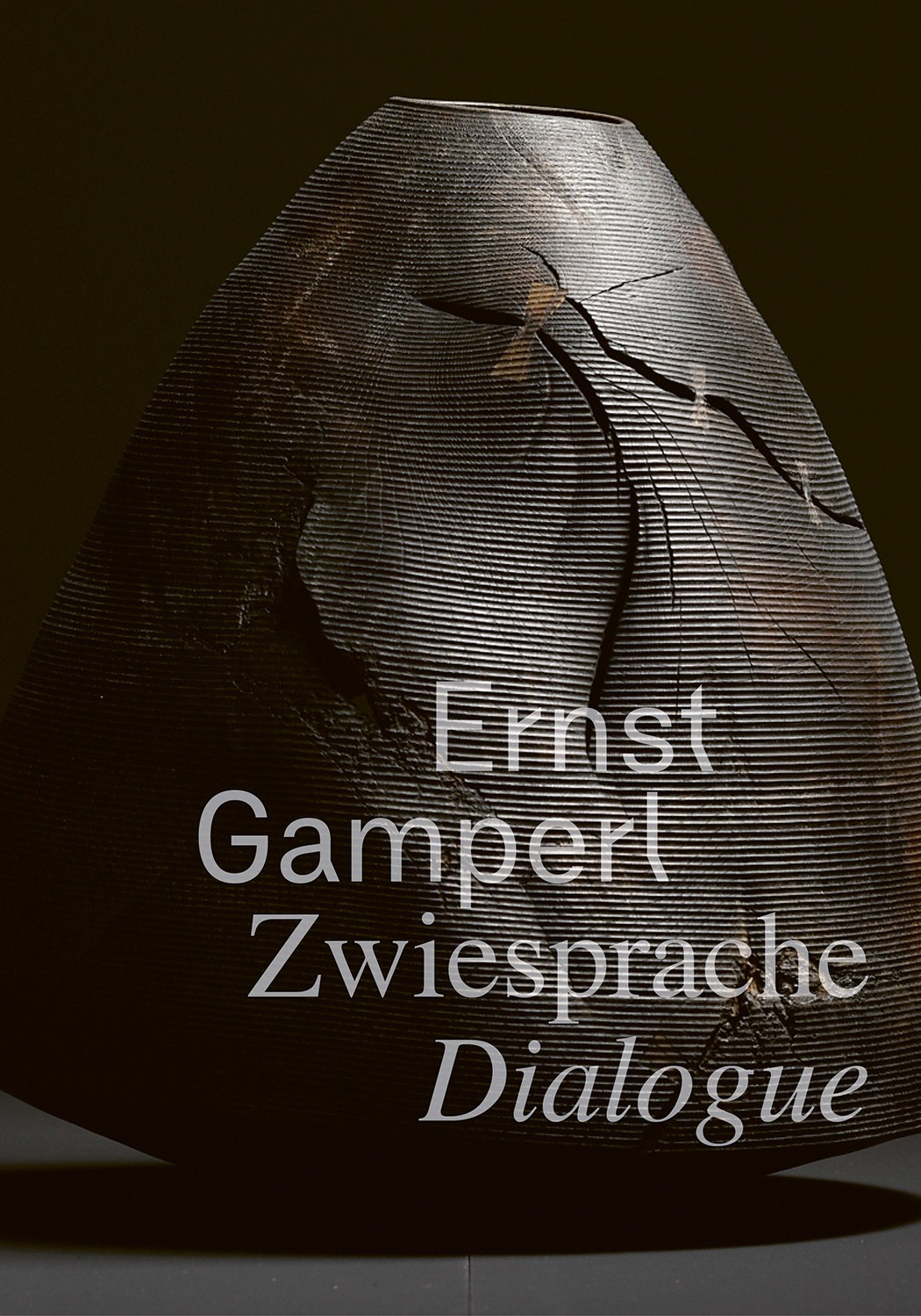
Ernst Gamperl
Zwiesprache Dialogue
 | |
|---|---|
| Editor(s) | Achim Heine, Ulrike Spengler |
| Author(s) | Achim Heine, Ernst Gamperl, Markus Rigert |
| Design | Heine/Lenz/Zizka |
| Size | 17 x 24 cm |
| Pages | 252 |
| Illustrations | 80 color and 45 duplex |
| Cover | Softcover |
| Language(s) | German, English |
| ISBN | 978-3-947563-57-9 | Out of stock |
Unique wooden sculptures as the result of a ten‑year process
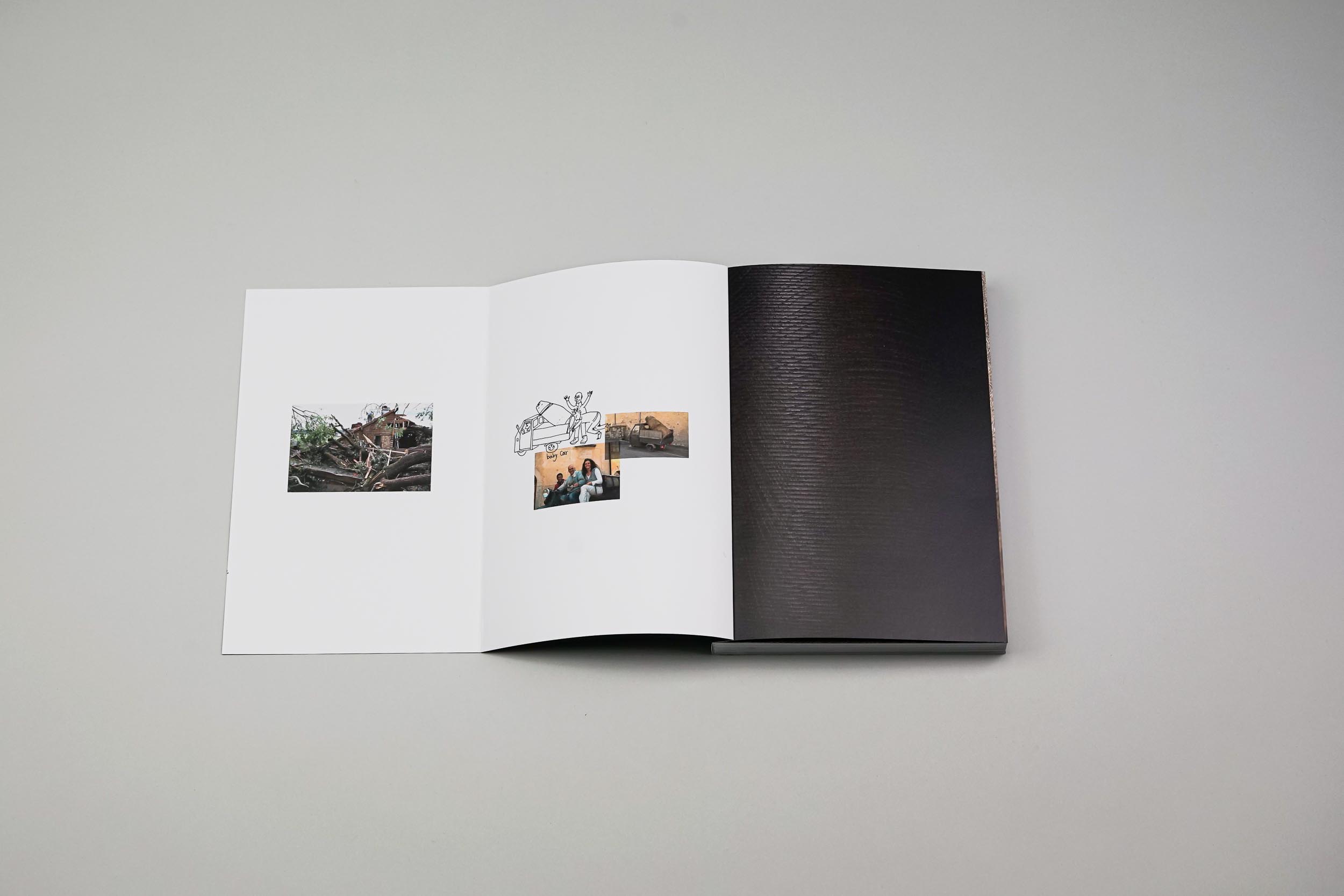
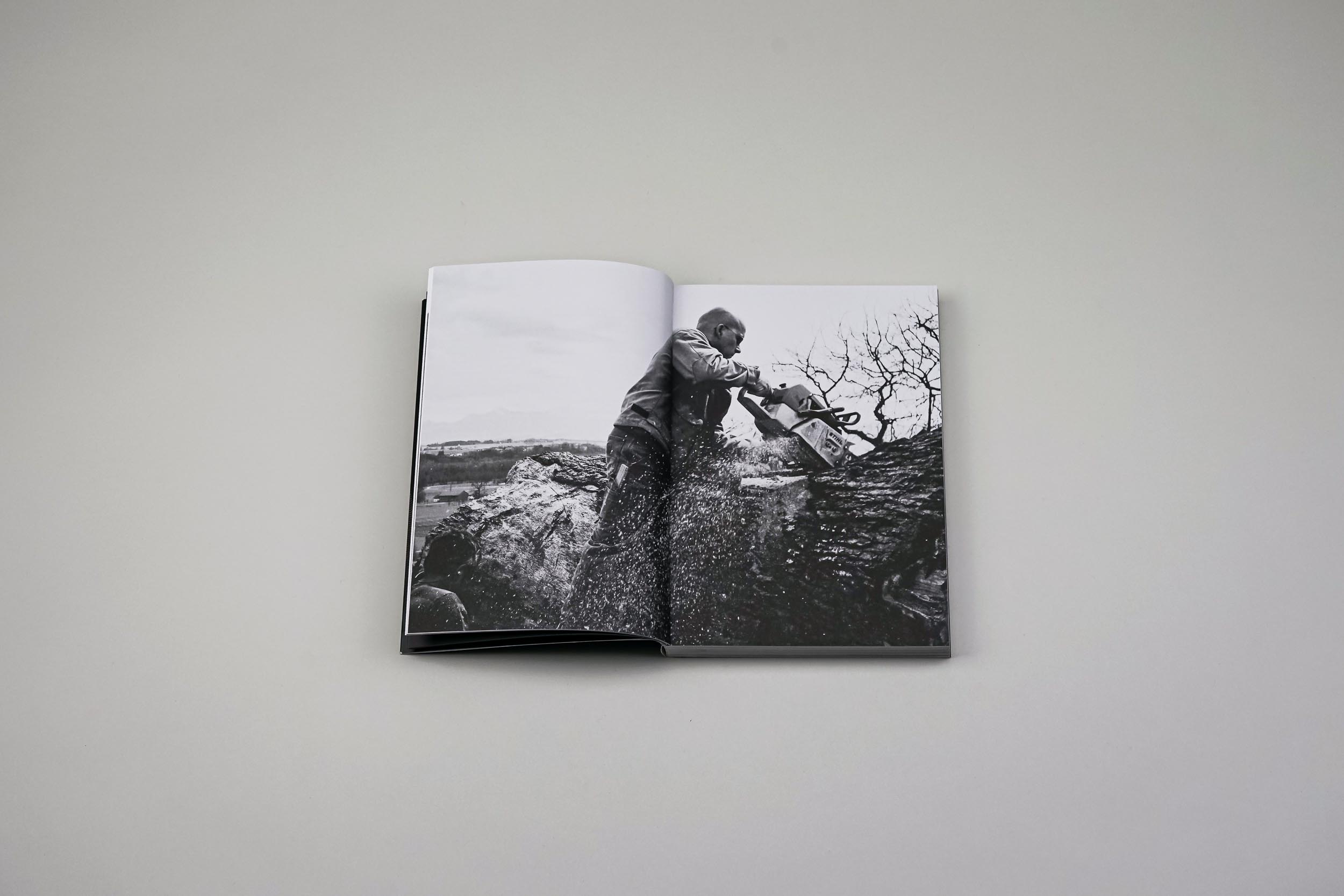
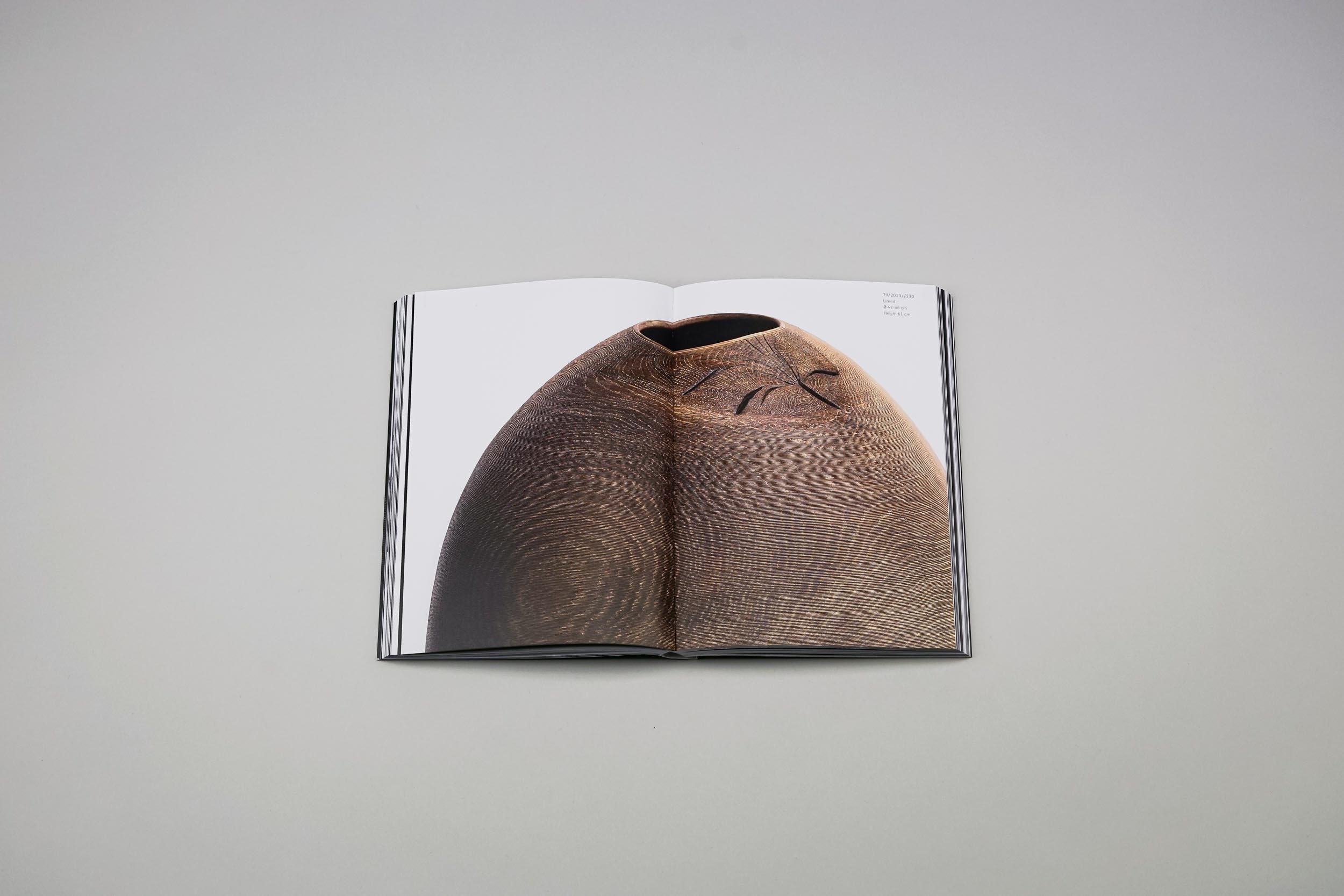
Ernst Gamperl (b. 1965, Munich; lives and works in Tremosine) is fascinated by the dialogue with living material and the quality of the unpredictable. He creates room-sized wooden objects, into the design of which he incorporates the natural drying process, cracks, and irregularities—a revolutionary technique of woodturning which has led to completely new standards, technically often at the limits of what is feasible. In a ten-year process, Gamperl transformed a roughly 230-year-old uprooted oak into an ensemble of vessels and sculptures. The artist’s book conveys the fascination of the material and the craft, brings us close to the objects, and documents the challenging work process.
Out of stock
Out of stock
More books
-

Mihai Olos
42€ Add to cartMihai Olos (b. Ariniș, Romania, 1940; d. Endingen am Kaiserstuhl, 2015) ranks among the most fascinating artists of the second half of the twentieth century. His adaptations of the formal vocabulary pioneered by Constantin Brâncuși are unrivaled in their creative originality. His works evince an utterly novel approach to the combination of materials from the culture of rural Romania with the visual strategies of modernism. His formidable oeuvre engages with conceptual and minimal art and comprises paintings, drawings, and sculptures, sometimes in the dimensions of land-art projects, as well as performances and poetry. Despite the constraints imposed by the communist system, his art and travels—during which he also met his kindred spirit Joseph Beuys—were dedicated to the unerring pursuit of his vision of social sculpture and radical utopian architecture.
-

America! America!
How real is real?38€ Add to cartMyths, Projections, Aspirations
In times of fake news and alternative facts it is becoming even more clear how the American Dream is closely interwoven with emotional pictures and symbols. At the same time, it can be said that no other nation might have the same strong awareness of the power of images. Images of the American Way of Life, which are produced in media and entertainment, are able to consolidate existing power structures and perceptions of reality, but also question them in a radical way. The psychologically charged canvasses of Eric Fischl, the hermetic scenes of Alex Katz, the enormous film-noir-like graffiti paintings of Robert Longo dissect the dreams and fears of an insecure white middle class. Simultaneously, artists such as Jeff Wall or Cindy Sherman conquer scenes that critically reflect our media-influenced perception, becoming models for subsequent generations. By showing 70 masterpieces of US-contemporary art, the book shows how artists from the 1960s to date comment on the American reality.
-

Philip Loersch
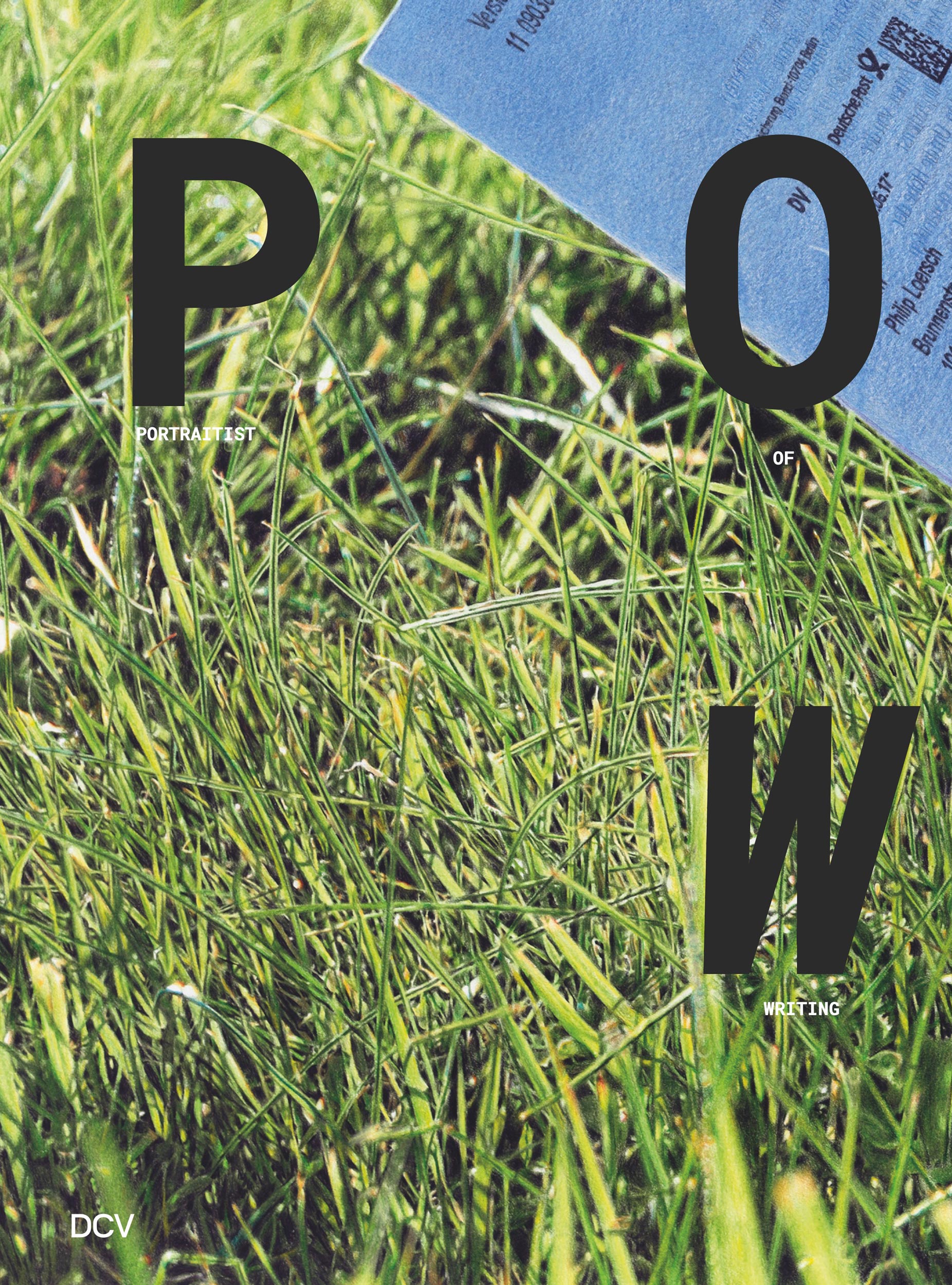
POW – PORTRAITIST OF WRITING34€ Add to cartPhilip Loersch (b. Aachen, 1980; lives and works near Munich) combines painstaking imitations of printed writing with hyperrealist colored-pencil drawings; for instance, he transfers pages from encyclopedias not only onto paper, but also onto three-dimensional objects such as soapstone. His works reveal the fragility of truth and authenticity while commenting with subversive irony on the postmodern disintegration of the idea of originality. His art has been exhibited at renowned institutions like Kunsthaus Zürich, Museum Kunstpalast Düsseldorf, and Hamburger Kunsthalle. He has won numerous fellowships and awards, including the Kunstpreis Berlin für Bildende Kunst. This monograph gathers his works created between 2016 and today.
-

nolde/kritik/documenta (English)
42€ Add to cartEmil Nolde (1867–1956) ranks among the best-known classic modernists. Contemporary perceptions of the artist and his oeuvre are informed by mythmaking as well as its deconstruction. After the Second World War, Nolde himself and art historians of the time portrayed him as a victim of Nazi persecution. More recent critics have drawn attention to his anti-Semitic views and his opportunism in his dealings with the Nazi authorities.
With support from the Nolde Foundation, Seebüll, the Düsseldorf-based conceptual artist Mischa Kuball (b. 1959) delved into the documentary record to shed light on this profoundly ambivalent figure and frame a critical perspective on Emil Nolde’s output and actions. The first fruits of his endeavors were shown at the Draiflessen Collection, Mettingen, in the winter of 2020–2021.
Kuball continued his research at the invitation of the documenta archive, Kassel. Based on his findings, the exhibition project “nolde / kritik / documenta” illuminates the ways in which life and oeuvre are interwoven and inquires into the contradictions of modernism, which Emil Nolde as a man and artist may be said to have embodied. The focus of the new project is on the staging of Nolde’s works at the first three editions of the documenta exhibition series (1955, 1959, 1964), which were instrumental to establishing the “Nolde myth.”
An enlarged and revised edition of the catalogue “nolde / kritik / documenta” is released in conjunction with the exhibition at the Fridericianum, Kassel (December 9, 2022–February 19, 2023).
Mischa Kuball has been professor of public art at the Academy of Media Arts Cologne and associate professor of media art at the Karlsruhe University of Arts and Design/ZKM since 2007.
-

Matthew Davis
Kustodiev28€ Add to cartAn Expressive Instant in Painting
The art of Matthew Davis (b. 1969, Colchester, UK; lives and works in Berlin) operates between the micro and macro dimensions, between control and chance. Working with extraordinary precision, the artist applies drops of synthetic resin varnishes and enamel paints to canvases laid flat. The artist’s book Kustodiev showcases a recent innovative turn in Davis’s output, whose latest works were inspired by the lusciously colorful pictures of the Russian painter Boris Kustodiev (1878–1927). Kustodiev was manufactured using offset presses and Office Offset, a largely forgotten reproduction process based on miniature offset printing machines. The publication is released in a limited edition of 250 copies.
Matthew Davis studied at the Camberwell College of Arts, London, and the Norwich School of Art and Design. His work has been shown at the Konrad-Adenauer-Stiftung, Berlin; Künstlerhaus Wien, Vienna; Kunsthalle Wilhelmshaven; and other museums and galleries.
-

CHRISTIAN ROTHMANN
The Light Touch45€ Add to cartA Monograph of Curiosity
Christian Rothmann (b. Kędzierzyn, Poland, 1954; lives and works in Berlin) is an artistic jack-of-all-trades, a builder of bridges between cultures, and a restless globetrotter and traveler across time. He takes photographs wherever he goes, especially when he is on the road, gathering documentaries with a creative edge, spontaneous yet powerfully symbolic pictures, or conceptual series. His motifs have included basketball hoops in the most unbelievable places, toys in restaurants and stores, exotic dishes, and—in the sequence Legs of the World—beautiful legs, of real-world women, but also of advertising-poster idols and art objects. He has a special knack for recruiting accomplices from all age groups and across social and cultural differences, as for his series you and me or Mother & Daughter. Fierce large-format paintings and delicate watercolors on small paper formats from Rothmann’s studio in Berlin-Kreuzberg complement his long-term photographic projects. The Light Touch presents the artist’s variegated visual art on almost five hundred pages.
-

Karlheinz Bux
über Linie …15€ Add to cartClarity, Complexity, and Linearity
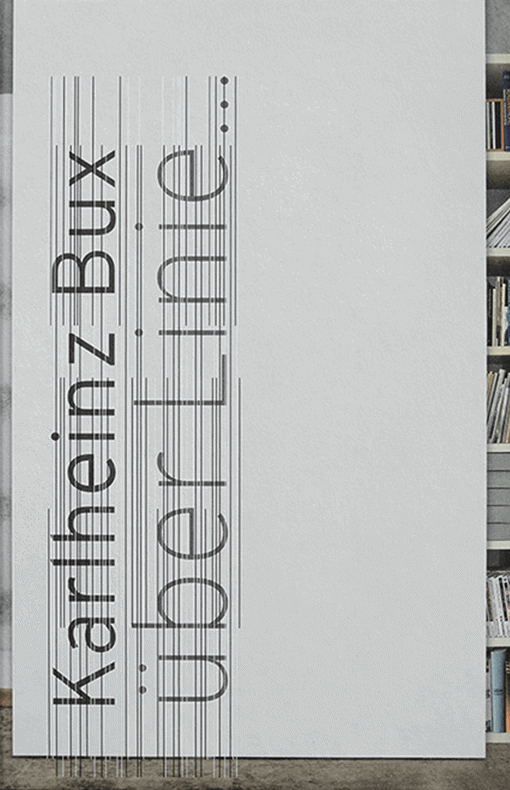
The defining artistic means in the work of Karlheinz Bux (b. 1952 in Ulm, lives and works in Karlsruhe) is the line. As edges and folds, they determine vertically oriented sculptures, which simultaneously convey compactness and openness, dynamism and repose. In Bux’s pencil drawings and photo-based works, they form the subject of the image in the form of complex linear structures. This present book documents the artist’s large-format works and provides insight into his oeuvre, with texts by Michael Hübl, Christine Reeh-Peters, and Carmela Thiele.
Karlheinz Bux studied at the State Academy of Fine Arts Karlsruhe and taught as a lecturer at Pforzheim University and as a visiting professor at the Mainz University of Applied Sciences. His works are represented in private and public collections, including the Staatliche Kunsthalle Karlsruhe, the Hurrle Collection, and the Würth Collection.
-

Ivonne Thein
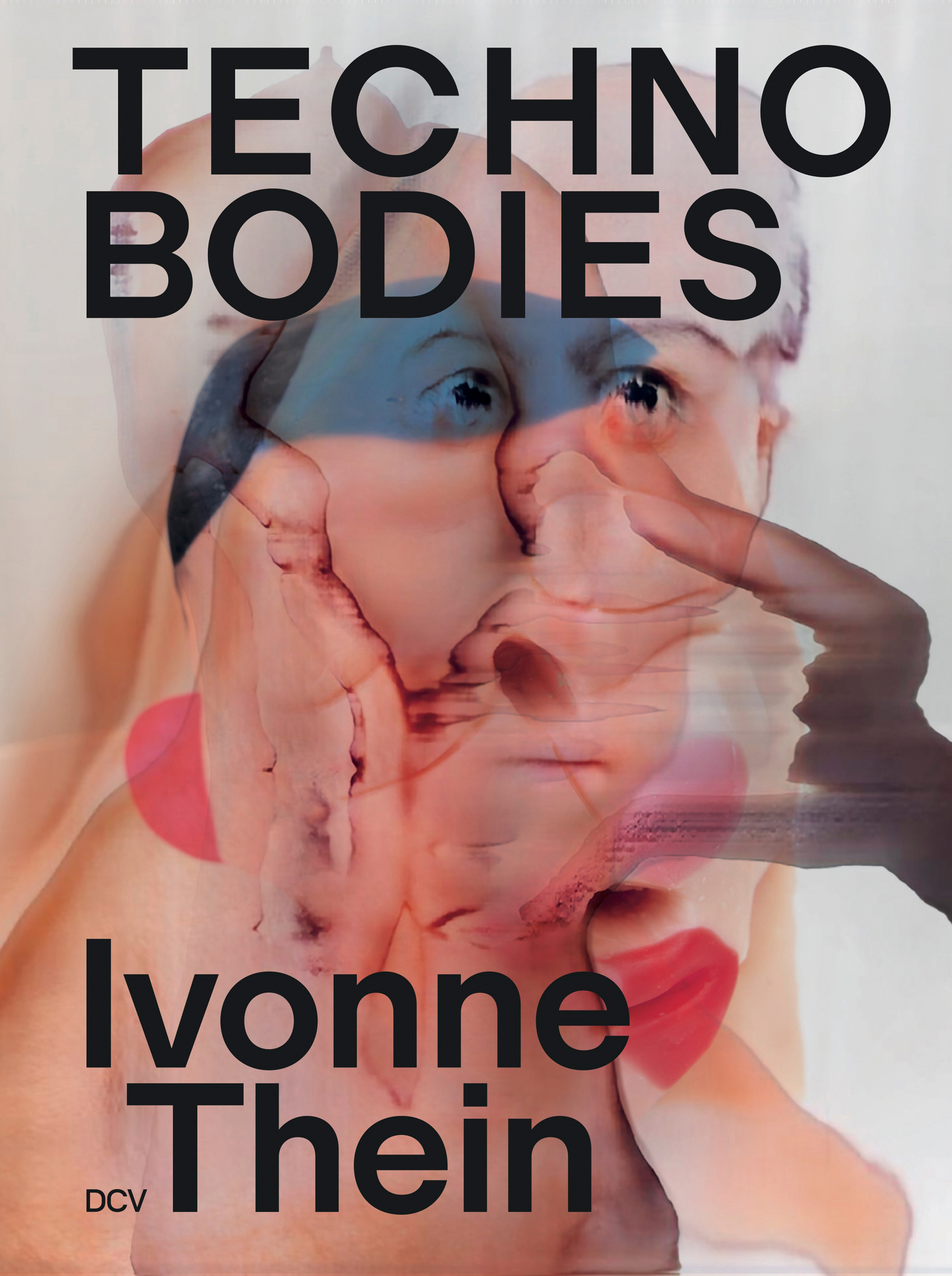
TECHNO BODIES28€ Add to cartIn her multidisciplinary work, Ivonne Thein (born 1979 in Meiningen, lives and works in Berlin) addresses the current body images of a digital culture that is undergoing fundamental change due to extensive technologization. Today, new technologies are profoundly shaping both the physical body and its virtual representations in the visual culture of our time. Thein works with AI systems for her installations and places the question of the problem of imitating nature, and thus the relationship between art, technology and body, at the center of her artistic work. To do this, she combines digital techniques with sculptures that she creates by hand from silicone. Thein thereby evokes an intrusive closeness in the exhibition space, as the images generated with the AI no longer remain just a pure data set on the screen. The book presents works from 2020–2023.
-

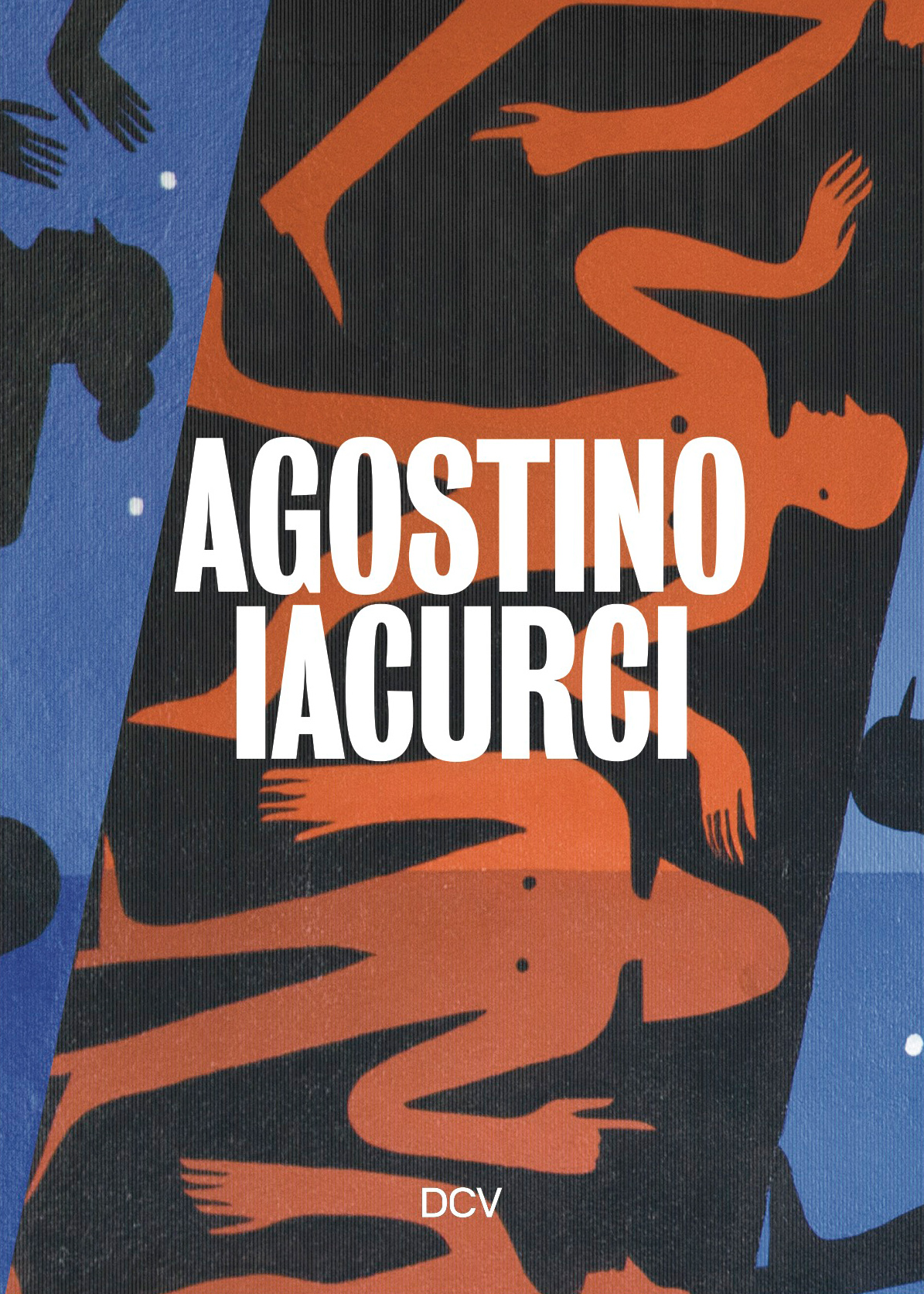
Agostino Iacurci
10€ Add to cartAgostino Iacurci’s (b. Foggia, Italy, 1986; lives and works in Berlin) paintings, sculptures, installations, and murals are based on vegetal forms and botanical subjects. Lucid compositions in radiant colors unfurl fantastical ornaments that transcend the division between figuration and abstraction and the hierarchical distinctions of applied art, design, fine art, and folk art. His central theme is the painted garden, in which he stages plants, humans, architecture, geometry, and decoration in a fashionably theatrical landscape. In Iacurci, the interpenetration of nature and civilization is real, integrating mythological motifs from across the history of art and culture, from antiquity to futurism and postmodernism, into his singular style.
Agostino Iacurci studied fine arts at the Accademia di Belle Arti in Rome. Since 2009, he has realized numerous large-format murals and installations for public and private institutions. He has also worked with international brands including Apple, Adidas, Hermès, and Starbucks.
- Release January 2026
Valentina Jaffé
Dripping Folds and Melting States23€ Add to cartDripping Folds and Melting States is published in conjunction with the young artist Valentina Jaffé’s most extensive institutional solo exhibition to date. Blending artist’s book and catalogue, the volume gathers works from the past five years by Jaffé, who lives and works in the Rhine–Neckar metropolitan region. Taking an interdisciplinary and inter-media approach, she continually refines the conception of collage that is central to her art. Her creative universe is informed by intersections, imbrications, and the exploration of in-between states—by the concurrence of mutability and constancy.
Created out of long-fibered paper and awash in color, the artist’s visual spaces are transformed with each new environment and have an air of breathing membranes. Her ceramics, meanwhile, play with contrasts of hardness and softness, fragility and stability, coldness and warmth. The book reflects Jaffé’s multifaceted experimentation and is enhanced by scholarly contributions by Carolin Heel and Fedra Benoli, who add depth to her engagement with space, body, and material.
-

Thyra Schmidt
Über Diebe und die Liebe. On Thieves and Love.15€ Add to cartAn artist’s book, an artist’s text
On twenty-two large-format typographic sheets, Thyra Schmidt (b. 1974, Pinneberg; lives and works in Düsseldorf) develops a narrative featuring moments in an amorous relationship. Thoughts and encounters between “her” and “him” are captured in poetically constructed, fragmentary units of meaning. Imaginary images are conjured in the mind’s eye: Close-ups and intimate insights into a delicate web of interpersonal incidents. Personal observations and experiences form the starting point of this artistic exploration of love. Yet the focus of her work is not on autobiographical rendering, but rather on the tracking down of elementary structures, a general understanding of intimacy.
-
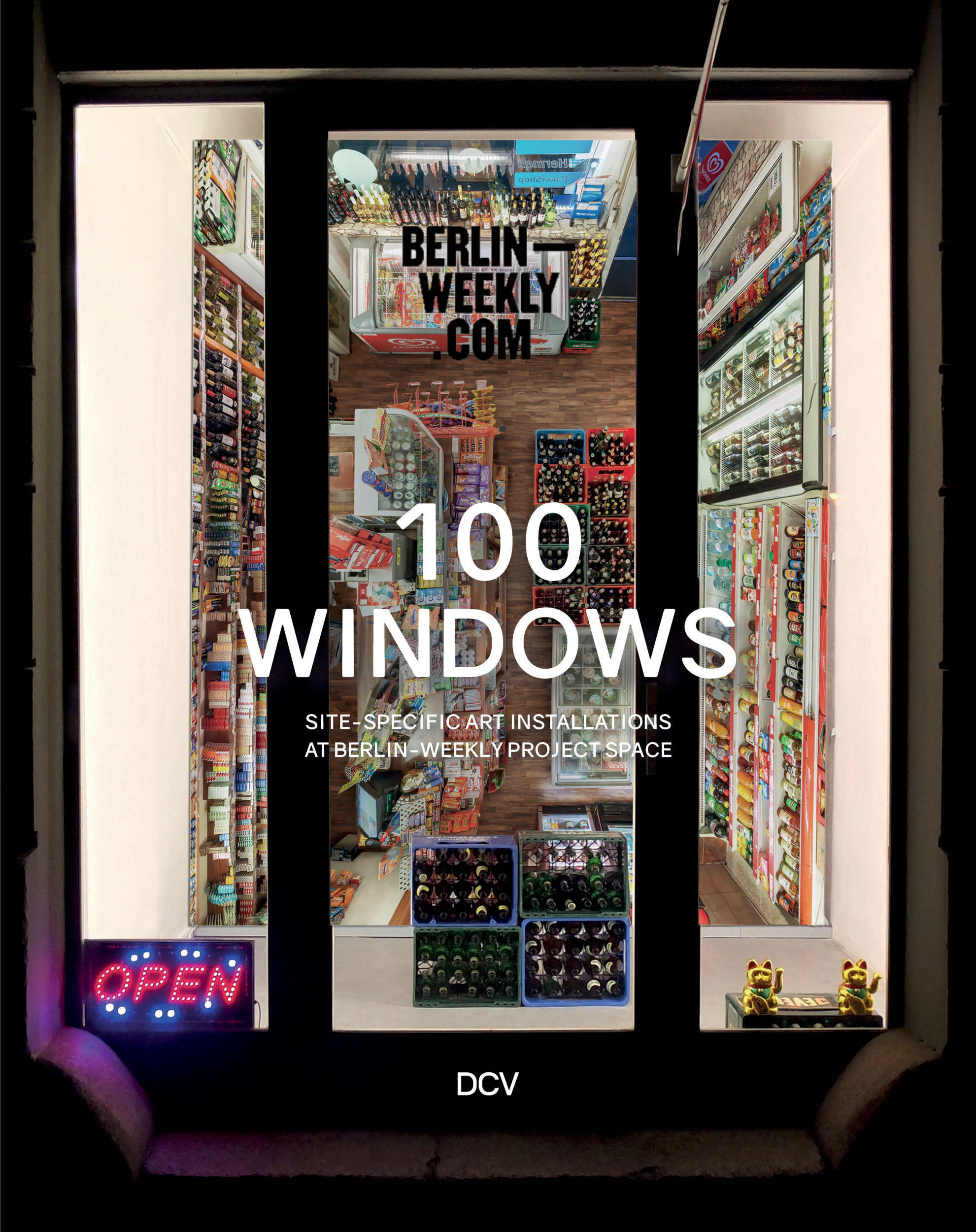
100 Windows
Site-specific art installations at Berlin-Weekly project space28€ Add to cartEstablished in 2010 by Stefanie Seidl in a former gateway for horse-drawn carriages that is now enclosed by glazing at both ends, the project space BERLIN-WEEKLY offers the narrow yet exceptionally tall display space to artists as a highly visible public stage for installations that respond to the setting or site. Its unilateral orientation toward the street makes BERLIN-WEEKLY a creative intervention into the urban fabric that harnesses the shopwindow format. The book presents 100 selected window installations to illustrate the widely diverse ways in which individual artists have engaged with the venue, time and again transforming the unusually shaped small space.
With works by: Menno Aden, Alexandra Baumgartner, Isabelle Borges, Astrid Busch, Simon Faithfull, Moritz Frei, Max Frisinger, Wolfgang Flad, Dagmara Genda, Andreas Greiner & Armin Keplinger, Sabine Groß, Marc van der Hocht, Sabine Hornig, Irène Hug, Bettina Khano, Julia Kissina, Nikolaus List, Ulrike Mohr, Virginie Mosse, Piotr Nathan, Katja Pudor, Philip Topolovac, Inken Reinert, Sophia Schama, Geerten Verheus, Sinta Werner, Barbara Wille, and others
-

Ohne Schlüssel und Schloss
Chancen und Risiken von Big Data19,90€ Add to cartVon Kunsthandwerk zu digitaler Verschlüsselung
An jeder Haustür ziehen wir Grenzen, wir schließen auf und schließen ab. Und noch in jüngster Vergangenheit war eindeutig, was als Verschlusssache galt. Ganz anders stellt sich diese Frage im IT-Zeitalter. Ausgehend von der kunsthandwerklichen Sammlung des Museum Pfalzgalerie Kaiserslautern wird deutlich, wie in früheren Jahrhunderten über mechanisch und symbolisch aufwendig gestaltete Schlösser, Schränke oder auch Reliquienbehältnisse Distanzen austariert wurden. Sie alle sind sichtbares Vehikel für die bewusste Wahrnehmung von innen und außen, zugehörig und ausgegrenzt, wissend und unwissend oder öffentlich und privat. Für Big Data gilt dies in keiner Weise mehr. Beim Digitalen werden Serviceleistungen mit Datenerhebungen verbunden, deren weiteren Einsatzbereiche wir weder unmittelbar verstehen noch überblicken können. Historische, technologische und philosophische Überlegungen bieten wichtige Beträge zur aktuellen Debatte und Einschätzung der Risiken und Chancen von Big Data.
-

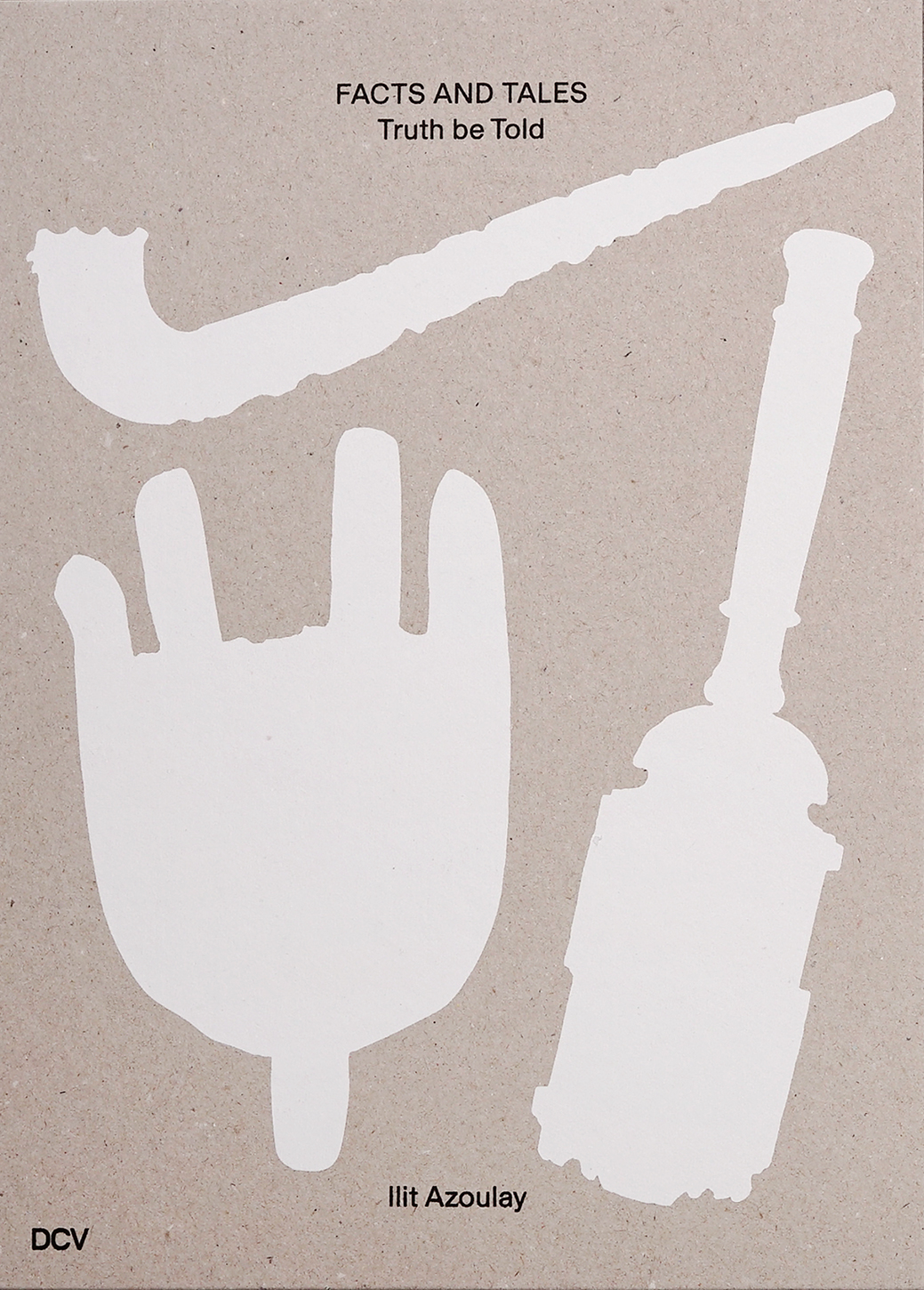
Ilit Azoulay
Facts and Tales. Truth be Told120€ Add to cartIn an era in which multiple perspectives and oral histories are increasingly vital, Facts and Tales—Truth Be Told delves into the haunting work of Ilit Azoulay. The artist, who was born in Jaffa in 1972, transforms objects, archives, and museum holdings into vessels, challenging traditional hierarchies of knowledge. In her most recent solo exhibition Mere Things at the Jewish Museum, New York, Azoulay presents works that probe the delicate balance between factual representation and nuanced storytelling.
The publication accompanying the exhibition includes archival pages, the artist’s notes, and depictions of the works as well as an introduction by curator Shira Backer and an essay by the art critic, curator, and writer Sarit Shapira, who passed away in 2018. Titled Houses of Junk and Specters: On Ilit Azoulay’s Early Works, it underscores the importance of honoring both factual accuracy and oral histories and invites readers to explore the complex interplay between concrete evidence and the rich and nuanced stories.
Azoulay has devised a singular method to shed light on the blanks in hegemonic narratives and expose them. As though to produce an extortion letter, she clips her pictures from archival materials and photographs of the walls of abandoned buildings and composes them in collages interweaving a multiplicity of views. The resulting works question the exclusive truth claim of museum expertise and reveal its constructed quality. The catalog of her works, designed as a box replete with texts and images, reflects this approach, aiming to dismantle established narratives and open up diverse perspectives.
Box containing 6 different standalone publications, limited edition of 500 copies
THIS PUBLICATION WAS MADE POSSIBLE BY THE GENEROUS SUPPORT OF THE GALLERY LOHAUS SOMINSKY, MUNICH
-

Sonja Yakovleva
10€ Add to cartSonja Yakovleva (b. Potsdam, 1989; lives and works in Frankfurt am Main) uses pornographic representations and images from the internet as templates for papercuts, some in large formats, that grapple with personal and public stories about women, power relations, sexuality, and violence. The silhouettes show popular motifs that have served to ingrain fairy tales, myths, and ideologies in the collective consciousness from the colonial era to modernism and the early twenty-first century. Yakovleva, whose art is often associated with sex-positive feminism, appropriates this folkloristic visual idiom and hybridizes and sexualizes it. Dessous and strap-on dildos, for example, figure as preserved specimens of butterflies and insects, bringing historic scientific expeditions to mind. Yet her work also addresses the capitalist urge to categorize, evaluate, and market every kink.
-
Emmanuel Bornstein / Lotte Laserstein
Pensée20€ Add to cartHow do artists’ identities and the histories of their families influence their art? Where might a creative affinity sustained by a legacy of trauma take an artist? Lotte Laserstein (1898–1993) and Emmanuel Bornstein (b. 1986) are connected by such a bond, tied by Bornstein’s grandmother, a Résistance fighter and, like Lotte Laserstein, a Jew who survived the Nazis. Bornstein discovered Laserstein’s works by coincidence and without knowing of this connection, and he was fascinated right away: “It was actually what I’d been trying to make for years!” There are in fact parallels between their oeuvres—both feature people who are waiting and flower bouquets, and a melancholy aspect and a subtle menace can be felt in both. Yet there are also discrepancies, and the dialogue between their works would be far less inspiring without them: Bornstein’s omnipresent toxic cadmium, which contrasts with Laserstein’s muted tones; the paint application; the brushwork. What the artists have in common, in any case, is that Sweden became their abode in times of danger and painting, their only true home. This catalog celebrates their creative homecoming.
- With socks designed by the artist and augmented reality

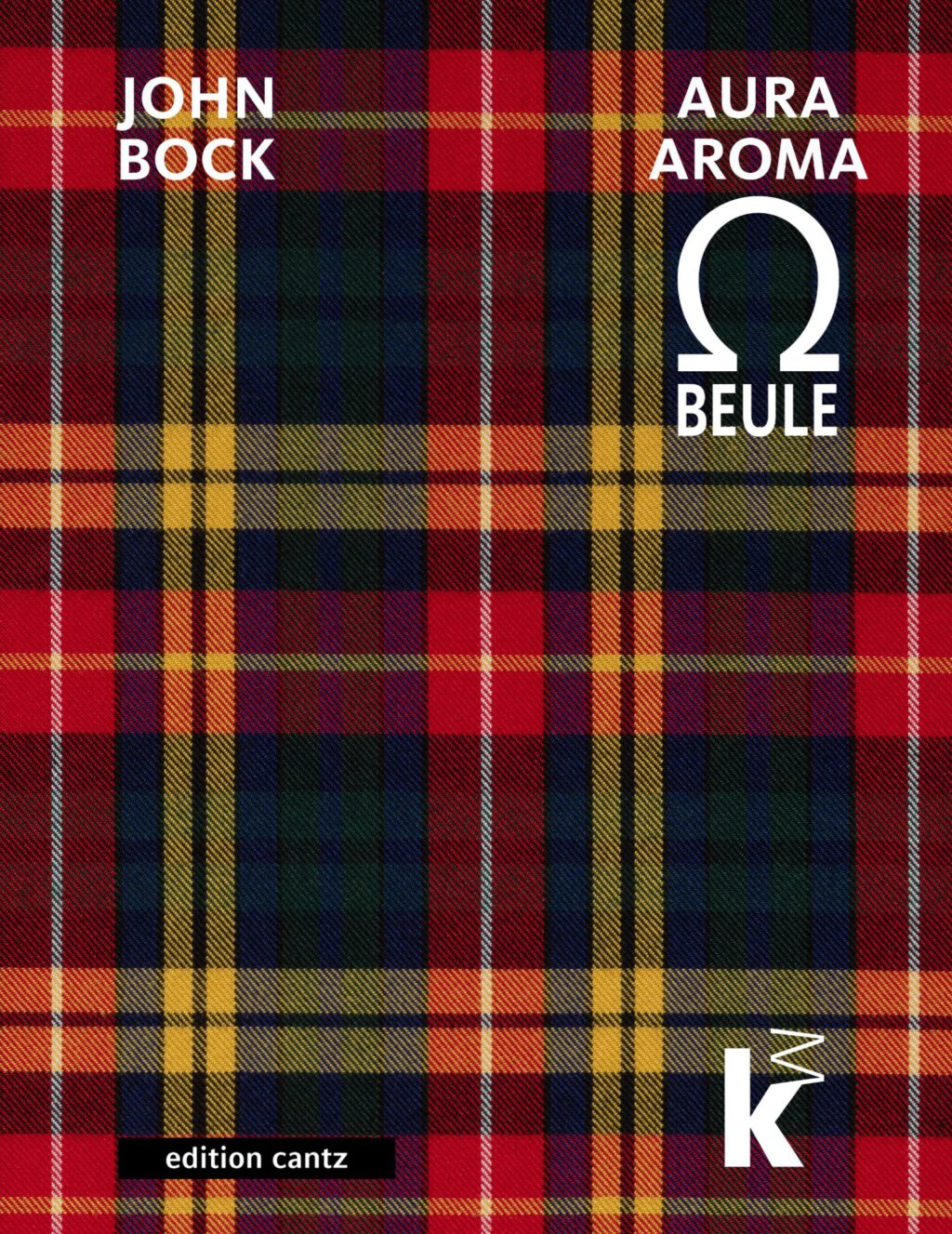
JOHN BOCK
AURAAROMA-Ω-BEULE42€ Add to cartThe Augmented Reality Book for John Bock
John Bock (b. 1965 in Gribbohm, lives in Berlin) is one of the most important contemporary performance and video artists. In his works characterized by humor and absurdity, the artist places language, human bodies, everyday objects, and spaces in peculiar relationships to each other. He attained international recognition with the installation LiquidityAuraAromaPortfolio at the first Berlin Biennale in 1998. Together with his work Voll die Beule from 2013, it is now included in the collection of the Kunsthalle Mannheim. The present augmented reality book not only contextualizes his work, but also immerses the viewer/reader directly in his performances, in which the artist’s head emerges and a filled rubber glove leaks out. A completely new approach to the works of John Bock, packaged in a pair of socks designed by the artist.
John Bock studied at the Hamburg University of Fine Arts and since 2004 has taught at the State Academy of Fine Arts Karlsruhe as Professor of Sculpture. He has participated in the 55th Biennale di Venezia, and his works have been featured worldwide in solo exhibitions at, among others, the Berlinische Galerie, the Contemporary Austin, Texas, the Barbican Centre, London, and the Städel Museum, Frankfurt.
-
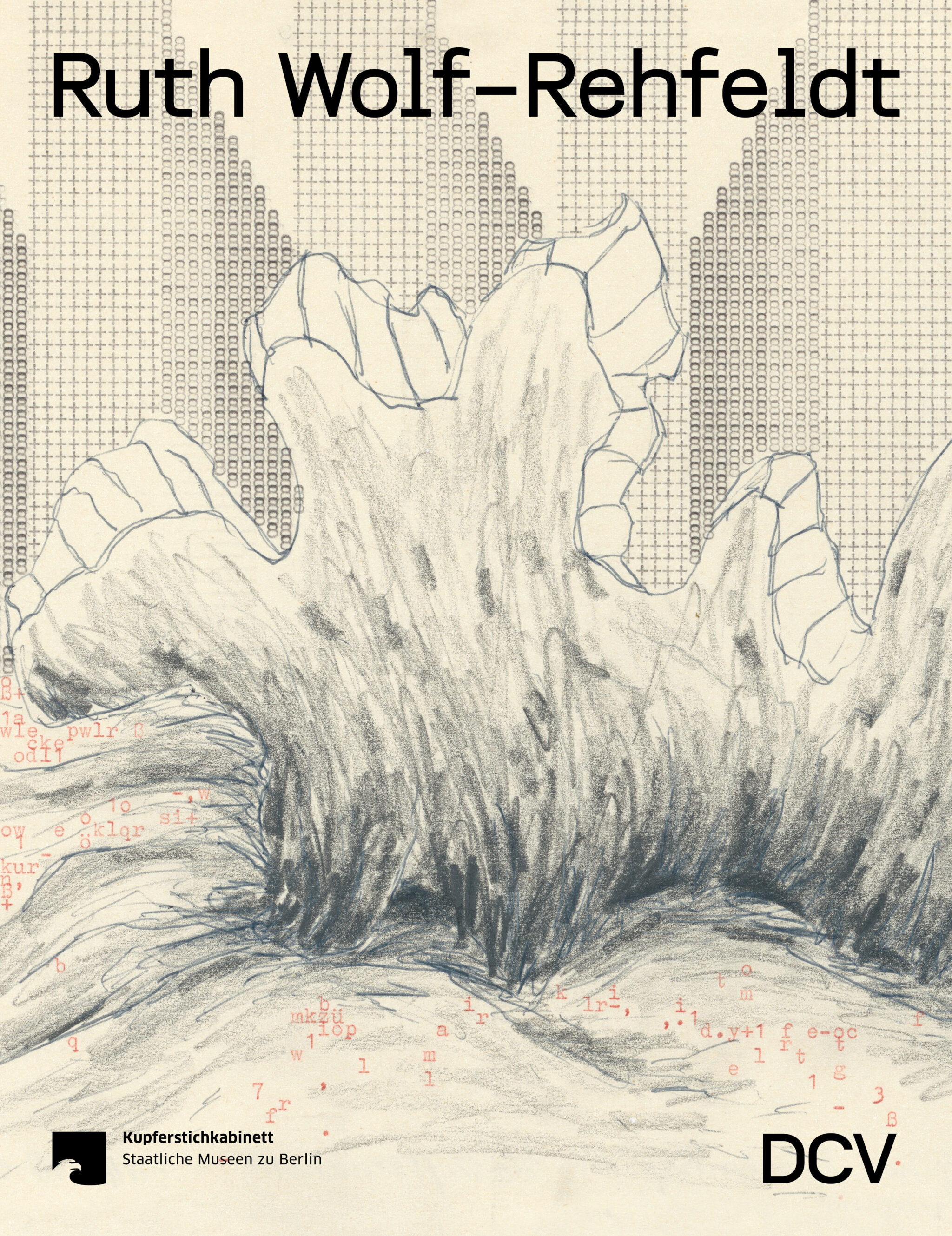
Ruth Wolf-Rehfeldt – Wie eine Spinne im Netz
38€ Add to cartRuth Wolf-Rehfeldt (b. Wurzen, Germany, 1932; lives in Berlin) is one the few East German female artists who devoted themselves to graphic art produced on the typewriter. Working on her trusty “Erika,” she arranged letters, digits, commas, and plus signs to compose imaginative visual creations. Under her hands, the black and red characters were transformed into poetic verbal images, gently undulating waves, serial patterns, and architectonic or figurative formations. Sometimes verging on concrete poetry, these typewritings also evince unmistakable affinities with conceptual and minimalist art. In the 1980s, the artist expanded on them in collages that recall Hannah Höch’s Dadaist visual montages. With her graphic work, Wolf-Rehfeldt was also an active participant in the GDR’s mail-art program: she sent the typewritings to artists beyond the impassable borders of her country, building an extensive network of correspondences that spanned the globe.
The richly illustrated monograph underscores the diversity and contemporary relevance of Wolf-Rehfeldt’s works, which were created in the shadow of the Cold War and address the fragility of peace as well as early manifestations of the environmental devastation wrought by the industrial age.
-

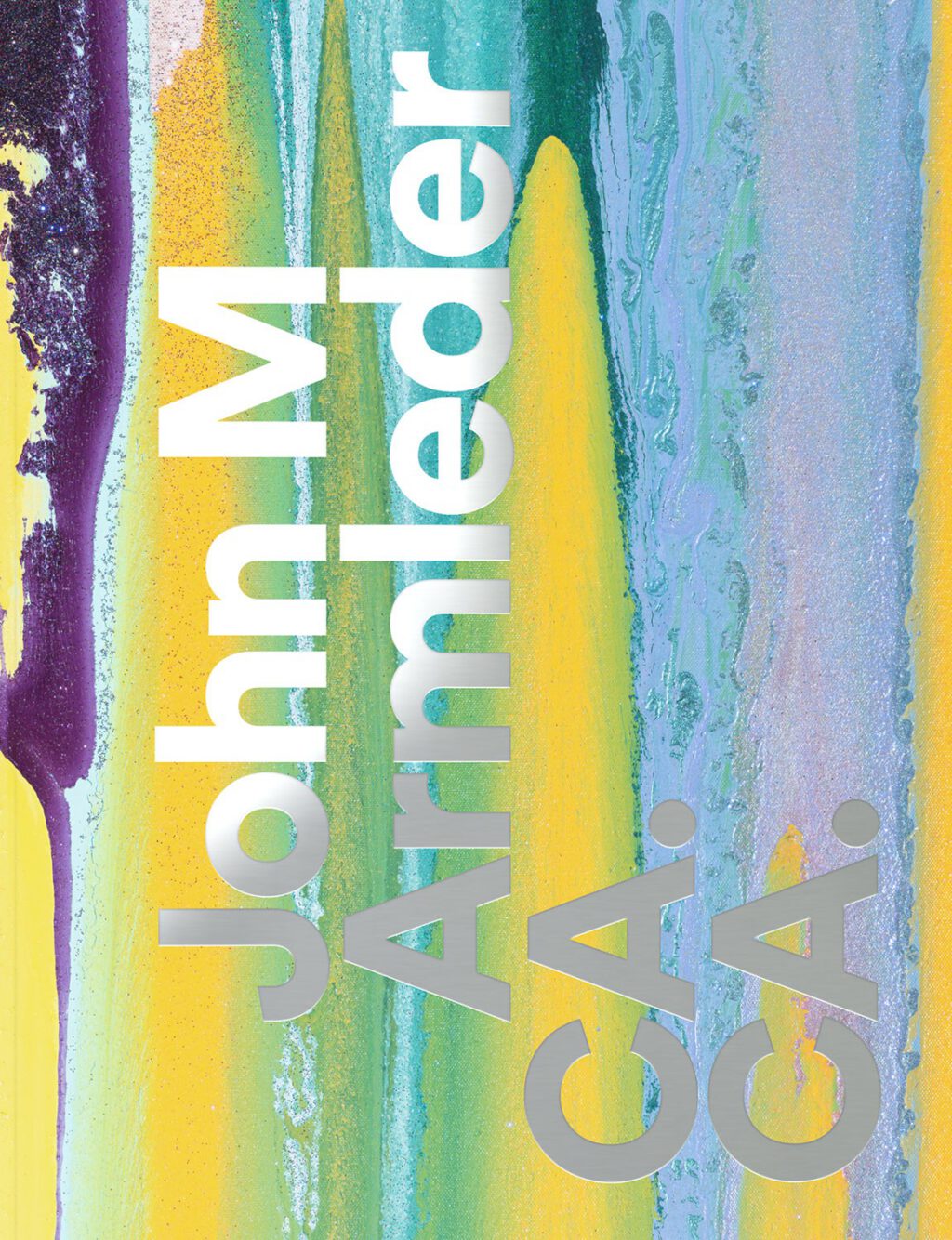
John M Armleder
CA. CA.19€ Add to cartCommentaries on our Present Day Realities and the Status of Art
John M Armleder (b. 1948, Geneva; lives and works in Geneva and New York) is one of the most influential contemporary conceptual, performance and object artists. The profound and the banal, control and coincidence, high culture and everyday life coalesce in Armleder’s work to create a unique experience. The works of the Swiss – often humorous or ironically twisted commentaries on contemporary reality – draw on the formal repertoire of Classical Modernism, as well as on video and design. The book focuses on large-scale, site-specific installations and wall pieces, showing in detail the broad spectrum of Armleder’s work.
John M Armleder studied at the École des Beaux-Arts in Geneva. He represented Switzerland 1986 at the 42nd Biennale di Venezia and participated in documenta 8 one year later. His work has been exhibited at the Museum of Modern Art, New York, Palais de Tokyo, Paris, and Belvedere, Vienna, amongst others.
-
Verena Issel
Yellow Pages. Installations and their individual components45€ Add to cartVerena Issel’s installations feel friendly and inviting, they are soft, round, colorful—we cannot but smile when we look at them. The sculptures and pictures she makes for them are replicas, sometimes laced with irony, of familiar objects from nature and culture—palm trees, ancient columns, and more—which she manufactures out of materials that surround us in everyday life and the domestic sphere such as an old bag, foamed plastic fragments, or a drainpipe. They are awkward giants, monochrome, simplified, two- and three-dimensional forms that wish us no ill. Taking a closer look, we realize that they embody what has been lost, that they are a plastic version of what we are destroying or have destroyed already: nature, obviously, but also ourselves and our cultural and social achievements. Their merriment and sympathy are tinged with melancholy, and the loss is doubly painful when we consider that the sculptures and graphic art are filled with no more than an imitation of life, and an exaggerated one. This catalogue presents a survey of Issel’s diverse and sprawling oeuvre. Expertly choreographed shots of the colorful works convey vivid impressions of her installations.