Stefan Knauf
 | |
|---|---|
| Editor(s) | Robert Grunenberg |
| Author(s) | Oliver Koerner von Gustorf |
| Design | OOR Studio, Berlin; Vladimir Llovet |
| Size | 15 x 21 cm |
| Cover | Softcover |
| Pages | 40 |
| Illustrations | 30 |
| Language(s) | German, English |
| ISBN | 978-3-96912-130-6 |
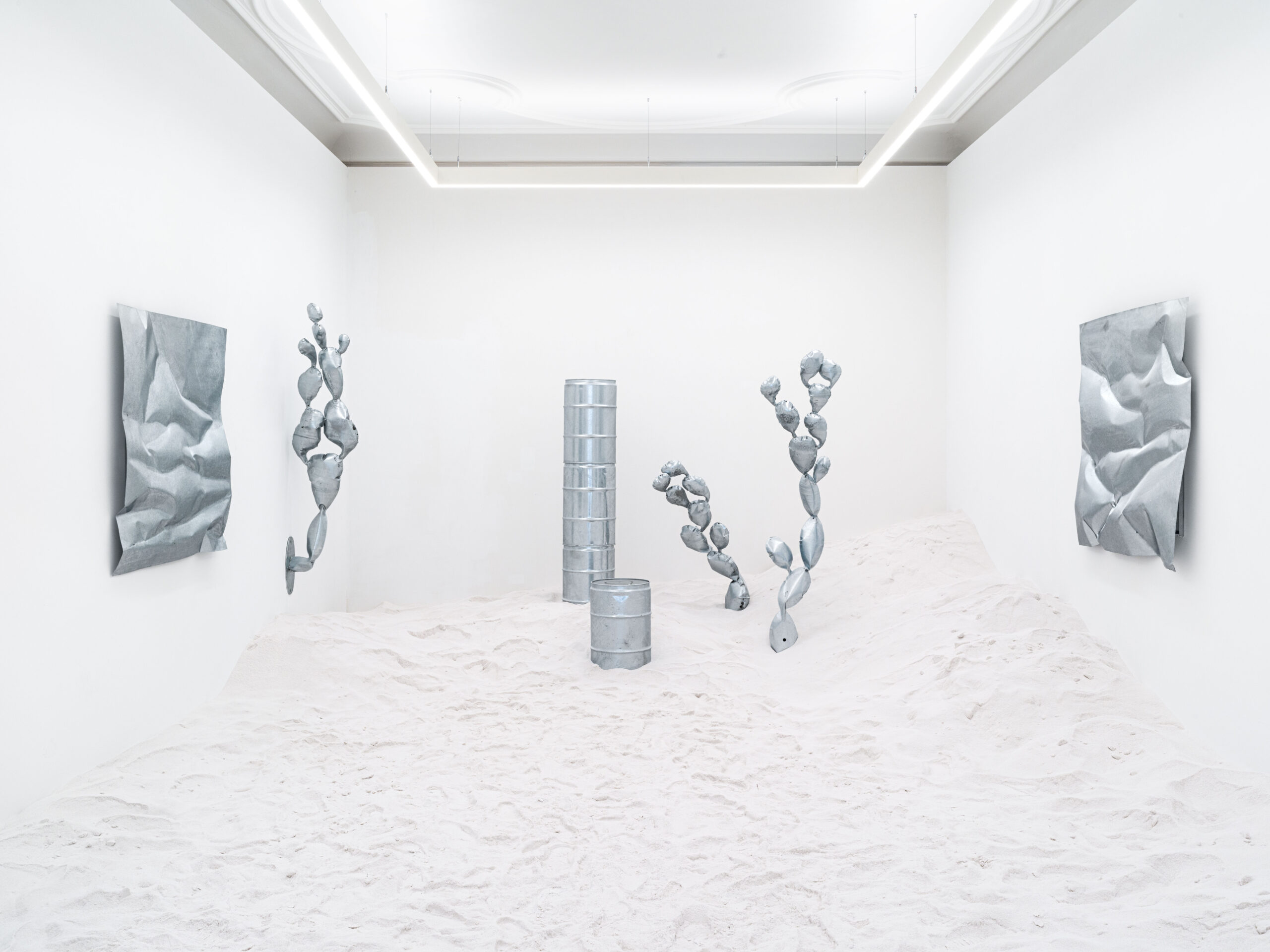
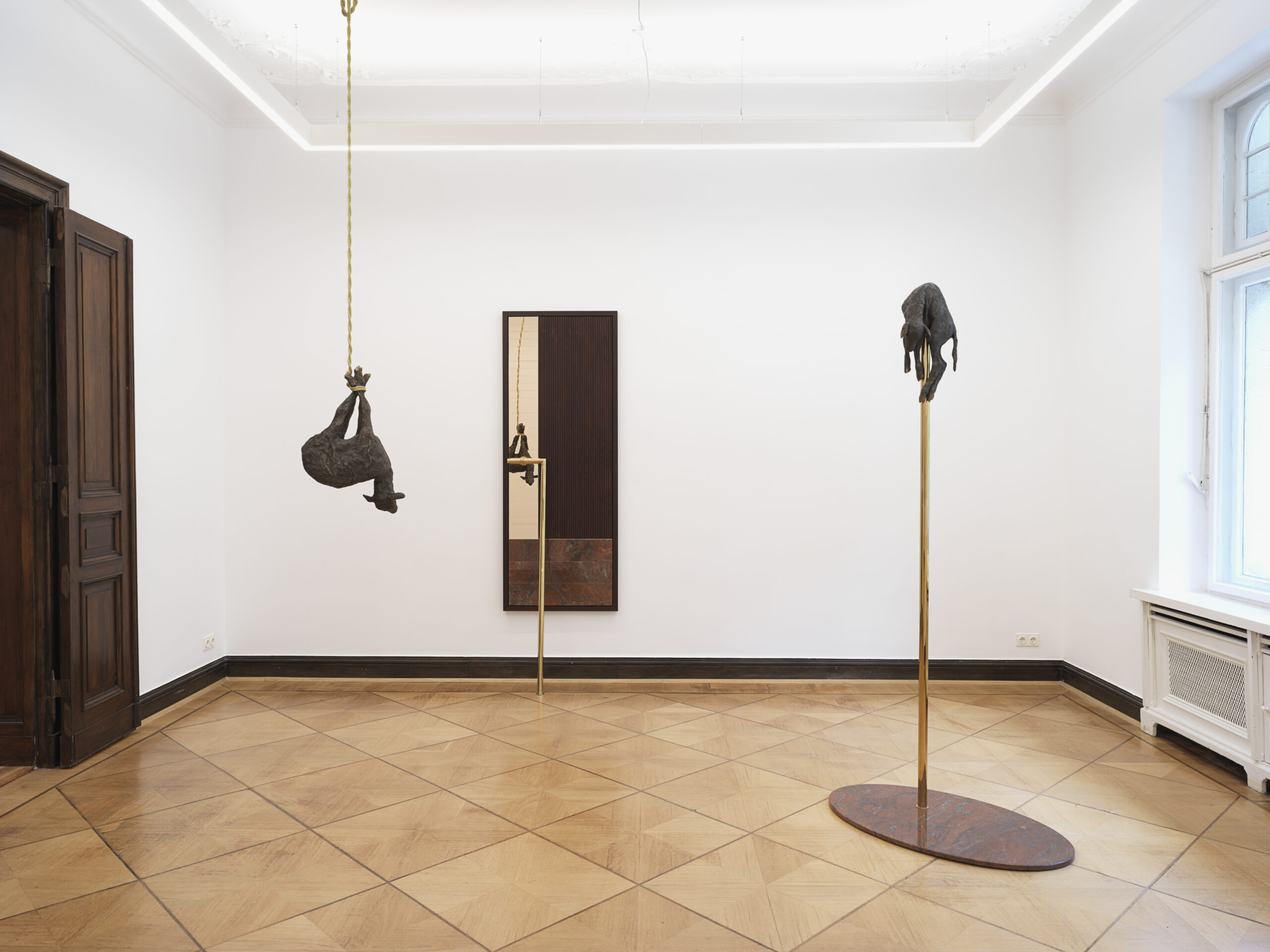
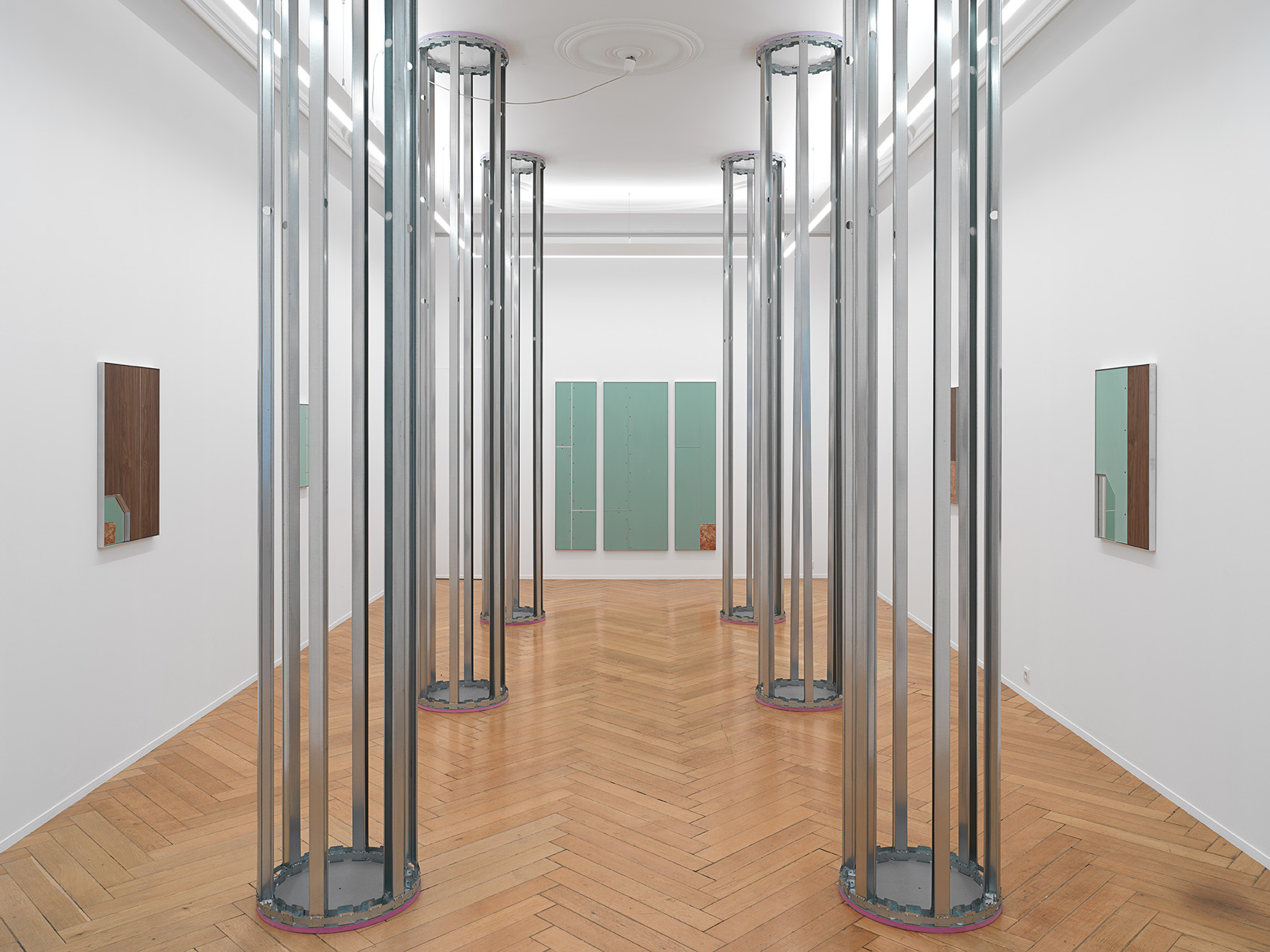
Stefan Knauf (b. Munich, 1990; lives and works in Berlin) uses selected materials such as construction supplies or plants to investigate the histories of botany, migration, trade, science, and architecture and critique an idealized and anthropocentric conception of nature that is still prevalent. His sculptures, geometric-abstract pictures, and installations, with echoes of constructivism and minimal art, are contact zones in which everything is related to everything: human and non-human history, the natural and the artificial, ecology and ideology. Knauf’s works do not propose to unravel these entanglements. Rather, they suggest alternative perspectives and topographies guided by the idea of the “modified landscape” and devise material and alchemistic forms of knowledge and a novel and multiperspectival approach to the history and reality of the Anthropocene.
More books
-

Candida Höfer
Editions 1987–202044€ Add to cartAll of Candida Höfer’s Editions in One Book
Candida Höfer’s (b. Eberswalde, 1944) shots of deserted libraries, opera houses, concert halls, churches, and museums have made her a member of the international photographic avant-garde. One strand in her acclaimed oeuvre are editions—photographic prints in small formats issued in larger numbers—that Höfer produces to support institutions and art publishers. Gathered for the first time in this book, with an introductory essay by Anne Ganteführer-Trier, the around one hundred such editions she created between 1987 and 2020 offer a representative cross-section of Candida Höfer’s art.
Candida Höfer studied in the first photography class of Bernd Becher at the Kunstakademie Düsseldorf. Her works have been exhibited at documenta 11 and in 2003 she represented Germany at the 50th Biennale di Venezia alongside Martin Kippenberger.
-

Gabriel Vormstein
40€ Add to cartGabriel Vormstein (b. Konstanz, 1974; lives and works in Berlin) explores themes of impermanence, temporality, and futility through a unique visual language. He paints using newspapers as a canvas, and creates installations out of tree branches and other organic matter. These “poor” materials subvert a prevailing notion in Western culture that an artwork should be eternally preserved. Through the adaptation of various styles and symbols, Vormstein’s paintings likewise speak to the transience of art historical and cultural trends. Over 300 pages, this richly illustrated book provides an overview of Vormstein’s oeuvre over the past two decades, while also offering an atmospheric glimpse into the artist’s source material and working methods. The publication is enriched by an essay by Gean Moreno, who characterizes Vormstein’s work as follows: “Gabriel Vormstein’s paintings and sculptures (…) announce their condition as withering artifacts, as if no other manner of existing was available to them (and maybe to us, as well).”
- Out of stock

Hans Karl Zeisel
Hundred and more34,95€ Read morePossibilities of concrete art
What is possible without turning away from the cocrete? In the Bauhaus tradition, the typographer, graphic artist, designer and author Hans Karl Zeisel opens up countless design options with basic forms. His wooden cuboids demand a humorous approach to sculpture. They are creativity training, study tools and meditation game all in once. A playful experiment that reveals the diversity of concrete art.
-

Sabrina Fritsch
syntaxerror28€ Add to cartSabrina Fritsch’s (b. Neunkirchen/Saar, 1979; lives and works in Cologne) paintings explore the potentials of the compositional process and the mechanisms of perception. Many of them feature coarse structures, textile surfaces, and delicate superimpositions. In this publication, Fritsch, who was recently appointed professor at the Düsseldorf Academy of Fine Arts, presents a résumé of the painterly oeuvre she has developed since her graduation from the same school in 2008. It encompasses two related books, each of which undertakes a structured study of a major strand in Fritsch’s art. One offers a chronological survey of a representative selection of works created between 2008 and 2019 that illustrate her playful and experimental engagement with the constituents of the painted picture: the picture-as-object, the organization of pictorial space, and the phenomenology of physical color. In addition to works on canvas boasting a wide variety of applications of materials and paint, it also covers serial variations in prints. The other showcases three exhibitions and bodies of work dating from 2020 and 2021 that are dedicated to the three color systems RGB, black-and-white (BAW), and CMYK.
-

Maria Braune
Keep Away From Fire28€ Add to cartMaria Braune’s (b. Berlin, 1988; lives and works in Munich and Bamberg) work revolves around a material she developed; named Migma, it consists of eight different renewable natural resources. She heats it, then casts and molds it in a process that continues for weeks. The resulting sculptures and installations sprawl throughout the space like sensuous organisms. Associations of growth and symbiosis emerge, but discontinuities and disintegration come into view as well. Braune’s creative process is part of an ecosystem and thoroughly anchored in the now. Her material is a vitally alive substance to which she responds in an immediate engagement, connecting it to mythological and narrative significations and setting it in relation to her own world.
Maria Braune studied woodcarving at the Fachhochschule für Bildhauerei in Berchtesgaden, Germany, in 2009–2011, then fine arts with Hermann Pitz at the Academy of Fine Arts Munich, where she graduated in 2017.
-

Alexandru Chira
42€ Add to cartAlexandru Chira’s (b. Tăușeni, Romania, 1947; d. Bucharest, 2011) oeuvre systematically and comprehensively maps a fictional field of research. His paintings, drawings, and objects, whose individual elements recall switches, screens, keyboards, and levers, were designed to “bring rain and rainbows,” to promote prosperity and prevent floods. Working in his art laboratory, Chira resembled a farmer tilling his field. He sowed symbols across his paintings, sometimes transplanted them to create new semiotic interconnections, then reaped them and stored up his harvest in painted machines of varying shapes and dimensions. In the 1990s—by then Chira held a professorship and was a widely recognized artist—he fulfilled a lifelong dream by building the “Tăușeni Ensemble,” the largest monument single-handedly created by one man in Transylvania. Much of his oeuvre accordingly consists of sketches and elaborations relating to the monument. In the course of his decades-long fascination with an agrarian aesthetic, architecture, design, astronomy, history, magic, ufology, mysticism, shamanism, and theosophy fused, yielding a kind of practical knowledge as well as spiritual speculations sustaining his endeavor.
The extensive monograph with more than 750 illustrations surveys Alexandru Chira’s output of four decades and synthesizes years of research undertaken at the National Museum of Contemporary Art in Bucharest. It contains numerous transcriptions of textual parentheses, legends, and instructions on how to decode the works and poetic fragments embedded in Chira’s pictures.
-

Ilit Azoulay
Facts and Tales. Truth be Told120€ Add to cartIn an era in which multiple perspectives and oral histories are increasingly vital, Facts and Tales—Truth Be Told delves into the haunting work of Ilit Azoulay. The artist, who was born in Jaffa in 1972, transforms objects, archives, and museum holdings into vessels, challenging traditional hierarchies of knowledge. In her most recent solo exhibition Mere Things at the Jewish Museum, New York, Azoulay presents works that probe the delicate balance between factual representation and nuanced storytelling.
The publication accompanying the exhibition includes archival pages, the artist’s notes, and depictions of the works as well as an introduction by curator Shira Backer and an essay by the art critic, curator, and writer Sarit Shapira, who passed away in 2018. Titled Houses of Junk and Specters: On Ilit Azoulay’s Early Works, it underscores the importance of honoring both factual accuracy and oral histories and invites readers to explore the complex interplay between concrete evidence and the rich and nuanced stories.
Azoulay has devised a singular method to shed light on the blanks in hegemonic narratives and expose them. As though to produce an extortion letter, she clips her pictures from archival materials and photographs of the walls of abandoned buildings and composes them in collages interweaving a multiplicity of views. The resulting works question the exclusive truth claim of museum expertise and reveal its constructed quality. The catalog of her works, designed as a box replete with texts and images, reflects this approach, aiming to dismantle established narratives and open up diverse perspectives.
Box containing 6 different standalone publications, limited edition of 500 copies
THIS PUBLICATION WAS MADE POSSIBLE BY THE GENEROUS SUPPORT OF THE GALLERY LOHAUS SOMINSKY, MUNICH
- Release Spring 2026

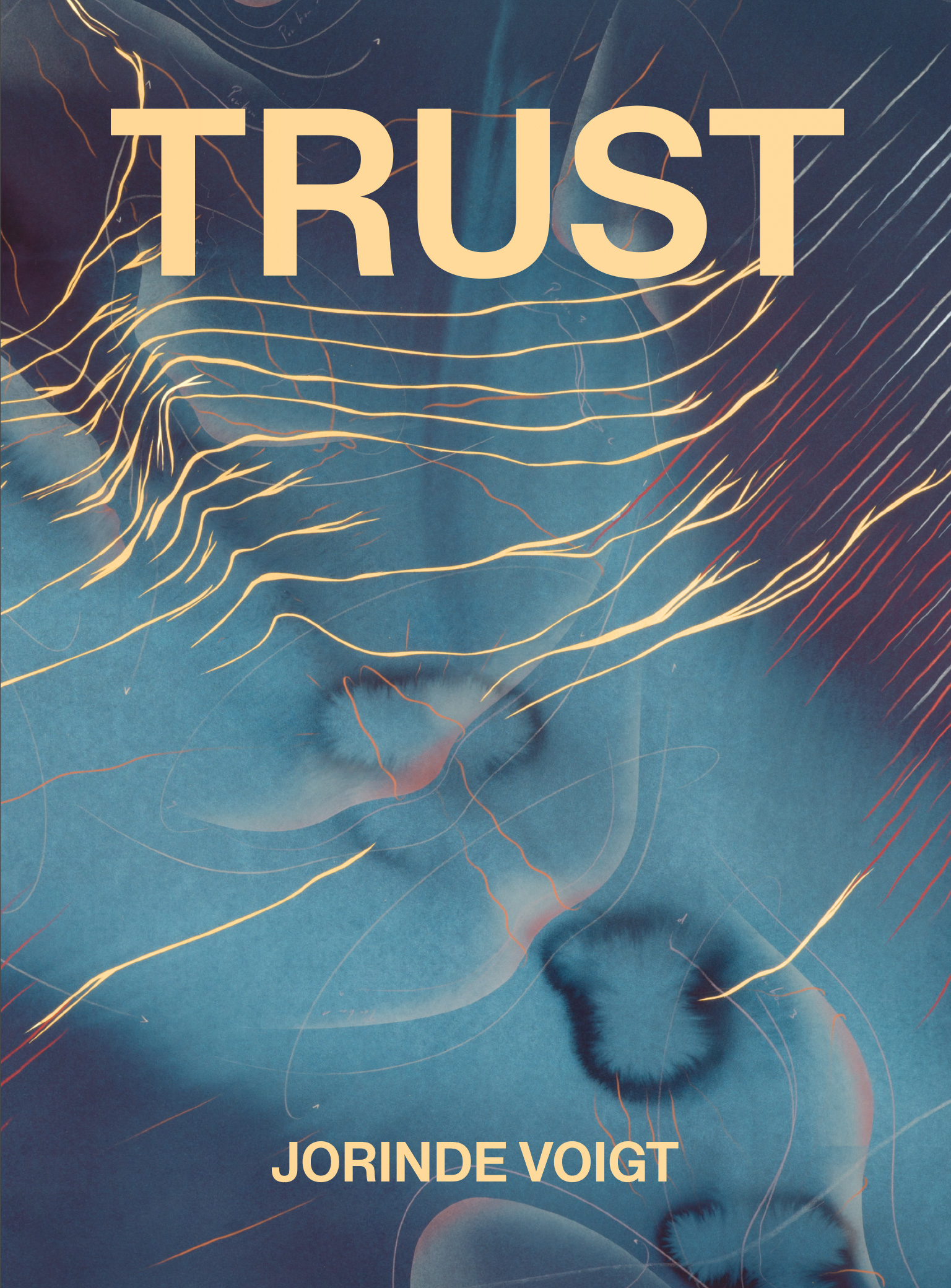
Jorinde Voigt
Trust42€ Add to cartJorinde Voigt (b. Frankfurt am Main 1977, lives and works in Berlin), declared about the title of the book “Trust is a hybrid of longing for something and the engagement to reach it”. Voigt has thus decided to compile her works, which she realized from May 2019 to spring 2021, under the sign of confidence, connectedness, reliability and integrity. Many of the works presented place themselves in the continuity of those in Immersion, a book that brought together works from the period 2018-2019.
In the extensive volume Trust, sculptures and mobiles are shown alongside the works on paper for which she is known – here immersed in a pigment bath and then worked on with pastel, ink, India ink, oil pastels and gold leaf–.
Jorinde Voigt studied philosophy and modern German literature at the University of Göttingen from 1996. In 1998 she moved to Berlin and studied sociology, philosophy and general and comparative literature at the Free University of Berlin. 1999-2003 she studied art in multimedia at the University of the Arts with Christiane Möbus and visual arts and photography with Katharina Sieverding, whose master student she became in 2004. 2014-2019 she was professor of conceptual drawing and painting at the Academy of Fine Arts Munich. Since 2019 she is professor at the Hamburg University of Fine Arts.
-

“Das Quadrat muss den Raum beherrschen!”
Aurélie Nemours und Zeitgenossen15€ Add to cartDoes everything in the world obey a mathematical logic, can everything be calculated? In our present age of probability, some would say the answer is a straightforward yes, inevitably prompting the question: Even art? Yes, even art, or so the defenders of Concrete Art would respond, a twentieth-century movement that took abstraction as a focus on the “idea of art itself” (W. Kandinsky) to the next level. The act of painting was now to be subject to preconceived organizing principles as though they were laws of nature. One prominent exponent of the genre was Aurélie Nemours (1910–2005), who had a penchant for the square; her credo was that it needed to “rule space.” That is why the equilateral quadrangle is the defining shape in this catalog, which brings Nemours’ oeuvre into focus. Her iconic position is flanked by works by seventeen others that similarly grapple with the square, including pictures and sculptures with square basic forms, grids, or canvases. All these works derive their force from the stern authority of the square: only when art constrains its means can it bring its full potential to bear.
ARTISTS:
JOSEF ALBERS, GÖTZ ARNDT, MAX BILL, AD DEKKERS, HELMUT FEDERLE, GOTTFRIED HONEGGER, KATHRIN KAPS, FRITZ KLINGBEIL, JOHN MEYER, GEROLD MILLER, AURÉLIE NEMOURS, JOHN NIXON, PETER ROEHR, JAN SCHOONHOVEN, ANTON STANKOWSKI, KLAUS STAUDT, HERMAN DE VRIES, GERHARD WITTNER -

Thomas Lehnerer
Freies Spiel44€ Add to cartThe function of art in human existence
Throughout his short life, the Munich-based theologian and artist Thomas Lehnerer (1955–1995) did not take the existence of art for granted. In his writings, above all in Methode der Kunst (Methods of Art), he developed a concept of art in the continuation of key texts from the fields of aesthetics, cultural theory, and art history, which can also be found in his own artistic work. The small-format figurative sculptures by Lehnerer, as well as his drawings, watercolors, and early installations, follow theoretical premises and address comprehensive themes of human existence. The present volume documents his examination of human existence, which is deepened by the inclusion of cultural historical figures and idols.
- Release January 2026
Frank Morrison
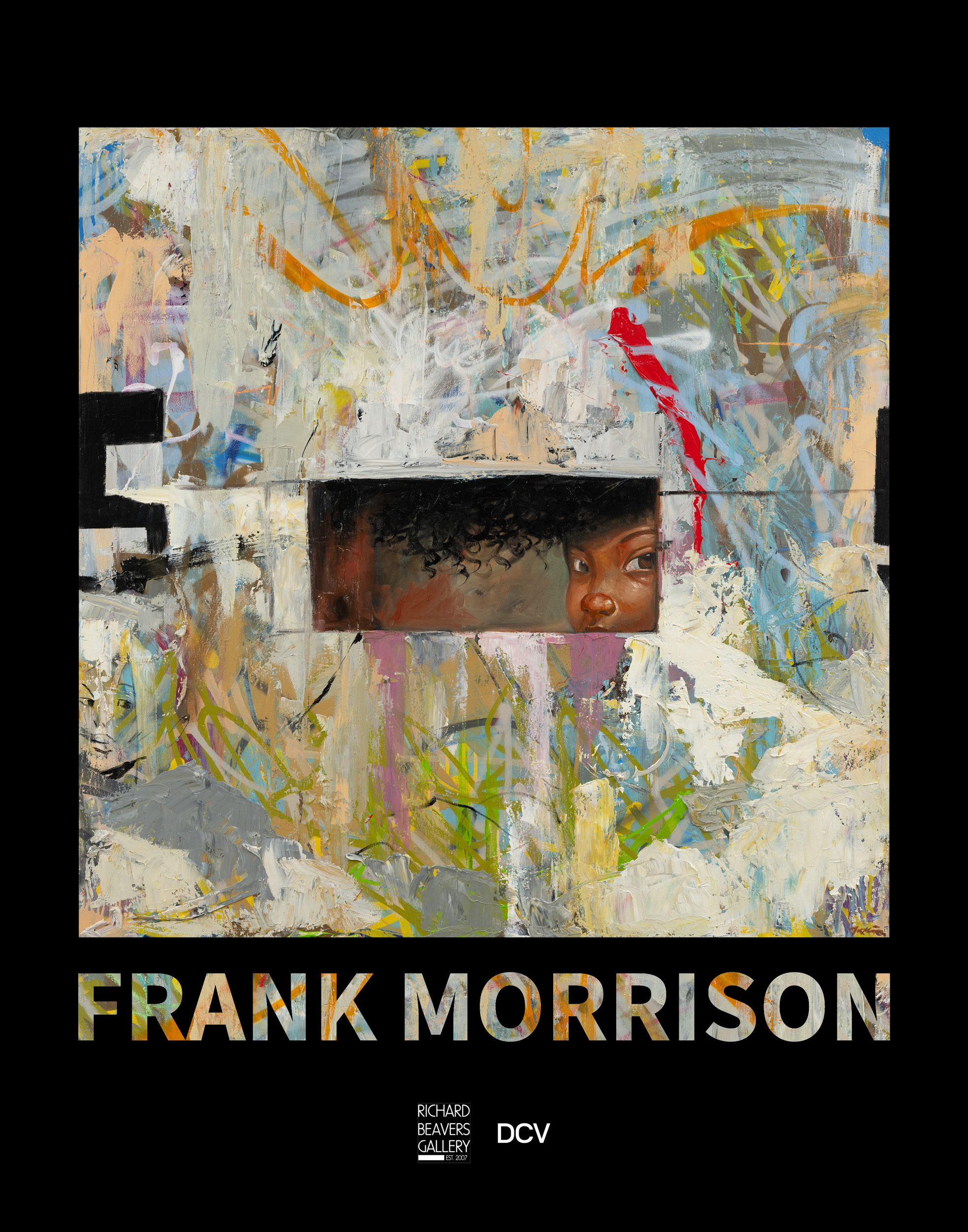
38€ Add to cartThe dynamic Neo-Mannerist images of painter and illustrator Frank Morrison (born 1971, lives in Atlanta) celebrate the resilience and dignity of African Americans in everyday life. A child of institutionalized racism in the US, he can testify that creativity and solidarity could never be suppressed in the segregated and brutally marginalized communities. Hip-hop and graffiti are resistance. Clichés of inner-city struggle are vividly refuted in this book. The volume documents Morrison’s recent exhibitions, one of which is dedicated to the younger generation: frame-braking images that interweave narrative forms of comics and pop art with illustration. Morrison’s gallery calls the book an explosive tribute to genius flourishing in institutionalized exile.
-

Jan Zöller
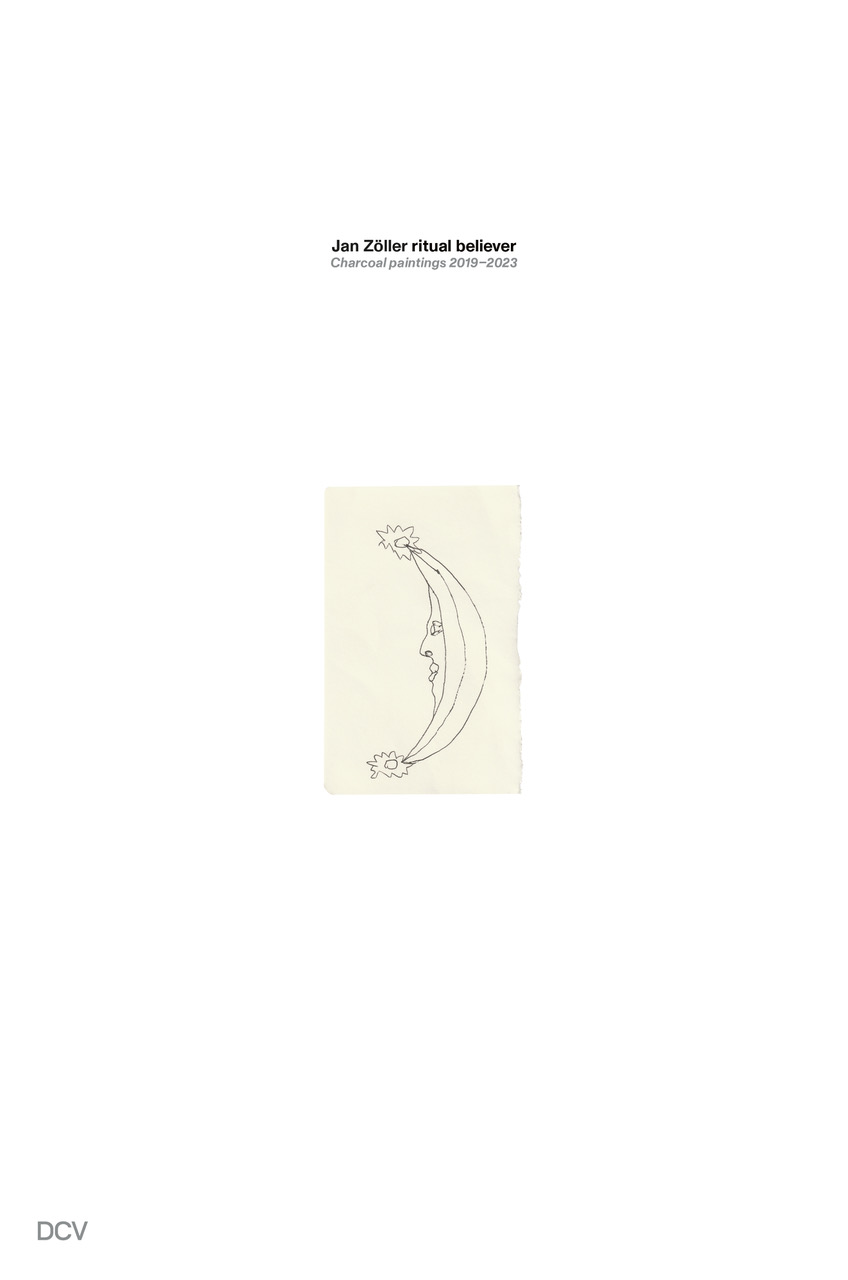
Ritual Believer40€ Add to cartJan Zöller’s (b. Haslach, 1992; lives and works in Karlsruhe) paintings, sculptures, and installations probe the discrepancy between economic production and the spiritual and magical dimension of art. The artist’s book Ritual Believer surveys the so-called charcoal paintings series, created between 2019 and 2023. For these works, the artist paints directly in charcoal on the unprimed canvas, making it impossible to correct “blunders.” Another distinguishing feature is the virtual absence of color; the austerity of the compositions contrasts with Zöller’s other, often intensely colorful paintings. The motifs that are the hallmark of his oeuvre—birds, running legs—are complemented by writing and text. Another aspect of this shift is that the works’ titles play a central part and almost figure as a creative element in their own right. For the text in the book, the artist sent the titles of the works shown to his brother, who wove them into a story. An appendix presents scanned archival materials. Notebooks and zines Zöller produced between 2015 and 2017 provide interesting insight into how he finds his motifs and his compositional process.
Jan Zöller studied with Marijke van Warmerdam and Leni Hoffmann at the Akademie der Bildenden Künste Karlsruhe from 2012 until 2017 and with Jean-Marc Bustamante and Götz Arndt at the École Nationale Supérieure des Beaux-Arts de Paris in 2016.
-

The Art of Society
1900–194529€ Add to cartThe Collection of the Nationalgalerie, Berlin
The Neue Nationalgalerie in Berlin, the last building designed by Mies van der Rohe, has been closed a full six years for refurbishment. To mark its reopening the museum is presenting the highlights of its classical modernist collection under the title The Art of Society, 1900–1945. Visionary, critical, resigned or utopian, the paintings and sculptures bear witness to art’s dialogue with prevailing social conditions – from the German Empire to the First World War, the Weimar Republic and ultimately National Socialism. The catalogue documenting all works in the exhibition traces the major artistic tendencies during the first half of the 20th century in thirteen chapters. The Art of Society, 1900–1945 offers a renewed encounter with works by Edvard Munch, Ernst Ludwig Kirchner, Tamara de Lempicka, Lotte Laserstein, Otto Dix, George Grosz, Max Beckmann, and many others that is as captivating as it is illuminating.
Click here for the German edition.
-

Urban Art! Biennale® 2019
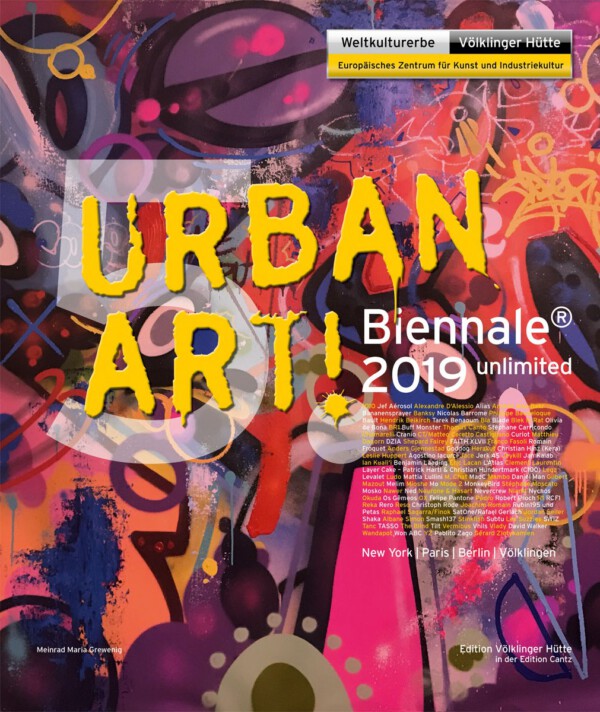
27,50€ Add to cartThe World’s Most Important Exhibition of Urban Art — Presented for the Fifth Time in 2019
Its themes are the city and urban lifestyle, its can-vases walls, doors, or windows, its artists cosmo-politan. Since the turn of the millennium, Urban Art has developed out of the non-commercial, often illegal art forms of graffiti and street art. Although it makes use of the same stylistic means — spraying, tagging, the deliberate inclusion of drips, the use of graffiti scripts, etc. — it transports these as commis-sioned works into the legal space of the museum, gallery, or architecture. The Urban Art Biennial at the World Cultural Heritage Site Völklinger Hütte is the largest international exhibition of its kind. Fifty individual works and twenty-five installations by one hundred artists shed light on the latest developments and positions from Western metropolises, as well as from current hot spots around the globe.
-

WORLD FRAMED
Zeitgenössische Zeichenkunst der Sammlung Schering Stiftung im Kupferstichkabinett38€ Add to cartIn 2008, the Schering Stiftung began acquiring outstanding contemporary works on paper for the Kupferstichkabinett (Museum of Prints and Drawings) in Berlin. The collection, which has since grown to 130 nonfigurative drawings and a small number of prints, emphasizes the close conjunction of art and science. The holdings also reflect central tendencies in the art of drawing: in addition to exploring the line and its multifaceted formulation, artists shed light on the bounds of their medium and its expansions and undertake forays into inter-media art within drawing. The lavishly designed publication WORLD FRAME—the title is borrowed from a work by the artist Matt Mullican—presents the works acquired thanks to this partnership. It inquires into how artists translate their perceptions of their world into pictures and which contexts and discourses inform those pictures. Which perspectives, which ideas frame the segment of reality an artist observes?
“World Framed,” exhibition, Kupferstichkabinett, Staatliche Museen zu Berlin, July 7–October 8, 2023
-
Johannes Schütz
Die Unterbrechung / The Interruption48€ Add to cartJohannes Schütz (b. Frankfurt am Main, 1950; lives in Berlin) is one of the best-known stage designers and directors working today. His style may be characterized as “simple, clean, and radical.” All major theatres and opera houses in the German-speaking countries and beyond have showcased Schütz’s work. He trained with Wilfried Minks and created his first stage setting for Luc Bondy in 1971. His career then took him to Berlin’s Schillertheater and the Kammerspiele in Munich, later he became head of stage design at the Bremer Theater and the Schauspielhaus Bochum. Schütz taught scenography at the ZKM Center for Art and Media Karlsruhe from 1992 until 1998 and has been professor of stage design at the Düsseldorf Academy of Fine Arts since 2010.
In his book Die Unterbrechung, he meets Annette Storr to discuss his new work for the stage, which is documented by maquettes and photographs and, most often, by stills from the performances. The productions represented include Penthesilea by Heinrich von Kleist, Landestheater Salzburg, 2018; Hamlet by William Shakespeare, Schauspielhaus Bochum, 2019; Reich des Todes by Rainald Goetz, Deutsches Schauspielhaus Hamburg, 2020; Richard II by William Shakespeare, Burgtheater, Vienna, 2021; and Der Idiot by Dostoevsky, Thalia Theater, Hamburg, 2021.
-

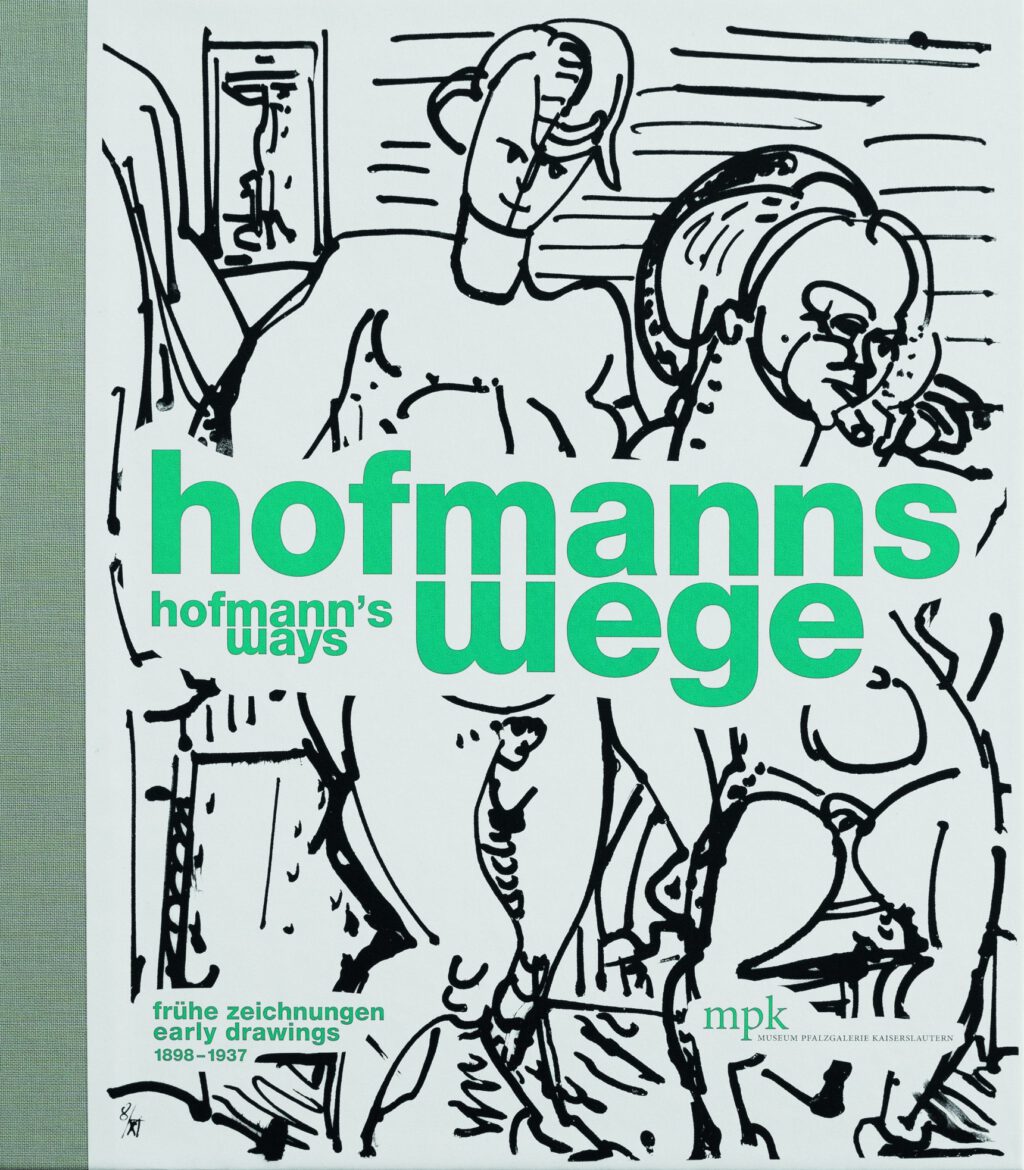
Hofmann’s Ways
Early Drawings (1898-1937)24,80€ Add to cartA Re-Discovery: the Early Graphic Work of Hans Hofmann
A representative of Abstract Expressionism, Hans Hofmann (b. 1880, Weißenburg; d. 1966, New York) was one of the most important artistic personalities of the 20th century. He began his career as a teacher and artist in the United States in the mid-1930s. The previously unpublished graphic oeuvre presents the highly varied development process that preceded Hans Hofmann’s influential painting of the post-war period.
- Shortlist German Photo Book Award 2019/2020

Arina Dähnick
The MIES Project45€ Add to cartIn the Footsteps of Ludwig Mies van der Rohe
In her photographic works, Arina Dähnick (b. 1965, Krefeld; lives and works in Berlin) deals with urbanity, spatial reality and visual perception. She discovered the architecture of Ludwig Mies van der Rohe in 2012, when, after a thunderstorm, she perceived the Neue Nationalgalerie in a both fascinating and paradoxical spatial experience of boundless vastness – and a simultaneous feeling of being held. From then on she photographed the building under various conditions until its closure in 2015, afterwards following in Mies van der Rohe’s footsteps from Berlin to Brno, from Chicago to New York. Dähnick captured his most famous buildings – including the Villa Tugendhat, the Seagram Building, and the Lake Shore Drive Apartments – in impressive photo series, which have been exhibited during the Chicago Architecture Biennial amongst others. The book was awarded the silver medal of the Deutscher Fotobuchpreis.
-

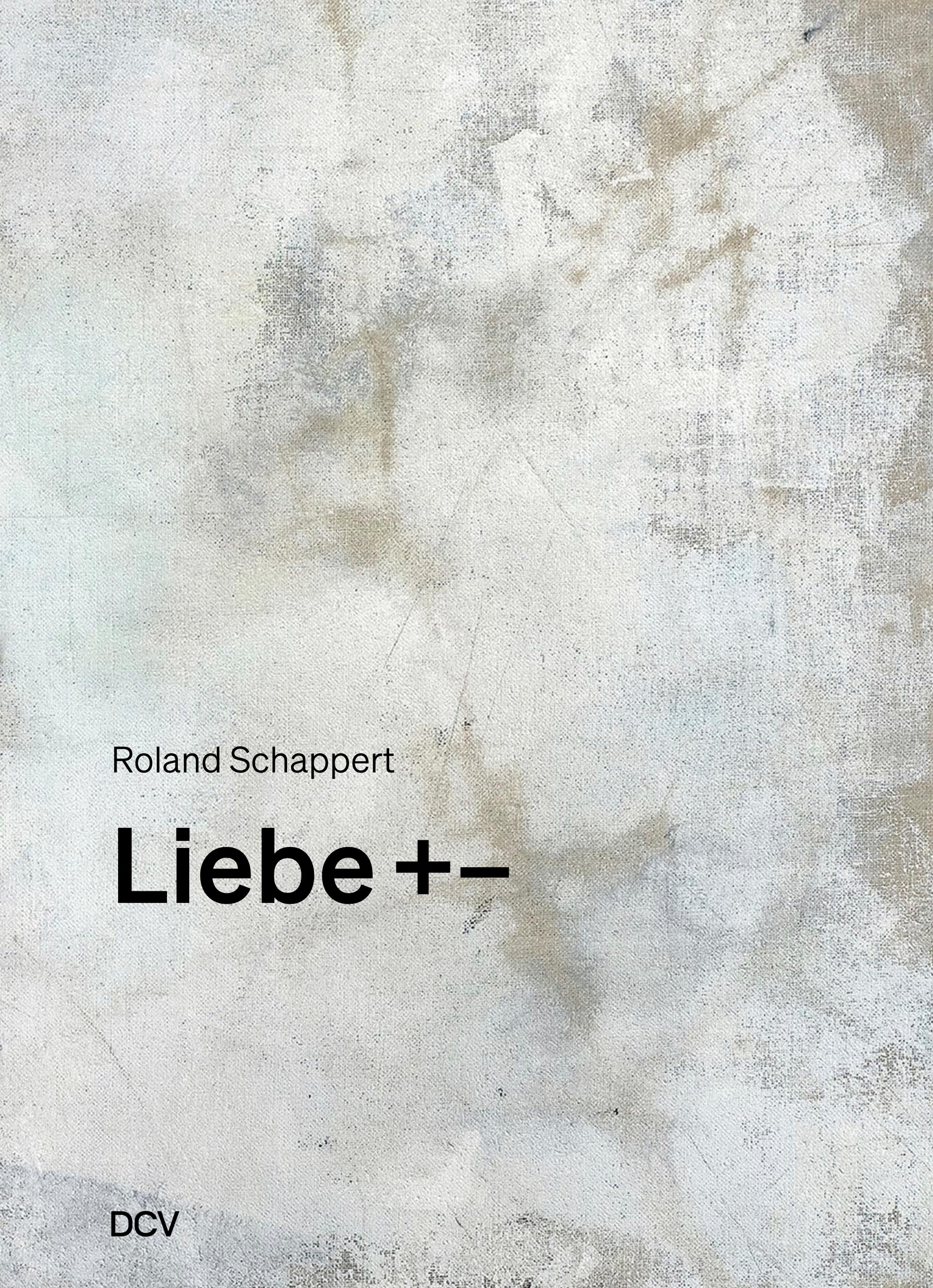
Roland Schappert
Liebe +–24€ Add to cartRoland Schappert’s Liebe+– is a poetic voyage into the mysterious and paradoxical landscapes of love. Combining an unrelenting eye with lyrical precision, Schappert captures the fragile equilibrium between intimacy and distance, between the longing for union and the need for detachment. The +– in the title is a symbolic shorthand for the ambivalence of love: attraction and repulsion, delight and pain, their constant interplay defining the dynamic of love.
The terse and sometimes aphoristic writings enter into a dialogue with the author’s artful and enigmatic pictures and sculptures—text images sewn out of strings of beads or painted in Champagne chalk that subtly mirror and refract the emotional tension of the poems. Nimbly balancing on the fine line between devotion and disaffection, Schappert’s verses are interspersed with ironic allusions to our digital and urban contemporary world.
By forging a symbiosis of poetry and image, this artist’s book charts a world unto itself in which the boundaries between I and you blur and subject and object are fused in a collective we. It invites us to contemplate love with a fresh eye—as tender touch and fractious idea, as a play of expectation and disappointment that we begin anew every day.
‘Love in the age of social media and dating apps, but not from a Gen Z perspective – but from someone who has known this feeling for much longer. And who brings his experiences – which are certainly representative of many – in ever new combinations of text and images into a form that makes reading and viewing a memorable experience.’ – Wolfgang Ullrich
-

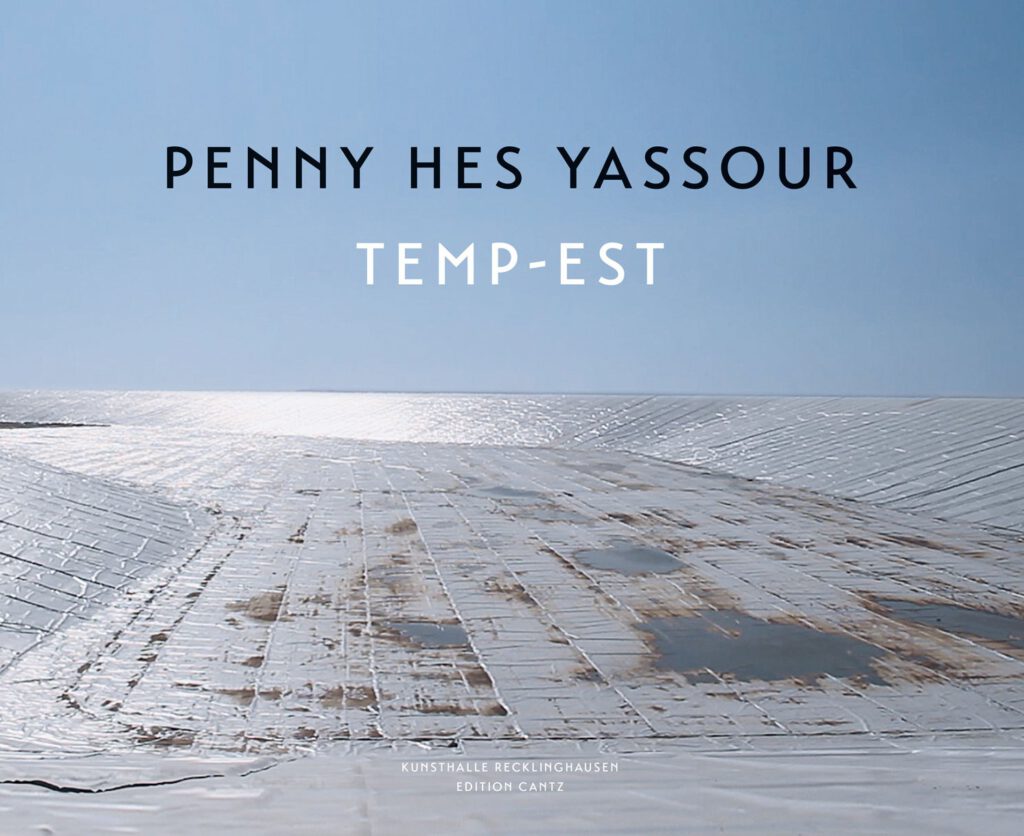
Penny Hes Yassour
Temp-Est24€ Add to cartA Monograph about the Award-Winning Israeli Artist
Penny Hes Yassour (b. 1950, lives and works at kibbutz En-Harod Ihud) tells stories and keeps history alive, explores the boundary between remembering and forgetting. In her installations she combines sound, image, and a multi-part world of objects into narrative mise-en-scènes of great poetic power. Hes Yassour leads the viewer through the Jordan Valley with its many watchtowers, accompanies the transformation of the landscape in a gigantic, stagelike water basin, and documents the flight of bats in a narrow, labyrinthine spatial installation. The book published on the occasion of the artist’s first exhibition in Germany provides comprehensive insights into her subtle artistic work.