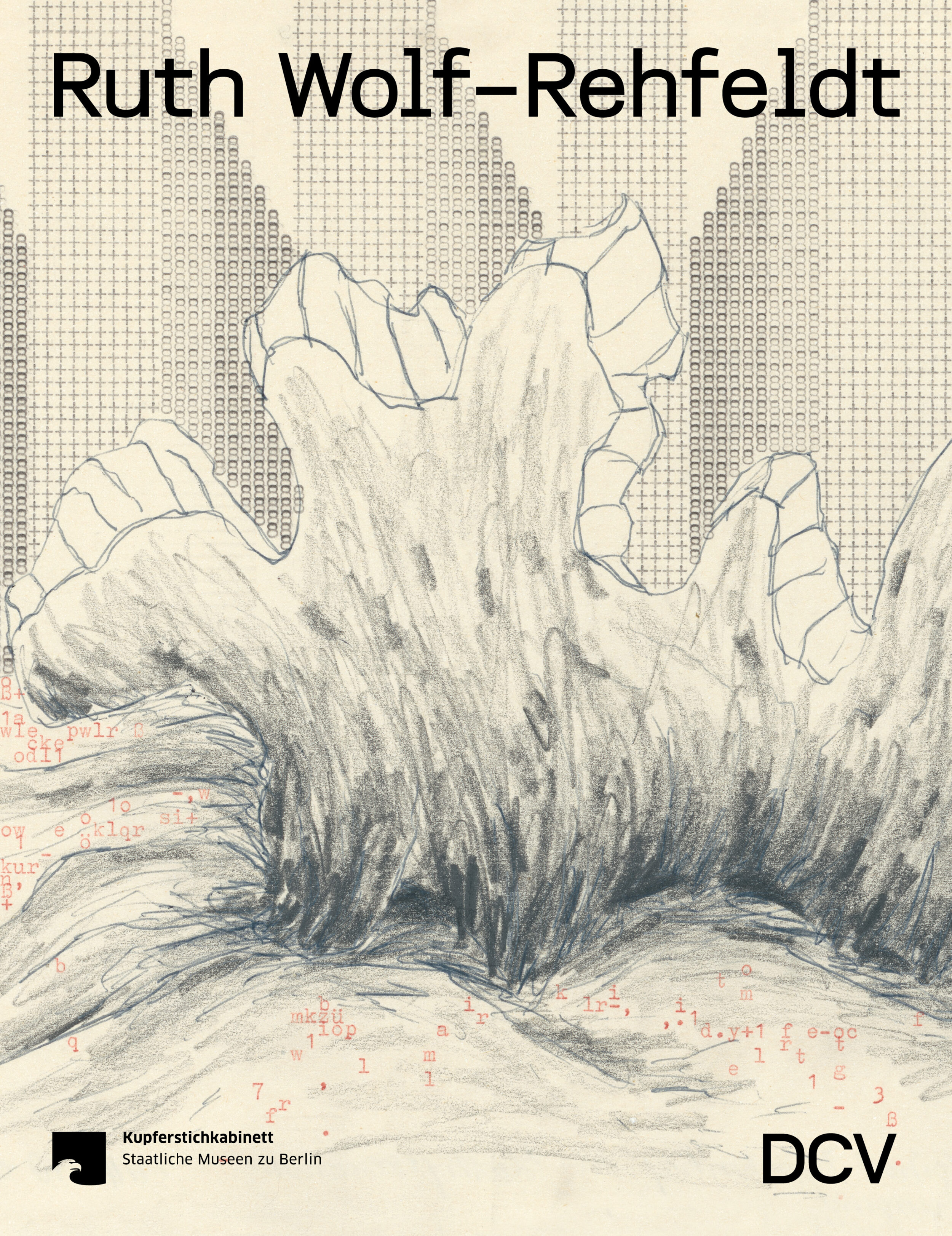
Ruth Wolf-Rehfeldt – Wie eine Spinne im Netz
 | |
|---|---|
| Editor(s) | Jenny Graser |
| Author(s) | Jenny Graser, Dagmar Korbacher, Klaus Lederer, Fabienne Meyer, Kathleen Reinhardt |
| Design | Book Book, Berlin |
| Cover | Softcover with flaps |
| Size | 22,6 × 29,7 cm |
| Pages | 216 |
| Illustrations | 172 |
| Language(s) | German |
| ISBN | 978-3-96912-104-7 |
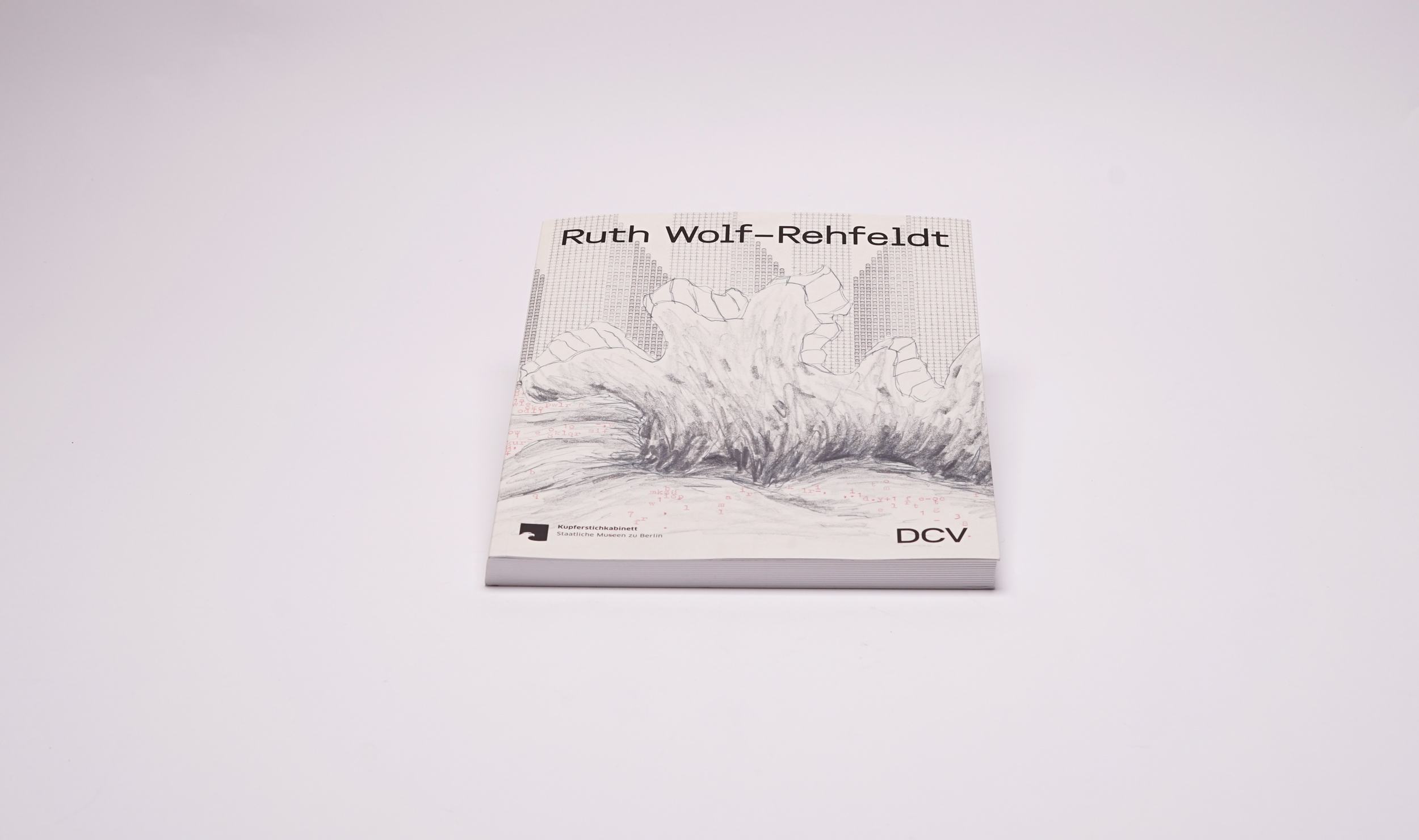
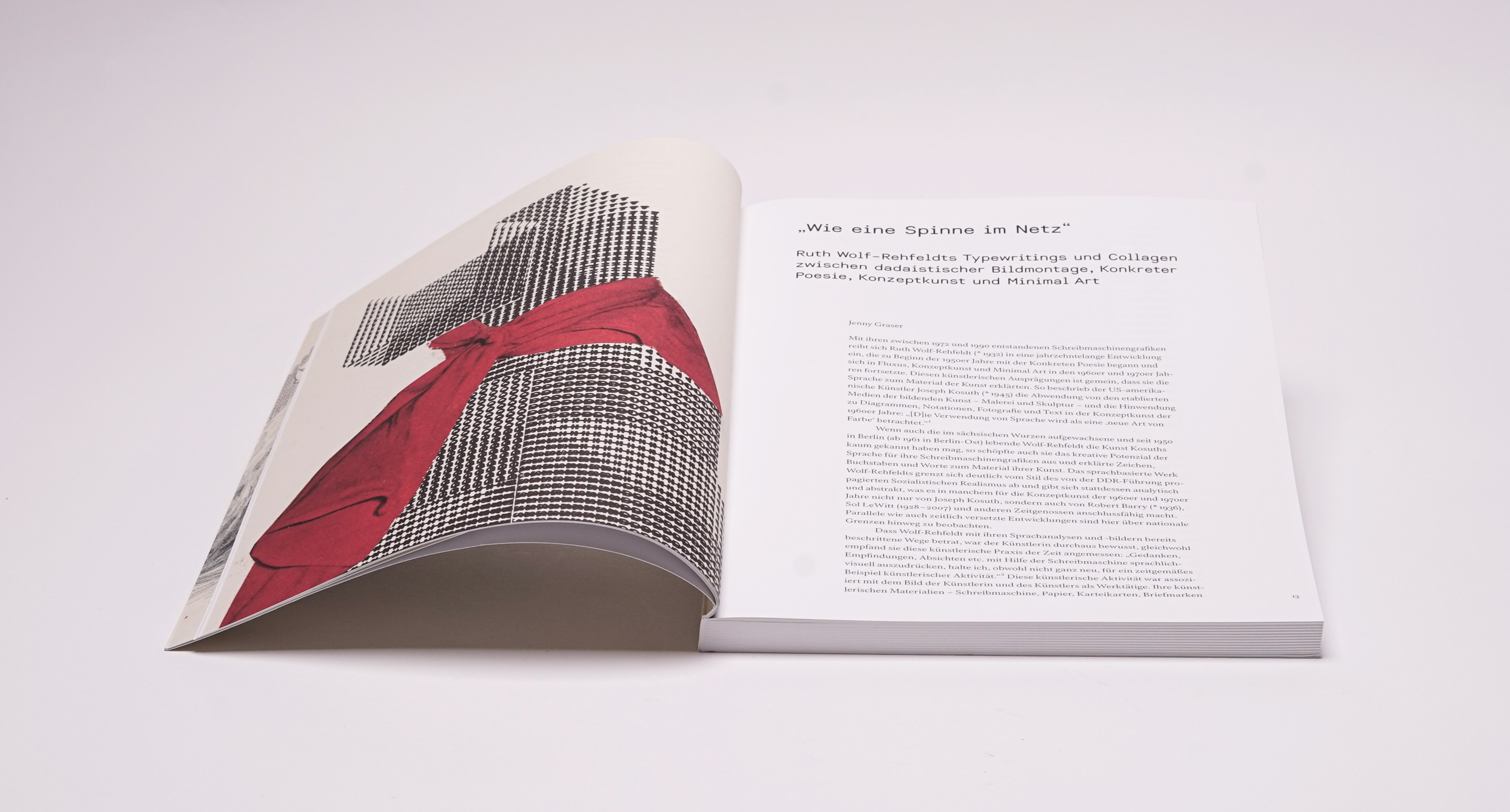
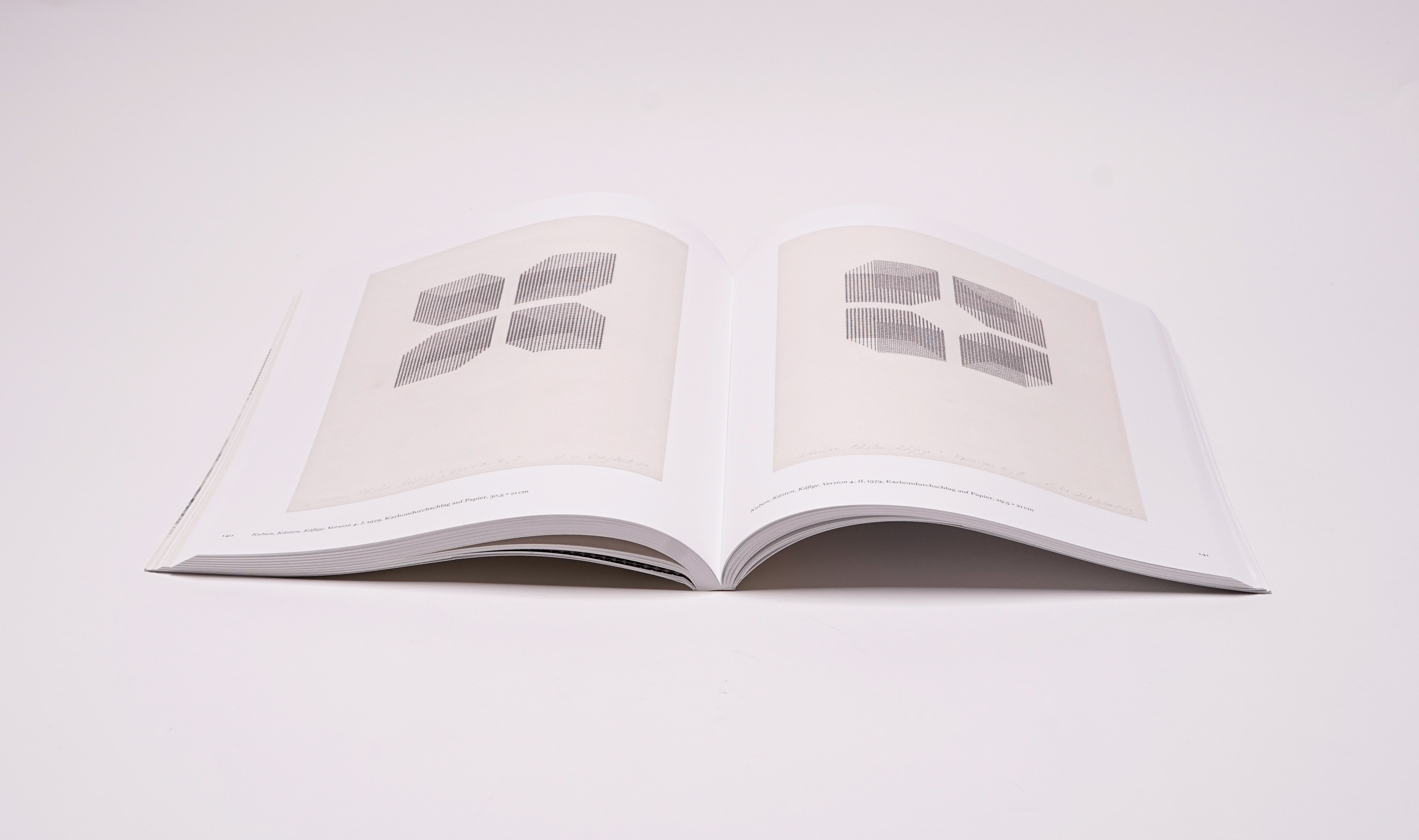
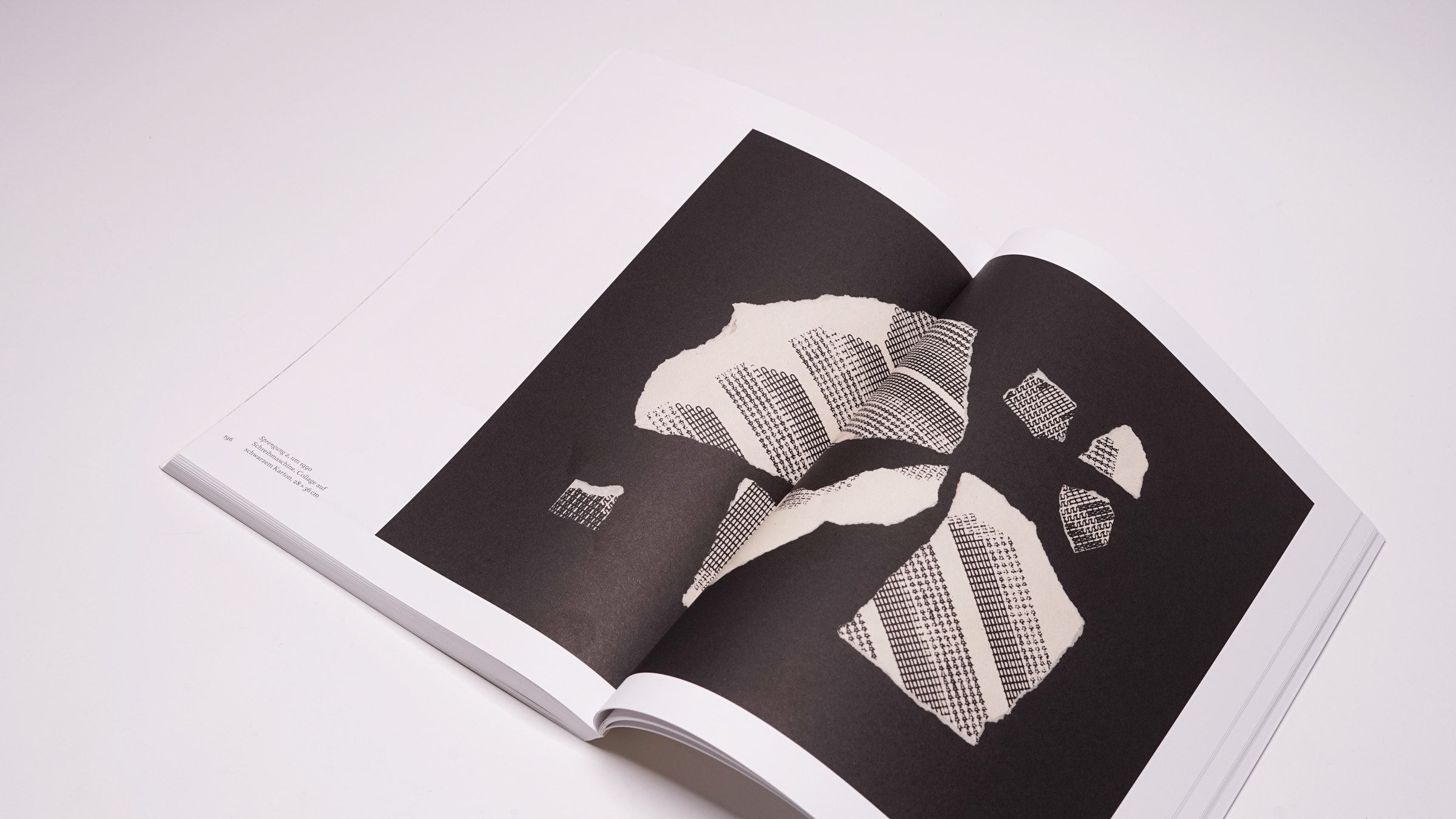
Ruth Wolf-Rehfeldt (b. Wurzen, Germany, 1932; lives in Berlin) is one the few East German female artists who devoted themselves to graphic art produced on the typewriter. Working on her trusty “Erika,” she arranged letters, digits, commas, and plus signs to compose imaginative visual creations. Under her hands, the black and red characters were transformed into poetic verbal images, gently undulating waves, serial patterns, and architectonic or figurative formations. Sometimes verging on concrete poetry, these typewritings also evince unmistakable affinities with conceptual and minimalist art. In the 1980s, the artist expanded on them in collages that recall Hannah Höch’s Dadaist visual montages. With her graphic work, Wolf-Rehfeldt was also an active participant in the GDR’s mail-art program: she sent the typewritings to artists beyond the impassable borders of her country, building an extensive network of correspondences that spanned the globe.
The richly illustrated monograph underscores the diversity and contemporary relevance of Wolf-Rehfeldt’s works, which were created in the shadow of the Cold War and address the fragility of peace as well as early manifestations of the environmental devastation wrought by the industrial age.
More books
-

Alexandru Chira
42€ Add to cartAlexandru Chira’s (b. Tăușeni, Romania, 1947; d. Bucharest, 2011) oeuvre systematically and comprehensively maps a fictional field of research. His paintings, drawings, and objects, whose individual elements recall switches, screens, keyboards, and levers, were designed to “bring rain and rainbows,” to promote prosperity and prevent floods. Working in his art laboratory, Chira resembled a farmer tilling his field. He sowed symbols across his paintings, sometimes transplanted them to create new semiotic interconnections, then reaped them and stored up his harvest in painted machines of varying shapes and dimensions. In the 1990s—by then Chira held a professorship and was a widely recognized artist—he fulfilled a lifelong dream by building the “Tăușeni Ensemble,” the largest monument single-handedly created by one man in Transylvania. Much of his oeuvre accordingly consists of sketches and elaborations relating to the monument. In the course of his decades-long fascination with an agrarian aesthetic, architecture, design, astronomy, history, magic, ufology, mysticism, shamanism, and theosophy fused, yielding a kind of practical knowledge as well as spiritual speculations sustaining his endeavor.
The extensive monograph with more than 750 illustrations surveys Alexandru Chira’s output of four decades and synthesizes years of research undertaken at the National Museum of Contemporary Art in Bucharest. It contains numerous transcriptions of textual parentheses, legends, and instructions on how to decode the works and poetic fragments embedded in Chira’s pictures.
-

Pieter Slagboom
Scent of Hypnosis42€ Add to cartPieter Slagboom’s drawings are about life and death. About how these ostensible antagonists are inseparable; how, in his imagination, they are even fused. In his enormous canvases, we are held by the essence of our existence as though by a steel vise: we come from the void and in the end shall return to it. Thousands upon thousands of sweeping lines, twisting like Moebius strips, make for an almost physical experience of this truth. The dead and the newborn emerge from the primeval soup of Slagboom’s lines, as do genitals; we spot larger-than-life fantasies of disturbing sexual acts. The circle of life as a short circuit. The energy of some of the pictures in Slagboom’s oeuvre is almost too much to bear—we shudder before the pigments materializing our latent knowledge: that death is suspended in life.
-

Kai Schiemenz
Priel38€ Add to cartTidal creeks are watercourses that crisscross coastal mudflats. Running between sandbars, they flush deposits out into the sea with the falling tide, and when the tide rises, the water flows back in. In other works, tidal creeks are effectively rivers in the sea. Delving into the implications of this idea, the book presents Kai Schiemenz’s (b. Erfurt, 1966; lives and works in Berlin) major works and projects of the past four years. The publication offers insight into the provenance of selected bodies of work and their genesis. Kai Schiemenz’s art examines the city, spaces, and architecture. His small-format sculptures are self-contained creations that combine digital technologies with natural materials like wood or paper. At the same time, they function as models for expansive installations and outdoor and indoor architectures in which Schiemenz orchestrates sight lines to construct spaces whose permeability makes the audience an integral aspect of the work. If his sculptures are architecture, his exhibitions are landscapes in which the visitors encounter one another as they would in a park. Their central question, time and again, concerns the impact of the built environment and urban landscapes on their inhabitants.
-

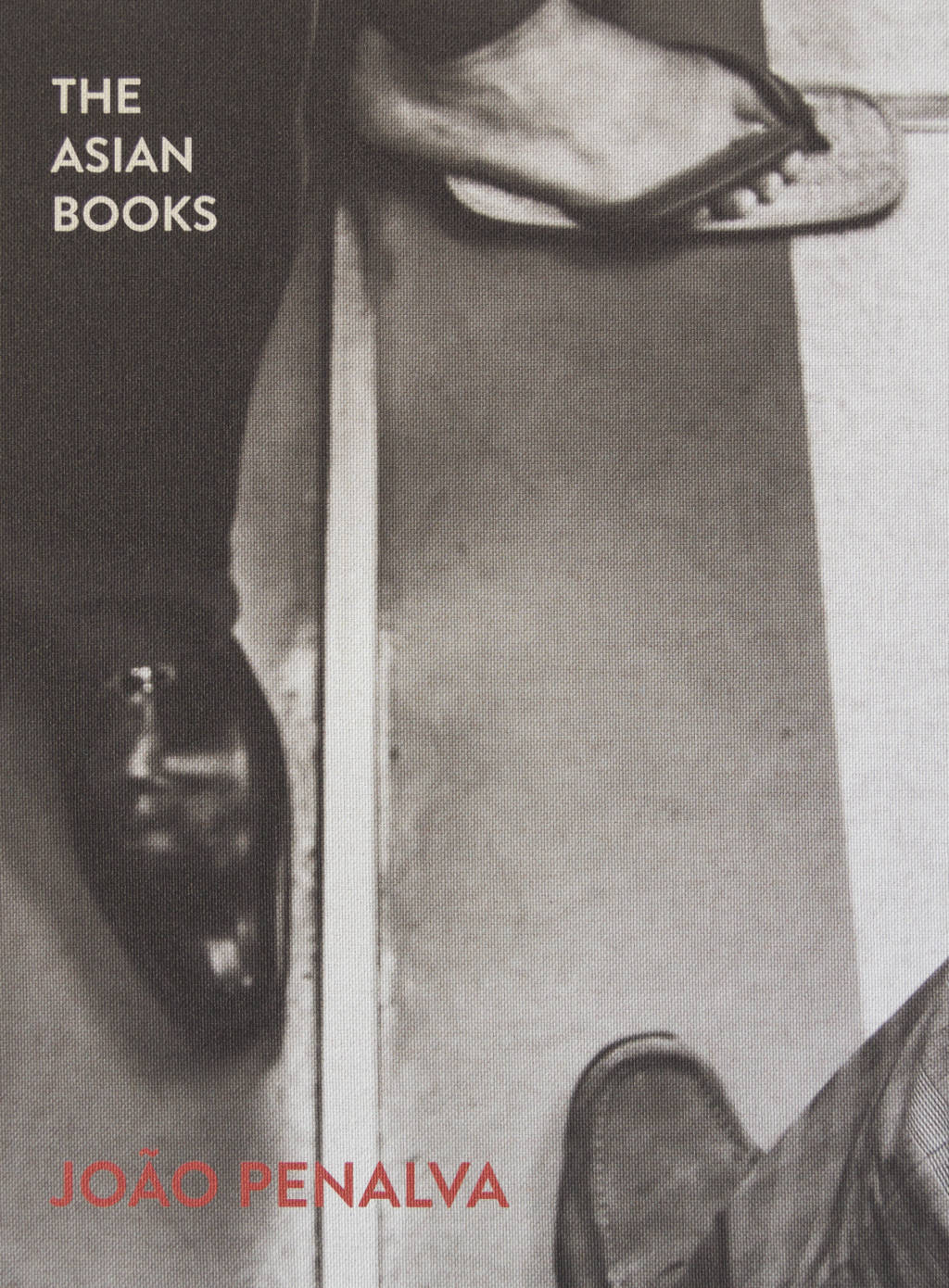
João Penalva
The Asian Books40€ Add to cartThe First Survey on the Exceptional Artist Books of João Penalva
Since 2007 João Penalva (b. 1949, Lissabon; lives and works in London) has exhibited large format unbound books, printed with archival inks on fine art paper, displayed on tables with chairs, to be handled freely. Each one is published in an edition of three and one artist’s proof. Those whose content relate to Asia, whether factually or fictionally, are collected here for the first time: Taipei Story, 2007; Portraits: Machines and Kabuki Wigs, 2009; The Toshiba Book of Happiness, 2009; Hello? Are you there?, 2009; Michio Harada, 2015; Boro, 2017.
João Penalva studied Fine Art at the Chelsea School of Art in London. His works have been shown in manifold international exhibitions. Penalva represented Portugal 2001 at the Venice Biennale and 1996 at the São Paulo Biennale.
-

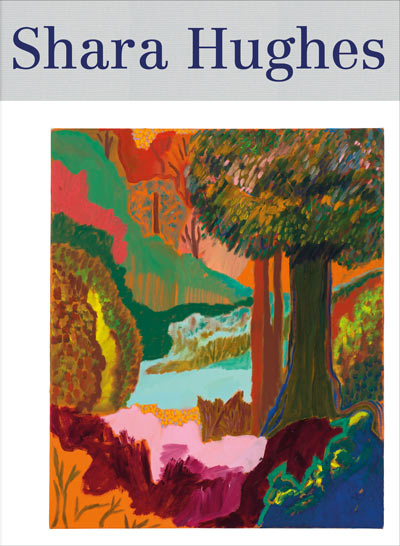
Shara Hughes
58€ Add to cartBoisterous Compositions
At first glance, Shara Hughes’s (b. Atlanta, GA., 1981; lives and works in Brooklyn) colorful and extravagant landscapes are chock full of everything we love in famous paintings: the palette of Henri Matisse or David Hockney, the stylistic inventiveness of Edvard Munch or Paul Cézanne, the painterly gestures of Philip Guston or Josh Smith, perhaps even van Gogh’s brushwork. She quotes this masculine tradition in landscape painting deliberately and unabashedly. This monograph is the first to present a comprehensive overview of Shara Hughes’s work.
Shara Hughes graduated from the Rhode Island School of Design and later attended the Skowhegan School of Painting & Sculpture in Madison, ME. She has had solo shows at the Arts Club, London, the Metropolitan Opera, New York, and the Museum of Contemporary Art of Georgia, Atlanta. In 2017, she participated in the Whitney Biennial, New York.
-

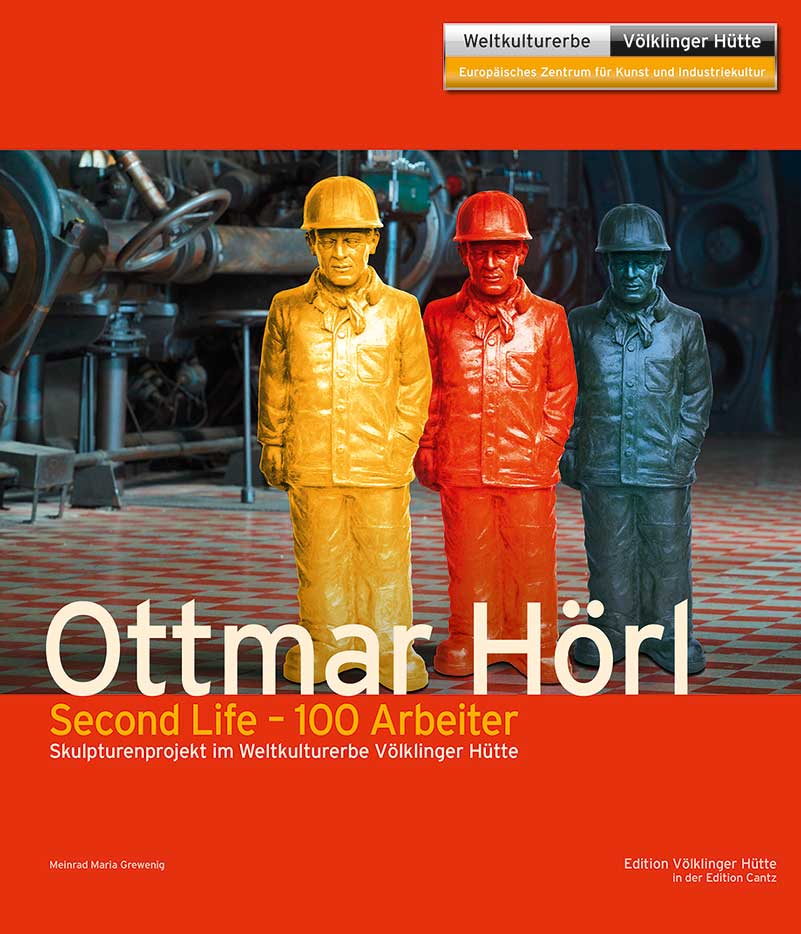
Ottmar Hörl
Second Life – 100 Arbeiter14,80€ Add to cartThe Workman Sculptures at Völklinger Hütte Steelworks
Sculptures on topics of everyday life are at the center of the work of Ottmar Hörl (b. 1950, Nauheim; lives and works in Frankfurt/Main and Wertheim). His major projects gained international recognition, they are based on the artist’s concept of art as a communication model. For the Völklingen Ironworks World Heritage Site, Hörl conceived the sculpture project Second Life, which features 100 figures modeled on the Völklingen ironworker with helmet and work clothes. The book documents the impressive project that focuses on the universal theme of the Völklingen Ironworks: work and the working people.
-

Leszek Skurski
Catalogue raisonné Vol. 1: Works from 1990–202459€ Add to cartLeszek Skurski (b. Gdańsk, 1973; lives and works in Fulda and Mallorca) is known for his singular and immediately recognizable white paintings. Small black and gray figures emerge from the white landscapes, always set in relation to one another, in pairs or groups. Exposed on the expansive and boundless-seeming plane, they silently tell a story that remains as open-ended as the pictures. In a few spare brushstrokes or lines drawn with the palette knife, Skurski’s superb neoimpressionism deftly captures the atmosphere that weighs down on his characters and holds his compositions in suspense.
The extensive monograph presents over two thousand works from more than three decades. Essays embed the various bodies of work in their art-historical contexts.
-

Austin Eddy
Selected poems40€ Add to cartSince 2018, the American painter and sculptor Austin Eddy (b. Boston, 1986; lives and works in Brooklyn) has probed the manifestations of modern painting in a world between abstraction and figuration. As a child and teenager, Eddy immersed himself in the imageries of comics, cartoons, and record covers. In the early 2010s, he studied in Chicago with Barbara Rossi, who had been one of the Chicago Imagists in the 1960s. The deconstruction of everyday objects into innumerable forms and hues became his central theme. Eddy’s works play with luminous colors, overlaid textures, animated bird motifs, and abstract planes of light while grappling with a human existence defined by loss and the passage of time. Situated on the margins of reality, his paintings and sculptures are like visual poems, celebrating the evanescent instant that exists only for a second before fading into the past.
Austin Eddy completed a BFA at the School of the Art Institute of Chicago in 2010.
-
Stephan Kaluza & Dieter Nuhr
Transit42€ Add to cartLandscapes in a Dialogue between Painting and Photography
At first glance, Stephan Kaluza’s (b. 1964, Bad Iburg; lives and works in Düsseldorf) photorealist paintings might be still lifes, portraits of pristine nature. Yet they actually show battlefields and other scenes of past horrors. The idyll in his pictures positively appeals to our vigilance to resist the impression of profound peace. The same ambiguity lies at the heart of the photographs of Dieter Nuhr (b. 1960, Wesel; lives and works in Ratingen). Nuhr, who is also widely known as a comedian, has contributed pictures that are carefully focused renditions of seemingly serendipitous discoveries from his travels in Nepal, Bolivia, India, and Sudan. In their timelessness, Nuhr’s photographs are akin to the locales in Kaluza’s works, which, disburdened of the heavy weight of their histories, reemerge as straightforward natural landscapes. The lavishly illustrated two-volume edition presents the fruits of a collaboration between two artists united by their shared preoccupation with the dialectic of ephemerality and permanence.
- Release January 2026
Stefan Reiterer
Inflection Point38€ Add to cartThe Austrian artist Stefan Reiterer (born 1988, lives in Vienna) transfers digital maps and satellite images into analog physical space through abstract painting. He manipulates data from sources such as Google Earth or NASA, transforming them into illusory topologies and pseudo-cartographies to challenge our perception. What is recognized, discovered, rejected? Where is the viewer’s location? Andrea Kopranovic writes of Reiterer’s painted emptiness as a “pitting” and projection surface “for glitches, black holes, and abysses” and a metaphor for potential “interpretations, enrichments, and yet unimagined spaces of possibility.” This richly illustrated book documents Reiterer’s 2025 exhibition at the Museum Gegenstandsfreier Kunst in Otterndorf.
-

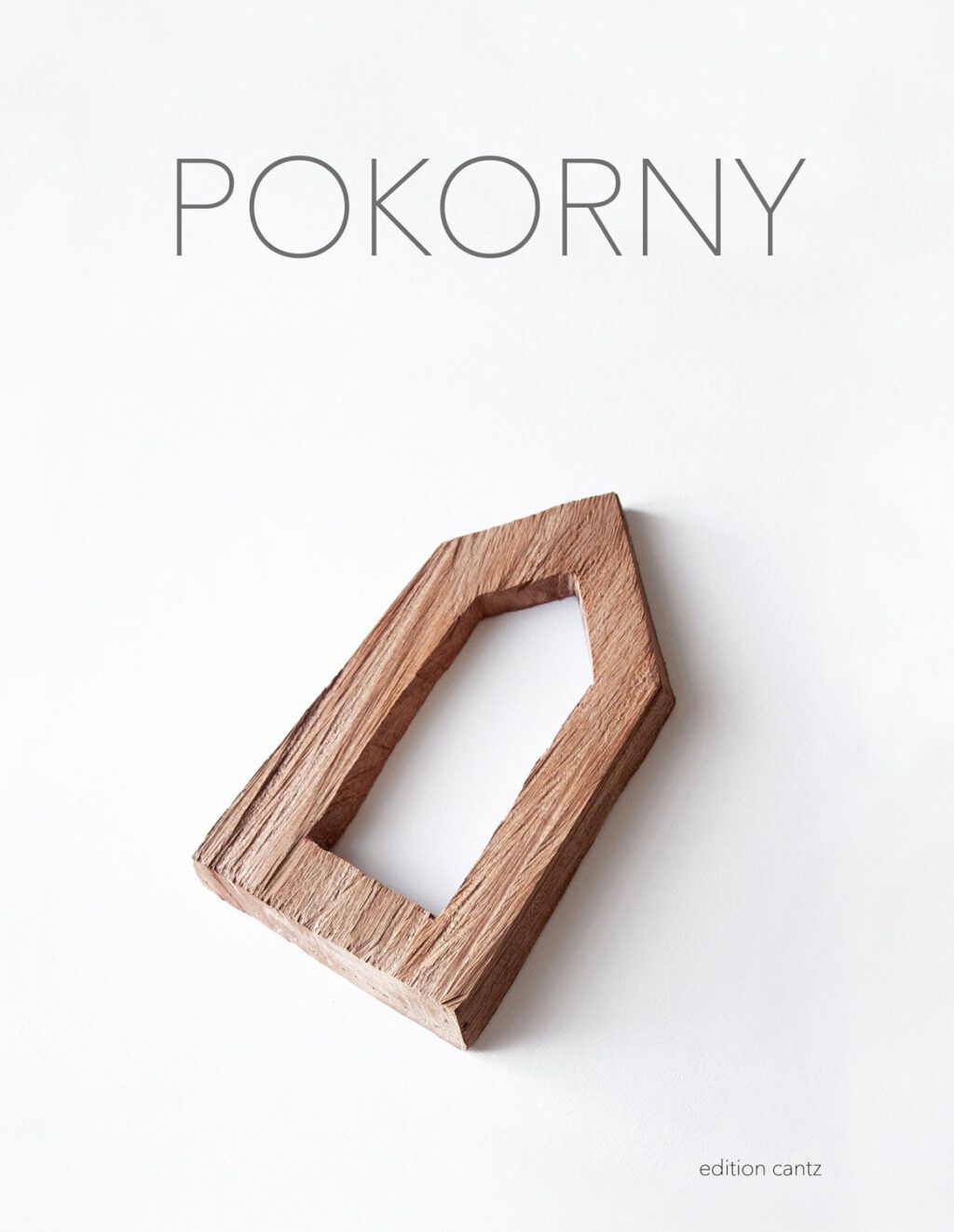
Pokorny
25€ Add to cart“Abstraction means the omission of the irrelevant and the unnecessary in order to find more substantial content and form.”—Werner Pokorny
His often monumental sculptures can be found in many places in Germany and abroad, including Aachen, Berlin, Busan (South Korea), Frankfurt am Main, Freiburg, Karlsruhe, Riehen, Saarbrücken, and Stuttgart. Werner Pokorny works (b. 1949, Mosbach; lives and works in Ettlingen) exclusively with Corten steel for his outdoor sculptures and with wood, steel, and bronze for his indoor works. Well-known basic forms such as bowls, spheres, cuboids, and houses serve as points of departure and reference, which are abstracted by reduction, rotation, tilting, or combination with other elements. The artistic field of tension characteristic of Pokorny’s impressive sculptural oeuvre is due to the oscillation between form and abstraction, figure and reduction, hard edges and soft curves.
-
Matilde Damele
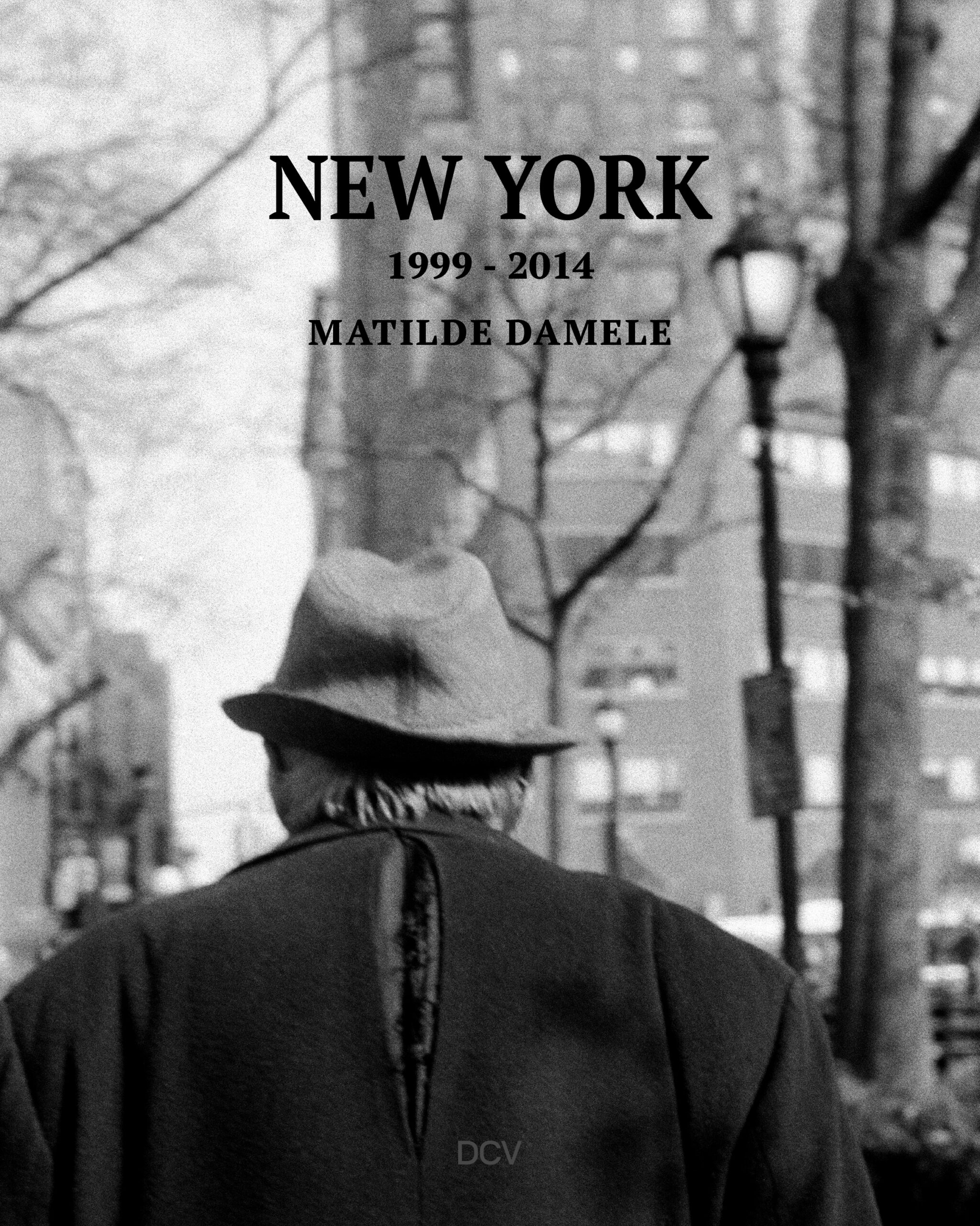
New York. 1999-201435€ Add to cartNew York and street photography were made for each other, which is why Matilde Damele (b. Bologna; lives and works in Rome), a master of the genre, left home for the big city in the late 1990s. She spent fifteen years in New York, and now her forays have congealed in this singular picture book. The light, the skyscraper-lined avenues, the pedestrians hurrying past and their loneliness in crowds—nimbly wielding her camera, Damele recorded all of it in classic black and white. The result is an outstanding portrait of a forward-looking metropolis that continually draws our attention to its past.
-

Nicola Staeglich
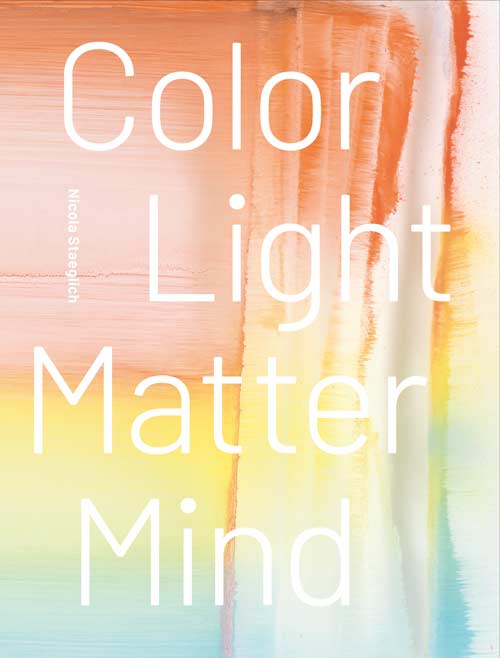
Color Light Matter Mind36€ Add to cart“This painting springs from the ambition to paint color into the air.” (Ulrich Loock)
Nicola Staeglich’s (b. Oldenburg, 1970; lives and works in Berlin) work with color achieves a distinctive intermediate state between physical presence and atmospheric radiance. She stages painting now as a performative action with broad propositions in color, now as an installation in three dimensions with multilayered translucent painted panels. Color Light Matter Mind is Staeglich’s first monograph, setting recent works in relation to her earlier output (1998–2021). From the spiral-shaped reliefs to her Liquid Lights, the artist opens up a fresh dimension for color.
Nicola Staeglich studied at the Städelschule, Frankfurt, the Academy of Fine Arts Mainz, and the Chelsea College of Art, London. She won numerous fellowships and has been professor of painting/graphic art at the Hochschule der bildenden Künste Essen since 2015. Her work has been presented in numerous solo exhibitions in Germany and abroad and is held by private and public collections.
-
Antonia Hirsch
Phenomenal Fracture24€ Add to cartIn a probing engagement with the screen, an omnipresent object in contemporary life, Antonia Hirsch charts the gulf between the digital and the analog, the two spheres of which our perceived reality is composed. In provocative installations and objects, the artist conceives the distinctions between screen, mirror, and blade as less than sharply defined. Her works show rigidly geometric shapes made of hard and shimmering glass and steel; they encounter eerily somatic and perishable-looking cardboard or soft foamed-plastic components that recall the bodies they perhaps once served. Reflective surfaces mirror our gaze, but the less classy materials, too, await recognition by the beholder’s body. The book accompanies Hirsch’s solo exhibition Phenomenal Fracture at Kunsthalle Lingen; photographs and writings convey extensive and sustained impressions that run the gamut from the uncanny to the darkly humorous.
-

Karlheinz Bux
über Linie …15€ Add to cartClarity, Complexity, and Linearity
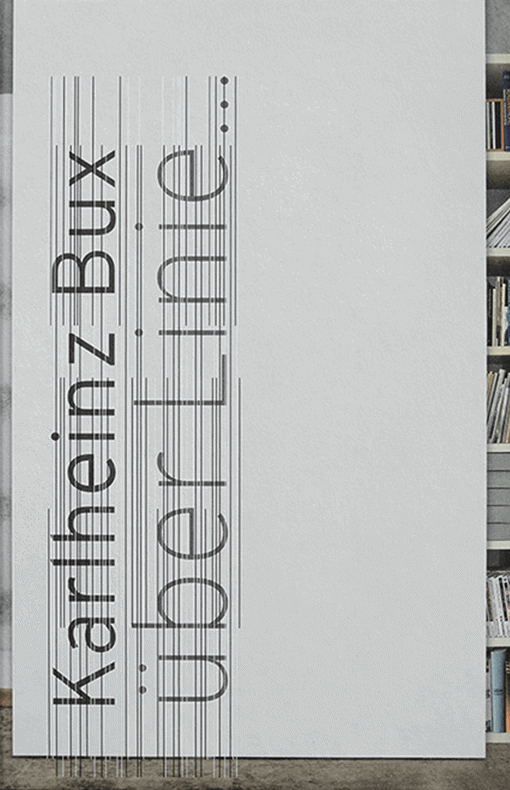
The defining artistic means in the work of Karlheinz Bux (b. 1952 in Ulm, lives and works in Karlsruhe) is the line. As edges and folds, they determine vertically oriented sculptures, which simultaneously convey compactness and openness, dynamism and repose. In Bux’s pencil drawings and photo-based works, they form the subject of the image in the form of complex linear structures. This present book documents the artist’s large-format works and provides insight into his oeuvre, with texts by Michael Hübl, Christine Reeh-Peters, and Carmela Thiele.
Karlheinz Bux studied at the State Academy of Fine Arts Karlsruhe and taught as a lecturer at Pforzheim University and as a visiting professor at the Mainz University of Applied Sciences. His works are represented in private and public collections, including the Staatliche Kunsthalle Karlsruhe, the Hurrle Collection, and the Würth Collection.
-

Harte Zeiten
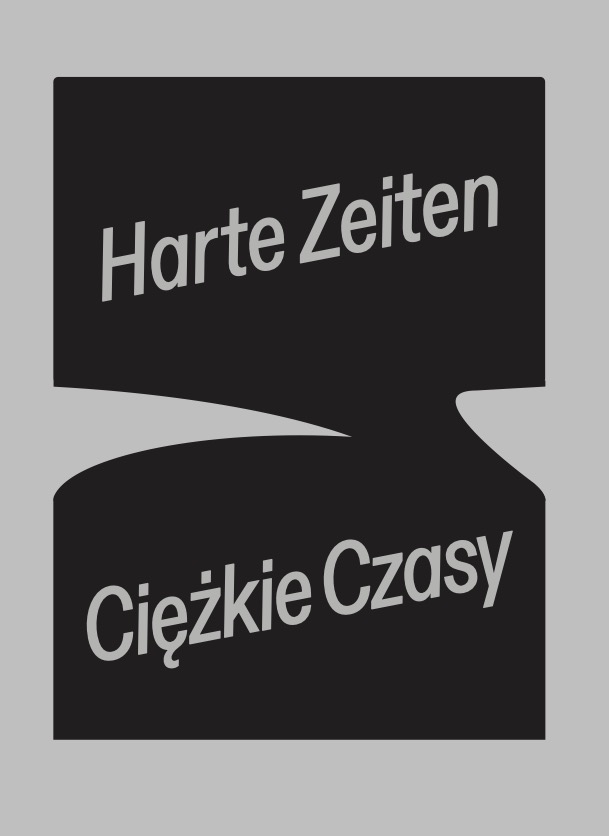
Ciężkie Czasy34€ Add to cartIncreasingly pressing global political and societal challenges are always also rewarding subjects of creative engagement, and sometimes artists devise anticipative approaches to real-world problems.
Harte Zeiten—Ciężkie Czasy is a cooperative venture launched by Künstlerbund Baden-Württemberg; Port25—Raum für Gegenwartskunst, Mannheim; and Galeria Miejska bwa, Bydgoszcz, Poland. It showcases works by altogether ten Polish and ten German contemporary artists. Putting the principle that art knows no boundaries into practice, the publication, with statements from Wolfgang Ullrich, Joanna Kiliszek, Schamma Schahadat, and others as well as documentation of the symposium held in September 2021, inspires forward-looking reflections on the conditions in which cultures thrive and similarities and differences between the two countries and beyond.
-

Erich Hörtnagl
to be a man38€ Add to cart“A photograph is a secret about a secret. The more it tells you, the less you know.” The witty remark, attributed to Diane Arbus, succinctly captures the twofold code at work in Erich Hörtnagl’s (b. Innsbruck, 1950) pictures. Aesthetically appealing photographs, mostly in black and white, show men (and women) in a wide variety of cultural, social, and religious contexts: from Swedish bikers and drag queens to monks in Myanmar, from Turkish belly dancers to Tyrolean performers in traditional attire. What looks at first glance like a conventional photobook soon reveals itself to be a brilliantly staged interactive riddle around clichéd notions of masculinity with positive and negative connotations, around gender roles and persistent stereotypes. With the deftly composed visual meta-narrative in to be a man, Hörtnagl, a seasoned theater and film director, lures us into a trap, and the only way out is by taking the challenge head-on: by engaging in self-reflection and questioning our own prejudices and ideas.
-

FINALE
DIRECTOR’S CUT25€ Add to cartThe Best Part …
In 1994, Britta Erika Buhlmann took the helm at Museum Pfalzgalerie Kaiserslautern, from which she will retire in the spring of 2022. In her twenty-eight-year tenure, she has enlarged the museum’s art collection and put her personal stamp on it. The classical modernism division was strengthened with the addition of major works by Otto Dix, Hermann Scherrer, and Karl Buchheister, while key pieces by François Morellet, Martin Willing, Werner Pokorny, and others have enriched the museum’s holdings in sculpture. A newly established division of the collection is dedicated to the creations of American artists such as Eric Levin, Kiki Smith, Charles Pollock, and Richard Pousette-Dart. More than a few artists—the list includes Carmen Herrera, Pierrette Bloch, Eva Jospin, and Nobuyuki Tanaka—made their German or even European début at the mpk.
In this book, members of the mpk’s staff offer their takes on selected works in the collection, unfurling a subjective story of their engagement with works that have earned the museum its reputation as a “place of discoveries.”
-

Brandon Lipchik
10€ Add to cartIn recent years, a Wagnerian night has settled over Brandon Lipchik’s (b. Erie, PA, 1993; lives and works in Brooklyn, NY, and Berlin) pictures. Moons rise; beasts and titans populate a homogeneous world of swimming pools, white picket fences, and neatly mowed lawns. Synthesized on a computer screen and then transferred to canvas by hand, the artist’s paintings revolve around the backyard as a mythically fraught scene of popular culture. The garishly lit multiperspectival pictures replicate characteristic shots from 1980s gay porn films and quote a clean American Apparel look. Lipchik subjects men’s bodies, spaces, plants, objects, and animals to digital deconstruction, obtaining rudimentary and abstract shapes. Staring at smartphones or gazing on water surfaces, his characters recall early digital animations and seem oddly hollow, like empty avatars waiting to be filled with new speculative content.
-

Anaïs Horn
Fading14€ Add to cartThe mystery of love and its language, translated into a photographic discourse
The starting point for the series by Anaïs Horn, which the artist, who works in Vienna and Paris, began in 2013 and now comprises eighty photographs, is the book Fragments d’un discours amoureux (Fragments of a Language of Love) by the French philosopher and author Roland Barthes. Terms such as “asceticism,” “magic,” “yearning,” “venerable,” and “unfathomable” serve Horn as models for her staged photographs. The linguistic “figures,” from which Barthes developed his “discourse” in an open structure, find their counterparts in views of people, landscapes, objects, and spaces. The result is a cosmos of images that is as non-binding as it is intimate, as touching as it is light, as vulnerable as it is challenging, and appears to be infinitely expandable. Viewed together, fragments of collective experiences and cultural codes of our notions of love become visible.