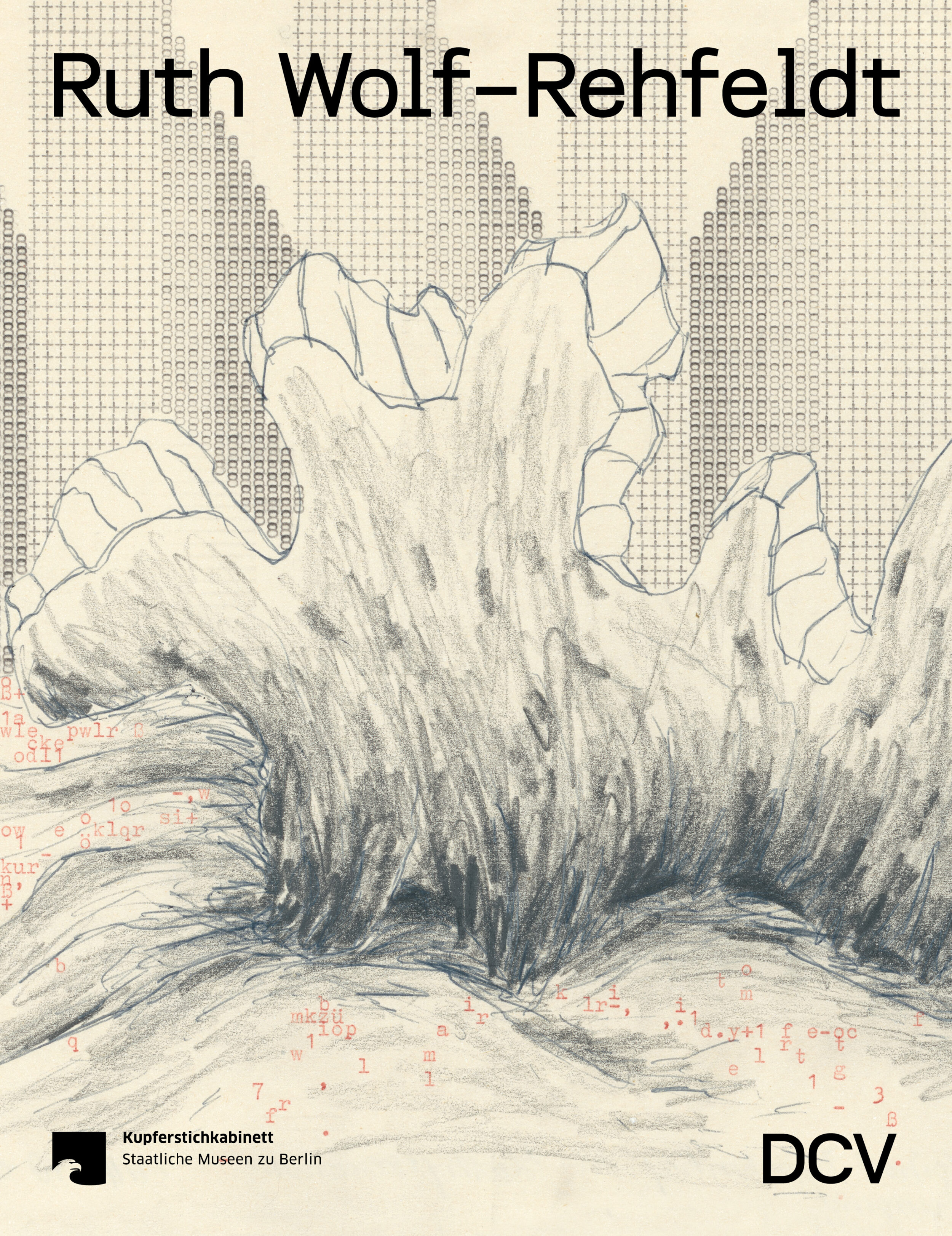
Ruth Wolf-Rehfeldt – Wie eine Spinne im Netz
 | |
|---|---|
| Editor(s) | Jenny Graser |
| Author(s) | Jenny Graser, Dagmar Korbacher, Klaus Lederer, Fabienne Meyer, Kathleen Reinhardt |
| Design | Book Book, Berlin |
| Cover | Softcover with flaps |
| Size | 22,6 × 29,7 cm |
| Pages | 216 |
| Illustrations | 172 |
| Language(s) | German |
| ISBN | 978-3-96912-104-7 |
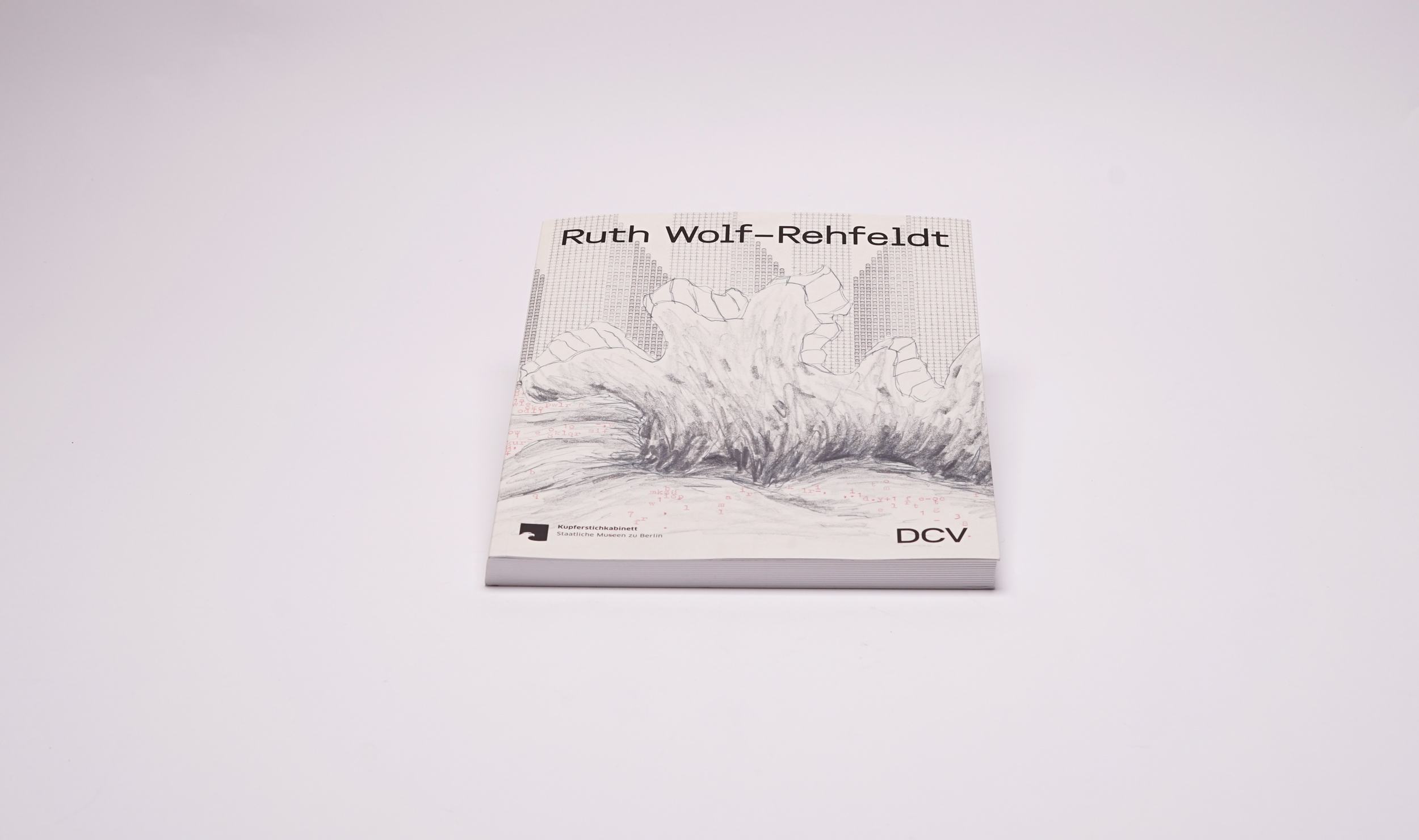
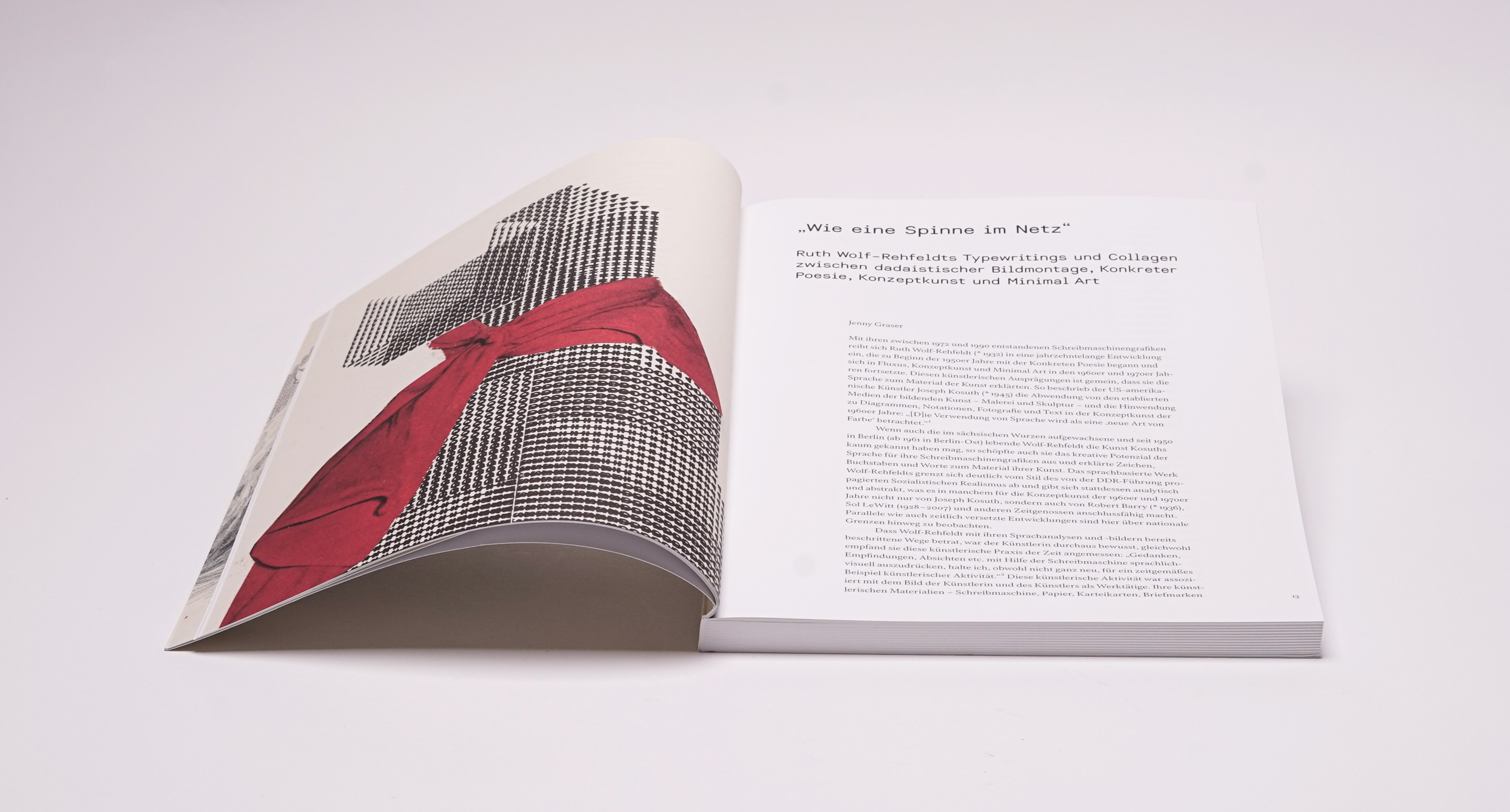
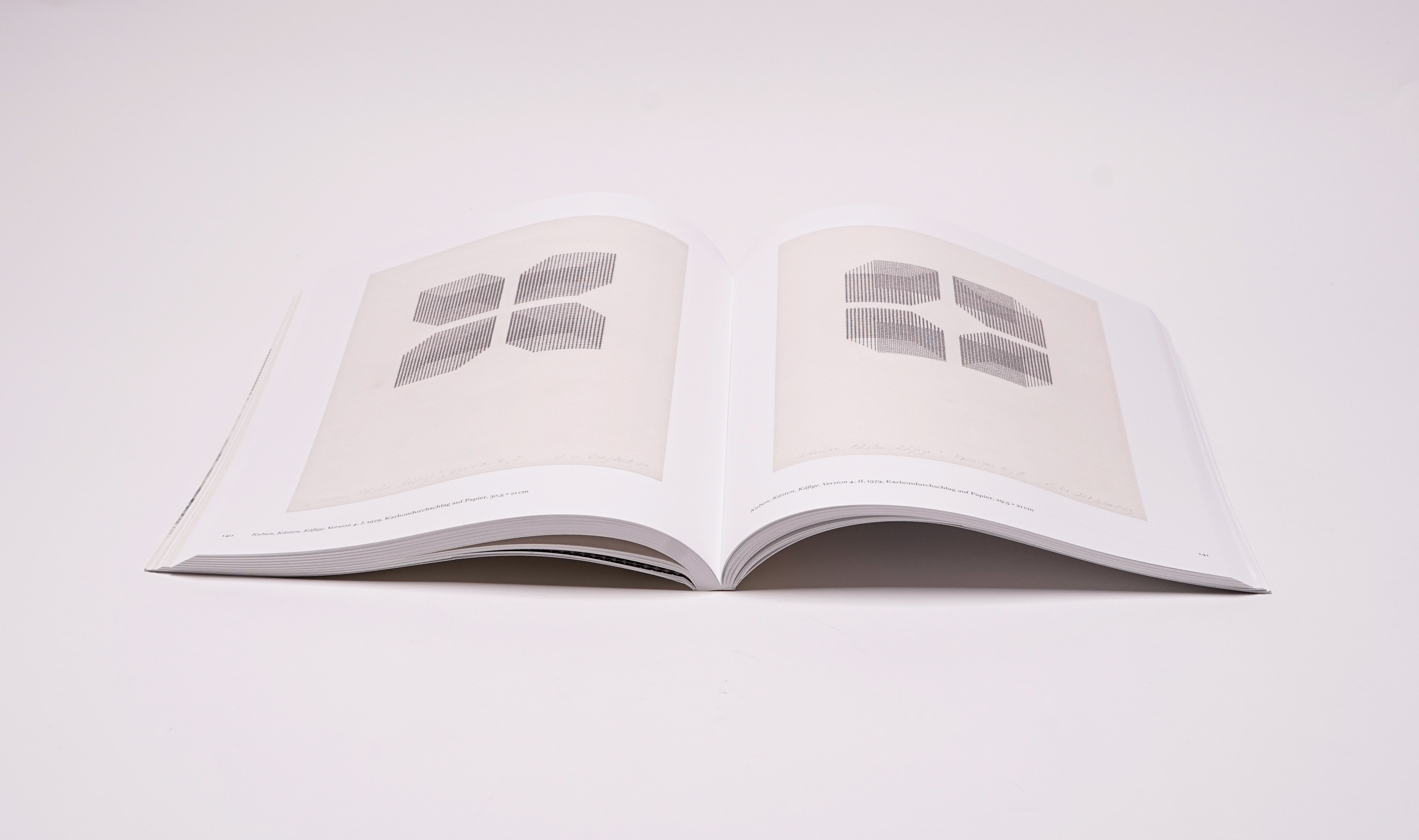
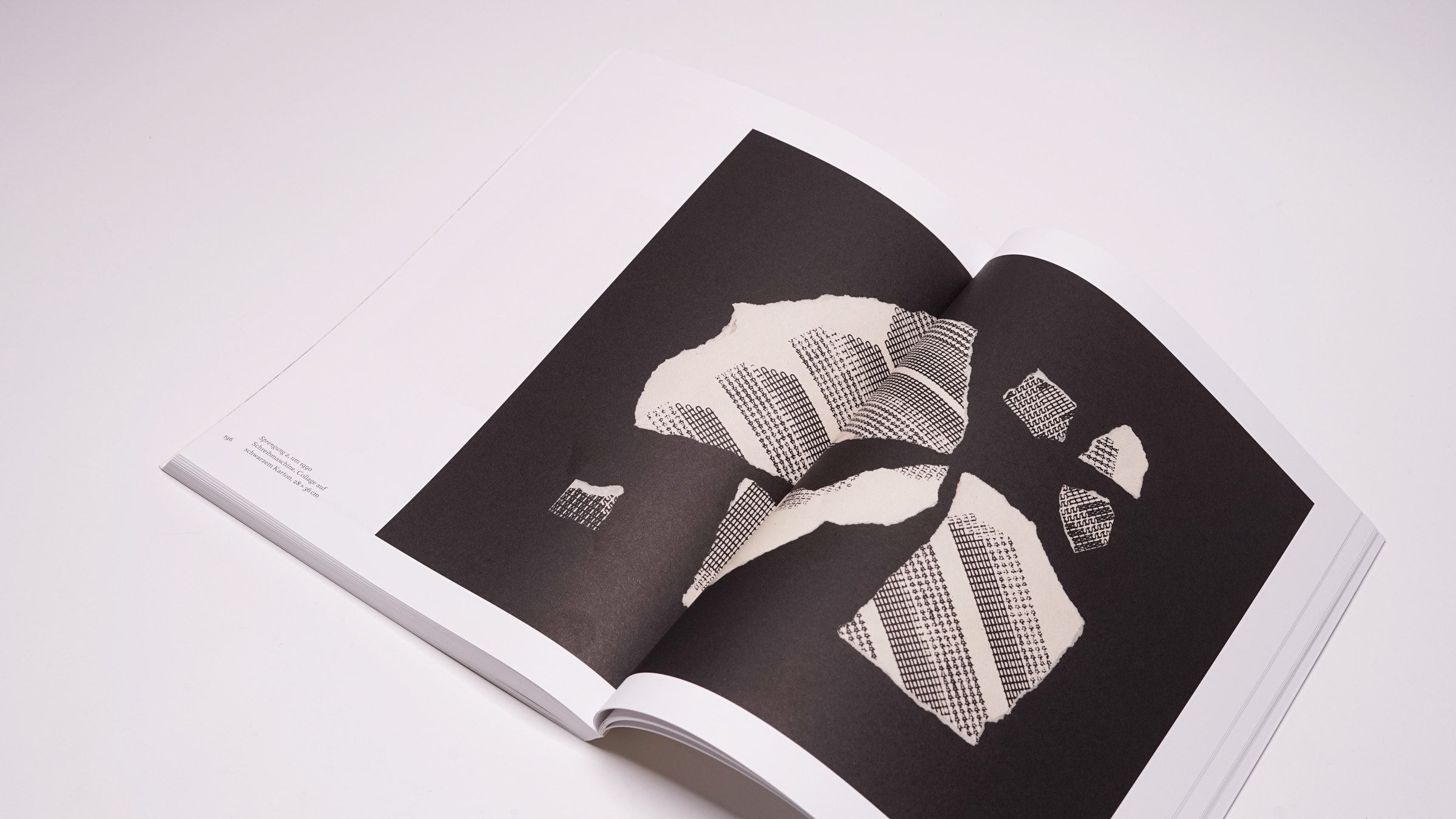
Ruth Wolf-Rehfeldt (b. Wurzen, Germany, 1932; lives in Berlin) is one the few East German female artists who devoted themselves to graphic art produced on the typewriter. Working on her trusty “Erika,” she arranged letters, digits, commas, and plus signs to compose imaginative visual creations. Under her hands, the black and red characters were transformed into poetic verbal images, gently undulating waves, serial patterns, and architectonic or figurative formations. Sometimes verging on concrete poetry, these typewritings also evince unmistakable affinities with conceptual and minimalist art. In the 1980s, the artist expanded on them in collages that recall Hannah Höch’s Dadaist visual montages. With her graphic work, Wolf-Rehfeldt was also an active participant in the GDR’s mail-art program: she sent the typewritings to artists beyond the impassable borders of her country, building an extensive network of correspondences that spanned the globe.
The richly illustrated monograph underscores the diversity and contemporary relevance of Wolf-Rehfeldt’s works, which were created in the shadow of the Cold War and address the fragility of peace as well as early manifestations of the environmental devastation wrought by the industrial age.
More books
-

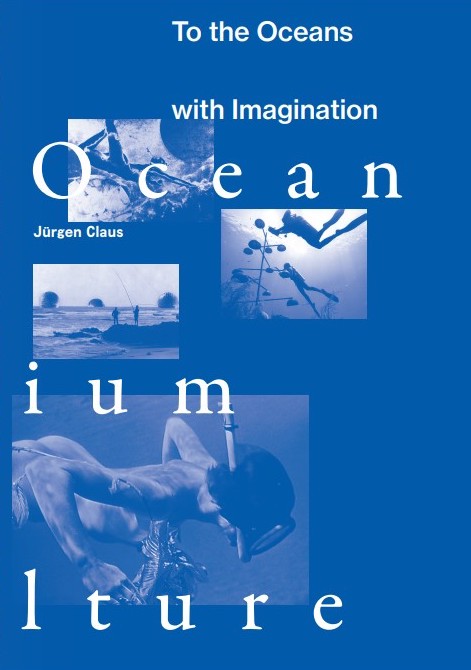
Jürgen Claus
To the Oceans with Imagination18€ Add to cartThe Sea as a Space of Artistic Experience
Jürgen Claus’s (b. 1935, Berlin; lives and works in Aachen and Baelen, Belgium) oeuvre encompasses paintings, films, light and solar installations, and underwater art. He is also a prolific writer on art, with theoretical works that have sold over 100,000 copies. “Jürgen Claus is the first one to see the ocean through an artist’s rather than a scientist’s lens,” Michel Ragon writes. In this book, Claus intertwines his experiences working on the fascinating underwater installations with a pressing contemporary concern: the global efforts to restore the seas to health. The publication combines visual art, architecture, poetry, and music for a multifaceted engagement with the world’s oceans.
Jürgen Claus majored in theater studies at the Universität München and was a research associate at the Massachusetts Institute of Technology (MIT) and professor of media art at the Kunsthochschule für Medien Köln, Cologne.
- Out of stock

Idee – Entwurf – Konzept
48€ Read moreArt in the Preliminary and Provisional Stage
In this sumptuous volume, Künstlerbund Baden-Württemberg, the association of visual artists in Baden-Württemberg, puts the focus on visualizations of inchoate impulses, spontaneous flashes of inspiration, and the euphoria of that first spark rather than the painstaking process of hammering out a work. Structured as a complex compendium comprising contributions by more than 240 artists, the book highlights the experimental circumstances in which the individual creative mind experiences the nascency of ideas—without regard for the specialized skills and technical accomplishment that distinguish the finished work. Perfunctory sketches, doodles, drawings, notes and material collages, photographs and other media images provide insight into very intimate stages of the creative process that are not usually revealed to visitors to an exhibition of contemporary art.
- Out of stock

Ernst Gamperl
Zwiesprache Dialogue34€ Read moreUnique wooden sculptures as the result of a ten‑year process
Ernst Gamperl (b. 1965, Munich; lives and works in Tremosine) is fascinated by the dialogue with living material and the quality of the unpredictable. He creates room-sized wooden objects, into the design of which he incorporates the natural drying process, cracks, and irregularities—a revolutionary technique of woodturning which has led to completely new standards, technically often at the limits of what is feasible. In a ten-year process, Gamperl transformed a roughly 230-year-old uprooted oak into an ensemble of vessels and sculptures. The artist’s book conveys the fascination of the material and the craft, brings us close to the objects, and documents the challenging work process.
-

Kai Schiemenz
Priel38€ Add to cartTidal creeks are watercourses that crisscross coastal mudflats. Running between sandbars, they flush deposits out into the sea with the falling tide, and when the tide rises, the water flows back in. In other works, tidal creeks are effectively rivers in the sea. Delving into the implications of this idea, the book presents Kai Schiemenz’s (b. Erfurt, 1966; lives and works in Berlin) major works and projects of the past four years. The publication offers insight into the provenance of selected bodies of work and their genesis. Kai Schiemenz’s art examines the city, spaces, and architecture. His small-format sculptures are self-contained creations that combine digital technologies with natural materials like wood or paper. At the same time, they function as models for expansive installations and outdoor and indoor architectures in which Schiemenz orchestrates sight lines to construct spaces whose permeability makes the audience an integral aspect of the work. If his sculptures are architecture, his exhibitions are landscapes in which the visitors encounter one another as they would in a park. Their central question, time and again, concerns the impact of the built environment and urban landscapes on their inhabitants.
-

Freeters
HELP! Artistic Intelligence38€ Add to cartFREETERS stands for an artist collective that designs, creates, transforms and plays with spaces, for and with the people who experience their time there. The artistic intelligence used in the process transforms into spaces for thinking, working, living, playing and learning, creating identity, emotion and inspiration.
This book is about the mediation of artistic thinking and artistic action in processes. The artistic practice of Freeters is characterized by strategies of thought and action that are needed in a society with constantly changing conditions, in a working world that overturns itself in its dynamics. The necessity of shaping the present through artistic thought and action can no longer be limited to the art context.
FREETERS’ AI approach should be understood less as a scientific methodology and more as a call not to reduce our intelligence to only rational thought processes with a utility maxim. Of course, AI has already made impressive progress in many areas of our public services via the hard components of machine learning. However, it is doubtful whether this approach alone can really give rise to a superintelligence that will one day create a resource-saving paradise on earth. Nor is it guaranteed that we as Homo Sapiens will be assigned a place in this paradise by such a unilaterally gifted superintelligence. Cognitively, this machine will be superior to us in any case – only the necessary feeling of happiness of a consensual coexistence does not seem quite conceivable.
- Release January 2026

Frank Morrison
38€ Add to cartThe dynamic Neo-Mannerist images of painter and illustrator Frank Morrison (born 1971, lives in Atlanta) celebrate the resilience and dignity of African Americans in everyday life. A child of institutionalized racism in the US, he can testify that creativity and solidarity could never be suppressed in the segregated and brutally marginalized communities. Hip-hop and graffiti are resistance. Clichés of inner-city struggle are vividly refuted in this book. The volume documents Morrison’s recent exhibitions, one of which is dedicated to the younger generation: frame-braking images that interweave narrative forms of comics and pop art with illustration. Morrison’s gallery calls the book an explosive tribute to genius flourishing in institutionalized exile.
-

Etsu Egami
Rainbow18€ Add to cartWhat is worth talking about in art eludes language. Aesthetic experience is without words, like a human encounter that touches upon our innermost being. Etsu Egami is interested in the margins of understanding, where the communication of ideas and feelings threatens to fail, where forms become illegible. That is the point on which she homes in with her brush, which she wields in a rough calligraphic style, putting almost translucent oil paints on the canvas. Spectral faces emerge that dissolve into abstraction; abstract forms, beheld from the corner of one’s eye, momentarily coalesce into a likeness. Painting, to Egami, is a physical and performative act, the brush an extension of her arm, bringing a picture into being in sweeping rhythmical motions. As we contemplate her work, that momentum imparts itself to us: first our eyes begin to wander, then we feel our bodies stir, and finally the spirit, too, pulsates in the rhythm of the brush. Gathering Egami’s most outstanding works, this catalogue is a universal invitation to join a peculiar dance, an arc of light the artist traces across all barriers to understanding and that speaks to our senses.
- With socks designed by the artist and augmented reality

JOHN BOCK
AURAAROMA-Ω-BEULE42€ Add to cartThe Augmented Reality Book for John Bock
John Bock (b. 1965 in Gribbohm, lives in Berlin) is one of the most important contemporary performance and video artists. In his works characterized by humor and absurdity, the artist places language, human bodies, everyday objects, and spaces in peculiar relationships to each other. He attained international recognition with the installation LiquidityAuraAromaPortfolio at the first Berlin Biennale in 1998. Together with his work Voll die Beule from 2013, it is now included in the collection of the Kunsthalle Mannheim. The present augmented reality book not only contextualizes his work, but also immerses the viewer/reader directly in his performances, in which the artist’s head emerges and a filled rubber glove leaks out. A completely new approach to the works of John Bock, packaged in a pair of socks designed by the artist.
John Bock studied at the Hamburg University of Fine Arts and since 2004 has taught at the State Academy of Fine Arts Karlsruhe as Professor of Sculpture. He has participated in the 55th Biennale di Venezia, and his works have been featured worldwide in solo exhibitions at, among others, the Berlinische Galerie, the Contemporary Austin, Texas, the Barbican Centre, London, and the Städel Museum, Frankfurt.
-

Taube
18€ Add to cartHuman, City, Pigeon
Public perceptions of the pigeon have shifted drastically over the past centuries. In the 1700s, it was welcomed as a guest who commanded humans’ unfailing solicitude; today, by contrast, it is often perceived as a nuisance. It has become an animal that defaces squares and buildings. Why does the pigeon in the settings of our daily lives prompt feelings of loathing and fascination, but also indifference? Jens Gerber’s photographs undertake an expedition into the city of the pigeons. Rounded out by essays by Marina Rüdiger and Laurens Schlicht, the book illuminates the subject of the city pigeon from the perspectives of photography, science, and literature, and explores the question of how pigeons shape the built environment and how the latter informs their behavior in turn.
- Release December 2025

Cahier 002
Silke Wagner. bürgersteig22€ Add to cartBetween 2001 and 2002, a VW bus bearing the inscription “Lufthansa Deportation Class” was on display in various German cities. It was part of the provocative bürgersteig action by Silke Wagner (born 1968, lives in Frankfurt) about Lufthansa providing aircraft for deportation purposes. The bus sparked heated debates and became a vehicle for activist networking and communication among citizens. The participatory art project was groundbreaking at the time in its collaboration with civil justice initiatives. Cahier 002 documents bürgersteig for the first time with all its aspects, disclosing the sources for the action as well as material on the legal conflicts that followed the project.
-
Sebastian Stöhrer
Residents40€ Add to cartIf there’s an artist whose oeuvre merits the title “creation,” it is Sebastian Stöhrer. Shaping clay—essentially, soil—he molds his “residents”: colorful and friendly-looking sculptural beings, some of them enhanced with sticks or branches reminiscent of limbs. Despite their air of levity and humor, they are not the products of mere momentary inspiration or a whim. It takes decades of dedicated experimentation with the kiln based on the millennia-old art of ceramics as well as expert knowledge of chemistry and physics to create such colors and shapes. Stöhrer has been called an alchemist, and indeed he has made it his mission to vindicate this researcher’s craft, an ancestor of the natural sciences. Alchemy, like Stöhrer’s oeuvre, combines pure rationality with coincidence and a scintilla of magic. The artist plays an intuitive and sensual game with his clay and the virtually incalculable chromaticity of the glazes—chaos, anarchy, and irrepressible urges being an integral dimension of all creation. In Stöhrer’s “residents,” we encounter the embodiments of that creation: likenesses of ourselves and perhaps also heralds of a future more good-natured version.
- Out of stock

Weltkulturerbe Völklinger Hütte 1999 – 2019
29,90€ Read moreDie Geschichte einer neuen Industriekultur
Die Völklinger Hütte gehört zu den wichtigsten Industriedenkmälern der Welt. Mit herausragenden Ausstellungen und Veranstaltungen ist das Kulturprojekt weit über die Grenzen des Saarlands hinaus bekannt geworden. Der Künstler Ottmar Hörl konzipierte hier sein großangelegtes Skulpturenprojekt 100 Arbeiter und Christian Boltanskis Installation in der Sinteranlage wurde zum hochemotionalen Erinnerungsort für die hier verpflichteten Zwangsarbeiter. Noch bis zum Jahr 1986 war die Völklinger Eisenhütte in Betrieb und wurde 1994 als erstes Industriekulturdenkmal aus der Hochphase der Industrialisierung in die renommierte Liste des UNESCO-Weltkulturerbes aufgenommen. Das Buch zum 25. Jubiläum dieser Auszeichnung zeigt die vielfältigen und eindrucksvollen Aufnahmen einer Transformation – vom größten Schrotthaufen Europas zum Begnungszentrum der Menschen mit der Kunst. Es dokumentiert die gelungene Umstrukturierung einer hochproduktiven Eisenverhüttungsstätte zu einem Ort für Kultur im 21. Jahrhundert.
-

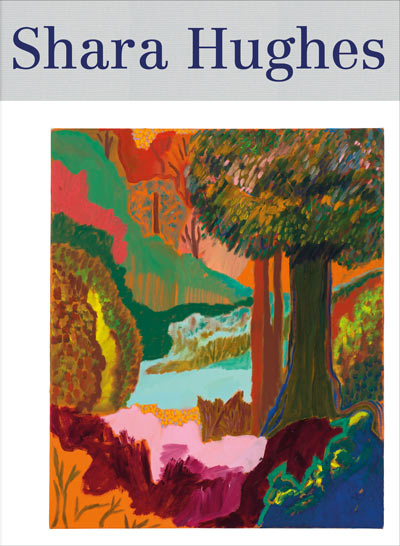
Shara Hughes
58€ Add to cartBoisterous Compositions
At first glance, Shara Hughes’s (b. Atlanta, GA., 1981; lives and works in Brooklyn) colorful and extravagant landscapes are chock full of everything we love in famous paintings: the palette of Henri Matisse or David Hockney, the stylistic inventiveness of Edvard Munch or Paul Cézanne, the painterly gestures of Philip Guston or Josh Smith, perhaps even van Gogh’s brushwork. She quotes this masculine tradition in landscape painting deliberately and unabashedly. This monograph is the first to present a comprehensive overview of Shara Hughes’s work.
Shara Hughes graduated from the Rhode Island School of Design and later attended the Skowhegan School of Painting & Sculpture in Madison, ME. She has had solo shows at the Arts Club, London, the Metropolitan Opera, New York, and the Museum of Contemporary Art of Georgia, Atlanta. In 2017, she participated in the Whitney Biennial, New York.
-

Pieter Slagboom
Scent of Hypnosis42€ Add to cartPieter Slagboom’s drawings are about life and death. About how these ostensible antagonists are inseparable; how, in his imagination, they are even fused. In his enormous canvases, we are held by the essence of our existence as though by a steel vise: we come from the void and in the end shall return to it. Thousands upon thousands of sweeping lines, twisting like Moebius strips, make for an almost physical experience of this truth. The dead and the newborn emerge from the primeval soup of Slagboom’s lines, as do genitals; we spot larger-than-life fantasies of disturbing sexual acts. The circle of life as a short circuit. The energy of some of the pictures in Slagboom’s oeuvre is almost too much to bear—we shudder before the pigments materializing our latent knowledge: that death is suspended in life.
-

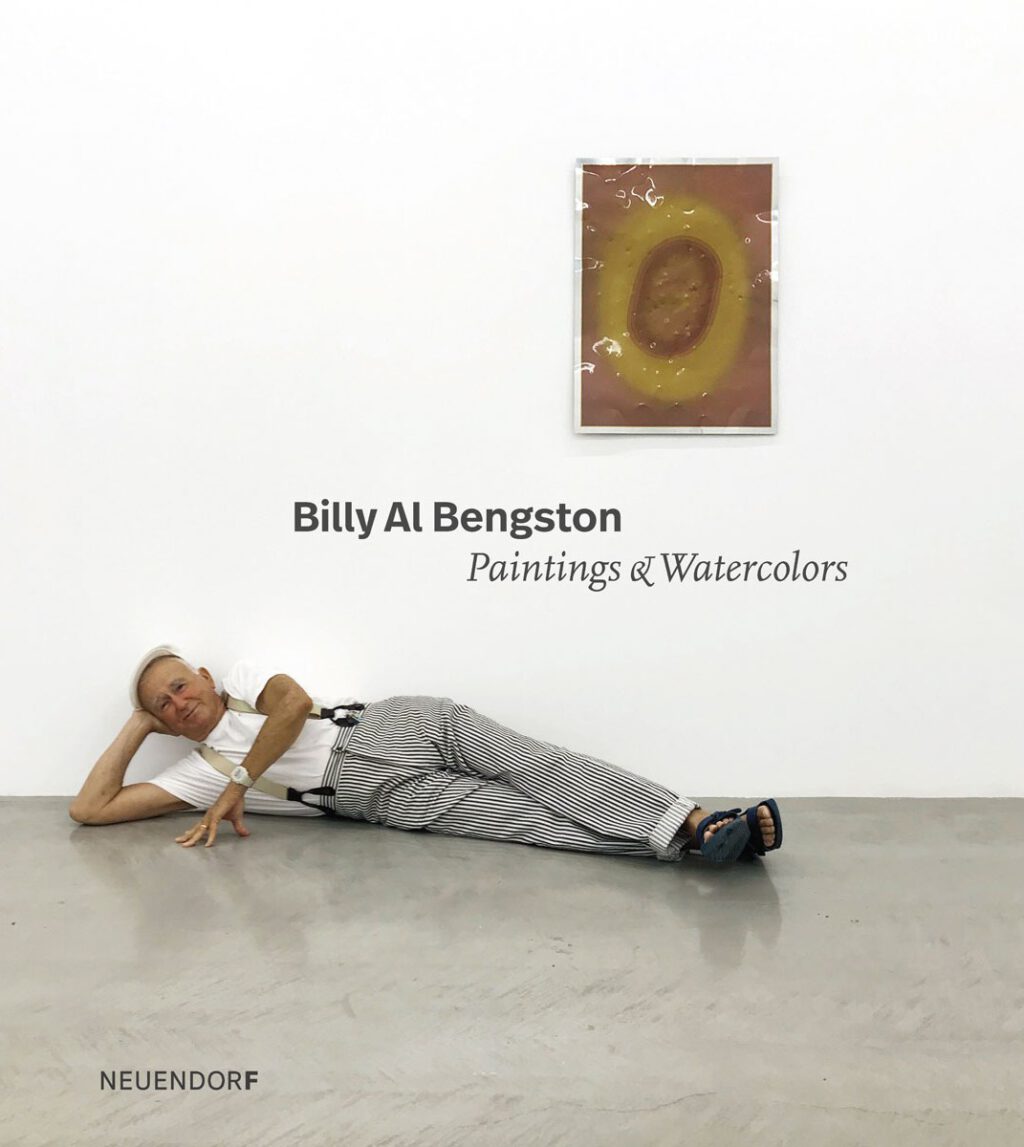
Billy Al Bengston
Paintings & Watercolors48€ Add to cartThe First Monograph on the Californian Pop Artist Since More Than Thirty Years
Billy Al Bengston (b. 1934, Dodge City; lives and works in Venice, California, and Honolulu, Hawaii) is the very personification of the cheerful, carefree attitude towards life in California – with his work as well as his person: a former surfer and motorcycle racer, an extravagant artist and key figure of West Coast Pop Art. After studying at the California College of Arts and Crafts and the Otis Art Institute, he exhibited at the legendary Ferus Gallery in 1957 and was the central figure among a group of artists that included Frank Gehry, Edward Kienholz, Ed Ruscha, and Ken Price. BAB, as he apostrophizes himself, inserts car and motorcycle parts as motifs into his otherwise abstract paintings, using lacquer and spray paint instead of oil, and aluminum panels with at times dented surfaces instead of the traditional canvas. Art and lifestyle combine to create the individual “Bengston iconography” of California Cool.
-

Glückliche Tage
32€ Add to cartWe see in contrasts. Freedom from pain follows pain, and felicity is the more radiant after a period of misfortune. Happiness, that is to say, displaces unhappiness and is perhaps its recompense; what is certain is that, as antonyms, they are (at least in this world) inconceivable without each other. The contrast they form also underlies the tensions inherent in the works in this catalogue. Some take us straight from the pinnacle of happiness down into the abyss, while in others the gradients of ascent or descent are so gentle that no culmination is perceptible. What all oeuvres gathered in the book have in common is that they furnish the human being, a social creature, with an experience of resonance. Happiness and unhappiness reverberate between the art and the beholders, leaving, in the best case, a lasting impression. Opening the catalogue—a metaphor for the human condition materialized in paper—one overhears this serenely melancholy echo of the works.
Artists: Rui Chafes, Tamara Eckhardt, Nan Goldin, Felix Gonzalez-Torres, Barbara Hammer, Carsten Höller, Ken Lum, Johanna von Monkiewitsch, Yoko Ono, Heike Weber, Stefan Wissel
With contributions by: Yevgenia Belorusets, Nell Sophie Bender, Elias Bendfeldt, Laura Berestecki, Annabella Ernst, Annika Gaeth, Hristina Georgieva, Markus Heinzelmann, Malwin Kraßnigg, Max Florian Kühlem, Natascha Laurier, Martin Middeke, Navaz Roomi-Mirhosseini, Vanessa Joan Müller, Julia Neumann, Martin Paul, Caroline Planert, Maike Prause, Arne Rautenberg, Kira Sophie Röller, Gina Marie Schwenzfeier
-

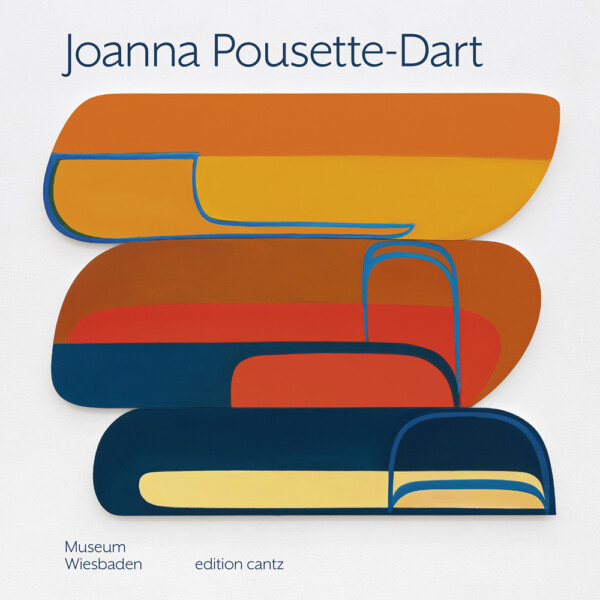
Joanna Pousette-Dart
32€ Read more„A kind of Dialogue between Myself and the Horizon.“
The works of Joanna Pousette-Dart (b. 1947, New York; lives and works in New York) are deeply rooted in the vast expanse of the American desert landscape, without ever committing themselves to a strict objectivity. As early as the 1970s, the artist abandoned the rectangular form of her canvas in favor of dynamically balanced panels that open out to the respective space. This volume presents her fascinating paintings from 2004 till 2019, which oscillate between landscape and abstraction, line and form. Born in New York to abstract expressionist painter and founding member of the New York School of painting, Richard Pousette-Dart, Joanna Pousette-Dart’s experience as a painter rises from rich tradition. Her work is held in the collection of the Museum of Fine Arts, Boston, the Solomon R. Guggenheim Museum, New York, and the Museum of Modern Art, New York, amongst others.
-

Martin Noël
The Retrospective38€ Add to cartThe Protagonist of the Modern Woodcut
The German painter, draftsman, and graphic artist Martin Noël (b. Berlin, 1956; d. Bonn, 2010) played a leading role in reviving the linocut and the woodcut, two techniques that had long been eclipsed by other media. In his large-format works on paper, he staked out a widely regarded and distinctive position in contemporary art. Noël was especially interested in the compositional relationship between line and surface. Released on occasion of the retrospective of his oeuvre at the Albertina, Vienna, this book presents an overview of the most important periods in the artist’s creative evolution, with an emphasis on the woodcut carved into the printing plate and the woodblock’s subsequent emancipation as an art object in its own right. Particular attention is paid to the application of ink to the surface and its painterly structure as well as the picture’s migration from object to canvas. The resulting paintings are exemplary of Noël’s late oeuvre.
Martin Noël studied graphic art and painting at what is now the Cologne University of Arts and Sciences. His art garnered numerous prizes and other honors, including fellowships from Kunststiftung NRW, Stiftung Kunstfonds, and Letter Stiftung. Works by Noël are in the German Federal Collection of Contemporary Art, Kunstsammlung Chemnitz, and the collection of Museum Pfalzgalerie Kaiserslautern.
-

Anna Virnich
10€ Add to cartAnna Virnich’s (b. Berlin, 1984; lives and works in Berlin) works resemble a speculative narrative. The artist has collected fabrics, garments, and bedspreads since her childhood, which she cuts up, exposes to the elements, dyes, and sometimes paints on to construct pictures and spaces. Her works are paintings and objects at once and defined by a powerful physical presence in conjunction with a ghostly emptiness. They recall Helen Frankenthaler’s liquefied chromatic landscapes, Paul Thek’s post-minimalist physicality, and the silver-foil transcendence of Andy Warhol’s Factory. Everything in Virnich’s art is a shell or membrane through which something filters in or out, “a part of emerging networks and an exchange of substances, technology, bodies, imageries, of the light of the eyes,” as Baptist Ohrtmann writes. Gathered, the textiles unfold an abstract tale of becoming and passing away, of painting, birth, artificiality, and science fiction.
-

Kensise Anders
10€ Add to cartKensise Anders’s work grapples with the reality of Black people’s lives. Born in Haiti, she was adopted by a German family when she was two. After a difficult childhood, with stints in a psychiatric institution and a boarding school, she eventually found art as a medium that lets her work through her experiences. She uses the crochet needle to create masks with which she ironically appropriates white identities and play carpets that show the world of her childhood—apartment blocks, streets; the “hole,” as she calls this environment. She also arranges crocheted threads on the canvas as though they were brushstrokes. One series of pictures is dedicated to a Black doll; another, to naked female bodies, including the artist’s own, with references to Courbet’s L’Origine du monde (1866). The works are acts of resistance to the prudishness of whites. Black dolls became popular in this country during the colonial era and never quite went away, like the racism in our society and in our heads. Anders’s weapon against that racism is the crochet needle, which she wields patiently and with flair as well as the necessary radicalism.