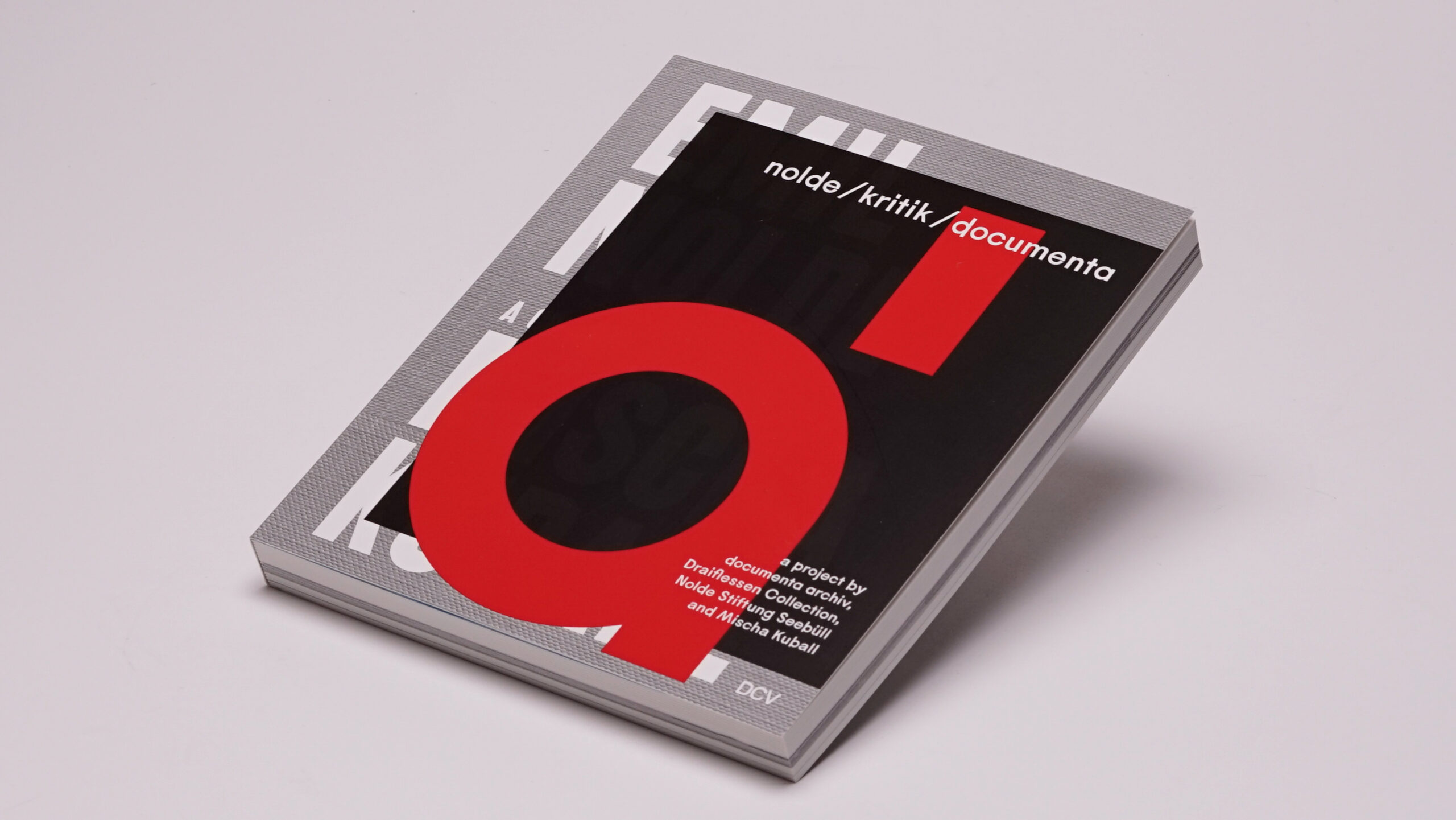
nolde/kritik/documenta (English)
 | |
|---|---|
| Editor(s) | Birgitta Coers / documenta archiv, Martin Brenninkmeijer, Corinna Otto / Draiflessen Collection |
| Author(s) | Astrid Becker, Birgitta Coers, Sabine Fastert, Jens Kastner, Nicole Roth, Barbara Segelken, Bill Sherman, Wolfgang Ullrich |
| Design | Studio Carmen Strzelecki |
| Cover | Softcover |
| Size | 18 x 21,5 cm |
| Pages | 220 |
| Illustrations | 30 color and 70 b/w |
| Language(s) | English |
| ISBN | 978-3-96912-077-4 |
Emil Nolde (1867–1956) ranks among the best-known classic modernists. Contemporary perceptions of the artist and his oeuvre are informed by mythmaking as well as its deconstruction. After the Second World War, Nolde himself and art historians of the time portrayed him as a victim of Nazi persecution. More recent critics have drawn attention to his anti-Semitic views and his opportunism in his dealings with the Nazi authorities.
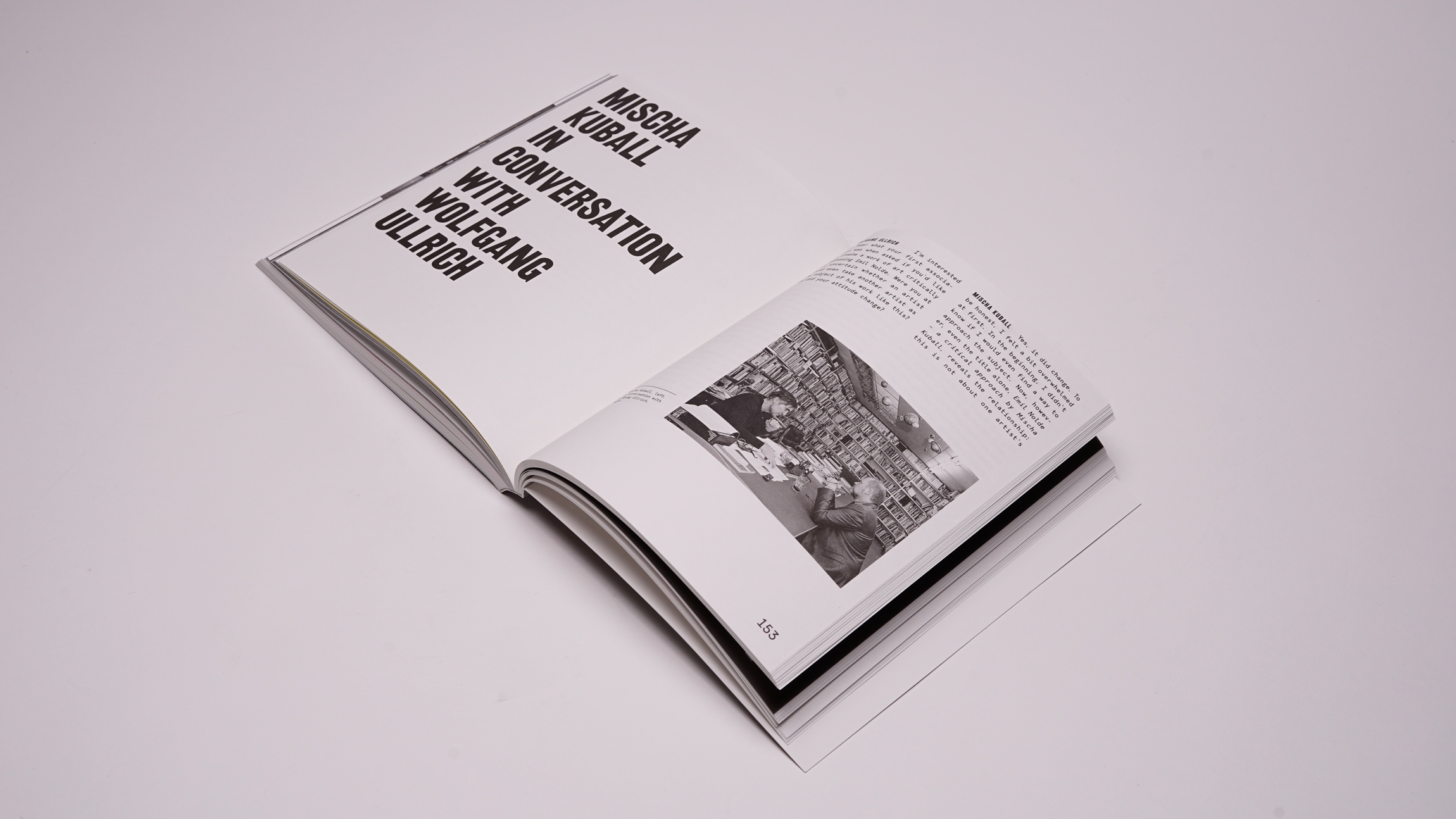
With support from the Nolde Foundation, Seebüll, the Düsseldorf-based conceptual artist Mischa Kuball (b. 1959) delved into the documentary record to shed light on this profoundly ambivalent figure and frame a critical perspective on Emil Nolde’s output and actions. The first fruits of his endeavors were shown at the Draiflessen Collection, Mettingen, in the winter of 2020–2021.
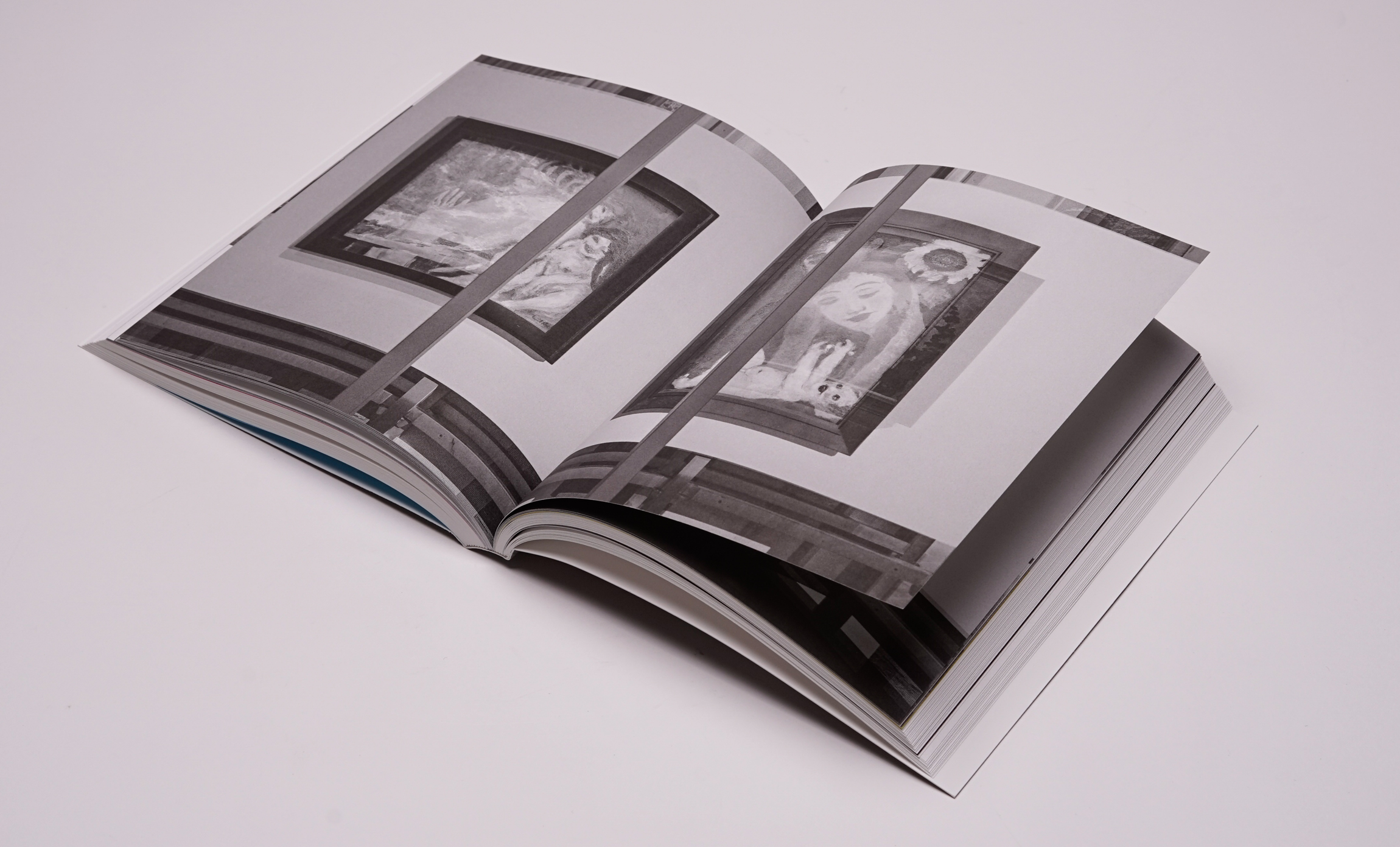
Kuball continued his research at the invitation of the documenta archive, Kassel. Based on his findings, the exhibition project “nolde / kritik / documenta” illuminates the ways in which life and oeuvre are interwoven and inquires into the contradictions of modernism, which Emil Nolde as a man and artist may be said to have embodied. The focus of the new project is on the staging of Nolde’s works at the first three editions of the documenta exhibition series (1955, 1959, 1964), which were instrumental to establishing the “Nolde myth.”
An enlarged and revised edition of the catalogue “nolde / kritik / documenta” is released in conjunction with the exhibition at the Fridericianum, Kassel (December 9, 2022–February 19, 2023).
Mischa Kuball has been professor of public art at the Academy of Media Arts Cologne and associate professor of media art at the Karlsruhe University of Arts and Design/ZKM since 2007.
More books
-

João Penalva
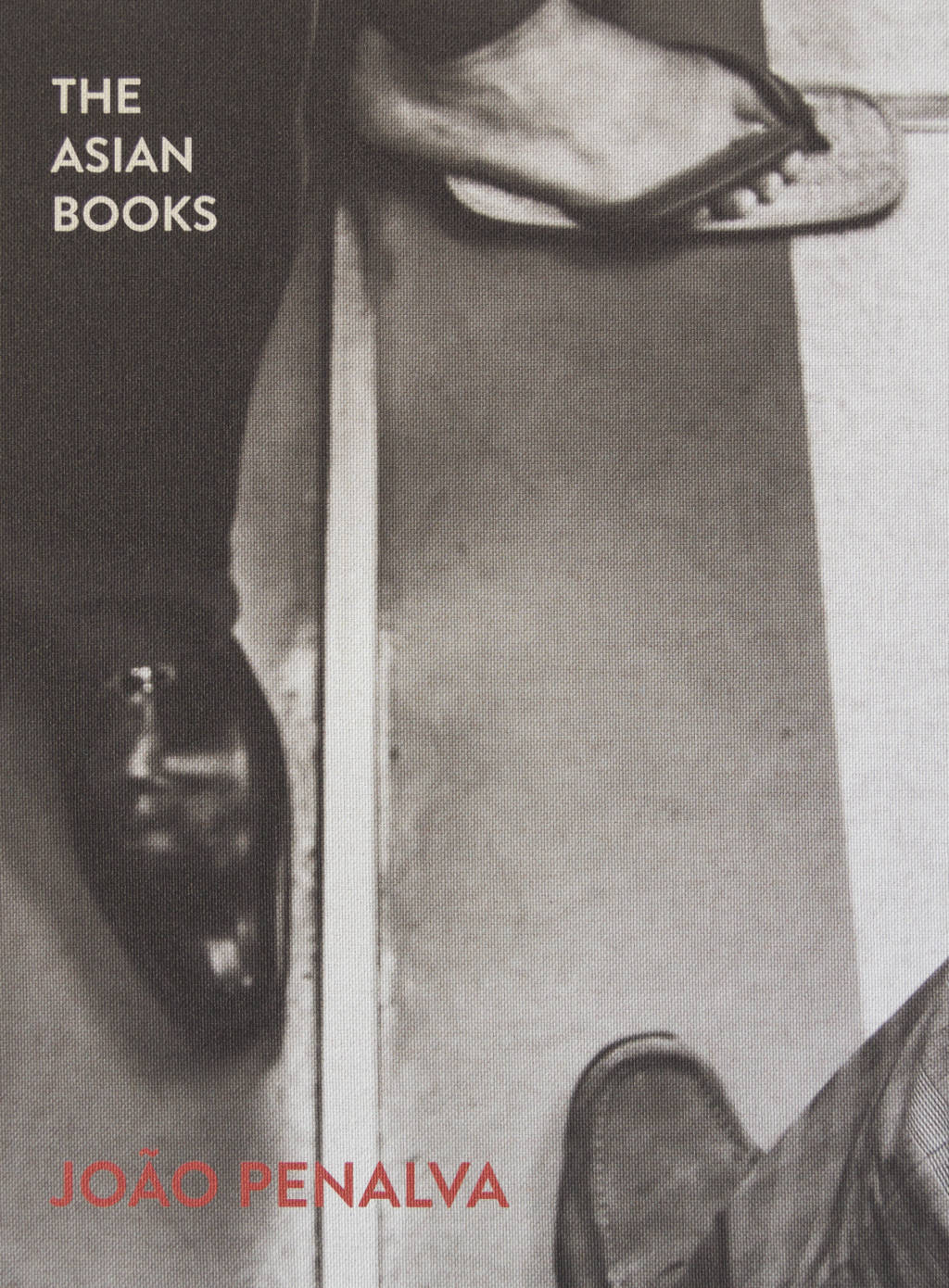
The Asian Books40€ Add to cartThe First Survey on the Exceptional Artist Books of João Penalva
Since 2007 João Penalva (b. 1949, Lissabon; lives and works in London) has exhibited large format unbound books, printed with archival inks on fine art paper, displayed on tables with chairs, to be handled freely. Each one is published in an edition of three and one artist’s proof. Those whose content relate to Asia, whether factually or fictionally, are collected here for the first time: Taipei Story, 2007; Portraits: Machines and Kabuki Wigs, 2009; The Toshiba Book of Happiness, 2009; Hello? Are you there?, 2009; Michio Harada, 2015; Boro, 2017.
João Penalva studied Fine Art at the Chelsea School of Art in London. His works have been shown in manifold international exhibitions. Penalva represented Portugal 2001 at the Venice Biennale and 1996 at the São Paulo Biennale.
- Out of stock

Karsten Födinger
Toward a Radical Sculpture42€ Read moreHarnessing the Formative Power of Gravity
Typically made of basic construction materials, the works of Karsten Födinger (b. Mönchengladbach, Germany, 1978; lives and works in Berlin) bridge the divide between architecture and sculpture. Ideas relating to the durability and load-bearing capacity of structures are a key interest in his creative process. Besides large sculptures destined for interior settings, Födinger makes striking sculptural interventions in public spaces that take inspiration from the specific site and always engage with its historical and cultural context. Untainted by romanticism, his sculptures symbolize the approach to a foreseeable end that is hastened by the uncontrolled exploitation of the earth’s resources. With numerous illustrations and essays, this first extensive monograph on the artist presents a comprehensive survey of his sizable oeuvre.
Födinger’s works have been presented in numerous solo exhibitions, including at Antenna Space, Shanghai, and the Palais de Tokyo, Paris. In 2012, he was awarded the Baloise Art Prize at Art Basel Statements.
-

John M Armleder
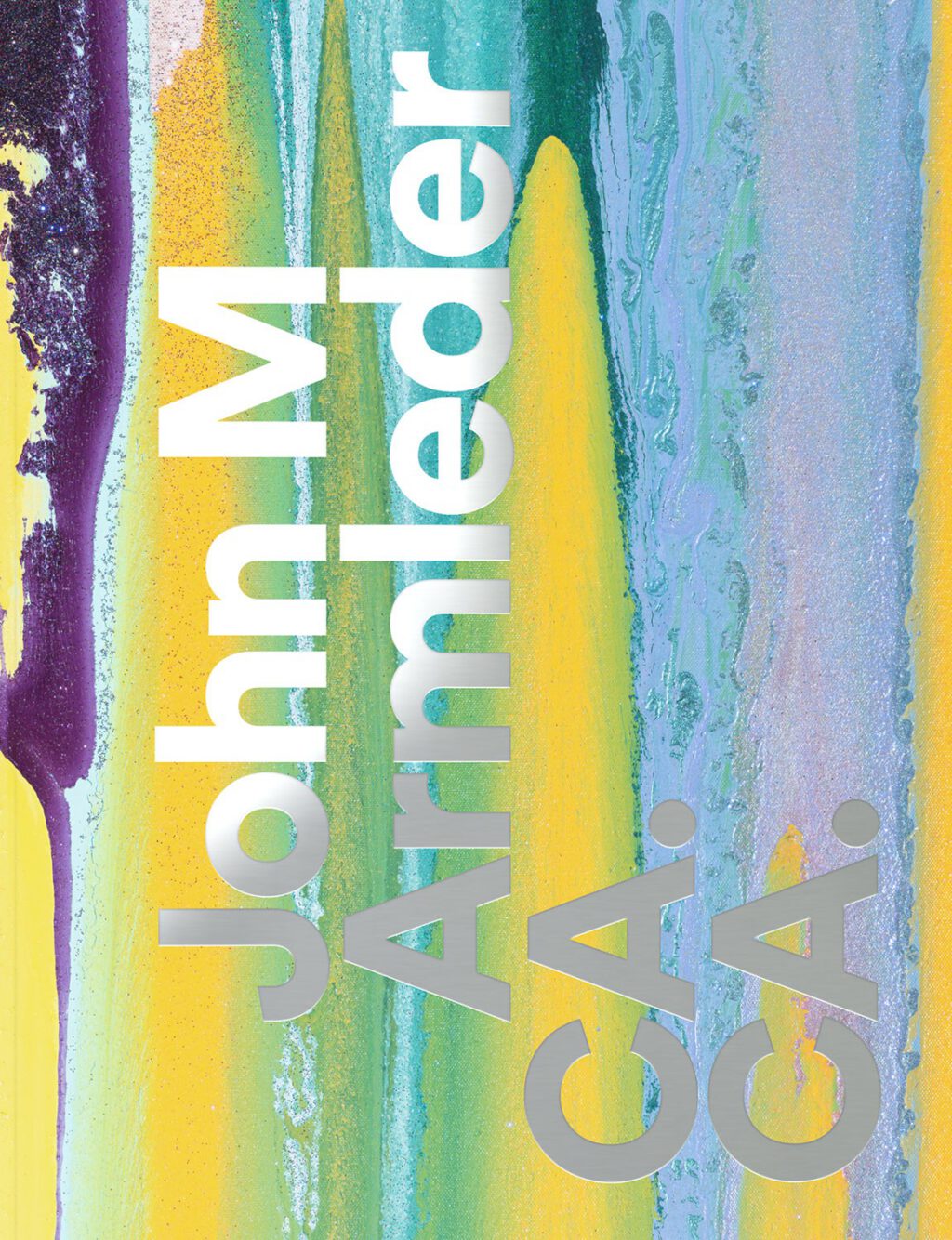
CA. CA.19€ Add to cartCommentaries on our Present Day Realities and the Status of Art
John M Armleder (b. 1948, Geneva; lives and works in Geneva and New York) is one of the most influential contemporary conceptual, performance and object artists. The profound and the banal, control and coincidence, high culture and everyday life coalesce in Armleder’s work to create a unique experience. The works of the Swiss – often humorous or ironically twisted commentaries on contemporary reality – draw on the formal repertoire of Classical Modernism, as well as on video and design. The book focuses on large-scale, site-specific installations and wall pieces, showing in detail the broad spectrum of Armleder’s work.
John M Armleder studied at the École des Beaux-Arts in Geneva. He represented Switzerland 1986 at the 42nd Biennale di Venezia and participated in documenta 8 one year later. His work has been exhibited at the Museum of Modern Art, New York, Palais de Tokyo, Paris, and Belvedere, Vienna, amongst others.
-

G. I. Widmann
Retrospektive24€ Add to cartA Tribute to the 100th Birthday. One of the Important Figurative Positions of the Young Federal Republic of Germany
She was an unusual painter who sought to hide her gender behind a pseudonym, while at the same time addressing her own circumstances as an independent artist and single mother in her large-format canvases. Gudrun Irene Widmann (b. 1919, Reutlingen; d. 2011, Reutlingen) created an oeuvre that lays claim to being one of the most important figurative positions of the 1950s and ’60s. This retrospective volume pays testimony to a strong personality and sheds light not only on her self-image as an artist but also on the influences of society and personal contexts — representative of the situation of female artists in general.
Gudrun Irene Widmann studied at the academies in Düsseldorf, Stuttgart, and Vienna during the Second World War. She worked in her own studio in her hometown of Reutlingen until her death.
-

Marx Collection
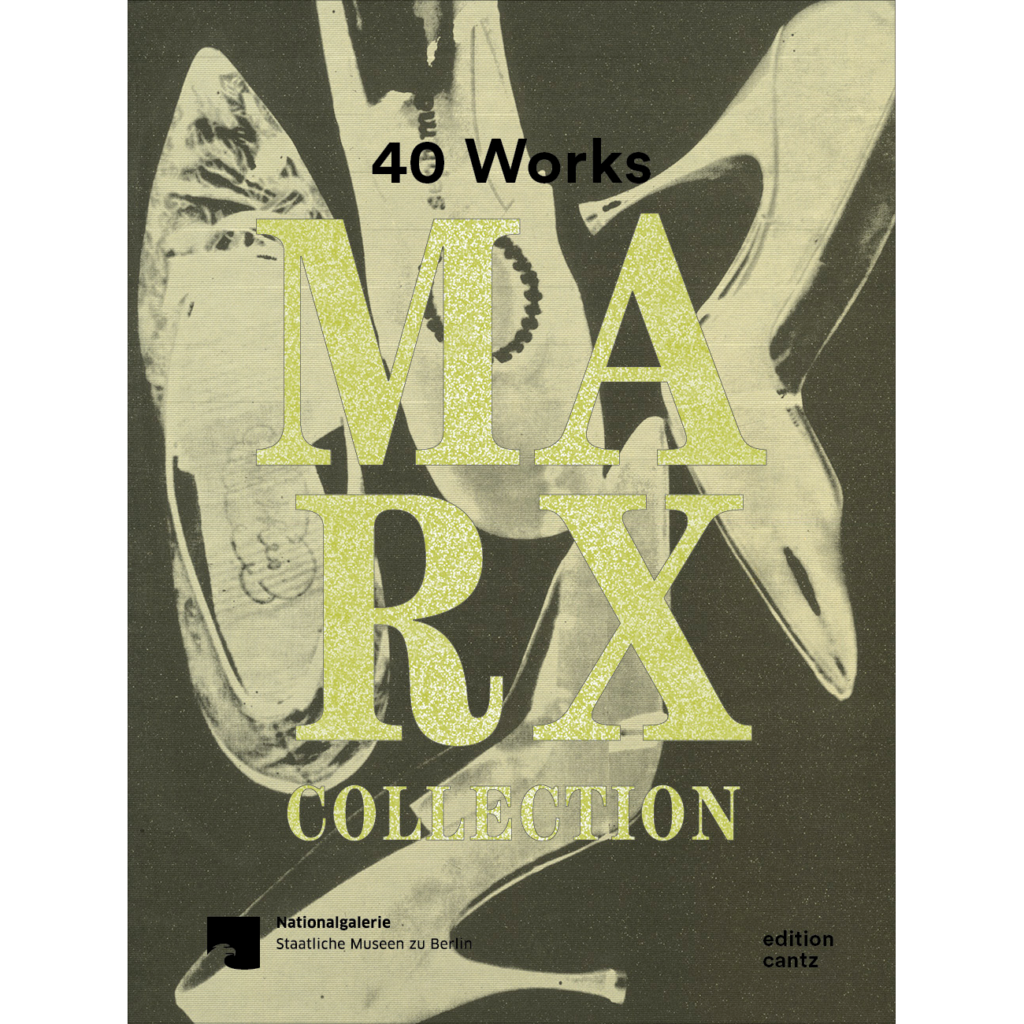
40 Works29€ Add to cartSelected works from one of the most renowned collections of modern and contemporary art in Germany
Marx Collection – 40 Works is the first publication on this collection that focuses on important individual works. The selection ranges from the early 1960s to the present, encompassing one of the most exciting periods in recent art history. An illustrated chronicle provides background information on the historical context of the Marx Collection and its exhibition at the Nationalgalerie in Berlin. With work by Matthew Barney, Georg Baselitz, Joseph Beuys, Ross Bleckner, Francesco Clemente, Martin Disler, Rainer Fetting, Dan Flavin, Günther Förg, Peter Halley, Keith Haring, Candida Höfer, Donald Judd, Anish Kapoor, William Kentridge, Anselm Kiefer, Jeff Koons, Roy Lichtenstein, Richard Long, Gerhard Merz, Robert Rauschenberg, Ugo Rondinone, Thomas Ruff, Julian Schnabel, Cindy Sherman, Thomas Struth, Sam Taylor-Johnson, Cy Twombly, Andy Warhol, Rachel Whiterea
Dies ist die englische Ausgabe, hier geht’s zur deutschen Ausgabe
-

Jan Muche
Agora42€ Add to cartTracing the Wear of the Life of Labor
The visual art of Jan Muche (b. 1975, Herford; lives and works in Berlin) revolves around forms that bring to mind structural steelwork, giant industrial installation components, or scaffolding. His constructivist-abstract paintings and sculptures look back on steel as a symbol of industrialization and the working class, which featured in unflappably cheerful and adulatory depictions that were characteristic of the twentieth century’s ideologies – Communism, Stalinism, National Socialism, actually existing Socialism. Muche’s roughhewn aesthetic combines proletarian charm with the spirit of onward and upward, taking the beholder to regions not untinged by dissonance. This book, supported by the Leinemann-Stiftung für Bildung und Kunst, brings his reflections on the significance of work and the impact of digital technology on physical toil as well as his engagement with yesteryear’s “heroes of labor” into focus.
Jan Muche trained as lithographer and studied with Karl Horst Hödicke at the Hochschule der Künste Berlin.
-

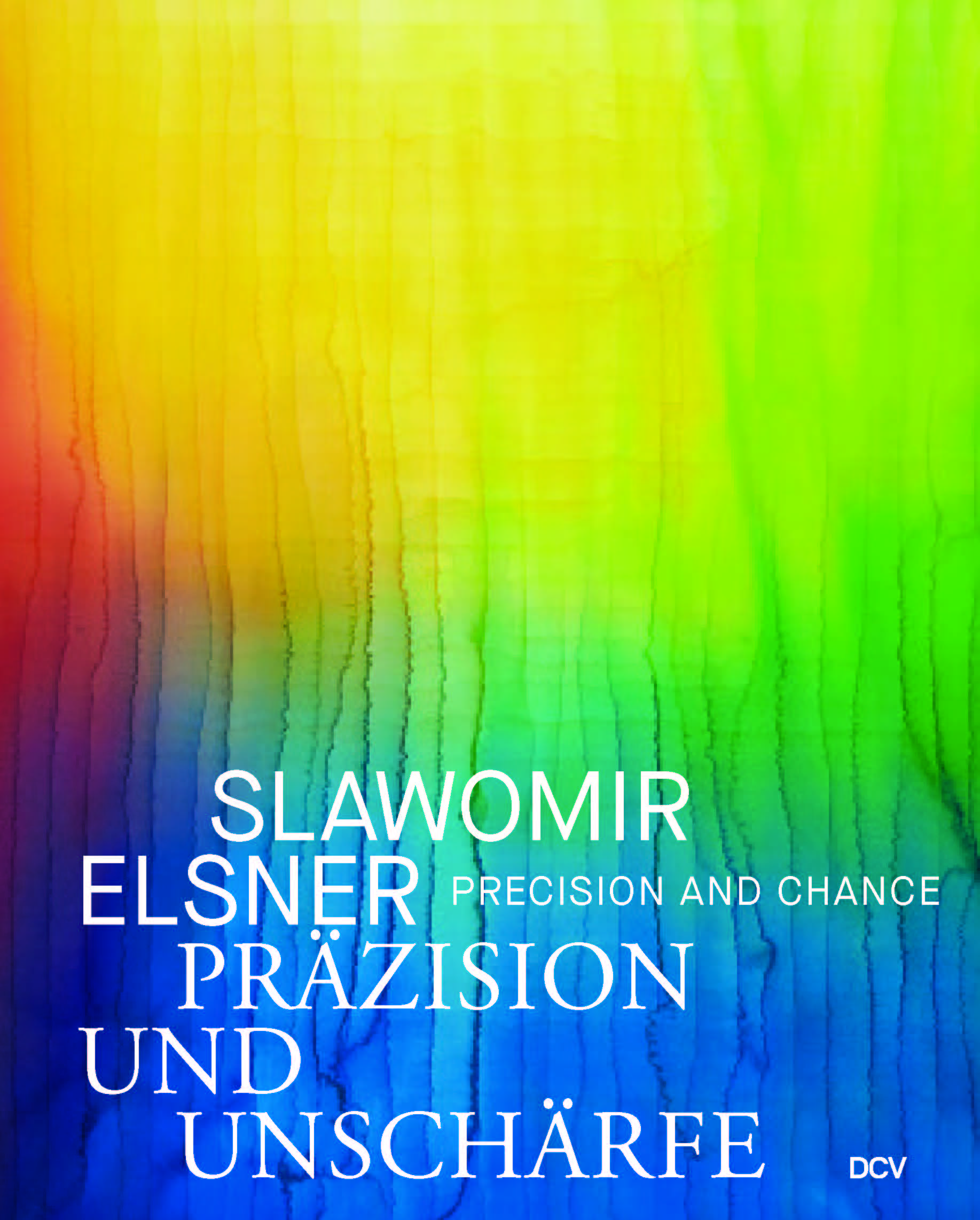
Slawomir Elsner
Precision and Chance38€ Add to cartComplex Processes of Abstraction
International audiences know Sławomir Elsner (b. Wodzisław Śląski, Poland, 1976; lives and works in Berlin) for his naturalistic paintings and abstract watercolors, but it was his brilliantly executed colorful drawings that made him famous. The technique of his work in crayons is as formidable as it is singular and underlies his many adaptations of legendary works from the history of painting that seem blurry but are actually drawn in accurate lines.
More generally, Elsner’s art probes the effect of different media and the stories they tell. He interrogates the images they transport and challenges the consumers to subject their own visual experiences to a similar critical review. Do pictures represent reality or distort it? That is the question that guides his inquiries.
Elsner works almost exclusively in series. What makes this book special is that it includes an index in which eleven of these bodies of work are reproduced in their entirety. The Old Masters series alone comprises 143 works made in the years after 2014. It is complemented by the series Windows on the World (2008–2010), Feuerwerk- und Luftabwehr (2004), Unsere Sonnen (2004–2005), the watercolors of Tagstücke and Nachtstücke (2014–2021), and others.
Many of the works frame accidents, disasters, wars, nuclear tests, or other horrible events. By harnessing the means of art to detach their depiction from a documentary setting, Sławomir Elsner achieves an unrivaled degree of aestheticization; his works are fascinating at first glance, only to fill the beholder with a creeping dread.
-

Alexandra Tretter
24€ Add to cartThe art of Alexandra Tretter (*1988) is as deep as it is playful. Owing just as much to the gentle spirituality of Hilma af Klint’s late geometries as it does to Sonia Delaunay’s exuberant disc paintings, almost bursting with sheer chromatic pleasure. Her compassionately designed artist’s book combines monumental paintings with intimate works on paper, all of which are imbued with the contexts of Tretter’s own life as an artist, as a woman, as a mother.
Her kaleidoscopic figurations unfold from a center at rest in itself and multiply in symmetry and asymmetry towards all sides. She contrasts the circular form, the unchanging basic element of her compositions, with the oval, which constantly strives beyond itself, transforming itself in ever-new permutations from one figure into the next, into eyes, mouths, breasts, petals or vulvas.
Her images strive for composure, unfold and blossom, only to let go of all gestalt-like form. Once gained stability is instantly pushed into turmoil. Colors flare up violently or flow delicately about, lighten or shade each other, carry or throw each other off course. Tretter equally realizes materialization and dissolution as basic principles of her painting.
Whereby all, what her images absorb, preserve and release, is experience, growth and slow maturing. Her paintings are “figurations of affection”, in which each individual turns towards something else, doubts or grows, at times turns away or surrenders all the more consciously. They question everything, start anew and yet find their way back to themselves, into their very own.
-

Konkrete Progressionen
François Morellet & Vera Molnar, Manfred Mohr & Hartmut Böhm15€ Add to cartThanks to a generous donor, the Kunstmuseum Reutlingen | konkret welcomed a number of outstanding works to its collection in 2022. Titled Konkrete Progressionen, the first exhibition to showcase a selection from the gift features four internationally renowned artists whose works are derived from mathematical or geometric procedures: the concrete systematists Hartmut Böhm (1938–2021) and François Morellet (1926–2016) and the pioneers of computer-generated art Manfred Mohr (1938–) and Vera Molnar (1924–).
The book documents the serial paintings, drawings, collages, wall objects, and monumental installations and environments of steel beams or concrete blocks. The works play concrete games with the beholder’s ability to recognize patterns in binary contrasts or layered grids. They show sine waves, vector series, hypercubes, and markings derived from the circular constant π or the Fibonacci sequence—and in each instance demonstrate primarily how the basis of calculation takes on a life of its own.
The exhibition at the Kunstmuseum Reutlingen runs until April 14, 2024.
-

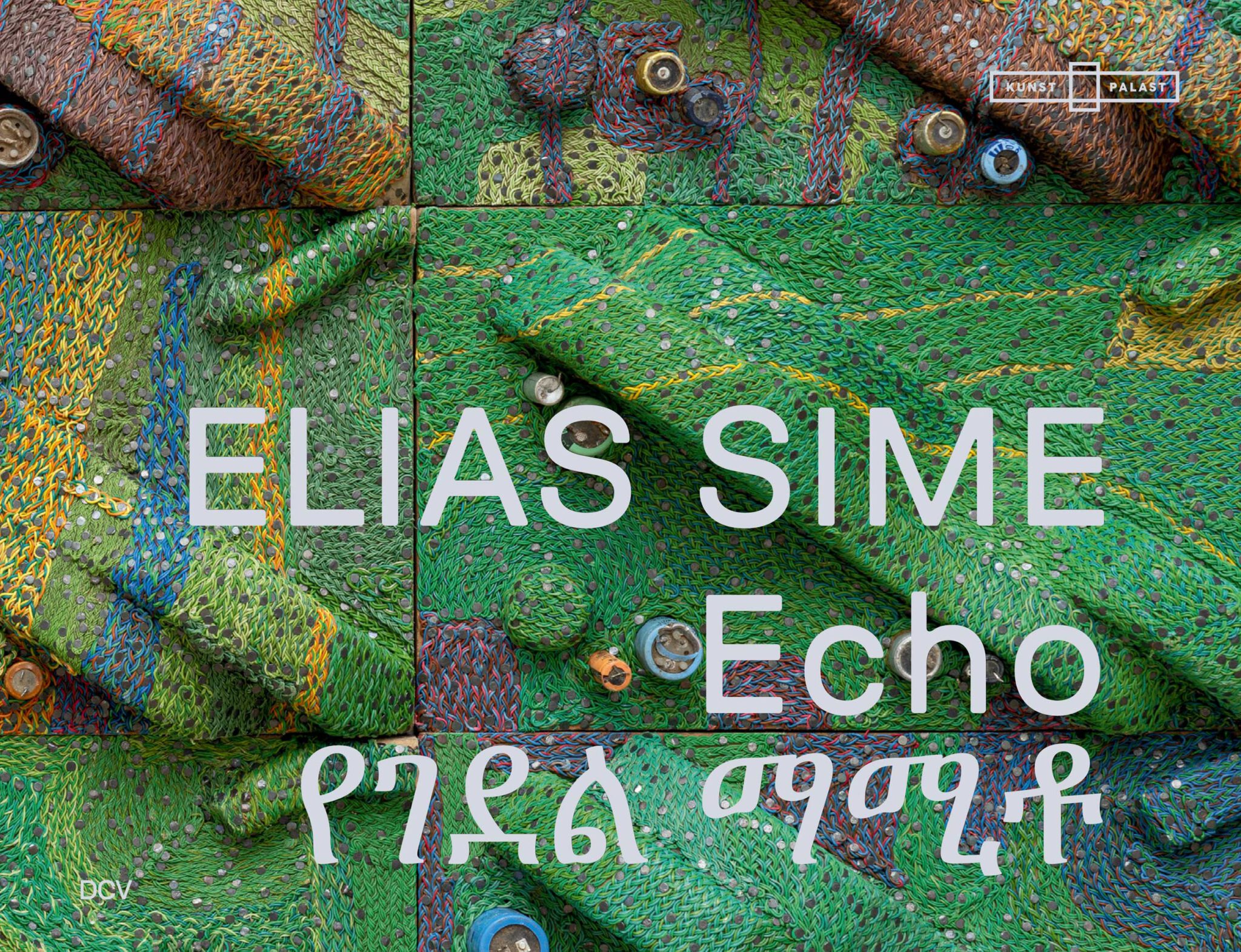
Elias Sime
Echo የገደል ማሚቶ35€ Add to cartEthiopia’s multi-award-winning artist Elias Sime (born 1968 in Addis Ababa) impresses with monumental wall reliefs made of ornamentally interwoven wires and cables or sawn-up circuit boards. For years, together with his team, he has been tirelessly
reworking discarded electronic components into complex and colorful assemblages. In doing so, he draws on traditional Ethiopian techniques of weaving, braiding and carving. Sime is interested in the “biography of the material” and each collage is a search for traces (of the local and global past). The artist obtains the electronic waste, which the countries of the global North are known to like to “dispose of” in the African continent, from the flea markets in Addis Ababa. His friezes are monuments both to the throwaway society and to global networking and interaction.
Echo የገደል ማሚቶ, a richly illustrated book, gives an overview over the artist’s fascinating career and is published on the occasion of the solo show at the Kunstpalast Düsseldorf. The volume includes insightful essays by Felicity Korn and Andria Hickey as well as an important conversation with Hans-Ulrich Obrist from 2016. Also discussed is the Zoma Museum complex, which was initiated by Sime (together with the curator Meskerem Assegued)—a total work of art that is exemplary for sustainability and community building.
-

Barthélémy Toguo
10€ Add to cartBarthélémy Toguo’s art is a call for community and love, but there is nothing naïve about it. His paintings, graphic art, sculptures, performances, and installations explicitly grapple with colonialism, migration, and inequality; he directs our attention to the devastations wrought by humans, to the slow deaths of nature and cultures. But he does not dwell in this abyss. He aspires to something greater: to create work that establishes non-hierarchical connections; to build, as he puts it, a “world of solidarity and generosity” that knows neither ego nor identity, a community of all forms of life that flourish and pass away so that new living beings can sprout from their remains—Endless Blossoms. His choice of words and the aesthetic of the works gathered in this catalogue suggest that he is not alone in this undertaking. He stands with Ellen Gallagher, Wangechi Mutu, Louise Bourgeois, Marlene Dumas, and Kiki Smith. With them and with all of us, Toguo envisions a colorful future, a universe of exuberant energy and joie de vivre.
-
“Das Quadrat muss den Raum beherrschen!”
Aurélie Nemours und Zeitgenossen15€ Add to cartDoes everything in the world obey a mathematical logic, can everything be calculated? In our present age of probability, some would say the answer is a straightforward yes, inevitably prompting the question: Even art? Yes, even art, or so the defenders of Concrete Art would respond, a twentieth-century movement that took abstraction as a focus on the “idea of art itself” (W. Kandinsky) to the next level. The act of painting was now to be subject to preconceived organizing principles as though they were laws of nature. One prominent exponent of the genre was Aurélie Nemours (1910–2005), who had a penchant for the square; her credo was that it needed to “rule space.” That is why the equilateral quadrangle is the defining shape in this catalog, which brings Nemours’ oeuvre into focus. Her iconic position is flanked by works by seventeen others that similarly grapple with the square, including pictures and sculptures with square basic forms, grids, or canvases. All these works derive their force from the stern authority of the square: only when art constrains its means can it bring its full potential to bear.
ARTISTS:
JOSEF ALBERS, GÖTZ ARNDT, MAX BILL, AD DEKKERS, HELMUT FEDERLE, GOTTFRIED HONEGGER, KATHRIN KAPS, FRITZ KLINGBEIL, JOHN MEYER, GEROLD MILLER, AURÉLIE NEMOURS, JOHN NIXON, PETER ROEHR, JAN SCHOONHOVEN, ANTON STANKOWSKI, KLAUS STAUDT, HERMAN DE VRIES, GERHARD WITTNER -
Kraftwerk
Innovation durch Transformation34€ Add to cartThe power plant in Rottweil, built in 1915 by the architect Paul Bonatz, looks back on a rich and interesting history: until 1976, it provided power to a gunpowder factory and, later, to a rayon manufacturer and at times also to the city of Rottweil. The façade design, the imposing perron leading up to the main entrance, and the tall chimneys still stand as testament to the modernist industrial structure’s erstwhile significance. Twenty years after the plant was taken out of service, the entrepreneurs Thomas Wenger and Mike Wutta with their event agency trend factory took over the dilapidated building with the surrounding premises and restored it, taking care to preserve its architectonic elements and the most important technical installations. (In the course of fifteen years, around 60,000 square feet of floorspace were reopened, with a special emphasis on the distinctive blend of morbid charm and contemporary design.) The power plant now serves the company as its headquarters and, more importantly, as a cutting-edge venue for concerts, congresses, and corporate events that has attracted clients and visitors from all over Baden-Württemberg and beyond.
-

Tobias Rehberger
1993–202244€ Add to cartIn his sculptural work, Tobias Rehberger (b. Esslingen, 1966; lives and works in Frankfurt/Main) connects strategies from different, also non-art disciplines. His interiors meant to be taken into service have established him as one of the most influential artists of his generation. In 2022, the Kunstmuseum Stuttgart will honor Rehberger with a grand exhibition that will feature some of the most important bodies of work from the past three decades. The accompanying book makes a signal contribution to the ongoing critical engagement with his art.
Tobias Rehberger studied with Thomas Bayrle and Martin Kippenberger at the Städelschule in Frankfurt from 1987 until 1992 and later returned to his alma mater as a professor. He has had numerous solo shows in Germany and abroad and, in 2009, furnished the central cafeteria at the 53rd Venice Biennale, which won him a Golden Lion.
-

Etsu Egami
Rainbow18€ Add to cartWhat is worth talking about in art eludes language. Aesthetic experience is without words, like a human encounter that touches upon our innermost being. Etsu Egami is interested in the margins of understanding, where the communication of ideas and feelings threatens to fail, where forms become illegible. That is the point on which she homes in with her brush, which she wields in a rough calligraphic style, putting almost translucent oil paints on the canvas. Spectral faces emerge that dissolve into abstraction; abstract forms, beheld from the corner of one’s eye, momentarily coalesce into a likeness. Painting, to Egami, is a physical and performative act, the brush an extension of her arm, bringing a picture into being in sweeping rhythmical motions. As we contemplate her work, that momentum imparts itself to us: first our eyes begin to wander, then we feel our bodies stir, and finally the spirit, too, pulsates in the rhythm of the brush. Gathering Egami’s most outstanding works, this catalogue is a universal invitation to join a peculiar dance, an arc of light the artist traces across all barriers to understanding and that speaks to our senses.
-
MEUSER
Werke 2012–2023 (GERMAN)48€ Add to cartEver since his studies with Joseph Beuys and Erwin Heerich, since his first exhibitions – for instance at ‘Kippenberger’s Office’ in 1979 – Meuser (b. Essen 1947, lives and works in Karlsruhe) has been a solitaire. His sculptures are unyielding and unruly, just as much as they are vulnerable and tender. They are witty and heart-touchingly charming.
Meuser finds his material in the scrapyard. Confidently and empathically, he reinstates form and dignity to the remnants and vestiges of industrial society. As a romantic, he grants things a life of their own and turns them into self-reliant protagonists, once more. Unwaveringly, he works to re-poetize a standardized and maltreated world.
The lavishly designed monograph is published on the occasion of Meuser’s 75th birthday, presenting works and exhibitions from the past ten years. Eight international authors and scholars create a dazzling mosaic and reveal how Meuser boldly holds his own in face of Duchamp, Minimalism, and Social Sculpture. An open-ended outlook.
Meuser studied 1968–1976 at Art Academy, Düsseldorf with Joseph Beuys and Erwin Heerich. 1991 he received the ars viva award. 1992-2015 professorship at Academy of Fine Art, Karlsruhe.
Since 1976, numerous institutional solo and group exhibitions and works in international collections: Bundeskunsthalle, Bonn; Deichtorhallen, Hamburg; documenta IX / Fridericianum, Kassel; Fundació Joan Miró, Barcelona; Joanneum, Graz; Kunsthalle Düsseldorf; Museum of Contemporary Art, Monterrey; Martin-Gropius-Bau, Berlin; Museum Abteiberg, Mönchengladbach; Museum Folkwang, Essen; Museum moderner Kunst Stiftung Ludwig, Vienna; Museum Morsbroich, Leverkusen; Rijksmuseum Twenthe, Enschede; Sakip Sabanci Museum, Istanbul; Städtische Galerie, Karlsruhe; Vanhaerents Art Collection, Brussels; ZKM | Museum für Neue Kunst, Karlsruhe.
-

SOMA
Collective SineUmbra18€ Add to cartOn the Disappearance of Italian Culture
Under the collective label SineUmbra, the artists Luisa Eugeni (b. Assisi, Italy, 1987; lives and works in Berlin) and Mattia Bonafini (b. Legnago, Italy, 1980; lives and works in Bremen) develop interdisciplinary projects that they realize as sprawling multimedia installations comprising video projections, sound, and performative elements. The point of departure for their project SOMA was Pier Paolo Pasolini’s 1975 essay Disappearance of the Fireflies, which probes the wrenching transformation that Italian society and the country’s very landscapes have undergone since the 1960s. SOMA melds performance art, the visitors’ movements, geography, and psychology in a space of experience that speaks to all senses for an exploration of the impact that traumata inflicted on individuals and communities by natural disasters and social changes have on the human soul and perceptual capacities. In keeping with the artists’ collective and dynamic creative vision, the catalogue embeds the multimedia installation in a context fleshed out by rich photographic documentation and numerous texts.
On occasion of the master class graduate exhibition at the Bremen University of the Arts in 2019, the two artists were awarded the renowned Karin Hollweg Prize for Fine Art. The publication accompanies their first solo show at Kunsthalle Bremen.
-

Plastique Fantastique
A Journey through an ephemeral Realm32€ Add to cartIn the wake of Frank Lloyd Wright’s pioneering work, visionary architects including Frei Otto and Buckminster Fuller established bubbles as a recognized artistic and architectonic form. The Berlin-based art duo Plastique Fantastique (Marco Canevacci and Yena Young) go one step further and harness them as a medium of temporary social interactions. The philosopher Vilém Flusser conceived of space in the digital universe as a network of relational settings in which humans can be in multiple places at one, as a “bubble that extends into the future.” Plastique Fantastique transform our urban and rural environments into laboratories for such spaces in which urgent social, political, and aesthetic questions are negotiated. Oversized translucent bubbles, traffic islands ringed by diaphanous tubes, giant lifebelts, air-filled sausages that the audience at a Peaches concert pass over their heads: Plastique Fantastique’s installations fuse art, performance, people, and architecture in a multisensory experience that blurs the conventional boundaries of art and focuses our attention on the larger bubble in which human existence is contained. Richly illustrated with exceptional photographs, this monograph is the first to document a representative selection from the duo’s projects of the past two decades.
-

Photography of Presence
24€ Add to cartThe Importance of the Moment in Artistic Photography
Can photographs exist which represent concrete places? In view of the daily flood of images, this question seems superfluous at first. Only on closer inspection does the distance between the visual experience of places and the media images generated from them become apparent. “There is nothing in this world that does not have a decisive moment,” Henri Cartier-Bresson once stated. The present volume examines this decisive moment and explores the question of how artistic photography can describe the gap between spatial reality and photographic image and make the present at the time the photograph was taken visible.
With works by Viktoria Binschtok, Julian Faulhaber, Mareike Foecking, Stephanie Kiwitt, Nikolaus Koliusis, Barbara Probst, and Wolfgang Zurborn as well as texts by Holger Kube Ventura.
-
Sebastian Stöhrer
Residents40€ Add to cartIf there’s an artist whose oeuvre merits the title “creation,” it is Sebastian Stöhrer. Shaping clay—essentially, soil—he molds his “residents”: colorful and friendly-looking sculptural beings, some of them enhanced with sticks or branches reminiscent of limbs. Despite their air of levity and humor, they are not the products of mere momentary inspiration or a whim. It takes decades of dedicated experimentation with the kiln based on the millennia-old art of ceramics as well as expert knowledge of chemistry and physics to create such colors and shapes. Stöhrer has been called an alchemist, and indeed he has made it his mission to vindicate this researcher’s craft, an ancestor of the natural sciences. Alchemy, like Stöhrer’s oeuvre, combines pure rationality with coincidence and a scintilla of magic. The artist plays an intuitive and sensual game with his clay and the virtually incalculable chromaticity of the glazes—chaos, anarchy, and irrepressible urges being an integral dimension of all creation. In Stöhrer’s “residents,” we encounter the embodiments of that creation: likenesses of ourselves and perhaps also heralds of a future more good-natured version.