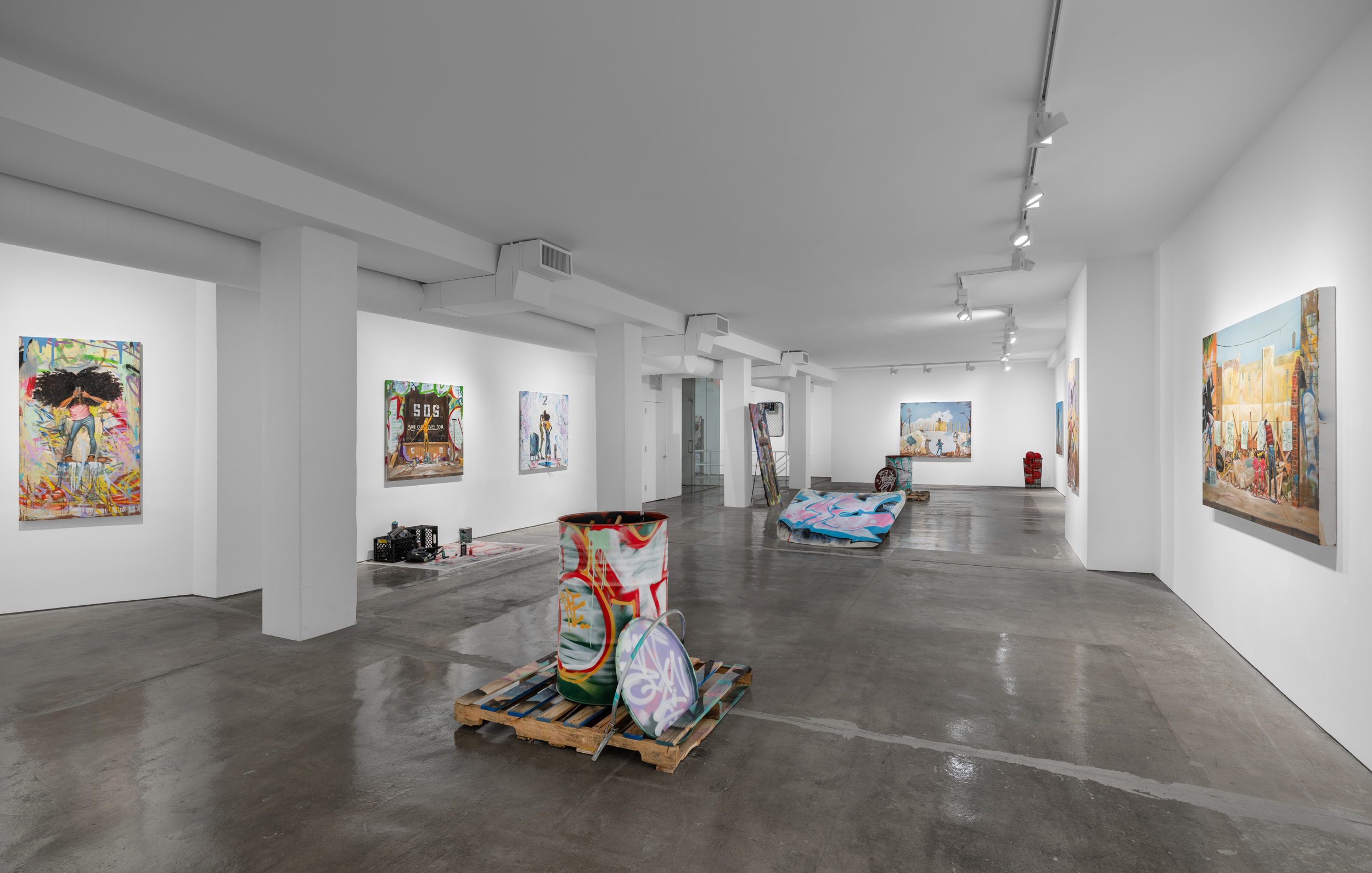
Frank Morrison
 | |
|---|---|
| Editor(s) | Richard Beavers |
| Author(s) | Dr. Charles Moore, teddy raShaan reeves, phd. |
| Design | Anna Lustberg |
| Size | 24 x 30.8 cm |
| Cover | Hardcover |
| Pages | 96 |
| Illustrations | 48 |
| Language(s) | English |
| ISBN | 978-3-96912-254-9 | Release January 2026 |
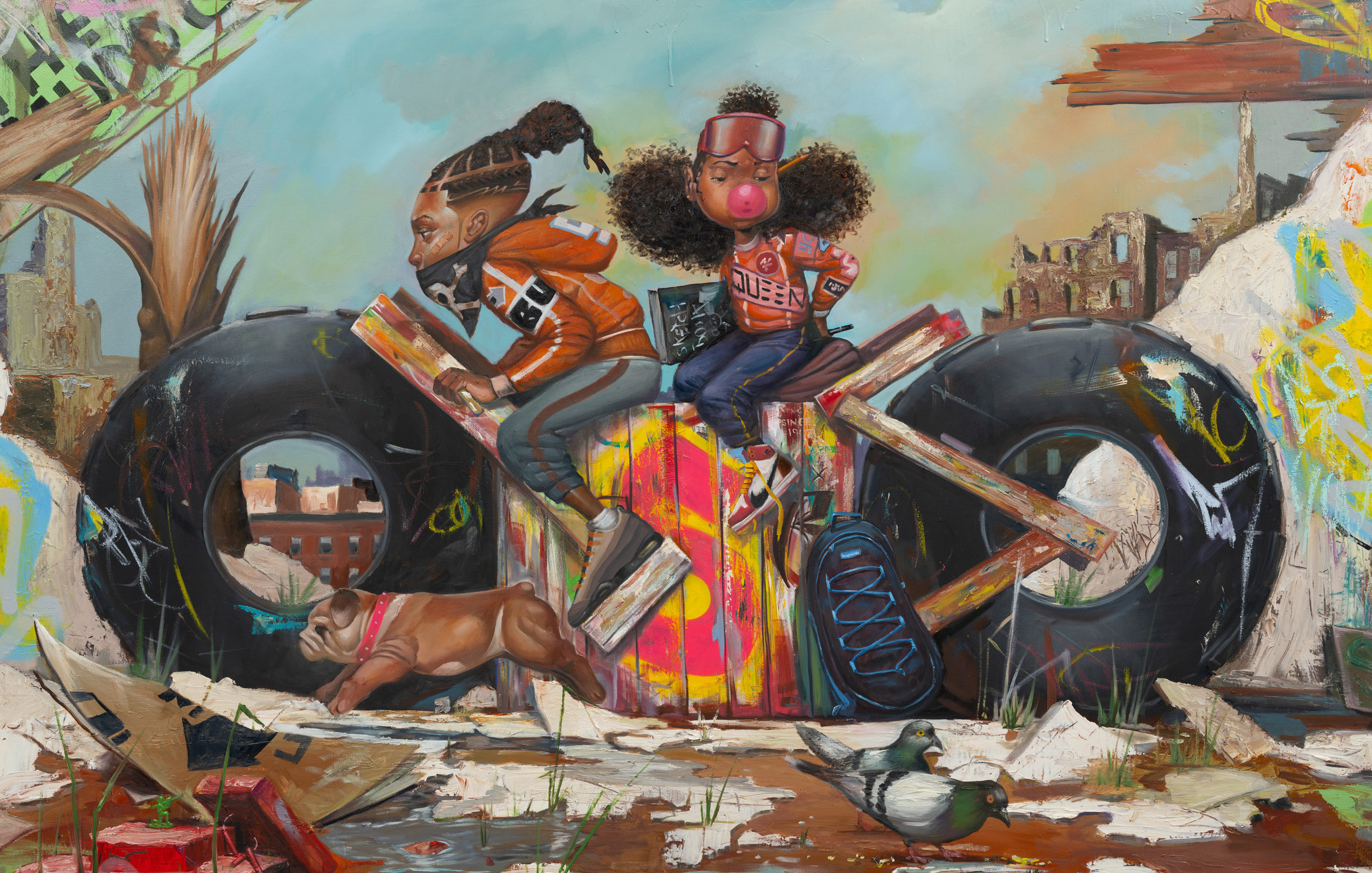
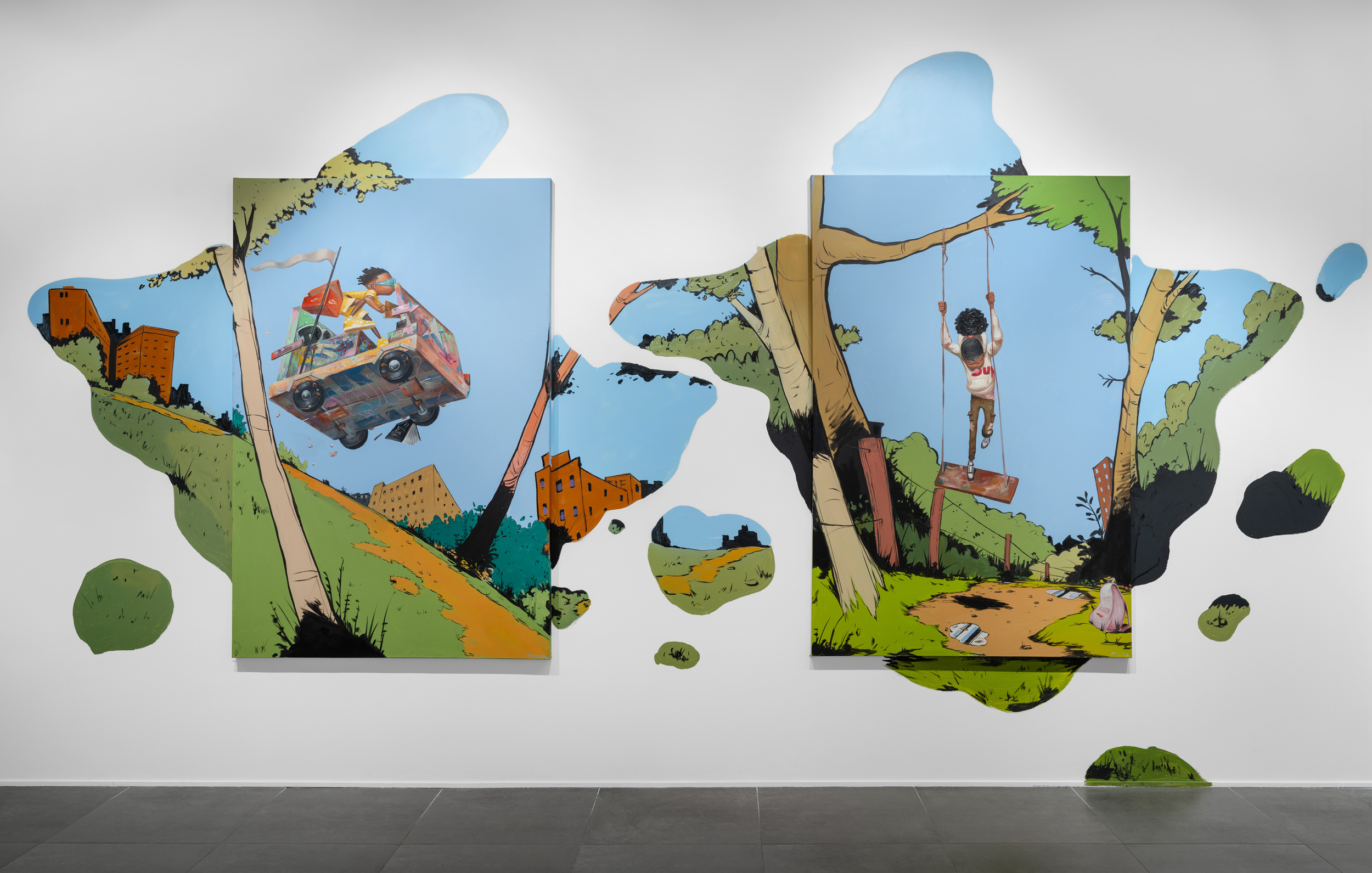
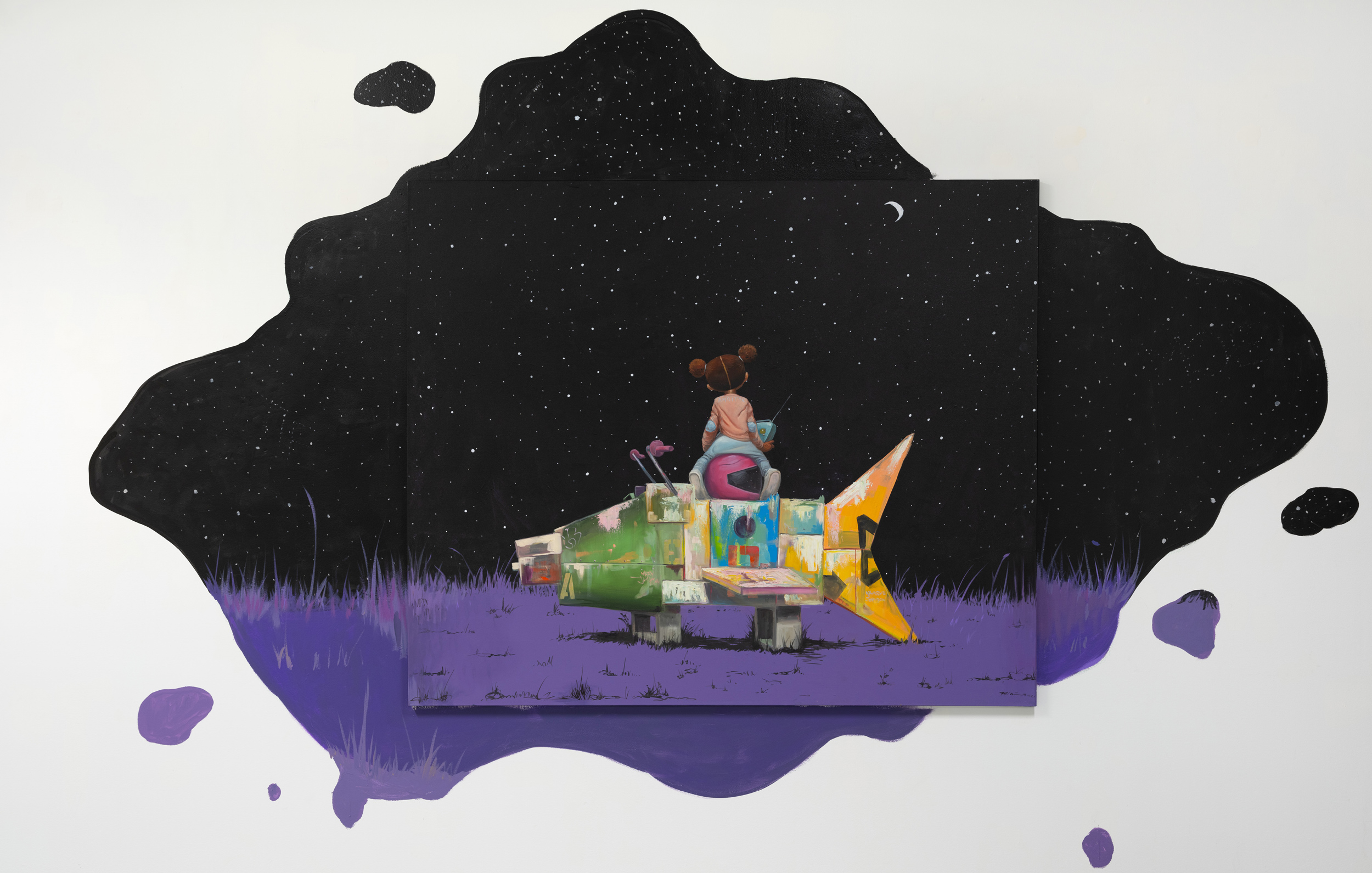
The dynamic Neo-Mannerist images of painter and illustrator Frank Morrison (born 1971, lives in Atlanta) celebrate the resilience and dignity of African Americans in everyday life. A child of institutionalized racism in the US, he can testify that creativity and solidarity could never be suppressed in the segregated and brutally marginalized communities. Hip-hop and graffiti are resistance. Clichés of inner-city struggle are vividly refuted in this book. The volume documents Morrison’s recent exhibitions, one of which is dedicated to the younger generation: frame-braking images that interweave narrative forms of comics and pop art with illustration. Morrison’s gallery calls the book an explosive tribute to genius flourishing in institutionalized exile.
Release January 2026
You may also like…
- Release January 2026

Charles Moore
On painting16€ Add to cartFor On Painting, New York-based art historian and curator Charles Moore, interviewed four women artists about their practice, asking them to reveal their motives and aspirations. This publication consists of four interviews, each containing an introduction by Moore and illustrations of the artist’s works. Danielle Mckinney, who paints exclusively Black women, reflects on her experiences as a woman growing up in the US South. Nicola Staeglich creates subtle layered abstract works to evoke new perspectives and the potential for change. Nirit Takele elaborates on how her Ethiopian Jewish heritage has shaped her painting practice. Jorinde Voigt, who creates complex installations inspired by notation systems, discusses the use of algorithms and the beauty to be found in the unexpected.
More books
-

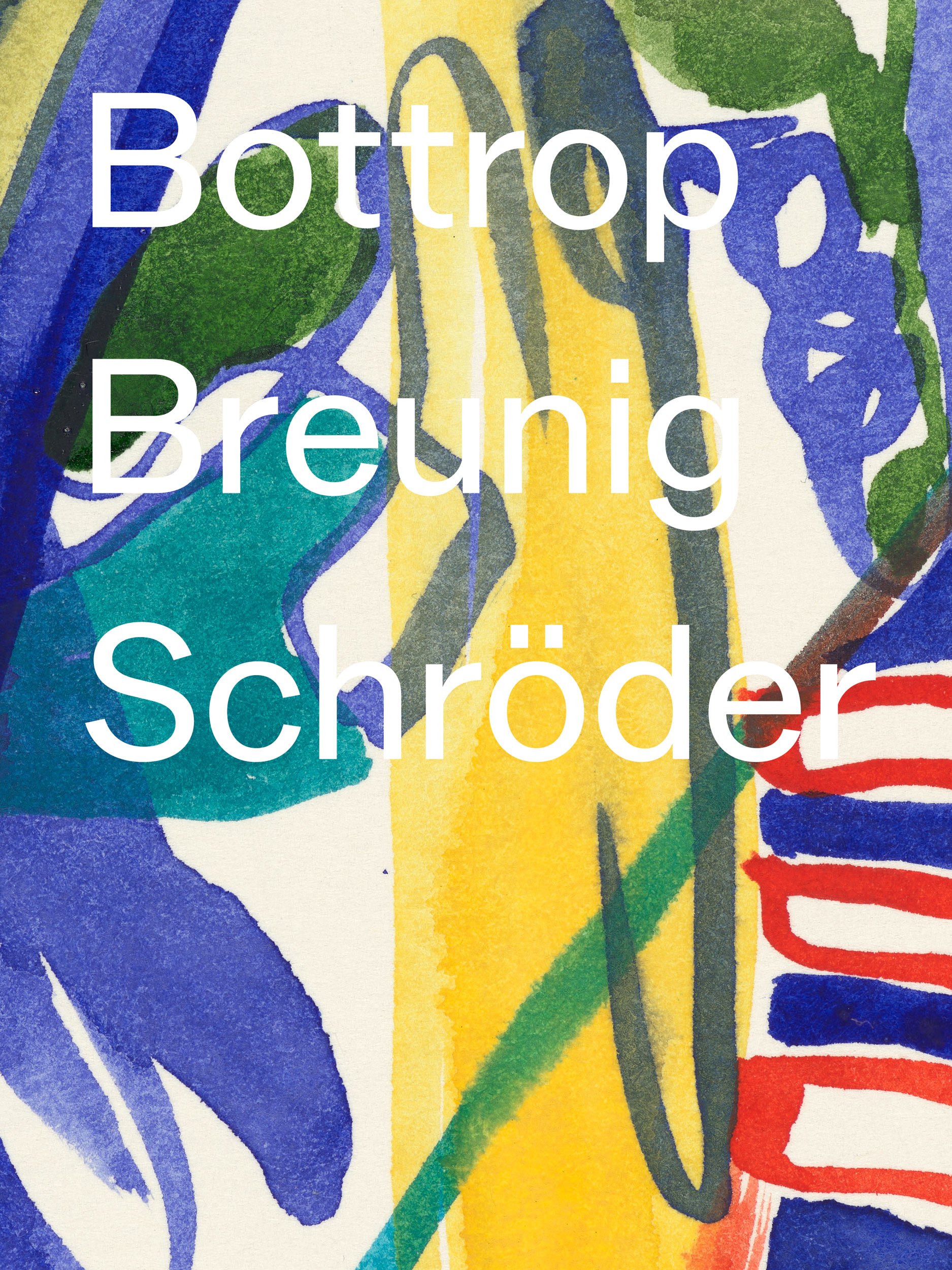
Bottrop, Breunig, Schröder
20:1528€ Add to cartRapidly growing floods of images and artificial intelligence have made art almost inevitably into a commentary on the illusion of actuality. Three painters—Jana Schröder, Peppi Bottrop und Andreas Breunig—present drawings in the Gesellschaft für Gegenwartskunst in Augsburg. 20:15 is the title of the exhibition and this accompanying book. All three artists have studied with Albert Oehlen at the Kunstakademie Düsseldorf and share a philosophical approach to painting. “Our painting is a response to the given conditions of pictoriality. We are here to deconstruct and question what images really are.” (Schröder) The art historian Christian Malycha interviews the three artists, together regarding the exhibition concept, and individually about the evolution of their works. The conversations in this book, which are supplemented by reproductions of all exhibited drawings, provide illuminating glimpses into the ongoing discourse about painting’s relevance.
-

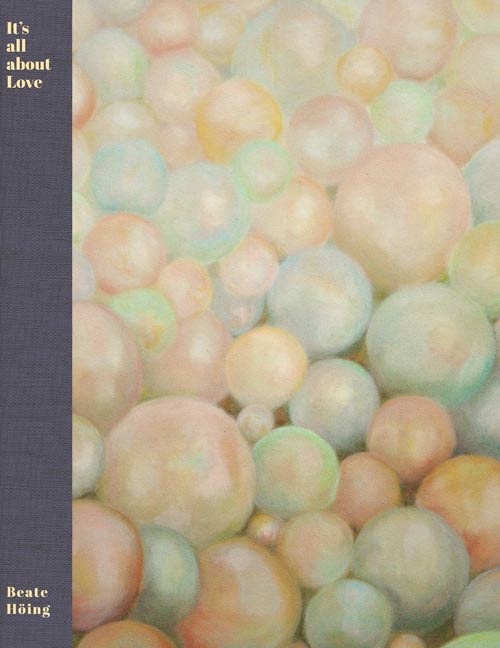
Beate Höing
It’s all about Love28€ Add to cartRecollections—What remains?
The painter and ceramist-sculptor Beate Höing (b. 1966, lives and works in Coesfeld and Münster) creates works of art whose aesthetic is deeply informed by the ornamentation and manual techniques of folk art. Drawing inspiration for her motifs from souvenir culture, but also from fairy tales and myths, she unfurls her burgeoning imagination in works defined by an unmistakable style and a singular allure. Poetic pictures and sculptures deftly toy with the conventions of kitsch and forms of traditional craftsmanship. Tangible objects, associations, and recollections coalesce in an ambivalent play between reality and fiction in which only a fine line separates dream from nightmare, congeniality from alarm.
The lavishly illustrated monograph presents a comprehensive survey of the artist’s output between 2011 and 2021.
- Out of stock

Eva Jospin
Wald(t)räume22€ Read moreThe Forest as a Place of Longing: Eva Jospin’s Magical Corrugated Cardboard Sculptures
The French artist Eva Jospin (b. 1975, Paris; lives and works in Paris) cuts and layers corrugated cardboard to create sculptures and reliefs. Handcraft and precision are essential aspects of her work. The artist retains the original color of the cardboard, since, for her, the material itself already contains sufficient color variations and nuances. The recurring motif is the forest — consisting of numerous trunks, branches, and twigs in extreme density and interspersed with black shadows. They suggest depth and stimulate the viewer’s imagination. Eva Jospin does not reproduce nature one to one, but conveys the feelings of fear, anarchy, or freedom that it triggers: The forest as a universal place of longing.
-

Stephan Kaluza
Mechanik Sehnsucht. Kunsterzeugung und Betrachtung14€ Add to cartUngewohnte Antworten aus der Sicht des Kunsterzeugers
Die Frage, was Kunst ist und wie sie entsteht, wird gerne von denen beantwortet, die sie selbst nicht erzeugen. Die Betrachtung und Interpretation steht im Vordergrund und damit eine wissenschaftliche Distanz zur Kunst. Es gibt aber durchaus die Eigen-Betrachtung derer, die Kunst aktiv herstellen und naturgemäß einen inneren Blick auf die prozessualen Bedingungen haben, die überhaupt erst das entstehen lassen, was anschließend betrachtet und beurteilt wird. Diese Sichtweise ist nicht zwangsläufig identisch mit der von außen. Nicht die Interpretation oder eine deduktive Schlüssigkeit steht hier im Vordergrund, sondern ein ableitender und besonders ein schöpferischer Sinn, der sich aus dem Prozess des Kunstherstellens von selbst ergibt.
Die Arbeiten von Stephan Kaluza (geb. 1964 in Bad Iburg, lebt und arbeitet in Düsseldorf) wurden unter anderem im Ludwig Museum Koblenz, im State Contemporary Art Museum, Seoul, in der Kunsthalle Osnabrück, im Palacete des Artes Rodin, Salvador, im Museum on the Seam, Jerusalem, sowie in der KAI 10 | Arthena Foundation, Düsseldorf, ausgestellt.
-

ODOR
Immaterial Sculptures40€ Add to cartThe effect of odor is immediate. Smells arouse feelings in us, put us in moods, awaken recollections. They color the other senses and shape our perceptions more profoundly than we are aware. Scents create closeness and distance at the same time. They become imprinted on our memories and consolidate our experiences. And yet their existence in the world of three dimensions remains invisible, and the act of picking up a scent is fleeting.
The publication Odor—Immaterial Sculptures zooms in on the power of smells. Contributions from curators, artists, scientists, and scholars frame a variety of perspectives on this evanescent phenomenon, examining the olfactory sense and the qualities of the immaterial. Full-page plates conceived by the artists provide additional information, imagery, and contexts around the individual works, which put odor as an olfactory and spatial experience at the center of the engagement with art. The works operate between the poles of time and space, individual and community, consciousness and the subconscious, visibility and invisibility, the everyday and the miraculous, the sense of self and the perceptions of others, presence and absence, life and death.
Artists : Jason Dodge, Carsten Höller, Koo Jeong A, Oswaldo Maciá, Teresa Margolles, Pamela Rosenkranz, Sissel Tolaas, Clara Ursitti, Luca Vitone
-

Jan Zöller
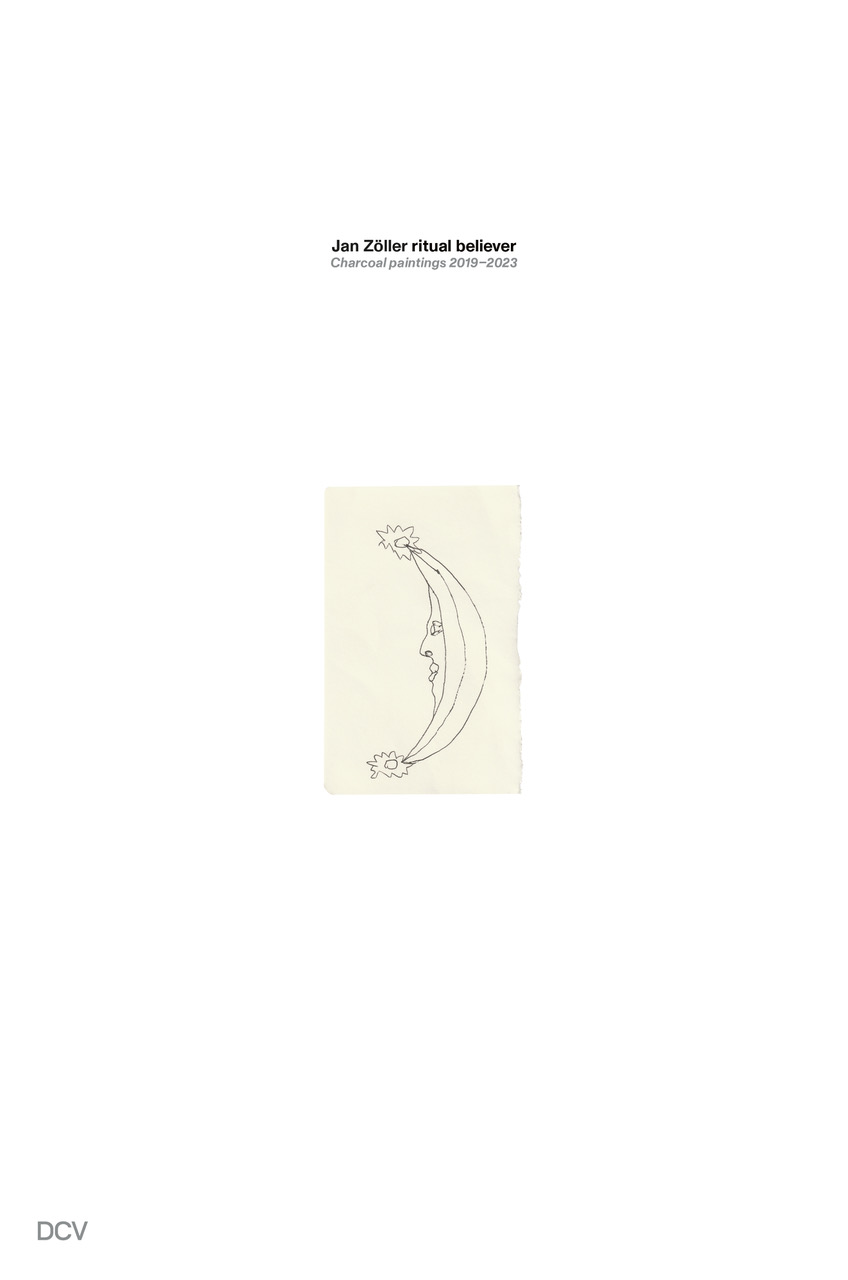
Ritual Believer40€ Add to cartJan Zöller’s (b. Haslach, 1992; lives and works in Karlsruhe) paintings, sculptures, and installations probe the discrepancy between economic production and the spiritual and magical dimension of art. The artist’s book Ritual Believer surveys the so-called charcoal paintings series, created between 2019 and 2023. For these works, the artist paints directly in charcoal on the unprimed canvas, making it impossible to correct “blunders.” Another distinguishing feature is the virtual absence of color; the austerity of the compositions contrasts with Zöller’s other, often intensely colorful paintings. The motifs that are the hallmark of his oeuvre—birds, running legs—are complemented by writing and text. Another aspect of this shift is that the works’ titles play a central part and almost figure as a creative element in their own right. For the text in the book, the artist sent the titles of the works shown to his brother, who wove them into a story. An appendix presents scanned archival materials. Notebooks and zines Zöller produced between 2015 and 2017 provide interesting insight into how he finds his motifs and his compositional process.
Jan Zöller studied with Marijke van Warmerdam and Leni Hoffmann at the Akademie der Bildenden Künste Karlsruhe from 2012 until 2017 and with Jean-Marc Bustamante and Götz Arndt at the École Nationale Supérieure des Beaux-Arts de Paris in 2016.
-

Sonja Yakovleva
10€ Add to cartSonja Yakovleva (b. Potsdam, 1989; lives and works in Frankfurt am Main) uses pornographic representations and images from the internet as templates for papercuts, some in large formats, that grapple with personal and public stories about women, power relations, sexuality, and violence. The silhouettes show popular motifs that have served to ingrain fairy tales, myths, and ideologies in the collective consciousness from the colonial era to modernism and the early twenty-first century. Yakovleva, whose art is often associated with sex-positive feminism, appropriates this folkloristic visual idiom and hybridizes and sexualizes it. Dessous and strap-on dildos, for example, figure as preserved specimens of butterflies and insects, bringing historic scientific expeditions to mind. Yet her work also addresses the capitalist urge to categorize, evaluate, and market every kink.
-

WORLD FRAMED
Zeitgenössische Zeichenkunst der Sammlung Schering Stiftung im Kupferstichkabinett38€ Add to cartIn 2008, the Schering Stiftung began acquiring outstanding contemporary works on paper for the Kupferstichkabinett (Museum of Prints and Drawings) in Berlin. The collection, which has since grown to 130 nonfigurative drawings and a small number of prints, emphasizes the close conjunction of art and science. The holdings also reflect central tendencies in the art of drawing: in addition to exploring the line and its multifaceted formulation, artists shed light on the bounds of their medium and its expansions and undertake forays into inter-media art within drawing. The lavishly designed publication WORLD FRAME—the title is borrowed from a work by the artist Matt Mullican—presents the works acquired thanks to this partnership. It inquires into how artists translate their perceptions of their world into pictures and which contexts and discourses inform those pictures. Which perspectives, which ideas frame the segment of reality an artist observes?
“World Framed,” exhibition, Kupferstichkabinett, Staatliche Museen zu Berlin, July 7–October 8, 2023
-

MK Kaehne
Π = 3,1415935€ Add to cartThe biography of conceptual artist MK Kaehne (b. Vilnius, 1963; lives and works in Berlin) oscillates between Vilnius, Moscow and Berlin. Influenced by Russian Constructivism, he draws and builds suitcase sculptures with a department store aesthetic, a reversal of the readymade principle. His focus gradually shifted from the formal to the psychological, towards life-size figures such as It’s me (2023): a hyper-realistic replica of himself, lying upside down in the mud, with a garden gnome next to him. Kaehne’s work is strictly analytical, but the results are full of tragedy and irony. Unintentional drawings, in which biographical, Dadaist and political elements merge, accompany his oeuvre. A total work of art that traces personal and social development.
- Release May 2026

Simone Haack
NEW MAGICAL REALISM44€ Add to cartTalking about magical realism today, we typically think of the literary genre. Yet when Franz Roh coined the term, he was referring to a tendency in German visual art in the years before the rise of fascism. What marked a major departure from Expressionism and abstraction has seen a renaissance in the New Magical Realism pioneered by Simone Haack since the turn of the millennium, now framed by a comparable geopolitical situation. The influence of Giorgio de Chirico and his pittura metafisica is unmistakable in Haack, as are those of the New Objectivity, Kafkaesque painting, and the metaphysical dimension of Surrealism. One of the most eminent artists of our time.
-

Justine Otto
New Traditionalists38€ Add to cartJustine Otto (b. Zabrze, Poland, 1974; lives and works in Hamburg and Berlin) is one of the most promising artists on the contemporary painting scene. An aficionado of the absurd, she unfolds a metaphysical-psychedelic and often gaudily lustrous cosmos in pictures in which representation clashes with abstraction. In her early work, girls, women, and animals were here preferred subjects; more recently, she has painted heroes—the protagonists in myths of masculinity. After generals, officers, and strategists, she has now turned her attention to cowboys, who appear on horseback or resting under a tree, musical instrument in hand.
Justine Otto studied fine art and painting with Peter Angermann and Michael Krebber at the State Academy of Fine Arts (Städelschule) in Frankfurt am Main and obtained an MFA in 2003. She also worked as a scene designer at Städtische Bühnen Frankfurt, the city’s municipal theater company. Her paintings are held by collections including the Hessisches Landesmuseum, Darmstadt; Museum Franz Gertsch, Burgdorf, Switzerland; and the Phillips Collection, Washington, D.C.
-

Francis Alÿs
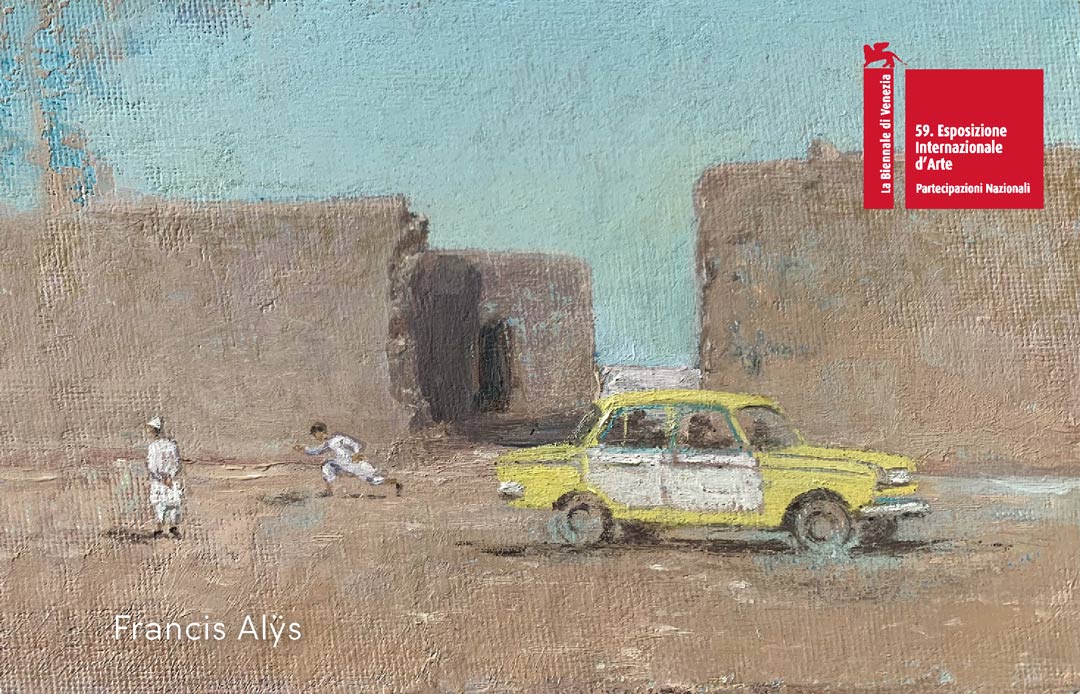
The Nature of the Game32€ Add to cartThe Belgian artist Francis Alÿs (b. Antwerp, 1959) makes work that is as multifaceted as it is poetically subversive. Straddling the line between performative conceptual art and community intervention, his films and drawings chart the political and social realities of urban spaces. One of his most imposing long-term projects is Children’s Games, for which he documents children playing all over the world, from Paris and Mexico City to the Yezidi refugee camp Sharya in Iraq. The richly illustrated book contains ideas and sketches he compiled in preparation for this series. It lets us glimpse into the engine room of his artistic practice, revealing key elements of his filmic poetics. An essay by the ethnographer and filmmaker David MacDougall embeds Alÿs’s observations of children’s play in the contexts of childhood studies as well as the history of ethnographic documentary film.
Francis Alÿs (b. Antwerp, 1959) is widely regarded as one of the foremost artists working today. His oeuvre, which has garnered numerous prizes and been featured in solo exhibitions around the world, encompasses films, photographs, performances, drawings, and paintings, many of them explorations of the social and political realities of urban spaces. Since 1986, Alÿs, who trained as an architect, has lived in Mexico City, where he moved after the major earthquake of 1985 to help in the rebuilding effort.
Francis Alÿs – The Nature of the Game is the official publication of the Belgian pavilion at the 59th Biennale di Venezia, curated by Hilde Teerlinck.
-

Katharina Arndt
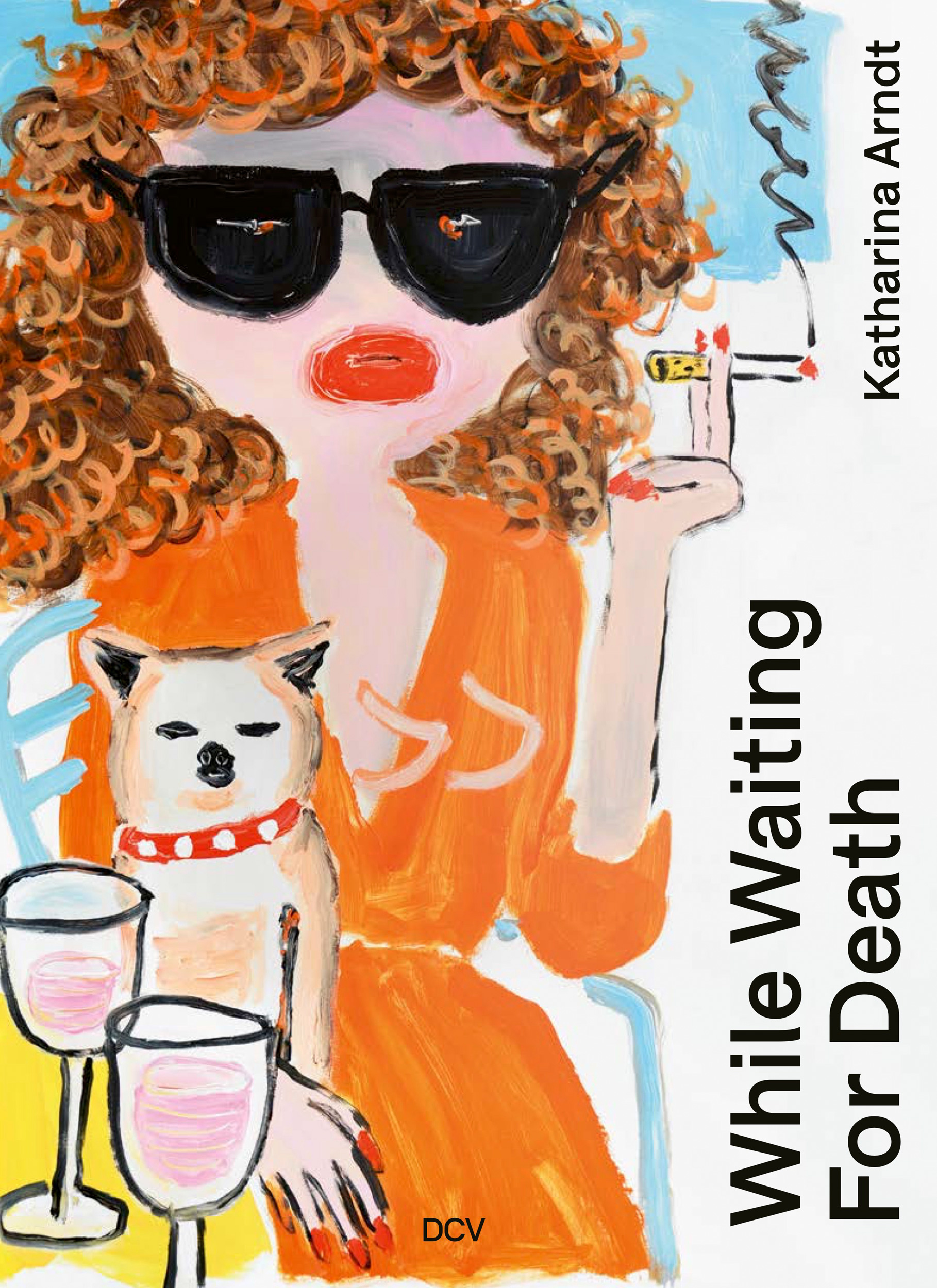
While waiting for Death38€ Add to cartLife for the most part consists of banalities. What to make of it? Katharina Arndt has decided to dip thick brushes into luminous bold acrylic paints, which she applies expansively without regard for the ostensible gray areas of life. Every stroke is valid, there’s no remorse or trepidation, everything is foreground, all elements of a picture are equipollent. The people in Arndt’s paintings from 2022–23 gathered in this catalog are simply there, for the moment, gaping into their cell phones, stuffing themselves with burgers. Nothing more. That makes her works distorted depictions of our hedonistic society with its craving for sensuality, even as we always have one eye riveted on the virtual. The harder, then, to face up to physical reality; with all photo filters off, its imperfections are unmistakable. And so, although we clearly delight in these gaudy colors, the pictures contain intimations of melancholy and death, too. Knowing that the hour of farewell is near, Arndt’s figures stimulate their senses. They kill time down to the very end with jarring trivia, agitated Sisyphuses wallowing in their glittering inadequacy.
-

Pharaonengold
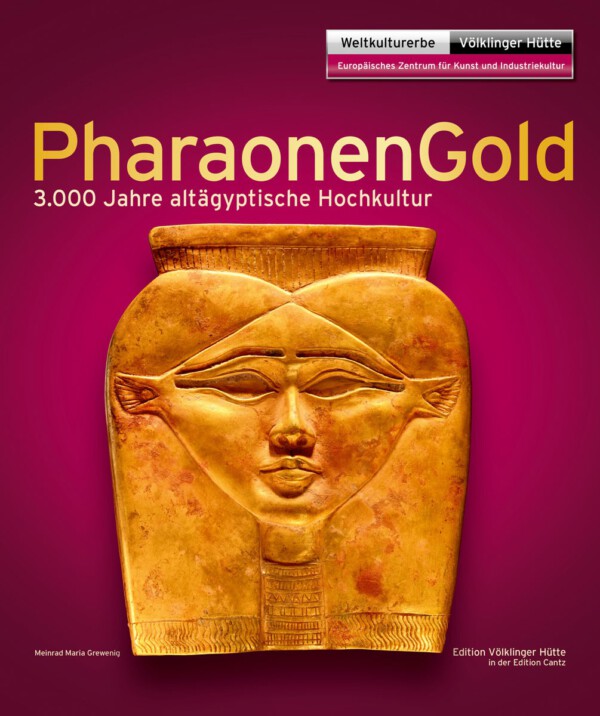
3.000 Jahre altägyptische Hochkultur27,50€ Add to cartThe Mysterious World of the Pharaohs and their Magical Relationship to Gold
Hardly any other culture fascinates as much as the high culture of ancient Egypt. At its center were the pharaohs, those legendary kings who, according to the beliefs of the ancient Egyptians, descended directly from the gods. Gold was ascribed a special symbolic and religious power; it stood for eternity and indestructibility and, as the “flesh of the gods,” was a sacred metal. The book brings together 150 exhibits from pharaonic tombs from the Old Kingdom of the Third Dynasty (circa 2680 B.C.E.) and the oldest gold statue of an Egyptian pharaoh to Tutankhamun and Horemheb (circa 1330–1310 B.C.E.).
- Release Spring 2026

Jorinde Voigt
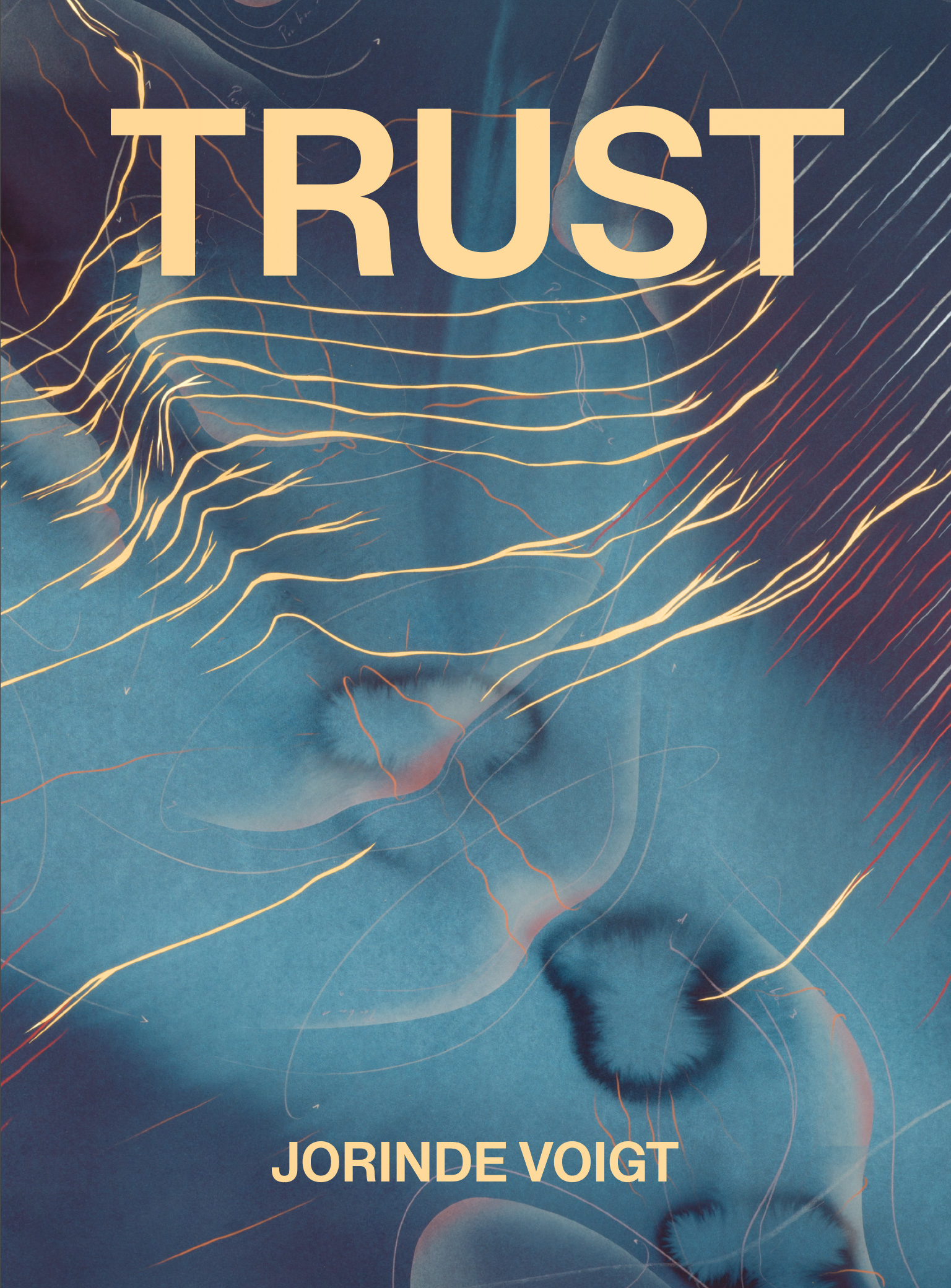
Trust42€ Add to cartJorinde Voigt (b. Frankfurt am Main 1977, lives and works in Berlin), declared about the title of the book “Trust is a hybrid of longing for something and the engagement to reach it”. Voigt has thus decided to compile her works, which she realized from May 2019 to spring 2021, under the sign of confidence, connectedness, reliability and integrity. Many of the works presented place themselves in the continuity of those in Immersion, a book that brought together works from the period 2018-2019.
In the extensive volume Trust, sculptures and mobiles are shown alongside the works on paper for which she is known – here immersed in a pigment bath and then worked on with pastel, ink, India ink, oil pastels and gold leaf–.
Jorinde Voigt studied philosophy and modern German literature at the University of Göttingen from 1996. In 1998 she moved to Berlin and studied sociology, philosophy and general and comparative literature at the Free University of Berlin. 1999-2003 she studied art in multimedia at the University of the Arts with Christiane Möbus and visual arts and photography with Katharina Sieverding, whose master student she became in 2004. 2014-2019 she was professor of conceptual drawing and painting at the Academy of Fine Arts Munich. Since 2019 she is professor at the Hamburg University of Fine Arts.
-

Female Gaze
From Virtual to Reality25€ Add to cartWorks of Art Take a Stance
The “female gaze” embodies a stance that is the polar opposite of the “male gaze.” The latter term came into use in the movie and advertising industries in the 1970s to describe the fact that women typically appear in films in supporting roles, as accessories to men, rather than as protagonists. The male gaze originated in a patriarchal society that has begun to change. The female gaze champions a modern form of emancipation that challenges men to abandon entrenched structures. Much more importantly, it encourages women to become aware of the strength that lies in their femininity and make it the source of their own creative expression and their own perspective on the world. For many years, the writer Silke Tobeler has visited artists in their studios, collecting the photographs she took there and her conversations with her hosts on her blog, Female Gaze.
- Release March 2026
Monet – Cézanne – Matisse
The Scharf Collection48€ Add to cartThe Scharf Collection is a German private collection of French art from the nineteenth and twentieth centuries and international contemporary art. Now in its fourth generation, it continues a branch of the renowned Otto Gerstenberg Collection in Berlin, which encompasses everything from the beginnings of modernism, represented by Francisco de Goya, to the French avant-garde of the second half of the nineteenth century with Gustave Courbet, Edgar Degas and the entire graphic oeuvre of Henri de Toulouse-Lautrec. The richly illustrated catalog accompanies the collection’s first comprehensive exhibition at the Kunstpalast in Düsseldorf and the Alte Nationalgalerie – Staatliche Museen zu Berlin.
-

Penny Hes Yassour
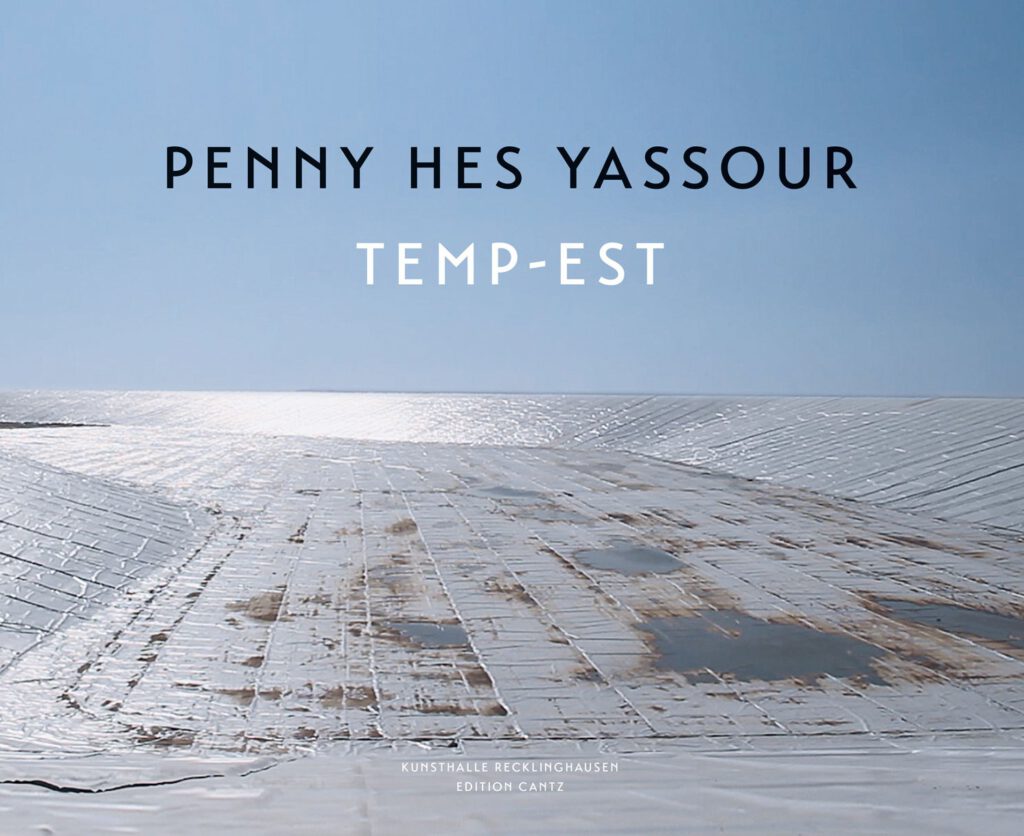
Temp-Est24€ Add to cartA Monograph about the Award-Winning Israeli Artist
Penny Hes Yassour (b. 1950, lives and works at kibbutz En-Harod Ihud) tells stories and keeps history alive, explores the boundary between remembering and forgetting. In her installations she combines sound, image, and a multi-part world of objects into narrative mise-en-scènes of great poetic power. Hes Yassour leads the viewer through the Jordan Valley with its many watchtowers, accompanies the transformation of the landscape in a gigantic, stagelike water basin, and documents the flight of bats in a narrow, labyrinthine spatial installation. The book published on the occasion of the artist’s first exhibition in Germany provides comprehensive insights into her subtle artistic work.
-
Feuer und Farbe
Gemälde und Grafiken von Walter Jacob35€ Add to cartWalter Jacob (1893-1964) was a painter whose oeuvre and life reflected the discontinuities of the twentieth century in condensed form. Contemplative natural scenes and the self-portraits were constants to which he hewed throughout his career; in stylistic terms, however, his oeuvre could hardly be more contradictory. Working first in the Impressionist, then in the Expressionist style, he eventually forged a form of expression tending toward abstraction, although he rejected modernist painting throughout his life. The Nazis considered his early work “degenerate,” which led him—a committed National Socialist and active member of the SA—to adapt not just his ideological convictions, but also his aesthetics to the new era: starting in the mid-1930s, he produced naturalistic depictions, sometimes suggestive of the New Objectivity, of “popular” motifs like landscapes, animals, soldiers, and more. Tellingly, though, the backs of some of his canvases are taken up by works that suggest the pleasure he took in experimenting with color and form. The same tension is palpable in the abstract landscapes of his late oeuvre. This catalog gathers works to retrace Jacob’s checkered career, complemented by (art) historical essays that embed his output in its context.
-

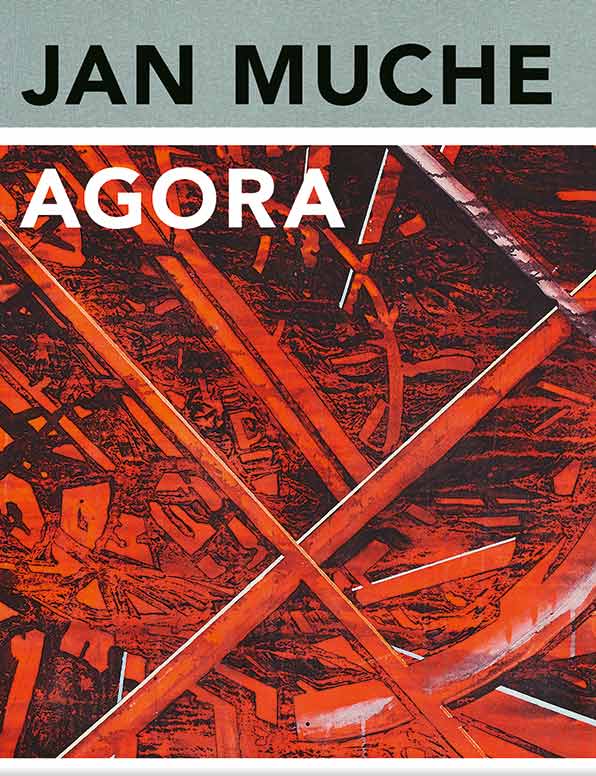
Jan Muche
Agora42€ Add to cartTracing the Wear of the Life of Labor
The visual art of Jan Muche (b. 1975, Herford; lives and works in Berlin) revolves around forms that bring to mind structural steelwork, giant industrial installation components, or scaffolding. His constructivist-abstract paintings and sculptures look back on steel as a symbol of industrialization and the working class, which featured in unflappably cheerful and adulatory depictions that were characteristic of the twentieth century’s ideologies – Communism, Stalinism, National Socialism, actually existing Socialism. Muche’s roughhewn aesthetic combines proletarian charm with the spirit of onward and upward, taking the beholder to regions not untinged by dissonance. This book, supported by the Leinemann-Stiftung für Bildung und Kunst, brings his reflections on the significance of work and the impact of digital technology on physical toil as well as his engagement with yesteryear’s “heroes of labor” into focus.
Jan Muche trained as lithographer and studied with Karl Horst Hödicke at the Hochschule der Künste Berlin.