Charles Moore
On painting
 | |
|---|---|
| Author(s) | Charles Moore |
| Cover | Softcover |
| Size | 12 x 18 cm |
| Pages | 224 |
| Illustrations | 16 |
| Language(s) | English |
| ISBN | 978-3-96912-236-5 | Release January 2026 |
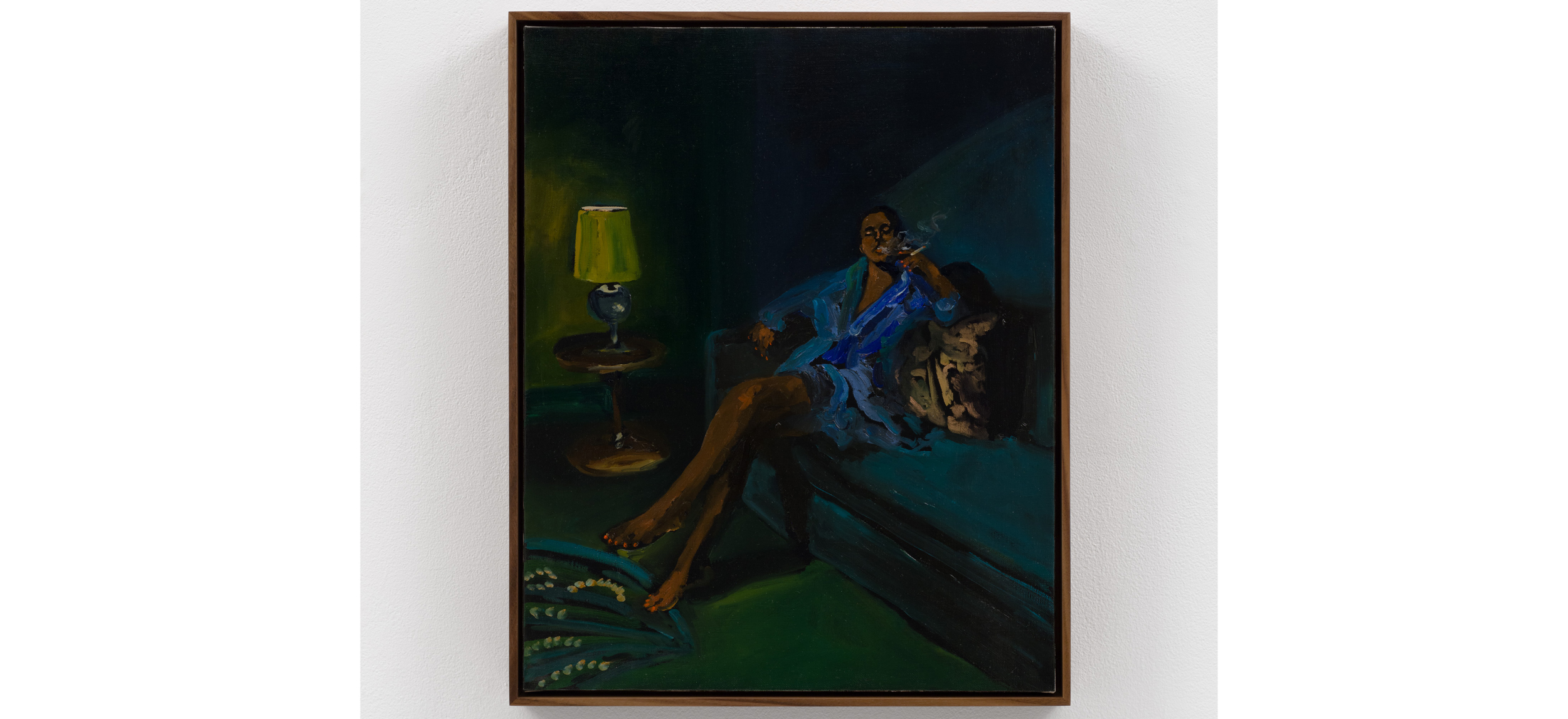
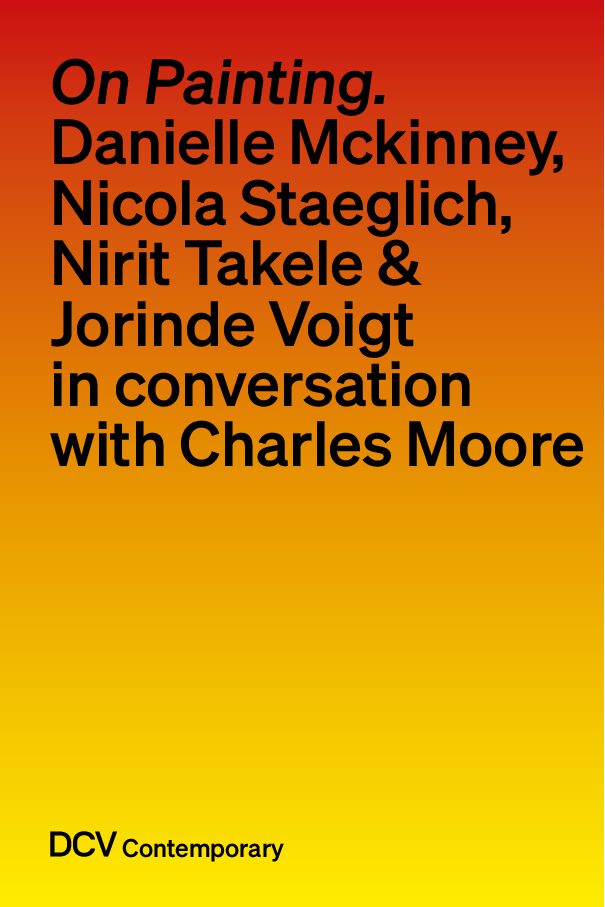
For On Painting, New York-based art historian and curator Charles Moore, interviewed four women artists about their practice, asking them to reveal their motives and aspirations. This publication consists of four interviews, each containing an introduction by Moore and illustrations of the artist’s works. Danielle Mckinney, who paints exclusively Black women, reflects on her experiences as a woman growing up in the US South. Nicola Staeglich creates subtle layered abstract works to evoke new perspectives and the potential for change. Nirit Takele elaborates on how her Ethiopian Jewish heritage has shaped her painting practice. Jorinde Voigt, who creates complex installations inspired by notation systems, discusses the use of algorithms and the beauty to be found in the unexpected.
Release January 2026
You may also like…
- Release January 2026

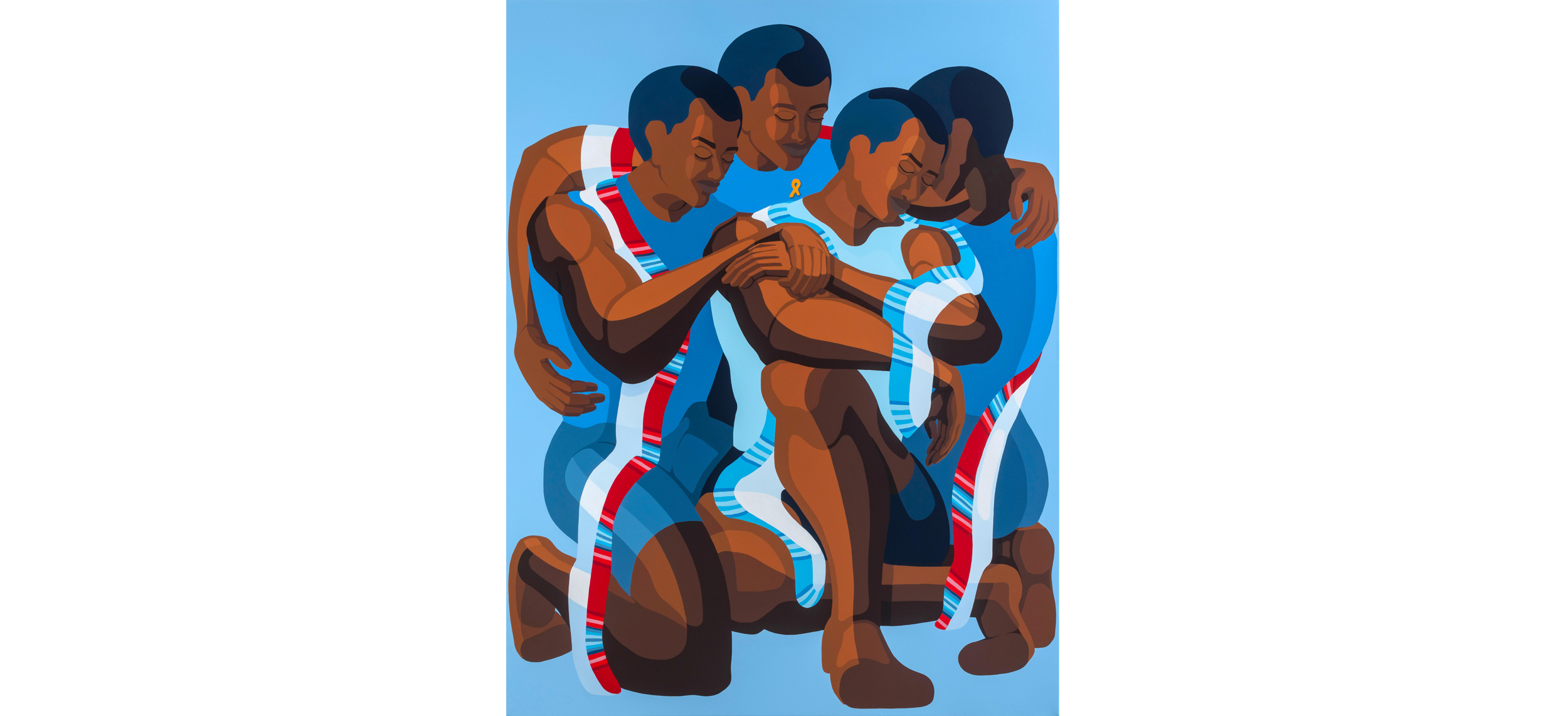
Frank Morrison
38€ Add to cartThe dynamic Neo-Mannerist images of painter and illustrator Frank Morrison (born 1971, lives in Atlanta) celebrate the resilience and dignity of African Americans in everyday life. A child of institutionalized racism in the US, he can testify that creativity and solidarity could never be suppressed in the segregated and brutally marginalized communities. Hip-hop and graffiti are resistance. Clichés of inner-city struggle are vividly refuted in this book. The volume documents Morrison’s recent exhibitions, one of which is dedicated to the younger generation: frame-braking images that interweave narrative forms of comics and pop art with illustration. Morrison’s gallery calls the book an explosive tribute to genius flourishing in institutionalized exile.

More books
-

nolde/kritik/documenta (English)
42€ Add to cartEmil Nolde (1867–1956) ranks among the best-known classic modernists. Contemporary perceptions of the artist and his oeuvre are informed by mythmaking as well as its deconstruction. After the Second World War, Nolde himself and art historians of the time portrayed him as a victim of Nazi persecution. More recent critics have drawn attention to his anti-Semitic views and his opportunism in his dealings with the Nazi authorities.
With support from the Nolde Foundation, Seebüll, the Düsseldorf-based conceptual artist Mischa Kuball (b. 1959) delved into the documentary record to shed light on this profoundly ambivalent figure and frame a critical perspective on Emil Nolde’s output and actions. The first fruits of his endeavors were shown at the Draiflessen Collection, Mettingen, in the winter of 2020–2021.
Kuball continued his research at the invitation of the documenta archive, Kassel. Based on his findings, the exhibition project “nolde / kritik / documenta” illuminates the ways in which life and oeuvre are interwoven and inquires into the contradictions of modernism, which Emil Nolde as a man and artist may be said to have embodied. The focus of the new project is on the staging of Nolde’s works at the first three editions of the documenta exhibition series (1955, 1959, 1964), which were instrumental to establishing the “Nolde myth.”
An enlarged and revised edition of the catalogue “nolde / kritik / documenta” is released in conjunction with the exhibition at the Fridericianum, Kassel (December 9, 2022–February 19, 2023).
Mischa Kuball has been professor of public art at the Academy of Media Arts Cologne and associate professor of media art at the Karlsruhe University of Arts and Design/ZKM since 2007.
-

Nobuyuki Tanaka
Primordial Memories25€ Add to cartThe craft of traditional Japanese lacquer finishing in contemporary art
In his extraordinary sculptures, Nobuyuki Tanaka (b. 1971 in Tokyo) combines a lacquer finishing that has been practiced in Japan for centuries with an organic formal language. Tanaka is considered the most important representative and pioneer of the use of lacquer in contemporary art. He uses the material in polished deep black or intense red as a multi-layer coating for large-format sculptures. This results in abstract works with lively, curved, glossy surfaces in which the multi-faceted effect created by the interplay with changing light conditions plays a key role. The lavishly illustrated book includes texts by Britta E. Buhlmann, Beatrice Kromp, Antje Papist-Matsuo, Annette Reich, Atsuhiko Shima, and Nobuyuki Tanaka.
In his extraordinary sculptures, the artist combines a treatment of lacquer practiced for centuries in Japan with an organic language of form.
An exceptional representative and pioneer of the use of lacquer in contemporary art, Tanaka uses the lacquer mostly in polished deep black, sometimes also in intense red, as a multi-layer coating for his large-scale sculptures.
-
Sebastian Stöhrer
Residents40€ Add to cartIf there’s an artist whose oeuvre merits the title “creation,” it is Sebastian Stöhrer. Shaping clay—essentially, soil—he molds his “residents”: colorful and friendly-looking sculptural beings, some of them enhanced with sticks or branches reminiscent of limbs. Despite their air of levity and humor, they are not the products of mere momentary inspiration or a whim. It takes decades of dedicated experimentation with the kiln based on the millennia-old art of ceramics as well as expert knowledge of chemistry and physics to create such colors and shapes. Stöhrer has been called an alchemist, and indeed he has made it his mission to vindicate this researcher’s craft, an ancestor of the natural sciences. Alchemy, like Stöhrer’s oeuvre, combines pure rationality with coincidence and a scintilla of magic. The artist plays an intuitive and sensual game with his clay and the virtually incalculable chromaticity of the glazes—chaos, anarchy, and irrepressible urges being an integral dimension of all creation. In Stöhrer’s “residents,” we encounter the embodiments of that creation: likenesses of ourselves and perhaps also heralds of a future more good-natured version.
-
Angelika J. Trojnarski
Noble Earth38€ Add to cartAngelika J. Trojnarski (born 1979 in Mrągowo/Polen; lives and works in Düsseldorf) examines facets of nature through an ecological, scientific, poetic study of their phenomena. Through a process centered on painting, her art articulates allegorical relationships between some of the most significant contentions of our time: humans and nature, strength and fragility, crisis and hope. She expresses a desire to understand nature by reproducing its workings, pointing to its incredible might while underscoring its increasing fragility. Trojnarski overlays raw canvases with paper fragments, employing brushwork and collage to apply materials like graphite or soot, generating a source of energy and suspense through color and contrast. The monograph offers an overview of the last decade of Trojnarski’s work.
Angelika J. Trojnarski 2006–2013 studies at Kunstakademie Düsseldorf. 2006–2009 Painting with Jörg Immendorff, Markus Lüpertz and Herbert Brandl, from 2010 Free Art with Andreas Gursky.
-
Ruth Wolf-Rehfeldt – Wie eine Spinne im Netz
38€ Add to cartRuth Wolf-Rehfeldt (b. Wurzen, Germany, 1932; lives in Berlin) is one the few East German female artists who devoted themselves to graphic art produced on the typewriter. Working on her trusty “Erika,” she arranged letters, digits, commas, and plus signs to compose imaginative visual creations. Under her hands, the black and red characters were transformed into poetic verbal images, gently undulating waves, serial patterns, and architectonic or figurative formations. Sometimes verging on concrete poetry, these typewritings also evince unmistakable affinities with conceptual and minimalist art. In the 1980s, the artist expanded on them in collages that recall Hannah Höch’s Dadaist visual montages. With her graphic work, Wolf-Rehfeldt was also an active participant in the GDR’s mail-art program: she sent the typewritings to artists beyond the impassable borders of her country, building an extensive network of correspondences that spanned the globe.
The richly illustrated monograph underscores the diversity and contemporary relevance of Wolf-Rehfeldt’s works, which were created in the shadow of the Cold War and address the fragility of peace as well as early manifestations of the environmental devastation wrought by the industrial age.
- out of stock

Drucksache Bauhaus
38€ Add to cartThe Early Years of the Weimar Print Workshop
At the Staatliches Bauhaus in Weimar, the print workshop began operation in the spring of 1919 as the first workshop. Printmaking corresponded to the basic idea of the Bauhaus in that it realized the unity of art and craftsmanship in an ideal manner. With the groundbreaking project Bauhaus-Drucke. Neue Europaeische Graphik, four portfolios were created in which forty-five representatives of the European artistic avant-garde participated. In the announcement brochure of 1921, it stated: “The many who do not yet know about the work of the Bauhaus, and who cannot know, are to be made aware of us through this work.” The book presents the portfolios published between 1921 and 1924, together with other works printed at the Bauhaus by Lyonel Feininger, Wassily Kandinsky, and Oskar Schlemmer. The Stuttgarter Prolog also sheds light on the influence of Adolf Hölzel, whose students and later Bauhaus masters Oskar Schlemmer and Johannes Itten brought many of his ideas to the Bauhaus.
-

Born in the Woods
Jems Koko Bi & HAP Grieshaber24€ Add to cartThe Political Substance of Wood
Jems Koko Bi (b. Sinfra, Côte d’Ivoire, 1966; lives and works in Kaarst, Germany, Dakar, and Abidjan) is world-renowned for the monumental wood sculptures he creates using a machine saw. This book juxtaposes his most recent body of works with the large-format woodcuts of HAP Grieshaber (b. Rot an der Rot, Germany, 1909; d. Eningen unter Achalm, 1981). Although the two artists never met, their oeuvres are characterized by similar themes, values, and materials. The central concern is the fate of the forests and its momentous political and social implications: Grieshaber’s woodcuts articulate his principled opposition to the predatory exploitation of nature in the 1970s—an issue that is more relevant than ever today in light of the climate crisis and the Fridays for Future movement. Koko Bi’s figural groups bring this tradition of political art into our time, making a global and universally compelling case for a sustainable husbandry of our resources.
Jems Koko Bi studied at the Institut National Supérieur des Arts et de l’Action Culturelle (INSAAC), Abidjan, and the Düsseldorf Academy of Fine Arts. His work has been exhibited widely, including at the Centre Pompidou, Paris; at documenta 13; the Havana Biennial; and several Venice Biennials and Dakar Biennials. In 2019, he founded the forest biennial Abidjan Green Arts.
HAP Grieshaber studied advertising art at the Staatliche Kunstgewerbeschule, Stuttgart. His work is regarded as a signal contribution to the renewal of the woodcut medium in the twentieth century. He participated in documentas I, II, and III, held a professorship at the State Academy of Fine Arts Karlsruhe, and was honored with numerous awards and retrospectives.
- Release February 2026

Werner Hahn
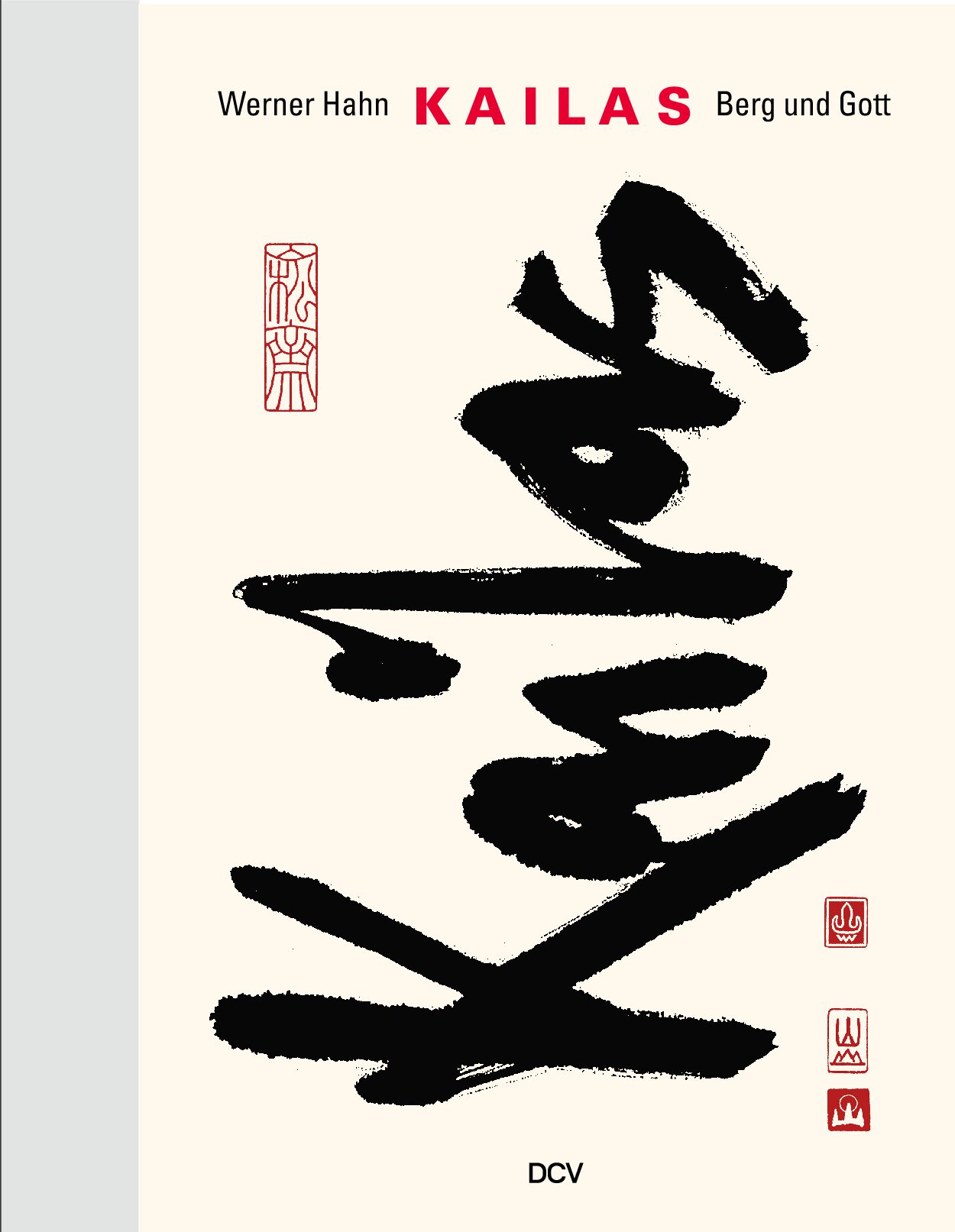
Kailas. Berg und Gott72€ Add to cartKailas is far more than just a mountain—it is a symbol of spiritual quest, transcendence, and enlightenment. In this book, the painter and photographer Werner Hahn (b. Karlsbad, now Czech Republic, 1944) approaches the holiest peak in Asia from a unique perspective: as an artist, traveler, and profound connoisseur of its cultural history. This book interweaves art, mythology, and historical accounts from Buddhism and Hinduism. Hahn’s personal travel experiences, complemented by reflections on Western travel literature and spiritual sources, enter into a dialogue with ancient traditions, revealing Kailas as a place of both deep personal experience and artistic contemplation. A visual pilgrimage to one of the most significant mountains in the world.
-

Toni Mauersberg
Entre Nous28€ Add to cartToni Mauersberg (b. Hannover, 1989; lives and works in Berlin) is interested in the different layers of a picture’s signification: there is, in the first instance, what it depicts; then the larger tradition in which it is grounded; and finally, the conditions of its genesis. She employs a range of painterly strategies and techniques to uncover the potentials of paintings as a medium of understanding, insight, and storytelling. The question that animates her art is how it is possible, in this post-religious, post-rational, and post-individual age, to be one’s own person. In her most recent series, Pas de Deux, Mauersberg investigates the complex visual language of abstract painting, which originated in part in a quest for new ways of representing spirituality and emancipation. Combining nonrepresentational pictures with portraits, she draws attention to how both are products of “making,” composed of nothing but color, while enlarging their interpretative ambits. The dialogue between the paintings is meant to help the beholders chart their own course as they unlock what appear to be hidden laws encoded in pictures.
Toni Mauersberg studied Jewish studies at Freie Universität Berlin in 2008–2012 and fine arts with Leiko Ikemura at the Berlin University of the Arts from 2009. In 2017, she was Michael Müller’s master student.
-

Was ist Wiener Aktionismus?
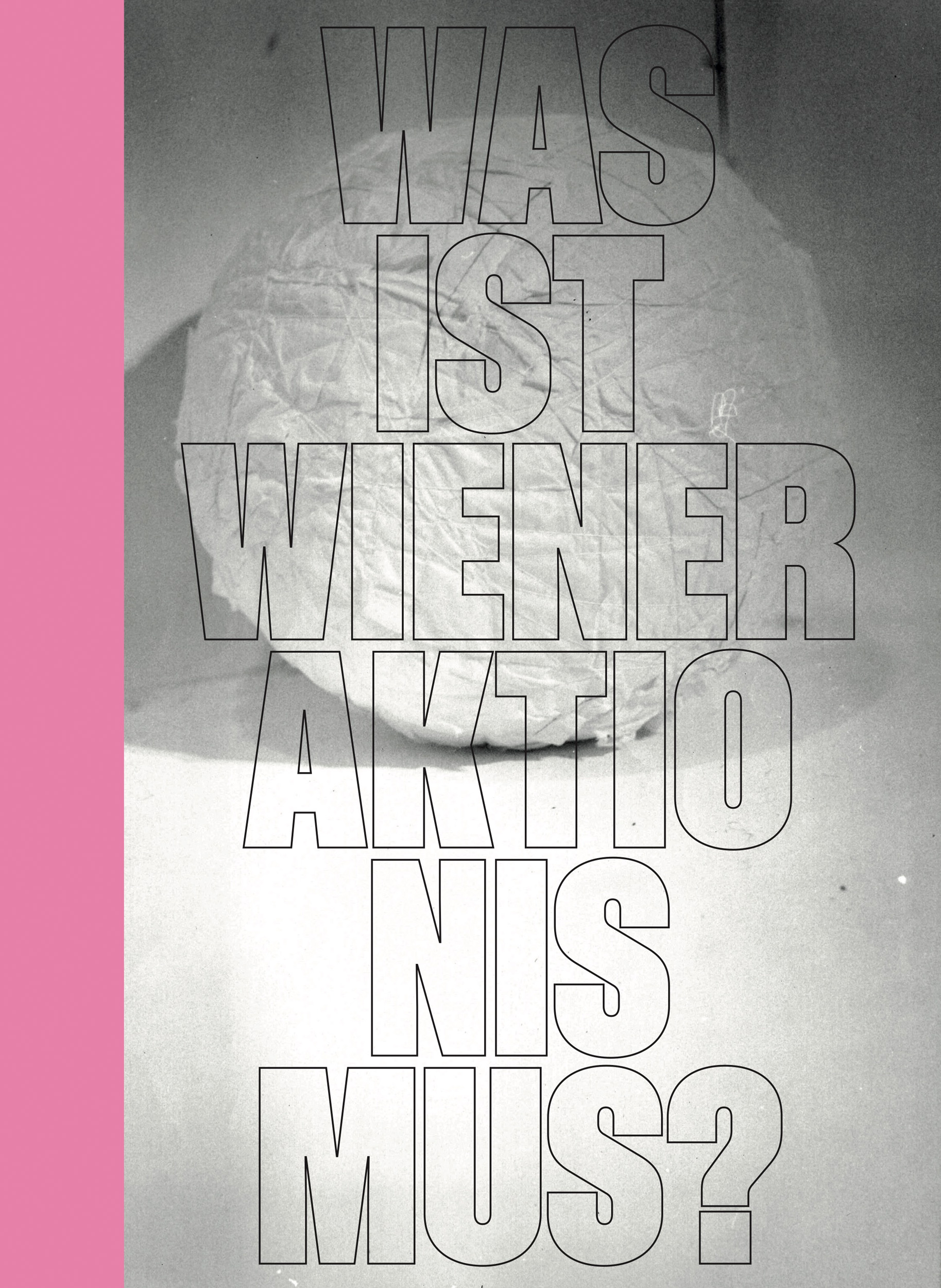
50€ Add to cartBlows were dealt. An artist exposed and cut himself, others urinated in glasses, daubed themselves with dirt, and masturbated over the Austrian flag. Meanwhile, music was playing, including the national anthem; someone read pornographic writings. Vienna in the late 1960s: what had started in the artists’ homes and studios was now brough out on the grand stage, and taboos were broken in full view of the public.
The Vienna Actionism Museum’s first publication is dedicated to the idea of Vienna Actionism in the dynamic context of abstract realism, Fluxus, and the international Happening scene. The book relates the story of one of art history’s most influential art movements, spearheaded by the Actionists Günter Brus and Otto Muehl, Hermann Nitsch and Rudolf Schwarzkogler.
-

Martin Krumbholz
Alex, Martin und Ich14€ Add to cart“The Vocation of Saint Matthew”: that is the title that Martin Krug has chosen for his novella, after Caravaggio’s iconic painting at the Church of San Luigi degli Francesi in Rome. The irony is unmistakable—Martin, the protagonist of his narrative, hesitates to accept a promotion: he has been offered the job of his boss, for whose wife, Marion, he has fallen on a shared vacation. Yet Martin’s friend, whom he has asked for advice, proposes a different title: Ghost Story—a key element of the plot is the mysterious Alexander’s disappearance, seemingly forever, in the sea …
Martin’s friend and interlocutor, the novel’s first-person narrator, embeds the novella in a narrative framework that mirrors its motifs: love as passion, eros and sex, loyalty and betrayal, manliness and chivalry, art, film, and music. Alberto Moravia’s novel Contempt, glamorously adapted for the silver screen by Jean-Luc Godard, is reread and discussed as a MeToo story.
Martin Krumbholz (b. Wuppertal-Elberfeld, Germany, 1954; lives and works in Düsseldorf) is a writer and theater critic. His first novel, Eine kleine Passion, came out in 2013.
-
PULS 20
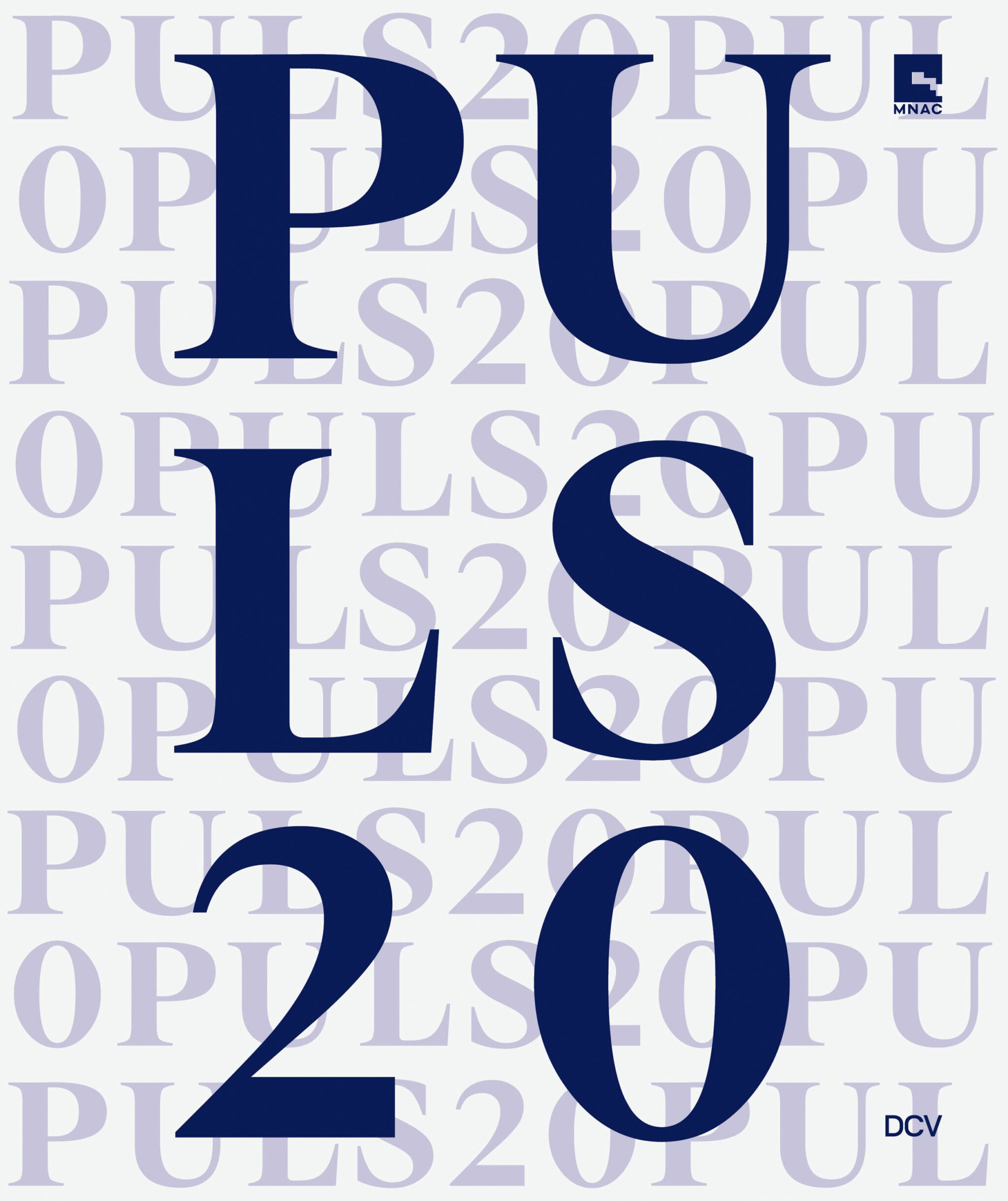
New Entries in the MNAC Collection36€ Add to cartPULS 20 unites the most valuable finds from a communal treasure hunt. Exponents of the Romanian arts scene and representatives of the National Museum of Contemporary Art (MNAC) in Bucharest teamed up to review the oeuvres of countless eminent Romanian artists and select works of outstanding quality that reflect the diversity of the country’s creative production over the past fifty years. In time for the celebrations of MNAC’s twentieth anniversary in 2020, the institution acquired the 180 works reproduced in this catalogue. That makes PULS 20 a singular document in two respects: it gathers a selection of key works of Romanian art that is unprecedented in its breadth between the covers of a book; and it is the result of a successful cooperative curatorial process, an organic discourse involving a wide variety of participants, demonstrating that democratic dialogue in art is not just possible but also extraordinarily fruitful and indeed necessary. All in all, this catalogue is the perfect choice both for newcomers to Romanian contemporary art and for specialists.
-
Alexandra Tretter
24€ Add to cartThe art of Alexandra Tretter (*1988) is as deep as it is playful. Owing just as much to the gentle spirituality of Hilma af Klint’s late geometries as it does to Sonia Delaunay’s exuberant disc paintings, almost bursting with sheer chromatic pleasure. Her compassionately designed artist’s book combines monumental paintings with intimate works on paper, all of which are imbued with the contexts of Tretter’s own life as an artist, as a woman, as a mother.
Her kaleidoscopic figurations unfold from a center at rest in itself and multiply in symmetry and asymmetry towards all sides. She contrasts the circular form, the unchanging basic element of her compositions, with the oval, which constantly strives beyond itself, transforming itself in ever-new permutations from one figure into the next, into eyes, mouths, breasts, petals or vulvas.
Her images strive for composure, unfold and blossom, only to let go of all gestalt-like form. Once gained stability is instantly pushed into turmoil. Colors flare up violently or flow delicately about, lighten or shade each other, carry or throw each other off course. Tretter equally realizes materialization and dissolution as basic principles of her painting.
Whereby all, what her images absorb, preserve and release, is experience, growth and slow maturing. Her paintings are “figurations of affection”, in which each individual turns towards something else, doubts or grows, at times turns away or surrenders all the more consciously. They question everything, start anew and yet find their way back to themselves, into their very own.
-
Felix Schramm
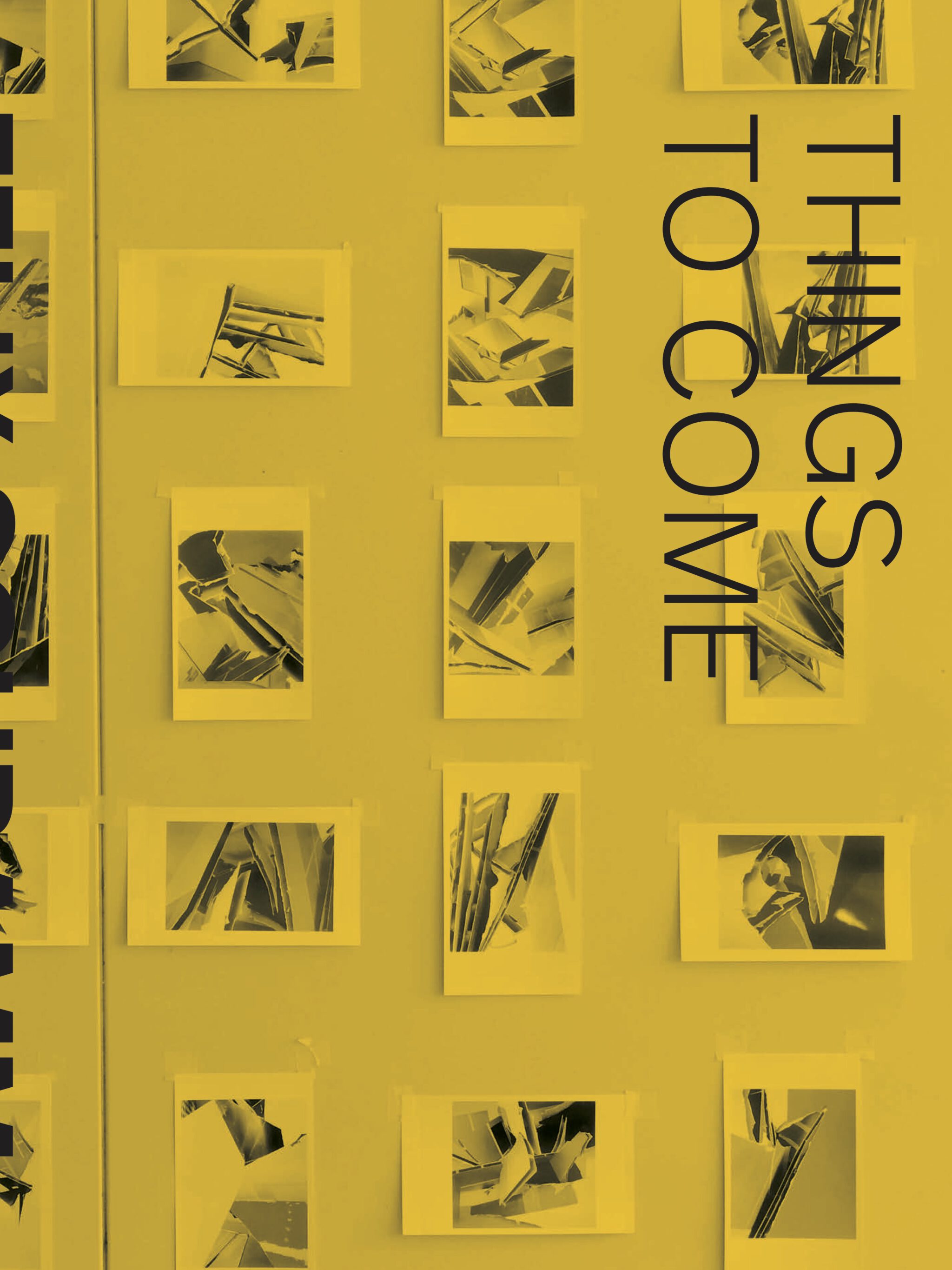
Things To Come44€ Add to cartFelix Schramm’s (b. Hamburg, 1970; lives and works in Düsseldorf) sculptural oeuvre reflects a probing engagement with space and the body. In works in a variety of media, including installations that intervene into a given setting, sculptures, and collages, the artist creates three-dimensional forms out of classical materials and industrial staples as well as detritus and dust. Deformations, rifts, cracks, or impurities undermine the existing order in his constructed formal ensembles, allowing novel correspondences in space and interconnections across time to emerge. The material and its subjection to form are held in a precarious balance; disintegration, which is an integral element of Schramm’s art, paves the way for artistic assertion and reformulation. The extensive publication gathers works and exhibitions of the past five years. It is Schramm’s first monograph, presenting a cross-section of his entire oeuvre with all bodies of work.
Felix Schramm studied at the Accademia di Belle Arti, Florence, from 1991 until 1993 and at the Academy of Fine Arts Düsseldorf, where he was in Jannis Kounellis’s master class, from 1994 until 1998. He rounded out his education with residencies in Tokyo in 2000 and at Villa Massimo in Rome in 2008.
-

Cahier 002
Silke Wagner. bürgersteig22€ Add to cartBetween 2001 and 2002, a VW bus bearing the inscription “Lufthansa Deportation Class” was on display in various German cities. It was part of the provocative bürgersteig action by Silke Wagner (born 1968, lives in Frankfurt) about Lufthansa providing aircraft for deportation purposes. The bus sparked heated debates and became a vehicle for activist networking and communication among citizens. The participatory art project was groundbreaking at the time in its collaboration with civil justice initiatives. Cahier 002 documents bürgersteig for the first time with all its aspects, disclosing the sources for the action as well as material on the legal conflicts that followed the project.
-

Larissa Kikol
Neue abstrakte Malerei26€ Add to cartAbstract painting has reinvented itself: rid of political and ideological burdens, it now stands for pure creative autonomy. From the Abstract Expressionism of the postwar era to today’s expansive ease—in essays and conversations, Larissa Kikol sheds light on how this art form broke free of the narratives that attended its emergence and performed a “great reset.” From the seminal innovations of Katharina Grosse or Albert Oehlen and radically subjectivist approaches in Cecily Brown or André Butzer to cutting-edge tendencies like Dirty Minimalism and Post Vandalism, the book presents thrilling insights into a painting that puts emotion, color, and shapes center stage. An inspiring look at the renaissance of abstract art in the 21st century and a must-have reference work for all art lovers.
Artists: Frederic Anderson, Karla Black, Frank Bowling, Andreas Breunig, Jenny Brosinski, Cecily Brown, André Butzer, Diamonds Crew, Willehad Eilers, Jadé Fadojutimi, Helen Frankenthaler, Katharina Grosse, Antwan Horfee, Aneta Kajzer, Joan Mitchell, Michael Müller, Oscar Murillo, NEU, NUG, Albert Oehlen, David Ostrowski, Over, Daisy Parris, Marco Pariani, Jackson Pollock, Christopher Wool
-

Konkrete Progressionen
François Morellet & Vera Molnar, Manfred Mohr & Hartmut Böhm15€ Add to cartThanks to a generous donor, the Kunstmuseum Reutlingen | konkret welcomed a number of outstanding works to its collection in 2022. Titled Konkrete Progressionen, the first exhibition to showcase a selection from the gift features four internationally renowned artists whose works are derived from mathematical or geometric procedures: the concrete systematists Hartmut Böhm (1938–2021) and François Morellet (1926–2016) and the pioneers of computer-generated art Manfred Mohr (1938–) and Vera Molnar (1924–).
The book documents the serial paintings, drawings, collages, wall objects, and monumental installations and environments of steel beams or concrete blocks. The works play concrete games with the beholder’s ability to recognize patterns in binary contrasts or layered grids. They show sine waves, vector series, hypercubes, and markings derived from the circular constant π or the Fibonacci sequence—and in each instance demonstrate primarily how the basis of calculation takes on a life of its own.
The exhibition at the Kunstmuseum Reutlingen runs until April 14, 2024.
-

Maximilian Rödel
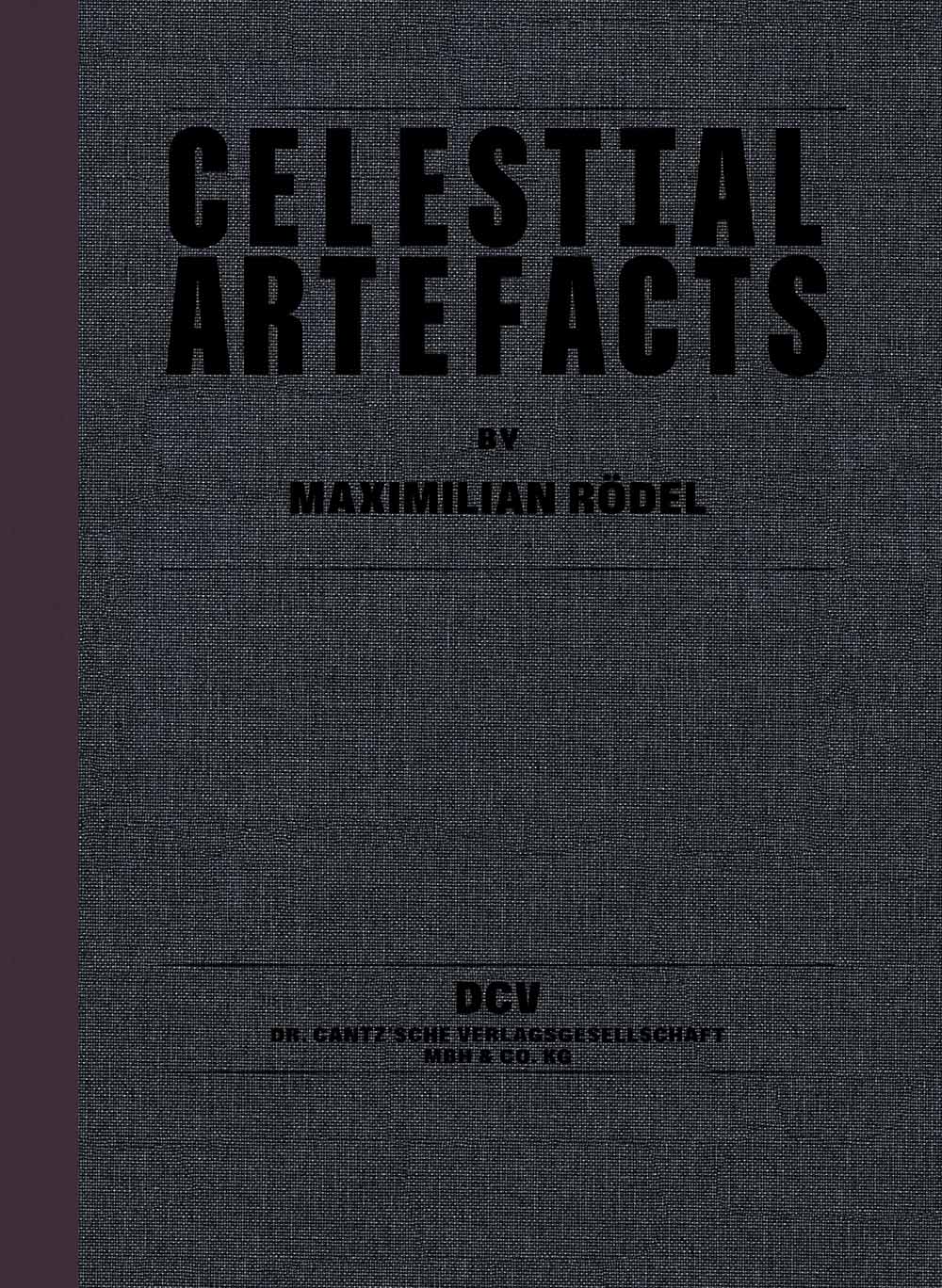
Celestial Artefacts50€ Add to cart“One must break free from wanting something and confine oneself instead to being something.” — Maximilian Rödel
Inky black, apricot, magenta, and a pastel purple: apparent monochromes, the paintings of Maximilian Rödel (b. Braunschweig, 1984; lives and works in Berlin) actually do not just traverse color spectrums; in a sense, they chart horizons of experience. To contemplate them is to embark on a voyage through space and time. Foreground and background are one, depth and surface at once; an undertow makes itself felt in which the nuances of color interweave, blur into one another, shimmer, flare up. The artist describes his pictures as an unfocused energy that already exists; he merely uncovers it.
The first publication on Rödel’s work presents the exhibition Celestial Artefacts at Neuer Aachener Kunstverein, with an emphasis on the Prehistoric Sunsets series (2018–2021). It is complemented by reproductions of selected works and an extensive index that also includes details from earlier series that are relevant in the context. Aperçus contributed by Rafael Horzon and Leif Randt and writings on art by Domenico de Chirico, Lena Fließbach, Stefanie Gerke, Philipp Hindahl, and Maurice Funken add another dimension to the paintings.
-
Steven Shearer
Working from Life58€ Add to cart“Today’s images are echoes of how people have always been depicted.”
Steven Shearer (b. New Westminster, BC, 1968; lives and works in Vancouver) works in a range of media including printmaking, sculpture, painting, drawing, and collages of found photographs. His portraits of individuals in decorated settings earned Shearer international acclaim. They show heroes from the past—protagonists of musical subcultures or the history of art. The archetypal creative minds in their studios appear together with their works; the interiors surrounding them reflect their psychological constitution. Shearer paints them in the style of Symbolism, the German Romantics, or the Fauves. Imitating the perspective painting of the Renaissance, he virtually pulls the beholder into his pictures.
Steven Shearer participated in the Nova Scotia College of Art and Design New York Summer Studio Programme in 1992 and studied at the Emily Carr College of Art, Vancouver, in 1992. In 2011, he represented Canada at the 54th Venice Biennale.
-

Taube
18€ Add to cartHuman, City, Pigeon
Public perceptions of the pigeon have shifted drastically over the past centuries. In the 1700s, it was welcomed as a guest who commanded humans’ unfailing solicitude; today, by contrast, it is often perceived as a nuisance. It has become an animal that defaces squares and buildings. Why does the pigeon in the settings of our daily lives prompt feelings of loathing and fascination, but also indifference? Jens Gerber’s photographs undertake an expedition into the city of the pigeons. Rounded out by essays by Marina Rüdiger and Laurens Schlicht, the book illuminates the subject of the city pigeon from the perspectives of photography, science, and literature, and explores the question of how pigeons shape the built environment and how the latter informs their behavior in turn.