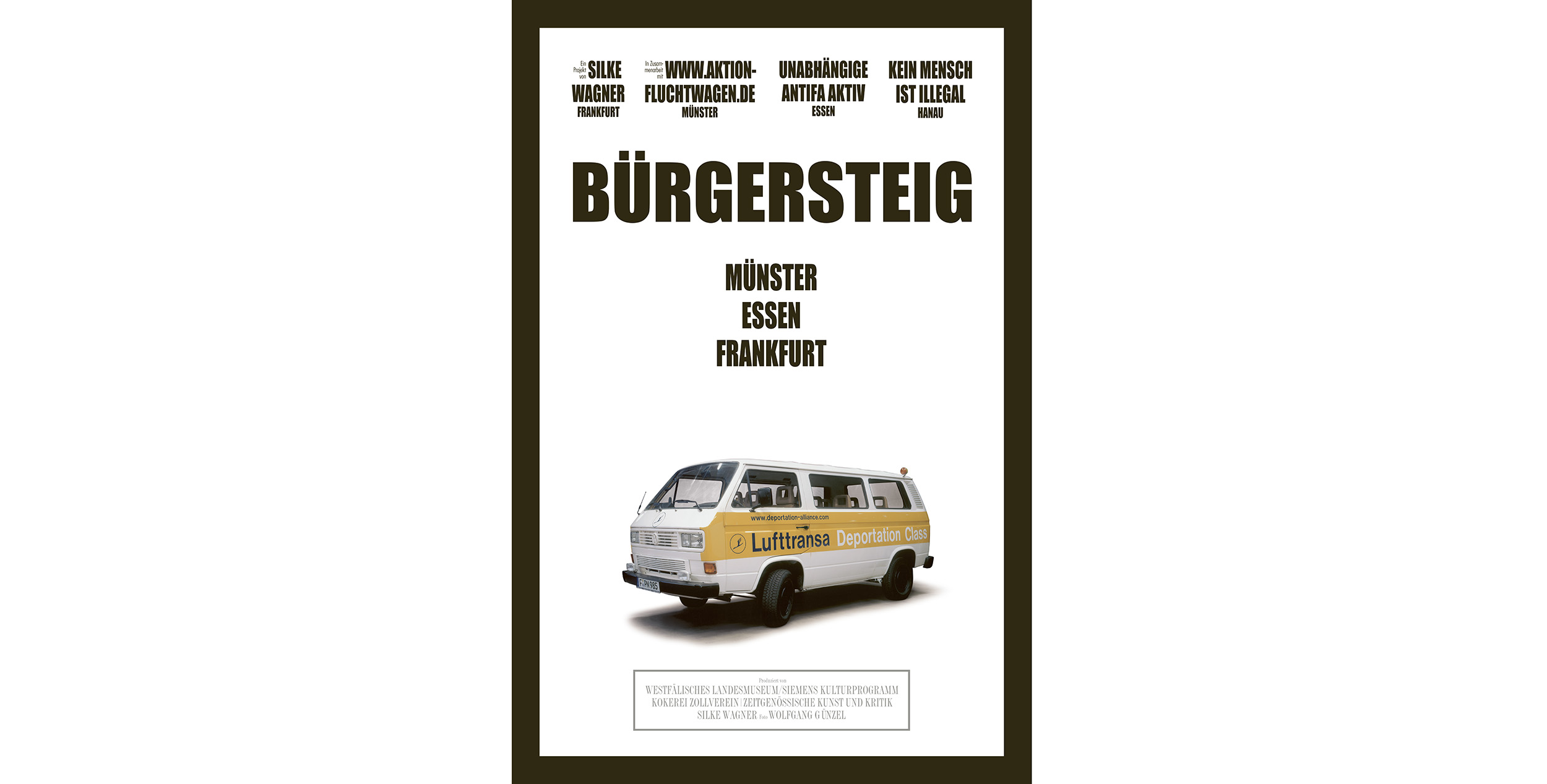

Cahier 002
Silke Wagner. bürgersteig
 | |
|---|---|
| Editor(s) | Sofia Ohmer, Florian Waldvogel for Tiroler Landesmuseen-Betriebsgesellschaft m.b.H. |
| Author(s) | Karen van den Berg, Silke Wagner, Florian Waldvogel |
| Design | Yvonne Quirmbach |
| Size | 12 x 17.5 cm |
| Cover | Softcover with flaps |
| Pages | 112 |
| Illustrations | 130 |
| Language(s) | German, English |
| ISBN | 978-3-96912-258-7 |
Between 2001 and 2002, a VW bus bearing the inscription “Lufthansa Deportation Class” was on display in various German cities. It was part of the provocative bürgersteig action by Silke Wagner (born 1968, lives in Frankfurt) about Lufthansa providing aircraft for deportation purposes. The bus sparked heated debates and became a vehicle for activist networking and communication among citizens. The participatory art project was groundbreaking at the time in its collaboration with civil justice initiatives. Cahier 002 documents bürgersteig for the first time with all its aspects, disclosing the sources for the action as well as material on the legal conflicts that followed the project.
More books
-

Kay Rosen
NOW AND THEN35€ Add to cartKay Rosen (b. Corpus Christi, TX, 1943; lives in New York City and Gary, IN) has made art out of language since the 1970s. She garnered international acclaim with wall pieces spelling individual words, phrases, or strings of letters, often on a vast scale. Her works combine minimalist form, aesthetic force, and clever ideas in compelling ways. By modulating their arrangement and typographic and color design, the artist puts irritating twists on everyday terms and expressions. Subtle alterations often yield striking effects. Through punning, reframing, and onomatopoeic exploration, Rosen continually unearths unexpected layers of meaning. Released on occasion of the artist’s eightieth birthday, the publication presents wall pieces, paintings, drawings, prints, and video stills, inviting readers to discover or rediscover a multifaceted oeuvre that blends lightness and humor with analytical acumen in singular fashion.
Kay Rosen obtained a B.A. in linguistics, Spanish, and French at Tulane University’s Newcomb College in New Orleans, LA, in 1965. She then taught Spanish at Indiana University in Gary while attending studio classes at the School of the Art Institute of Chicago, where she subsequently taught for twenty-four years.
-

Jakob Ganslmeier
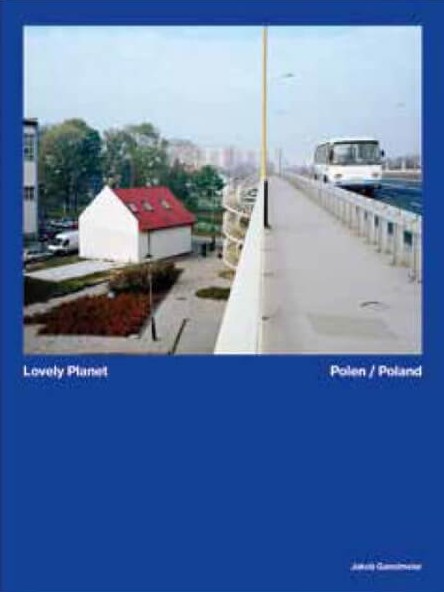
Lovely Planet. Polen / Poland16€ Add to cartAn Unconventional and Humorous Guide to a Country of Contrasts
In 2015, the photographer Jakob Ganslmeier (b. Munich, 1990; lives and works in Berlin) went on an extended tour of Poland in search of shots that captured the country’s social realities and way of life at a time of wrenching changes. The title of his project evokes associations with Lonely Planet, one of the world’s best-selling series of travel guides, and the artist took inspiration from the format of the popular books, where recommendations for readers exploring strange lands are grouped by categories. Crisscrossing Poland—he covered over ten thousand kilometers—Ganslmeier encountered widely different people and draws our attention to places that would never make it into a guidebook. His pictures show a country of extremes, between boomtown optimism and decline, consumerism and poverty, gleaming façades and bleak village streets.
Jakob Ganslmeier studied at the Ostkreuzschule für Fotografie, Berlin, and at the Bielefeld University of Applied Sciences. His pictures, which have garnered numerous awards, are frequently featured in leading German media and have been shown in exhibitions in Germany and abroad, including at the Brandenburgisches Landesmuseum für moderne Kunst, Cottbus, the Nobel Peace Center, Oslo, the Triennale der Photographie Hamburg, and the Fondation Calouste Gulbenkian, Paris.
-

Petra Arnold
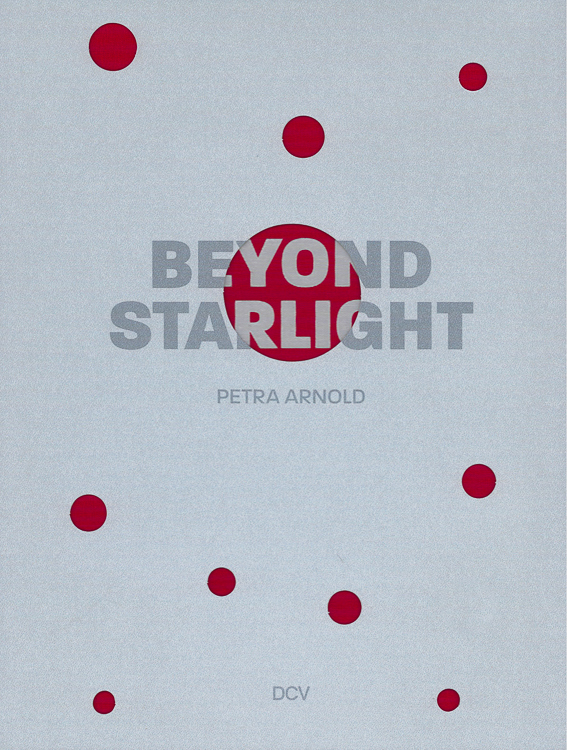
Beyond Starlight39,90€ Read moreThe Fischer Family of Circus Artists: A Photographic Long-term Observation
For more than a decade, the photographer Petra Arnold has shadowed the Zirkus Starlight troupe and the Fischers, a family of performers, taking analog photographs, mostly black-and-white, of their life behind the scenes. When she began the project, the Fischers were a large family, with thirty grandchildren. Over time, the company has had to downsize – the business environment is difficult, and few people can make a living as circus artists these days. Arnold’s photographs peek behind the curtain for a study of an existence between circus family and family circus – mostly outside the limelight. The portraits and unstaged scenes are documents of contemporary history and draw attention to the steady decline of circus culture.
-
Mihai Olos
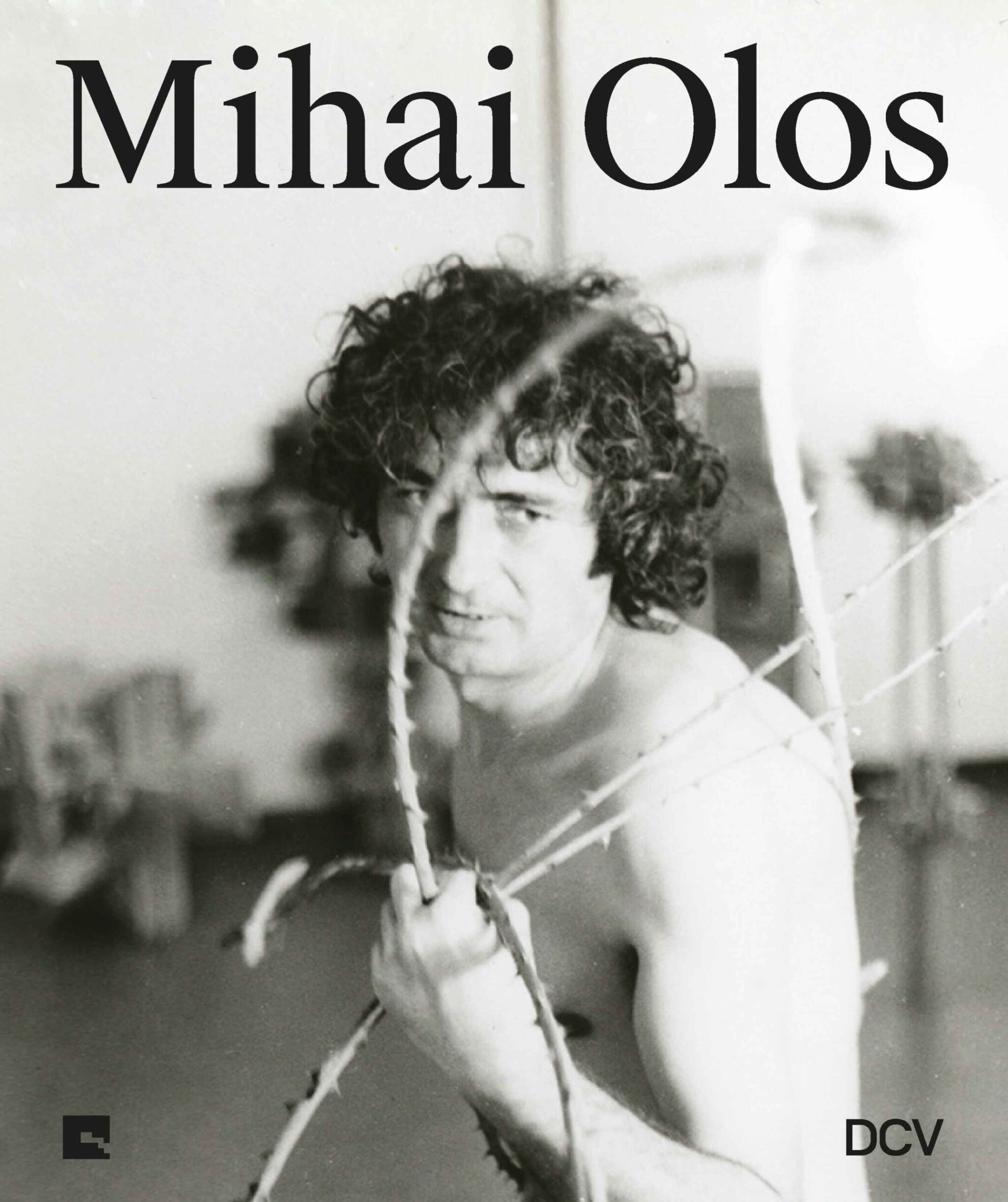
42€ Add to cartMihai Olos (b. Ariniș, Romania, 1940; d. Endingen am Kaiserstuhl, 2015) ranks among the most fascinating artists of the second half of the twentieth century. His adaptations of the formal vocabulary pioneered by Constantin Brâncuși are unrivaled in their creative originality. His works evince an utterly novel approach to the combination of materials from the culture of rural Romania with the visual strategies of modernism. His formidable oeuvre engages with conceptual and minimal art and comprises paintings, drawings, and sculptures, sometimes in the dimensions of land-art projects, as well as performances and poetry. Despite the constraints imposed by the communist system, his art and travels—during which he also met his kindred spirit Joseph Beuys—were dedicated to the unerring pursuit of his vision of social sculpture and radical utopian architecture.
-

Francis Alÿs
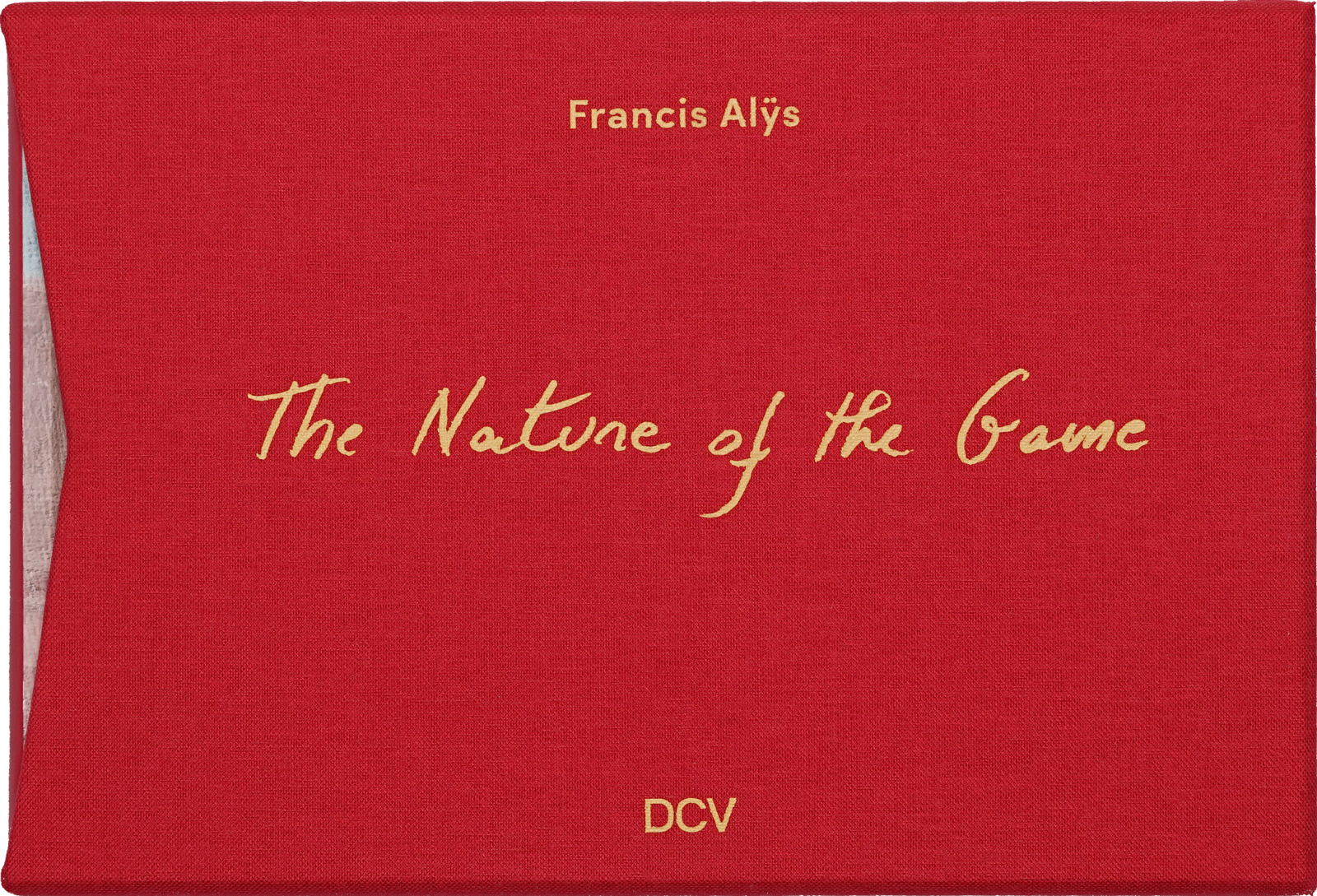
The Nature of the Game
Special Edition60€ Add to cartSPECIAL EDITION in clothbound slipcase
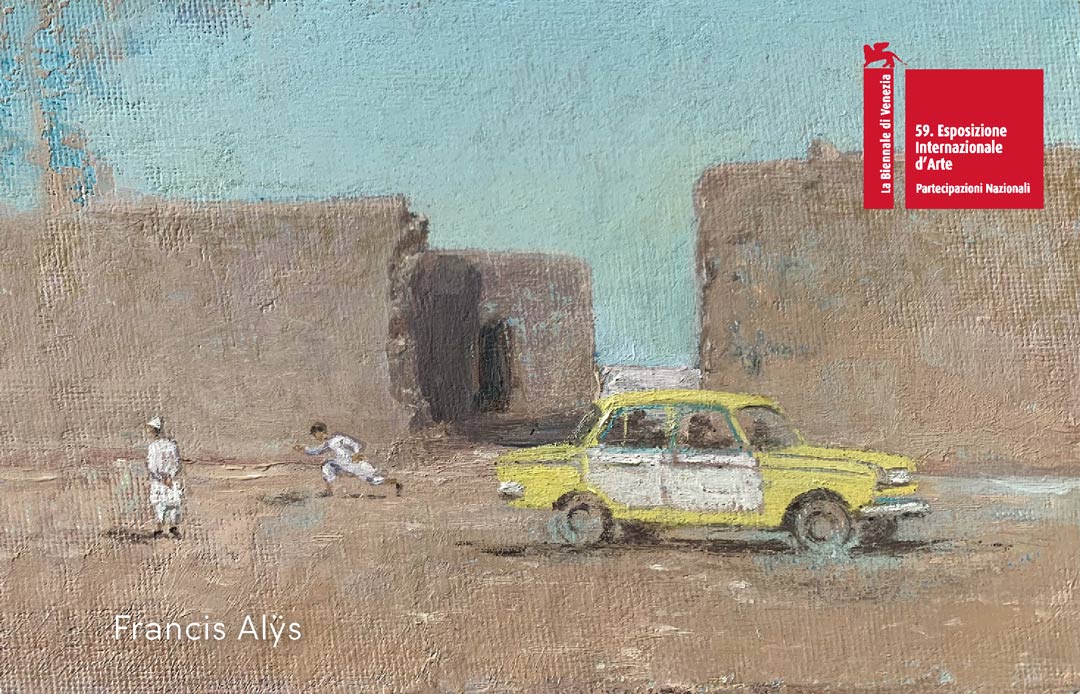
The Belgian artist Francis Alÿs (b. Antwerp, 1959) makes work that is as multifaceted as it is poetically subversive. Straddling the line between performative conceptual art and community intervention, his films and drawings chart the political and social realities of urban spaces. One of his most imposing long-term projects is Children’s Games, for which he documents children playing all over the world, from Paris and Mexico City to the Yezidi refugee camp Sharya in Iraq. The richly illustrated book contains ideas and sketches he compiled in preparation for this series. It lets us glimpse into the engine room of his artistic practice, revealing key elements of his filmic poetics. An essay by the ethnographer and filmmaker David MacDougall embeds Alÿs’s observations of children’s play in the contexts of childhood studies as well as the history of ethnographic documentary film.
Francis Alÿs (b. Antwerp, 1959) is widely regarded as one of the foremost artists working today. His oeuvre, which has garnered numerous prizes and been featured in solo exhibitions around the world, encompasses films, photographs, performances, drawings, and paintings, many of them explorations of the social and political realities of urban spaces. Since 1986, Alÿs, who trained as an architect, has lived in Mexico City, where he moved after the major earthquake of 1985 to help in the rebuilding effort.
Francis Alÿs – The Nature of the Game is the official publication of the Belgian pavilion at the 59th Biennale di Venezia, curated by Hilde Teerlinck.
-
Antonia Hirsch
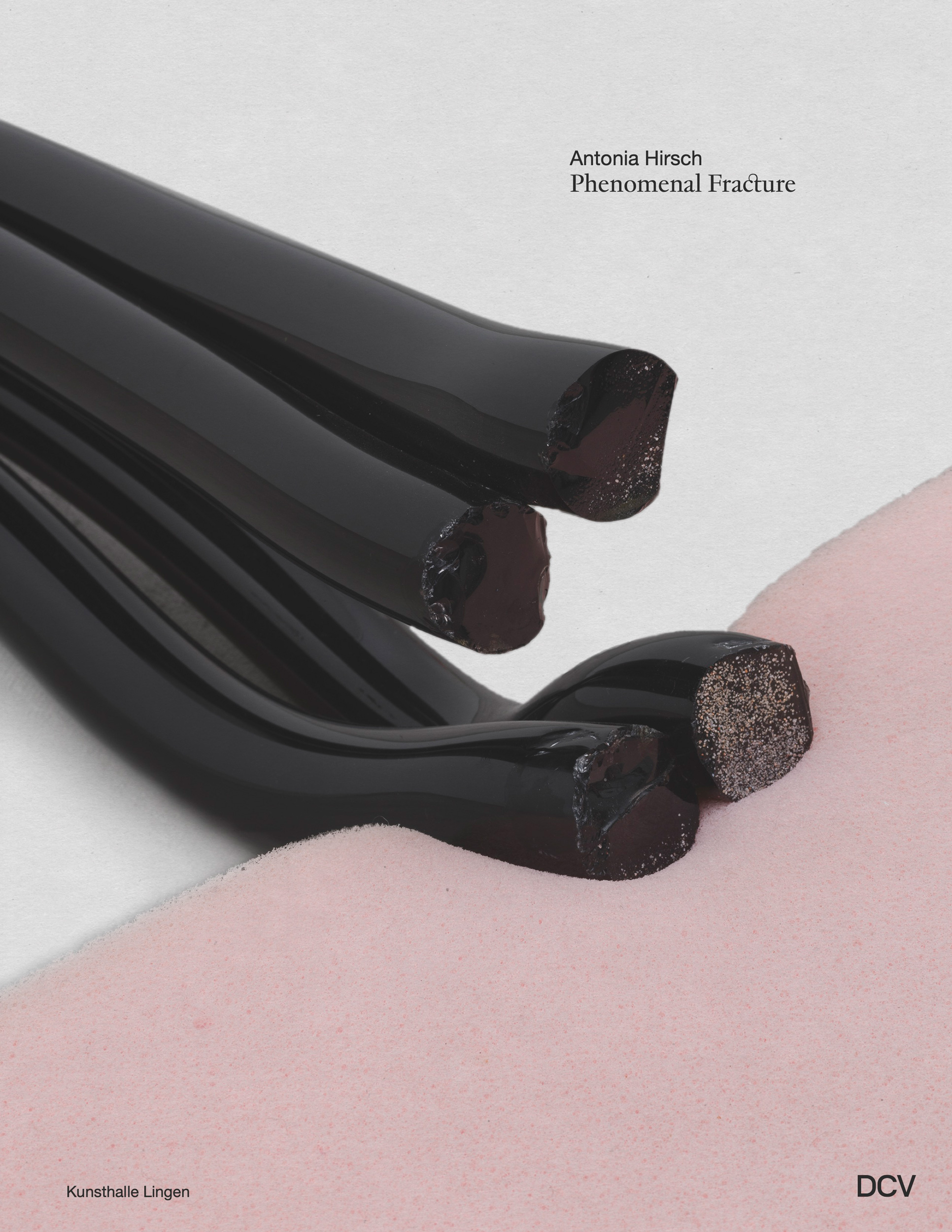
Phenomenal Fracture24€ Add to cartIn a probing engagement with the screen, an omnipresent object in contemporary life, Antonia Hirsch charts the gulf between the digital and the analog, the two spheres of which our perceived reality is composed. In provocative installations and objects, the artist conceives the distinctions between screen, mirror, and blade as less than sharply defined. Her works show rigidly geometric shapes made of hard and shimmering glass and steel; they encounter eerily somatic and perishable-looking cardboard or soft foamed-plastic components that recall the bodies they perhaps once served. Reflective surfaces mirror our gaze, but the less classy materials, too, await recognition by the beholder’s body. The book accompanies Hirsch’s solo exhibition Phenomenal Fracture at Kunsthalle Lingen; photographs and writings convey extensive and sustained impressions that run the gamut from the uncanny to the darkly humorous.
-
Alexandra Tretter
24€ Add to cartThe art of Alexandra Tretter (*1988) is as deep as it is playful. Owing just as much to the gentle spirituality of Hilma af Klint’s late geometries as it does to Sonia Delaunay’s exuberant disc paintings, almost bursting with sheer chromatic pleasure. Her compassionately designed artist’s book combines monumental paintings with intimate works on paper, all of which are imbued with the contexts of Tretter’s own life as an artist, as a woman, as a mother.
Her kaleidoscopic figurations unfold from a center at rest in itself and multiply in symmetry and asymmetry towards all sides. She contrasts the circular form, the unchanging basic element of her compositions, with the oval, which constantly strives beyond itself, transforming itself in ever-new permutations from one figure into the next, into eyes, mouths, breasts, petals or vulvas.
Her images strive for composure, unfold and blossom, only to let go of all gestalt-like form. Once gained stability is instantly pushed into turmoil. Colors flare up violently or flow delicately about, lighten or shade each other, carry or throw each other off course. Tretter equally realizes materialization and dissolution as basic principles of her painting.
Whereby all, what her images absorb, preserve and release, is experience, growth and slow maturing. Her paintings are “figurations of affection”, in which each individual turns towards something else, doubts or grows, at times turns away or surrenders all the more consciously. They question everything, start anew and yet find their way back to themselves, into their very own.
-

Membrane
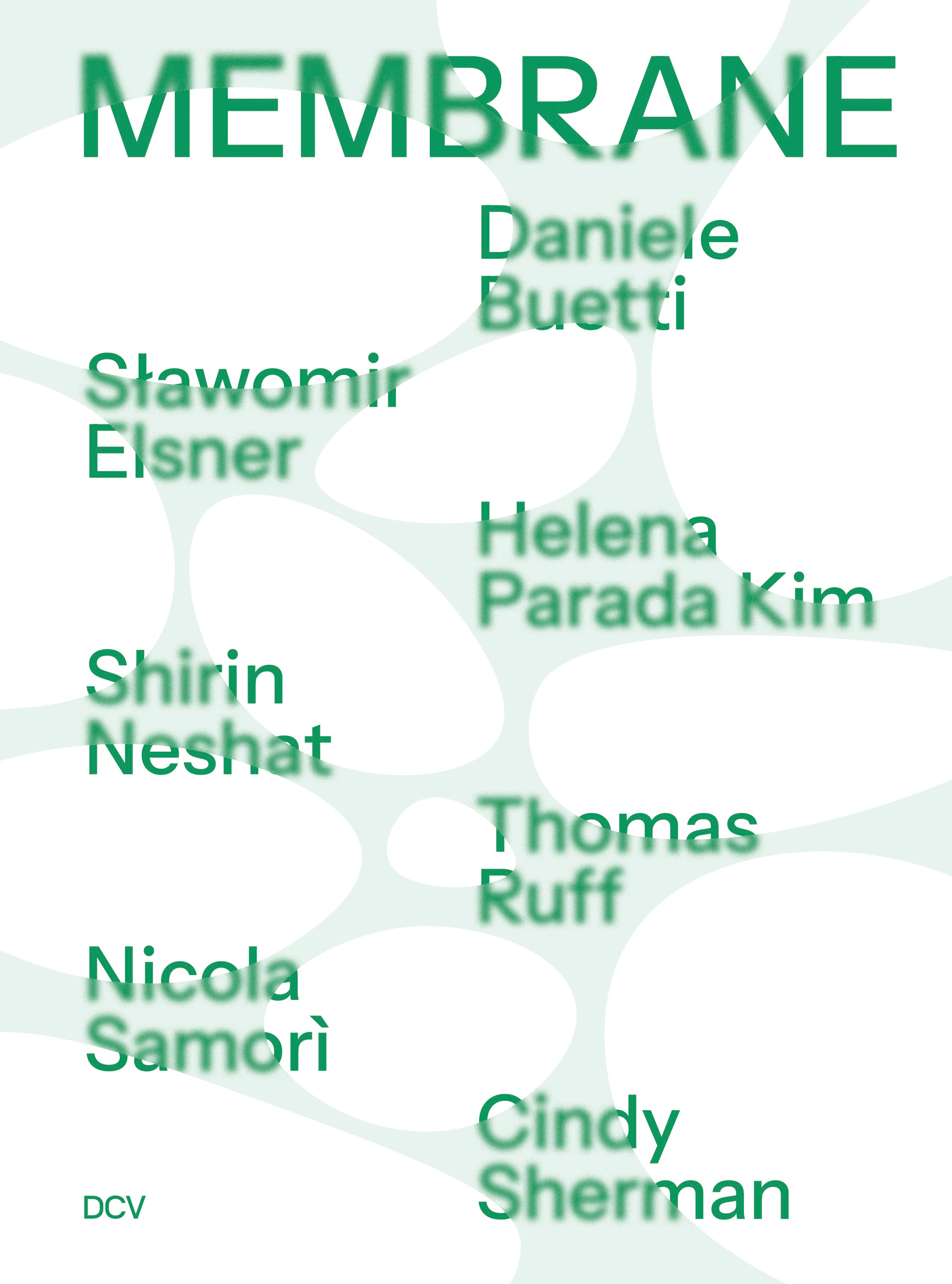
38€ Add to cartMembrane documents an eponymous exhibition at the Neue Galerie Gladeck as well as the gallery’s architectural extension. The works of the 7 invited artists are engaged to explore skin in a broader sense—membrane also encompasses clothing, veiling, and masking from various cultural perspectives. Well-known portraits by Thomas Ruff, Shirin Neshat, and Cindy Sherman appear in a new light alongside Helena Parade Kim’s exploration of iconographic and ceremonial fashion codes, Daniel Buetti’s critique of the commercialized body, and Nicola Samorì’s exploration of skin in historical masterpieces. The membrane concept also inspired the exterior and interior surfaces of the new gallery building, and an interesting text by the architect reveals his approach.
Artists: Daniele Buetti, Sławomir Elsner, Shirin Neshat, Helena Parada Kim, Thomas Ruff, Nicola Samorì & Cindy Sherman
- Out of stock

Hans Karl Zeisel
Hundred and more34,95€ Read morePossibilities of concrete art
What is possible without turning away from the cocrete? In the Bauhaus tradition, the typographer, graphic artist, designer and author Hans Karl Zeisel opens up countless design options with basic forms. His wooden cuboids demand a humorous approach to sculpture. They are creativity training, study tools and meditation game all in once. A playful experiment that reveals the diversity of concrete art.
-

Christian Boltanski
Die Zwangsarbeiter – Erinnerung in der Völklinger Hütte27,50€ Add to cartErinnerungen | Souvenirs | Memoirs
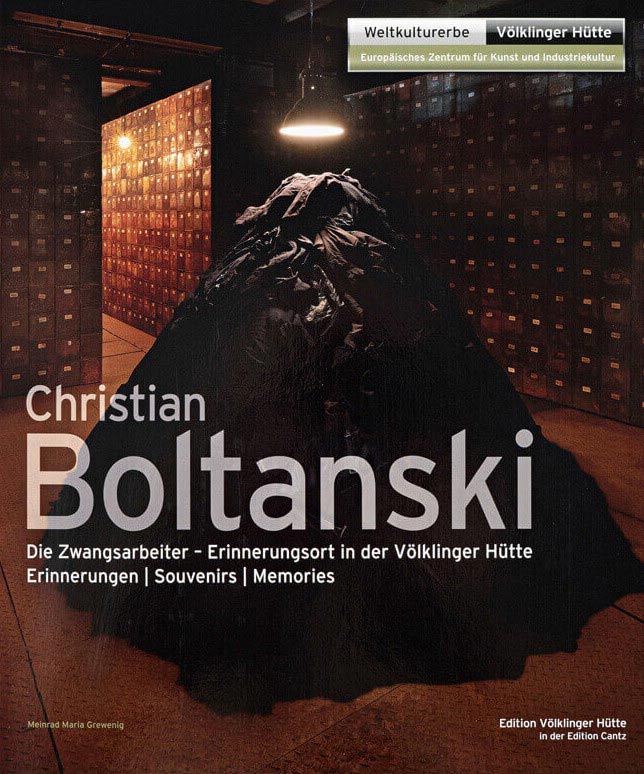
Christian Boltanski (b. 1944, Paris; lives and works in Paris) combines industrial architecture with relics of the working culture in his impressive installation for the Völklingen ironworks – a highly emotional approach to the subject of forced labor.
-

Sabine Hornig
Passage through Presence45€ Add to cartLayered Spacetimes in Large Formats
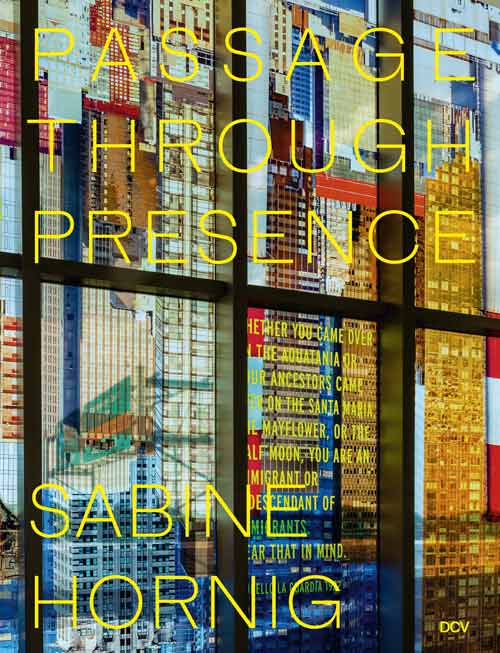
Sabine Hornig (b. 1964; lives and works in Berlin) has earned international acclaim with sculptures, photographs, and architectural interventions that interweave image, perspective, and space in distinctive ways. Her works feature translucent pictorial planes on glass panes; integrating these sculptural elements into the setting, she creates environments in which meaning unfolds as viewers allow their gazes—and themselves—to wander. For her new works, which engage with architecture, the artist superimposes enormous photographs on entire façades and concourses. This publication is the first to put the focus on Sabine Hornig’s art in three dimensions, detailing her process from the building of sculptural models and the combination with transparent photographic layers to her creation of works in public settings. It showcases her largest installation to date, at LaGuardia Airport in New York City, which she discusses in a conversation with Nicholas Baume, director and chief curator, Public Art Fund, New York.
-

FINALE
DIRECTOR’S CUT25€ Add to cartThe Best Part …
In 1994, Britta Erika Buhlmann took the helm at Museum Pfalzgalerie Kaiserslautern, from which she will retire in the spring of 2022. In her twenty-eight-year tenure, she has enlarged the museum’s art collection and put her personal stamp on it. The classical modernism division was strengthened with the addition of major works by Otto Dix, Hermann Scherrer, and Karl Buchheister, while key pieces by François Morellet, Martin Willing, Werner Pokorny, and others have enriched the museum’s holdings in sculpture. A newly established division of the collection is dedicated to the creations of American artists such as Eric Levin, Kiki Smith, Charles Pollock, and Richard Pousette-Dart. More than a few artists—the list includes Carmen Herrera, Pierrette Bloch, Eva Jospin, and Nobuyuki Tanaka—made their German or even European début at the mpk.
In this book, members of the mpk’s staff offer their takes on selected works in the collection, unfurling a subjective story of their engagement with works that have earned the museum its reputation as a “place of discoveries.”
-

Francis Alÿs
The Nature of the Game32€ Add to cartThe Belgian artist Francis Alÿs (b. Antwerp, 1959) makes work that is as multifaceted as it is poetically subversive. Straddling the line between performative conceptual art and community intervention, his films and drawings chart the political and social realities of urban spaces. One of his most imposing long-term projects is Children’s Games, for which he documents children playing all over the world, from Paris and Mexico City to the Yezidi refugee camp Sharya in Iraq. The richly illustrated book contains ideas and sketches he compiled in preparation for this series. It lets us glimpse into the engine room of his artistic practice, revealing key elements of his filmic poetics. An essay by the ethnographer and filmmaker David MacDougall embeds Alÿs’s observations of children’s play in the contexts of childhood studies as well as the history of ethnographic documentary film.
Francis Alÿs (b. Antwerp, 1959) is widely regarded as one of the foremost artists working today. His oeuvre, which has garnered numerous prizes and been featured in solo exhibitions around the world, encompasses films, photographs, performances, drawings, and paintings, many of them explorations of the social and political realities of urban spaces. Since 1986, Alÿs, who trained as an architect, has lived in Mexico City, where he moved after the major earthquake of 1985 to help in the rebuilding effort.
Francis Alÿs – The Nature of the Game is the official publication of the Belgian pavilion at the 59th Biennale di Venezia, curated by Hilde Teerlinck.
-

Maxim Gunga
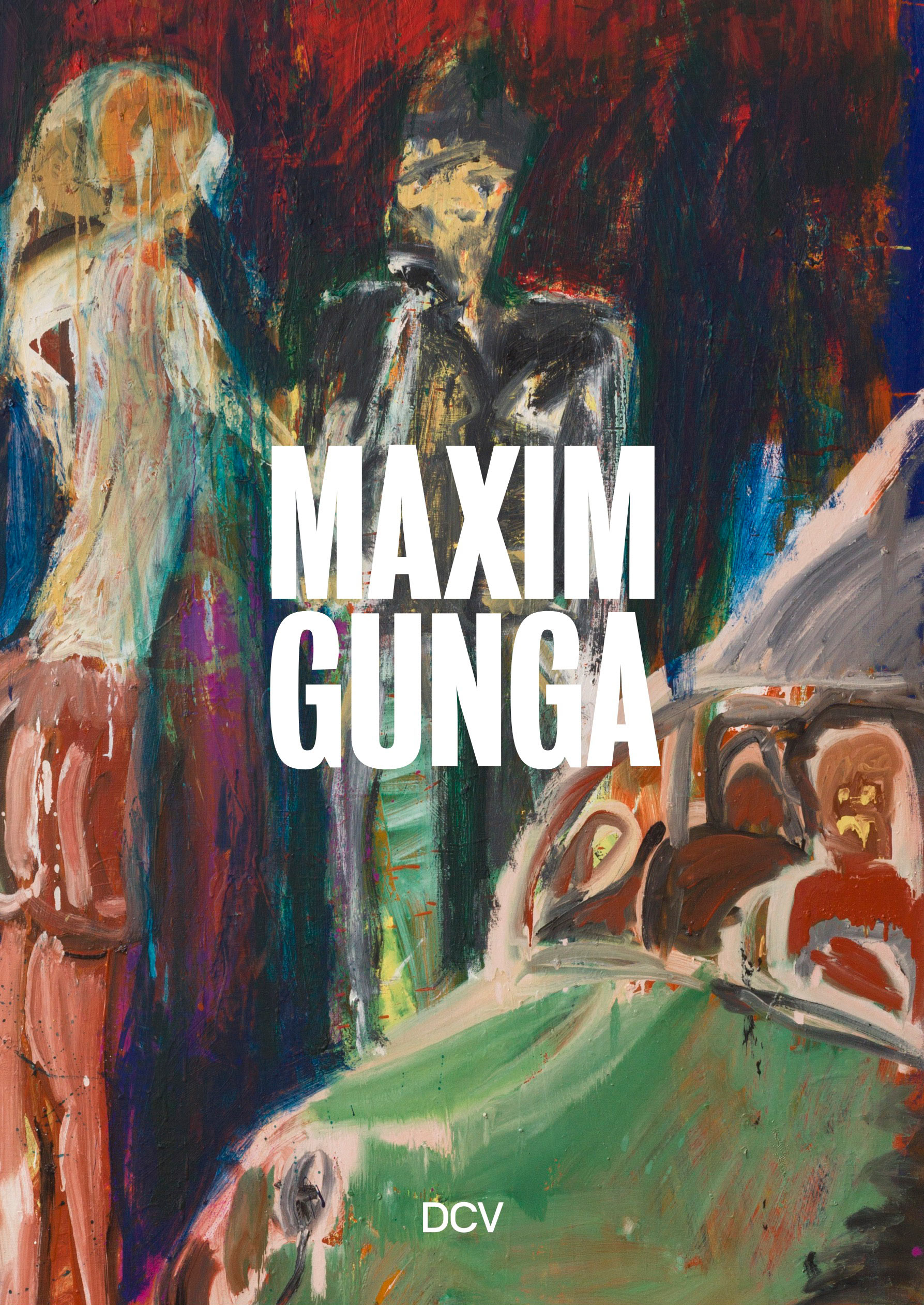
10€ Add to cartThe painter Maxim Gunga is utterly unafraid of physicality. His canvas is a riot of oil paints huddling up against one another, fusing like the beasts, the humans, and the urban landscape of Berlin that serve him as motifs. Body and soul, animal nature and architecture, the profane and the sacred, subculture and mass culture—everything interpenetrates in Gunga’s paintings in large formats, melded into hybrid bodies. The result is an ecstatic intimacy, a flowing of colors and more or less abstracted dynamic forms toward their primal state, toward the matrix, toward pure energy: eternal transformation. It makes sense, then, that his pictures also amalgamate diverse styles and periods in the history of painting. He borrows from (Neo-)Expressionism, from Art Brut, from Baselitz, Lüpertz, the Neue Wilde, from modernism and Fauvism, from van Gogh and Matisse. His pinpoint brushwork, which reveals his extensive training, interweaves art history with our contemporary lifeworld and our affects. All the specters of the past and the present come to meet us in the pictures gathered in this catalogue, in a frenzy of the senses, in the primordial soup of Berlin, into which we dive with joyful abandon.
-
Rainer Jacob
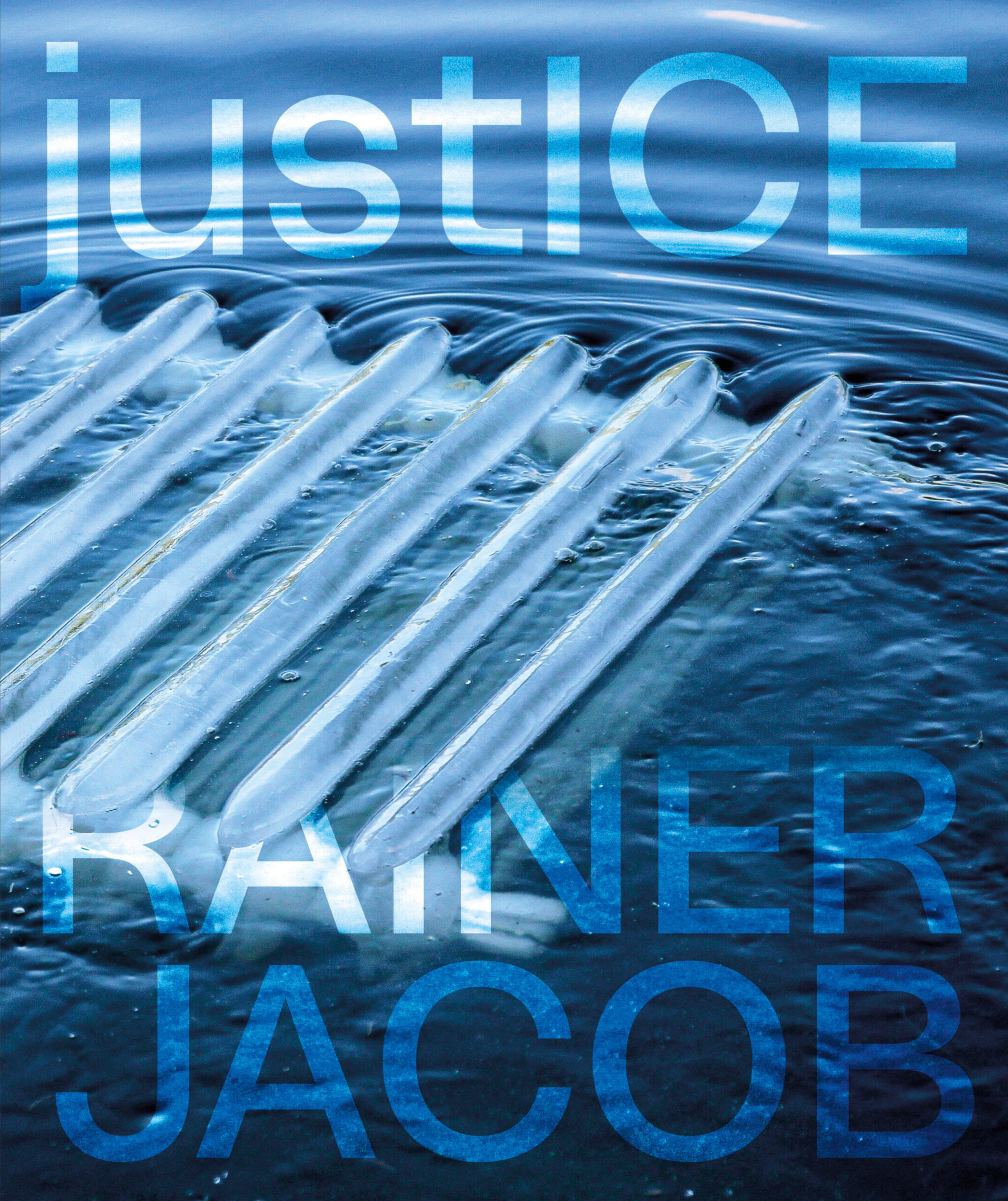
justICE30€ Add to cartRainer Jacob (b. Jena, 1970; lives and works in Leipzig) has anonymously installed objects made of ice in public settings in cities including Berlin, Leipzig, Paris, Moscow, Oslo, Prague, and Budapest since 2013. He then allows them to dematerialize and records the process in photographs. Radiators, wall outlets, QR codes, and the Duchampian pissoir are among his recurrent motifs. The impermanence of the ice objects builds bridges to street art, Fluxus, and action art. Critical observations on the unequal distribution of resources and political power in contemporary society, his works reflect on our perceptions and question the idea of originality in art while also probing the outer limits of sculpture.
The publication showcases the ice objects of the past ten years, embedding them in a decade that has marked a sea change in the life of humankind: JustICE captures an artist’s distinctive perspective on societal processes.
-

Robbie Cornelissen
Terra Nova28€ Add to cartFuturistic / Fantastic
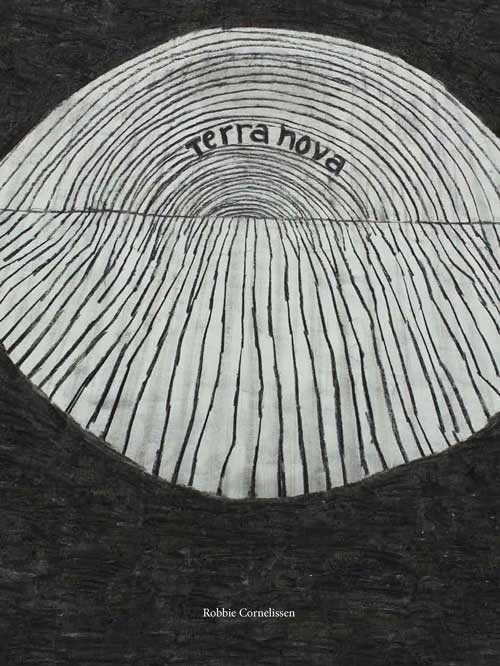
The Dutch artist Robbie Cornelissen’s (b. Utrecht, 1954; lives and works in Utrecht) oeuvre is endowed with unusual narrative power. His architectonic drawings in enormous formats, which often exude a futuristic aura, typically show deserted libraries, waiting halls, factory floors, or other oversized spaces. In alternation with his work on paper, the artist creates animated films out of thousands of drawings. This publication presents 250 drawings from Cornelissen’s new film Terra Nova, which explores an urgent contemporary concern: humanity’s responsibility for the earth and the open question of its long-term survival on the planet.
Robbie Cornelissen studied biology and ecology at Rijksuniversiteit Utrecht and at Vrije Akademie, Den Haag, and the Gerrit Rietveld Academie, Amsterdam. His work has been shown at Centraal Museum Utrecht, Hamburger Kunsthalle, the 11th Biennale de Lyon, and elsewhere.
-

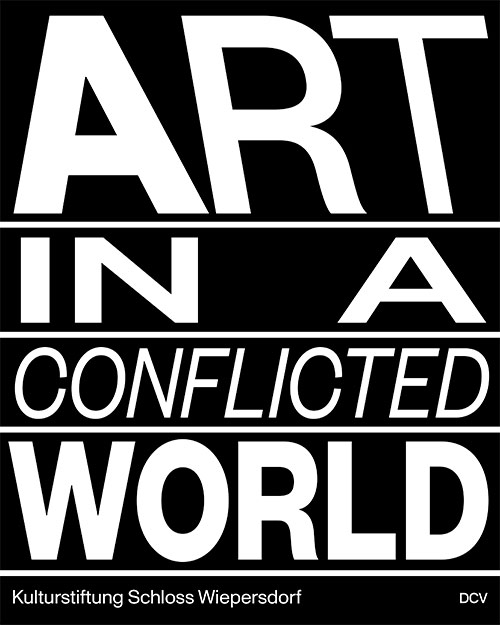
Art in a Conflicted World
34€ Add to cartTrans-European Perspectives in the Age of Cultural Fragmentation
Since the turn of the millennium, much of the world has become an increasingly unstable and dissonant place. Sharp disruptions define many aspects of our social, cultural, and political relations. Art in a Conflicted World addresses this evolving reality, featuring critical positions articulated by visual artists and writers from Ukraine, Russia, and Great Britain—regions embroiled in extraordinary strife and upheaval. The publication takes a frank look at these multifaceted states of social dissonance and reflects them in diverse artistic and literary inquiries and responses. The contributions are the fruits of an interdisciplinary fellowship program at Kulturstiftung Schloss Wiepersdorf that offers the participants an opportunity to gain fresh creative and cultural insights, test ways of engaging with complexity, and develop models for the future that transcend national boundaries.
The publication presents works by Sarah Dobai, Nikita Kadan, Ali Eisa, and Sebastian Lloyd Rees (Lloyd Corporation) as well as writings by Alisa Ganieva and Tanya Zaharchenko.
The project was mentored by Wolfgang Tillmans, Tom McCarthy, Katharina Raabe, and Mark Gisbourne and received funding support from the German Federal Foreign Office.
-

Hans Hofmann
Chimbote24€ Add to cartExpressive Forms between Art and Architecture
As an exponent of Abstract Expressionism, Hans Hofmann (b. Weißenburg, Germany, 1880; d. New York, USA, 1966) ranks among the preeminent artists of the twentieth century. As a teacher at his Hans Hofmann School of Fine Arts, which he founded in 1933 after emigrating to the United States, he exerted a formative influence over a generation of young painters. With Arshile Gorky, Willem de Kooning, Jackson Pollock, and others, he was a member of the illustrious New York School, a loose association of visual artists. In 1950 he was spending time in Europe and collaborated with the architects Josep Lluís Sert and Paul Lester Wiener on designs for colorful wall paintings to be executed on buildings in Chimbote, Peru. The urban masterplan they developed for the city’s post-World War II expansion was never realized, and so Hofmann’s intensely colorful works in large formats have been known only to specialists. The selection gathered in this book together with drawings and a city plan provides focused insight into a visionary project.
-

Kensise Anders
10€ Add to cartKensise Anders’s work grapples with the reality of Black people’s lives. Born in Haiti, she was adopted by a German family when she was two. After a difficult childhood, with stints in a psychiatric institution and a boarding school, she eventually found art as a medium that lets her work through her experiences. She uses the crochet needle to create masks with which she ironically appropriates white identities and play carpets that show the world of her childhood—apartment blocks, streets; the “hole,” as she calls this environment. She also arranges crocheted threads on the canvas as though they were brushstrokes. One series of pictures is dedicated to a Black doll; another, to naked female bodies, including the artist’s own, with references to Courbet’s L’Origine du monde (1866). The works are acts of resistance to the prudishness of whites. Black dolls became popular in this country during the colonial era and never quite went away, like the racism in our society and in our heads. Anders’s weapon against that racism is the crochet needle, which she wields patiently and with flair as well as the necessary radicalism.
- Release February 2026

Roman Ondak
The Day After Yesterday48€ Add to cartThe internationally acclaimed Slovakian conceptual artist Roman Ondak (b. 1966) responds to the historical specificities of Central Europe while also reflecting on the functioning of society in today’s global world in works that highlight the cyclical nature of processes and the reciprocal mirroring of the past and the present. His distinctive creative traits include the use of ordinary objects and materials as well as everyday situations, which he transfers into the exhibition space. This richly illustrated catalogue with essays by Barbora Ropková and Dieter Roelstraete accompanies the exhibition The Day After Yesterday at Kunsthalle Praha and explores Ondak’s artistic universe, in which existential and societal themes naturally intertwine with a biography of his own family.
THE DAY AFTER YESTERDAY
KUNSTHALLE PRAHA, PRAGUE, CZECH REPUBLIC
NOVEMBER 13, 2025 UNTIL MARCH 9, 2026
more info here