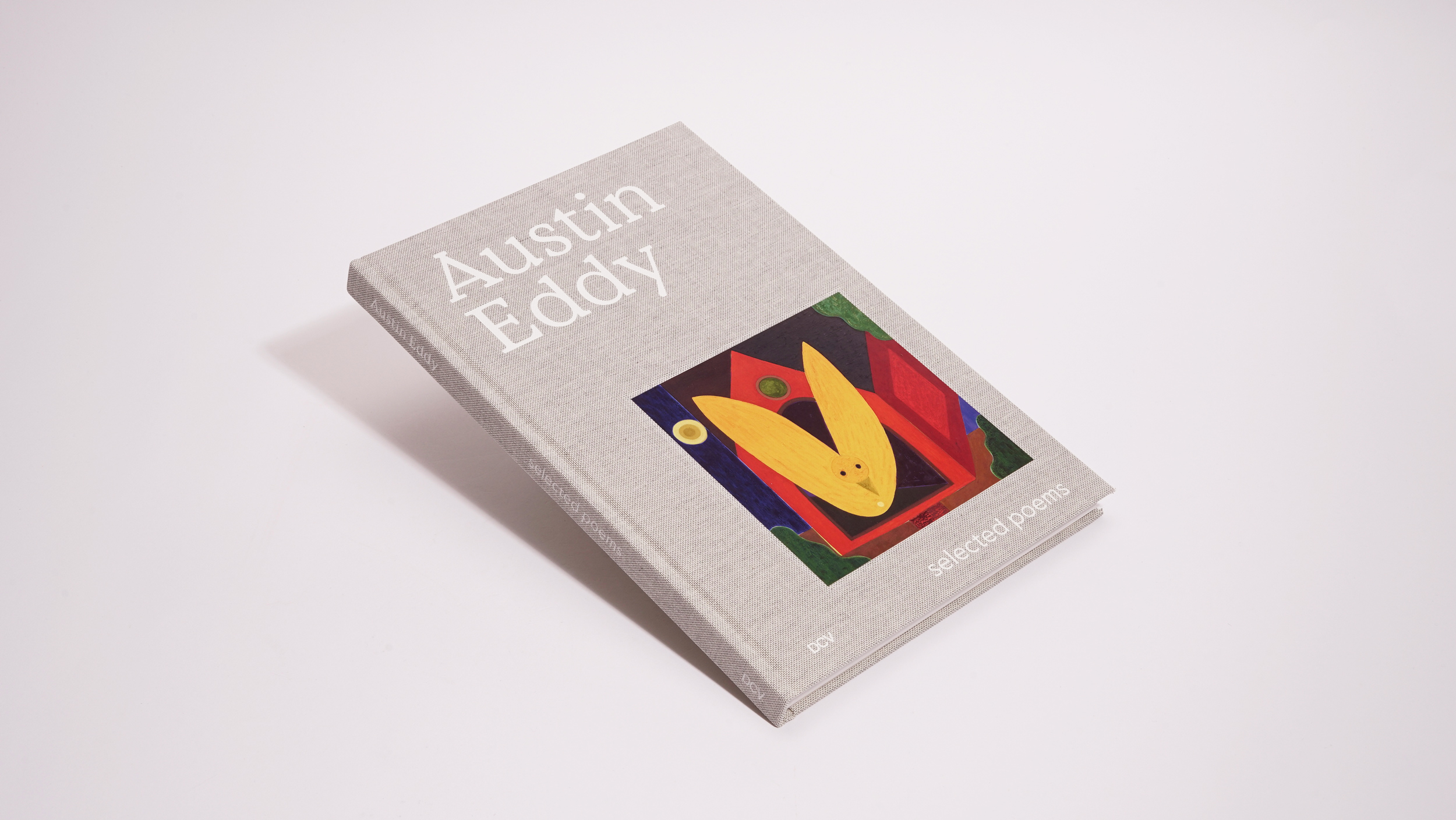
Austin Eddy
Selected poems
 | |
|---|---|
| Editor(s) | Galerie Eva Presenhuber |
| Author(s) | Mitchell Anderson, Austin Eddy in conversation with Dodie Kazanjian |
| Design | Benjamin Wolbergs |
| Size | 20 x 30 cm |
| Cover | Linen hardcover with title plate and embossing |
| Pages | 136 |
| Illustrations | 200 |
| Language(s) | English |
| ISBN | 978-3-96912-108-5 |
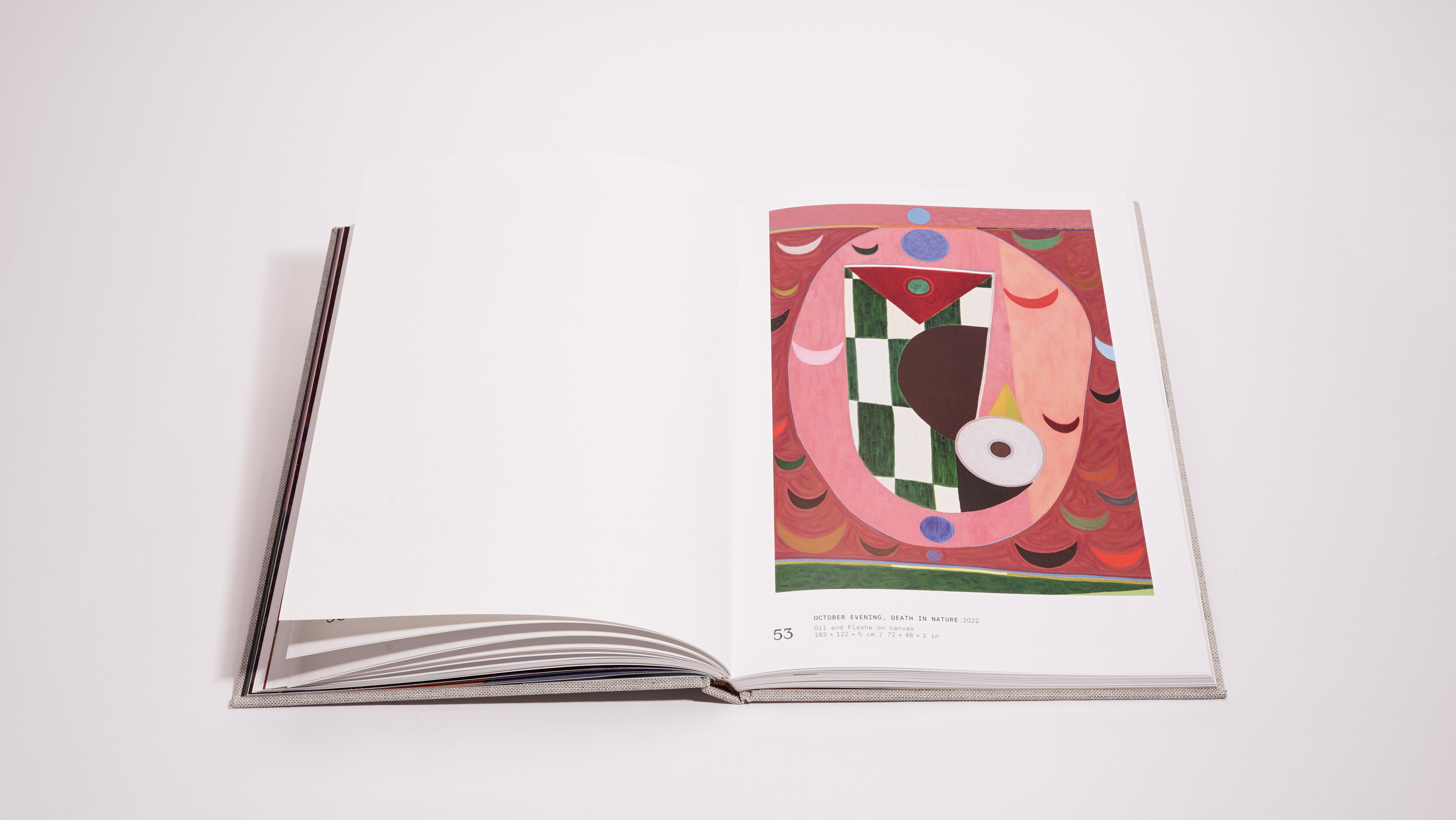
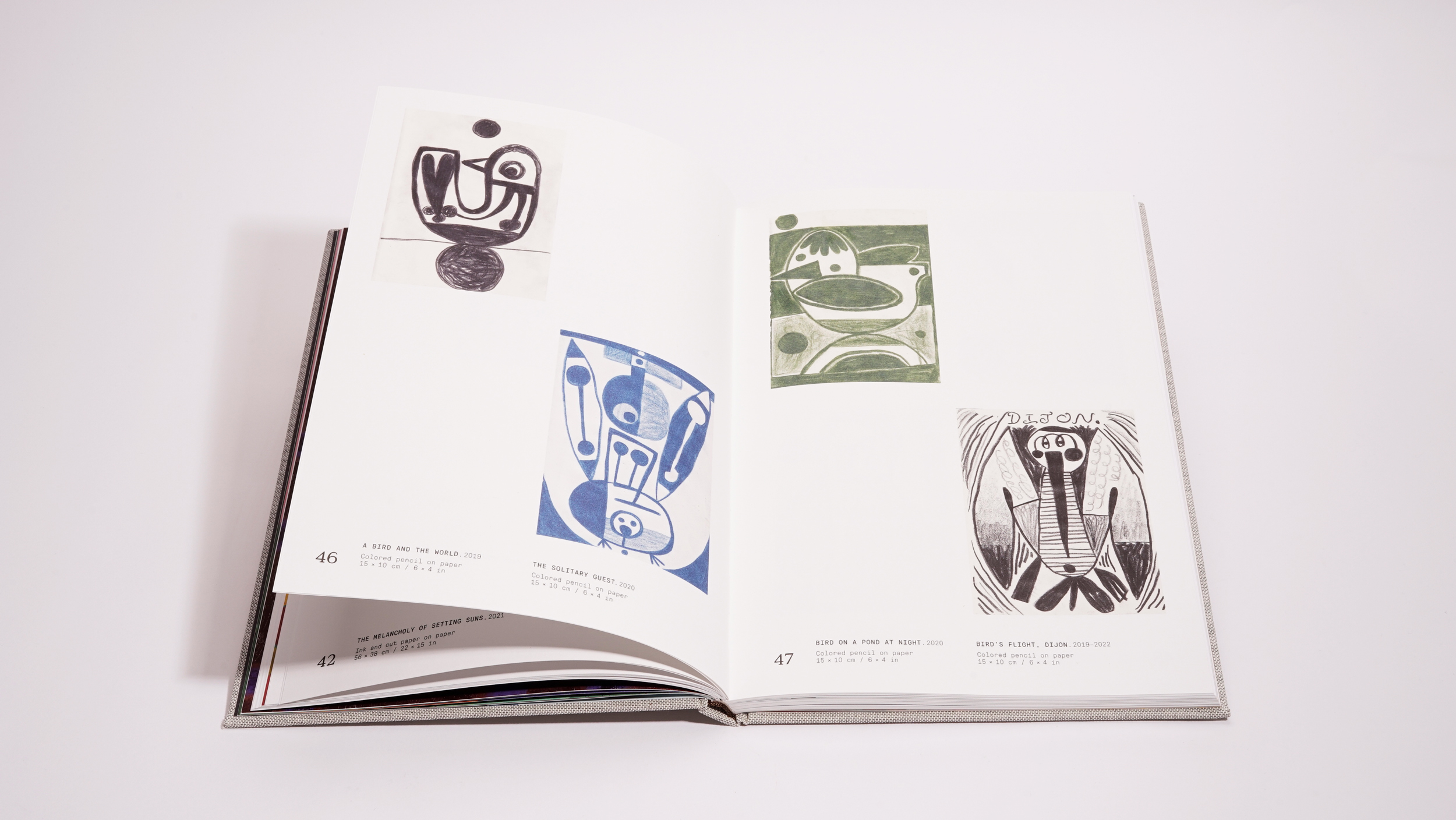
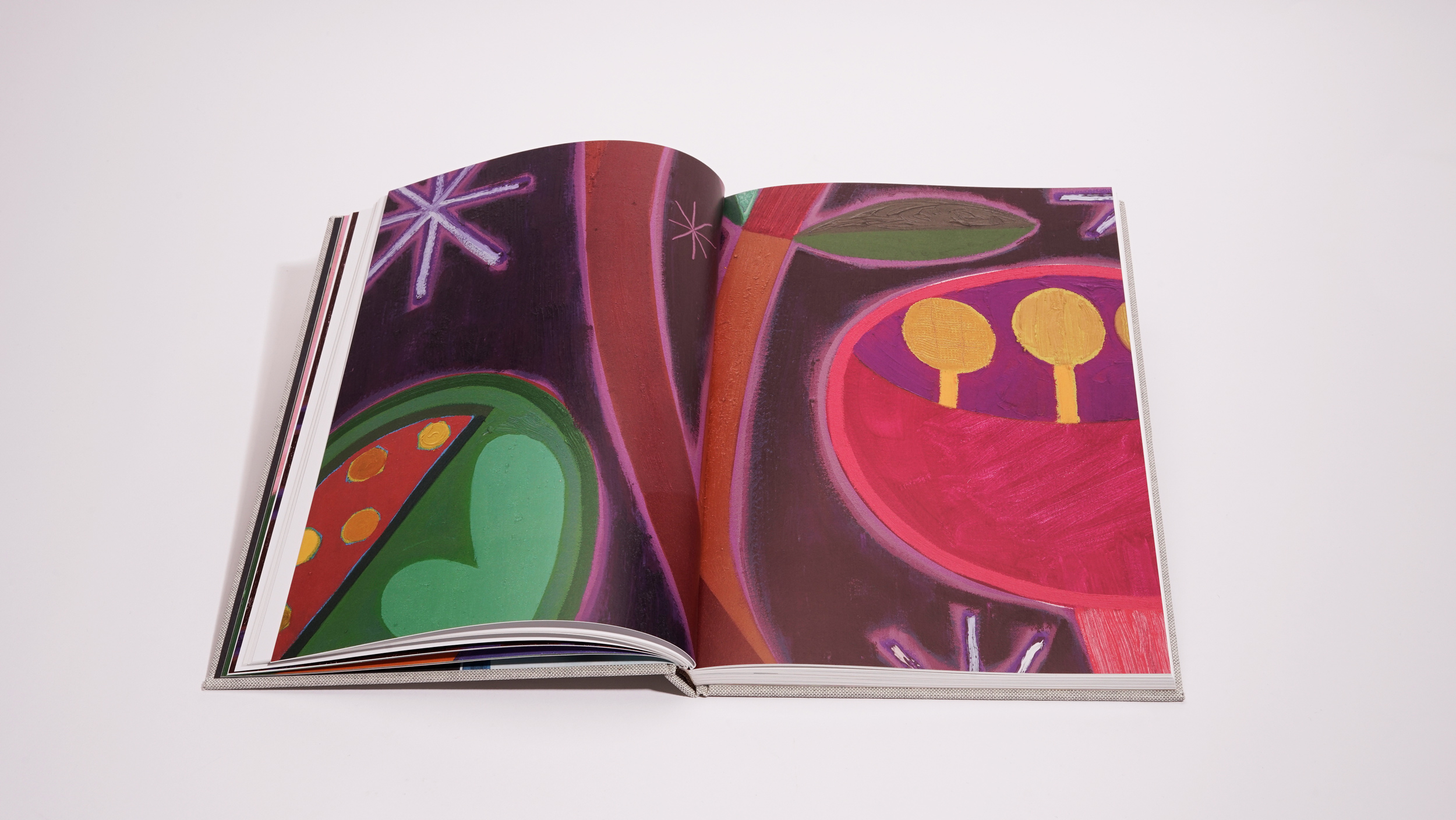
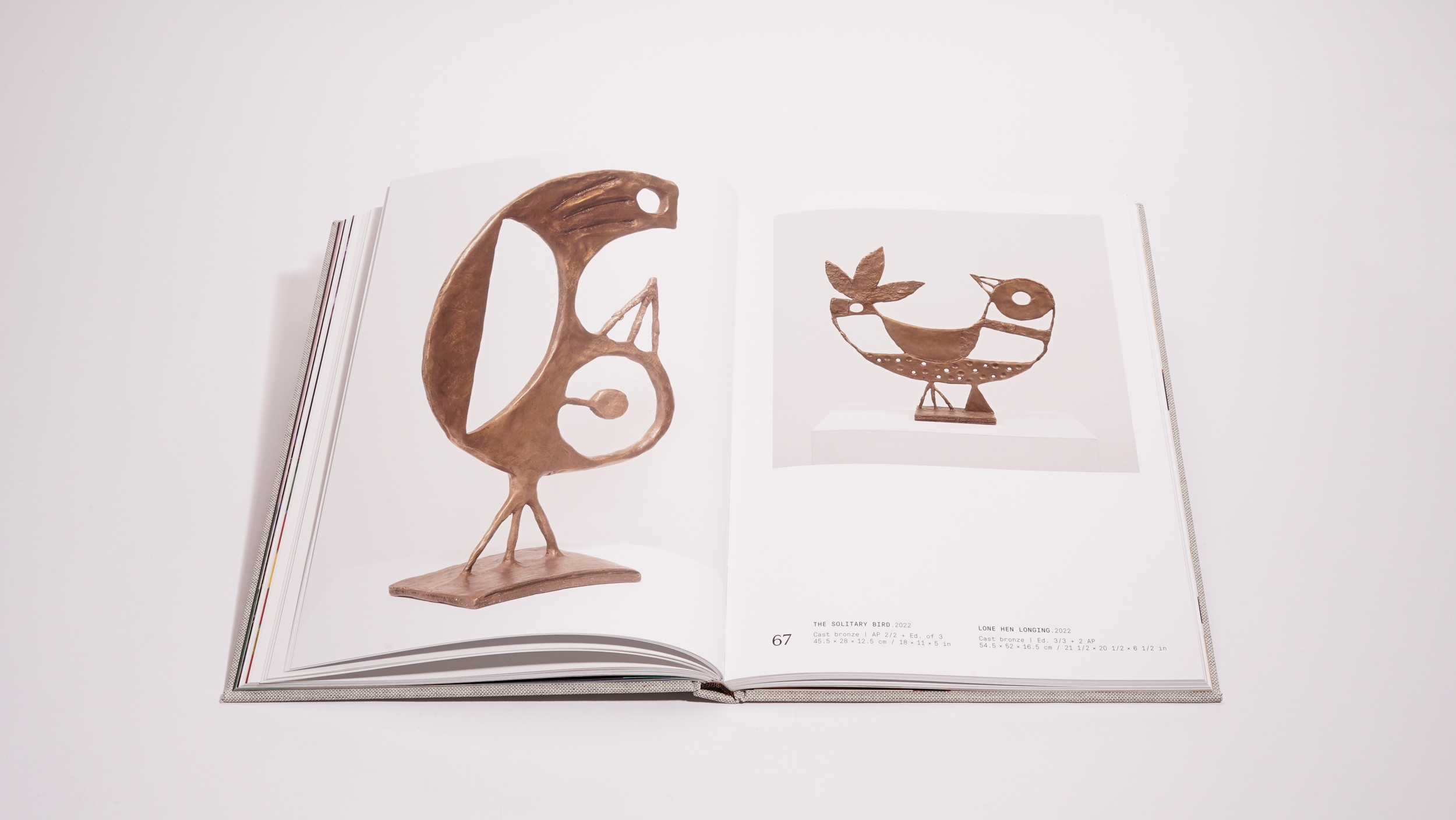
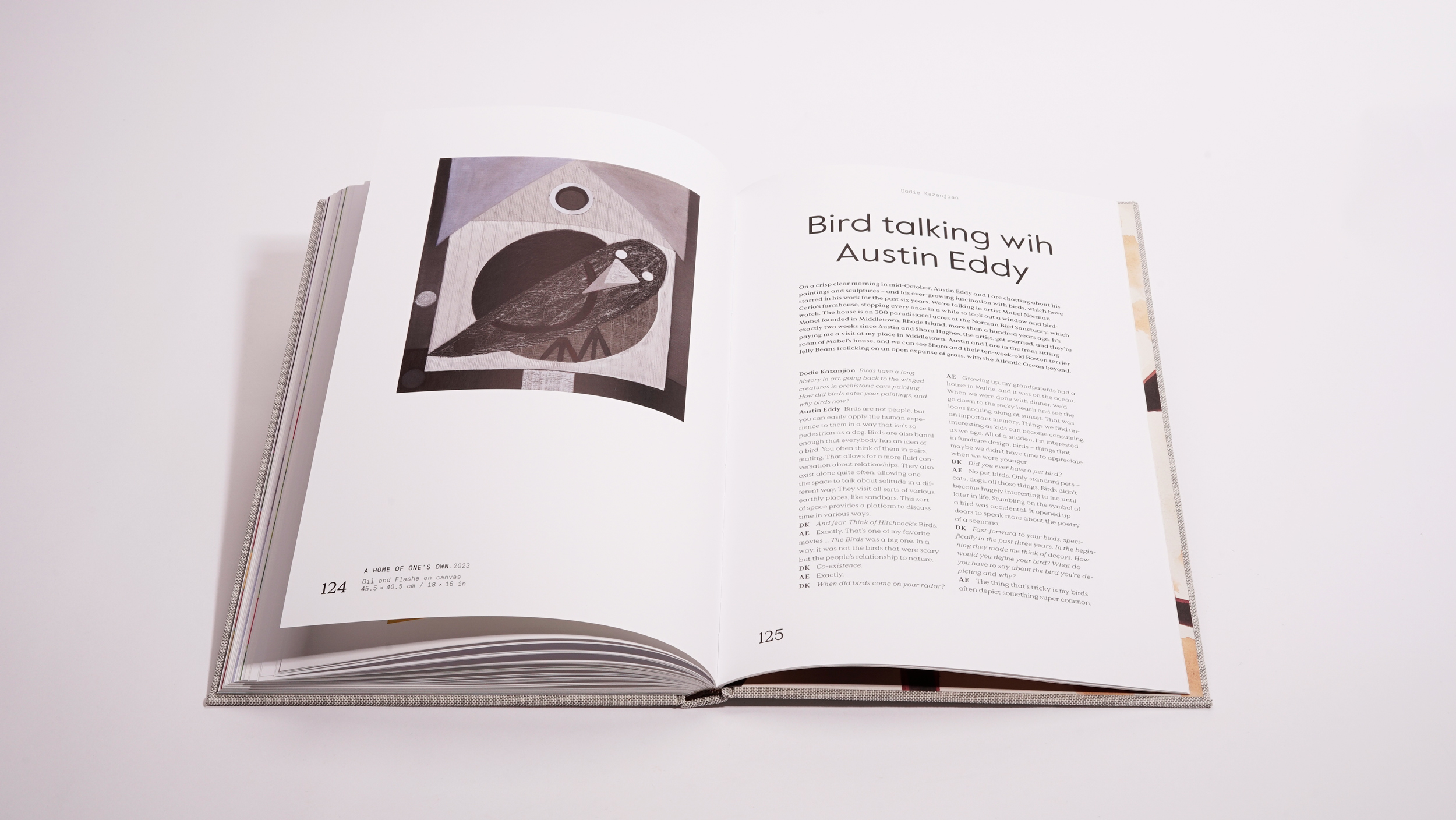
Since 2018, the American painter and sculptor Austin Eddy (b. Boston, 1986; lives and works in Brooklyn) has probed the manifestations of modern painting in a world between abstraction and figuration. As a child and teenager, Eddy immersed himself in the imageries of comics, cartoons, and record covers. In the early 2010s, he studied in Chicago with Barbara Rossi, who had been one of the Chicago Imagists in the 1960s. The deconstruction of everyday objects into innumerable forms and hues became his central theme. Eddy’s works play with luminous colors, overlaid textures, animated bird motifs, and abstract planes of light while grappling with a human existence defined by loss and the passage of time. Situated on the margins of reality, his paintings and sculptures are like visual poems, celebrating the evanescent instant that exists only for a second before fading into the past.
Austin Eddy completed a BFA at the School of the Art Institute of Chicago in 2010.
More books
-

Maximilian Rödel
Celestial Artefacts50€ Add to cart“One must break free from wanting something and confine oneself instead to being something.” — Maximilian Rödel
Inky black, apricot, magenta, and a pastel purple: apparent monochromes, the paintings of Maximilian Rödel (b. Braunschweig, 1984; lives and works in Berlin) actually do not just traverse color spectrums; in a sense, they chart horizons of experience. To contemplate them is to embark on a voyage through space and time. Foreground and background are one, depth and surface at once; an undertow makes itself felt in which the nuances of color interweave, blur into one another, shimmer, flare up. The artist describes his pictures as an unfocused energy that already exists; he merely uncovers it.
The first publication on Rödel’s work presents the exhibition Celestial Artefacts at Neuer Aachener Kunstverein, with an emphasis on the Prehistoric Sunsets series (2018–2021). It is complemented by reproductions of selected works and an extensive index that also includes details from earlier series that are relevant in the context. Aperçus contributed by Rafael Horzon and Leif Randt and writings on art by Domenico de Chirico, Lena Fließbach, Stefanie Gerke, Philipp Hindahl, and Maurice Funken add another dimension to the paintings.
-

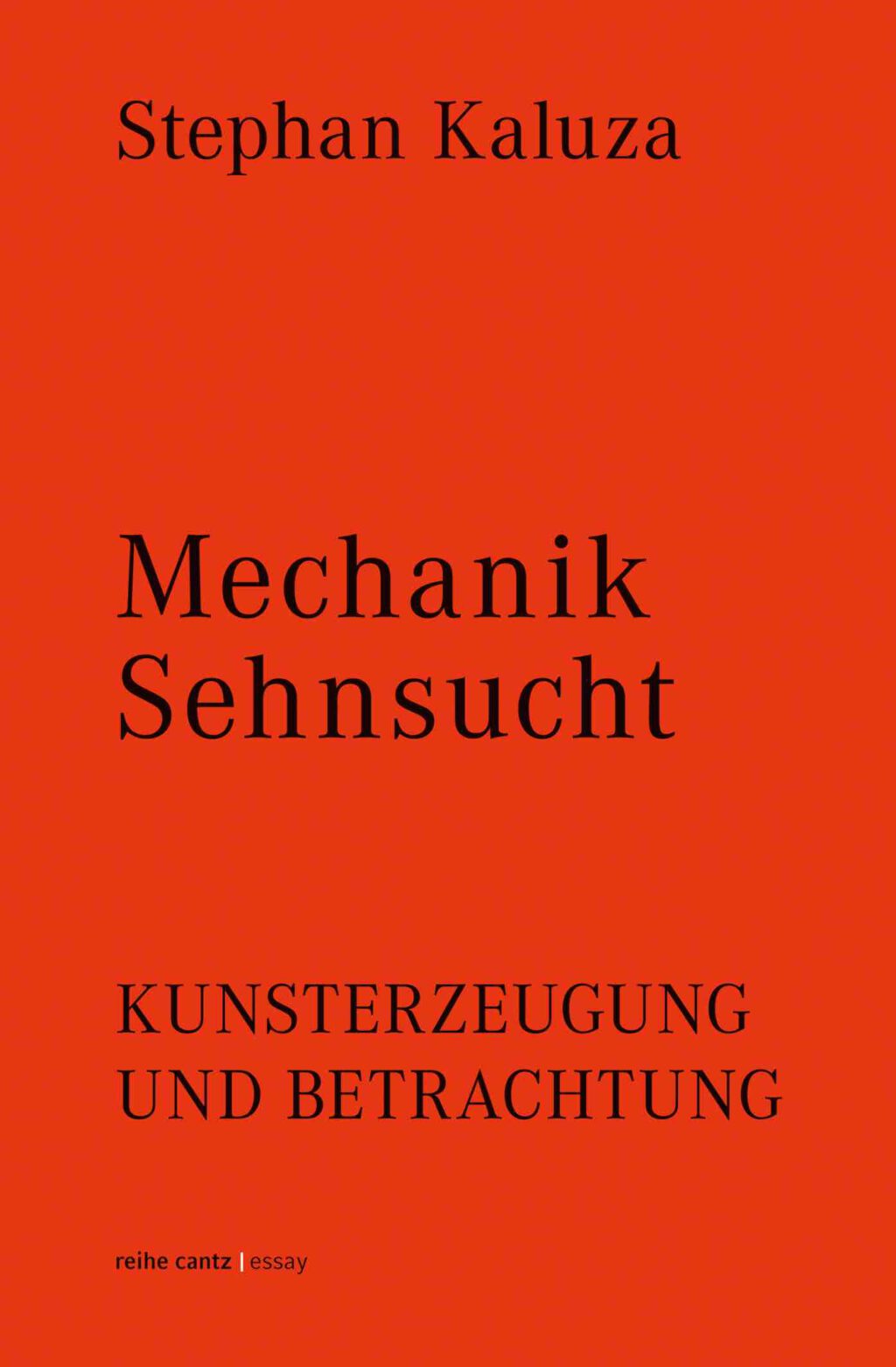
Stephan Kaluza
Mechanik Sehnsucht. Kunsterzeugung und Betrachtung14€ Add to cartUngewohnte Antworten aus der Sicht des Kunsterzeugers
Die Frage, was Kunst ist und wie sie entsteht, wird gerne von denen beantwortet, die sie selbst nicht erzeugen. Die Betrachtung und Interpretation steht im Vordergrund und damit eine wissenschaftliche Distanz zur Kunst. Es gibt aber durchaus die Eigen-Betrachtung derer, die Kunst aktiv herstellen und naturgemäß einen inneren Blick auf die prozessualen Bedingungen haben, die überhaupt erst das entstehen lassen, was anschließend betrachtet und beurteilt wird. Diese Sichtweise ist nicht zwangsläufig identisch mit der von außen. Nicht die Interpretation oder eine deduktive Schlüssigkeit steht hier im Vordergrund, sondern ein ableitender und besonders ein schöpferischer Sinn, der sich aus dem Prozess des Kunstherstellens von selbst ergibt.
Die Arbeiten von Stephan Kaluza (geb. 1964 in Bad Iburg, lebt und arbeitet in Düsseldorf) wurden unter anderem im Ludwig Museum Koblenz, im State Contemporary Art Museum, Seoul, in der Kunsthalle Osnabrück, im Palacete des Artes Rodin, Salvador, im Museum on the Seam, Jerusalem, sowie in der KAI 10 | Arthena Foundation, Düsseldorf, ausgestellt.
-

Michael Williams
Make Plans God Applauds42€ Add to cartMichael Williams (b. Doylestown, Pa., U.S., 1978; lives and works in Los Angeles, Ca.) is known for paintings whose source materials have been subjected to both analog and digital processes in an effort to render the fragmented nature of our existence today. During the lockdown, he created six large-format collage paintings. To make these modern history paintings, he mounted paper printouts on canvases and reworked the pictures with paint. They are, in short, classic collages, as in the exhilarating days of DADA, when the photographic image from newspapers first transmigrated into art. Michael Williams studied fine arts at Washington University, St. Louis, and has exhibited widely, including at the Wiener Secession, Vienna, and the Museum of Modern Art, New York.
-

Olaf Breuning
Paintings37€ Add to cartThe multimedia artist Olaf Breuning (b. Schaffhausen, Switzerland, 1970; lives and works in Upstate New York) has built a multifaceted oeuvre in installation art, photography, video, sculpture, drawing, and performance that questions contemporary reality. In a recent series of paintings, he playfully grapples with pressing concerns such as global warming. Like his earlier work, the new ensemble manifests his unorthodox approach. Breuning devised a unique painterly technique involving large-format wooden stamps with which he presses paint onto the canvas. The result is unconventional and fresh.
The publication—the first book dedicated exclusively to Breuning’s paintings—presents two dozen pictures as well documentation of the production process in the form of wooden stamps and sculptures. A dialogue between Katharina Beisiegel, director of the Kirchner Museum, Davos, and Gianni Jetzer, designated director of the Kunstmuseum St. Gallen, delves into parallels and differences between the oeuvres of Ernst Ludwig Kirchner and Olaf Breuning.
Breuning trained as a photographer in Winterthur from 1988 until 1993 and completed a master class in photography from 1992 until 1995. In 1995–1996, he was enrolled in a postgraduate program at today’s Zurich University of the Arts. He has had solo exhibitions at the NRW-Forum, Düsseldorf; the Palais de Tokyo, Paris; the Chisenhale Gallery, London; and the Zentrum Paul Klee, Berne. He participated in the 2008 Whitney Biennial and has had work in group exhibitions at the Museum of Modern Art, New York; the Centre Pompidou, Paris; the Haus der Kunst, Munich; Kunsthalle Zürich; the Walker Art Center, Minneapolis; the Jeu de Paume, Paris; the KW Institute for Contemporary Art, Berlin; the Whitechapel Gallery, London; and the Mori Art Museum, Tokyo.
-

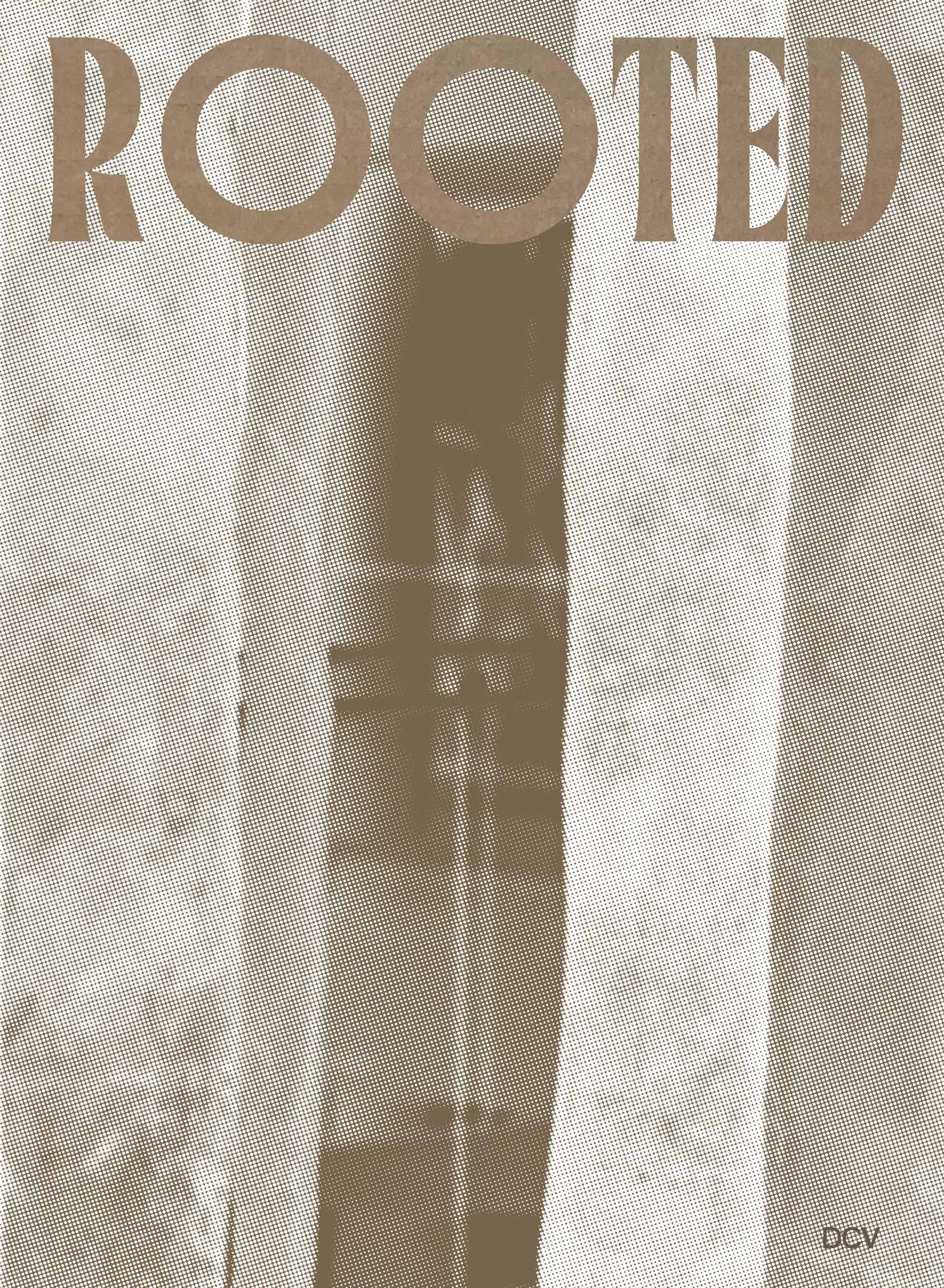
Rooted
Female Brazilian Artists28€ Add to cartThe book Rooted. Female Brazilian Artists, accompanies the eponymous exhibition at Brainlab/Munich, which is open until the end of September 2025. The works of the 16 artists come from the collection of Sergio Linhares and Stefan Vilsmeier. The collectors present this selection hoping to illuminate important and difficult themes such as, among others, discrimination, displacement, and violence but also to remind of our shared rootedness in nature. “Art has no obligation to comfort us; it can challenge, disrupt and remind us that our coexistence is fragile.” The volume shows installation views along with close-ups of the individual works and it includes short texts for each artist along with an essay by curator Tereza de Arruda.
Artists: Marlene Almeida, Azuhli (Luiza Diogo Veras), Tarsila do Amaral, Beatrice Arraes, Carmezia Emiliano, Sonia Gomes, Iêda Jardim, Lucia Laguna, Laura Lima, Rosilene Luduvico, Rosana Paulino, Solange Pessoa, Paula Siebra, Luzia Simons, Nádia Taquary, Alexsandra Ribeiro, Larissa de Souza
-

What is Vienna Actionism?
50€ Add to cartBlows were dealt. An artist exposed and cut himself, others urinated in glasses, daubed themselves with dirt, and masturbated over the Austrian flag. Meanwhile, music was playing, including the national anthem; someone read pornographic writings. Vienna in the late 1960s: what had started in the artists’ homes and studios was now brough out on the grand stage, and taboos were broken in full view of the public.
The Vienna Actionism Museum’s first publication is dedicated to the idea of Vienna Actionism in the dynamic context of abstract realism, Fluxus, and the international Happening scene. The book relates the story of one of art history’s most influential art movements, spearheaded by the Actionists Günter Brus and Otto Muehl, Hermann Nitsch and Rudolf Schwarzkogler.
-

schneider+schumacher
39€ Add to cartA Review and Prospect of the Work of the Frankfurt‑based Architectural Office on the Occasion of its Thirtieth Anniversary
schneider+schumacher is an internationally operating team of architects with headquarters in Frankfurt am Main. On the occasion of its 30th anniversary they present a book in the shape of a red box, whose chapters “Beauty,” “Endurance,” “Curiosity,” “Land Art,” “Integrating,” “Transitions,” and “Made in Germany” cover issues and values that have determined their work since its founding. Renowned authors shed light on the respective concept and its significance for the history of schneider+schumacher, while the office’s works are presented in large-format illustrations – including the extension to the Städel Museum in Frankfurt, the Siegerland motorway church, and the new pavilion of the Frankfurt Book Fair. In architectural practice, it becomes clear how Till Schneider and Michael Schumacher and their team implement their thematic and theoretical orientation into their working methods, design approach, and understanding of architecture.
-

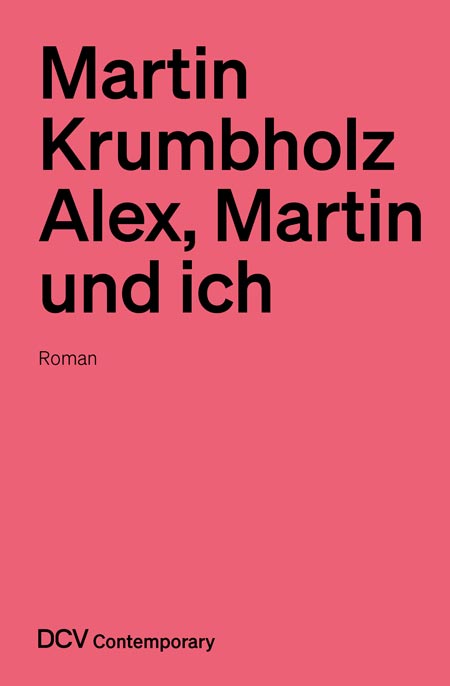
Martin Krumbholz
Alex, Martin und Ich14€ Add to cart“The Vocation of Saint Matthew”: that is the title that Martin Krug has chosen for his novella, after Caravaggio’s iconic painting at the Church of San Luigi degli Francesi in Rome. The irony is unmistakable—Martin, the protagonist of his narrative, hesitates to accept a promotion: he has been offered the job of his boss, for whose wife, Marion, he has fallen on a shared vacation. Yet Martin’s friend, whom he has asked for advice, proposes a different title: Ghost Story—a key element of the plot is the mysterious Alexander’s disappearance, seemingly forever, in the sea …
Martin’s friend and interlocutor, the novel’s first-person narrator, embeds the novella in a narrative framework that mirrors its motifs: love as passion, eros and sex, loyalty and betrayal, manliness and chivalry, art, film, and music. Alberto Moravia’s novel Contempt, glamorously adapted for the silver screen by Jean-Luc Godard, is reread and discussed as a MeToo story.
Martin Krumbholz (b. Wuppertal-Elberfeld, Germany, 1954; lives and works in Düsseldorf) is a writer and theater critic. His first novel, Eine kleine Passion, came out in 2013.
-

Jan Zöller
10€ Add to cartJan Zöller’s (b. Haslach, 1992; lives and works in Karlsruhe) art has the aura of a jerry-rigged, cosmic, comedic theater. Flames gutter, pant legs and elbows dance, run, and go up in fire. Wells, basins, and tubs are central motifs, symbolizing communal settings, but also the circulation of vital energies, of human and economic interconnections. Zöller’s paintings take fractured or antiquated systems, today’s art world among them, and reforge them into something new. In painting, he reflects on what being an artist means to him, driven by an interest less in a dialogue with art history or other contemporary painters than in the psychosocial relationships and conditions that inform his work. His paintings, sculptures, and installations probe the discrepancy between economic production and the spiritual and magical dimension of art.
-

Considering Finland
14€ Add to cartContemporary Art from Finland
With fourteen artistic positions from the fields of photography, video, and installation, Considering Finland offers fascinating insight into the Finnish art scene. The themes of the artists from one of the least populated and most densely forested countries in Europe is the relationship between humankind and nature, as well as the political, social, and economic implications of this. Their works point to cultural dispositions and standardizations of the individual within a society based on unattainable maxims, such as permanent success, lasting recognition, and limitless growth. Pictorial traditions, geographical structures, and socio-political and infrastructural factors are the bases of a mental construction that summarizes their artistic work under a national heading. With works by Kenneth Bamberg, Elina Brotherus, Ville Lenkkeri, Aurora Reinhard, Iiu Susiraja, Nestori Syrjälä, and Pilvi Takala.
- English edition not available anymore

YAEL BARTANA
THE BOOK OF MALKA GERMANIARead moreShe Is Hope. She Is the Leader. She Is the Messiah. She Is History. She Is Fake.
The video artist Yael Bartana (b. Kfar Yehezkel, Israel, 1970; lives and works in Amsterdam and Berlin) makes work that explores the visual language of identity and the politics of commemoration. The critical scrutiny of collective expectations of political or religious salvation is a central concern in her art. In the video installation Malka Germania—Hebrew for “Queen Germany”—Bartana creates alternative realities from the German-Jewish past and present that bring scenes of the collective unconscious to light. The publication follows the epiphany of Malka Germania, a female redeemer figure, in five chapters whose layout is modeled on that of the Talmud, the central text in Rabbinical Judaism. This organization reflects the polyphonic complexity, rich nuance, and ambivalence that the work casts into visuals and underscores that there is no simple answer. The book includes an interview with the artist and contributions by Sami Berdugo, Christina von Braun, Michael Brenner, Max Czollek, and others. It is published on occasion of the exhibition Yael Bartana—Redemption Now at the Jewish Museum Berlin.
Yael Bartana studied at the Bezalel Academy of Arts and Design, Jerusalem, the School of Visual Arts, New York, and the Rijksakademie van beeldende kunsten, Amsterdam. Her work is held by collections all over the world and has been presented in solo exhibitions at venues including the Stedelijk Museum, Amsterdam, the Pérez Art Museum Miami, and the Moderna Museet, Malmö.
Click here for the German edition.
-

Anders Goldfarb
Passed Remains35€ Add to cartAbandoned Gas Stations and Burned-Out Buildings
In 1986 when Anders Goldfarb (b. 1954 in Brooklyn, lived and worked in Brooklyn, NY) moved to Greenpoint, he was a young photographer with a master of fine arts degree from State University of New York at New Paltz. In moving to Williamsburg, he joined a growing number of young artists seeking the low rents of what was then a declining neighborhood of light industrial buildings and working-class residences. Working with black and white film, and a medium format Rolleiflex camera, Goldfarb began photographing in 1987 in Williamsburg and Greenpoint, riding his bike around the area and looking for the peculiar beauty of sidings, peeling paint and razor wire. Goldfarb’s photographs provide a valuable historical record of these neighborhoods prior to their demolition and gentrification. His subjects are metaphors for loss and vulnerability and distill moments in time that are destined for demise.
-

Barthélémy Toguo
10€ Add to cartBarthélémy Toguo’s art is a call for community and love, but there is nothing naïve about it. His paintings, graphic art, sculptures, performances, and installations explicitly grapple with colonialism, migration, and inequality; he directs our attention to the devastations wrought by humans, to the slow deaths of nature and cultures. But he does not dwell in this abyss. He aspires to something greater: to create work that establishes non-hierarchical connections; to build, as he puts it, a “world of solidarity and generosity” that knows neither ego nor identity, a community of all forms of life that flourish and pass away so that new living beings can sprout from their remains—Endless Blossoms. His choice of words and the aesthetic of the works gathered in this catalogue suggest that he is not alone in this undertaking. He stands with Ellen Gallagher, Wangechi Mutu, Louise Bourgeois, Marlene Dumas, and Kiki Smith. With them and with all of us, Toguo envisions a colorful future, a universe of exuberant energy and joie de vivre.
-
Simone Haack – Untangling the Strands / Démêler les Fils
24€ Add to cartSimone Haack’s (b. Rotenburg/Wümme, 1978; lives in Berlin) most recent body of work delves into the theme of hair as a parameter of identity straddling the division between nature and culture. Her second publication with DCV is released on the occasion of two exhibitions: Untangling the Strands at Berlin’s Abguss-Sammlung Antiker Plastik, a collection of casts of ancient sculpture, which are seen in dialogue with her hair pictures; and Helix of Realism at Galerie Droste, Paris, which is part of the official program of events around the grand Surrealism exhibition held at the Centre Pompidou in celebration of the Surrealist Manifesto’s centennial. The new book is the first to shed light on the aspect of the surreal in the artist’s oeuvre and uncovers a major source of her visual inspiration: the dream diaries that Haack has kept since she was seventeen and the interest in the unconscious they reflect. It is above all the logic of the dream as well as feelings and moods that inform her paintings.
Haack: “My goal is to use the means of realism to visualize what cannot be seen. To get into an automatism that lets the unconscious speak in order to infuse the pictures with a life of their own. To shed light on the domain where the myths originate.”
-

Philip Loersch
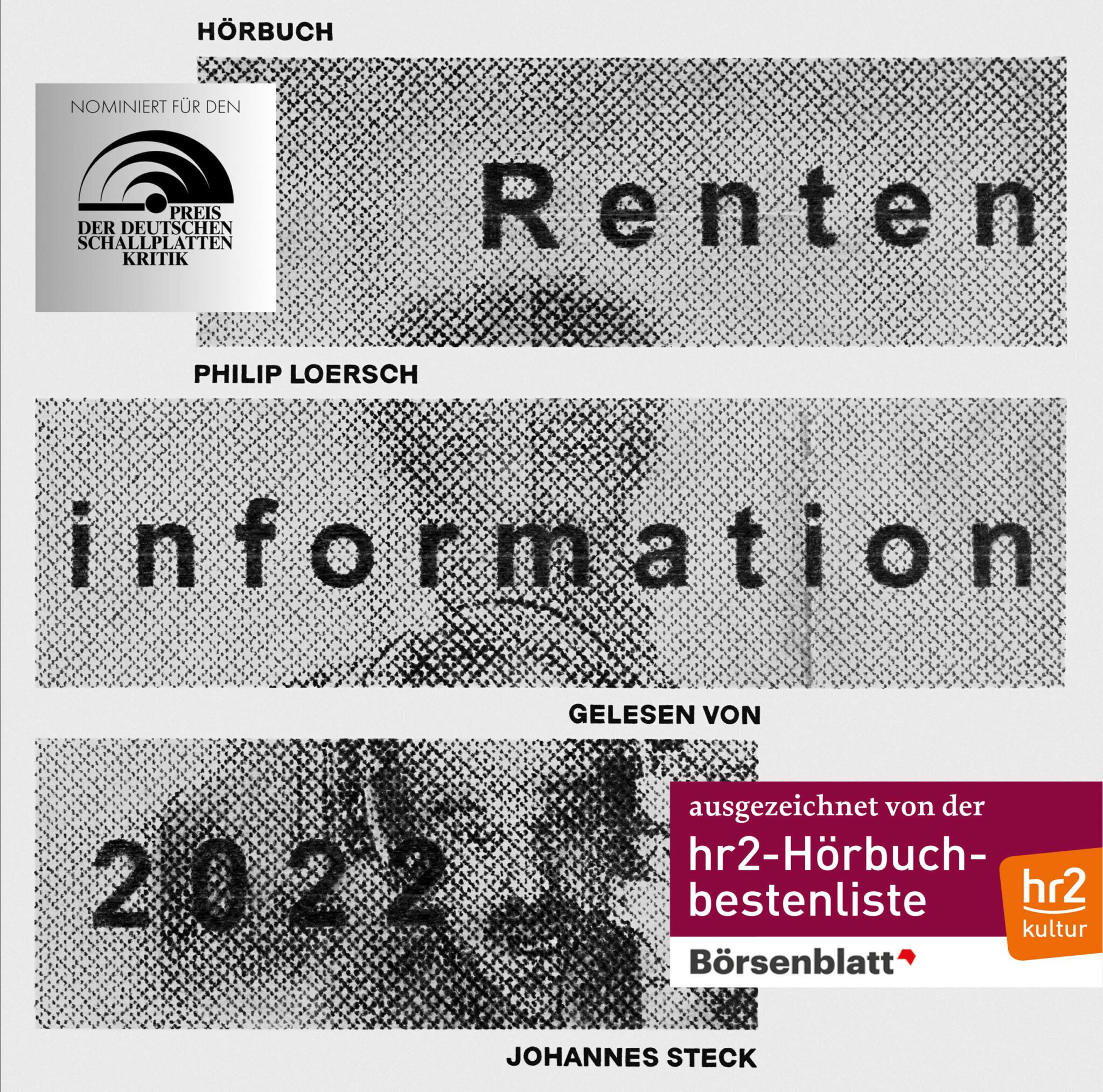
Renteninformation 202230€ Add to cartA satirical audiobook, read by Johannes Steck
with free download link on the inside
You’ve read right, and you’re going to hear it: a bureaucratic document—we’re all familiar with it, for a new one arrives every year—is the subject of this inspired collaboration between the graphic artist Philip Loersch and the virtuoso vocalist Johannes Steck.
The “Renteninformation”—an official letter on cheap paper informing the recipient about their expected future retirement benefits—makes many cultural workers, and others, crack up or break out in tears: arriving unexpectedly, it launches us on an emotional roller coaster between excitement, fascination, resignation, and sheer madness.
The manuscript for this audiobook is Loersch’s actual Renteninformation for 2022. Its intonation is the culmination of a series of works the artist has pursued since 2016. Every year, he has produced a naturalist colored-pencil drawing of his Renteninformation, embedding it in idyllic scenes—in the garden on a summer afternoon, amid autumn foliage, or on a frozen lake, delicately and accurately executed down to the smallest leaf of grass and the tiniest letter.
“Renteninformation 2022” is the ideal gift for all vinyl lovers who need to close a “pension gap” in their collections and a stunning audio experience that redefines what the satire of reality itself and conceptual art can do.
Philip Loersch (b. Aachen, 1980) is best known for his unconventional drawings. His works combine painstaking imitations of printed writing with hyperrealist colored-pencil drawings; for instance, he transfers pages from encyclopedias not only onto paper, but also onto three-dimensional objects such as soapstone. His art has been exhibited at renowned institutions such as Kunsthaus Zürich, Museum Kunstpalast Düsseldorf, and Hamburger Kunsthalle. He has won numerous fellowships and awards, including the Kunstpreis Berlin für Bildende Kunst, and helped initiate the exhibition series “Drawing Wow.”
Johannes Steck (b. Würzburg, 1966) is one of Germany’s best-known audiobook narrators, having sold over four million copies, including of books by Simon Beckett and Ken Follett, in a three-decade career. Television viewers also know his voice from trailers on Kabel 1 and DMAX and documentaries on ZDF, BR, and Sky. His work has garnered awards including the 2012 HörKules.
-

Lars Breuer
The Love of the Gods32€ Add to cartThe art of Lars Breuer (b. Aachen, 1974; lives and works in Düsseldorf and Cologne) is set apart by its broad spectrum of systems of reference. In his large-format installations, text-based works in his own typography draw connections to literature and art history. They are complemented by figurative and abstract paintings and photographs.
In The Love of the Gods, Breuer presents 104 C-prints of photographs for which he pointed the camera’s lens into the barrels of disused rifles, pistoles, revolvers, and cannons. The pictures were taken on the artist’s travels to Athens, Bangkok, Buenos Aires, Copenhagen, Leverkusen, Ingolstadt, Melbourne, New York, Oslo, and Phnom Penh, in museums, palaces, and public squares. Breuer’s conceptual and meticulously sober-minded approach yields almost abstract compositions showing nothing but the round muzzles and the dark interiors of the weapons on a deep-black ground. We see only a ring-shaped ornament until it dawns on us that it is part of a lethal implement. A cruel constant of human existence stares us in the face: humans behind these weapons were perpetrators, humans in front of these weapons were victims. Lars Breuer’s turn the spotlight on what the aura of the ornaments conceals: they have wrought death.
-

Martin Noël
paintprintpaint35€ Add to cartA Comprehensive Overview on the tenth Anniversary of the Death of Martin Noël
Martin Noël (b. 1956, Berlin; d. 2010, Bonn) was a German painter, draftsman, and printmaker. He was one of the formative innovators of the long-neglected techniques of linocut and woodcut. With his large-format works on paper, he created a position for himself in contemporary art that is as much respected as it is independent. On the occasion of the tenth anniversary of the artist’s death, this volume presents a comprehensive overview of his work from the mid-1980s to the last year of his life in 2010. Thirty-five exceptional works document Noël’s path from his early years as a painter, via the middle phase marked by printing blocks, linocuts and woodcuts, up to his late paintings.
Martin Noël studied Graphics and Painting at the Rheinische Fachhochschule Köln, Cologne. His works are included in, among others, the Federal Collection of Contemporary Art, the Kunstsammlungen Chemnitz, and the collection of the Museum Pfalzgalerie Kaiserslautern.
-

Claudia Fährenkemper
Kontextforschung / context research 1980–202268€ Add to cartClaudia Fährenkemper (b. Castrop-Rauxel, 1959; lives in Steinheim/Westfalen) photographs enormous as well as minuscule objects using scanning electron microscopes to produce images that are as fascinating as they are disconcerting. The play with extreme scales yields fantastic visual worlds: American desert and canyon landscapes, the giant industrial machinery of open-pit mines in Germany, insects, plant seeds, crystals, and plankton, plus historic armaments from Europe and Japan. The lavishly designed book is the first to gather works from her entire oeuvre, which now spans four decades. Surveying the most important of Fährenkemper’s conceptual series, it reveals unexpected interconnections between disparate motifs on vastly different scales from nature, technology, science, and cultural history.
Claudia Fährenkemper studied at Fachhochschule Köln, today’s Cologne University of Applied Sciences, where Arno Jansen was her teacher, and with Bernd and Hilla Becher and Nan Hoover at the Düsseldorf Academy of Fine Arts. Her photographs are held by numerous museum collections, including at the Kunstmuseum Bonn, the National Gallery of Canada, and the Margulies Collection, Miami.
-

Gabriel Vormstein
40€ Add to cartGabriel Vormstein (b. Konstanz, 1974; lives and works in Berlin) explores themes of impermanence, temporality, and futility through a unique visual language. He paints using newspapers as a canvas, and creates installations out of tree branches and other organic matter. These “poor” materials subvert a prevailing notion in Western culture that an artwork should be eternally preserved. Through the adaptation of various styles and symbols, Vormstein’s paintings likewise speak to the transience of art historical and cultural trends. Over 300 pages, this richly illustrated book provides an overview of Vormstein’s oeuvre over the past two decades, while also offering an atmospheric glimpse into the artist’s source material and working methods. The publication is enriched by an essay by Gean Moreno, who characterizes Vormstein’s work as follows: “Gabriel Vormstein’s paintings and sculptures (…) announce their condition as withering artifacts, as if no other manner of existing was available to them (and maybe to us, as well).”
- Out of stock

Hans Karl Zeisel
Hundred and more34,95€ Read morePossibilities of concrete art
What is possible without turning away from the cocrete? In the Bauhaus tradition, the typographer, graphic artist, designer and author Hans Karl Zeisel opens up countless design options with basic forms. His wooden cuboids demand a humorous approach to sculpture. They are creativity training, study tools and meditation game all in once. A playful experiment that reveals the diversity of concrete art.