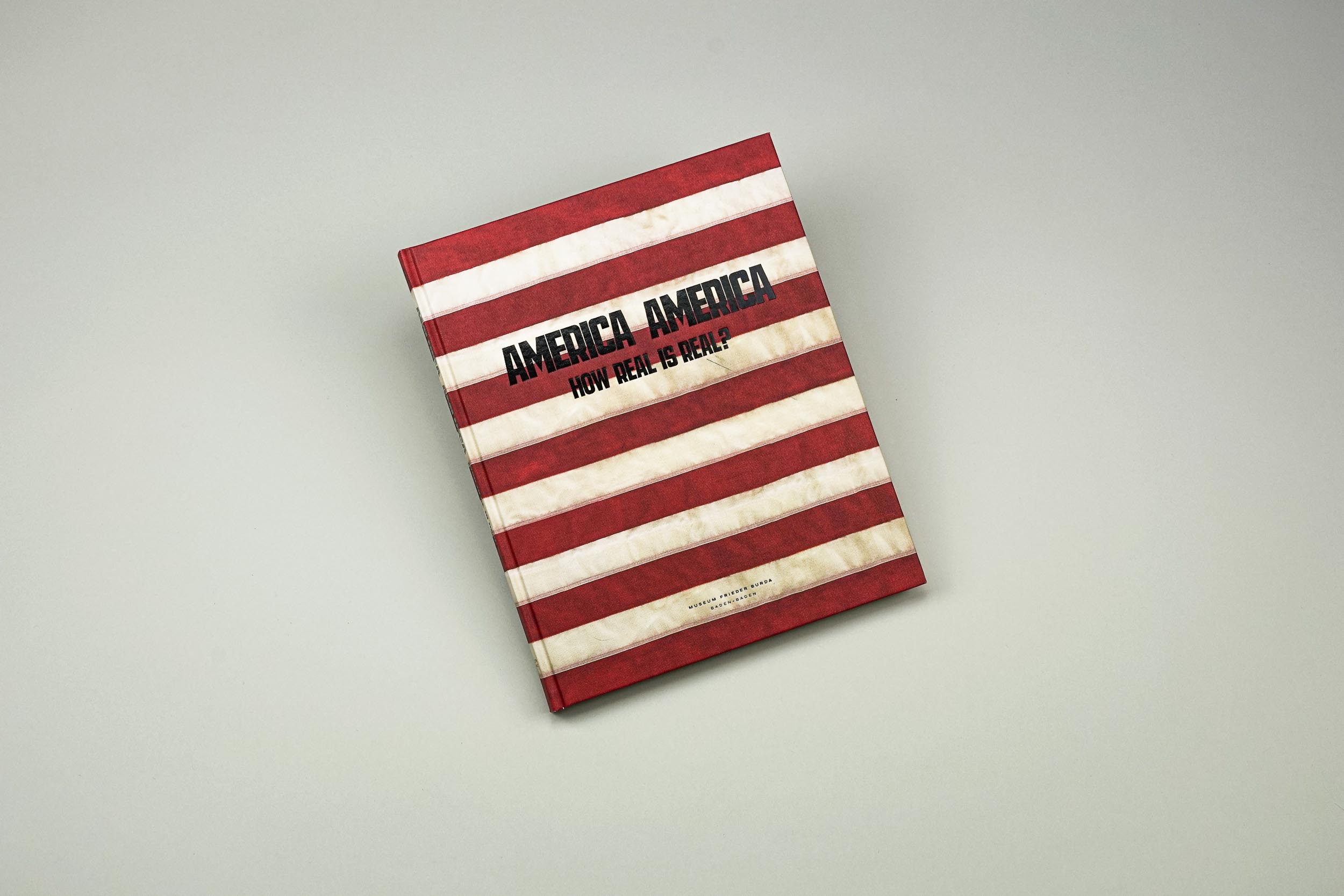
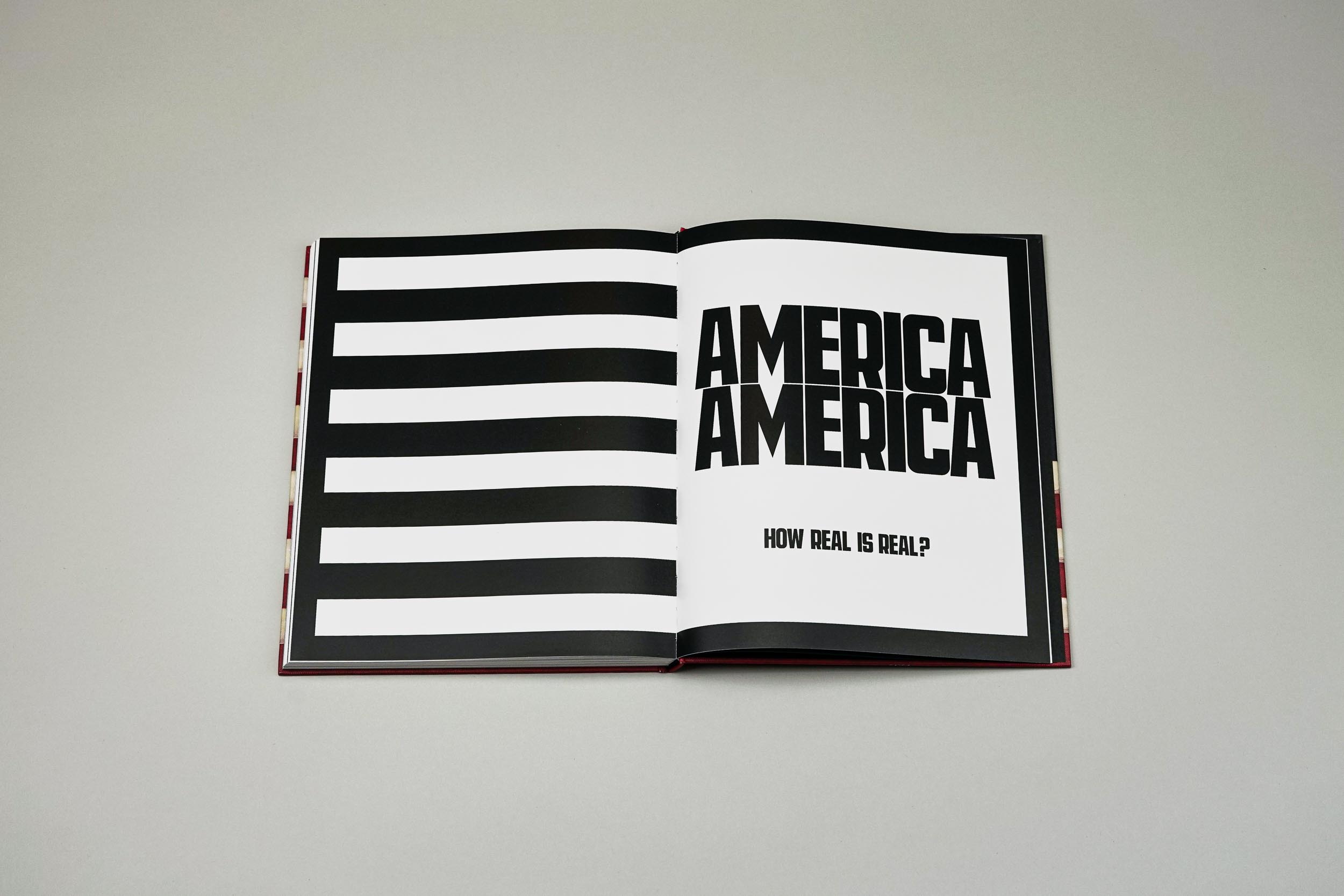
America! America!
How real is real?
 | |
|---|---|
| Editor(s) | Stiftung Frieder Burda, Helmut Friedel |
| Author(s) | Brigitte von Stebut, Christiane Righetti, Christoph Neuberger, Helmut Friedel, Heribert Pranti, Judith Irrgang |
| Design | BUREAU Mario Lombardo |
| Size | 23 x 28 cm |
| Pages | 180 |
| Illustrations | 150 |
| Cover | Hardcover |
| Language(s) | German |
| ISBN | 978-3-942924-28-3 |
Myths, Projections, Aspirations
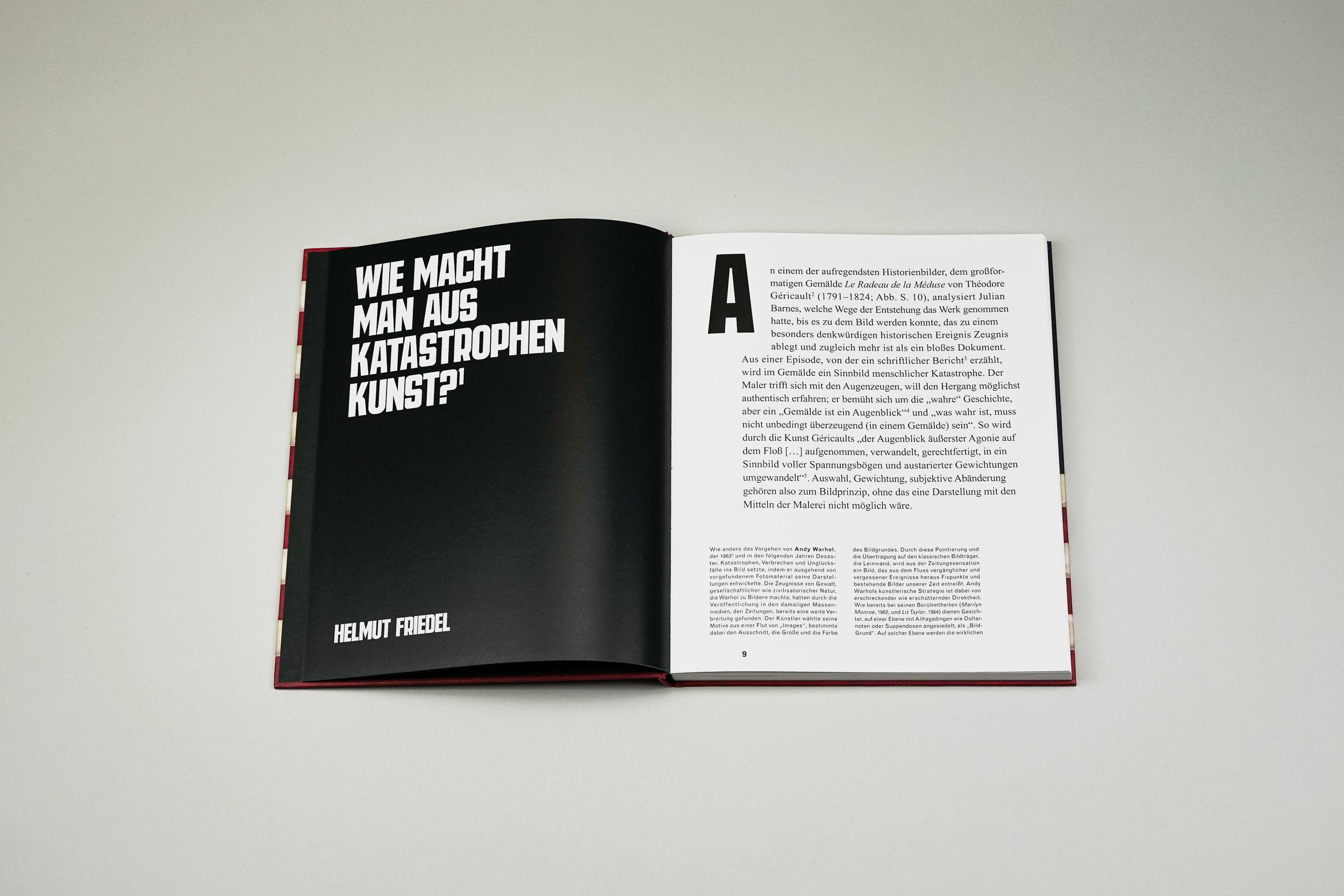
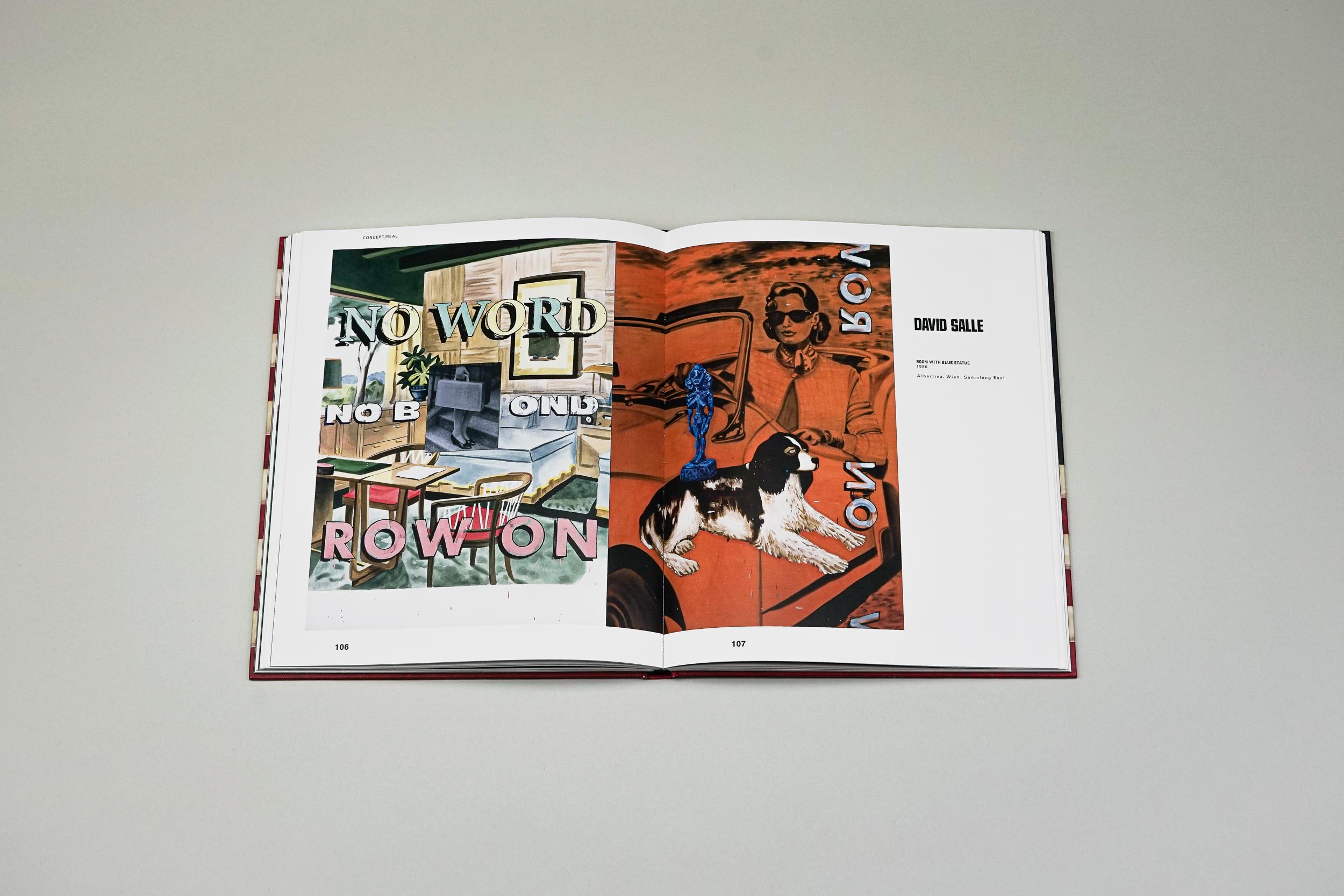
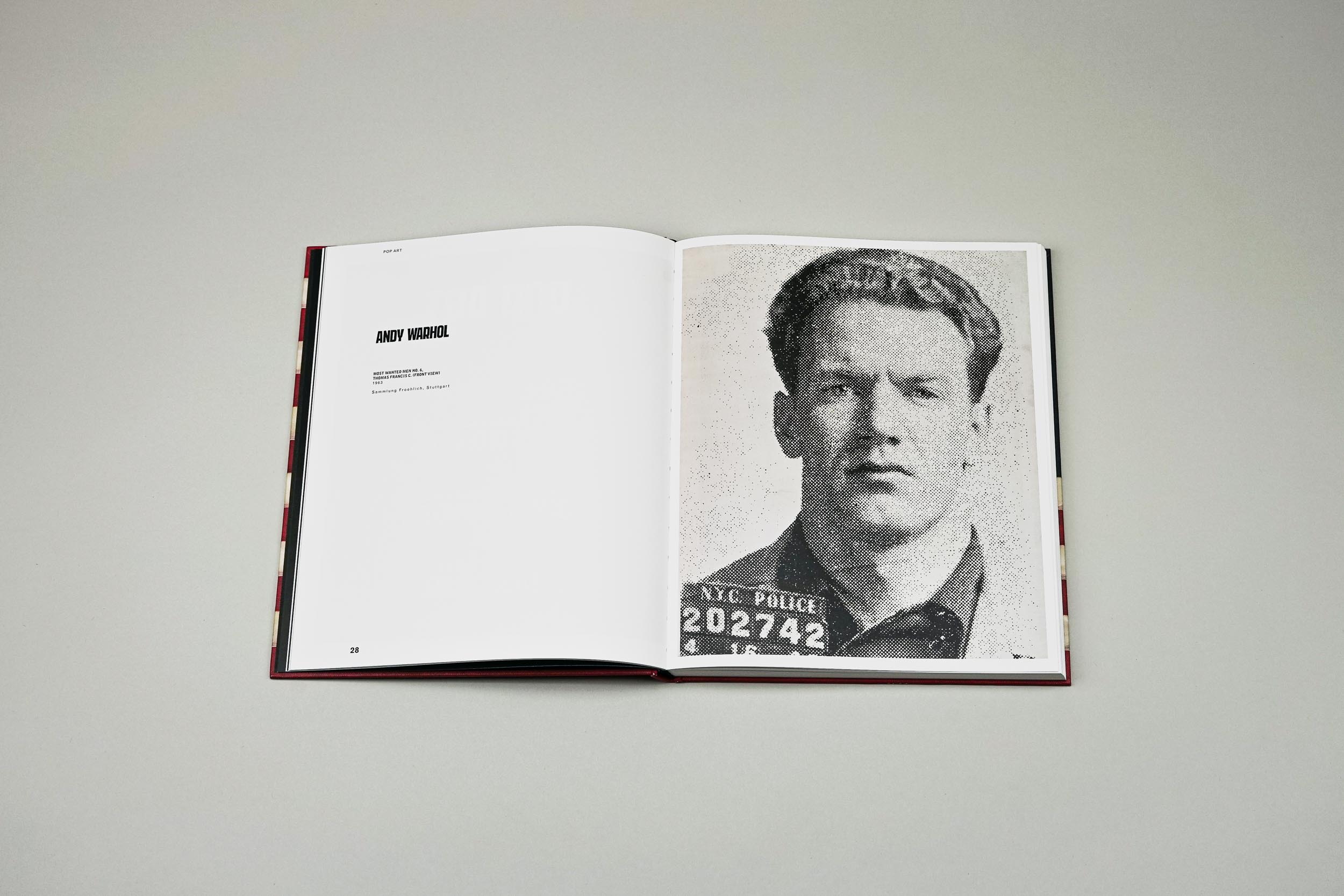
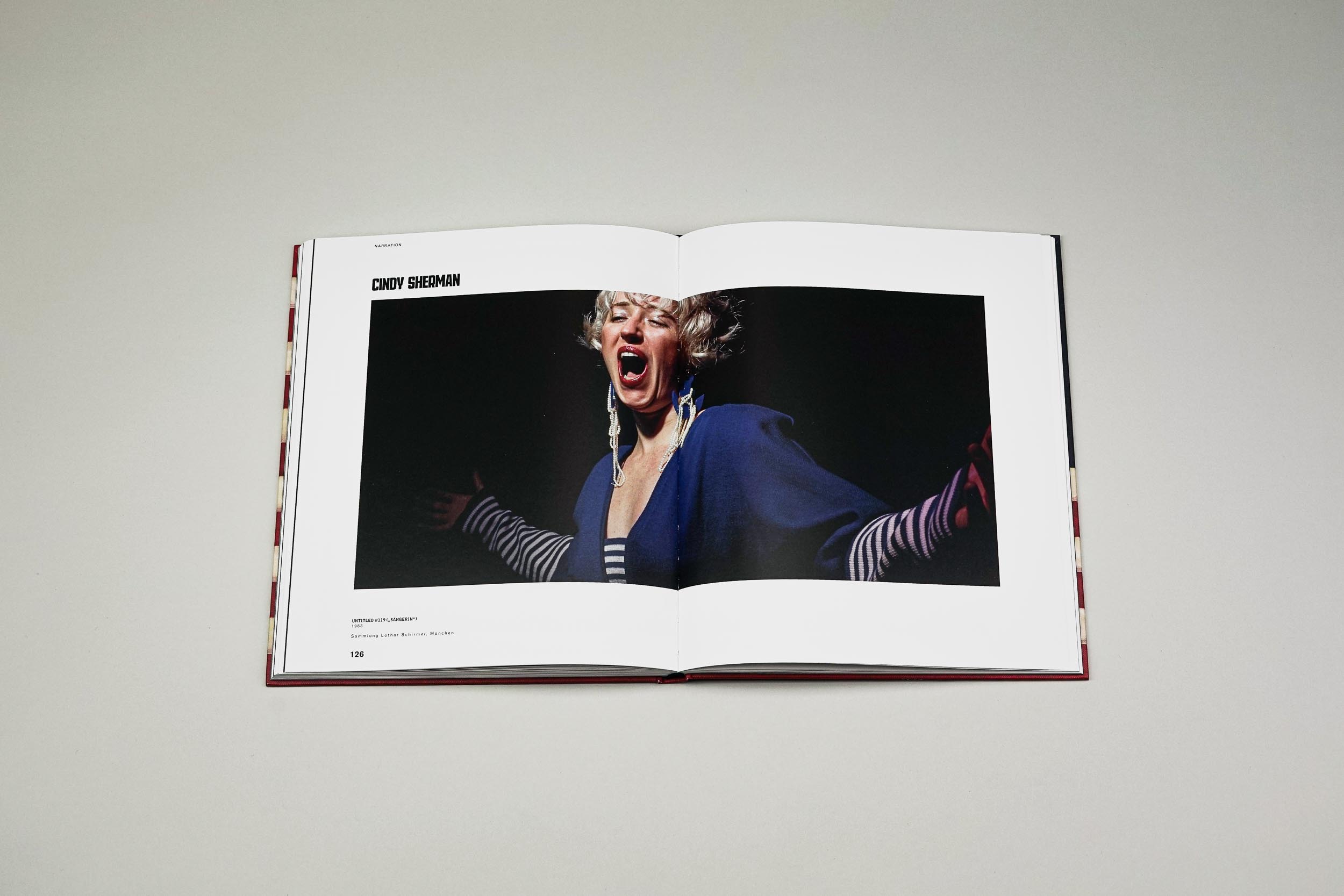
In times of fake news and alternative facts it is becoming even more clear how the American Dream is closely interwoven with emotional pictures and symbols. At the same time, it can be said that no other nation might have the same strong awareness of the power of images. Images of the American Way of Life, which are produced in media and entertainment, are able to consolidate existing power structures and perceptions of reality, but also question them in a radical way. The psychologically charged canvasses of Eric Fischl, the hermetic scenes of Alex Katz, the enormous film-noir-like graffiti paintings of Robert Longo dissect the dreams and fears of an insecure white middle class. Simultaneously, artists such as Jeff Wall or Cindy Sherman conquer scenes that critically reflect our media-influenced perception, becoming models for subsequent generations. By showing 70 masterpieces of US-contemporary art, the book shows how artists from the 1960s to date comment on the American reality.
More books
-

Agostino Iacurci
10€ Add to cartAgostino Iacurci’s (b. Foggia, Italy, 1986; lives and works in Berlin) paintings, sculptures, installations, and murals are based on vegetal forms and botanical subjects. Lucid compositions in radiant colors unfurl fantastical ornaments that transcend the division between figuration and abstraction and the hierarchical distinctions of applied art, design, fine art, and folk art. His central theme is the painted garden, in which he stages plants, humans, architecture, geometry, and decoration in a fashionably theatrical landscape. In Iacurci, the interpenetration of nature and civilization is real, integrating mythological motifs from across the history of art and culture, from antiquity to futurism and postmodernism, into his singular style.
Agostino Iacurci studied fine arts at the Accademia di Belle Arti in Rome. Since 2009, he has realized numerous large-format murals and installations for public and private institutions. He has also worked with international brands including Apple, Adidas, Hermès, and Starbucks.
-

Me, Family
Portrait of a Young Planet40€ Add to cartA Journey Through Many Worlds
In these times of great uncertainty, the themes that surface in the works of the thirty-six international artists gathered in Me, Family are more relevant than ever. Compiled by Francesco Bonami with a nod to Edward Steichen’s historic exhibition The Family of Man, the volume paints a multifaceted portrait of humanity in the early decades of the twenty-first century. The original installation of photographs and excerpts from writers opened at the Museum of Modern Art in New York in 1955 and then went on a seven-year tour of one hundred and fifty museums all over the world. Matching the radicalism of Steichen’s conception, Me, Family presents works by contemporary artists who harness a wide range of media and genres to explore the ways in which humans today engage with their manifold coexistent histories and the diverse challenges they confront. Including reproductions of contemporary art as well as representations of social networks, fashions, information technologies, advertising, sound, music, and performances, the book captures a reality that is beautiful, dramatic, and intoxicating by turns. With writings by Roland Barthes, Francesco Bonami, Edward Steichen, and others.
With works by Lawrence Abu Hamdan, Doug Aitken, Sophia Al Maria, Yuri Ancarani, Darren Bader, Lara Baladi, Cao Fei, Cheng Ran, Clément Cogitore, István Csákány, Christian Falsnaes, Harun Farocki, Simon Fujiwara, Rainer Ganahl, Theaster Gates, Jack Goldstein, Andreas Gursky, Thomas Hirschhorn, Hassan Khan, Ga Ram Kim, Olia Lialina, Li Ming, Cristina Lucas, Karolina Markiewicz & Pascal Piron, Eva & Franco Mattes, Shirin Neshat, Philippe Parreno, Mario Pfeifer, Jon Rafman, Cindy Sherman, Marianna Simnett, Rudolf Stingel, Thomas Struth, Wolfgang Tillmans, Jordan Wolfson, Wong Ping, and Akram Zaatari.
-

Kay Rosen
NOW AND THEN35€ Add to cartKay Rosen (b. Corpus Christi, TX, 1943; lives in New York City and Gary, IN) has made art out of language since the 1970s. She garnered international acclaim with wall pieces spelling individual words, phrases, or strings of letters, often on a vast scale. Her works combine minimalist form, aesthetic force, and clever ideas in compelling ways. By modulating their arrangement and typographic and color design, the artist puts irritating twists on everyday terms and expressions. Subtle alterations often yield striking effects. Through punning, reframing, and onomatopoeic exploration, Rosen continually unearths unexpected layers of meaning. Released on occasion of the artist’s eightieth birthday, the publication presents wall pieces, paintings, drawings, prints, and video stills, inviting readers to discover or rediscover a multifaceted oeuvre that blends lightness and humor with analytical acumen in singular fashion.
Kay Rosen obtained a B.A. in linguistics, Spanish, and French at Tulane University’s Newcomb College in New Orleans, LA, in 1965. She then taught Spanish at Indiana University in Gary while attending studio classes at the School of the Art Institute of Chicago, where she subsequently taught for twenty-four years.
-

Michelle Jezierski
Simultaneous Spaces34€ Add to cartMichelle Jezierski’s (b. Berlin, 1981; lives and works in Berlin) paintings unfurl simultaneous spaces that are awash in light. Contrasts between bright and dark and muted as well as lucent hues engender a singular atmosphere characterized by depth and dynamism. The artist is as invested in the perception of these constructed spaces as in the capaciousness of natural landscapes. In her paintings, luminous colors and geometric disturbances achieve shifting balances between the extremes of order and chaos, light and shadow, interior and exterior, structure and flux. Simultaneous Spaces, the artist’s first comprehensive monograph, presents forty-five works painted between 2017 and 2022.
Michelle Jezierski studied with Tony Cragg at the Berlin University of Arts and graduated from Valérie Favre’s class in 2008. She also received a fellowship for a semester abroad at Cooper Union, New York, where she studied with Amy Sillman.
-

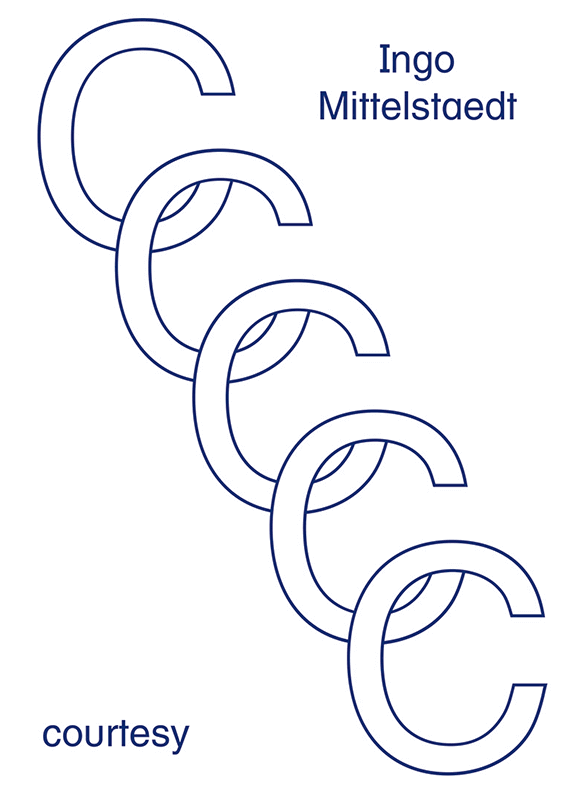
Ingo Mittelstaedt
Courtesy15€ Add to cartPerception and Comprehension in Photography
Ingo Mittelstaedt (b. 1978, Berlin; lives and works in Berlin and Hamburg) creates staged photographs, combining and contrasting them with diverse objects in expansive installations. His pictorial arrangements probe a variety of concerns and imageries that he sources from museum settings or the modes of representation in ordinary advertising brochures. Gestures of showing, pointing, bringing out, and uncovering are leitmotifs in Mittelstaedt’s canny and subtly humorous exploration of the potentials and limitations of the photographic medium.
Ingo Mittelstaedt studied fine arts at the Hochschule für Bildende Künste Braunschweig and received numerous emerging-artist awards, including the New York fellowship of the Niedersächsische Sparkassenstiftung. His work has been shown at Kunstverein Hannover, the Wilhelm-Hack-Museum, Ludwigshafen, Marta Herford, and elsewhere.
-

Räume hautnah (GERMAN)
Draiflessen Collection32€ Add to cartWe live in spaces that we shape in accordance with our own ideas. Our everyday lives leave traces in them that speak to our habits. Spaces promise shelter and belonging, but they can also instill a sense of constraint. We grow into the spaces we inhabit—and they in turn become expressions of our personalities. Conversely, spaces, depending on their architecture and location, inform our existence. RÄUME HAUTNAH gathers works of art that, rather than conceiving of the human sphere and the spatial domain as separate, comprehend them in their complex entanglements: in bodily experience, emotional dependency, or the instinctive need for protection. An essay by Olesja Nein, the project’s curator, offers an introduction to the exhibition and takes the reader on a tour, describing each artist’s space of activity and supplying helpful information. Philipp Zitzlsperger, meanwhile, zooms in on a key aspect of the art in the exhibition, the imprint as an artistic technique with a distinctive aura, and illuminates its origins and significance since the dawn of modernism.
Artists: Absalon, Shannon Bool, Heidi Bucher, Eileen Gray, Do Ho Suh, Mary Mattingly, Tracey Snelling, Francesca Woodman
-

Werner Schmidt
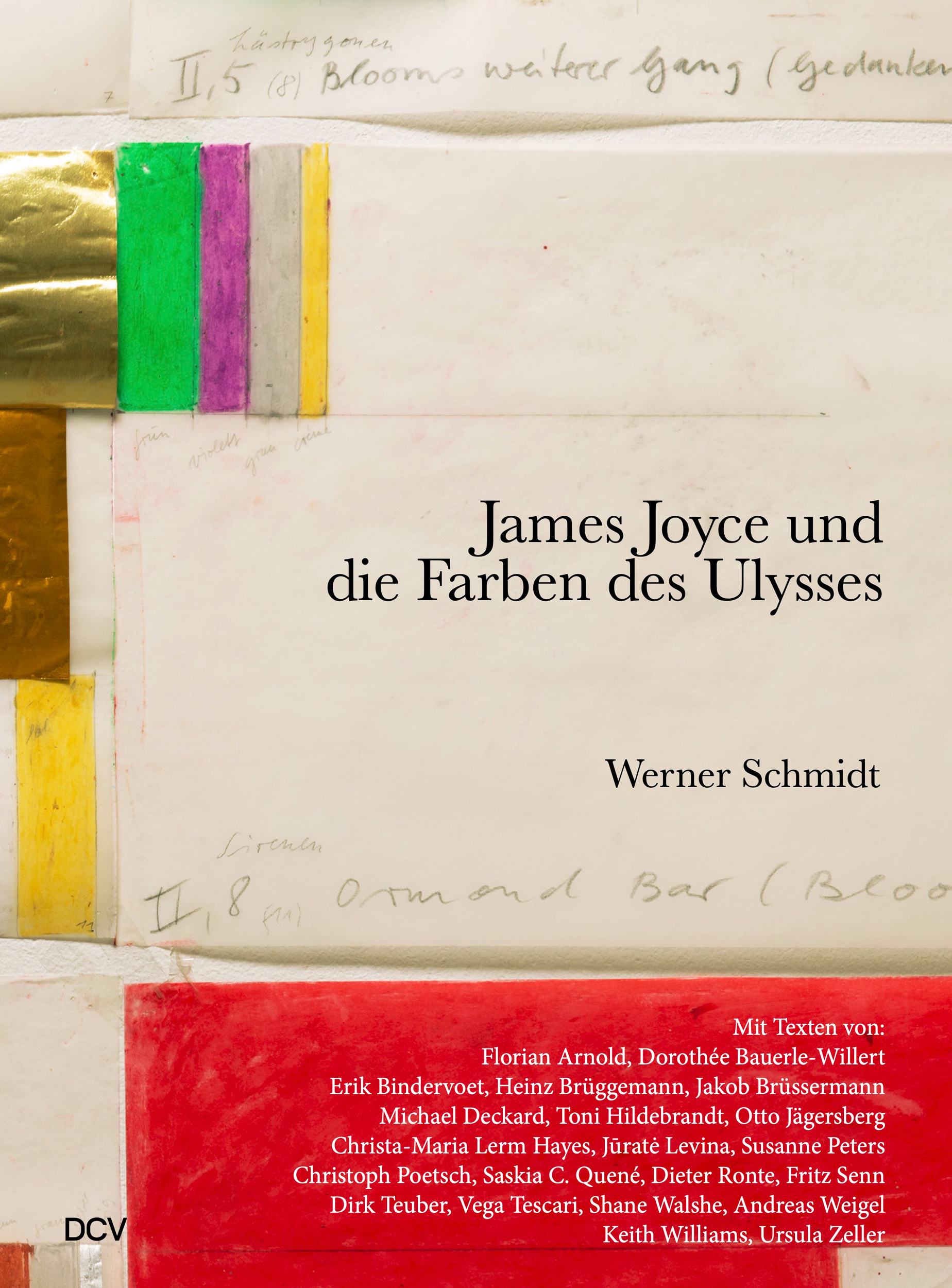
James Joyce und die Farben des Ulysses59€ Add to cartThis imposing volume is the fruit of the artist Werner Schmidt’s decades-long immersion in the preeminent literary monument of the twentieth century: James Joyce’s Ulysses.
What began as a personal reader’s voyage now attains definite form in an eloquently colorful, interdisciplinary and polyphonic tribute—a work between literary study, theory of color, visual art, and reflection on language.
In the book’s first part, Schmidt analyzes and visualizes the use of colors in Ulysses in unique chromatic diagrams and coded color stripes that were literally painted on the walls in exhibitions. They are complemented by a series of photographs taken in Dublin, the novel’s setting, and accompanied by probing meditations on literary and linguistic facets and aspects of politics and the history of religion in the Joycean universe.
The second part gathers the voices of twenty renowned Joyce scholars, who, in five thematically organized chapters, share their perspectives on the color, texture, structure, and effect of Ulysses.
A feast for all who revere Joyce—and a gift of anyone who would not just read but truly wrap their mind around literature in its boldest and most luminous incarnation.
With texts by Florian Arnold, Dorothée Bauerle-Willert, Erik Bindervoet, Heinz Brüggemann, Jakob Brüssermann, Michael Deckard, Toni Hildebrandt, Otto Jägersberg, Christa-Maria Lerm Hayes, Jūratė Levina, Susanne Peters, Christoph Poetsch, Saskia C. Quené, Dieter Ronte, Werner Schmidt, Fritz Senn, Dirk Teuber, Vega Tescari, Shane Walshe, Andreas Weigel, Keith Williams, Ursula Zeller
-

Philip Loersch
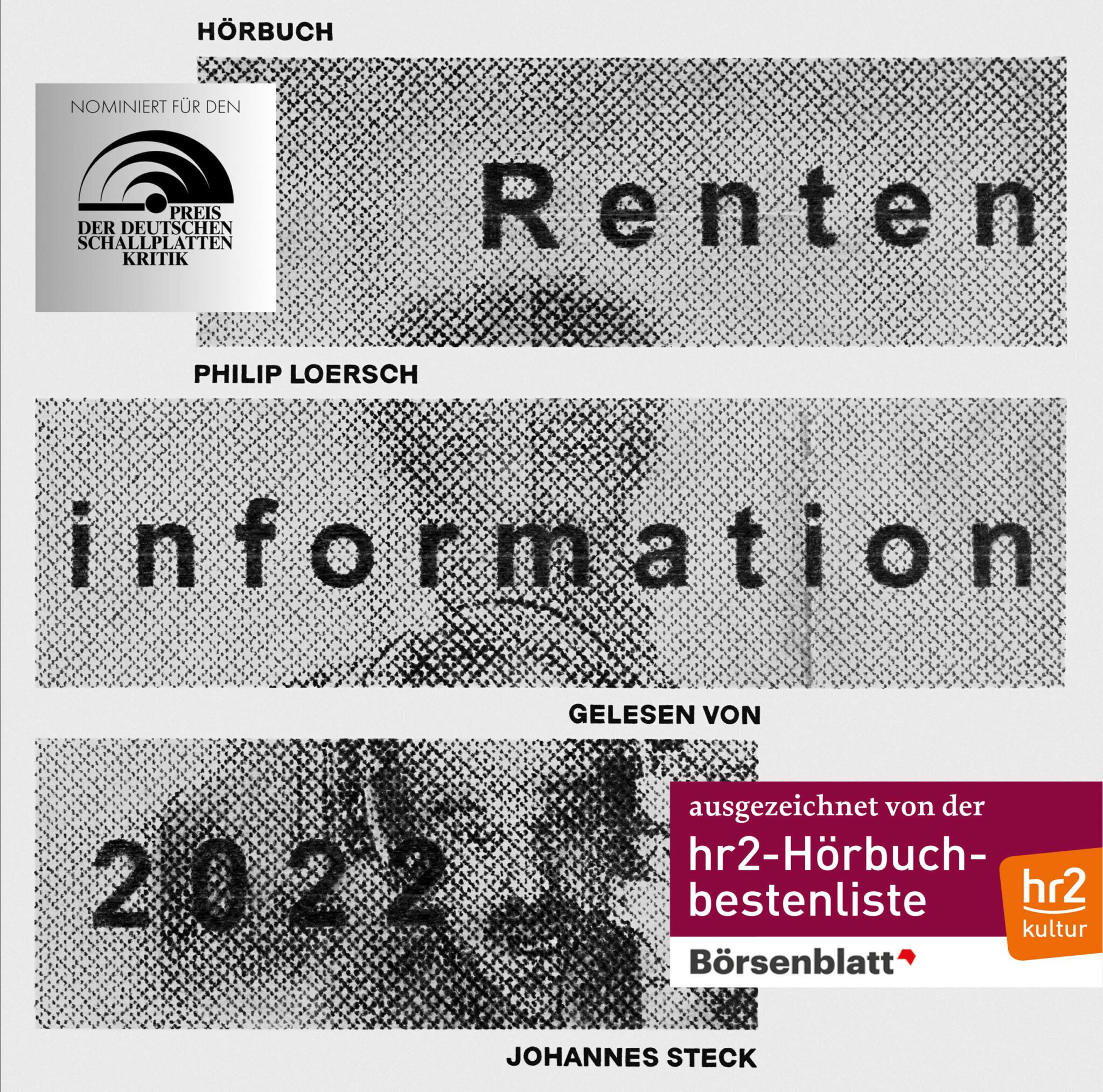
Renteninformation 202230€ Add to cartA satirical audiobook, read by Johannes Steck
with free download link on the inside
You’ve read right, and you’re going to hear it: a bureaucratic document—we’re all familiar with it, for a new one arrives every year—is the subject of this inspired collaboration between the graphic artist Philip Loersch and the virtuoso vocalist Johannes Steck.
The “Renteninformation”—an official letter on cheap paper informing the recipient about their expected future retirement benefits—makes many cultural workers, and others, crack up or break out in tears: arriving unexpectedly, it launches us on an emotional roller coaster between excitement, fascination, resignation, and sheer madness.
The manuscript for this audiobook is Loersch’s actual Renteninformation for 2022. Its intonation is the culmination of a series of works the artist has pursued since 2016. Every year, he has produced a naturalist colored-pencil drawing of his Renteninformation, embedding it in idyllic scenes—in the garden on a summer afternoon, amid autumn foliage, or on a frozen lake, delicately and accurately executed down to the smallest leaf of grass and the tiniest letter.
“Renteninformation 2022” is the ideal gift for all vinyl lovers who need to close a “pension gap” in their collections and a stunning audio experience that redefines what the satire of reality itself and conceptual art can do.
Philip Loersch (b. Aachen, 1980) is best known for his unconventional drawings. His works combine painstaking imitations of printed writing with hyperrealist colored-pencil drawings; for instance, he transfers pages from encyclopedias not only onto paper, but also onto three-dimensional objects such as soapstone. His art has been exhibited at renowned institutions such as Kunsthaus Zürich, Museum Kunstpalast Düsseldorf, and Hamburger Kunsthalle. He has won numerous fellowships and awards, including the Kunstpreis Berlin für Bildende Kunst, and helped initiate the exhibition series “Drawing Wow.”
Johannes Steck (b. Würzburg, 1966) is one of Germany’s best-known audiobook narrators, having sold over four million copies, including of books by Simon Beckett and Ken Follett, in a three-decade career. Television viewers also know his voice from trailers on Kabel 1 and DMAX and documentaries on ZDF, BR, and Sky. His work has garnered awards including the 2012 HörKules.
-

Margret Eicher
Lob der Malkunst38€ Add to cartContemporary Visual Communication in a Historic Weaving Technique
Margret Eicher’s (b. Viersen, Germany, 1955; lives and works in Berlin) large-format tapestries combine the baroque form of the woven picture with familiar motifs excerpted from contemporary media images. She digitizes her sources and then assembles them in painstaking editing work on the computer. The resulting ‘media tapestries’ occupy the interface between the traditional work of art as a physical object and the electronic noise of the digital realm: two worlds that at first glance would seem to be incompatible yet find themselves in harmonious union in Eicher’s art. In Göttliche Liebe (Divine Love), for example, Caravaggio’s Crowning with Thorns meets a kissing gay couple from a pro-tolerance campaign in Berlin, while Botticelli’s Birth of Venus is sampled together with a subway station in Frankfurt. In conceptual art production, the creative idea is central and its realization becomes secondary; in a final twist, Lob der Malkunst (Praise of Painting) elects this practice as its artistic lodestar. Eicher installs the painter Martin Kippenberger in the interior of Berlin’s Paris Bar, where he poses as a dandy and presides over a clash between the different tendencies in the art of the twentieth and twenty-first centuries.
-

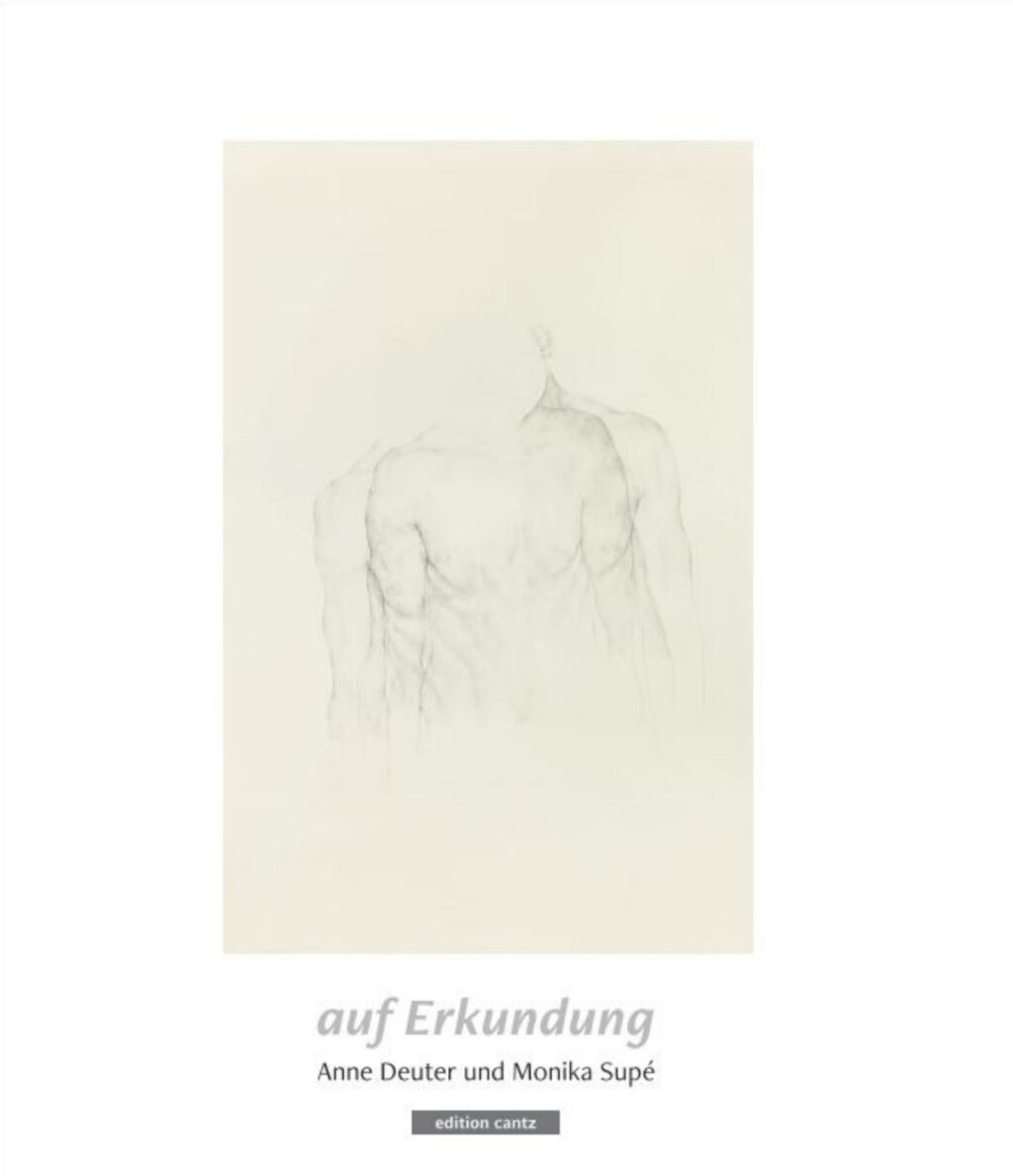
auf Erkundung
Anne Deuter und Monika Supé25€ Add to cartA Dialogue on Time
The two artists Anne Deuter (b. 1986, Halle; lives and works in Halle) and Monika Supé (b. 1967, Munich; lives and works in Munich) engage in self-exploration to find ways to convey an experience of body, space, and time. Grappling with formalist elements, they devise their compositional practices in graphite and ink and in words and images, respectively. Enhanced by selected works by contemporary poets, the publication opens up new perspectives on what it means to exist in time.
Anne Deuter studied visual art and art history at the Ernst-Moritz-Arndt-Universität Greifswald. She rounded out her education in the book art program at Burg Giebichenstein Kunsthochschule Halle. Monika Supé studied architecture at the Technischen Universität München and completed a doctorate on visual perception training at the Technische Universität Kaiserslautern. Since 1995, she has taught in the design divisions of various universities.
-
Felix Schramm
Things To Come44€ Add to cartFelix Schramm’s (b. Hamburg, 1970; lives and works in Düsseldorf) sculptural oeuvre reflects a probing engagement with space and the body. In works in a variety of media, including installations that intervene into a given setting, sculptures, and collages, the artist creates three-dimensional forms out of classical materials and industrial staples as well as detritus and dust. Deformations, rifts, cracks, or impurities undermine the existing order in his constructed formal ensembles, allowing novel correspondences in space and interconnections across time to emerge. The material and its subjection to form are held in a precarious balance; disintegration, which is an integral element of Schramm’s art, paves the way for artistic assertion and reformulation. The extensive publication gathers works and exhibitions of the past five years. It is Schramm’s first monograph, presenting a cross-section of his entire oeuvre with all bodies of work.
Felix Schramm studied at the Accademia di Belle Arti, Florence, from 1991 until 1993 and at the Academy of Fine Arts Düsseldorf, where he was in Jannis Kounellis’s master class, from 1994 until 1998. He rounded out his education with residencies in Tokyo in 2000 and at Villa Massimo in Rome in 2008.
-

Larry Rivers
An American-European Dialogue38€ Add to cartBetween French Modernism and the New York School
The American painter, musician, and filmmaker Larry Rivers (b. 1923, New York; d. 2002, New York) is considered one of the most influential protagonists of the New York art scene in the period from the 1950s to the 1970s. He played with Miles Davis and Charlie Parker, was a close friend of Frank O’Hara, and pioneered Pop Art. In dealing with contemporary artist colleagues and historical role models, he always strived to making painting visible as a medium of reflection. From an early age, Rivers was preoccupied with French painting of the late nineteenth century. During his stay in Paris in 1961/62, he met Jean Tinguely and Niki de Saint Phalle, whereupon the range of materials he used was extended to wood, cardboard, and electric light. For the first time, the present volume – the first monograph in twenty years – sheds light on Larry Rivers’ idiosyncratic art with a view to the tension between traditional French painting and Abstract Expressionism around Willem de Kooning.
-
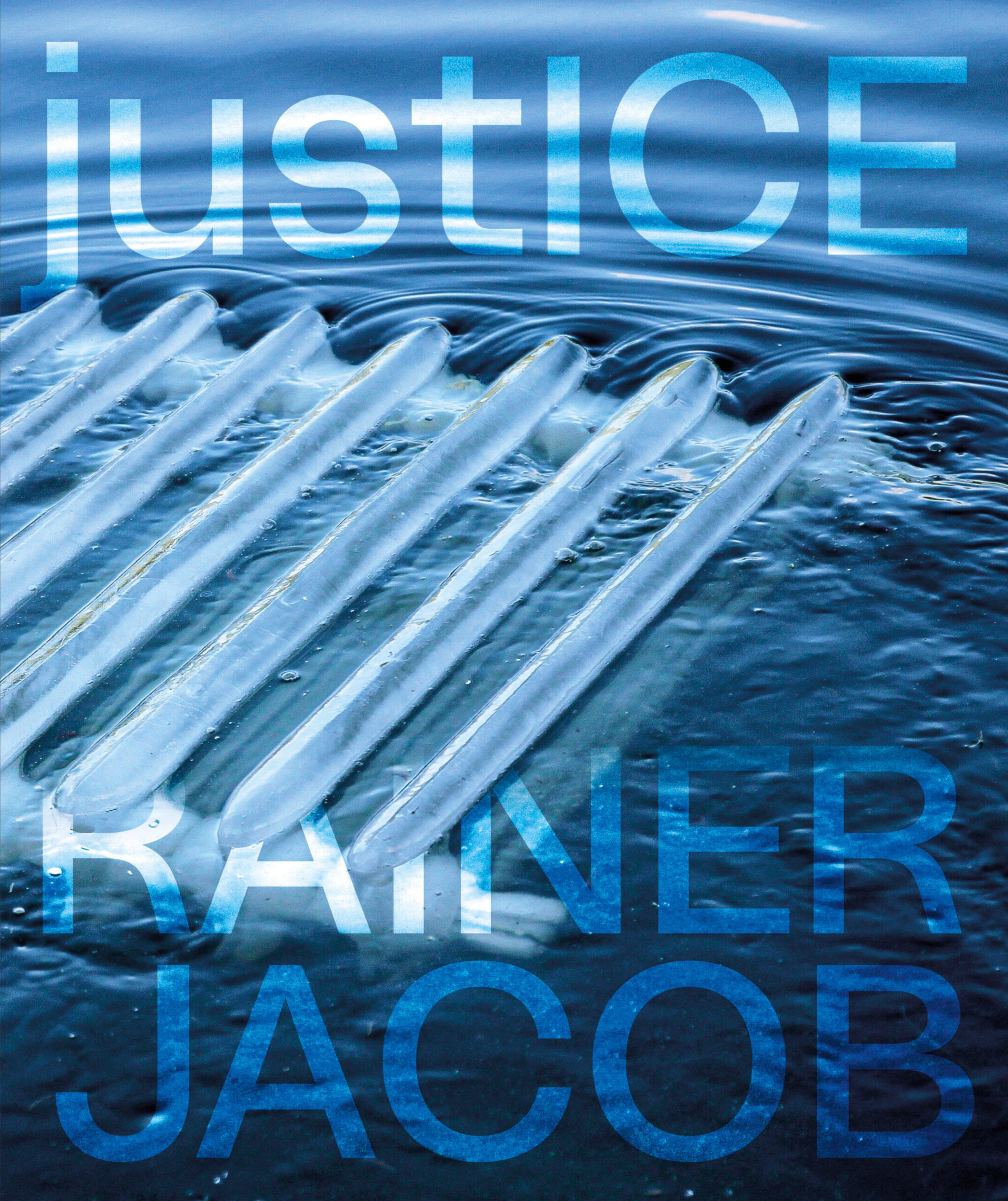
Rainer Jacob
justICE30€ Add to cartRainer Jacob (b. Jena, 1970; lives and works in Leipzig) has anonymously installed objects made of ice in public settings in cities including Berlin, Leipzig, Paris, Moscow, Oslo, Prague, and Budapest since 2013. He then allows them to dematerialize and records the process in photographs. Radiators, wall outlets, QR codes, and the Duchampian pissoir are among his recurrent motifs. The impermanence of the ice objects builds bridges to street art, Fluxus, and action art. Critical observations on the unequal distribution of resources and political power in contemporary society, his works reflect on our perceptions and question the idea of originality in art while also probing the outer limits of sculpture.
The publication showcases the ice objects of the past ten years, embedding them in a decade that has marked a sea change in the life of humankind: JustICE captures an artist’s distinctive perspective on societal processes.
-

Anaïs Horn
Fading14€ Add to cartThe mystery of love and its language, translated into a photographic discourse
The starting point for the series by Anaïs Horn, which the artist, who works in Vienna and Paris, began in 2013 and now comprises eighty photographs, is the book Fragments d’un discours amoureux (Fragments of a Language of Love) by the French philosopher and author Roland Barthes. Terms such as “asceticism,” “magic,” “yearning,” “venerable,” and “unfathomable” serve Horn as models for her staged photographs. The linguistic “figures,” from which Barthes developed his “discourse” in an open structure, find their counterparts in views of people, landscapes, objects, and spaces. The result is a cosmos of images that is as non-binding as it is intimate, as touching as it is light, as vulnerable as it is challenging, and appears to be infinitely expandable. Viewed together, fragments of collective experiences and cultural codes of our notions of love become visible.
-

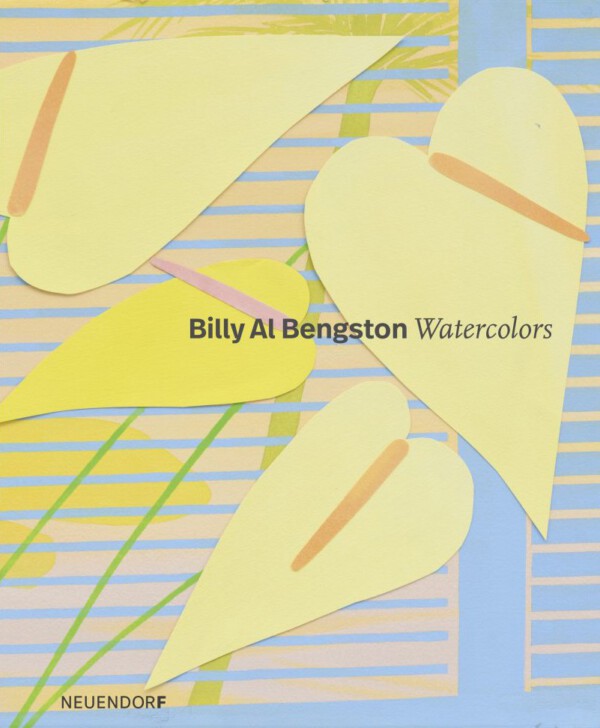
Billy Al Bengston
Watercolors48€ Add to cartThe Pop Artist as Master of Watercolor Painting
Billy Al Bengston (b. 1934, Dodge City; lives and works in Venice, California, and Honolulu, Hawaii) is a master of the watercolor. Themes and motifs that also determine the painterly work gain a special expressiveness here: bizarre landscapes and opulent blossoms, fantastic celestial bodies and colorful abstractions. This opulent volume presents this part of Bengston’s oeuvre for the first time in great breadth with roughly 400 works. They demonstrate the skill of an artist who has brought watercolor to extreme precision and enriched it with numerous new aspects.
Billy Al Bengston attended the California College of Arts and Crafts, Oakland, and the Otis Art Institute, Los Angeles. His works can be found in outstanding permanent collections, including the Centre Georges Pompidou, Paris, the Solomon R. Guggenheim Museum, New York, and the Museum of Modern Art, New York.
-

René Holm
Let me be your everlasting light25€ Add to cartLight is the theme of the new paintings by René Holm (b. Esbjerg, 1967). Faceless protagonists traversing symbolic forests with leafless trees occurred already in previous works, stripping them of individual or local signifiers and moving them into a spiritual and universal realm. Skulls with burning candles in Still lifes symbolize the fragility of life and unavoidability of death. Holm goes a step further and makes his figures carry the symbols in their hands or even has them become themselves live “still lifes” with burning candles on their backs. The presence of death is not a picture to behold from afar but a truth to be aware of and carry with us every day. The burning candles also mean that we’re here with our sorrow as well as our light. We must burn to shine. This book accompanies the artist’s gallery exhibition Let me be your everlasting light in Horsens, Denmark.
-

Justine Otto
New Traditionalists38€ Add to cartJustine Otto (b. Zabrze, Poland, 1974; lives and works in Hamburg and Berlin) is one of the most promising artists on the contemporary painting scene. An aficionado of the absurd, she unfolds a metaphysical-psychedelic and often gaudily lustrous cosmos in pictures in which representation clashes with abstraction. In her early work, girls, women, and animals were here preferred subjects; more recently, she has painted heroes—the protagonists in myths of masculinity. After generals, officers, and strategists, she has now turned her attention to cowboys, who appear on horseback or resting under a tree, musical instrument in hand.
Justine Otto studied fine art and painting with Peter Angermann and Michael Krebber at the State Academy of Fine Arts (Städelschule) in Frankfurt am Main and obtained an MFA in 2003. She also worked as a scene designer at Städtische Bühnen Frankfurt, the city’s municipal theater company. Her paintings are held by collections including the Hessisches Landesmuseum, Darmstadt; Museum Franz Gertsch, Burgdorf, Switzerland; and the Phillips Collection, Washington, D.C.
-

Thyra Schmidt
Über Diebe und die Liebe. On Thieves and Love.15€ Add to cartAn artist’s book, an artist’s text
On twenty-two large-format typographic sheets, Thyra Schmidt (b. 1974, Pinneberg; lives and works in Düsseldorf) develops a narrative featuring moments in an amorous relationship. Thoughts and encounters between “her” and “him” are captured in poetically constructed, fragmentary units of meaning. Imaginary images are conjured in the mind’s eye: Close-ups and intimate insights into a delicate web of interpersonal incidents. Personal observations and experiences form the starting point of this artistic exploration of love. Yet the focus of her work is not on autobiographical rendering, but rather on the tracking down of elementary structures, a general understanding of intimacy.
-

Roland Schappert
Coronasehnsucht14€ Add to cartThe coronavirus pandemic hit us in a time of disparate foci of attention. A fundamental lack of comprehension and hate speech contrast sharply with an unspoken consonance of ideas as well as feelings. What do reality, statistics, love, and yearnings do to us? They are playing a game with reality, sans fiction. Relationships sustain our lives. What was unmistakable before is now manifest, with stark certainty. Are we ready for loving dissension? Can we bear to think only as far ahead as we can see? How do our emotions answer these questions, and how does our intellect? The Cologne visual artist and writer Roland Schappert retraces his personal voyage through this sun-kissed rain-drenched time. The book is a diary-like tour de force of digital amorous overtures, an attempt to explain the world of art via WhatsApp, and the real challenges of life as a single artist in a major German city in precarious circumstances.
- Release Spring 2026

Jorinde Voigt
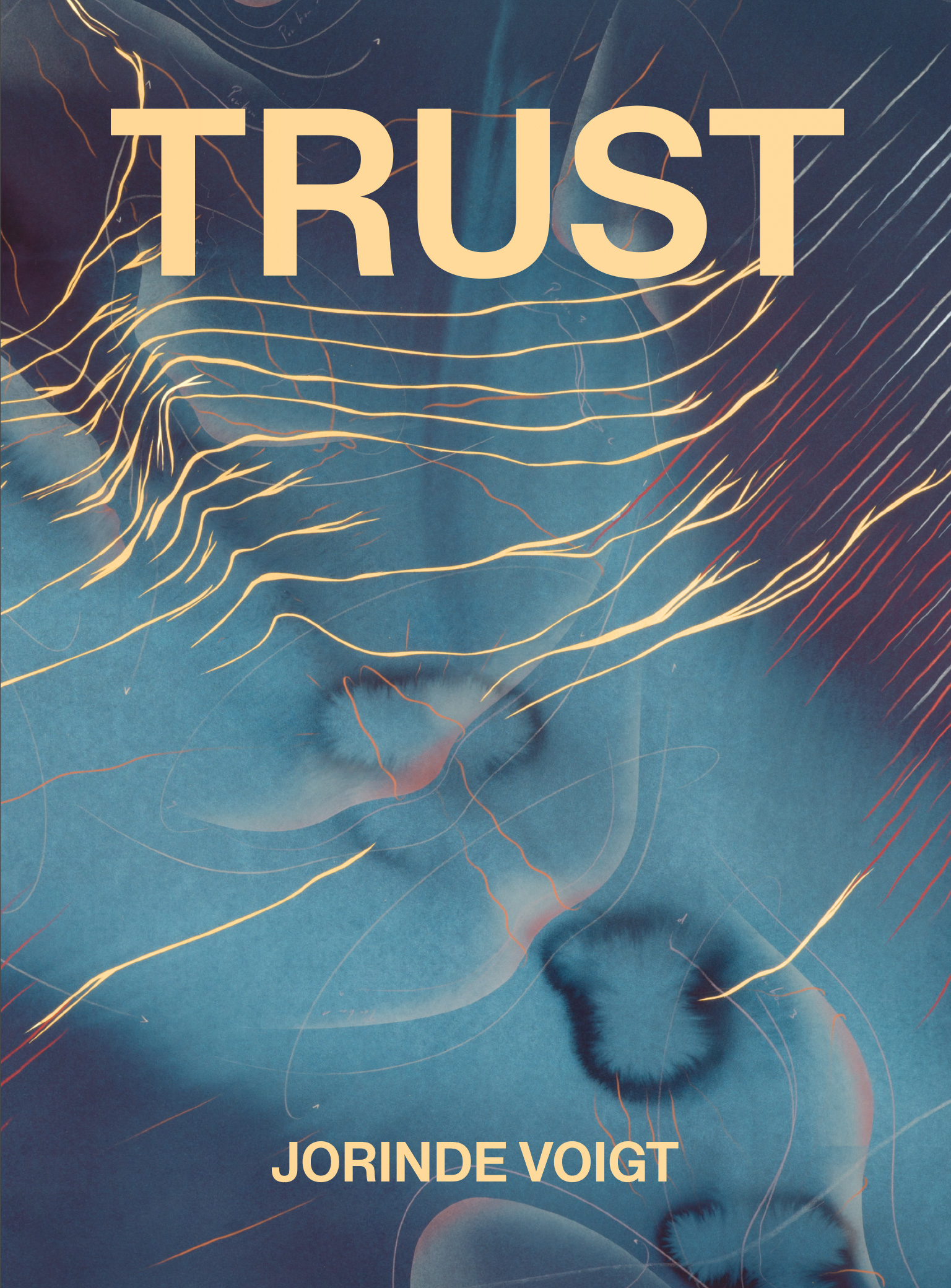
Trust42€ Add to cartJorinde Voigt (b. Frankfurt am Main 1977, lives and works in Berlin), declared about the title of the book “Trust is a hybrid of longing for something and the engagement to reach it”. Voigt has thus decided to compile her works, which she realized from May 2019 to spring 2021, under the sign of confidence, connectedness, reliability and integrity. Many of the works presented place themselves in the continuity of those in Immersion, a book that brought together works from the period 2018-2019.
In the extensive volume Trust, sculptures and mobiles are shown alongside the works on paper for which she is known – here immersed in a pigment bath and then worked on with pastel, ink, India ink, oil pastels and gold leaf–.
Jorinde Voigt studied philosophy and modern German literature at the University of Göttingen from 1996. In 1998 she moved to Berlin and studied sociology, philosophy and general and comparative literature at the Free University of Berlin. 1999-2003 she studied art in multimedia at the University of the Arts with Christiane Möbus and visual arts and photography with Katharina Sieverding, whose master student she became in 2004. 2014-2019 she was professor of conceptual drawing and painting at the Academy of Fine Arts Munich. Since 2019 she is professor at the Hamburg University of Fine Arts.