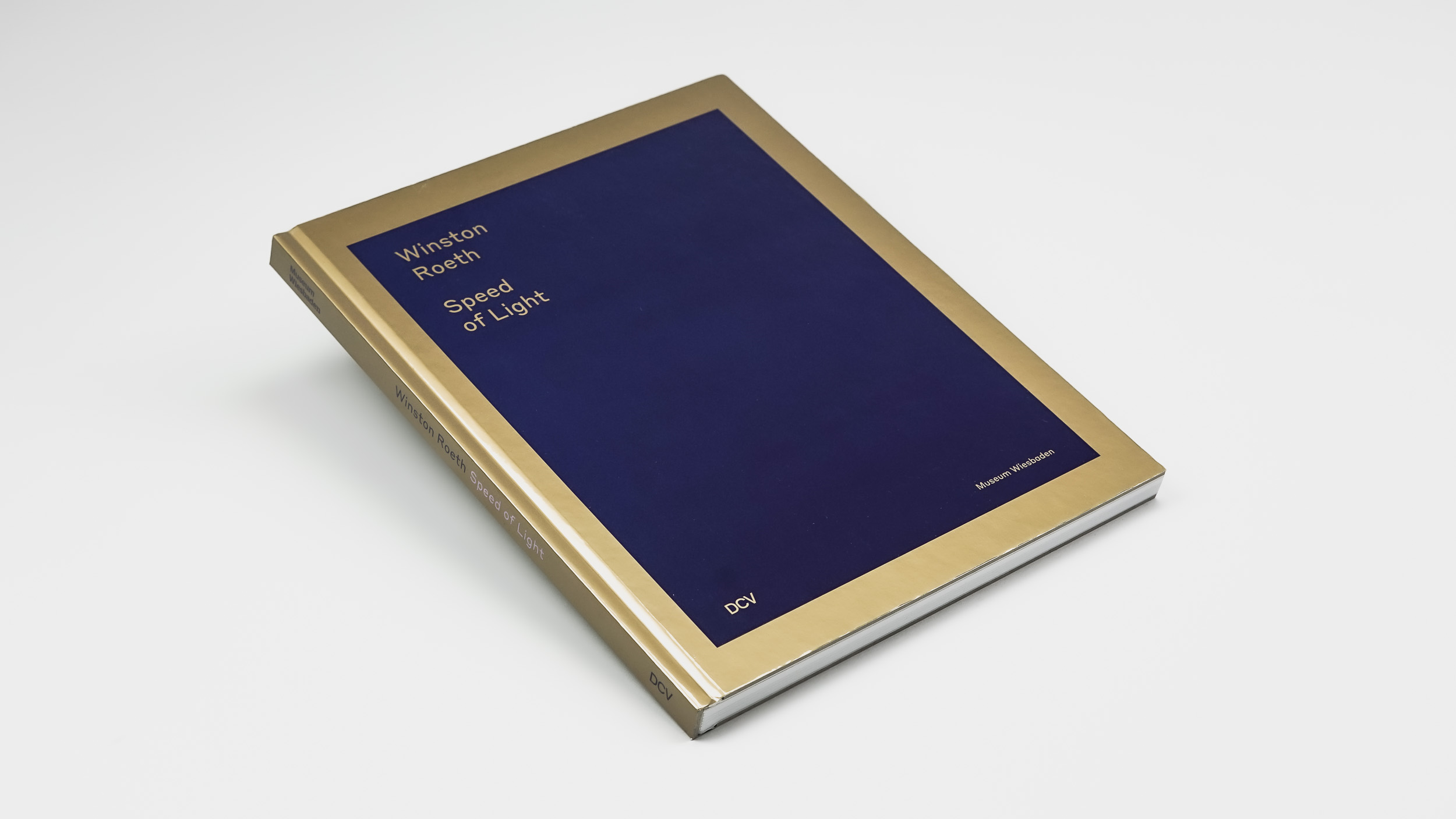
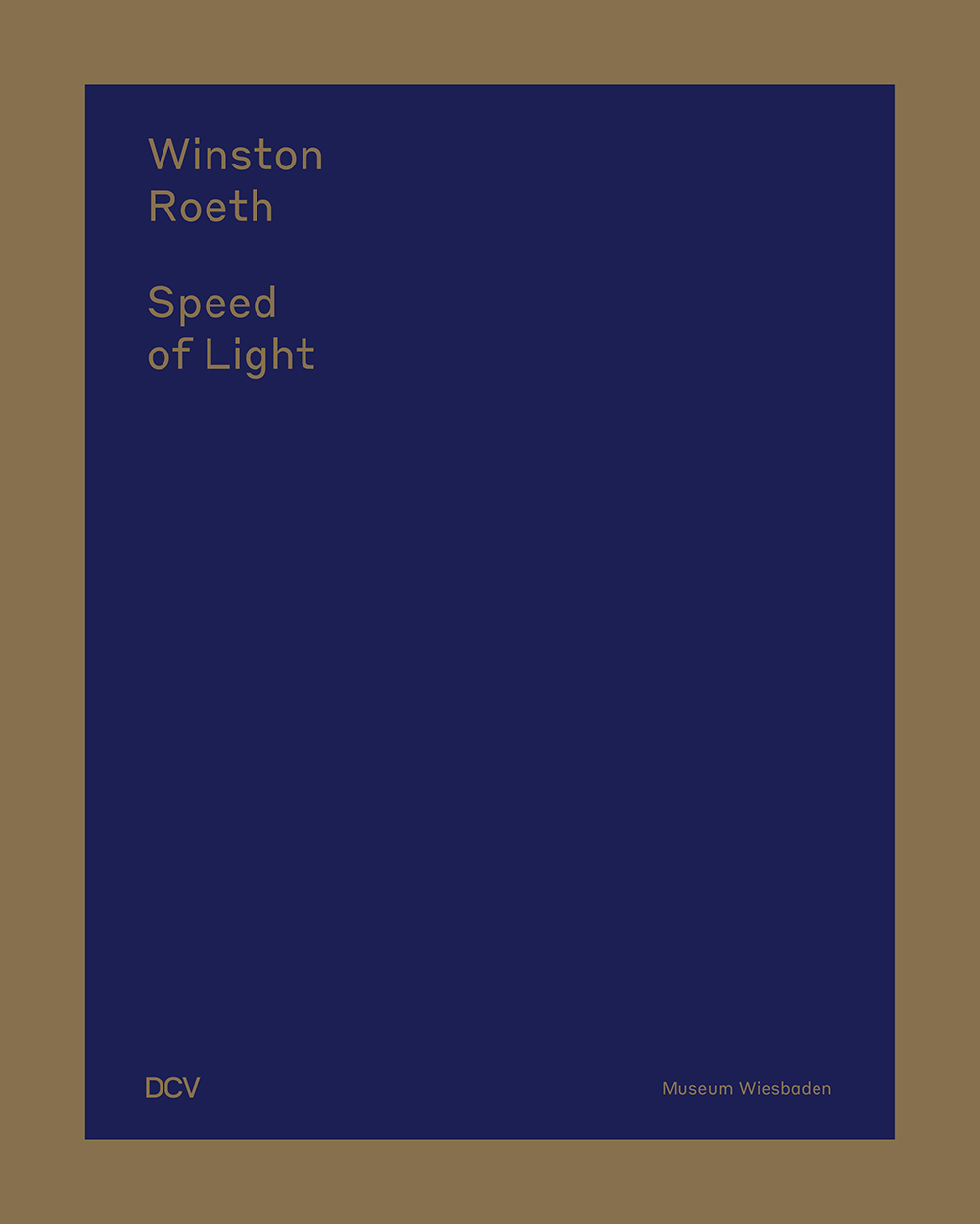
Winston Roeth
Speed of Light
 | |
|---|---|
| Editor(s) | Museum Wiesbaden, Jörg Daur, Lea Schäfer |
| Author(s) | Jörg Daur, Andrew Jensen, Lea Schäfer |
| Design | Frank Bernhard Übler |
| Cover | Hardcover with flush cut |
| Size | 24 x 30 cm |
| Pages | 136 |
| Illustrations | 109 color and 2 b/w |
| Language(s) | German, English |
| ISBN | 978-3-96912-010-1 |
Color Is Light
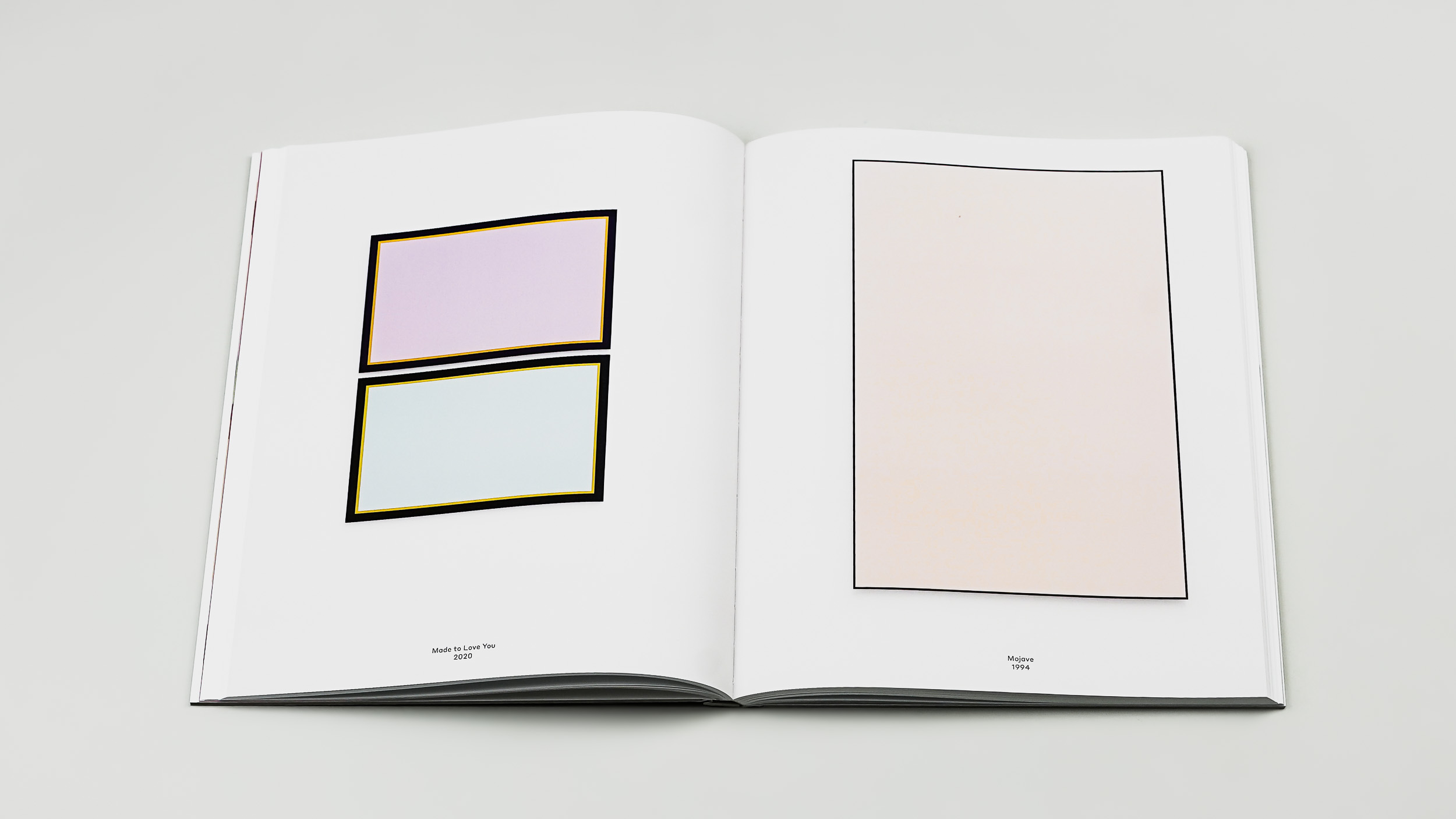
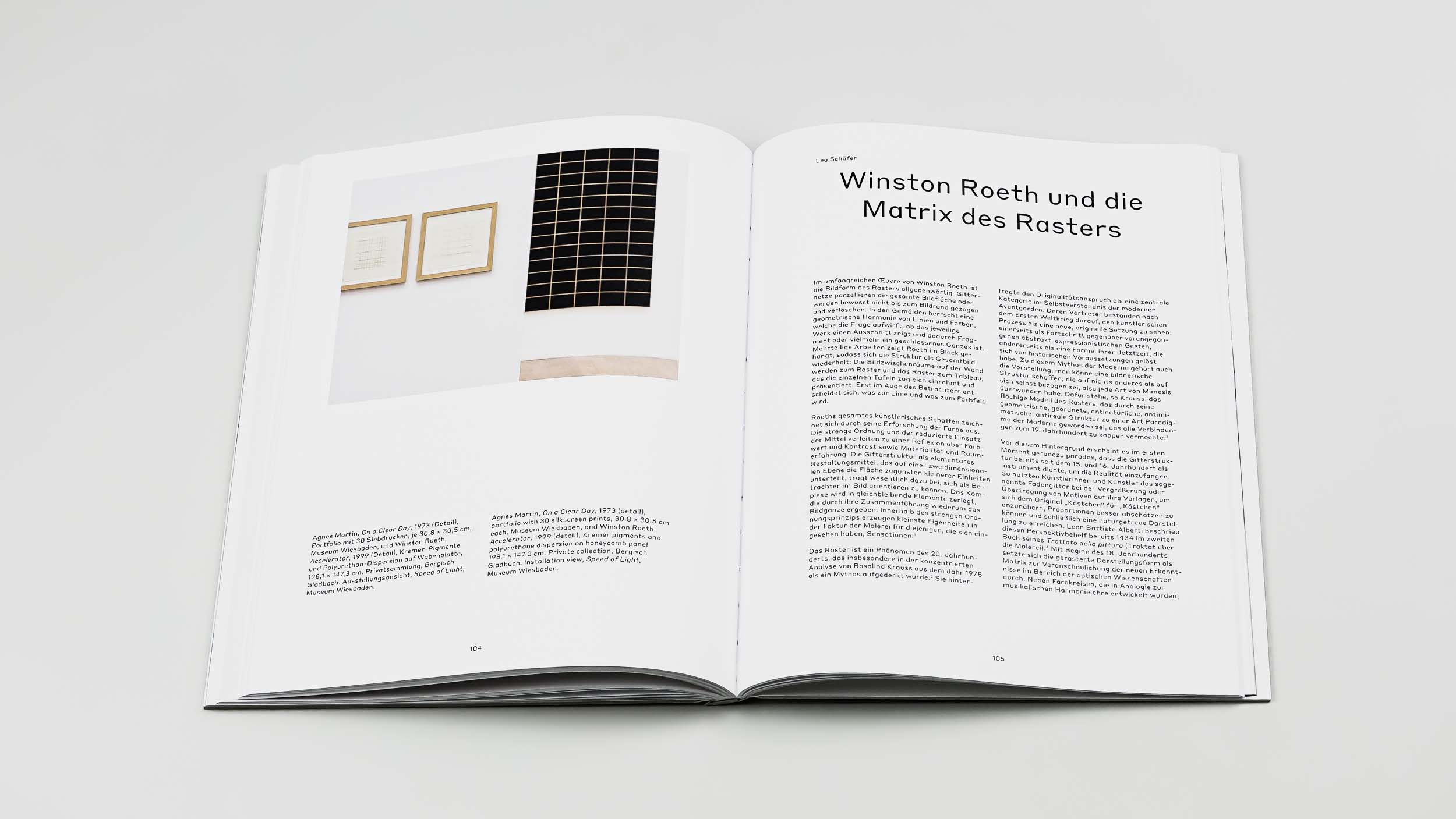
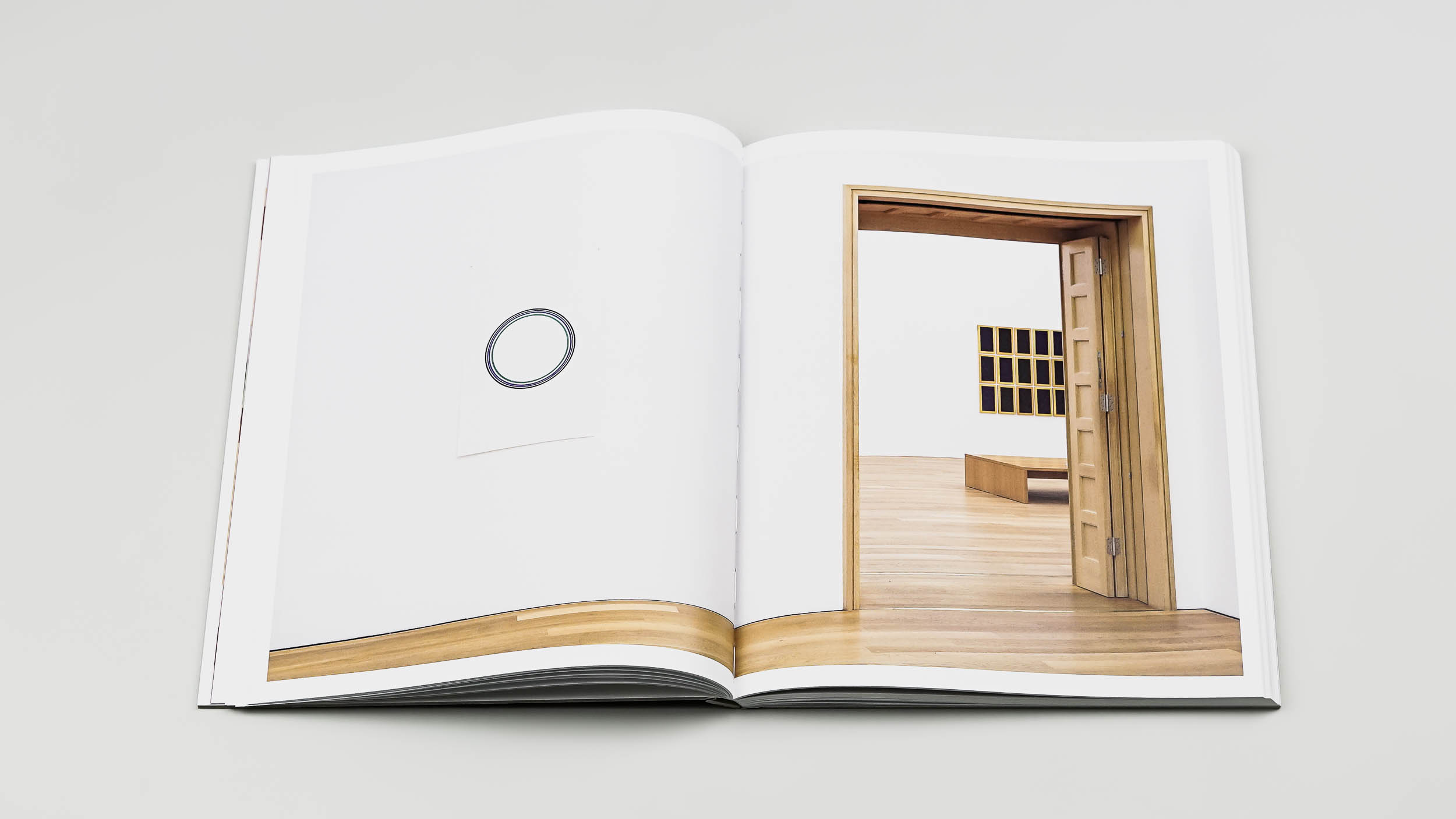
Intense monochrome areas of color, radiant pigments, and multifaceted surfaces are the characteristics of the art of Winston Roeth (b. Chicago, 1945; lives and works in Beacon, New York, and Waldoboro, Maine). He has devoted himself to abstract color field painting since the 1970s, with the grid as a leitmotif running through his oeuvre; both are fraught with painterly memories of light, “a light that can jump out and grasp the beholders, a color saturation that throbs with a deep glow,” as the artist himself puts it. It emanates from the strata of paint in his pictures, encountering the light that, falling upon his works, molds their chromatic effect. Roeth experiments with pure pigments, which he mixes by hand to make paints he applies in layers to diverse media including paper, aluminum, honeycomb, slate, and wood panels. The book documents a tour of an exhibition, presenting works dating from between the early 1990s and 2020.
More books
-

Horst Schwitzki (1932–2016)
Eine Werkmonografie38€ Add to cart“I have my place in concrete painting!”
Horst Schwitzki’s (b. Marburg/Lahn, 1932; d. Frankfurt/Main, 2016) talent was recognized early on by renowned painters including Arnold Bode and Fritz Winter. During his studies at the Werkakademie, today’s Kunsthochschule, in Kassel, Schwitzki came into contact with concrete art. The network he built there opened doors for him, leading to exhibitions with prestigious galleries such as Rolf Ricke’s and Rudolf Zwirner’s. By the 1970s, however, he found himself compelled to make a living by working first as a graphic artist for an advertising agency and then as a construction draftsman. Although these day jobs left him little time for painting, he kept working on his art until 2010. This book is the first to present a comprehensive survey of Schwitzki’s oeuvre, which spans almost six decades and shows him continually devising novel creative solutions within the formal repertoire of concretion. The biography, rounded out by statements from contemporaries, colleagues, and friends, offers profound insights into the highs and lows of an artist’s life that stands as a characteristic example of the experiences of the generation born in the 1930s.
-

Gregor Hildebrandt
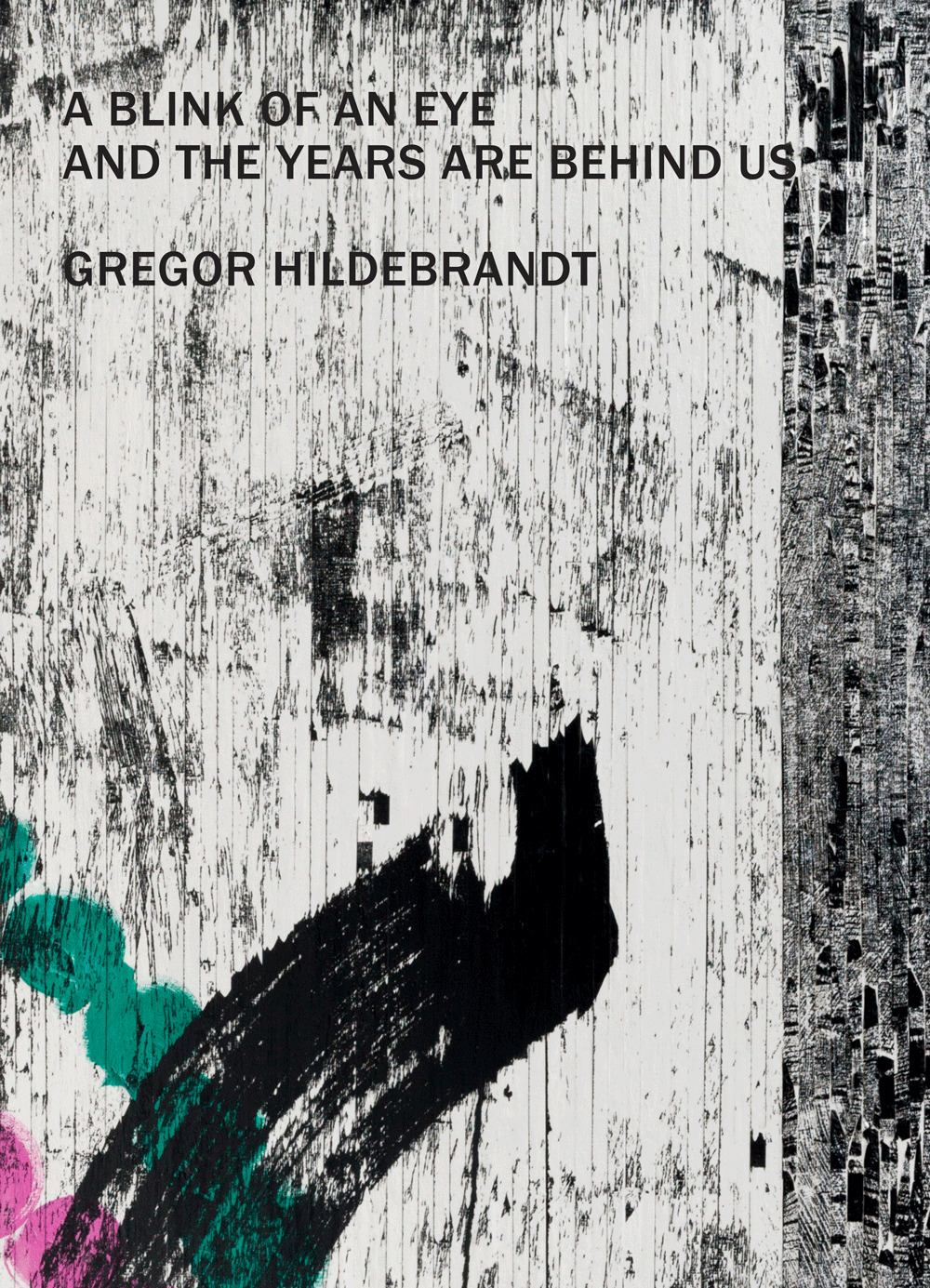
A Blink of an Eye and the Years are Behind us48€ Add to cartFor the past two decades, Gregor Hildebrandt (b. Bad Homburg, 1974; lives and works in Berlin) has transformed analog audiotapes, cassettes, and records into collages, sculptures, panel paintings, and installations. Melding visual art with music, he has charted a complex creative vision crossing boundaries of medium and genre that he continually refines. Before using a tape, he records selected music—typically a single song—on it, whose lyrics he quotes in the work’s title. The artist’s output draws on his personal repertoire of bands that share a romantic narrative of loneliness and a melancholy keynote. The same attitude toward life is reflected in Hildebrandt’s work. The book offers insight into all periods of the artist’s oeuvre and is rounded out by archival materials from Hildebrandt’s studio, his project space Grzegorzki Shows, and the music label Grzegorzki Records that illustrate his creative process.
Gregor Hildebrandt studied at Kunsthochschule Mainz from 1995 until 1999 and at the Berlin University of the Arts from 1999 until 2002. He was a fellow of the Deutsches Studienzentrum in Venice in 2003 and worked in Vienna on a fellowship from the German Academic Exchange Service in 2005–06. He has been professor of painting and graphic art at the Academy of Fine Arts in Munich since 2015.
-

Jenny Michel
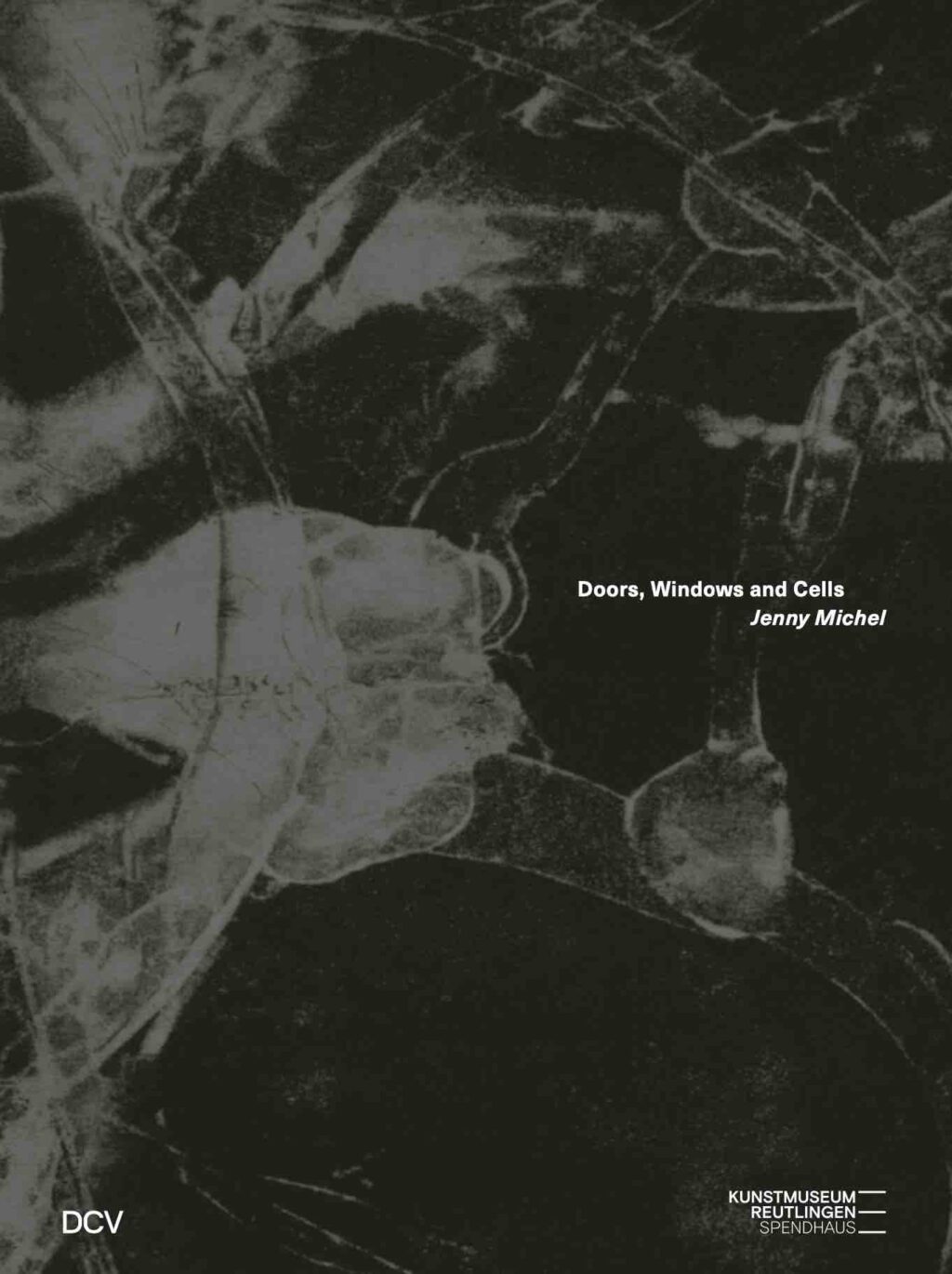
Doors, Windows and Cells38€ Add to cartThe Detritus of Our Society
For around two decades, the artist Jenny Michel (b. Worms, 1975; lives and works in Berlin) has devoted herself to minute particles such as dust, cobwebs, and electromagnetic fields in space. Her fascination with orders of knowledge, symbolism, and utopian visions is reflected by installations, drawings, prints, and sculptures that she exhibits in carefully composed sprawling ensembles. Aggregating fantastic fragments of the world manufactured from paper, adhesive tape, staples, and other industrially made small parts, Michel builds disconcertingly dense structures—human knowledge is transformed into the debris of civilization, its legibility lost beneath palimpsestic layers of meanings and resignifications. The extensive monograph surveys major series in the artist’s oeuvre and presents new works on paper.
Jenny Michel studied at Kunsthochschule Kassel and the Academy of Fine Arts Vienna. Her work has been on view at Museum Wiesbaden, the Draiflessen Collection, the Schirn Kunsthalle, Frankfurt, and Berlinische Galerie, among other venues. In 2010, Michel was honored with the HAP Grieshaber Prize.
-

“Das Quadrat muss den Raum beherrschen!”
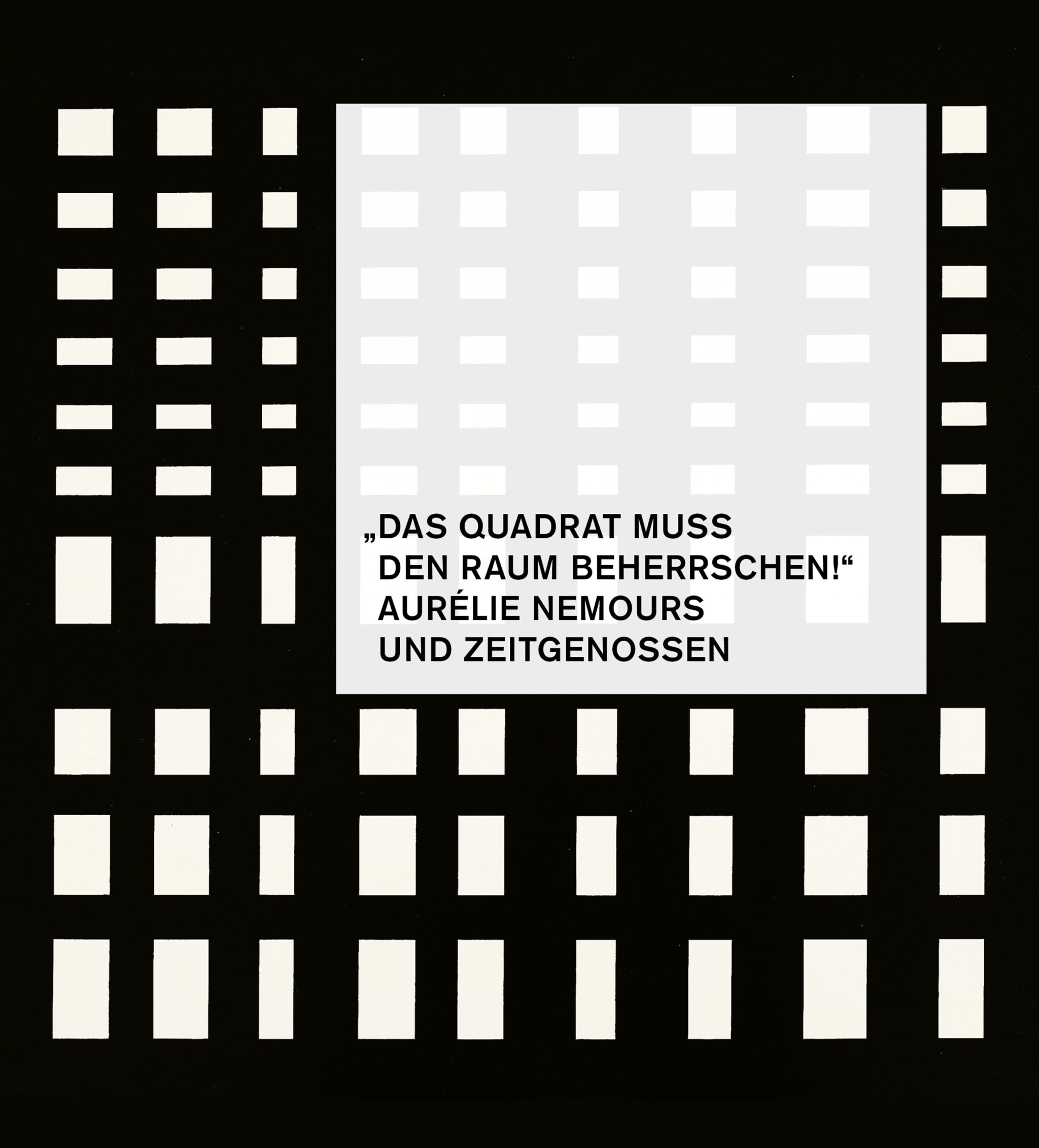
Aurélie Nemours und Zeitgenossen15€ Add to cartDoes everything in the world obey a mathematical logic, can everything be calculated? In our present age of probability, some would say the answer is a straightforward yes, inevitably prompting the question: Even art? Yes, even art, or so the defenders of Concrete Art would respond, a twentieth-century movement that took abstraction as a focus on the “idea of art itself” (W. Kandinsky) to the next level. The act of painting was now to be subject to preconceived organizing principles as though they were laws of nature. One prominent exponent of the genre was Aurélie Nemours (1910–2005), who had a penchant for the square; her credo was that it needed to “rule space.” That is why the equilateral quadrangle is the defining shape in this catalog, which brings Nemours’ oeuvre into focus. Her iconic position is flanked by works by seventeen others that similarly grapple with the square, including pictures and sculptures with square basic forms, grids, or canvases. All these works derive their force from the stern authority of the square: only when art constrains its means can it bring its full potential to bear.
ARTISTS:
JOSEF ALBERS, GÖTZ ARNDT, MAX BILL, AD DEKKERS, HELMUT FEDERLE, GOTTFRIED HONEGGER, KATHRIN KAPS, FRITZ KLINGBEIL, JOHN MEYER, GEROLD MILLER, AURÉLIE NEMOURS, JOHN NIXON, PETER ROEHR, JAN SCHOONHOVEN, ANTON STANKOWSKI, KLAUS STAUDT, HERMAN DE VRIES, GERHARD WITTNER -

Jeff Wall
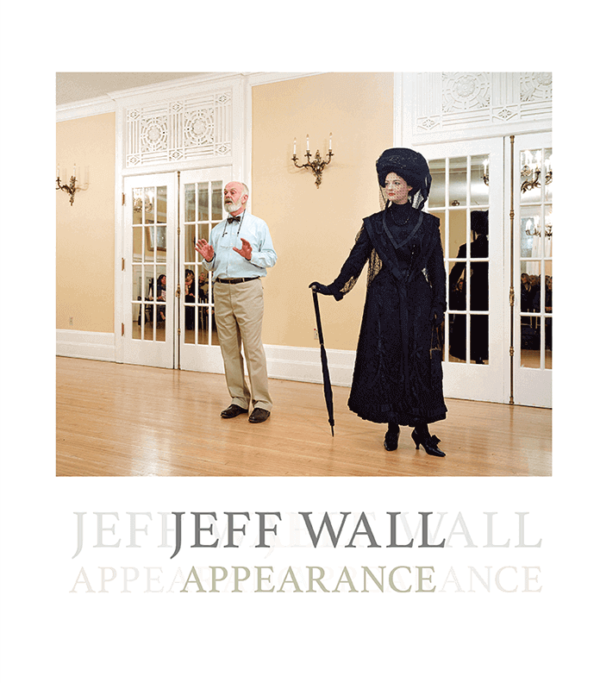
AppearanceRead moreA New Perspective on the Work of the Photo Artist
The trademark of Jeff Wall (b. 1946, Vancouver; lives and works in Vancouver) are large-scale backlit light boxes, which appear like carefully composed film stills. The art historian ties his works in manifold ways to art history and, due to his elaborate arrangements, is often compared to modern masters. Many pictures by Jeff Wall are inspired by novels or stories and condense into intentional stagings of the everyday. With a special focus on constellations which present the medium photography like a search for traces, the book allows a new perspective on the artist’s works which have up until now rarely been shown in exhibitions.
Jeff Wall studied art history at the University of British Columbia, Vancouver, and at the Courtauld Institute of Art, London. His works are exhibited internationally, for example at the Museum of Modern Art, New York, Tate Modern, London, and the Art Institute of Chicago. In 2008 he received the Audain-Award for his life work.
-

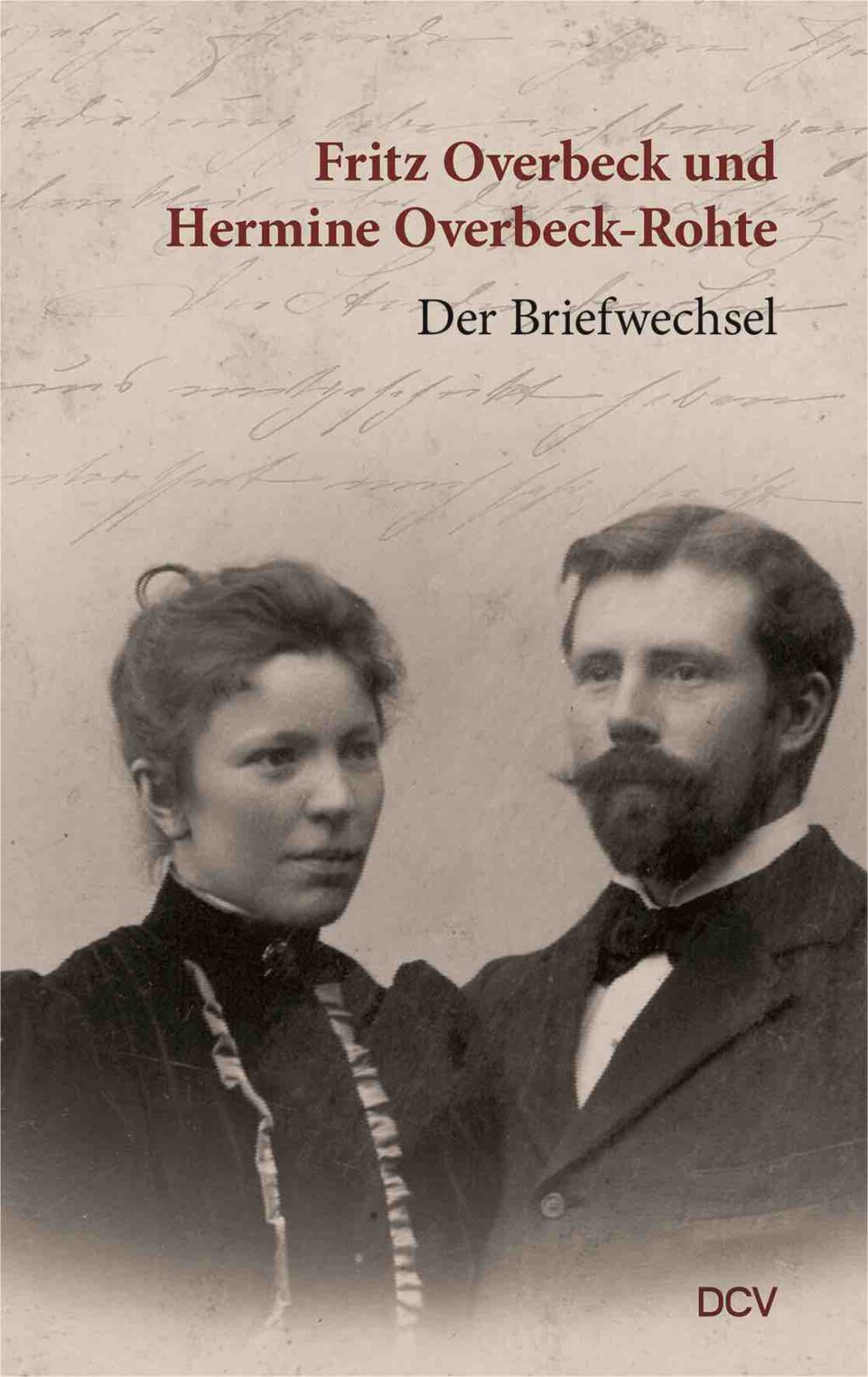
Fritz Overbeck und Hermine Overbeck-Rohte
Der Briefwechsel38€ Add to cartIntimate Glimpses from the Marriage of Two Worpswede Artists
In the final years of the nineteenth century, numerous painters settled in the village at the foot of Weyerberg hill, followed by young women who took classes with the local artists. Fritz Overbeck (b. Bremen, 1869; d. Bröcken near Vegesack, 1909) and Hermine Overbeck-Rohte (b. Walsrode, 1869; d. Bremen, 1937) became one of Worpswede’s husband-and-wife creative duos, though their union has been less celebrated than those of Otto Modersohn and Paula Becker or Rainer Maria Rilke and Clara Westhoff. Like the stories of their more famous neighbors, theirs exemplifies life and work in the artists’ colony, but also the dogged struggle for equality in the creative professions. Yet unlike those other relationships, theirs did not break up over the conflict between art and marital life; it lasted until Fritz Overbeck’s tragic early death. In a first, this book contains virtually the entire extant correspondence between the Overbeck-Rohtes in unabridged form and with numerous annotations. Offering fresh and nuanced insight into the lives and oeuvres of its protagonists, it makes for moving and entertaining reading.
-

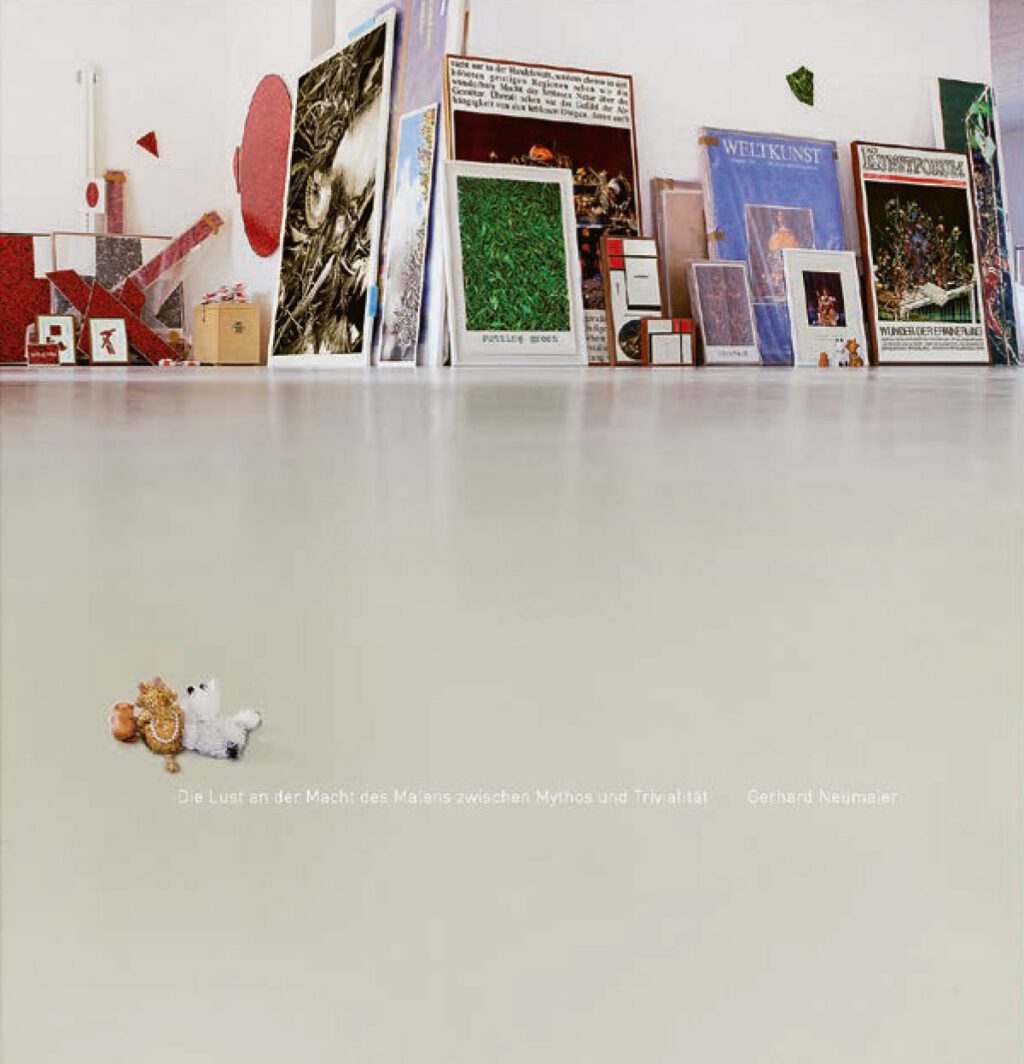
Gerhard Neumaier
Die Lust an der Macht des Malens zwischen Mythos und Trivialität32€ Add to cartEin Spiel mit den Ambivalenzen
Offenkundig Mythologisches gerät bei Gerhard Neumaier (geb. 1950 in Freiburg, lebt und arbeitet in Baden-Baden) ebenso zur trivialen Episode, wie scheinbar Triviales legendäre Ikonik entfaltet. Dabei bricht sein unvoreingenommener Umgang mit Klassikern wie etwa in der Duchamp-Persiflage „Hokuspokus mit Fokus Lokus“ semantische Vorurteile in den Sehgewohnheiten auf und bietet dem Betrachter neuartige Interpretationen. In der perfomativen Bewegtheit seiner Rakelbilder legt er eine haptische Sinnlichkeit an den Tag, die Cora von Pape in ihrer Einleitung dazu bringt, den Künstler zu zitieren: „Ich male, was ich weiß, damit ich sehe, was ich fühle.“
-

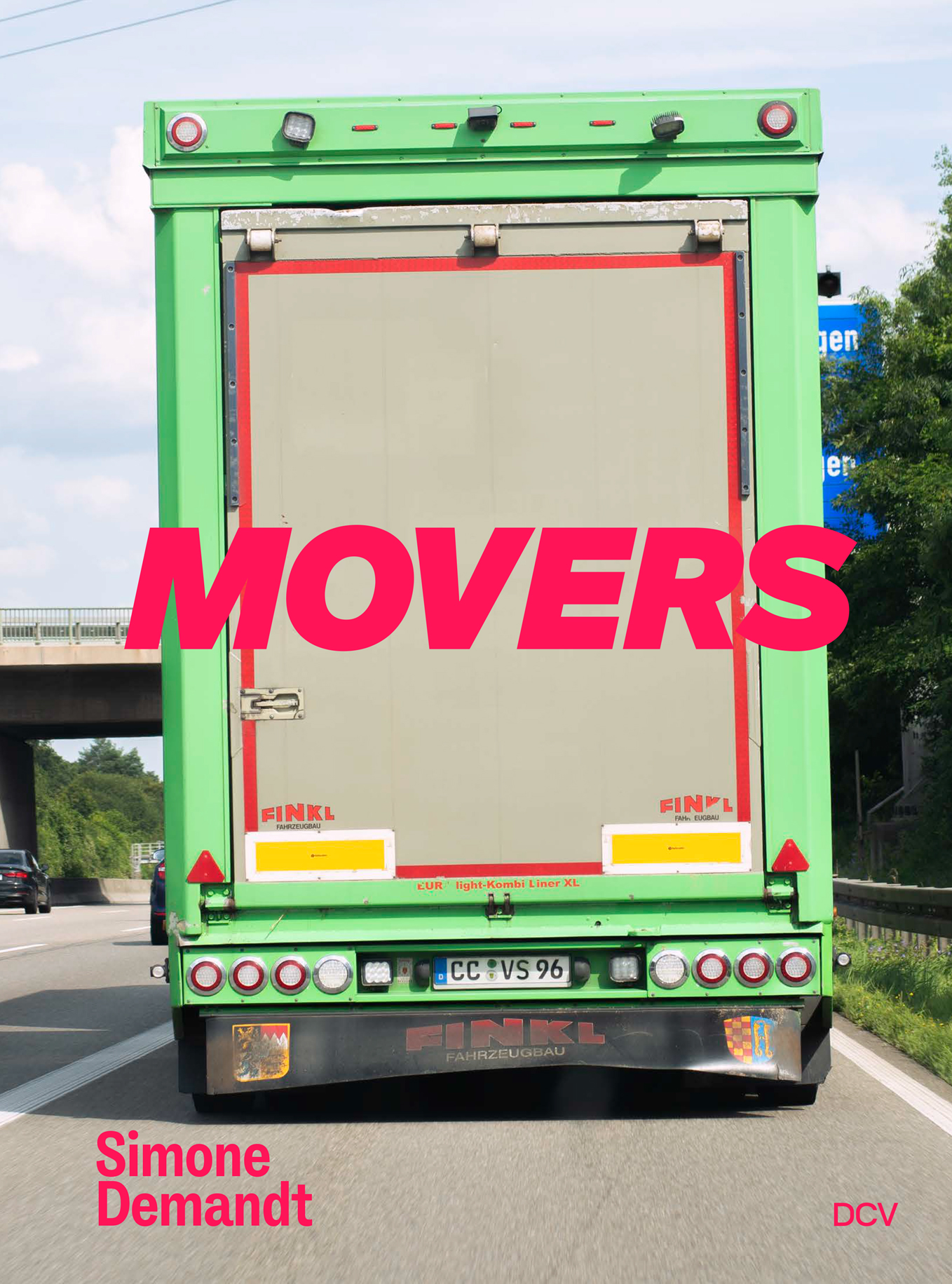
Simone Demandt
Movers / Beweger38€ Add to cartMotorways are Europe’s lifelines. The products we buy every day arrive on supermarket shelves after traveling along these arteries on the backs of thousands of trucks steered by hard-working drivers. Glancing up into the cabs of their hulking vehicles, we can just barely make out their heads sticking up above the steering wheels. In this overdue volume, Simone Demandt lets us see more of the heroes of the road who confidently posed for her camera. The pictures demonstrate Demandt’s knack for discovering “the intimate in the anonymous and the narrative element in the matter-of-factly” (Matthias Winzen). She has condensed the truckdrivers’ lifeworld into documentary black-and-white shots in which she shows these people as whole persons and individuals—very different from how we perceive them when they’re in the next lane. Movers lets us peek into the cabs through Demandt’s nonjudgmental lens, broadening our horizons hardly less than travelling would and helping us overcome our prejudices about teamsters. If you’ve always wanted to know whom we really have to thank for those never-empty supermarket shelves, you should not miss out on this book.
-

Mon Trésor
34€ Add to cartEurope’s Treasure Chamber
What do the torque of the princess of Reinheim, the tableware from the Orient Express, and the radio station Europe 1’s studio building have in common? They are among the treasures of the Saar region. The book presents outstanding archaeological objects and achievements of technology and art dating from the age of the Celts to the present. Drawn from the Saarland and neighboring Alsace-Lorraine, Luxembourg, and Rhineland-Palatinate, the unexpected riches illustrate the cultural and social dimensions of this multinational region in the heart of Europe. The title Mon Trésor describes many of them quite literally: the note a seven-year-old dashed off to his father before his family was evacuated in the first days of World War II; the Roman-era ring that is also a relic, witnessing to flight and danger. All treasures are personal first and foremost, though others may later cherish them as cultural assets.
-

Luxus?!
34€ Read moreWhat is luxury today? How do designers perform the magic of transforming a utilitarian object into a must-have? Where does consumerism shade into obsession? When does more-is-more give way to less-is-more?
Luxury means breaking with convention, and this book showcases—and spawns—a cornucopia of ideas, products, and positions around luxury, featuring influential thinkers from the worlds of design, science, art, and society. The cultural theorists Wolfgang Ullrich and Lambert Wiesing exchange letters on the concept of luxury; Montblanc’s creative director Zaim Kamal lays out future strategies; the artist Jonathan Meese pens a gold manifesto; and Bazon Brock inquires into the asceticism of luxury. We live in a world full of things that resemble one another so closely that the only difference is how they are marketed. What might the precious objects of the future look like? The book presents examples from aspiring designers such as the fashion student Victoria Reize, whose collection counters luxury with arch defiance. Design, we learn, is not just about creating supreme values. Luxury is limitation and longevity, scarcity and refinement, yearning and sensuality.
With works by Assemble, Jake and Dinos Chapman, Daniel Chodowiecki, Kai Löffelbein, Jonathan Meese, Olaf Nicolai, Marcel Odenbach, Tobias Rehberger and Anna Skladmann.
-

Logan T. Sibrel
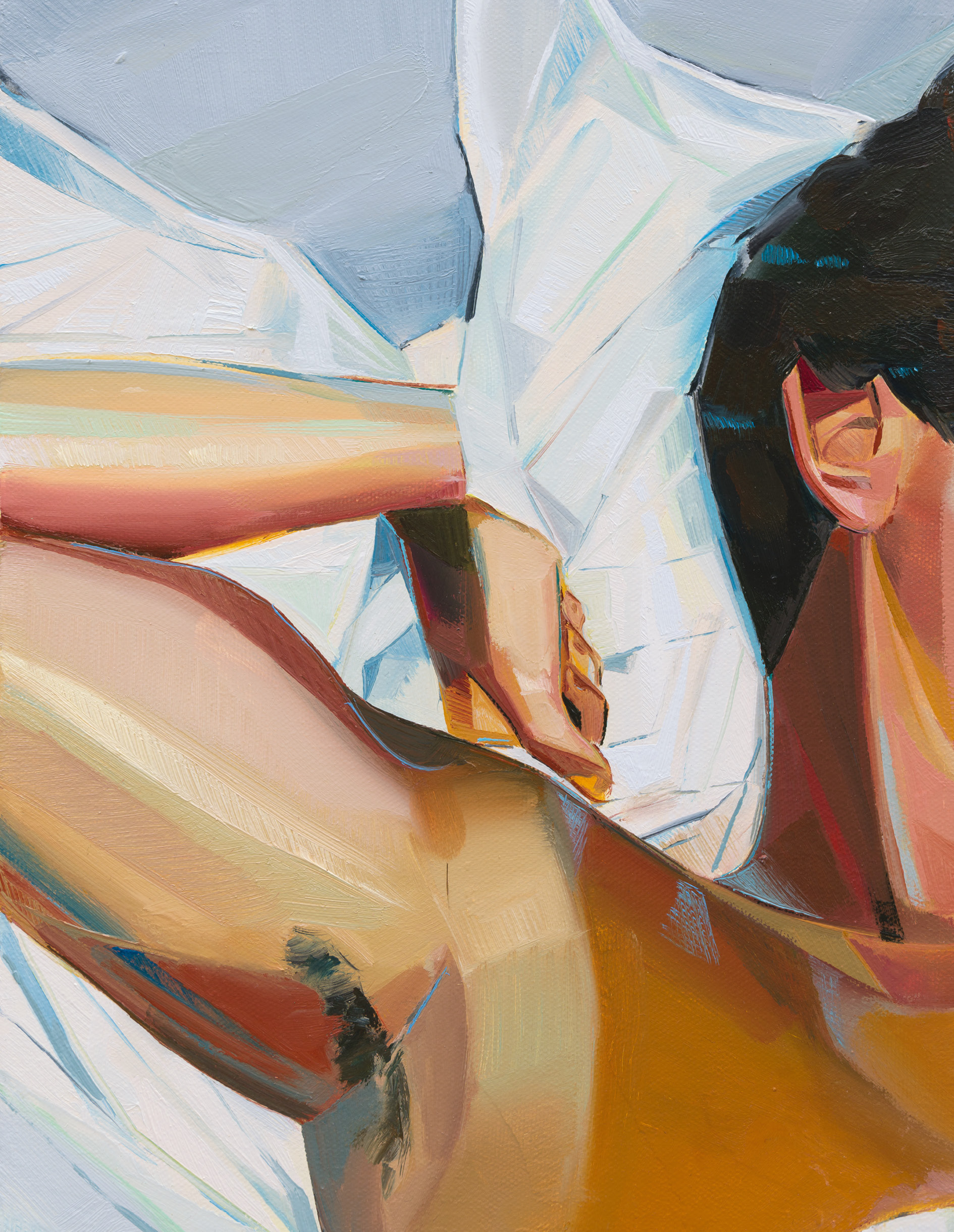
But I’m Different50€ Add to cartLogan T. Sibrel’s (born 1986 in Jasper, IN, lives and works in Brooklyn, NY) paintings and drawings depict moments of great joy and beauty, but also fear, sadness, desire and aggression. Frequently only part of the mostly male figures is depicted. Sibrel’s cropping can feel simultaneously intimate and alienating—fragmentary stories are told that touch you through their authenticity and vulnerability. Sibrel’s artistic maneuvers include overlapping, shifted perspectives, and text fragments that appear like snippets of overheard conversations and thus create a collage effect.
This book is the artist’s first comprehensive publication with works from the last twenty months. While the first part presents the artist’s paintings, the second part presents his drawings with the edges of the backing paper digitally removed so that it looks as if the images were drawn directly into the book.
Logan T. Sibrel completed his bachelor’s degree at Indiana University in Bloomington in 2009 and his master’s degree at Parsons New School of Design in New York in 2011. His most recent solo exhibitions include In Another Life and Galerie Thomas Fuchs (Stuttgart, DE) and Brake For Your Sweetheart at Auxier Kline (New York, NY).
-
Mihai Olos
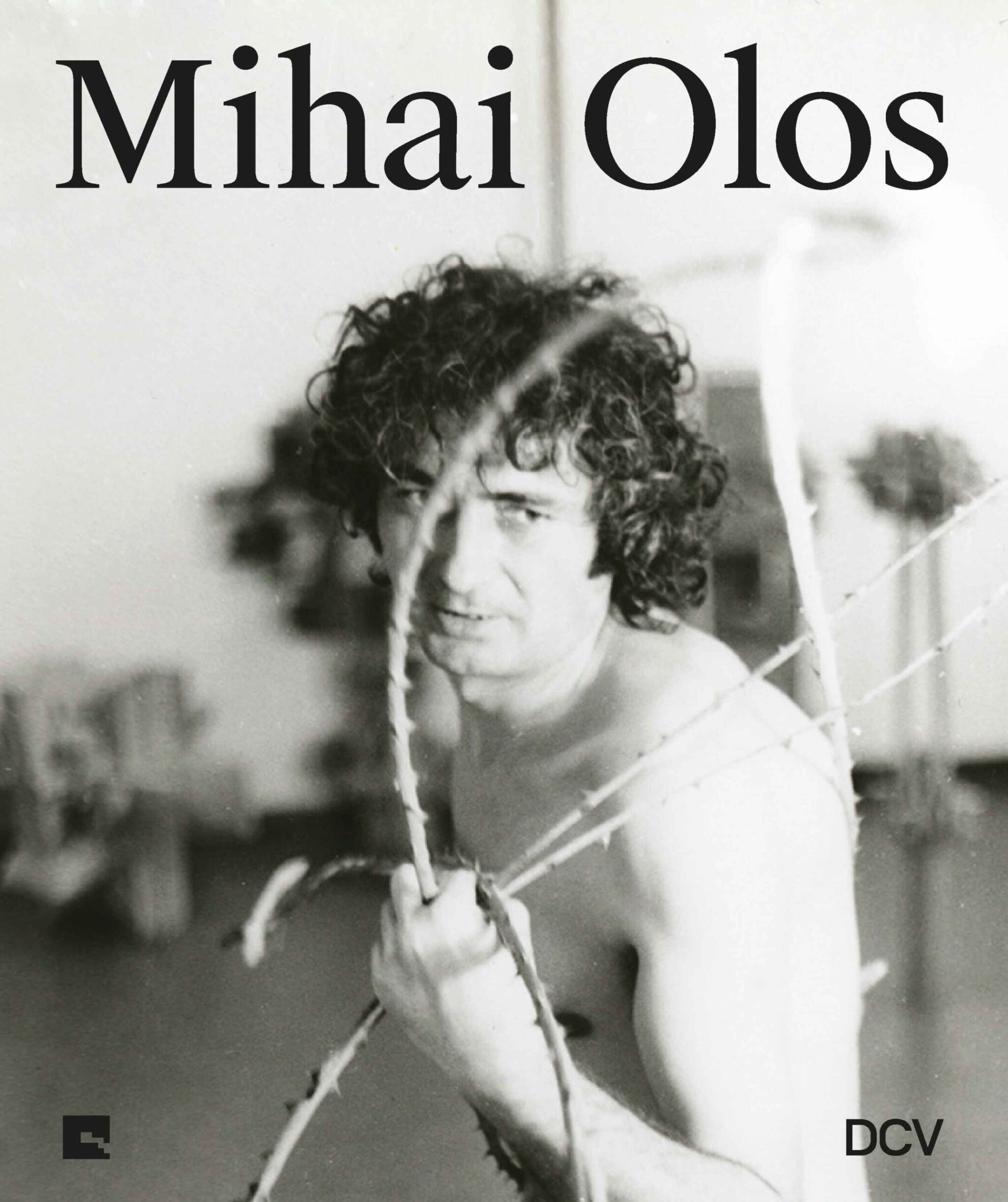
42€ Add to cartMihai Olos (b. Ariniș, Romania, 1940; d. Endingen am Kaiserstuhl, 2015) ranks among the most fascinating artists of the second half of the twentieth century. His adaptations of the formal vocabulary pioneered by Constantin Brâncuși are unrivaled in their creative originality. His works evince an utterly novel approach to the combination of materials from the culture of rural Romania with the visual strategies of modernism. His formidable oeuvre engages with conceptual and minimal art and comprises paintings, drawings, and sculptures, sometimes in the dimensions of land-art projects, as well as performances and poetry. Despite the constraints imposed by the communist system, his art and travels—during which he also met his kindred spirit Joseph Beuys—were dedicated to the unerring pursuit of his vision of social sculpture and radical utopian architecture.
-

Bilder des Wohnens
18€ Add to cartThe Cognitive Registers of Photography
All over the world, housing shortages and living conditions are urgent concerns of political and academic debates. Scholars at the FH Bielefeld conducted a three-year research project on Bilder des Wohnens. Architekturen im Bild, focusing on questions of the representation of space and hybrid forms of visualization between documentation and staging as well as photography as an archive of architectural knowledge and tool in the planning process. The book draws on studies of twentieth-century social utopias such as Tashkent, Uzbekistan, an embodiment of the urban-planning ideal of Soviet modernism, and explorations of social and cultural spaces along the coasts of northern Morocco and southern Spain, as well as a photographic typology of urban fabrics in Germany and other sociocultural studies that grapple with the significance of living spaces today.
-
Spaces Embodied (ENGLISH)
Draiflessen Collection32€ Add to cartWe live in spaces that we shape in accordance with our own ideas. Our everyday lives leave traces in them that speak to our habits. Spaces promise shelter and belonging, but they can also instill a sense of constraint. We grow into the spaces we inhabit—and they in turn become expressions of our personalities. Conversely, spaces, depending on their architecture and location, inform our existence. RÄUME HAUTNAH gathers works of art that, rather than conceiving of the human sphere and the spatial domain as separate, comprehend them in their complex entanglements: in bodily experience, emotional dependency, or the instinctive need for protection. An essay by Olesja Nein, the project’s curator, offers an introduction to the exhibition and takes the reader on a tour, describing each artist’s space of activity and supplying helpful information. Philipp Zitzlsperger, meanwhile, zooms in on a key aspect of the art in the exhibition, the imprint as an artistic technique with a distinctive aura, and illuminates its origins and significance since the dawn of modernism.
Artists: Absalon, Shannon Bool, Heidi Bucher, Eileen Gray, Do Ho Suh, Mary Mattingly, Tracey Snelling, Francesca Woodman
-

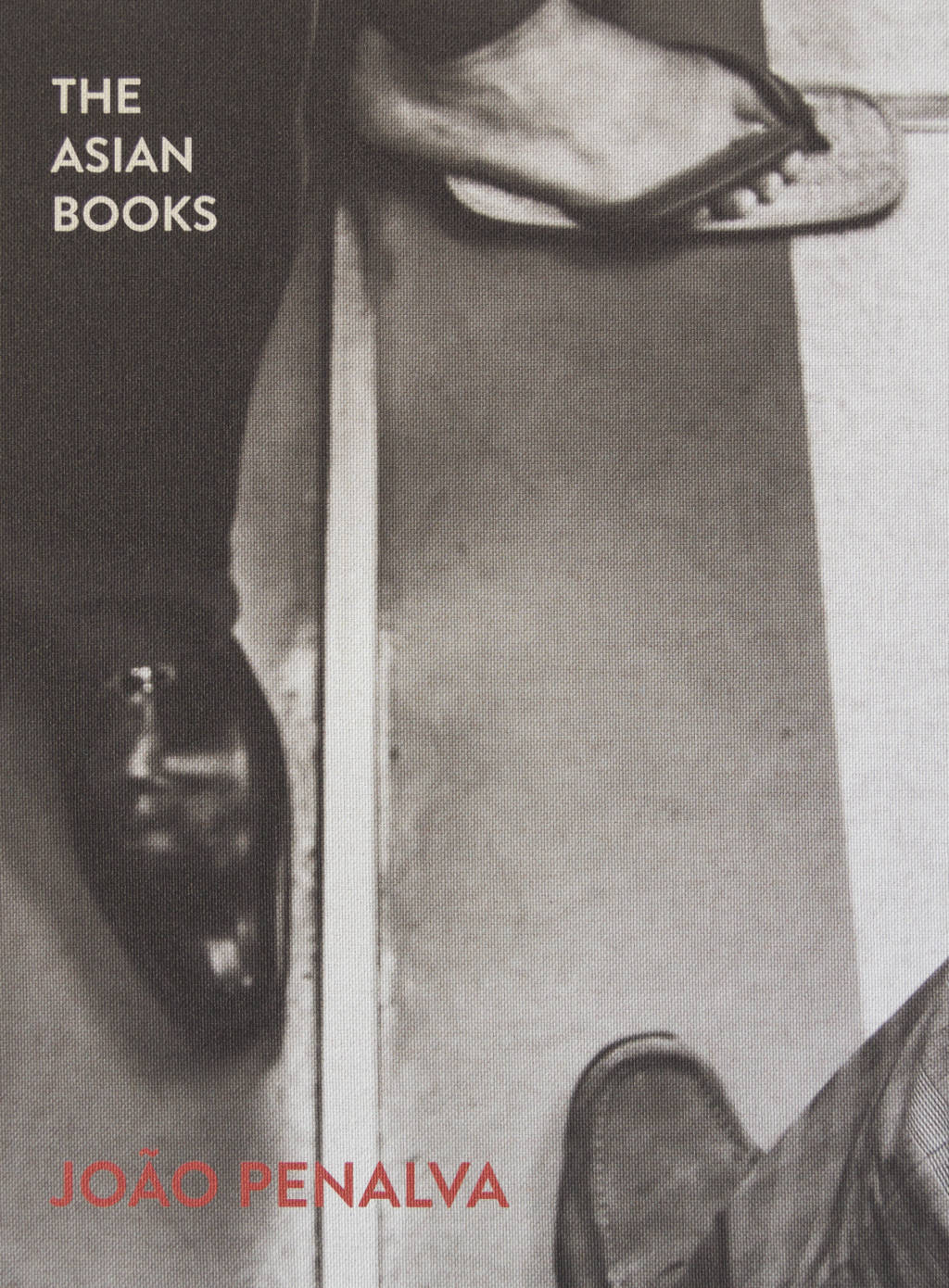
João Penalva
The Asian Books40€ Add to cartThe First Survey on the Exceptional Artist Books of João Penalva
Since 2007 João Penalva (b. 1949, Lissabon; lives and works in London) has exhibited large format unbound books, printed with archival inks on fine art paper, displayed on tables with chairs, to be handled freely. Each one is published in an edition of three and one artist’s proof. Those whose content relate to Asia, whether factually or fictionally, are collected here for the first time: Taipei Story, 2007; Portraits: Machines and Kabuki Wigs, 2009; The Toshiba Book of Happiness, 2009; Hello? Are you there?, 2009; Michio Harada, 2015; Boro, 2017.
João Penalva studied Fine Art at the Chelsea School of Art in London. His works have been shown in manifold international exhibitions. Penalva represented Portugal 2001 at the Venice Biennale and 1996 at the São Paulo Biennale.
-

Glückliche Tage
32€ Add to cartWe see in contrasts. Freedom from pain follows pain, and felicity is the more radiant after a period of misfortune. Happiness, that is to say, displaces unhappiness and is perhaps its recompense; what is certain is that, as antonyms, they are (at least in this world) inconceivable without each other. The contrast they form also underlies the tensions inherent in the works in this catalogue. Some take us straight from the pinnacle of happiness down into the abyss, while in others the gradients of ascent or descent are so gentle that no culmination is perceptible. What all oeuvres gathered in the book have in common is that they furnish the human being, a social creature, with an experience of resonance. Happiness and unhappiness reverberate between the art and the beholders, leaving, in the best case, a lasting impression. Opening the catalogue—a metaphor for the human condition materialized in paper—one overhears this serenely melancholy echo of the works.
Artists: Rui Chafes, Tamara Eckhardt, Nan Goldin, Felix Gonzalez-Torres, Barbara Hammer, Carsten Höller, Ken Lum, Johanna von Monkiewitsch, Yoko Ono, Heike Weber, Stefan Wissel
With contributions by: Yevgenia Belorusets, Nell Sophie Bender, Elias Bendfeldt, Laura Berestecki, Annabella Ernst, Annika Gaeth, Hristina Georgieva, Markus Heinzelmann, Malwin Kraßnigg, Max Florian Kühlem, Natascha Laurier, Martin Middeke, Navaz Roomi-Mirhosseini, Vanessa Joan Müller, Julia Neumann, Martin Paul, Caroline Planert, Maike Prause, Arne Rautenberg, Kira Sophie Röller, Gina Marie Schwenzfeier
-
Stefan Reiterer
Inflection Point38€ Add to cartThe Austrian artist Stefan Reiterer (born 1988, lives in Vienna) transfers digital maps and satellite images into analog physical space through abstract painting. He manipulates data from sources such as Google Earth or NASA, transforming them into illusory topologies and pseudo-cartographies to challenge our perception. What is recognized, discovered, rejected? Where is the viewer’s location? Andrea Kopranovic writes of Reiterer’s painted emptiness as a “pitting” and projection surface “for glitches, black holes, and abysses” and a metaphor for potential “interpretations, enrichments, and yet unimagined spaces of possibility.” This richly illustrated book documents Reiterer’s 2025 exhibition at the Museum Gegenstandsfreier Kunst in Otterndorf.
-
PULS 20
New Entries in the MNAC Collection36€ Add to cartPULS 20 unites the most valuable finds from a communal treasure hunt. Exponents of the Romanian arts scene and representatives of the National Museum of Contemporary Art (MNAC) in Bucharest teamed up to review the oeuvres of countless eminent Romanian artists and select works of outstanding quality that reflect the diversity of the country’s creative production over the past fifty years. In time for the celebrations of MNAC’s twentieth anniversary in 2020, the institution acquired the 180 works reproduced in this catalogue. That makes PULS 20 a singular document in two respects: it gathers a selection of key works of Romanian art that is unprecedented in its breadth between the covers of a book; and it is the result of a successful cooperative curatorial process, an organic discourse involving a wide variety of participants, demonstrating that democratic dialogue in art is not just possible but also extraordinarily fruitful and indeed necessary. All in all, this catalogue is the perfect choice both for newcomers to Romanian contemporary art and for specialists.
-

Female Gaze
From Virtual to Reality25€ Add to cartWorks of Art Take a Stance
The “female gaze” embodies a stance that is the polar opposite of the “male gaze.” The latter term came into use in the movie and advertising industries in the 1970s to describe the fact that women typically appear in films in supporting roles, as accessories to men, rather than as protagonists. The male gaze originated in a patriarchal society that has begun to change. The female gaze champions a modern form of emancipation that challenges men to abandon entrenched structures. Much more importantly, it encourages women to become aware of the strength that lies in their femininity and make it the source of their own creative expression and their own perspective on the world. For many years, the writer Silke Tobeler has visited artists in their studios, collecting the photographs she took there and her conversations with her hosts on her blog, Female Gaze.
-

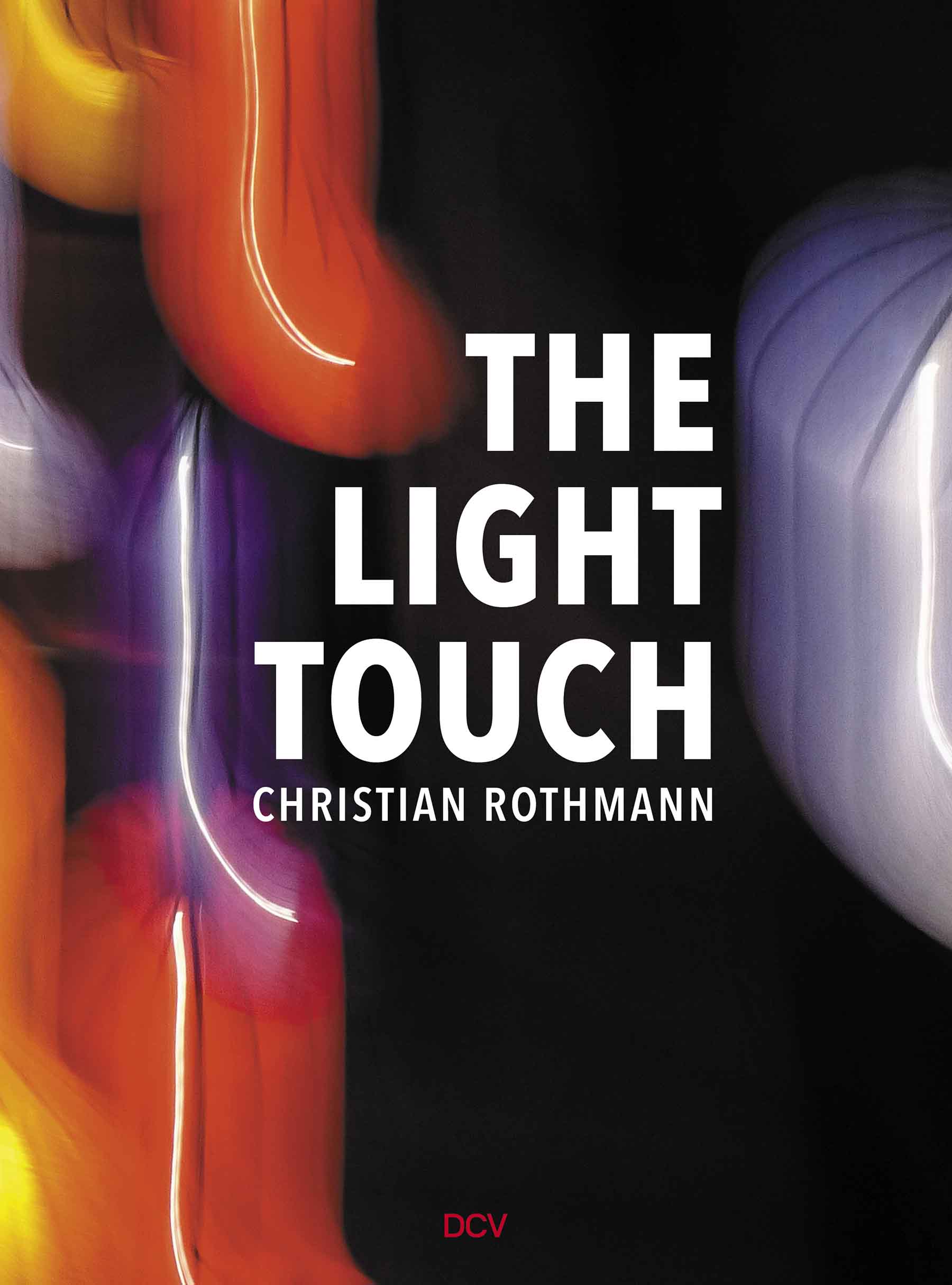
CHRISTIAN ROTHMANN
The Light Touch45€ Add to cartA Monograph of Curiosity
Christian Rothmann (b. Kędzierzyn, Poland, 1954; lives and works in Berlin) is an artistic jack-of-all-trades, a builder of bridges between cultures, and a restless globetrotter and traveler across time. He takes photographs wherever he goes, especially when he is on the road, gathering documentaries with a creative edge, spontaneous yet powerfully symbolic pictures, or conceptual series. His motifs have included basketball hoops in the most unbelievable places, toys in restaurants and stores, exotic dishes, and—in the sequence Legs of the World—beautiful legs, of real-world women, but also of advertising-poster idols and art objects. He has a special knack for recruiting accomplices from all age groups and across social and cultural differences, as for his series you and me or Mother & Daughter. Fierce large-format paintings and delicate watercolors on small paper formats from Rothmann’s studio in Berlin-Kreuzberg complement his long-term photographic projects. The Light Touch presents the artist’s variegated visual art on almost five hundred pages.