Tim David Trillsam
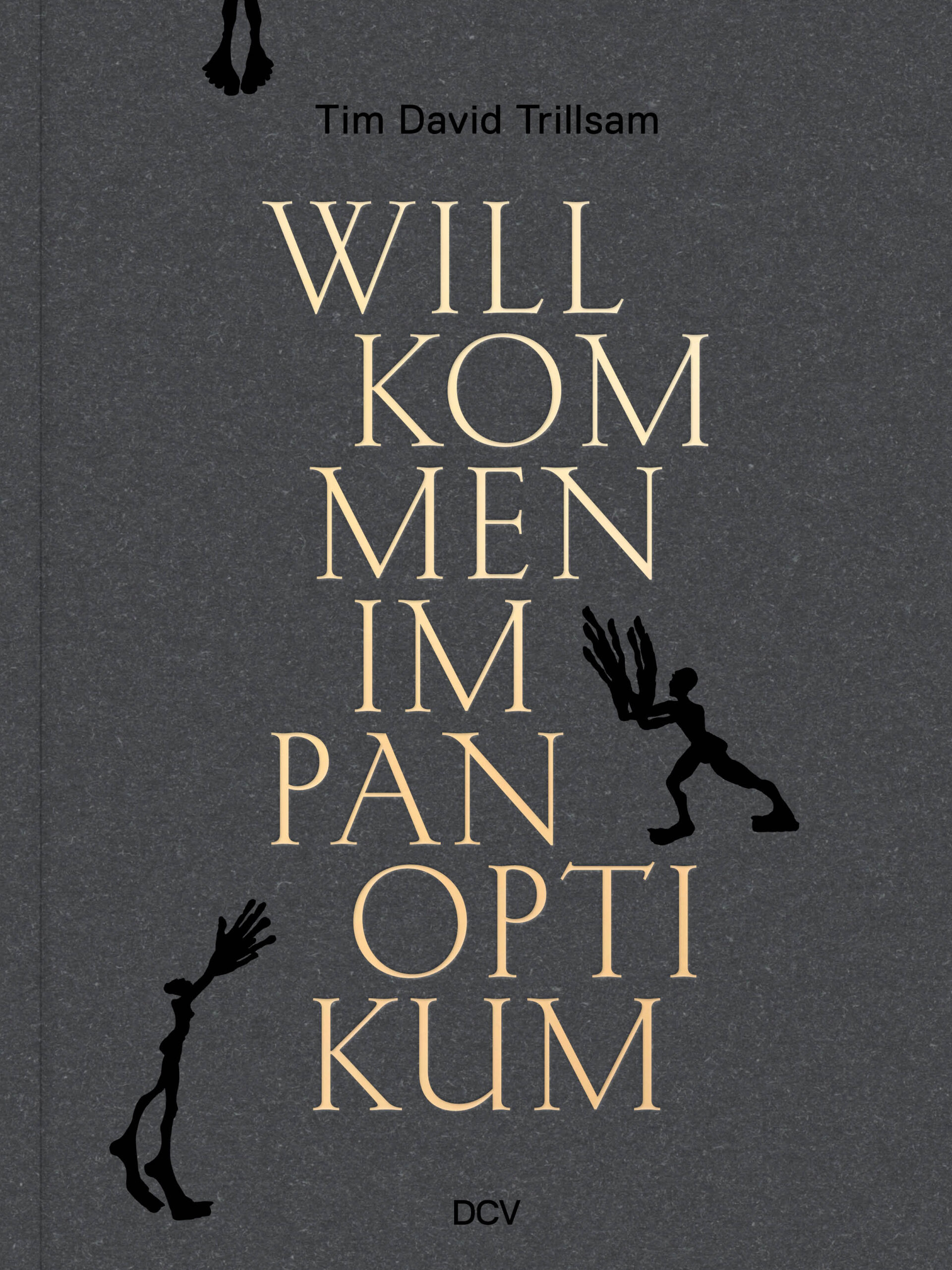
Willkommen im Panoptikum
 | |
|---|---|
| Author(s) | Dorothee Baer-Bogenschütz |
| Design | Benjamin Wolbergs |
| Size | 21 x 28 cm |
| Cover | Hardcover |
| Pages | 144 |
| Illustrations | ca. 100 |
| Language(s) | German |
| ISBN | 978-3-96912-226-6 | Release February 2026 |
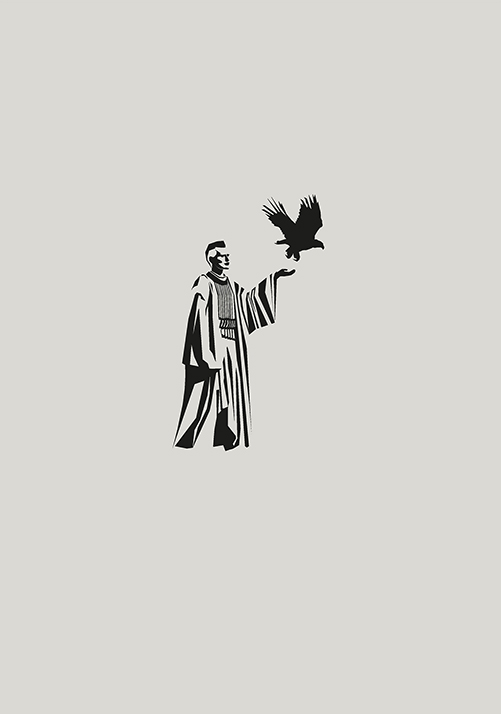
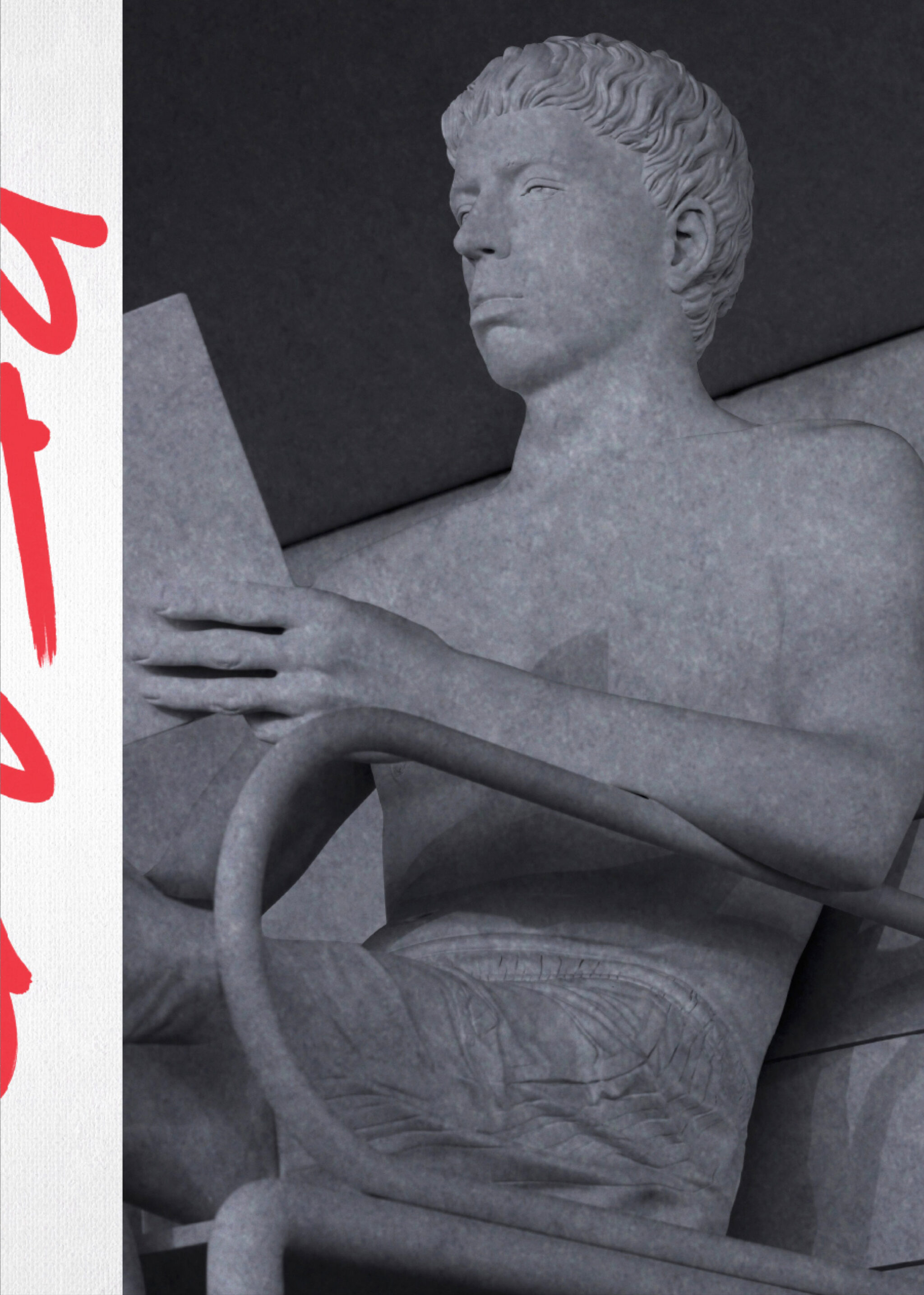
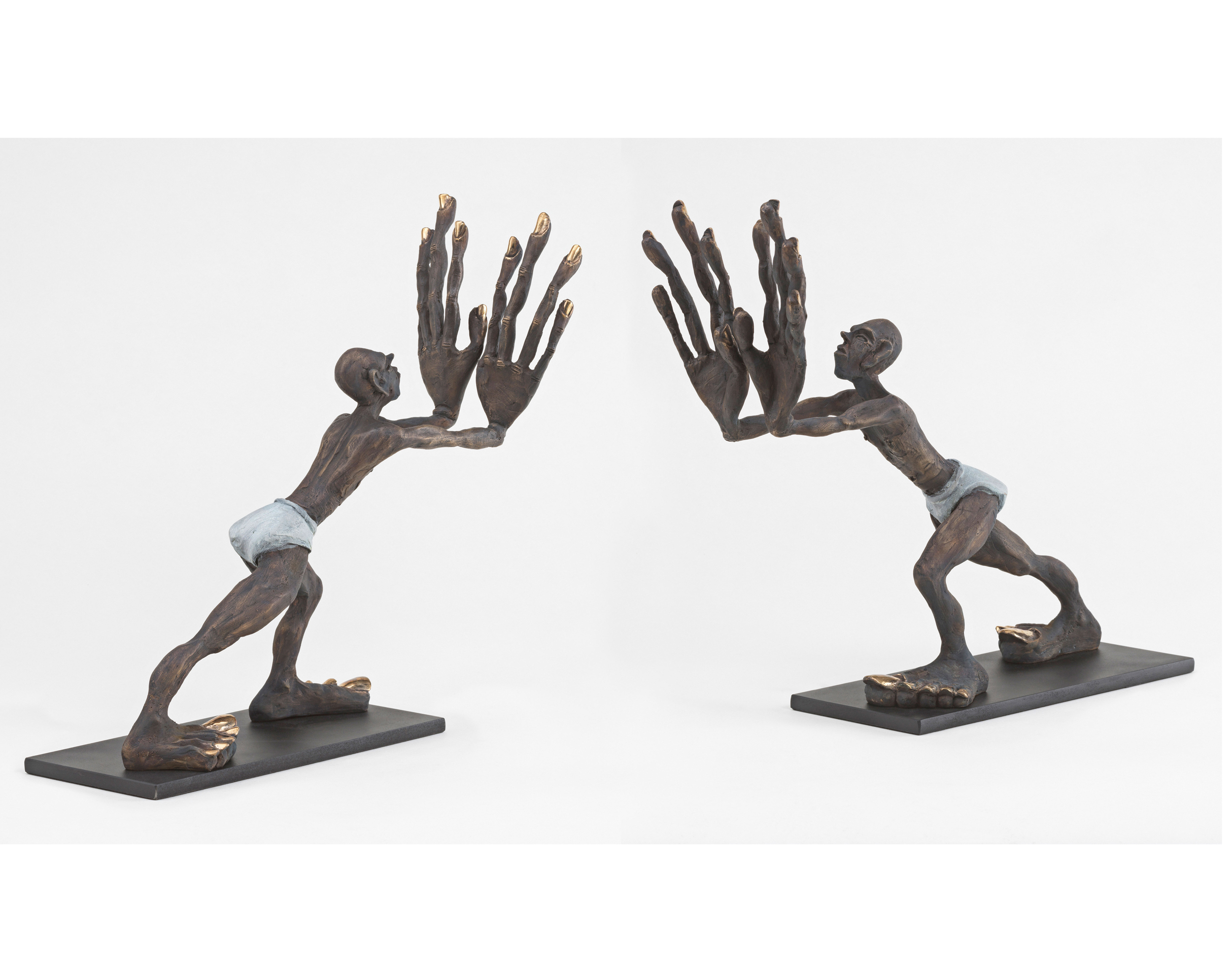
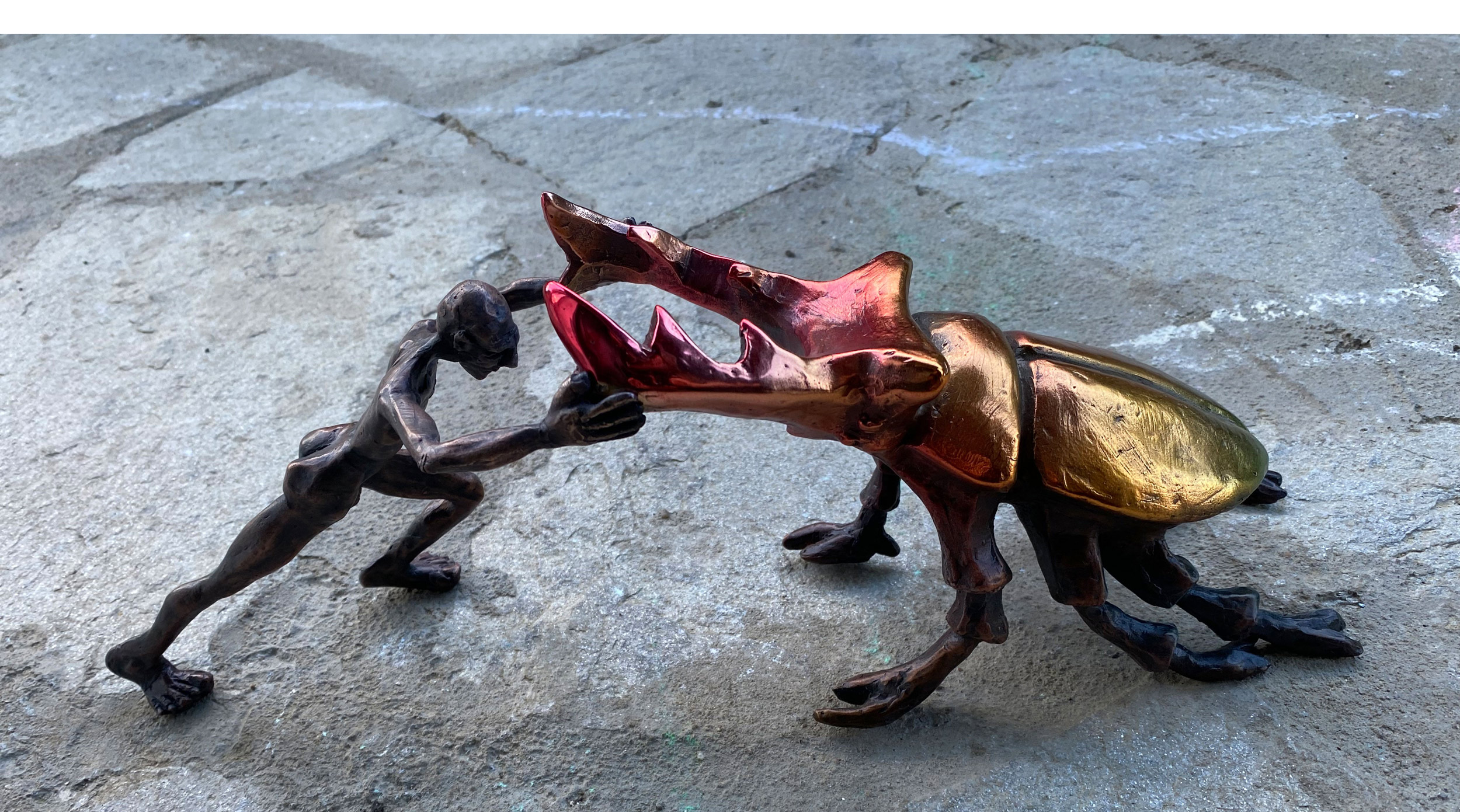
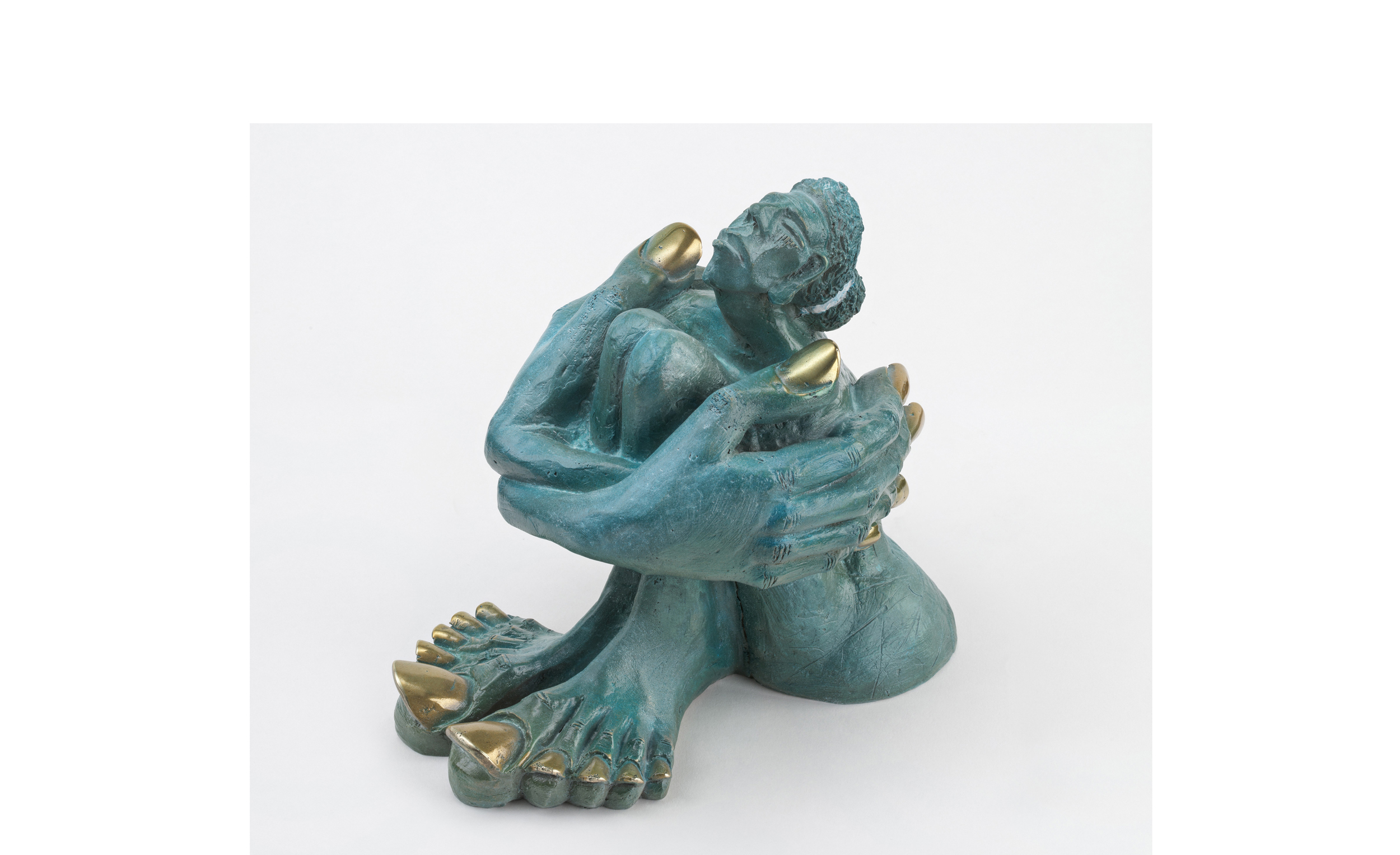
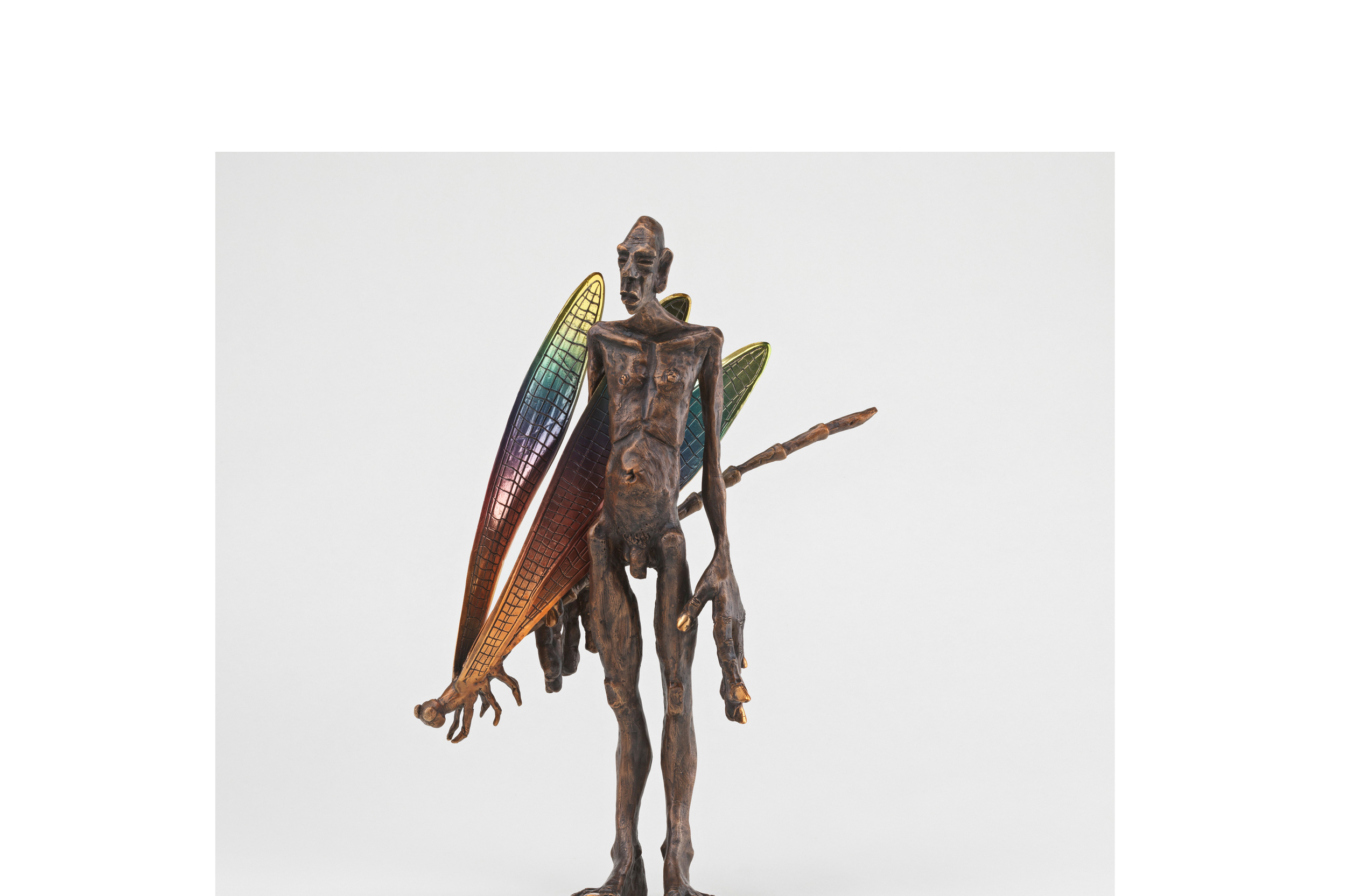
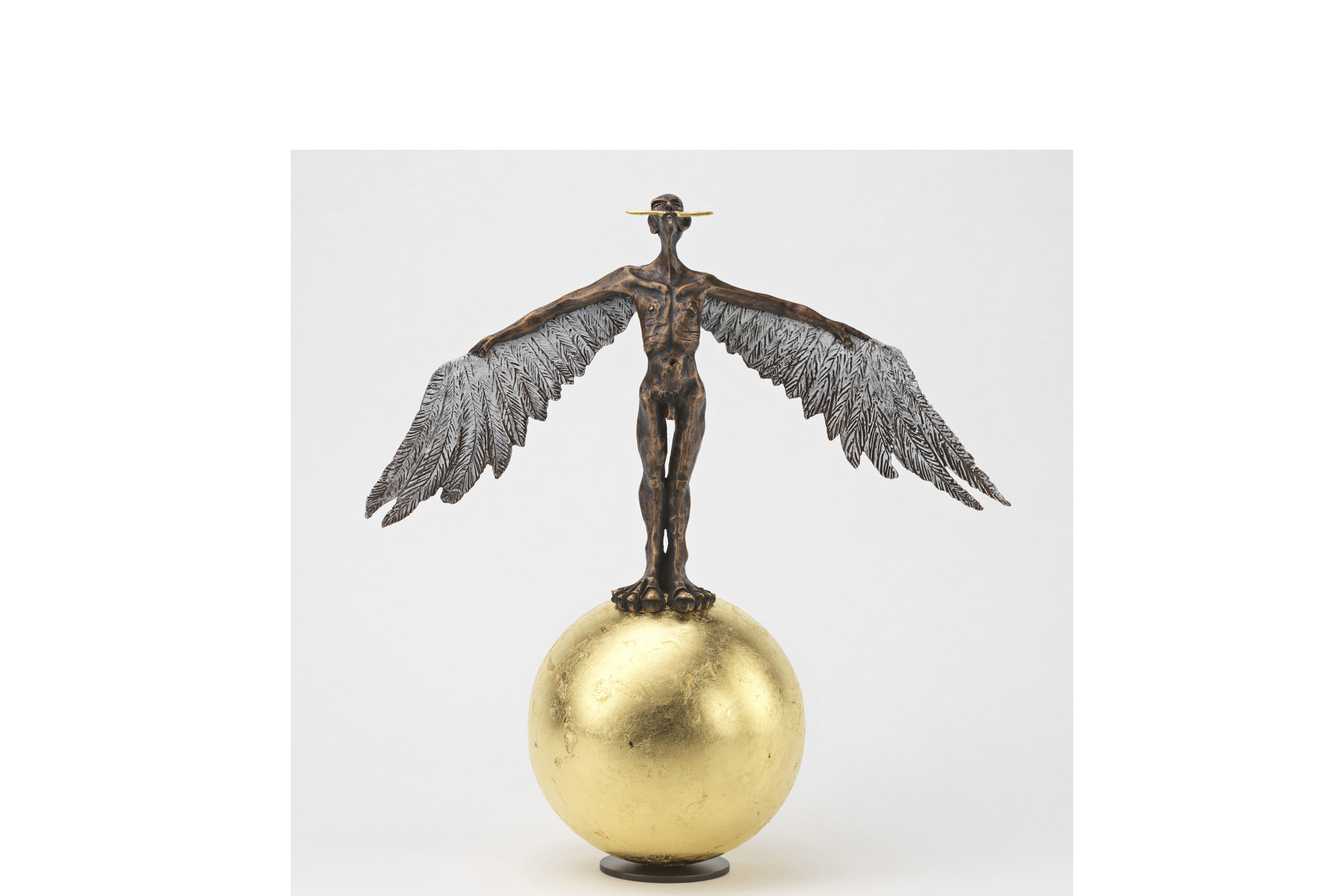
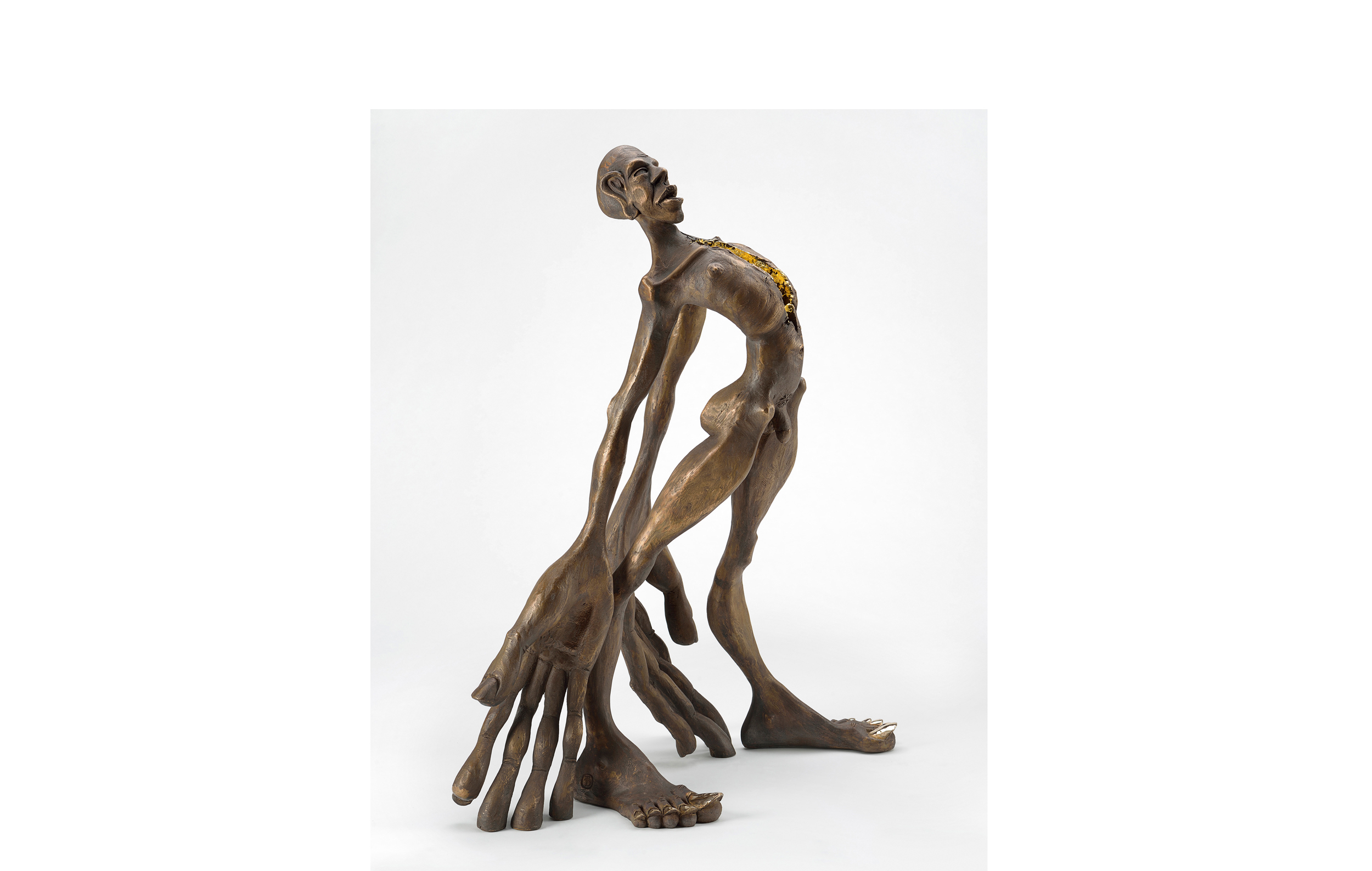
With his idiosyncratic figurative bronze sculptures Tim David Trillsam (born 1985 in the Swabian Alb) has hit a nerve. The artist’s “self memorials” ask the viewer to remember the transience and illusion of this very self. Although Trillsam employs a loaded material that evokes many great sculptors before him, his own sculptures resist the past. His figures are tangibly protagonist of the present and they provoke with their exaggerated sensuality, twisted bodies, and oversized hands and feet. “The oversizing is programmatic. As is the skeptical approach to the human species. Trillsam proceeds as a thoughtful questioner with doubt yet also irritation,” writes Dorothee Baer-Bogenschütze. Her in-depth art-historical analysis is part of this forthcoming book about Trillsam’s oeuvre since 2012.
Release February 2026
More books
-

Ilit Azoulay
Facts and Tales. Truth be Told120€ Add to cartIn an era in which multiple perspectives and oral histories are increasingly vital, Facts and Tales—Truth Be Told delves into the haunting work of Ilit Azoulay. The artist, who was born in Jaffa in 1972, transforms objects, archives, and museum holdings into vessels, challenging traditional hierarchies of knowledge. In her most recent solo exhibition Mere Things at the Jewish Museum, New York, Azoulay presents works that probe the delicate balance between factual representation and nuanced storytelling.
The publication accompanying the exhibition includes archival pages, the artist’s notes, and depictions of the works as well as an introduction by curator Shira Backer and an essay by the art critic, curator, and writer Sarit Shapira, who passed away in 2018. Titled Houses of Junk and Specters: On Ilit Azoulay’s Early Works, it underscores the importance of honoring both factual accuracy and oral histories and invites readers to explore the complex interplay between concrete evidence and the rich and nuanced stories.
Azoulay has devised a singular method to shed light on the blanks in hegemonic narratives and expose them. As though to produce an extortion letter, she clips her pictures from archival materials and photographs of the walls of abandoned buildings and composes them in collages interweaving a multiplicity of views. The resulting works question the exclusive truth claim of museum expertise and reveal its constructed quality. The catalog of her works, designed as a box replete with texts and images, reflects this approach, aiming to dismantle established narratives and open up diverse perspectives.
Box containing 6 different standalone publications, limited edition of 500 copies
THIS PUBLICATION WAS MADE POSSIBLE BY THE GENEROUS SUPPORT OF THE GALLERY LOHAUS SOMINSKY, MUNICH
-

GOTT&GILZ
Supernatural Beings54€ Add to cartGOTT&GILZ clothe provocative nudity into the guise of art-historical classics
The female nude is a constant of art history whose vicissitudes illustrate changing forms of representation and the wild swings of public morality. Many a nude was initially condemned as smut only to be reclassified a few years later as beautiful and becoming and inducted into the hallowed halls (the opposite has also happened). GOTT&GILZ’s photographic paintings build on this long tradition of depictions of naked women by men—theirs is the proverbial “male gaze.” It is a debt they are quick to acknowledge, with nods to Klimt, Schiele, Pollock, et al. No wonder some have responded to their work with kneejerk indignation. Unlike in those art-historical references, then, the impudence lies not in the shattering of traditional norms of representation but in quoting them: the past as affront. The women in the pictures as well as the artists themselves flaunt their desires, shamelessly and relentlessly confronting us with the historic roots of our social and psychological realities.
Freedom is the key idea in the two artists’ oeuvre: the freedom to be authentic and express oneself without shame. Their subtly provocative play with aesthetic conventions and taboos has not only made a splash on the arts scene, it has also prompted vital discussions about gender roles, body images, and the right to sexual self-determination.
By letting it all hang out, they allow us to see ourselves as we are instead of presenting a picture of what we (supposedly) should be like. The insolence of it!
-

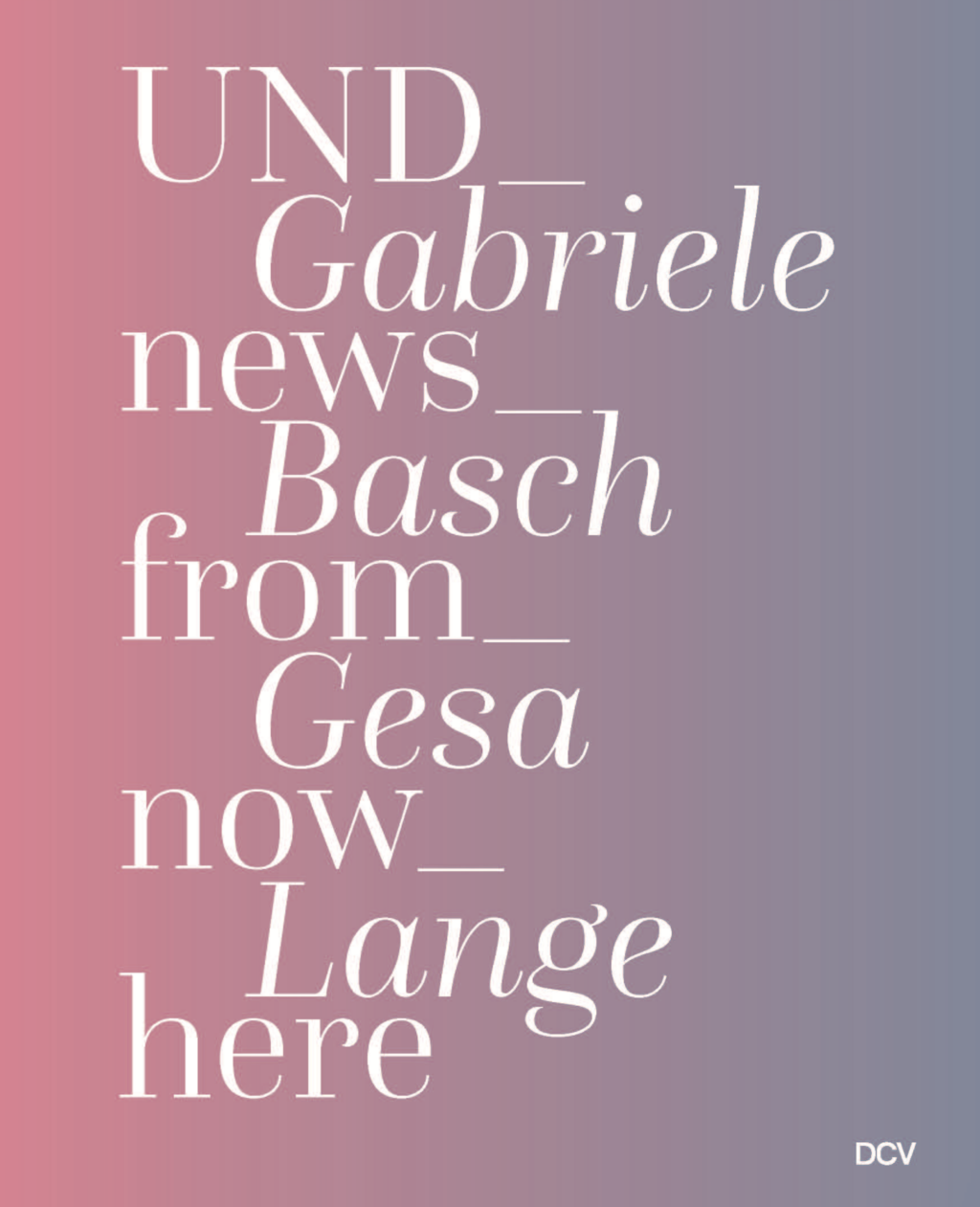
GABRIELE BASCH, GESA LANGE
UND_NEWS_FROM_NOW_HERE18€ Add to cartBeyond Painting
Gabriele Basch’s (b. 1964, Bad Homburg; lives and works in Berlin) cut-outs and Gesa Lange’s (b. 1972, Tongeren, Belgium; lives and works in Hamburg) drawings are meditations on construction and deconstruction as well as doubts and how to overcome them. Both artists expand the range of painting: Basch, with incisions into the medium and a creative handling of the tinged shadows that transform the painted panel into a wall-mounted object; Lange, by embroidering her canvases with colorful threads that open up the pictorial space on all sides. The book presents works by both artists, initiating an animated and dynamic dialogue between their nonrepresentational visual idioms. Gabriele Basch is professor of painting at the Hochschule für Angewandte Wissenschaften Hamburg. Gesa Lange is professor of graphic art at the Hochschule für Angewandte Wissenschaften Hamburg. She has received the Kunsthalle Rostock Prize and other awards.
-
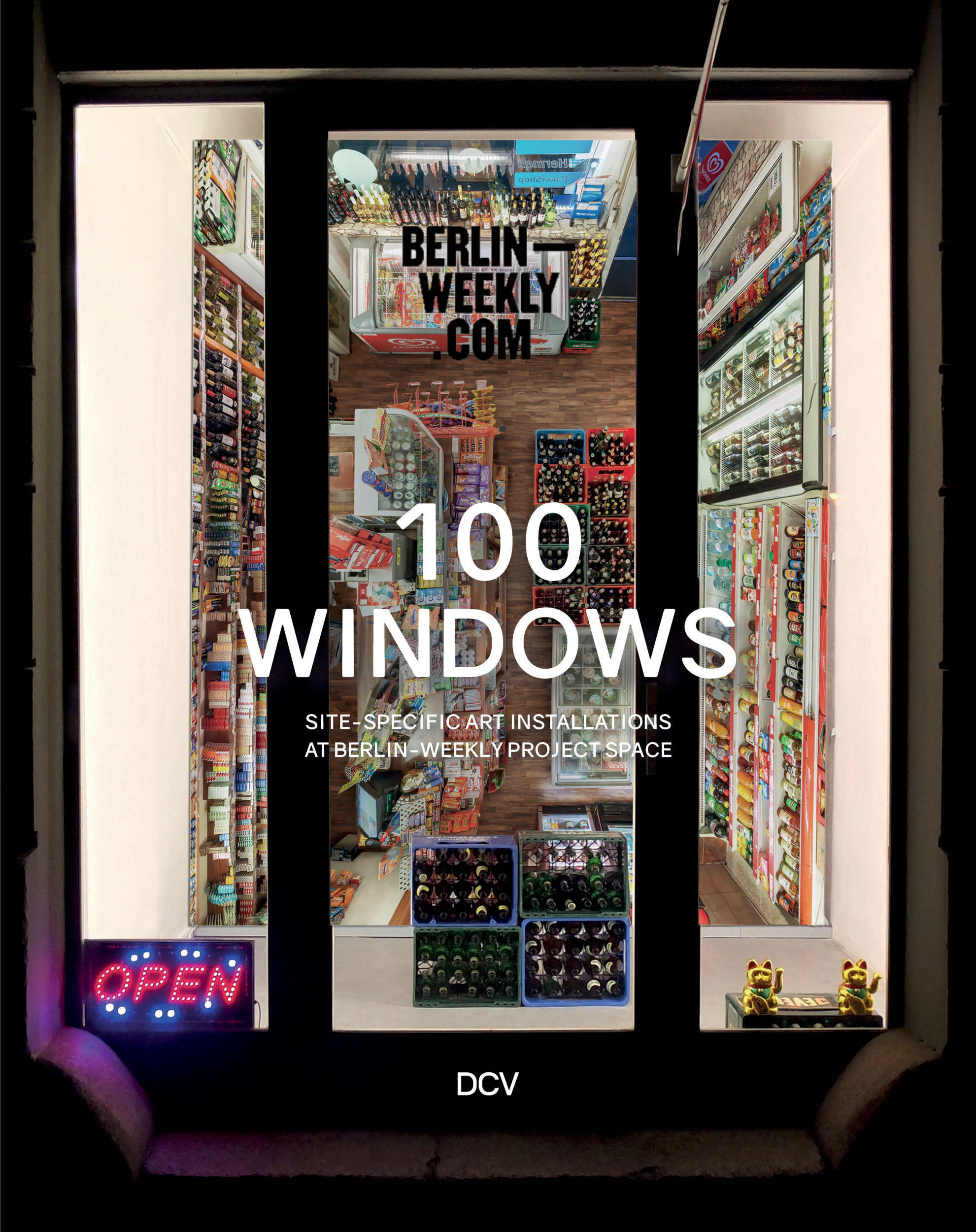
100 Windows
Site-specific art installations at Berlin-Weekly project space28€ Add to cartEstablished in 2010 by Stefanie Seidl in a former gateway for horse-drawn carriages that is now enclosed by glazing at both ends, the project space BERLIN-WEEKLY offers the narrow yet exceptionally tall display space to artists as a highly visible public stage for installations that respond to the setting or site. Its unilateral orientation toward the street makes BERLIN-WEEKLY a creative intervention into the urban fabric that harnesses the shopwindow format. The book presents 100 selected window installations to illustrate the widely diverse ways in which individual artists have engaged with the venue, time and again transforming the unusually shaped small space.
With works by: Menno Aden, Alexandra Baumgartner, Isabelle Borges, Astrid Busch, Simon Faithfull, Moritz Frei, Max Frisinger, Wolfgang Flad, Dagmara Genda, Andreas Greiner & Armin Keplinger, Sabine Groß, Marc van der Hocht, Sabine Hornig, Irène Hug, Bettina Khano, Julia Kissina, Nikolaus List, Ulrike Mohr, Virginie Mosse, Piotr Nathan, Katja Pudor, Philip Topolovac, Inken Reinert, Sophia Schama, Geerten Verheus, Sinta Werner, Barbara Wille, and others
-

Hans Hofmann
Chimbote24€ Add to cartExpressive Forms between Art and Architecture
As an exponent of Abstract Expressionism, Hans Hofmann (b. Weißenburg, Germany, 1880; d. New York, USA, 1966) ranks among the preeminent artists of the twentieth century. As a teacher at his Hans Hofmann School of Fine Arts, which he founded in 1933 after emigrating to the United States, he exerted a formative influence over a generation of young painters. With Arshile Gorky, Willem de Kooning, Jackson Pollock, and others, he was a member of the illustrious New York School, a loose association of visual artists. In 1950 he was spending time in Europe and collaborated with the architects Josep Lluís Sert and Paul Lester Wiener on designs for colorful wall paintings to be executed on buildings in Chimbote, Peru. The urban masterplan they developed for the city’s post-World War II expansion was never realized, and so Hofmann’s intensely colorful works in large formats have been known only to specialists. The selection gathered in this book together with drawings and a city plan provides focused insight into a visionary project.
-

Stefan Knauf
10€ Add to cartStefan Knauf (b. Munich, 1990; lives and works in Berlin) uses selected materials such as construction supplies or plants to investigate the histories of botany, migration, trade, science, and architecture and critique an idealized and anthropocentric conception of nature that is still prevalent. His sculptures, geometric-abstract pictures, and installations, with echoes of constructivism and minimal art, are contact zones in which everything is related to everything: human and non-human history, the natural and the artificial, ecology and ideology. Knauf’s works do not propose to unravel these entanglements. Rather, they suggest alternative perspectives and topographies guided by the idea of the “modified landscape” and devise material and alchemistic forms of knowledge and a novel and multiperspectival approach to the history and reality of the Anthropocene.
- Release February 2026

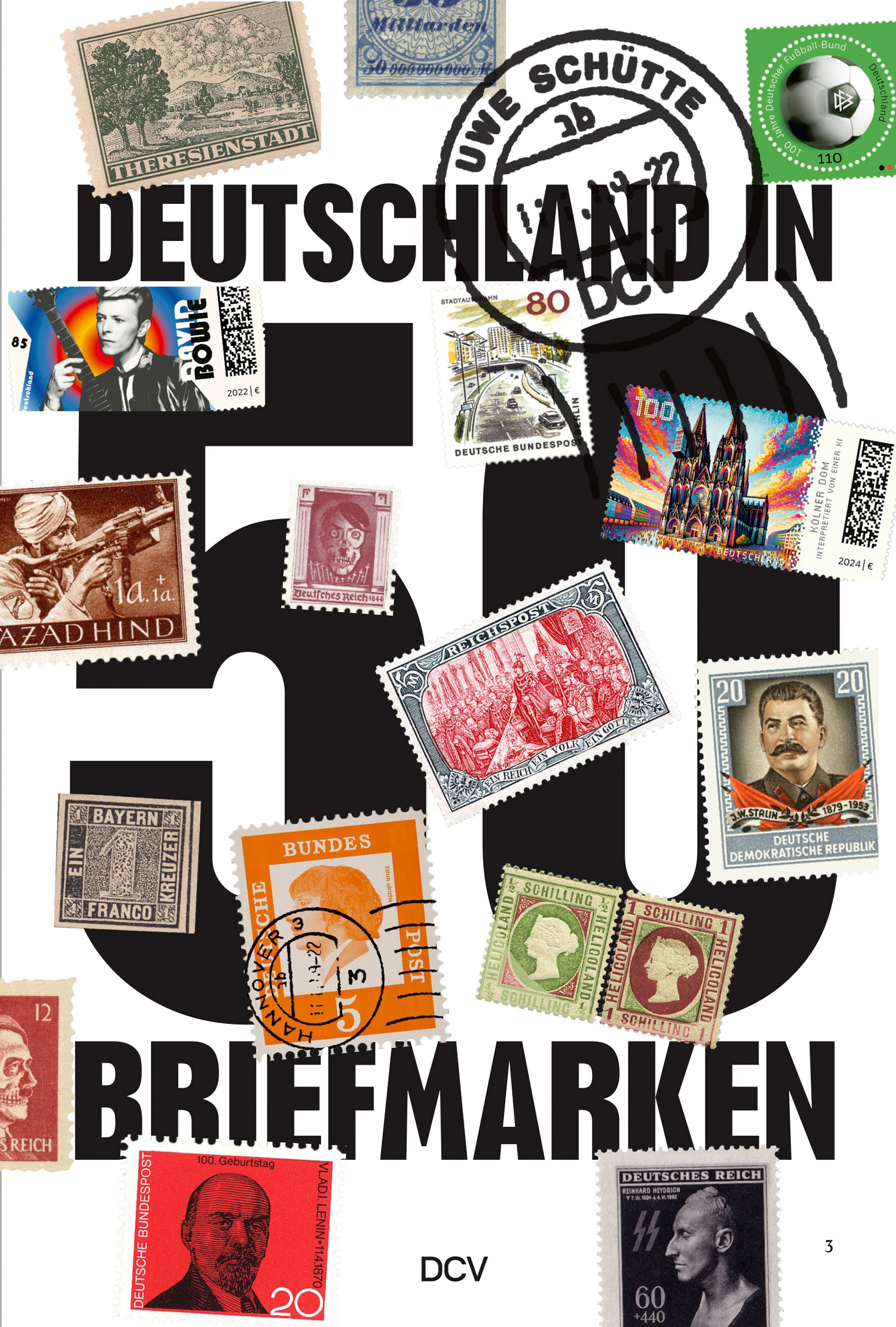
Uwe Schütte
Deutschland in 50 Briefmarken24€ Add to cartThe postage stamp, the avid philatelist Walter Benjamin prophesied in 1928, would “not survive the twentieth century.” Time, then, for a look back: in fifty essays, Uwe Schütte embarks on a voyage through 175 years of German postal history to decode the mentalities that shaped it. Analyzing the visual language of the stamps and their significance for Germany’s collective memory, from the One kreuzer black to Deutsche Post’s cutting-edge crypto-stamp, he shows how the stamp broke the shackles of its function as a proof of postage paid to emerge in the early twentieth century as a medium of mass-circulation miniature-format graphic art. It went on to serve as an instrument of propaganda, was collected and counterfeited, and proved a capacious mirror of discourses in society.
The cultural essayist Uwe Schütte, born in Sauerland in 1967 and a philatelist since childhood, completed his doctorate in German Literature under W.G. Sebald. After two decades as a university lecturer in England, he now lives and works in Berlin. His work includes more than 30 books dealing with extremist art and occultism as well as advanced pop culture and contemporary literature.
- English edition not available anymore

YAEL BARTANA
THE BOOK OF MALKA GERMANIARead moreShe Is Hope. She Is the Leader. She Is the Messiah. She Is History. She Is Fake.
The video artist Yael Bartana (b. Kfar Yehezkel, Israel, 1970; lives and works in Amsterdam and Berlin) makes work that explores the visual language of identity and the politics of commemoration. The critical scrutiny of collective expectations of political or religious salvation is a central concern in her art. In the video installation Malka Germania—Hebrew for “Queen Germany”—Bartana creates alternative realities from the German-Jewish past and present that bring scenes of the collective unconscious to light. The publication follows the epiphany of Malka Germania, a female redeemer figure, in five chapters whose layout is modeled on that of the Talmud, the central text in Rabbinical Judaism. This organization reflects the polyphonic complexity, rich nuance, and ambivalence that the work casts into visuals and underscores that there is no simple answer. The book includes an interview with the artist and contributions by Sami Berdugo, Christina von Braun, Michael Brenner, Max Czollek, and others. It is published on occasion of the exhibition Yael Bartana—Redemption Now at the Jewish Museum Berlin.
Yael Bartana studied at the Bezalel Academy of Arts and Design, Jerusalem, the School of Visual Arts, New York, and the Rijksakademie van beeldende kunsten, Amsterdam. Her work is held by collections all over the world and has been presented in solo exhibitions at venues including the Stedelijk Museum, Amsterdam, the Pérez Art Museum Miami, and the Moderna Museet, Malmö.
Click here for the German edition.
-

Lars Breuer
The Love of the Gods32€ Add to cartThe art of Lars Breuer (b. Aachen, 1974; lives and works in Düsseldorf and Cologne) is set apart by its broad spectrum of systems of reference. In his large-format installations, text-based works in his own typography draw connections to literature and art history. They are complemented by figurative and abstract paintings and photographs.
In The Love of the Gods, Breuer presents 104 C-prints of photographs for which he pointed the camera’s lens into the barrels of disused rifles, pistoles, revolvers, and cannons. The pictures were taken on the artist’s travels to Athens, Bangkok, Buenos Aires, Copenhagen, Leverkusen, Ingolstadt, Melbourne, New York, Oslo, and Phnom Penh, in museums, palaces, and public squares. Breuer’s conceptual and meticulously sober-minded approach yields almost abstract compositions showing nothing but the round muzzles and the dark interiors of the weapons on a deep-black ground. We see only a ring-shaped ornament until it dawns on us that it is part of a lethal implement. A cruel constant of human existence stares us in the face: humans behind these weapons were perpetrators, humans in front of these weapons were victims. Lars Breuer’s turn the spotlight on what the aura of the ornaments conceals: they have wrought death.
-

Penny Hes Yassour
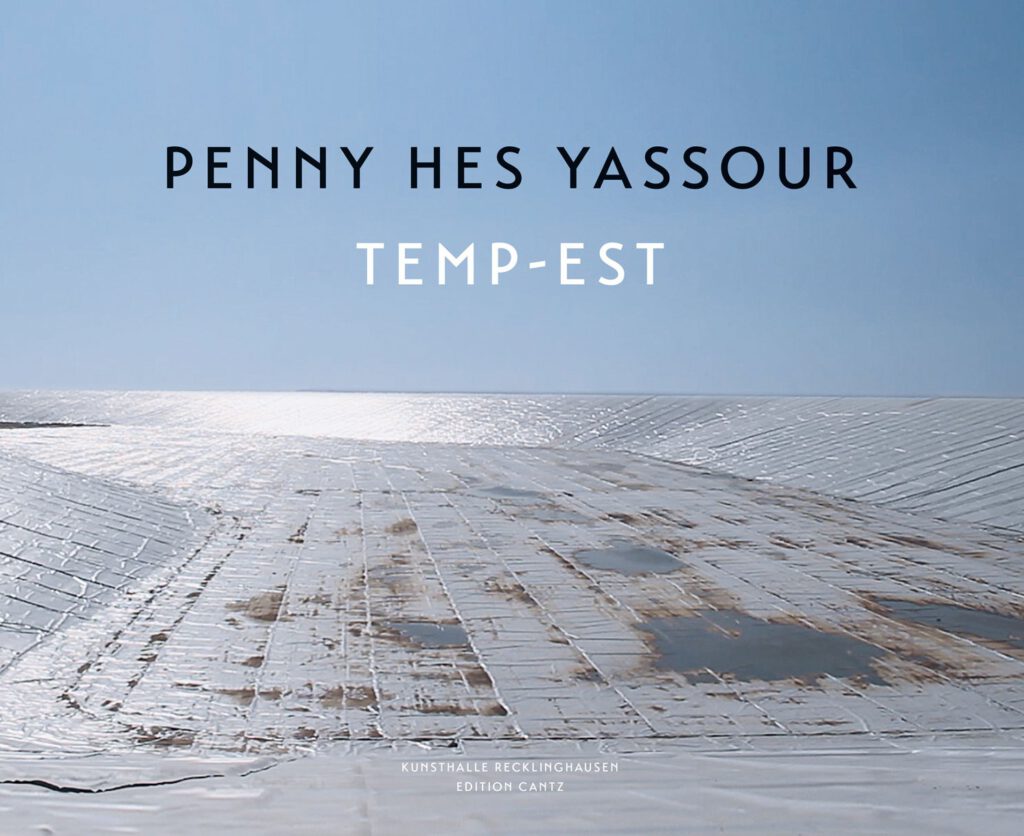
Temp-Est24€ Add to cartA Monograph about the Award-Winning Israeli Artist
Penny Hes Yassour (b. 1950, lives and works at kibbutz En-Harod Ihud) tells stories and keeps history alive, explores the boundary between remembering and forgetting. In her installations she combines sound, image, and a multi-part world of objects into narrative mise-en-scènes of great poetic power. Hes Yassour leads the viewer through the Jordan Valley with its many watchtowers, accompanies the transformation of the landscape in a gigantic, stagelike water basin, and documents the flight of bats in a narrow, labyrinthine spatial installation. The book published on the occasion of the artist’s first exhibition in Germany provides comprehensive insights into her subtle artistic work.
- Release January 2026
Stefan Reiterer
Inflection Point38€ Add to cartThe Austrian artist Stefan Reiterer (born 1988, lives in Vienna) transfers digital maps and satellite images into analog physical space through abstract painting. He manipulates data from sources such as Google Earth or NASA, transforming them into illusory topologies and pseudo-cartographies to challenge our perception. What is recognized, discovered, rejected? Where is the viewer’s location? Andrea Kopranovic writes of Reiterer’s painted emptiness as a “pitting” and projection surface “for glitches, black holes, and abysses” and a metaphor for potential “interpretations, enrichments, and yet unimagined spaces of possibility.” This richly illustrated book documents Reiterer’s 2025 exhibition at the Museum Gegenstandsfreier Kunst in Otterndorf.
-

Agostino Iacurci
10€ Add to cartAgostino Iacurci’s (b. Foggia, Italy, 1986; lives and works in Berlin) paintings, sculptures, installations, and murals are based on vegetal forms and botanical subjects. Lucid compositions in radiant colors unfurl fantastical ornaments that transcend the division between figuration and abstraction and the hierarchical distinctions of applied art, design, fine art, and folk art. His central theme is the painted garden, in which he stages plants, humans, architecture, geometry, and decoration in a fashionably theatrical landscape. In Iacurci, the interpenetration of nature and civilization is real, integrating mythological motifs from across the history of art and culture, from antiquity to futurism and postmodernism, into his singular style.
Agostino Iacurci studied fine arts at the Accademia di Belle Arti in Rome. Since 2009, he has realized numerous large-format murals and installations for public and private institutions. He has also worked with international brands including Apple, Adidas, Hermès, and Starbucks.
-

Sam Falls
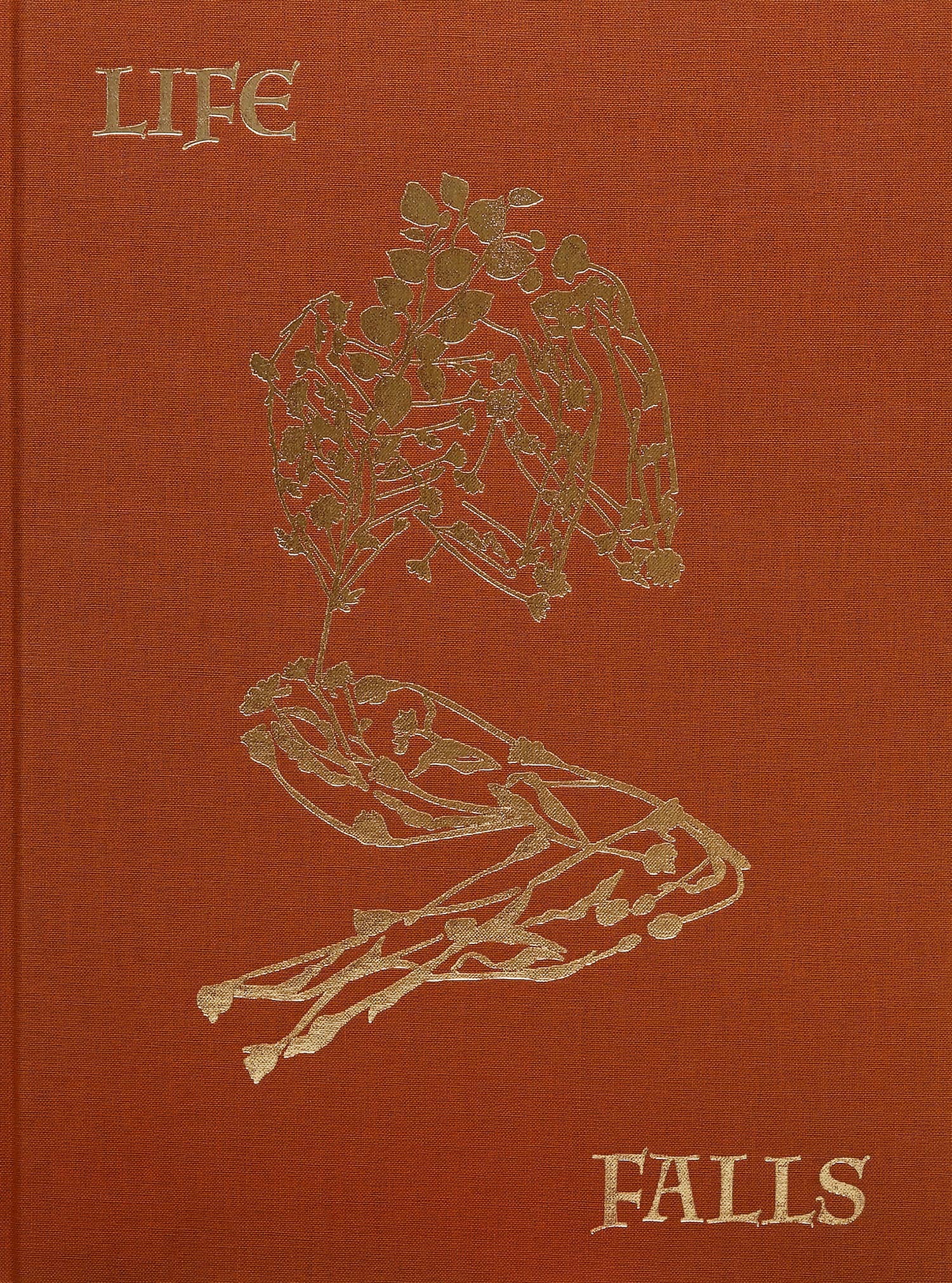
After Life45€ Add to cartSam Falls (b. San Diego, 1984; lives and works in New York) delegates the authorship of his works to the phenomena of nature. Applying water-reactive dry pigments or plant parts to support media like canvas, aluminum, or tiles and then exposing them to the effects of sun, rain, and wind at selected sites for extended periods, he deliberately integrates the agency of chance into his art. The playful yet conceptually rigorous process is a metaphor for the impermanence of all bodily existence. Falls’s symbiotic work with nature and its elements evinces references to the technique of the photogram as well as land art. Melding diverse media—photography, sculpture, and painting—he bridges the gulf between artist, object, and beholder.
Sam Falls studied at Reed College in Portland, Maine, and at the International Center of Photography Bard in New York. He has had numerous solo exhibitions, including at the Hammer Museum, Los Angeles, the Mori Museum, Tokyo, and Frankfurter Kunstverein.
-
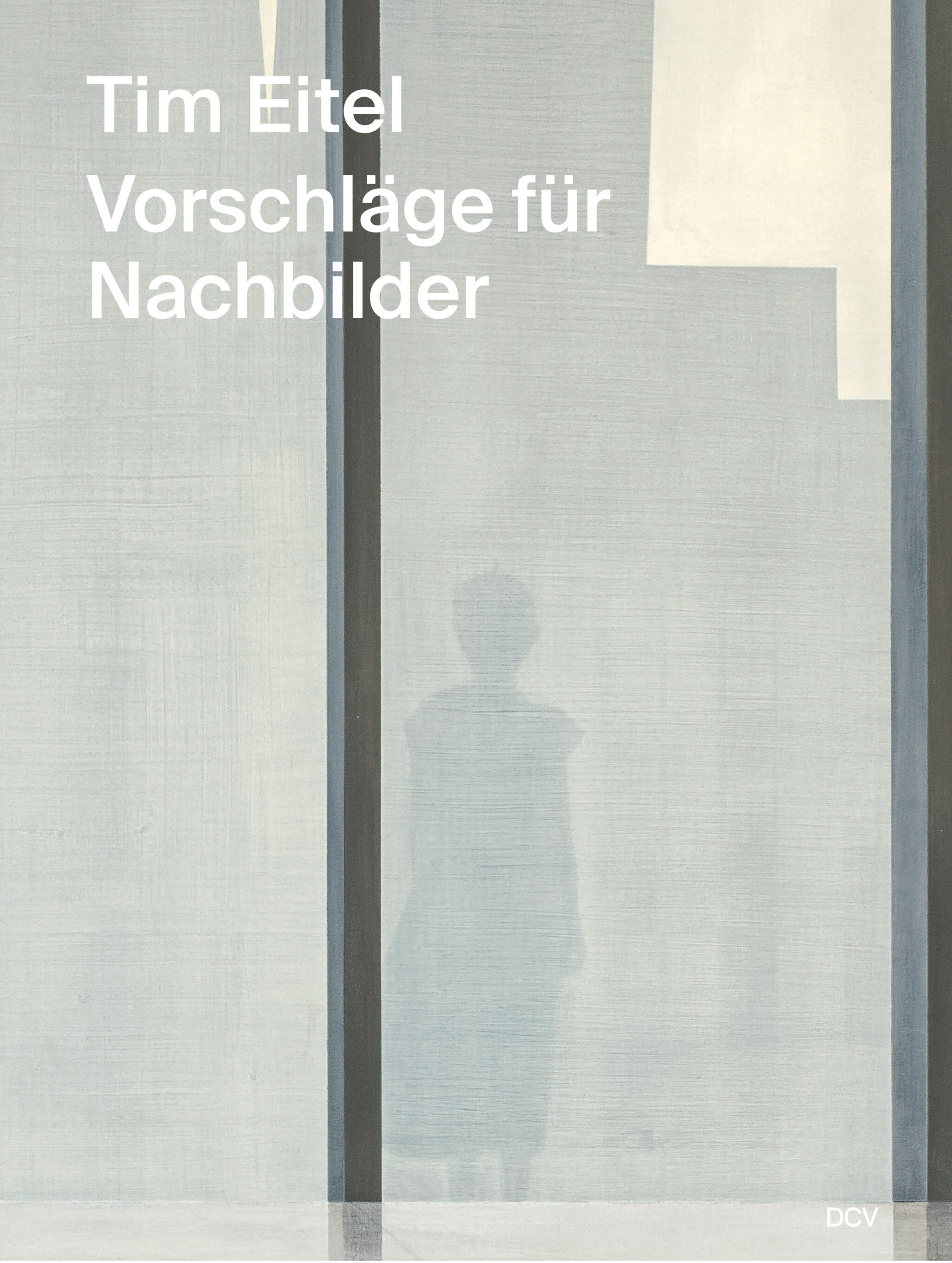
Tim Eitel
Propositions for Afterimages 2015–202436€ Add to cartTim Eitel initiates an exchange between recollection and painting. The work on his pictures, he says, is “a conversation about reality and memory” in which he engages the canvas. In the course of this dialogue, Eitel reflects on personal experiences, creating a standalone figural-abstract reality that needs to be internally consistent—the canvas has a strong will of its own. That makes the scenes depicted in his paintings analogues or afterimages of a situation rather than renditions of it. They are characterized by a certain openness that enables the beholders to inject their own recollections into the pictorial space as well. The dialogue between canvas and artist thus gives way to a colloquy between audience and finished work. Not by coincidence, many of the paintings by Eitel gathered in this catalog show people in museums: these scenes facilitate the leap into the pictorial space. The beholders have experienced a situation like the one shown in the pictures in the past or are experiencing it right now, and so they are already at the heart of the works; they become part of the painting, and the picture becomes a particle of their recollection.
-
Clemens Krauss
Antidot | Gegengift40€ Add to cartClemens Krauss restlessly shuttles across history; his vehicles are painting, video art, sculpture, and performance. Yet Krauss is not “just” an artist, he is also a psychoanalyst and physician. As such, he has first-hand experience of time as the defining factor of existence, daring him to play with it. The bosom of painting is where he feels safest after his hazardous excursions back into his youth and forward into death. Executed in thick paints, his work is physical, material, which is also to say, it exists in time: everything passes away, even the picture. Evanescent, more than anything, are encounters of the sort Krauss stages as part of his psychoanalytical practice; all that remains is the indelible impression they leave. To be indelible, to recall the past, while also “letting happen what has never happened,” as he puts it, these are the ambitions he pursues in his art. Preserved between the covers of the present catalogue and reproduced in thousands of copies, his works now fan out in an instant to circulate for an indeterminate period of time among countless hands, whence they will effortlessly penetrate the barriers of our inner lives to bring us one step closer to transcendence.
- Release January 2026
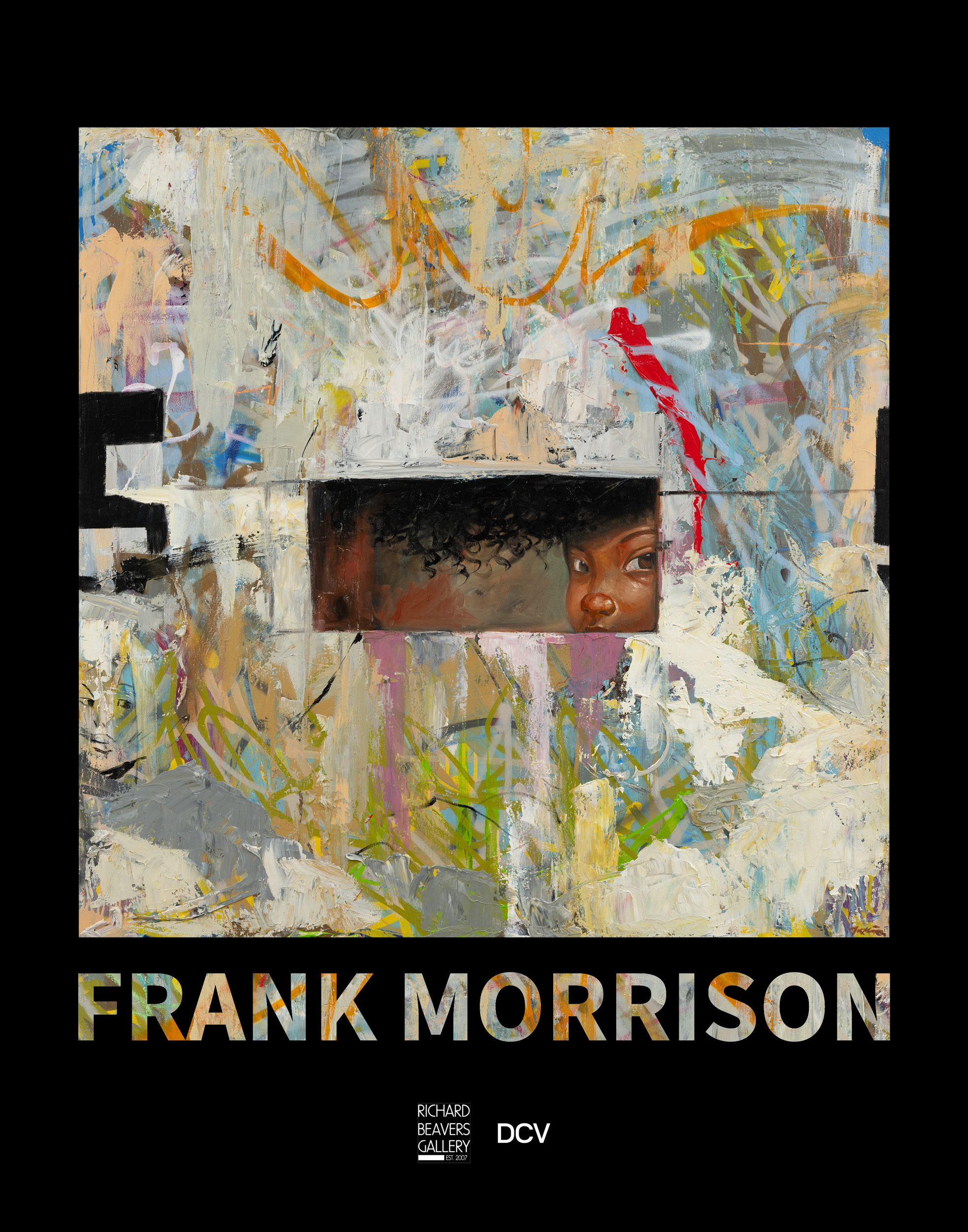
Frank Morrison
38€ Add to cartThe dynamic Neo-Mannerist images of painter and illustrator Frank Morrison (born 1971, lives in Atlanta) celebrate the resilience and dignity of African Americans in everyday life. A child of institutionalized racism in the US, he can testify that creativity and solidarity could never be suppressed in the segregated and brutally marginalized communities. Hip-hop and graffiti are resistance. Clichés of inner-city struggle are vividly refuted in this book. The volume documents Morrison’s recent exhibitions, one of which is dedicated to the younger generation: frame-braking images that interweave narrative forms of comics and pop art with illustration. Morrison’s gallery calls the book an explosive tribute to genius flourishing in institutionalized exile.
-

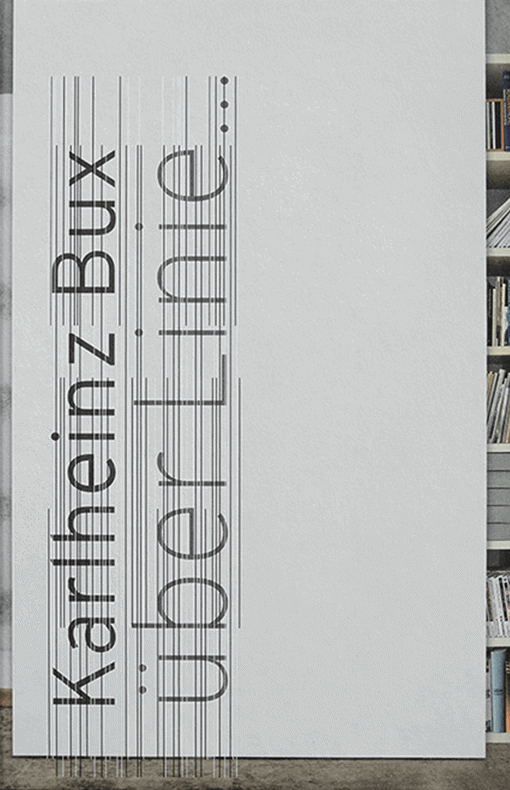
Karlheinz Bux
über Linie …15€ Add to cartClarity, Complexity, and Linearity
The defining artistic means in the work of Karlheinz Bux (b. 1952 in Ulm, lives and works in Karlsruhe) is the line. As edges and folds, they determine vertically oriented sculptures, which simultaneously convey compactness and openness, dynamism and repose. In Bux’s pencil drawings and photo-based works, they form the subject of the image in the form of complex linear structures. This present book documents the artist’s large-format works and provides insight into his oeuvre, with texts by Michael Hübl, Christine Reeh-Peters, and Carmela Thiele.
Karlheinz Bux studied at the State Academy of Fine Arts Karlsruhe and taught as a lecturer at Pforzheim University and as a visiting professor at the Mainz University of Applied Sciences. His works are represented in private and public collections, including the Staatliche Kunsthalle Karlsruhe, the Hurrle Collection, and the Würth Collection.
- With socks designed by the artist and augmented reality

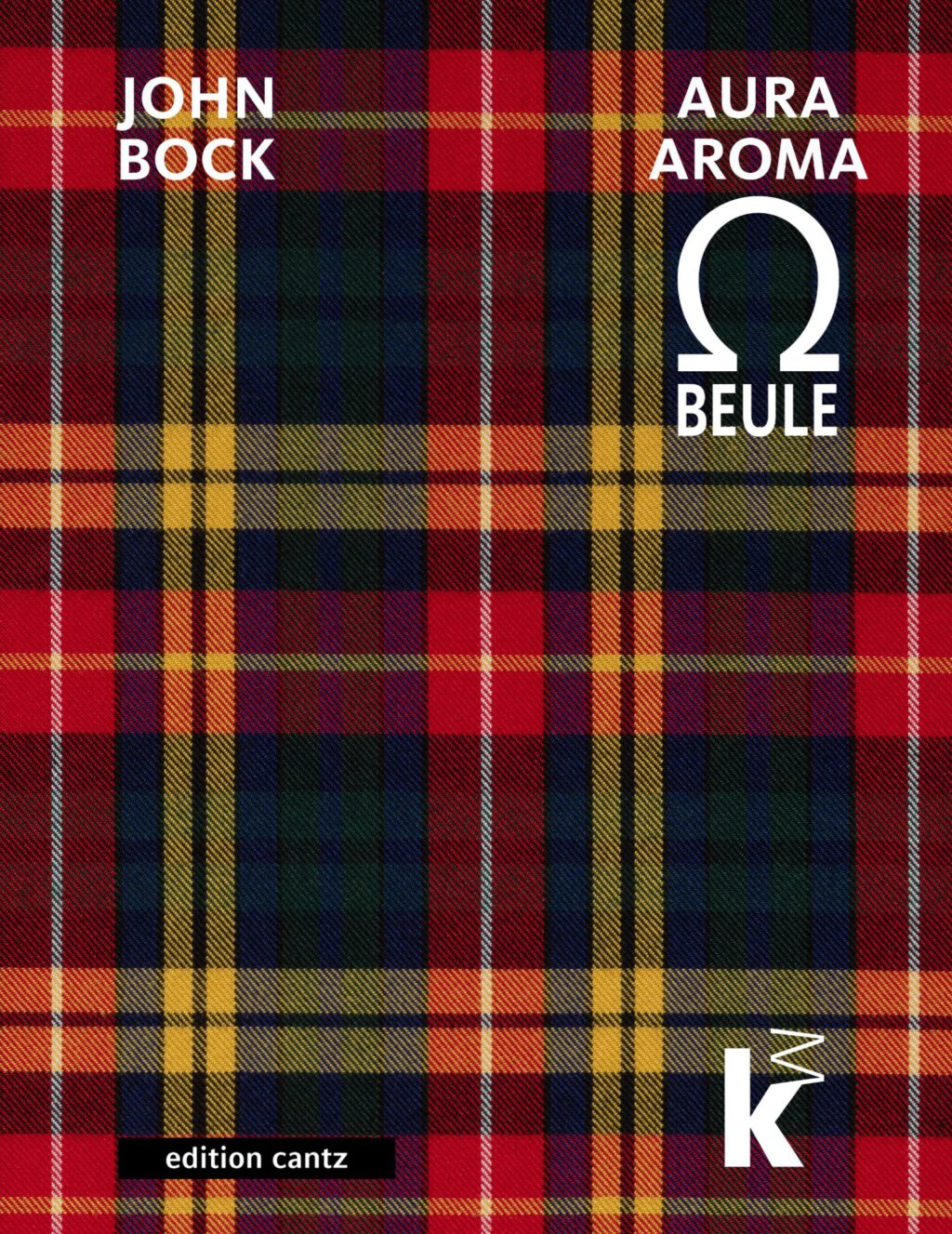
JOHN BOCK
AURAAROMA-Ω-BEULE42€ Add to cartThe Augmented Reality Book for John Bock
John Bock (b. 1965 in Gribbohm, lives in Berlin) is one of the most important contemporary performance and video artists. In his works characterized by humor and absurdity, the artist places language, human bodies, everyday objects, and spaces in peculiar relationships to each other. He attained international recognition with the installation LiquidityAuraAromaPortfolio at the first Berlin Biennale in 1998. Together with his work Voll die Beule from 2013, it is now included in the collection of the Kunsthalle Mannheim. The present augmented reality book not only contextualizes his work, but also immerses the viewer/reader directly in his performances, in which the artist’s head emerges and a filled rubber glove leaks out. A completely new approach to the works of John Bock, packaged in a pair of socks designed by the artist.
John Bock studied at the Hamburg University of Fine Arts and since 2004 has taught at the State Academy of Fine Arts Karlsruhe as Professor of Sculpture. He has participated in the 55th Biennale di Venezia, and his works have been featured worldwide in solo exhibitions at, among others, the Berlinische Galerie, the Contemporary Austin, Texas, the Barbican Centre, London, and the Städel Museum, Frankfurt.
-
ELMGREEN & DRAGSET
READ48€ Add to cartThroughout their careers, the artist duo Elmgreen & Dragset (Michael Elmgreen, b. Copenhagen, Denmark, 1961, and Ingar Dragset, b. Trondheim, Norway, 1969, live and work in Berlin) have eschewed the traditional “White Cube” exhibition format by creating large-scale installations and staging narrative situations in which autobiographical quotes blend with fictional stories and cultural references.
For the solo exhibition READ, Elmgreen & Dragset have transformed Kunsthalle Praha into a minimalist version of a modern public library to prompt reflections on our relationship with physical books and knowledge in the age of digital media. With new works by Elmgreen & Dragset as well as performances, videos, collages, paintings, and sculptures by other artists, READ also probes the relation between books and the making of art.
This richly illustrated publication documents the dynamic interaction between language, books, and art. With contributions from renowned scholars and a curatorial text by Elmgreen & Dragset.
-

Considering Finland
14€ Add to cartContemporary Art from Finland
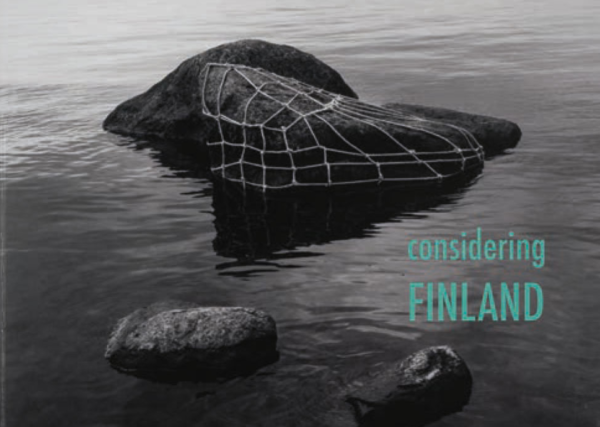
With fourteen artistic positions from the fields of photography, video, and installation, Considering Finland offers fascinating insight into the Finnish art scene. The themes of the artists from one of the least populated and most densely forested countries in Europe is the relationship between humankind and nature, as well as the political, social, and economic implications of this. Their works point to cultural dispositions and standardizations of the individual within a society based on unattainable maxims, such as permanent success, lasting recognition, and limitless growth. Pictorial traditions, geographical structures, and socio-political and infrastructural factors are the bases of a mental construction that summarizes their artistic work under a national heading. With works by Kenneth Bamberg, Elina Brotherus, Ville Lenkkeri, Aurora Reinhard, Iiu Susiraja, Nestori Syrjälä, and Pilvi Takala.