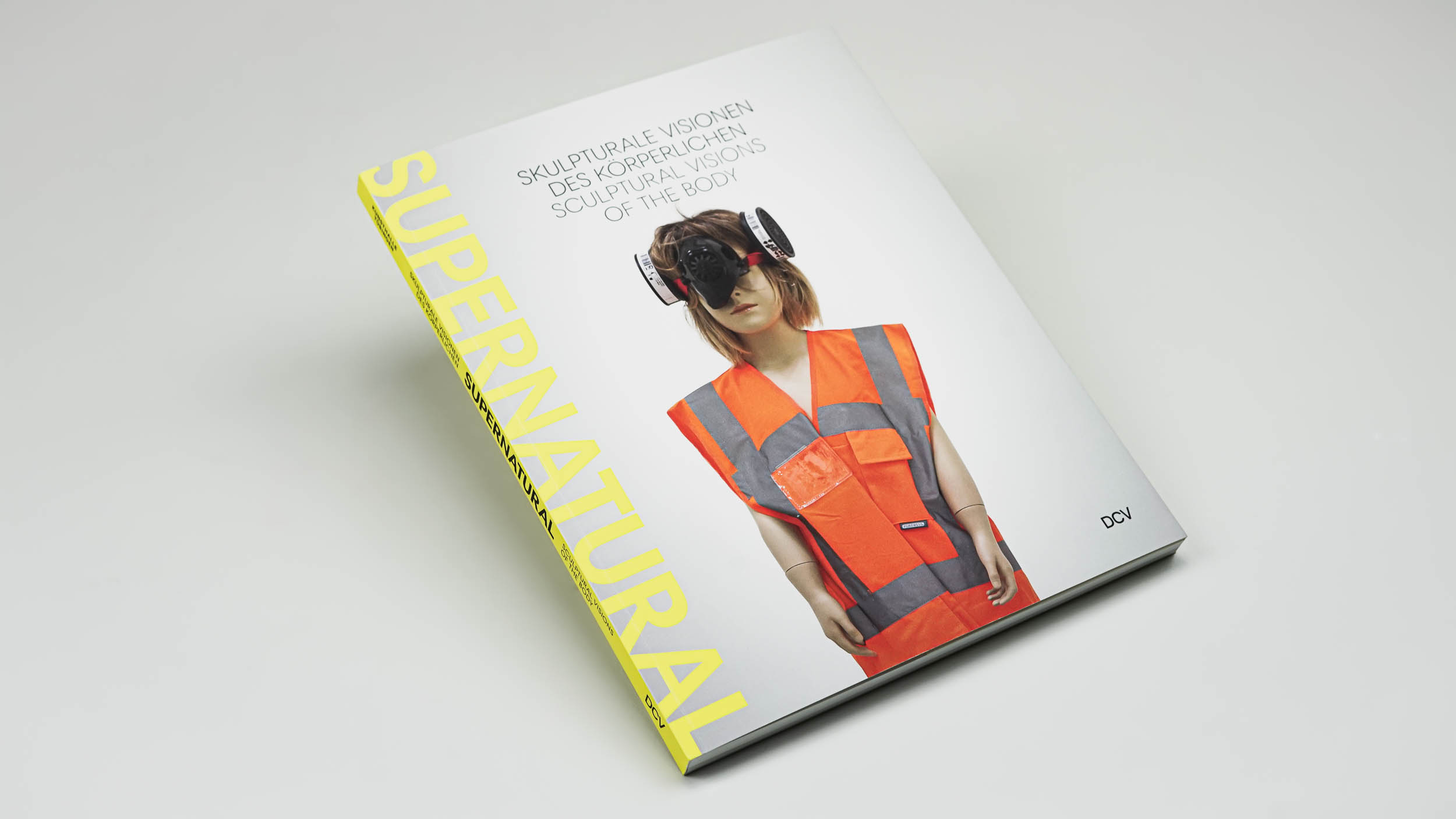
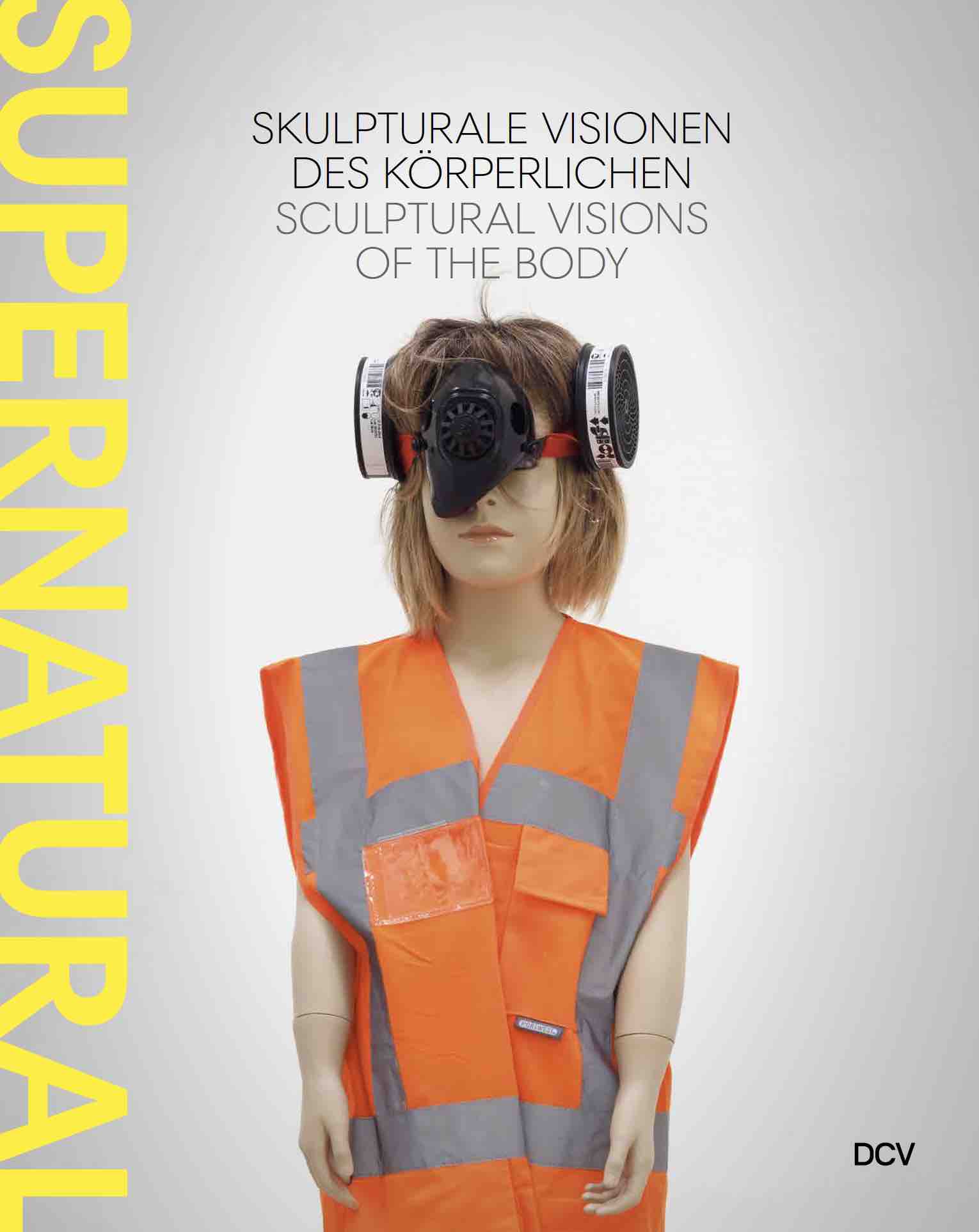
Supernatural
Sculptural Visions of the Body
 | |
|---|---|
| Editor(s) | Nicole Fritz, Kunsthalle Tübingen; Maximilian Letze, Institut für Kulturaustausch |
| Author(s) | Nicole Fritz, Manuela Lenzen, Holger Volland |
| Design | Andy Schmidt |
| Cover | Softcover with flaps |
| Size | 21,5 x 27 cm |
| Pages | 144 |
| Illustrations | 60 |
| Language(s) | German, English |
| ISBN | 978-3-947563-99-9 | Out of stock |
The future of human corporeality in the Anthropocene era
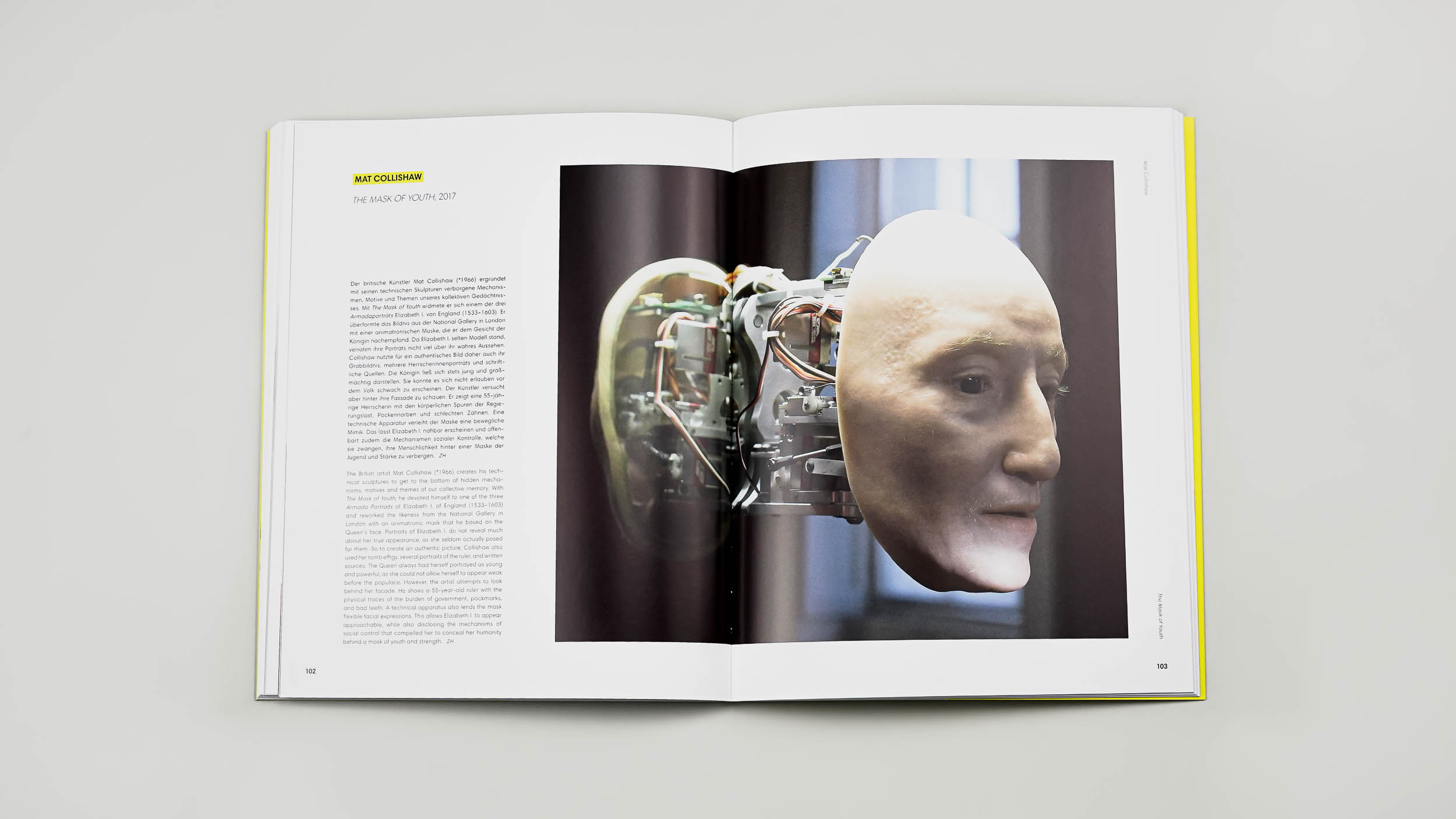
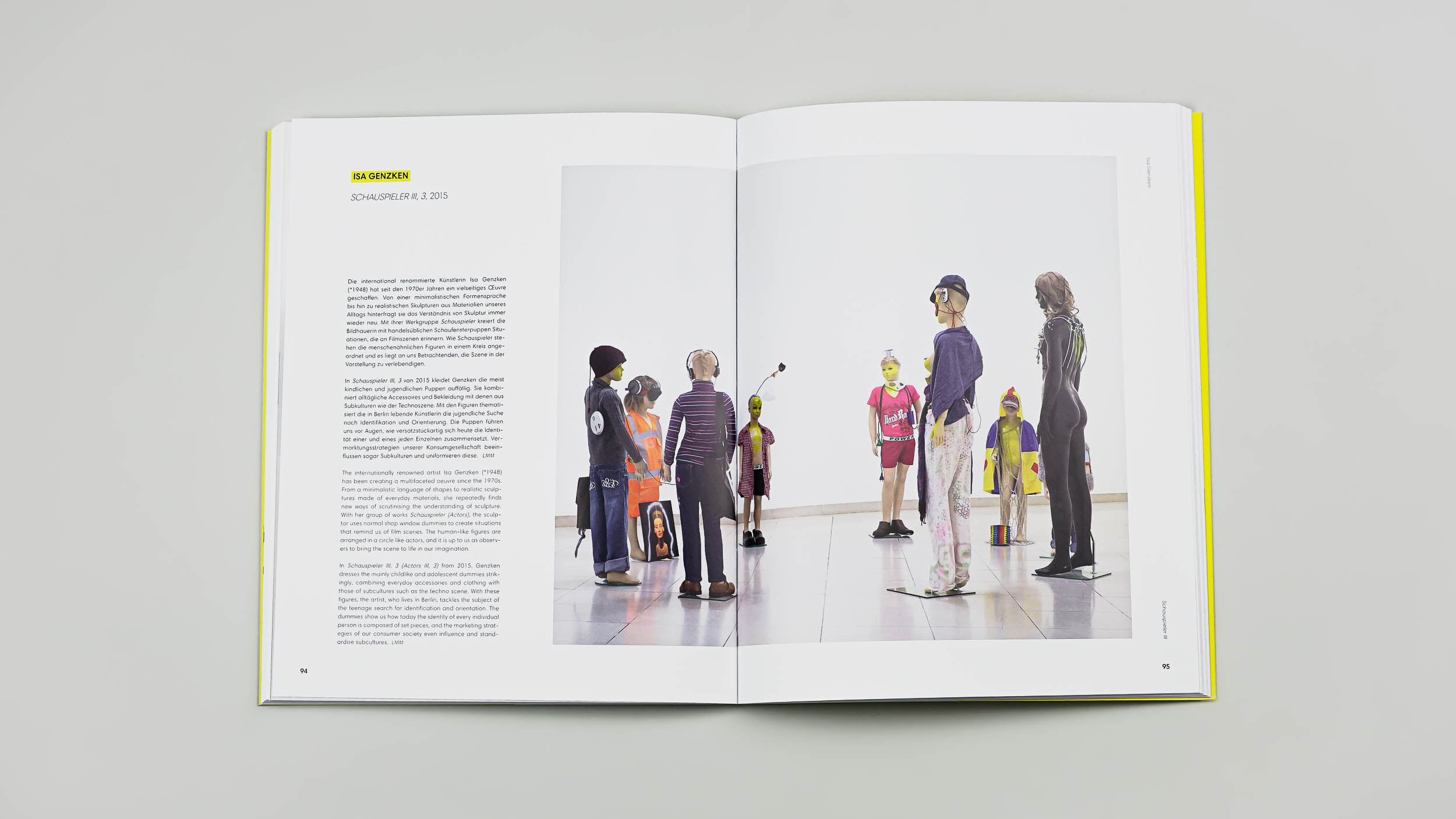
Given the technological development in biogenetics, humans will be able to make existential modifications to all living things, Nature, the animal world and human likenesses in future. What will bodies of the future look like? Who or what will we be? Supernatural offers us some answers in its hyperrealistic and realistic sculptures. These visionary works not only exemplify the impact of the digital revolution and genetic engineering on “posthumans” and the environment, but also illustrate, including in their own hybrid creations, how increasingly blurred the line between nature and culture is now becoming. Technological innovations are also having more and more effects on trends in the latest hyperrealistic sculptures. In using 3D printing to perfect their creation processes and pushing sculptural boundaries to encompass robotics and synthetic biology, artists are opening the door to new design possibilities in artefact, biology and technology for themselves as well.
The book presents works by Anne Carnein, Isa Genzken, Glaser/Kunz, Thomas Grünfeld, Sam Jinks, Josh Kline, Krištof Kintera, Reiner Maria Matysik, Alex May and Anna Dumitriu, Fabien Mérelle, Patricia Piccinini amongst others.
Out of stock
More books
-

Michael Bertram
mehr licht35€ Add to cartThe Mülheim-Kärlich Nuclear Power Station, 1975–2019
In 1975, construction began in Mülheim-Kärlich on what was to be the only nuclear power plant in the state of Rhineland-Palatinate. After numerous court battles and only two years of trial and regular operation, the plant was decommissioned in 1988 and dismantled starting in 2001. The 530-foot cooling tower, taller than Cologne Cathedral, was the point of reference, landmark, and eyesore of an entire region; its time-consuming demolition became a symbol of the perennial political polarization over the decision to phase out nuclear power.
Michael Bertram (b. Mendig, 1968; lives and works in Mayen) took photographs of the reactor looming between homes and factories in order to record the future past in pictures. The plant cost seven billion deutschmarks to build and one billion euros to take back down: vast resources expended on a temporary installation that lasted forty years and left a lasting mark on the landscape, the surrounding communities, and the people who lived in its shadow. Starting with the demolition, the book presents an inverted timeline in eighty-one black-and-white photographs. The object seems to rise before our eyes until, at the end of the series, five color photographs conjure up a past that was very much present only a moment ago—a singular document of Germany’s industrial heritage.
- Release January 2026

Charles Moore
On painting16€ Add to cartFor On Painting, New York-based art historian and curator Charles Moore, interviewed four women artists about their practice, asking them to reveal their motives and aspirations. This publication consists of four interviews, each containing an introduction by Moore and illustrations of the artist’s works. Danielle Mckinney, who paints exclusively Black women, reflects on her experiences as a woman growing up in the US South. Nicola Staeglich creates subtle layered abstract works to evoke new perspectives and the potential for change. Nirit Takele elaborates on how her Ethiopian Jewish heritage has shaped her painting practice. Jorinde Voigt, who creates complex installations inspired by notation systems, discusses the use of algorithms and the beauty to be found in the unexpected.
-

Elsa Salonen
Stories Told by Stones15€ Add to cart“I find the question of a consciousness of stones genuinely inspiring, captivating, and provocative!”
Elsa Salonen (b. 1984, Turku; lives and works in Berlin and Finland) produces colored crystals from the pigments of flowers, draws stellar constellations with finely ground meteorite dust on glass, or distils liquid from plants. The Finnish artist experiments with a wide range of “poetic” materials, reviving lost animistic rituals and magical practices. Her subtle works in the field of tension between installa-tion, painting, and conceptual art combine mysti-cism with science, ancient knowledge with recent findings — supported by a great respect for nature. This volume documents her artistic search for consciousness as the primary source of all physical matter.
-

Brandon Lipchik
10€ Add to cartIn recent years, a Wagnerian night has settled over Brandon Lipchik’s (b. Erie, PA, 1993; lives and works in Brooklyn, NY, and Berlin) pictures. Moons rise; beasts and titans populate a homogeneous world of swimming pools, white picket fences, and neatly mowed lawns. Synthesized on a computer screen and then transferred to canvas by hand, the artist’s paintings revolve around the backyard as a mythically fraught scene of popular culture. The garishly lit multiperspectival pictures replicate characteristic shots from 1980s gay porn films and quote a clean American Apparel look. Lipchik subjects men’s bodies, spaces, plants, objects, and animals to digital deconstruction, obtaining rudimentary and abstract shapes. Staring at smartphones or gazing on water surfaces, his characters recall early digital animations and seem oddly hollow, like empty avatars waiting to be filled with new speculative content.
-

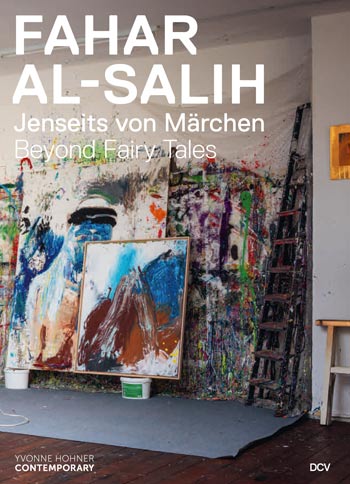
Fahar Al-Salih
Beyond Fairy Tales39€ Add to cartBridges between East and West
The protection and sense of belonging one feels where one is at home, and what it is like to lose both of them: these are central concerns in the art of Fahar Al-Salih (b. Belgrade, 1964; lives and works in Karlsruhe). Having grown up in Kuwait, where a classical education in visual art was inconceivable, Al-Salih came late to his métier; Markus Lüpertz was among his teachers, and he completed his education in Hermann Nitsch’s master class. Seeing himself as a “bridge-builder” between the cultures of the Arab world and Europe, Al-Salih probes the different lived realities in which his itinerant biography has been set. No more linear than his path through life, his oeuvre is defined by subjects to which he keeps returning in a kind of cyclical motion. This publication offers unprecedented insight into Al-Salih’s creative approach and his articulations of individual yearnings, the comforts of safety, and political and social upheavals. His work achieves a deft interweaving of global perspectives and migrant realities.
-

Barbara Armbruster
Meins Mine24€ Add to cartAn Intercultural Artistic Narrative between Germany and Egypt
In her works, Barbara Armbruster (b. Bad Waldsee; lives and works in Stuttgart) deals with cultural and social spaces, structures, and identities. Influenced by many years of residence in Cairo, Armbruster’s diverse works are points of relationship between two completely different cultural spaces. In her paintings, drawings, photographs, installations, and performative videos, the artist pursues a cross-cultural approach that tells of her time in Egypt and Germany on both a documentary and personal level. The monograph provides fascinating insight into Armbruster’s continuously developed language of expression between Arabic calligraphy, stylized ornamentation, and the photographic staging of everyday architecture.
Barbara Armbruster studied Graphic Art at the Staatliche Akademie der Bildenden Künste Stuttgart, where she later held a teaching position. Her works have been widely exhibited at, among others, the Goethe-Institut in Cairo, the Landesmuseum Württemberg in Stuttgart, and the Kunstverein Freiburg.
-
Stefan Knauf
10€ Add to cartStefan Knauf (b. Munich, 1990; lives and works in Berlin) uses selected materials such as construction supplies or plants to investigate the histories of botany, migration, trade, science, and architecture and critique an idealized and anthropocentric conception of nature that is still prevalent. His sculptures, geometric-abstract pictures, and installations, with echoes of constructivism and minimal art, are contact zones in which everything is related to everything: human and non-human history, the natural and the artificial, ecology and ideology. Knauf’s works do not propose to unravel these entanglements. Rather, they suggest alternative perspectives and topographies guided by the idea of the “modified landscape” and devise material and alchemistic forms of knowledge and a novel and multiperspectival approach to the history and reality of the Anthropocene.
-

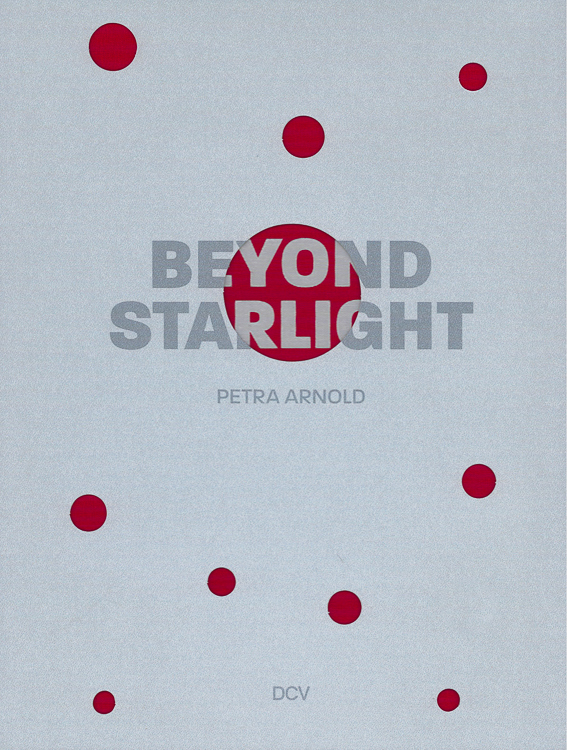
Petra Arnold
Beyond Starlight39,90€ Read moreThe Fischer Family of Circus Artists: A Photographic Long-term Observation
For more than a decade, the photographer Petra Arnold has shadowed the Zirkus Starlight troupe and the Fischers, a family of performers, taking analog photographs, mostly black-and-white, of their life behind the scenes. When she began the project, the Fischers were a large family, with thirty grandchildren. Over time, the company has had to downsize – the business environment is difficult, and few people can make a living as circus artists these days. Arnold’s photographs peek behind the curtain for a study of an existence between circus family and family circus – mostly outside the limelight. The portraits and unstaged scenes are documents of contemporary history and draw attention to the steady decline of circus culture.
-

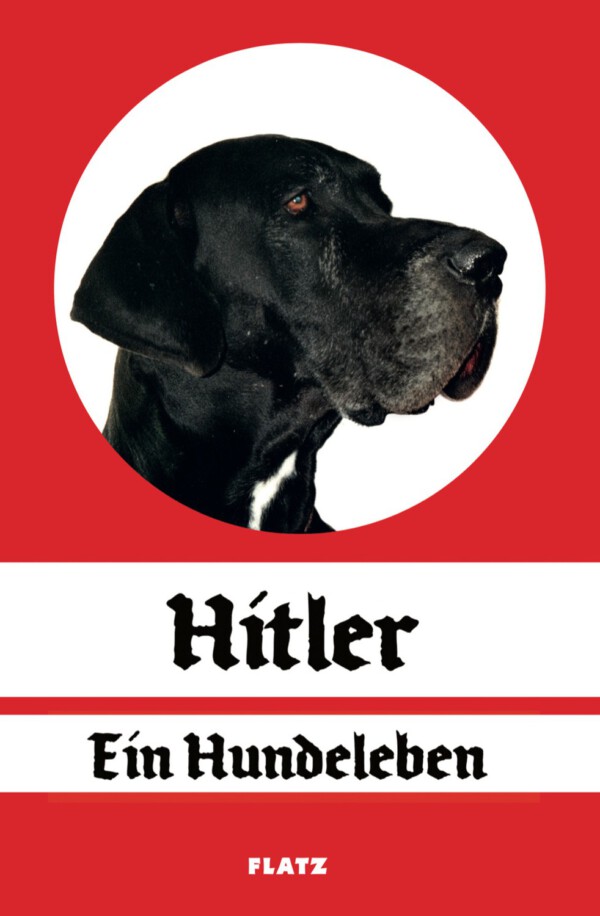
FLATZ
Hitler. Ein Hundeleben18€ Add to cartAn Attempt to Break a Taboo – Trivial and Provocative
A black, pure-bred Great Dane named Hitler accompanied the Austrian performance artist and documenta participant FLATZ (b. 1952, Dornbirn; lives and works in Munich and London) like a shadow through the 1990s. The naming—as well as the subtitles of the photographs created—relates the banal everyday life of the dog to the inglorious life of its namesake, thus opening up an extremely provocative range of possible associations. “Hitler is always with me,” says the artist, “just as we always carry the historical Hitler around with us, because he is part of our history, which—as long as it is suppressed, transfigured, or tabooed—is not overcome.”
With more than 350 illustrations, Hitler. Ein Hundeleben is an extended and revised reprint of the book published in 1992, which has been out of print for a long time.
- Release January 2026

Ernst Wilhelm Nay
Monograph (EN)68€ Add to cartThe Great German Artist’s Imposing Oeuvre
Ernst Wilhelm Nay (b. Berlin, 1902; d. Cologne, 1968) was one of the most interesting painters of European modernism. Spanning the decades from the 1930s to his death in Cologne in 1968, his output encompasses paintings as well as an abundance of works on paper. The new monograph surveys all periods in Nay’s oeuvre, from the “Fishermen paintings” to the striking late pictures, which leave no doubt about the artist’s outstanding gift for color. Nay’s evolution is embedded in the history and ideas of his time, on which he reflected in lectures, writings, and notes. The volume unlocks a wide spectrum of fresh insights into Nay’s life and art.
-

GETA BRĂTESCU
Film and Video 1977–201842€ Add to cartGeta Brătescu (b. Ploiești, 1926; d. Bucharest, 2018) is now widely regarded as one of Eastern Europe’s most important avant-gardists. In the Western art world, however, she was largely obscure until her participation in documenta 14 in 2017 and the Venice Biennale of the same year. Questions of abstraction, the political potential of the image, and the subjective experience of self, memory, and history inform her stylistically diverse oeuvre in a wide range of media, which evolved under the repressive conditions of the Ceaușescu regime yet kept pace with the discourses of the Western avant-gardes. This richly illustrated volume focuses on her collages and drawings as well as her works on film and video from the late 1970s until her death.
- Release February 2026

Fidel Martínez
Todesfuge. Das Leben des Dichters Paul Celan26€ Add to cartThe Spanish graphic artist Fidel Martínez Nadal’s (b. Seville, 1979) graphic novel Todesfuge recounts the life of Paul Celan (1920–1970), one of the most eminent lyric poets of the twentieth century. The narrative interweaves biographical and literary aspects of Celan’s life, including his Jewish identity, his lifelong trauma as a Holocaust survivor, and his acclaimed poem Todesfuge. Martínez’s expressive and somber illustrations visualize Celan’s struggles with feelings of guilt, memory, and his creative efforts to find words for the unspeakable. An artistically brilliant homage to Paul Celan’s oeuvre, Todesfuge is an impressive contribution to the engagement with the Shoah in the medium of the graphic novel pioneered by Art Spiegelman.
-
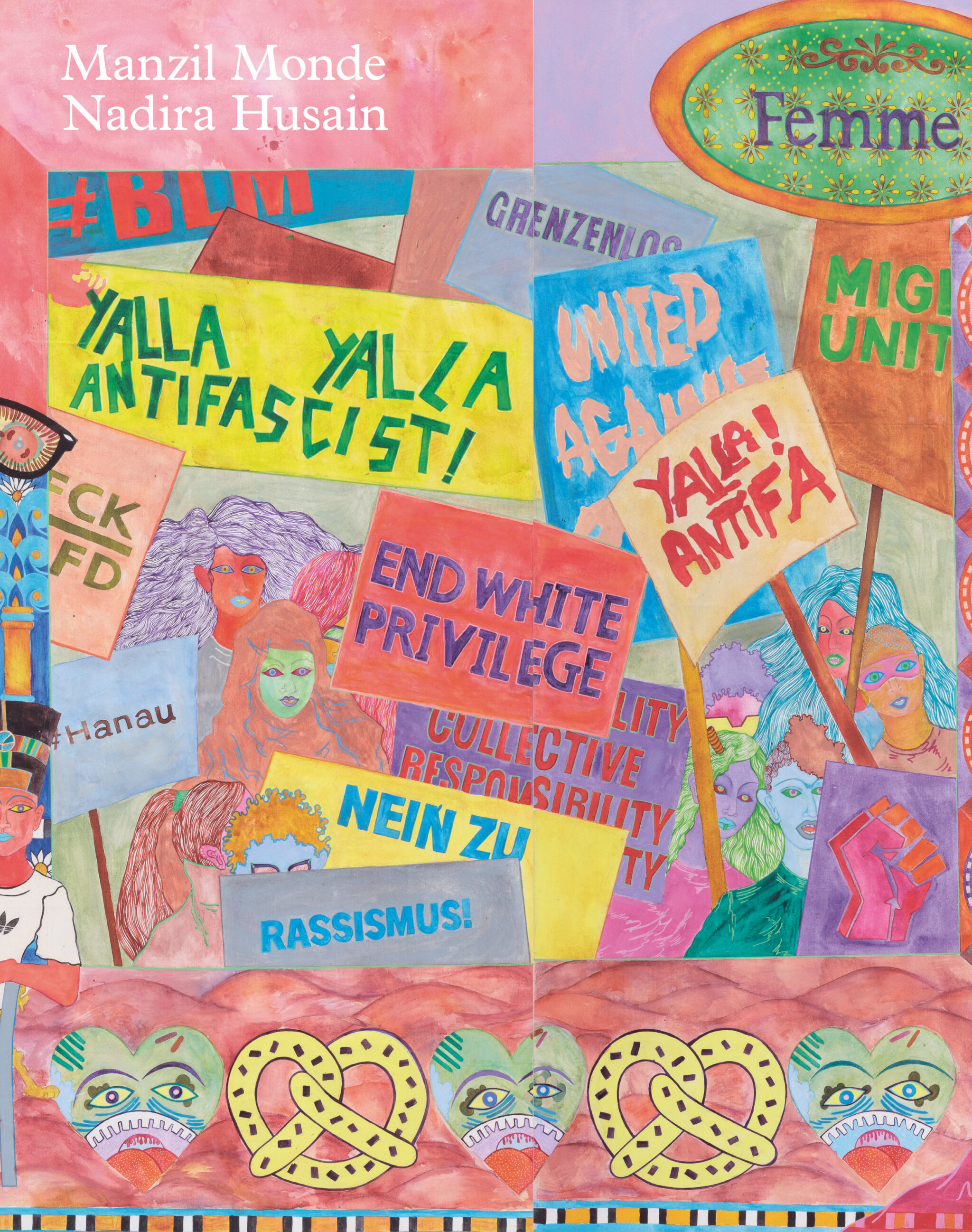
Nadira Husain
Manzil Monde30€ Add to cartNadira Husain’s (b. Paris, 1980; lives and works in Berlin, Paris, and Hyderabad) work combines figures, symbols, and ornaments from different cultures in complex imageries that reflect her own multicultural experience. To achieve a harmonious, though by no means placid, coexistence of all elements, the artist harnesses painting, drawing, printing processes, traditional artisan practices, and a range of materials including textile and ceramics, recognizing no hierarchy of media or genre. Hybridization and the translocation of motifs serve her to tease out similarities as well as divergences between myth and pop culture: the Indian deity, the cartoon character, and the fashion label appear as equals in the universe of her art.
The book contains several essays that explore Nadira Husain’s oeuvre as a significant contribution to the discourse around postmigration, transculturality, and feminism in contemporary art.
Nadira Husain studied at the École nationale supérieure des beaux-arts in Paris and the University of British Columbia in Vancouver. She is currently a visiting professor at the Berlin University of the Arts, where she co-teaches with the Belarusian artist Marina Naprushkina.
-

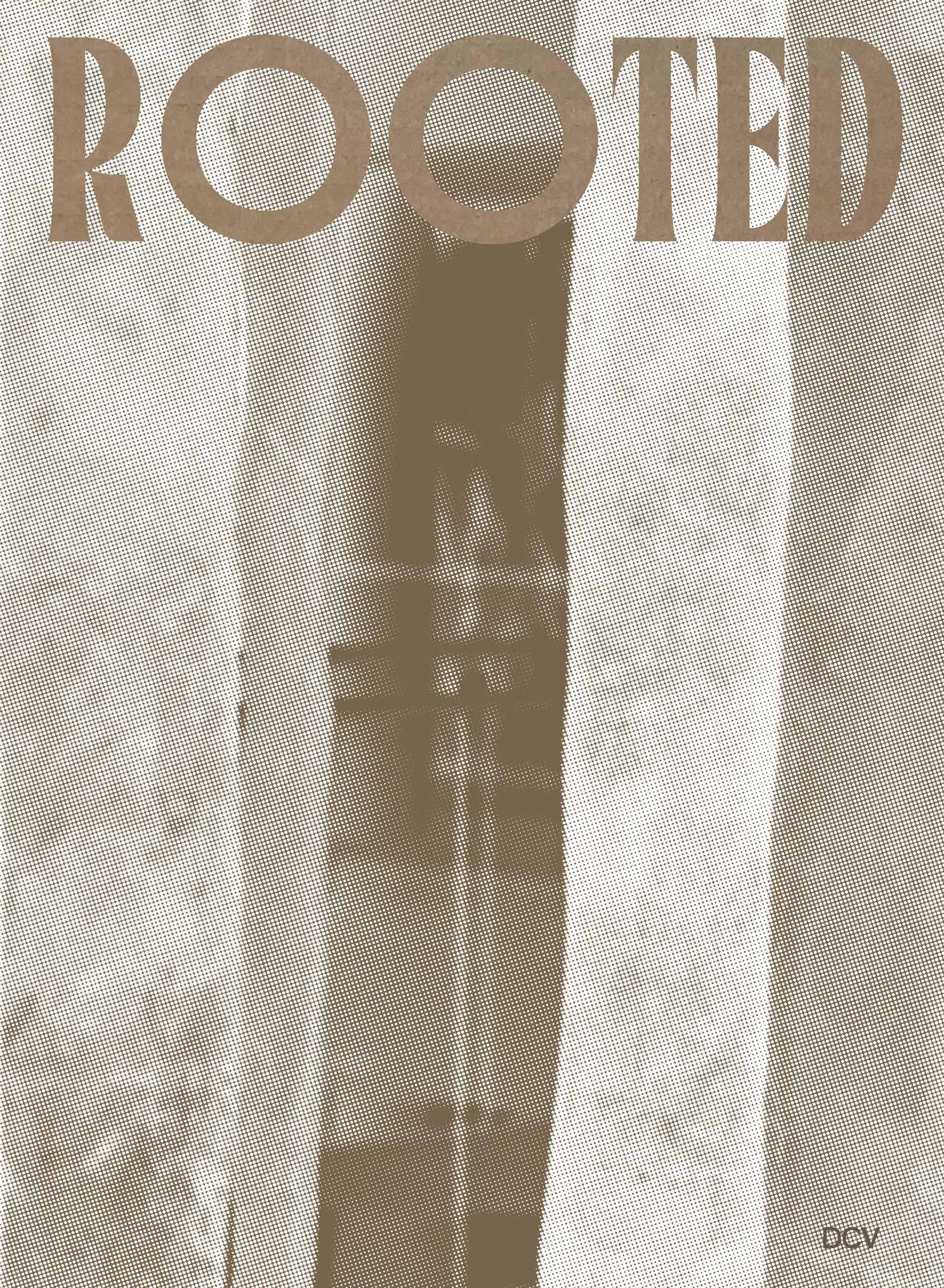
Rooted
Female Brazilian Artists28€ Add to cartThe book Rooted. Female Brazilian Artists, accompanies the eponymous exhibition at Brainlab/Munich, which is open until the end of September 2025. The works of the 16 artists come from the collection of Sergio Linhares and Stefan Vilsmeier. The collectors present this selection hoping to illuminate important and difficult themes such as, among others, discrimination, displacement, and violence but also to remind of our shared rootedness in nature. “Art has no obligation to comfort us; it can challenge, disrupt and remind us that our coexistence is fragile.” The volume shows installation views along with close-ups of the individual works and it includes short texts for each artist along with an essay by curator Tereza de Arruda.
Artists: Marlene Almeida, Azuhli (Luiza Diogo Veras), Tarsila do Amaral, Beatrice Arraes, Carmezia Emiliano, Sonia Gomes, Iêda Jardim, Lucia Laguna, Laura Lima, Rosilene Luduvico, Rosana Paulino, Solange Pessoa, Paula Siebra, Luzia Simons, Nádia Taquary, Alexsandra Ribeiro, Larissa de Souza
- temporarily not available
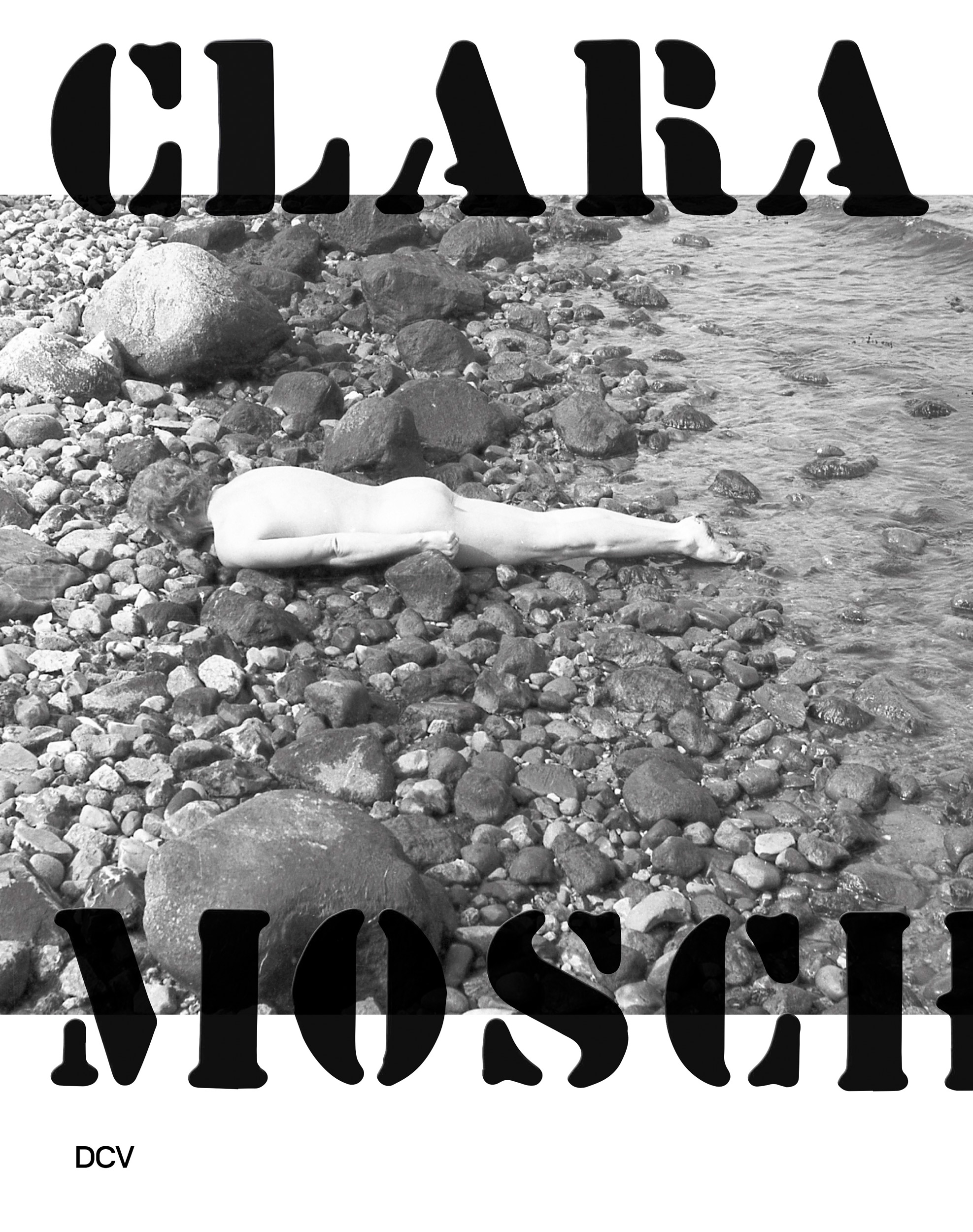
CLARA MOSCH
and early art events in the GDRRead moreThe legendary producer-run gallery Clara Mosch and the artists’ group of the same title that gathered around it were founded in Karl-Marx-Stadt (today’s Chemnitz) in 1977 and existed until 1982. The catchy name was an acronym of the contributors’ last names: CLA = Carlfriedrich Claus, RA = Thomas Ranft and Dagmar Ranft-Schinke, MO = Michael Morgner, SCH = Gregor-Torsten Schade. As the founders of the first producers’ gallery in the GDR and creators of diverse oeuvres, the group’s artists rank among the foremost exponents of avant-garde art in East Germany. The book presents works of art, limited editions, and posters as well as photographs from the Ralf-Rainer Wasse archive in the collections of the Lindenau-Museum in Altenburg. One thematic focus is on Clara Mosch’s land-art happenings and plein-air pieces. The unconventional actions attest to the group’s stated objective of building greater awareness of the ongoing devastation of the local environment. Forty years after the fact, Clara Mosch’s work has lost none of its relevance and urgency.
-

Sabrina Fritsch
syntaxerror28€ Add to cartSabrina Fritsch’s (b. Neunkirchen/Saar, 1979; lives and works in Cologne) paintings explore the potentials of the compositional process and the mechanisms of perception. Many of them feature coarse structures, textile surfaces, and delicate superimpositions. In this publication, Fritsch, who was recently appointed professor at the Düsseldorf Academy of Fine Arts, presents a résumé of the painterly oeuvre she has developed since her graduation from the same school in 2008. It encompasses two related books, each of which undertakes a structured study of a major strand in Fritsch’s art. One offers a chronological survey of a representative selection of works created between 2008 and 2019 that illustrate her playful and experimental engagement with the constituents of the painted picture: the picture-as-object, the organization of pictorial space, and the phenomenology of physical color. In addition to works on canvas boasting a wide variety of applications of materials and paint, it also covers serial variations in prints. The other showcases three exhibitions and bodies of work dating from 2020 and 2021 that are dedicated to the three color systems RGB, black-and-white (BAW), and CMYK.
-

Marion Anna Simon
Gemaltes Kaddisch14€ Add to cartAn artist paints the Kaddish
In roughly 330 self-portraits, Marion Anna Simon (b. 1972, Bitburg; lives and works in Cologne) dares to undertake an unusual transcription of Jewish prayer as a sign of mourning. On January 7, 2017, one day after the death of her mother, Marion Anna Simon began work on her painted Kaddish. What initially began as a very personal process of grieving quickly developed into an artistic concept: Roughly 330 painted and drawn self-portraits were created within eleven months—in daily notes, with acrylic and watercolor, pencil and ballpoint pen, oil crayon and pastel, on paper and canvas, wallpaper and cardboard, in lined exercise books and cheap notepads. Marion Anna Simon’s cycle explores her own face as a place of mourning and self-affirmation, documenting an artistic ritual beyond the Jewish prohibition of images and patriarchal attributions to sons in the tradition of the sanctification prayer for the memory of the dead.
-
Michael Williams
Make Plans God Applauds42€ Add to cartMichael Williams (b. Doylestown, Pa., U.S., 1978; lives and works in Los Angeles, Ca.) is known for paintings whose source materials have been subjected to both analog and digital processes in an effort to render the fragmented nature of our existence today. During the lockdown, he created six large-format collage paintings. To make these modern history paintings, he mounted paper printouts on canvases and reworked the pictures with paint. They are, in short, classic collages, as in the exhilarating days of DADA, when the photographic image from newspapers first transmigrated into art. Michael Williams studied fine arts at Washington University, St. Louis, and has exhibited widely, including at the Wiener Secession, Vienna, and the Museum of Modern Art, New York.
-

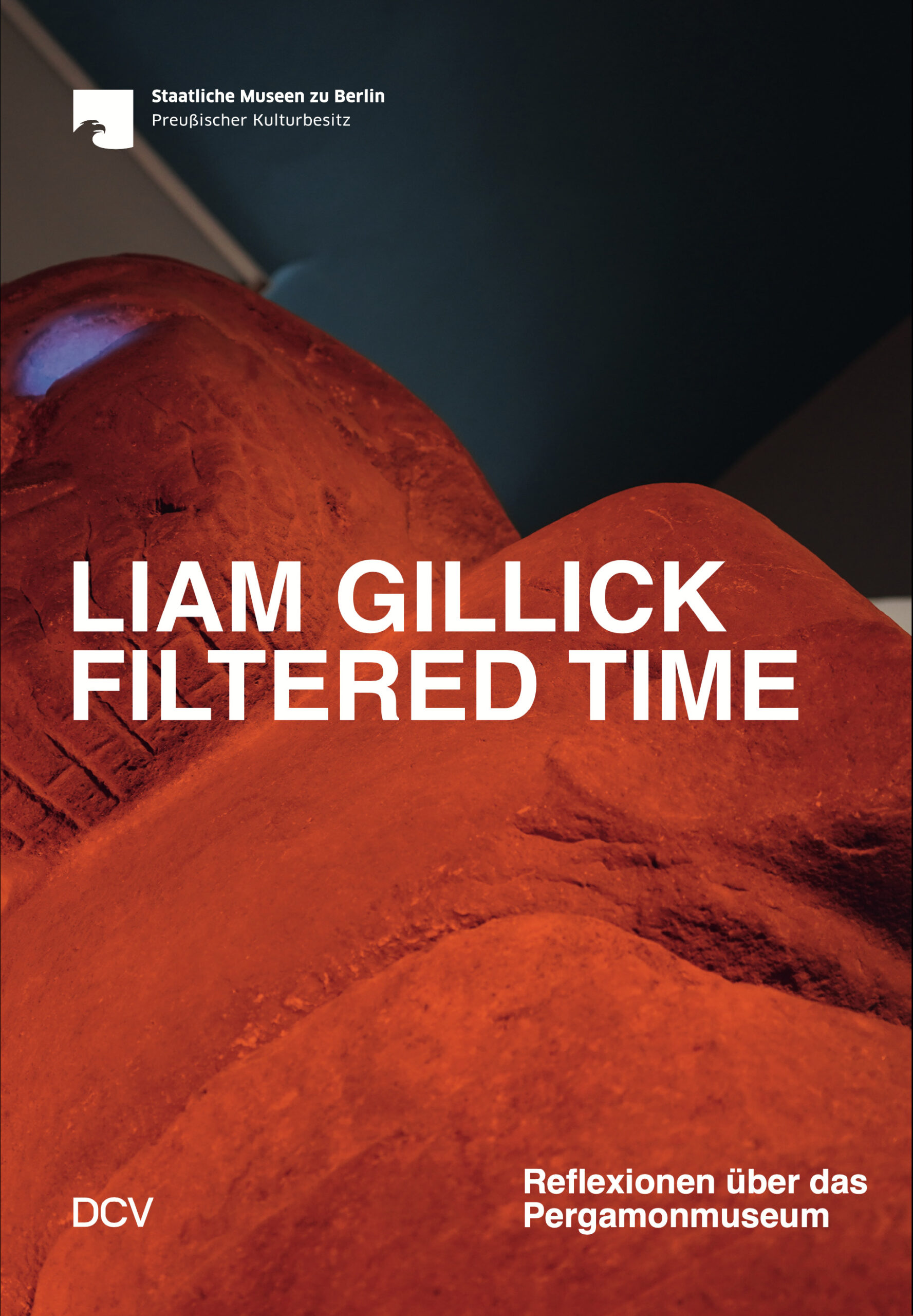
Liam Gillick
Filtered Time (GERMAN)28€ Add to cartThe sculptor and object artist Liam Gillick (b. Aylesbury, UK, 1964; lives and works in New York) has created an intervention titled Filtered Time for the historic galleries of the Pergamon Museum in Berlin. Projections of light and color and acoustic effects condense six thousand years of cultural history into an immersive spatial experience. Gillick initiates a conversation between the iconic Processional Way and the Ishtar Gate from Babylon, the monumental sculptures of Tell Halaf, and other exhibits, engendering new layers of meaning across all historical periods. The first joint project of the Vorderasiatisches Museum and the Hamburger Bahnhof—Nationalgalerie der Gegenwart makes for a singular visual and sensory experience. Designed by the artist himself, the publication not only documents the richly colorful production, but also provides insight into the eventful history of the museum, which is approaching its centennial.
Liam Gillick studied at the Hertfordshire College of Art in 1983–1984 and at Goldsmiths, University of London from 1984 until 1987. Gillick is a prolific published writer as well, producing essays, reviews, fiction, and theatrical scenarios.
-

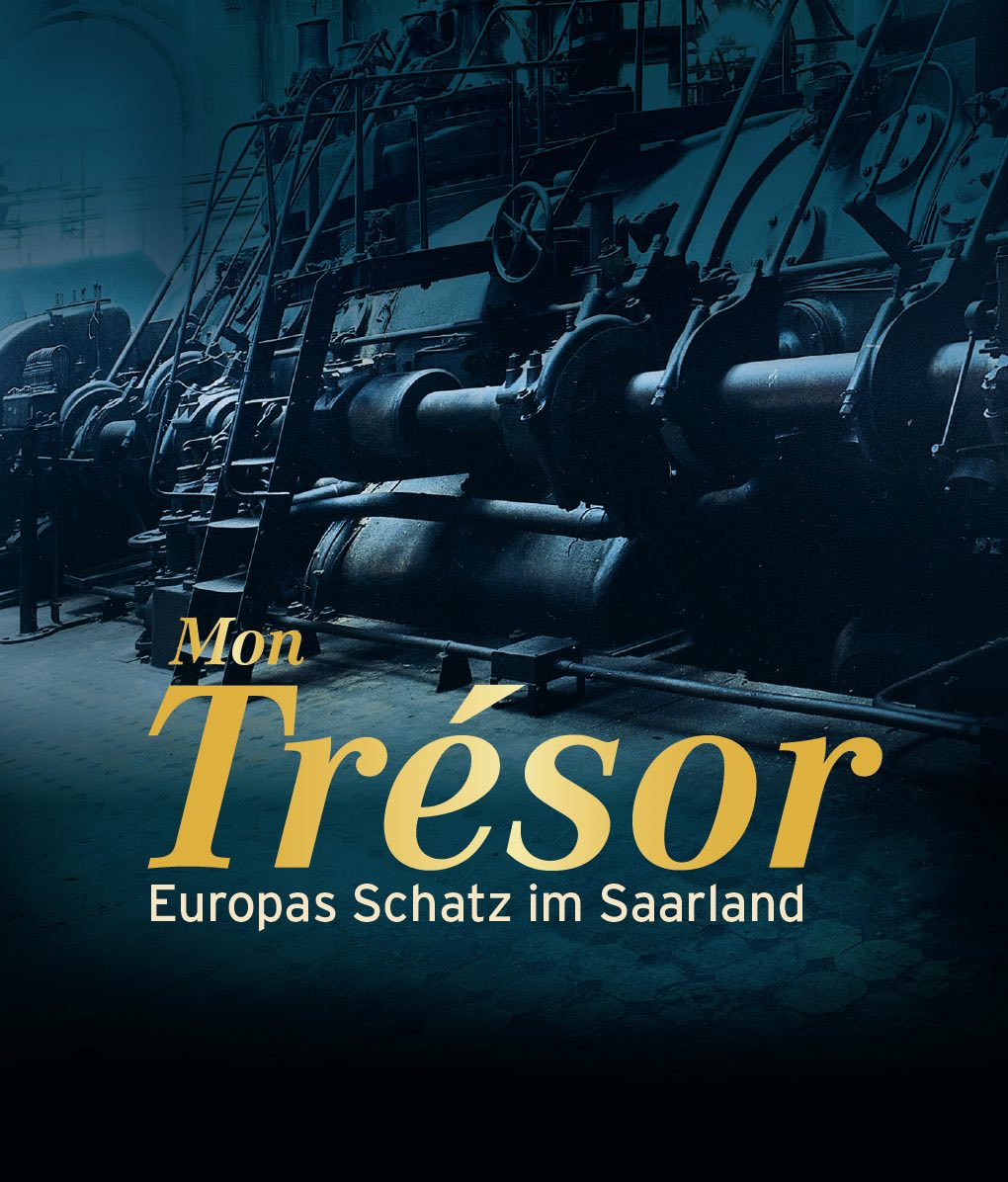
Mon Trésor
34€ Add to cartEurope’s Treasure Chamber
What do the torque of the princess of Reinheim, the tableware from the Orient Express, and the radio station Europe 1’s studio building have in common? They are among the treasures of the Saar region. The book presents outstanding archaeological objects and achievements of technology and art dating from the age of the Celts to the present. Drawn from the Saarland and neighboring Alsace-Lorraine, Luxembourg, and Rhineland-Palatinate, the unexpected riches illustrate the cultural and social dimensions of this multinational region in the heart of Europe. The title Mon Trésor describes many of them quite literally: the note a seven-year-old dashed off to his father before his family was evacuated in the first days of World War II; the Roman-era ring that is also a relic, witnessing to flight and danger. All treasures are personal first and foremost, though others may later cherish them as cultural assets.