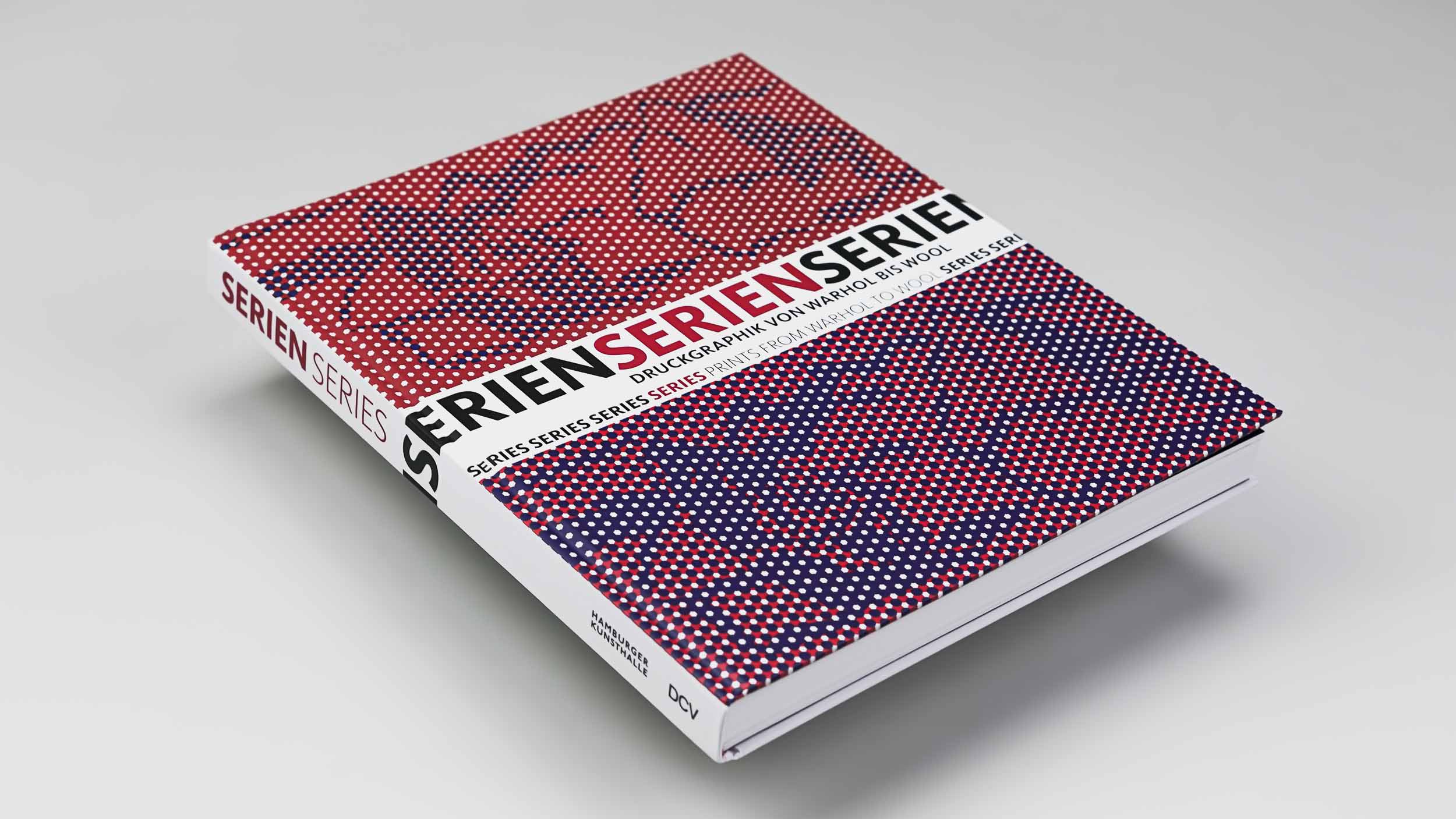
SERIES
Prints from Warhol to Wool
 | |
|---|---|
| Editor(s) | Petra Roettig |
| Author(s) | Leona Marie Ahrens, Dirk Dobke, Petra Roettig |
| Design | Peter Nils Dorén |
| Cover | Hardcover |
| Size | 24 x 28 cm |
| Pages | 256 |
| Illustrations | 220 |
| Language(s) | German, English |
| ISBN | 978-3-96912-026-2 |
A Creative Strategy and Technique of Modernism
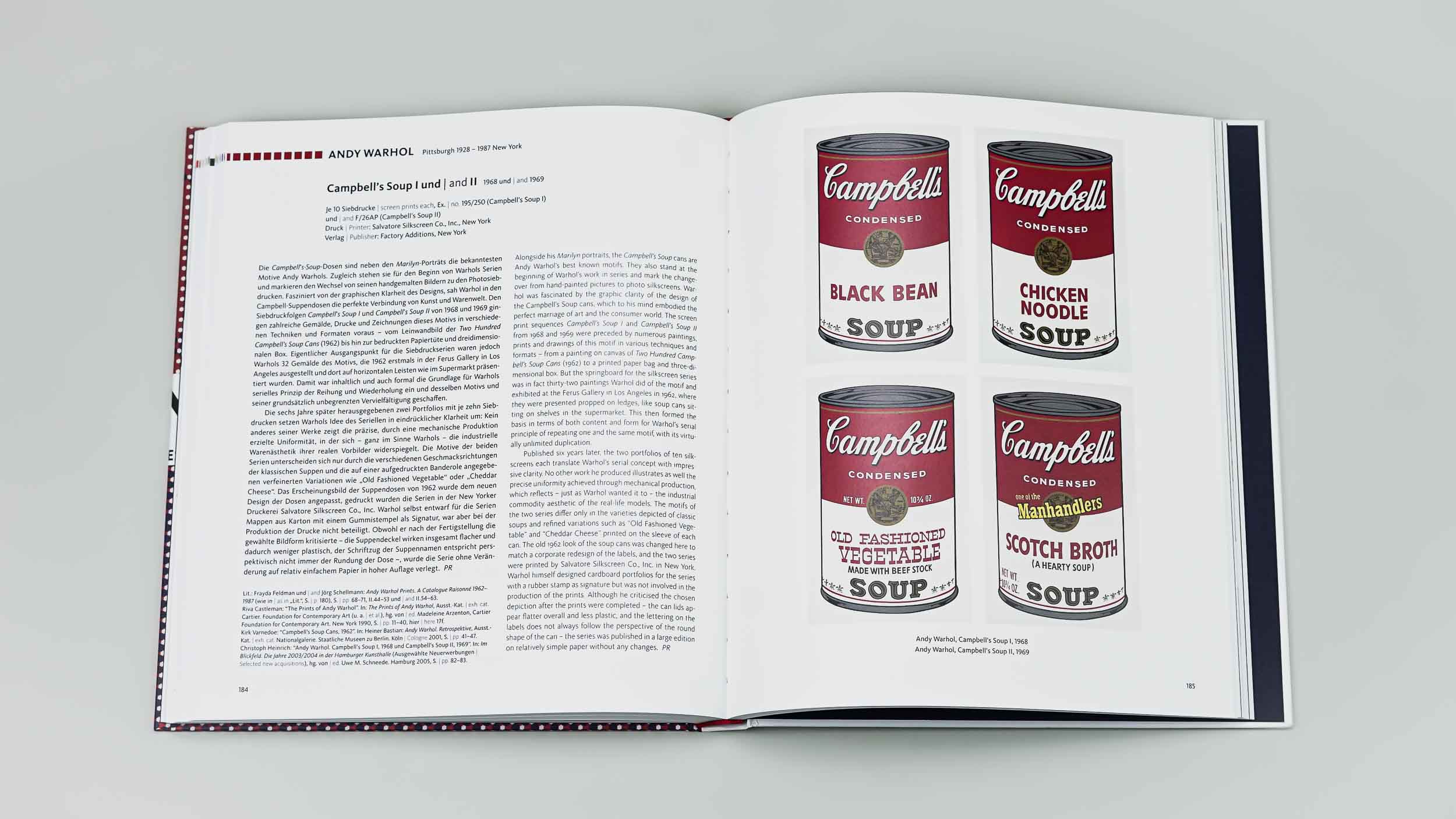
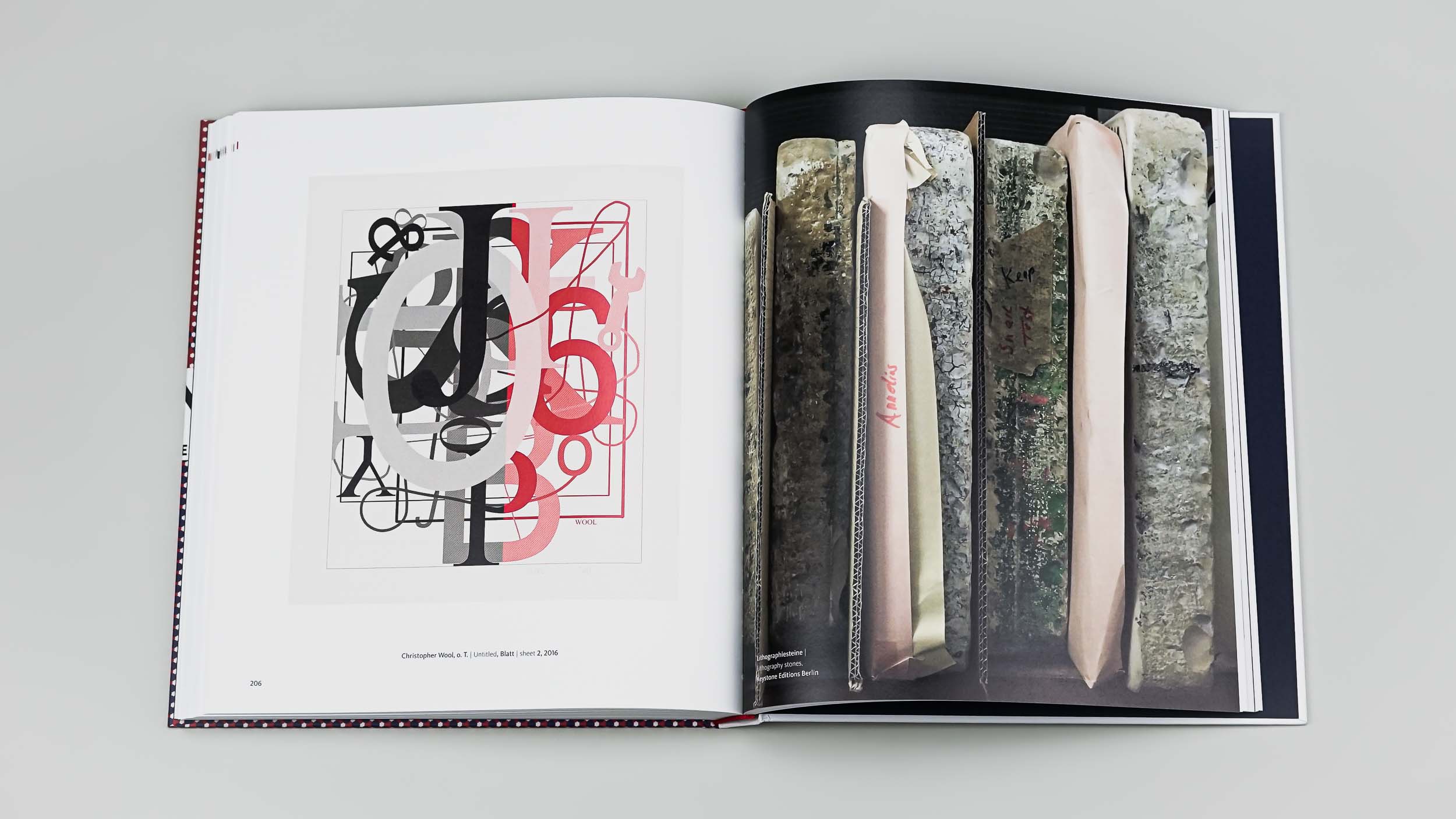
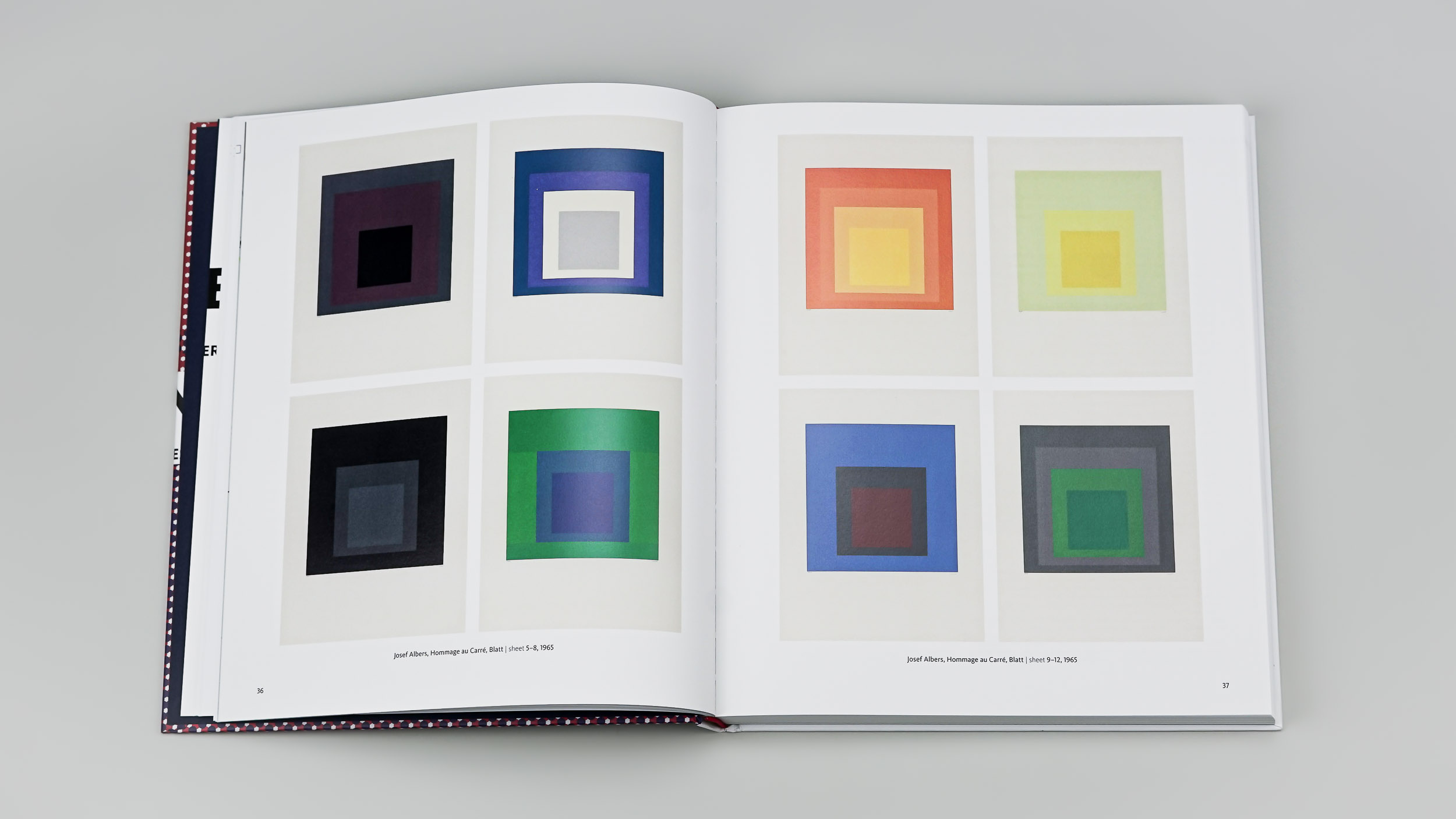
Series are open systems, telling stories, toying with rhythms, permitting variations, and documenting creative processes. Andy Warhol’s famous silkscreen prints made the serial iteration of images his trademark stratagem. In the mid-1960s, Pop Art and Fluxus had established the fine art print as a medium in which seminal work was being done. New graphic techniques such as serigraphy and offset printing, used with aggressive colors and punchy motifs, not only allowed for large numbers of copies, they also opened the door to an unprecedented engagement with the imagery of popular print and advertising media. Opening with an inquiry into how serial fine art prints are made, the book presents and contextualizes the explosive visual and political energy of graphic series. The numerous illustrations and essays are rounded out by an interview with Thomas Schütte and Ellen Sturm.
With works by Josef Albers, Joseph Beuys, Ulla von Brandenburg, John Cage, Helen Cammock, Nina Canell, Jim Dine, Dan Flavin, David Hockney, Jenny Holzer, Olav Christopher Jenssen, Donald Judd, Ronald B. Kitaj, Maria Lassnig, Sol LeWitt, Roy Lichtenstein, Richard Lindner, Robert Mangold, Brice Marden, Stefan Marx, Bruce Nauman, Dennis Oppenheim, Nam June Paik, Sigmar Polke, Gerhard Richter, Dieter Roth, Fred Sandback, Nora Schultz, Thomas Schütte, Dasha Shishkin, Frank Stella, Rosemarie Trockel, Victor Vasarely, Wolf Vostell, Andy Warhol, Corinne Wasmuht, Emmett Williams, Christopher Wool, and others.
More books
-

Hans Karl Zeisel
Hundred and more34,95€ Add to cartPossibilities of Concrete Art
What is possible without turning away from the cocrete? In the Bauhaus tradition, the typographer, graphic artist, designer and author Hans Karl Zeisel opens up countless design options with basic forms. His wooden cuboids demand a humorous approach to sculpture. They are creativity training, study tools and meditation game all in once. A playful experiment that reveals the diversity of concrete art.
-

Olaf Breuning
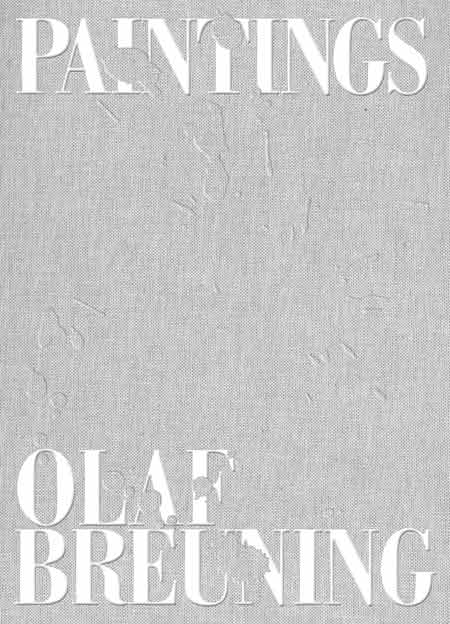
Paintings37€ Add to cartThe multimedia artist Olaf Breuning (b. Schaffhausen, Switzerland, 1970; lives and works in Upstate New York) has built a multifaceted oeuvre in installation art, photography, video, sculpture, drawing, and performance that questions contemporary reality. In a recent series of paintings, he playfully grapples with pressing concerns such as global warming. Like his earlier work, the new ensemble manifests his unorthodox approach. Breuning devised a unique painterly technique involving large-format wooden stamps with which he presses paint onto the canvas. The result is unconventional and fresh.
The publication—the first book dedicated exclusively to Breuning’s paintings—presents two dozen pictures as well documentation of the production process in the form of wooden stamps and sculptures. A dialogue between Katharina Beisiegel, director of the Kirchner Museum, Davos, and Gianni Jetzer, designated director of the Kunstmuseum St. Gallen, delves into parallels and differences between the oeuvres of Ernst Ludwig Kirchner and Olaf Breuning.
Breuning trained as a photographer in Winterthur from 1988 until 1993 and completed a master class in photography from 1992 until 1995. In 1995–1996, he was enrolled in a postgraduate program at today’s Zurich University of the Arts. He has had solo exhibitions at the NRW-Forum, Düsseldorf; the Palais de Tokyo, Paris; the Chisenhale Gallery, London; and the Zentrum Paul Klee, Berne. He participated in the 2008 Whitney Biennial and has had work in group exhibitions at the Museum of Modern Art, New York; the Centre Pompidou, Paris; the Haus der Kunst, Munich; Kunsthalle Zürich; the Walker Art Center, Minneapolis; the Jeu de Paume, Paris; the KW Institute for Contemporary Art, Berlin; the Whitechapel Gallery, London; and the Mori Art Museum, Tokyo.
-

100 Windows
Site-specific art installations at Berlin-Weekly project space28€ Add to cartEstablished in 2010 by Stefanie Seidl in a former gateway for horse-drawn carriages that is now enclosed by glazing at both ends, the project space BERLIN-WEEKLY offers the narrow yet exceptionally tall display space to artists as a highly visible public stage for installations that respond to the setting or site. Its unilateral orientation toward the street makes BERLIN-WEEKLY a creative intervention into the urban fabric that harnesses the shopwindow format. The book presents 100 selected window installations to illustrate the widely diverse ways in which individual artists have engaged with the venue, time and again transforming the unusually shaped small space.
With works by: Menno Aden, Alexandra Baumgartner, Isabelle Borges, Astrid Busch, Simon Faithfull, Moritz Frei, Max Frisinger, Wolfgang Flad, Dagmara Genda, Andreas Greiner & Armin Keplinger, Sabine Groß, Marc van der Hocht, Sabine Hornig, Irène Hug, Bettina Khano, Julia Kissina, Nikolaus List, Ulrike Mohr, Virginie Mosse, Piotr Nathan, Katja Pudor, Philip Topolovac, Inken Reinert, Sophia Schama, Geerten Verheus, Sinta Werner, Barbara Wille, and others
-

Petra Arnold
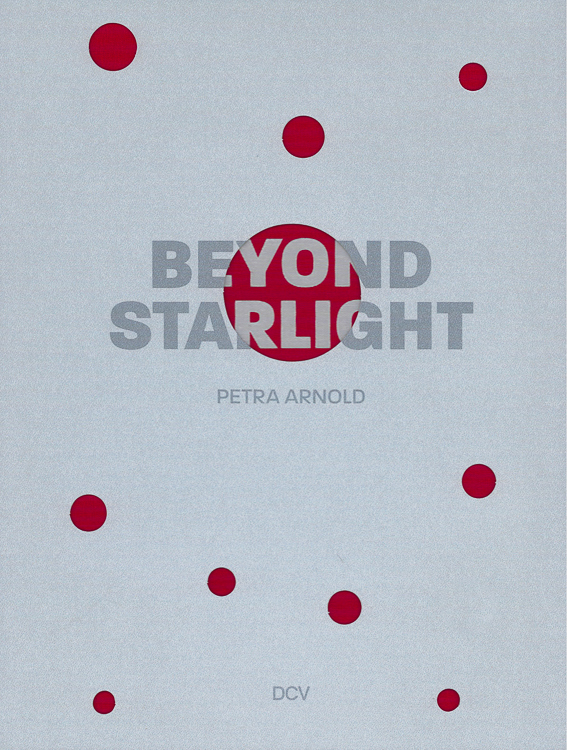
Beyond Starlight39,90€ Read moreThe Fischer Family of Circus Artists: A Photographic Long-term Observation
For more than a decade, the photographer Petra Arnold has shadowed the Zirkus Starlight troupe and the Fischers, a family of performers, taking analog photographs, mostly black-and-white, of their life behind the scenes. When she began the project, the Fischers were a large family, with thirty grandchildren. Over time, the company has had to downsize – the business environment is difficult, and few people can make a living as circus artists these days. Arnold’s photographs peek behind the curtain for a study of an existence between circus family and family circus – mostly outside the limelight. The portraits and unstaged scenes are documents of contemporary history and draw attention to the steady decline of circus culture.
-
MEUSER
Werke 2012–2023 (GERMAN)48€ Add to cartEver since his studies with Joseph Beuys and Erwin Heerich, since his first exhibitions – for instance at ‘Kippenberger’s Office’ in 1979 – Meuser (b. Essen 1947, lives and works in Karlsruhe) has been a solitaire. His sculptures are unyielding and unruly, just as much as they are vulnerable and tender. They are witty and heart-touchingly charming.
Meuser finds his material in the scrapyard. Confidently and empathically, he reinstates form and dignity to the remnants and vestiges of industrial society. As a romantic, he grants things a life of their own and turns them into self-reliant protagonists, once more. Unwaveringly, he works to re-poetize a standardized and maltreated world.
The lavishly designed monograph is published on the occasion of Meuser’s 75th birthday, presenting works and exhibitions from the past ten years. Eight international authors and scholars create a dazzling mosaic and reveal how Meuser boldly holds his own in face of Duchamp, Minimalism, and Social Sculpture. An open-ended outlook.
Meuser studied 1968–1976 at Art Academy, Düsseldorf with Joseph Beuys and Erwin Heerich. 1991 he received the ars viva award. 1992-2015 professorship at Academy of Fine Art, Karlsruhe.
Since 1976, numerous institutional solo and group exhibitions and works in international collections: Bundeskunsthalle, Bonn; Deichtorhallen, Hamburg; documenta IX / Fridericianum, Kassel; Fundació Joan Miró, Barcelona; Joanneum, Graz; Kunsthalle Düsseldorf; Museum of Contemporary Art, Monterrey; Martin-Gropius-Bau, Berlin; Museum Abteiberg, Mönchengladbach; Museum Folkwang, Essen; Museum moderner Kunst Stiftung Ludwig, Vienna; Museum Morsbroich, Leverkusen; Rijksmuseum Twenthe, Enschede; Sakip Sabanci Museum, Istanbul; Städtische Galerie, Karlsruhe; Vanhaerents Art Collection, Brussels; ZKM | Museum für Neue Kunst, Karlsruhe.
-
Julius Hofmann
Western Philosophies35€ Add to cartJulius Hofmann (b. Göttingen, 1983; lives and works near Göttingen) has mastered the traditional aspects of painting and commands a broad repertoire of creative techniques. This expertise enables him to call conventional painting in question by combining it with the aesthetic of 1990s computer graphics. The simple and often grotesque symbolism of the imperfect digital imagery contrasts with a perfectionistic figurative painting. This approach lends his pictures a disconcerting and unexpected quality.
Western Philosophies is an episode in Hofmann’s ongoing work confronting consumerist society with its dark secrets and its indifference. Meanwhile, his creative process is also an exploration of the artist’s personal fears and frustrations. In depicting his figures, landscapes, and machines, he draws our attention to the painterly originality of structures and surfaces. The protagonists, to his mind, play a subordinate role, typically serving him as vehicles—he is more interested in the “how” than in the “what.”
Julius Hofmann studied painting with Neo Rauch and Heribert C. Ottersbach at the Academy of Fine Arts Leipzig (HGB) from 2005 until 2011. His work is represented in international collections and institutions.
-

Jan Zöller
Ritual Believer40€ Add to cartJan Zöller’s (b. Haslach, 1992; lives and works in Karlsruhe) paintings, sculptures, and installations probe the discrepancy between economic production and the spiritual and magical dimension of art. The artist’s book Ritual Believer surveys the so-called charcoal paintings series, created between 2019 and 2023. For these works, the artist paints directly in charcoal on the unprimed canvas, making it impossible to correct “blunders.” Another distinguishing feature is the virtual absence of color; the austerity of the compositions contrasts with Zöller’s other, often intensely colorful paintings. The motifs that are the hallmark of his oeuvre—birds, running legs—are complemented by writing and text. Another aspect of this shift is that the works’ titles play a central part and almost figure as a creative element in their own right. For the text in the book, the artist sent the titles of the works shown to his brother, who wove them into a story. An appendix presents scanned archival materials. Notebooks and zines Zöller produced between 2015 and 2017 provide interesting insight into how he finds his motifs and his compositional process.
Jan Zöller studied with Marijke van Warmerdam and Leni Hoffmann at the Akademie der Bildenden Künste Karlsruhe from 2012 until 2017 and with Jean-Marc Bustamante and Götz Arndt at the École Nationale Supérieure des Beaux-Arts de Paris in 2016.
-

Karin Hochstatter
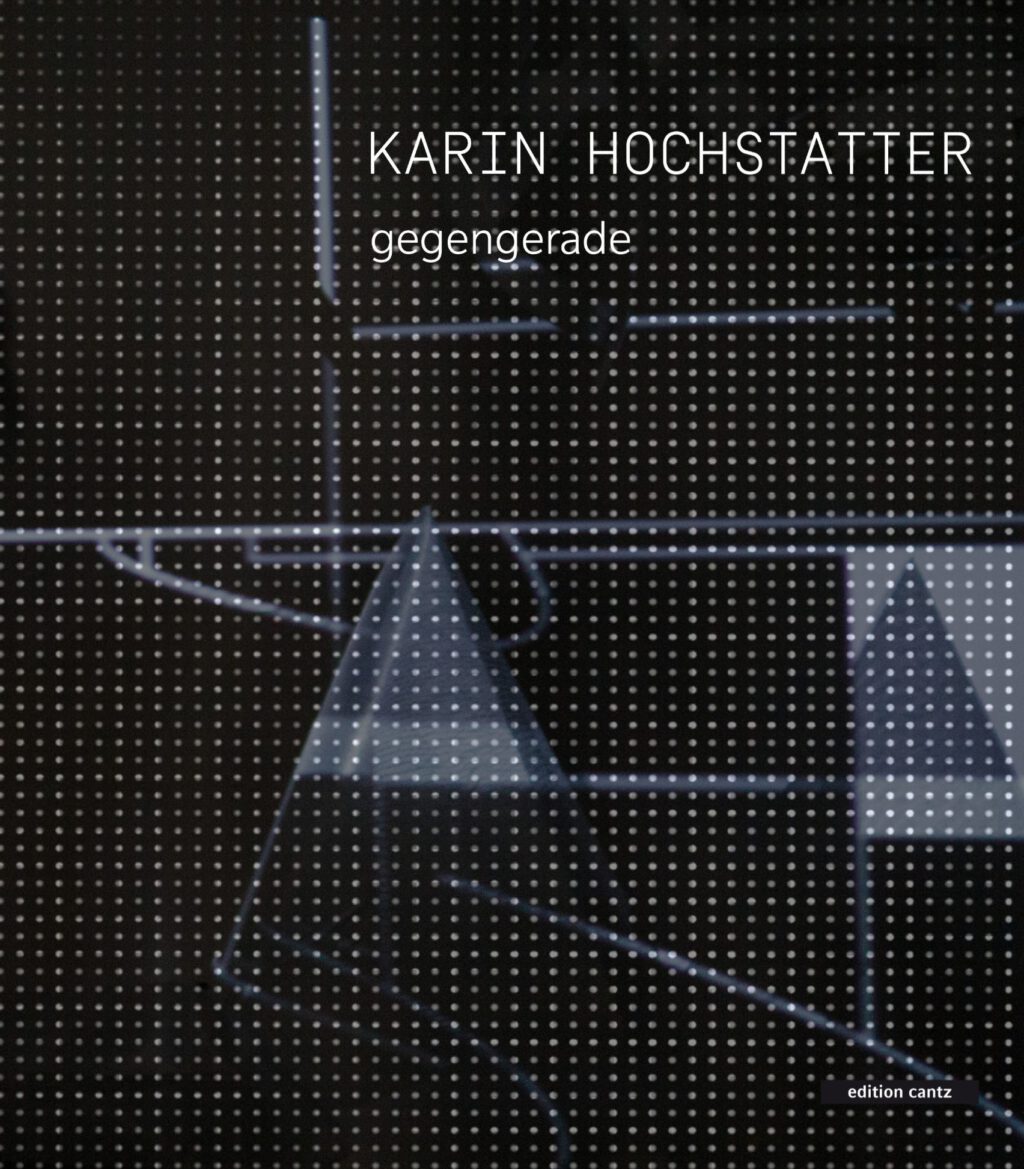
gegengerade20€ Add to cartA Provocation of Vision between Surface and Depth
In her sculptural works, Karin Hochstatter (b. 1960, Cologne; lives and works in Cologne) deals with forms and their dissolution, as well as the perceptual mechanisms that arise from this. Everyday materials from high-tech production processes, such as construction products and foils, become fragile and expansive structures that question both our way of seeing and our notion of sculpture. The book documents her more recent works since 2012, which always exist as singular events in space and never appear a second time in the same way.
Karin Hochstatter studied Visual Art at the Kunstakademie Düsseldorf and Philosophy at Heinrich-Heine- Universität Düsseldorf. Since 1998, she has been a visiting professor and lecturer at universities in Germany and the USA.
-

Andreas Wegner
Wir fahren mit der Schneckenpost, weil die uns keinen Pfennig kost50€ Add to cartThe art of Andreas Wegner is an inquiry into capitalist urbanity. His interventions explore alternative models for urban interaction, trade, city development, traffic, or the use of public space. Inspired by Joseph Beuys’s social sculpture and Charles Fourier’s social utopias, Wegner founded, e.g. a cooperative department store in Berlin, a grocery store in Vienna, and conducted real estate business as a form of creative resistance. This monograph illustrates the artist’s most important projects with ample imagery, essays by renowned authors, interviews, and his own texts. Alongside collective initiatives, installations, photography, film, and sculpture, painting remains a constant in Wegner’s oeuvre to this day.
-

Liam Gillick
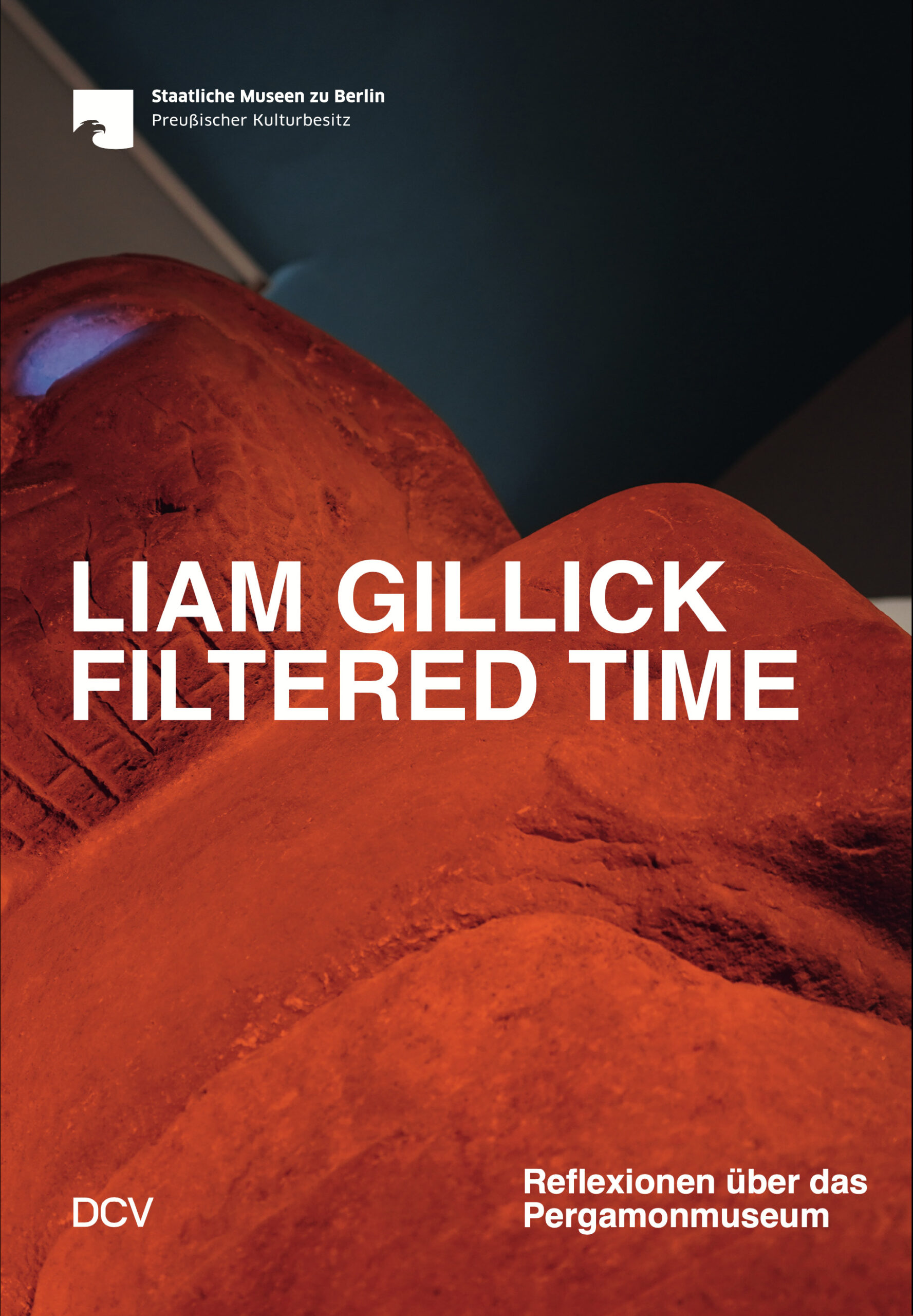
Filtered Time (GERMAN)28€ Add to cartThe sculptor and object artist Liam Gillick (b. Aylesbury, UK, 1964; lives and works in New York) has created an intervention titled Filtered Time for the historic galleries of the Pergamon Museum in Berlin. Projections of light and color and acoustic effects condense six thousand years of cultural history into an immersive spatial experience. Gillick initiates a conversation between the iconic Processional Way and the Ishtar Gate from Babylon, the monumental sculptures of Tell Halaf, and other exhibits, engendering new layers of meaning across all historical periods. The first joint project of the Vorderasiatisches Museum and the Hamburger Bahnhof—Nationalgalerie der Gegenwart makes for a singular visual and sensory experience. Designed by the artist himself, the publication not only documents the richly colorful production, but also provides insight into the eventful history of the museum, which is approaching its centennial.
Liam Gillick studied at the Hertfordshire College of Art in 1983–1984 and at Goldsmiths, University of London from 1984 until 1987. Gillick is a prolific published writer as well, producing essays, reviews, fiction, and theatrical scenarios.
-

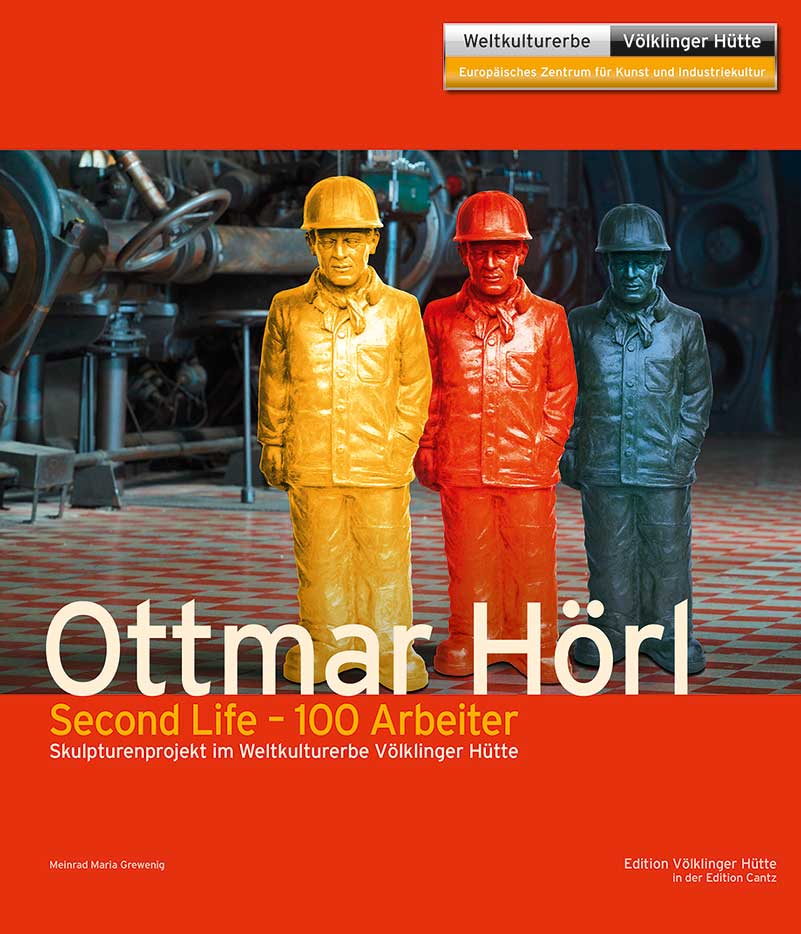
Ottmar Hörl
Second Life – 100 Arbeiter14,80€ Add to cartThe Workman Sculptures at Völklinger Hütte Steelworks
Sculptures on topics of everyday life are at the center of the work of Ottmar Hörl (b. 1950, Nauheim; lives and works in Frankfurt/Main and Wertheim). His major projects gained international recognition, they are based on the artist’s concept of art as a communication model. For the Völklingen Ironworks World Heritage Site, Hörl conceived the sculpture project Second Life, which features 100 figures modeled on the Völklingen ironworker with helmet and work clothes. The book documents the impressive project that focuses on the universal theme of the Völklingen Ironworks: work and the working people.
-
Kay Rosen
NOW AND THEN35€ Add to cartKay Rosen (b. Corpus Christi, TX, 1943; lives in New York City and Gary, IN) has made art out of language since the 1970s. She garnered international acclaim with wall pieces spelling individual words, phrases, or strings of letters, often on a vast scale. Her works combine minimalist form, aesthetic force, and clever ideas in compelling ways. By modulating their arrangement and typographic and color design, the artist puts irritating twists on everyday terms and expressions. Subtle alterations often yield striking effects. Through punning, reframing, and onomatopoeic exploration, Rosen continually unearths unexpected layers of meaning. Released on occasion of the artist’s eightieth birthday, the publication presents wall pieces, paintings, drawings, prints, and video stills, inviting readers to discover or rediscover a multifaceted oeuvre that blends lightness and humor with analytical acumen in singular fashion.
Kay Rosen obtained a B.A. in linguistics, Spanish, and French at Tulane University’s Newcomb College in New Orleans, LA, in 1965. She then taught Spanish at Indiana University in Gary while attending studio classes at the School of the Art Institute of Chicago, where she subsequently taught for twenty-four years.
-

João Onofre
Untitled (in awe of)25€ Add to cartJoão Onofre’s works are tributes to art history and pop. He gleans what is in danger of being lost right now, realigns it, and translates it into something sublime. His art encourages the beholders to reconsider a past that has faded in collective memory with a critical eye and make peace with it. His creative process is guided by the material and a clearly defined concept that nonetheless does not restrict a work’s finding its own way. That is why he does not commit to a particular medium, making videos, performances, installations, and much more. What all his works have in common is that they probe the limitations of their medium and our perceptive capacities in novel ways. This catalogue presents three recent works in which the essence of Onofre’s art becomes manifest: he molds myths and symbols into awe-inspiring images, sounds, and forms—not for nothing have critics labeled him an alchemist. In the catalogue, his tangible compressions of cultural history are rendered in imposing pictures and flanked by an ambitious essay that places them in their context.
- temporarily not available

David Hockney: Insights
Reflecting the Tate CollectionRead moreDavid Hockney (born 1937 in Bradford) is one of the most influential and technically versatile artists living today. This new publication gathers some of his most defining work from the 1960s to the present, including major works in the Tate collection. From early graphic cycles, double portraits and iconic pool paintings through to his photo collages, plein air landscapes, iPad drawings, and multimedia installations, the volume documents central themes and genres in Hockney’s oeuvre, as well as his constant experimentation.
Original essays by renowned critics and commentators illuminate the artist’s search for new forms of expression, the topographical and biographical reference points of his work, the technical innovation of his painting and printmaking, as well as his approach to new media.
-

Thyra Schmidt
Über Diebe und die Liebe. On Thieves and Love.15€ Add to cartAn artist’s book, an artist’s text
On twenty-two large-format typographic sheets, Thyra Schmidt (b. 1974, Pinneberg; lives and works in Düsseldorf) develops a narrative featuring moments in an amorous relationship. Thoughts and encounters between “her” and “him” are captured in poetically constructed, fragmentary units of meaning. Imaginary images are conjured in the mind’s eye: Close-ups and intimate insights into a delicate web of interpersonal incidents. Personal observations and experiences form the starting point of this artistic exploration of love. Yet the focus of her work is not on autobiographical rendering, but rather on the tracking down of elementary structures, a general understanding of intimacy.
-

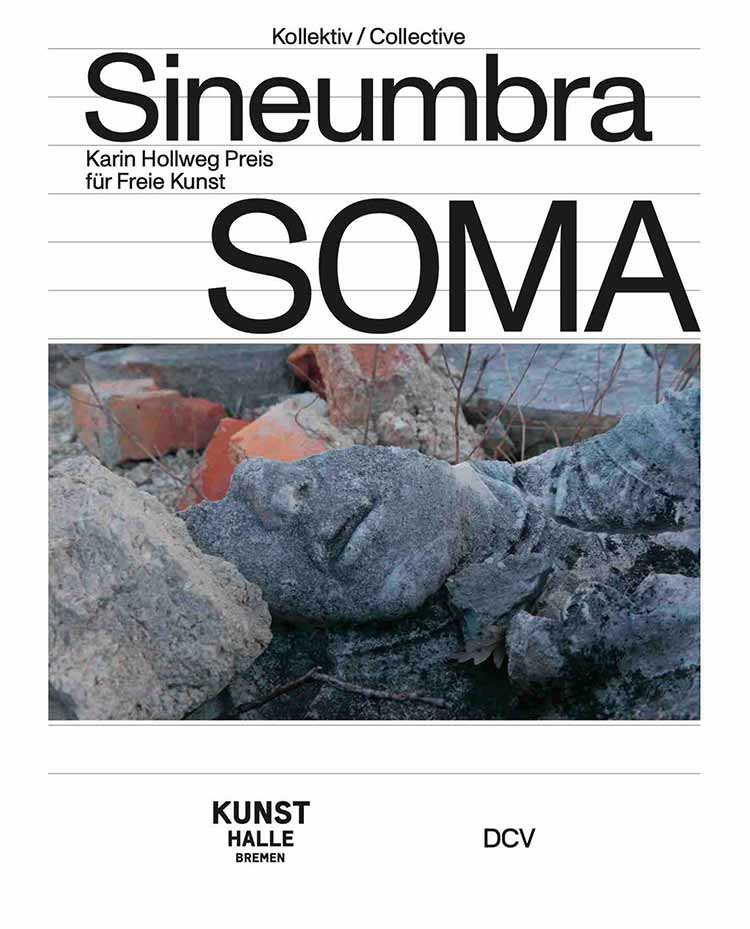
SOMA
Collective SineUmbra18€ Add to cartOn the Disappearance of Italian Culture
Under the collective label SineUmbra, the artists Luisa Eugeni (b. Assisi, Italy, 1987; lives and works in Berlin) and Mattia Bonafini (b. Legnago, Italy, 1980; lives and works in Bremen) develop interdisciplinary projects that they realize as sprawling multimedia installations comprising video projections, sound, and performative elements. The point of departure for their project SOMA was Pier Paolo Pasolini’s 1975 essay Disappearance of the Fireflies, which probes the wrenching transformation that Italian society and the country’s very landscapes have undergone since the 1960s. SOMA melds performance art, the visitors’ movements, geography, and psychology in a space of experience that speaks to all senses for an exploration of the impact that traumata inflicted on individuals and communities by natural disasters and social changes have on the human soul and perceptual capacities. In keeping with the artists’ collective and dynamic creative vision, the catalogue embeds the multimedia installation in a context fleshed out by rich photographic documentation and numerous texts.
On occasion of the master class graduate exhibition at the Bremen University of the Arts in 2019, the two artists were awarded the renowned Karin Hollweg Prize for Fine Art. The publication accompanies their first solo show at Kunsthalle Bremen.
-
DAWN OF HUMANITY – ART IN PERIODS OF UPHEAVAL
37€ Add to cartThe book and exhibition present works from the first two decades of the twentieth century from the Kunstmuseum Bonn’s collection in dialogue with contemporary creative positions. What the works have in common across the distance of a century is their genesis in, and reflection on, a time of major social and political crisis. Back then, life had been profoundly changed by the industrial revolution; nowadays, climate change, wars, and the rising political power of right-wing ideologies are transforming the life of our communities. The presentation conceives art as a tool that lets us interrogate the world and imparts fresh intellectual impulses, and so also plays an active part in our societies. The title Menschheitsdämmerung – Dawn of Humanity – is borrowed from the poetry anthology of the same title released by Kurt Pinthus in 1919, which samples the Expressionist lyric poetry of the young century in four chapters: “Downfall and Outcry”; “Love Human Beings”; “Awakening of the Heart”; “Entreaty and Indignation.” Florian Illies, who already wrote an afterword for the 2019 centenary edition of Menschheitsdämmerung – the bestselling poetry anthology in the history of German literature – contributed the keynote essay in the book.
Artists: Nevin Aladağ, Francis Alÿs, Kader Attia, Yael Bartana, Rebekka Benzenberg, Monica Bonvicini, Andrea Bowers, Heinrich Campendonk, Louisa Clement, Max Ernst, Georg Herold, Franz M. Jansen, Alexej von Jawlensky, Käthe Kollwitz, Wilhelm Lehmbruck, Max Liebermann, August Macke, Helmuth Macke, Goshka Macuga, Marie von Malachowski-Nauen, Carlo Mense, Zanele Muholi, Heinrich Nauen, Grace Ndiritu, Anys Reimann, Deborah Roberts, Daniel Scislowski, Paul Adolf Seehaus, Tschabalala Self, Monika Sosnowska, William Straube, Emma Talbot, Hans Thuar, Lawrence Weiner
-
Language/Text/Image
32€ Add to cartSpoken words, writing, and images originate in social and cultural contexts and so are fraught with meanings, are vehicles of values and norms. They inevitably also demarcate boundaries, serving to class people as members of groups or outsiders. This adds to the urgency of the question of what can in fact be said and shown, and who or what determines those limits. The present catalog addresses these concerns through a survey of eminent art of the twentieth and twenty-first centuries. The works gathered in it speak to mechanisms of inclusion and exclusion, to categorizations and the narratives that were created to sustain them. And they remind us that these phenomena are human-made, which is also to say, susceptible to change—that we share responsibility for them.
Artists: John Baldessari, Maria Bartuszová, Alice Bidault, Alejandro Cesarco, Ayşe Erkmen, Nadine Fecht, Gary Hill, Janice Kerbel, Gabriel Kladek, Gordon Parks, The National AIDS Memorial, Markus Vater, Gillian Wearing
-
Antonia Hirsch
Phenomenal Fracture24€ Add to cartIn a probing engagement with the screen, an omnipresent object in contemporary life, Antonia Hirsch charts the gulf between the digital and the analog, the two spheres of which our perceived reality is composed. In provocative installations and objects, the artist conceives the distinctions between screen, mirror, and blade as less than sharply defined. Her works show rigidly geometric shapes made of hard and shimmering glass and steel; they encounter eerily somatic and perishable-looking cardboard or soft foamed-plastic components that recall the bodies they perhaps once served. Reflective surfaces mirror our gaze, but the less classy materials, too, await recognition by the beholder’s body. The book accompanies Hirsch’s solo exhibition Phenomenal Fracture at Kunsthalle Lingen; photographs and writings convey extensive and sustained impressions that run the gamut from the uncanny to the darkly humorous.
-
Franziska Opel
Close and Cold32€ Add to cartWith sex toys, the potential for misinterpretation and ill-advised use is vast, as countless slapstick comedies illustrate. Steering clear of quick laughs, Franziska Opel deftly harnesses this anarchic power of misunderstanding to explode our perceptions and worldview. Her works are painstakingly planned experimental arrangements in which she modifies or deforms mundane objects as well as those sex toys in subtle ways or powers them up in series, making us see them with fresh eyes. They cast a spell over us with their sensual allure, while our associative circuits processing what we see spark a certain sense of irritation. Curiosity, attraction, bewilderment, shame—expertly staged in photographs for this catalogue, the works elicit a wide range of emotions. Their energizing contradictions are elaborated by contributions from gifted writers: standalone poetic-narrative writings that reflect on several key aspects of Opel’s art in offhanded yet challenging ways.