Queen Elizabeth II
Sammlung Luciano Pelizzari
 | |
|---|---|
| Editor(s) | Meinrad Maria Grewenig |
| Author(s) | Peter Backes, Rolf Seelmann-Eggebert, Meinrad Maria Grewenig, Eva-Maria Günther, Andreas Hahn, Vittorio Sabadin |
| Size | 24 × 28 cm |
| Pages | 256 |
| Cover | Softcover |
| Illustrations | 400 |
| Design | Glas AG |
| Language(s) | German |
| ISBN | 978-3-947563-04-3 | Out of Stock |
Erinnerungsstücke einer Legende
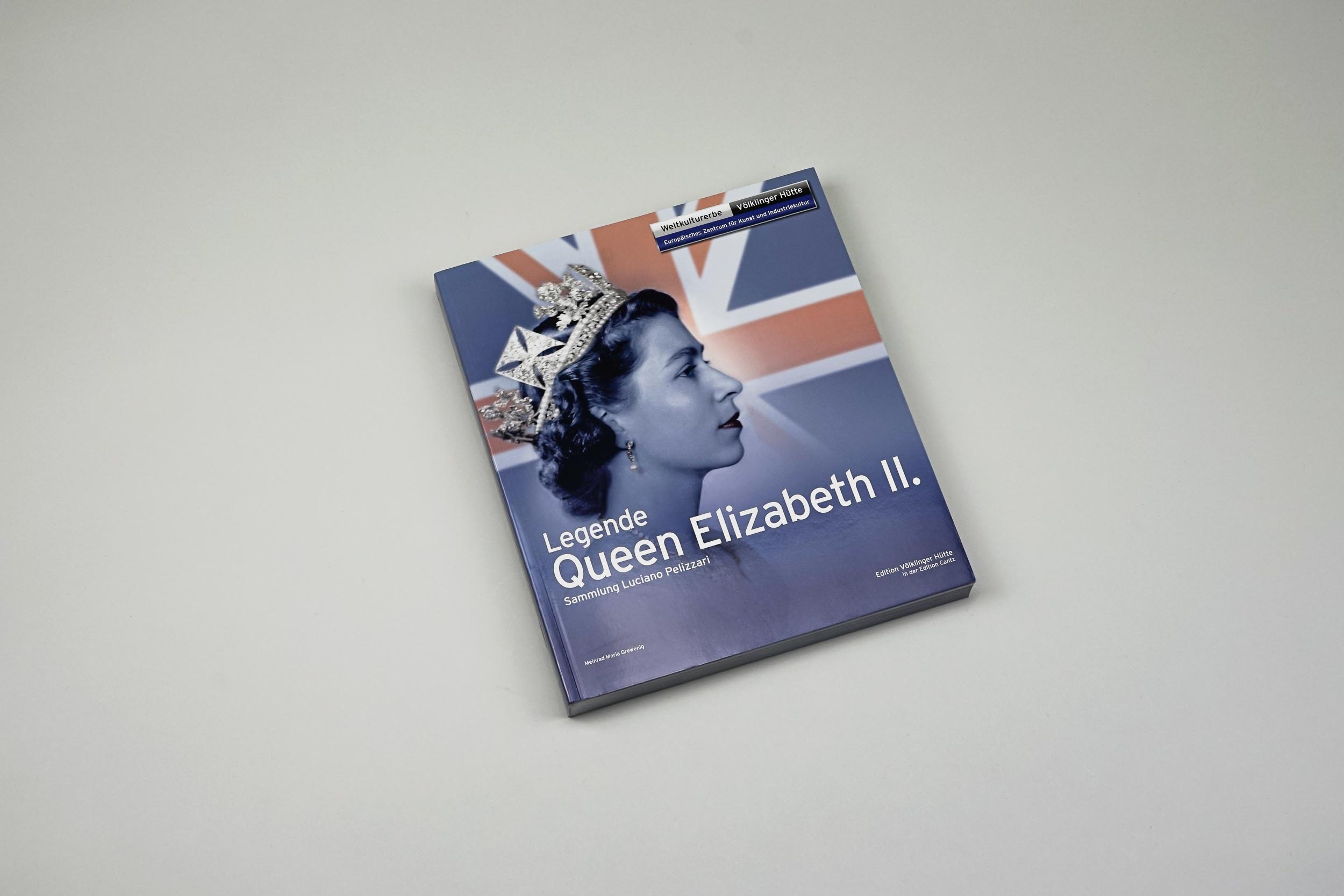
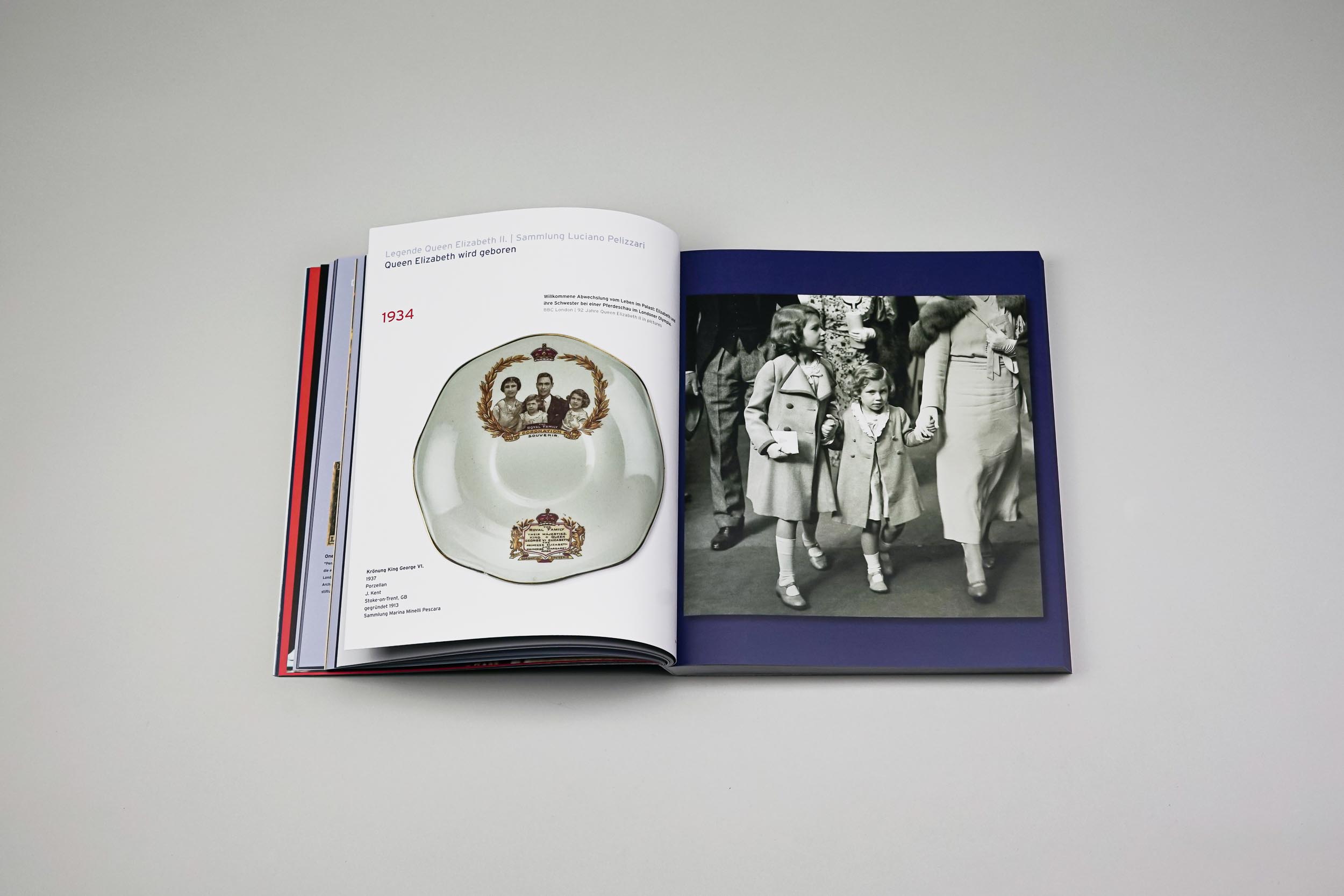
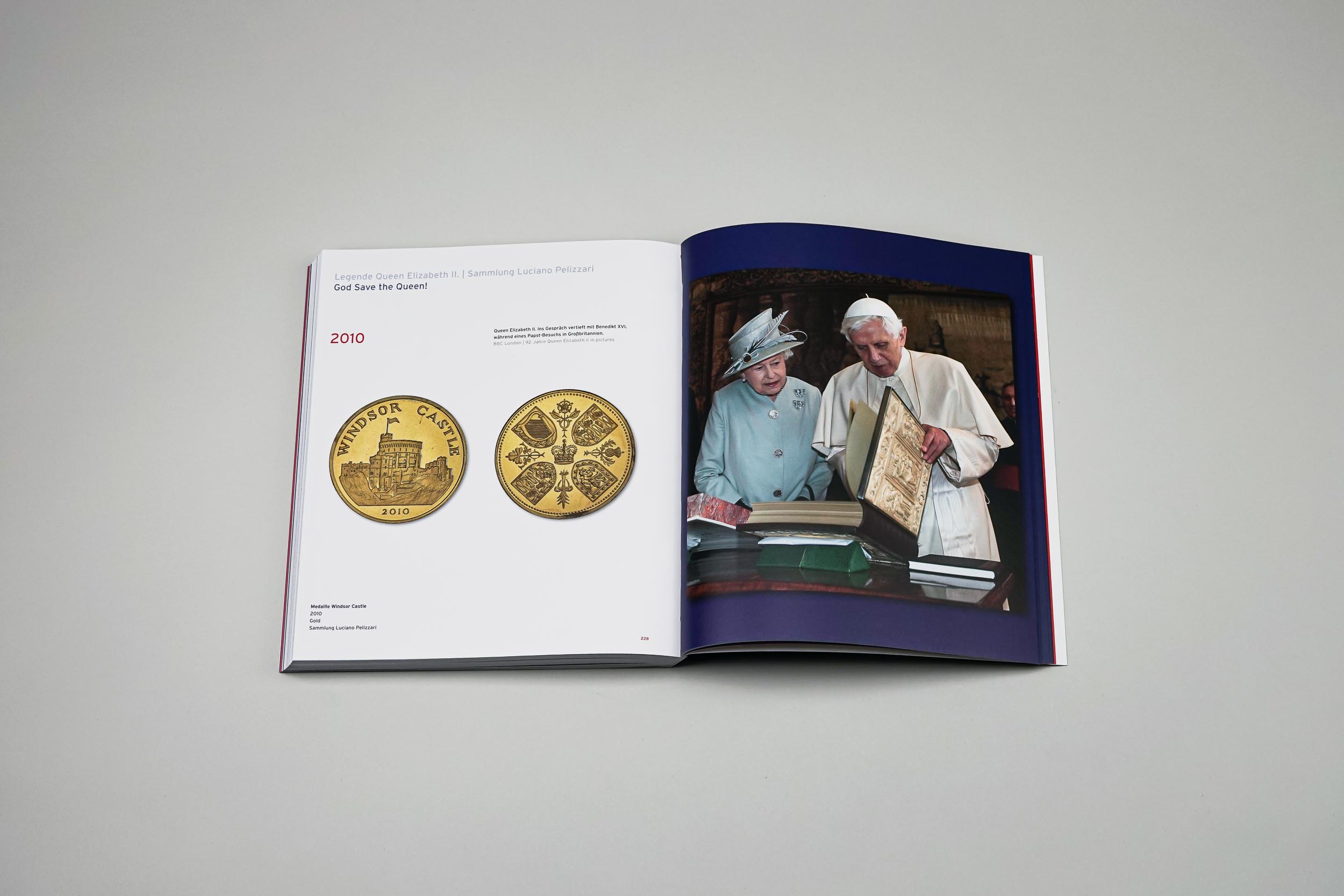
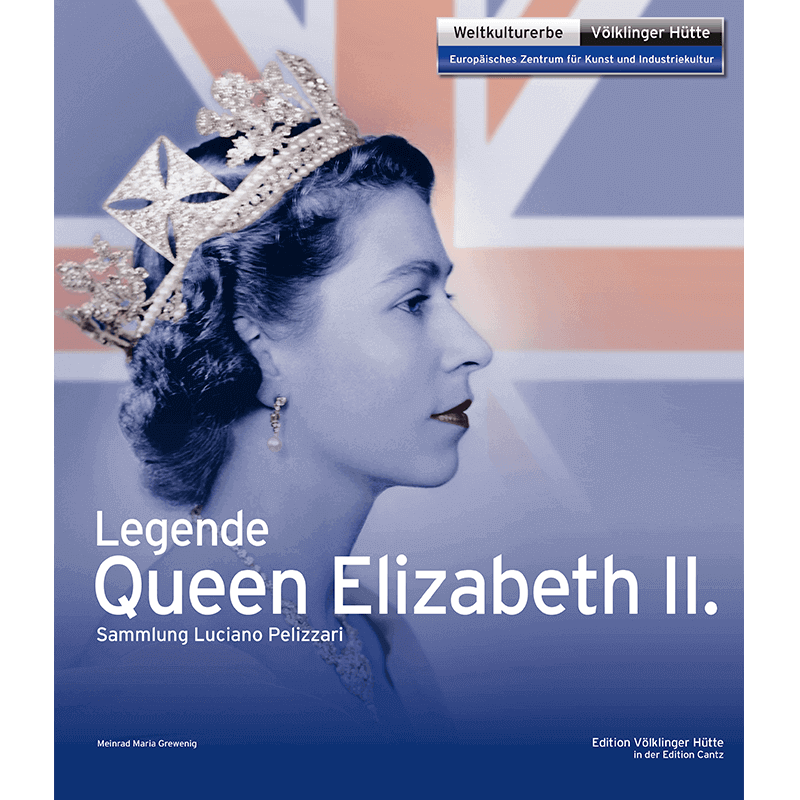
Im Leben von Elisabeth II. (geb. 21. April 1926 in London) spiegelt sich eine ganze Epoche. Die britische Königin hat alle deutschen Bundeskanzler und sämtliche englischen Premierminister von Winston Churchill bis Boris Johnson erlebt. Sie ist die am häufigsten abgebildete Person des 20. und 21. Jahrhunderts. Das Buch präsentiert Fotos, Gemälde, Briefmarken und Münzen aus der Kollektion von Luciano Pelizzari, einer der größten Sammlungen dieser Art weltweit. Es zeigt die Queen als Mensch und Monarchin, dokumentiert ihr Zusammentreffen mit bedeutenden Persönlichkeiten und Ereignissen ihrer Regierungszeit und präsentiert sie in zahlreichen Darstellungen aus Kunst und Kultur.
Out of Stock
Out of stock
More books
-

Gabriele Basch
fortuna24€ Add to cartPaper and Foil Cut‑Outs in an Innovative Language of Forms: An Overview of the Works of Gabriele Basch from 2008 to 2019
Since the 1990s, Gabriele Basch (b. 1964, Bad Homburg; lives and works in Berlin) has been working with cut-outs and translating the age-old tradition of silhouettes into an idiosyncratic and innovative language of forms. The artist interweaves creation and destruction, planning and chance into a complex, multi-layered reality and makes views into the spatial environment an integral part of her work. In her paper and foil cut-outs, foreground and background, materiality and void combine to form a whole that oscillates between painting and drawing, as well as between urban structures and hints of the biomorphic – in delicate color gradients, swirling structures, spontaneous gestures, and stenciled surfaces. The generously illustrated monograph offers a comprehensive overview of the artist’s work from 2008 to 2019.
-

Stephan Kaluza & Dieter Nuhr
Transit42€ Add to cartLandscapes in a Dialogue between Painting and Photography
At first glance, Stephan Kaluza’s (b. 1964, Bad Iburg; lives and works in Düsseldorf) photorealist paintings might be still lifes, portraits of pristine nature. Yet they actually show battlefields and other scenes of past horrors. The idyll in his pictures positively appeals to our vigilance to resist the impression of profound peace. The same ambiguity lies at the heart of the photographs of Dieter Nuhr (b. 1960, Wesel; lives and works in Ratingen). Nuhr, who is also widely known as a comedian, has contributed pictures that are carefully focused renditions of seemingly serendipitous discoveries from his travels in Nepal, Bolivia, India, and Sudan. In their timelessness, Nuhr’s photographs are akin to the locales in Kaluza’s works, which, disburdened of the heavy weight of their histories, reemerge as straightforward natural landscapes. The lavishly illustrated two-volume edition presents the fruits of a collaboration between two artists united by their shared preoccupation with the dialectic of ephemerality and permanence.
-
Leszek Skurski
Catalogue raisonné Vol. 1: Works from 1990–202459€ Add to cartLeszek Skurski (b. Gdańsk, 1973; lives and works in Fulda and Mallorca) is known for his singular and immediately recognizable white paintings. Small black and gray figures emerge from the white landscapes, always set in relation to one another, in pairs or groups. Exposed on the expansive and boundless-seeming plane, they silently tell a story that remains as open-ended as the pictures. In a few spare brushstrokes or lines drawn with the palette knife, Skurski’s superb neoimpressionism deftly captures the atmosphere that weighs down on his characters and holds his compositions in suspense.
The extensive monograph presents over two thousand works from more than three decades. Essays embed the various bodies of work in their art-historical contexts.
-
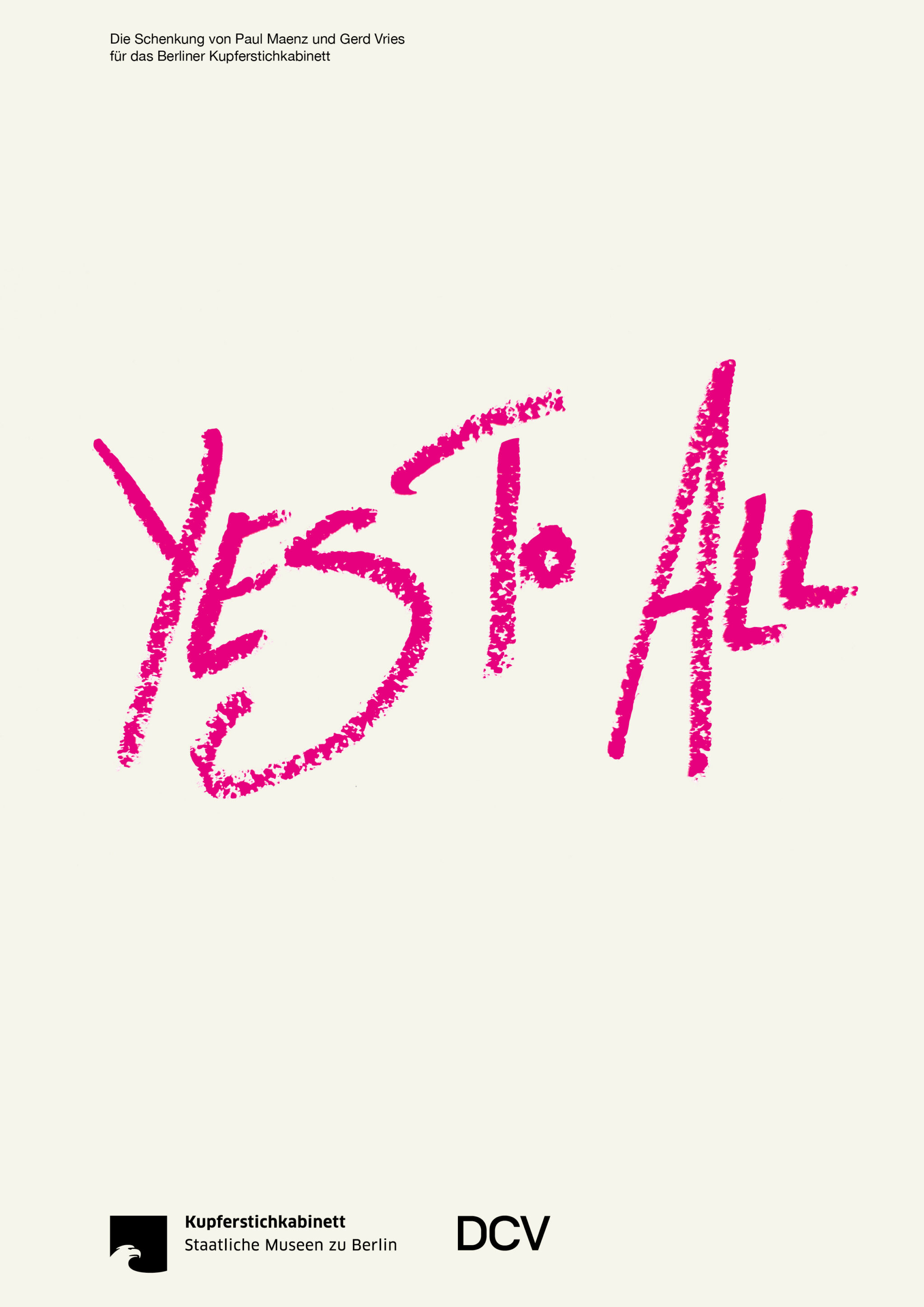
Yes To All
Die Schenkung Paul Maenz Gerd Vries42€ Add to cartThe catalog accompanying the exhibition YES TO ALL offers profound insight into a collection of over nine hundred works on paper—from postcards and drawings to photographs and posters—that was gifted to the Kupferstichkabinett in 2022, with subsequent additions over the years until 2025. The donors are Paul Maenz and Gerd de Vries, who ran a gallery for contemporary art in Cologne until 1990 and chaperoned the evolution of avant-garde art from the conceptualism of the late 1960s to the neo-expressive painting of the 1980s. The most recent works in the collection date from 2024. Several essays and a conversation with the donors invite the reader to experience the stylistic and thematic polyphony of Western art in the late twentieth and early twenty-first centuries in new ways.
EXHIBITION:
YES TO ALL. THE GIFTS OF PAUL MAENZ GERD DE VRIES TO THE KUPFERSTICHKABINETT
KUPFERSTICHKABINETT, STAATLICHE MUSEEN ZU BERLIN
UNTIL JANUARY 11, 2026 -

Agostino Iacurci
10€ Add to cartAgostino Iacurci’s (b. Foggia, Italy, 1986; lives and works in Berlin) paintings, sculptures, installations, and murals are based on vegetal forms and botanical subjects. Lucid compositions in radiant colors unfurl fantastical ornaments that transcend the division between figuration and abstraction and the hierarchical distinctions of applied art, design, fine art, and folk art. His central theme is the painted garden, in which he stages plants, humans, architecture, geometry, and decoration in a fashionably theatrical landscape. In Iacurci, the interpenetration of nature and civilization is real, integrating mythological motifs from across the history of art and culture, from antiquity to futurism and postmodernism, into his singular style.
Agostino Iacurci studied fine arts at the Accademia di Belle Arti in Rome. Since 2009, he has realized numerous large-format murals and installations for public and private institutions. He has also worked with international brands including Apple, Adidas, Hermès, and Starbucks.
-

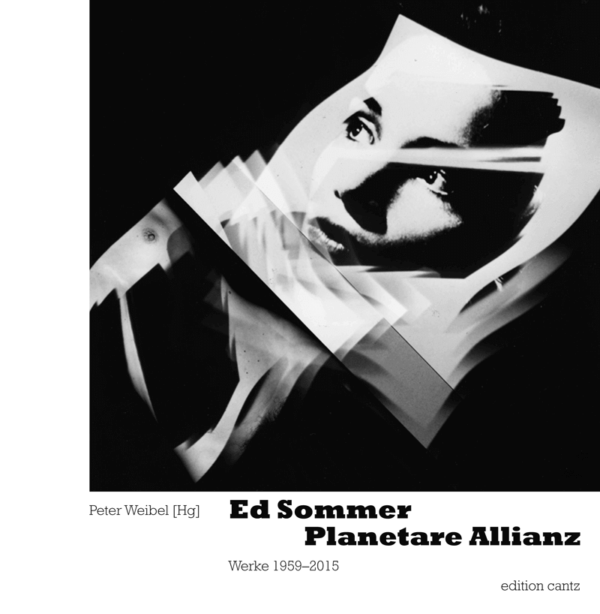
Ed Sommer
Planetare Allianz22€ Add to cartA Monograph on the Pioneer of Op Art
The complex and extraordinary work of the Schwäbisch Gmünd-based artist Ed Sommer (1932–2015), who preferred to call himself a Bildsprachenmaler (painter of visual imagery), includes metal objects, formations of acrylic glass, gestural painting, erotic films, projection photography, dialogical portraits, and spoken texts. In 2014, the ZKM | Center for Art and Media Karlsruhe added a large number of works by the artist to its collection. This publication now presents the collection holdings, supplemented by further works by Ed Sommer.
Ed Sommer, together with his artist friend Marc Adrian, was one of the most important representatives of op and kinetic art and received considerable attention in the 1970s with his films and photographs.
-

Brandon Lipchik
10€ Add to cartIn recent years, a Wagnerian night has settled over Brandon Lipchik’s (b. Erie, PA, 1993; lives and works in Brooklyn, NY, and Berlin) pictures. Moons rise; beasts and titans populate a homogeneous world of swimming pools, white picket fences, and neatly mowed lawns. Synthesized on a computer screen and then transferred to canvas by hand, the artist’s paintings revolve around the backyard as a mythically fraught scene of popular culture. The garishly lit multiperspectival pictures replicate characteristic shots from 1980s gay porn films and quote a clean American Apparel look. Lipchik subjects men’s bodies, spaces, plants, objects, and animals to digital deconstruction, obtaining rudimentary and abstract shapes. Staring at smartphones or gazing on water surfaces, his characters recall early digital animations and seem oddly hollow, like empty avatars waiting to be filled with new speculative content.
-

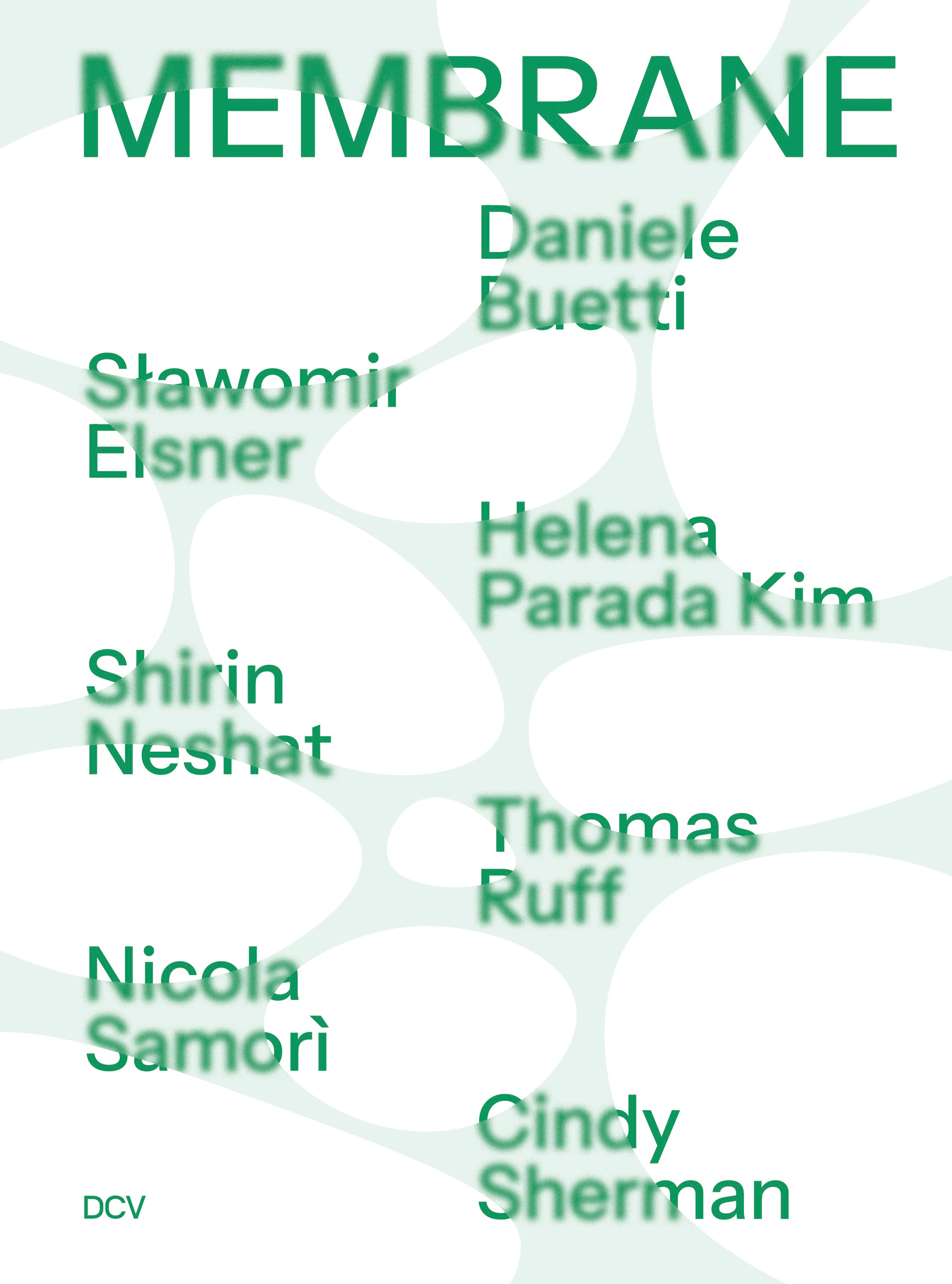
Membrane
38€ Add to cartMembrane documents an eponymous exhibition at the Neue Galerie Gladeck as well as the gallery’s architectural extension. The works of the 7 invited artists are engaged to explore skin in a broader sense—membrane also encompasses clothing, veiling, and masking from various cultural perspectives. Well-known portraits by Thomas Ruff, Shirin Neshat, and Cindy Sherman appear in a new light alongside Helena Parade Kim’s exploration of iconographic and ceremonial fashion codes, Daniel Buetti’s critique of the commercialized body, and Nicola Samorì’s exploration of skin in historical masterpieces. The membrane concept also inspired the exterior and interior surfaces of the new gallery building, and an interesting text by the architect reveals his approach.
Artists: Daniele Buetti, Sławomir Elsner, Shirin Neshat, Helena Parada Kim, Thomas Ruff, Nicola Samorì & Cindy Sherman
-

Penny Hes Yassour
Temp-Est24€ Add to cartA Monograph about the Award-Winning Israeli Artist
Penny Hes Yassour (b. 1950, lives and works at kibbutz En-Harod Ihud) tells stories and keeps history alive, explores the boundary between remembering and forgetting. In her installations she combines sound, image, and a multi-part world of objects into narrative mise-en-scènes of great poetic power. Hes Yassour leads the viewer through the Jordan Valley with its many watchtowers, accompanies the transformation of the landscape in a gigantic, stagelike water basin, and documents the flight of bats in a narrow, labyrinthine spatial installation. The book published on the occasion of the artist’s first exhibition in Germany provides comprehensive insights into her subtle artistic work.
-

Ion Bitzan
48€ Add to cartThe painter and object artist Ion Bitzan (b. Limanu, 1924; d. Bucharest, 1997) belonged to the generation of Romanian artists who, in the 1960s and 1970s, broke through their country’s isolation to connect to the international avant-garde. His creativity and the quality of his artistic experiments, which drew inspiration from conceptual art, Dada, and other sources, made him a leading figure in the Romanian art of the Ceaușescu era. This book also sheds light on the complex relationship between artistic innovation and political (propaganda) art behind the Iron Curtain during this period, in which nothing was ever black or white. Bitzan represented Romania at the Venice (1964) and São Paulo Biennales (1967, 1969, 1981). In 2017, the National Museum of Contemporary Art (MNAC) in Bucharest mounted a major retrospective of his oeuvre.
-

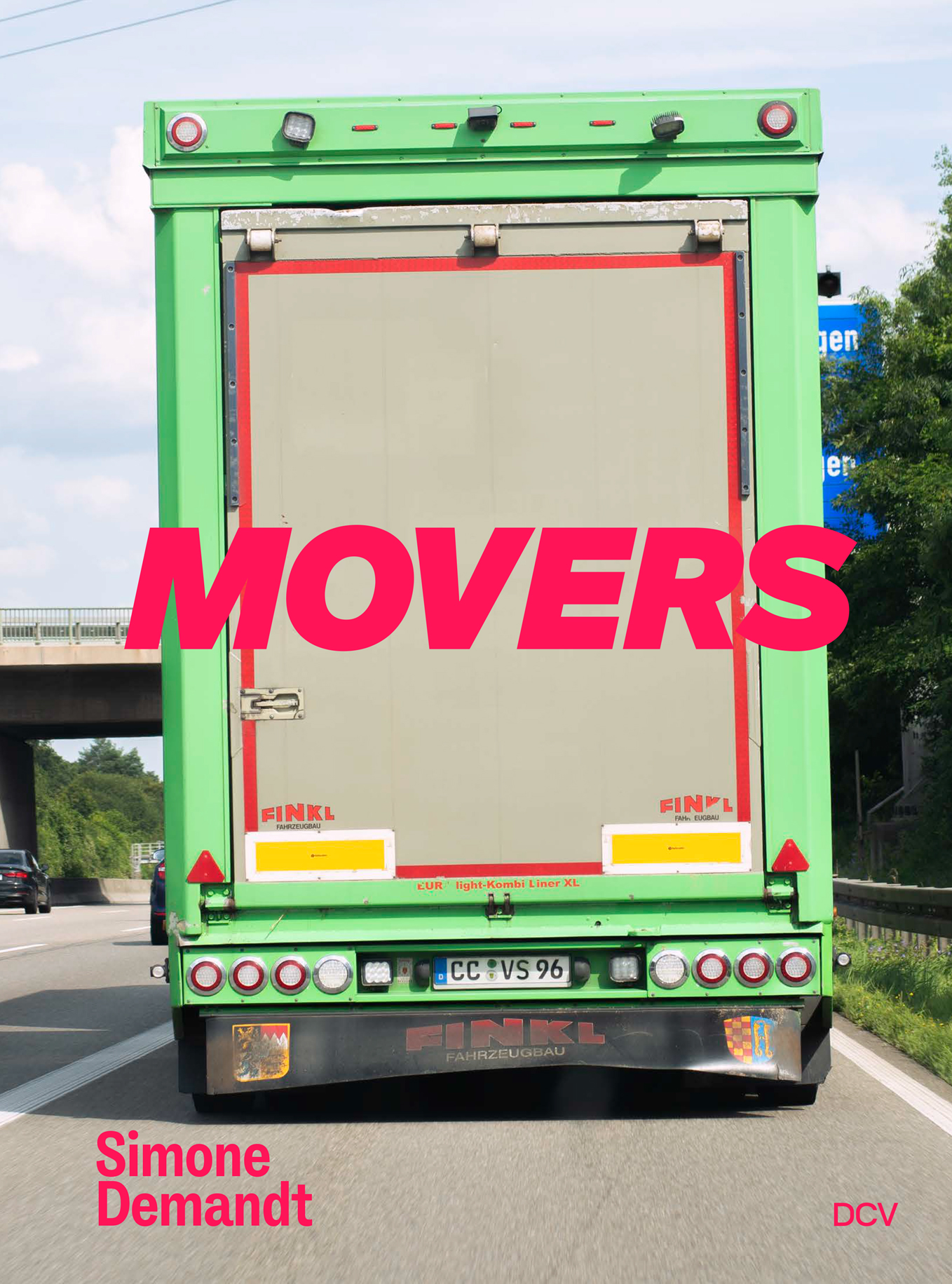
Simone Demandt
Movers / Beweger38€ Add to cartMotorways are Europe’s lifelines. The products we buy every day arrive on supermarket shelves after traveling along these arteries on the backs of thousands of trucks steered by hard-working drivers. Glancing up into the cabs of their hulking vehicles, we can just barely make out their heads sticking up above the steering wheels. In this overdue volume, Simone Demandt lets us see more of the heroes of the road who confidently posed for her camera. The pictures demonstrate Demandt’s knack for discovering “the intimate in the anonymous and the narrative element in the matter-of-factly” (Matthias Winzen). She has condensed the truckdrivers’ lifeworld into documentary black-and-white shots in which she shows these people as whole persons and individuals—very different from how we perceive them when they’re in the next lane. Movers lets us peek into the cabs through Demandt’s nonjudgmental lens, broadening our horizons hardly less than travelling would and helping us overcome our prejudices about teamsters. If you’ve always wanted to know whom we really have to thank for those never-empty supermarket shelves, you should not miss out on this book.
- Release March 2026
Monet – Cézanne – Matisse
The Scharf Collection48€ Add to cartThe Scharf Collection is a German private collection of French art from the nineteenth and twentieth centuries and international contemporary art. Now in its fourth generation, it continues a branch of the renowned Otto Gerstenberg Collection in Berlin, which encompasses everything from the beginnings of modernism, represented by Francisco de Goya, to the French avant-garde of the second half of the nineteenth century with Gustave Courbet, Edgar Degas and the entire graphic oeuvre of Henri de Toulouse-Lautrec. The richly illustrated catalog accompanies the collection’s first comprehensive exhibition at the Kunstpalast in Düsseldorf and the Alte Nationalgalerie – Staatliche Museen zu Berlin.
-

Robbie Cornelissen
Terra Nova28€ Add to cartFuturistic / Fantastic
The Dutch artist Robbie Cornelissen’s (b. Utrecht, 1954; lives and works in Utrecht) oeuvre is endowed with unusual narrative power. His architectonic drawings in enormous formats, which often exude a futuristic aura, typically show deserted libraries, waiting halls, factory floors, or other oversized spaces. In alternation with his work on paper, the artist creates animated films out of thousands of drawings. This publication presents 250 drawings from Cornelissen’s new film Terra Nova, which explores an urgent contemporary concern: humanity’s responsibility for the earth and the open question of its long-term survival on the planet.
Robbie Cornelissen studied biology and ecology at Rijksuniversiteit Utrecht and at Vrije Akademie, Den Haag, and the Gerrit Rietveld Academie, Amsterdam. His work has been shown at Centraal Museum Utrecht, Hamburger Kunsthalle, the 11th Biennale de Lyon, and elsewhere.
-

Sabrina Fritsch
syntaxerror28€ Add to cartSabrina Fritsch’s (b. Neunkirchen/Saar, 1979; lives and works in Cologne) paintings explore the potentials of the compositional process and the mechanisms of perception. Many of them feature coarse structures, textile surfaces, and delicate superimpositions. In this publication, Fritsch, who was recently appointed professor at the Düsseldorf Academy of Fine Arts, presents a résumé of the painterly oeuvre she has developed since her graduation from the same school in 2008. It encompasses two related books, each of which undertakes a structured study of a major strand in Fritsch’s art. One offers a chronological survey of a representative selection of works created between 2008 and 2019 that illustrate her playful and experimental engagement with the constituents of the painted picture: the picture-as-object, the organization of pictorial space, and the phenomenology of physical color. In addition to works on canvas boasting a wide variety of applications of materials and paint, it also covers serial variations in prints. The other showcases three exhibitions and bodies of work dating from 2020 and 2021 that are dedicated to the three color systems RGB, black-and-white (BAW), and CMYK.
-

Hans Hofmann
Chimbote24€ Add to cartExpressive Forms between Art and Architecture
As an exponent of Abstract Expressionism, Hans Hofmann (b. Weißenburg, Germany, 1880; d. New York, USA, 1966) ranks among the preeminent artists of the twentieth century. As a teacher at his Hans Hofmann School of Fine Arts, which he founded in 1933 after emigrating to the United States, he exerted a formative influence over a generation of young painters. With Arshile Gorky, Willem de Kooning, Jackson Pollock, and others, he was a member of the illustrious New York School, a loose association of visual artists. In 1950 he was spending time in Europe and collaborated with the architects Josep Lluís Sert and Paul Lester Wiener on designs for colorful wall paintings to be executed on buildings in Chimbote, Peru. The urban masterplan they developed for the city’s post-World War II expansion was never realized, and so Hofmann’s intensely colorful works in large formats have been known only to specialists. The selection gathered in this book together with drawings and a city plan provides focused insight into a visionary project.
-

Art in a Conflicted World
34€ Add to cartTrans-European Perspectives in the Age of Cultural Fragmentation
Since the turn of the millennium, much of the world has become an increasingly unstable and dissonant place. Sharp disruptions define many aspects of our social, cultural, and political relations. Art in a Conflicted World addresses this evolving reality, featuring critical positions articulated by visual artists and writers from Ukraine, Russia, and Great Britain—regions embroiled in extraordinary strife and upheaval. The publication takes a frank look at these multifaceted states of social dissonance and reflects them in diverse artistic and literary inquiries and responses. The contributions are the fruits of an interdisciplinary fellowship program at Kulturstiftung Schloss Wiepersdorf that offers the participants an opportunity to gain fresh creative and cultural insights, test ways of engaging with complexity, and develop models for the future that transcend national boundaries.
The publication presents works by Sarah Dobai, Nikita Kadan, Ali Eisa, and Sebastian Lloyd Rees (Lloyd Corporation) as well as writings by Alisa Ganieva and Tanya Zaharchenko.
The project was mentored by Wolfgang Tillmans, Tom McCarthy, Katharina Raabe, and Mark Gisbourne and received funding support from the German Federal Foreign Office.
-
Filip Henin
10€ Add to cartThe events captured in Filip Henin’s (b. Mayen, 1986; lives and works in Berlin) paintings are set in a world beyond time and place, as though on an empty stage prepared for a Samuel Beckett production. It is virtually impossible to say whether a picture shows a coastal region or a craggy slope up in the mountains, whether a field of blue represents the sea or a band of open sky. Henin strips landscapes down no less than human figures, subtracting specific features to isolate basic forms that might be found in the hill country around his hometown in western Germany or in Tuscany. His work integrates quotations from antiquity, Romantic landscape painting, and postmodernism as well as Italian Transavanguardia, the mysticism of Francesco Clemente and Sandro Chia, and the figurative painting of the 1990s. Without veering into drama or pathos, he harnesses two utterly antithetical energies: the reflection on painting and the history of art and the need to be simple.
-
“Das Quadrat muss den Raum beherrschen!”
Aurélie Nemours und Zeitgenossen15€ Add to cartDoes everything in the world obey a mathematical logic, can everything be calculated? In our present age of probability, some would say the answer is a straightforward yes, inevitably prompting the question: Even art? Yes, even art, or so the defenders of Concrete Art would respond, a twentieth-century movement that took abstraction as a focus on the “idea of art itself” (W. Kandinsky) to the next level. The act of painting was now to be subject to preconceived organizing principles as though they were laws of nature. One prominent exponent of the genre was Aurélie Nemours (1910–2005), who had a penchant for the square; her credo was that it needed to “rule space.” That is why the equilateral quadrangle is the defining shape in this catalog, which brings Nemours’ oeuvre into focus. Her iconic position is flanked by works by seventeen others that similarly grapple with the square, including pictures and sculptures with square basic forms, grids, or canvases. All these works derive their force from the stern authority of the square: only when art constrains its means can it bring its full potential to bear.
ARTISTS:
JOSEF ALBERS, GÖTZ ARNDT, MAX BILL, AD DEKKERS, HELMUT FEDERLE, GOTTFRIED HONEGGER, KATHRIN KAPS, FRITZ KLINGBEIL, JOHN MEYER, GEROLD MILLER, AURÉLIE NEMOURS, JOHN NIXON, PETER ROEHR, JAN SCHOONHOVEN, ANTON STANKOWSKI, KLAUS STAUDT, HERMAN DE VRIES, GERHARD WITTNER -
Spaces Embodied (ENGLISH)
Draiflessen Collection32€ Add to cartWe live in spaces that we shape in accordance with our own ideas. Our everyday lives leave traces in them that speak to our habits. Spaces promise shelter and belonging, but they can also instill a sense of constraint. We grow into the spaces we inhabit—and they in turn become expressions of our personalities. Conversely, spaces, depending on their architecture and location, inform our existence. RÄUME HAUTNAH gathers works of art that, rather than conceiving of the human sphere and the spatial domain as separate, comprehend them in their complex entanglements: in bodily experience, emotional dependency, or the instinctive need for protection. An essay by Olesja Nein, the project’s curator, offers an introduction to the exhibition and takes the reader on a tour, describing each artist’s space of activity and supplying helpful information. Philipp Zitzlsperger, meanwhile, zooms in on a key aspect of the art in the exhibition, the imprint as an artistic technique with a distinctive aura, and illuminates its origins and significance since the dawn of modernism.
Artists: Absalon, Shannon Bool, Heidi Bucher, Eileen Gray, Do Ho Suh, Mary Mattingly, Tracey Snelling, Francesca Woodman
- Release January 2026
Valentina Jaffé
Dripping Folds and Melting States23€ Add to cartDripping Folds and Melting States is published in conjunction with the young artist Valentina Jaffé’s most extensive institutional solo exhibition to date. Blending artist’s book and catalogue, the volume gathers works from the past five years by Jaffé, who lives and works in the Rhine–Neckar metropolitan region. Taking an interdisciplinary and inter-media approach, she continually refines the conception of collage that is central to her art. Her creative universe is informed by intersections, imbrications, and the exploration of in-between states—by the concurrence of mutability and constancy.
Created out of long-fibered paper and awash in color, the artist’s visual spaces are transformed with each new environment and have an air of breathing membranes. Her ceramics, meanwhile, play with contrasts of hardness and softness, fragility and stability, coldness and warmth. The book reflects Jaffé’s multifaceted experimentation and is enhanced by scholarly contributions by Carolin Heel and Fedra Benoli, who add depth to her engagement with space, body, and material.