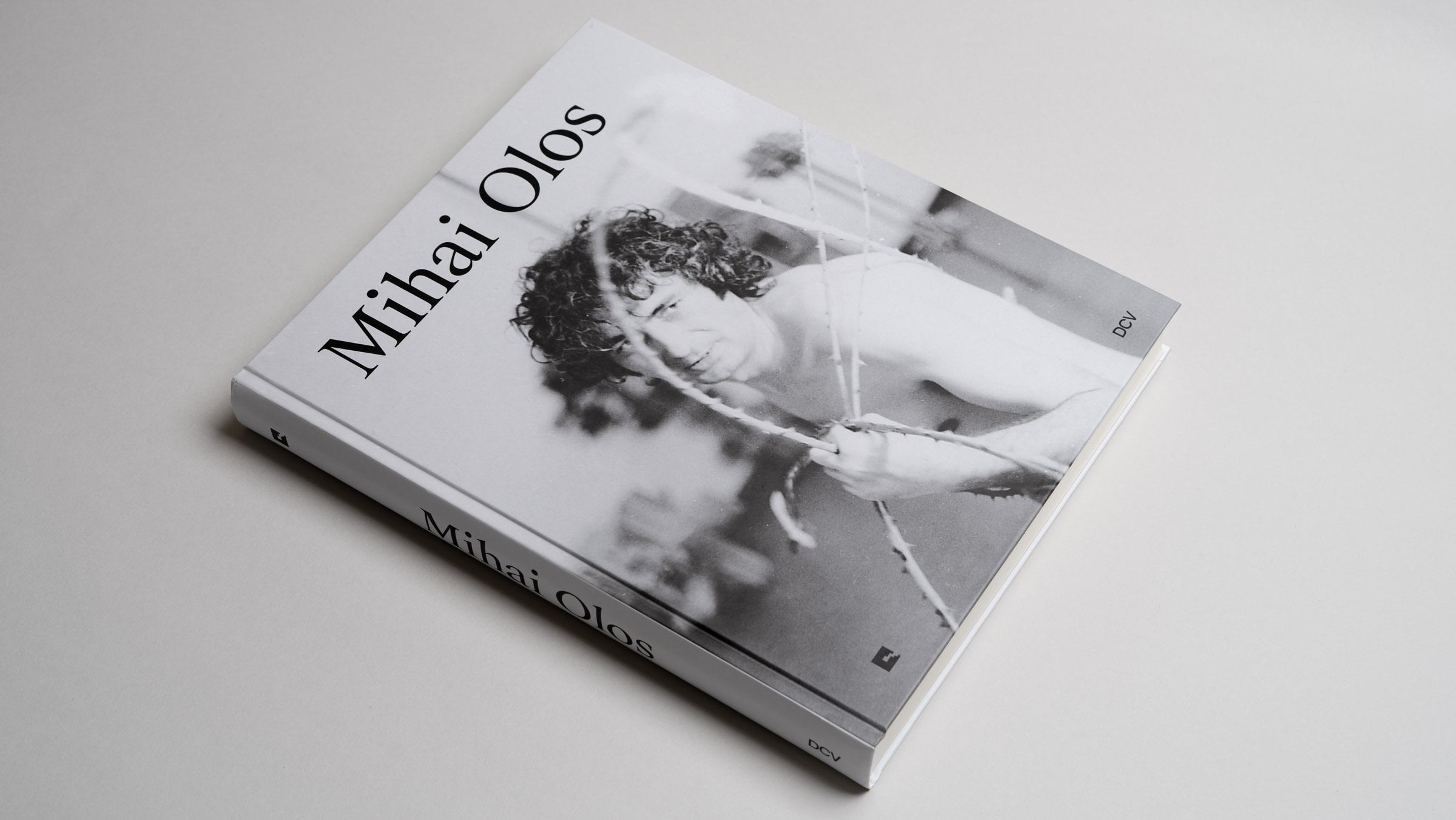
Mihai Olos
 | |
|---|---|
| Editor(s) | Călin Dan, Sandra Demetrescu, Magda Predescu |
| Author(s) | Călin Dan, Helga Feßler, Magda Predescu, Anca Verona Mihuleț, Ileana Pintilie, Liviu Rața |
| Design | Bogdan Ceaușescu |
| Cover | Hardcover |
| Size | 23,5 x 28 cm |
| Pages | 400 |
| Illustrations | 482 |
| Language(s) | English, Romanian |
| ISBN | 978-3-96912-073-6 |
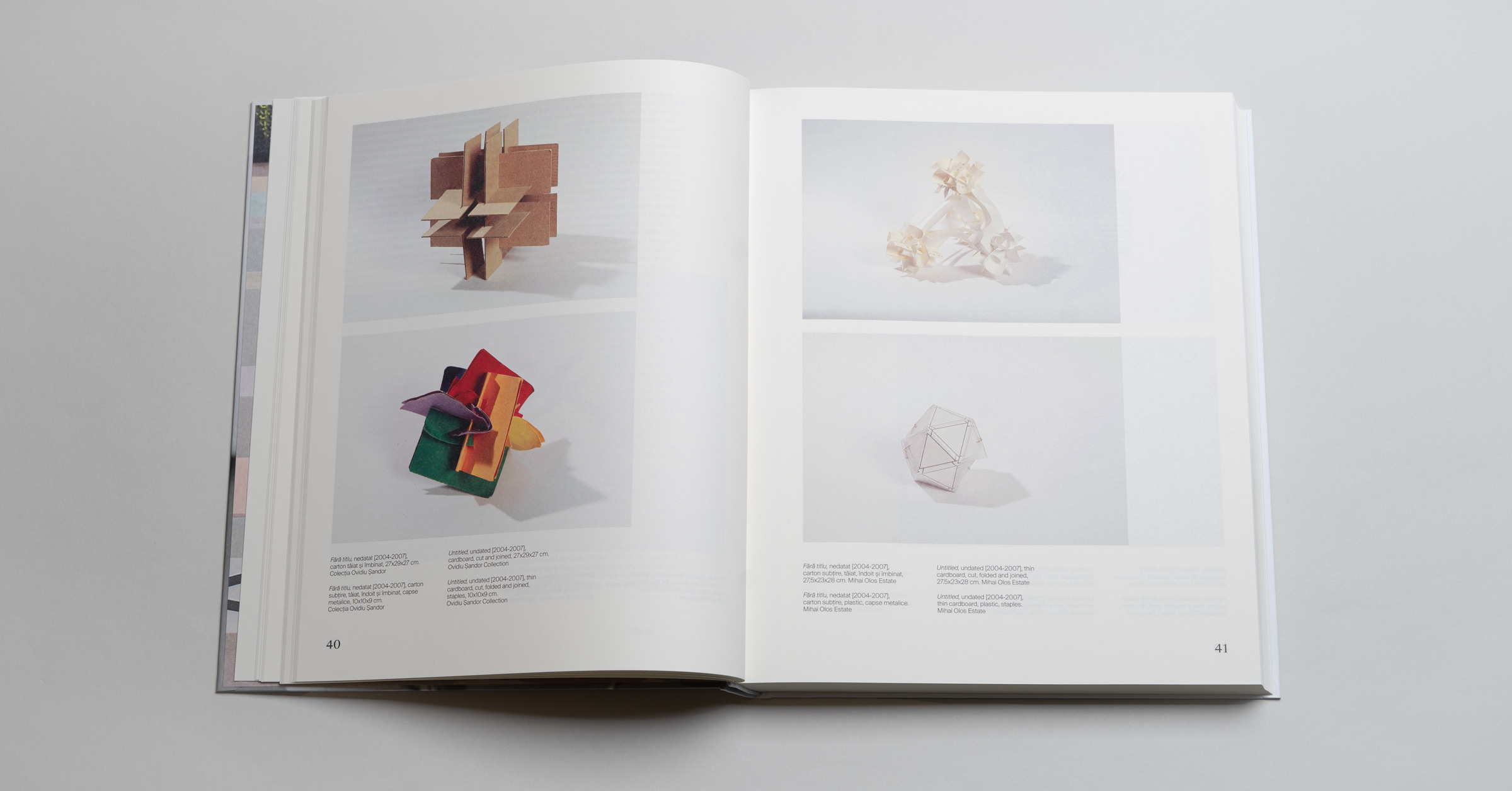
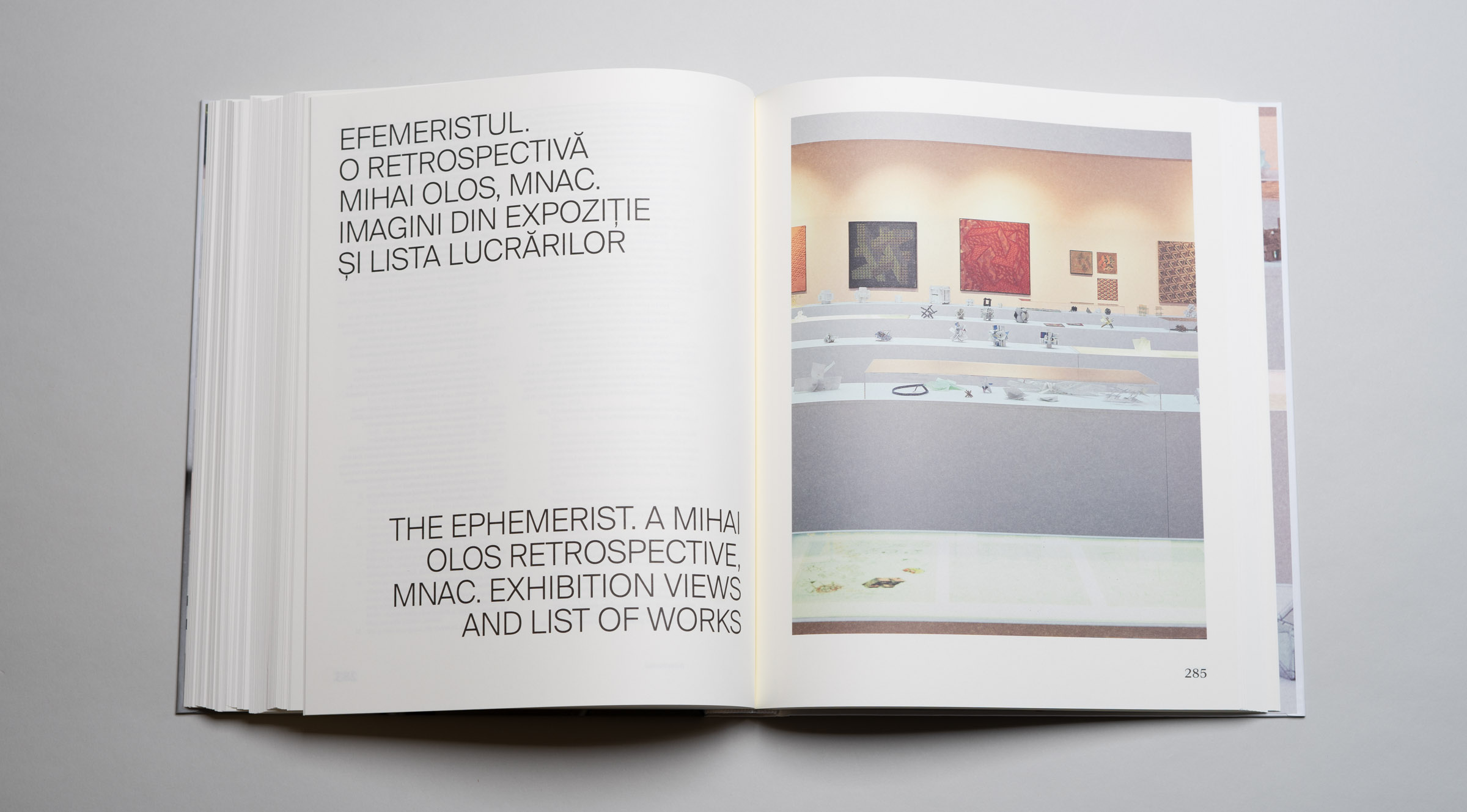
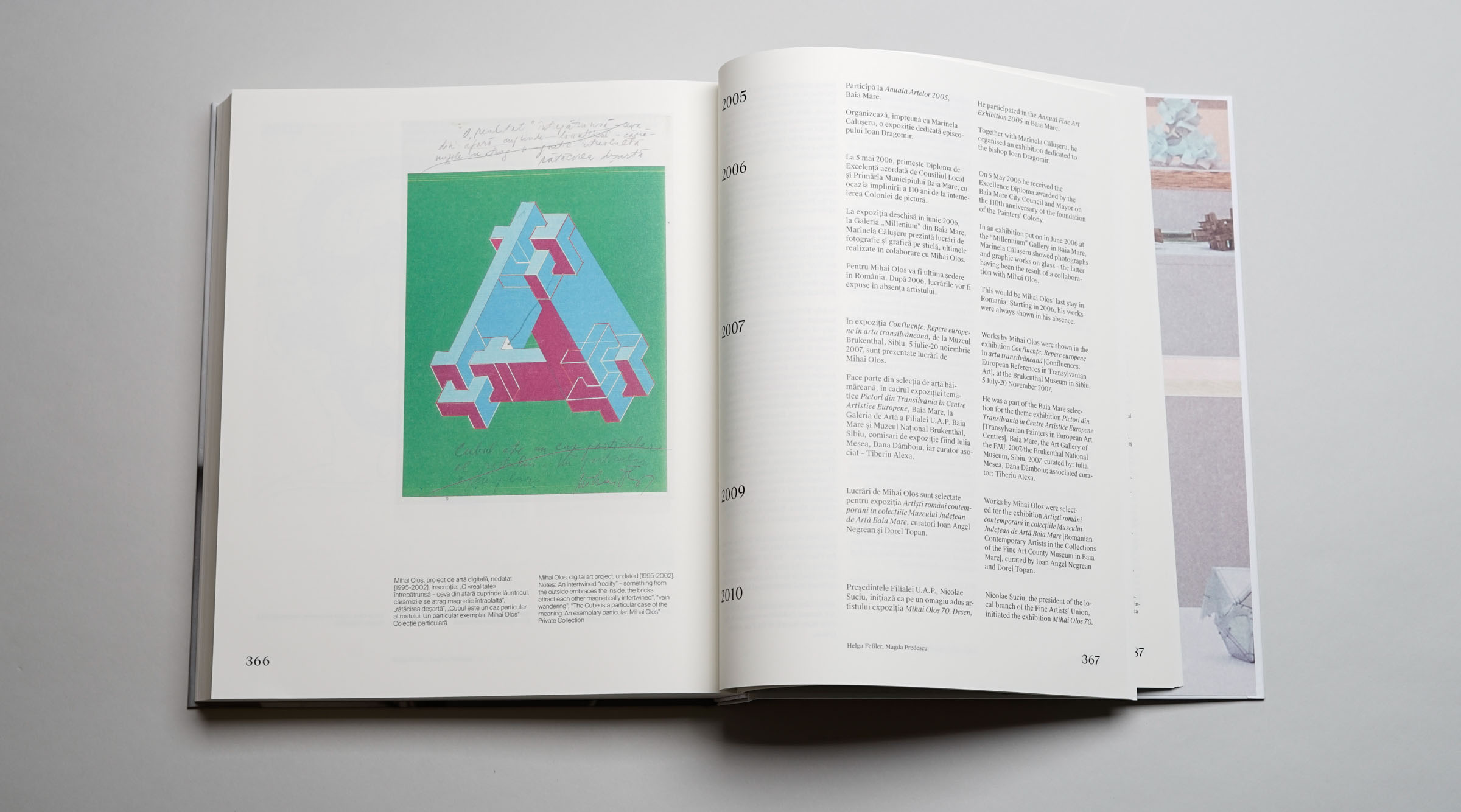
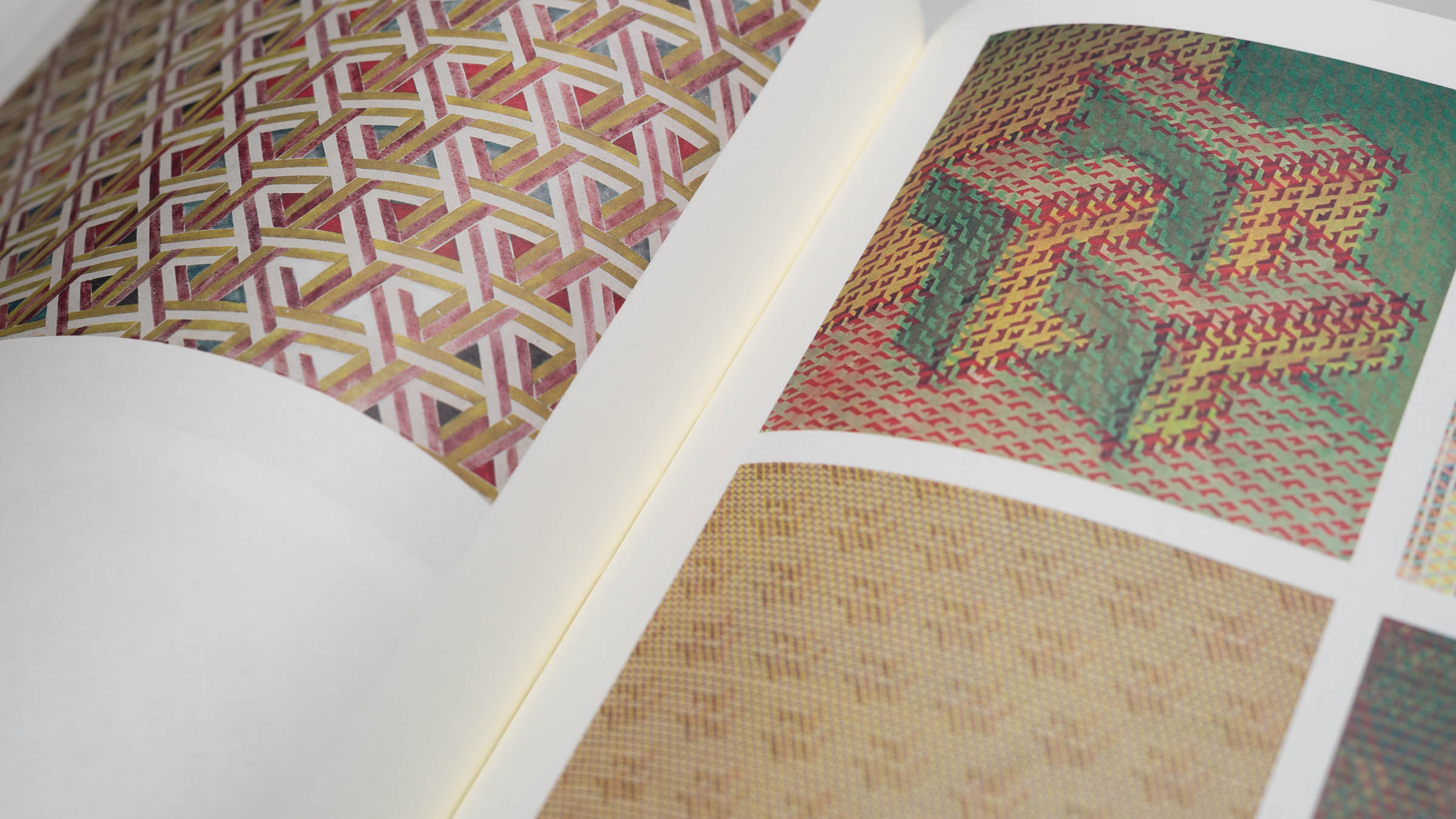
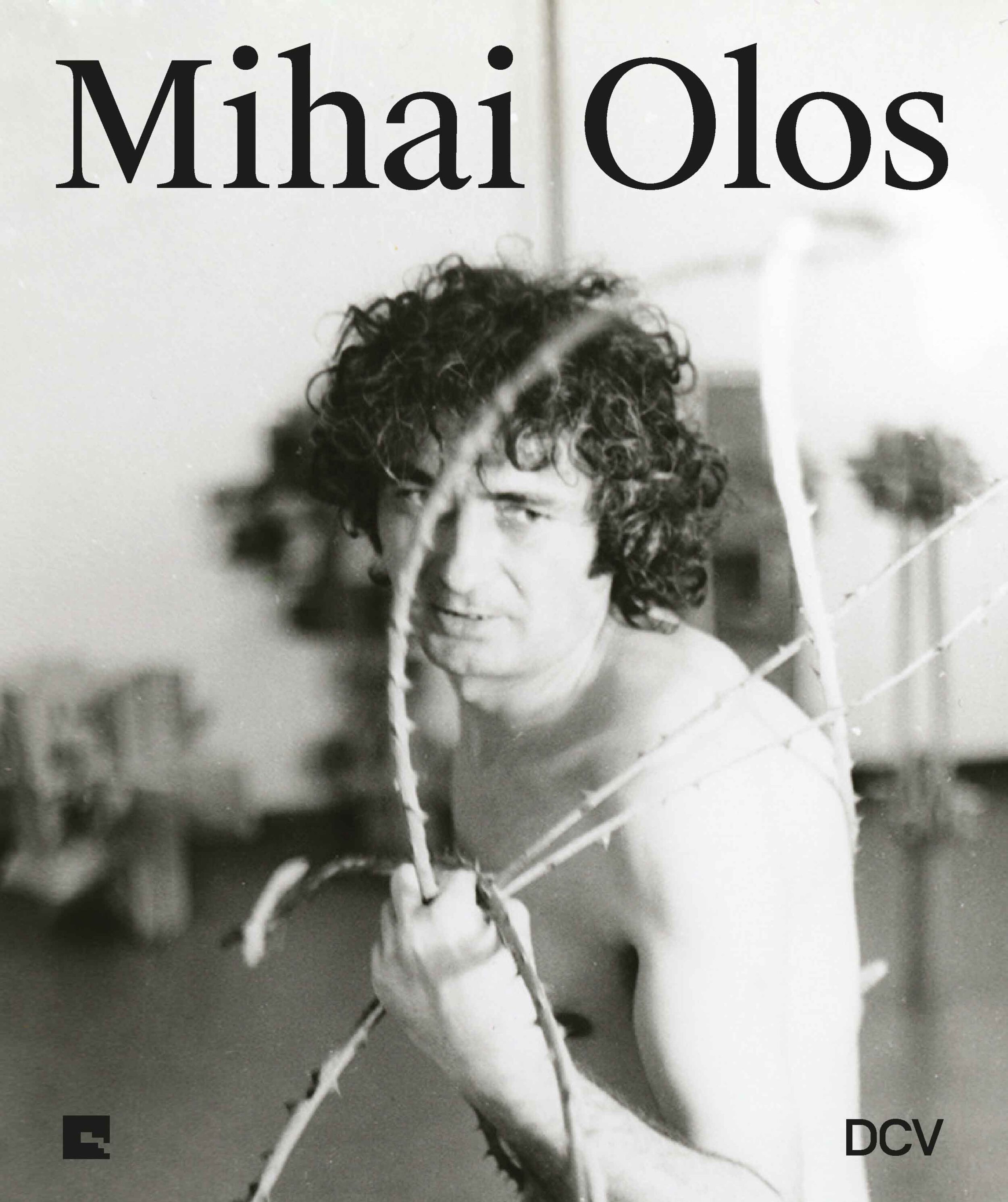
Mihai Olos (b. Ariniș, Romania, 1940; d. Endingen am Kaiserstuhl, 2015) ranks among the most fascinating artists of the second half of the twentieth century. His adaptations of the formal vocabulary pioneered by Constantin Brâncuși are unrivaled in their creative originality. His works evince an utterly novel approach to the combination of materials from the culture of rural Romania with the visual strategies of modernism. His formidable oeuvre engages with conceptual and minimal art and comprises paintings, drawings, and sculptures, sometimes in the dimensions of land-art projects, as well as performances and poetry. Despite the constraints imposed by the communist system, his art and travels—during which he also met his kindred spirit Joseph Beuys—were dedicated to the unerring pursuit of his vision of social sculpture and radical utopian architecture.
More books
-

Etsu Egami
Rainbow18€ Add to cartWhat is worth talking about in art eludes language. Aesthetic experience is without words, like a human encounter that touches upon our innermost being. Etsu Egami is interested in the margins of understanding, where the communication of ideas and feelings threatens to fail, where forms become illegible. That is the point on which she homes in with her brush, which she wields in a rough calligraphic style, putting almost translucent oil paints on the canvas. Spectral faces emerge that dissolve into abstraction; abstract forms, beheld from the corner of one’s eye, momentarily coalesce into a likeness. Painting, to Egami, is a physical and performative act, the brush an extension of her arm, bringing a picture into being in sweeping rhythmical motions. As we contemplate her work, that momentum imparts itself to us: first our eyes begin to wander, then we feel our bodies stir, and finally the spirit, too, pulsates in the rhythm of the brush. Gathering Egami’s most outstanding works, this catalogue is a universal invitation to join a peculiar dance, an arc of light the artist traces across all barriers to understanding and that speaks to our senses.
-

Jörg Heieck
CRUX29€ Add to cartTwo Fascinating Series of Works by the Photographer and Physicist
Expertly wielding the vintage photographic technique of the cyanotype, Jörg Heieck (b. 1964, Münster; lives and works in Kaiserslautern) transmutes nature into a fascinating play of shades of blue and defamiliarized shapes. Desolate sceneries, barren landscapes—the first series gathered in the book was created in the Sahara, Iceland, and Spitsbergen. Humanity has reached a crossroads: can we avert the destruction of the planet? Contrasting this symbolic crux, the second section presents populated intersections replete with signage from China, Japan, Russia, Israel, India, Greece, and Georgia. With these panoramas of urban life standing as a counterpoint to the abstraction in the photographs in the first section, the book offers insight into the artist’s extraordinary oeuvre.
Jörg Heieck has a PhD in physics and worked for many years as a researcher at Agfa, Kodak, and the ITER nuclear fusion reactor project. His art has been shown in numerous countries, including at the Goethe-Institutes in Damascus and Beirut, the Aleppo International Photo Festival, the Wilhelm-Hack-Museum, Ludwigshafen, and Kunsthalle Mannheim.
-

Alexandra Tretter
24€ Add to cartThe art of Alexandra Tretter (*1988) is as deep as it is playful. Owing just as much to the gentle spirituality of Hilma af Klint’s late geometries as it does to Sonia Delaunay’s exuberant disc paintings, almost bursting with sheer chromatic pleasure. Her compassionately designed artist’s book combines monumental paintings with intimate works on paper, all of which are imbued with the contexts of Tretter’s own life as an artist, as a woman, as a mother.
Her kaleidoscopic figurations unfold from a center at rest in itself and multiply in symmetry and asymmetry towards all sides. She contrasts the circular form, the unchanging basic element of her compositions, with the oval, which constantly strives beyond itself, transforming itself in ever-new permutations from one figure into the next, into eyes, mouths, breasts, petals or vulvas.
Her images strive for composure, unfold and blossom, only to let go of all gestalt-like form. Once gained stability is instantly pushed into turmoil. Colors flare up violently or flow delicately about, lighten or shade each other, carry or throw each other off course. Tretter equally realizes materialization and dissolution as basic principles of her painting.
Whereby all, what her images absorb, preserve and release, is experience, growth and slow maturing. Her paintings are “figurations of affection”, in which each individual turns towards something else, doubts or grows, at times turns away or surrenders all the more consciously. They question everything, start anew and yet find their way back to themselves, into their very own.
-
Stephan Kaluza & Dieter Nuhr
Transit42€ Add to cartLandscapes in a Dialogue between Painting and Photography
At first glance, Stephan Kaluza’s (b. 1964, Bad Iburg; lives and works in Düsseldorf) photorealist paintings might be still lifes, portraits of pristine nature. Yet they actually show battlefields and other scenes of past horrors. The idyll in his pictures positively appeals to our vigilance to resist the impression of profound peace. The same ambiguity lies at the heart of the photographs of Dieter Nuhr (b. 1960, Wesel; lives and works in Ratingen). Nuhr, who is also widely known as a comedian, has contributed pictures that are carefully focused renditions of seemingly serendipitous discoveries from his travels in Nepal, Bolivia, India, and Sudan. In their timelessness, Nuhr’s photographs are akin to the locales in Kaluza’s works, which, disburdened of the heavy weight of their histories, reemerge as straightforward natural landscapes. The lavishly illustrated two-volume edition presents the fruits of a collaboration between two artists united by their shared preoccupation with the dialectic of ephemerality and permanence.
- temporarily not available
CLARA MOSCH
and early art events in the GDRRead moreThe legendary producer-run gallery Clara Mosch and the artists’ group of the same title that gathered around it were founded in Karl-Marx-Stadt (today’s Chemnitz) in 1977 and existed until 1982. The catchy name was an acronym of the contributors’ last names: CLA = Carlfriedrich Claus, RA = Thomas Ranft and Dagmar Ranft-Schinke, MO = Michael Morgner, SCH = Gregor-Torsten Schade. As the founders of the first producers’ gallery in the GDR and creators of diverse oeuvres, the group’s artists rank among the foremost exponents of avant-garde art in East Germany. The book presents works of art, limited editions, and posters as well as photographs from the Ralf-Rainer Wasse archive in the collections of the Lindenau-Museum in Altenburg. One thematic focus is on Clara Mosch’s land-art happenings and plein-air pieces. The unconventional actions attest to the group’s stated objective of building greater awareness of the ongoing devastation of the local environment. Forty years after the fact, Clara Mosch’s work has lost none of its relevance and urgency.
-
Mihai Olos
42€ Add to cartMihai Olos (b. Ariniș, Romania, 1940; d. Endingen am Kaiserstuhl, 2015) ranks among the most fascinating artists of the second half of the twentieth century. His adaptations of the formal vocabulary pioneered by Constantin Brâncuși are unrivaled in their creative originality. His works evince an utterly novel approach to the combination of materials from the culture of rural Romania with the visual strategies of modernism. His formidable oeuvre engages with conceptual and minimal art and comprises paintings, drawings, and sculptures, sometimes in the dimensions of land-art projects, as well as performances and poetry. Despite the constraints imposed by the communist system, his art and travels—during which he also met his kindred spirit Joseph Beuys—were dedicated to the unerring pursuit of his vision of social sculpture and radical utopian architecture.
-
Clemens Krauss
Antidot | Gegengift40€ Add to cartClemens Krauss restlessly shuttles across history; his vehicles are painting, video art, sculpture, and performance. Yet Krauss is not “just” an artist, he is also a psychoanalyst and physician. As such, he has first-hand experience of time as the defining factor of existence, daring him to play with it. The bosom of painting is where he feels safest after his hazardous excursions back into his youth and forward into death. Executed in thick paints, his work is physical, material, which is also to say, it exists in time: everything passes away, even the picture. Evanescent, more than anything, are encounters of the sort Krauss stages as part of his psychoanalytical practice; all that remains is the indelible impression they leave. To be indelible, to recall the past, while also “letting happen what has never happened,” as he puts it, these are the ambitions he pursues in his art. Preserved between the covers of the present catalogue and reproduced in thousands of copies, his works now fan out in an instant to circulate for an indeterminate period of time among countless hands, whence they will effortlessly penetrate the barriers of our inner lives to bring us one step closer to transcendence.
-
Angelika J. Trojnarski
Noble Earth38€ Add to cartAngelika J. Trojnarski (born 1979 in Mrągowo/Polen; lives and works in Düsseldorf) examines facets of nature through an ecological, scientific, poetic study of their phenomena. Through a process centered on painting, her art articulates allegorical relationships between some of the most significant contentions of our time: humans and nature, strength and fragility, crisis and hope. She expresses a desire to understand nature by reproducing its workings, pointing to its incredible might while underscoring its increasing fragility. Trojnarski overlays raw canvases with paper fragments, employing brushwork and collage to apply materials like graphite or soot, generating a source of energy and suspense through color and contrast. The monograph offers an overview of the last decade of Trojnarski’s work.
Angelika J. Trojnarski 2006–2013 studies at Kunstakademie Düsseldorf. 2006–2009 Painting with Jörg Immendorff, Markus Lüpertz and Herbert Brandl, from 2010 Free Art with Andreas Gursky.
-

FLATZ
Hitler. Ein Hundeleben18€ Add to cartAn Attempt to Break a Taboo – Trivial and Provocative
A black, pure-bred Great Dane named Hitler accompanied the Austrian performance artist and documenta participant FLATZ (b. 1952, Dornbirn; lives and works in Munich and London) like a shadow through the 1990s. The naming—as well as the subtitles of the photographs created—relates the banal everyday life of the dog to the inglorious life of its namesake, thus opening up an extremely provocative range of possible associations. “Hitler is always with me,” says the artist, “just as we always carry the historical Hitler around with us, because he is part of our history, which—as long as it is suppressed, transfigured, or tabooed—is not overcome.”
With more than 350 illustrations, Hitler. Ein Hundeleben is an extended and revised reprint of the book published in 1992, which has been out of print for a long time.
-

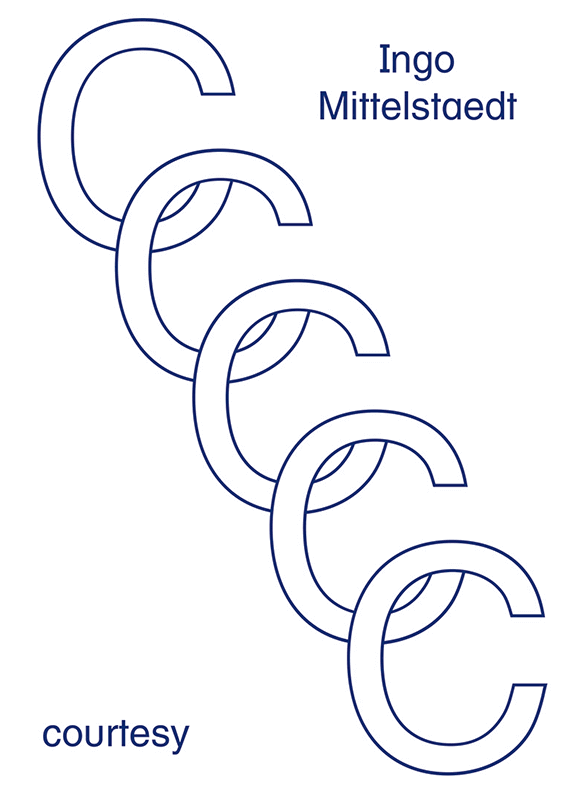
Ingo Mittelstaedt
Courtesy15€ Add to cartPerception and Comprehension in Photography
Ingo Mittelstaedt (b. 1978, Berlin; lives and works in Berlin and Hamburg) creates staged photographs, combining and contrasting them with diverse objects in expansive installations. His pictorial arrangements probe a variety of concerns and imageries that he sources from museum settings or the modes of representation in ordinary advertising brochures. Gestures of showing, pointing, bringing out, and uncovering are leitmotifs in Mittelstaedt’s canny and subtly humorous exploration of the potentials and limitations of the photographic medium.
Ingo Mittelstaedt studied fine arts at the Hochschule für Bildende Künste Braunschweig and received numerous emerging-artist awards, including the New York fellowship of the Niedersächsische Sparkassenstiftung. His work has been shown at Kunstverein Hannover, the Wilhelm-Hack-Museum, Ludwigshafen, Marta Herford, and elsewhere.
-

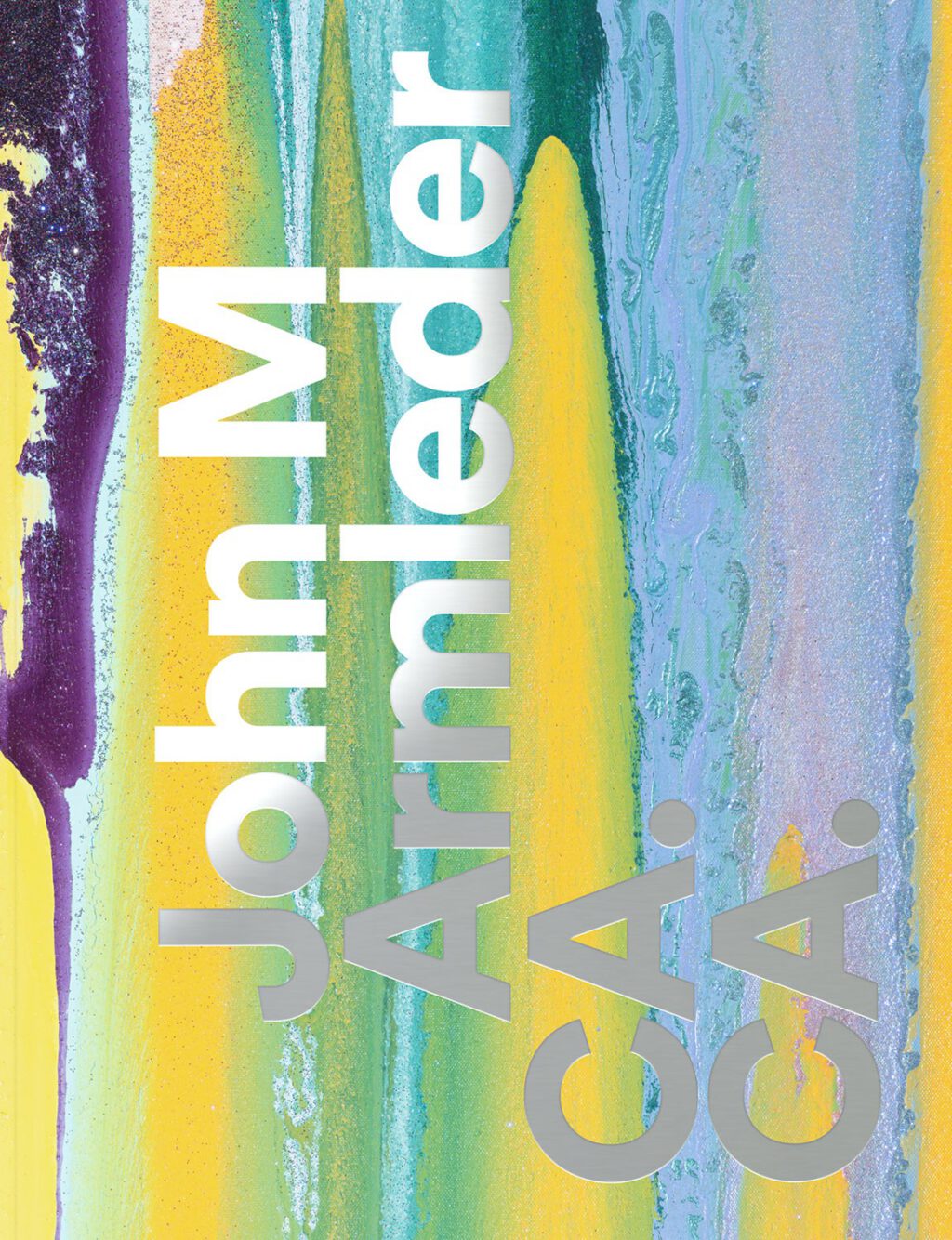
John M Armleder
CA. CA.19€ Add to cartCommentaries on our Present Day Realities and the Status of Art
John M Armleder (b. 1948, Geneva; lives and works in Geneva and New York) is one of the most influential contemporary conceptual, performance and object artists. The profound and the banal, control and coincidence, high culture and everyday life coalesce in Armleder’s work to create a unique experience. The works of the Swiss – often humorous or ironically twisted commentaries on contemporary reality – draw on the formal repertoire of Classical Modernism, as well as on video and design. The book focuses on large-scale, site-specific installations and wall pieces, showing in detail the broad spectrum of Armleder’s work.
John M Armleder studied at the École des Beaux-Arts in Geneva. He represented Switzerland 1986 at the 42nd Biennale di Venezia and participated in documenta 8 one year later. His work has been exhibited at the Museum of Modern Art, New York, Palais de Tokyo, Paris, and Belvedere, Vienna, amongst others.
-

Nikolaus List
Analphabetismus Nr. 737€ Add to cartBeguilingly colorful, balancing opulence with restraint, Nikolaus List’s (b. Frankfurt am Main, 1965; lives and works in Berlin) pictures scrutinize the relation between nature and art. Observations of natural scenes around Berlin blend with the artificiality of baroque gardens or early videogames. As List studies the operation of human perception, the painted space alternates between the depth of one-point perspective and a schematized flatness. The rhythmically organized compositions suspend the hierarchical distinction between foreground and background, an effect that is heightened by the often dissonant selection of colors and lends List’s art a “decidedly anti-sublime and anti-minimal” quality. A fallen tree, luminous rampantly growing and coiled branches become a metaphor for our relationships, our existence, for becoming and passing away, renewal and time.
Nikolaus List studied with Thomas Bayrle, Peter Kogler, and Christa Näher at the Academy of Fine Arts—Städelschule in Frankfurt. He has taught painting at the Weißensee School of Art and Design and the Berlin Art Institute.
-

Roland Schappert & Wolfgang Ullrich
Aktualitätsjetzt16€ Add to cartPhilistinism, climate change, legitimation discourses—in a tour de force sustained by profound knowledge of the phenomena in question, AKTUALITÄTSJETZT blazes trails through the jungle of contemporary art and its current debates. Over the course of two years, the art scholar and author Wolfgang Ullrich initiated 14 dialogues on Schappert’s word paintings, murals, and interventions. Their distinctive formal features and conceptual and substantial dimensions inspired illuminating conversations that range far beyond the specific works to explore today’s art world and questions of the philosophy of art and the sociology of culture. The best volume of dialogues on art since David Sylvester’s interviews with Francis Bacon.
-

Justine Otto
New Traditionalists38€ Add to cartJustine Otto (b. Zabrze, Poland, 1974; lives and works in Hamburg and Berlin) is one of the most promising artists on the contemporary painting scene. An aficionado of the absurd, she unfolds a metaphysical-psychedelic and often gaudily lustrous cosmos in pictures in which representation clashes with abstraction. In her early work, girls, women, and animals were here preferred subjects; more recently, she has painted heroes—the protagonists in myths of masculinity. After generals, officers, and strategists, she has now turned her attention to cowboys, who appear on horseback or resting under a tree, musical instrument in hand.
Justine Otto studied fine art and painting with Peter Angermann and Michael Krebber at the State Academy of Fine Arts (Städelschule) in Frankfurt am Main and obtained an MFA in 2003. She also worked as a scene designer at Städtische Bühnen Frankfurt, the city’s municipal theater company. Her paintings are held by collections including the Hessisches Landesmuseum, Darmstadt; Museum Franz Gertsch, Burgdorf, Switzerland; and the Phillips Collection, Washington, D.C.
-

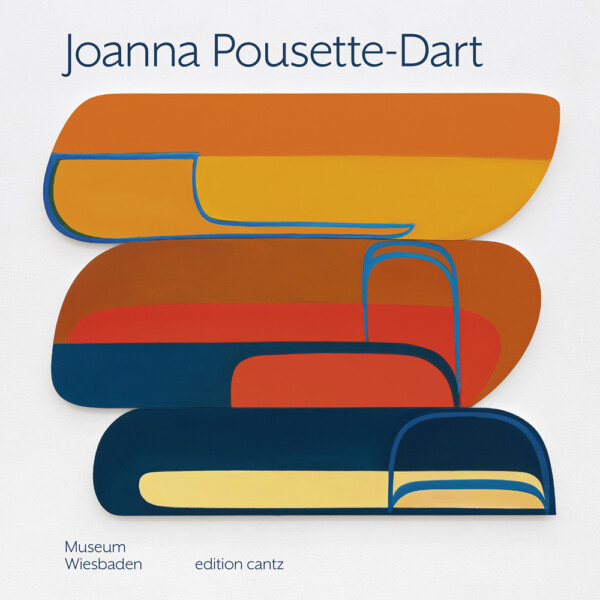
Joanna Pousette-Dart
32€ Read more„A kind of Dialogue between Myself and the Horizon.“
The works of Joanna Pousette-Dart (b. 1947, New York; lives and works in New York) are deeply rooted in the vast expanse of the American desert landscape, without ever committing themselves to a strict objectivity. As early as the 1970s, the artist abandoned the rectangular form of her canvas in favor of dynamically balanced panels that open out to the respective space. This volume presents her fascinating paintings from 2004 till 2019, which oscillate between landscape and abstraction, line and form. Born in New York to abstract expressionist painter and founding member of the New York School of painting, Richard Pousette-Dart, Joanna Pousette-Dart’s experience as a painter rises from rich tradition. Her work is held in the collection of the Museum of Fine Arts, Boston, the Solomon R. Guggenheim Museum, New York, and the Museum of Modern Art, New York, amongst others.
-
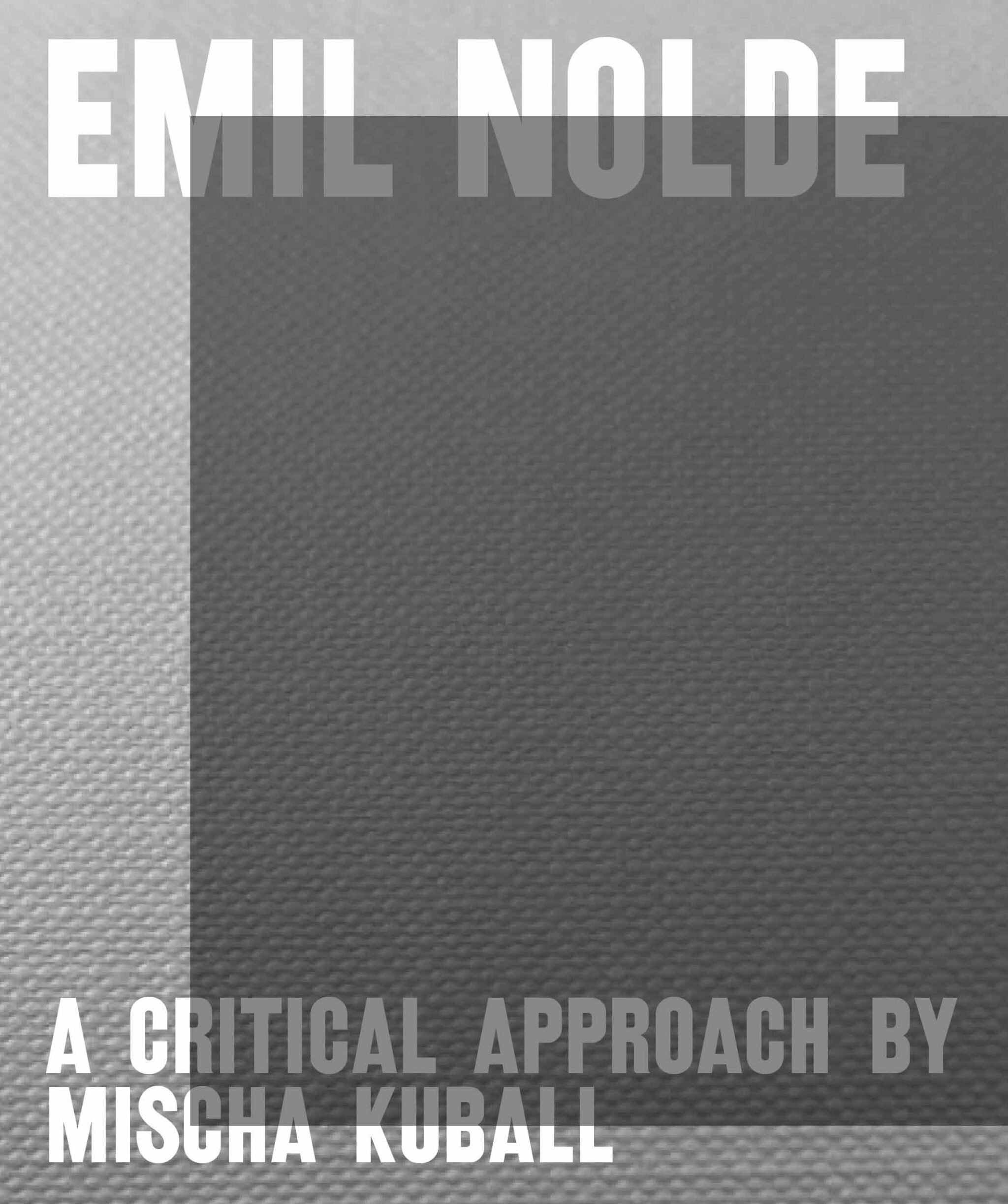
Emil Nolde
A Critical Approach by Mischa Kuball40€ Add to cartWhat is Visible and What is Not
Mischa Kuball (b. 1959, Düsseldorf; lives and works in Düsseldorf) investigates public and institutional spaces and the social and political discourses that shape them. At the invitation of the Draiflessen Collection and with support from the Nolde Stiftung, the conceptual artist grappled with the life and oeuvre of the painter Emil Nolde (1867–1956) and created a body of work titled Nolde/critique/Kuball. In piece after piece, Kuball drains Nolde’s works of the colors that made the Expressionist famous, challenging the beholder’s preconceptions and examining perception and its constituent processes. Laid out in black and white, the book accordingly directs our attention not only to what a picture shows, but also to how structures and organizing principles emerge into view.
Mischa Kuball has been professor of public art at the Kunsthochschule für Medien Köln, and associate professor of media art at the Staatliche Hochschule für Gestaltung/ZKM Karlsruhe since 2007.
Note: This publication is released in German, English and Dutch. When ordering, please let us know which edition you would like to receive. Use the annotation box on the checkout page.
-

Claudia Fährenkemper
Kontextforschung / context research 1980–202268€ Add to cartClaudia Fährenkemper (b. Castrop-Rauxel, 1959; lives in Steinheim/Westfalen) photographs enormous as well as minuscule objects using scanning electron microscopes to produce images that are as fascinating as they are disconcerting. The play with extreme scales yields fantastic visual worlds: American desert and canyon landscapes, the giant industrial machinery of open-pit mines in Germany, insects, plant seeds, crystals, and plankton, plus historic armaments from Europe and Japan. The lavishly designed book is the first to gather works from her entire oeuvre, which now spans four decades. Surveying the most important of Fährenkemper’s conceptual series, it reveals unexpected interconnections between disparate motifs on vastly different scales from nature, technology, science, and cultural history.
Claudia Fährenkemper studied at Fachhochschule Köln, today’s Cologne University of Applied Sciences, where Arno Jansen was her teacher, and with Bernd and Hilla Becher and Nan Hoover at the Düsseldorf Academy of Fine Arts. Her photographs are held by numerous museum collections, including at the Kunstmuseum Bonn, the National Gallery of Canada, and the Margulies Collection, Miami.
-
Michelle Jezierski
Verge28€ Add to cartHow does a simple line become a horizon? When do we begin to see colors and shapes as a landscape? Michelle Jezierski’s painting homes in on the tipping point at which our perception begins to oscillate between color/surface and space/representation. At that very point, she captures the essence of the landscape as such, which is not a concrete place but a metaphor for inner states of affairs. To get there, Jezierski distills what she sees in her surroundings down to the elements of painting—shapes and colors—which just barely intimate a pictorial space while persistently drifting toward abstraction. The defining feature of her technique is that she layers several pictorial planes and spaces on the canvas in staggered arrangements. “Perpetually discovering new ways to unsettle the visual space,” as she puts it, she engenders ruptures and structures that open up multiple perspectives and a portal for reflection on one’s own perception. Above all, however, the cuts lend her pictures a peculiar rhythm that powerfully pulls in the gaze, making the reader paging through this catalogue forget time and space.
-

FREIGEISTER
FRAGMENTS OF AN ART SCENE IN LUXEMBOURG AND BEYOND35€ Add to cartThinking Otherwise—the Mudam in Luxembourg at Fifteen
A free spirit, Friedrich Nietzsche wrote, is someone who “thinks otherwise than is expected of him in consideration of his origin, surroundings, position, and office, or by reason of the prevailing contemporary views” (Human, All Too Human,1878). As the German philosopher saw it, one must seek to become “untimely” and remain a “stranger” to one’s time in order to question its premises. This view to states of alienation unites the positions of fourteen young Luxembourgish artists in Freigeister, the publication accompanying the celebrations on occasion of the fifteenth anniversary of the Musée d’Art Moderne Grand-Duc Jean.
In recent years, Luxembourg’s art scene has grappled in a wide variety of ways with the challenges that come with the small yet economically successful country’s ongoing transformation. Charting realities between the familiar and the unknown, the artists featured in Freigeister employ photography, painting, and installation as well as film, sculpture, printmaking, and performance art to paint a carefully considered but by no means dispassionate portrait of today’s society in an effort to build bridges between identity and the future.
The book presents works by Yann Annicchiarico, Laurianne Bixhain, Aline Bouvy, Marco Godinho, Sophie Jung, Catherine Lorent, Filip Markiewicz, Karolina Markiewicz & Pascal Piron, Claudia Passeri, Daniel Reuter, Nina Tomàs, Daniel Wagener, and Jeff Weber.
-
Felix Schramm
Things To Come44€ Add to cartFelix Schramm’s (b. Hamburg, 1970; lives and works in Düsseldorf) sculptural oeuvre reflects a probing engagement with space and the body. In works in a variety of media, including installations that intervene into a given setting, sculptures, and collages, the artist creates three-dimensional forms out of classical materials and industrial staples as well as detritus and dust. Deformations, rifts, cracks, or impurities undermine the existing order in his constructed formal ensembles, allowing novel correspondences in space and interconnections across time to emerge. The material and its subjection to form are held in a precarious balance; disintegration, which is an integral element of Schramm’s art, paves the way for artistic assertion and reformulation. The extensive publication gathers works and exhibitions of the past five years. It is Schramm’s first monograph, presenting a cross-section of his entire oeuvre with all bodies of work.
Felix Schramm studied at the Accademia di Belle Arti, Florence, from 1991 until 1993 and at the Academy of Fine Arts Düsseldorf, where he was in Jannis Kounellis’s master class, from 1994 until 1998. He rounded out his education with residencies in Tokyo in 2000 and at Villa Massimo in Rome in 2008.