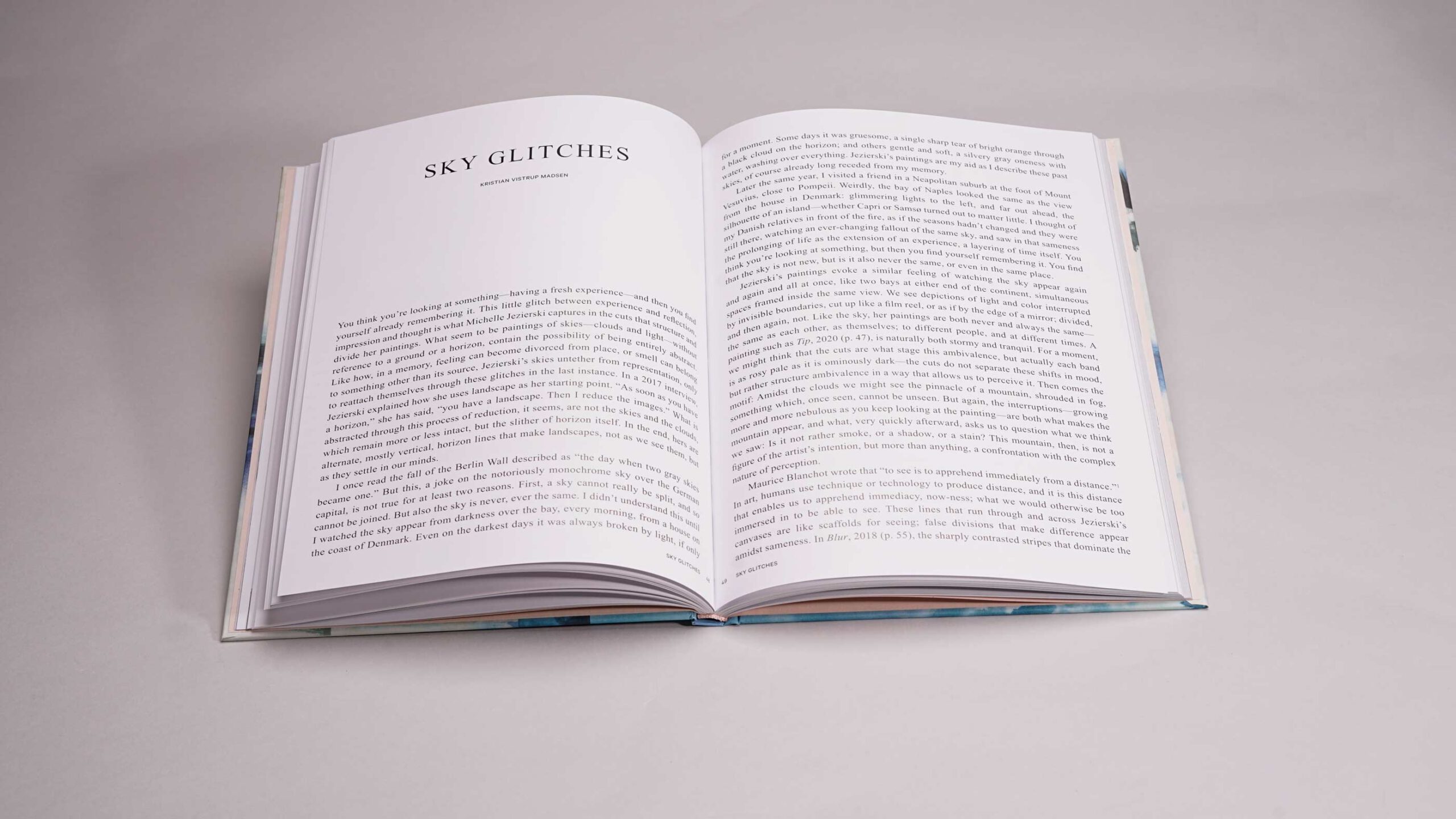
Michelle Jezierski
Simultaneous Spaces
 | |
|---|---|
| Editor(s) | Kimberly Bradley |
| Author(s) | Jurriaan Benschop, Kimberly Bradley, Jeni Fulton, Kristian Vistrup Madsen |
| Design | Studio Homburger |
| Size | 21 x 28 cm |
| Cover | Hardcover |
| Pages | 112 |
| Illustrations | 50 |
| Language(s) | English |
| ISBN | 978-3-96912-085-9 |
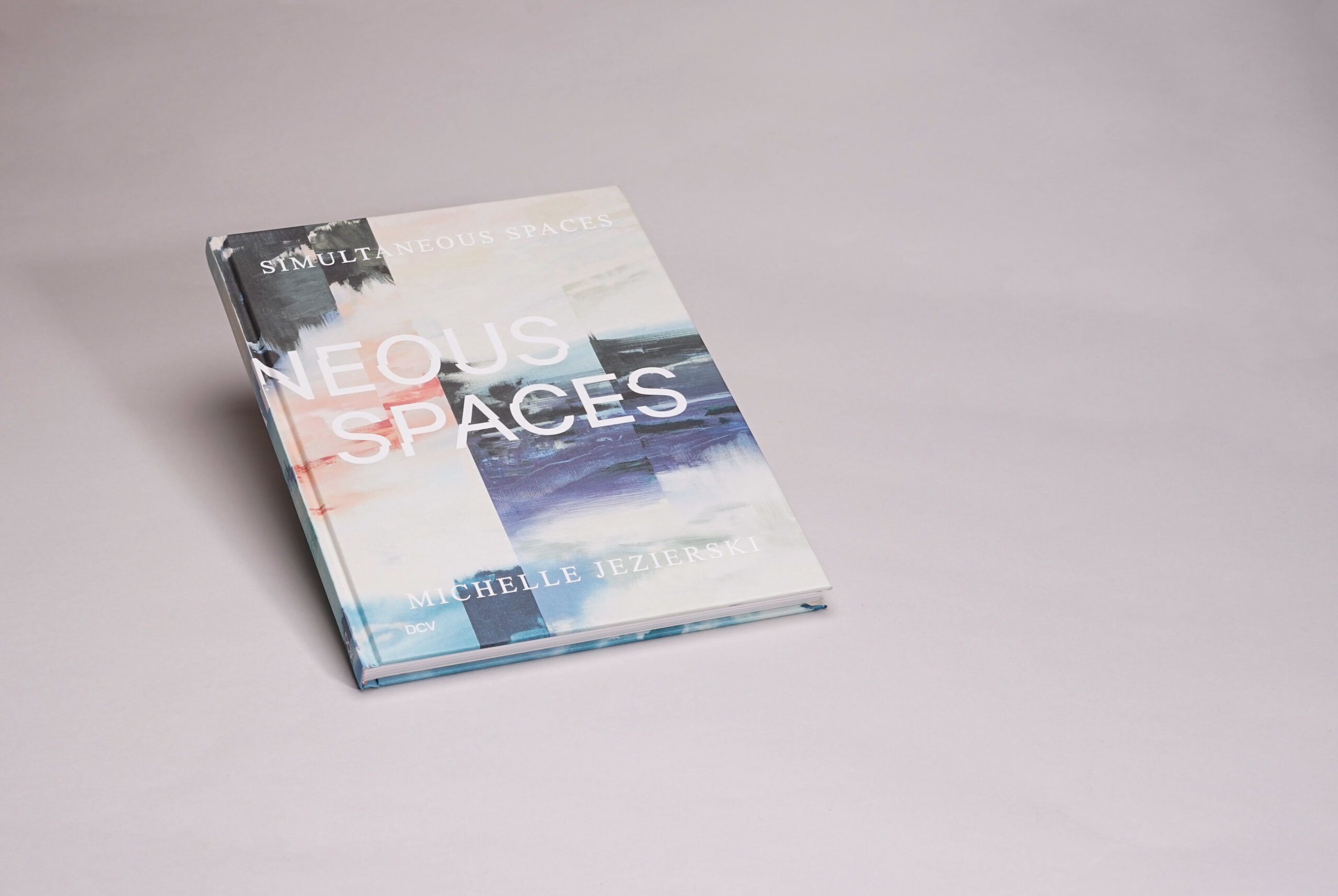
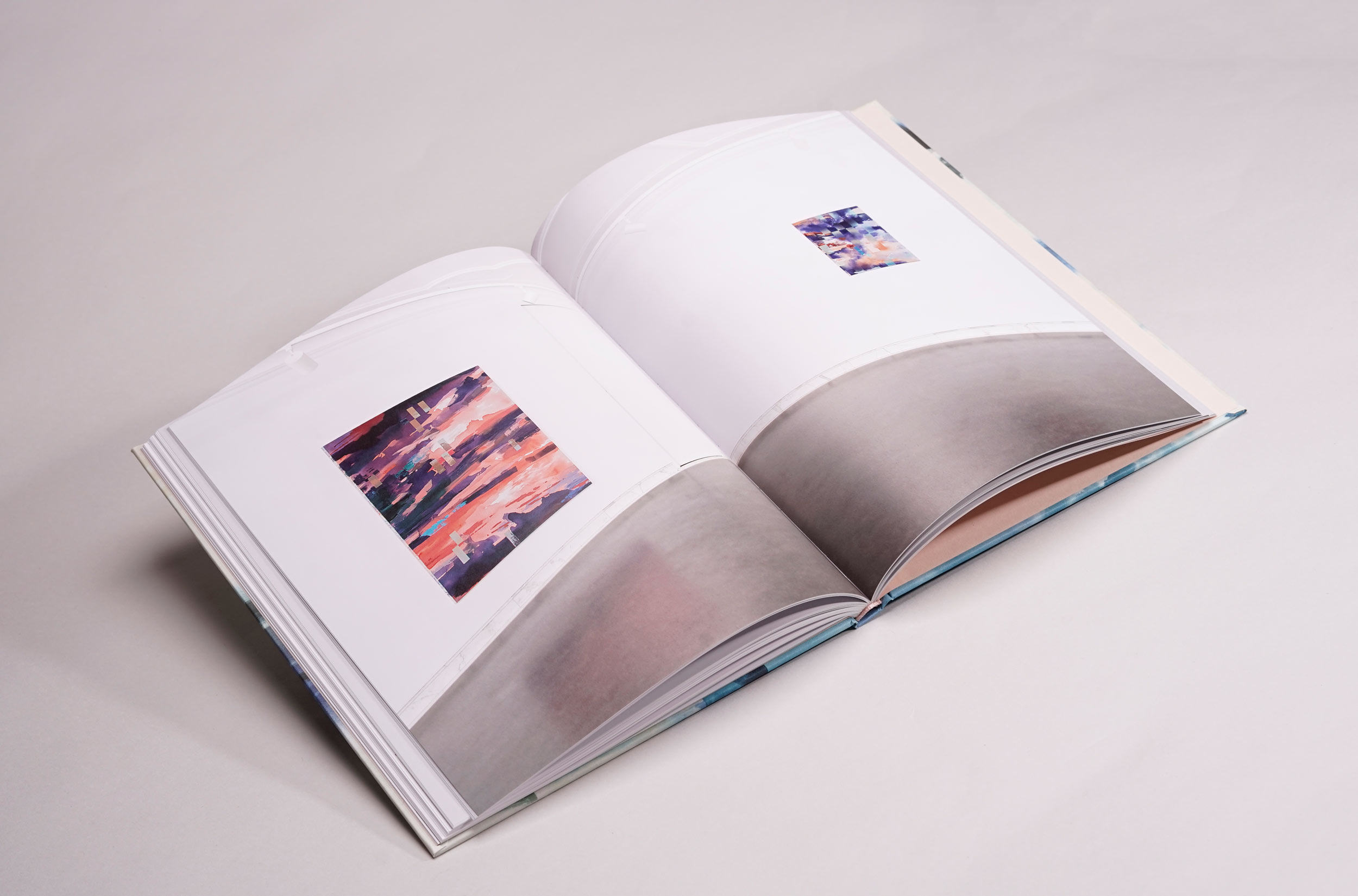
Michelle Jezierski’s (b. Berlin, 1981; lives and works in Berlin) paintings unfurl simultaneous spaces that are awash in light. Contrasts between bright and dark and muted as well as lucent hues engender a singular atmosphere characterized by depth and dynamism. The artist is as invested in the perception of these constructed spaces as in the capaciousness of natural landscapes. In her paintings, luminous colors and geometric disturbances achieve shifting balances between the extremes of order and chaos, light and shadow, interior and exterior, structure and flux. Simultaneous Spaces, the artist’s first comprehensive monograph, presents forty-five works painted between 2017 and 2022.
Michelle Jezierski studied with Tony Cragg at the Berlin University of Arts and graduated from Valérie Favre’s class in 2008. She also received a fellowship for a semester abroad at Cooper Union, New York, where she studied with Amy Sillman.
More books
-

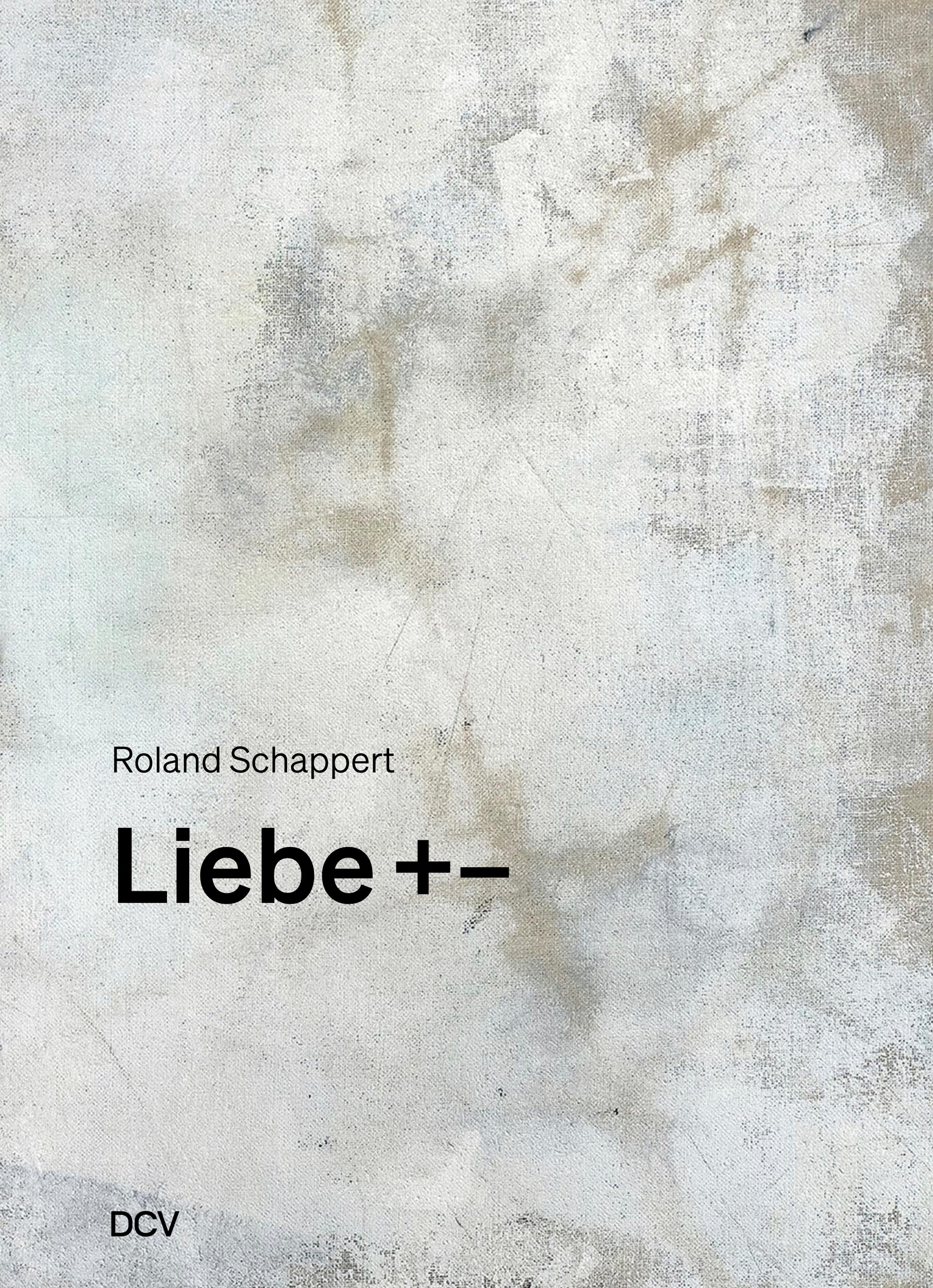
Roland Schappert
Liebe +–24€ Add to cartRoland Schappert’s Liebe+– is a poetic voyage into the mysterious and paradoxical landscapes of love. Combining an unrelenting eye with lyrical precision, Schappert captures the fragile equilibrium between intimacy and distance, between the longing for union and the need for detachment. The +– in the title is a symbolic shorthand for the ambivalence of love: attraction and repulsion, delight and pain, their constant interplay defining the dynamic of love.
The terse and sometimes aphoristic writings enter into a dialogue with the author’s artful and enigmatic pictures and sculptures—text images sewn out of strings of beads or painted in Champagne chalk that subtly mirror and refract the emotional tension of the poems. Nimbly balancing on the fine line between devotion and disaffection, Schappert’s verses are interspersed with ironic allusions to our digital and urban contemporary world.
By forging a symbiosis of poetry and image, this artist’s book charts a world unto itself in which the boundaries between I and you blur and subject and object are fused in a collective we. It invites us to contemplate love with a fresh eye—as tender touch and fractious idea, as a play of expectation and disappointment that we begin anew every day.
‘Love in the age of social media and dating apps, but not from a Gen Z perspective – but from someone who has known this feeling for much longer. And who brings his experiences – which are certainly representative of many – in ever new combinations of text and images into a form that makes reading and viewing a memorable experience.’ – Wolfgang Ullrich
-

ELMGREEN & DRAGSET
READ48€ Add to cartThroughout their careers, the artist duo Elmgreen & Dragset (Michael Elmgreen, b. Copenhagen, Denmark, 1961, and Ingar Dragset, b. Trondheim, Norway, 1969, live and work in Berlin) have eschewed the traditional “White Cube” exhibition format by creating large-scale installations and staging narrative situations in which autobiographical quotes blend with fictional stories and cultural references.
For the solo exhibition READ, Elmgreen & Dragset have transformed Kunsthalle Praha into a minimalist version of a modern public library to prompt reflections on our relationship with physical books and knowledge in the age of digital media. With new works by Elmgreen & Dragset as well as performances, videos, collages, paintings, and sculptures by other artists, READ also probes the relation between books and the making of art.
This richly illustrated publication documents the dynamic interaction between language, books, and art. With contributions from renowned scholars and a curatorial text by Elmgreen & Dragset.
-
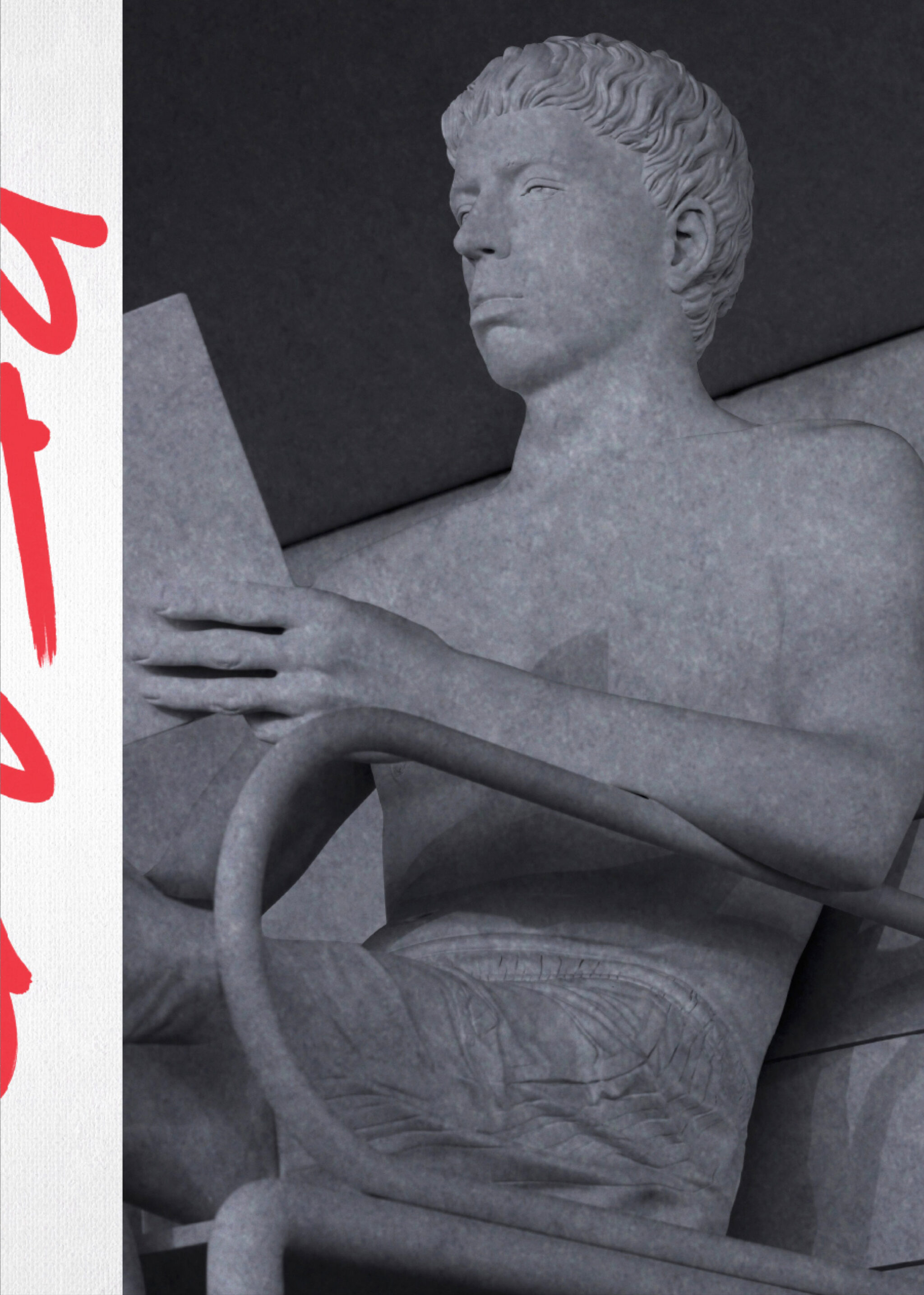
Simone Haack
HAIR30€ Add to cartSimone Haack (b. 1978 in Rotenburg/Wümme, lives and works in Berlin) has always made the inwards legible in the outer appearance of her figures in her painting. This is also the case in her block of works in the exhibition of the same name, Hair. Already in the late 17th century, magic and superstition were attributed to hair. In it one suspected the whole power of the soul. The artist, who was formed in the painting class of Katharina Grosse and Karin Kneffel, symbolically reveals the fragility of the DNA of human beings through her hair landscapes, which are sometimes placed macroscopically in the picture in the spirit of a New Magic Realism. At the same time, her accompanying exhibition publication always also tells of the triangle of tension of physical as well as psychological existence, which in her case runs through the painterly psychoanalysis.
-

Mon Trésor
34€ Add to cartEurope’s Treasure Chamber
What do the torque of the princess of Reinheim, the tableware from the Orient Express, and the radio station Europe 1’s studio building have in common? They are among the treasures of the Saar region. The book presents outstanding archaeological objects and achievements of technology and art dating from the age of the Celts to the present. Drawn from the Saarland and neighboring Alsace-Lorraine, Luxembourg, and Rhineland-Palatinate, the unexpected riches illustrate the cultural and social dimensions of this multinational region in the heart of Europe. The title Mon Trésor describes many of them quite literally: the note a seven-year-old dashed off to his father before his family was evacuated in the first days of World War II; the Roman-era ring that is also a relic, witnessing to flight and danger. All treasures are personal first and foremost, though others may later cherish them as cultural assets.
- Release September 2021

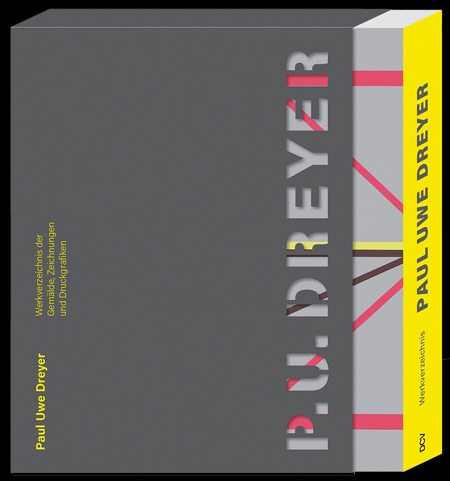
Paul Uwe Dreyer
Werkverzeichnis der Gemälde, Zeichnungen und Druckgrafiken68€ Add to cartA Painter, Draftsman, and Draftsman of Concrete Art
Paul Uwe Dreyer (b. 1939, Osnabrück; d. 2008, Stuttgart) taught painting as a professor at the Staatliche Akademie der Bildenden Künste Stuttgart for more than three decades. His oeuvre shows the hallmarks of geometric constructive art: inspired by subjective experiences of reality, Dreyer’s compositions visualize the dialectics of organizing principles and their potentials for variation, a guiding interest that is already evident in his early work since the 1960s and especially in the pairs and series of pictures he begins creating in the early 1970s. His art unfolds a fascinatingly dynamic yet nonhierarchical dialogue between colors, surfaces, and lines. The chronological catalogue raisonné reveals the consistency with which motifs evolve from his early to his late oeuvre, from architectural, figural, and ornamental tokens through elements resembling symbols and icons to complex penetrations of spaces.
-

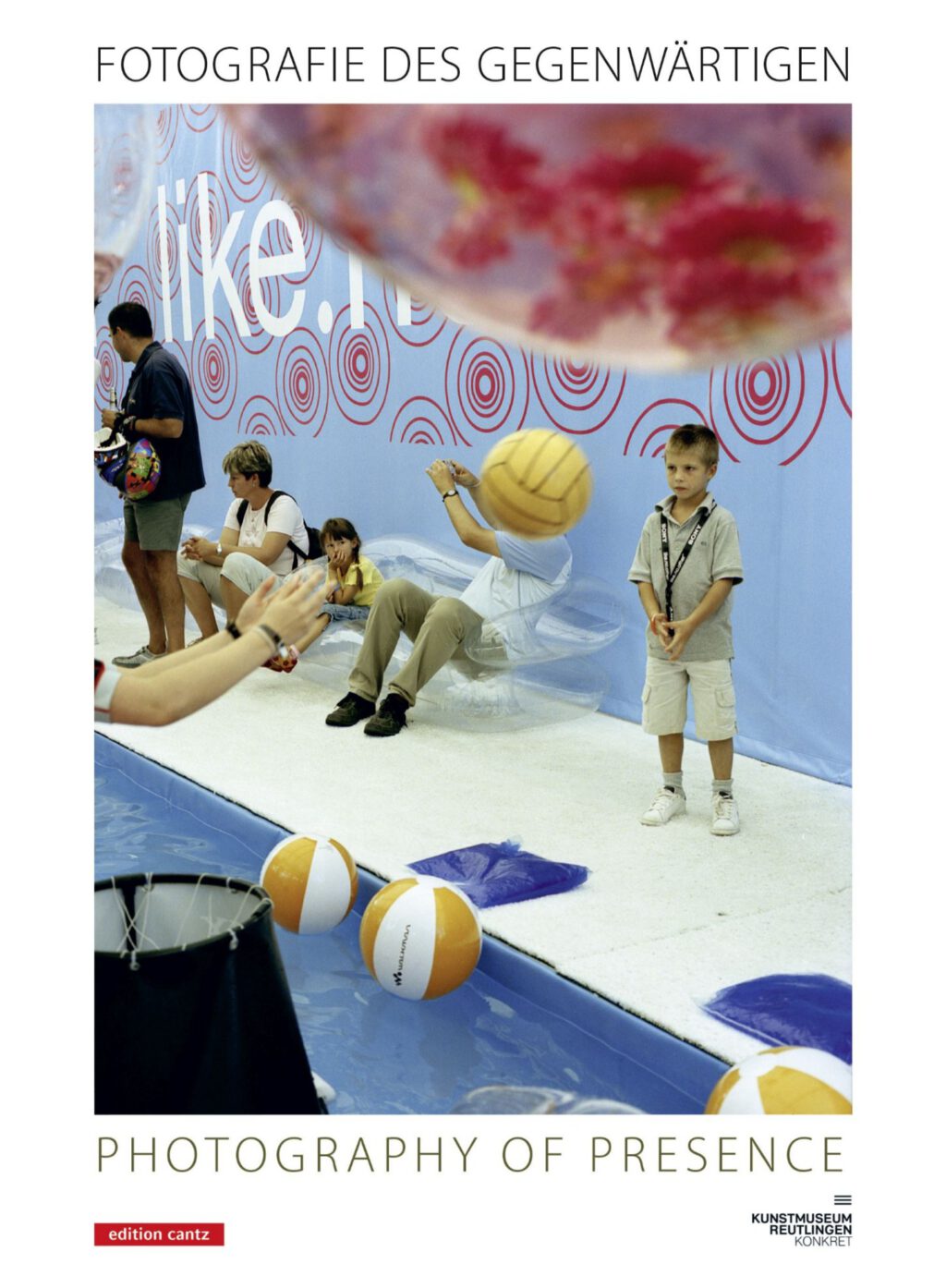
Photography of Presence
24€ Add to cartThe Importance of the Moment in Artistic Photography
Can photographs exist which represent concrete places? In view of the daily flood of images, this question seems superfluous at first. Only on closer inspection does the distance between the visual experience of places and the media images generated from them become apparent. “There is nothing in this world that does not have a decisive moment,” Henri Cartier-Bresson once stated. The present volume examines this decisive moment and explores the question of how artistic photography can describe the gap between spatial reality and photographic image and make the present at the time the photograph was taken visible.
With works by Viktoria Binschtok, Julian Faulhaber, Mareike Foecking, Stephanie Kiwitt, Nikolaus Koliusis, Barbara Probst, and Wolfgang Zurborn as well as texts by Holger Kube Ventura.
-
Franziska Opel
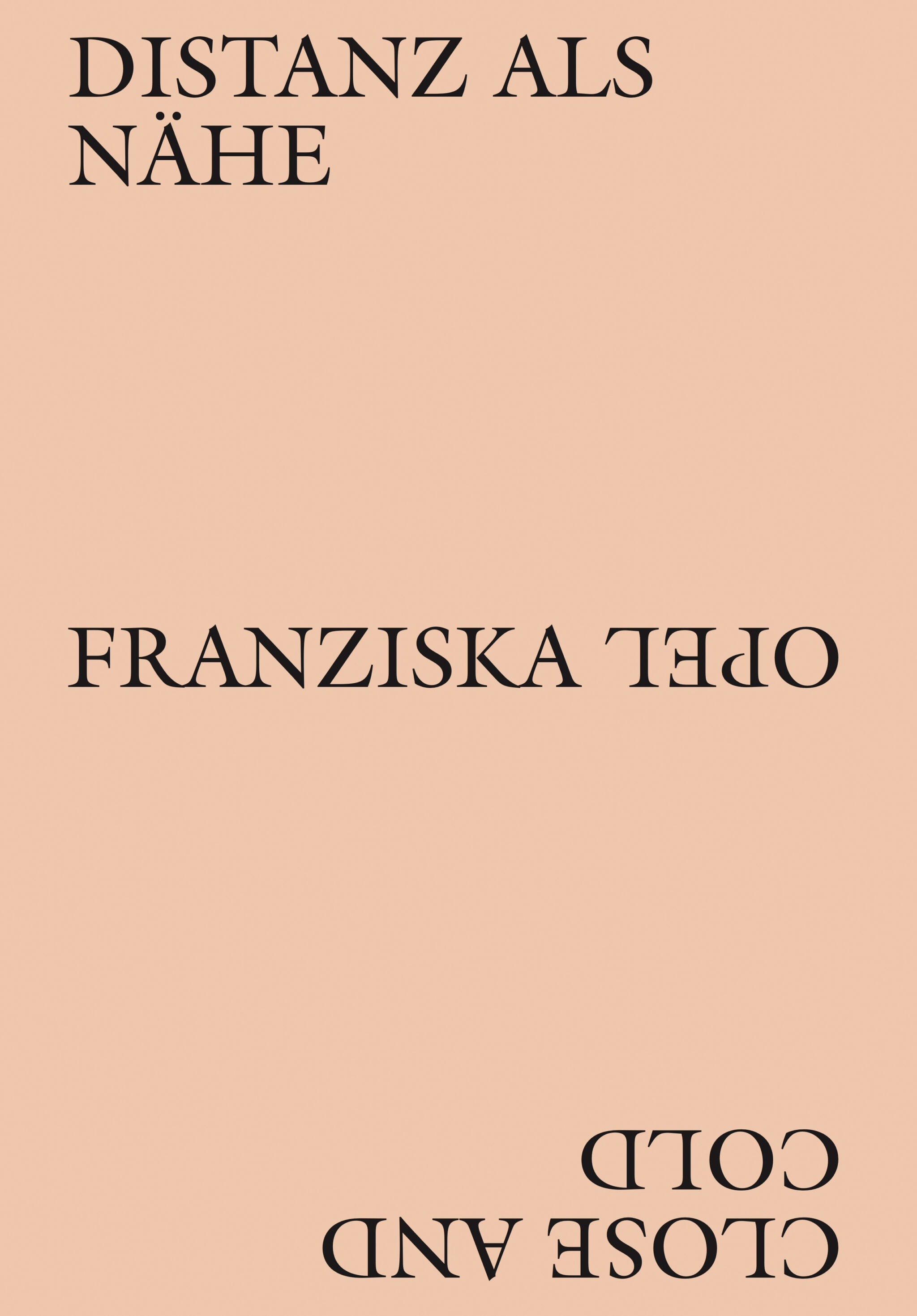
Close and Cold32€ Add to cartWith sex toys, the potential for misinterpretation and ill-advised use is vast, as countless slapstick comedies illustrate. Steering clear of quick laughs, Franziska Opel deftly harnesses this anarchic power of misunderstanding to explode our perceptions and worldview. Her works are painstakingly planned experimental arrangements in which she modifies or deforms mundane objects as well as those sex toys in subtle ways or powers them up in series, making us see them with fresh eyes. They cast a spell over us with their sensual allure, while our associative circuits processing what we see spark a certain sense of irritation. Curiosity, attraction, bewilderment, shame—expertly staged in photographs for this catalogue, the works elicit a wide range of emotions. Their energizing contradictions are elaborated by contributions from gifted writers: standalone poetic-narrative writings that reflect on several key aspects of Opel’s art in offhanded yet challenging ways.
-

Dietmar Lutz
Ein Jahr40€ Add to cartDay by Day
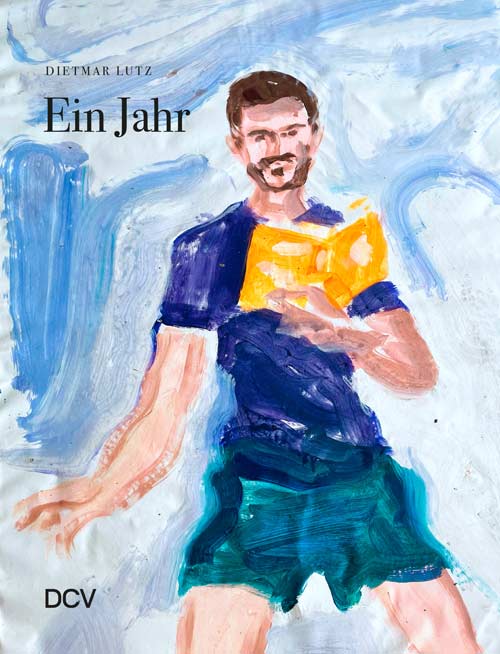
For a full year, from August 2020 until August 2021, Dietmar Lutz (b. Ellwangen, 1968; lives and works in Düsseldorf) painted or drew a picture every day in which he rendered a scene or detail from his day-to-day life. All 365 works appear here in chronological sequence, either in reproductions or in photographs showing them in the setting in which they were created. Taken together, the series constitutes a radically subjective review of one year. The paintings capture memories, but although they invariably owe their existence to a particular situation, they do not necessarily frame it as a memorable event. The artist observes himself in his world and defines his role in it. Painting as a daily task seems to structure time rather than the other way around. Each picture opens up a new space in which the different facets of time manifest themselves to the senses.
Dietmar Lutz studied at the Düsseldorf Academy of Fine Arts and rose to renown with large-format paintings in which he portrays situations from ordinary life and weaves references to the histories of film and literature. Lutz is a cofounder of the German-British artists’ collective hobbypopMuseum, with which he has exhibited at the 1st Athens Biennale; Deitch Projects, New York; Tate Britain, London; and elsewhere.
- Out of stock

Luxus?!
34€ Read moreWhat is luxury today? How do designers perform the magic of transforming a utilitarian object into a must-have? Where does consumerism shade into obsession? When does more-is-more give way to less-is-more?
Luxury means breaking with convention, and this book showcases—and spawns—a cornucopia of ideas, products, and positions around luxury, featuring influential thinkers from the worlds of design, science, art, and society. The cultural theorists Wolfgang Ullrich and Lambert Wiesing exchange letters on the concept of luxury; Montblanc’s creative director Zaim Kamal lays out future strategies; the artist Jonathan Meese pens a gold manifesto; and Bazon Brock inquires into the asceticism of luxury. We live in a world full of things that resemble one another so closely that the only difference is how they are marketed. What might the precious objects of the future look like? The book presents examples from aspiring designers such as the fashion student Victoria Reize, whose collection counters luxury with arch defiance. Design, we learn, is not just about creating supreme values. Luxury is limitation and longevity, scarcity and refinement, yearning and sensuality.
With works by Assemble, Jake and Dinos Chapman, Daniel Chodowiecki, Kai Löffelbein, Jonathan Meese, Olaf Nicolai, Marcel Odenbach, Tobias Rehberger and Anna Skladmann.
-

Lovis Corinth
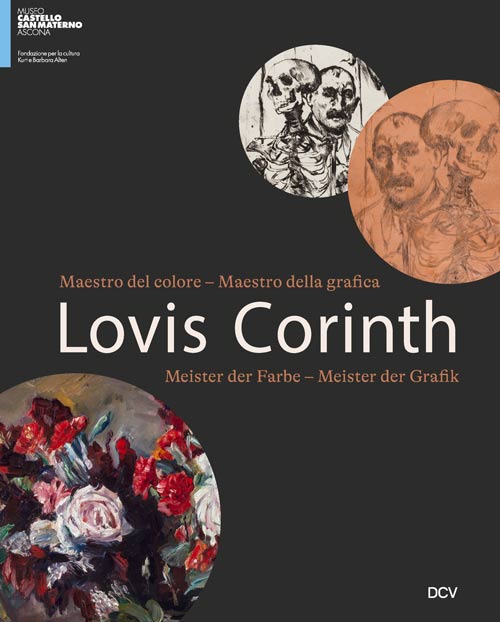
Maestro del colore – Maestro della grafica35€ Add to cartLovis Corinth (b. Tapiau, East Prussia, 1858; d. Zandvoort, Netherlands, 1925) ranks among the leading German Impressionists. But he has also been described as a precursor of Expressionism for his impulsive and passionate style in painting and graphic art as well his liberal handling of form, which vividly conveys agitated states of mind and powerful emotions. In addition to an eminent body of paintings and numerous drawings and watercolors, he left a graphic oeuvre encompassing over a thousand prints. In his paintings as in his etchings and lithographs, Corinth dedicates himself to a set of recurring themes: mythological and religious motifs, nudes, still lifes, landscapes, and portraits of his family and close friends. His graphic work also shows him engaging with the challenges of self-portraiture.
-
Ossian Fraser
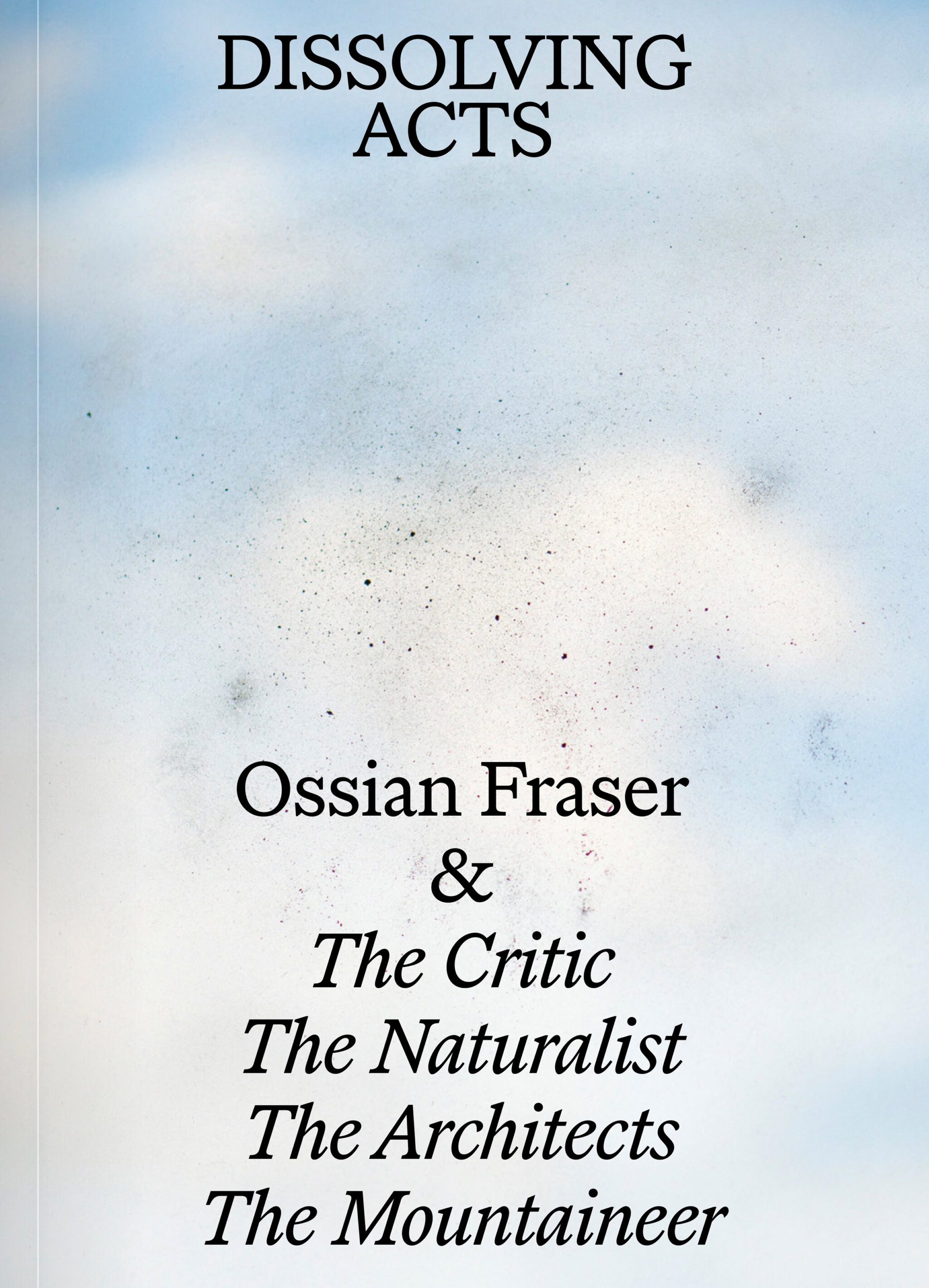
DISSOLVING ACTS38€ Add to cartOssian Fraser (b. Edinburgh, 1983; lives in Munich and Berlin) molds and captures evanescent moments. Working with volatile materials such as water, dust, or light, the artist exposes the latent potentials of unremarkable situations in the urban fabric and natural scenes. A tunnel in a city, a rock face in the mountains become points of departure and elementary components of his site-specific interventions, which he records in photographs. The book is the first to offer comprehensive insight into Fraser’s artistic practice. Series of pictures showcasing his conceptual and poetic pieces alternate with conversations that not only demarcate the framework in which his art operates, but also touch on the great issues of our time.
Ossian Fraser studied fine arts and sculpture at the Alanus University of Arts and Social Sciences, Bonn, from 2006 until 2009 and at the Weißensee Kunsthochschule, Berlin, from 2009 until 2013, rounding out his education in Albrecht Schäfer’s master class in 2013–2014.
-

Thomas Lehnerer
Freies Spiel44€ Add to cartThe function of art in human existence
Throughout his short life, the Munich-based theologian and artist Thomas Lehnerer (1955–1995) did not take the existence of art for granted. In his writings, above all in Methode der Kunst (Methods of Art), he developed a concept of art in the continuation of key texts from the fields of aesthetics, cultural theory, and art history, which can also be found in his own artistic work. The small-format figurative sculptures by Lehnerer, as well as his drawings, watercolors, and early installations, follow theoretical premises and address comprehensive themes of human existence. The present volume documents his examination of human existence, which is deepened by the inclusion of cultural historical figures and idols.
-

Stephan Kaluza
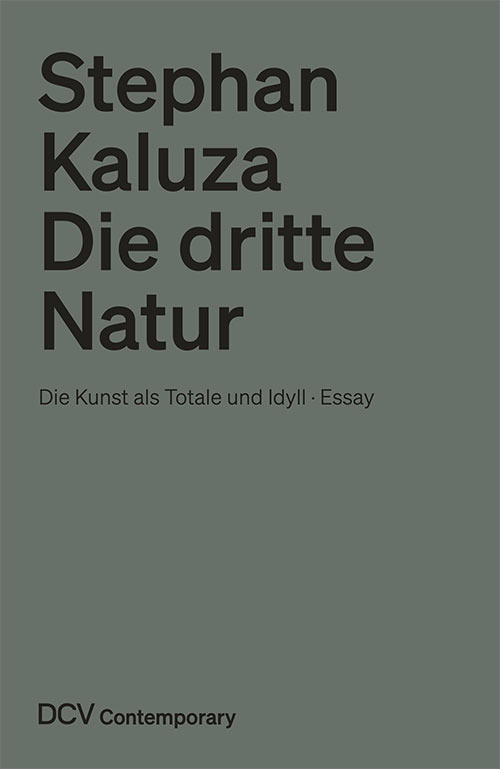
Die dritte Natur14€ Add to cartThe Nature of Art as Totality and Idyll
The philosophy of nature is central to the artist Stephan Kaluza’s (b. Bad Iburg, 1964; lives and works in Düsseldorf) work. As he sees it, there exists a succession of different natures: first nature is Kaluza’s designation for a world as immediately felt by (early) humans, part of an encompassing and close-range experiential totality they labeled ‘nature’ and perceived as a physical, but also spiritual and emotional concatenation of events. Second nature is stripped down to an objective and utilitarian quality; nature becomes a resource, the basis of life, the environment. In a kind of linguistic turn, speech mediates a surrogate, an alternative world, that positions nature as culture’s opposite; the former becomes replaceable in favor of latter. Yet this culture is far from devoid of yearnings for the immediacy that it has lost, and so develops an ‘artificial idyllic nature’ in turn. This third nature of the arts—a purely human nature—harks back to the archetypes of a first nature in escapism and totalized immersion.
-
Emil Nolde
A Critical Approach by Mischa Kuball40€ Add to cartWhat is Visible and What is Not
Mischa Kuball (b. 1959, Düsseldorf; lives and works in Düsseldorf) investigates public and institutional spaces and the social and political discourses that shape them. At the invitation of the Draiflessen Collection and with support from the Nolde Stiftung, the conceptual artist grappled with the life and oeuvre of the painter Emil Nolde (1867–1956) and created a body of work titled Nolde/critique/Kuball. In piece after piece, Kuball drains Nolde’s works of the colors that made the Expressionist famous, challenging the beholder’s preconceptions and examining perception and its constituent processes. Laid out in black and white, the book accordingly directs our attention not only to what a picture shows, but also to how structures and organizing principles emerge into view.
Mischa Kuball has been professor of public art at the Kunsthochschule für Medien Köln, and associate professor of media art at the Staatliche Hochschule für Gestaltung/ZKM Karlsruhe since 2007.
Note: This publication is released in German, English and Dutch. When ordering, please let us know which edition you would like to receive. Use the annotation box on the checkout page.
-

Tamara Suhr
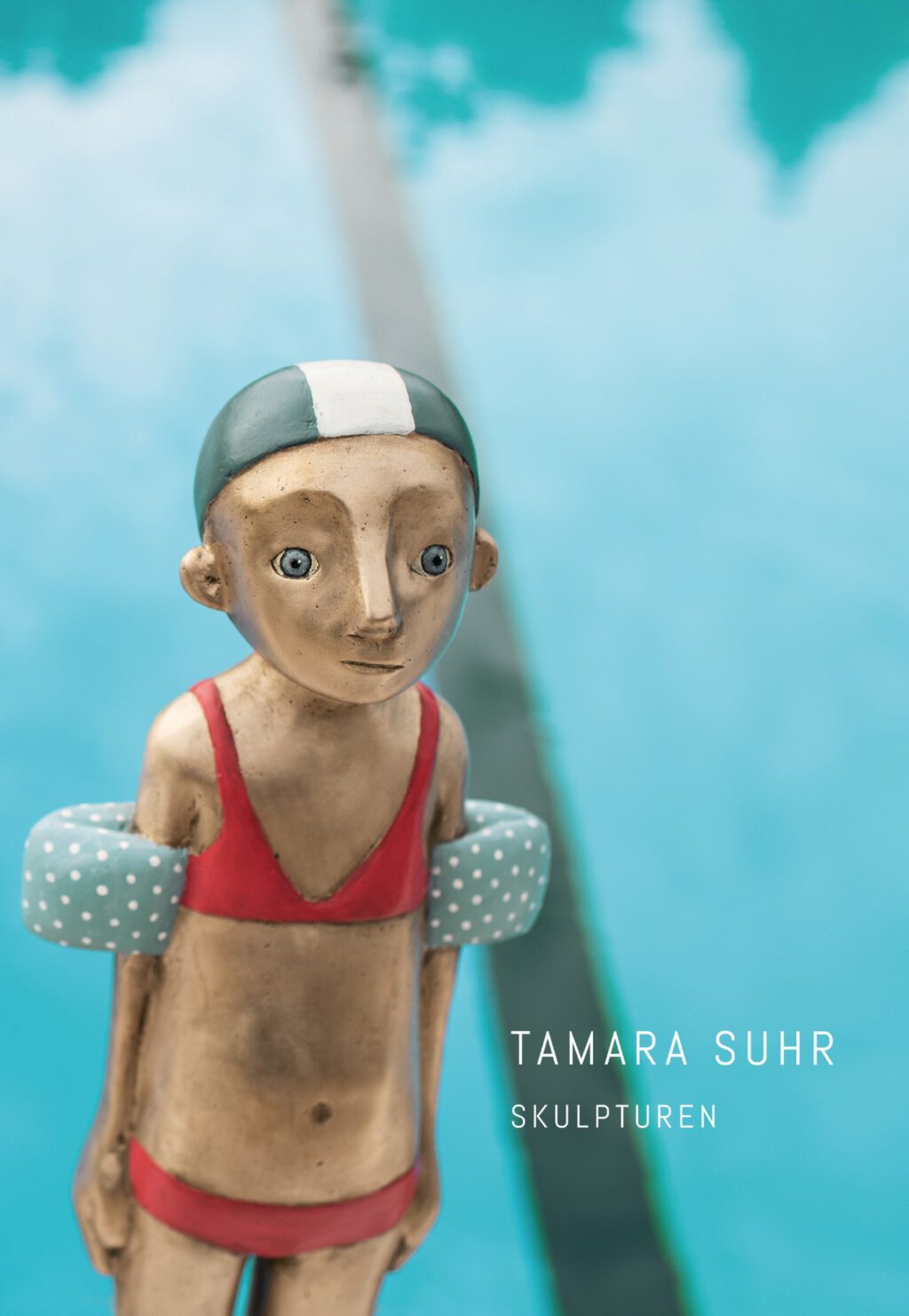
Skulpturen24€ Add to cartHesitant yet Immediately Present
As a sculptor, Tamara Suhr (b. 1968, Tübingen; lives and works in Ludwigsburg) has devoted herself unswervingly to the human figure. Her subjects are figures of children whose hesitancy always embodies a certain curiosity, a sense of expectation. In their form reduced to the essential, indeed almost archaic, they radiate calm and serenity—supported by balance with regard to both the motif and possible associations. In their small size and vulnerability, Suhr’s figurative sculptures, painstakingly crafted in bronze, seem apparently in need of protection, yet they appear strong and courageous. They stand, gaze, crouch, fish, swim or balance. They are present, in the here and now, a symbol for the children of the world.
-

auf Erkundung
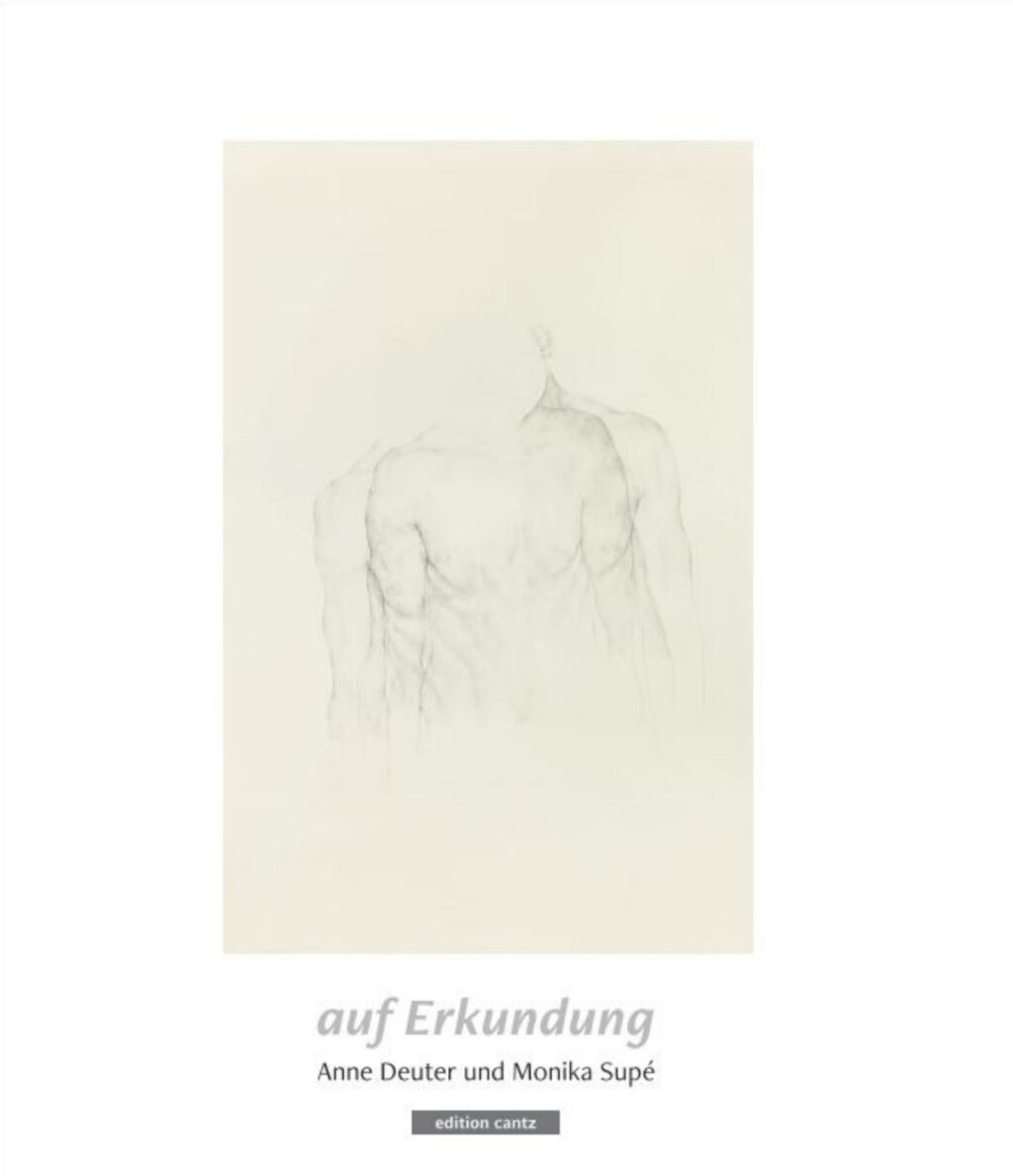
Anne Deuter und Monika Supé25€ Add to cartA Dialogue on Time
The two artists Anne Deuter (b. 1986, Halle; lives and works in Halle) and Monika Supé (b. 1967, Munich; lives and works in Munich) engage in self-exploration to find ways to convey an experience of body, space, and time. Grappling with formalist elements, they devise their compositional practices in graphite and ink and in words and images, respectively. Enhanced by selected works by contemporary poets, the publication opens up new perspectives on what it means to exist in time.
Anne Deuter studied visual art and art history at the Ernst-Moritz-Arndt-Universität Greifswald. She rounded out her education in the book art program at Burg Giebichenstein Kunsthochschule Halle. Monika Supé studied architecture at the Technischen Universität München and completed a doctorate on visual perception training at the Technische Universität Kaiserslautern. Since 1995, she has taught in the design divisions of various universities.
-

Maria Braune
Keep Away From Fire28€ Add to cartMaria Braune’s (b. Berlin, 1988; lives and works in Munich and Bamberg) work revolves around a material she developed; named Migma, it consists of eight different renewable natural resources. She heats it, then casts and molds it in a process that continues for weeks. The resulting sculptures and installations sprawl throughout the space like sensuous organisms. Associations of growth and symbiosis emerge, but discontinuities and disintegration come into view as well. Braune’s creative process is part of an ecosystem and thoroughly anchored in the now. Her material is a vitally alive substance to which she responds in an immediate engagement, connecting it to mythological and narrative significations and setting it in relation to her own world.
Maria Braune studied woodcarving at the Fachhochschule für Bildhauerei in Berchtesgaden, Germany, in 2009–2011, then fine arts with Hermann Pitz at the Academy of Fine Arts Munich, where she graduated in 2017.
-

Filip Henin
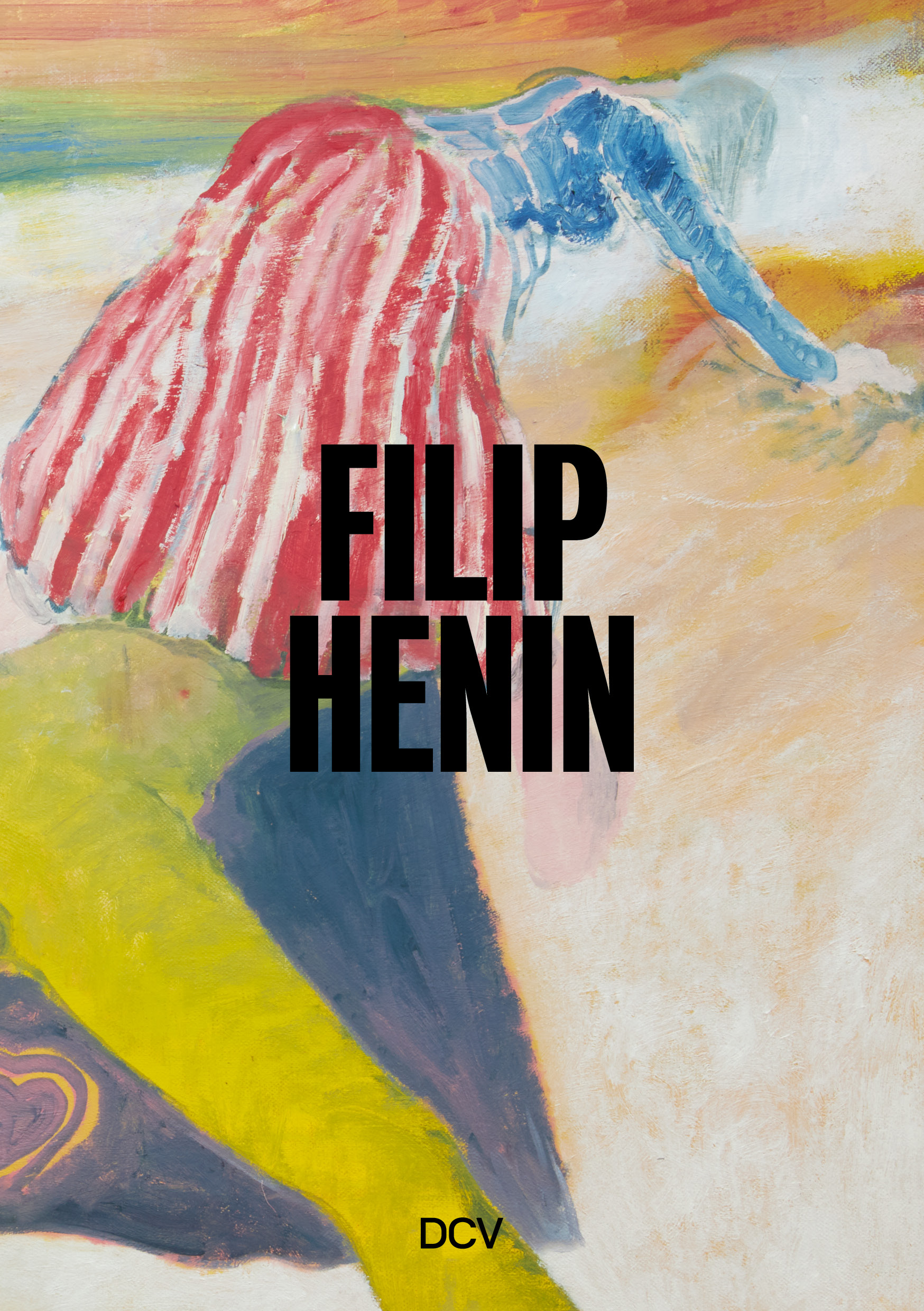
10€ Add to cartThe events captured in Filip Henin’s (b. Mayen, 1986; lives and works in Berlin) paintings are set in a world beyond time and place, as though on an empty stage prepared for a Samuel Beckett production. It is virtually impossible to say whether a picture shows a coastal region or a craggy slope up in the mountains, whether a field of blue represents the sea or a band of open sky. Henin strips landscapes down no less than human figures, subtracting specific features to isolate basic forms that might be found in the hill country around his hometown in western Germany or in Tuscany. His work integrates quotations from antiquity, Romantic landscape painting, and postmodernism as well as Italian Transavanguardia, the mysticism of Francesco Clemente and Sandro Chia, and the figurative painting of the 1990s. Without veering into drama or pathos, he harnesses two utterly antithetical energies: the reflection on painting and the history of art and the need to be simple.
-

Călin Dan
POLLIO34€ Add to cartThe oeuvre of the Romanian artist Călin Dan (b. Arad, Romania, 1955; lives and works in Bucharest) shows the influences of conceptual and minimal art. His book Pollio surveys his creative practice of the past decade, which straddles the media of installation and performance art, film, photography, and sculpture and is enriched by his work as an art historian, writer, and curator. In addition to the titular body of work, which wrestles with the Roman historian Gaius Asinius Pollio, the volume also documents the exhibition Alzheimer (2017). Călin Dan is a founding member of the artists’ group subREAL. His work was showcased at the Istanbul (1993), Venice (1993, 1999, 2001), São Paulo (1994), and Sydney Biennales (2006). He has been director of the National Museum of Contemporary Art (MNAC) in Bucharest since 2014.
-

Louise Hindsgavl
Conversation Pieces68€ Add to cartThe Danish sculptor Louise Hindsgavl (born 1973, lives in Copenhagen) is known for hybrid figurines made of porcelain and glazed stoneware: half animal, half human. Only their material evokes the idealized and kitschy scenes traditionally rendered in porcelain; however, Hindsgavl’s “sculptural collisions” tell of disturbing encounters between tormented beast-like people. For that she draws from brutal folktales of the past as much as from the ubiquitous “fairytales” of today’s social media that normalize violence, sexual abuse, and self-harm. Using one of the most fragile materials, she brings these trends into focus for discussion, calling her sculptures Conversation Pieces—which is also the title of this interesting and provocative book.