MEUSER
Werke 2012–2023 (GERMAN)
 | |
|---|---|
| Editor(s) | Bärbel Grässlin, Christian Malycha, Claes Nordenhake, Gisela Capitain, Jochen Meyer, Thomas Riegger |
| Author(s) | Alexander Linn, Christopher Williams, Elizabeth Anne Johnson, Gregor Jansen, Hannah Eckstein, Noemi Smolik, Peter Pakesch, Ulrike Groos |
| Design | Studio Martin Steiner |
| Size | 24 x 30 cm |
| Cover | Hardcover |
| Pages | 160 |
| Illustrations | 85 |
| Language(s) | German |
| ISBN | 978-3-96912-119-1 |
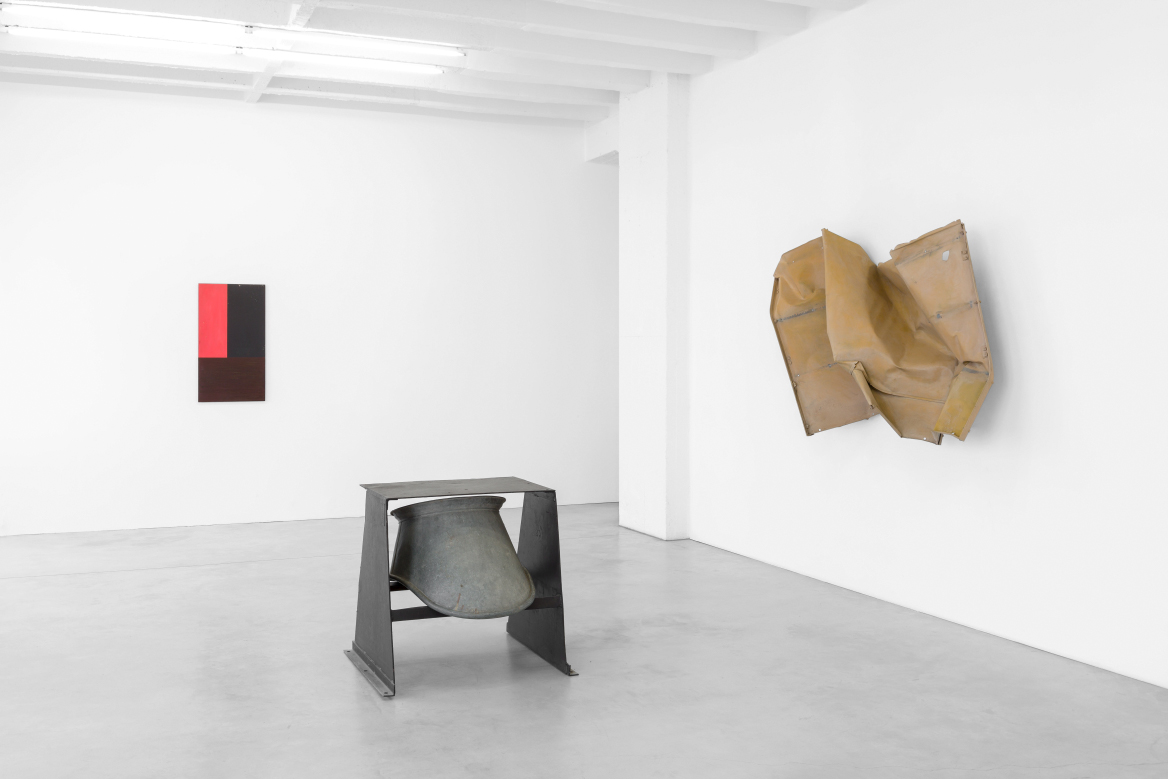
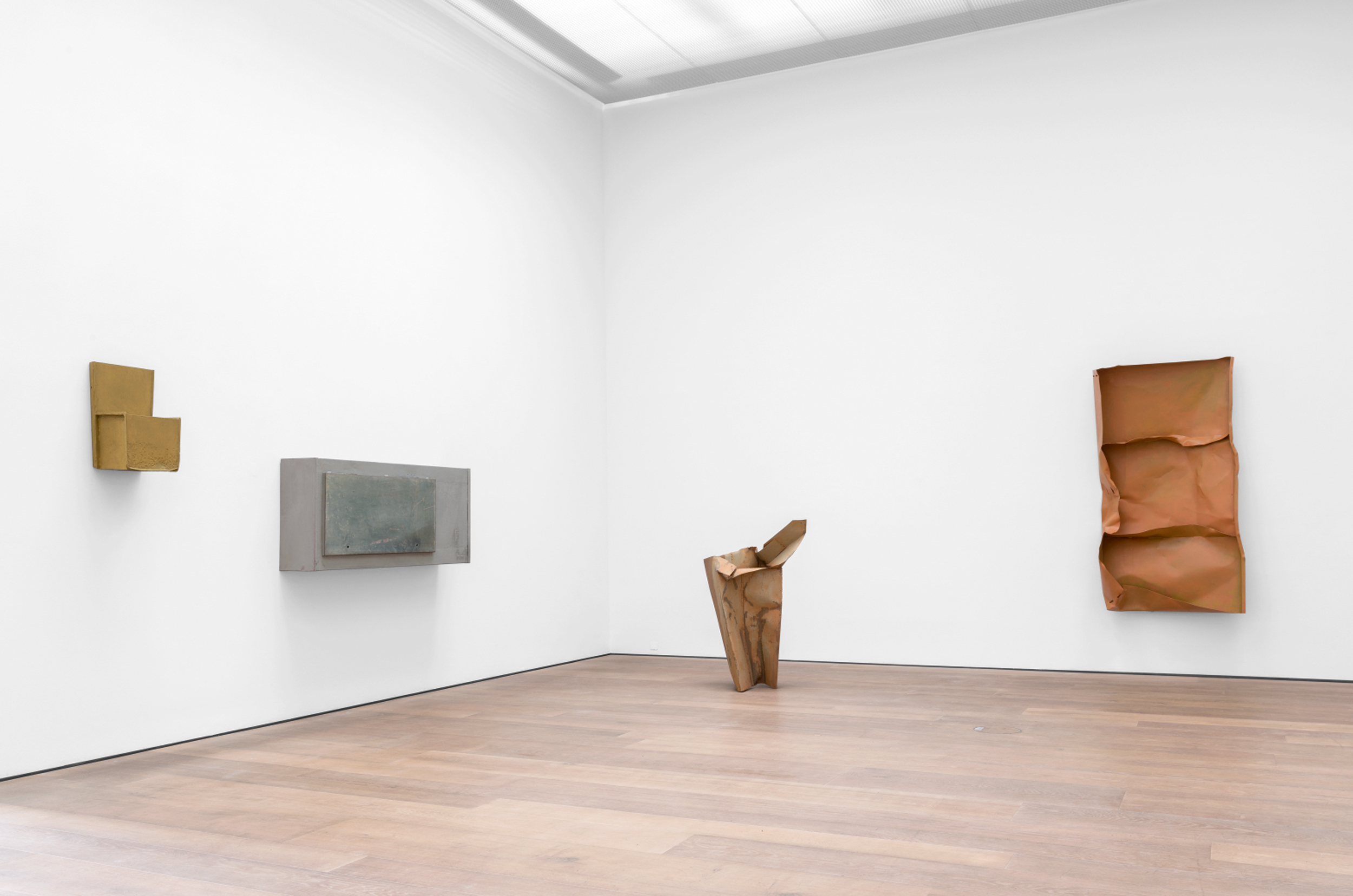
Ever since his studies with Joseph Beuys and Erwin Heerich, since his first exhibitions – for instance at ‘Kippenberger’s Office’ in 1979 – Meuser (b. Essen 1947, lives and works in Karlsruhe) has been a solitaire. His sculptures are unyielding and unruly, just as much as they are vulnerable and tender. They are witty and heart-touchingly charming.
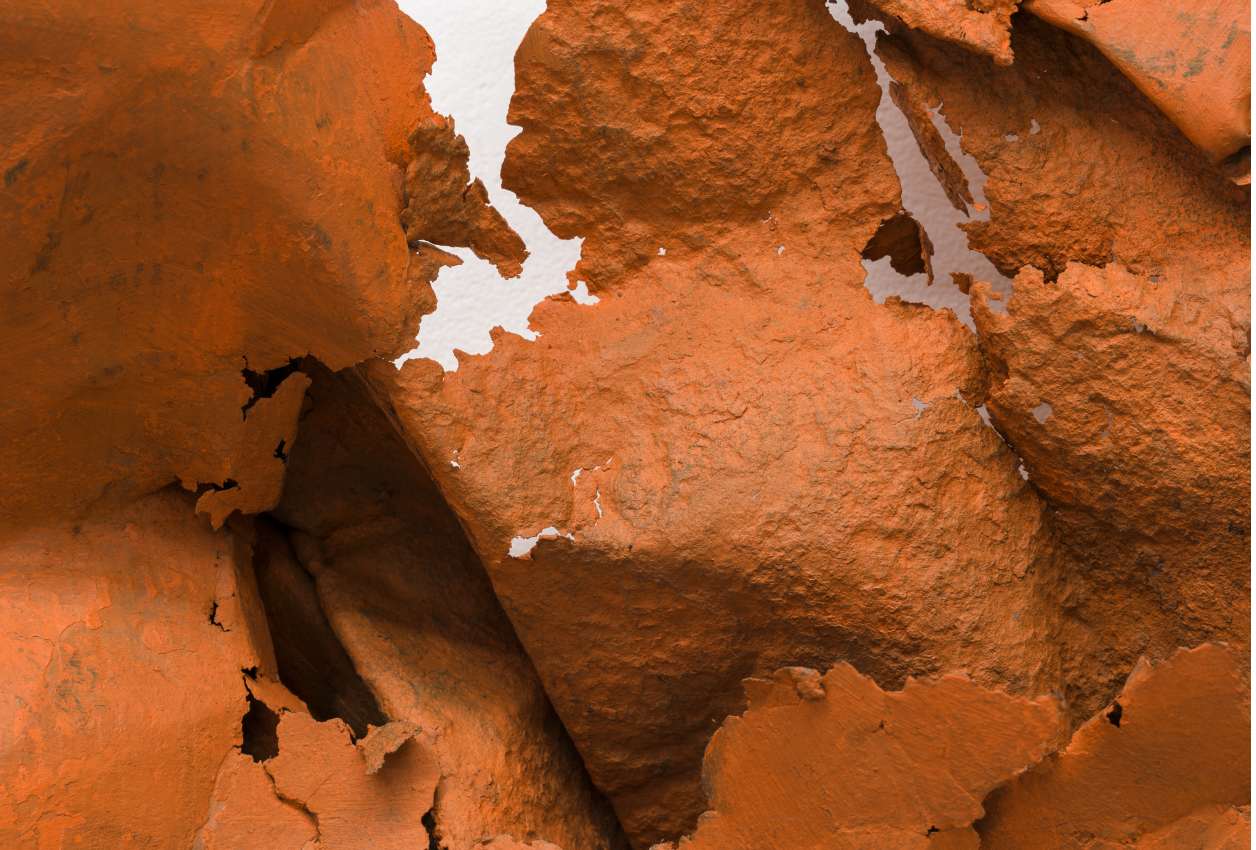
Meuser finds his material in the scrapyard. Confidently and empathically, he reinstates form and dignity to the remnants and vestiges of industrial society. As a romantic, he grants things a life of their own and turns them into self-reliant protagonists, once more. Unwaveringly, he works to re-poetize a standardized and maltreated world.
The lavishly designed monograph is published on the occasion of Meuser’s 75th birthday, presenting works and exhibitions from the past ten years. Eight international authors and scholars create a dazzling mosaic and reveal how Meuser boldly holds his own in face of Duchamp, Minimalism, and Social Sculpture. An open-ended outlook.
Meuser studied 1968–1976 at Art Academy, Düsseldorf with Joseph Beuys and Erwin Heerich. 1991 he received the ars viva award. 1992-2015 professorship at Academy of Fine Art, Karlsruhe.
Since 1976, numerous institutional solo and group exhibitions and works in international collections: Bundeskunsthalle, Bonn; Deichtorhallen, Hamburg; documenta IX / Fridericianum, Kassel; Fundació Joan Miró, Barcelona; Joanneum, Graz; Kunsthalle Düsseldorf; Museum of Contemporary Art, Monterrey; Martin-Gropius-Bau, Berlin; Museum Abteiberg, Mönchengladbach; Museum Folkwang, Essen; Museum moderner Kunst Stiftung Ludwig, Vienna; Museum Morsbroich, Leverkusen; Rijksmuseum Twenthe, Enschede; Sakip Sabanci Museum, Istanbul; Städtische Galerie, Karlsruhe; Vanhaerents Art Collection, Brussels; ZKM | Museum für Neue Kunst, Karlsruhe.
More books
-

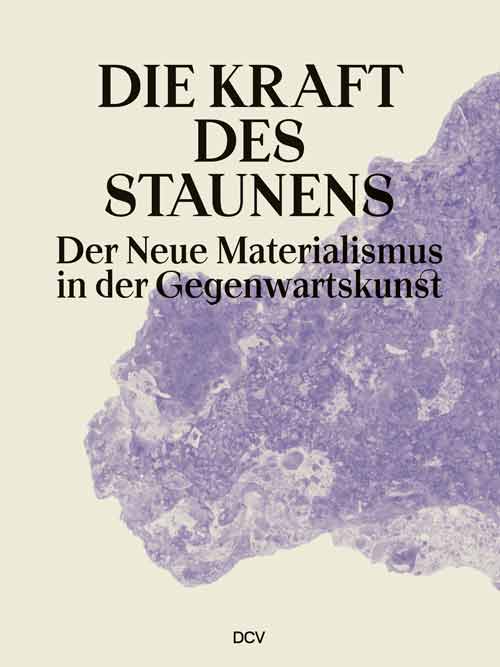
The Power of Wonder – New Materialisms in Contemporary Art
34€ Add to cartFor the longest time, physical matter was seen as no more than a passive and lifeless object. Since the early years of the twenty-first century, however, visual artists and scientists alike have initiated a change of thinking, conceiving matter as active, unruly, and autonomous. The ethnologist Hans Peter Hahn has called it the “willfulness of things,” while the Belgian philosopher Isabelle Stengers has underscored the “power of wonder”—the bracing sense of marvel and surprise instilled by a material world that sometimes defies the attempt to put it into words.
This pioneering publication features six selected artistic positions that highlight the New Materialism’s significance for contemporary art. The artists employ materials that are millions of years old such as rocks from an open-pit mine as well as classic inorganic staples like ceramics and cutting-edge materials like digital products transformed in high-tech procedures into hitherto unseen hybrid objects. Their work lends art a powerful voice in contemporary debates around man’s position vis-à-vis his environment, around sustainability, participation, and justice.
With works by Ilana Halperin, Agata Ingarden, David Jablonowski, Markus Karstieß, Robert Smithson, and SUPERFLEX.
-

MS 00 22
Michael Sailstorfer – Works 2000–202245€ Add to cartMS 00 22 – Michael Sailstorfer: Works 2000–2022
Michael Sailstorfer (b. Velden/Vils, Germany, 1979; lives and works in Berlin) is one of the most renowned German sculptors and object artists of his generation. His sculptural creations, which often require extensive planning and complex production processes, are the results of reflections on and reinterpretations of everyday objects: intriguing, bizarre, and sometimes humorous experimental arrangements and artifacts that interact with their environments, create spaces, or self-deconstruct. These transformative processes combine conceptual depth with poetic allure and tell stories of the passage of time and disintegration. Many of Sailstorfer’s installations depend on the beholder’s active engagement for their effect. He typically documents his sculptural experiments with the camera and later shares them with the public in the form of videos or photographs.
The extensive monograph MS 00 22 presents the most important works from Sailstorfer’s creative career. Formally diverse writings and conversations with the artist offer profound insight into his practice.
Michael Sailstorfer studied with Olaf Metzel at the Munich Academy of Fine Arts from 1999 until 2005 and at Goldsmiths College, London, in 2004–05. He has won a number of art awards, including the Kunstpreis junger westen (2011) and the Vattenfall Contemporary (2012). Selected solo exhibitions: Schirn Kunsthalle, Frankfurt (2007); Kestnergesellschaft, Hannover (2010); Kunsthalle Nürnberg (2011); Contemporary Arts Center, Cincinnati, Ohio (2014).
-

Andreas Wegner
Wir fahren mit der Schneckenpost, weil die uns keinen Pfennig kost50€ Add to cartThe art of Andreas Wegner is an inquiry into capitalist urbanity. His interventions explore alternative models for urban interaction, trade, city development, traffic, or the use of public space. Inspired by Joseph Beuys’s social sculpture and Charles Fourier’s social utopias, Wegner founded, e.g. a cooperative department store in Berlin, a grocery store in Vienna, and conducted real estate business as a form of creative resistance. This monograph illustrates the artist’s most important projects with ample imagery, essays by renowned authors, interviews, and his own texts. Alongside collective initiatives, installations, photography, film, and sculpture, painting remains a constant in Wegner’s oeuvre to this day.
-

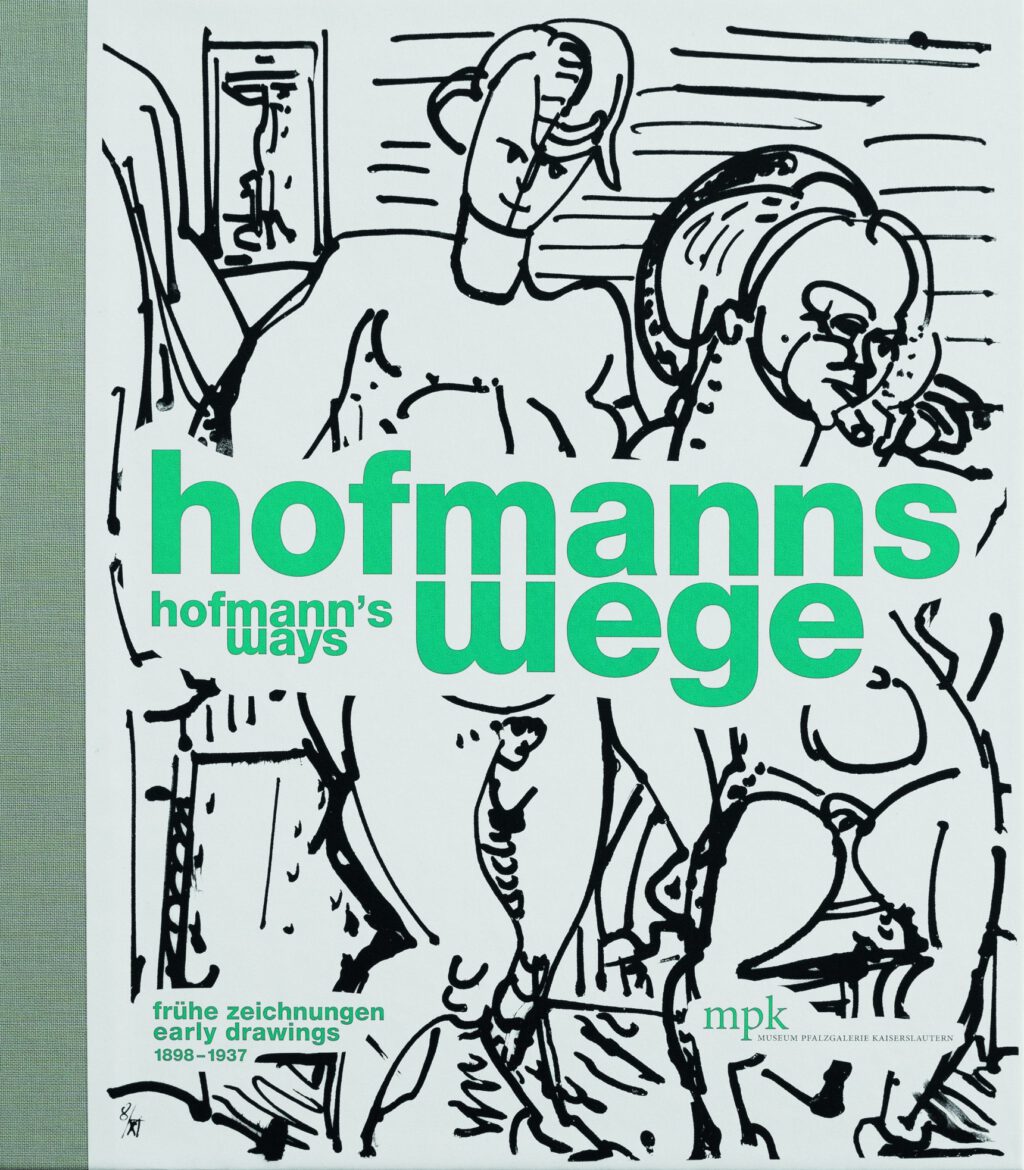
Hofmann’s Ways
Early Drawings (1898-1937)24,80€ Add to cartA Re-Discovery: the Early Graphic Work of Hans Hofmann
A representative of Abstract Expressionism, Hans Hofmann (b. 1880, Weißenburg; d. 1966, New York) was one of the most important artistic personalities of the 20th century. He began his career as a teacher and artist in the United States in the mid-1930s. The previously unpublished graphic oeuvre presents the highly varied development process that preceded Hans Hofmann’s influential painting of the post-war period.
-
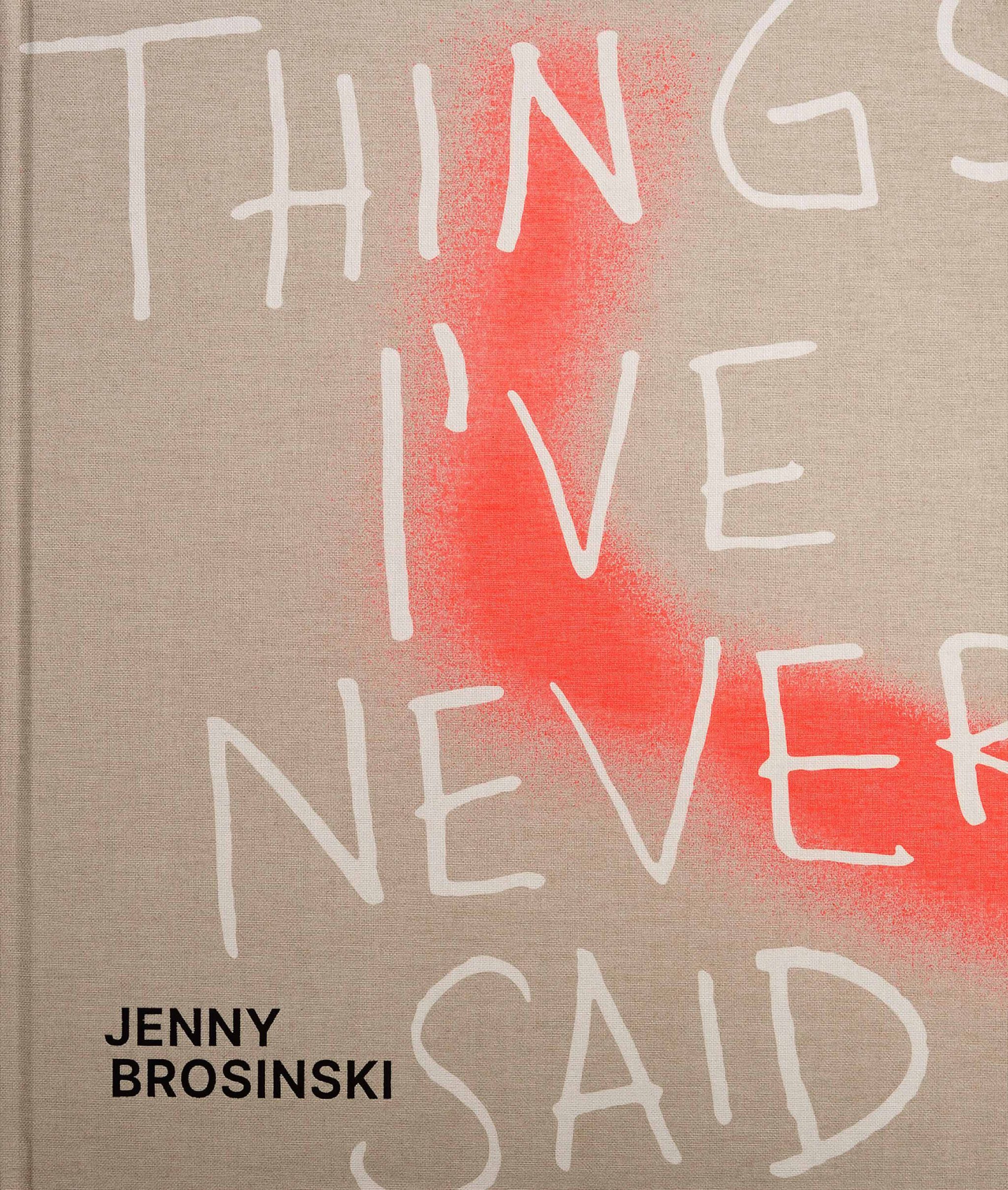
Jenny Brosinski
Things I’ve Never Said58€ Add to cartJenny Brosinski’s (b. Celle, 1984; lives and works in Berlin) paintings in large formats look like uncoordinated abstract compositions with traces of wear deliberately left in place. This brings their materiality to the fore and reveals the creative process. Expressive oil paint on unprimed canvas, spray-painted lines, typographic elements, shoeprints, or pieces of masking tape on the canvas: on the one hand, these are experiments and statements; on the other hand, they are engagements with painting as such. The artist added sculpture to her repertoire in 2019, making figurative and sometimes colorfully painted imaginary beasts in bronze or stone—more evidence of her subtle sense of humor, which also manifests itself in her pictures and especially in their titles. The extensive monograph offers profound and comprehensive insight into Brosinski’s oeuvre.
Jenny Brosinski studied illustration and animation at the Weißensee Kunsthochschule, Berlin, the École supérieure des arts décoratifs, Strasbourg, and the Hamburg University of Applied Sciences. She completed her education with a master class in Berlin in 2010.
- Out of stock

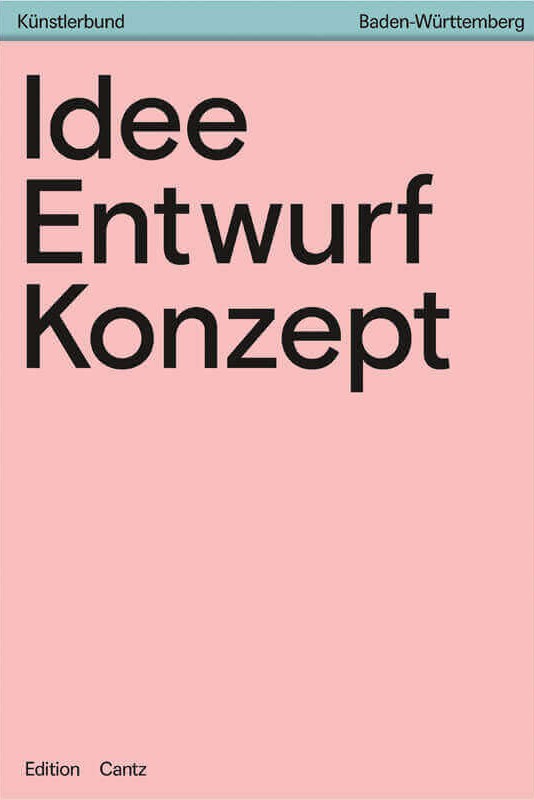
Idee – Entwurf – Konzept
48€ Read moreArt in the Preliminary and Provisional Stage
In this sumptuous volume, Künstlerbund Baden-Württemberg, the association of visual artists in Baden-Württemberg, puts the focus on visualizations of inchoate impulses, spontaneous flashes of inspiration, and the euphoria of that first spark rather than the painstaking process of hammering out a work. Structured as a complex compendium comprising contributions by more than 240 artists, the book highlights the experimental circumstances in which the individual creative mind experiences the nascency of ideas—without regard for the specialized skills and technical accomplishment that distinguish the finished work. Perfunctory sketches, doodles, drawings, notes and material collages, photographs and other media images provide insight into very intimate stages of the creative process that are not usually revealed to visitors to an exhibition of contemporary art.
- Release December 2025

Cahier 002
Silke Wagner. bürgersteig22€ Add to cartBetween 2001 and 2002, a VW bus bearing the inscription “Lufthansa Deportation Class” was on display in various German cities. It was part of the provocative bürgersteig action by Silke Wagner (born 1968, lives in Frankfurt) about Lufthansa providing aircraft for deportation purposes. The bus sparked heated debates and became a vehicle for activist networking and communication among citizens. The participatory art project was groundbreaking at the time in its collaboration with civil justice initiatives. Cahier 002 documents bürgersteig for the first time with all its aspects, disclosing the sources for the action as well as material on the legal conflicts that followed the project.
-

Freeters
HELP! Artistic Intelligence38€ Add to cartFREETERS stands for an artist collective that designs, creates, transforms and plays with spaces, for and with the people who experience their time there. The artistic intelligence used in the process transforms into spaces for thinking, working, living, playing and learning, creating identity, emotion and inspiration.
This book is about the mediation of artistic thinking and artistic action in processes. The artistic practice of Freeters is characterized by strategies of thought and action that are needed in a society with constantly changing conditions, in a working world that overturns itself in its dynamics. The necessity of shaping the present through artistic thought and action can no longer be limited to the art context.
FREETERS’ AI approach should be understood less as a scientific methodology and more as a call not to reduce our intelligence to only rational thought processes with a utility maxim. Of course, AI has already made impressive progress in many areas of our public services via the hard components of machine learning. However, it is doubtful whether this approach alone can really give rise to a superintelligence that will one day create a resource-saving paradise on earth. Nor is it guaranteed that we as Homo Sapiens will be assigned a place in this paradise by such a unilaterally gifted superintelligence. Cognitively, this machine will be superior to us in any case – only the necessary feeling of happiness of a consensual coexistence does not seem quite conceivable.
-
Sebastian Stöhrer
Residents40€ Add to cartIf there’s an artist whose oeuvre merits the title “creation,” it is Sebastian Stöhrer. Shaping clay—essentially, soil—he molds his “residents”: colorful and friendly-looking sculptural beings, some of them enhanced with sticks or branches reminiscent of limbs. Despite their air of levity and humor, they are not the products of mere momentary inspiration or a whim. It takes decades of dedicated experimentation with the kiln based on the millennia-old art of ceramics as well as expert knowledge of chemistry and physics to create such colors and shapes. Stöhrer has been called an alchemist, and indeed he has made it his mission to vindicate this researcher’s craft, an ancestor of the natural sciences. Alchemy, like Stöhrer’s oeuvre, combines pure rationality with coincidence and a scintilla of magic. The artist plays an intuitive and sensual game with his clay and the virtually incalculable chromaticity of the glazes—chaos, anarchy, and irrepressible urges being an integral dimension of all creation. In Stöhrer’s “residents,” we encounter the embodiments of that creation: likenesses of ourselves and perhaps also heralds of a future more good-natured version.
-
Simone Haack
HAIR30€ Add to cartSimone Haack (b. 1978 in Rotenburg/Wümme, lives and works in Berlin) has always made the inwards legible in the outer appearance of her figures in her painting. This is also the case in her block of works in the exhibition of the same name, Hair. Already in the late 17th century, magic and superstition were attributed to hair. In it one suspected the whole power of the soul. The artist, who was formed in the painting class of Katharina Grosse and Karin Kneffel, symbolically reveals the fragility of the DNA of human beings through her hair landscapes, which are sometimes placed macroscopically in the picture in the spirit of a New Magic Realism. At the same time, her accompanying exhibition publication always also tells of the triangle of tension of physical as well as psychological existence, which in her case runs through the painterly psychoanalysis.
-
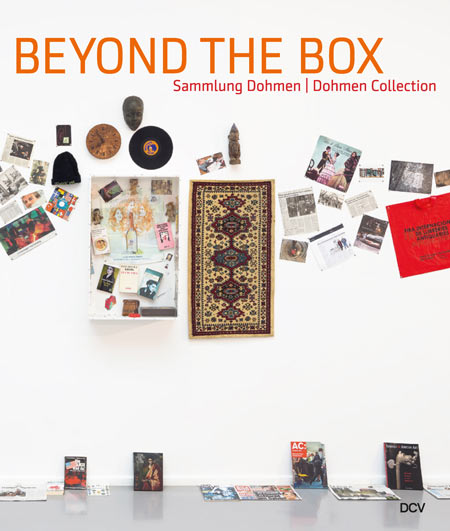
Beyond the Box
Dohmen Collection30€ Add to cartBreaking the Mold of Convention
Presenting installations, sculptures, objects, and paintings from Mexico, Cuba, West Africa, Israel, Bulgaria, Russia, South Korea, and Japan, rounded out by extraordinary works from the U.S. and Europe, this selection from the Dohmen Collection features artists from countries that did not typically register on “Western” art radars until fifteen years ago. It was the seminal documenta 11 (2002), curated by a team led by Okwui Enwezor, that ushered in a departure from the contemporary art world’s entrenched geopolitical ideas. This book showcases a treasure that has long been ahead of its time yet did not attract public attention: the private collection of Werner Dohmen, a physician in Aachen. It includes works by Mariana Castillo Deball, Wim Delvoye, Jimmie Durham, Diango Hernández, Rodney McMillian, Pavel Pepperstein, Nora Turato, Haegue Yang, and other artists who continue to provoke audiences, ask probing questions, and prompt fresh thinking.
Dr. med. Werner Dohmen has been head of the board of Neuer Aachener Kunstverein since 1988. In addition to building his own collection, he has been a committed supporter of the intercultural project No es arte, which advocates for the return of goldwork of the pre-Colombian Tairona people that was stolen from sacred sites during the colonial conquest of South America.
-
Michelle Jezierski
Verge28€ Add to cartHow does a simple line become a horizon? When do we begin to see colors and shapes as a landscape? Michelle Jezierski’s painting homes in on the tipping point at which our perception begins to oscillate between color/surface and space/representation. At that very point, she captures the essence of the landscape as such, which is not a concrete place but a metaphor for inner states of affairs. To get there, Jezierski distills what she sees in her surroundings down to the elements of painting—shapes and colors—which just barely intimate a pictorial space while persistently drifting toward abstraction. The defining feature of her technique is that she layers several pictorial planes and spaces on the canvas in staggered arrangements. “Perpetually discovering new ways to unsettle the visual space,” as she puts it, she engenders ruptures and structures that open up multiple perspectives and a portal for reflection on one’s own perception. Above all, however, the cuts lend her pictures a peculiar rhythm that powerfully pulls in the gaze, making the reader paging through this catalogue forget time and space.
-

Hans Karl Zeisel
Hundred and more34,95€ Add to cartPossibilities of Concrete Art
What is possible without turning away from the cocrete? In the Bauhaus tradition, the typographer, graphic artist, designer and author Hans Karl Zeisel opens up countless design options with basic forms. His wooden cuboids demand a humorous approach to sculpture. They are creativity training, study tools and meditation game all in once. A playful experiment that reveals the diversity of concrete art.
-

Zwischen Freiheit und Moderne
Die Bildhauerin Renée Sintenis29€ Read moreThe Successful Sculptor and Symbol of the “Neue Frau”
Renée Sintenis (b. 1888, Glatz; d. 1965, Berlin) belongs to the first generation of professional female sculptors at the beginning of the twentieth century. She made skillful use of her business relations with her gallerist Alfred Flechtheim, who introduced her to collectors in Paris, London, and New York. The market for, in particular, her lively, small animal sculptures was quite lucrative. These experienced renewed popularity in the 1950s through her Berlin Bear statuette, which has been presented in a small version at the Berlin International Film Festival since 1960. The catalog sheds light on the sculptor’s diverse oeuvre and provides insight into the self-image of one of the most successful women artists of the Weimar Republic, who embodied the type “Neue Frau” (new woman) due to her dazzling appearance.
-

Filip Henin
10€ Add to cartThe events captured in Filip Henin’s (b. Mayen, 1986; lives and works in Berlin) paintings are set in a world beyond time and place, as though on an empty stage prepared for a Samuel Beckett production. It is virtually impossible to say whether a picture shows a coastal region or a craggy slope up in the mountains, whether a field of blue represents the sea or a band of open sky. Henin strips landscapes down no less than human figures, subtracting specific features to isolate basic forms that might be found in the hill country around his hometown in western Germany or in Tuscany. His work integrates quotations from antiquity, Romantic landscape painting, and postmodernism as well as Italian Transavanguardia, the mysticism of Francesco Clemente and Sandro Chia, and the figurative painting of the 1990s. Without veering into drama or pathos, he harnesses two utterly antithetical energies: the reflection on painting and the history of art and the need to be simple.
-

João Onofre
Untitled (in awe of)25€ Add to cartJoão Onofre’s works are tributes to art history and pop. He gleans what is in danger of being lost right now, realigns it, and translates it into something sublime. His art encourages the beholders to reconsider a past that has faded in collective memory with a critical eye and make peace with it. His creative process is guided by the material and a clearly defined concept that nonetheless does not restrict a work’s finding its own way. That is why he does not commit to a particular medium, making videos, performances, installations, and much more. What all his works have in common is that they probe the limitations of their medium and our perceptive capacities in novel ways. This catalogue presents three recent works in which the essence of Onofre’s art becomes manifest: he molds myths and symbols into awe-inspiring images, sounds, and forms—not for nothing have critics labeled him an alchemist. In the catalogue, his tangible compressions of cultural history are rendered in imposing pictures and flanked by an ambitious essay that places them in their context.
-

Bilder des Wohnens
18€ Add to cartThe Cognitive Registers of Photography
All over the world, housing shortages and living conditions are urgent concerns of political and academic debates. Scholars at the FH Bielefeld conducted a three-year research project on Bilder des Wohnens. Architekturen im Bild, focusing on questions of the representation of space and hybrid forms of visualization between documentation and staging as well as photography as an archive of architectural knowledge and tool in the planning process. The book draws on studies of twentieth-century social utopias such as Tashkent, Uzbekistan, an embodiment of the urban-planning ideal of Soviet modernism, and explorations of social and cultural spaces along the coasts of northern Morocco and southern Spain, as well as a photographic typology of urban fabrics in Germany and other sociocultural studies that grapple with the significance of living spaces today.
-

Larry Rivers
An American-European Dialogue38€ Add to cartBetween French Modernism and the New York School
The American painter, musician, and filmmaker Larry Rivers (b. 1923, New York; d. 2002, New York) is considered one of the most influential protagonists of the New York art scene in the period from the 1950s to the 1970s. He played with Miles Davis and Charlie Parker, was a close friend of Frank O’Hara, and pioneered Pop Art. In dealing with contemporary artist colleagues and historical role models, he always strived to making painting visible as a medium of reflection. From an early age, Rivers was preoccupied with French painting of the late nineteenth century. During his stay in Paris in 1961/62, he met Jean Tinguely and Niki de Saint Phalle, whereupon the range of materials he used was extended to wood, cardboard, and electric light. For the first time, the present volume – the first monograph in twenty years – sheds light on Larry Rivers’ idiosyncratic art with a view to the tension between traditional French painting and Abstract Expressionism around Willem de Kooning.
-

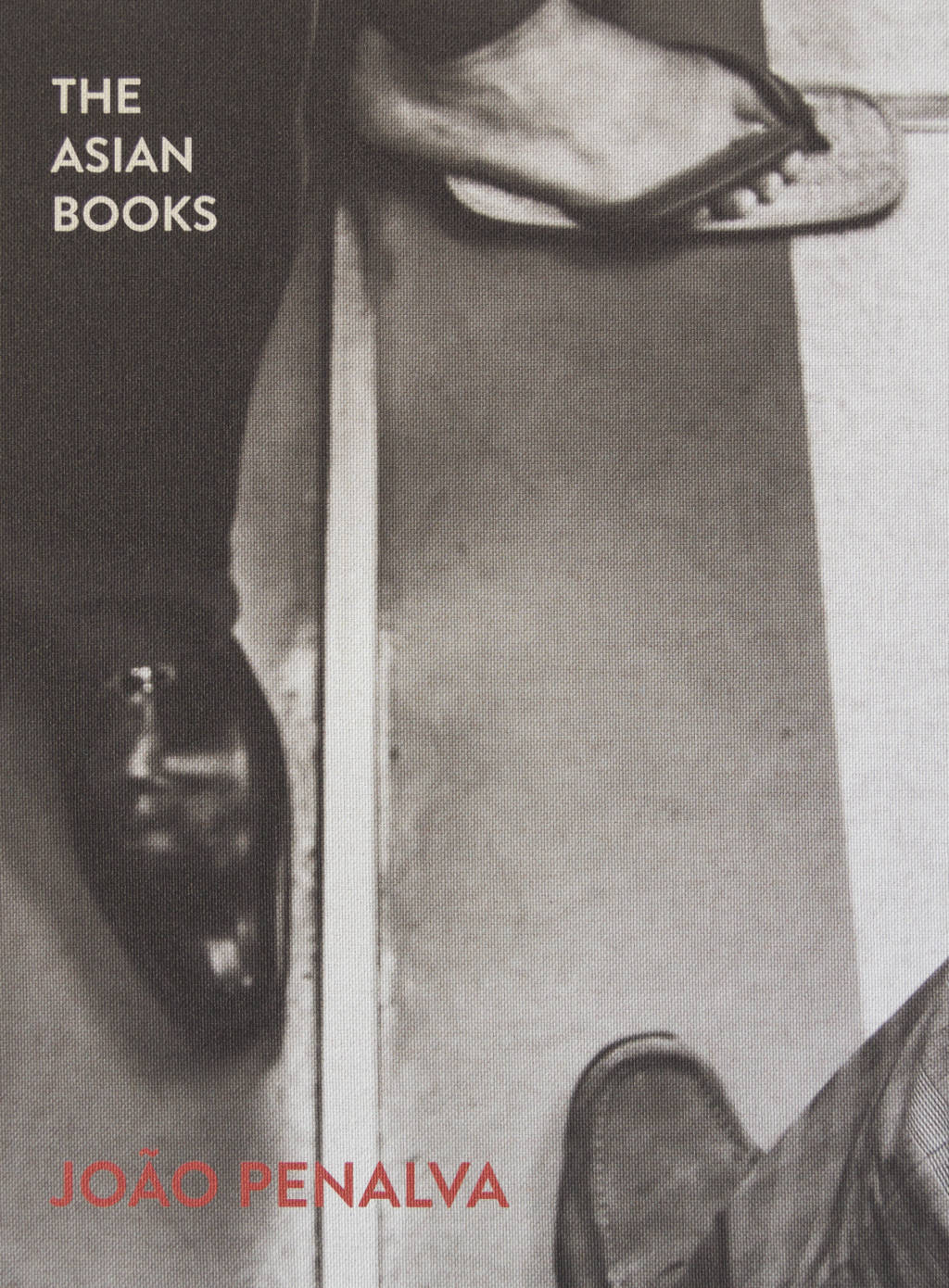
João Penalva
The Asian Books40€ Add to cartThe First Survey on the Exceptional Artist Books of João Penalva
Since 2007 João Penalva (b. 1949, Lissabon; lives and works in London) has exhibited large format unbound books, printed with archival inks on fine art paper, displayed on tables with chairs, to be handled freely. Each one is published in an edition of three and one artist’s proof. Those whose content relate to Asia, whether factually or fictionally, are collected here for the first time: Taipei Story, 2007; Portraits: Machines and Kabuki Wigs, 2009; The Toshiba Book of Happiness, 2009; Hello? Are you there?, 2009; Michio Harada, 2015; Boro, 2017.
João Penalva studied Fine Art at the Chelsea School of Art in London. His works have been shown in manifold international exhibitions. Penalva represented Portugal 2001 at the Venice Biennale and 1996 at the São Paulo Biennale.
-

Francis Alÿs
The Nature of the Game
Special Edition60€ Add to cartSPECIAL EDITION in clothbound slipcase
The Belgian artist Francis Alÿs (b. Antwerp, 1959) makes work that is as multifaceted as it is poetically subversive. Straddling the line between performative conceptual art and community intervention, his films and drawings chart the political and social realities of urban spaces. One of his most imposing long-term projects is Children’s Games, for which he documents children playing all over the world, from Paris and Mexico City to the Yezidi refugee camp Sharya in Iraq. The richly illustrated book contains ideas and sketches he compiled in preparation for this series. It lets us glimpse into the engine room of his artistic practice, revealing key elements of his filmic poetics. An essay by the ethnographer and filmmaker David MacDougall embeds Alÿs’s observations of children’s play in the contexts of childhood studies as well as the history of ethnographic documentary film.
Francis Alÿs (b. Antwerp, 1959) is widely regarded as one of the foremost artists working today. His oeuvre, which has garnered numerous prizes and been featured in solo exhibitions around the world, encompasses films, photographs, performances, drawings, and paintings, many of them explorations of the social and political realities of urban spaces. Since 1986, Alÿs, who trained as an architect, has lived in Mexico City, where he moved after the major earthquake of 1985 to help in the rebuilding effort.
Francis Alÿs – The Nature of the Game is the official publication of the Belgian pavilion at the 59th Biennale di Venezia, curated by Hilde Teerlinck.