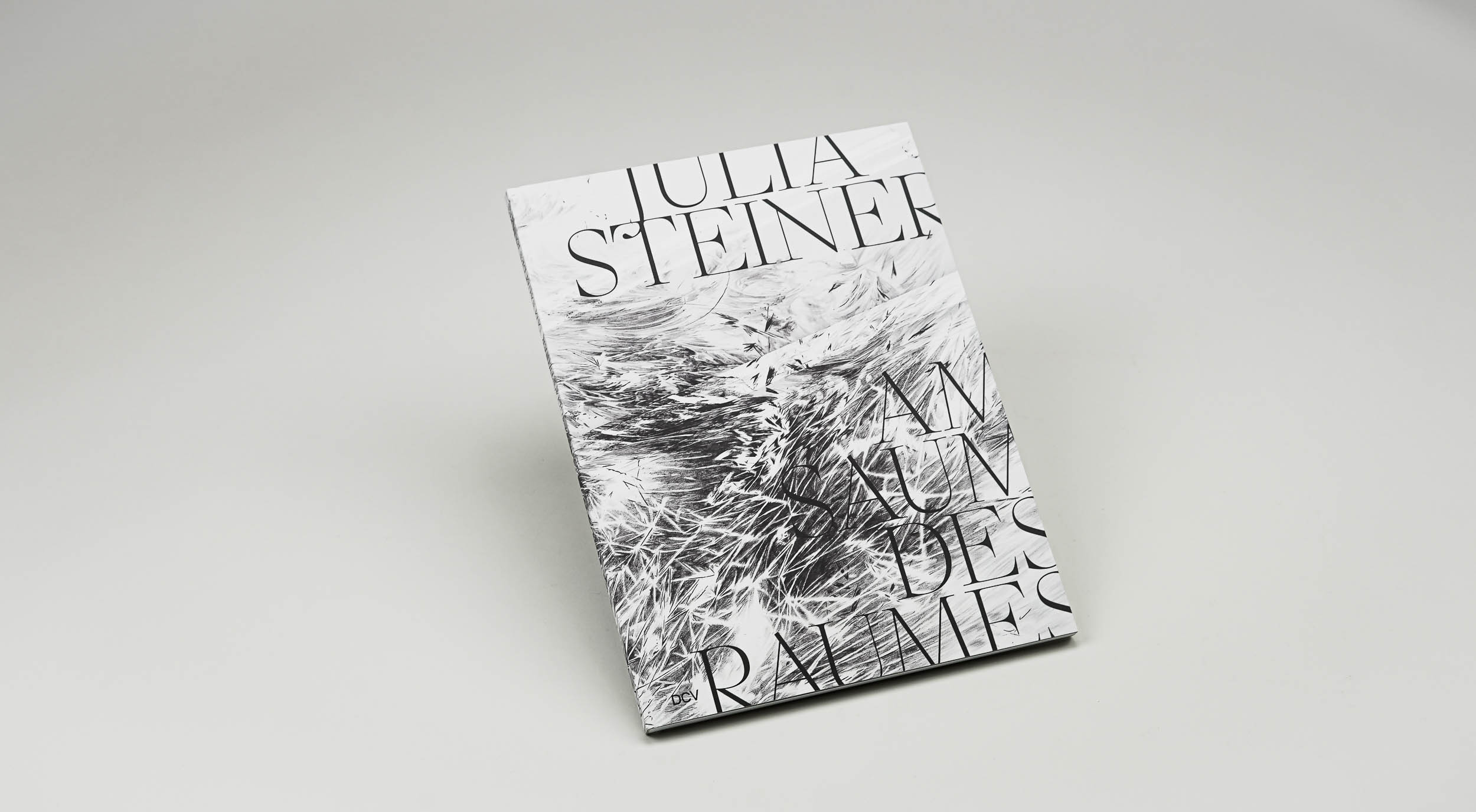
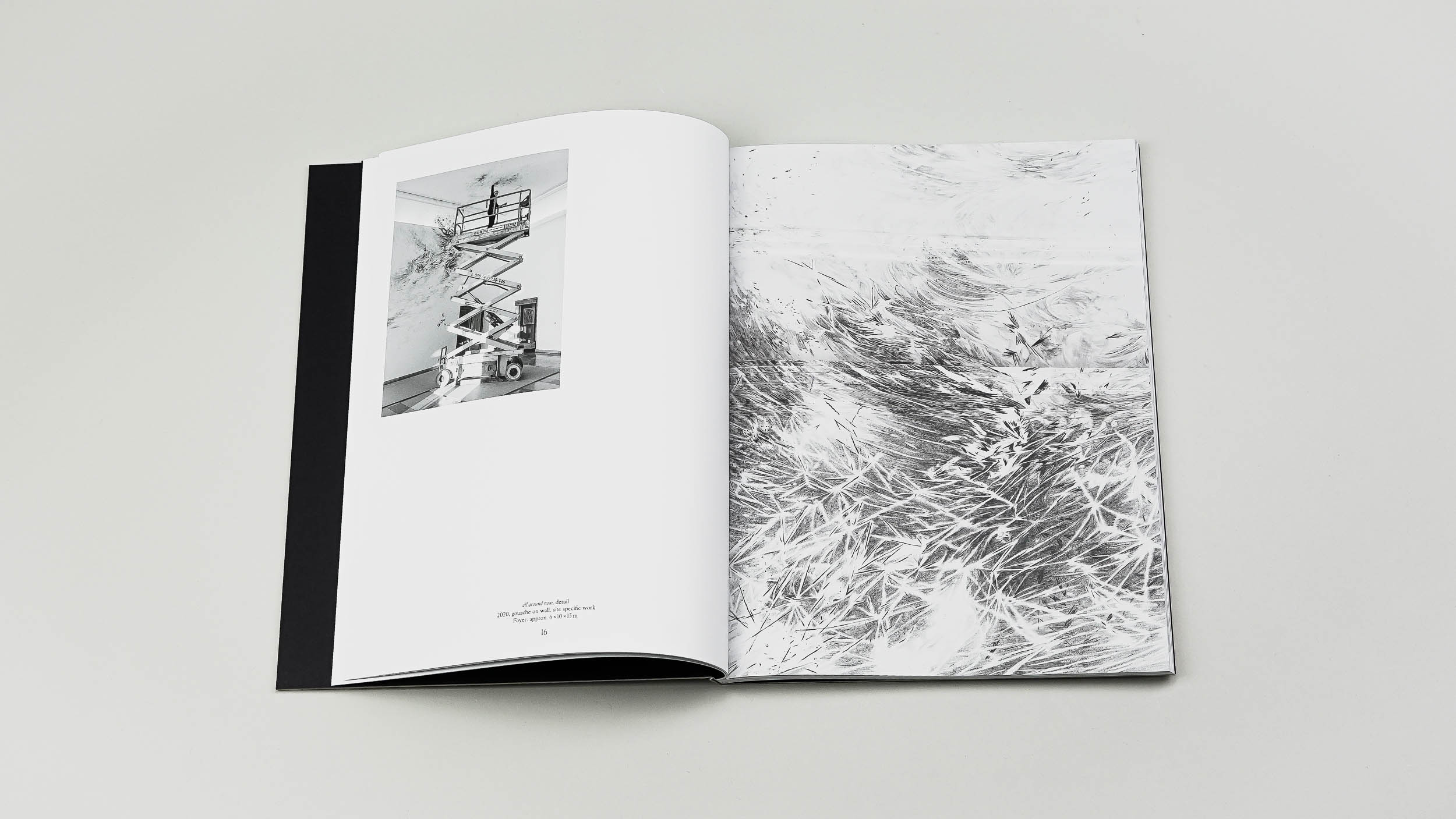
Julia Steiner
Am Saum des Raumes
 | |
|---|---|
| Editor(s) | mpk Kaiserslautern, Britta E. Buhlmann |
| Author(s) | Svenja Kriebel |
| Design | Groenlandbasel |
| Cover | Paperback with flush cut |
| Size | 21,5 x 29 cm |
| Pages | 80 |
| Illustrations | 55 |
| Language(s) | German |
| ISBN | 978-3-96912-008-8 |
Expansive Worlds
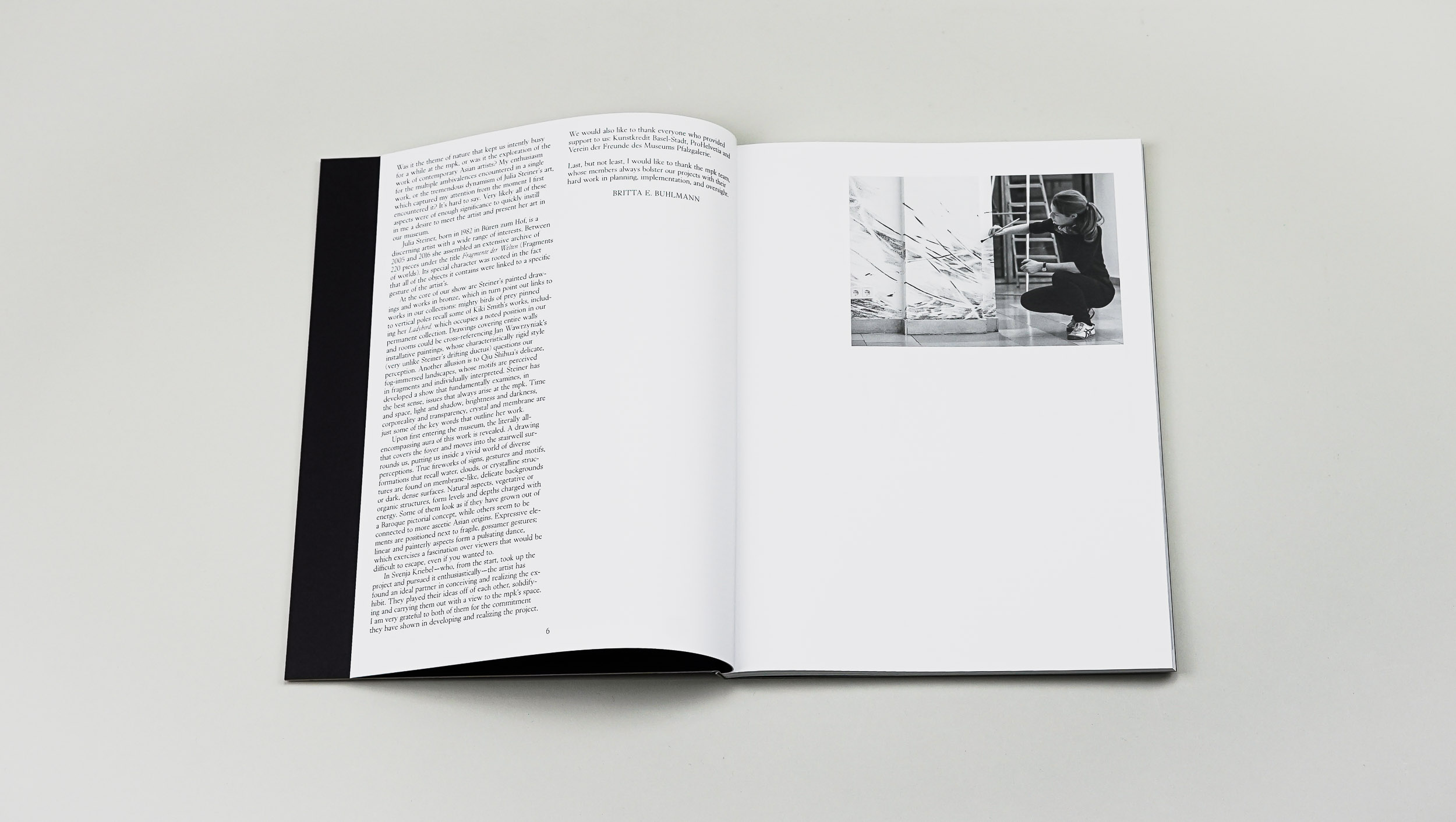
The pencil drawings of Julia Steiner (b. Büren zum Hof, Switzerland, 1982; lives and works in Basel) are monumental in size. And yet they exude an air of delicacy and evanescence, sprawling across the edges of the paper and taking possession of the space around them. Processes frozen in an instant—like wind sweeping through clouds, light piercing the night, or the ground breaking apart—erupt with unexpected vigor. The beholder believes that he has identified a motif, only to lose sight of it a moment later in the abstraction of the painterly drawing. The artist’s oeuvre lays out a cosmos of images that crack and burst into pieces, explode and implode. The present book accompanies Julia Steiner’s first institutional solo exhibition in Germany.
Julia Steiner studied at the Bern University of the Arts (HKB) from 2002 until 2007, with a semester abroad at the Berlin University of the Arts in 2005. In 2018–19, she held an interim professorship at the Braunschweig University of Art (HBK), leading the drawing class. Steiner’s work has won her several accolades, including the 2009 Swiss Art Award and the 2017 STRABAG Artaward International (Vienna).
More books
-

Glückliche Tage
32€ Add to cartWe see in contrasts. Freedom from pain follows pain, and felicity is the more radiant after a period of misfortune. Happiness, that is to say, displaces unhappiness and is perhaps its recompense; what is certain is that, as antonyms, they are (at least in this world) inconceivable without each other. The contrast they form also underlies the tensions inherent in the works in this catalogue. Some take us straight from the pinnacle of happiness down into the abyss, while in others the gradients of ascent or descent are so gentle that no culmination is perceptible. What all oeuvres gathered in the book have in common is that they furnish the human being, a social creature, with an experience of resonance. Happiness and unhappiness reverberate between the art and the beholders, leaving, in the best case, a lasting impression. Opening the catalogue—a metaphor for the human condition materialized in paper—one overhears this serenely melancholy echo of the works.
Artists: Rui Chafes, Tamara Eckhardt, Nan Goldin, Felix Gonzalez-Torres, Barbara Hammer, Carsten Höller, Ken Lum, Johanna von Monkiewitsch, Yoko Ono, Heike Weber, Stefan Wissel
With contributions by: Yevgenia Belorusets, Nell Sophie Bender, Elias Bendfeldt, Laura Berestecki, Annabella Ernst, Annika Gaeth, Hristina Georgieva, Markus Heinzelmann, Malwin Kraßnigg, Max Florian Kühlem, Natascha Laurier, Martin Middeke, Navaz Roomi-Mirhosseini, Vanessa Joan Müller, Julia Neumann, Martin Paul, Caroline Planert, Maike Prause, Arne Rautenberg, Kira Sophie Röller, Gina Marie Schwenzfeier
- With socks designed by the artist and augmented reality

JOHN BOCK
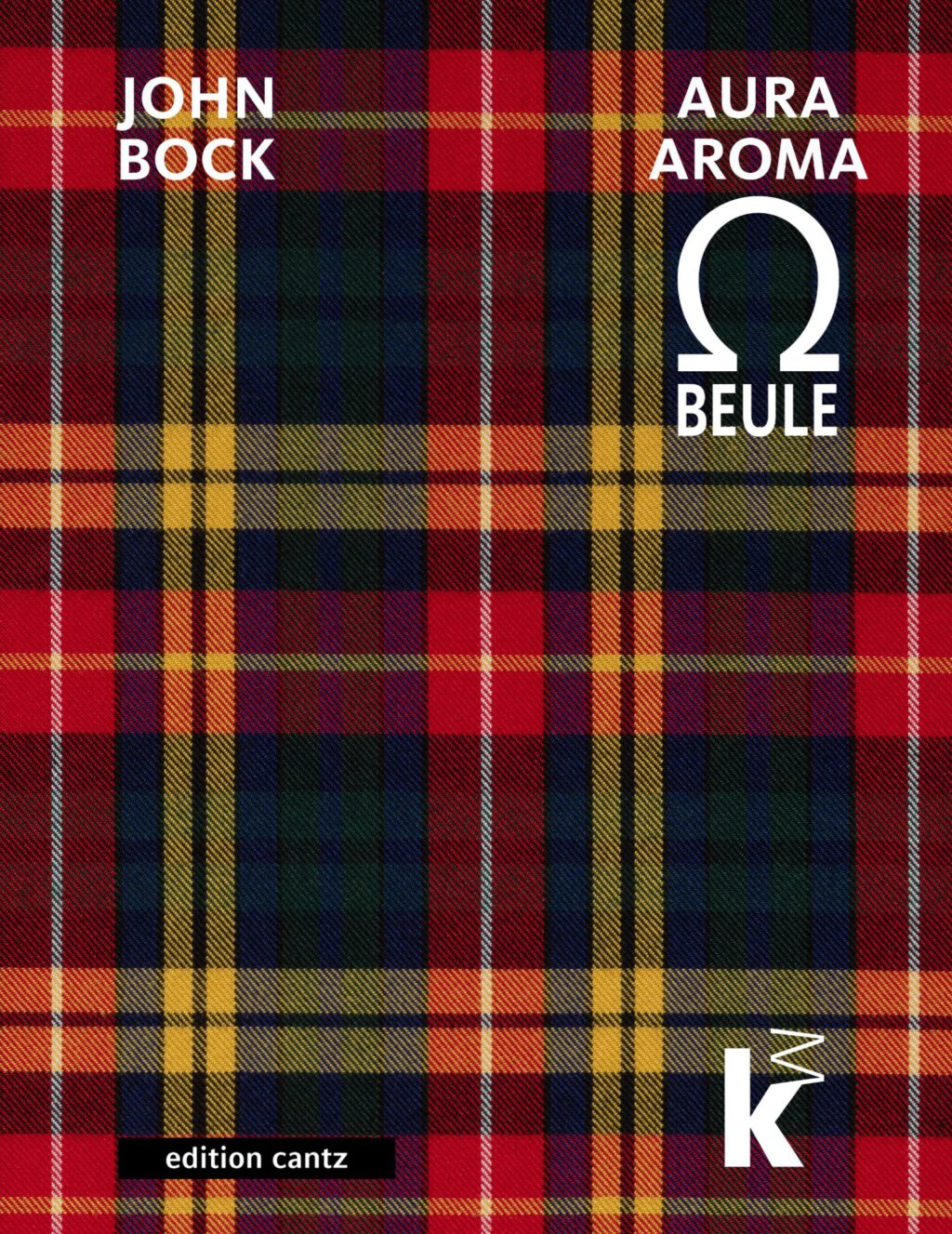
AURAAROMA-Ω-BEULE42€ Add to cartThe Augmented Reality Book for John Bock
John Bock (b. 1965 in Gribbohm, lives in Berlin) is one of the most important contemporary performance and video artists. In his works characterized by humor and absurdity, the artist places language, human bodies, everyday objects, and spaces in peculiar relationships to each other. He attained international recognition with the installation LiquidityAuraAromaPortfolio at the first Berlin Biennale in 1998. Together with his work Voll die Beule from 2013, it is now included in the collection of the Kunsthalle Mannheim. The present augmented reality book not only contextualizes his work, but also immerses the viewer/reader directly in his performances, in which the artist’s head emerges and a filled rubber glove leaks out. A completely new approach to the works of John Bock, packaged in a pair of socks designed by the artist.
John Bock studied at the Hamburg University of Fine Arts and since 2004 has taught at the State Academy of Fine Arts Karlsruhe as Professor of Sculpture. He has participated in the 55th Biennale di Venezia, and his works have been featured worldwide in solo exhibitions at, among others, the Berlinische Galerie, the Contemporary Austin, Texas, the Barbican Centre, London, and the Städel Museum, Frankfurt.
-

Ugo Rondinone
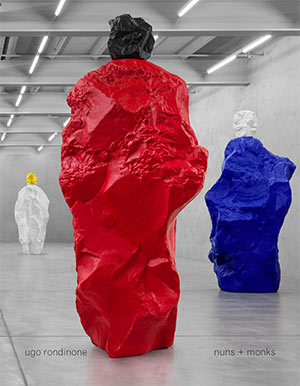
nuns + monks20€ Add to cartContemplation and Communion with the World
Ugo Rondinone (b. Brunnen, Switzerland, 1964; lives and works in New York) is a conceptual and installation artist whose oeuvre spans abstract painting, photography, and sculpture. Nature is where he has long found inspiration, regeneration, and comfort: “In nature, you enter a space where the sacred and the profane, the mystical and the secular vibrate against one another.” Rondinone’s works oscillate between the extremes of interiority and engagement with the wider world; stone is often present in his art as a recurrent material and symbol. The sculptures in the series nuns + monks originated as limestone models; the artist made three-dimensional scans and then cast the works in bronze. As a reflection of the inner self in the outside world, the friable mineral contrasts with the solidity of the bronze; the natural genesis of the millennia-old stones with the presence of the polychrome casts in the here and now. nuns + monks attest to a visibility while also giving the impression of flinching from the gazes to which they expose themselves.
Ugo Rondinone studied at the University of Applied Arts Vienna. His work has been presented at the Rockbund Art Museum, Shanghai, the Swiss National Museum, Zurich, MoMA/PS1, New York, and the Hamburger Bahnhof, Berlin, among others.
-

Sonja Yakovleva
10€ Add to cartSonja Yakovleva (b. Potsdam, 1989; lives and works in Frankfurt am Main) uses pornographic representations and images from the internet as templates for papercuts, some in large formats, that grapple with personal and public stories about women, power relations, sexuality, and violence. The silhouettes show popular motifs that have served to ingrain fairy tales, myths, and ideologies in the collective consciousness from the colonial era to modernism and the early twenty-first century. Yakovleva, whose art is often associated with sex-positive feminism, appropriates this folkloristic visual idiom and hybridizes and sexualizes it. Dessous and strap-on dildos, for example, figure as preserved specimens of butterflies and insects, bringing historic scientific expeditions to mind. Yet her work also addresses the capitalist urge to categorize, evaluate, and market every kink.
-

Urban Art! Biennale® 2019
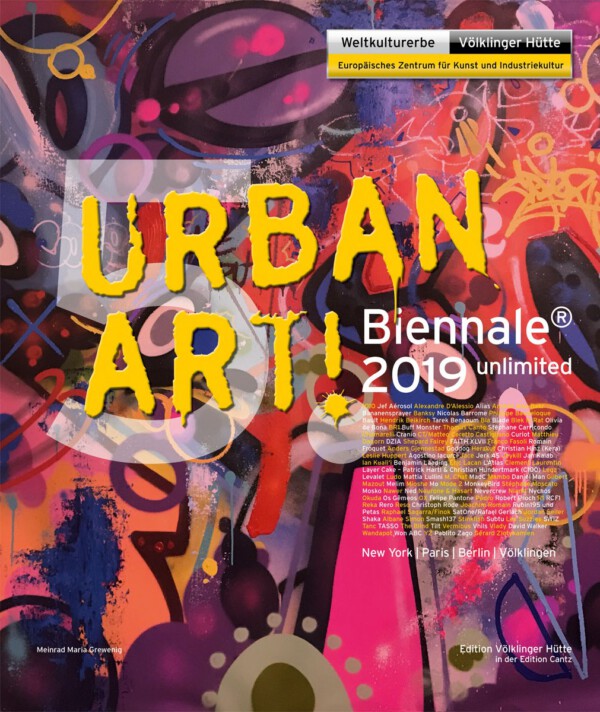
27,50€ Add to cartThe World’s Most Important Exhibition of Urban Art — Presented for the Fifth Time in 2019
Its themes are the city and urban lifestyle, its can-vases walls, doors, or windows, its artists cosmo-politan. Since the turn of the millennium, Urban Art has developed out of the non-commercial, often illegal art forms of graffiti and street art. Although it makes use of the same stylistic means — spraying, tagging, the deliberate inclusion of drips, the use of graffiti scripts, etc. — it transports these as commis-sioned works into the legal space of the museum, gallery, or architecture. The Urban Art Biennial at the World Cultural Heritage Site Völklinger Hütte is the largest international exhibition of its kind. Fifty individual works and twenty-five installations by one hundred artists shed light on the latest developments and positions from Western metropolises, as well as from current hot spots around the globe.
-

Can Yasar Köklü
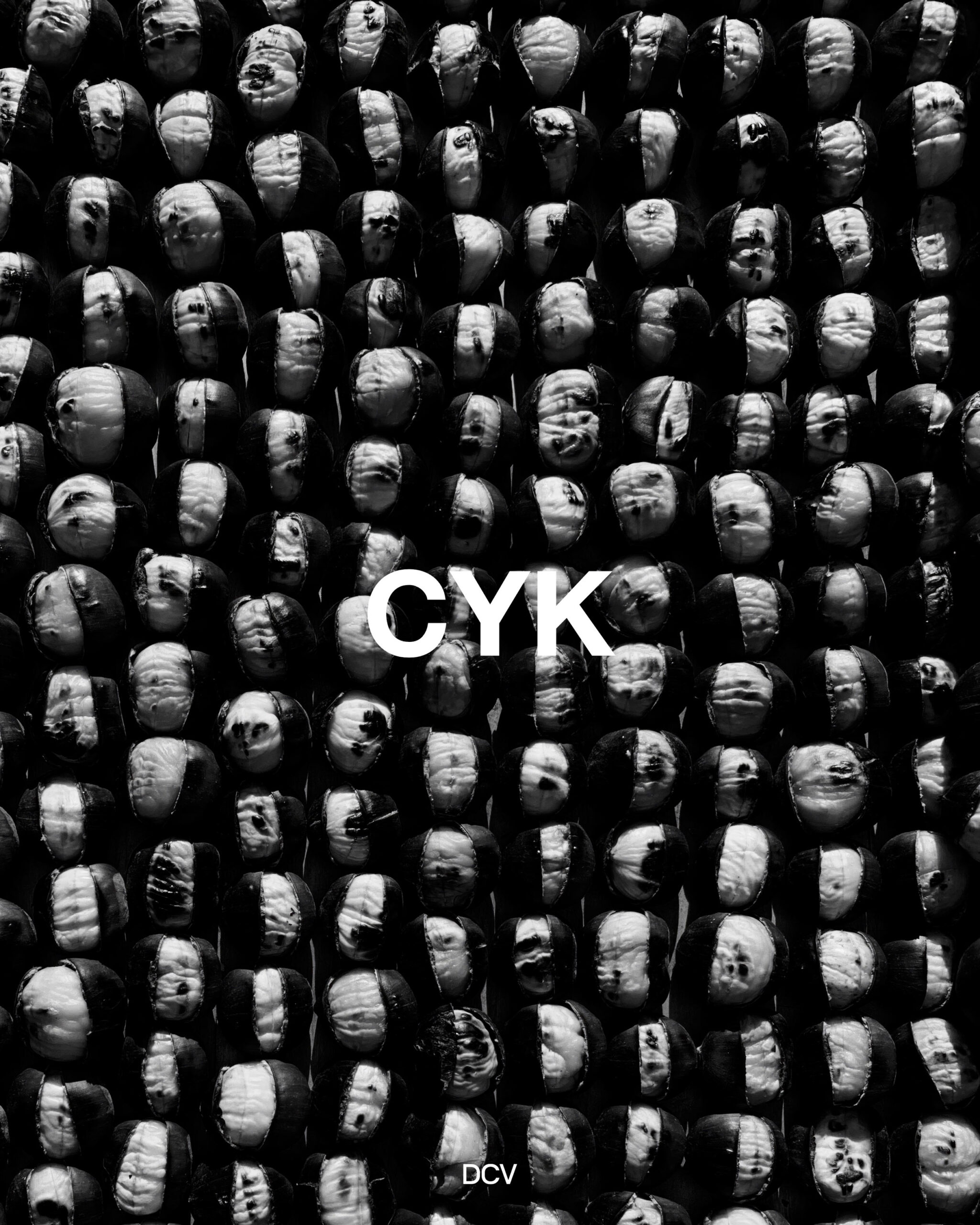
CYK55€ Add to cartThe young photographer, graphic designer, and filmmaker Can Yasar Köklü (b. Schwelm, 2003; lives and works in Brooklyn) grew up between Cologne and Istanbul and currently studies at New York’s renowned Pratt Institute. In his first publication CYK—an artist’s book featuring breathtakingly beautiful photographs and personal writings—he explores his experiences growing up, the traditions that inform his art, and his feelings in three different cultures: “Heimat” charts his native Germany, where he spent most of his life; “Memleket” is dedicated to Turkey, where his roots are; and “Home” presents the impressions Köklü gathered during a year in high school in Los Angeles and now in New York, where he continues his education. Driven by a passion for storytelling, he captures singular—fascinating and deeply moving—moments in time.
-

B.A.R.O.C.K.
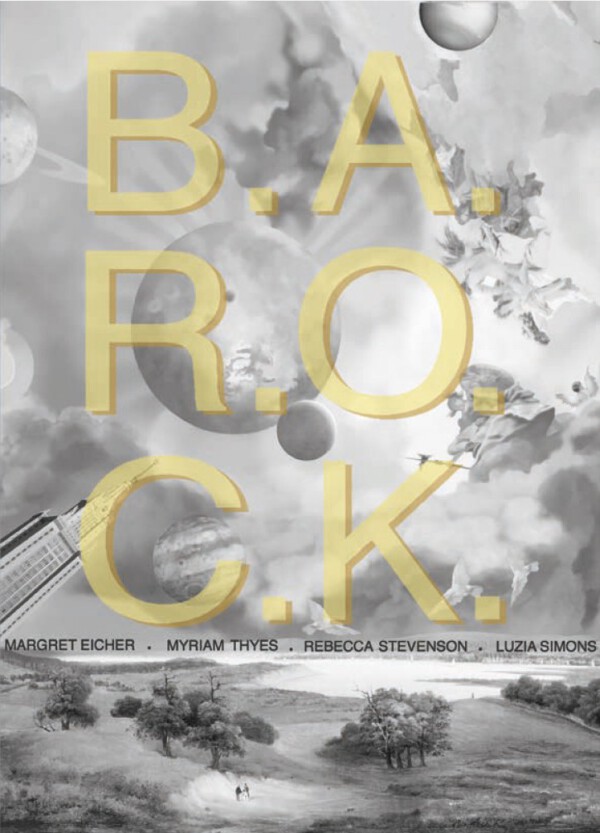
24,80€ Add to cartArtistic Interventions in the Caputh Palace. Contemporary Parallels to the Baroque Era
Four international women artists spent more than three years studying Caputh Palace near Potsdam and creating works specifically for this magnificent location. The tapestries by Margret Eicher (b. 1955, Viersen; lives and works in Berlin), the floral scans by Luzia Simons (b. 1953, Quixadá, Brazil; lives and works in Berlin), the wax sculptures by Rebecca Stevenson (b. 1971; lives and works in London), and the ceiling painting projections by Myriam Thyes (b. 1963, Luxembourg; lives and works in Düsseldorf) blend into the surrounding space both naturally and surprisingly. With twelve double-page collages, the large-sized catalog is an artistic commentary on the ambitious project.
-
Yes To All
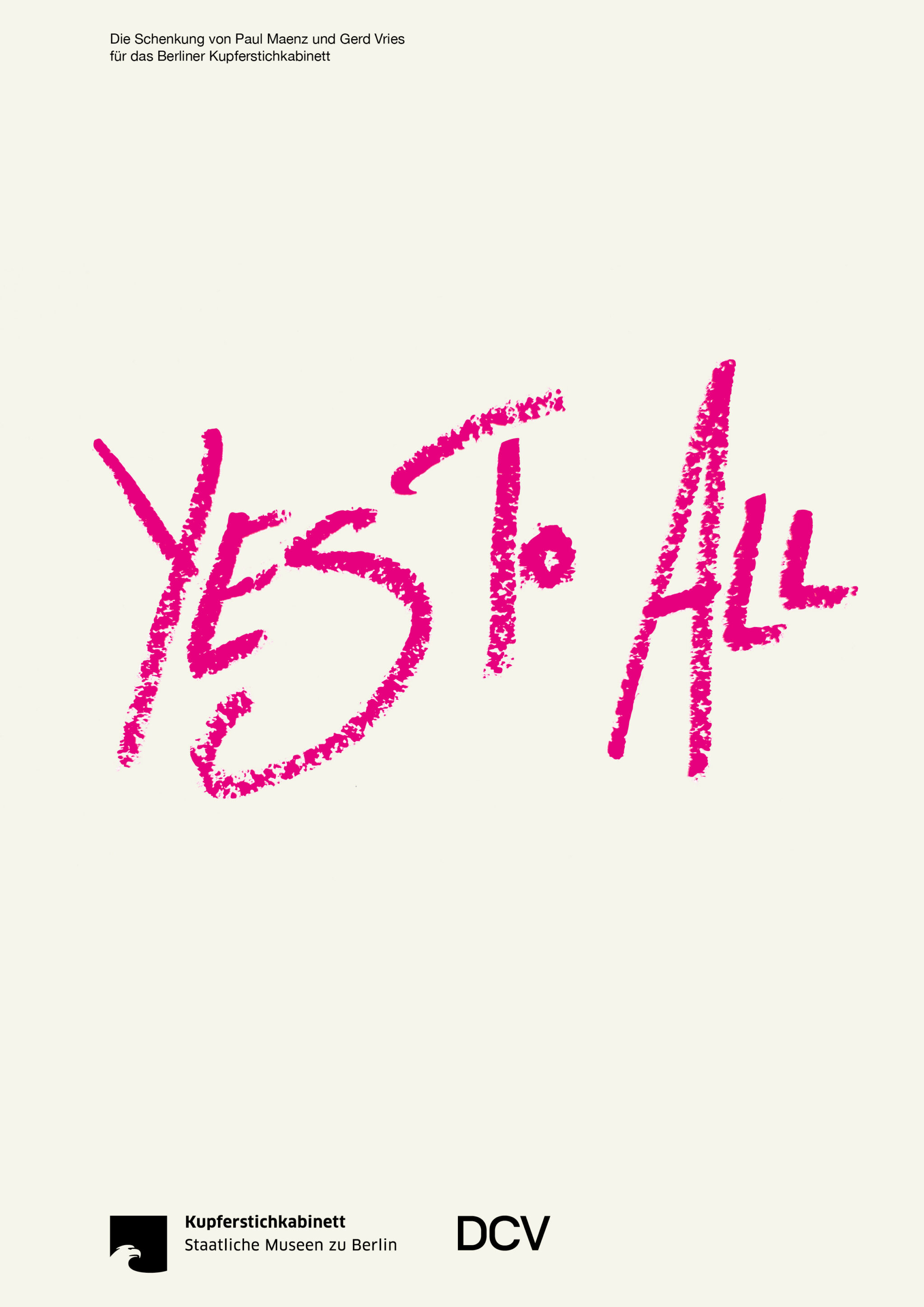
Die Schenkung Paul Maenz Gerd Vries42€ Add to cartThe catalog accompanying the exhibition YES TO ALL offers profound insight into a collection of over nine hundred works on paper—from postcards and drawings to photographs and posters—that was gifted to the Kupferstichkabinett in 2022, with subsequent additions over the years until 2025. The donors are Paul Maenz and Gerd de Vries, who ran a gallery for contemporary art in Cologne until 1990 and chaperoned the evolution of avant-garde art from the conceptualism of the late 1960s to the neo-expressive painting of the 1980s. The most recent works in the collection date from 2024. Several essays and a conversation with the donors invite the reader to experience the stylistic and thematic polyphony of Western art in the late twentieth and early twenty-first centuries in new ways.
EXHIBITION:
YES TO ALL. THE GIFTS OF PAUL MAENZ GERD DE VRIES TO THE KUPFERSTICHKABINETT
KUPFERSTICHKABINETT, STAATLICHE MUSEEN ZU BERLIN
UNTIL JANUARY 11, 2026 -

Larissa Kikol
SIGNED. Unterwegs mit der 1UP-Crew und Moses & Taps18€ Add to cartWho owns the city? It is a question to which graffiti artists and politicians have very different answers. 1UP and Moses & Taps are international stars of the scene, realizing radical creative concepts in spectacular actions. The art critic Larissa Kikol shadowed them on their nocturnal forays for three years and gathered her experiences in a book that has become a singular tribute to the graffiti scene. It lets us witness the genesis of the artists’ works on the knife’s edge between civil disobedience, criminal liability, and an irrepressible freedom. Traveling throughout Germany, Kikol records absorbing dialogues that reflect the contrast between different worlds: the legal and the illegal art worlds, painting and protest. Always on the hop and in danger of being discovered and arrested, she ventures beyond the bounds of permissible art, into subway tunnels, up on roofs, across switchyards. A portrait emerges of Germany and Berlin and the power relations that shape our society.
Larissa Kikol (b. 1986) works as a freelance art critic, art scholar, and writer. She writes for Die Zeit, Spiegel Online, Art, Kunstzeitung, Mare, Monopol Online, and Kunstforum International. In 2016, she won C/O Berlin’s international Talents award in the art criticism category. She teaches and lectures at art schools and universities in Germany and France.
Kikol studied stage design and dramaturgy in Berlin-Weißensee and obtained a Ph.D. in art studies from the Karlsruhe University of Arts and Design. She lives and works in Marseille and Cologne.
-
Wyatt Kahn
Paintings and Sculptures36€ Add to cartWyatt Kahn’s (b. New York, 1983; lives and works in New York) work hovers between two and three dimensions, reviving aspects of American 1960s Minimal Art. In the tradition of minimalist abstraction, his multipart paintings seem devoid of content, but their construction is a sophisticated choreography of geometric shapes. Instead of delineating them on the canvas itself, he transforms them into physical elements composed of canvas stretched over strips of wood that he mounts on the wall as reliefs, making the latter an integral part of the composition. Working on the interface between painting and sculpture, the artist also references Ellsworth Kelly’s single and multiple shaped canvases.
Wyatt Kahn’s works are held by major collections including the Metropolitan Museum of Art, New York; the Museum of Modern Art, New York; the Whitney Museum of American Art, New York; the Centre Pompidou, Paris; the Museum of Contemporary Art, Los Angeles; the Dallas Museum of Art; the Museum of Contemporary Art, Chicago; and the Albright-Knox Art Gallery, Buffalo.
-

Roland Schappert
Coronasehnsucht14€ Add to cartThe coronavirus pandemic hit us in a time of disparate foci of attention. A fundamental lack of comprehension and hate speech contrast sharply with an unspoken consonance of ideas as well as feelings. What do reality, statistics, love, and yearnings do to us? They are playing a game with reality, sans fiction. Relationships sustain our lives. What was unmistakable before is now manifest, with stark certainty. Are we ready for loving dissension? Can we bear to think only as far ahead as we can see? How do our emotions answer these questions, and how does our intellect? The Cologne visual artist and writer Roland Schappert retraces his personal voyage through this sun-kissed rain-drenched time. The book is a diary-like tour de force of digital amorous overtures, an attempt to explain the world of art via WhatsApp, and the real challenges of life as a single artist in a major German city in precarious circumstances.
-

Jan Muche
Agora42€ Add to cartTracing the Wear of the Life of Labor
The visual art of Jan Muche (b. 1975, Herford; lives and works in Berlin) revolves around forms that bring to mind structural steelwork, giant industrial installation components, or scaffolding. His constructivist-abstract paintings and sculptures look back on steel as a symbol of industrialization and the working class, which featured in unflappably cheerful and adulatory depictions that were characteristic of the twentieth century’s ideologies – Communism, Stalinism, National Socialism, actually existing Socialism. Muche’s roughhewn aesthetic combines proletarian charm with the spirit of onward and upward, taking the beholder to regions not untinged by dissonance. This book, supported by the Leinemann-Stiftung für Bildung und Kunst, brings his reflections on the significance of work and the impact of digital technology on physical toil as well as his engagement with yesteryear’s “heroes of labor” into focus.
Jan Muche trained as lithographer and studied with Karl Horst Hödicke at the Hochschule der Künste Berlin.
-

Museum Brot und Kunst
Forum Welternährung24€ Add to cartFood, Art, and Consumption
The craving for food and the desire to avoid being hungry have been among humanity’s central concerns for millennia. Economic activity, science, politics, culture—our basic need for sustenance informs and influences every domain of our lives. The catalogue accompanying the permanent exhibition at the Museum Brot und Kunst—Forum Welternährung sheds light on nineteen thematic foci around the significance of bread as the quintessential food. Founded in 1955, the Museum of Bread and Art was the first institution of its kind in the world dedicated to this subject; its collection comprises a large number of artifacts from across several centuries that speak to the histories of culture, society, and technology. The generously illustrated publication presents a panorama of the wide field of human nourishment in dialogue with art, helping the reader grasp the complexities of the world in which we live.
With works by Ernst Barlach, Bernhard Johannes Blume, Pieter Brueghel, Marc Chagall, Salvador Dalí, Simone Demandt, Agnes Denes, Frans Francken, Georg Flegel, Erich Heckel, Christian Jankowski, Markus Lüpertz, Gerhard Marcks, Max Pechstein, Pablo Picasso, Claire Pentecost, Thomas Rentmeister, Daniel Spoerri, Andy Warhol and others.
The book was included in the shortlist of the competition “Schönste Deutsche Bücher 2021”.
-

Stephen Buckley
Close Cousins. Paintings48€ Add to cartThe Artist’s First Publication in more than Thirty Years
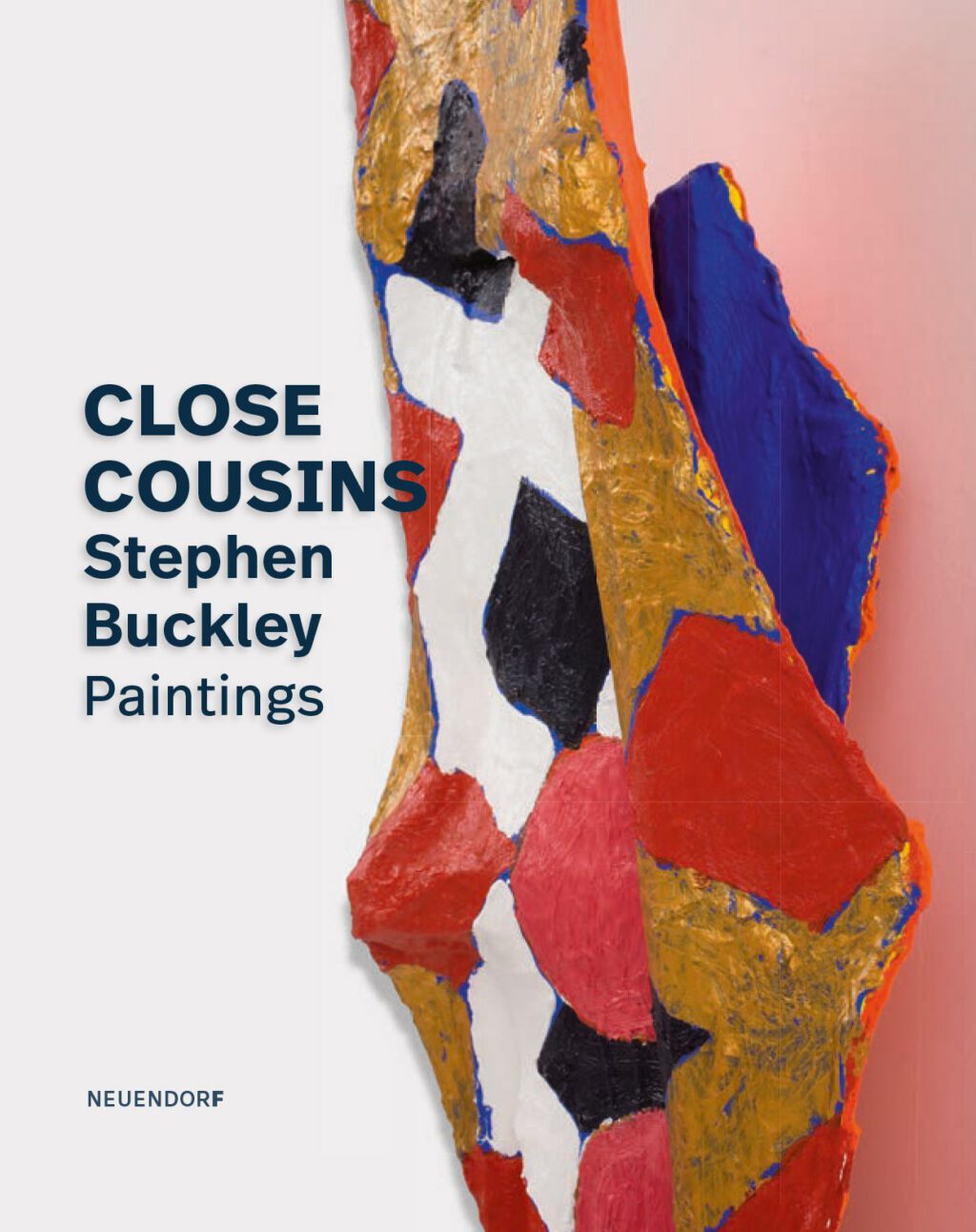
For more than forty years Stephen Buckley (b. 1944, Leicester) has concerned himself with addressing the major themes of the twentieth century through a personal style oscillating between the matière of Kurt Schwitters, the dandyism of Francis Picabia and the intellectual rigour of Marcel Duchamp. He takes the two most basic components of a conventional painting (canvas and stretcher), and makes multi-dimensional constructions, joins groups of single canvases together in overlapping structures, makes shaped canvases, cuts a stretcher with a variegated edge, stitches and weaves together strips of canvas, patches pieces of canvas onto another support, and adds cardboard tubing, rope, found objects and cut out shapes. In the 1970’s and 1980’s, Buckley saw extended prominence in the art press, starting with the artist being described as “the Punk Rock of contemporary painting” and ending with him gaining the title of “the ubiquitous Stephen Buckley”. There is now a large portfolio of themes, references, motifs and symbols which are continually reworked and reinvented. Since then, he has made some of his most compelling paintings, lush pop canvases full of symbols and colour, a far cry from the pared-down, industrial feel of some of his early works.
-
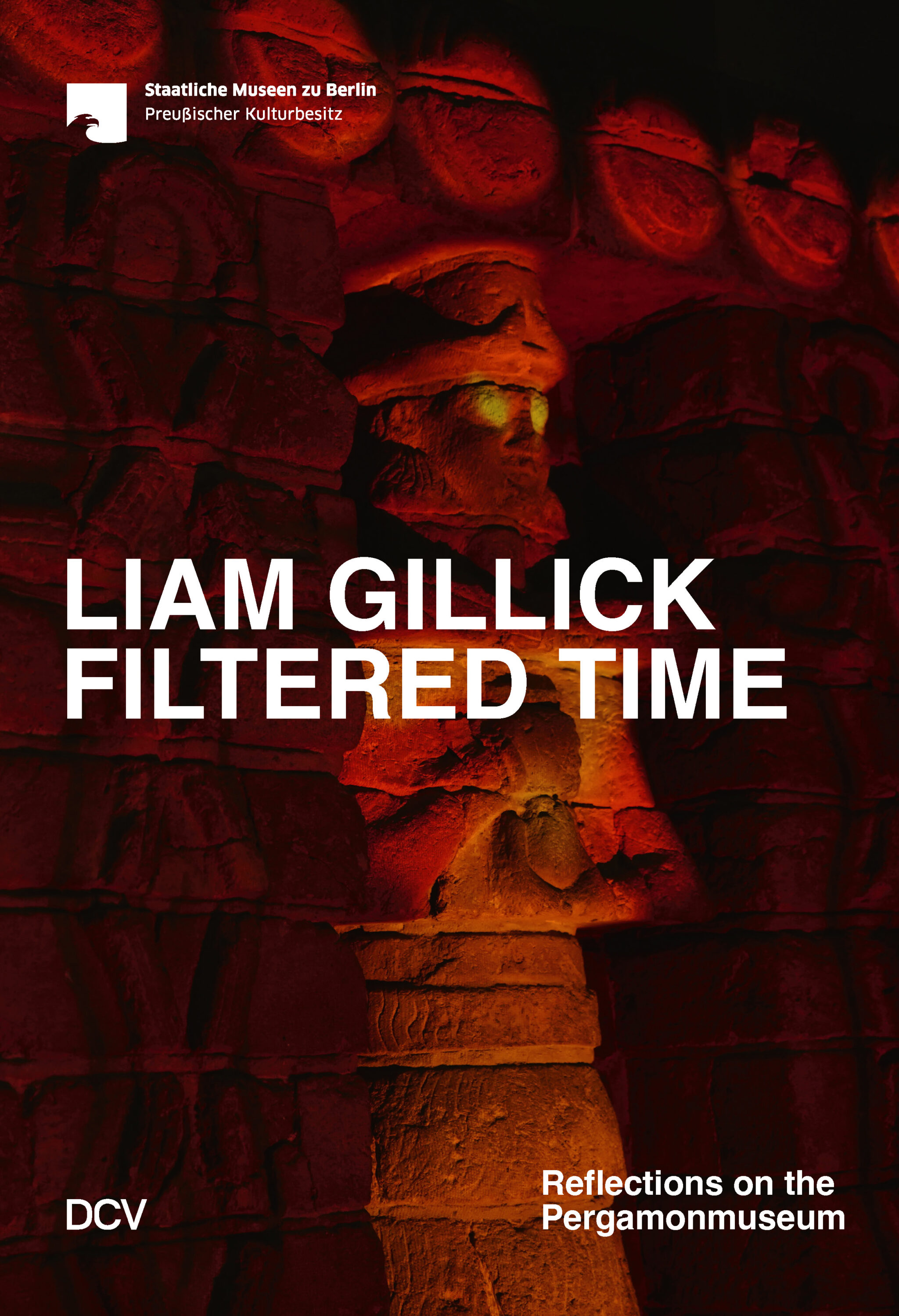
Liam Gillick
Filtered Time (ENGLISH)28€ Add to cartThe sculptor and object artist Liam Gillick (b. Aylesbury, UK, 1964; lives and works in New York) has created an intervention titled Filtered Time for the historic galleries of the Pergamon Museum in Berlin. Projections of light and color and acoustic effects condense six thousand years of cultural history into an immersive spatial experience. Gillick initiates a conversation between the iconic Processional Way and the Ishtar Gate from Babylon, the monumental sculptures of Tell Halaf, and other exhibits, engendering new layers of meaning across all historical periods. The first joint project of the Vorderasiatisches Museum and the Hamburger Bahnhof—Nationalgalerie der Gegenwart makes for a singular visual and sensory experience. Designed by the artist himself, the publication not only documents the richly colorful production, but also provides insight into the eventful history of the museum, which is approaching its centennial.
Liam Gillick studied at the Hertfordshire College of Art in 1983–1984 and at Goldsmiths, University of London from 1984 until 1987. Gillick is a prolific published writer as well, producing essays, reviews, fiction, and theatrical scenarios.
- Release May 2026

Simone Haack
NEW MAGICAL REALISM44€ Add to cartTalking about magical realism today, we typically think of the literary genre. Yet when Franz Roh coined the term, he was referring to a tendency in German visual art in the years before the rise of fascism. What marked a major departure from Expressionism and abstraction has seen a renaissance in the New Magical Realism pioneered by Simone Haack since the turn of the millennium, now framed by a comparable geopolitical situation. The influence of Giorgio de Chirico and his pittura metafisica is unmistakable in Haack, as are those of the New Objectivity, Kafkaesque painting, and the metaphysical dimension of Surrealism. One of the most eminent artists of our time.
-

Freeters
HELP! Artistic Intelligence38€ Add to cartFREETERS stands for an artist collective that designs, creates, transforms and plays with spaces, for and with the people who experience their time there. The artistic intelligence used in the process transforms into spaces for thinking, working, living, playing and learning, creating identity, emotion and inspiration.
This book is about the mediation of artistic thinking and artistic action in processes. The artistic practice of Freeters is characterized by strategies of thought and action that are needed in a society with constantly changing conditions, in a working world that overturns itself in its dynamics. The necessity of shaping the present through artistic thought and action can no longer be limited to the art context.
FREETERS’ AI approach should be understood less as a scientific methodology and more as a call not to reduce our intelligence to only rational thought processes with a utility maxim. Of course, AI has already made impressive progress in many areas of our public services via the hard components of machine learning. However, it is doubtful whether this approach alone can really give rise to a superintelligence that will one day create a resource-saving paradise on earth. Nor is it guaranteed that we as Homo Sapiens will be assigned a place in this paradise by such a unilaterally gifted superintelligence. Cognitively, this machine will be superior to us in any case – only the necessary feeling of happiness of a consensual coexistence does not seem quite conceivable.
-
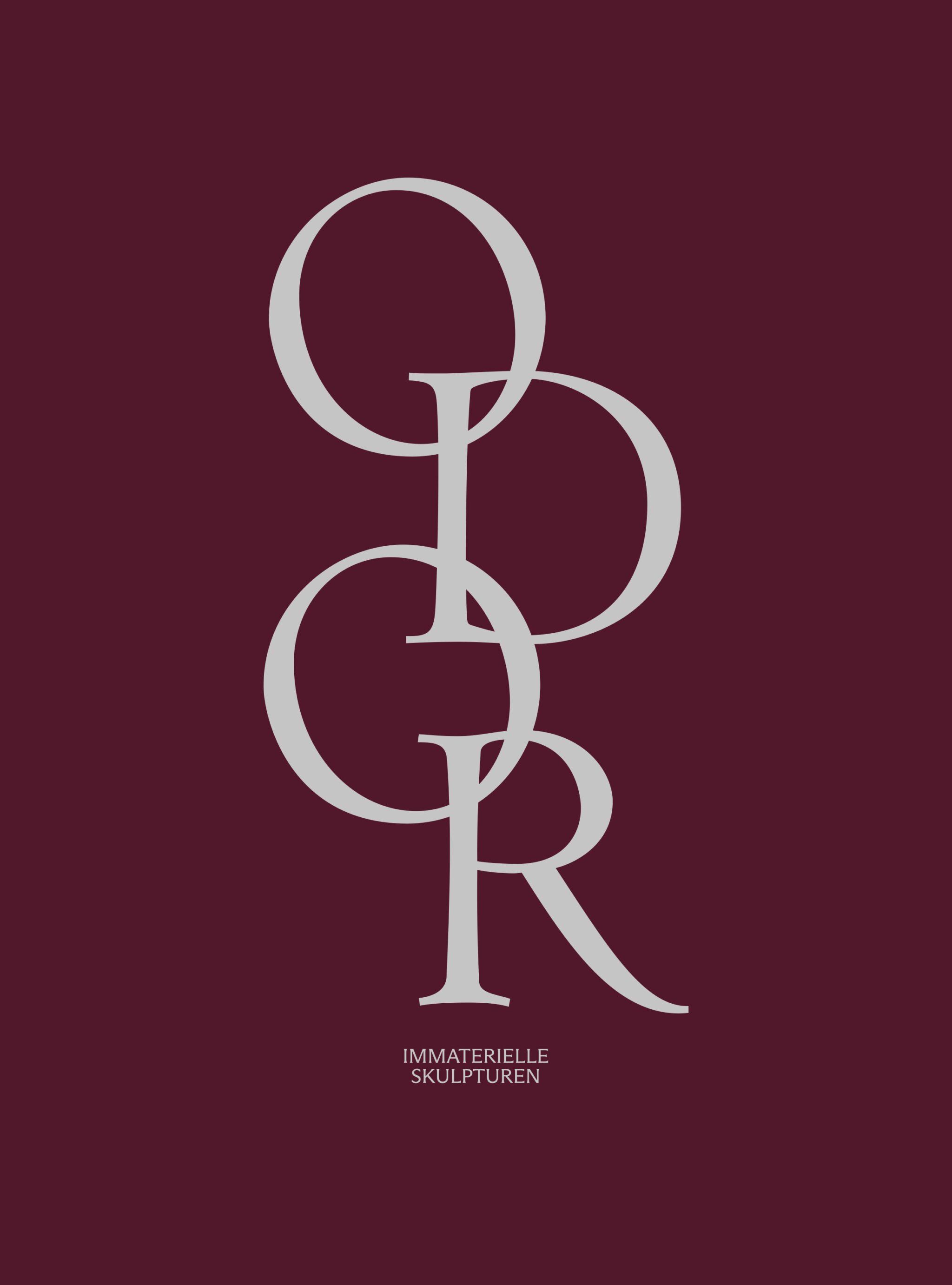
ODOR
Immaterial Sculptures40€ Add to cartThe effect of odor is immediate. Smells arouse feelings in us, put us in moods, awaken recollections. They color the other senses and shape our perceptions more profoundly than we are aware. Scents create closeness and distance at the same time. They become imprinted on our memories and consolidate our experiences. And yet their existence in the world of three dimensions remains invisible, and the act of picking up a scent is fleeting.
The publication Odor—Immaterial Sculptures zooms in on the power of smells. Contributions from curators, artists, scientists, and scholars frame a variety of perspectives on this evanescent phenomenon, examining the olfactory sense and the qualities of the immaterial. Full-page plates conceived by the artists provide additional information, imagery, and contexts around the individual works, which put odor as an olfactory and spatial experience at the center of the engagement with art. The works operate between the poles of time and space, individual and community, consciousness and the subconscious, visibility and invisibility, the everyday and the miraculous, the sense of self and the perceptions of others, presence and absence, life and death.
Artists : Jason Dodge, Carsten Höller, Koo Jeong A, Oswaldo Maciá, Teresa Margolles, Pamela Rosenkranz, Sissel Tolaas, Clara Ursitti, Luca Vitone
-

Barthélémy Toguo
10€ Add to cartBarthélémy Toguo’s art is a call for community and love, but there is nothing naïve about it. His paintings, graphic art, sculptures, performances, and installations explicitly grapple with colonialism, migration, and inequality; he directs our attention to the devastations wrought by humans, to the slow deaths of nature and cultures. But he does not dwell in this abyss. He aspires to something greater: to create work that establishes non-hierarchical connections; to build, as he puts it, a “world of solidarity and generosity” that knows neither ego nor identity, a community of all forms of life that flourish and pass away so that new living beings can sprout from their remains—Endless Blossoms. His choice of words and the aesthetic of the works gathered in this catalogue suggest that he is not alone in this undertaking. He stands with Ellen Gallagher, Wangechi Mutu, Louise Bourgeois, Marlene Dumas, and Kiki Smith. With them and with all of us, Toguo envisions a colorful future, a universe of exuberant energy and joie de vivre.
-

Slawomir Elsner
Precision and Chance38€ Add to cartComplex Processes of Abstraction
International audiences know Sławomir Elsner (b. Wodzisław Śląski, Poland, 1976; lives and works in Berlin) for his naturalistic paintings and abstract watercolors, but it was his brilliantly executed colorful drawings that made him famous. The technique of his work in crayons is as formidable as it is singular and underlies his many adaptations of legendary works from the history of painting that seem blurry but are actually drawn in accurate lines.
More generally, Elsner’s art probes the effect of different media and the stories they tell. He interrogates the images they transport and challenges the consumers to subject their own visual experiences to a similar critical review. Do pictures represent reality or distort it? That is the question that guides his inquiries.
Elsner works almost exclusively in series. What makes this book special is that it includes an index in which eleven of these bodies of work are reproduced in their entirety. The Old Masters series alone comprises 143 works made in the years after 2014. It is complemented by the series Windows on the World (2008–2010), Feuerwerk- und Luftabwehr (2004), Unsere Sonnen (2004–2005), the watercolors of Tagstücke and Nachtstücke (2014–2021), and others.
Many of the works frame accidents, disasters, wars, nuclear tests, or other horrible events. By harnessing the means of art to detach their depiction from a documentary setting, Sławomir Elsner achieves an unrivaled degree of aestheticization; his works are fascinating at first glance, only to fill the beholder with a creeping dread.