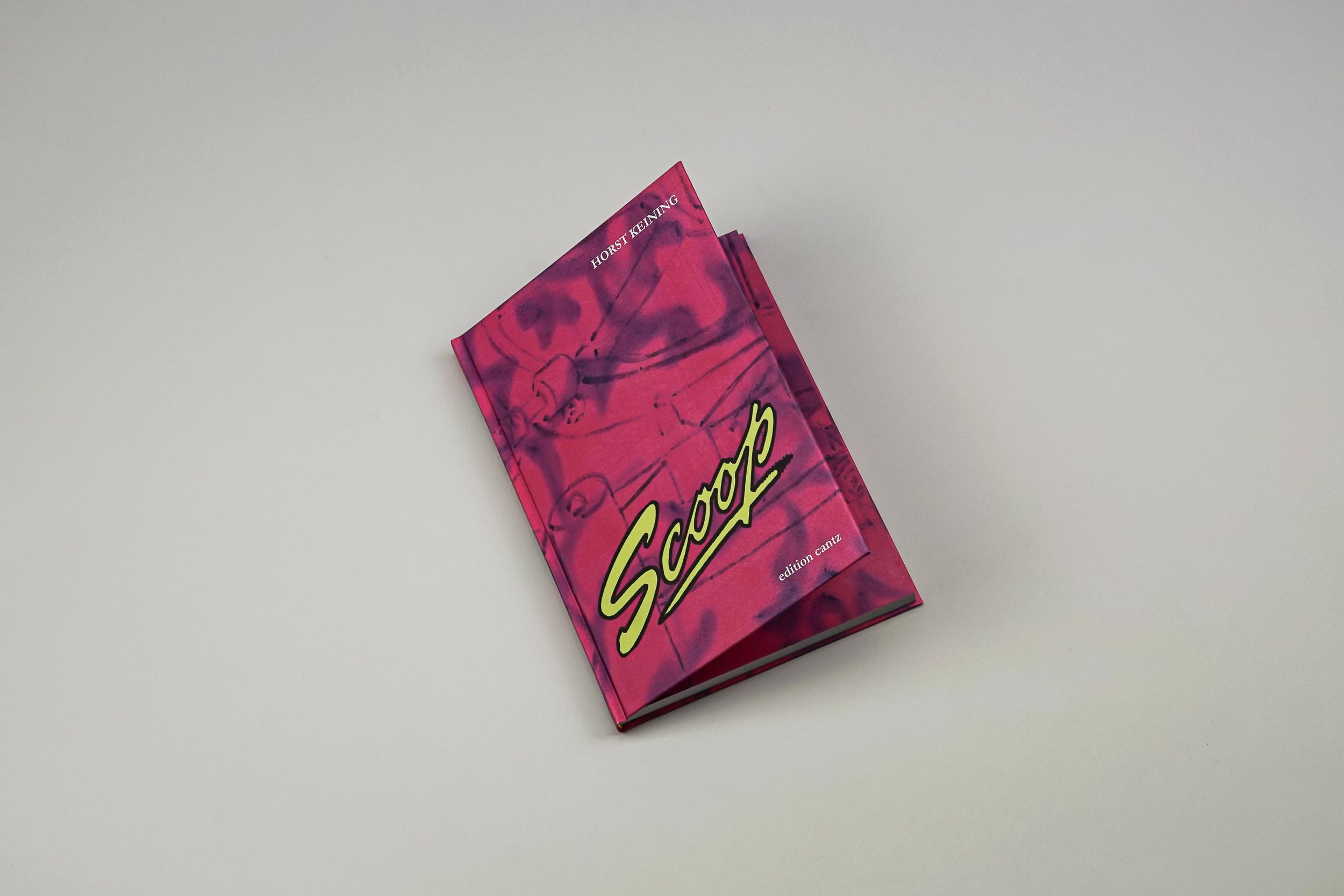
Horst Keinig
Scoop
 | |
|---|---|
| Editor(s) | Stephan Berg |
| Author(s) | Alexandra König, Dirk Steimann, Harald Kunde, Stephan Berg |
| Design | Andreas Wünkhaus |
| Size | 16,5 x 23 cm |
| Pages | 128 |
| Illustrations | 80 |
| Cover | Hardcover |
| Language(s) | German |
| ISBN | 978-3-947563-29-6 |
An Artist Book Setting New Visual Processes in Motion
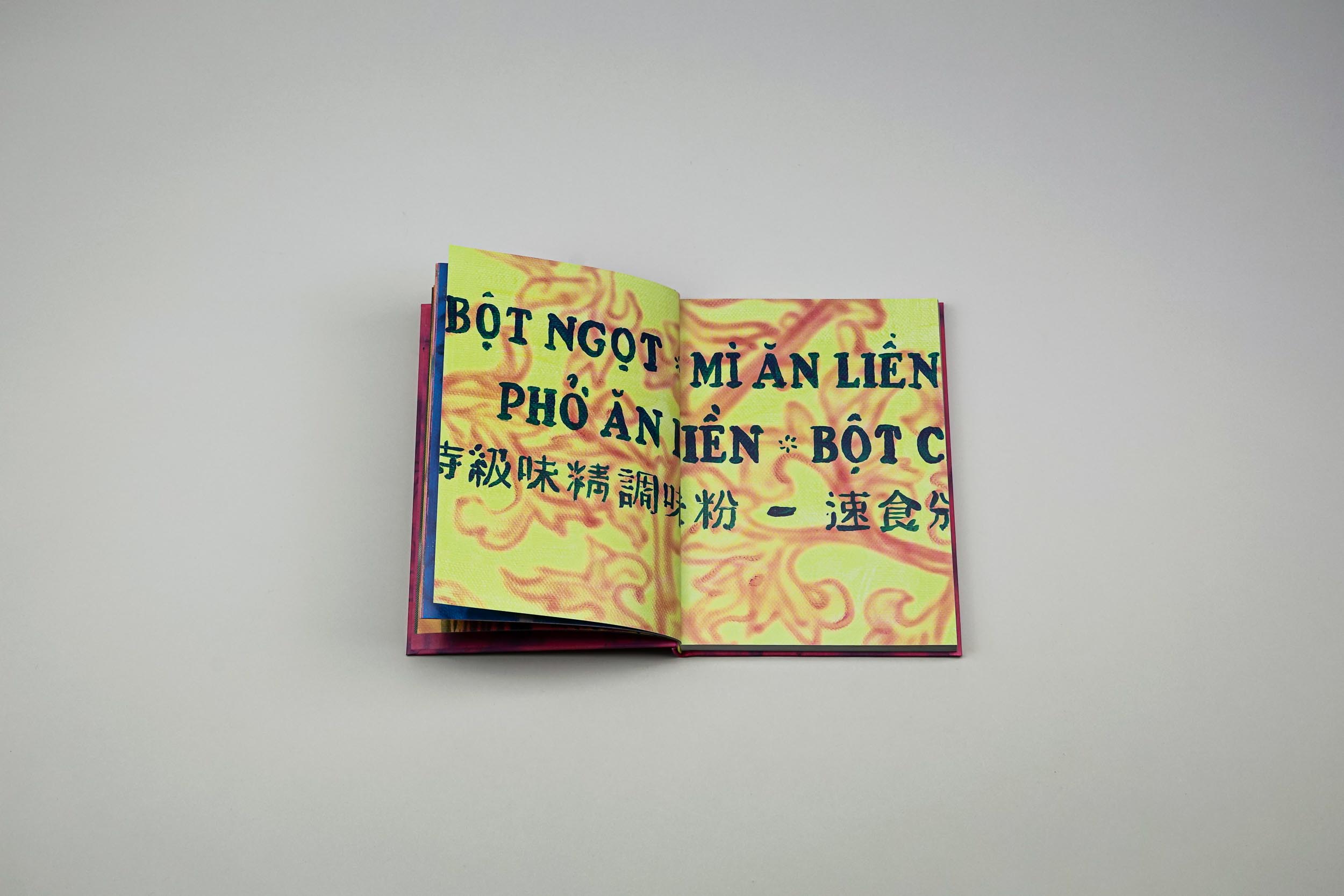
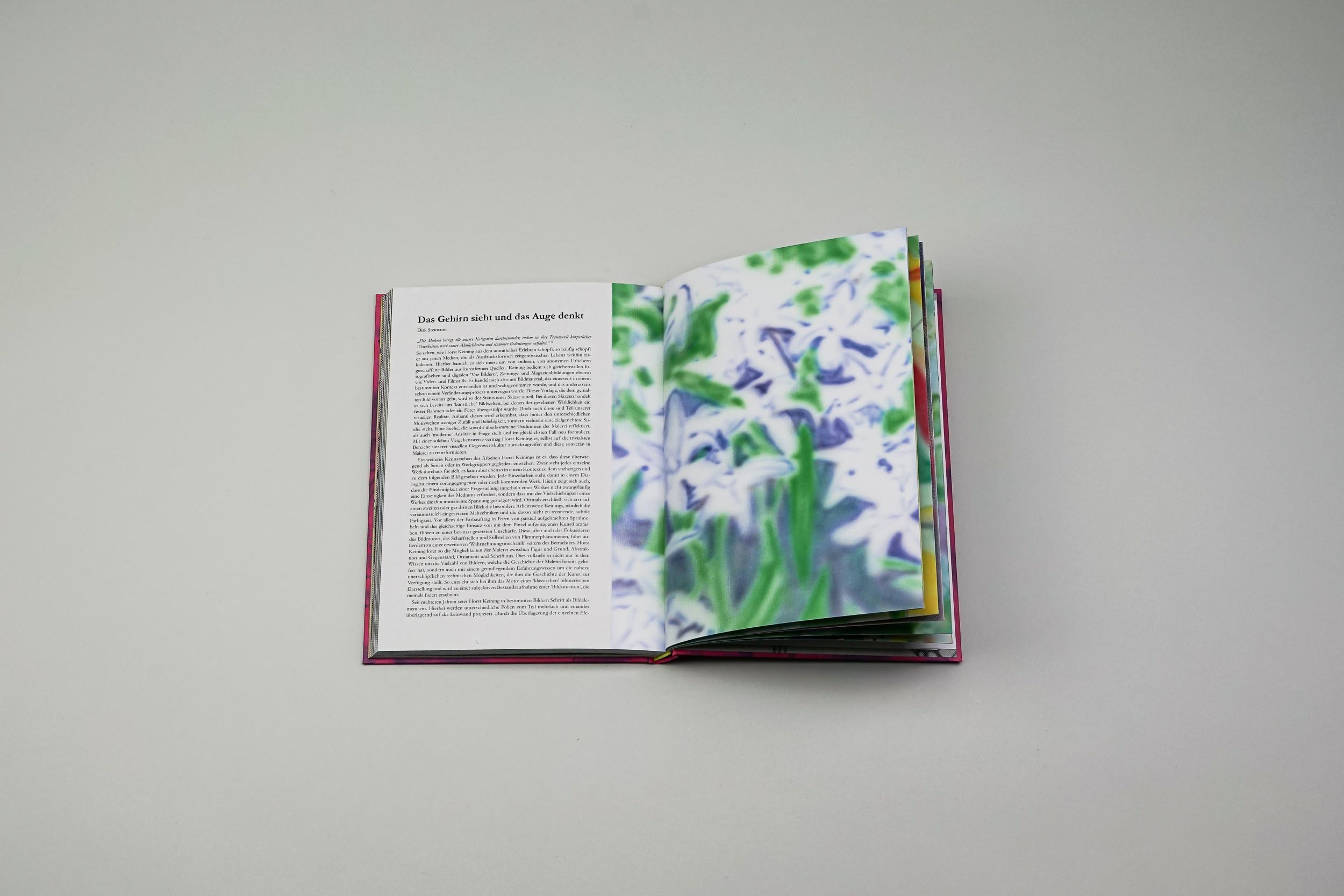
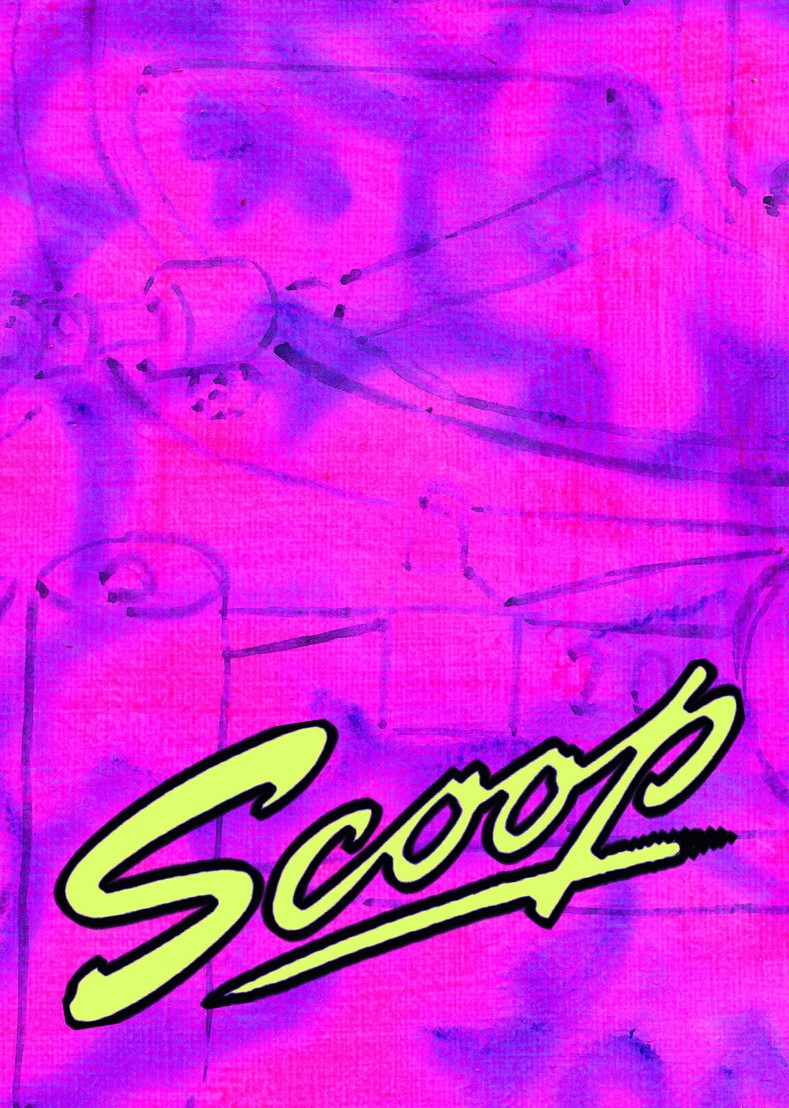
Around the year 2009, Horst Keining (b. 1949, Hattingen; lives and works in Düsseldorf) began to create blurred contours with the help of a small spray gun used without stencil. Up to four partially superimposed pictorial planes result in the oscillation and almost three-dimensional pulsation of the pictorial space. In interplay with a contrasting juxtaposition of strongly contoured images, his works convey a completely new visual experience. Since the resulting “blur effect” shrinks due to the reduction, this artist book places an essential accent on the reproduction of image details in their original size, followed by a full image of the picture.
More books
-

Beate Passow
Monkey Business24€ Add to cartDrawing on the Past to Build a Better Future
Beate Passow (b. Stadtoldendorf, Germany, 1945; lives and works in Munich) creates installations, photodocumentaries, and collages that seek to salvage her subjects from oblivion, though as she sees it, her art is an effort to come to terms not so much with the past as with the present. When her compositional inventions touch on painful memories, their objective is not to arrive at new insights. Rather, she aims to uncover visible and verifiable states of affairs and throw them into sharp relief. In her cycle of pictures Monkey Business, the artist unfolds a mysterious fairy-tale world with a political edge. Strange animals and mythical figures populate the large-format black-and-white tableaux, which a closer look reveals to be woven tapestries. The unusual protagonists roam readily identifiable locations: Gibraltar, New York’s Wall Street, Brussels, or the island of Lampedusa. Behind these ostensibly simple facts of geography loom the darker aspects of contemporary European politics: Passow’s work calls for a debate on the systems, economic structures, and political movements that rule the continent.
-

Mihai Olos
42€ Add to cartMihai Olos (b. Ariniș, Romania, 1940; d. Endingen am Kaiserstuhl, 2015) ranks among the most fascinating artists of the second half of the twentieth century. His adaptations of the formal vocabulary pioneered by Constantin Brâncuși are unrivaled in their creative originality. His works evince an utterly novel approach to the combination of materials from the culture of rural Romania with the visual strategies of modernism. His formidable oeuvre engages with conceptual and minimal art and comprises paintings, drawings, and sculptures, sometimes in the dimensions of land-art projects, as well as performances and poetry. Despite the constraints imposed by the communist system, his art and travels—during which he also met his kindred spirit Joseph Beuys—were dedicated to the unerring pursuit of his vision of social sculpture and radical utopian architecture.
-

Andreas Wegner
Wir fahren mit der Schneckenpost, weil die uns keinen Pfennig kost50€ Add to cartThe art of Andreas Wegner is an inquiry into capitalist urbanity. His interventions explore alternative models for urban interaction, trade, city development, traffic, or the use of public space. Inspired by Joseph Beuys’s social sculpture and Charles Fourier’s social utopias, Wegner founded, e.g. a cooperative department store in Berlin, a grocery store in Vienna, and conducted real estate business as a form of creative resistance. This monograph illustrates the artist’s most important projects with ample imagery, essays by renowned authors, interviews, and his own texts. Alongside collective initiatives, installations, photography, film, and sculpture, painting remains a constant in Wegner’s oeuvre to this day.
-

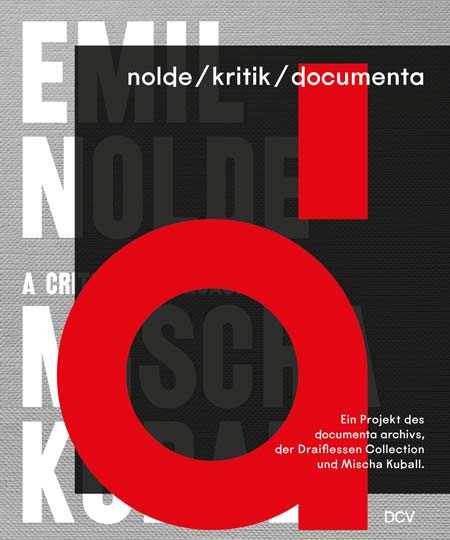
nolde/kritik/documenta (German)
42€ Add to cartEmil Nolde (1867–1956) ranks among the best-known classic modernists. Contemporary perceptions of the artist and his oeuvre are informed by mythmaking as well as its deconstruction. After the Second World War, Nolde himself and art historians of the time portrayed him as a victim of Nazi persecution. More recent critics have drawn attention to his anti-Semitic views and his opportunism in his dealings with the Nazi authorities.
With support from the Nolde Foundation, Seebüll, the Düsseldorf-based conceptual artist Mischa Kuball (b. 1959) delved into the documentary record to shed light on this profoundly ambivalent figure and frame a critical perspective on Emil Nolde’s output and actions. The first fruits of his endeavors were shown at the Draiflessen Collection, Mettingen, in the winter of 2020–2021.
Kuball continued his research at the invitation of the documenta archive, Kassel. Based on his findings, the exhibition project “nolde / kritik / documenta” illuminates the ways in which life and oeuvre are interwoven and inquires into the contradictions of modernism, which Emil Nolde as a man and artist may be said to have embodied. The focus of the new project is on the staging of Nolde’s works at the first three editions of the documenta exhibition series (1955, 1959, 1964), which were instrumental to establishing the “Nolde myth.”
An enlarged and revised edition of the catalogue “nolde / kritik / documenta” is released in conjunction with the exhibition at the Fridericianum, Kassel (December 9, 2022–February 19, 2023).
Mischa Kuball has been professor of public art at the Academy of Media Arts Cologne and associate professor of media art at the Karlsruhe University of Arts and Design/ZKM since 2007.
-
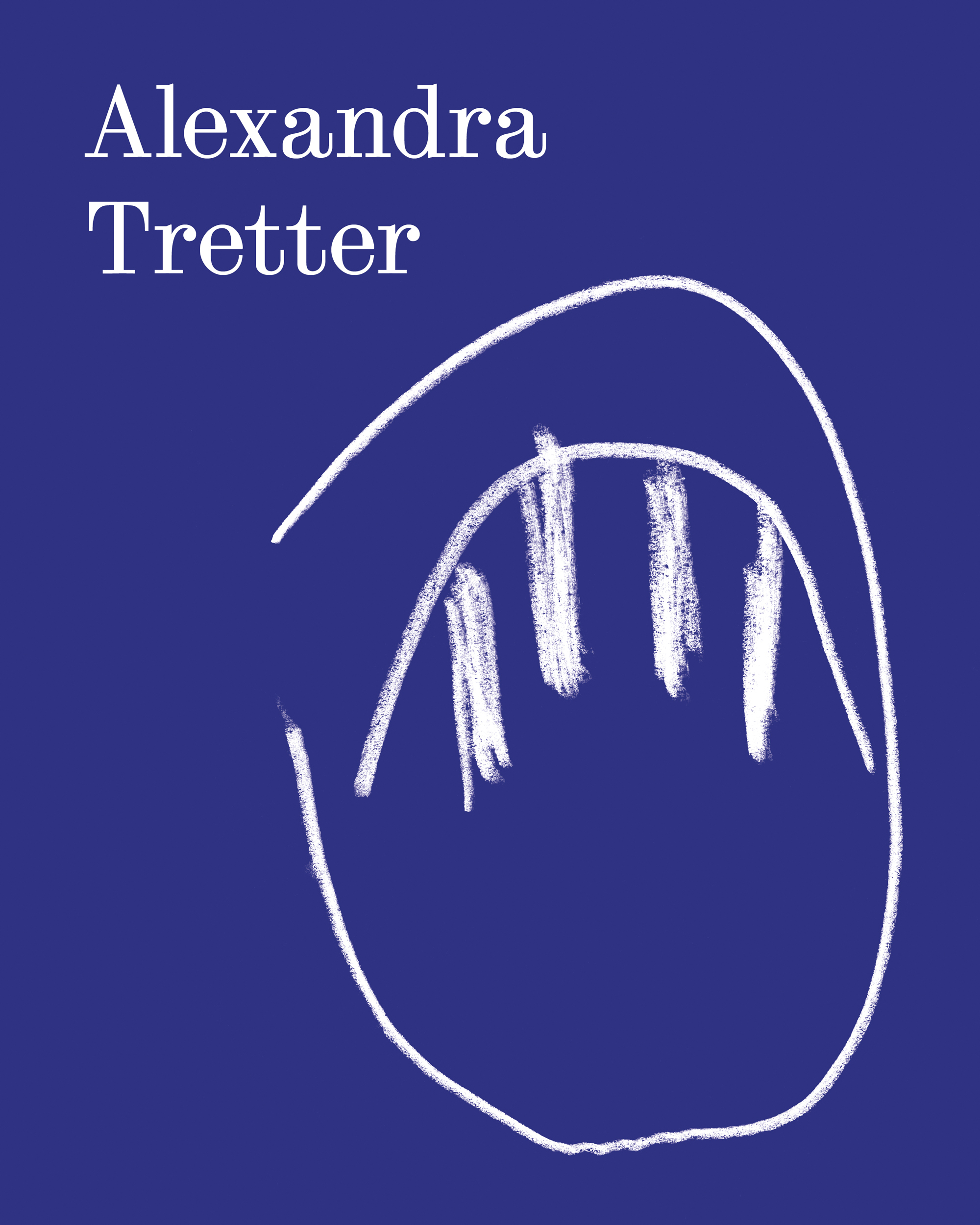
Alexandra Tretter
24€ Add to cartThe art of Alexandra Tretter (*1988) is as deep as it is playful. Owing just as much to the gentle spirituality of Hilma af Klint’s late geometries as it does to Sonia Delaunay’s exuberant disc paintings, almost bursting with sheer chromatic pleasure. Her compassionately designed artist’s book combines monumental paintings with intimate works on paper, all of which are imbued with the contexts of Tretter’s own life as an artist, as a woman, as a mother.
Her kaleidoscopic figurations unfold from a center at rest in itself and multiply in symmetry and asymmetry towards all sides. She contrasts the circular form, the unchanging basic element of her compositions, with the oval, which constantly strives beyond itself, transforming itself in ever-new permutations from one figure into the next, into eyes, mouths, breasts, petals or vulvas.
Her images strive for composure, unfold and blossom, only to let go of all gestalt-like form. Once gained stability is instantly pushed into turmoil. Colors flare up violently or flow delicately about, lighten or shade each other, carry or throw each other off course. Tretter equally realizes materialization and dissolution as basic principles of her painting.
Whereby all, what her images absorb, preserve and release, is experience, growth and slow maturing. Her paintings are “figurations of affection”, in which each individual turns towards something else, doubts or grows, at times turns away or surrenders all the more consciously. They question everything, start anew and yet find their way back to themselves, into their very own.
- temporarily not available

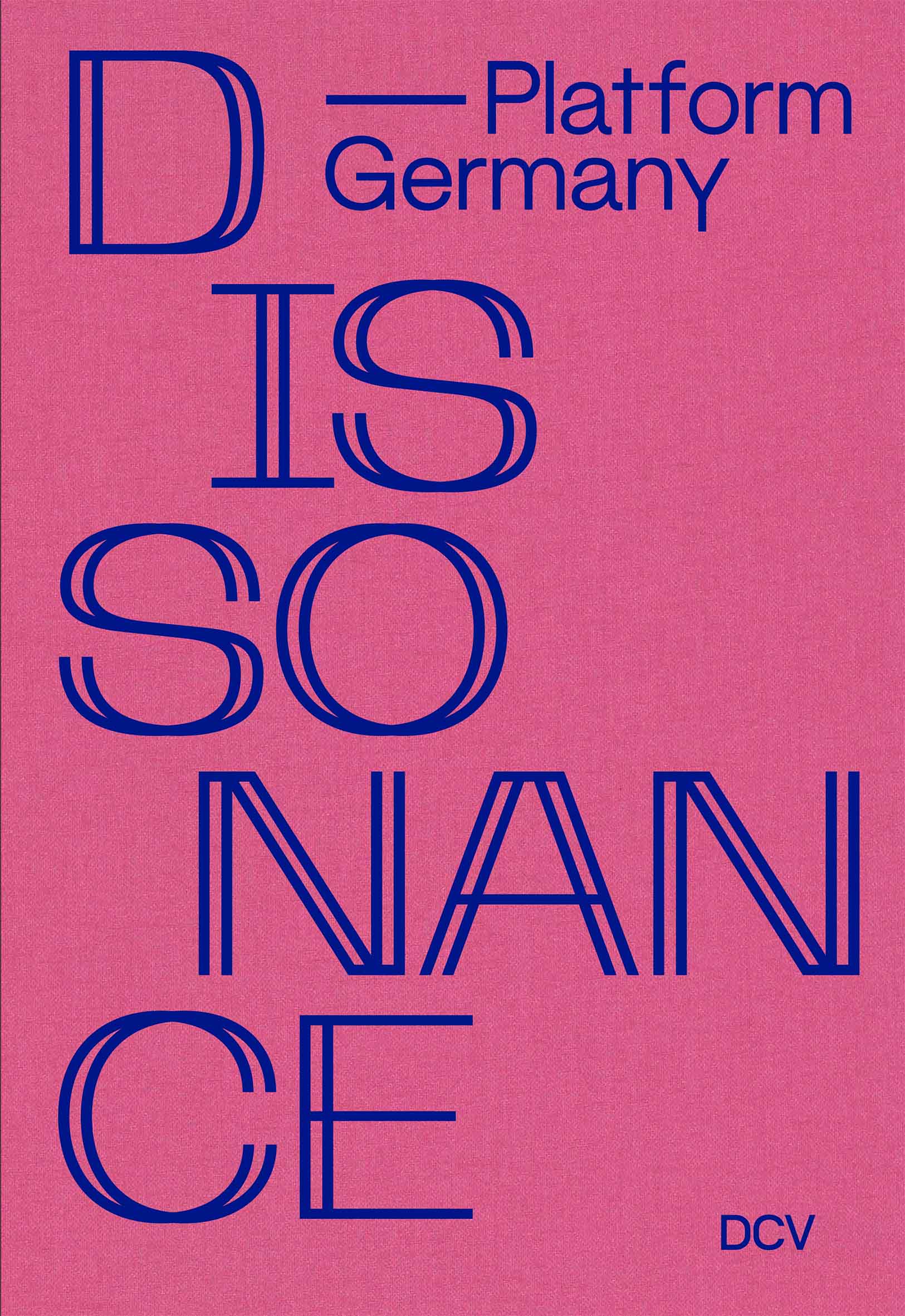
Dissonance
Platform GermanyRead moreA Changed Vision—New Painting from Germany
Post-reunification Germany has emerged as an important forum for international painting. The generation of artists born in the 1970s and 1980s eschew alignment with collective tendencies and resist clearly definable influences. Meanwhile, their art has registered the cultural and sociological dislocations and divergences since the fall of the Iron Curtain with seismographic precision.
The editors of Dissonance – Platform Germany present eighty-one of the most significant painters living and working in Germany in the past two decades. They have the courage of strong opinions, turn the spotlight on unsuspected treasures, and tease out the unexpected value in aesthetically thrilling achievements of programmatic pluralism. A vital survey of one of the most exciting chapters in the more recent history of art in Germany.
Some of the presented artists have graciously agreed to allow DCV to release limited editions of their works, which you can find here.
-

Erich Hörtnagl
Unforgettable – Unforgotten48€ Add to cartHow can a life be remembered—what remains, what vanishes?
In Unforgettable | Unforgotten, Erich Hörtnagl brings together photographic fragments that are more than just memories: they are symbols of lived time. Roland Barthes’ concept of the “punctum” experience—that instant when a detail in an image pierces the heart—provides a key to Hörtnagl’s photographic gaze. It is not the spectacular events but the quiet and incidental things that move us. The seemingly insignificant becomes a projection screen for memory, loss, and emotion. The focus is not on what is staged, but on what eludes creative control.
Accompanied by insightful writings by Alois Schöpf and Kurt Höretzeder, a quiet monologue emerges about happiness and missed opportunities, about what we receive—and what we give. A book that doesn’t provide answers but asks questions: What makes a life worth living? What remains unforgettable or unforgotten?
-

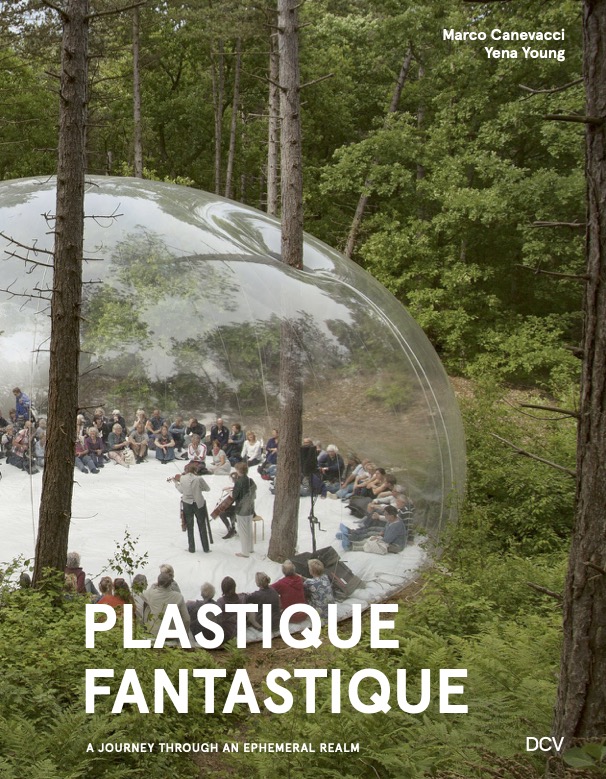
Plastique Fantastique
A Journey through an ephemeral Realm32€ Add to cartIn the wake of Frank Lloyd Wright’s pioneering work, visionary architects including Frei Otto and Buckminster Fuller established bubbles as a recognized artistic and architectonic form. The Berlin-based art duo Plastique Fantastique (Marco Canevacci and Yena Young) go one step further and harness them as a medium of temporary social interactions. The philosopher Vilém Flusser conceived of space in the digital universe as a network of relational settings in which humans can be in multiple places at one, as a “bubble that extends into the future.” Plastique Fantastique transform our urban and rural environments into laboratories for such spaces in which urgent social, political, and aesthetic questions are negotiated. Oversized translucent bubbles, traffic islands ringed by diaphanous tubes, giant lifebelts, air-filled sausages that the audience at a Peaches concert pass over their heads: Plastique Fantastique’s installations fuse art, performance, people, and architecture in a multisensory experience that blurs the conventional boundaries of art and focuses our attention on the larger bubble in which human existence is contained. Richly illustrated with exceptional photographs, this monograph is the first to document a representative selection from the duo’s projects of the past two decades.
-
Julius Hofmann
Western Philosophies35€ Add to cartJulius Hofmann (b. Göttingen, 1983; lives and works near Göttingen) has mastered the traditional aspects of painting and commands a broad repertoire of creative techniques. This expertise enables him to call conventional painting in question by combining it with the aesthetic of 1990s computer graphics. The simple and often grotesque symbolism of the imperfect digital imagery contrasts with a perfectionistic figurative painting. This approach lends his pictures a disconcerting and unexpected quality.
Western Philosophies is an episode in Hofmann’s ongoing work confronting consumerist society with its dark secrets and its indifference. Meanwhile, his creative process is also an exploration of the artist’s personal fears and frustrations. In depicting his figures, landscapes, and machines, he draws our attention to the painterly originality of structures and surfaces. The protagonists, to his mind, play a subordinate role, typically serving him as vehicles—he is more interested in the “how” than in the “what.”
Julius Hofmann studied painting with Neo Rauch and Heribert C. Ottersbach at the Academy of Fine Arts Leipzig (HGB) from 2005 until 2011. His work is represented in international collections and institutions.
-

Marx Collection
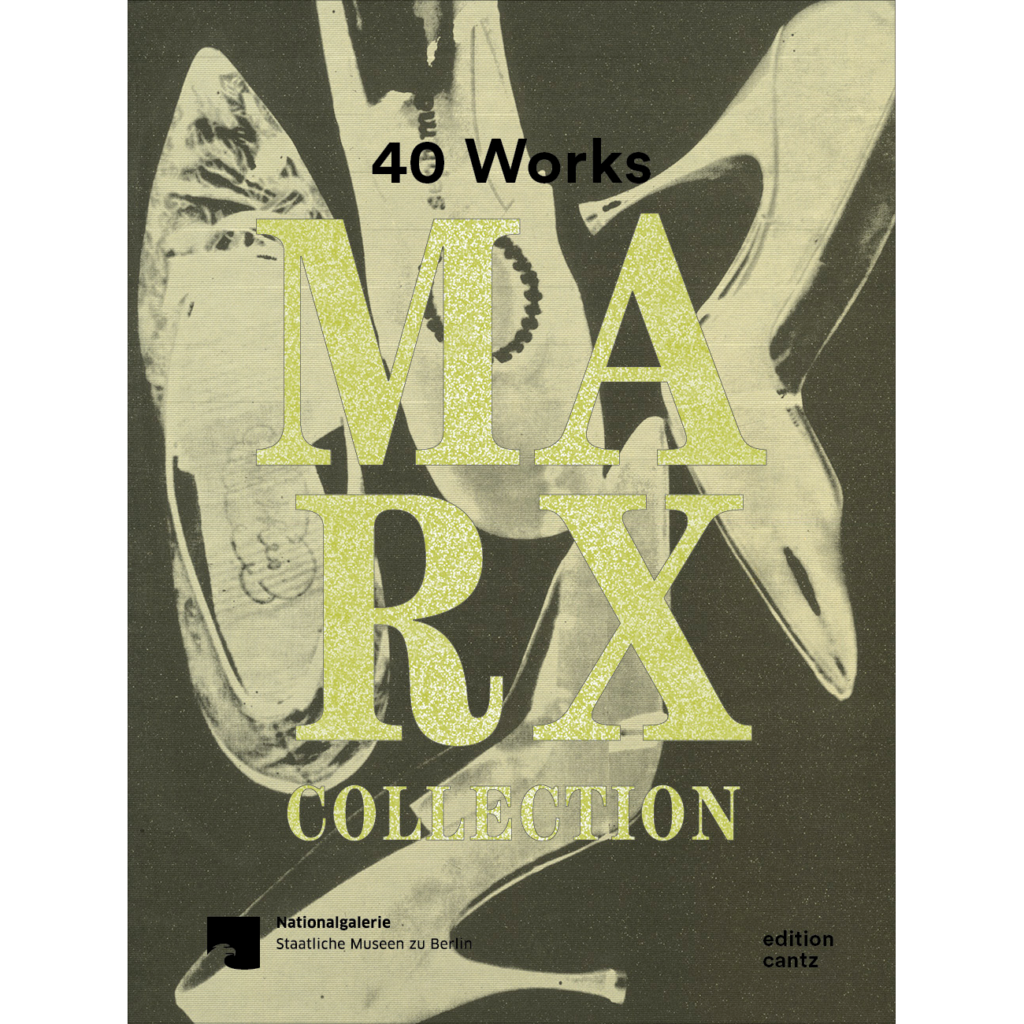
40 Works29€ Add to cartSelected works from one of the most renowned collections of modern and contemporary art in Germany
Marx Collection – 40 Works is the first publication on this collection that focuses on important individual works. The selection ranges from the early 1960s to the present, encompassing one of the most exciting periods in recent art history. An illustrated chronicle provides background information on the historical context of the Marx Collection and its exhibition at the Nationalgalerie in Berlin. With work by Matthew Barney, Georg Baselitz, Joseph Beuys, Ross Bleckner, Francesco Clemente, Martin Disler, Rainer Fetting, Dan Flavin, Günther Förg, Peter Halley, Keith Haring, Candida Höfer, Donald Judd, Anish Kapoor, William Kentridge, Anselm Kiefer, Jeff Koons, Roy Lichtenstein, Richard Long, Gerhard Merz, Robert Rauschenberg, Ugo Rondinone, Thomas Ruff, Julian Schnabel, Cindy Sherman, Thomas Struth, Sam Taylor-Johnson, Cy Twombly, Andy Warhol, Rachel Whiterea
Dies ist die englische Ausgabe, hier geht’s zur deutschen Ausgabe
- Release February 2026
Tim David Trillsam
Willkommen im Panoptikum38€ Add to cartWith his idiosyncratic figurative bronze sculptures Tim David Trillsam (born 1985 in the Swabian Alb) has hit a nerve. The artist’s “self memorials” ask the viewer to remember the transience and illusion of this very self. Although Trillsam employs a loaded material that evokes many great sculptors before him, his own sculptures resist the past. His figures are tangibly protagonist of the present and they provoke with their exaggerated sensuality, twisted bodies, and oversized hands and feet. “The oversizing is programmatic. As is the skeptical approach to the human species. Trillsam proceeds as a thoughtful questioner with doubt yet also irritation,” writes Dorothee Baer-Bogenschütze. Her in-depth art-historical analysis is part of this forthcoming book about Trillsam’s oeuvre since 2012.
-

Gerhard Neumaier
Die Lust an der Macht des Malens zwischen Mythos und Trivialität32€ Add to cartEin Spiel mit den Ambivalenzen
Offenkundig Mythologisches gerät bei Gerhard Neumaier (geb. 1950 in Freiburg, lebt und arbeitet in Baden-Baden) ebenso zur trivialen Episode, wie scheinbar Triviales legendäre Ikonik entfaltet. Dabei bricht sein unvoreingenommener Umgang mit Klassikern wie etwa in der Duchamp-Persiflage „Hokuspokus mit Fokus Lokus“ semantische Vorurteile in den Sehgewohnheiten auf und bietet dem Betrachter neuartige Interpretationen. In der perfomativen Bewegtheit seiner Rakelbilder legt er eine haptische Sinnlichkeit an den Tag, die Cora von Pape in ihrer Einleitung dazu bringt, den Künstler zu zitieren: „Ich male, was ich weiß, damit ich sehe, was ich fühle.“
-

Michael Bielicky
Perpetuum mobile54€ Add to cartContemporary Media Art
The German-Czech artist Michael Bielicky (b. Prague, 1954; lives and works in Karlsruhe) has been an innovator in the fields of photography, video, and web-based installation art for over four decades. In an ongoing dialogue with emerging technological developments, his works probe the history of his media from the deepest strata to the magical mathematical practices of the medieval Cabalists: idiosyncratic hybrids that straddle the boundary between the analog and digital worlds. Operating on the interfaces between real and virtual spaces, his media art prompts a critical reflection on the nature of technology, its material and immaterial significations, and the ways in which it informs our perceptions and actions. The book Perpetuum mobile is the first to offer a comprehensive survey of Bielicky’s rich and diverse oeuvre. The layout, designed by the artist himself, integrates the experimental images into a graphic “stream of consciousness.”
Michael Bielicky moved to Germany in 1969 and initially studied medicine. After an extended stay in New York, he studied at the Düsseldorf Academy of Fine Arts from 1984 until 1990, first with Bernd Becher and then in Nam June Paik’s master class. He was made professor at the Academy of Fine Arts Prague in 1991, then professor of new media at the Karlsruhe University of Arts and Design in 2006. Bielicky participated in numerous major exhibitions, including the São Paulo Biennial (1987); Videonale, Bonn (1988, 1990, 1992); Ars Electronica, Linz (1992, 1994, 1995); and the Havana Biennial (2012).
-

Jakob Ganslmeier
Lovely Planet. Polen / Poland16€ Add to cartAn Unconventional and Humorous Guide to a Country of Contrasts
In 2015, the photographer Jakob Ganslmeier (b. Munich, 1990; lives and works in Berlin) went on an extended tour of Poland in search of shots that captured the country’s social realities and way of life at a time of wrenching changes. The title of his project evokes associations with Lonely Planet, one of the world’s best-selling series of travel guides, and the artist took inspiration from the format of the popular books, where recommendations for readers exploring strange lands are grouped by categories. Crisscrossing Poland—he covered over ten thousand kilometers—Ganslmeier encountered widely different people and draws our attention to places that would never make it into a guidebook. His pictures show a country of extremes, between boomtown optimism and decline, consumerism and poverty, gleaming façades and bleak village streets.
Jakob Ganslmeier studied at the Ostkreuzschule für Fotografie, Berlin, and at the Bielefeld University of Applied Sciences. His pictures, which have garnered numerous awards, are frequently featured in leading German media and have been shown in exhibitions in Germany and abroad, including at the Brandenburgisches Landesmuseum für moderne Kunst, Cottbus, the Nobel Peace Center, Oslo, the Triennale der Photographie Hamburg, and the Fondation Calouste Gulbenkian, Paris.
-

Michael Williams
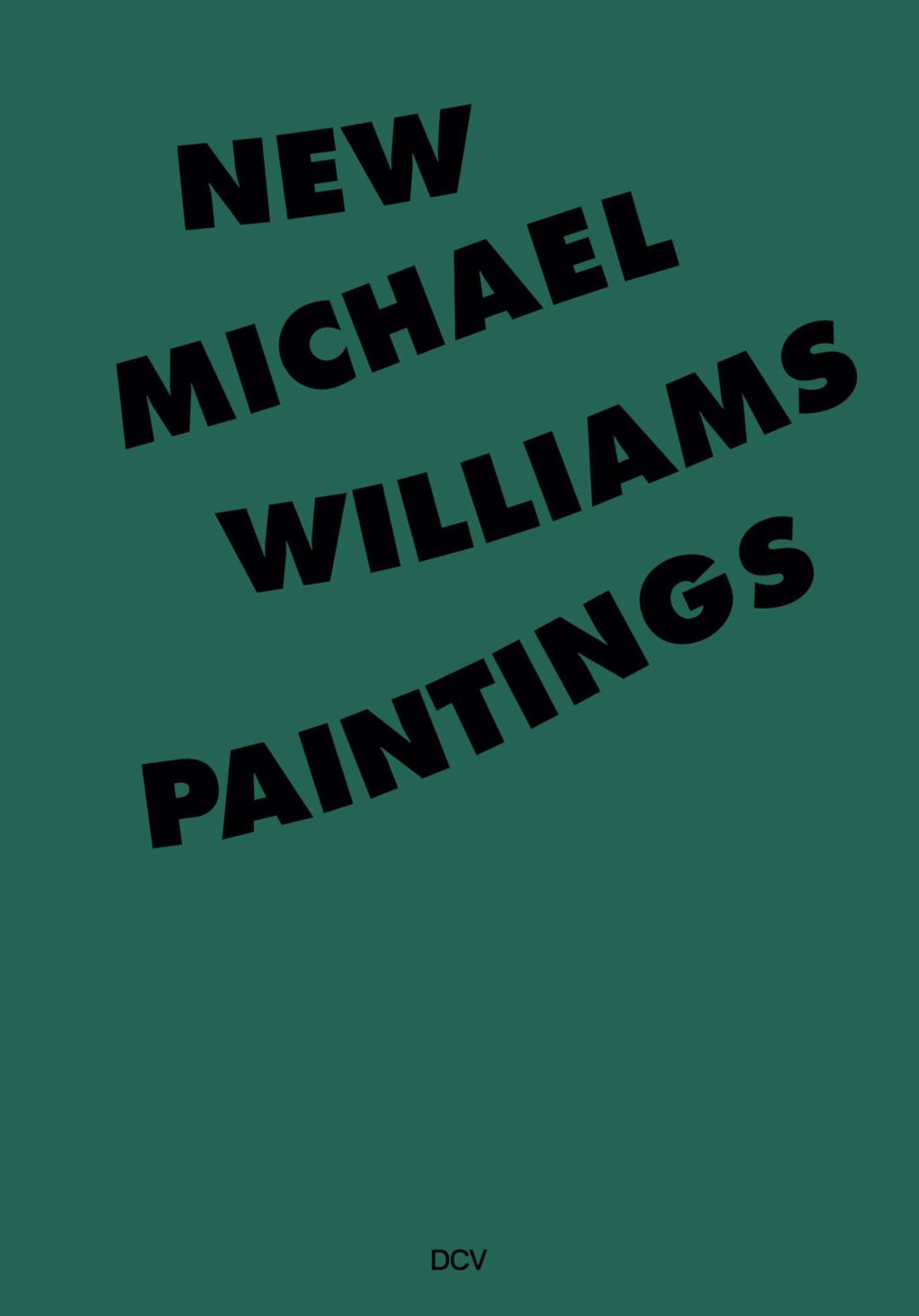
New Paintings40€ Add to cartAwkward Uncertainty
Michael Williams (b. 1978, Doylestown, Pa.; lives and works in Los Angeles) makes work that interrogates the history of painting, often by dismantling its components into their constituent parts. His pictures employ form to reflect on the complexity and contradictions of modern life. He works on canvas, availing himself of a range of techniques including oil painting, collage, and inkjet prints. In his new works, Williams examines the relationship between painting and photography, transferring the chilly aloofness that is characteristic of the latter onto the former. The photographic “negative” yields a smooth canvas disencumbered of its painterly qualities and the medium’s historic ballast. The book includes several foldout plates that illustrate Williams’s creative approach, and a brief essay by his Austrian fellow painter Tobias Pils.
Michael Williams studied fine arts at Washington University, St. Louis, and has exhibited widely, including at the Wiener Secession, Vienna, and the Museum of Modern Art, New York.
-
Michael Williams
Make Plans God Applauds42€ Add to cartMichael Williams (b. Doylestown, Pa., U.S., 1978; lives and works in Los Angeles, Ca.) is known for paintings whose source materials have been subjected to both analog and digital processes in an effort to render the fragmented nature of our existence today. During the lockdown, he created six large-format collage paintings. To make these modern history paintings, he mounted paper printouts on canvases and reworked the pictures with paint. They are, in short, classic collages, as in the exhilarating days of DADA, when the photographic image from newspapers first transmigrated into art. Michael Williams studied fine arts at Washington University, St. Louis, and has exhibited widely, including at the Wiener Secession, Vienna, and the Museum of Modern Art, New York.
-
Matilde Damele
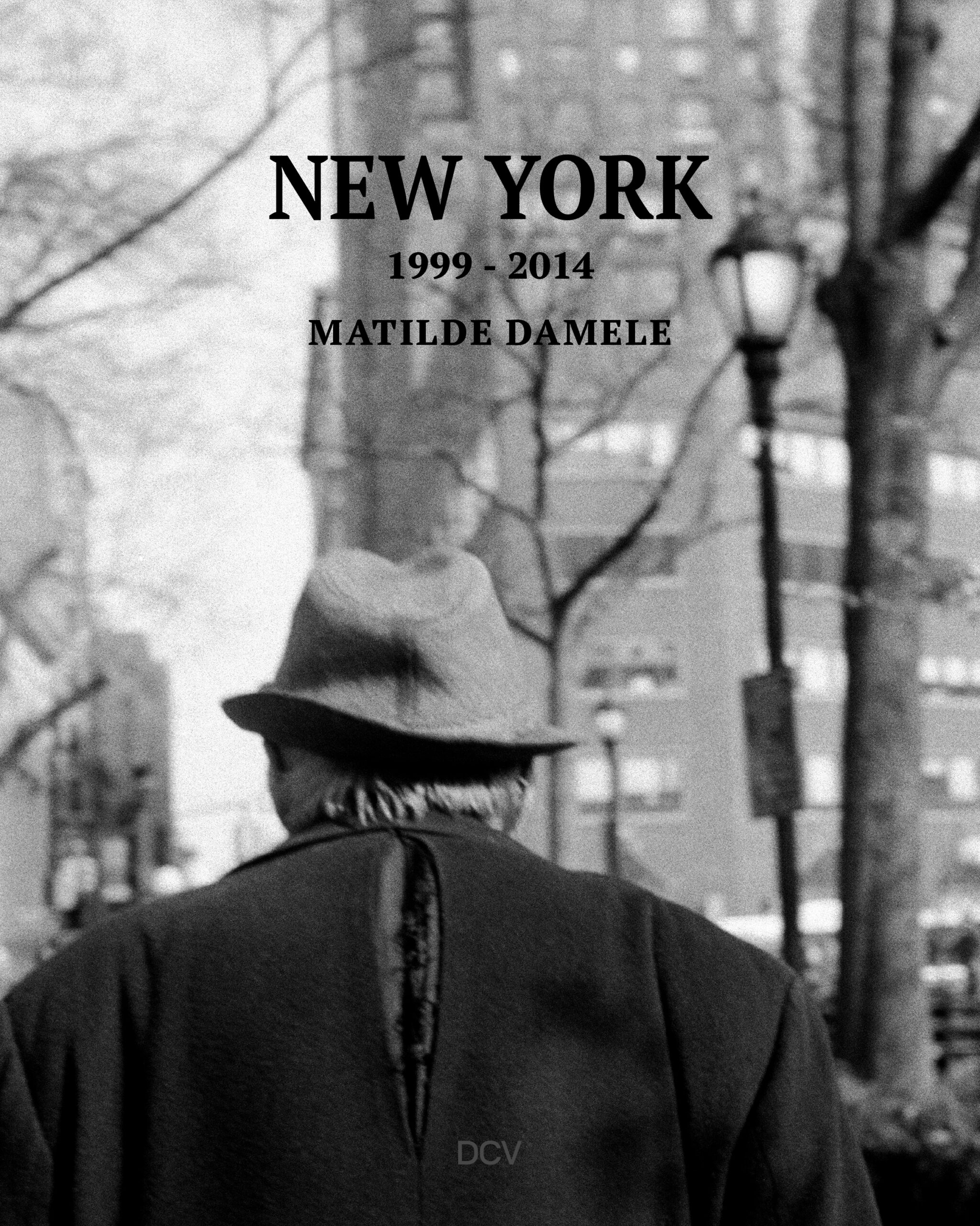
New York. 1999-201435€ Add to cartNew York and street photography were made for each other, which is why Matilde Damele (b. Bologna; lives and works in Rome), a master of the genre, left home for the big city in the late 1990s. She spent fifteen years in New York, and now her forays have congealed in this singular picture book. The light, the skyscraper-lined avenues, the pedestrians hurrying past and their loneliness in crowds—nimbly wielding her camera, Damele recorded all of it in classic black and white. The result is an outstanding portrait of a forward-looking metropolis that continually draws our attention to its past.
-

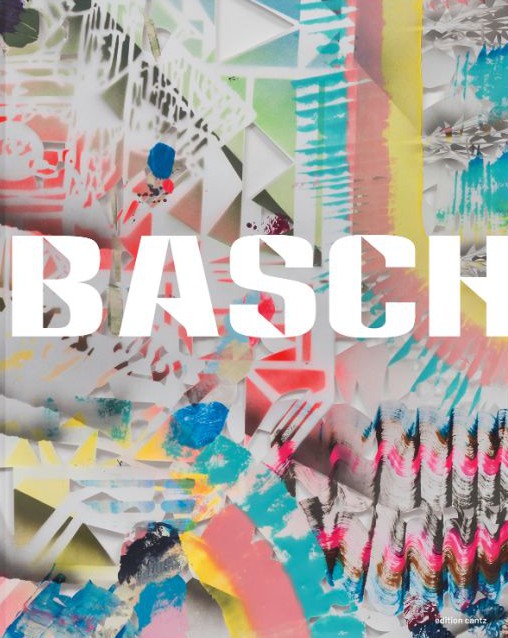
Gabriele Basch
fortuna24€ Add to cartPaper and Foil Cut‑Outs in an Innovative Language of Forms: An Overview of the Works of Gabriele Basch from 2008 to 2019
Since the 1990s, Gabriele Basch (b. 1964, Bad Homburg; lives and works in Berlin) has been working with cut-outs and translating the age-old tradition of silhouettes into an idiosyncratic and innovative language of forms. The artist interweaves creation and destruction, planning and chance into a complex, multi-layered reality and makes views into the spatial environment an integral part of her work. In her paper and foil cut-outs, foreground and background, materiality and void combine to form a whole that oscillates between painting and drawing, as well as between urban structures and hints of the biomorphic – in delicate color gradients, swirling structures, spontaneous gestures, and stenciled surfaces. The generously illustrated monograph offers a comprehensive overview of the artist’s work from 2008 to 2019.
-
Ann Wolff
Observations and Reflections44€ Add to cart“Art is coming from my inside. I am working as its servant.—I let it out not thinking too much—using my hands and gesture—choosing a material to put it on place. I do not use the art. It is using me.“
Ann Wolff (b. Lübeck, 1937; lives and works in Visby and Kyllaj, Sweden) has ranked among the most significant and most influential glass artists on the international scene for over five decades. Yet she has also worked in bronze, aluminum, nickel silver, and concrete, creating abstract as well as figurative sculptures, and produced a sizable oeuvre on paper: pastels, drawings, and fine art prints. Ann Wolff enrolled at the legendary Ulm School of Design in the 1950s to study visual communication with Otl Aicher. From 1993 until 1998, she was professor of “materials-related design” at the University of Fine Arts (HFBK) in Hamburg. Her works, which have garnered an array of prizes, have been shown in numerous solo exhibitions and are held by renowned public and private collections all over the world.
-

Anders Goldfarb
Passed Remains35€ Add to cartAbandoned Gas Stations and Burned-Out Buildings
In 1986 when Anders Goldfarb (b. 1954 in Brooklyn, lived and worked in Brooklyn, NY) moved to Greenpoint, he was a young photographer with a master of fine arts degree from State University of New York at New Paltz. In moving to Williamsburg, he joined a growing number of young artists seeking the low rents of what was then a declining neighborhood of light industrial buildings and working-class residences. Working with black and white film, and a medium format Rolleiflex camera, Goldfarb began photographing in 1987 in Williamsburg and Greenpoint, riding his bike around the area and looking for the peculiar beauty of sidings, peeling paint and razor wire. Goldfarb’s photographs provide a valuable historical record of these neighborhoods prior to their demolition and gentrification. His subjects are metaphors for loss and vulnerability and distill moments in time that are destined for demise.