Brandon Lipchik
 | |
|---|---|
| Editor(s) | Robert Grunenberg |
| Author(s) | Oliver Koerner von Gustorf |
| Design | OOR Studio, Berlin; Vladimir Llovet |
| Size | 15 x 21 cm |
| Cover | Softcover |
| Pages | 44 |
| Illustrations | 26 |
| Language(s) | German, English |
| ISBN | 978-3-96912-132-0 |
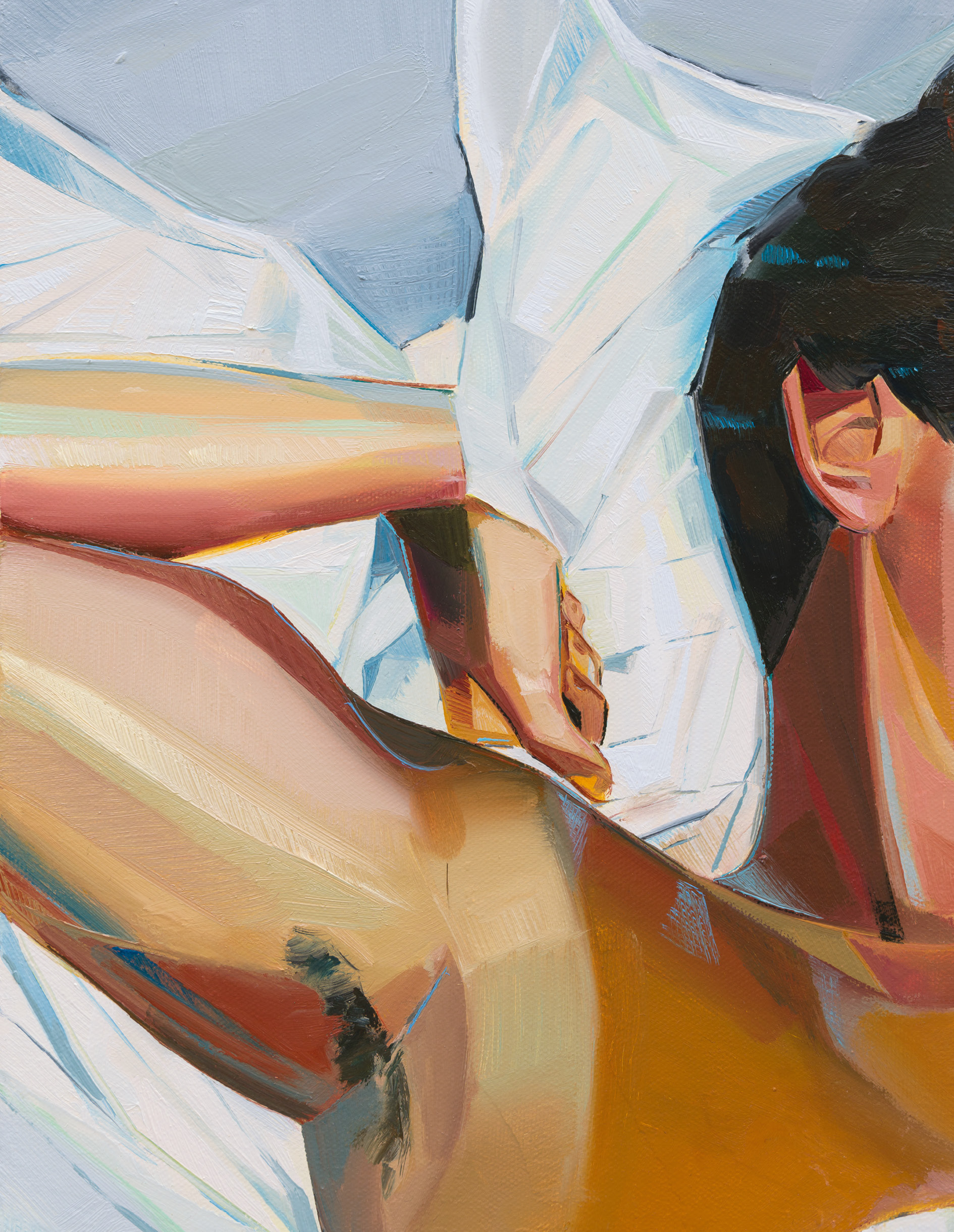
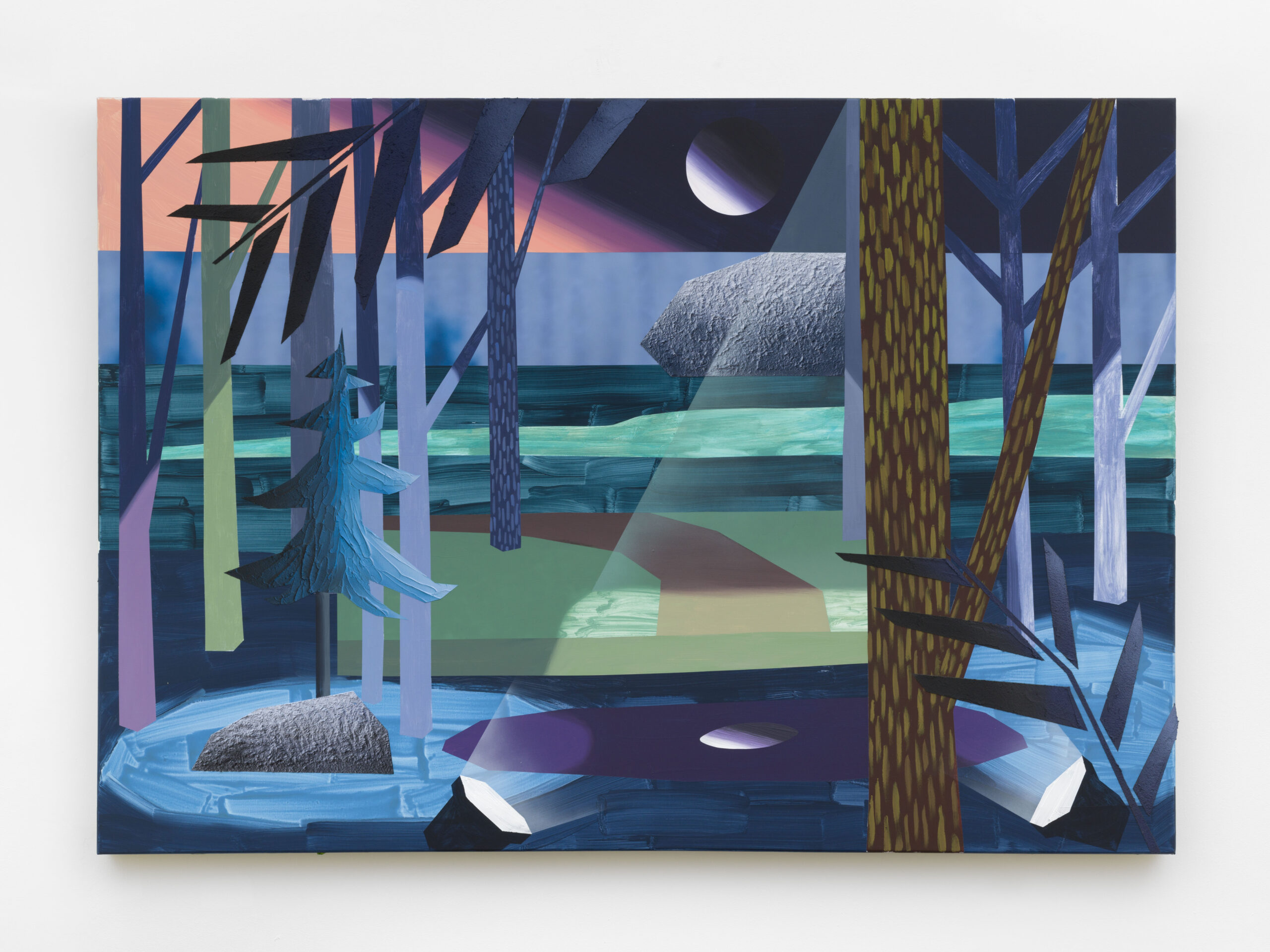
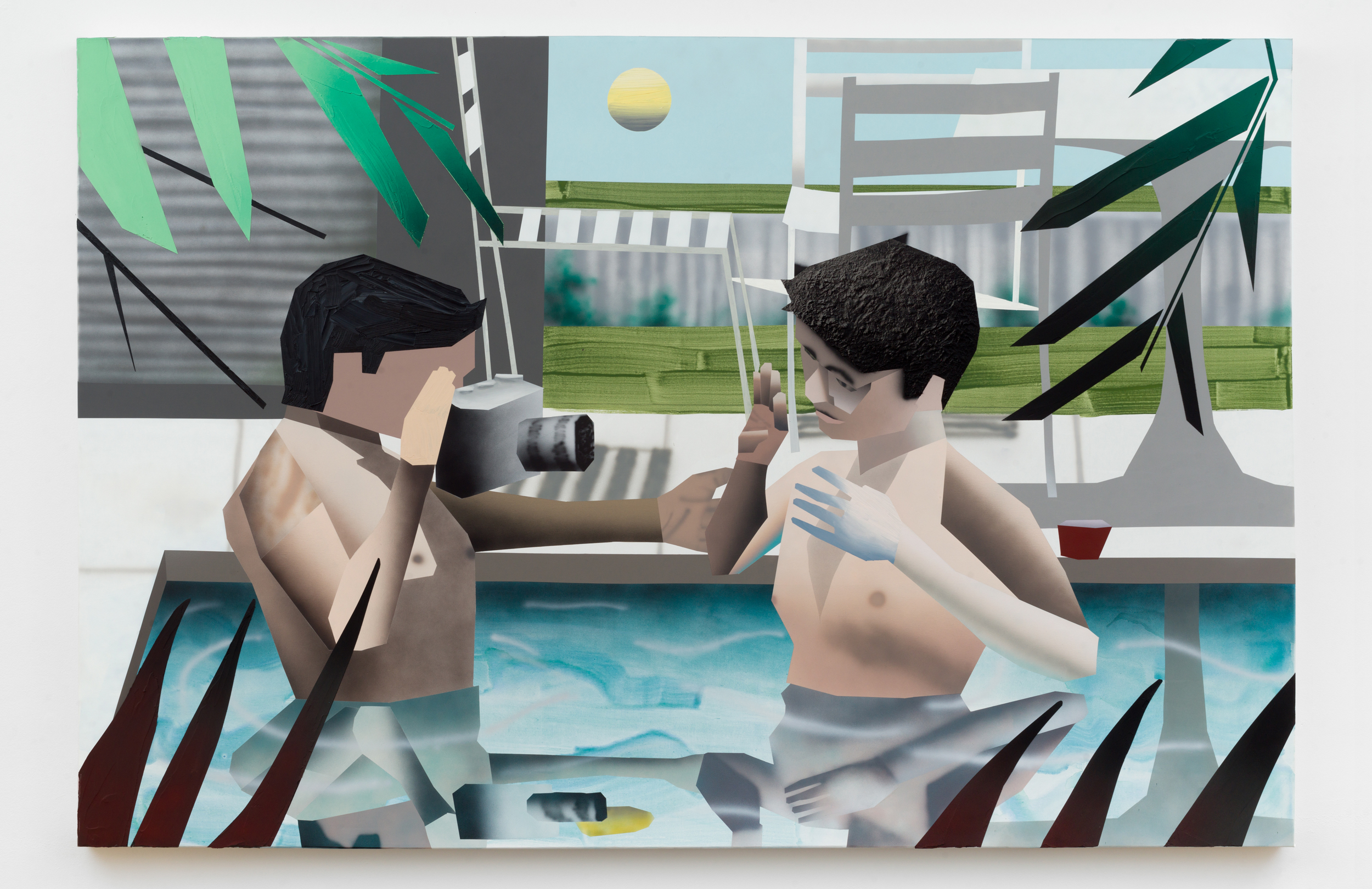
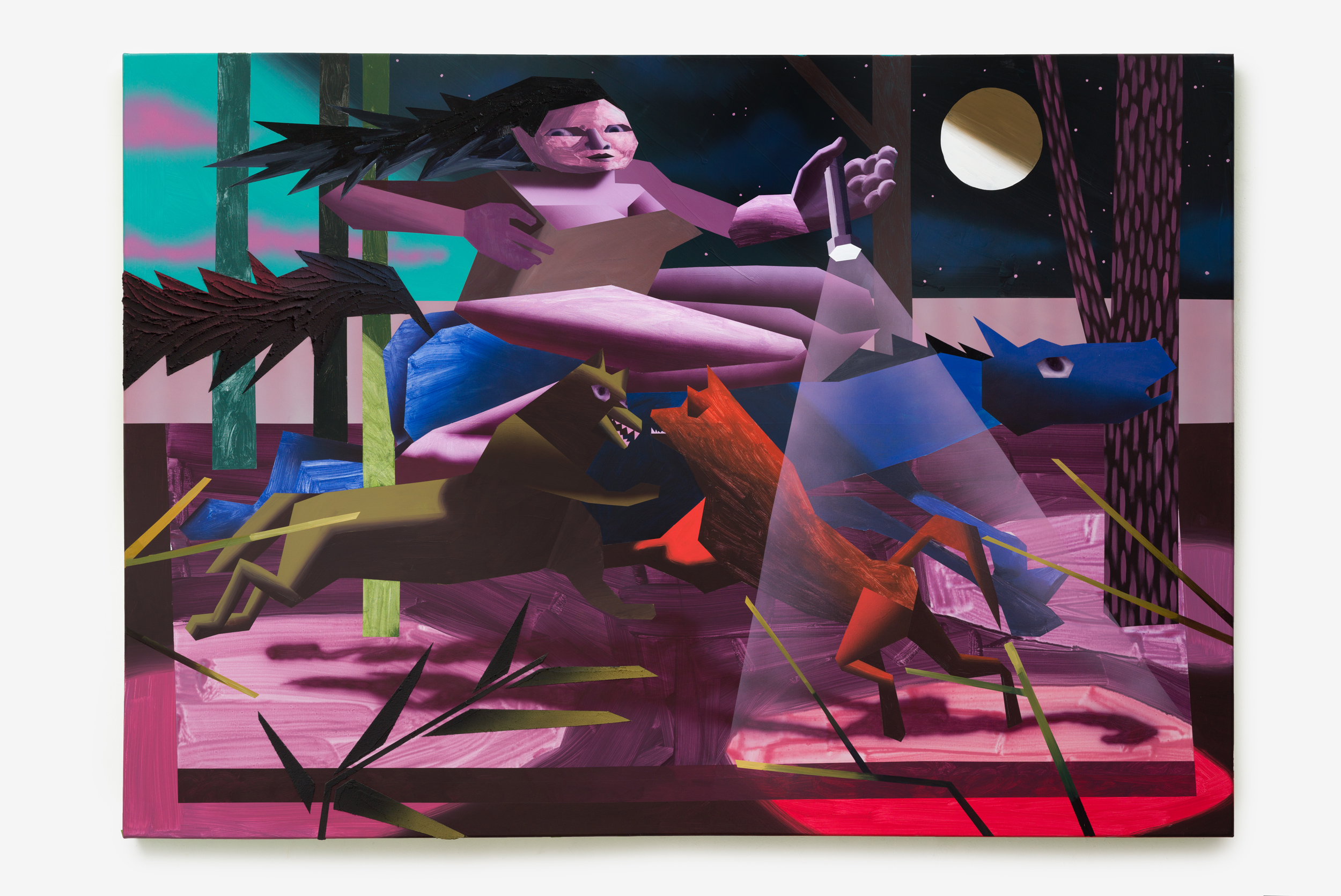
In recent years, a Wagnerian night has settled over Brandon Lipchik’s (b. Erie, PA, 1993; lives and works in Brooklyn, NY, and Berlin) pictures. Moons rise; beasts and titans populate a homogeneous world of swimming pools, white picket fences, and neatly mowed lawns. Synthesized on a computer screen and then transferred to canvas by hand, the artist’s paintings revolve around the backyard as a mythically fraught scene of popular culture. The garishly lit multiperspectival pictures replicate characteristic shots from 1980s gay porn films and quote a clean American Apparel look. Lipchik subjects men’s bodies, spaces, plants, objects, and animals to digital deconstruction, obtaining rudimentary and abstract shapes. Staring at smartphones or gazing on water surfaces, his characters recall early digital animations and seem oddly hollow, like empty avatars waiting to be filled with new speculative content.
More books
-

Maria Braune
Keep Away From Fire28€ Add to cartMaria Braune’s (b. Berlin, 1988; lives and works in Munich and Bamberg) work revolves around a material she developed; named Migma, it consists of eight different renewable natural resources. She heats it, then casts and molds it in a process that continues for weeks. The resulting sculptures and installations sprawl throughout the space like sensuous organisms. Associations of growth and symbiosis emerge, but discontinuities and disintegration come into view as well. Braune’s creative process is part of an ecosystem and thoroughly anchored in the now. Her material is a vitally alive substance to which she responds in an immediate engagement, connecting it to mythological and narrative significations and setting it in relation to her own world.
Maria Braune studied woodcarving at the Fachhochschule für Bildhauerei in Berchtesgaden, Germany, in 2009–2011, then fine arts with Hermann Pitz at the Academy of Fine Arts Munich, where she graduated in 2017.
-

Philip Loersch
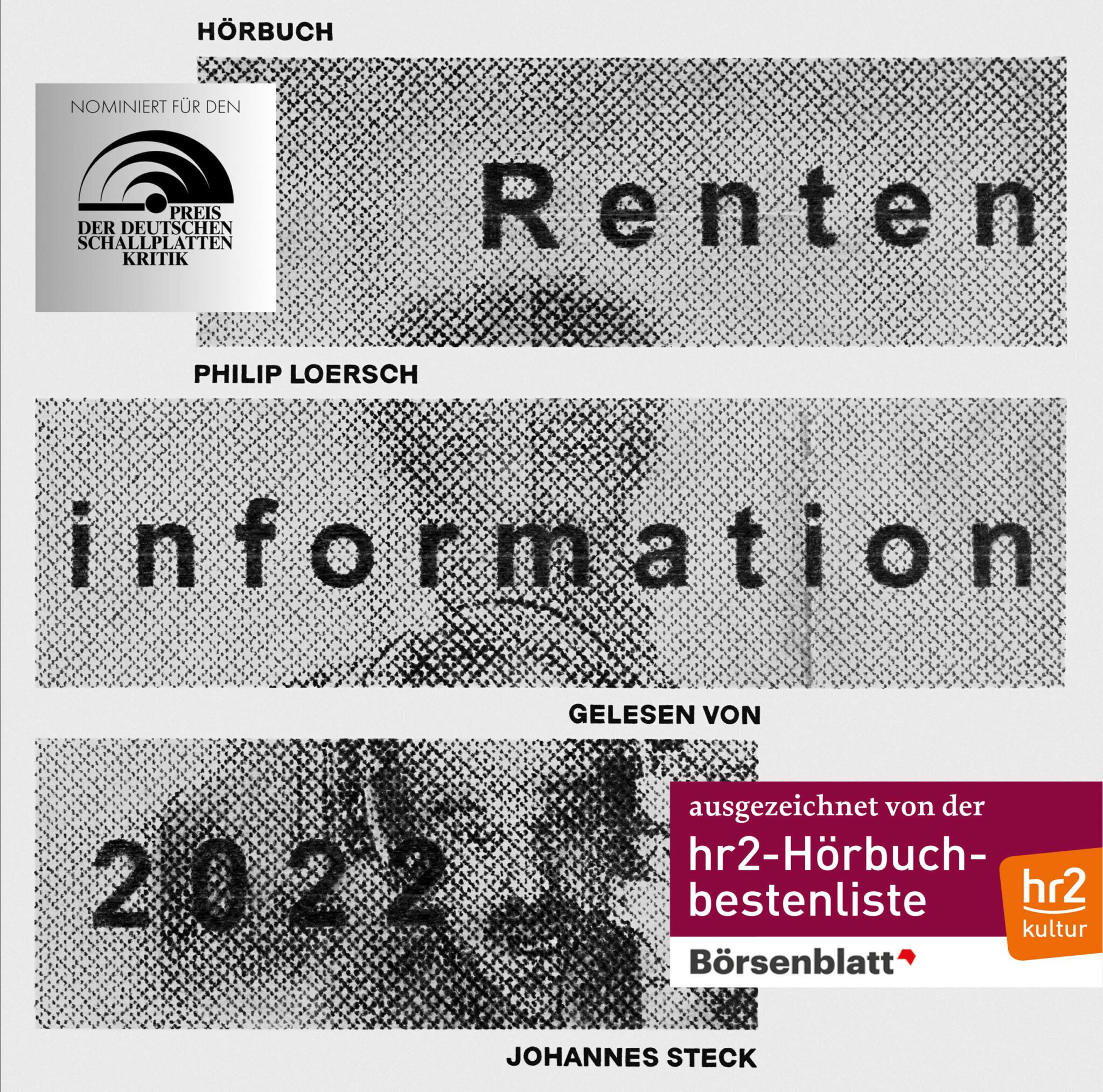
Renteninformation 202230€ Add to cartA satirical audiobook, read by Johannes Steck
with free download link on the inside
You’ve read right, and you’re going to hear it: a bureaucratic document—we’re all familiar with it, for a new one arrives every year—is the subject of this inspired collaboration between the graphic artist Philip Loersch and the virtuoso vocalist Johannes Steck.
The “Renteninformation”—an official letter on cheap paper informing the recipient about their expected future retirement benefits—makes many cultural workers, and others, crack up or break out in tears: arriving unexpectedly, it launches us on an emotional roller coaster between excitement, fascination, resignation, and sheer madness.
The manuscript for this audiobook is Loersch’s actual Renteninformation for 2022. Its intonation is the culmination of a series of works the artist has pursued since 2016. Every year, he has produced a naturalist colored-pencil drawing of his Renteninformation, embedding it in idyllic scenes—in the garden on a summer afternoon, amid autumn foliage, or on a frozen lake, delicately and accurately executed down to the smallest leaf of grass and the tiniest letter.
“Renteninformation 2022” is the ideal gift for all vinyl lovers who need to close a “pension gap” in their collections and a stunning audio experience that redefines what the satire of reality itself and conceptual art can do.
Philip Loersch (b. Aachen, 1980) is best known for his unconventional drawings. His works combine painstaking imitations of printed writing with hyperrealist colored-pencil drawings; for instance, he transfers pages from encyclopedias not only onto paper, but also onto three-dimensional objects such as soapstone. His art has been exhibited at renowned institutions such as Kunsthaus Zürich, Museum Kunstpalast Düsseldorf, and Hamburger Kunsthalle. He has won numerous fellowships and awards, including the Kunstpreis Berlin für Bildende Kunst, and helped initiate the exhibition series “Drawing Wow.”
Johannes Steck (b. Würzburg, 1966) is one of Germany’s best-known audiobook narrators, having sold over four million copies, including of books by Simon Beckett and Ken Follett, in a three-decade career. Television viewers also know his voice from trailers on Kabel 1 and DMAX and documentaries on ZDF, BR, and Sky. His work has garnered awards including the 2012 HörKules.
-

Robbie Cornelissen
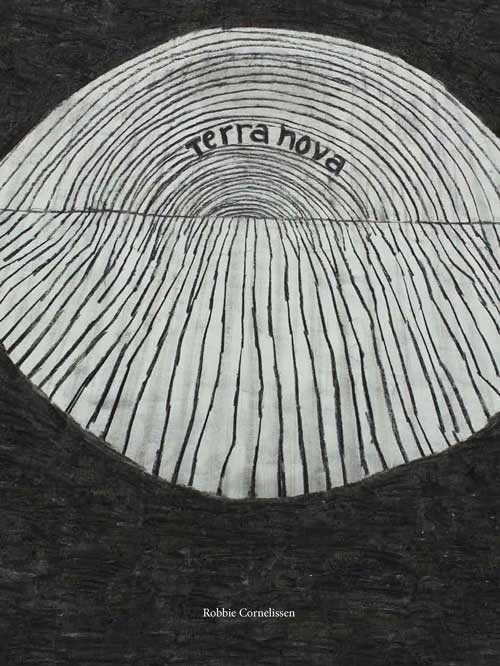
Terra Nova28€ Add to cartFuturistic / Fantastic
The Dutch artist Robbie Cornelissen’s (b. Utrecht, 1954; lives and works in Utrecht) oeuvre is endowed with unusual narrative power. His architectonic drawings in enormous formats, which often exude a futuristic aura, typically show deserted libraries, waiting halls, factory floors, or other oversized spaces. In alternation with his work on paper, the artist creates animated films out of thousands of drawings. This publication presents 250 drawings from Cornelissen’s new film Terra Nova, which explores an urgent contemporary concern: humanity’s responsibility for the earth and the open question of its long-term survival on the planet.
Robbie Cornelissen studied biology and ecology at Rijksuniversiteit Utrecht and at Vrije Akademie, Den Haag, and the Gerrit Rietveld Academie, Amsterdam. His work has been shown at Centraal Museum Utrecht, Hamburger Kunsthalle, the 11th Biennale de Lyon, and elsewhere.
-

ODOR
Immaterial Sculptures40€ Add to cartThe effect of odor is immediate. Smells arouse feelings in us, put us in moods, awaken recollections. They color the other senses and shape our perceptions more profoundly than we are aware. Scents create closeness and distance at the same time. They become imprinted on our memories and consolidate our experiences. And yet their existence in the world of three dimensions remains invisible, and the act of picking up a scent is fleeting.
The publication Odor—Immaterial Sculptures zooms in on the power of smells. Contributions from curators, artists, scientists, and scholars frame a variety of perspectives on this evanescent phenomenon, examining the olfactory sense and the qualities of the immaterial. Full-page plates conceived by the artists provide additional information, imagery, and contexts around the individual works, which put odor as an olfactory and spatial experience at the center of the engagement with art. The works operate between the poles of time and space, individual and community, consciousness and the subconscious, visibility and invisibility, the everyday and the miraculous, the sense of self and the perceptions of others, presence and absence, life and death.
Artists : Jason Dodge, Carsten Höller, Koo Jeong A, Oswaldo Maciá, Teresa Margolles, Pamela Rosenkranz, Sissel Tolaas, Clara Ursitti, Luca Vitone
-
Feuer und Farbe
Gemälde und Grafiken von Walter Jacob35€ Add to cartWalter Jacob (1893-1964) was a painter whose oeuvre and life reflected the discontinuities of the twentieth century in condensed form. Contemplative natural scenes and the self-portraits were constants to which he hewed throughout his career; in stylistic terms, however, his oeuvre could hardly be more contradictory. Working first in the Impressionist, then in the Expressionist style, he eventually forged a form of expression tending toward abstraction, although he rejected modernist painting throughout his life. The Nazis considered his early work “degenerate,” which led him—a committed National Socialist and active member of the SA—to adapt not just his ideological convictions, but also his aesthetics to the new era: starting in the mid-1930s, he produced naturalistic depictions, sometimes suggestive of the New Objectivity, of “popular” motifs like landscapes, animals, soldiers, and more. Tellingly, though, the backs of some of his canvases are taken up by works that suggest the pleasure he took in experimenting with color and form. The same tension is palpable in the abstract landscapes of his late oeuvre. This catalog gathers works to retrace Jacob’s checkered career, complemented by (art) historical essays that embed his output in its context.
-

Billy Al Bengston
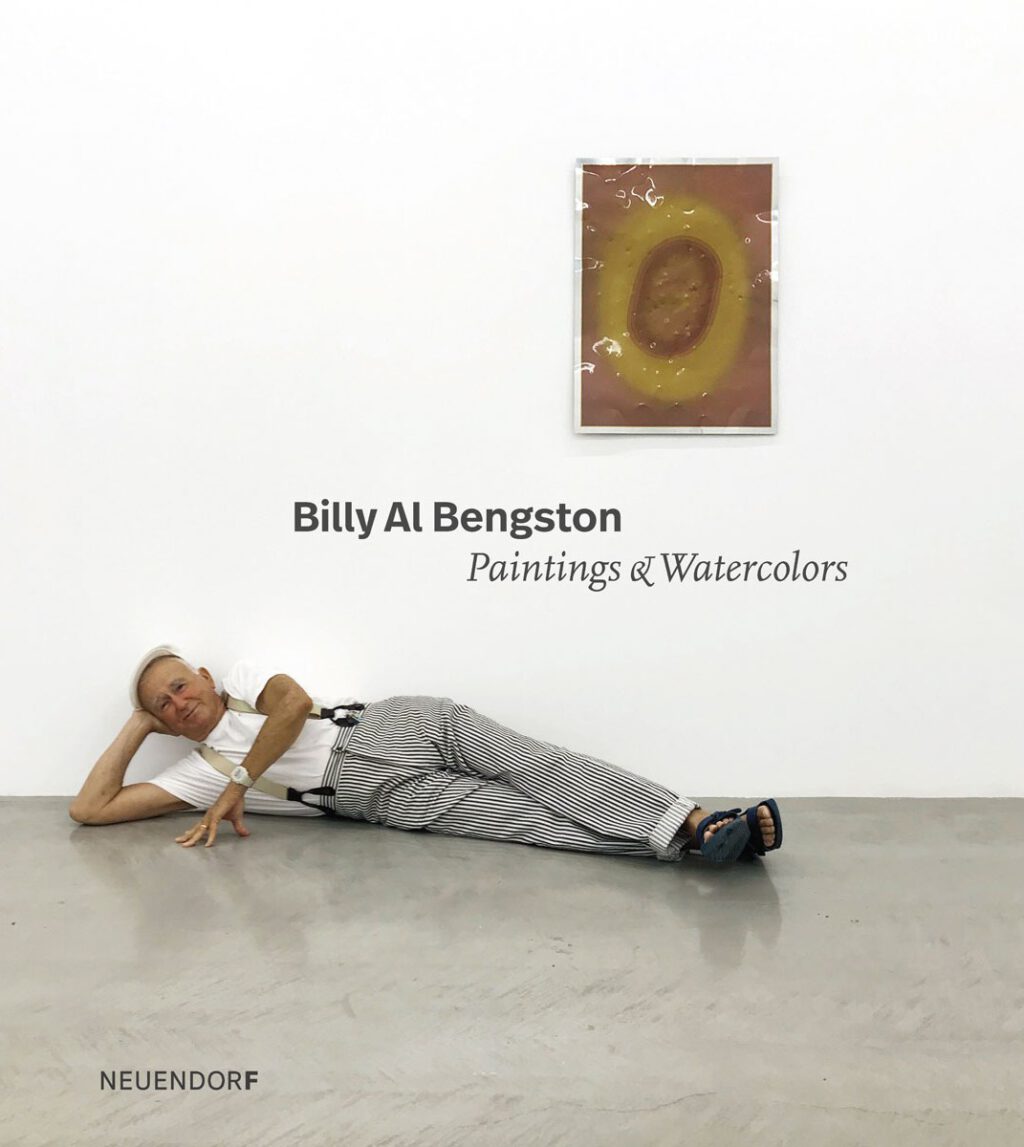
Paintings & Watercolors48€ Add to cartThe First Monograph on the Californian Pop Artist Since More Than Thirty Years
Billy Al Bengston (b. 1934, Dodge City; lives and works in Venice, California, and Honolulu, Hawaii) is the very personification of the cheerful, carefree attitude towards life in California – with his work as well as his person: a former surfer and motorcycle racer, an extravagant artist and key figure of West Coast Pop Art. After studying at the California College of Arts and Crafts and the Otis Art Institute, he exhibited at the legendary Ferus Gallery in 1957 and was the central figure among a group of artists that included Frank Gehry, Edward Kienholz, Ed Ruscha, and Ken Price. BAB, as he apostrophizes himself, inserts car and motorcycle parts as motifs into his otherwise abstract paintings, using lacquer and spray paint instead of oil, and aluminum panels with at times dented surfaces instead of the traditional canvas. Art and lifestyle combine to create the individual “Bengston iconography” of California Cool.
- temporarily not available
MEUSER
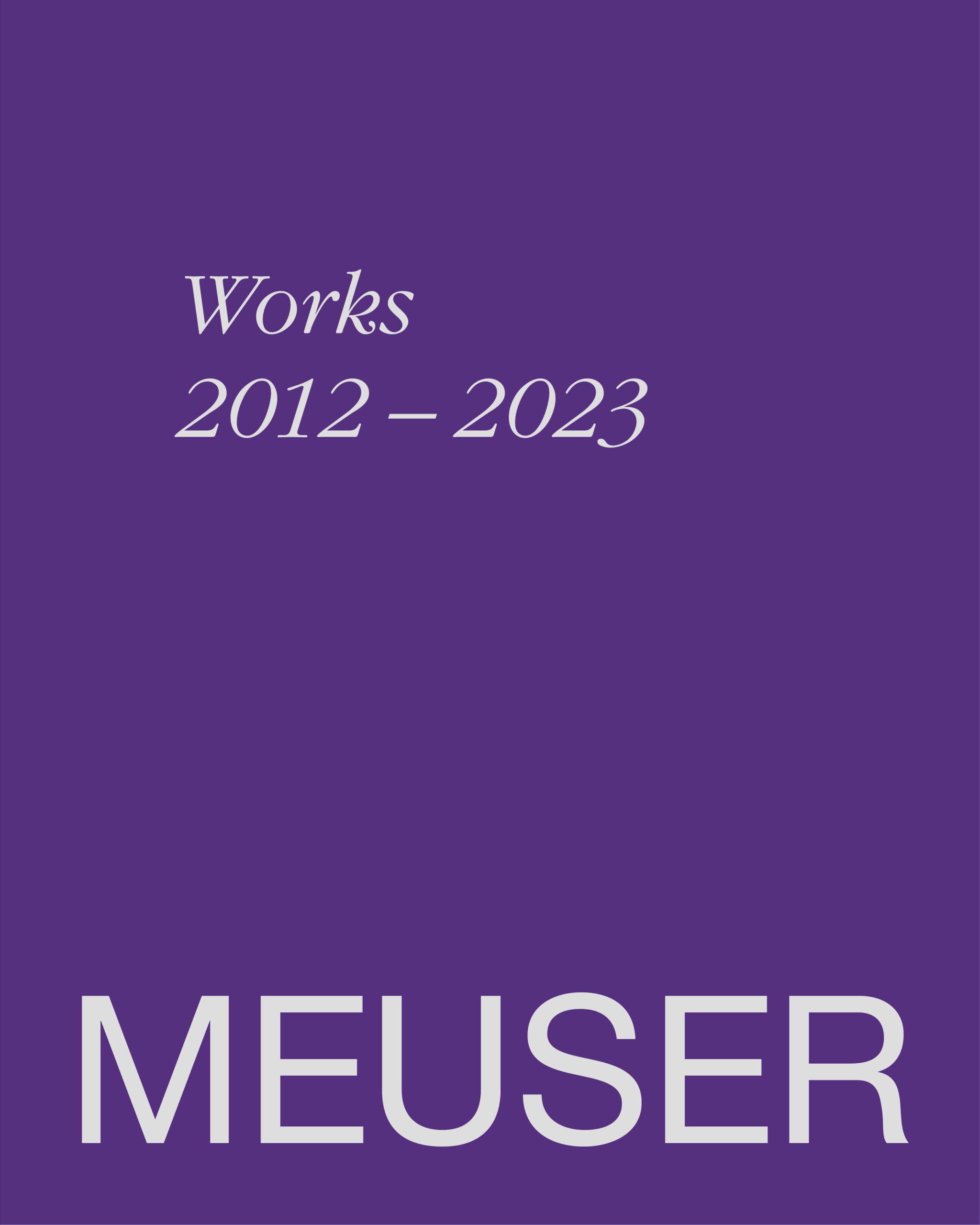
Works 2012–2023 (ENGLISH)Read moreEver since his studies with Joseph Beuys and Erwin Heerich, since his first exhibitions – for instance at ‘Kippenberger’s Office’ in 1979 – Meuser (b. Essen 1947, lives and works in Karlsruhe) has been a solitaire. His sculptures are unyielding and unruly, just as much as they are vulnerable and tender. They are witty and heart-touchingly charming.
Meuser finds his material in the scrapyard. Confidently and empathically, he reinstates form and dignity to the remnants and vestiges of industrial society. As a romantic, he grants things a life of their own and turns them into self-reliant protagonists, once more. Unwaveringly, he works to re-poetize a standardized and maltreated world.
The lavishly designed monograph is published on the occasion of Meuser’s 75th birthday, presenting works and exhibitions from the past ten years. Eight international authors and scholars create a dazzling mosaic and reveal how Meuser boldly holds his own in face of Duchamp, Minimalism, and Social Sculpture. An open-ended outlook.
Meuser studied 1968–1976 at Art Academy, Düsseldorf with Joseph Beuys and Erwin Heerich. 1991 he received the ars viva award. 1992-2015 professorship at Academy of Fine Art, Karlsruhe.
Since 1976, numerous institutional solo and group exhibitions and works in international collections: Bundeskunsthalle, Bonn; Deichtorhallen, Hamburg; documenta IX / Fridericianum, Kassel; Fundació Joan Miró, Barcelona; Joanneum, Graz; Kunsthalle Düsseldorf; Museum of Contemporary Art, Monterrey; Martin-Gropius-Bau, Berlin; Museum Abteiberg, Mönchengladbach; Museum Folkwang, Essen; Museum moderner Kunst Stiftung Ludwig, Vienna; Museum Morsbroich, Leverkusen; Rijksmuseum Twenthe, Enschede; Sakip Sabanci Museum, Istanbul; Städtische Galerie, Karlsruhe; Vanhaerents Art Collection, Brussels; ZKM | Museum für Neue Kunst, Karlsruhe.
- Release September 2025

The Magnificent Seven+
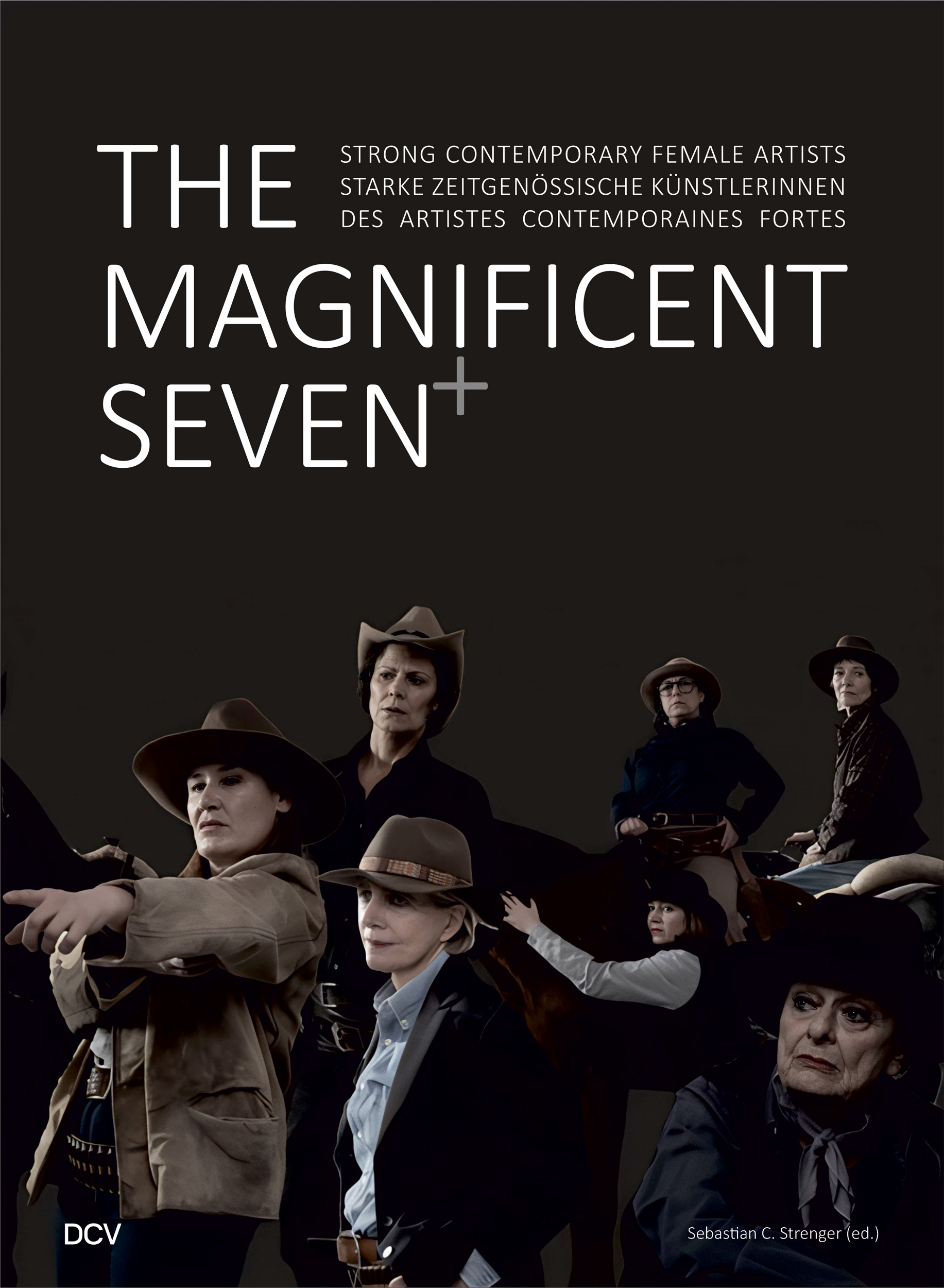
Strong Contemporary Female Artists44€ Add to cartWhen The Magnificent Seven hit the silver screen in 1960, heroism was firmly men’s business. Now it is women artists who are redefining the art world with visionary energy. Sebastian C. Strenger portrays outstanding women making art today, including Ingeborg Lüscher, Elfie Semotan, Xenia Hausner, Valérie Favre, Sandra Vásquez de la Horra, and Cristina Lucas. Their works question power structures, play with identity, or deconstruct prevailing narratives. Their art is figurative or abstract, narrative or conceptual, political or introspective. These women are changing the art market and dominate the new canon at international institutions by calling existing structures in question and opening up spaces for fresh thinking.
-
PULS 20
New Entries in the MNAC Collection36€ Add to cartPULS 20 unites the most valuable finds from a communal treasure hunt. Exponents of the Romanian arts scene and representatives of the National Museum of Contemporary Art (MNAC) in Bucharest teamed up to review the oeuvres of countless eminent Romanian artists and select works of outstanding quality that reflect the diversity of the country’s creative production over the past fifty years. In time for the celebrations of MNAC’s twentieth anniversary in 2020, the institution acquired the 180 works reproduced in this catalogue. That makes PULS 20 a singular document in two respects: it gathers a selection of key works of Romanian art that is unprecedented in its breadth between the covers of a book; and it is the result of a successful cooperative curatorial process, an organic discourse involving a wide variety of participants, demonstrating that democratic dialogue in art is not just possible but also extraordinarily fruitful and indeed necessary. All in all, this catalogue is the perfect choice both for newcomers to Romanian contemporary art and for specialists.
-

Logan T. Sibrel
But I’m Different50€ Add to cartLogan T. Sibrel’s (born 1986 in Jasper, IN, lives and works in Brooklyn, NY) paintings and drawings depict moments of great joy and beauty, but also fear, sadness, desire and aggression. Frequently only part of the mostly male figures is depicted. Sibrel’s cropping can feel simultaneously intimate and alienating—fragmentary stories are told that touch you through their authenticity and vulnerability. Sibrel’s artistic maneuvers include overlapping, shifted perspectives, and text fragments that appear like snippets of overheard conversations and thus create a collage effect.
This book is the artist’s first comprehensive publication with works from the last twenty months. While the first part presents the artist’s paintings, the second part presents his drawings with the edges of the backing paper digitally removed so that it looks as if the images were drawn directly into the book.
Logan T. Sibrel completed his bachelor’s degree at Indiana University in Bloomington in 2009 and his master’s degree at Parsons New School of Design in New York in 2011. His most recent solo exhibitions include In Another Life and Galerie Thomas Fuchs (Stuttgart, DE) and Brake For Your Sweetheart at Auxier Kline (New York, NY).
-
Liam Gillick
Filtered Time (ENGLISH)28€ Add to cartThe sculptor and object artist Liam Gillick (b. Aylesbury, UK, 1964; lives and works in New York) has created an intervention titled Filtered Time for the historic galleries of the Pergamon Museum in Berlin. Projections of light and color and acoustic effects condense six thousand years of cultural history into an immersive spatial experience. Gillick initiates a conversation between the iconic Processional Way and the Ishtar Gate from Babylon, the monumental sculptures of Tell Halaf, and other exhibits, engendering new layers of meaning across all historical periods. The first joint project of the Vorderasiatisches Museum and the Hamburger Bahnhof—Nationalgalerie der Gegenwart makes for a singular visual and sensory experience. Designed by the artist himself, the publication not only documents the richly colorful production, but also provides insight into the eventful history of the museum, which is approaching its centennial.
Liam Gillick studied at the Hertfordshire College of Art in 1983–1984 and at Goldsmiths, University of London from 1984 until 1987. Gillick is a prolific published writer as well, producing essays, reviews, fiction, and theatrical scenarios.
-

SOMA
Collective SineUmbra18€ Add to cartOn the Disappearance of Italian Culture
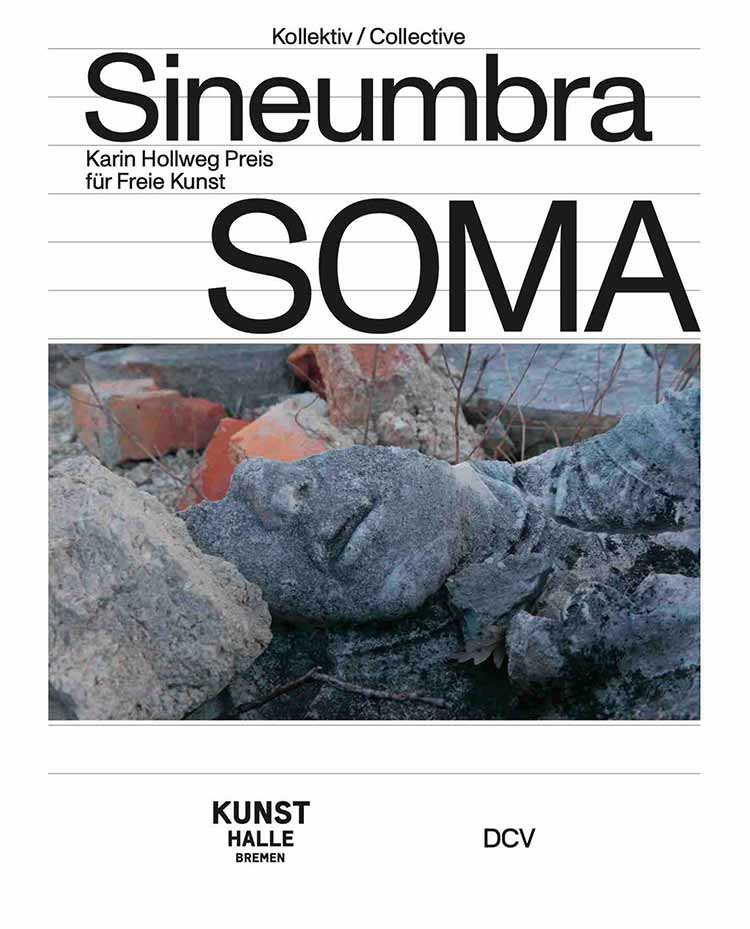
Under the collective label SineUmbra, the artists Luisa Eugeni (b. Assisi, Italy, 1987; lives and works in Berlin) and Mattia Bonafini (b. Legnago, Italy, 1980; lives and works in Bremen) develop interdisciplinary projects that they realize as sprawling multimedia installations comprising video projections, sound, and performative elements. The point of departure for their project SOMA was Pier Paolo Pasolini’s 1975 essay Disappearance of the Fireflies, which probes the wrenching transformation that Italian society and the country’s very landscapes have undergone since the 1960s. SOMA melds performance art, the visitors’ movements, geography, and psychology in a space of experience that speaks to all senses for an exploration of the impact that traumata inflicted on individuals and communities by natural disasters and social changes have on the human soul and perceptual capacities. In keeping with the artists’ collective and dynamic creative vision, the catalogue embeds the multimedia installation in a context fleshed out by rich photographic documentation and numerous texts.
On occasion of the master class graduate exhibition at the Bremen University of the Arts in 2019, the two artists were awarded the renowned Karin Hollweg Prize for Fine Art. The publication accompanies their first solo show at Kunsthalle Bremen.
-

Female Gaze
From Virtual to Reality25€ Add to cartWorks of Art Take a Stance
The “female gaze” embodies a stance that is the polar opposite of the “male gaze.” The latter term came into use in the movie and advertising industries in the 1970s to describe the fact that women typically appear in films in supporting roles, as accessories to men, rather than as protagonists. The male gaze originated in a patriarchal society that has begun to change. The female gaze champions a modern form of emancipation that challenges men to abandon entrenched structures. Much more importantly, it encourages women to become aware of the strength that lies in their femininity and make it the source of their own creative expression and their own perspective on the world. For many years, the writer Silke Tobeler has visited artists in their studios, collecting the photographs she took there and her conversations with her hosts on her blog, Female Gaze.
-

Claudia Fährenkemper
Kontextforschung / context research 1980–202268€ Add to cartClaudia Fährenkemper (b. Castrop-Rauxel, 1959; lives in Steinheim/Westfalen) photographs enormous as well as minuscule objects using scanning electron microscopes to produce images that are as fascinating as they are disconcerting. The play with extreme scales yields fantastic visual worlds: American desert and canyon landscapes, the giant industrial machinery of open-pit mines in Germany, insects, plant seeds, crystals, and plankton, plus historic armaments from Europe and Japan. The lavishly designed book is the first to gather works from her entire oeuvre, which now spans four decades. Surveying the most important of Fährenkemper’s conceptual series, it reveals unexpected interconnections between disparate motifs on vastly different scales from nature, technology, science, and cultural history.
Claudia Fährenkemper studied at Fachhochschule Köln, today’s Cologne University of Applied Sciences, where Arno Jansen was her teacher, and with Bernd and Hilla Becher and Nan Hoover at the Düsseldorf Academy of Fine Arts. Her photographs are held by numerous museum collections, including at the Kunstmuseum Bonn, the National Gallery of Canada, and the Margulies Collection, Miami.
- With socks designed by the artist and augmented reality

JOHN BOCK
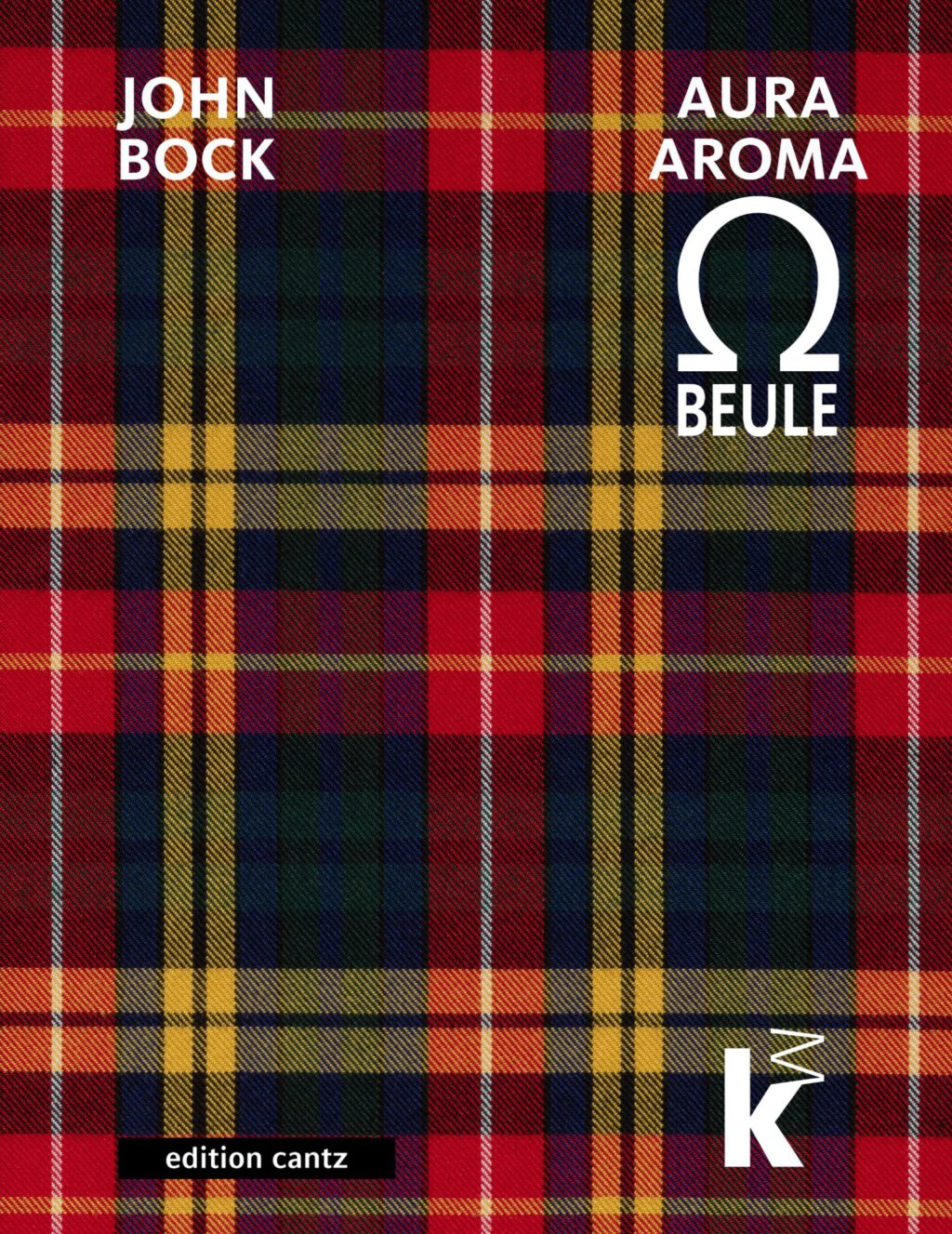
AURAAROMA-Ω-BEULE42€ Add to cartThe Augmented Reality Book for John Bock
John Bock (b. 1965 in Gribbohm, lives in Berlin) is one of the most important contemporary performance and video artists. In his works characterized by humor and absurdity, the artist places language, human bodies, everyday objects, and spaces in peculiar relationships to each other. He attained international recognition with the installation LiquidityAuraAromaPortfolio at the first Berlin Biennale in 1998. Together with his work Voll die Beule from 2013, it is now included in the collection of the Kunsthalle Mannheim. The present augmented reality book not only contextualizes his work, but also immerses the viewer/reader directly in his performances, in which the artist’s head emerges and a filled rubber glove leaks out. A completely new approach to the works of John Bock, packaged in a pair of socks designed by the artist.
John Bock studied at the Hamburg University of Fine Arts and since 2004 has taught at the State Academy of Fine Arts Karlsruhe as Professor of Sculpture. He has participated in the 55th Biennale di Venezia, and his works have been featured worldwide in solo exhibitions at, among others, the Berlinische Galerie, the Contemporary Austin, Texas, the Barbican Centre, London, and the Städel Museum, Frankfurt.
-

Stefan Knauf
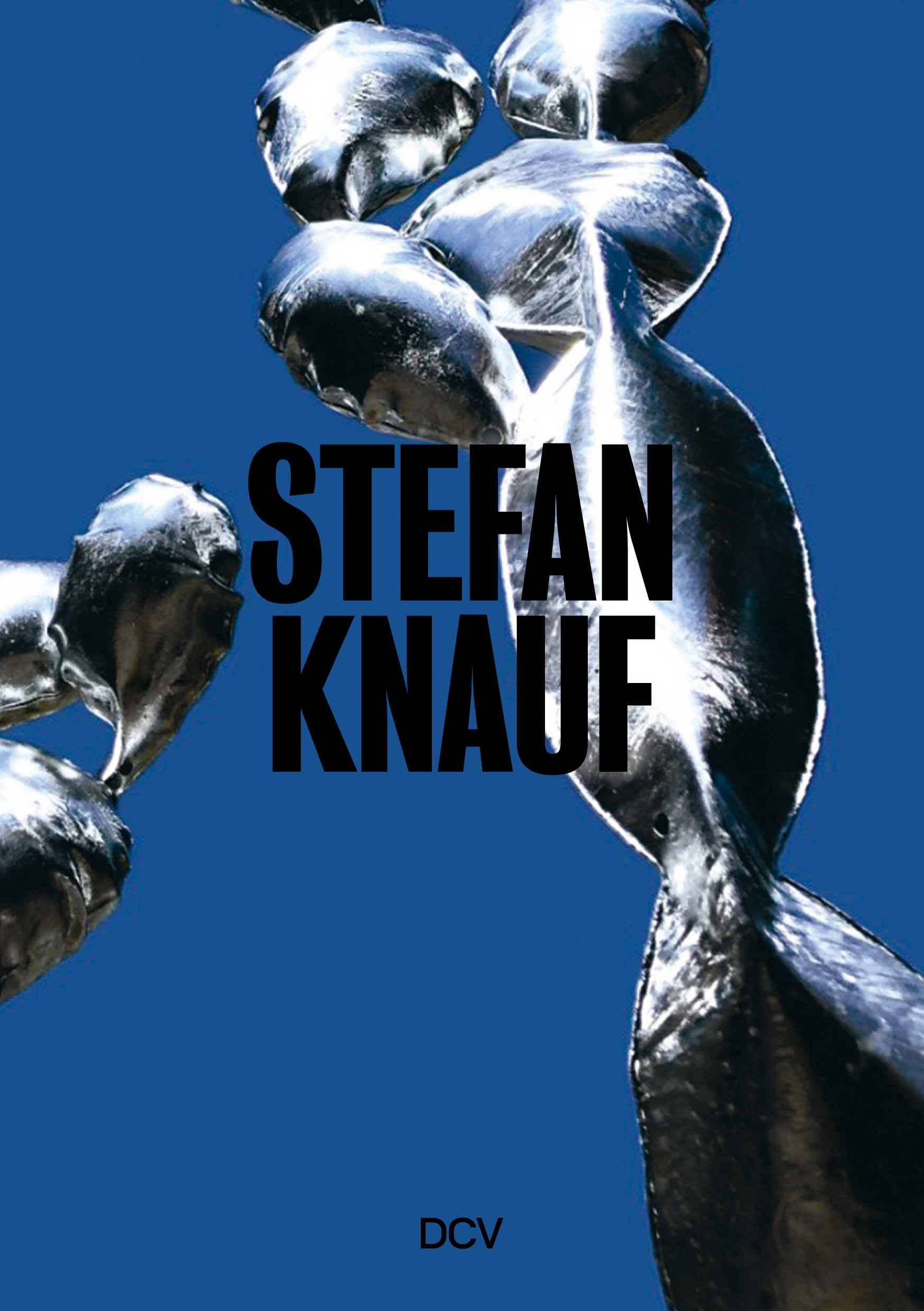
10€ Add to cartStefan Knauf (b. Munich, 1990; lives and works in Berlin) uses selected materials such as construction supplies or plants to investigate the histories of botany, migration, trade, science, and architecture and critique an idealized and anthropocentric conception of nature that is still prevalent. His sculptures, geometric-abstract pictures, and installations, with echoes of constructivism and minimal art, are contact zones in which everything is related to everything: human and non-human history, the natural and the artificial, ecology and ideology. Knauf’s works do not propose to unravel these entanglements. Rather, they suggest alternative perspectives and topographies guided by the idea of the “modified landscape” and devise material and alchemistic forms of knowledge and a novel and multiperspectival approach to the history and reality of the Anthropocene.
- out of stock

Drucksache Bauhaus
38€ Add to cartThe Early Years of the Weimar Print Workshop
At the Staatliches Bauhaus in Weimar, the print workshop began operation in the spring of 1919 as the first workshop. Printmaking corresponded to the basic idea of the Bauhaus in that it realized the unity of art and craftsmanship in an ideal manner. With the groundbreaking project Bauhaus-Drucke. Neue Europaeische Graphik, four portfolios were created in which forty-five representatives of the European artistic avant-garde participated. In the announcement brochure of 1921, it stated: “The many who do not yet know about the work of the Bauhaus, and who cannot know, are to be made aware of us through this work.” The book presents the portfolios published between 1921 and 1924, together with other works printed at the Bauhaus by Lyonel Feininger, Wassily Kandinsky, and Oskar Schlemmer. The Stuttgarter Prolog also sheds light on the influence of Adolf Hölzel, whose students and later Bauhaus masters Oskar Schlemmer and Johannes Itten brought many of his ideas to the Bauhaus.
-

Martin Noël
The Retrospective38€ Add to cartThe Protagonist of the Modern Woodcut
The German painter, draftsman, and graphic artist Martin Noël (b. Berlin, 1956; d. Bonn, 2010) played a leading role in reviving the linocut and the woodcut, two techniques that had long been eclipsed by other media. In his large-format works on paper, he staked out a widely regarded and distinctive position in contemporary art. Noël was especially interested in the compositional relationship between line and surface. Released on occasion of the retrospective of his oeuvre at the Albertina, Vienna, this book presents an overview of the most important periods in the artist’s creative evolution, with an emphasis on the woodcut carved into the printing plate and the woodblock’s subsequent emancipation as an art object in its own right. Particular attention is paid to the application of ink to the surface and its painterly structure as well as the picture’s migration from object to canvas. The resulting paintings are exemplary of Noël’s late oeuvre.
Martin Noël studied graphic art and painting at what is now the Cologne University of Arts and Sciences. His art garnered numerous prizes and other honors, including fellowships from Kunststiftung NRW, Stiftung Kunstfonds, and Letter Stiftung. Works by Noël are in the German Federal Collection of Contemporary Art, Kunstsammlung Chemnitz, and the collection of Museum Pfalzgalerie Kaiserslautern.
-

Tamara Suhr
Skulpturen24€ Add to cartHesitant yet Immediately Present
As a sculptor, Tamara Suhr (b. 1968, Tübingen; lives and works in Ludwigsburg) has devoted herself unswervingly to the human figure. Her subjects are figures of children whose hesitancy always embodies a certain curiosity, a sense of expectation. In their form reduced to the essential, indeed almost archaic, they radiate calm and serenity—supported by balance with regard to both the motif and possible associations. In their small size and vulnerability, Suhr’s figurative sculptures, painstakingly crafted in bronze, seem apparently in need of protection, yet they appear strong and courageous. They stand, gaze, crouch, fish, swim or balance. They are present, in the here and now, a symbol for the children of the world.
-

Marion Anna Simon
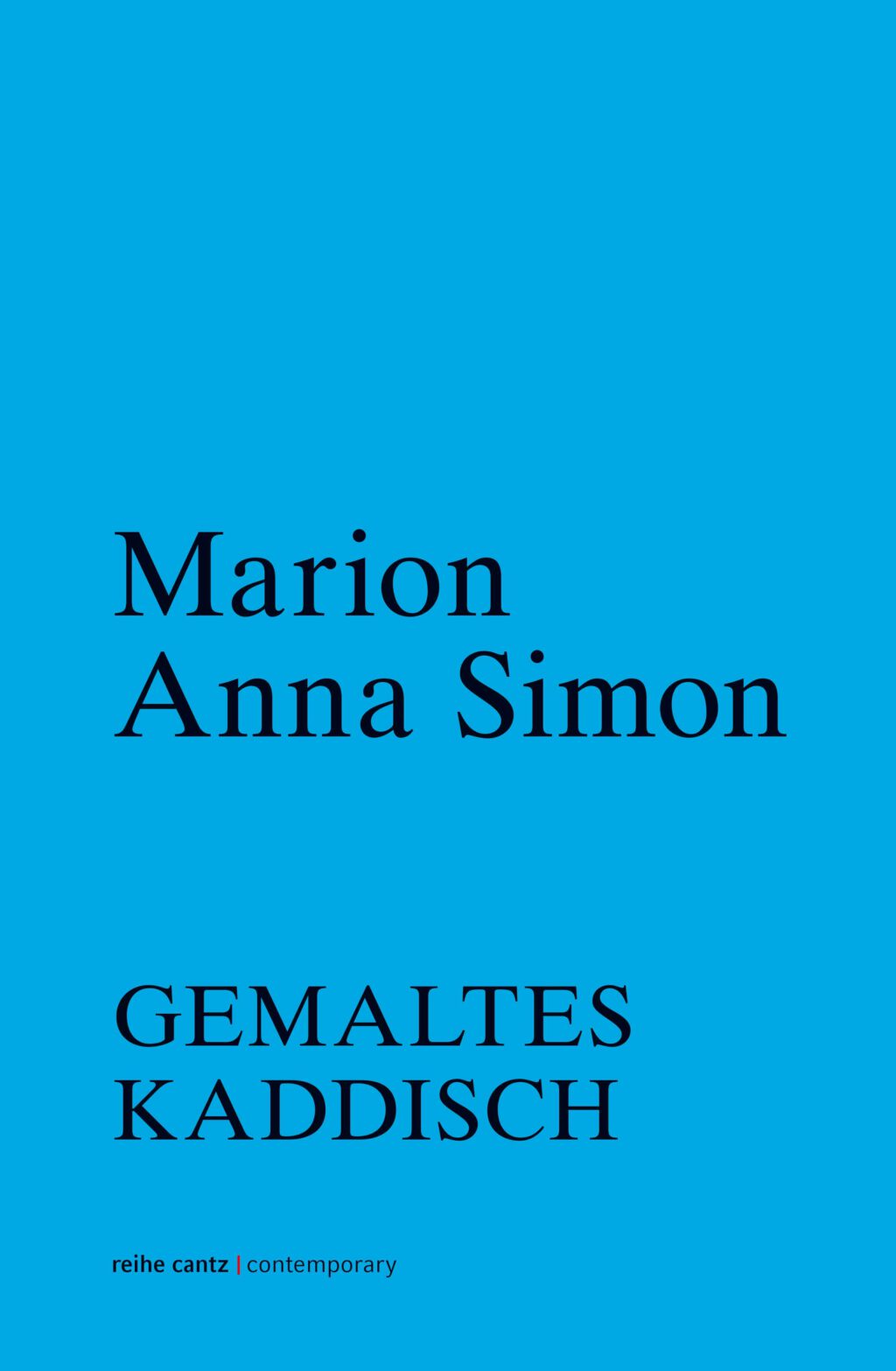
Gemaltes Kaddisch14€ Add to cartAn artist paints the Kaddish
In roughly 330 self-portraits, Marion Anna Simon (b. 1972, Bitburg; lives and works in Cologne) dares to undertake an unusual transcription of Jewish prayer as a sign of mourning. On January 7, 2017, one day after the death of her mother, Marion Anna Simon began work on her painted Kaddish. What initially began as a very personal process of grieving quickly developed into an artistic concept: Roughly 330 painted and drawn self-portraits were created within eleven months—in daily notes, with acrylic and watercolor, pencil and ballpoint pen, oil crayon and pastel, on paper and canvas, wallpaper and cardboard, in lined exercise books and cheap notepads. Marion Anna Simon’s cycle explores her own face as a place of mourning and self-affirmation, documenting an artistic ritual beyond the Jewish prohibition of images and patriarchal attributions to sons in the tradition of the sanctification prayer for the memory of the dead.