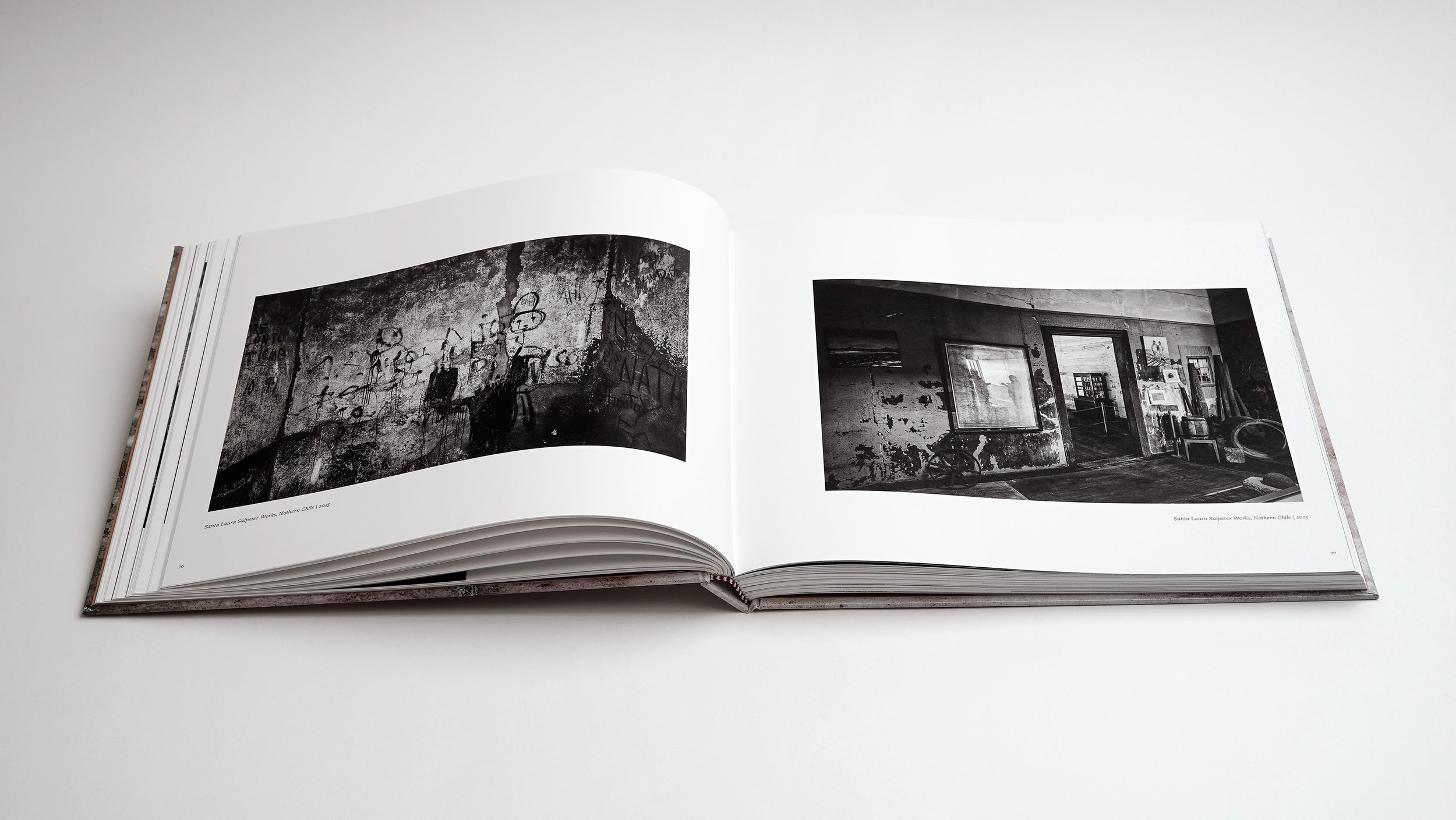
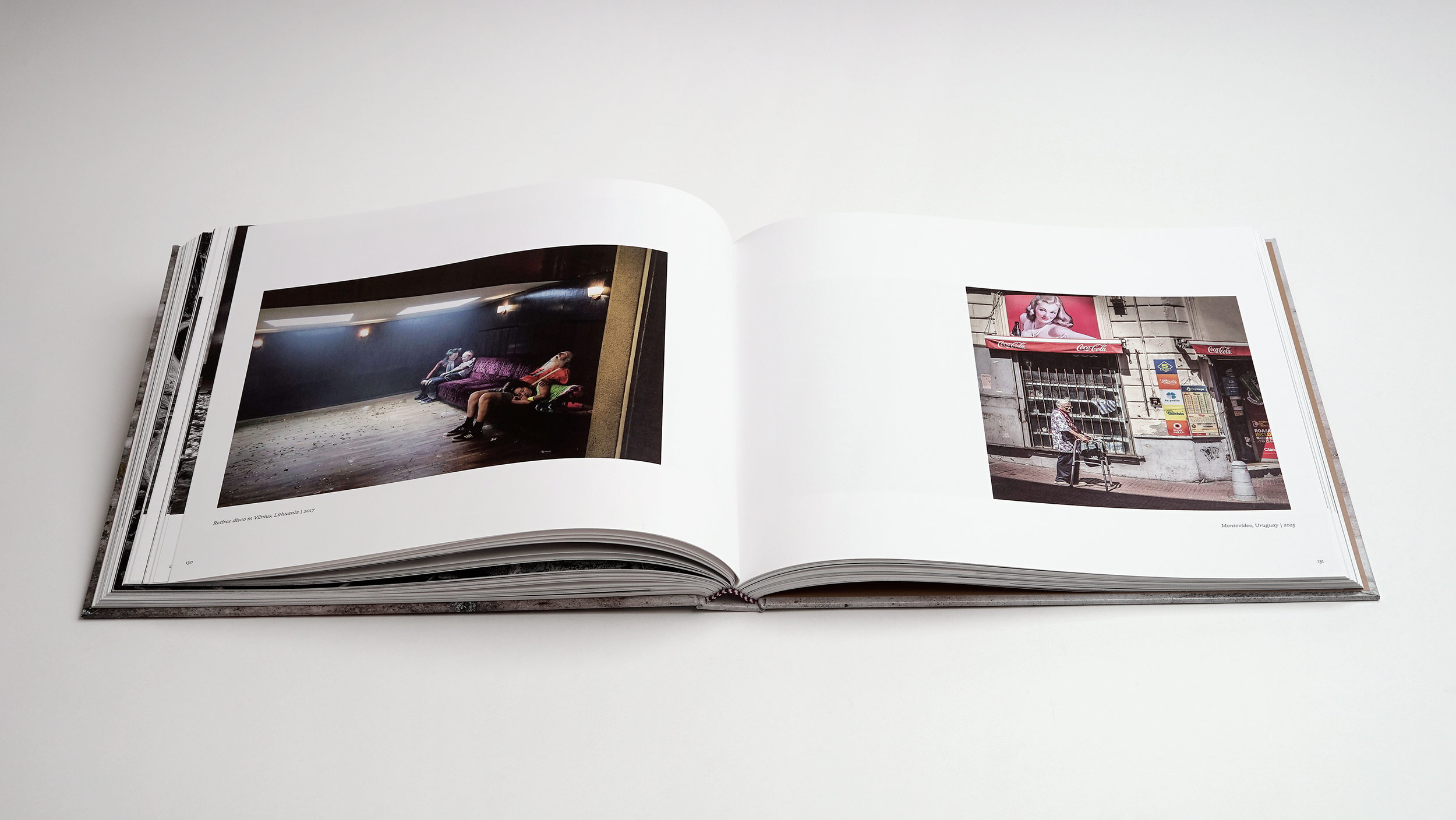
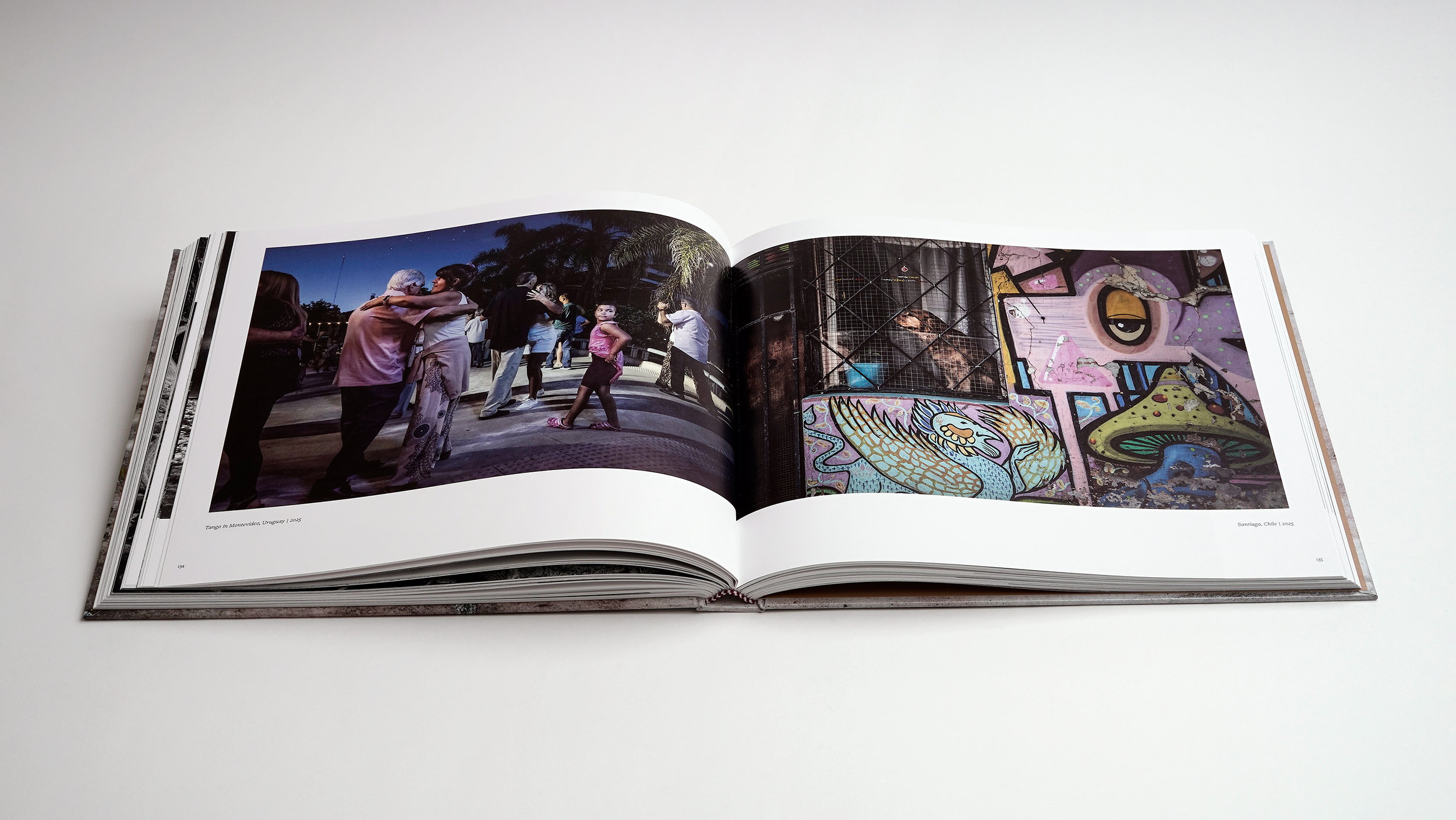
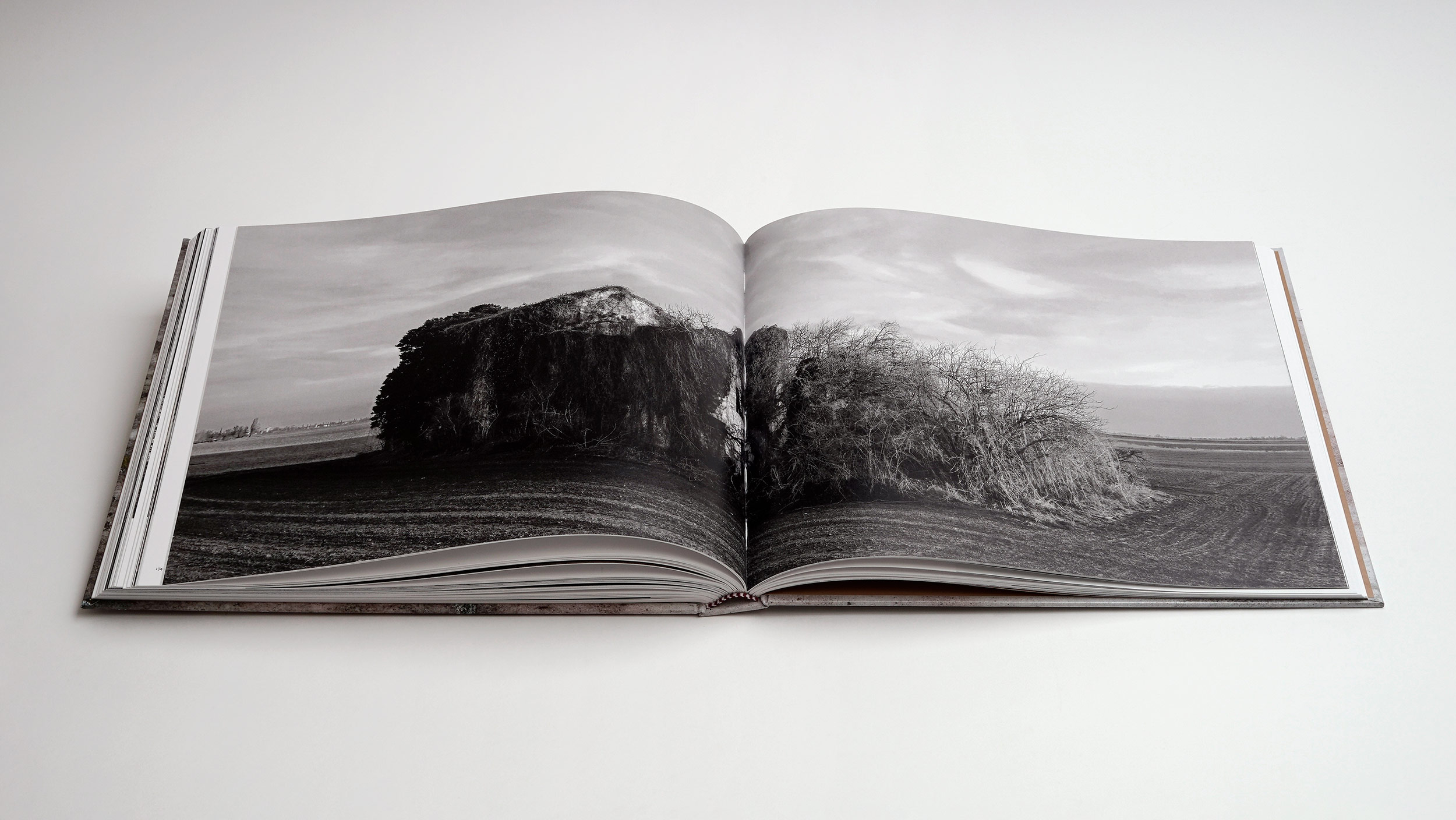
Erich Hörtnagl
Unforgettable – Unforgotten
 | |
|---|---|
| Editor(s) | Chiaro Scuro AB |
| Author(s) | Kurt Höretzeder, Alois Schöpf |
| Design | Olof Werngren, Ewa Jönsson Hörtnagl |
| Size | 30.5 x 26 cm |
| Cover | Hardcover |
| Pages | 236 |
| Illustrations | 186 |
| Language(s) | German, English |
| ISBN | 978-3-96912-259-4 |
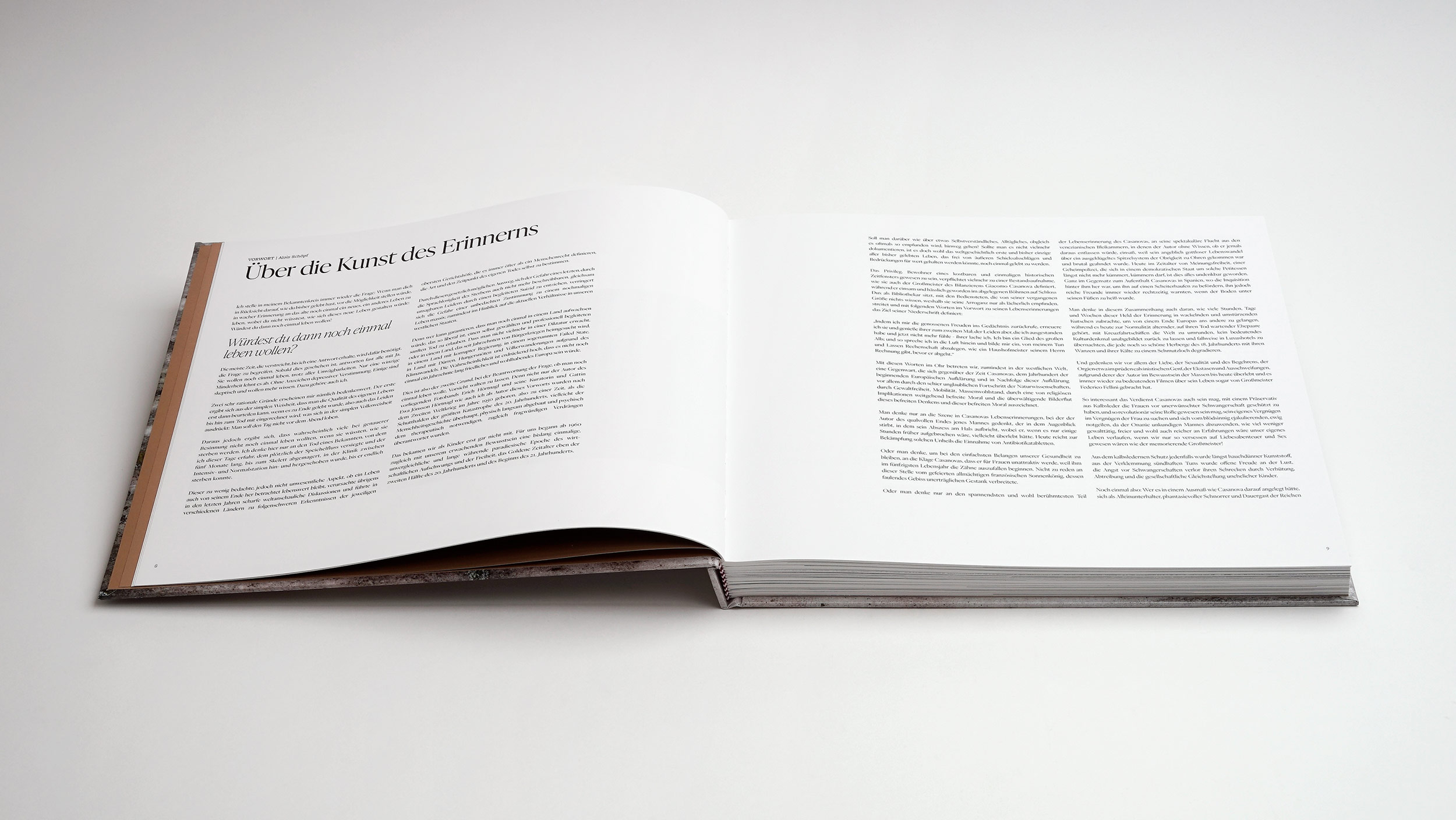
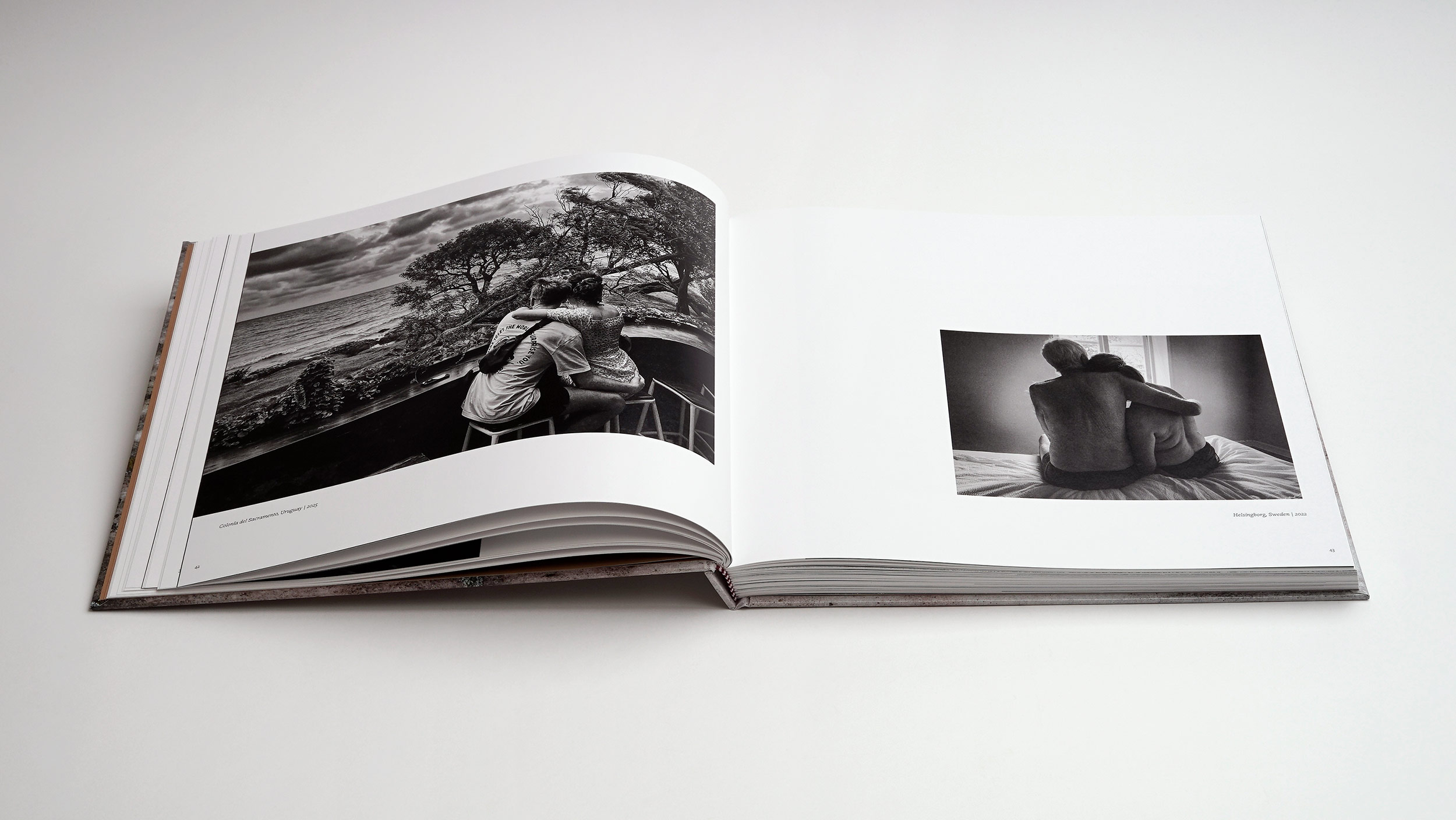
How can a life be remembered—what remains, what vanishes?
In Unforgettable | Unforgotten, Erich Hörtnagl brings together photographic fragments that are more than just memories: they are symbols of lived time. Roland Barthes’ concept of the “punctum” experience—that instant when a detail in an image pierces the heart—provides a key to Hörtnagl’s photographic gaze. It is not the spectacular events but the quiet and incidental things that move us. The seemingly insignificant becomes a projection screen for memory, loss, and emotion. The focus is not on what is staged, but on what eludes creative control.
Accompanied by insightful writings by Alois Schöpf and Kurt Höretzeder, a quiet monologue emerges about happiness and missed opportunities, about what we receive—and what we give. A book that doesn’t provide answers but asks questions: What makes a life worth living? What remains unforgettable or unforgotten?
You may also like…
-

Erich Hörtnagl
to be a man38€ Add to cart“A photograph is a secret about a secret. The more it tells you, the less you know.” The witty remark, attributed to Diane Arbus, succinctly captures the twofold code at work in Erich Hörtnagl’s (b. Innsbruck, 1950) pictures. Aesthetically appealing photographs, mostly in black and white, show men (and women) in a wide variety of cultural, social, and religious contexts: from Swedish bikers and drag queens to monks in Myanmar, from Turkish belly dancers to Tyrolean performers in traditional attire. What looks at first glance like a conventional photobook soon reveals itself to be a brilliantly staged interactive riddle around clichéd notions of masculinity with positive and negative connotations, around gender roles and persistent stereotypes. With the deftly composed visual meta-narrative in to be a man, Hörtnagl, a seasoned theater and film director, lures us into a trap, and the only way out is by taking the challenge head-on: by engaging in self-reflection and questioning our own prejudices and ideas.

More books
-

Larissa Fassler
Building Worlds20€ Add to cartThe drawings and sculptures of Larissa Fassler (born 1975 in Canada, lives in Berlin) both document and question the modern metropolis, its public squares, train stations, and functional buildings. Fassler researches her chosen locations extensively in city archives and online. She tracks trends such as economic disparity, gentrification, homelessness, or drug consumption. She supplements these statistical facts with her own subjective survey methods, such as repeatedly visiting and observing the sites. All of the information gathered finds its way into Fassler’s complex cartographic drawings and sculptures, which reflect the socioeconomic and geopolitical challenges of our time. This book accompanies Fassler’s exhibition at the Kunstverein Lingen.
-

Born in the Woods
Jems Koko Bi & HAP Grieshaber24€ Add to cartThe Political Substance of Wood
Jems Koko Bi (b. Sinfra, Côte d’Ivoire, 1966; lives and works in Kaarst, Germany, Dakar, and Abidjan) is world-renowned for the monumental wood sculptures he creates using a machine saw. This book juxtaposes his most recent body of works with the large-format woodcuts of HAP Grieshaber (b. Rot an der Rot, Germany, 1909; d. Eningen unter Achalm, 1981). Although the two artists never met, their oeuvres are characterized by similar themes, values, and materials. The central concern is the fate of the forests and its momentous political and social implications: Grieshaber’s woodcuts articulate his principled opposition to the predatory exploitation of nature in the 1970s—an issue that is more relevant than ever today in light of the climate crisis and the Fridays for Future movement. Koko Bi’s figural groups bring this tradition of political art into our time, making a global and universally compelling case for a sustainable husbandry of our resources.
Jems Koko Bi studied at the Institut National Supérieur des Arts et de l’Action Culturelle (INSAAC), Abidjan, and the Düsseldorf Academy of Fine Arts. His work has been exhibited widely, including at the Centre Pompidou, Paris; at documenta 13; the Havana Biennial; and several Venice Biennials and Dakar Biennials. In 2019, he founded the forest biennial Abidjan Green Arts.
HAP Grieshaber studied advertising art at the Staatliche Kunstgewerbeschule, Stuttgart. His work is regarded as a signal contribution to the renewal of the woodcut medium in the twentieth century. He participated in documentas I, II, and III, held a professorship at the State Academy of Fine Arts Karlsruhe, and was honored with numerous awards and retrospectives.
-

Ilit Azoulay
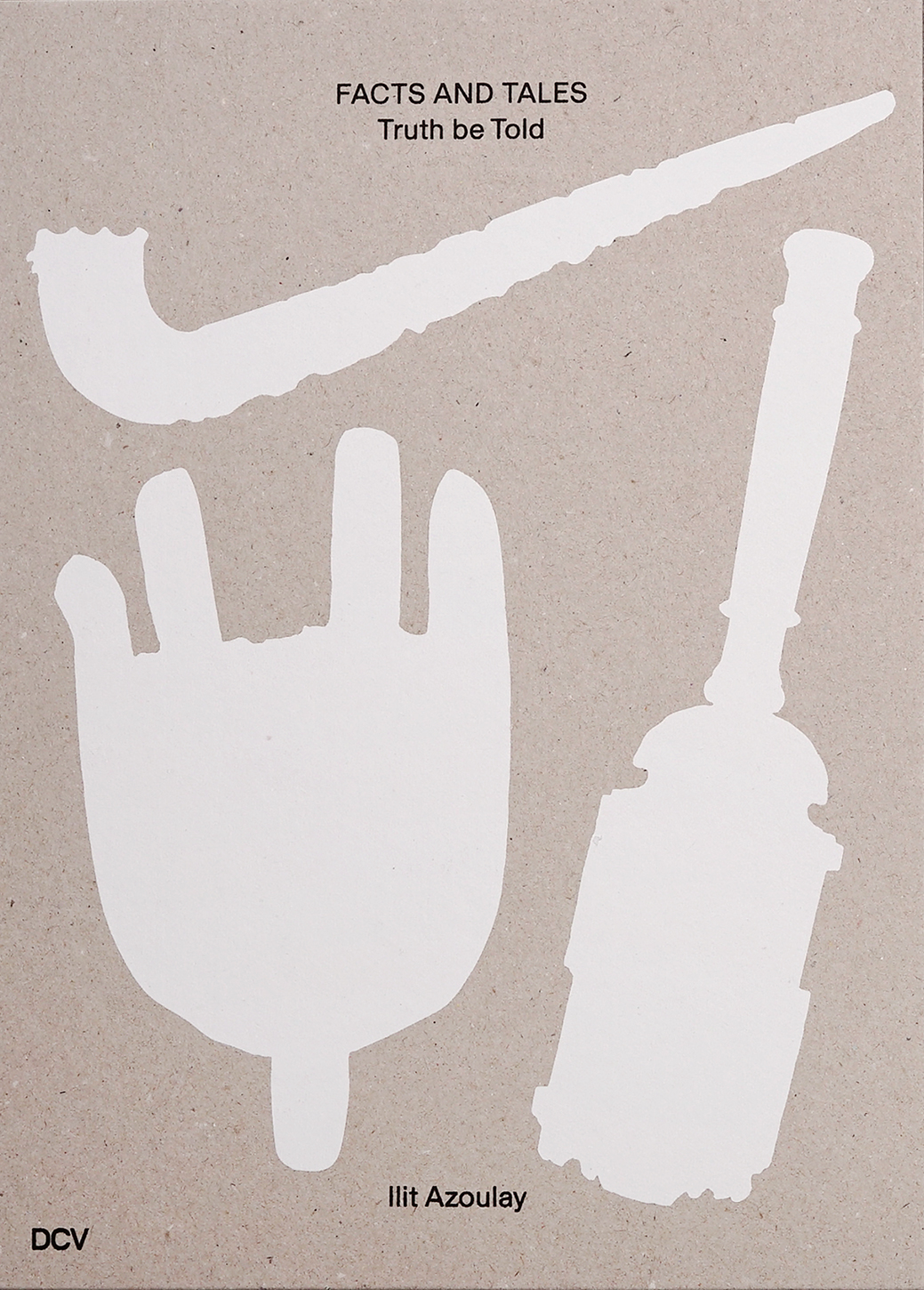
Facts and Tales. Truth be Told120€ Add to cartIn an era in which multiple perspectives and oral histories are increasingly vital, Facts and Tales—Truth Be Told delves into the haunting work of Ilit Azoulay. The artist, who was born in Jaffa in 1972, transforms objects, archives, and museum holdings into vessels, challenging traditional hierarchies of knowledge. In her most recent solo exhibition Mere Things at the Jewish Museum, New York, Azoulay presents works that probe the delicate balance between factual representation and nuanced storytelling.
The publication accompanying the exhibition includes archival pages, the artist’s notes, and depictions of the works as well as an introduction by curator Shira Backer and an essay by the art critic, curator, and writer Sarit Shapira, who passed away in 2018. Titled Houses of Junk and Specters: On Ilit Azoulay’s Early Works, it underscores the importance of honoring both factual accuracy and oral histories and invites readers to explore the complex interplay between concrete evidence and the rich and nuanced stories.
Azoulay has devised a singular method to shed light on the blanks in hegemonic narratives and expose them. As though to produce an extortion letter, she clips her pictures from archival materials and photographs of the walls of abandoned buildings and composes them in collages interweaving a multiplicity of views. The resulting works question the exclusive truth claim of museum expertise and reveal its constructed quality. The catalog of her works, designed as a box replete with texts and images, reflects this approach, aiming to dismantle established narratives and open up diverse perspectives.
Box containing 6 different standalone publications, limited edition of 500 copies
THIS PUBLICATION WAS MADE POSSIBLE BY THE GENEROUS SUPPORT OF THE GALLERY LOHAUS SOMINSKY, MUNICH
-

Anna Bogouchevskaia
Shouldn’t Be Gone25€ Add to cartAnna Bogouchevskaia (b. Moscow, 1966; lives and works in Berlin) sees her work in sculpture as a geopolitical engagement with concerns on the intersection between figuration and abstraction. Macroscopic aluminum drops, bizarre bronze flowers, fog and snow made of silver—the artist, a committed environmentalist, has created a peculiar and fascinating world of evanescent natural phenomena. Focusing on two molecules—carbon dioxide and water—in their various states of aggregation, she draws attention to the threats posed by climate change.
The publication Shouldn’t be gone presents Bogouchevskaia’s most recent works since 2019: an urgent message of warning from an artist whose sculptural oeuvre even today has the air of a monument to a world in demise.
-

WORLD FRAMED
Zeitgenössische Zeichenkunst der Sammlung Schering Stiftung im Kupferstichkabinett38€ Add to cartIn 2008, the Schering Stiftung began acquiring outstanding contemporary works on paper for the Kupferstichkabinett (Museum of Prints and Drawings) in Berlin. The collection, which has since grown to 130 nonfigurative drawings and a small number of prints, emphasizes the close conjunction of art and science. The holdings also reflect central tendencies in the art of drawing: in addition to exploring the line and its multifaceted formulation, artists shed light on the bounds of their medium and its expansions and undertake forays into inter-media art within drawing. The lavishly designed publication WORLD FRAME—the title is borrowed from a work by the artist Matt Mullican—presents the works acquired thanks to this partnership. It inquires into how artists translate their perceptions of their world into pictures and which contexts and discourses inform those pictures. Which perspectives, which ideas frame the segment of reality an artist observes?
“World Framed,” exhibition, Kupferstichkabinett, Staatliche Museen zu Berlin, July 7–October 8, 2023
-

João Onofre
Untitled (in awe of)25€ Add to cartJoão Onofre’s works are tributes to art history and pop. He gleans what is in danger of being lost right now, realigns it, and translates it into something sublime. His art encourages the beholders to reconsider a past that has faded in collective memory with a critical eye and make peace with it. His creative process is guided by the material and a clearly defined concept that nonetheless does not restrict a work’s finding its own way. That is why he does not commit to a particular medium, making videos, performances, installations, and much more. What all his works have in common is that they probe the limitations of their medium and our perceptive capacities in novel ways. This catalogue presents three recent works in which the essence of Onofre’s art becomes manifest: he molds myths and symbols into awe-inspiring images, sounds, and forms—not for nothing have critics labeled him an alchemist. In the catalogue, his tangible compressions of cultural history are rendered in imposing pictures and flanked by an ambitious essay that places them in their context.
- Out of stock

Karsten Födinger
Toward a Radical Sculpture42€ Read moreHarnessing the Formative Power of Gravity
Typically made of basic construction materials, the works of Karsten Födinger (b. Mönchengladbach, Germany, 1978; lives and works in Berlin) bridge the divide between architecture and sculpture. Ideas relating to the durability and load-bearing capacity of structures are a key interest in his creative process. Besides large sculptures destined for interior settings, Födinger makes striking sculptural interventions in public spaces that take inspiration from the specific site and always engage with its historical and cultural context. Untainted by romanticism, his sculptures symbolize the approach to a foreseeable end that is hastened by the uncontrolled exploitation of the earth’s resources. With numerous illustrations and essays, this first extensive monograph on the artist presents a comprehensive survey of his sizable oeuvre.
Födinger’s works have been presented in numerous solo exhibitions, including at Antenna Space, Shanghai, and the Palais de Tokyo, Paris. In 2012, he was awarded the Baloise Art Prize at Art Basel Statements.
-
Mihai Olos
42€ Add to cartMihai Olos (b. Ariniș, Romania, 1940; d. Endingen am Kaiserstuhl, 2015) ranks among the most fascinating artists of the second half of the twentieth century. His adaptations of the formal vocabulary pioneered by Constantin Brâncuși are unrivaled in their creative originality. His works evince an utterly novel approach to the combination of materials from the culture of rural Romania with the visual strategies of modernism. His formidable oeuvre engages with conceptual and minimal art and comprises paintings, drawings, and sculptures, sometimes in the dimensions of land-art projects, as well as performances and poetry. Despite the constraints imposed by the communist system, his art and travels—during which he also met his kindred spirit Joseph Beuys—were dedicated to the unerring pursuit of his vision of social sculpture and radical utopian architecture.
-

Billy Al Bengston
Watercolors48€ Add to cartThe Pop Artist as Master of Watercolor Painting
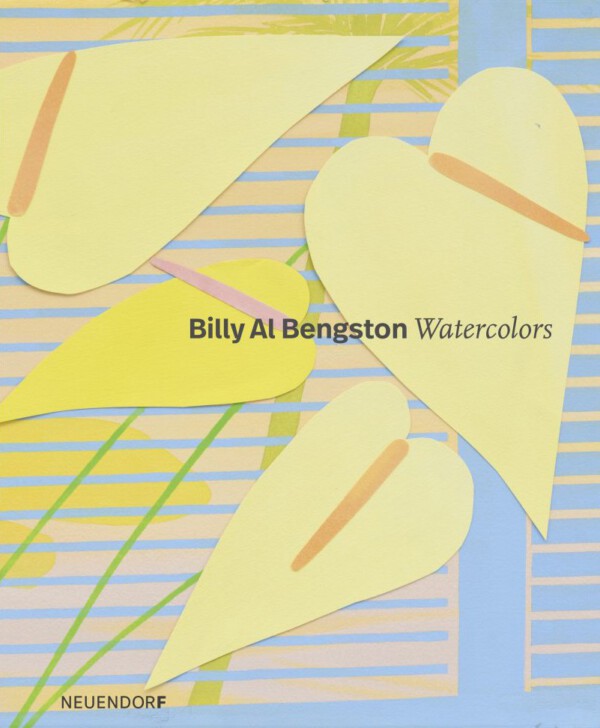
Billy Al Bengston (b. 1934, Dodge City; lives and works in Venice, California, and Honolulu, Hawaii) is a master of the watercolor. Themes and motifs that also determine the painterly work gain a special expressiveness here: bizarre landscapes and opulent blossoms, fantastic celestial bodies and colorful abstractions. This opulent volume presents this part of Bengston’s oeuvre for the first time in great breadth with roughly 400 works. They demonstrate the skill of an artist who has brought watercolor to extreme precision and enriched it with numerous new aspects.
Billy Al Bengston attended the California College of Arts and Crafts, Oakland, and the Otis Art Institute, Los Angeles. His works can be found in outstanding permanent collections, including the Centre Georges Pompidou, Paris, the Solomon R. Guggenheim Museum, New York, and the Museum of Modern Art, New York.
-

Jürgen Claus
To the Oceans with Imagination18€ Add to cartThe Sea as a Space of Artistic Experience
Jürgen Claus’s (b. 1935, Berlin; lives and works in Aachen and Baelen, Belgium) oeuvre encompasses paintings, films, light and solar installations, and underwater art. He is also a prolific writer on art, with theoretical works that have sold over 100,000 copies. “Jürgen Claus is the first one to see the ocean through an artist’s rather than a scientist’s lens,” Michel Ragon writes. In this book, Claus intertwines his experiences working on the fascinating underwater installations with a pressing contemporary concern: the global efforts to restore the seas to health. The publication combines visual art, architecture, poetry, and music for a multifaceted engagement with the world’s oceans.
Jürgen Claus majored in theater studies at the Universität München and was a research associate at the Massachusetts Institute of Technology (MIT) and professor of media art at the Kunsthochschule für Medien Köln, Cologne.
- temporarily not available

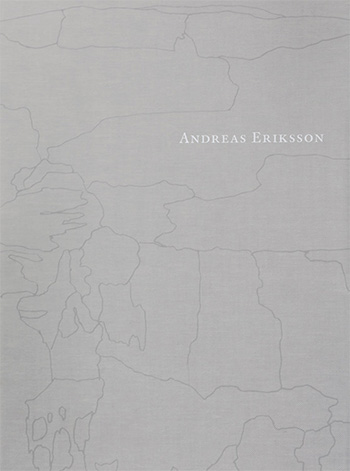
Andreas Eriksson
Read moreAll is related, from the outside in. Look what’s behind it.
Andreas Eriksson (b. 1975 in Björsäter, lives and works in Medelplana, Sweden) is one of Sweden’s most notable contemporary artists. His artistic practice is based on a traditional painterly language, but he constantly expands this field to also encompass a vast production of textile works. He examines different histories through conceptual twists and turns in sculpture and prints. This monograph, the artist’s first, seeks to explain and illustrate Eriksson’s development and thoughts behind the meandering array of works he produces. It is a close look behind the canvas.
Andreas Eriksson studied at the Royal Academy of Fine Arts in Stockholm from 1993 to 1998 and represented Sweden with the Nordic Pavilion at the 54. Biennale di Venezia. His most comprehensive solo exhibition to date took place in 2014 at Bonniers Konsthall, Stockholm.
-

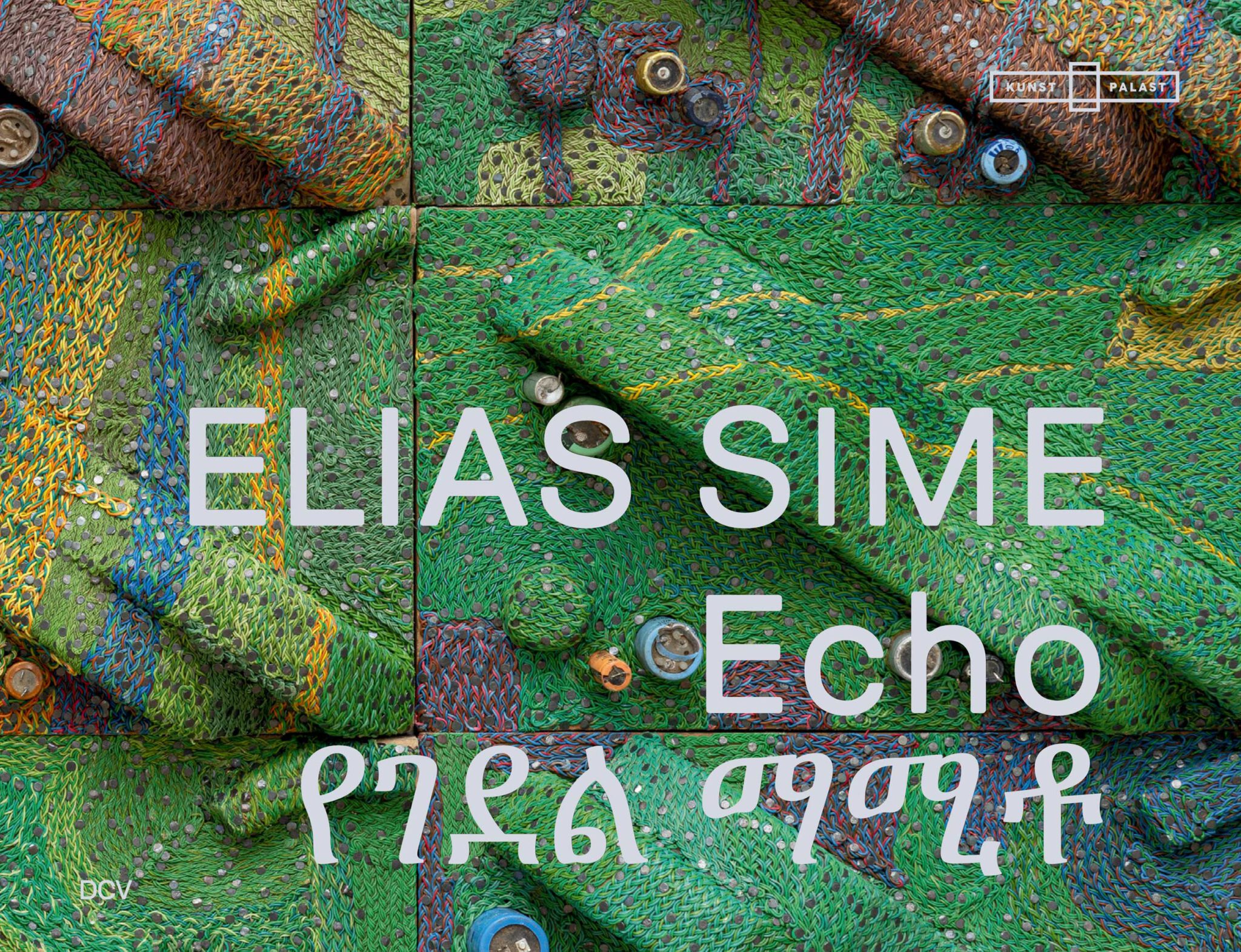
Elias Sime
Echo የገደል ማሚቶ35€ Add to cartEthiopia’s multi-award-winning artist Elias Sime (born 1968 in Addis Ababa) impresses with monumental wall reliefs made of ornamentally interwoven wires and cables or sawn-up circuit boards. For years, together with his team, he has been tirelessly
reworking discarded electronic components into complex and colorful assemblages. In doing so, he draws on traditional Ethiopian techniques of weaving, braiding and carving. Sime is interested in the “biography of the material” and each collage is a search for traces (of the local and global past). The artist obtains the electronic waste, which the countries of the global North are known to like to “dispose of” in the African continent, from the flea markets in Addis Ababa. His friezes are monuments both to the throwaway society and to global networking and interaction.
Echo የገደል ማሚቶ, a richly illustrated book, gives an overview over the artist’s fascinating career and is published on the occasion of the solo show at the Kunstpalast Düsseldorf. The volume includes insightful essays by Felicity Korn and Andria Hickey as well as an important conversation with Hans-Ulrich Obrist from 2016. Also discussed is the Zoma Museum complex, which was initiated by Sime (together with the curator Meskerem Assegued)—a total work of art that is exemplary for sustainability and community building.
-

Jan Zöller
Ritual Believer40€ Add to cartJan Zöller’s (b. Haslach, 1992; lives and works in Karlsruhe) paintings, sculptures, and installations probe the discrepancy between economic production and the spiritual and magical dimension of art. The artist’s book Ritual Believer surveys the so-called charcoal paintings series, created between 2019 and 2023. For these works, the artist paints directly in charcoal on the unprimed canvas, making it impossible to correct “blunders.” Another distinguishing feature is the virtual absence of color; the austerity of the compositions contrasts with Zöller’s other, often intensely colorful paintings. The motifs that are the hallmark of his oeuvre—birds, running legs—are complemented by writing and text. Another aspect of this shift is that the works’ titles play a central part and almost figure as a creative element in their own right. For the text in the book, the artist sent the titles of the works shown to his brother, who wove them into a story. An appendix presents scanned archival materials. Notebooks and zines Zöller produced between 2015 and 2017 provide interesting insight into how he finds his motifs and his compositional process.
Jan Zöller studied with Marijke van Warmerdam and Leni Hoffmann at the Akademie der Bildenden Künste Karlsruhe from 2012 until 2017 and with Jean-Marc Bustamante and Götz Arndt at the École Nationale Supérieure des Beaux-Arts de Paris in 2016.
-

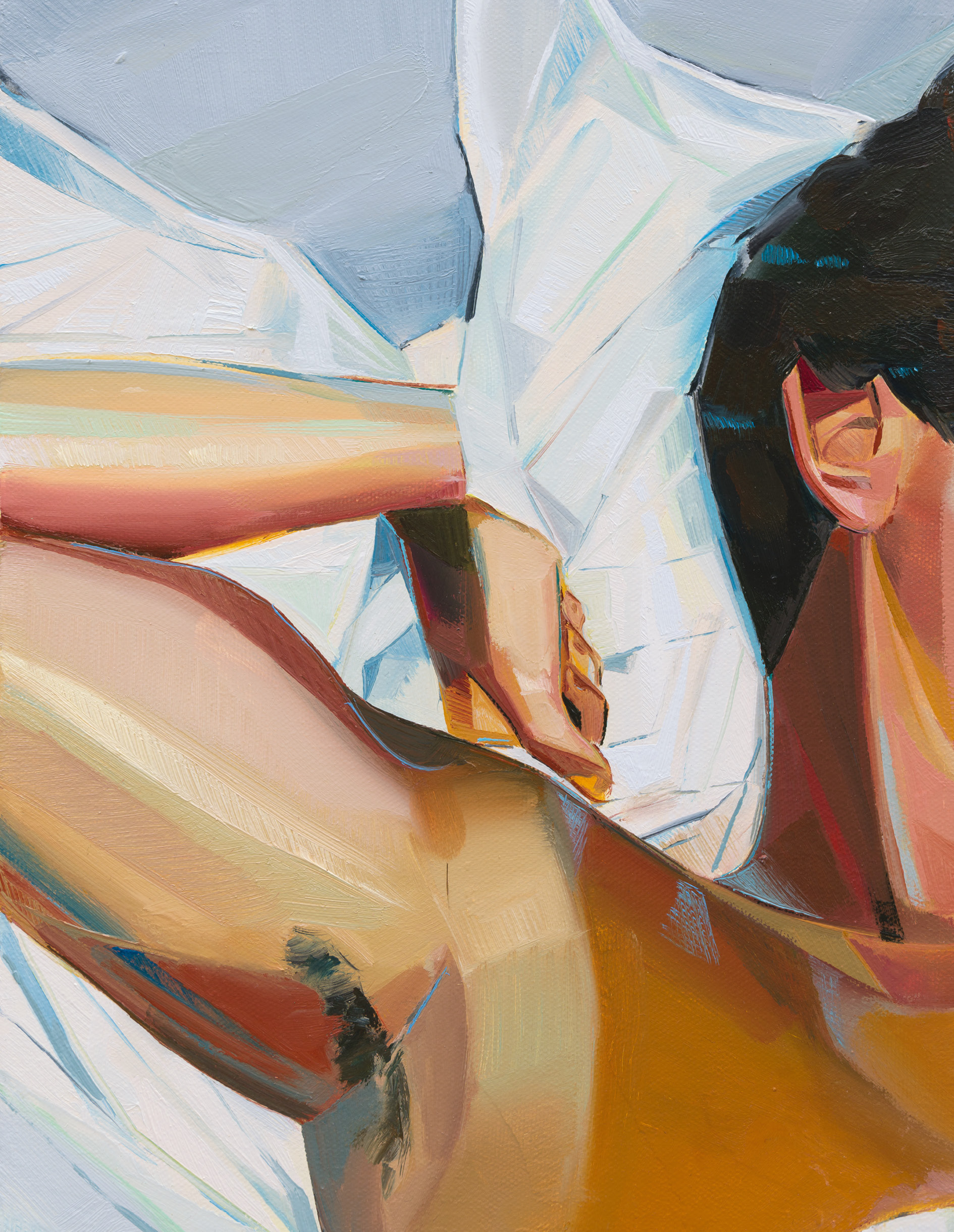
Logan T. Sibrel
But I’m Different50€ Add to cartLogan T. Sibrel’s (born 1986 in Jasper, IN, lives and works in Brooklyn, NY) paintings and drawings depict moments of great joy and beauty, but also fear, sadness, desire and aggression. Frequently only part of the mostly male figures is depicted. Sibrel’s cropping can feel simultaneously intimate and alienating—fragmentary stories are told that touch you through their authenticity and vulnerability. Sibrel’s artistic maneuvers include overlapping, shifted perspectives, and text fragments that appear like snippets of overheard conversations and thus create a collage effect.
This book is the artist’s first comprehensive publication with works from the last twenty months. While the first part presents the artist’s paintings, the second part presents his drawings with the edges of the backing paper digitally removed so that it looks as if the images were drawn directly into the book.
Logan T. Sibrel completed his bachelor’s degree at Indiana University in Bloomington in 2009 and his master’s degree at Parsons New School of Design in New York in 2011. His most recent solo exhibitions include In Another Life and Galerie Thomas Fuchs (Stuttgart, DE) and Brake For Your Sweetheart at Auxier Kline (New York, NY).
-

Karsten Konrad
Room Service42€ Add to cartThe Visual Archeologist
Objets trouvés, used designer objects, and discarded furniture are the defining elements of the sculptor Karsten Konrad’s (b. Würzburg, 1962; lives and works in Berlin) material poetics. Not unlike the Dadaist or Surrealist readymade, the works that Konrad has made since the 1990s transform these “disregarded things” into sculptures, immersive installations, reliefs, and collages. Detecting the faint traces that anonymous consumers have left on the secondhand stuff, he unfolds an archaeology of the present. Konrad’s first monograph in a decade offers comprehensive insight into an oeuvre that throws the marginal into relief and questions the destructive impact of unbridled consumerism.
Karsten Konrad studied at Johannes-Gutenberg-Universität, Mainz, and the Royal College of Art, London. He has been professor of sculpture at the Universität der Künste in Berlin since 2016. His works are held, amongst others, by the Bundeskunstsammlung Bonn and the Margulies Collection, Miami.
Each copy is hand-signed by the artist on the spine.
-
Jan Zöller
Keine Zeit zum Baden38€ Add to cartJan Zöller’s (b. Haslach im Kinzigtal, 1992; lives and works in Karlsruhe) art brims with personal references and experiences that he translates into his distinctive personal visual idiom. His paintings are theatrical arrangements for which he draws on a multifarious repertoire of motifs. Zöller’s first monograph Keine Zeit zum Baden presents new works engaging with the exhibition space such as a floating installation with blue tiles from the exhibition of the same title at Städtische Galerie Ostfildern and videos and large-format paintings from the cycle Badebrunnen that were created between 2019 and 2022. The bathtubs in the pictures hint at private moments of relaxation; the fountains, at the “eternal cycle” of nature. The title Keine Zeit zum Baden (No Time for Bathing), then, gestures toward the subjects of the works, but also suggest the dilemma of striking a healthy balance between life, work, and one’s vocation.
Jan Zöller studied with Marijke van Warmerdam und Leni Hoffmann at the State Academy of Fine Arts Karlsruhe from 2012 until 2017 and with Jean-Marc Bustamante at the École Nationale Supérieure des Beaux-Arts de Paris in 2016. He won the Federal Prize for Art Students of the Bundeskunsthalle, Bonn, in 2018, followed by Stiftung Kunstfonds’s working fellowship in 2021.
-

Margret Eicher
Lob der Malkunst38€ Add to cartContemporary Visual Communication in a Historic Weaving Technique
Margret Eicher’s (b. Viersen, Germany, 1955; lives and works in Berlin) large-format tapestries combine the baroque form of the woven picture with familiar motifs excerpted from contemporary media images. She digitizes her sources and then assembles them in painstaking editing work on the computer. The resulting ‘media tapestries’ occupy the interface between the traditional work of art as a physical object and the electronic noise of the digital realm: two worlds that at first glance would seem to be incompatible yet find themselves in harmonious union in Eicher’s art. In Göttliche Liebe (Divine Love), for example, Caravaggio’s Crowning with Thorns meets a kissing gay couple from a pro-tolerance campaign in Berlin, while Botticelli’s Birth of Venus is sampled together with a subway station in Frankfurt. In conceptual art production, the creative idea is central and its realization becomes secondary; in a final twist, Lob der Malkunst (Praise of Painting) elects this practice as its artistic lodestar. Eicher installs the painter Martin Kippenberger in the interior of Berlin’s Paris Bar, where he poses as a dandy and presides over a clash between the different tendencies in the art of the twentieth and twenty-first centuries.
-

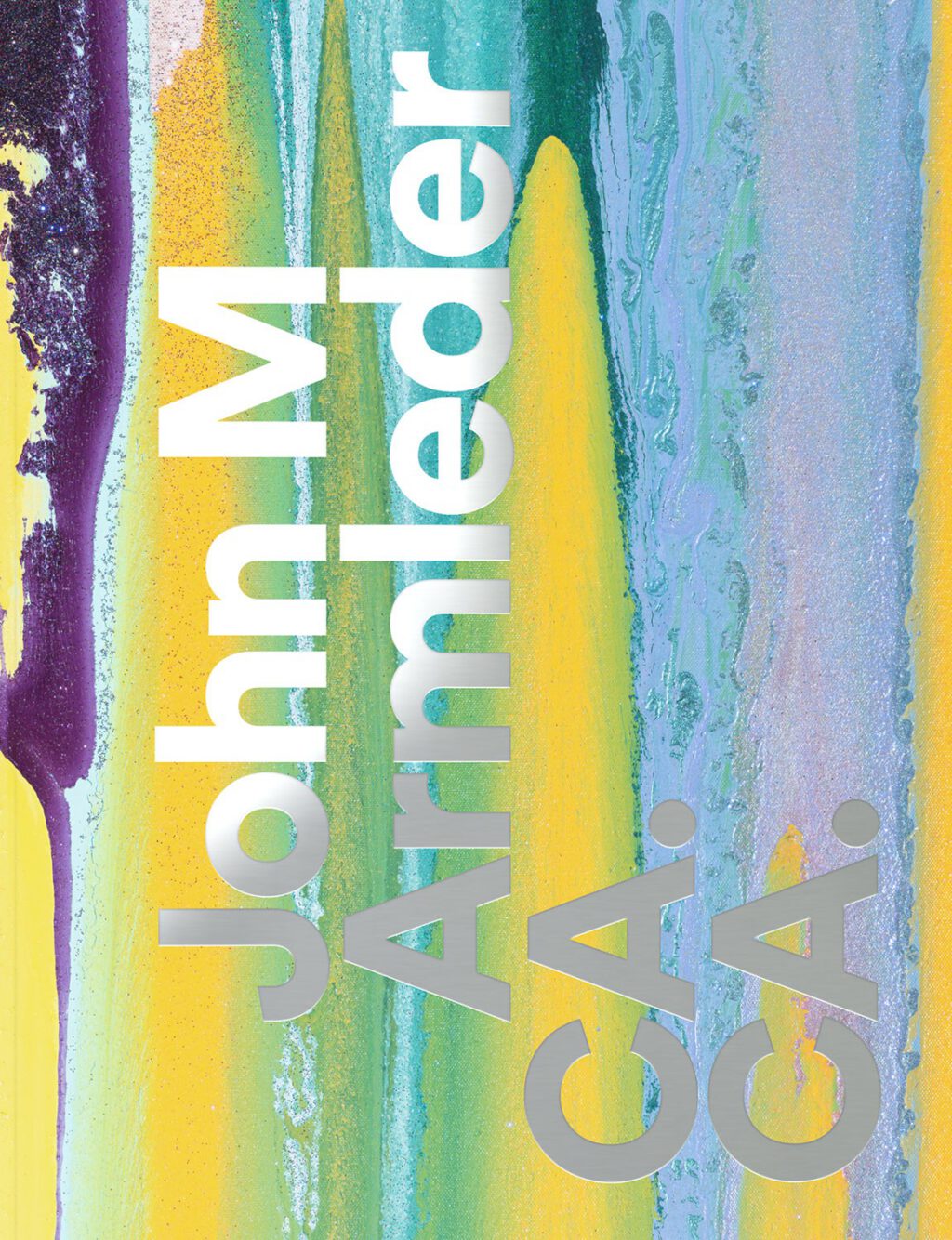
John M Armleder
CA. CA.19€ Add to cartCommentaries on our Present Day Realities and the Status of Art
John M Armleder (b. 1948, Geneva; lives and works in Geneva and New York) is one of the most influential contemporary conceptual, performance and object artists. The profound and the banal, control and coincidence, high culture and everyday life coalesce in Armleder’s work to create a unique experience. The works of the Swiss – often humorous or ironically twisted commentaries on contemporary reality – draw on the formal repertoire of Classical Modernism, as well as on video and design. The book focuses on large-scale, site-specific installations and wall pieces, showing in detail the broad spectrum of Armleder’s work.
John M Armleder studied at the École des Beaux-Arts in Geneva. He represented Switzerland 1986 at the 42nd Biennale di Venezia and participated in documenta 8 one year later. His work has been exhibited at the Museum of Modern Art, New York, Palais de Tokyo, Paris, and Belvedere, Vienna, amongst others.
-

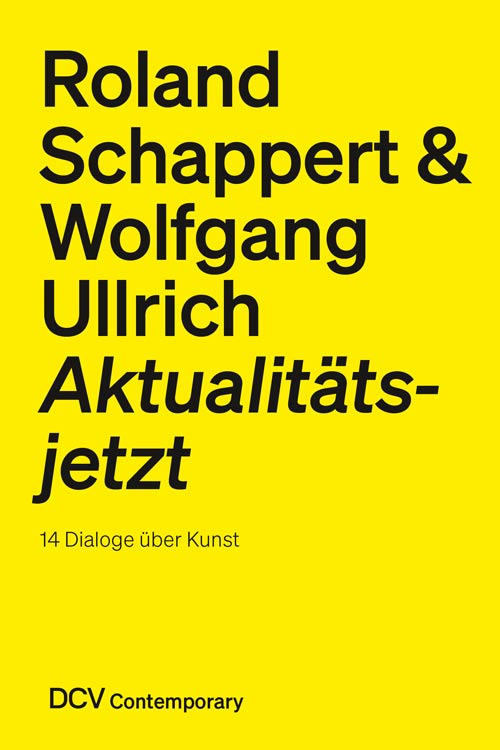
Roland Schappert & Wolfgang Ullrich
Aktualitätsjetzt16€ Add to cartPhilistinism, climate change, legitimation discourses—in a tour de force sustained by profound knowledge of the phenomena in question, AKTUALITÄTSJETZT blazes trails through the jungle of contemporary art and its current debates. Over the course of two years, the art scholar and author Wolfgang Ullrich initiated 14 dialogues on Schappert’s word paintings, murals, and interventions. Their distinctive formal features and conceptual and substantial dimensions inspired illuminating conversations that range far beyond the specific works to explore today’s art world and questions of the philosophy of art and the sociology of culture. The best volume of dialogues on art since David Sylvester’s interviews with Francis Bacon.
-

Maria Braune
Keep Away From Fire28€ Add to cartMaria Braune’s (b. Berlin, 1988; lives and works in Munich and Bamberg) work revolves around a material she developed; named Migma, it consists of eight different renewable natural resources. She heats it, then casts and molds it in a process that continues for weeks. The resulting sculptures and installations sprawl throughout the space like sensuous organisms. Associations of growth and symbiosis emerge, but discontinuities and disintegration come into view as well. Braune’s creative process is part of an ecosystem and thoroughly anchored in the now. Her material is a vitally alive substance to which she responds in an immediate engagement, connecting it to mythological and narrative significations and setting it in relation to her own world.
Maria Braune studied woodcarving at the Fachhochschule für Bildhauerei in Berchtesgaden, Germany, in 2009–2011, then fine arts with Hermann Pitz at the Academy of Fine Arts Munich, where she graduated in 2017.