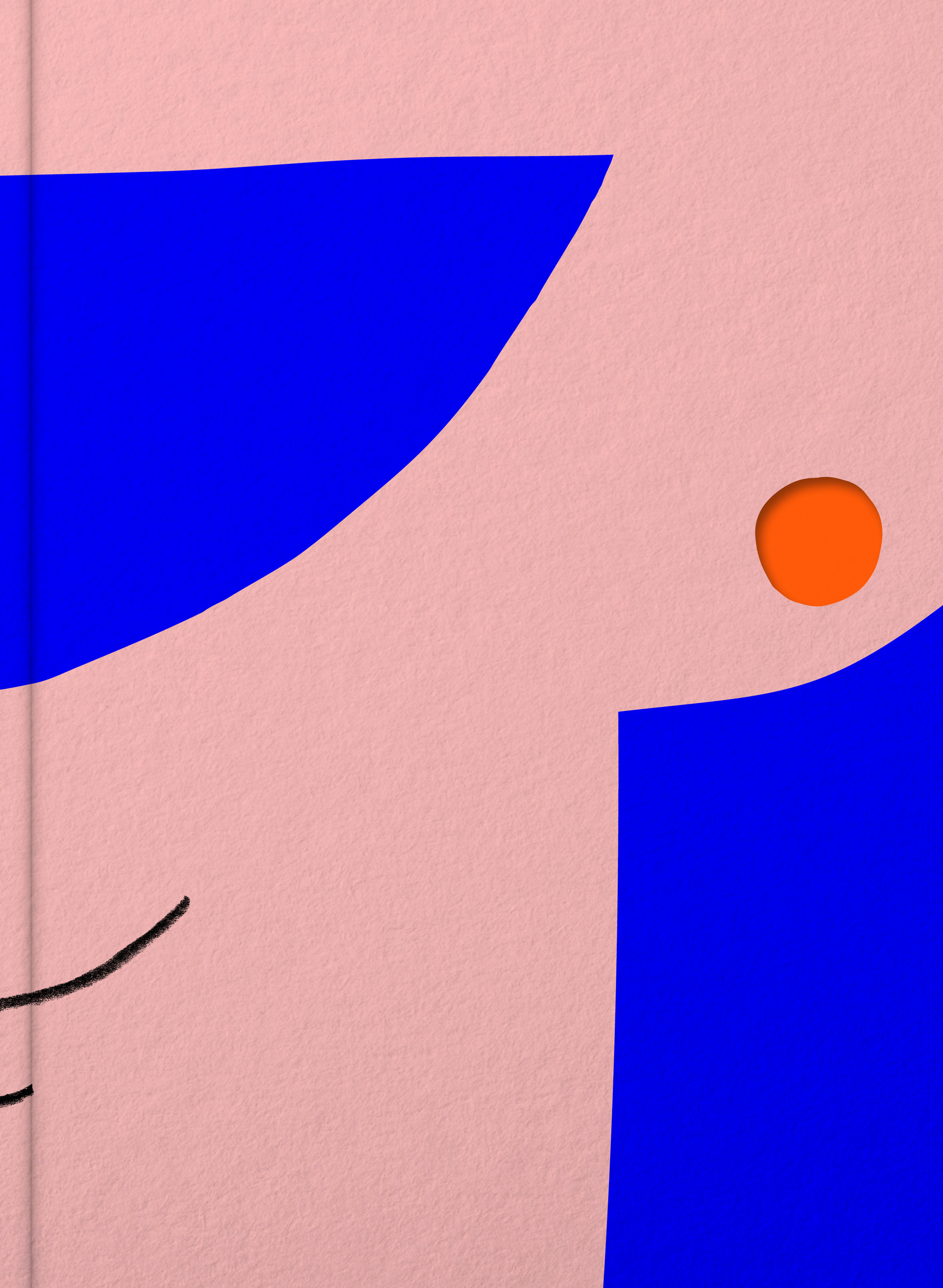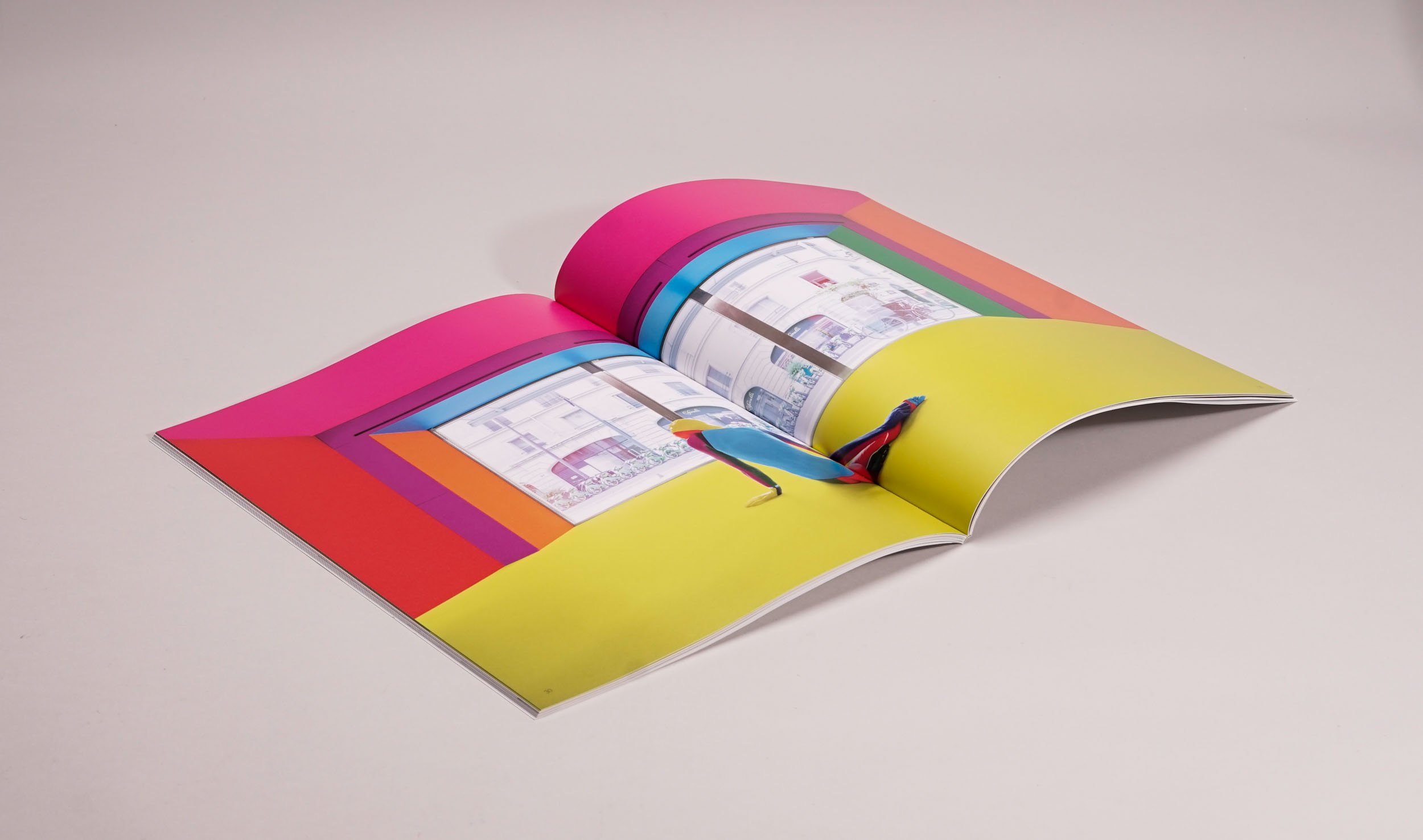
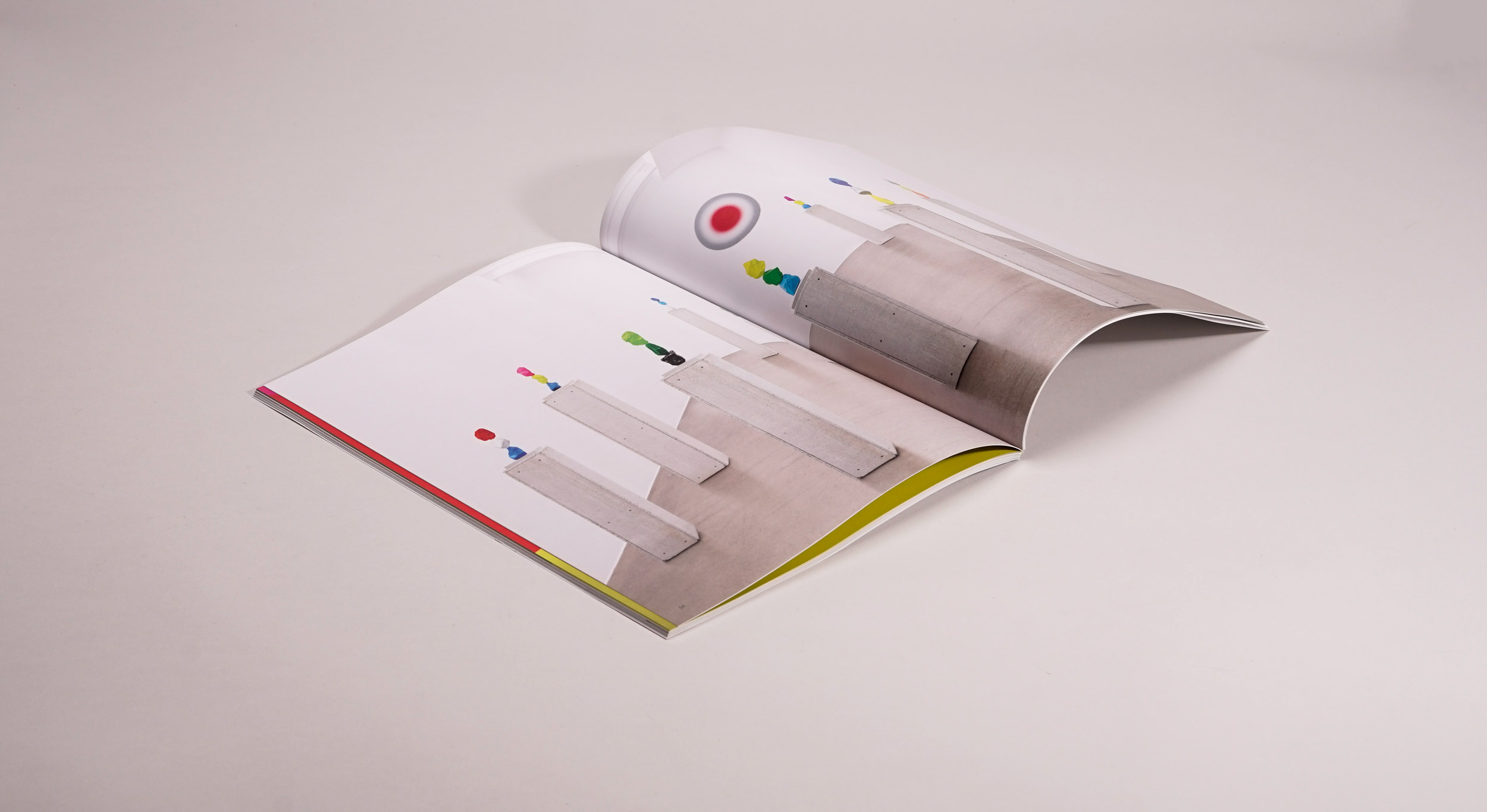
Ugo Rondinone
winter, spring, summer, fall
 | |
|---|---|
| Editor(s) | Galerie Krobath, Kamel Mennour, Sadie Coles HQ |
| Author(s) | James Cahill, Marlo Saalmink, Nina Schedlmayer, Erik Verhagen |
| Design | Ugo Rondinone, Francisco Ramirez Barrera |
| Cover | Softcover |
| Size | 24,5 x 31,5 cm |
| Pages | 50 |
| Illustrations | 56 |
| Language(s) | English |
| ISBN | 978-3-96912-088-0 |
Ugo Rondinone (b. Brunnen, Switzerland, 1964; lives and works in New York) is one of the most accomplished artists of his generation. For three decades, the conceptual and installation artist has built an oeuvre grappling with themes of time and impermanence, day and night, reality and fiction, nature and culture. Spanning diverse media—painting, sculpture, film, and installation art—his work is rooted in the transformation of outward reality into a subjective and emotionally charged world within, harnessing a multifaceted system of inspirations and references from German Romanticism to American Land Art and international pop culture. Balancing the mundane with the spiritual, the artist conjures suggestive atmospheres that capture the contemporary mood.
This book gathers four exhibitions of Ugo Rondinone’s work in 2021: a wall . a door . a tree . a lightbulb . winter at theSørlandets Kunstmuseum (SKMU), Kristiansand, Norway; a sky . a sea . distant mountains . horses . spring at Sadie Coles hq, London; a rainbow . a nude . bright light . summer at Kamel Mennour, Paris; and a low sun . golden mountains . fall at Galerie Krobath, Vienna.
More books
-

Räume hautnah (GERMAN)
Draiflessen Collection32€ Add to cartWe live in spaces that we shape in accordance with our own ideas. Our everyday lives leave traces in them that speak to our habits. Spaces promise shelter and belonging, but they can also instill a sense of constraint. We grow into the spaces we inhabit—and they in turn become expressions of our personalities. Conversely, spaces, depending on their architecture and location, inform our existence. RÄUME HAUTNAH gathers works of art that, rather than conceiving of the human sphere and the spatial domain as separate, comprehend them in their complex entanglements: in bodily experience, emotional dependency, or the instinctive need for protection. An essay by Olesja Nein, the project’s curator, offers an introduction to the exhibition and takes the reader on a tour, describing each artist’s space of activity and supplying helpful information. Philipp Zitzlsperger, meanwhile, zooms in on a key aspect of the art in the exhibition, the imprint as an artistic technique with a distinctive aura, and illuminates its origins and significance since the dawn of modernism.
Artists: Absalon, Shannon Bool, Heidi Bucher, Eileen Gray, Do Ho Suh, Mary Mattingly, Tracey Snelling, Francesca Woodman
-

Stephan Kaluza
Fragmente eines Ängstlichen28€ Add to cartA Novel on Coping with Guilt or the Feeling of Having Violated Life
The filmmaker Castner and the anthropologist Pollock not only share the similarity of their names with those of Castor and Pollux, the fabled twins of Greek myth, but also a hard fate: an irreparable guilt whose motifs run through the entire novel. Pollock is forced to admit to himself that, in his role as a scientist, he was involved in a genocide against indigenous people in Panama; Castner, meanwhile, tries to get a handle on his bouts of excessive hypochondria. In episodic flashbacks and an interview that gradually turns into an emotional dispute between them, the two characters analyze the minutiae of their life stories and arrive at a surreal insight.
Castor and Pollux were known in antiquity as the patrons of sailors, who took their bearings from the twins’ constellation. That is why water figures in this novel as the element that unites all narrative planes. Water—like life—will fill any vacant space regardless of shape and adapt to all circumstances.
Stephan Kaluza (b. Bad Iburg, 1964; lives and works in Düsseldorf) is a visual artist, working in the media of photography and painting, and a writer whose output includes plays, novels, and nonfiction books. The philosophy of nature is a central theme in both Kaluza’s art and his fiction.
- Out of stock

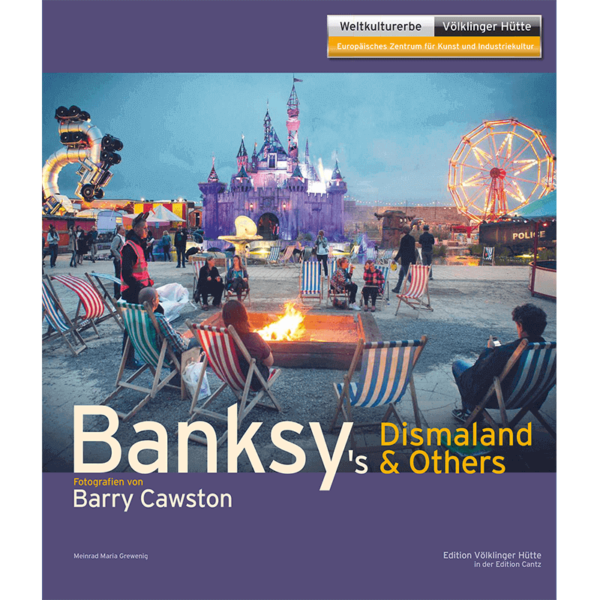
Banksy’s Dismaland & Others
14,80€ Read morePhotographs by Barry Cawston
The two projects by the British street artist Banksy, Dismaland and Walled Off Hotel, received an outstanding response worldwide. The book presents for the first time the documentation of the two extraordinary works from the perspective of Barry Cawston, the artist’s official photographer.
-

6 U L
Lust and Desire in Art and Design28€ Add to cart“Whose Jizz is this?” Sechs-u-ell: to make sense of the publication title, trust your college German and your phonetic ear. “Sexual,” here, comprises the entire broad spectrum of what we associate with carnal pleasure. Lust, desire, ecstasy, repression, obsession—the world of art, fashion, and design abounds with specimens of eroticism and sexuality in their infinite variety, shopworn stereotypes be damned. Looking back on the thorough revision of society’s ideas about sexuality in the past three decades, the book inquires into how the works of visual artists, fashion creatives, and designers reflect today’s public debates over biological and social gender roles, power structures, and sexual violence or the fading of taboos over sexual practices. With works and designs by Walter Van Beirendonck, Monica Bonvicini, Tracey Emin, Hans-Peter Feldmann, Jürgen Klauke, Peaches, Cindy Sherman, Kara Walker, Vivienne Westwood, and many more. This book documents a grand exhibition scheduled for the past summer at the GRASSI Museum of Applied Arts, Leipzig, which had to be canceled due to the Covid-19 pandemic.
-

Matthew Davis
Kustodiev28€ Add to cartAn Expressive Instant in Painting
The art of Matthew Davis (b. 1969, Colchester, UK; lives and works in Berlin) operates between the micro and macro dimensions, between control and chance. Working with extraordinary precision, the artist applies drops of synthetic resin varnishes and enamel paints to canvases laid flat. The artist’s book Kustodiev showcases a recent innovative turn in Davis’s output, whose latest works were inspired by the lusciously colorful pictures of the Russian painter Boris Kustodiev (1878–1927). Kustodiev was manufactured using offset presses and Office Offset, a largely forgotten reproduction process based on miniature offset printing machines. The publication is released in a limited edition of 250 copies.
Matthew Davis studied at the Camberwell College of Arts, London, and the Norwich School of Art and Design. His work has been shown at the Konrad-Adenauer-Stiftung, Berlin; Künstlerhaus Wien, Vienna; Kunsthalle Wilhelmshaven; and other museums and galleries.
-

Kensise Anders
10€ Add to cartKensise Anders’s work grapples with the reality of Black people’s lives. Born in Haiti, she was adopted by a German family when she was two. After a difficult childhood, with stints in a psychiatric institution and a boarding school, she eventually found art as a medium that lets her work through her experiences. She uses the crochet needle to create masks with which she ironically appropriates white identities and play carpets that show the world of her childhood—apartment blocks, streets; the “hole,” as she calls this environment. She also arranges crocheted threads on the canvas as though they were brushstrokes. One series of pictures is dedicated to a Black doll; another, to naked female bodies, including the artist’s own, with references to Courbet’s L’Origine du monde (1866). The works are acts of resistance to the prudishness of whites. Black dolls became popular in this country during the colonial era and never quite went away, like the racism in our society and in our heads. Anders’s weapon against that racism is the crochet needle, which she wields patiently and with flair as well as the necessary radicalism.
-

Roland Schappert
Coronasehnsucht14€ Add to cartThe coronavirus pandemic hit us in a time of disparate foci of attention. A fundamental lack of comprehension and hate speech contrast sharply with an unspoken consonance of ideas as well as feelings. What do reality, statistics, love, and yearnings do to us? They are playing a game with reality, sans fiction. Relationships sustain our lives. What was unmistakable before is now manifest, with stark certainty. Are we ready for loving dissension? Can we bear to think only as far ahead as we can see? How do our emotions answer these questions, and how does our intellect? The Cologne visual artist and writer Roland Schappert retraces his personal voyage through this sun-kissed rain-drenched time. The book is a diary-like tour de force of digital amorous overtures, an attempt to explain the world of art via WhatsApp, and the real challenges of life as a single artist in a major German city in precarious circumstances.
-

Cornelia Baltes
Dingbats44€ Add to cartCornelia Baltes’s (b. Mönchengladbach, 1978; lives and works in Berlin) paintings and installation straddle the divide between abstraction and figuration. Her pictures are inspired by observations of mundane details—apparel, body parts, or facial expressions—that she pares down to simple lines and shapes. Rendered in vibrant colors and gestural fields, they hint at a narrative in the pictorial space. Baltes works with steadily modulated color gradients, on which she places thick and assertive marks. She often interrogates the painted picture’s function, by painting on the wall beyond the rectangle of the canvas, by hanging a picture in the middle of the room as an object in its own right or laying it out on the floor. Her works blend Pop Art and minimalism with an intensity and dynamic energy—and, sometimes, unmistakable flashes of humor—that cannot fail to captivate the beholder.
This book is the first comprehensive monograph on the artist’s oeuvre.
Cornelia Baltes studied at Bergische Universität Wuppertal in 2000–2003 and at Folkwang Universität der Künste, Essen, in 2003–2006, before rounding out her education at the Slade School of Fine Art, London, in 2009–2011.
- temporarily not available
Der tanzende Blick
Roman Novitzkys Stuttgarter BallettRead moreWeightlessness, Grace, Emotions
The photographs by Roman Novitzky (b. 1984 in Bratislava) reveal the entire vocabulary of dance—and yet convey much more than this. With his camera, the first soloist of the Stuttgart Ballet not only captures hidden moments in rehearsal or from the side stage, but also opens the door to his own cosmos for the viewer. He depicts sweat and tension, doubt and euphoria, and gives the audience intimate insight behind the scenes of the Stuttgart Ballet. Roman Novitzky’s first monograph comprises more than sixty photographs of the ballet hall, the cloakroom, and guest performances. It not only stands for his two passions, dance and photography, but also describes his photographic approach, shaped by years of dance experience, which gives the viewer familiar insights into his everyday surroundings.
-

Zwischen Freiheit und Moderne
Die Bildhauerin Renée Sintenis29€ Read moreThe Successful Sculptor and Symbol of the “Neue Frau”
Renée Sintenis (b. 1888, Glatz; d. 1965, Berlin) belongs to the first generation of professional female sculptors at the beginning of the twentieth century. She made skillful use of her business relations with her gallerist Alfred Flechtheim, who introduced her to collectors in Paris, London, and New York. The market for, in particular, her lively, small animal sculptures was quite lucrative. These experienced renewed popularity in the 1950s through her Berlin Bear statuette, which has been presented in a small version at the Berlin International Film Festival since 1960. The catalog sheds light on the sculptor’s diverse oeuvre and provides insight into the self-image of one of the most successful women artists of the Weimar Republic, who embodied the type “Neue Frau” (new woman) due to her dazzling appearance.
-

Taube
18€ Add to cartHuman, City, Pigeon
Public perceptions of the pigeon have shifted drastically over the past centuries. In the 1700s, it was welcomed as a guest who commanded humans’ unfailing solicitude; today, by contrast, it is often perceived as a nuisance. It has become an animal that defaces squares and buildings. Why does the pigeon in the settings of our daily lives prompt feelings of loathing and fascination, but also indifference? Jens Gerber’s photographs undertake an expedition into the city of the pigeons. Rounded out by essays by Marina Rüdiger and Laurens Schlicht, the book illuminates the subject of the city pigeon from the perspectives of photography, science, and literature, and explores the question of how pigeons shape the built environment and how the latter informs their behavior in turn.
-

Margret Eicher
Lob der Malkunst38€ Add to cartContemporary Visual Communication in a Historic Weaving Technique
Margret Eicher’s (b. Viersen, Germany, 1955; lives and works in Berlin) large-format tapestries combine the baroque form of the woven picture with familiar motifs excerpted from contemporary media images. She digitizes her sources and then assembles them in painstaking editing work on the computer. The resulting ‘media tapestries’ occupy the interface between the traditional work of art as a physical object and the electronic noise of the digital realm: two worlds that at first glance would seem to be incompatible yet find themselves in harmonious union in Eicher’s art. In Göttliche Liebe (Divine Love), for example, Caravaggio’s Crowning with Thorns meets a kissing gay couple from a pro-tolerance campaign in Berlin, while Botticelli’s Birth of Venus is sampled together with a subway station in Frankfurt. In conceptual art production, the creative idea is central and its realization becomes secondary; in a final twist, Lob der Malkunst (Praise of Painting) elects this practice as its artistic lodestar. Eicher installs the painter Martin Kippenberger in the interior of Berlin’s Paris Bar, where he poses as a dandy and presides over a clash between the different tendencies in the art of the twentieth and twenty-first centuries.
-

Ann Wolff
Observations and Reflections44€ Add to cart“Art is coming from my inside. I am working as its servant.—I let it out not thinking too much—using my hands and gesture—choosing a material to put it on place. I do not use the art. It is using me.“
Ann Wolff (b. Lübeck, 1937; lives and works in Visby and Kyllaj, Sweden) has ranked among the most significant and most influential glass artists on the international scene for over five decades. Yet she has also worked in bronze, aluminum, nickel silver, and concrete, creating abstract as well as figurative sculptures, and produced a sizable oeuvre on paper: pastels, drawings, and fine art prints. Ann Wolff enrolled at the legendary Ulm School of Design in the 1950s to study visual communication with Otl Aicher. From 1993 until 1998, she was professor of “materials-related design” at the University of Fine Arts (HFBK) in Hamburg. Her works, which have garnered an array of prizes, have been shown in numerous solo exhibitions and are held by renowned public and private collections all over the world.
-
ELMGREEN & DRAGSET
READ48€ Add to cartThroughout their careers, the artist duo Elmgreen & Dragset (Michael Elmgreen, b. Copenhagen, Denmark, 1961, and Ingar Dragset, b. Trondheim, Norway, 1969, live and work in Berlin) have eschewed the traditional “White Cube” exhibition format by creating large-scale installations and staging narrative situations in which autobiographical quotes blend with fictional stories and cultural references.
For the solo exhibition READ, Elmgreen & Dragset have transformed Kunsthalle Praha into a minimalist version of a modern public library to prompt reflections on our relationship with physical books and knowledge in the age of digital media. With new works by Elmgreen & Dragset as well as performances, videos, collages, paintings, and sculptures by other artists, READ also probes the relation between books and the making of art.
This richly illustrated publication documents the dynamic interaction between language, books, and art. With contributions from renowned scholars and a curatorial text by Elmgreen & Dragset.
-

Francis Alÿs
The Nature of the Game
Special Edition60€ Add to cartSPECIAL EDITION in clothbound slipcase
The Belgian artist Francis Alÿs (b. Antwerp, 1959) makes work that is as multifaceted as it is poetically subversive. Straddling the line between performative conceptual art and community intervention, his films and drawings chart the political and social realities of urban spaces. One of his most imposing long-term projects is Children’s Games, for which he documents children playing all over the world, from Paris and Mexico City to the Yezidi refugee camp Sharya in Iraq. The richly illustrated book contains ideas and sketches he compiled in preparation for this series. It lets us glimpse into the engine room of his artistic practice, revealing key elements of his filmic poetics. An essay by the ethnographer and filmmaker David MacDougall embeds Alÿs’s observations of children’s play in the contexts of childhood studies as well as the history of ethnographic documentary film.
Francis Alÿs (b. Antwerp, 1959) is widely regarded as one of the foremost artists working today. His oeuvre, which has garnered numerous prizes and been featured in solo exhibitions around the world, encompasses films, photographs, performances, drawings, and paintings, many of them explorations of the social and political realities of urban spaces. Since 1986, Alÿs, who trained as an architect, has lived in Mexico City, where he moved after the major earthquake of 1985 to help in the rebuilding effort.
Francis Alÿs – The Nature of the Game is the official publication of the Belgian pavilion at the 59th Biennale di Venezia, curated by Hilde Teerlinck.
-

CHRISTIAN ROTHMANN
The Light Touch45€ Add to cartA Monograph of Curiosity
Christian Rothmann (b. Kędzierzyn, Poland, 1954; lives and works in Berlin) is an artistic jack-of-all-trades, a builder of bridges between cultures, and a restless globetrotter and traveler across time. He takes photographs wherever he goes, especially when he is on the road, gathering documentaries with a creative edge, spontaneous yet powerfully symbolic pictures, or conceptual series. His motifs have included basketball hoops in the most unbelievable places, toys in restaurants and stores, exotic dishes, and—in the sequence Legs of the World—beautiful legs, of real-world women, but also of advertising-poster idols and art objects. He has a special knack for recruiting accomplices from all age groups and across social and cultural differences, as for his series you and me or Mother & Daughter. Fierce large-format paintings and delicate watercolors on small paper formats from Rothmann’s studio in Berlin-Kreuzberg complement his long-term photographic projects. The Light Touch presents the artist’s variegated visual art on almost five hundred pages.
-

Jean-Marie Biwer
D’après nature42€ Add to cartPainterly Investigations of the Present
For over four decades, Jean-Marie Biwer (b. 1957, Dudelange, Luxembourg; lives and works in Basbellain, Luxembourg) has made art that records his fine-grained observations. Grappling with the grand themes of art history – the landscape, the human figure, the still life – Biwer consistently questions the role painting can play in a world shaped by a deluge of images and information. Responding to the omnipresence of the latter and reacting to the increasingly frantic pace of our lives, he creates paintings that allow the intensity of the present moment to unfold. The richly illustrated book gathers his most important works since 2005.
“These things are there, we just need to look at them. They are simple, but today they have the power to bring so much to people.”—Jean-Marie Biwer
Jean-Marie Biwer’s work has been shown throughout Europe and in 1993 he represented Luxembourg at the 45th Biennale di Venezia. His works can be found in the Musée National d’Histoire et d’Art Luxembourg, IKOB, Museum of Contemporary Art, Eupen, and Mudam Luxembourg – Musée d’Art Moderne Grand-Duc-Jean amongst others.
-

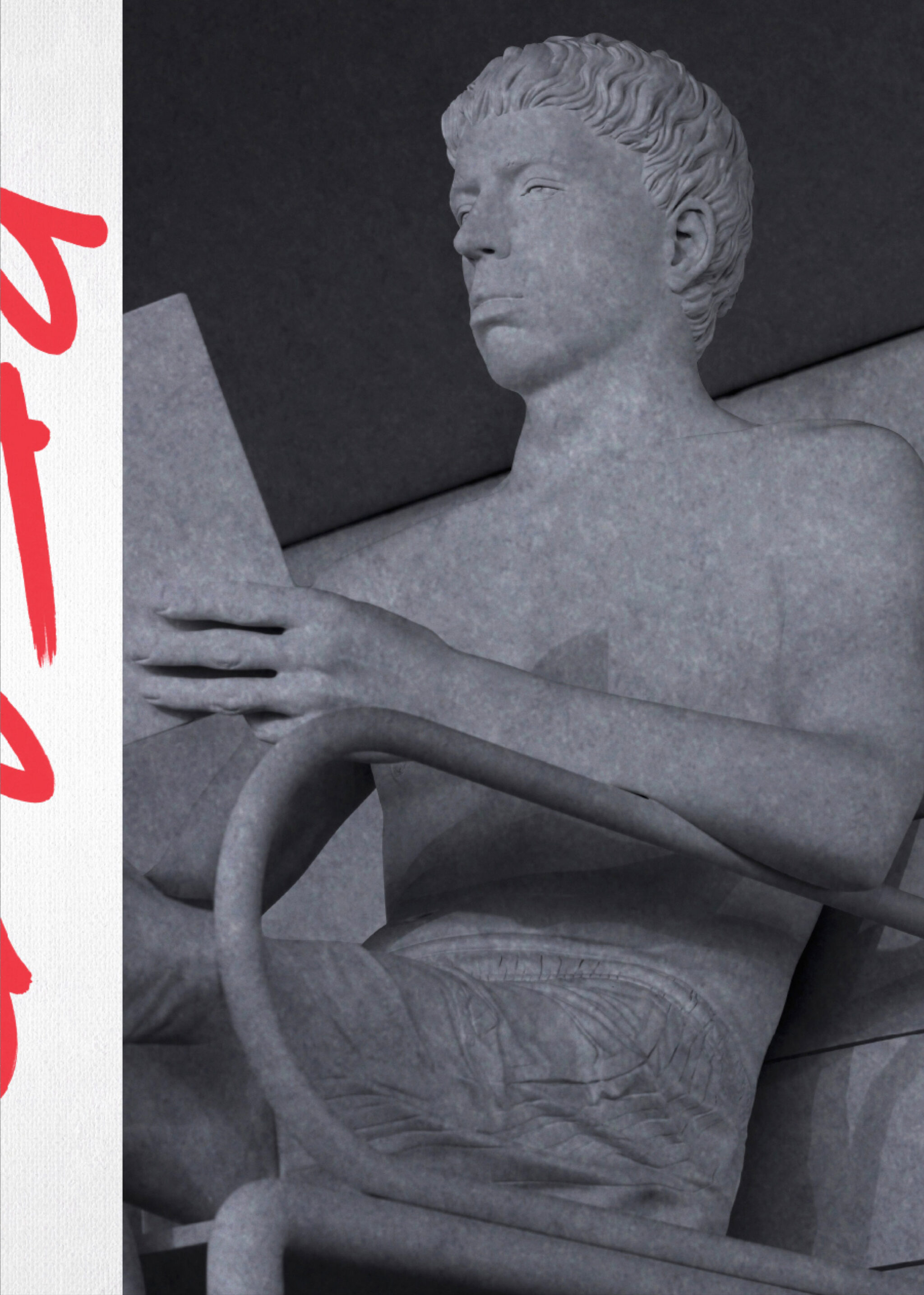
Was ist Wiener Aktionismus?
50€ Add to cartBlows were dealt. An artist exposed and cut himself, others urinated in glasses, daubed themselves with dirt, and masturbated over the Austrian flag. Meanwhile, music was playing, including the national anthem; someone read pornographic writings. Vienna in the late 1960s: what had started in the artists’ homes and studios was now brough out on the grand stage, and taboos were broken in full view of the public.
The Vienna Actionism Museum’s first publication is dedicated to the idea of Vienna Actionism in the dynamic context of abstract realism, Fluxus, and the international Happening scene. The book relates the story of one of art history’s most influential art movements, spearheaded by the Actionists Günter Brus and Otto Muehl, Hermann Nitsch and Rudolf Schwarzkogler.
- Release July 2023

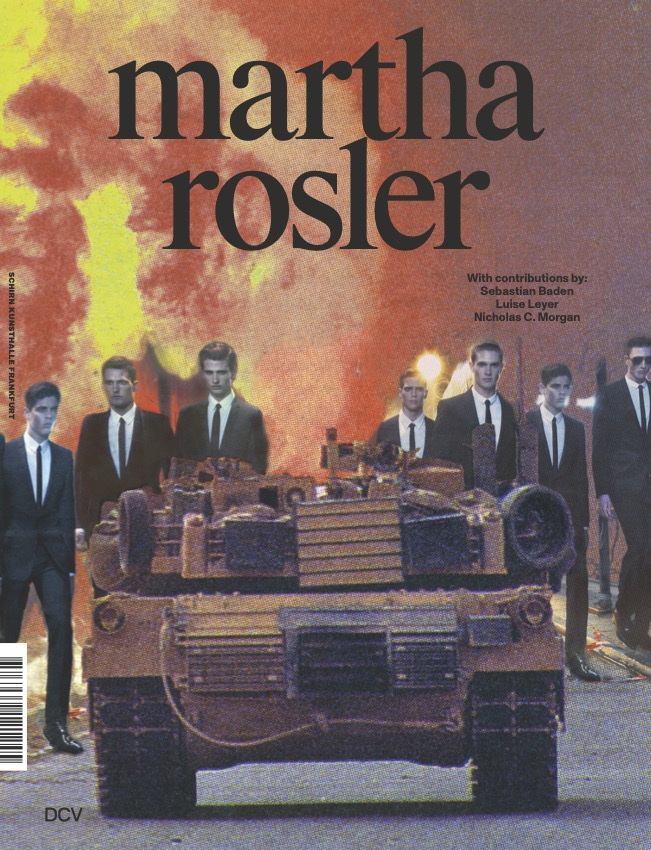
Martha Rosler
32€ Add to cartThe American conceptual artist and pioneer of critical feminism Martha Rosler (b. 1943 in Brooklyn, NY, lives and works in Brooklyn, NY) has influenced numerous contemporary artists with the radicalism of her artistic position. Rosler’s work is always political and examines questions of power and violence, the ideals of beauty and their demolition, and the purported contrasts between war and consumption. For her sociocritical collages and videos, Rosler uses found pictorial material that has already been published. The artist delights in working with photos from public sources like magazines and newspapers, which she processes and arranges in new contexts in order to visualize inequality and protest. Following on from Rosler’s iconic series House Beautiful: Bringing the War Home (ca. 1967–1972), at the heart of the publication lies the confrontation with warlike disputes as conveyed in the media, together with the associated dissonance between the private and the political.
Martha Rosler received a Bachelor of Arts from Brooklyn College in 1965 and a Master of Arts from the University of California, San Diego in 1985. In 1975 she began to write reviews for Artforum and other art magazines. She teaches at School of Arts of Rutgers University in New Brunswick, New Jersey.
-
Jan Zöller
Keine Zeit zum Baden38€ Add to cartJan Zöller’s (b. Haslach im Kinzigtal, 1992; lives and works in Karlsruhe) art brims with personal references and experiences that he translates into his distinctive personal visual idiom. His paintings are theatrical arrangements for which he draws on a multifarious repertoire of motifs. Zöller’s first monograph Keine Zeit zum Baden presents new works engaging with the exhibition space such as a floating installation with blue tiles from the exhibition of the same title at Städtische Galerie Ostfildern and videos and large-format paintings from the cycle Badebrunnen that were created between 2019 and 2022. The bathtubs in the pictures hint at private moments of relaxation; the fountains, at the “eternal cycle” of nature. The title Keine Zeit zum Baden (No Time for Bathing), then, gestures toward the subjects of the works, but also suggest the dilemma of striking a healthy balance between life, work, and one’s vocation.
Jan Zöller studied with Marijke van Warmerdam und Leni Hoffmann at the State Academy of Fine Arts Karlsruhe from 2012 until 2017 and with Jean-Marc Bustamante at the École Nationale Supérieure des Beaux-Arts de Paris in 2016. He won the Federal Prize for Art Students of the Bundeskunsthalle, Bonn, in 2018, followed by Stiftung Kunstfonds’s working fellowship in 2021.