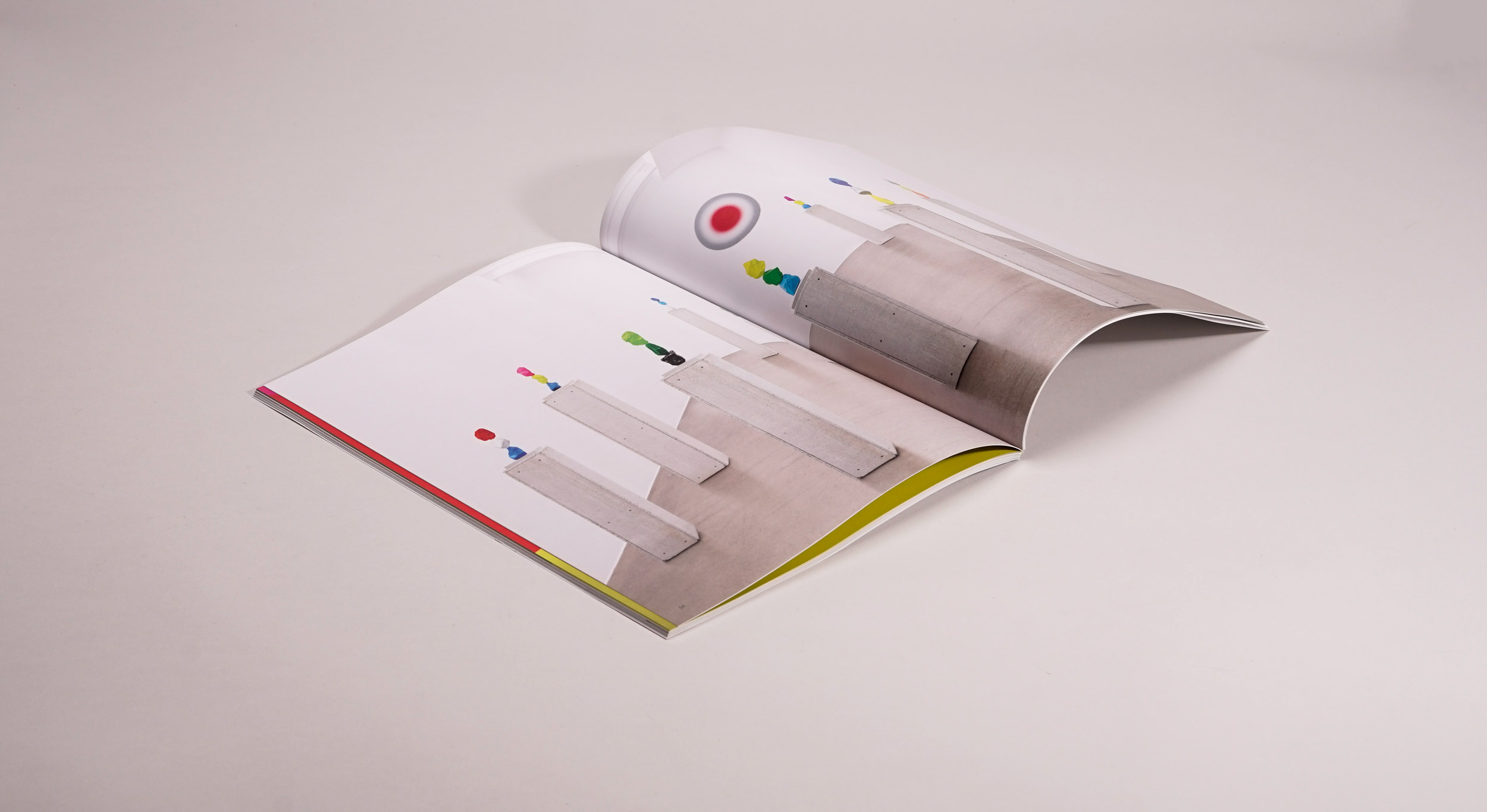
Ugo Rondinone
winter, spring, summer, fall
 | |
|---|---|
| Editor(s) | Galerie Krobath, Kamel Mennour, Sadie Coles HQ |
| Author(s) | James Cahill, Marlo Saalmink, Nina Schedlmayer, Erik Verhagen |
| Design | Ugo Rondinone, Francisco Ramirez Barrera |
| Cover | Softcover |
| Size | 24,5 x 31,5 cm |
| Pages | 50 |
| Illustrations | 56 |
| Language(s) | English |
| ISBN | 978-3-96912-088-0 |
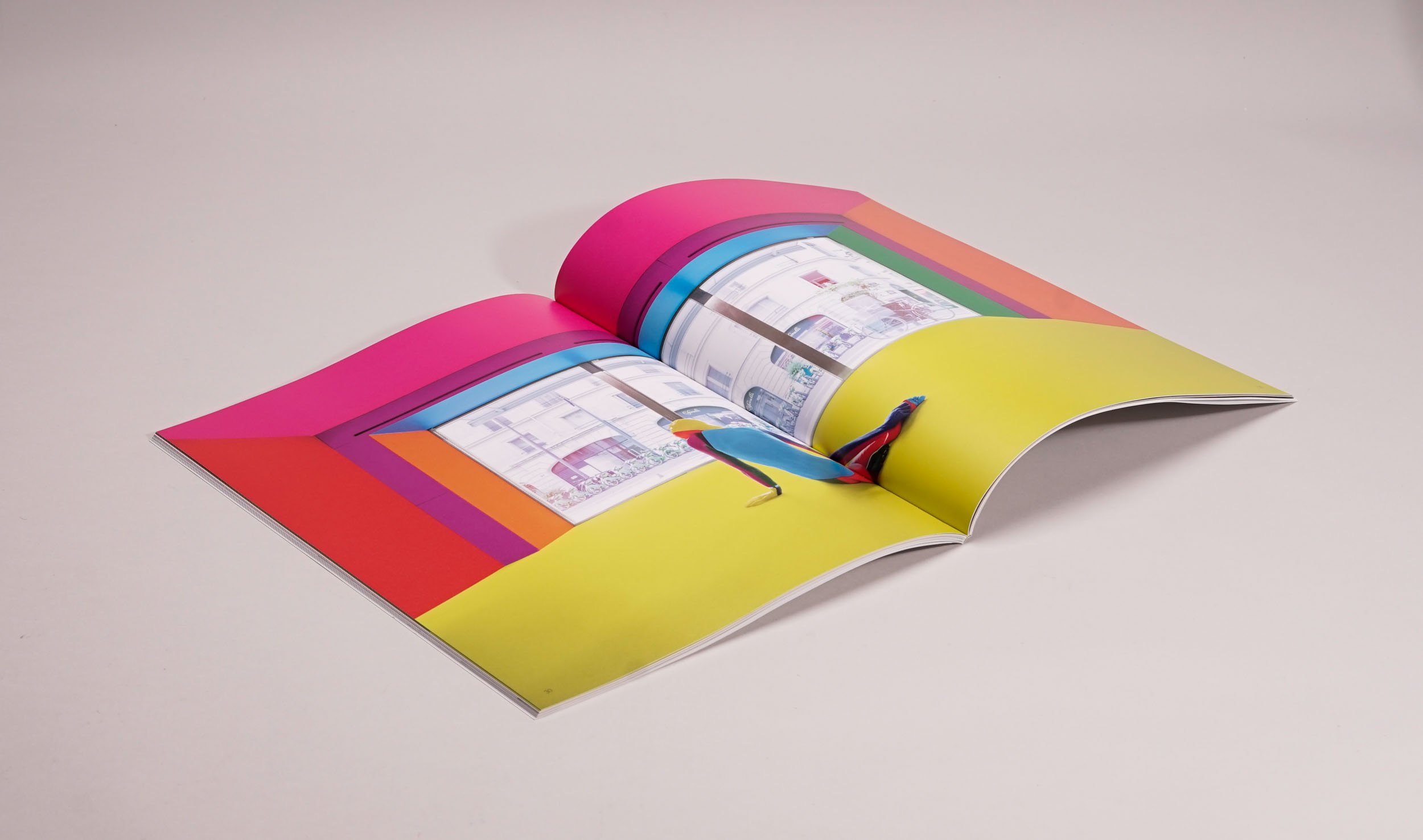
Ugo Rondinone (b. Brunnen, Switzerland, 1964; lives and works in New York) is one of the most accomplished artists of his generation. For three decades, the conceptual and installation artist has built an oeuvre grappling with themes of time and impermanence, day and night, reality and fiction, nature and culture. Spanning diverse media—painting, sculpture, film, and installation art—his work is rooted in the transformation of outward reality into a subjective and emotionally charged world within, harnessing a multifaceted system of inspirations and references from German Romanticism to American Land Art and international pop culture. Balancing the mundane with the spiritual, the artist conjures suggestive atmospheres that capture the contemporary mood.
This book gathers four exhibitions of Ugo Rondinone’s work in 2021: a wall . a door . a tree . a lightbulb . winter at theSørlandets Kunstmuseum (SKMU), Kristiansand, Norway; a sky . a sea . distant mountains . horses . spring at Sadie Coles hq, London; a rainbow . a nude . bright light . summer at Kamel Mennour, Paris; and a low sun . golden mountains . fall at Galerie Krobath, Vienna.
More books
- Out of stock

Luxus?!
34€ Read moreWhat is luxury today? How do designers perform the magic of transforming a utilitarian object into a must-have? Where does consumerism shade into obsession? When does more-is-more give way to less-is-more?
Luxury means breaking with convention, and this book showcases—and spawns—a cornucopia of ideas, products, and positions around luxury, featuring influential thinkers from the worlds of design, science, art, and society. The cultural theorists Wolfgang Ullrich and Lambert Wiesing exchange letters on the concept of luxury; Montblanc’s creative director Zaim Kamal lays out future strategies; the artist Jonathan Meese pens a gold manifesto; and Bazon Brock inquires into the asceticism of luxury. We live in a world full of things that resemble one another so closely that the only difference is how they are marketed. What might the precious objects of the future look like? The book presents examples from aspiring designers such as the fashion student Victoria Reize, whose collection counters luxury with arch defiance. Design, we learn, is not just about creating supreme values. Luxury is limitation and longevity, scarcity and refinement, yearning and sensuality.
With works by Assemble, Jake and Dinos Chapman, Daniel Chodowiecki, Kai Löffelbein, Jonathan Meese, Olaf Nicolai, Marcel Odenbach, Tobias Rehberger and Anna Skladmann.
-

What is Vienna Actionism?
50€ Add to cartBlows were dealt. An artist exposed and cut himself, others urinated in glasses, daubed themselves with dirt, and masturbated over the Austrian flag. Meanwhile, music was playing, including the national anthem; someone read pornographic writings. Vienna in the late 1960s: what had started in the artists’ homes and studios was now brough out on the grand stage, and taboos were broken in full view of the public.
The Vienna Actionism Museum’s first publication is dedicated to the idea of Vienna Actionism in the dynamic context of abstract realism, Fluxus, and the international Happening scene. The book relates the story of one of art history’s most influential art movements, spearheaded by the Actionists Günter Brus and Otto Muehl, Hermann Nitsch and Rudolf Schwarzkogler.
-

DAWN OF HUMANITY – ART IN PERIODS OF UPHEAVAL
37€ Add to cartThe book and exhibition present works from the first two decades of the twentieth century from the Kunstmuseum Bonn’s collection in dialogue with contemporary creative positions. What the works have in common across the distance of a century is their genesis in, and reflection on, a time of major social and political crisis. Back then, life had been profoundly changed by the industrial revolution; nowadays, climate change, wars, and the rising political power of right-wing ideologies are transforming the life of our communities. The presentation conceives art as a tool that lets us interrogate the world and imparts fresh intellectual impulses, and so also plays an active part in our societies. The title Menschheitsdämmerung – Dawn of Humanity – is borrowed from the poetry anthology of the same title released by Kurt Pinthus in 1919, which samples the Expressionist lyric poetry of the young century in four chapters: “Downfall and Outcry”; “Love Human Beings”; “Awakening of the Heart”; “Entreaty and Indignation.” Florian Illies, who already wrote an afterword for the 2019 centenary edition of Menschheitsdämmerung – the bestselling poetry anthology in the history of German literature – contributed the keynote essay in the book.
Artists: Nevin Aladağ, Francis Alÿs, Kader Attia, Yael Bartana, Rebekka Benzenberg, Monica Bonvicini, Andrea Bowers, Heinrich Campendonk, Louisa Clement, Max Ernst, Georg Herold, Franz M. Jansen, Alexej von Jawlensky, Käthe Kollwitz, Wilhelm Lehmbruck, Max Liebermann, August Macke, Helmuth Macke, Goshka Macuga, Marie von Malachowski-Nauen, Carlo Mense, Zanele Muholi, Heinrich Nauen, Grace Ndiritu, Anys Reimann, Deborah Roberts, Daniel Scislowski, Paul Adolf Seehaus, Tschabalala Self, Monika Sosnowska, William Straube, Emma Talbot, Hans Thuar, Lawrence Weiner
-

Maxim Gunga
10€ Add to cartThe painter Maxim Gunga is utterly unafraid of physicality. His canvas is a riot of oil paints huddling up against one another, fusing like the beasts, the humans, and the urban landscape of Berlin that serve him as motifs. Body and soul, animal nature and architecture, the profane and the sacred, subculture and mass culture—everything interpenetrates in Gunga’s paintings in large formats, melded into hybrid bodies. The result is an ecstatic intimacy, a flowing of colors and more or less abstracted dynamic forms toward their primal state, toward the matrix, toward pure energy: eternal transformation. It makes sense, then, that his pictures also amalgamate diverse styles and periods in the history of painting. He borrows from (Neo-)Expressionism, from Art Brut, from Baselitz, Lüpertz, the Neue Wilde, from modernism and Fauvism, from van Gogh and Matisse. His pinpoint brushwork, which reveals his extensive training, interweaves art history with our contemporary lifeworld and our affects. All the specters of the past and the present come to meet us in the pictures gathered in this catalogue, in a frenzy of the senses, in the primordial soup of Berlin, into which we dive with joyful abandon.
-
“Das Quadrat muss den Raum beherrschen!”
Aurélie Nemours und Zeitgenossen15€ Add to cartDoes everything in the world obey a mathematical logic, can everything be calculated? In our present age of probability, some would say the answer is a straightforward yes, inevitably prompting the question: Even art? Yes, even art, or so the defenders of Concrete Art would respond, a twentieth-century movement that took abstraction as a focus on the “idea of art itself” (W. Kandinsky) to the next level. The act of painting was now to be subject to preconceived organizing principles as though they were laws of nature. One prominent exponent of the genre was Aurélie Nemours (1910–2005), who had a penchant for the square; her credo was that it needed to “rule space.” That is why the equilateral quadrangle is the defining shape in this catalog, which brings Nemours’ oeuvre into focus. Her iconic position is flanked by works by seventeen others that similarly grapple with the square, including pictures and sculptures with square basic forms, grids, or canvases. All these works derive their force from the stern authority of the square: only when art constrains its means can it bring its full potential to bear.
ARTISTS:
JOSEF ALBERS, GÖTZ ARNDT, MAX BILL, AD DEKKERS, HELMUT FEDERLE, GOTTFRIED HONEGGER, KATHRIN KAPS, FRITZ KLINGBEIL, JOHN MEYER, GEROLD MILLER, AURÉLIE NEMOURS, JOHN NIXON, PETER ROEHR, JAN SCHOONHOVEN, ANTON STANKOWSKI, KLAUS STAUDT, HERMAN DE VRIES, GERHARD WITTNER -
MEUSER
Werke 2012–2023 (GERMAN)48€ Add to cartEver since his studies with Joseph Beuys and Erwin Heerich, since his first exhibitions – for instance at ‘Kippenberger’s Office’ in 1979 – Meuser (b. Essen 1947, lives and works in Karlsruhe) has been a solitaire. His sculptures are unyielding and unruly, just as much as they are vulnerable and tender. They are witty and heart-touchingly charming.
Meuser finds his material in the scrapyard. Confidently and empathically, he reinstates form and dignity to the remnants and vestiges of industrial society. As a romantic, he grants things a life of their own and turns them into self-reliant protagonists, once more. Unwaveringly, he works to re-poetize a standardized and maltreated world.
The lavishly designed monograph is published on the occasion of Meuser’s 75th birthday, presenting works and exhibitions from the past ten years. Eight international authors and scholars create a dazzling mosaic and reveal how Meuser boldly holds his own in face of Duchamp, Minimalism, and Social Sculpture. An open-ended outlook.
Meuser studied 1968–1976 at Art Academy, Düsseldorf with Joseph Beuys and Erwin Heerich. 1991 he received the ars viva award. 1992-2015 professorship at Academy of Fine Art, Karlsruhe.
Since 1976, numerous institutional solo and group exhibitions and works in international collections: Bundeskunsthalle, Bonn; Deichtorhallen, Hamburg; documenta IX / Fridericianum, Kassel; Fundació Joan Miró, Barcelona; Joanneum, Graz; Kunsthalle Düsseldorf; Museum of Contemporary Art, Monterrey; Martin-Gropius-Bau, Berlin; Museum Abteiberg, Mönchengladbach; Museum Folkwang, Essen; Museum moderner Kunst Stiftung Ludwig, Vienna; Museum Morsbroich, Leverkusen; Rijksmuseum Twenthe, Enschede; Sakip Sabanci Museum, Istanbul; Städtische Galerie, Karlsruhe; Vanhaerents Art Collection, Brussels; ZKM | Museum für Neue Kunst, Karlsruhe.
-

Matthew Davis
Kustodiev28€ Add to cartAn Expressive Instant in Painting
The art of Matthew Davis (b. 1969, Colchester, UK; lives and works in Berlin) operates between the micro and macro dimensions, between control and chance. Working with extraordinary precision, the artist applies drops of synthetic resin varnishes and enamel paints to canvases laid flat. The artist’s book Kustodiev showcases a recent innovative turn in Davis’s output, whose latest works were inspired by the lusciously colorful pictures of the Russian painter Boris Kustodiev (1878–1927). Kustodiev was manufactured using offset presses and Office Offset, a largely forgotten reproduction process based on miniature offset printing machines. The publication is released in a limited edition of 250 copies.
Matthew Davis studied at the Camberwell College of Arts, London, and the Norwich School of Art and Design. His work has been shown at the Konrad-Adenauer-Stiftung, Berlin; Künstlerhaus Wien, Vienna; Kunsthalle Wilhelmshaven; and other museums and galleries.
-

GABRIELE BASCH, GESA LANGE
UND_NEWS_FROM_NOW_HERE18€ Add to cartBeyond Painting
Gabriele Basch’s (b. 1964, Bad Homburg; lives and works in Berlin) cut-outs and Gesa Lange’s (b. 1972, Tongeren, Belgium; lives and works in Hamburg) drawings are meditations on construction and deconstruction as well as doubts and how to overcome them. Both artists expand the range of painting: Basch, with incisions into the medium and a creative handling of the tinged shadows that transform the painted panel into a wall-mounted object; Lange, by embroidering her canvases with colorful threads that open up the pictorial space on all sides. The book presents works by both artists, initiating an animated and dynamic dialogue between their nonrepresentational visual idioms. Gabriele Basch is professor of painting at the Hochschule für Angewandte Wissenschaften Hamburg. Gesa Lange is professor of graphic art at the Hochschule für Angewandte Wissenschaften Hamburg. She has received the Kunsthalle Rostock Prize and other awards.
-

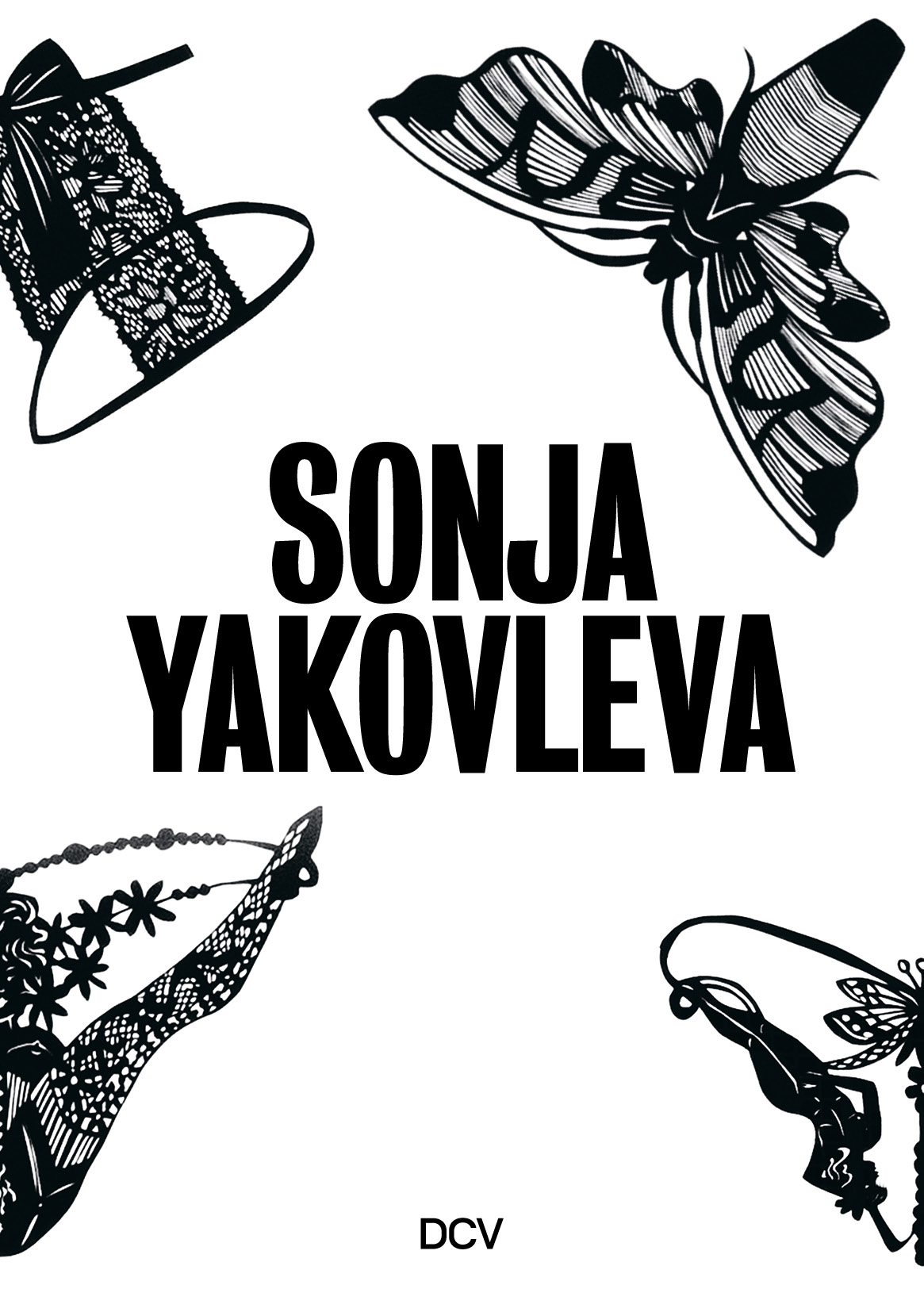
Sonja Yakovleva
10€ Add to cartSonja Yakovleva (b. Potsdam, 1989; lives and works in Frankfurt am Main) uses pornographic representations and images from the internet as templates for papercuts, some in large formats, that grapple with personal and public stories about women, power relations, sexuality, and violence. The silhouettes show popular motifs that have served to ingrain fairy tales, myths, and ideologies in the collective consciousness from the colonial era to modernism and the early twenty-first century. Yakovleva, whose art is often associated with sex-positive feminism, appropriates this folkloristic visual idiom and hybridizes and sexualizes it. Dessous and strap-on dildos, for example, figure as preserved specimens of butterflies and insects, bringing historic scientific expeditions to mind. Yet her work also addresses the capitalist urge to categorize, evaluate, and market every kink.
-

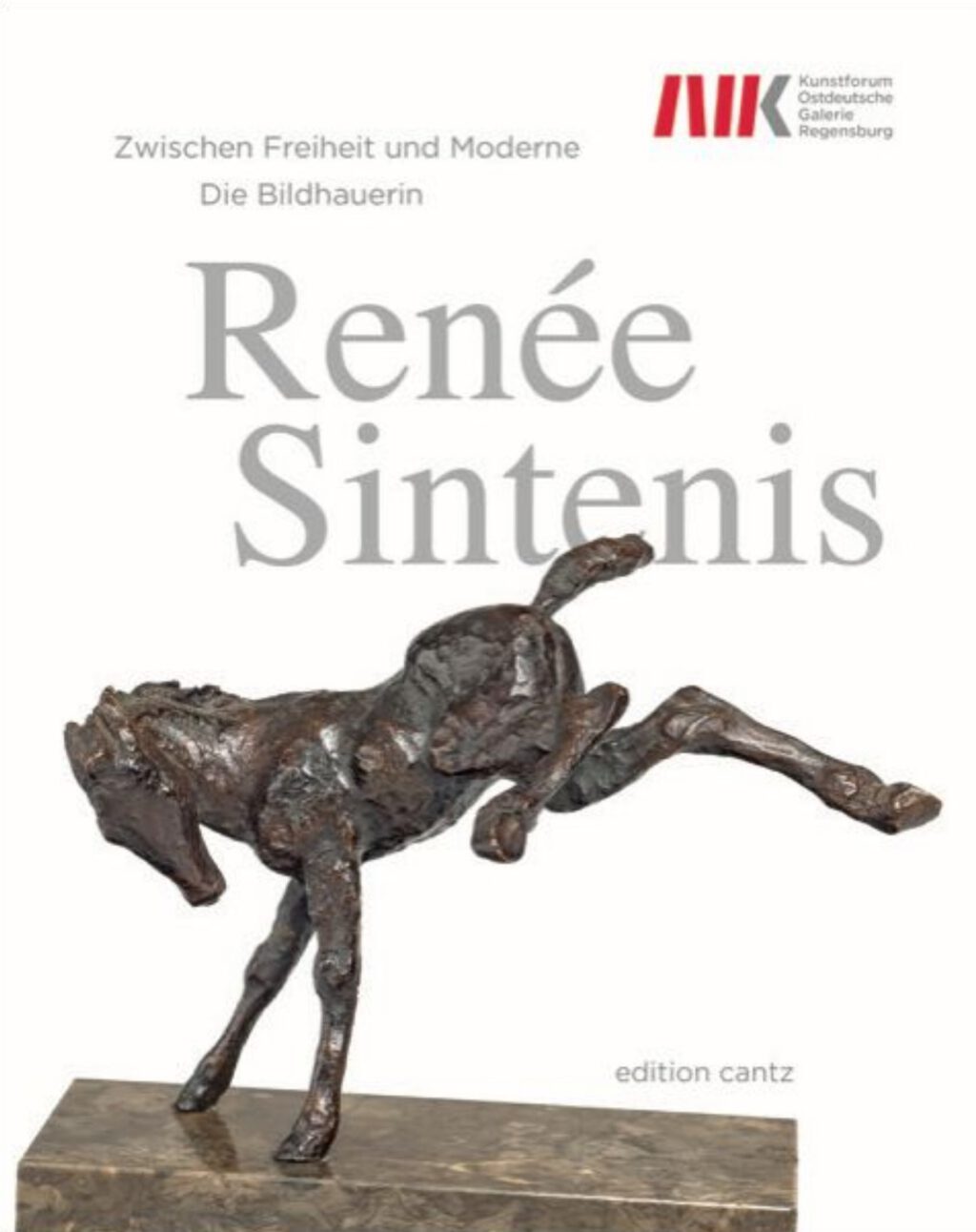
Zwischen Freiheit und Moderne
Die Bildhauerin Renée Sintenis29€ Read moreThe Successful Sculptor and Symbol of the “Neue Frau”
Renée Sintenis (b. 1888, Glatz; d. 1965, Berlin) belongs to the first generation of professional female sculptors at the beginning of the twentieth century. She made skillful use of her business relations with her gallerist Alfred Flechtheim, who introduced her to collectors in Paris, London, and New York. The market for, in particular, her lively, small animal sculptures was quite lucrative. These experienced renewed popularity in the 1950s through her Berlin Bear statuette, which has been presented in a small version at the Berlin International Film Festival since 1960. The catalog sheds light on the sculptor’s diverse oeuvre and provides insight into the self-image of one of the most successful women artists of the Weimar Republic, who embodied the type “Neue Frau” (new woman) due to her dazzling appearance.
-
Michael Williams
Make Plans God Applauds42€ Add to cartMichael Williams (b. Doylestown, Pa., U.S., 1978; lives and works in Los Angeles, Ca.) is known for paintings whose source materials have been subjected to both analog and digital processes in an effort to render the fragmented nature of our existence today. During the lockdown, he created six large-format collage paintings. To make these modern history paintings, he mounted paper printouts on canvases and reworked the pictures with paint. They are, in short, classic collages, as in the exhilarating days of DADA, when the photographic image from newspapers first transmigrated into art. Michael Williams studied fine arts at Washington University, St. Louis, and has exhibited widely, including at the Wiener Secession, Vienna, and the Museum of Modern Art, New York.
-
Anna Leonhardt
Touching Space34€ Add to cartAnna Leonhardt’s (b. Pforzheim, 1981; lives and works in New York and Leipzig) paintings probe her own experiences and moods, while also referencing works of literature and quoting phenomena in the history of her craft. Abstract surfaces composed of numerous layers that break the two-dimensional bounds of the canvas engender a physical and imagined space that is further expanded by the interrelations between the pictorial elements, an imaginary communication with other works of art, and the beholders. The publication Touching Space presents Anna Leonhardt’s most recent works. A compendium of writings on the subject of space by the phenomenologist Franz Xaver Baier and the artist’s correspondence with the curator Sophia Pietryga complement the imposing illustrations. The book is released in conjunction with the eponymous solo exhibition at Galerie She BAM! Laetitia Gorsy, Leipzig.
Anna Leonhardt studied painting and graphic art at the Dresden University of Fine Arts (HfBK) from 2002–2008, completing her education with postgraduate training with Ralf Kerbach until 2010.
-
Tim Eitel
Propositions for Afterimages 2015–202436€ Add to cartTim Eitel initiates an exchange between recollection and painting. The work on his pictures, he says, is “a conversation about reality and memory” in which he engages the canvas. In the course of this dialogue, Eitel reflects on personal experiences, creating a standalone figural-abstract reality that needs to be internally consistent—the canvas has a strong will of its own. That makes the scenes depicted in his paintings analogues or afterimages of a situation rather than renditions of it. They are characterized by a certain openness that enables the beholders to inject their own recollections into the pictorial space as well. The dialogue between canvas and artist thus gives way to a colloquy between audience and finished work. Not by coincidence, many of the paintings by Eitel gathered in this catalog show people in museums: these scenes facilitate the leap into the pictorial space. The beholders have experienced a situation like the one shown in the pictures in the past or are experiencing it right now, and so they are already at the heart of the works; they become part of the painting, and the picture becomes a particle of their recollection.
-

Born in the Woods
Jems Koko Bi & HAP Grieshaber24€ Add to cartThe Political Substance of Wood
Jems Koko Bi (b. Sinfra, Côte d’Ivoire, 1966; lives and works in Kaarst, Germany, Dakar, and Abidjan) is world-renowned for the monumental wood sculptures he creates using a machine saw. This book juxtaposes his most recent body of works with the large-format woodcuts of HAP Grieshaber (b. Rot an der Rot, Germany, 1909; d. Eningen unter Achalm, 1981). Although the two artists never met, their oeuvres are characterized by similar themes, values, and materials. The central concern is the fate of the forests and its momentous political and social implications: Grieshaber’s woodcuts articulate his principled opposition to the predatory exploitation of nature in the 1970s—an issue that is more relevant than ever today in light of the climate crisis and the Fridays for Future movement. Koko Bi’s figural groups bring this tradition of political art into our time, making a global and universally compelling case for a sustainable husbandry of our resources.
Jems Koko Bi studied at the Institut National Supérieur des Arts et de l’Action Culturelle (INSAAC), Abidjan, and the Düsseldorf Academy of Fine Arts. His work has been exhibited widely, including at the Centre Pompidou, Paris; at documenta 13; the Havana Biennial; and several Venice Biennials and Dakar Biennials. In 2019, he founded the forest biennial Abidjan Green Arts.
HAP Grieshaber studied advertising art at the Staatliche Kunstgewerbeschule, Stuttgart. His work is regarded as a signal contribution to the renewal of the woodcut medium in the twentieth century. He participated in documentas I, II, and III, held a professorship at the State Academy of Fine Arts Karlsruhe, and was honored with numerous awards and retrospectives.
-

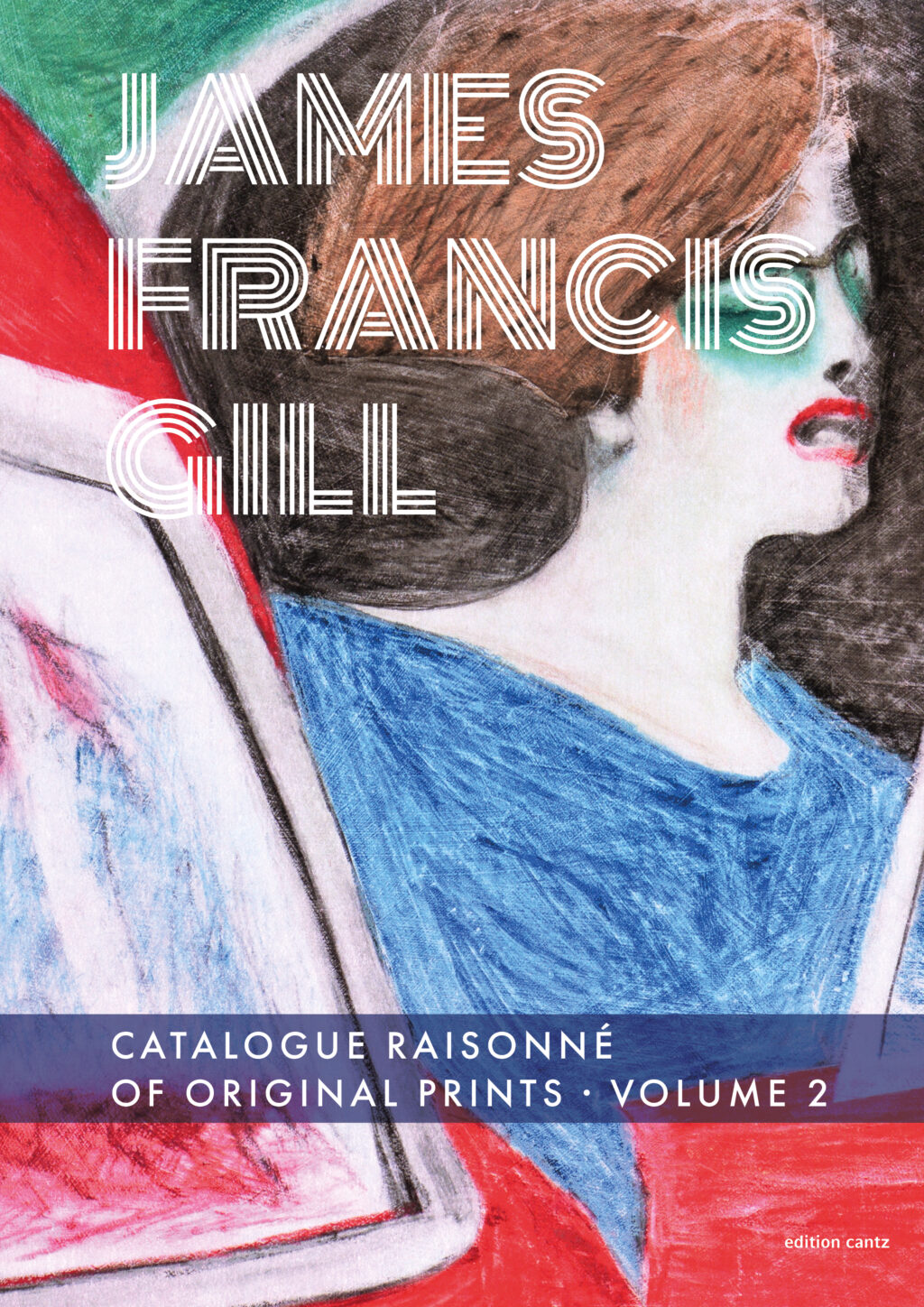
James Francis Gill
Catalogue Raisonné of Original Prints, Vol. 239€ Add to cartThe Catalogue Raisonné of the Co-Founder of American Pop Art
James Francis Gill (b. 1935, Tahoka; lives and works in Texas) is one of the most important artists of American Pop Art. His paintings, often based on photographs, provide an unusually personal approach to the icons of the 1950s and 60s. Gill suddenly became Hollywood’s most celebrated artist when his Marilyn Triptych was added to the permanent collection of The Museum of Modern Art in New York in 1962 – even before the works of Andy Warhol. Through friendships with celebrities such as John Wayne, Martin Luther King, and Marlon Brando, Gill became the contemporary artist-witness of an entire generation. Nevertheless, he kept his distance from the exuberant Hollywood of the time and surprisingly withdrew in 1972, only to reappear on the art market thirty years later. This catalogue raisonné in two volumes impressively documents his work from the early political motifs to the Pop Art icons of his late work.
-

SERIES
Prints from Warhol to Wool40€ Add to cartA Creative Strategy and Technique of Modernism
Series are open systems, telling stories, toying with rhythms, permitting variations, and documenting creative processes. Andy Warhol’s famous silkscreen prints made the serial iteration of images his trademark stratagem. In the mid-1960s, Pop Art and Fluxus had established the fine art print as a medium in which seminal work was being done. New graphic techniques such as serigraphy and offset printing, used with aggressive colors and punchy motifs, not only allowed for large numbers of copies, they also opened the door to an unprecedented engagement with the imagery of popular print and advertising media. Opening with an inquiry into how serial fine art prints are made, the book presents and contextualizes the explosive visual and political energy of graphic series. The numerous illustrations and essays are rounded out by an interview with Thomas Schütte and Ellen Sturm.
With works by Josef Albers, Joseph Beuys, Ulla von Brandenburg, John Cage, Helen Cammock, Nina Canell, Jim Dine, Dan Flavin, David Hockney, Jenny Holzer, Olav Christopher Jenssen, Donald Judd, Ronald B. Kitaj, Maria Lassnig, Sol LeWitt, Roy Lichtenstein, Richard Lindner, Robert Mangold, Brice Marden, Stefan Marx, Bruce Nauman, Dennis Oppenheim, Nam June Paik, Sigmar Polke, Gerhard Richter, Dieter Roth, Fred Sandback, Nora Schultz, Thomas Schütte, Dasha Shishkin, Frank Stella, Rosemarie Trockel, Victor Vasarely, Wolf Vostell, Andy Warhol, Corinne Wasmuht, Emmett Williams, Christopher Wool, and others.
-

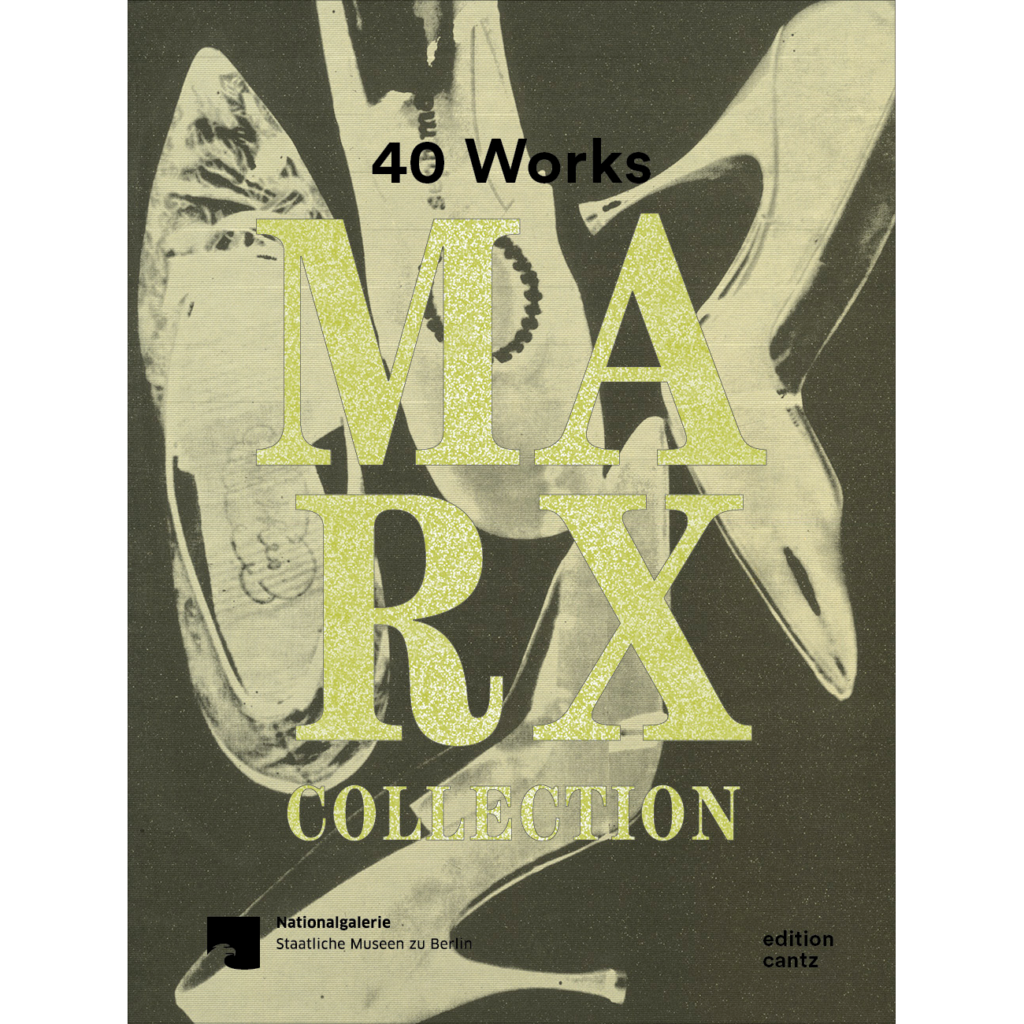
Marx Collection
40 Works29€ Add to cartSelected works from one of the most renowned collections of modern and contemporary art in Germany
Marx Collection – 40 Works is the first publication on this collection that focuses on important individual works. The selection ranges from the early 1960s to the present, encompassing one of the most exciting periods in recent art history. An illustrated chronicle provides background information on the historical context of the Marx Collection and its exhibition at the Nationalgalerie in Berlin. With work by Matthew Barney, Georg Baselitz, Joseph Beuys, Ross Bleckner, Francesco Clemente, Martin Disler, Rainer Fetting, Dan Flavin, Günther Förg, Peter Halley, Keith Haring, Candida Höfer, Donald Judd, Anish Kapoor, William Kentridge, Anselm Kiefer, Jeff Koons, Roy Lichtenstein, Richard Long, Gerhard Merz, Robert Rauschenberg, Ugo Rondinone, Thomas Ruff, Julian Schnabel, Cindy Sherman, Thomas Struth, Sam Taylor-Johnson, Cy Twombly, Andy Warhol, Rachel Whiterea
Dies ist die englische Ausgabe, hier geht’s zur deutschen Ausgabe
-

FREIGEISTER
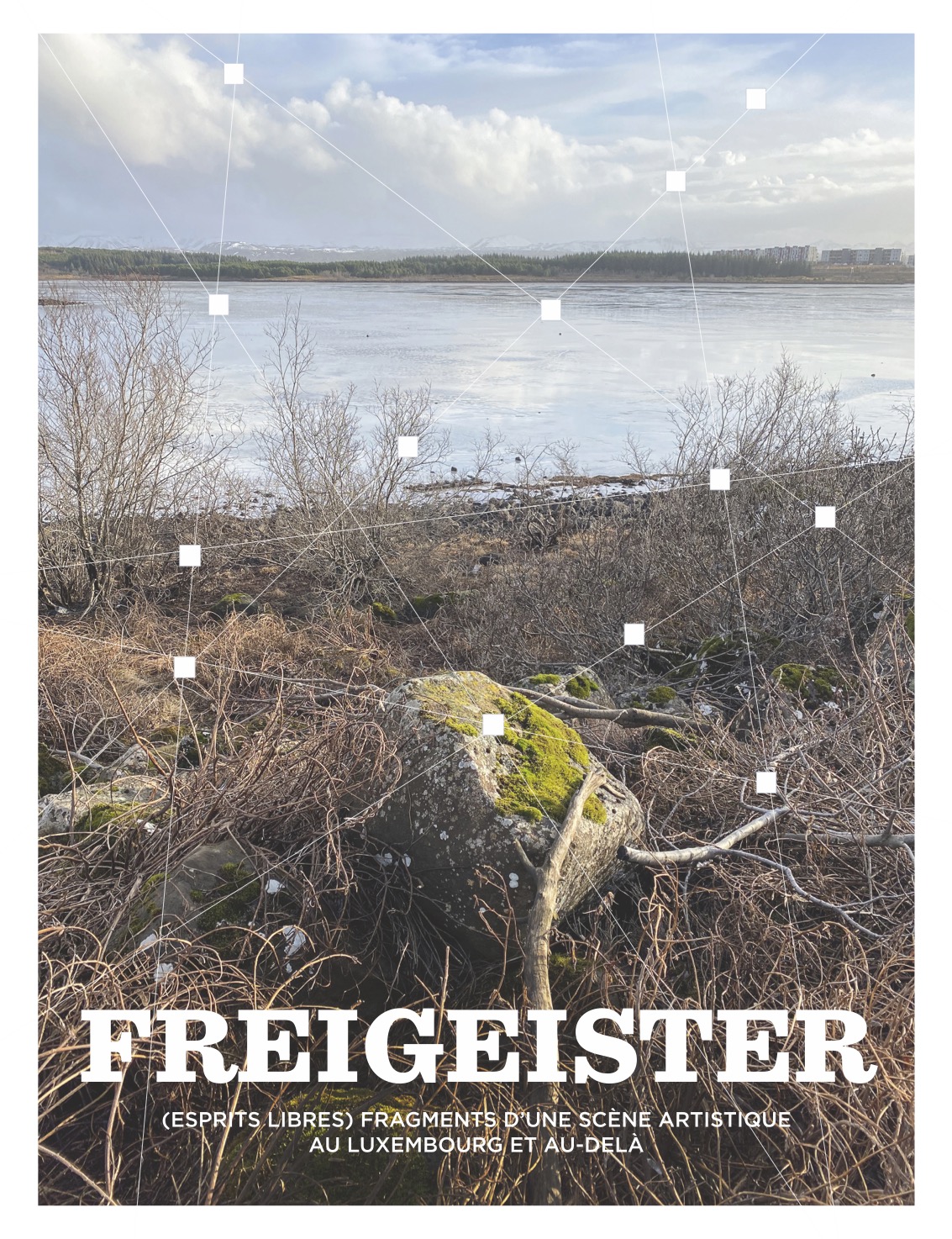
FRAGMENTS OF AN ART SCENE IN LUXEMBOURG AND BEYOND35€ Add to cartThinking Otherwise—the Mudam in Luxembourg at Fifteen
A free spirit, Friedrich Nietzsche wrote, is someone who “thinks otherwise than is expected of him in consideration of his origin, surroundings, position, and office, or by reason of the prevailing contemporary views” (Human, All Too Human,1878). As the German philosopher saw it, one must seek to become “untimely” and remain a “stranger” to one’s time in order to question its premises. This view to states of alienation unites the positions of fourteen young Luxembourgish artists in Freigeister, the publication accompanying the celebrations on occasion of the fifteenth anniversary of the Musée d’Art Moderne Grand-Duc Jean.
In recent years, Luxembourg’s art scene has grappled in a wide variety of ways with the challenges that come with the small yet economically successful country’s ongoing transformation. Charting realities between the familiar and the unknown, the artists featured in Freigeister employ photography, painting, and installation as well as film, sculpture, printmaking, and performance art to paint a carefully considered but by no means dispassionate portrait of today’s society in an effort to build bridges between identity and the future.
The book presents works by Yann Annicchiarico, Laurianne Bixhain, Aline Bouvy, Marco Godinho, Sophie Jung, Catherine Lorent, Filip Markiewicz, Karolina Markiewicz & Pascal Piron, Claudia Passeri, Daniel Reuter, Nina Tomàs, Daniel Wagener, and Jeff Weber.
-

Nikolaus List
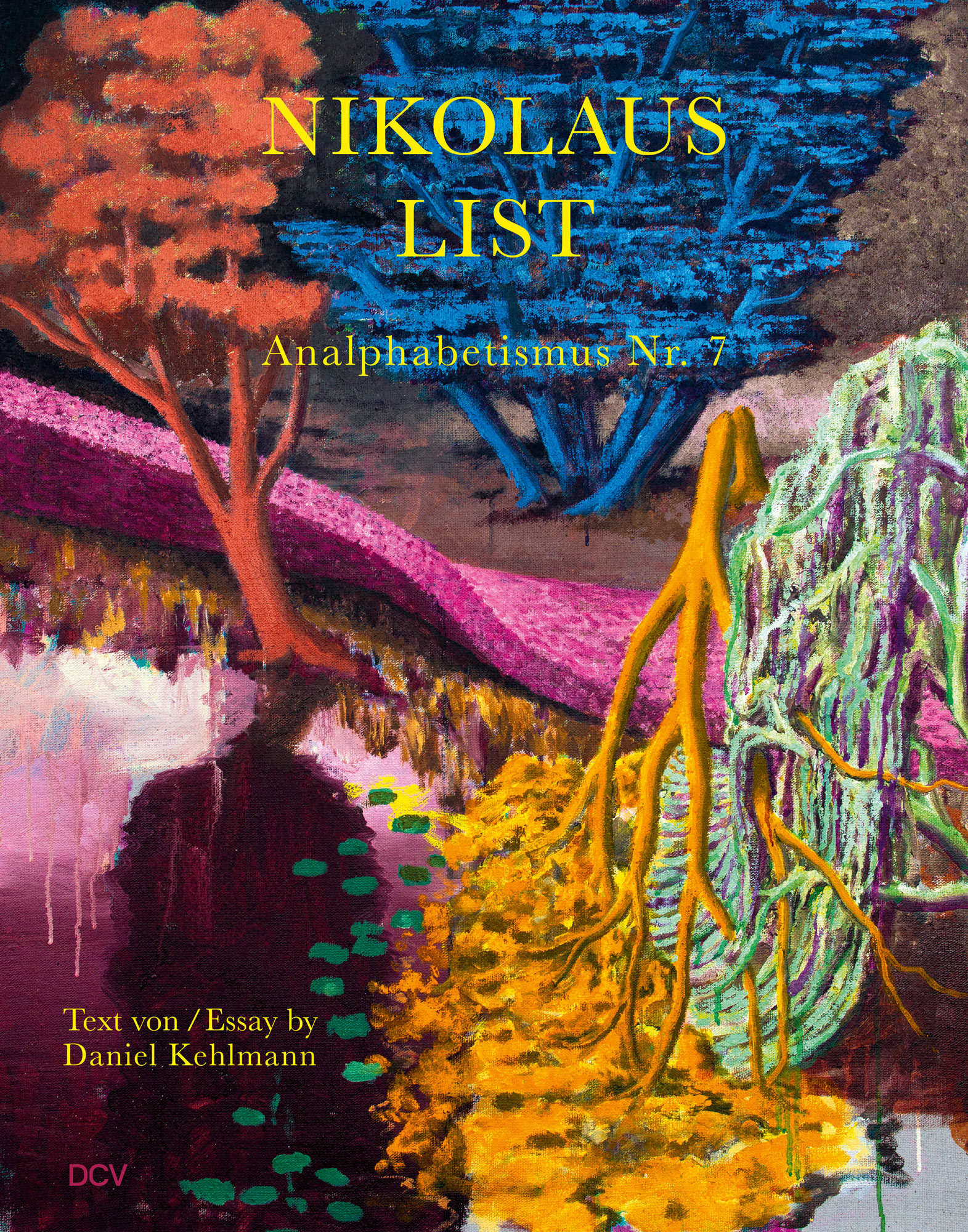
Analphabetismus Nr. 737€ Add to cartBeguilingly colorful, balancing opulence with restraint, Nikolaus List’s (b. Frankfurt am Main, 1965; lives and works in Berlin) pictures scrutinize the relation between nature and art. Observations of natural scenes around Berlin blend with the artificiality of baroque gardens or early videogames. As List studies the operation of human perception, the painted space alternates between the depth of one-point perspective and a schematized flatness. The rhythmically organized compositions suspend the hierarchical distinction between foreground and background, an effect that is heightened by the often dissonant selection of colors and lends List’s art a “decidedly anti-sublime and anti-minimal” quality. A fallen tree, luminous rampantly growing and coiled branches become a metaphor for our relationships, our existence, for becoming and passing away, renewal and time.
Nikolaus List studied with Thomas Bayrle, Peter Kogler, and Christa Näher at the Academy of Fine Arts—Städelschule in Frankfurt. He has taught painting at the Weißensee School of Art and Design and the Berlin Art Institute.
-

Isabelle Graw
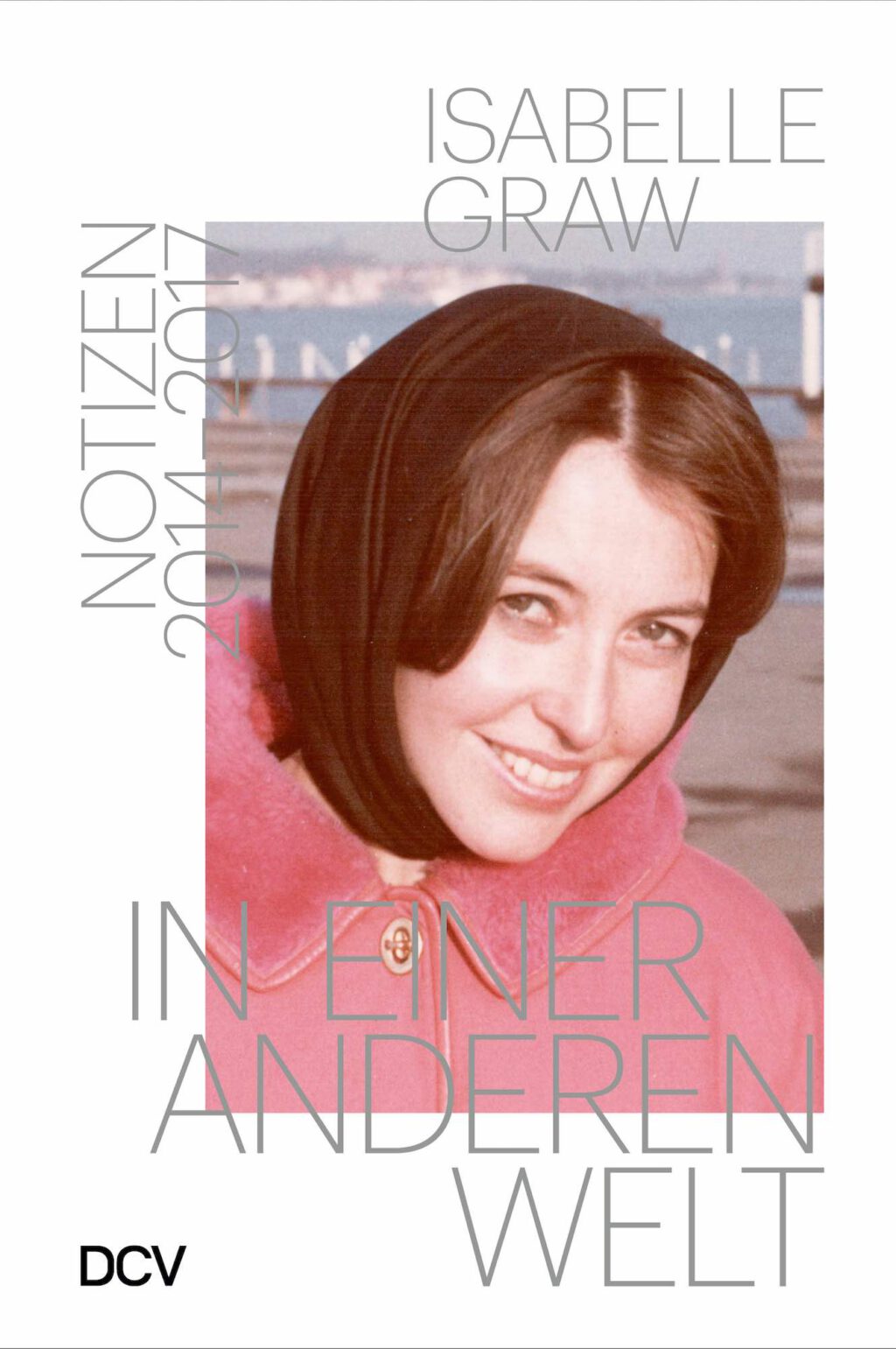
In einer anderen Welt. Notizen 2014–201726€ Add to cartPersonal Observation as an Analytical Lens on Society
Isabelle Graw (b. 1962, Hamburg; lives in Berlin) is publisher of the magazine Texte zur Kunst and has been professor of art theory at the Staatliche Hochschule für bildende Künste – Städelschule in Frankfurt am Main since 2002. In this book, she branches out from her work as an art historian and critic to offer reflections on a wide range of observations from her own life. Never before has Graw addressed her readers more frankly than in these 160 notes.
“She is blindingly frank, addressing the questions that envelop her days: waxing salons, the arrival of Syrian refugees in Germany, exhibitions and grief, electoral and family politics. Subtly, Graw reveals how impressions and beliefs arise out of circumstance.”
Chris Kraus, American filmmaker and author of I Love Dick“In crisp and striking vignettes, this book shows how self-scrutiny and minute observation of the world intermesh and form the dense web of her analysis. This is a unique and original book, literary, psychological and sociological, all at once.”
Eva Illouz, French-Israeli sociologist