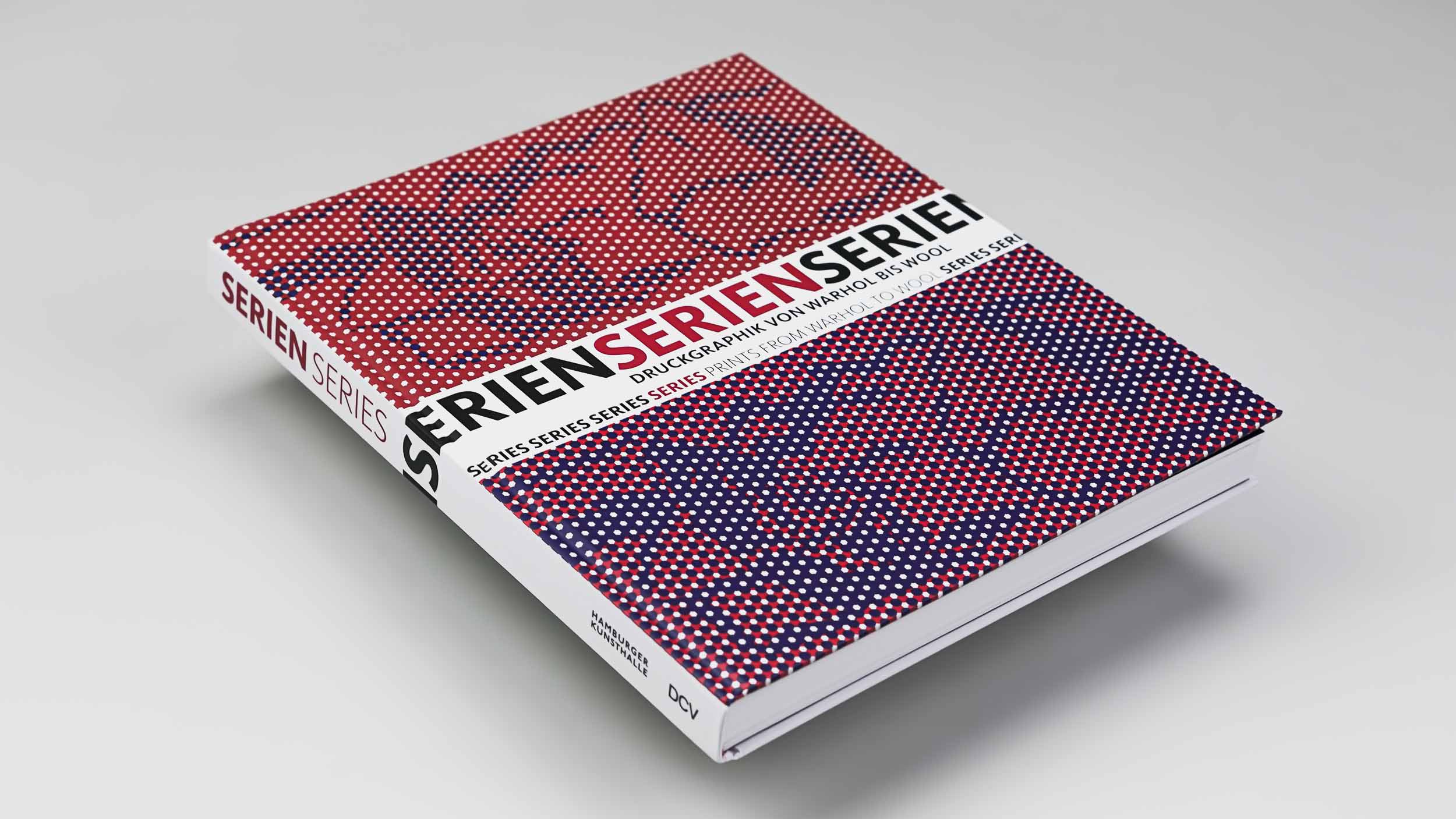
SERIES
Prints from Warhol to Wool
 | |
|---|---|
| Editor(s) | Petra Roettig |
| Author(s) | Leona Marie Ahrens, Dirk Dobke, Petra Roettig |
| Design | Peter Nils Dorén |
| Cover | Hardcover |
| Size | 24 x 28 cm |
| Pages | 256 |
| Illustrations | 220 |
| Language(s) | German, English |
| ISBN | 978-3-96912-026-2 |
A Creative Strategy and Technique of Modernism
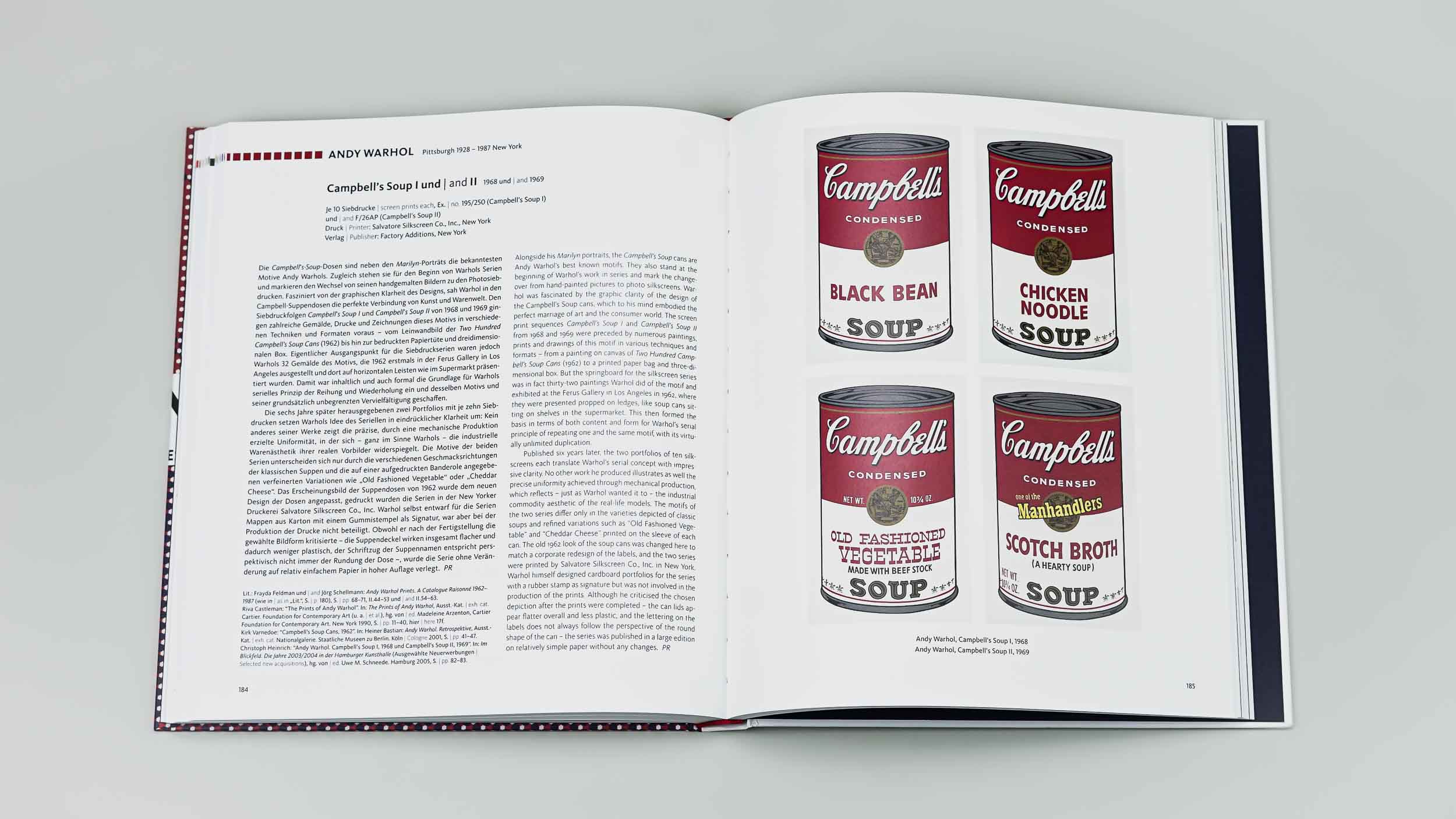
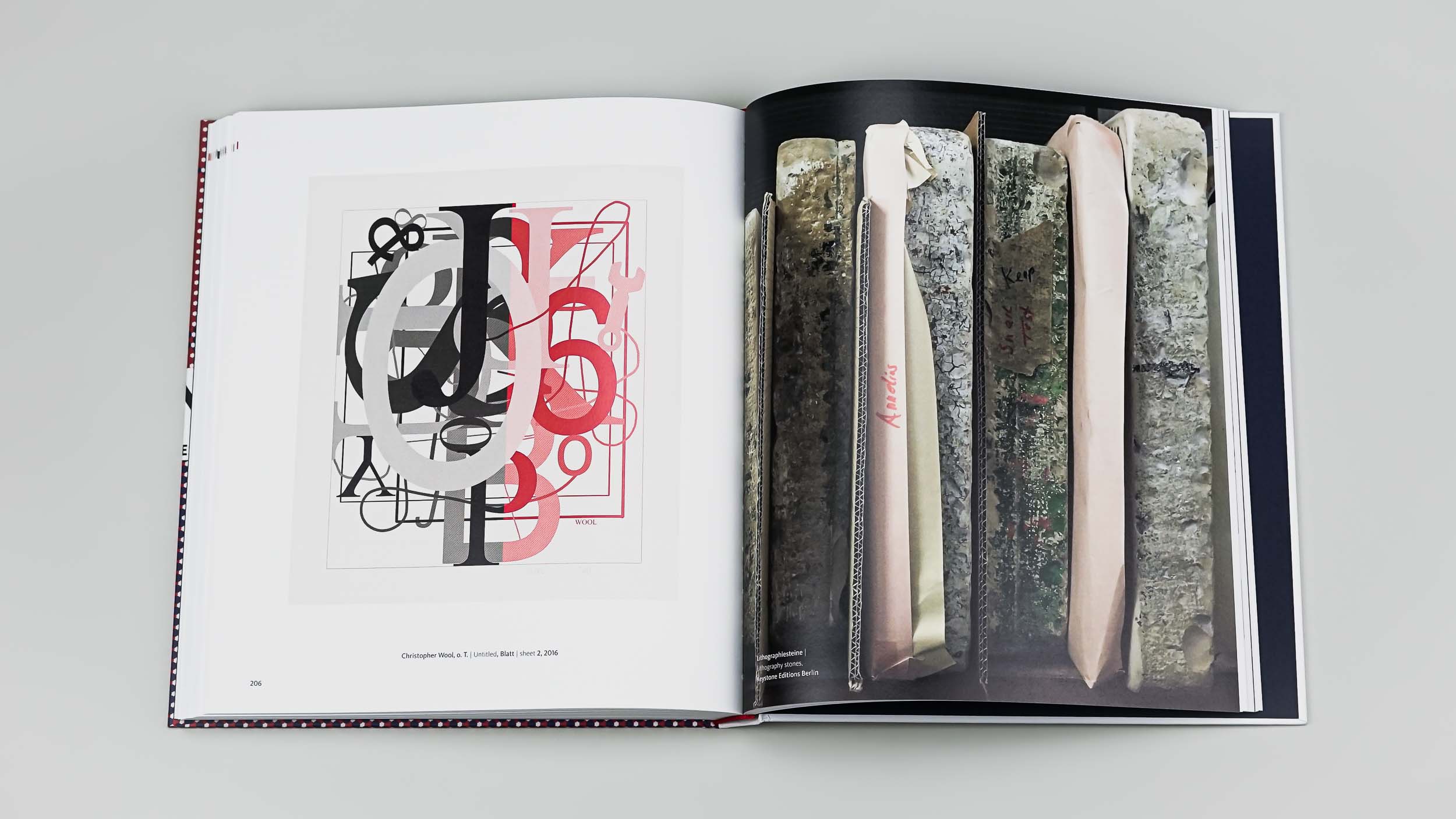
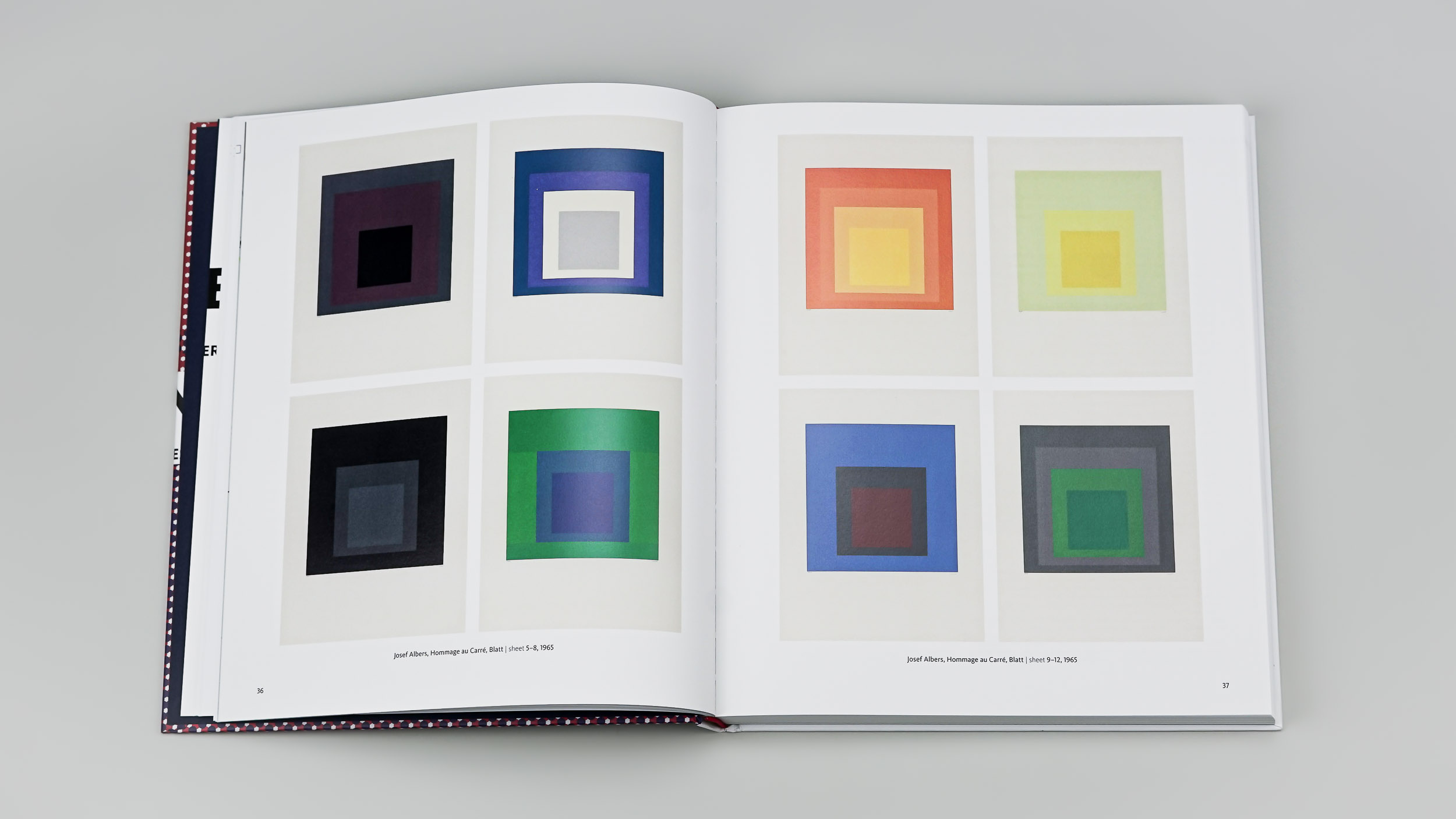
Series are open systems, telling stories, toying with rhythms, permitting variations, and documenting creative processes. Andy Warhol’s famous silkscreen prints made the serial iteration of images his trademark stratagem. In the mid-1960s, Pop Art and Fluxus had established the fine art print as a medium in which seminal work was being done. New graphic techniques such as serigraphy and offset printing, used with aggressive colors and punchy motifs, not only allowed for large numbers of copies, they also opened the door to an unprecedented engagement with the imagery of popular print and advertising media. Opening with an inquiry into how serial fine art prints are made, the book presents and contextualizes the explosive visual and political energy of graphic series. The numerous illustrations and essays are rounded out by an interview with Thomas Schütte and Ellen Sturm.
With works by Josef Albers, Joseph Beuys, Ulla von Brandenburg, John Cage, Helen Cammock, Nina Canell, Jim Dine, Dan Flavin, David Hockney, Jenny Holzer, Olav Christopher Jenssen, Donald Judd, Ronald B. Kitaj, Maria Lassnig, Sol LeWitt, Roy Lichtenstein, Richard Lindner, Robert Mangold, Brice Marden, Stefan Marx, Bruce Nauman, Dennis Oppenheim, Nam June Paik, Sigmar Polke, Gerhard Richter, Dieter Roth, Fred Sandback, Nora Schultz, Thomas Schütte, Dasha Shishkin, Frank Stella, Rosemarie Trockel, Victor Vasarely, Wolf Vostell, Andy Warhol, Corinne Wasmuht, Emmett Williams, Christopher Wool, and others.
More books
-

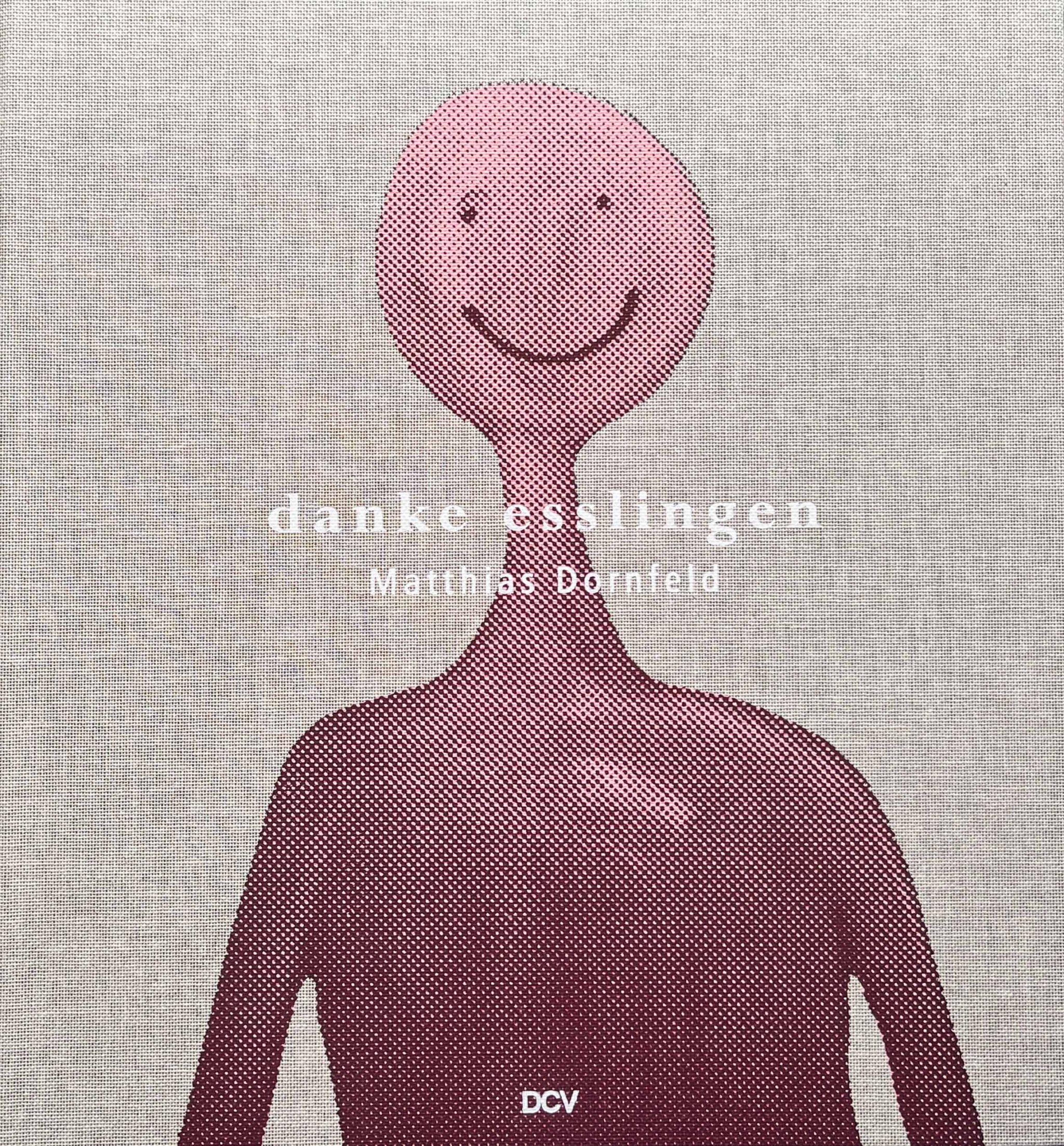
Matthias Dornfeld
danke esslingen42€ Add to cartAt first glance, the paintings of Matthias Dornfeld might strike us as naïve or even primitive. However, his still lifes, flower and animal depictions, and abstracted portraits occur in a compelling discourse with the avant-garde of European art history. Yet the works are equally accessible without that background, namely with their playful and provocative gestures, which tend to push the depictions to the brink of possibilities. After a comprehensive retrospective in the Villa Merkel Esslingen, this book documents the show and includes texts by Friedrich Meschede, Daniela Stöppel, and Christian Gögger. The in-depth essays illuminate Dornfeld’s oeuvre and iconography and furthermore discuss the unconventional hanging of the show as well as its reception.
-
Jan Zöller
Keine Zeit zum Baden38€ Add to cartJan Zöller’s (b. Haslach im Kinzigtal, 1992; lives and works in Karlsruhe) art brims with personal references and experiences that he translates into his distinctive personal visual idiom. His paintings are theatrical arrangements for which he draws on a multifarious repertoire of motifs. Zöller’s first monograph Keine Zeit zum Baden presents new works engaging with the exhibition space such as a floating installation with blue tiles from the exhibition of the same title at Städtische Galerie Ostfildern and videos and large-format paintings from the cycle Badebrunnen that were created between 2019 and 2022. The bathtubs in the pictures hint at private moments of relaxation; the fountains, at the “eternal cycle” of nature. The title Keine Zeit zum Baden (No Time for Bathing), then, gestures toward the subjects of the works, but also suggest the dilemma of striking a healthy balance between life, work, and one’s vocation.
Jan Zöller studied with Marijke van Warmerdam und Leni Hoffmann at the State Academy of Fine Arts Karlsruhe from 2012 until 2017 and with Jean-Marc Bustamante at the École Nationale Supérieure des Beaux-Arts de Paris in 2016. He won the Federal Prize for Art Students of the Bundeskunsthalle, Bonn, in 2018, followed by Stiftung Kunstfonds’s working fellowship in 2021.
-

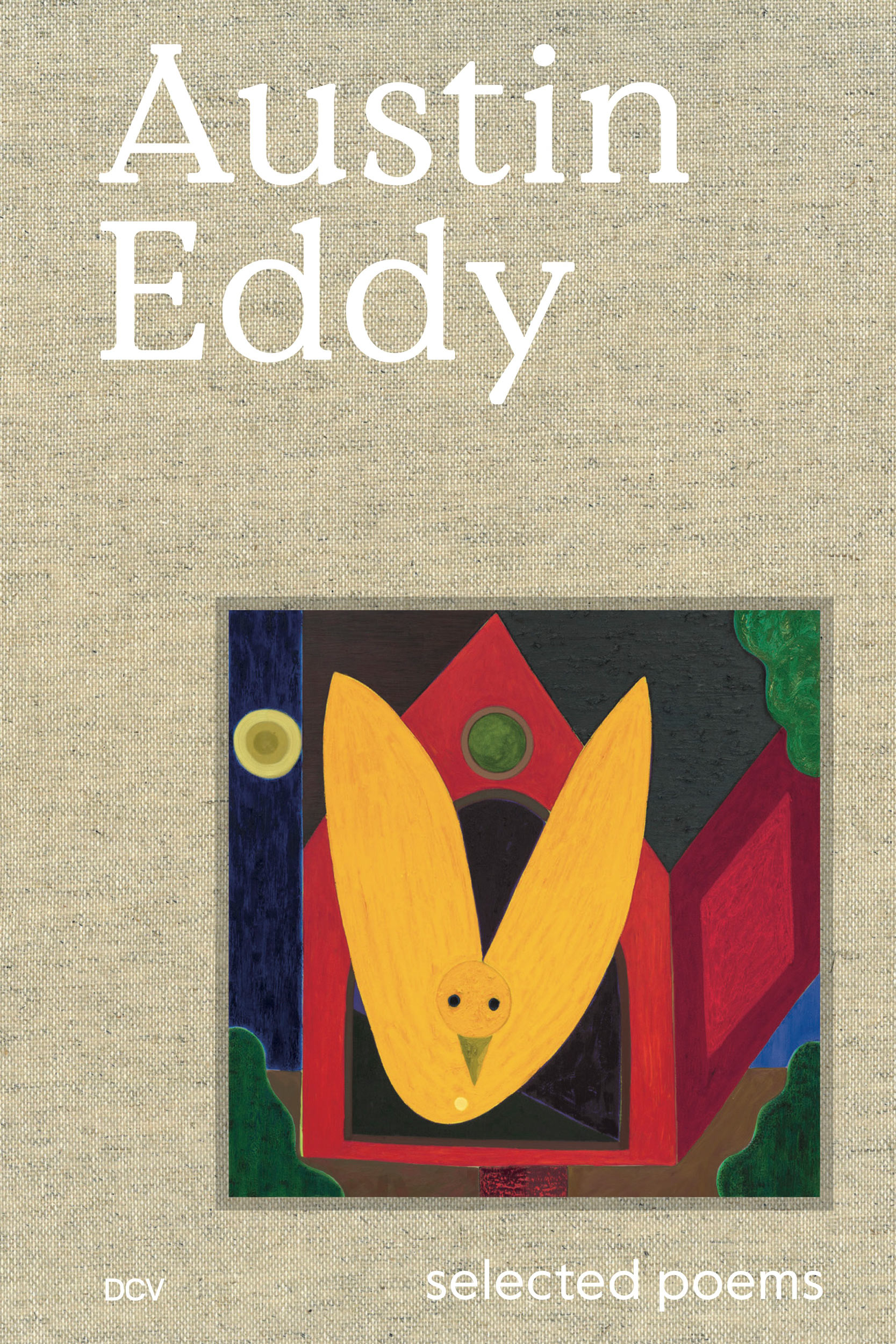
Austin Eddy
Selected poems40€ Add to cartSince 2018, the American painter and sculptor Austin Eddy (b. Boston, 1986; lives and works in Brooklyn) has probed the manifestations of modern painting in a world between abstraction and figuration. As a child and teenager, Eddy immersed himself in the imageries of comics, cartoons, and record covers. In the early 2010s, he studied in Chicago with Barbara Rossi, who had been one of the Chicago Imagists in the 1960s. The deconstruction of everyday objects into innumerable forms and hues became his central theme. Eddy’s works play with luminous colors, overlaid textures, animated bird motifs, and abstract planes of light while grappling with a human existence defined by loss and the passage of time. Situated on the margins of reality, his paintings and sculptures are like visual poems, celebrating the evanescent instant that exists only for a second before fading into the past.
Austin Eddy completed a BFA at the School of the Art Institute of Chicago in 2010.
-
Maria Balea & George Crîngașu
The Mythenstein Project18€ Add to cartMaria Balea (b. Sighetu Marmației, 1990; lives and works in Cluj-Napoca, Romania) and George Crîngașu (b. Focșani, 1988; lives and works in Cluj-Napoca and Rome) are among the youngest members of the School of Cluj, which has attained international renown in Adrian Ghenie, Hortensia Mi Kafchin, and Ciprian Mureșan. The overarching theme in their works in a range of media is the lived reality of today’s young people between a physical world defined by uncertainties and a virtual parallel universe whose boundless possibilities make it a fascinating yet also often deceptive safe haven. Both artists roam this dizzying kaleidoscope of worlds on a quest for beauty: Balea, through a romantically idealized focus on remnants of untouched or deserted nature; Crîngașu, by abandoning himself to the graphical possibilities of the digital realm, where beauty is often bound up with the bending of natural laws and the physical impossibility of architecture. Yet both, the retreat to an ostensibly natural state and the escape into garish artificiality, are overshadowed by a nameless menace.
- Release January 2026

Charles Moore
On painting16€ Add to cartFor On Painting, New York-based art historian and curator Charles Moore, interviewed four women artists about their practice, asking them to reveal their motives and aspirations. This publication consists of four interviews, each containing an introduction by Moore and illustrations of the artist’s works. Danielle Mckinney, who paints exclusively Black women, reflects on her experiences as a woman growing up in the US South. Nicola Staeglich creates subtle layered abstract works to evoke new perspectives and the potential for change. Nirit Takele elaborates on how her Ethiopian Jewish heritage has shaped her painting practice. Jorinde Voigt, who creates complex installations inspired by notation systems, discusses the use of algorithms and the beauty to be found in the unexpected.
-

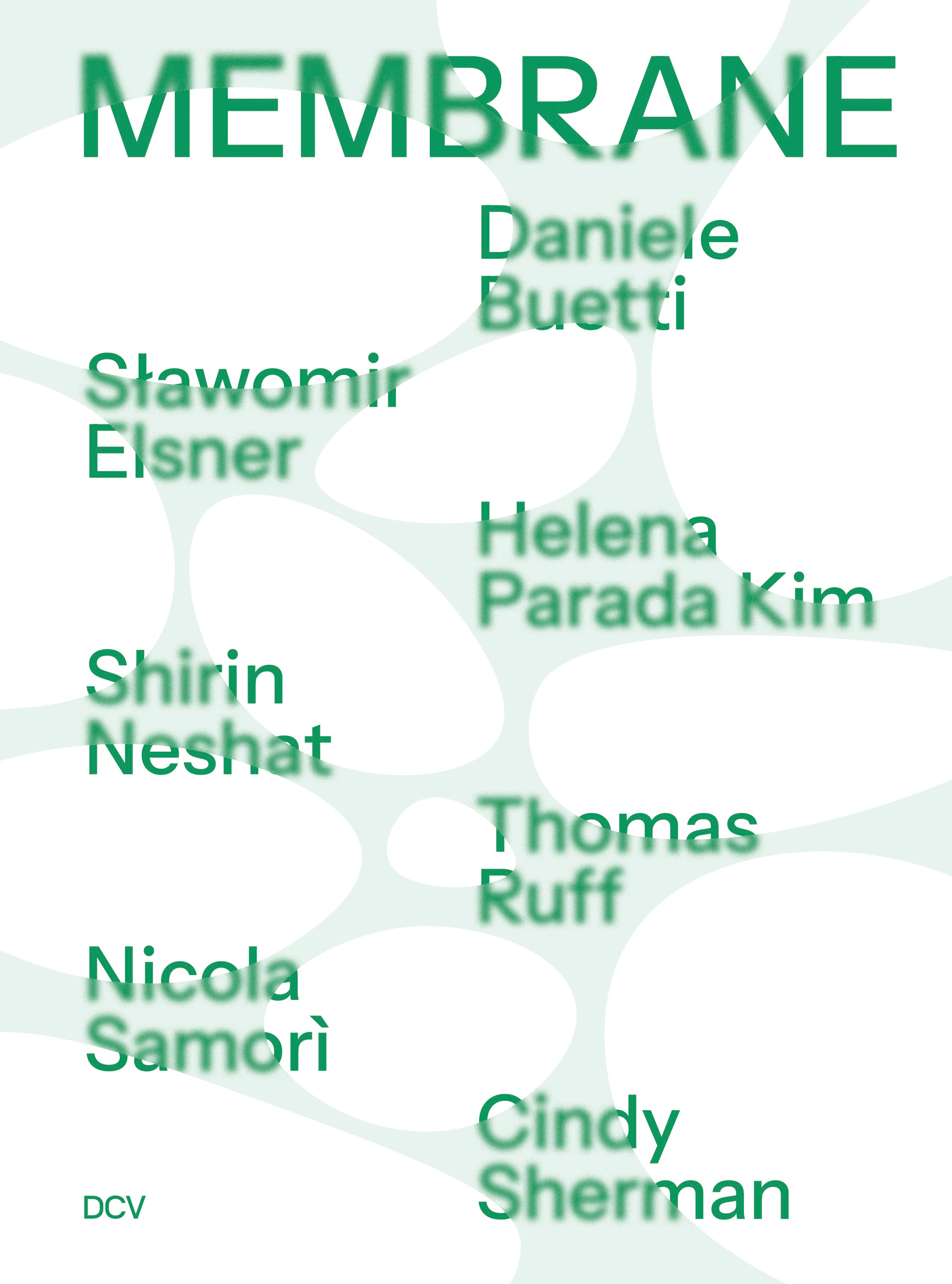
Membrane
38€ Add to cartMembrane documents an eponymous exhibition at the Neue Galerie Gladeck as well as the gallery’s architectural extension. The works of the 7 invited artists are engaged to explore skin in a broader sense—membrane also encompasses clothing, veiling, and masking from various cultural perspectives. Well-known portraits by Thomas Ruff, Shirin Neshat, and Cindy Sherman appear in a new light alongside Helena Parade Kim’s exploration of iconographic and ceremonial fashion codes, Daniel Buetti’s critique of the commercialized body, and Nicola Samorì’s exploration of skin in historical masterpieces. The membrane concept also inspired the exterior and interior surfaces of the new gallery building, and an interesting text by the architect reveals his approach.
Artists: Daniele Buetti, Sławomir Elsner, Shirin Neshat, Helena Parada Kim, Thomas Ruff, Nicola Samorì & Cindy Sherman
-
Sprache/Text/Bild
32€ Add to cartSpoken words, writing, and images originate in social and cultural contexts and so are fraught with meanings, are vehicles of values and norms. They inevitably also demarcate boundaries, serving to class people as members of groups or outsiders. This adds to the urgency of the question of what can in fact be said and shown, and who or what determines those limits. The present catalog addresses these concerns through a survey of eminent art of the twentieth and twenty-first centuries. The works gathered in it speak to mechanisms of inclusion and exclusion, to categorizations and the narratives that were created to sustain them. And they remind us that these phenomena are human-made, which is also to say, susceptible to change—that we share responsibility for them.
Artists: John Baldessari, Maria Bartuszová, Alice Bidault, Alejandro Cesarco, Ayşe Erkmen, Nadine Fecht, Gary Hill, Janice Kerbel, Gabriel Kladek, Gordon Parks, The National AIDS Memorial, Markus Vater, Gillian Wearing
-

Katja Aufleger
Schwindelerregende Höhen30€ Add to cartOn a Razor’s Edge: Evanescent Moments
Katja Aufleger’s (b. Oldenburg, 1983; lives and works in Berlin) works bring instants of suspense and uncertainty into focus in a variety of aesthetic forms. Their nuclei are typically everyday phenomena and physical models, which she combines with a range of concepts from cultural history and psychology. The publication presents several series, some of which capture explosive tensions. Among them are photographs of homemade Molotov cocktails for which the artist set perfume flacons on fire, making this most recent series a probing exploration of the potentials of material aesthetics and emotion. With an introductory essay by Julia Katharina Thiemann.
Katja Aufleger studied visual art the University of Fine Arts Hamburg (HFBK), where Andreas Slominski, Matt Mullican, and Michael Diers were her teachers.
-
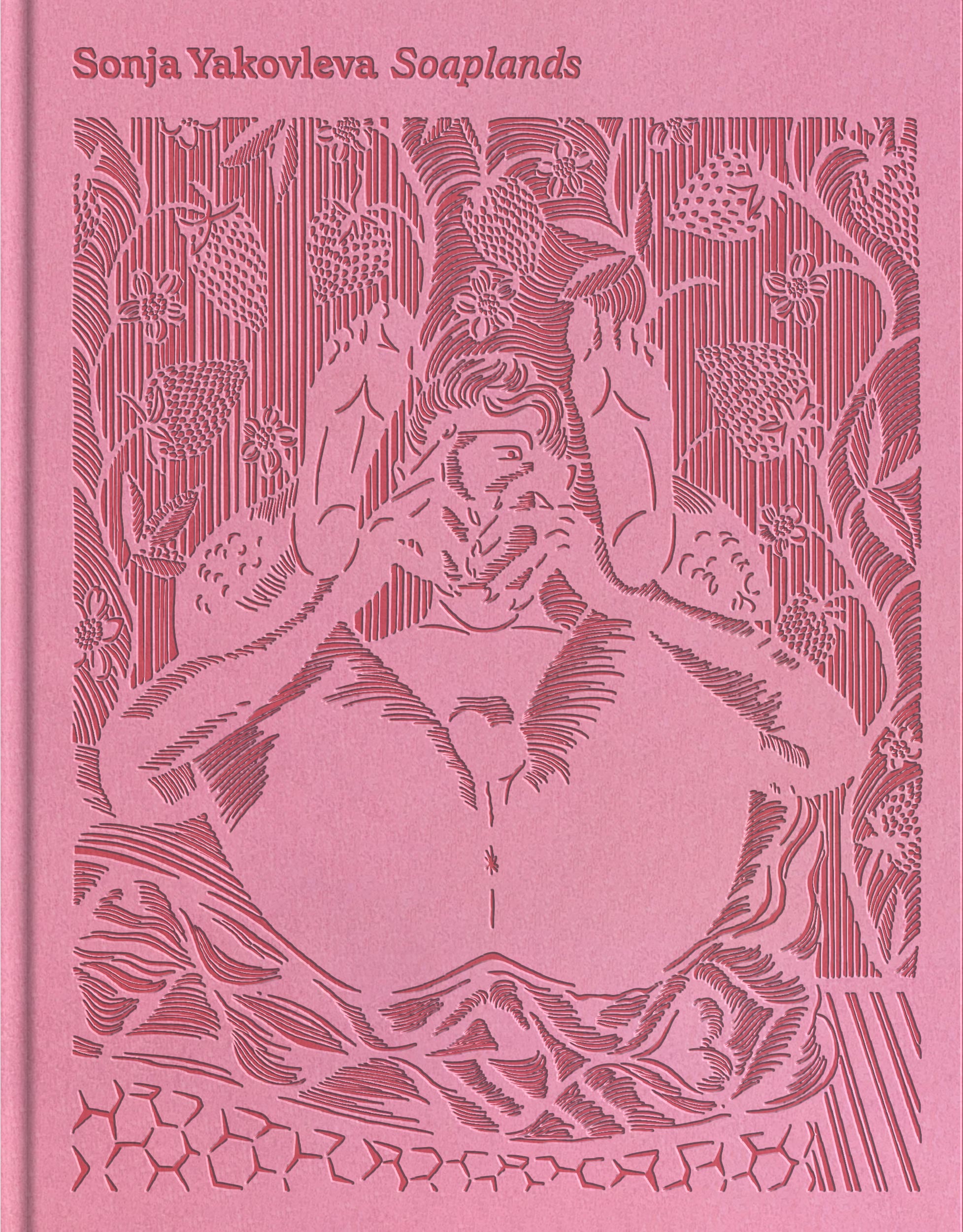
Sonja Yakovleva
Soaplands50€ Add to cartSonja Yakovleva’s (b. Potsdam, 1989; lives and works in Frankfurt am Main) silhouettes are informed by her sex-positive feminist views. They mix and match pornography with art-historical references, folkloristic motifs, fairy tales, and myths that have served to ingrain misogynistic, racist, and homophobic ideologies in the collective consciousness since the Middle Ages. The dissemination of such materials was facilitated by the paper cut, a medium that encouraged simplified graphical representations and was seen as domestic and appropriate for women. Yakovleva’s intentions in adopting it, however, are contrarian: her iridescent silhouettes grapple with women’s stories, precarious gray areas, power relations, representation, sexuality, and violence in novel ways.
Soaplands, the title of Sonja Yakovleva’s first monograph, is a nod to Japanese bathhouses where men receive personal care, massages, and sexual services. Most recently, a number of soaplands have opened that cater to women with male prostitutes. Similarly, in the paper cuts in the book, which were created between 2018 and 2023, women have seized sexual power and conquered the patriarchal system. Unchecked by shame, they use men as objects to satisfy their desires.
-

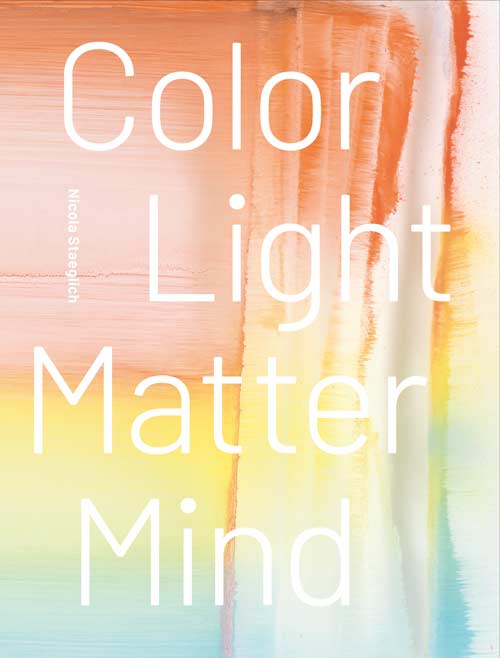
Nicola Staeglich
Color Light Matter Mind36€ Add to cart“This painting springs from the ambition to paint color into the air.” (Ulrich Loock)
Nicola Staeglich’s (b. Oldenburg, 1970; lives and works in Berlin) work with color achieves a distinctive intermediate state between physical presence and atmospheric radiance. She stages painting now as a performative action with broad propositions in color, now as an installation in three dimensions with multilayered translucent painted panels. Color Light Matter Mind is Staeglich’s first monograph, setting recent works in relation to her earlier output (1998–2021). From the spiral-shaped reliefs to her Liquid Lights, the artist opens up a fresh dimension for color.
Nicola Staeglich studied at the Städelschule, Frankfurt, the Academy of Fine Arts Mainz, and the Chelsea College of Art, London. She won numerous fellowships and has been professor of painting/graphic art at the Hochschule der bildenden Künste Essen since 2015. Her work has been presented in numerous solo exhibitions in Germany and abroad and is held by private and public collections.
-
On Air
Der Klang des Materials in der Kunst der 1950er bis 1970er Jahre40€ Add to cartOn Air showcases a distinctive art form, the sound sculpture, retracing its evolution from the early 1950s, when artists begin dismantling the conventional boundaries of art, to the early 1970s. In no more than a quarter-century, the range of possible answers to the question “What is art?” grows vastly larger. Propelled by the idea of the work of art as a machine and instrument, sounds, noises, tones, vibrations, silence, words, breath become a “tangible” sculptural material. Artists enrich visual perception by adding the acoustic dimension, interweave seeing and hearing, explore time and space with fresh zeal. In emerging artistic genres such as performance, installation, or media art, sound is an integral component of the work. The book focuses on sound objects by Yaakov Agam, Joseph Beuys, Hermann Goepfert, Yves Klein, Jannis Kounellis, Bruce Nauman, Robert Rauschenberg, Jean Tinguely, David Tudor, Timm Ulrichs, and others.
With five scholarly essays and numerous illustrations and notes on individual works, the comprehensive publication offers an attractive introduction to the subject.
-

Jan Zöller
Ritual Believer40€ Add to cartJan Zöller’s (b. Haslach, 1992; lives and works in Karlsruhe) paintings, sculptures, and installations probe the discrepancy between economic production and the spiritual and magical dimension of art. The artist’s book Ritual Believer surveys the so-called charcoal paintings series, created between 2019 and 2023. For these works, the artist paints directly in charcoal on the unprimed canvas, making it impossible to correct “blunders.” Another distinguishing feature is the virtual absence of color; the austerity of the compositions contrasts with Zöller’s other, often intensely colorful paintings. The motifs that are the hallmark of his oeuvre—birds, running legs—are complemented by writing and text. Another aspect of this shift is that the works’ titles play a central part and almost figure as a creative element in their own right. For the text in the book, the artist sent the titles of the works shown to his brother, who wove them into a story. An appendix presents scanned archival materials. Notebooks and zines Zöller produced between 2015 and 2017 provide interesting insight into how he finds his motifs and his compositional process.
Jan Zöller studied with Marijke van Warmerdam and Leni Hoffmann at the Akademie der Bildenden Künste Karlsruhe from 2012 until 2017 and with Jean-Marc Bustamante and Götz Arndt at the École Nationale Supérieure des Beaux-Arts de Paris in 2016.
-
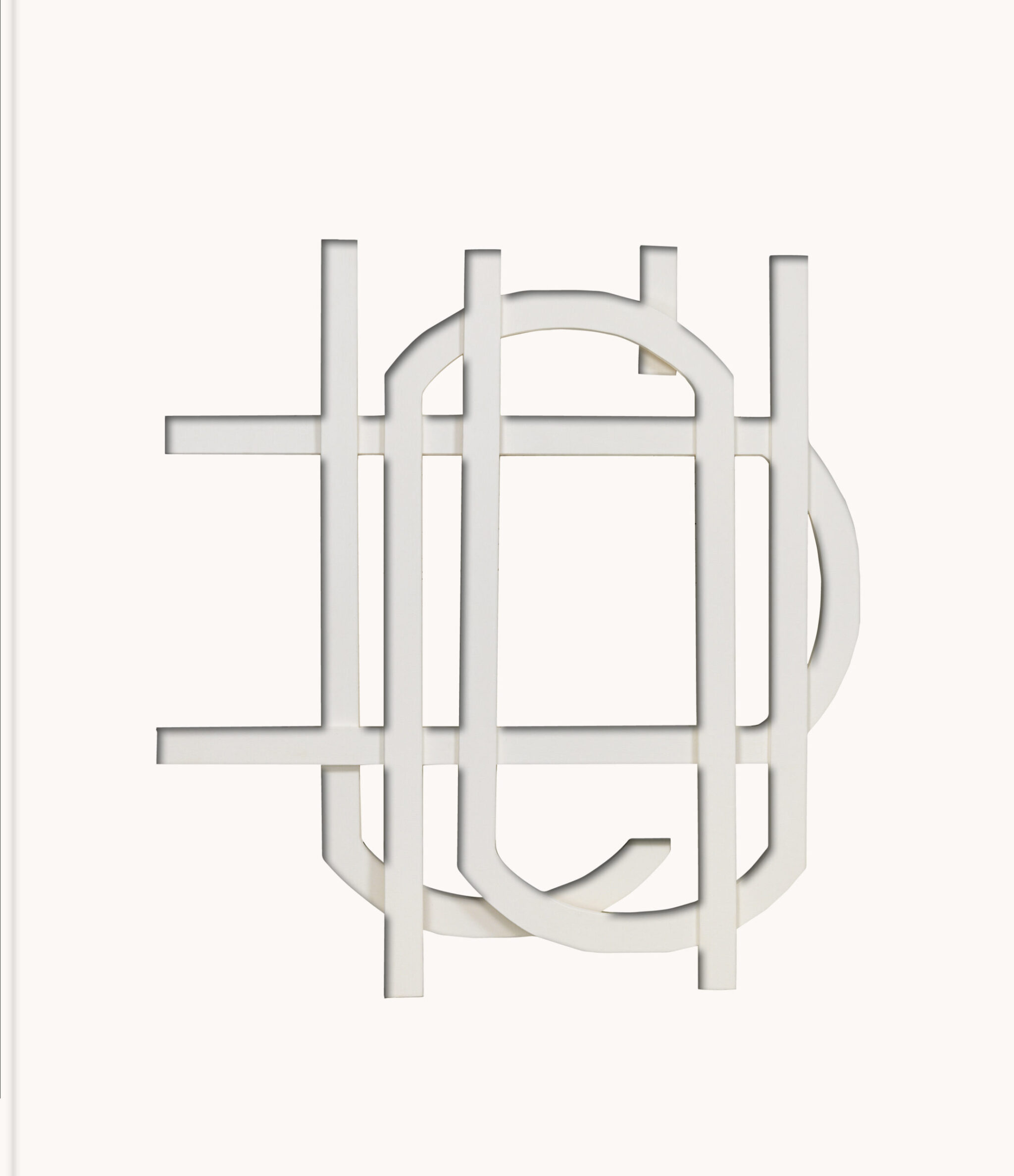
Wyatt Kahn
Paintings and Sculptures36€ Add to cartWyatt Kahn’s (b. New York, 1983; lives and works in New York) work hovers between two and three dimensions, reviving aspects of American 1960s Minimal Art. In the tradition of minimalist abstraction, his multipart paintings seem devoid of content, but their construction is a sophisticated choreography of geometric shapes. Instead of delineating them on the canvas itself, he transforms them into physical elements composed of canvas stretched over strips of wood that he mounts on the wall as reliefs, making the latter an integral part of the composition. Working on the interface between painting and sculpture, the artist also references Ellsworth Kelly’s single and multiple shaped canvases.
Wyatt Kahn’s works are held by major collections including the Metropolitan Museum of Art, New York; the Museum of Modern Art, New York; the Whitney Museum of American Art, New York; the Centre Pompidou, Paris; the Museum of Contemporary Art, Los Angeles; the Dallas Museum of Art; the Museum of Contemporary Art, Chicago; and the Albright-Knox Art Gallery, Buffalo.
-

Susanne Rottenbacher
Radiationen40€ Add to cartIn expansive compositions in light, Susanne Rottenbacher (b. Göttingen, 1969; lives and works in Berlin) visualizes the fire of life in its timebound and fluid dimension. Plotinus called fire the “spiritual potency of beauty.” Pursuing a similar vision, Rottenbacher’s works orchestrate light as energy in space. To this end, the artist, who studied light and stage design in the United States and the United Kingdom, creates weightless luminous choreographies realized in colorful LED technology in combination with acrylic glass as a translucent vehicle of form. The results are installations in three dimensions that are deeply silent yet unfold in a magical ecstasy of light.
In Christian sacred architecture, light has been deployed and perceived since the Middle Ages as the aesthetic equivalent of the divine mind’s lucidity. The history of light art, by contrast, is much younger, going back to the years after the First World War. Having built her creative practice over the past fifteen years, Rottenbacher not only continues a century-old tradition of light art in Europe and the U.S.; her works also anticipate a future in which humanity will have room for feelings no less than for scientific knowledge.
-

Jenny Michel
Doors, Windows and Cells38€ Add to cartThe Detritus of Our Society
For around two decades, the artist Jenny Michel (b. Worms, 1975; lives and works in Berlin) has devoted herself to minute particles such as dust, cobwebs, and electromagnetic fields in space. Her fascination with orders of knowledge, symbolism, and utopian visions is reflected by installations, drawings, prints, and sculptures that she exhibits in carefully composed sprawling ensembles. Aggregating fantastic fragments of the world manufactured from paper, adhesive tape, staples, and other industrially made small parts, Michel builds disconcertingly dense structures—human knowledge is transformed into the debris of civilization, its legibility lost beneath palimpsestic layers of meanings and resignifications. The extensive monograph surveys major series in the artist’s oeuvre and presents new works on paper.
Jenny Michel studied at Kunsthochschule Kassel and the Academy of Fine Arts Vienna. Her work has been on view at Museum Wiesbaden, the Draiflessen Collection, the Schirn Kunsthalle, Frankfurt, and Berlinische Galerie, among other venues. In 2010, Michel was honored with the HAP Grieshaber Prize.
-

Konrad Mühe
Guide38€ Add to cartAn Artist’s Book as an “Optical Illusion”
Konrad Mühe’s (b. Karl-Marx-Stadt, East Germany, 1982; lives and works in Berlin) works interrogate the construction of our identities by uncovering the technological and media apparatuses that sustain it and confronting it with the autonomous lives of objects. Their basic formal principle is the installation hybridizing sculpture and digital moving image, with a particular focus on the projector and the interaction of pedestal or suspension and projection screen. Where the classical black box in the movie theater or exhibition venue seeks to conceal the technical equipment in favor of an immersive visual experience, Mühe brings it to the fore and sets it out in the gallery space as sculpture and installation. Yet his works also undercut the conventional display regime in the white cube: the process of projection emerges as the true creative medium and subject. This book acts as a descriptive illustrated Guide to Mühe’s projects.
Konrad Mühe was Hito Steyerl’s master student and trained at the Berlin University of the Arts and the Burg Giebichenstein University of Art and Design Halle. His works have been featured at numerous film festivals including the 61st Berlinale and in exhibitions at Kunsthalle Düsseldorf, the Moscow Museum of Modern Art, and elsewhere.
-

Thomas Lehnerer
Freies Spiel44€ Add to cartThe function of art in human existence
Throughout his short life, the Munich-based theologian and artist Thomas Lehnerer (1955–1995) did not take the existence of art for granted. In his writings, above all in Methode der Kunst (Methods of Art), he developed a concept of art in the continuation of key texts from the fields of aesthetics, cultural theory, and art history, which can also be found in his own artistic work. The small-format figurative sculptures by Lehnerer, as well as his drawings, watercolors, and early installations, follow theoretical premises and address comprehensive themes of human existence. The present volume documents his examination of human existence, which is deepened by the inclusion of cultural historical figures and idols.
-
Jagoda Bednarsky
SHADOWLAND ET AL40€ Add to cartJagoda Bednarsky’s (b. Złotoryja, Poland, 1988; lives and works in Berlin) paintings are pop-cultural and nostalgic borrowings that she transfers into the grotesque register, with allusions to stereotyped role models between hypermasculinity and matriarchy. Unfurling pastel-colored hillscapes composed of breasts, breast pumps, vulvas, figures from Greek myth, and motifs from flora and fauna, Bednarsky’s Shadowland series interrogates traditional ideas of femininity and motherhood. The depiction of the female breast serves as a metaphor referring to the titular “Shadowland,” where this part of the body is still perceived as a sexualized object rather than as natural. The title, one might note, is borrowed from a culture magazine first published in New York in 1919 in which the artist spotted Art Deco illustrations that became a vital source of inspiration. Despite the dense aggregation of fraught symbols and referential gestures, the sensual, poetic, and richly imaginative works exude a lightness that stems from their translucency and subtle irony.
The comprehensive volume presents Bednarsky’s works from between 2018 and 2023 and a singular conversation with the artist.
Jagoda Bednarsky studied fine arts, first at Kunsthochschule Kassel (2008–2009), then at HfBK Städelschule, Frankfurt am Main, with Michael Krebber and Monika Baer (2009–2014).
- Release January 2026
Stefan Reiterer
Inflection Point38€ Add to cartThe Austrian artist Stefan Reiterer (born 1988, lives in Vienna) transfers digital maps and satellite images into analog physical space through abstract painting. He manipulates data from sources such as Google Earth or NASA, transforming them into illusory topologies and pseudo-cartographies to challenge our perception. What is recognized, discovered, rejected? Where is the viewer’s location? Andrea Kopranovic writes of Reiterer’s painted emptiness as a “pitting” and projection surface “for glitches, black holes, and abysses” and a metaphor for potential “interpretations, enrichments, and yet unimagined spaces of possibility.” This richly illustrated book documents Reiterer’s 2025 exhibition at the Museum Gegenstandsfreier Kunst in Otterndorf.
-
Michael Williams
Make Plans God Applauds42€ Add to cartMichael Williams (b. Doylestown, Pa., U.S., 1978; lives and works in Los Angeles, Ca.) is known for paintings whose source materials have been subjected to both analog and digital processes in an effort to render the fragmented nature of our existence today. During the lockdown, he created six large-format collage paintings. To make these modern history paintings, he mounted paper printouts on canvases and reworked the pictures with paint. They are, in short, classic collages, as in the exhilarating days of DADA, when the photographic image from newspapers first transmigrated into art. Michael Williams studied fine arts at Washington University, St. Louis, and has exhibited widely, including at the Wiener Secession, Vienna, and the Museum of Modern Art, New York.