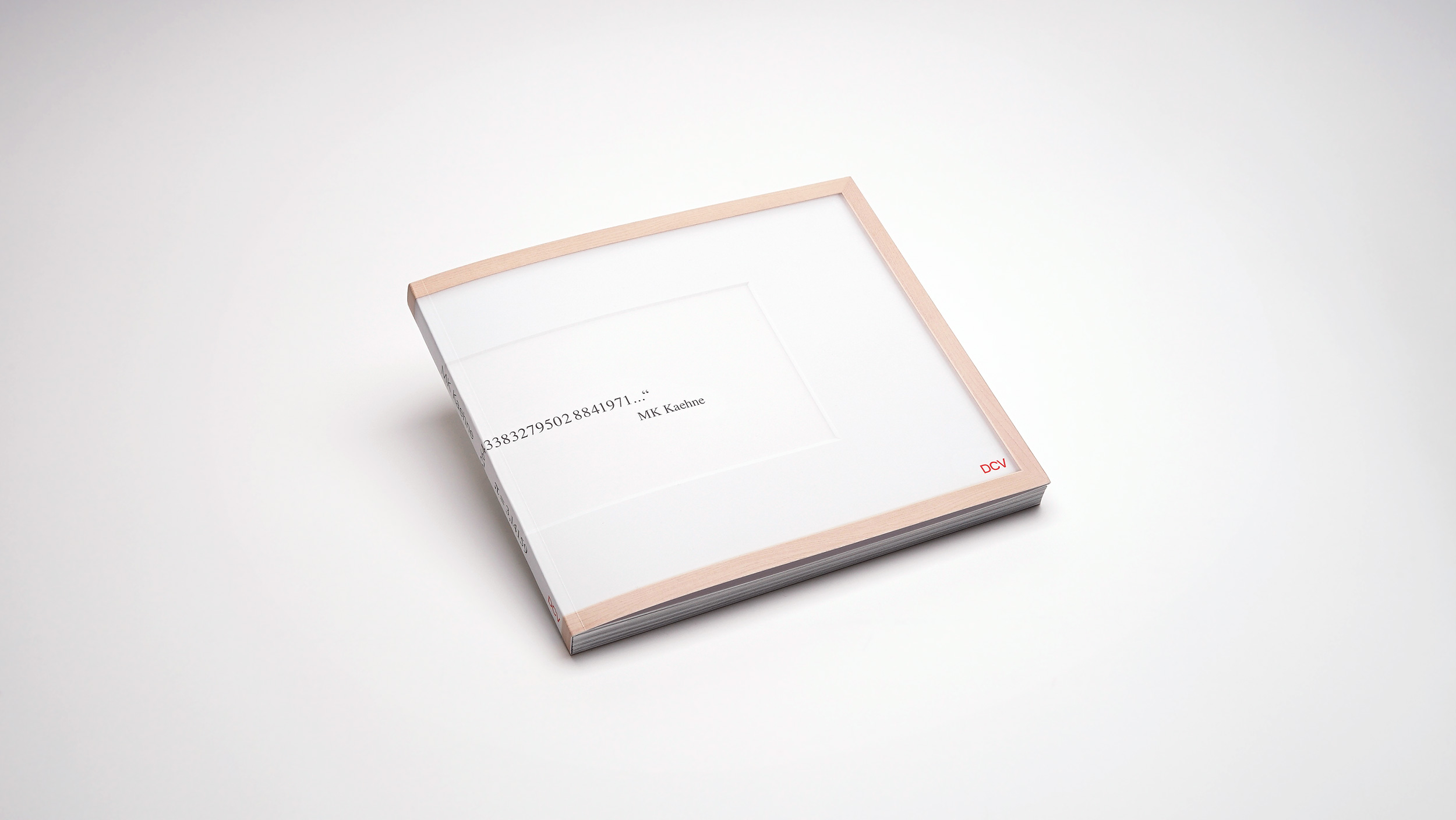
MK Kaehne
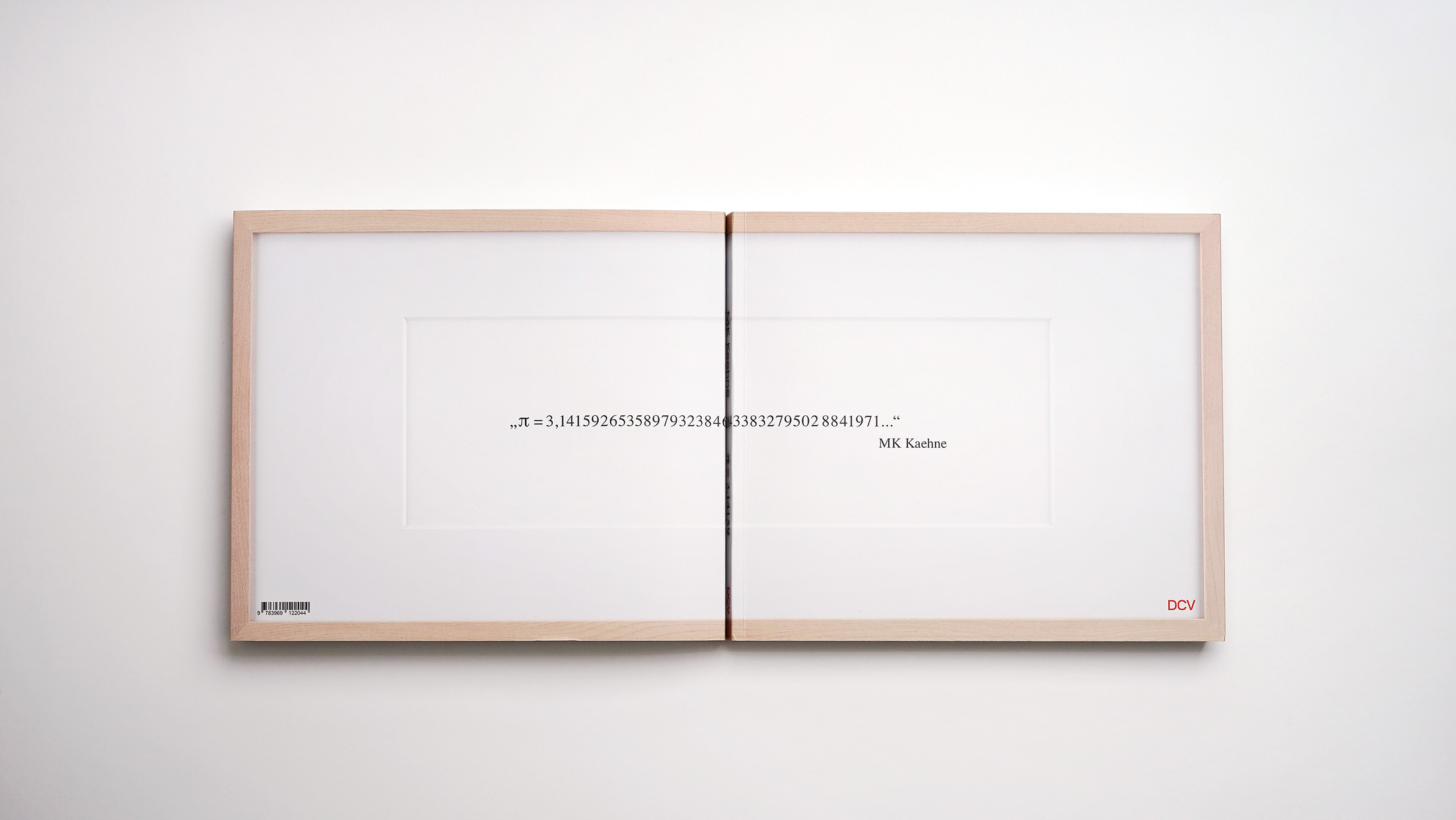
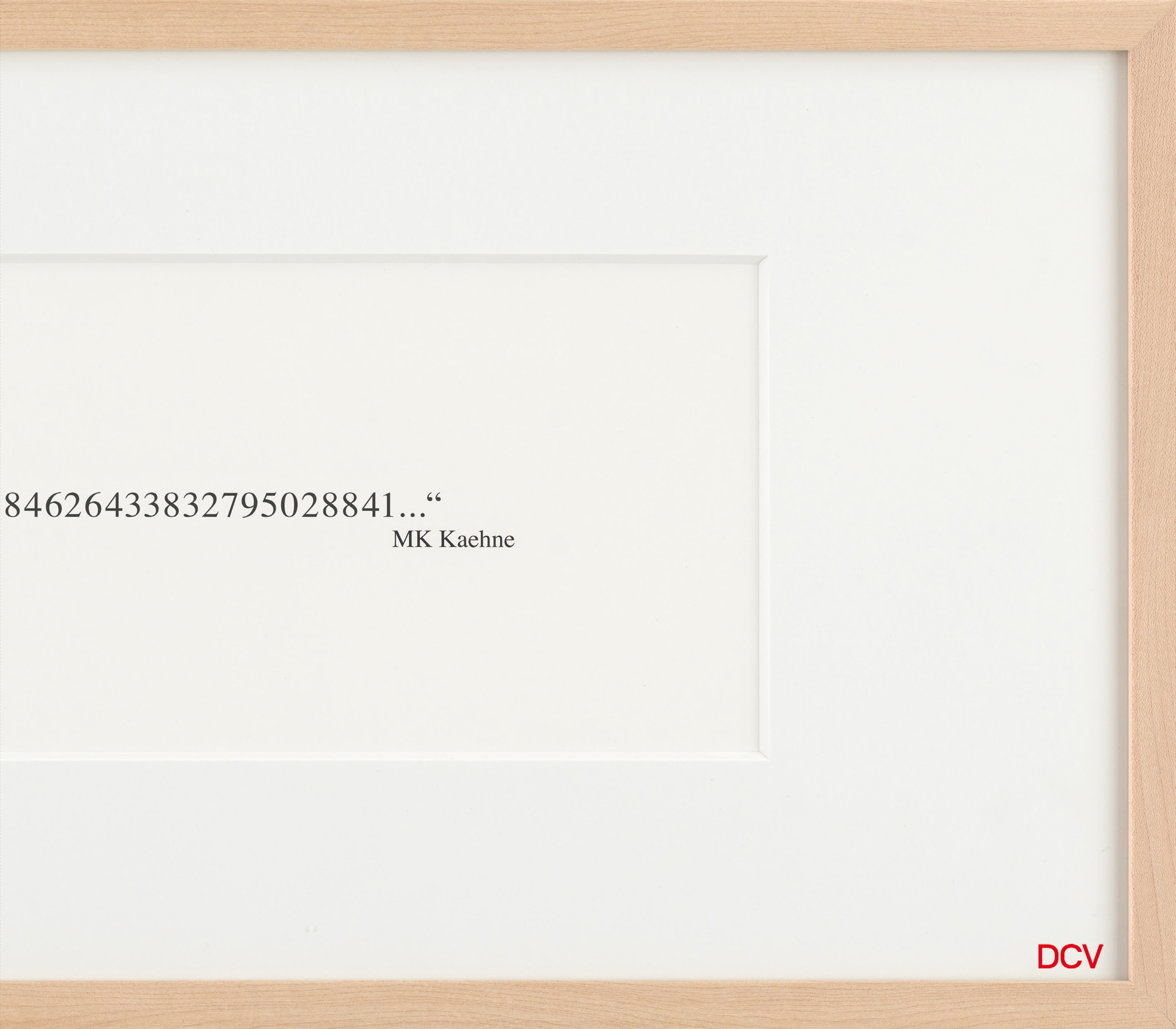
Π = 3,14159
 | |
|---|---|
| Author(s) | conversation Anemone Vostell – MK Kaehne, text Brigitte Werneburg |
| Design | müller&friends grafikdesign. |
| Size | 24 x 21 cm |
| Cover | Softcover |
| Pages | 176 |
| Illustrations | 140 |
| Language(s) | German, English |
| ISBN | 978-3-96912-204-4 |
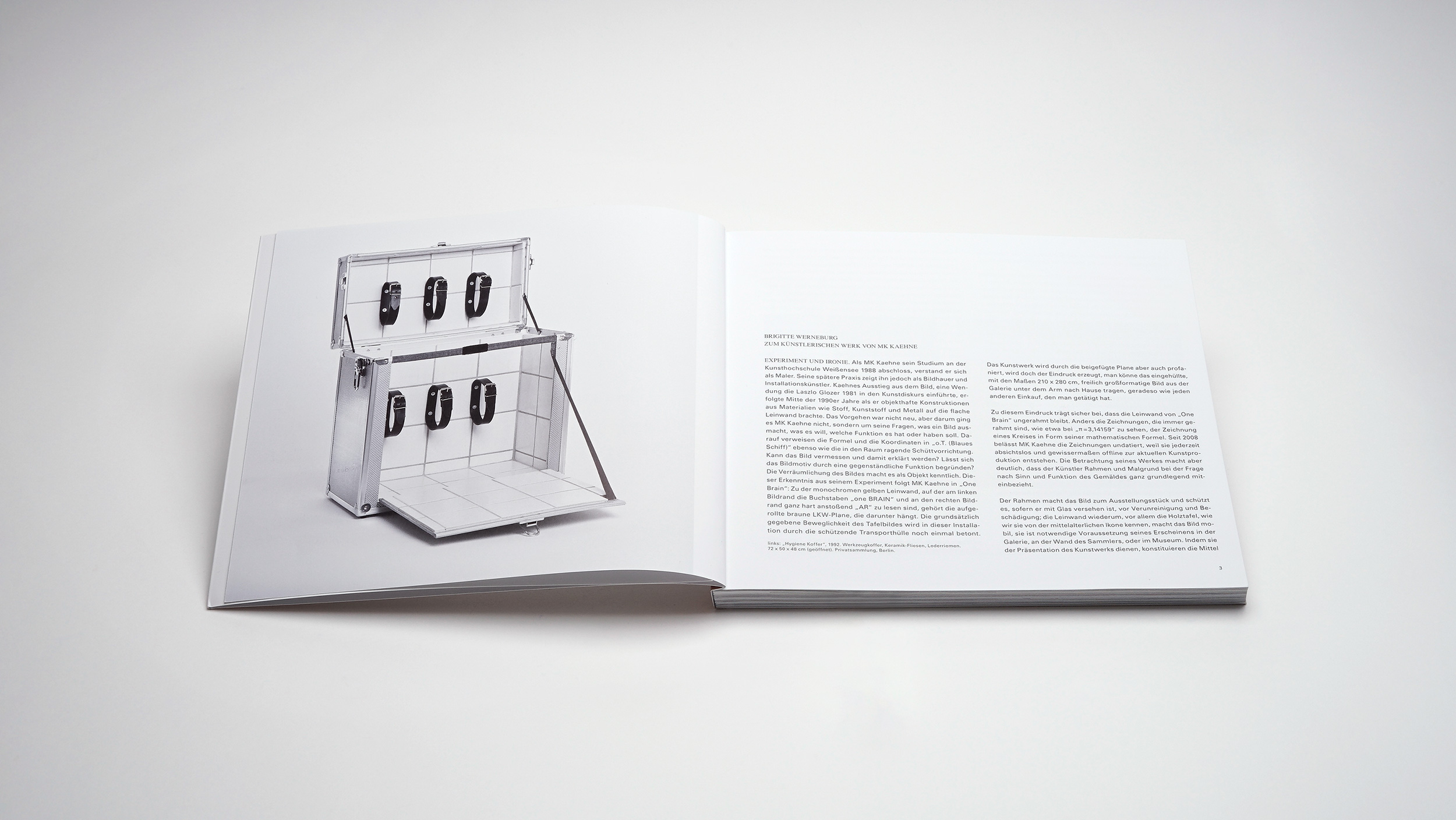
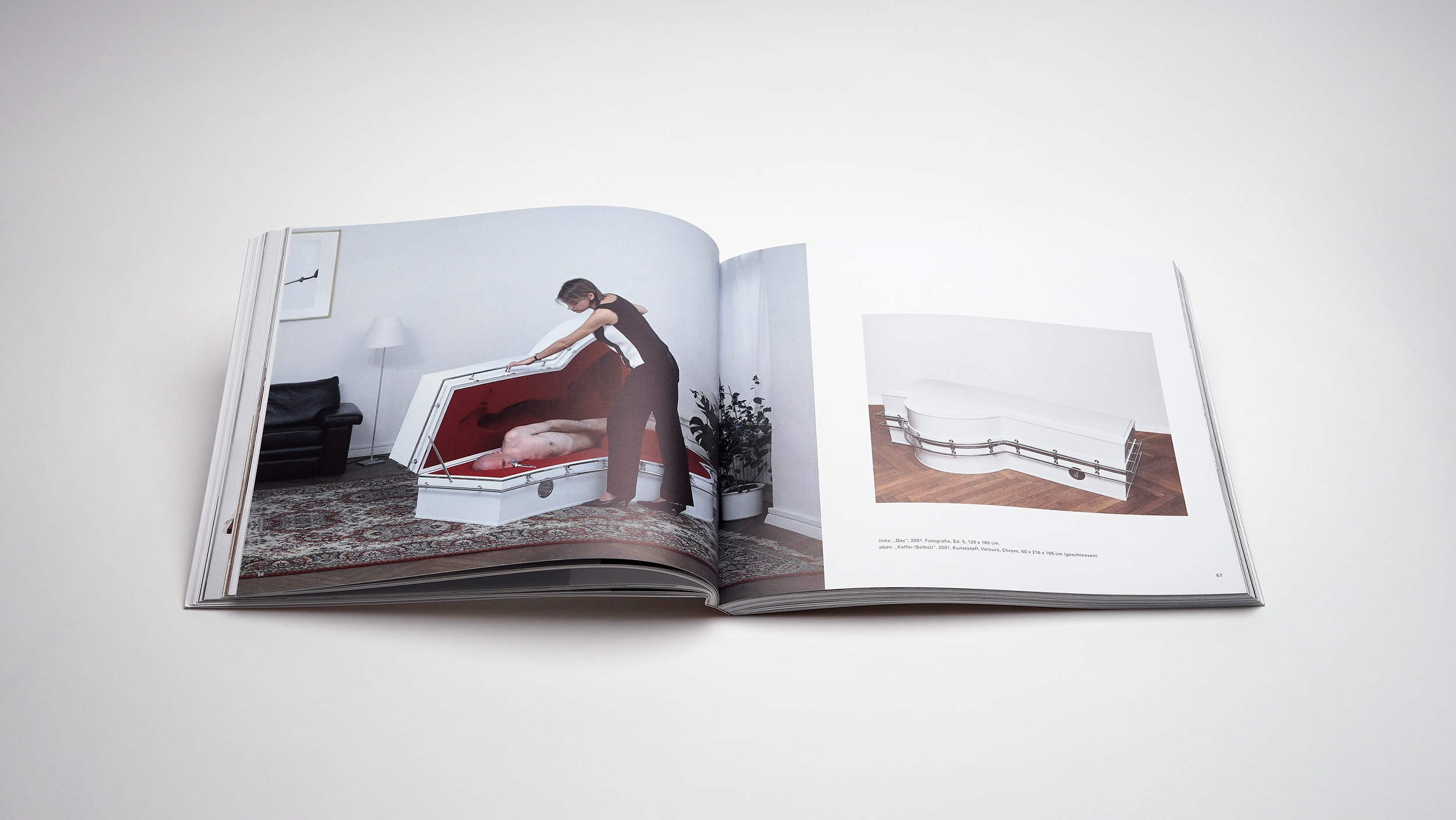
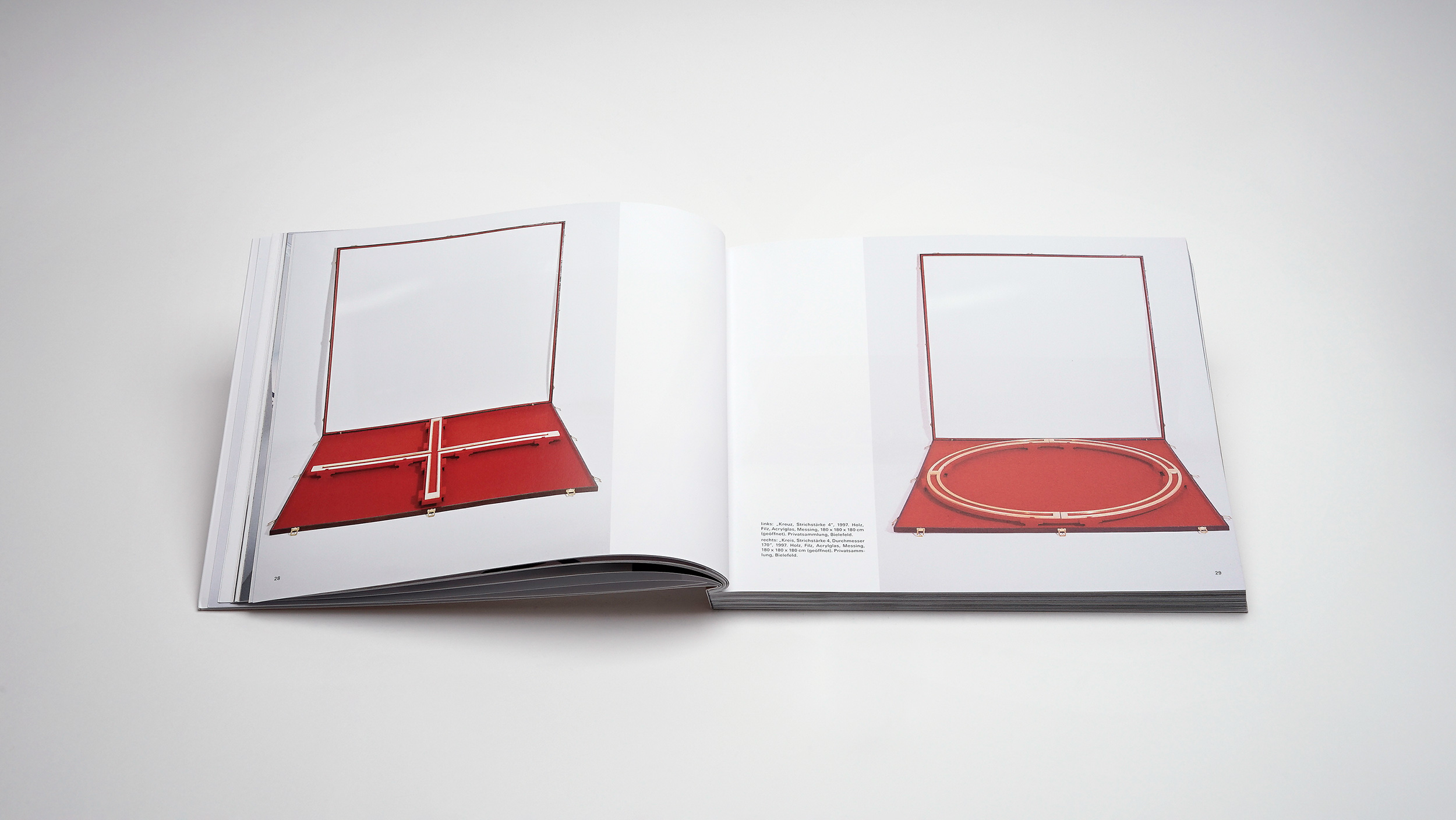
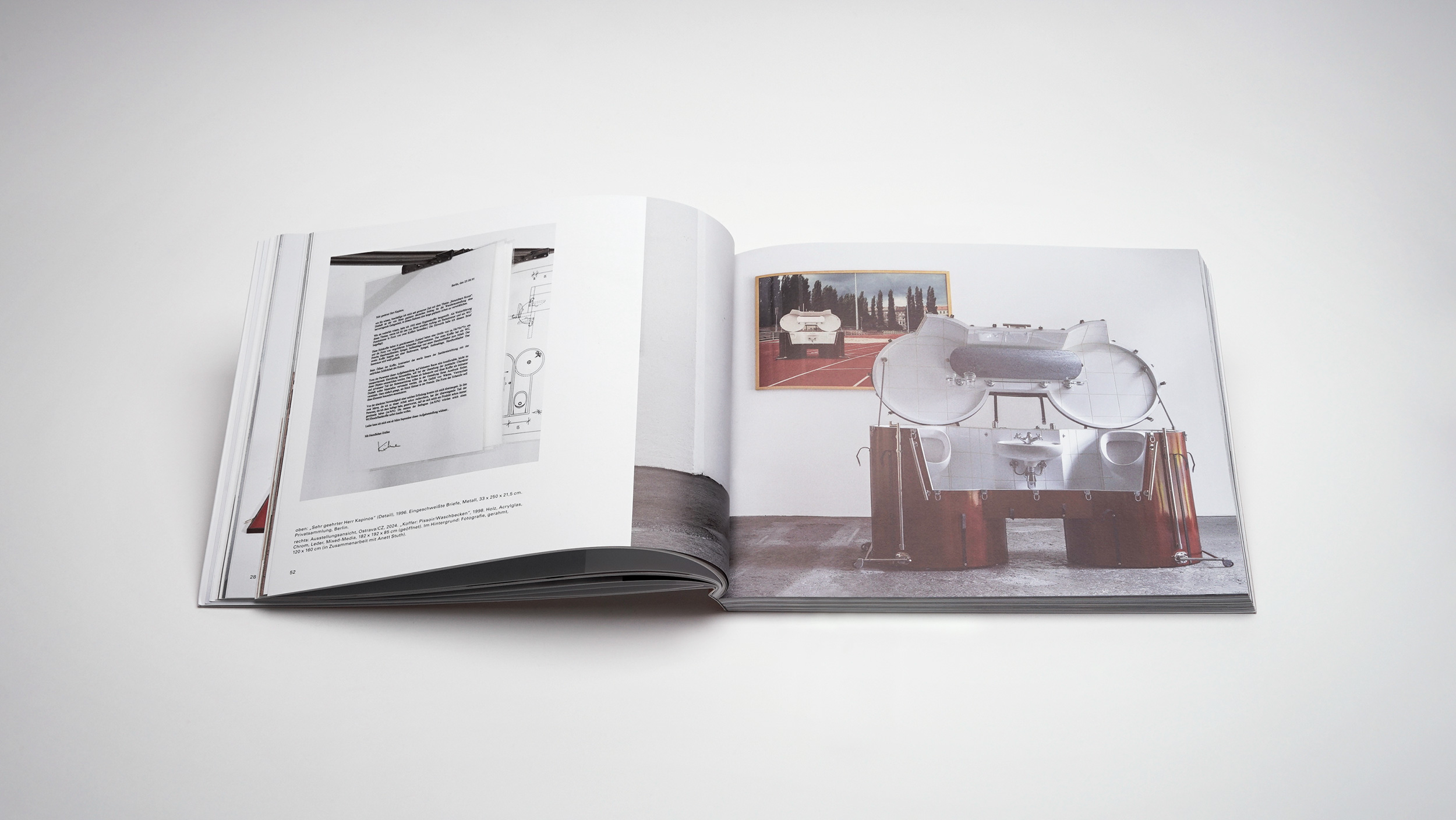
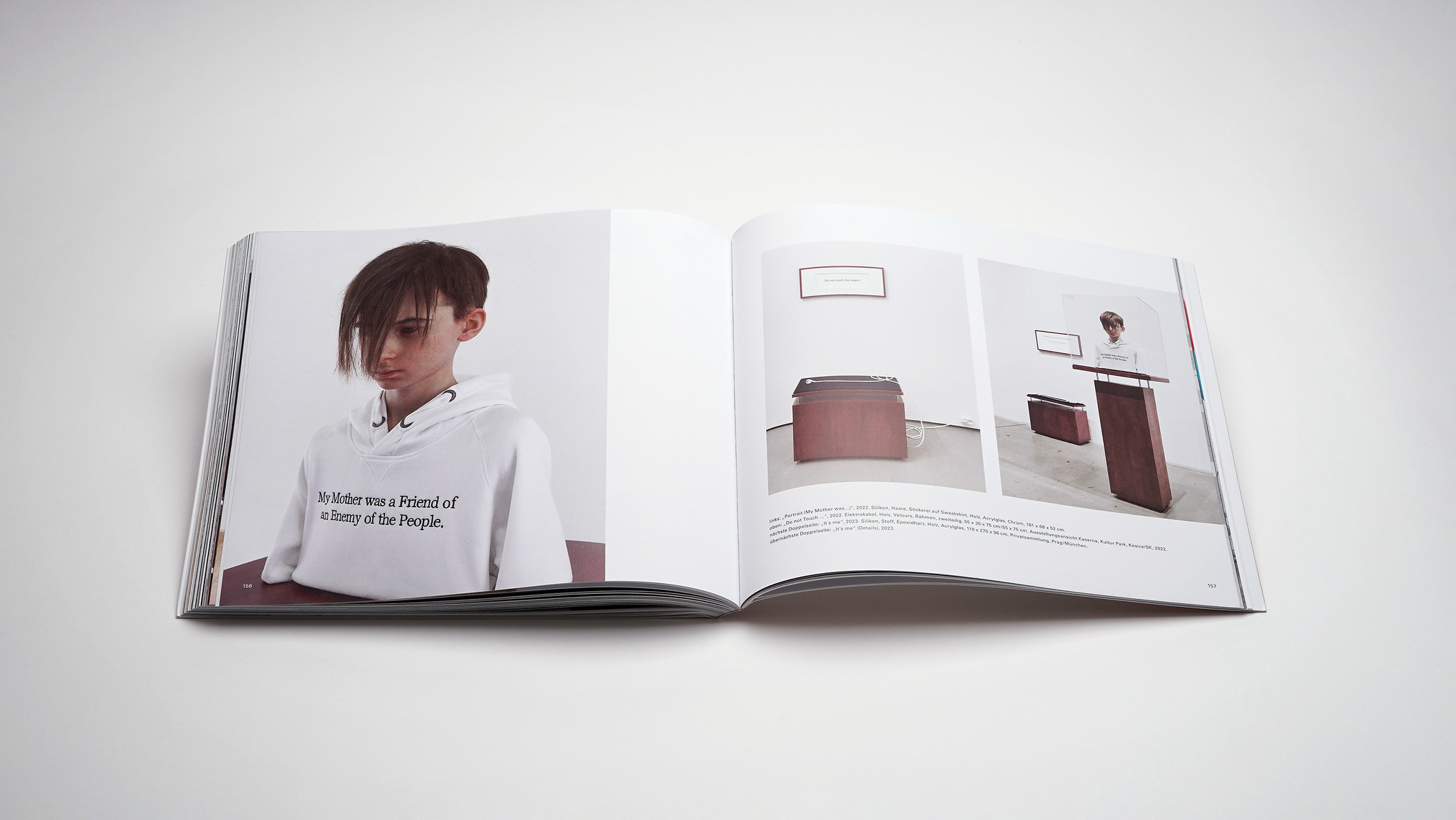
The biography of conceptual artist MK Kaehne (b. Vilnius, 1963; lives and works in Berlin) oscillates between Vilnius, Moscow and Berlin. Influenced by Russian Constructivism, he draws and builds suitcase sculptures with a department store aesthetic, a reversal of the readymade principle. His focus gradually shifted from the formal to the psychological, towards life-size figures such as It’s me (2023): a hyper-realistic replica of himself, lying upside down in the mud, with a garden gnome next to him. Kaehne’s work is strictly analytical, but the results are full of tragedy and irony. Unintentional drawings, in which biographical, Dadaist and political elements merge, accompany his oeuvre. A total work of art that traces personal and social development.
More books
-

Shara Hughes
Time Lapsed35€ Add to cartShara Hughes (b. Atlanta, 1981; lives and works in New York) describes her pictures and drawings as psychological or invented landscapes. Her cliff coasts, river valleys, sunsets, and lush gardens, often framed by abstract patterns, might be the settings of fairy tales or scenes from paradise. As the New Yorker put it, the paintings “use every trick in the book to seduce, but still manage to come off as guileless visions of not-so-far-away worlds.” Wielding oil paint, brushes, spatulas, and spray cans, the artist celebrates painting itself, not infrequently quoting the masters of past eras.
Shara Hughes studied at the Rhode Island School of Design and later attended the Skowhegan School of Painting and Sculpture. Her most recent solo exhibitions are currently on view at the FLAG Art Foundation, New York, and the Kunstmuseum Luzern, Switzerland. In 2021, she had shows at the Yuz Museum, Shanghai; the Contemporary Art Museum St. Louis; the Garden Museum, London; the Aspen Museum of Art, Colorado; and at Le Consortium, Dijon.
-

Anaïs Horn
Fading14€ Add to cartThe mystery of love and its language, translated into a photographic discourse
The starting point for the series by Anaïs Horn, which the artist, who works in Vienna and Paris, began in 2013 and now comprises eighty photographs, is the book Fragments d’un discours amoureux (Fragments of a Language of Love) by the French philosopher and author Roland Barthes. Terms such as “asceticism,” “magic,” “yearning,” “venerable,” and “unfathomable” serve Horn as models for her staged photographs. The linguistic “figures,” from which Barthes developed his “discourse” in an open structure, find their counterparts in views of people, landscapes, objects, and spaces. The result is a cosmos of images that is as non-binding as it is intimate, as touching as it is light, as vulnerable as it is challenging, and appears to be infinitely expandable. Viewed together, fragments of collective experiences and cultural codes of our notions of love become visible.
-

Jan Muche
Agora42€ Add to cartTracing the Wear of the Life of Labor
The visual art of Jan Muche (b. 1975, Herford; lives and works in Berlin) revolves around forms that bring to mind structural steelwork, giant industrial installation components, or scaffolding. His constructivist-abstract paintings and sculptures look back on steel as a symbol of industrialization and the working class, which featured in unflappably cheerful and adulatory depictions that were characteristic of the twentieth century’s ideologies – Communism, Stalinism, National Socialism, actually existing Socialism. Muche’s roughhewn aesthetic combines proletarian charm with the spirit of onward and upward, taking the beholder to regions not untinged by dissonance. This book, supported by the Leinemann-Stiftung für Bildung und Kunst, brings his reflections on the significance of work and the impact of digital technology on physical toil as well as his engagement with yesteryear’s “heroes of labor” into focus.
Jan Muche trained as lithographer and studied with Karl Horst Hödicke at the Hochschule der Künste Berlin.
- Release July 2023

Martha Rosler
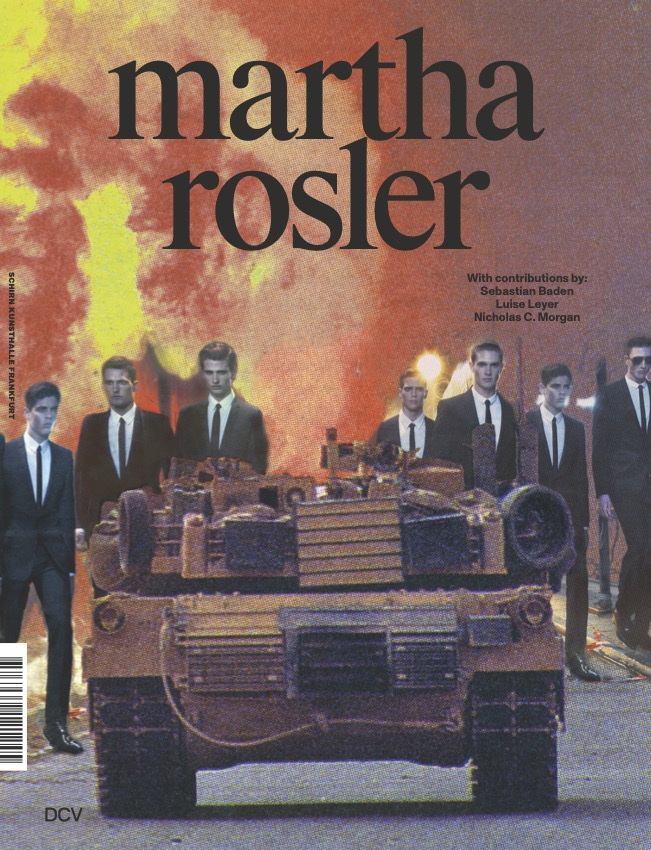
32€ Add to cartThe American conceptual artist and pioneer of critical feminism Martha Rosler (b. 1943 in Brooklyn, NY, lives and works in Brooklyn, NY) has influenced numerous contemporary artists with the radicalism of her artistic position. Rosler’s work is always political and examines questions of power and violence, the ideals of beauty and their demolition, and the purported contrasts between war and consumption. For her sociocritical collages and videos, Rosler uses found pictorial material that has already been published. The artist delights in working with photos from public sources like magazines and newspapers, which she processes and arranges in new contexts in order to visualize inequality and protest. Following on from Rosler’s iconic series House Beautiful: Bringing the War Home (ca. 1967–1972), at the heart of the publication lies the confrontation with warlike disputes as conveyed in the media, together with the associated dissonance between the private and the political.
Martha Rosler received a Bachelor of Arts from Brooklyn College in 1965 and a Master of Arts from the University of California, San Diego in 1985. In 1975 she began to write reviews for Artforum and other art magazines. She teaches at School of Arts of Rutgers University in New Brunswick, New Jersey.
-

Gerhard Neumaier
Die Lust an der Macht des Malens zwischen Mythos und Trivialität32€ Add to cartEin Spiel mit den Ambivalenzen
Offenkundig Mythologisches gerät bei Gerhard Neumaier (geb. 1950 in Freiburg, lebt und arbeitet in Baden-Baden) ebenso zur trivialen Episode, wie scheinbar Triviales legendäre Ikonik entfaltet. Dabei bricht sein unvoreingenommener Umgang mit Klassikern wie etwa in der Duchamp-Persiflage „Hokuspokus mit Fokus Lokus“ semantische Vorurteile in den Sehgewohnheiten auf und bietet dem Betrachter neuartige Interpretationen. In der perfomativen Bewegtheit seiner Rakelbilder legt er eine haptische Sinnlichkeit an den Tag, die Cora von Pape in ihrer Einleitung dazu bringt, den Künstler zu zitieren: „Ich male, was ich weiß, damit ich sehe, was ich fühle.“
-

Thomas Lehnerer
Freies Spiel44€ Add to cartThe function of art in human existence
Throughout his short life, the Munich-based theologian and artist Thomas Lehnerer (1955–1995) did not take the existence of art for granted. In his writings, above all in Methode der Kunst (Methods of Art), he developed a concept of art in the continuation of key texts from the fields of aesthetics, cultural theory, and art history, which can also be found in his own artistic work. The small-format figurative sculptures by Lehnerer, as well as his drawings, watercolors, and early installations, follow theoretical premises and address comprehensive themes of human existence. The present volume documents his examination of human existence, which is deepened by the inclusion of cultural historical figures and idols.
- Release January 2026
Stefan Reiterer
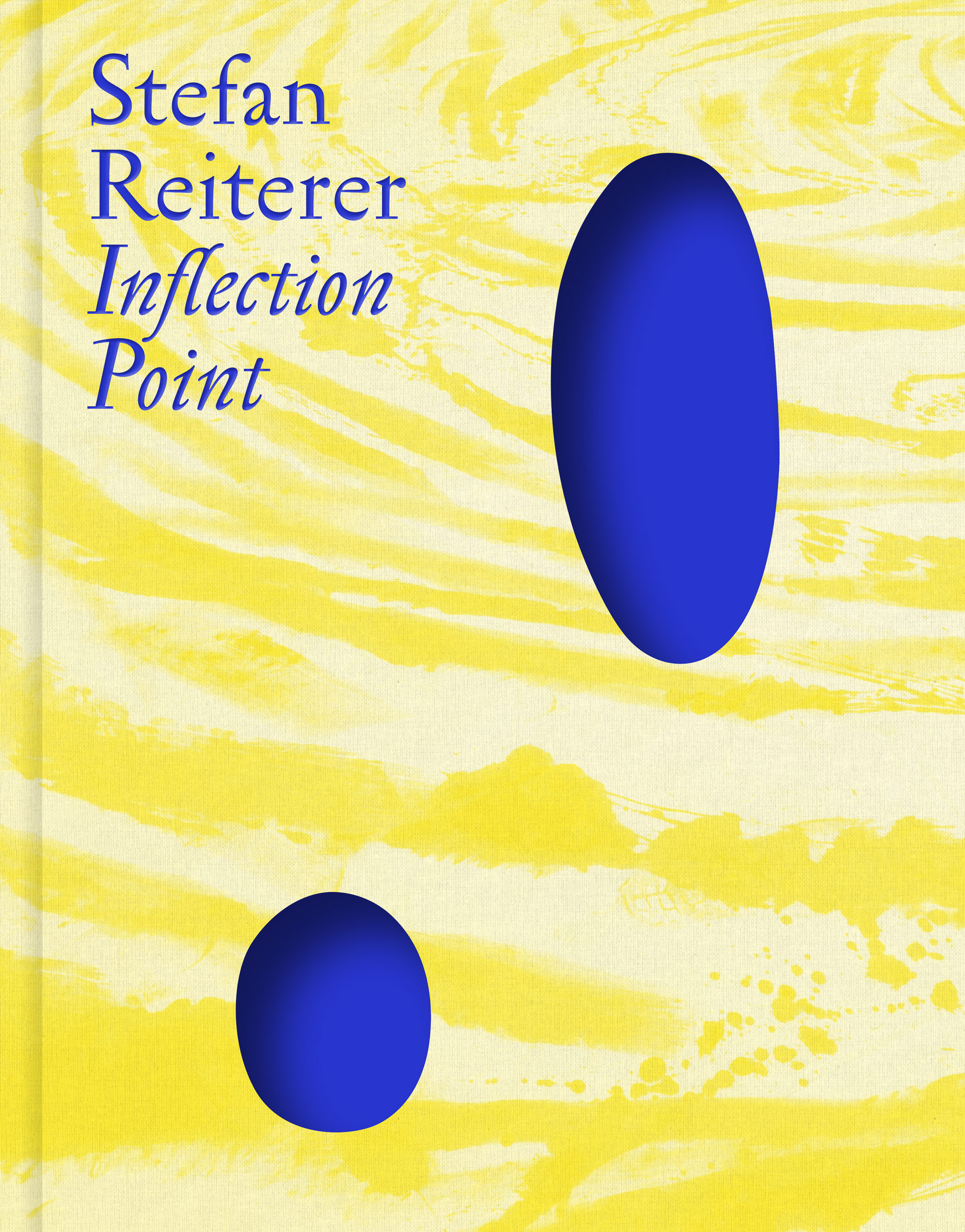
Inflection Point38€ Add to cartThe Austrian artist Stefan Reiterer (born 1988, lives in Vienna) transfers digital maps and satellite images into analog physical space through abstract painting. He manipulates data from sources such as Google Earth or NASA, transforming them into illusory topologies and pseudo-cartographies to challenge our perception. What is recognized, discovered, rejected? Where is the viewer’s location? Andrea Kopranovic writes of Reiterer’s painted emptiness as a “pitting” and projection surface “for glitches, black holes, and abysses” and a metaphor for potential “interpretations, enrichments, and yet unimagined spaces of possibility.” This richly illustrated book documents Reiterer’s 2025 exhibition at the Museum Gegenstandsfreier Kunst in Otterndorf.
-

Simone Haack – Untangling the Strands / Démêler les Fils
24€ Add to cartSimone Haack’s (b. Rotenburg/Wümme, 1978; lives in Berlin) most recent body of work delves into the theme of hair as a parameter of identity straddling the division between nature and culture. Her second publication with DCV is released on the occasion of two exhibitions: Untangling the Strands at Berlin’s Abguss-Sammlung Antiker Plastik, a collection of casts of ancient sculpture, which are seen in dialogue with her hair pictures; and Helix of Realism at Galerie Droste, Paris, which is part of the official program of events around the grand Surrealism exhibition held at the Centre Pompidou in celebration of the Surrealist Manifesto’s centennial. The new book is the first to shed light on the aspect of the surreal in the artist’s oeuvre and uncovers a major source of her visual inspiration: the dream diaries that Haack has kept since she was seventeen and the interest in the unconscious they reflect. It is above all the logic of the dream as well as feelings and moods that inform her paintings.
Haack: “My goal is to use the means of realism to visualize what cannot be seen. To get into an automatism that lets the unconscious speak in order to infuse the pictures with a life of their own. To shed light on the domain where the myths originate.”
-

João Penalva
The Asian Books40€ Add to cartThe First Survey on the Exceptional Artist Books of João Penalva
Since 2007 João Penalva (b. 1949, Lissabon; lives and works in London) has exhibited large format unbound books, printed with archival inks on fine art paper, displayed on tables with chairs, to be handled freely. Each one is published in an edition of three and one artist’s proof. Those whose content relate to Asia, whether factually or fictionally, are collected here for the first time: Taipei Story, 2007; Portraits: Machines and Kabuki Wigs, 2009; The Toshiba Book of Happiness, 2009; Hello? Are you there?, 2009; Michio Harada, 2015; Boro, 2017.
João Penalva studied Fine Art at the Chelsea School of Art in London. His works have been shown in manifold international exhibitions. Penalva represented Portugal 2001 at the Venice Biennale and 1996 at the São Paulo Biennale.
-

Cristina Lucas
Immobile Engine29€ Add to cartMechanisms of Power
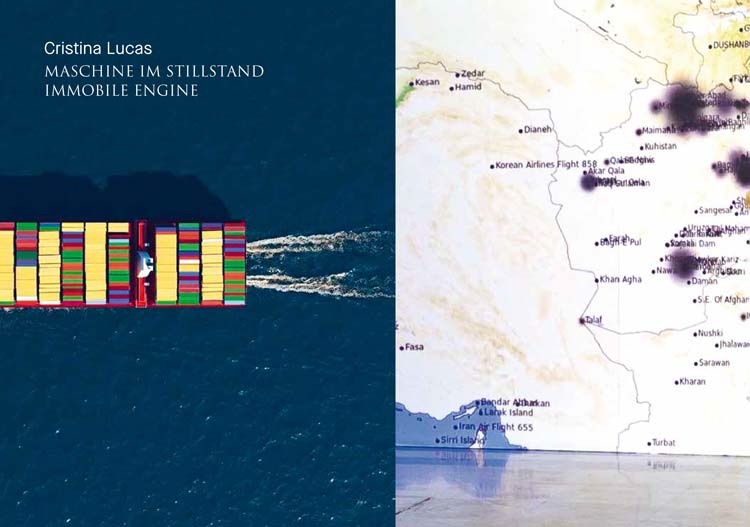
The Spanish artist Cristina Lucas (b. Jaén, 1973; lives and works in Madrid) works in a wide range of media and genres. Central concerns include the confrontation of subjective and political historiographies and a critical examination of cultural stereotypes. The publication’s point of departure is the multichannel video installation Unending Lightning, begun in 2013, in which Lucas undertakes a painstaking study of the history of aerial warfare. The book also showcases works that limn a contemporary perspective on value chains and the capitalization of time and landscape. Moreover, the artist has developed a corpus of critical cartographic models that offer algorithmic, philosophical, poetic, or, in some instances, humorous visualizations of unexpected nexuses. The first German-language publication on Cristina Lucas’s art, it offers a comprehensive survey of her oeuvre to date.
Cristina Lucas studied fine arts at the University of California and the Universidad Complutense, Madrid. She has had residencies in Paris, Amsterdam, and New York. Her work has been exhibited at MUDAM, Luxembourg; the Museo de Arte Contemporaneo, Santiago de Chile, and the Museo Nacional Thyssen-Bornemisza, Madrid; Kiasma, Helsinki; and the Centre Pompidou, Paris, among others.
-

Judit Reigl
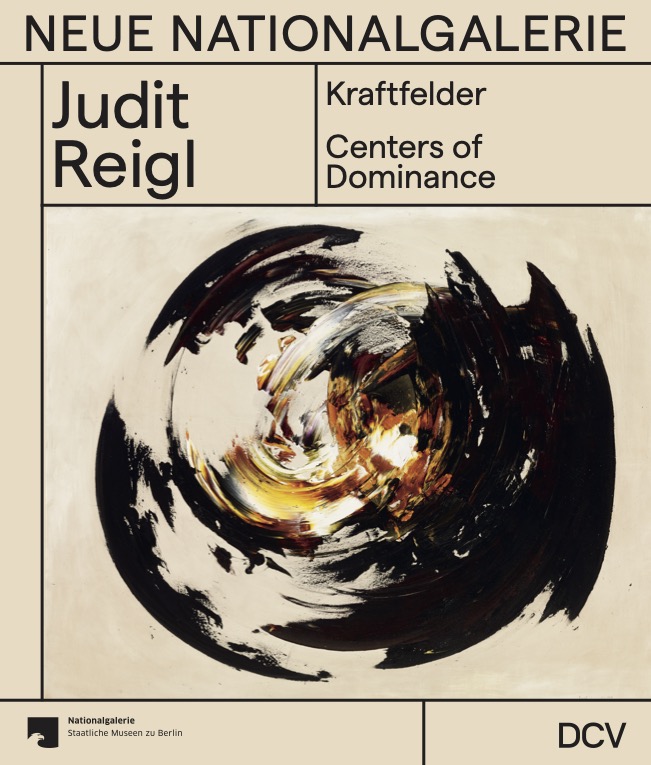
Kraftfelder / Centers of Dominance28€ Add to cartBeginning in the 1950s, Judit Reigl (b. Kapuvár, Hungary, 1923; d. Marcoussis, France, 2020) builds a singular creative oeuvre between abstraction and figuration, between Surrealism and gestural painting. After studying art in Budapest, Reigl flees Hungary in 1950; arriving in Paris, she is introduced to André Breton, who organizes her first exhibition in 1954. Under the influence of the École de Paris, she branches out into écriture automatique, then shifts toward free expression. Like her contemporaries Jackson Pollock and Helen Frankenthaler in New York, she lays out ever larger unprimed canvases on the floor and works them with a brush, her fingers, or other instruments. After 1966, bodily shapes emerge from her abstractions, and figures reappear in the pictures.
On occasion of Reigl’s centenary and the gift of three major works, the Neue Nationalgalerie mounts the artist’s first solo exhibition at a museum in Germany. The book surveys the oeuvre of one of the most important protagonists of European art in the second half of the twentieth century.
Judit Reigl studied painting at the Academy of Fine Arts in Budapest from 1942 until 1945 and was a fellow at the Hungarian Academy in Rome in 1947–48. From 1950 onwards, she lived and worked in France.
-

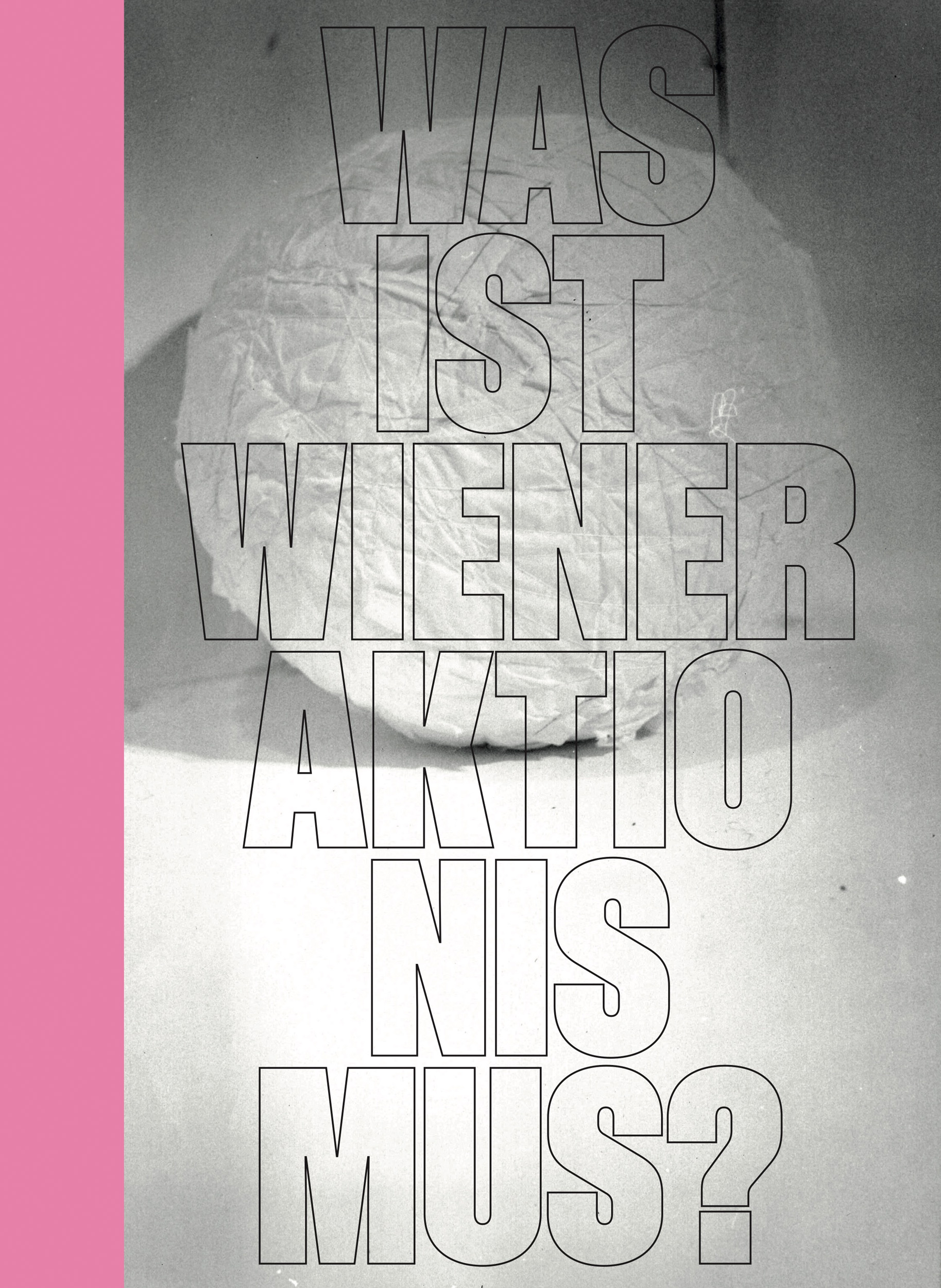
Was ist Wiener Aktionismus?
50€ Add to cartBlows were dealt. An artist exposed and cut himself, others urinated in glasses, daubed themselves with dirt, and masturbated over the Austrian flag. Meanwhile, music was playing, including the national anthem; someone read pornographic writings. Vienna in the late 1960s: what had started in the artists’ homes and studios was now brough out on the grand stage, and taboos were broken in full view of the public.
The Vienna Actionism Museum’s first publication is dedicated to the idea of Vienna Actionism in the dynamic context of abstract realism, Fluxus, and the international Happening scene. The book relates the story of one of art history’s most influential art movements, spearheaded by the Actionists Günter Brus and Otto Muehl, Hermann Nitsch and Rudolf Schwarzkogler.
-

João Onofre
Untitled (in awe of)25€ Add to cartJoão Onofre’s works are tributes to art history and pop. He gleans what is in danger of being lost right now, realigns it, and translates it into something sublime. His art encourages the beholders to reconsider a past that has faded in collective memory with a critical eye and make peace with it. His creative process is guided by the material and a clearly defined concept that nonetheless does not restrict a work’s finding its own way. That is why he does not commit to a particular medium, making videos, performances, installations, and much more. What all his works have in common is that they probe the limitations of their medium and our perceptive capacities in novel ways. This catalogue presents three recent works in which the essence of Onofre’s art becomes manifest: he molds myths and symbols into awe-inspiring images, sounds, and forms—not for nothing have critics labeled him an alchemist. In the catalogue, his tangible compressions of cultural history are rendered in imposing pictures and flanked by an ambitious essay that places them in their context.
-

Gregor Hildebrandt
A Blink of an Eye and the Years are Behind us48€ Add to cartFor the past two decades, Gregor Hildebrandt (b. Bad Homburg, 1974; lives and works in Berlin) has transformed analog audiotapes, cassettes, and records into collages, sculptures, panel paintings, and installations. Melding visual art with music, he has charted a complex creative vision crossing boundaries of medium and genre that he continually refines. Before using a tape, he records selected music—typically a single song—on it, whose lyrics he quotes in the work’s title. The artist’s output draws on his personal repertoire of bands that share a romantic narrative of loneliness and a melancholy keynote. The same attitude toward life is reflected in Hildebrandt’s work. The book offers insight into all periods of the artist’s oeuvre and is rounded out by archival materials from Hildebrandt’s studio, his project space Grzegorzki Shows, and the music label Grzegorzki Records that illustrate his creative process.
Gregor Hildebrandt studied at Kunsthochschule Mainz from 1995 until 1999 and at the Berlin University of the Arts from 1999 until 2002. He was a fellow of the Deutsches Studienzentrum in Venice in 2003 and worked in Vienna on a fellowship from the German Academic Exchange Service in 2005–06. He has been professor of painting and graphic art at the Academy of Fine Arts in Munich since 2015.
-

Stephan Kaluza
Die dritte Natur14€ Add to cartThe Nature of Art as Totality and Idyll
The philosophy of nature is central to the artist Stephan Kaluza’s (b. Bad Iburg, 1964; lives and works in Düsseldorf) work. As he sees it, there exists a succession of different natures: first nature is Kaluza’s designation for a world as immediately felt by (early) humans, part of an encompassing and close-range experiential totality they labeled ‘nature’ and perceived as a physical, but also spiritual and emotional concatenation of events. Second nature is stripped down to an objective and utilitarian quality; nature becomes a resource, the basis of life, the environment. In a kind of linguistic turn, speech mediates a surrogate, an alternative world, that positions nature as culture’s opposite; the former becomes replaceable in favor of latter. Yet this culture is far from devoid of yearnings for the immediacy that it has lost, and so develops an ‘artificial idyllic nature’ in turn. This third nature of the arts—a purely human nature—harks back to the archetypes of a first nature in escapism and totalized immersion.
-

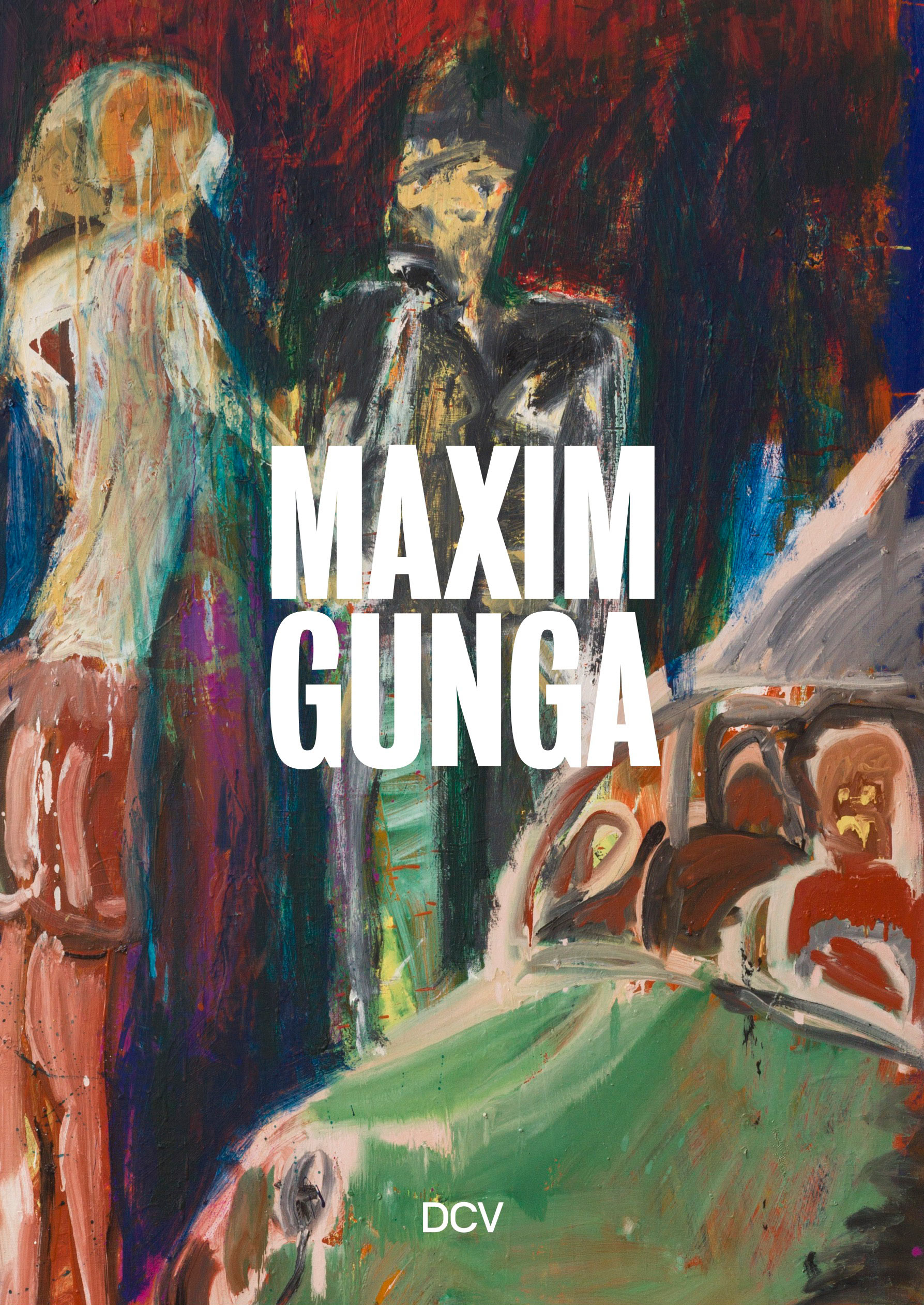
Maxim Gunga
10€ Add to cartThe painter Maxim Gunga is utterly unafraid of physicality. His canvas is a riot of oil paints huddling up against one another, fusing like the beasts, the humans, and the urban landscape of Berlin that serve him as motifs. Body and soul, animal nature and architecture, the profane and the sacred, subculture and mass culture—everything interpenetrates in Gunga’s paintings in large formats, melded into hybrid bodies. The result is an ecstatic intimacy, a flowing of colors and more or less abstracted dynamic forms toward their primal state, toward the matrix, toward pure energy: eternal transformation. It makes sense, then, that his pictures also amalgamate diverse styles and periods in the history of painting. He borrows from (Neo-)Expressionism, from Art Brut, from Baselitz, Lüpertz, the Neue Wilde, from modernism and Fauvism, from van Gogh and Matisse. His pinpoint brushwork, which reveals his extensive training, interweaves art history with our contemporary lifeworld and our affects. All the specters of the past and the present come to meet us in the pictures gathered in this catalogue, in a frenzy of the senses, in the primordial soup of Berlin, into which we dive with joyful abandon.
- Out of stock

Voré
Stückwerk Mensch18€ Read moreHistorically Anchored Installations with Current Political References
The sculptures by Voré (b. 1941 in Karlsruhe, lives and works in Ettlingen) reflect the artist’s examination of the conditions of human existence and the human state of mind. Finely polished forms, splinters, and rough fractures become a statement of content and at the same time constitute the formal tension of the respective object. The process of creation can be seen in the rough remaining parts and traces of the various tools. Parallel and closely related to this, drawings and collages are created as independent works or as components of installations. Formal impulses of the sculptural concept are taken up, graphically processed, and projected back into the sculptural work. The present volume presents projects from six decades with numerous illustrations.
-

Michael Bertram
mehr licht35€ Add to cartThe Mülheim-Kärlich Nuclear Power Station, 1975–2019
In 1975, construction began in Mülheim-Kärlich on what was to be the only nuclear power plant in the state of Rhineland-Palatinate. After numerous court battles and only two years of trial and regular operation, the plant was decommissioned in 1988 and dismantled starting in 2001. The 530-foot cooling tower, taller than Cologne Cathedral, was the point of reference, landmark, and eyesore of an entire region; its time-consuming demolition became a symbol of the perennial political polarization over the decision to phase out nuclear power.
Michael Bertram (b. Mendig, 1968; lives and works in Mayen) took photographs of the reactor looming between homes and factories in order to record the future past in pictures. The plant cost seven billion deutschmarks to build and one billion euros to take back down: vast resources expended on a temporary installation that lasted forty years and left a lasting mark on the landscape, the surrounding communities, and the people who lived in its shadow. Starting with the demolition, the book presents an inverted timeline in eighty-one black-and-white photographs. The object seems to rise before our eyes until, at the end of the series, five color photographs conjure up a past that was very much present only a moment ago—a singular document of Germany’s industrial heritage.
-

Candida Höfer
Editions 1987–202044€ Add to cartAll of Candida Höfer’s Editions in One Book
Candida Höfer’s (b. Eberswalde, 1944) shots of deserted libraries, opera houses, concert halls, churches, and museums have made her a member of the international photographic avant-garde. One strand in her acclaimed oeuvre are editions—photographic prints in small formats issued in larger numbers—that Höfer produces to support institutions and art publishers. Gathered for the first time in this book, with an introductory essay by Anne Ganteführer-Trier, the around one hundred such editions she created between 1987 and 2020 offer a representative cross-section of Candida Höfer’s art.
Candida Höfer studied in the first photography class of Bernd Becher at the Kunstakademie Düsseldorf. Her works have been exhibited at documenta 11 and in 2003 she represented Germany at the 50th Biennale di Venezia alongside Martin Kippenberger.
-

WORLD FRAMED
Zeitgenössische Zeichenkunst der Sammlung Schering Stiftung im Kupferstichkabinett38€ Add to cartIn 2008, the Schering Stiftung began acquiring outstanding contemporary works on paper for the Kupferstichkabinett (Museum of Prints and Drawings) in Berlin. The collection, which has since grown to 130 nonfigurative drawings and a small number of prints, emphasizes the close conjunction of art and science. The holdings also reflect central tendencies in the art of drawing: in addition to exploring the line and its multifaceted formulation, artists shed light on the bounds of their medium and its expansions and undertake forays into inter-media art within drawing. The lavishly designed publication WORLD FRAME—the title is borrowed from a work by the artist Matt Mullican—presents the works acquired thanks to this partnership. It inquires into how artists translate their perceptions of their world into pictures and which contexts and discourses inform those pictures. Which perspectives, which ideas frame the segment of reality an artist observes?
“World Framed,” exhibition, Kupferstichkabinett, Staatliche Museen zu Berlin, July 7–October 8, 2023