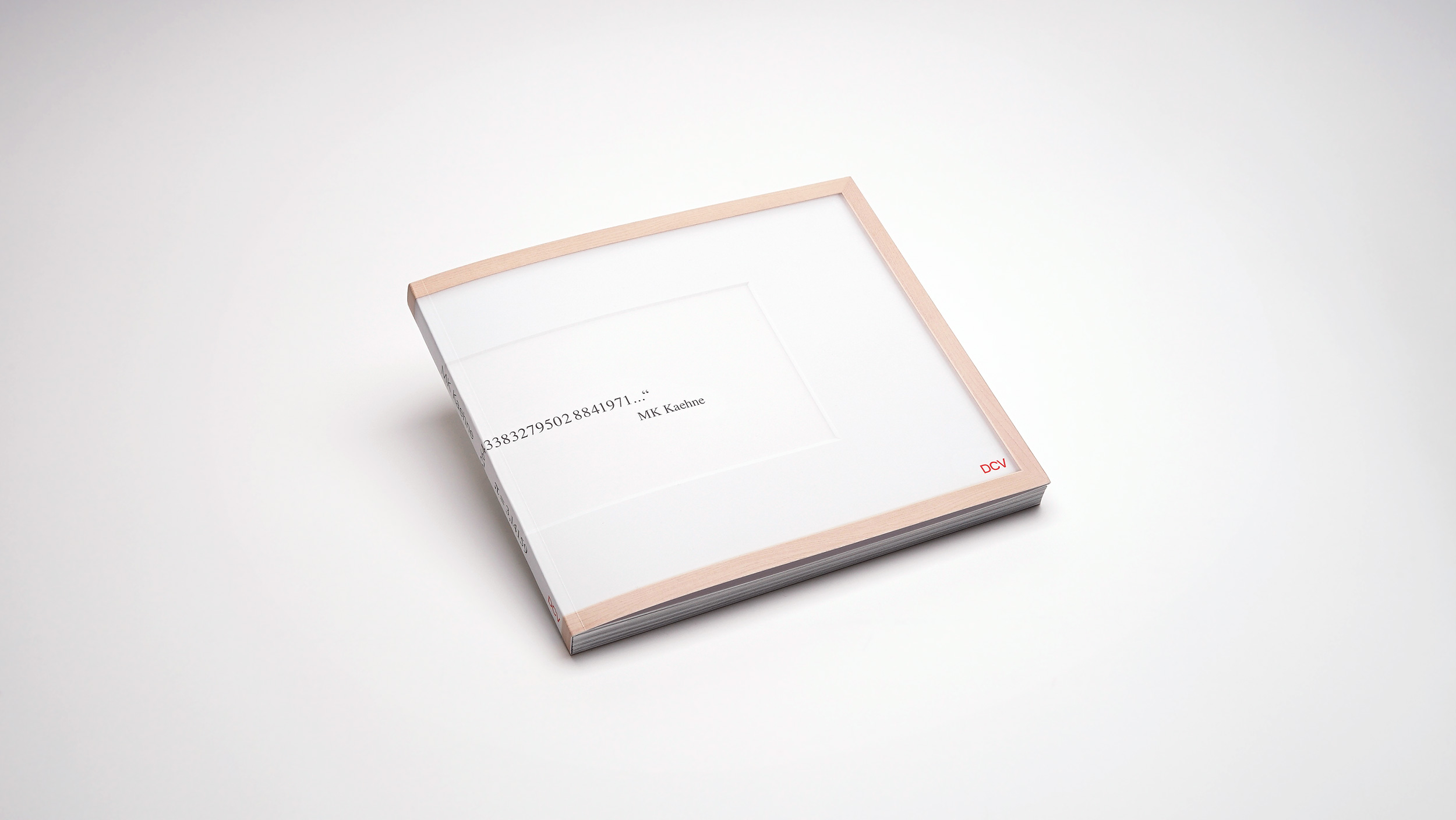
MK Kaehne
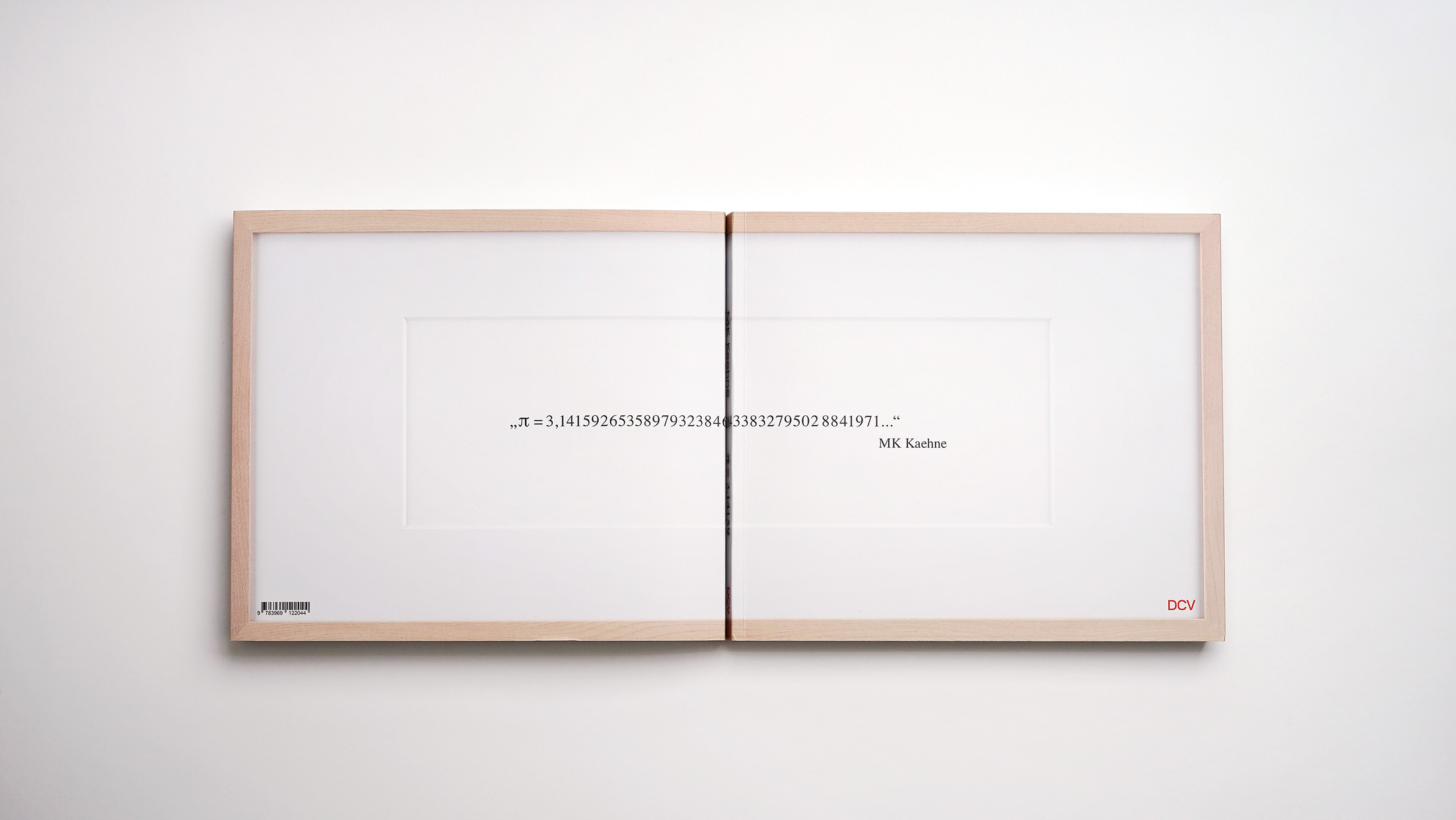
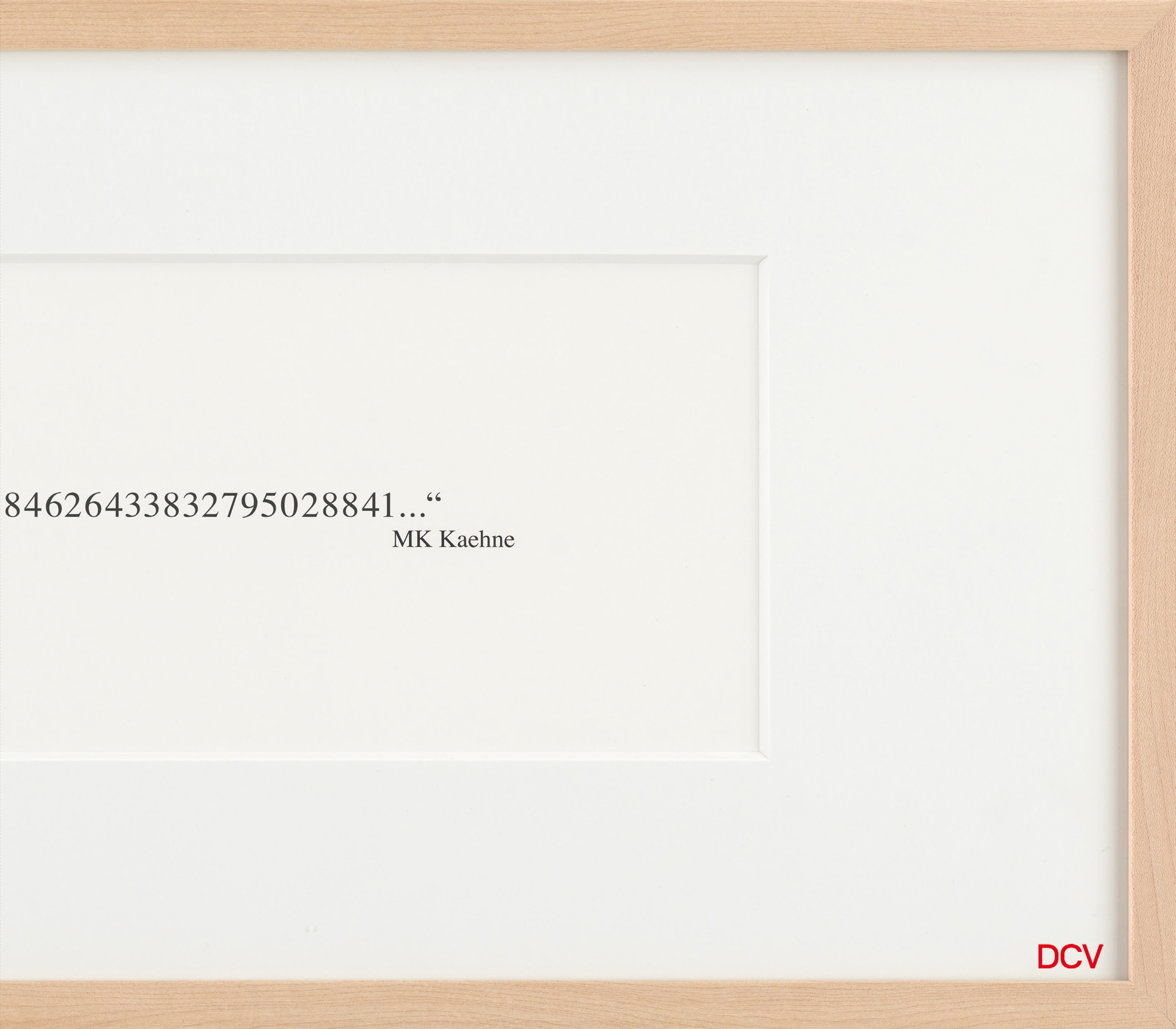
Π = 3,14159
 | |
|---|---|
| Author(s) | conversation Anemone Vostell – MK Kaehne, text Brigitte Werneburg |
| Design | müller&friends grafikdesign. |
| Size | 24 x 21 cm |
| Cover | Softcover |
| Pages | 176 |
| Illustrations | 140 |
| Language(s) | German, English |
| ISBN | 978-3-96912-204-4 |
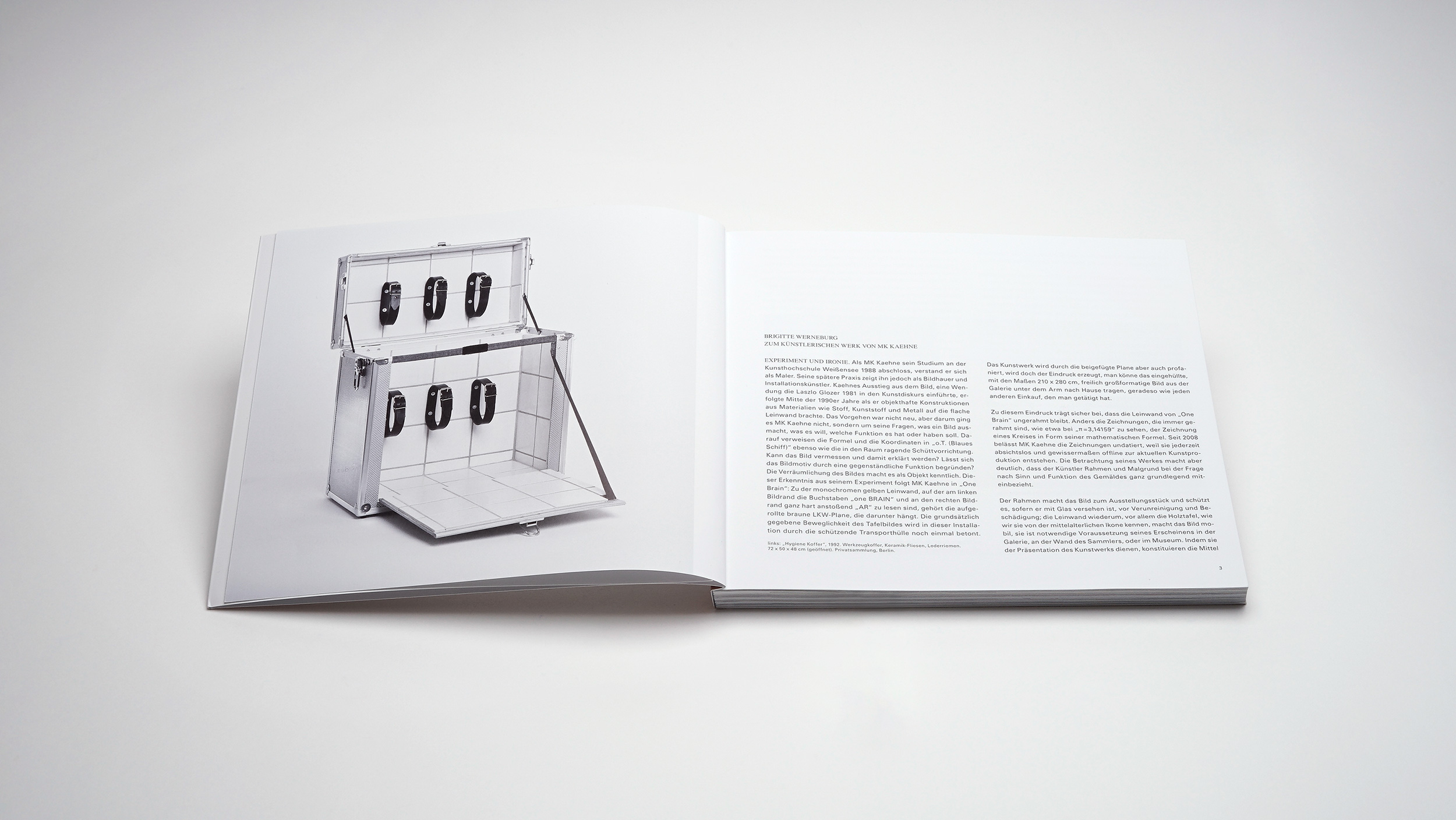
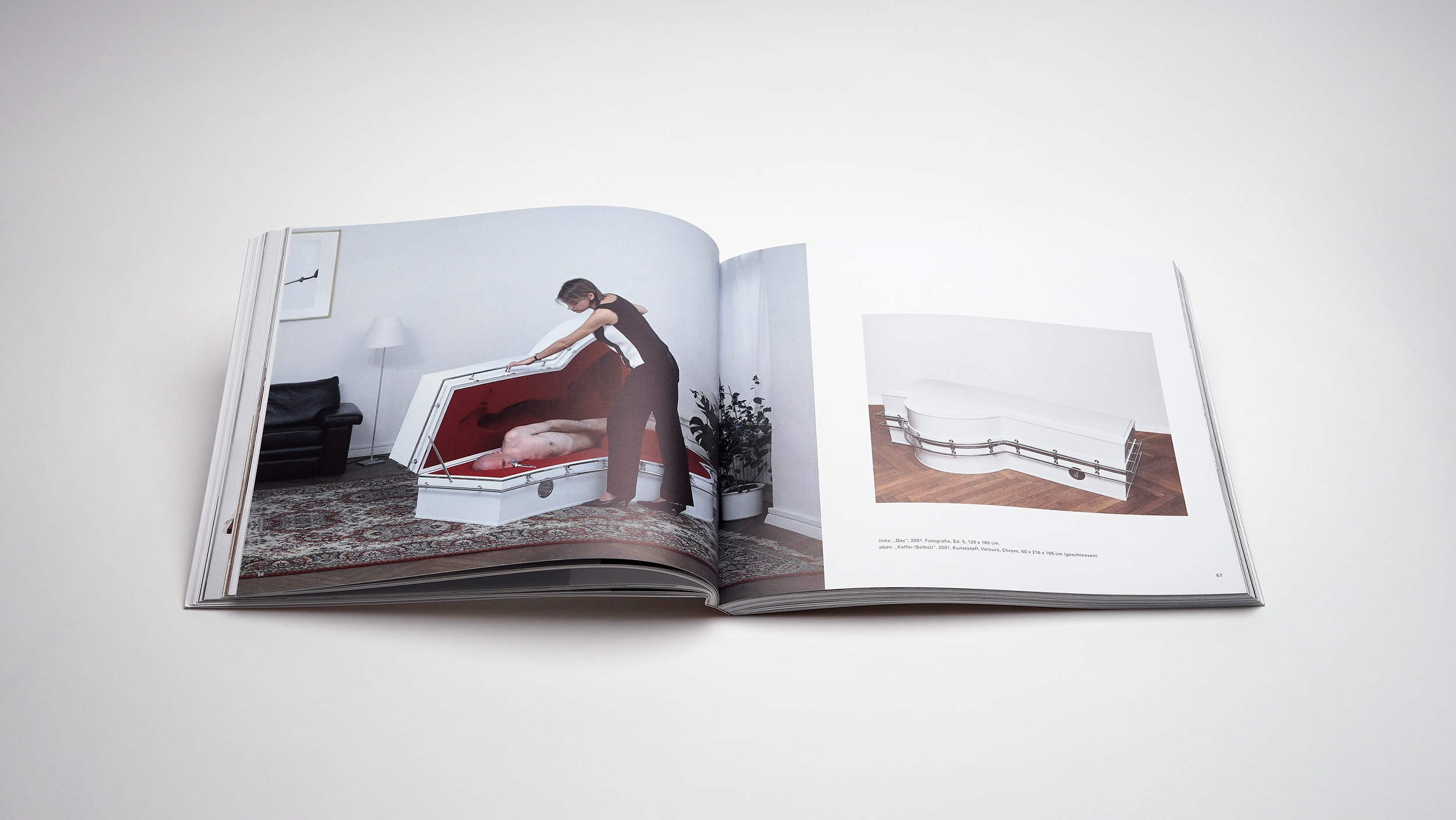
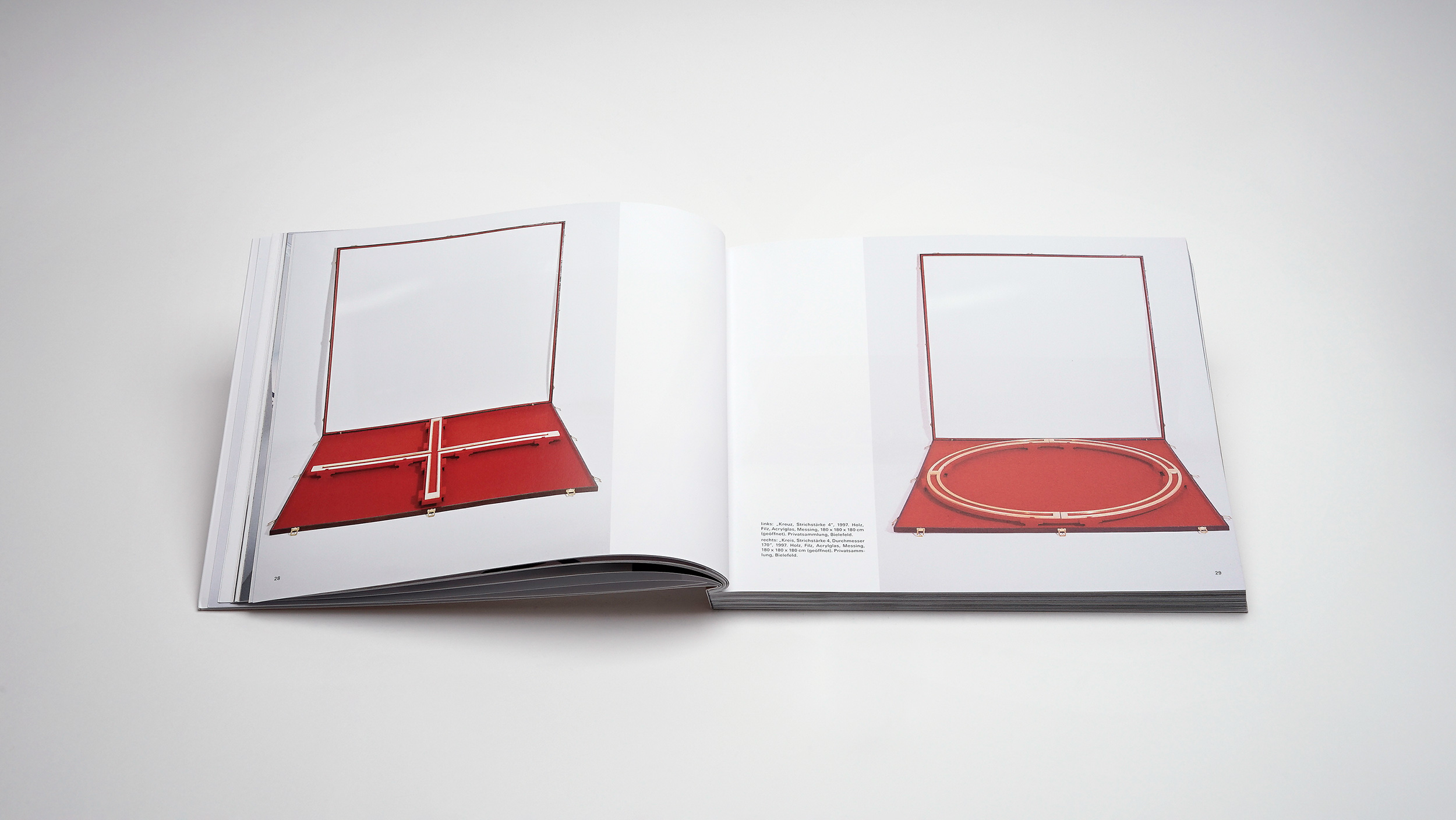
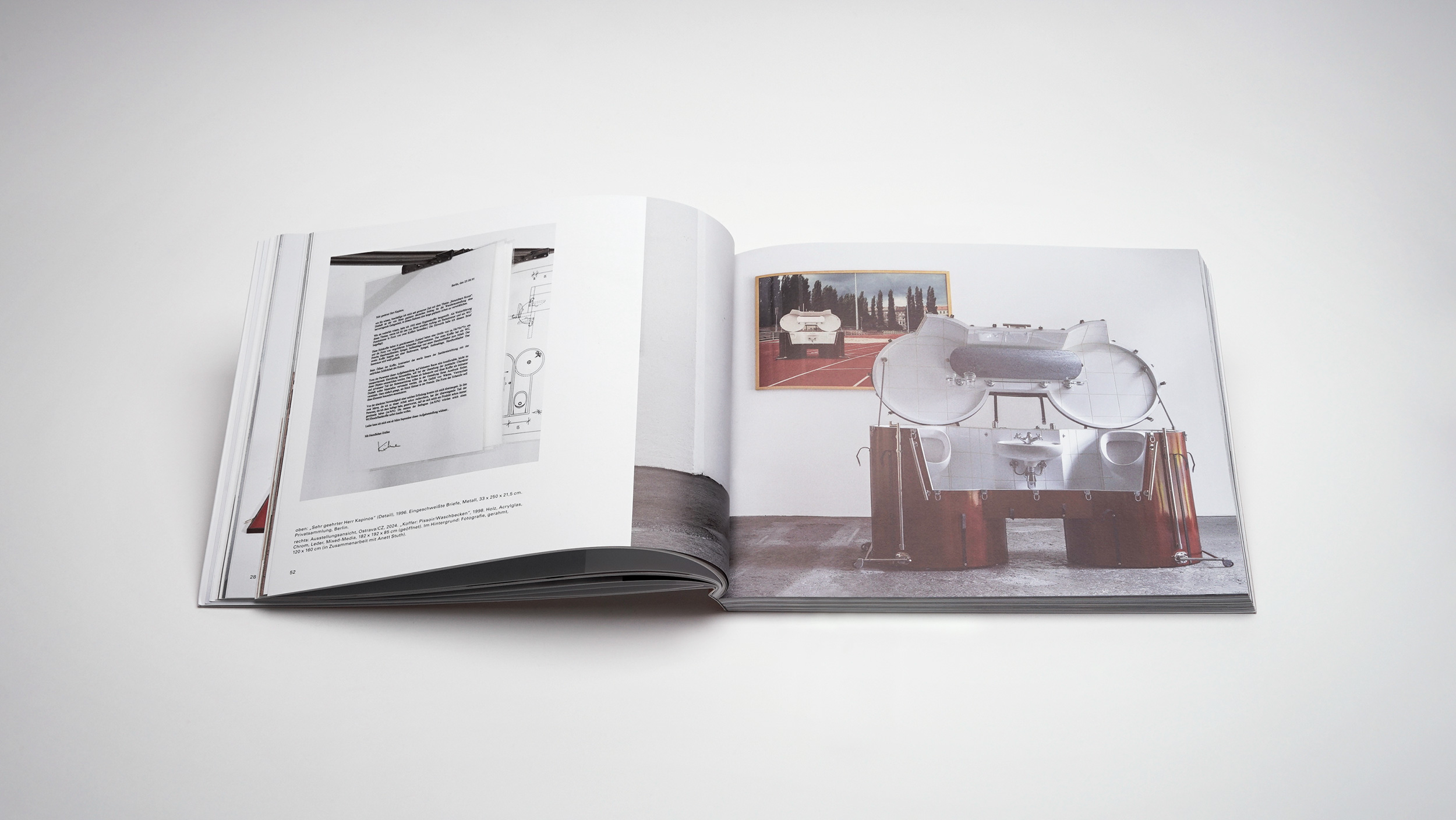
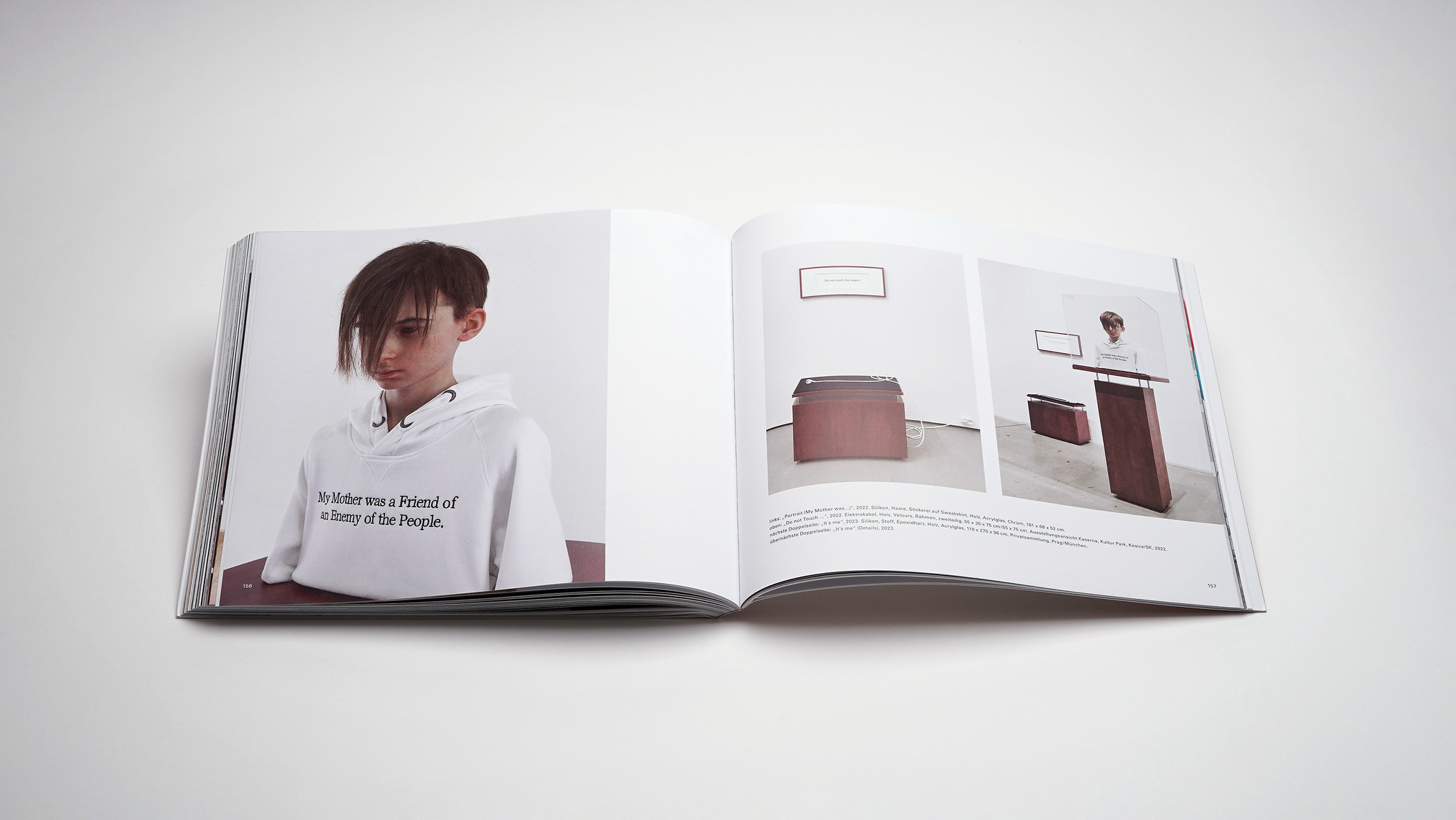
The biography of conceptual artist MK Kaehne (b. Vilnius, 1963; lives and works in Berlin) oscillates between Vilnius, Moscow and Berlin. Influenced by Russian Constructivism, he draws and builds suitcase sculptures with a department store aesthetic, a reversal of the readymade principle. His focus gradually shifted from the formal to the psychological, towards life-size figures such as It’s me (2023): a hyper-realistic replica of himself, lying upside down in the mud, with a garden gnome next to him. Kaehne’s work is strictly analytical, but the results are full of tragedy and irony. Unintentional drawings, in which biographical, Dadaist and political elements merge, accompany his oeuvre. A total work of art that traces personal and social development.
More books
-

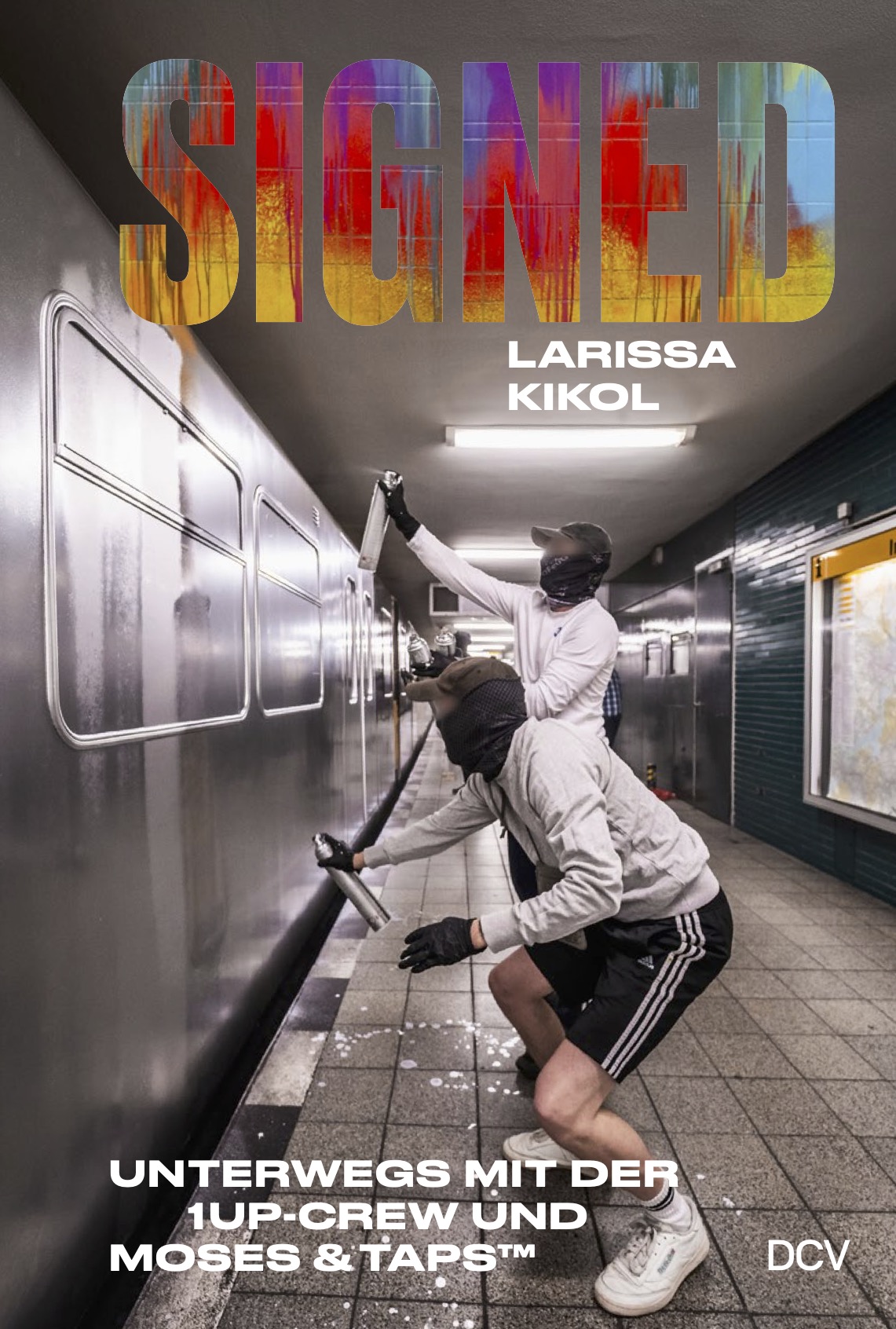
Larissa Kikol
SIGNED. Unterwegs mit der 1UP-Crew und Moses & Taps18€ Add to cartWho owns the city? It is a question to which graffiti artists and politicians have very different answers. 1UP and Moses & Taps are international stars of the scene, realizing radical creative concepts in spectacular actions. The art critic Larissa Kikol shadowed them on their nocturnal forays for three years and gathered her experiences in a book that has become a singular tribute to the graffiti scene. It lets us witness the genesis of the artists’ works on the knife’s edge between civil disobedience, criminal liability, and an irrepressible freedom. Traveling throughout Germany, Kikol records absorbing dialogues that reflect the contrast between different worlds: the legal and the illegal art worlds, painting and protest. Always on the hop and in danger of being discovered and arrested, she ventures beyond the bounds of permissible art, into subway tunnels, up on roofs, across switchyards. A portrait emerges of Germany and Berlin and the power relations that shape our society.
Larissa Kikol (b. 1986) works as a freelance art critic, art scholar, and writer. She writes for Die Zeit, Spiegel Online, Art, Kunstzeitung, Mare, Monopol Online, and Kunstforum International. In 2016, she won C/O Berlin’s international Talents award in the art criticism category. She teaches and lectures at art schools and universities in Germany and France.
Kikol studied stage design and dramaturgy in Berlin-Weißensee and obtained a Ph.D. in art studies from the Karlsruhe University of Arts and Design. She lives and works in Marseille and Cologne.
-

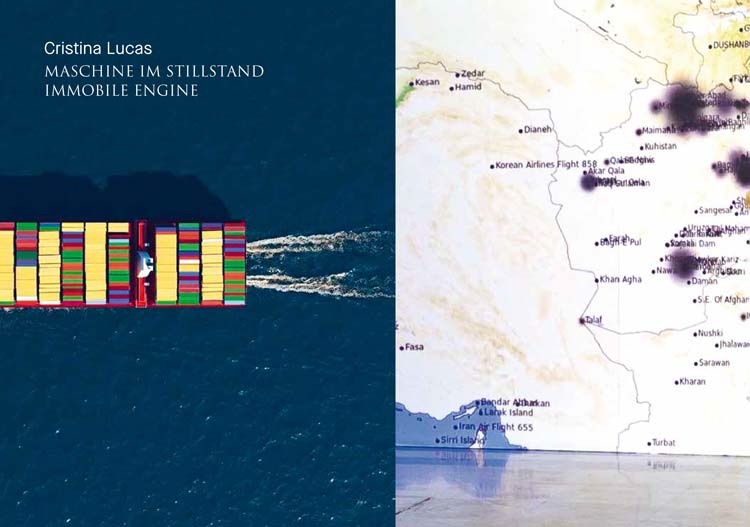
Cristina Lucas
Immobile Engine29€ Add to cartMechanisms of Power
The Spanish artist Cristina Lucas (b. Jaén, 1973; lives and works in Madrid) works in a wide range of media and genres. Central concerns include the confrontation of subjective and political historiographies and a critical examination of cultural stereotypes. The publication’s point of departure is the multichannel video installation Unending Lightning, begun in 2013, in which Lucas undertakes a painstaking study of the history of aerial warfare. The book also showcases works that limn a contemporary perspective on value chains and the capitalization of time and landscape. Moreover, the artist has developed a corpus of critical cartographic models that offer algorithmic, philosophical, poetic, or, in some instances, humorous visualizations of unexpected nexuses. The first German-language publication on Cristina Lucas’s art, it offers a comprehensive survey of her oeuvre to date.
Cristina Lucas studied fine arts at the University of California and the Universidad Complutense, Madrid. She has had residencies in Paris, Amsterdam, and New York. Her work has been exhibited at MUDAM, Luxembourg; the Museo de Arte Contemporaneo, Santiago de Chile, and the Museo Nacional Thyssen-Bornemisza, Madrid; Kiasma, Helsinki; and the Centre Pompidou, Paris, among others.
-

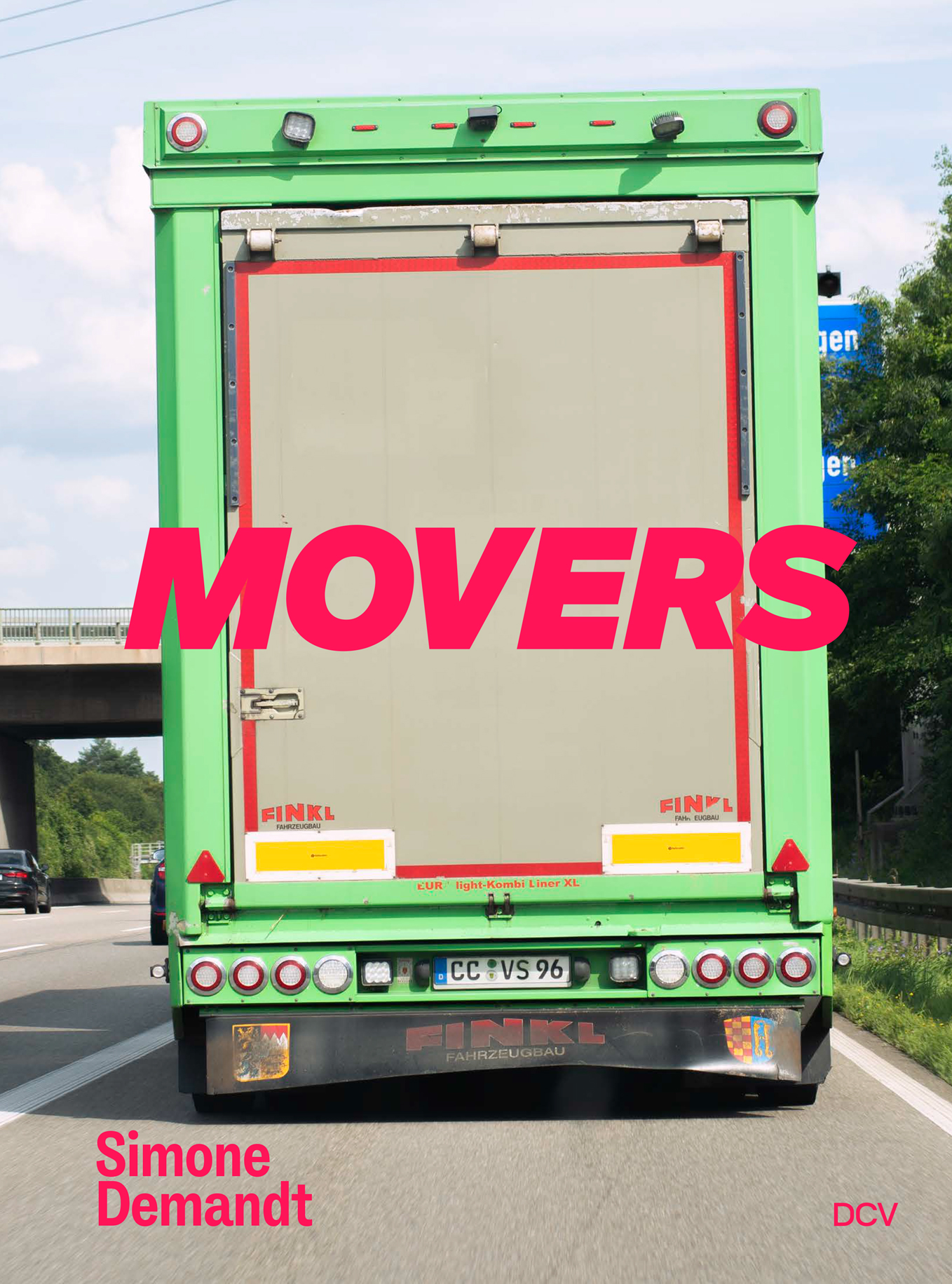
Simone Demandt
Movers / Beweger38€ Add to cartMotorways are Europe’s lifelines. The products we buy every day arrive on supermarket shelves after traveling along these arteries on the backs of thousands of trucks steered by hard-working drivers. Glancing up into the cabs of their hulking vehicles, we can just barely make out their heads sticking up above the steering wheels. In this overdue volume, Simone Demandt lets us see more of the heroes of the road who confidently posed for her camera. The pictures demonstrate Demandt’s knack for discovering “the intimate in the anonymous and the narrative element in the matter-of-factly” (Matthias Winzen). She has condensed the truckdrivers’ lifeworld into documentary black-and-white shots in which she shows these people as whole persons and individuals—very different from how we perceive them when they’re in the next lane. Movers lets us peek into the cabs through Demandt’s nonjudgmental lens, broadening our horizons hardly less than travelling would and helping us overcome our prejudices about teamsters. If you’ve always wanted to know whom we really have to thank for those never-empty supermarket shelves, you should not miss out on this book.
-

Pat Steir & Ugo Rondinone
Waterfalls & Clouds20€ Add to cartThe imposing installation Waterfalls & Clouds consists of three sculptures by the Swiss artist Ugo Rondinone (b. Brunnen, Switzerland, 1964; lives and works in New York) and nineteen paintings by the American Pat Steir (b. Newark, NJ, 1940; lives and works in New York). The three large gray monoliths of concrete, sand, and gravel bear the titles Faces, Look, and Twisted and are part of a series of twenty works created in 2018. They are surrounded by nineteen tall and narrow black oil paintings titled Flags for Ugo #1 through #19 (2021); with colorful or white paint streaming down the canvases, they hark back to Steir’s Waterfall series from the 1980s. A symbiotic relationship connects the works: the sculptures, in which erosion is integral to the art, embody time, while the pictures symbolize gravity and hence nature as such.
- Out of stock

Otto Dix in Baden-Württemberg
Museumsführer9,80€ Read moreSeven Museums Jointly Present the World’s Largest Collection of Works by the Famous German Painter.
In 1933, after the loss of his professorship in Dresden and mounting defamation by the National Socialists, Otto Dix (b. 1891, Untermhaus; d. 1969, Singen) retired to Lake Constance, where he lived for more than thirty years. Together, seven museums in the state of Baden-Württemberg — including the museum in his former home in Hemmenhofen — have the world’s most comprehensive collection of his works at their disposal, providing insight into all facets of his creative work: from the social criticism of the major works, at times depicted with brutal verism, to the old masterly glaze painting of his inner emigration and the expressive alla prima paintings of the late years. For the first time ever, this treasure trove is presented in one volume.
The participating museums: Kunstmuseum Albstadt, Zeppelin Museum Friedrichshafen, Museum Haus Dix, Gaienhofen-Hemmenhofen, Kunsthalle Mannheim, Kunstmuseum Singen, Kunstmuseum Stuttgart, Staatsgalerie Stuttgart.
-

Clemens Krauss
Antidot | Gegengift40€ Add to cartClemens Krauss restlessly shuttles across history; his vehicles are painting, video art, sculpture, and performance. Yet Krauss is not “just” an artist, he is also a psychoanalyst and physician. As such, he has first-hand experience of time as the defining factor of existence, daring him to play with it. The bosom of painting is where he feels safest after his hazardous excursions back into his youth and forward into death. Executed in thick paints, his work is physical, material, which is also to say, it exists in time: everything passes away, even the picture. Evanescent, more than anything, are encounters of the sort Krauss stages as part of his psychoanalytical practice; all that remains is the indelible impression they leave. To be indelible, to recall the past, while also “letting happen what has never happened,” as he puts it, these are the ambitions he pursues in his art. Preserved between the covers of the present catalogue and reproduced in thousands of copies, his works now fan out in an instant to circulate for an indeterminate period of time among countless hands, whence they will effortlessly penetrate the barriers of our inner lives to bring us one step closer to transcendence.
-

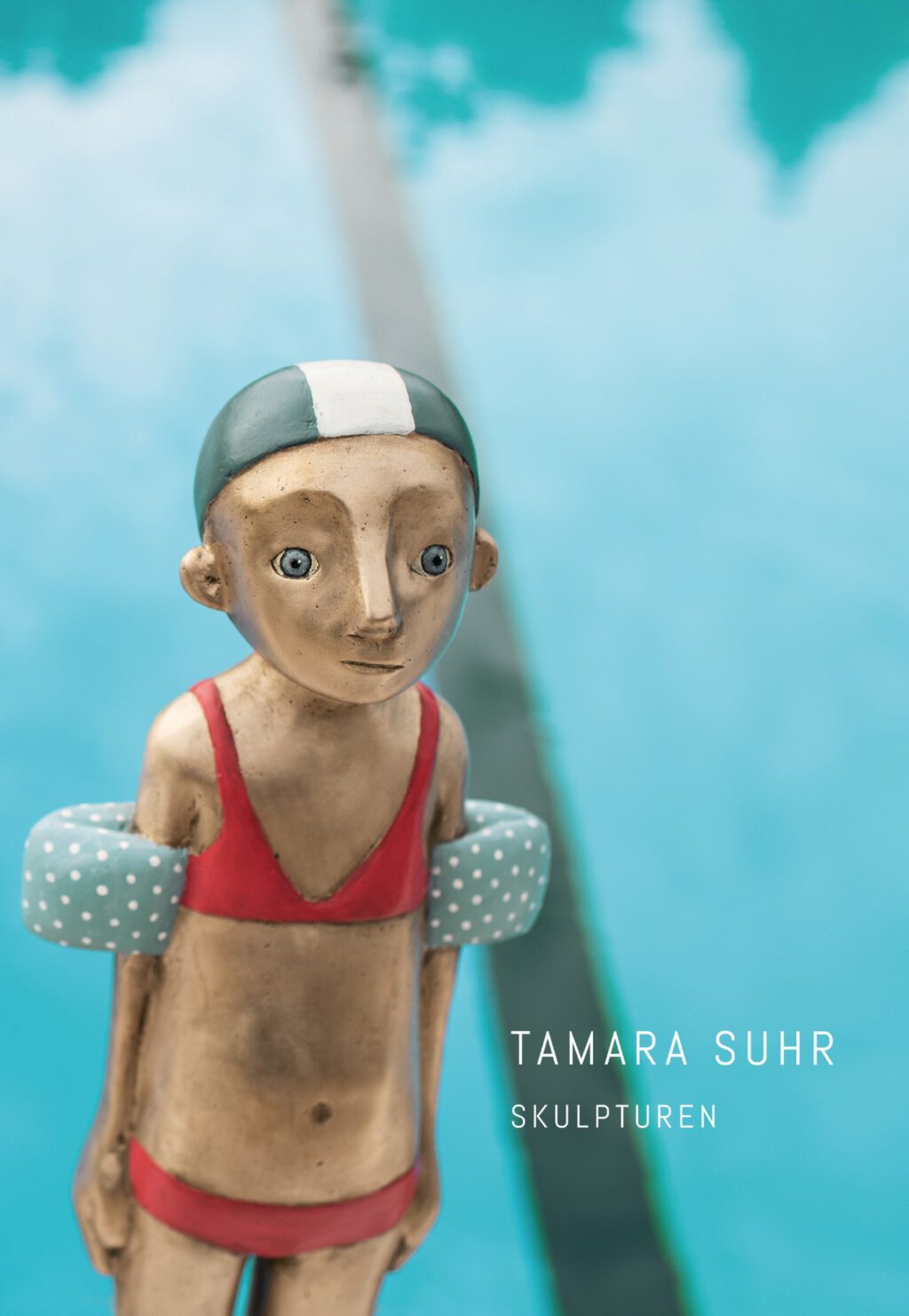
Tamara Suhr
Skulpturen24€ Add to cartHesitant yet Immediately Present
As a sculptor, Tamara Suhr (b. 1968, Tübingen; lives and works in Ludwigsburg) has devoted herself unswervingly to the human figure. Her subjects are figures of children whose hesitancy always embodies a certain curiosity, a sense of expectation. In their form reduced to the essential, indeed almost archaic, they radiate calm and serenity—supported by balance with regard to both the motif and possible associations. In their small size and vulnerability, Suhr’s figurative sculptures, painstakingly crafted in bronze, seem apparently in need of protection, yet they appear strong and courageous. They stand, gaze, crouch, fish, swim or balance. They are present, in the here and now, a symbol for the children of the world.
-
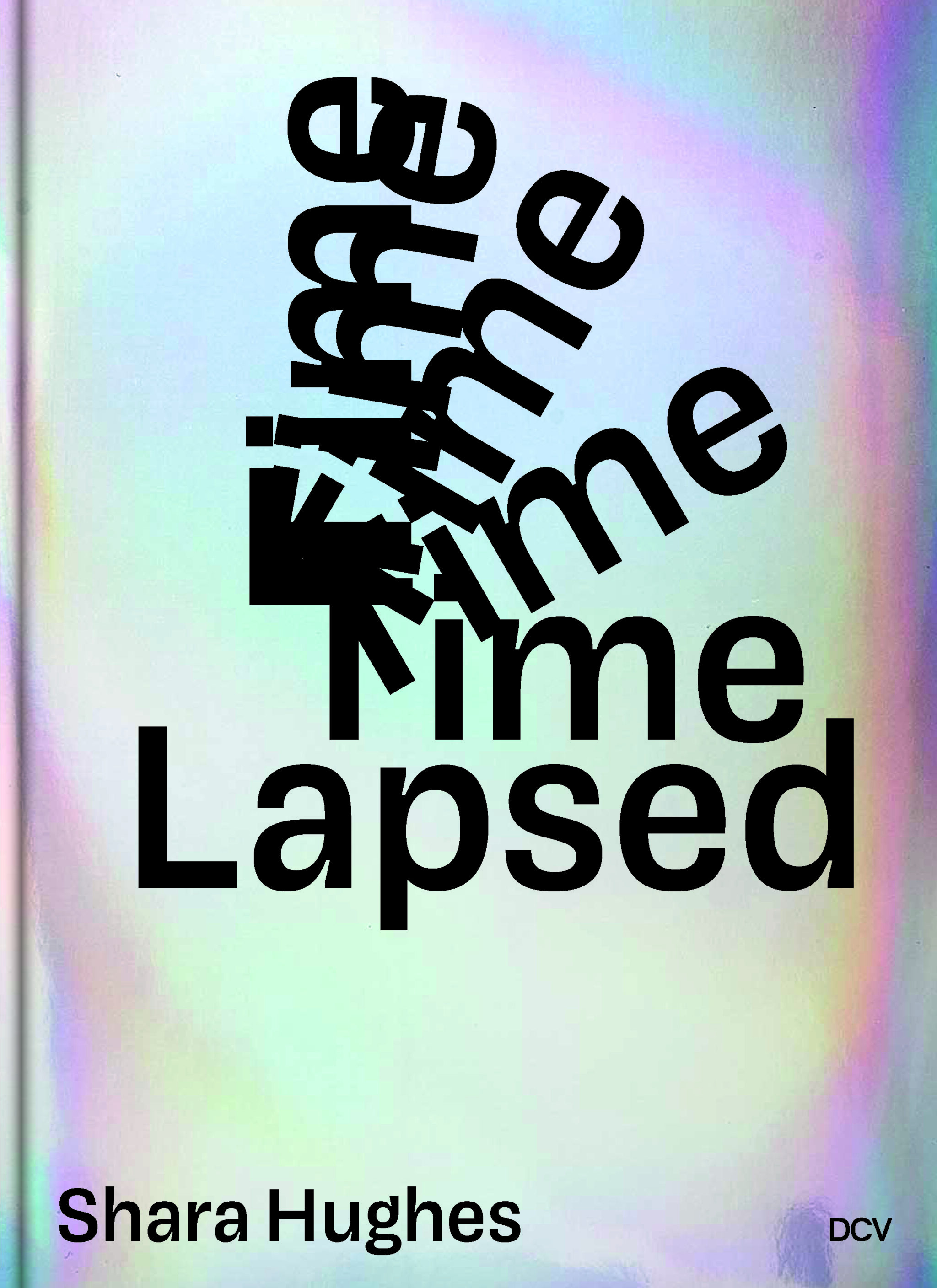
Shara Hughes
Time Lapsed35€ Add to cartShara Hughes (b. Atlanta, 1981; lives and works in New York) describes her pictures and drawings as psychological or invented landscapes. Her cliff coasts, river valleys, sunsets, and lush gardens, often framed by abstract patterns, might be the settings of fairy tales or scenes from paradise. As the New Yorker put it, the paintings “use every trick in the book to seduce, but still manage to come off as guileless visions of not-so-far-away worlds.” Wielding oil paint, brushes, spatulas, and spray cans, the artist celebrates painting itself, not infrequently quoting the masters of past eras.
Shara Hughes studied at the Rhode Island School of Design and later attended the Skowhegan School of Painting and Sculpture. Her most recent solo exhibitions are currently on view at the FLAG Art Foundation, New York, and the Kunstmuseum Luzern, Switzerland. In 2021, she had shows at the Yuz Museum, Shanghai; the Contemporary Art Museum St. Louis; the Garden Museum, London; the Aspen Museum of Art, Colorado; and at Le Consortium, Dijon.
-

Larry Rivers
An American-European Dialogue38€ Add to cartBetween French Modernism and the New York School
The American painter, musician, and filmmaker Larry Rivers (b. 1923, New York; d. 2002, New York) is considered one of the most influential protagonists of the New York art scene in the period from the 1950s to the 1970s. He played with Miles Davis and Charlie Parker, was a close friend of Frank O’Hara, and pioneered Pop Art. In dealing with contemporary artist colleagues and historical role models, he always strived to making painting visible as a medium of reflection. From an early age, Rivers was preoccupied with French painting of the late nineteenth century. During his stay in Paris in 1961/62, he met Jean Tinguely and Niki de Saint Phalle, whereupon the range of materials he used was extended to wood, cardboard, and electric light. For the first time, the present volume – the first monograph in twenty years – sheds light on Larry Rivers’ idiosyncratic art with a view to the tension between traditional French painting and Abstract Expressionism around Willem de Kooning.
-
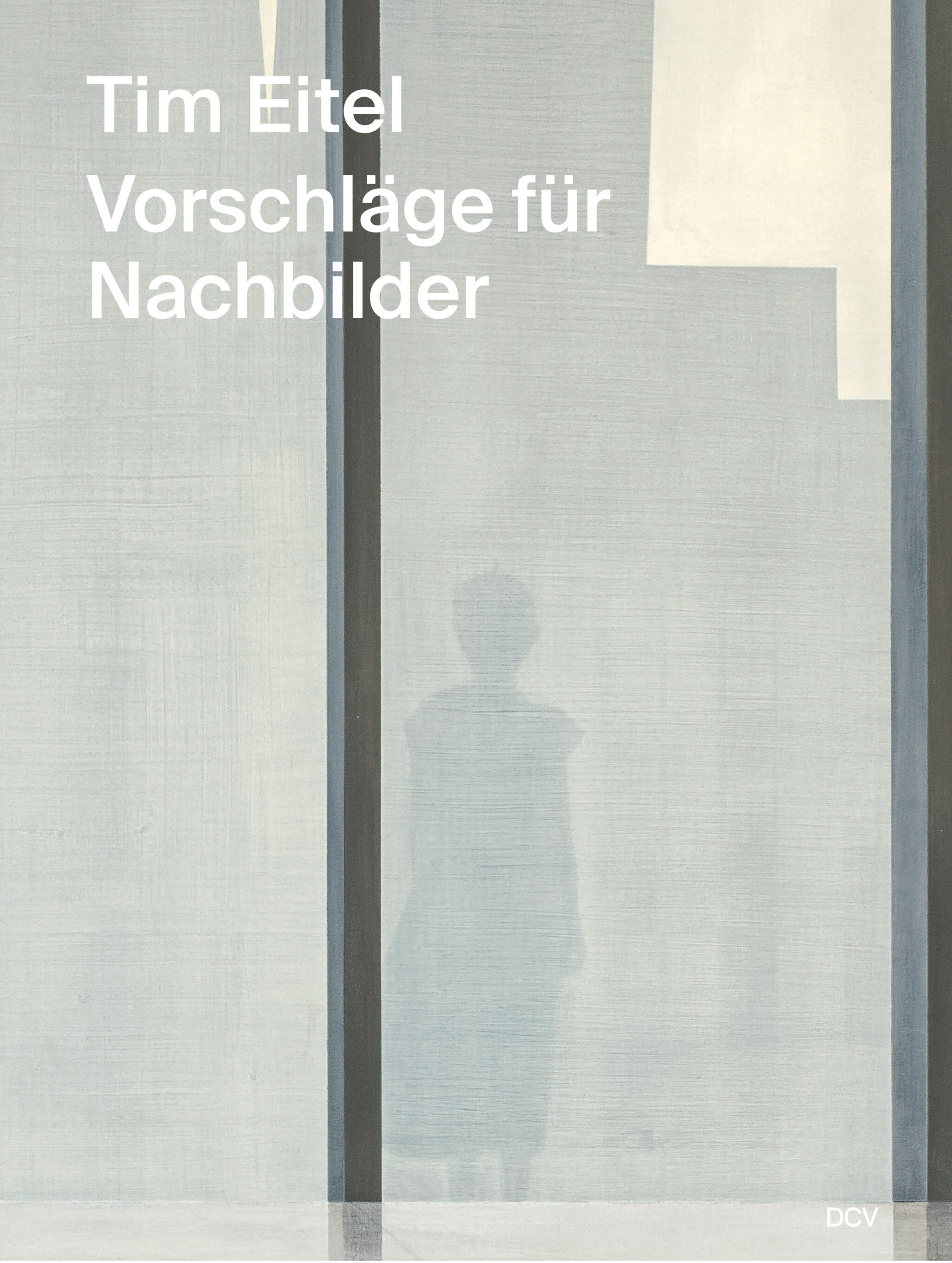
Tim Eitel
Propositions for Afterimages 2015–202436€ Add to cartTim Eitel initiates an exchange between recollection and painting. The work on his pictures, he says, is “a conversation about reality and memory” in which he engages the canvas. In the course of this dialogue, Eitel reflects on personal experiences, creating a standalone figural-abstract reality that needs to be internally consistent—the canvas has a strong will of its own. That makes the scenes depicted in his paintings analogues or afterimages of a situation rather than renditions of it. They are characterized by a certain openness that enables the beholders to inject their own recollections into the pictorial space as well. The dialogue between canvas and artist thus gives way to a colloquy between audience and finished work. Not by coincidence, many of the paintings by Eitel gathered in this catalog show people in museums: these scenes facilitate the leap into the pictorial space. The beholders have experienced a situation like the one shown in the pictures in the past or are experiencing it right now, and so they are already at the heart of the works; they become part of the painting, and the picture becomes a particle of their recollection.
-

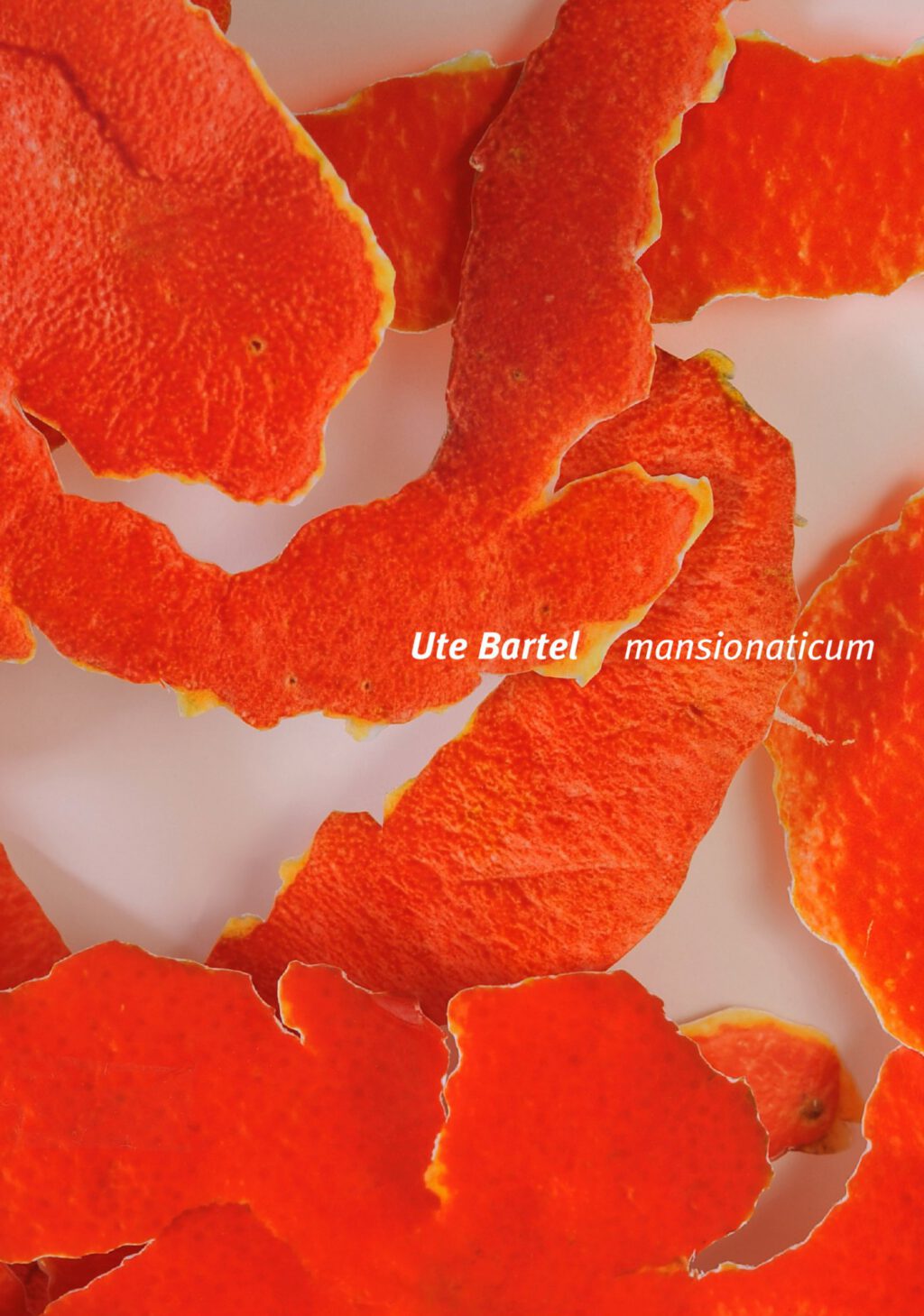
Ute Bartel
mansionaticum25€ Add to cartAn unreal view of reality
In her works, Ute Bartel (b. 1961, Halle; lives and works in Cologne) deals with everyday circumstances, the “mansionaticum.” A term which at first glance seems epochal, but etymologically simply means “belonging to the household.” In a concrete confrontation with particular places and situations, she is interested in things in and of themselves, in their formal characteristics, such as their forms, colors, and structures. Using analog and digital techniques, she creates collages, objects, and works that project into the respective space. This generously illustrated monograph presents structures of familiar and yet unknown realities marked by highly pronounced forms and bold colors and provides comprehensive insight into one of the focal points of the artist’s oeuvre.
Ute Bartel studied at the Kunstakademie Münster, where she was a master student of Reiner Ruthenbeck. Her works have been widely exhibited at, among others, the Kunstverein Speyer, the Deichtorhallen Hamburg, and the Westfälischer Kunstverein, Münster.
-

Urban Art! Biennale® 2019
27,50€ Add to cartThe World’s Most Important Exhibition of Urban Art — Presented for the Fifth Time in 2019
Its themes are the city and urban lifestyle, its can-vases walls, doors, or windows, its artists cosmo-politan. Since the turn of the millennium, Urban Art has developed out of the non-commercial, often illegal art forms of graffiti and street art. Although it makes use of the same stylistic means — spraying, tagging, the deliberate inclusion of drips, the use of graffiti scripts, etc. — it transports these as commis-sioned works into the legal space of the museum, gallery, or architecture. The Urban Art Biennial at the World Cultural Heritage Site Völklinger Hütte is the largest international exhibition of its kind. Fifty individual works and twenty-five installations by one hundred artists shed light on the latest developments and positions from Western metropolises, as well as from current hot spots around the globe.
-

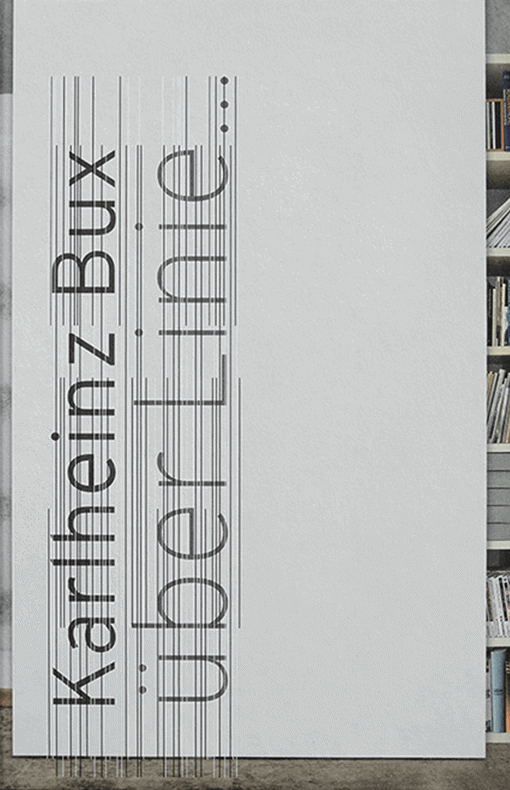
Karlheinz Bux
über Linie …15€ Add to cartClarity, Complexity, and Linearity
The defining artistic means in the work of Karlheinz Bux (b. 1952 in Ulm, lives and works in Karlsruhe) is the line. As edges and folds, they determine vertically oriented sculptures, which simultaneously convey compactness and openness, dynamism and repose. In Bux’s pencil drawings and photo-based works, they form the subject of the image in the form of complex linear structures. This present book documents the artist’s large-format works and provides insight into his oeuvre, with texts by Michael Hübl, Christine Reeh-Peters, and Carmela Thiele.
Karlheinz Bux studied at the State Academy of Fine Arts Karlsruhe and taught as a lecturer at Pforzheim University and as a visiting professor at the Mainz University of Applied Sciences. His works are represented in private and public collections, including the Staatliche Kunsthalle Karlsruhe, the Hurrle Collection, and the Würth Collection.
- temporarily not available

Sonia Gomes
I Rise – I’m a Black Ocean, Leaping and WideRead more“My Work is Black, it is Feminine, and it is Marginal. I‘m a Rebel.”
The biomorphic sculptures of Sonia Gomes (b. 1948, Caetanópolis, Brazil; lives and works in Belo Horizonte, Brazil) have an eerie, almost magical presence. As the daughter of a black mother and a white textile industrialist, she grew up between two worlds. But the African culture and spirituality of her mother and grandmother, as well as an interest in rituals, processions, and myths, made a lasting impact on her life and her later work as an artist. As a teenager, Gomes began deconstructing textiles and items of clothing to create her own style and to make both items for practical use and craft objects. Having previously participated in the 56th Biennale di Venezia in 2015, Sonia Gomes now counts among the most influential artists in Brazil.
- Out of stock

Welt ohne Inventar
16,80€ Read moreThe stories by Katja Hachenberg (b. 1972, Rhineland-Palatinate; lives and works in Karlsruhe) bridge the gap between fiction and reality. They urge the familiar to disappear and the usual to dissolve. Hachenberg is interested in complex and broken characters who oppose the conventions: outsiders, jailbreaker, dropouts. The relief faces of the sculptor Reinhard Voss (b. Rendsburg; lives and works in Karlsruhe) are juxtaposed with her texts. In dialogue, a relational panopticon of figures emerges which invites the reader for a visual and imaginative stroll.
- Release January 2026
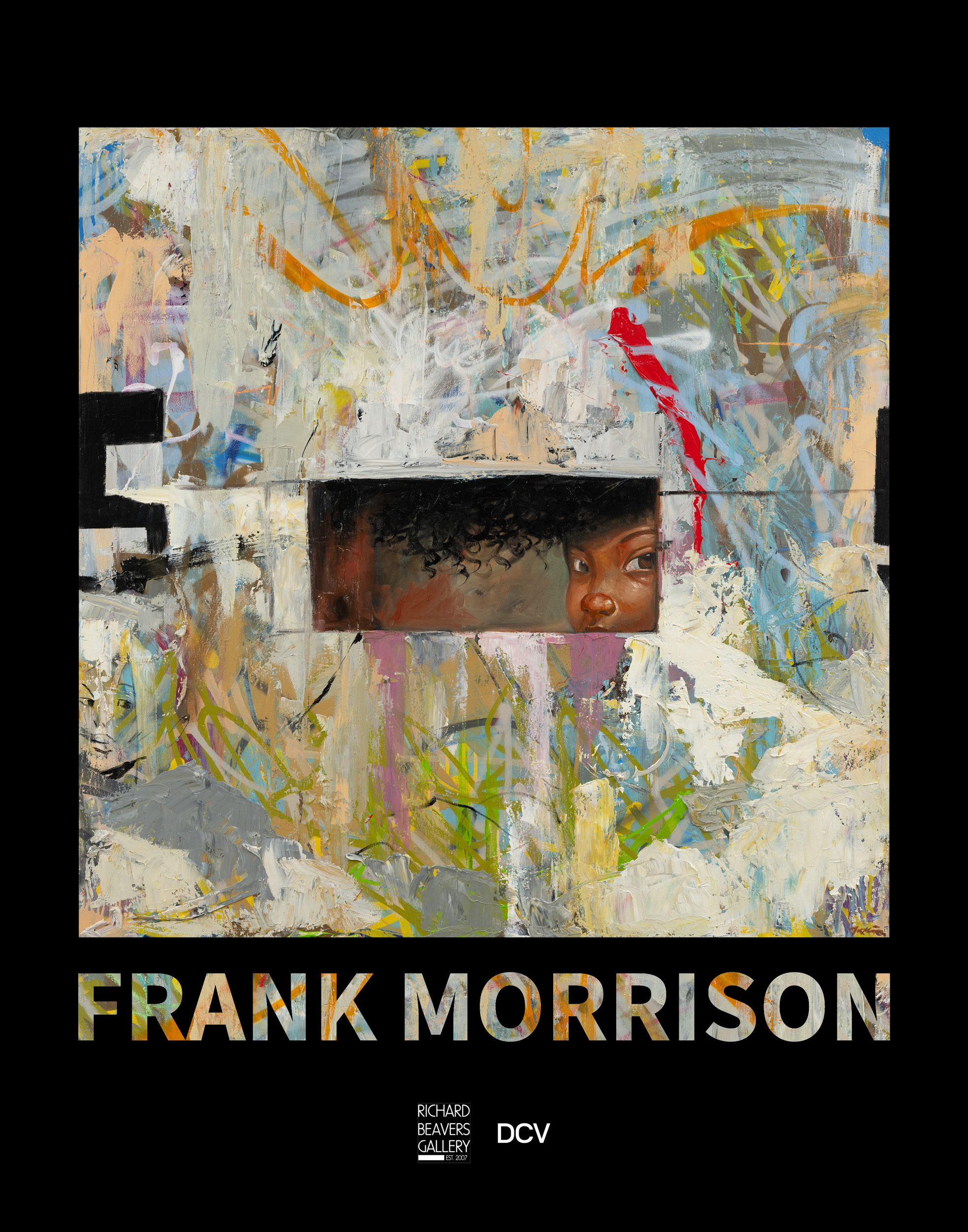
Frank Morrison
38€ Add to cartThe dynamic Neo-Mannerist images of painter and illustrator Frank Morrison (born 1971, lives in Atlanta) celebrate the resilience and dignity of African Americans in everyday life. A child of institutionalized racism in the US, he can testify that creativity and solidarity could never be suppressed in the segregated and brutally marginalized communities. Hip-hop and graffiti are resistance. Clichés of inner-city struggle are vividly refuted in this book. The volume documents Morrison’s recent exhibitions, one of which is dedicated to the younger generation: frame-braking images that interweave narrative forms of comics and pop art with illustration. Morrison’s gallery calls the book an explosive tribute to genius flourishing in institutionalized exile.
-

Candida Höfer
Kunsthistorisches Institut Bonn35€ Add to cartThe Kunsthistorisches Institut Bonn, Yesterday and Today
The imposing presence of architecture captured in the absence of humans: that is the defining characteristic of the photographs with which Candida Höfer (b. 1944, Eberswalde; lives and works in Cologne) has risen to international renown. In 1992, she captured the Kunsthistorisches Institut der Rheinischen Friedrich- Wilhelms-Universität Bonn in ten analogue black-and-white pictures that have not been on public display. In 2020, Höfer returned to the institute to take more pictures using a digital camera. The two series now make their public début in the institute’s halls and are gathered in this book. Undertaking a historically and aesthetically captivating comparison, Höfer probes the ways in which university life has changed over almost three decades.
Candida Höfer was a member of Bernd Becher’s inaugural photography class at the Kunstakademie Düsseldorf. Her works were shown at documenta 11 in 2002, and in 2003, she and Martin Kippenberger represented Germany at the 50th Biennale di Venezia.
-

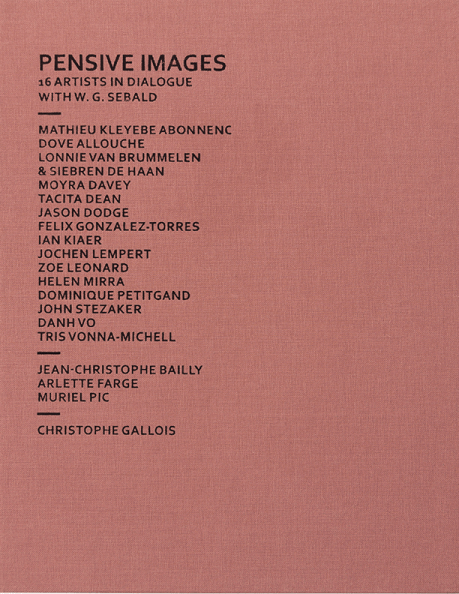
Pensive Images
16 Artists in Dialogue with W. G. Sebald35€ Add to cartOn Memories and Temporalities
Pensive Images examines the complex and invariably singular relationships through which images and memories are inextricably linked. The book relates to the work of the German writer W. G. Sebald (b. 1944, Wertach; d. 2011, Norfolk), especially to four fictional stories he published between 1990 and 2001, in which he inserted non-captioned blackand- white photographs of uncertain provenance and nature into the text like memories punctuating ways reminiscent of his writing. It brings together 16 artists who, in ways reminiscent of Sebald’s approach, explored the realms of memory and past from the perspective of experience and intertwining temporalities.
With works by Mathieu Kleyebe Abonnenc, Dove Allouche, Lonnie van Brummelen / Siebren de Haan, Moyra Davey, Tacita Dean, Jason Dodge, Félix González-Torres, Ian Kiaer, Jochen Lempert, Zoe Leonard, Helen Mirra, Dominique Petitgand, John Stezaker, Danh Vo and Tris Vonna-Michell.
-
Jagoda Bednarsky
SHADOWLAND ET AL40€ Add to cartJagoda Bednarsky’s (b. Złotoryja, Poland, 1988; lives and works in Berlin) paintings are pop-cultural and nostalgic borrowings that she transfers into the grotesque register, with allusions to stereotyped role models between hypermasculinity and matriarchy. Unfurling pastel-colored hillscapes composed of breasts, breast pumps, vulvas, figures from Greek myth, and motifs from flora and fauna, Bednarsky’s Shadowland series interrogates traditional ideas of femininity and motherhood. The depiction of the female breast serves as a metaphor referring to the titular “Shadowland,” where this part of the body is still perceived as a sexualized object rather than as natural. The title, one might note, is borrowed from a culture magazine first published in New York in 1919 in which the artist spotted Art Deco illustrations that became a vital source of inspiration. Despite the dense aggregation of fraught symbols and referential gestures, the sensual, poetic, and richly imaginative works exude a lightness that stems from their translucency and subtle irony.
The comprehensive volume presents Bednarsky’s works from between 2018 and 2023 and a singular conversation with the artist.
Jagoda Bednarsky studied fine arts, first at Kunsthochschule Kassel (2008–2009), then at HfBK Städelschule, Frankfurt am Main, with Michael Krebber and Monika Baer (2009–2014).
-

Judit Reigl
Kraftfelder / Centers of Dominance28€ Add to cartBeginning in the 1950s, Judit Reigl (b. Kapuvár, Hungary, 1923; d. Marcoussis, France, 2020) builds a singular creative oeuvre between abstraction and figuration, between Surrealism and gestural painting. After studying art in Budapest, Reigl flees Hungary in 1950; arriving in Paris, she is introduced to André Breton, who organizes her first exhibition in 1954. Under the influence of the École de Paris, she branches out into écriture automatique, then shifts toward free expression. Like her contemporaries Jackson Pollock and Helen Frankenthaler in New York, she lays out ever larger unprimed canvases on the floor and works them with a brush, her fingers, or other instruments. After 1966, bodily shapes emerge from her abstractions, and figures reappear in the pictures.
On occasion of Reigl’s centenary and the gift of three major works, the Neue Nationalgalerie mounts the artist’s first solo exhibition at a museum in Germany. The book surveys the oeuvre of one of the most important protagonists of European art in the second half of the twentieth century.
Judit Reigl studied painting at the Academy of Fine Arts in Budapest from 1942 until 1945 and was a fellow at the Hungarian Academy in Rome in 1947–48. From 1950 onwards, she lived and worked in France.