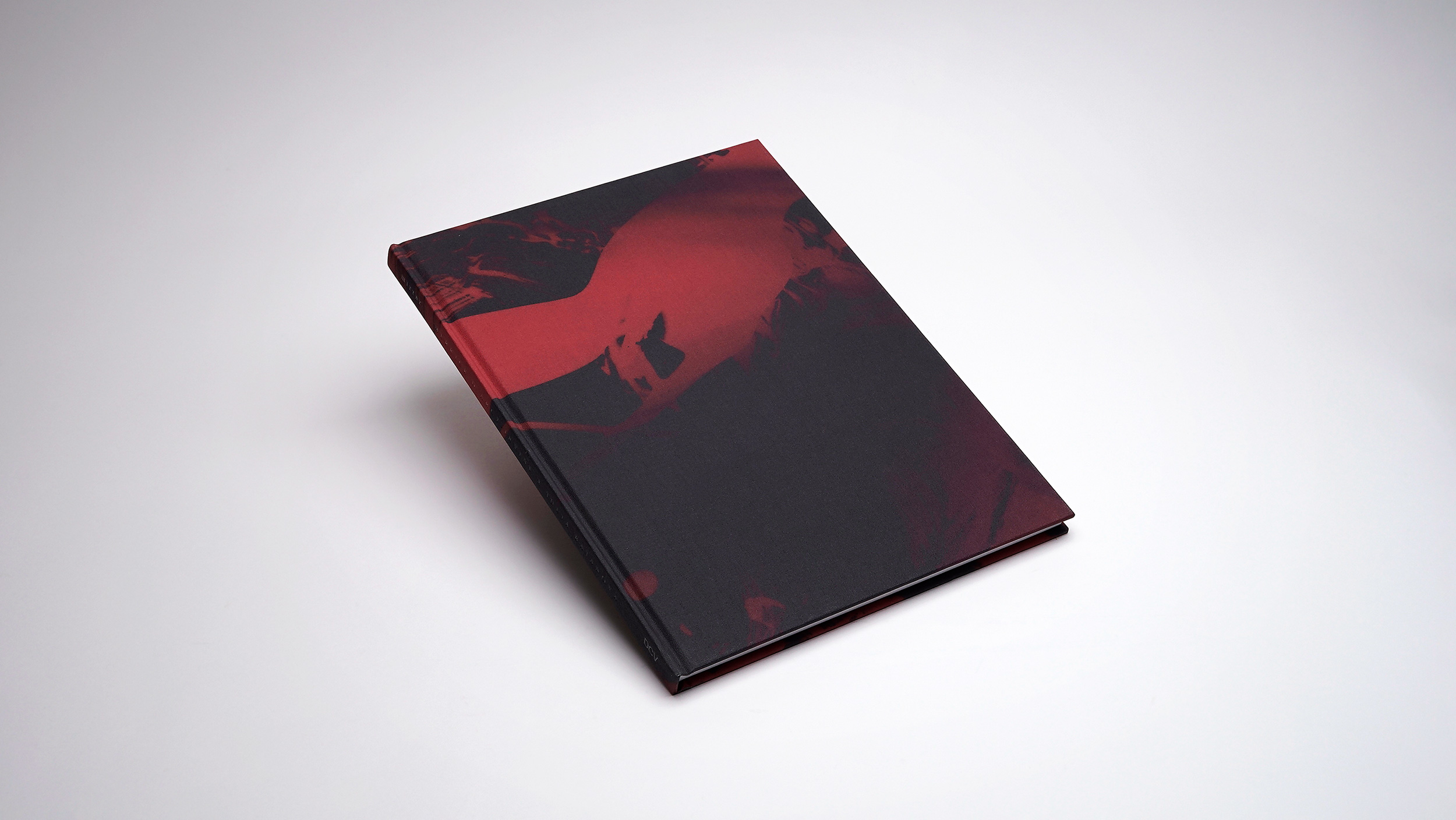
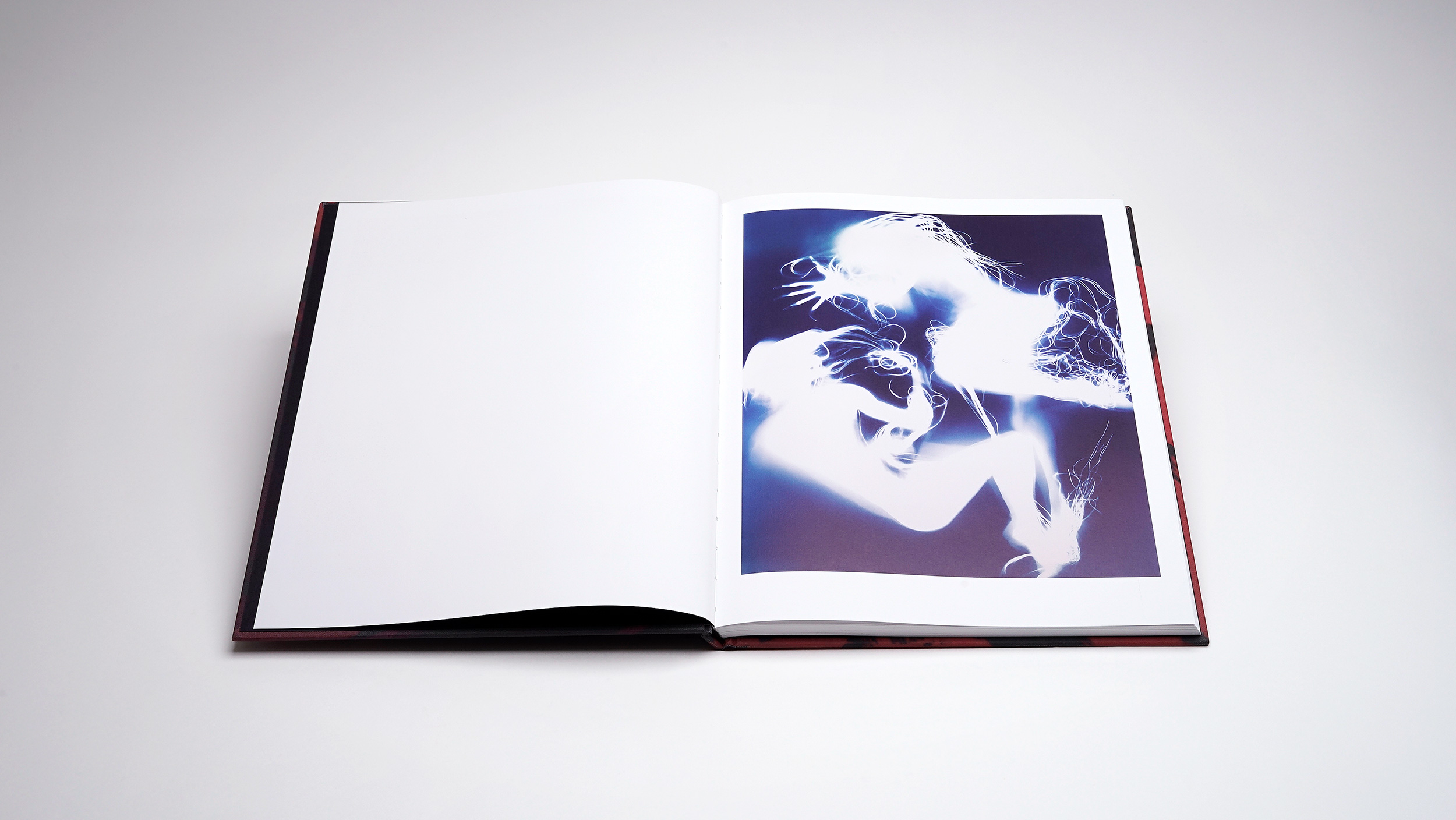
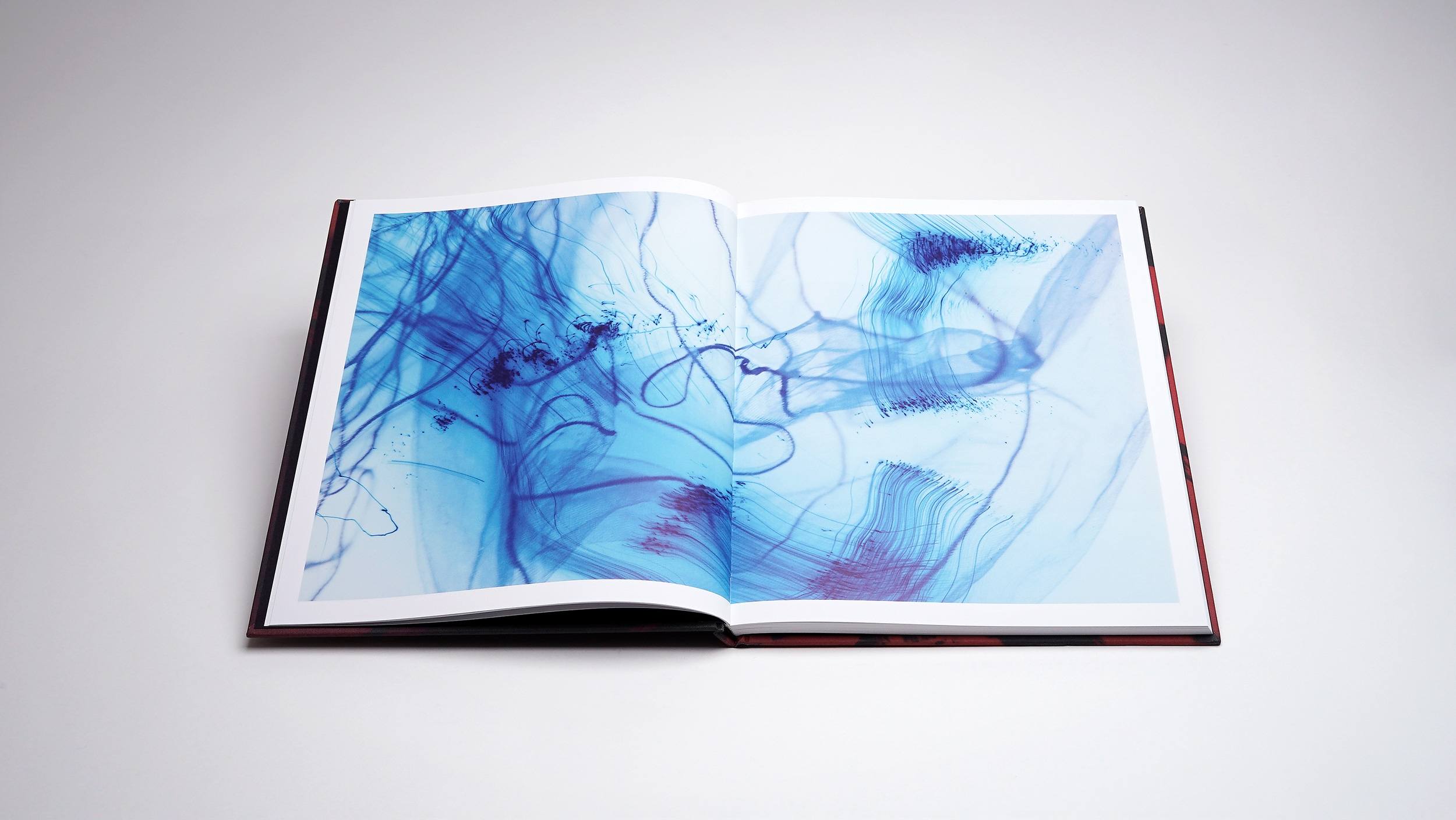
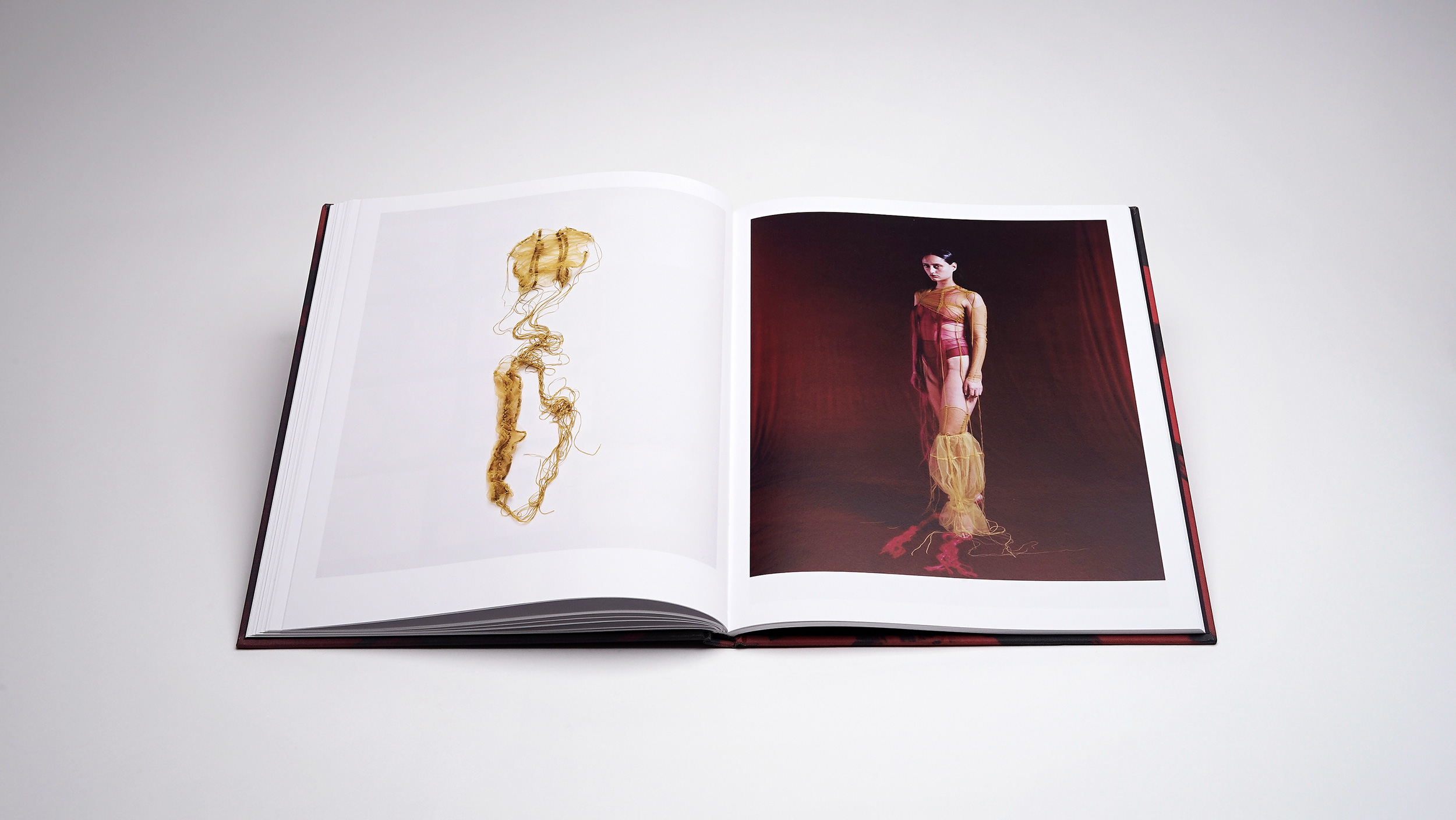
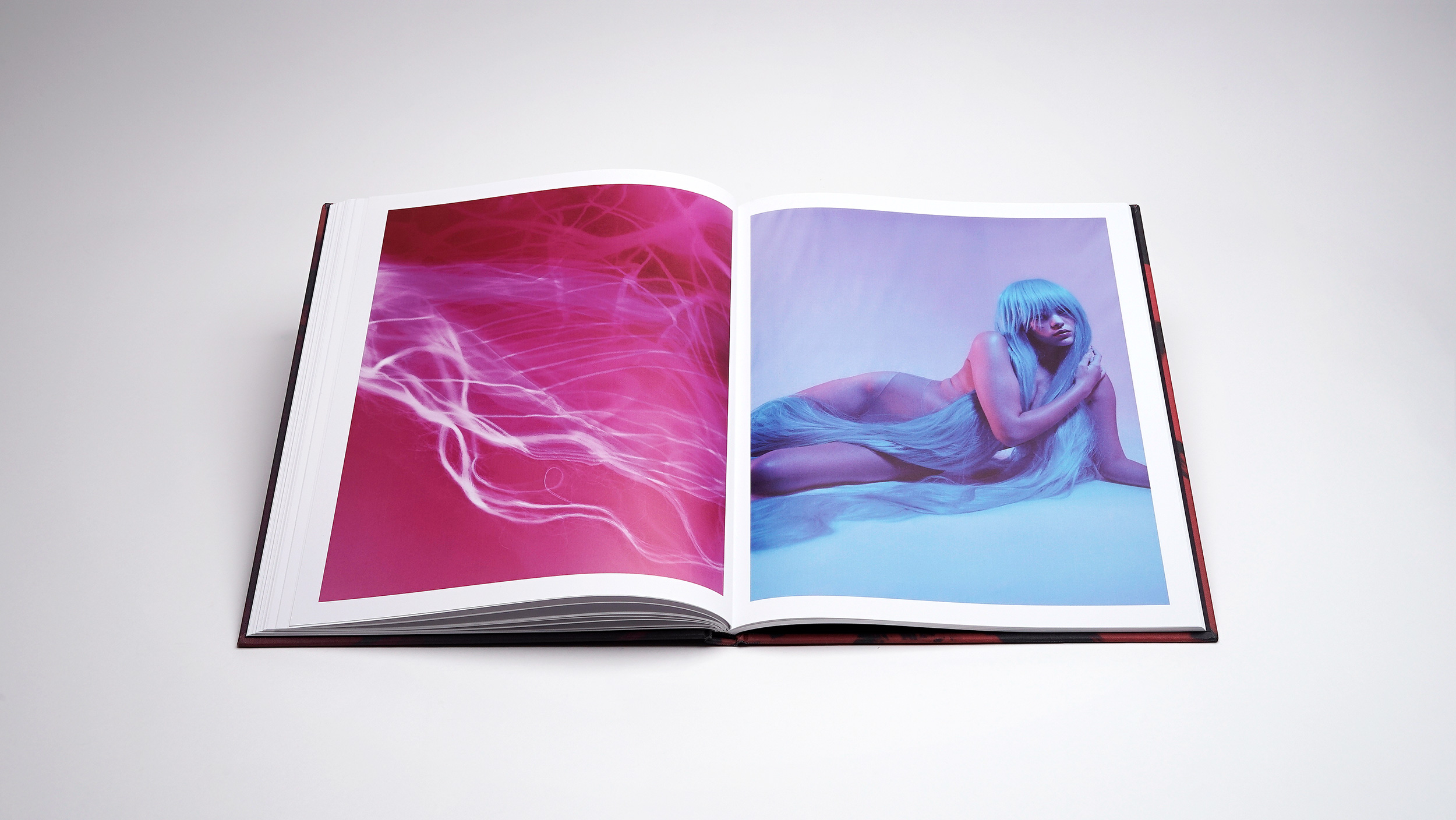
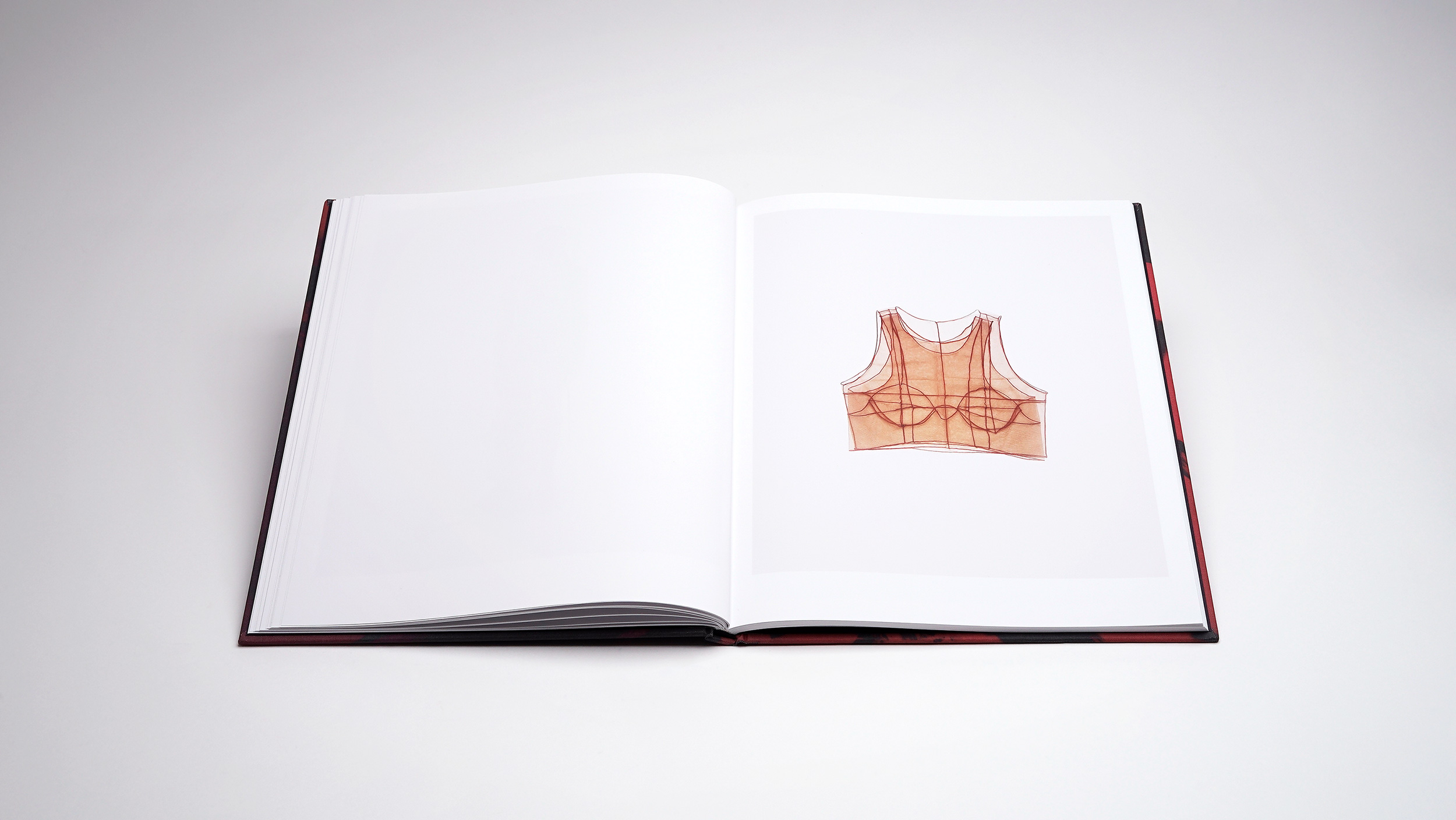
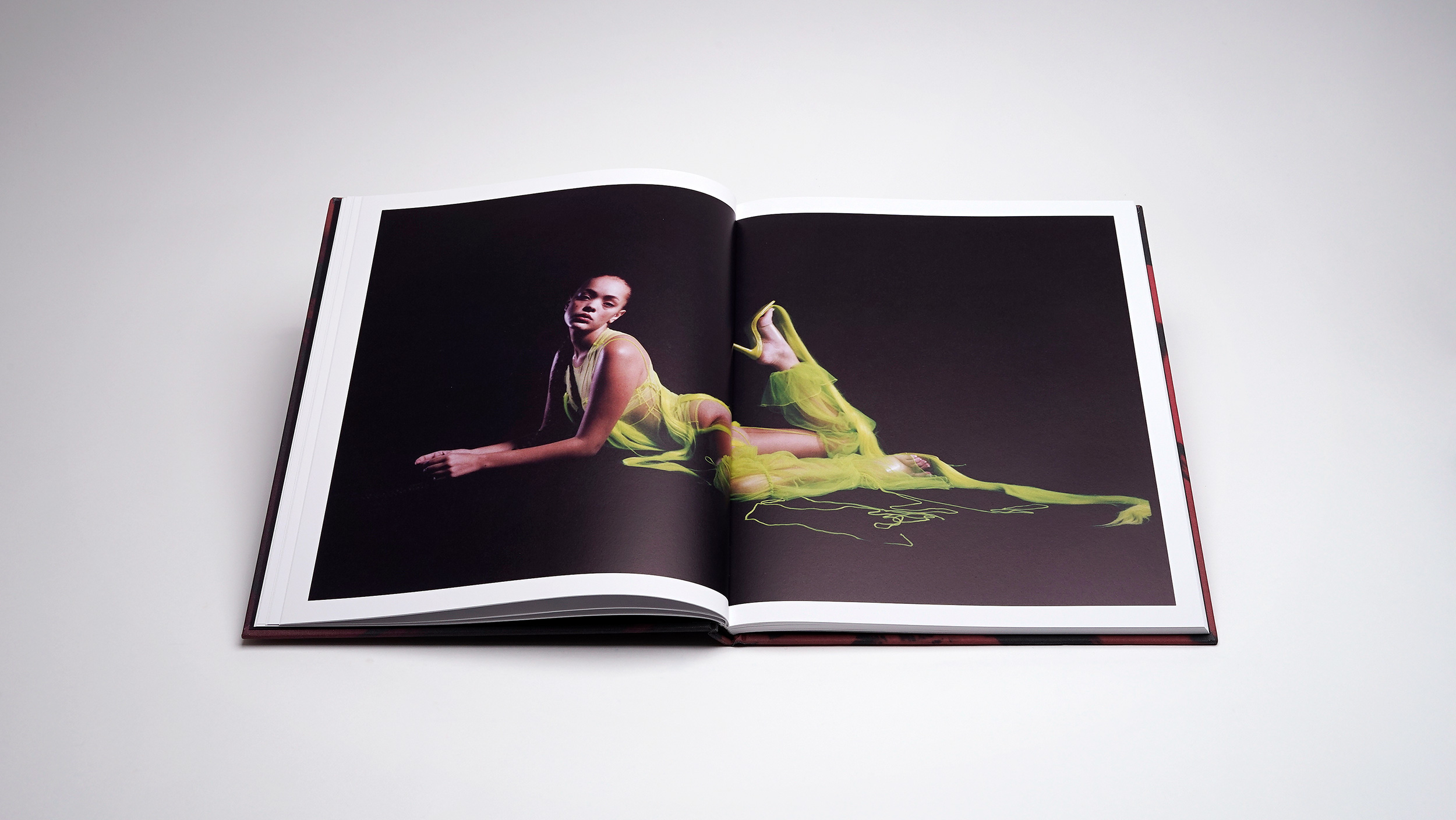
Mirror
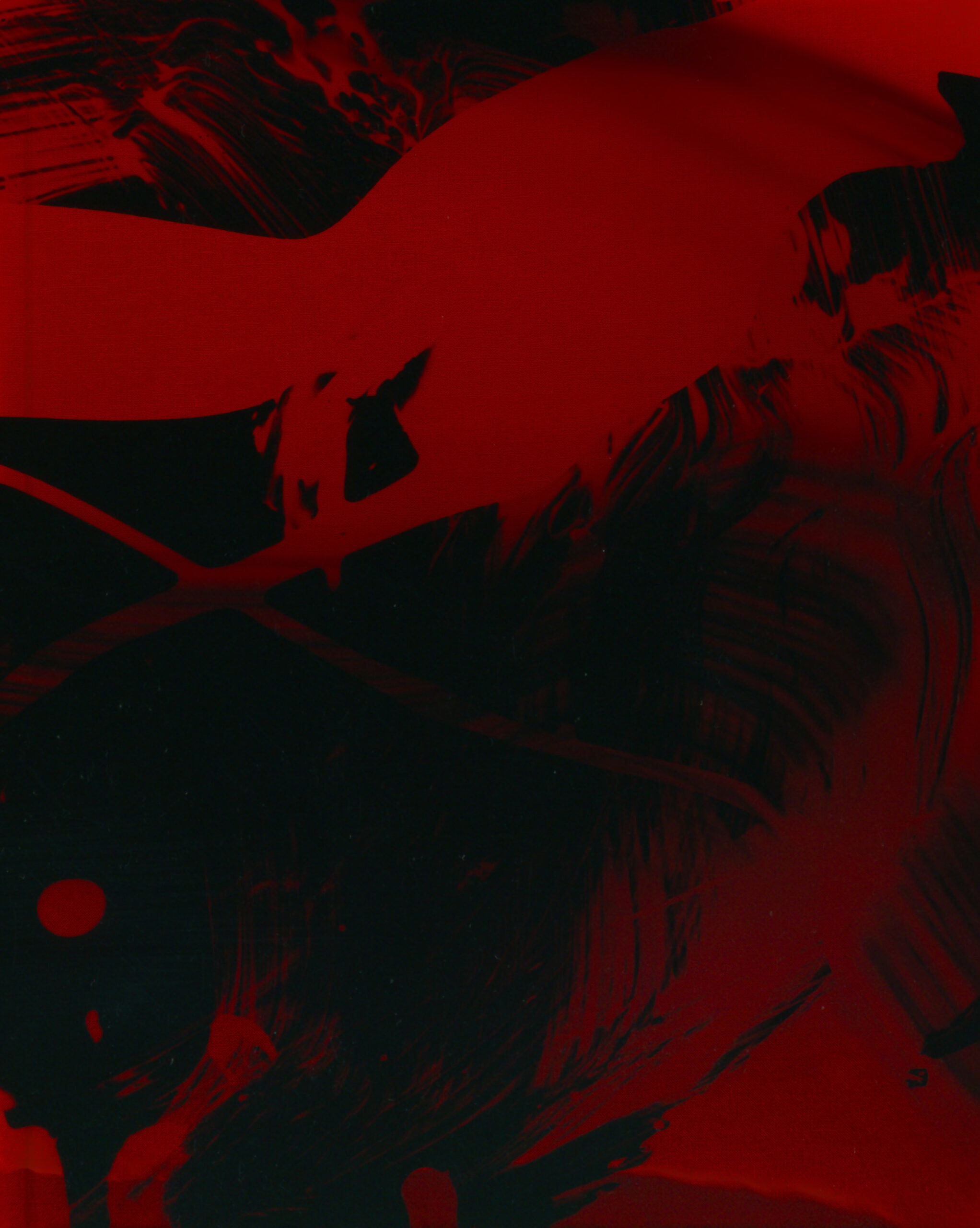
Collaborative Pictures by Merrick d’Arcy–Irvine x Julia Bajanova
 | |
|---|---|
| Design | Studio Jung, Berlin |
| Size | 23 x 30,5 cm |
| Cover | Linen hardcover |
| Pages | 112 |
| Illustrations | 69 |
| Language(s) | English |
| ISBN | 978-3-96912-216-7 |
We humans are social creatures. Without others to reflect our behavior back to us, we lose what defines us—language, culture, the capacity for creative expression. That is why photographer Merrick d’Arcy-Irvine and fashion designer Julia Bajanova are invested in intense encounters: not only with the people who appear in their pictures, but also with each other, as artists and as humans, and between their media and the materials out of which they are made. The materiality and sensual experience of these media in the physical world are the focus of the pictures gathered in this volume, which is why d’Arcy-Irvine and Bajanova eschewed all digital technologies. Sensuality forges an emotional bond between their creative universes, whose boundaries become permeable, as do the dividing lines between genres. Colors and forms are fused in a shared language of visual art and fashion in which d’Arcy-Irvine and Bajanova write their messages in light on photographic paper. They speak to what makes us human: creative energies untrammelled by the necessities of everyday life. The pictures in Mirror, then, are reflections of our existence and portals of self-knowledge.
More books
-

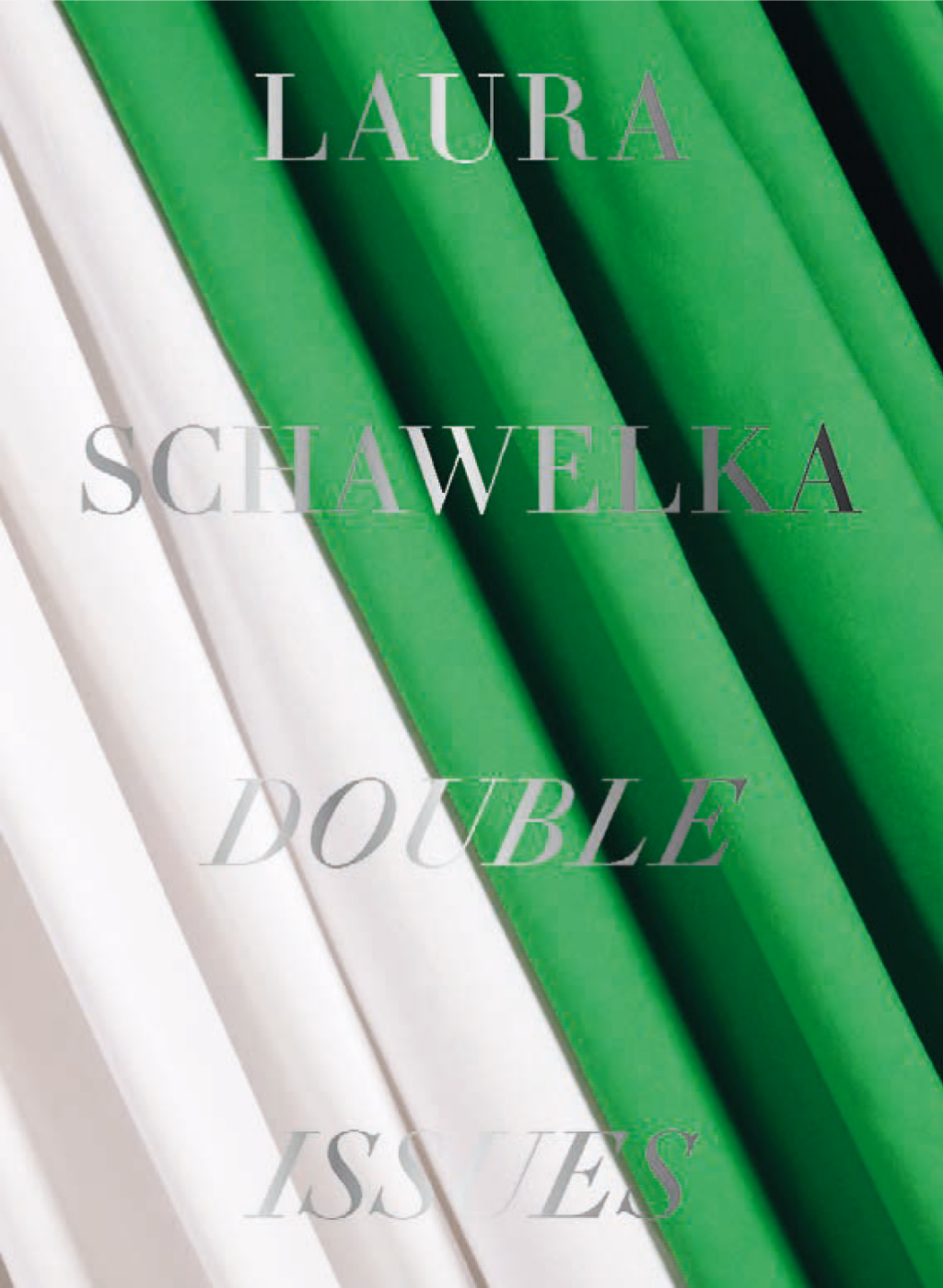
Laura Schawelka
Double Issues24€ Add to cartSales Spaces without Merchandise
In her installations, Laura Schawelka (b. 1988, Munich; lives and works in Berlin) makes use of photography, video, and sculpture in a multilayered dialogue. In her latest works, the artist focuses on the role of photography in the development of modern consumer society. What does it mean if goods are only communicated through other goods, such as computers, cell phones, tablets? If this withholding of the genuine object is precisely what prompts the desire for it? The artist creates sales spaces without merchandise, in which images, photographs, and videos have replaced consumer goods of any kind.
Laura Schawelka studied at the Städelschule in Frankfurt am Main as a student of Tobias Rehberger master-class. In 2015, she was awarded the Master of Fine Arts at the California Institute of the Arts in Los Angeles, and in 2017 she moved to Paris as the recipient of a studio bursary of Hessische Kulturstiftung.
- Out of stock

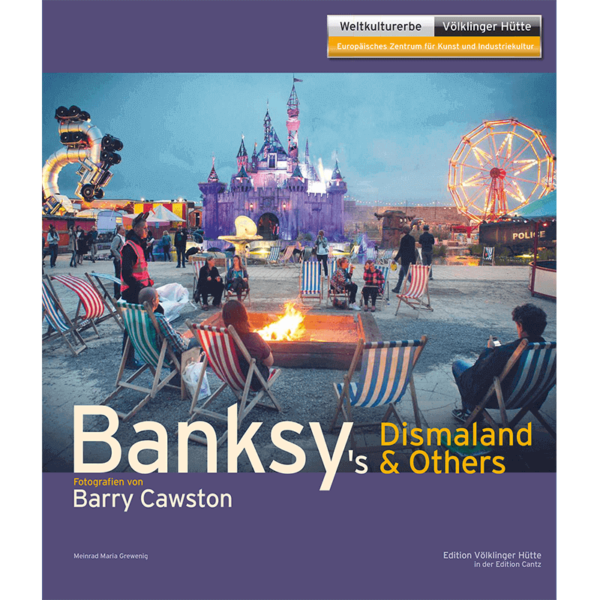
Banksy’s Dismaland & Others
14,80€ Read morePhotographs by Barry Cawston
The two projects by the British street artist Banksy, Dismaland and Walled Off Hotel, received an outstanding response worldwide. The book presents for the first time the documentation of the two extraordinary works from the perspective of Barry Cawston, the artist’s official photographer.
-

Alexander Ruthner
Cour: Sommer36€ Add to cartContemplating Nature in a Reduced-Mobility Environment
“The events of the year 2021, which was defined by lockdowns, the pandemic, and restrictions, has brought out the resonance in my pictures of Gustave Courbet’s realism,” Alexander Ruthner (b. Vienna, 1982; lives and works in Vienna) says about his most recent works: oil paintings featuring lush green vegetation and veritable down comforters painted all-over in saturated color gradients. The works will make their public début as the publication is released in the summer of 2021, hence the word “Sommer” in the title. The other word, “Cour,” is a nod to the first syllable of the French painter’s name as well as French for “court,” a term the artist creatively reinterprets as a synonym for the solitary “castle of the mind” to which we have retreated under pandemic conditions. Ruthner, who studied with Peter Kogler, Daniel Richter, and Albert Oehlen, revisits the boscage and pasture painting of past eras in new works that propose a distinctive personal interpretation of that tradition’s charm.
Alexander Ruthner’s work has been shown at Kunsthalle Wien, the Whitechapel Gallery, London, and the National Museum of Montenegro, among other venues.
- Release January 2026

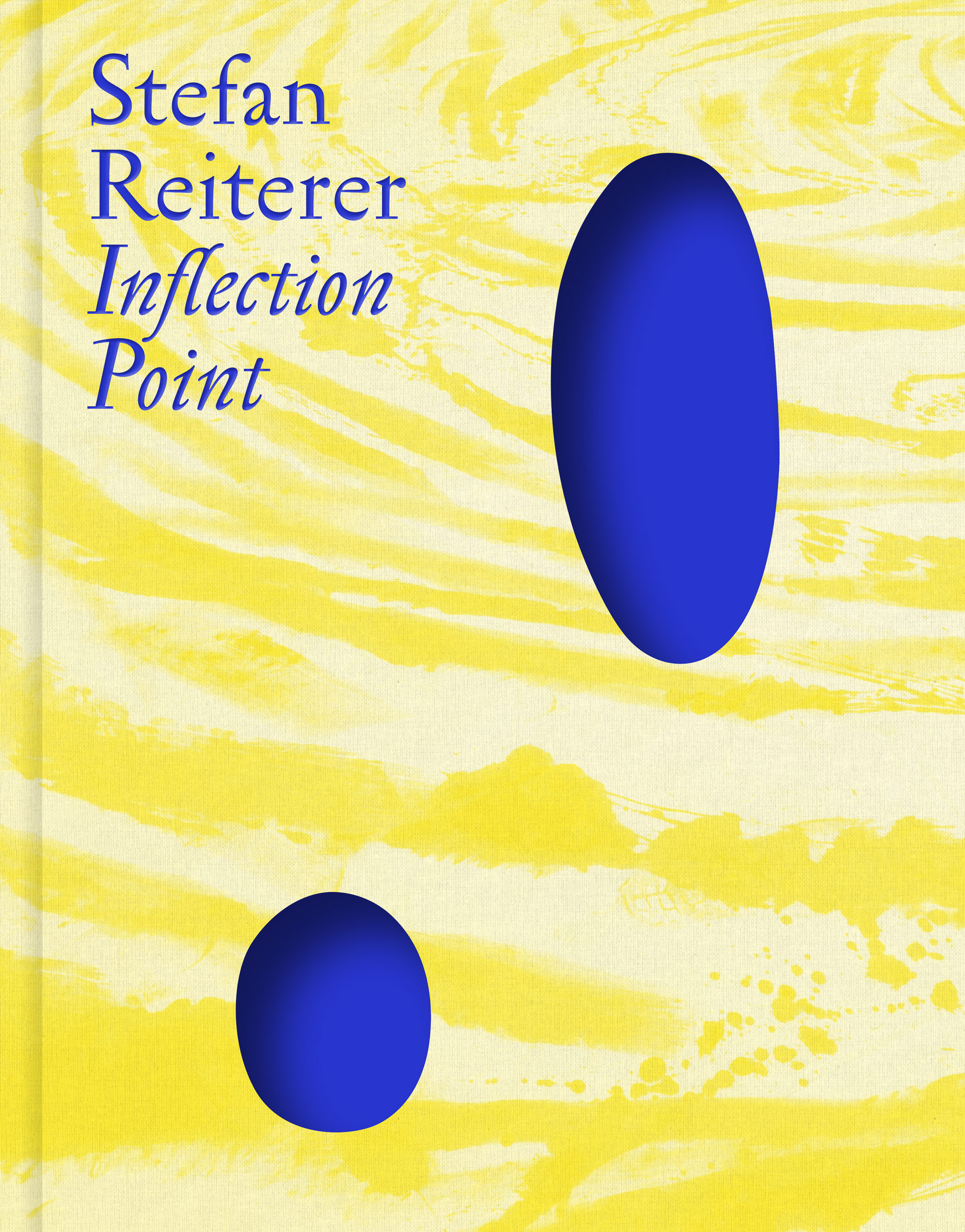
Stefan Reiterer
Inflection Point38€ Add to cartThe Austrian artist Stefan Reiterer (born 1988, lives in Vienna) transfers digital maps and satellite images into analog physical space through abstract painting. He manipulates data from sources such as Google Earth or NASA, transforming them into illusory topologies and pseudo-cartographies to challenge our perception. What is recognized, discovered, rejected? Where is the viewer’s location? Andrea Kopranovic writes of Reiterer’s painted emptiness as a “pitting” and projection surface “for glitches, black holes, and abysses” and a metaphor for potential “interpretations, enrichments, and yet unimagined spaces of possibility.” This richly illustrated book documents Reiterer’s 2025 exhibition at the Museum Gegenstandsfreier Kunst in Otterndorf.
-
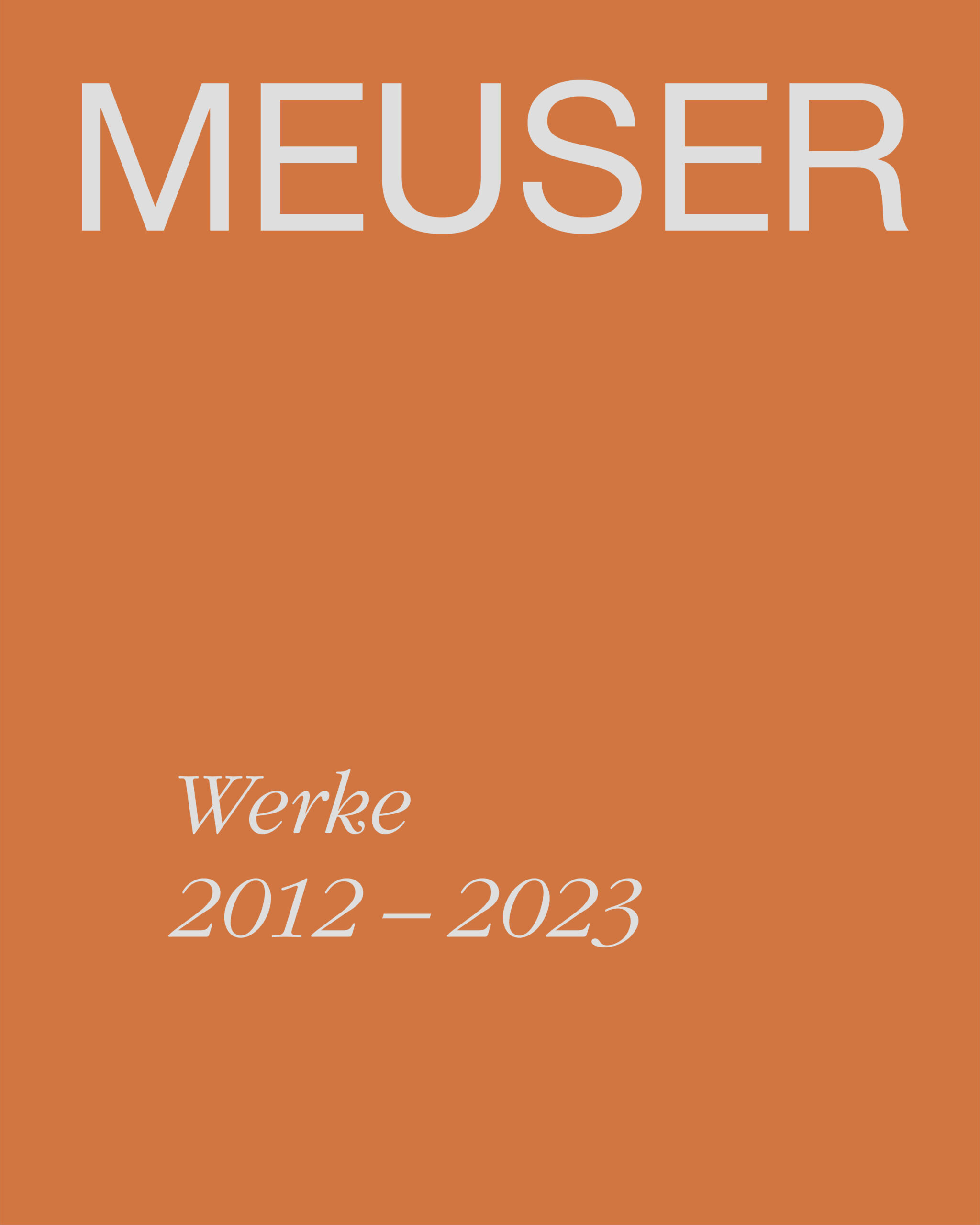
MEUSER
Werke 2012–2023 (GERMAN)48€ Add to cartEver since his studies with Joseph Beuys and Erwin Heerich, since his first exhibitions – for instance at ‘Kippenberger’s Office’ in 1979 – Meuser (b. Essen 1947, lives and works in Karlsruhe) has been a solitaire. His sculptures are unyielding and unruly, just as much as they are vulnerable and tender. They are witty and heart-touchingly charming.
Meuser finds his material in the scrapyard. Confidently and empathically, he reinstates form and dignity to the remnants and vestiges of industrial society. As a romantic, he grants things a life of their own and turns them into self-reliant protagonists, once more. Unwaveringly, he works to re-poetize a standardized and maltreated world.
The lavishly designed monograph is published on the occasion of Meuser’s 75th birthday, presenting works and exhibitions from the past ten years. Eight international authors and scholars create a dazzling mosaic and reveal how Meuser boldly holds his own in face of Duchamp, Minimalism, and Social Sculpture. An open-ended outlook.
Meuser studied 1968–1976 at Art Academy, Düsseldorf with Joseph Beuys and Erwin Heerich. 1991 he received the ars viva award. 1992-2015 professorship at Academy of Fine Art, Karlsruhe.
Since 1976, numerous institutional solo and group exhibitions and works in international collections: Bundeskunsthalle, Bonn; Deichtorhallen, Hamburg; documenta IX / Fridericianum, Kassel; Fundació Joan Miró, Barcelona; Joanneum, Graz; Kunsthalle Düsseldorf; Museum of Contemporary Art, Monterrey; Martin-Gropius-Bau, Berlin; Museum Abteiberg, Mönchengladbach; Museum Folkwang, Essen; Museum moderner Kunst Stiftung Ludwig, Vienna; Museum Morsbroich, Leverkusen; Rijksmuseum Twenthe, Enschede; Sakip Sabanci Museum, Istanbul; Städtische Galerie, Karlsruhe; Vanhaerents Art Collection, Brussels; ZKM | Museum für Neue Kunst, Karlsruhe.
-

Sinje Dillenkofer
Archives Vivantes34€ Add to cartSinje Dillenkofer’s (b. Neustadt a.d.W., 1959) body of work ARCHIVES VIVANTES inquires into the idea of the “archive,” harnessing the means of visual art to allow us to see and perceive what the archive does not reveal. With staged photographs that combine conceptual rigor with a wide spectrum of creative techniques and devices, Dillenkofer’s pictorial essay turns the spotlight on specimens, artifacts, graphic art, and writings compiled by the explorer and naturalist Alexander von Humboldt (1769–1859) and the ornithologist Carlo von Erlanger (1872–1904). Examining the archive as a model of nature and reality as well as a mirror of “human nature,” the artist develops compositional ideas inspired by the peculiar features of the objects in the collections in visual analogies, pictorial spaces, and spatial compositions. Animals and plants that died long ago “in the service of science” are vividly embodied through the distinctive use of light and shadow. The resulting pictures consider the archive in a new context, framed by our complex relationships with nature, humankind, society and its values and ideals, circumstances and constellations of power. The pictures were taken in six German collection archives: at the Museum bei der Kaiserpfalz Ingelheim, the Naturhistorisches Museum Mainz, the Senckenberg Forschungsinstitut und Naturmuseum Frankfurt, the Stadtmuseum Berlin, and the Stuttgart State Museum of Natural History. Dillenkofer was the first artist to be invited by the Berlin State Library—Prussian Cultural Heritage to translate Humboldt’s American travel diaries into art.
Sinje Dillenkofer studied at the Stuttgart State Academy of Art and Design and has taught at universities and art academies. Her work is held by the Victoria & Albert Museum in London, the ZKM | Center for Art and Media Karlsruhe, the Staatsgalerie Stuttgart, and the Berlinische Galerie, among others.
-

Brandon Lipchik
10€ Add to cartIn recent years, a Wagnerian night has settled over Brandon Lipchik’s (b. Erie, PA, 1993; lives and works in Brooklyn, NY, and Berlin) pictures. Moons rise; beasts and titans populate a homogeneous world of swimming pools, white picket fences, and neatly mowed lawns. Synthesized on a computer screen and then transferred to canvas by hand, the artist’s paintings revolve around the backyard as a mythically fraught scene of popular culture. The garishly lit multiperspectival pictures replicate characteristic shots from 1980s gay porn films and quote a clean American Apparel look. Lipchik subjects men’s bodies, spaces, plants, objects, and animals to digital deconstruction, obtaining rudimentary and abstract shapes. Staring at smartphones or gazing on water surfaces, his characters recall early digital animations and seem oddly hollow, like empty avatars waiting to be filled with new speculative content.
-

René Holm
45€ Add to cartRené Holm goes for the big picture, painting the ambivalence of human existence and our relationship with nature. Some of his protagonists are physically naked, and all embody an interior life through their poses. The faceless figures function as screens onto which the beholders can project their own feelings, as symbols of universal human experiences. That is why, Holm notes, people very often recognize themselves in his protagonists. The effect is in part due to the forest, the setting of all pictures in this catalogue, which has been Holm’s studio and preferred backdrop for decades. It is where he finds the twilight that glows in all of our souls: woodlands nourish and menace us, they are home to helpful fairies and nasty demons, one can find life and death alike in them. He translates the sublime of the forest—a central motif in the Romantics—into a contemporary visual idiom. In his pursuit of this endeavor, he has recently ventured a radical aesthetic change: instead of using thick paints as before, he now applies the pigments to the canvas in thinner and drier layers. The book illustrates this spectacular fresh start, carrying us off into the depths of the soul and mysterious woodlands.
-

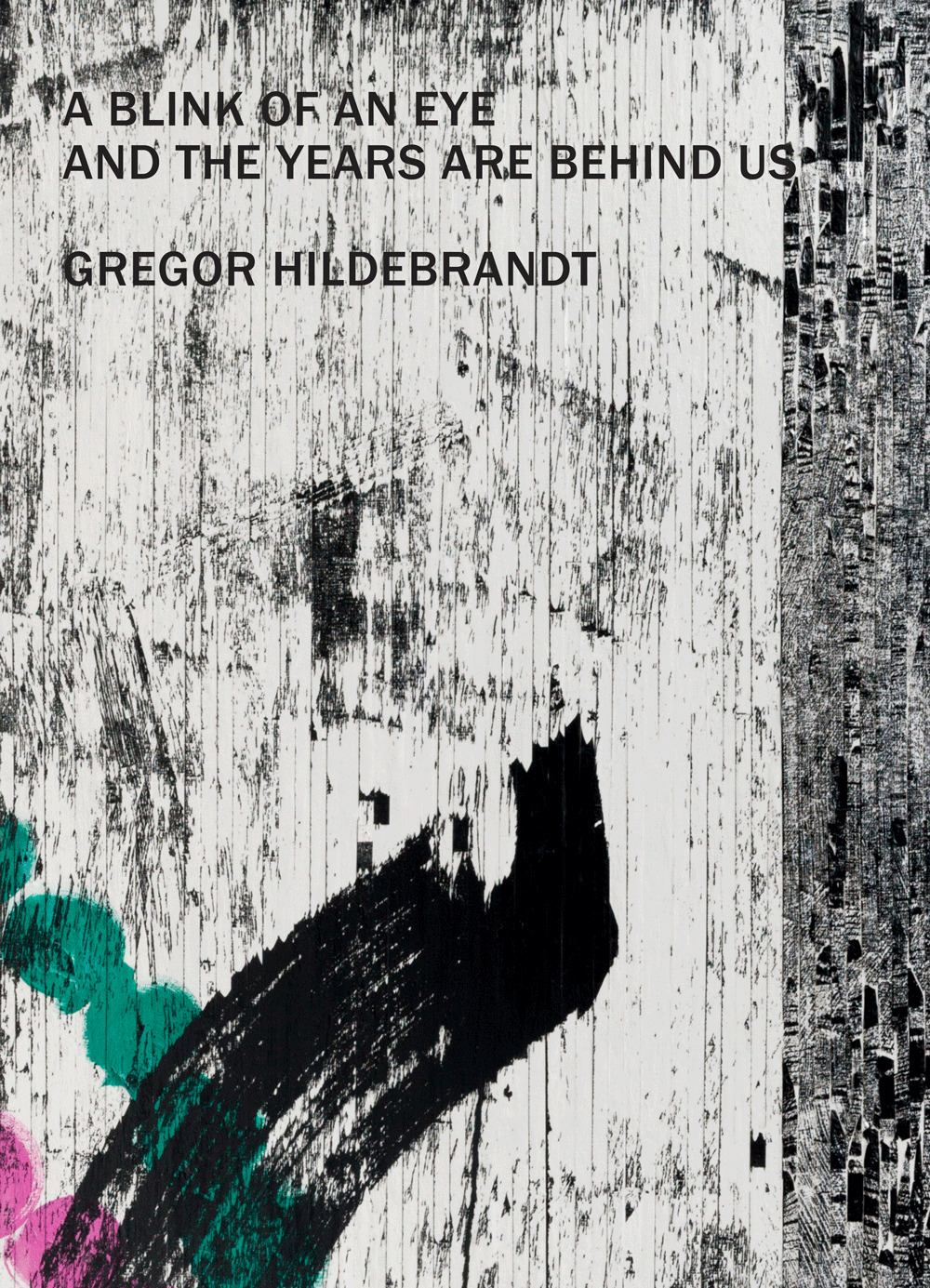
Gregor Hildebrandt
A Blink of an Eye and the Years are Behind us48€ Add to cartFor the past two decades, Gregor Hildebrandt (b. Bad Homburg, 1974; lives and works in Berlin) has transformed analog audiotapes, cassettes, and records into collages, sculptures, panel paintings, and installations. Melding visual art with music, he has charted a complex creative vision crossing boundaries of medium and genre that he continually refines. Before using a tape, he records selected music—typically a single song—on it, whose lyrics he quotes in the work’s title. The artist’s output draws on his personal repertoire of bands that share a romantic narrative of loneliness and a melancholy keynote. The same attitude toward life is reflected in Hildebrandt’s work. The book offers insight into all periods of the artist’s oeuvre and is rounded out by archival materials from Hildebrandt’s studio, his project space Grzegorzki Shows, and the music label Grzegorzki Records that illustrate his creative process.
Gregor Hildebrandt studied at Kunsthochschule Mainz from 1995 until 1999 and at the Berlin University of the Arts from 1999 until 2002. He was a fellow of the Deutsches Studienzentrum in Venice in 2003 and worked in Vienna on a fellowship from the German Academic Exchange Service in 2005–06. He has been professor of painting and graphic art at the Academy of Fine Arts in Munich since 2015.
-
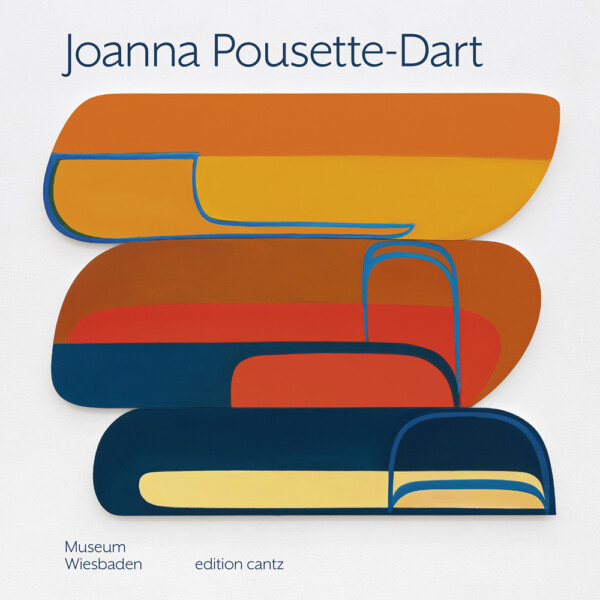
Joanna Pousette-Dart
32€ Read more„A kind of Dialogue between Myself and the Horizon.“
The works of Joanna Pousette-Dart (b. 1947, New York; lives and works in New York) are deeply rooted in the vast expanse of the American desert landscape, without ever committing themselves to a strict objectivity. As early as the 1970s, the artist abandoned the rectangular form of her canvas in favor of dynamically balanced panels that open out to the respective space. This volume presents her fascinating paintings from 2004 till 2019, which oscillate between landscape and abstraction, line and form. Born in New York to abstract expressionist painter and founding member of the New York School of painting, Richard Pousette-Dart, Joanna Pousette-Dart’s experience as a painter rises from rich tradition. Her work is held in the collection of the Museum of Fine Arts, Boston, the Solomon R. Guggenheim Museum, New York, and the Museum of Modern Art, New York, amongst others.
-

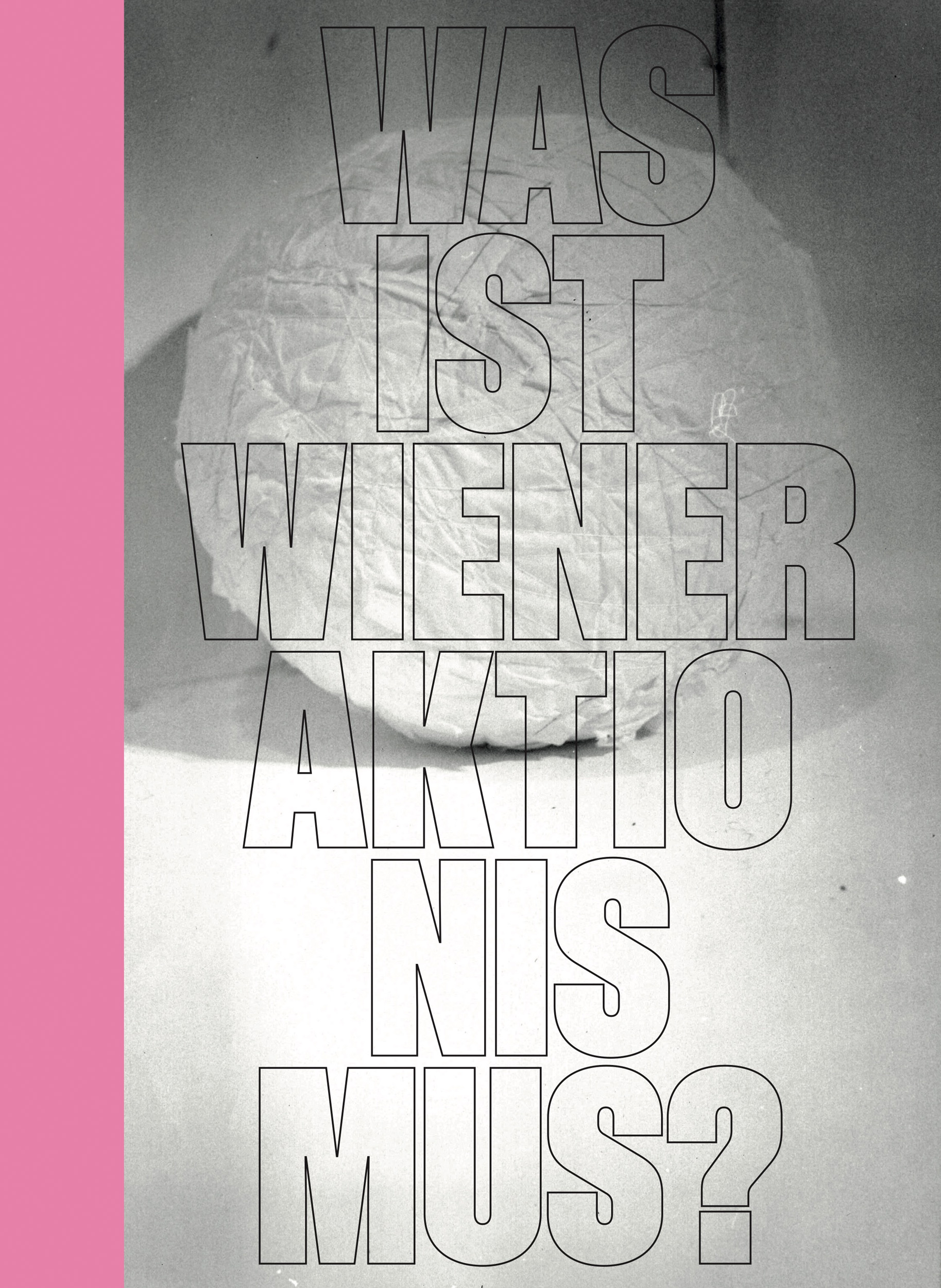
Was ist Wiener Aktionismus?
50€ Add to cartBlows were dealt. An artist exposed and cut himself, others urinated in glasses, daubed themselves with dirt, and masturbated over the Austrian flag. Meanwhile, music was playing, including the national anthem; someone read pornographic writings. Vienna in the late 1960s: what had started in the artists’ homes and studios was now brough out on the grand stage, and taboos were broken in full view of the public.
The Vienna Actionism Museum’s first publication is dedicated to the idea of Vienna Actionism in the dynamic context of abstract realism, Fluxus, and the international Happening scene. The book relates the story of one of art history’s most influential art movements, spearheaded by the Actionists Günter Brus and Otto Muehl, Hermann Nitsch and Rudolf Schwarzkogler.
-

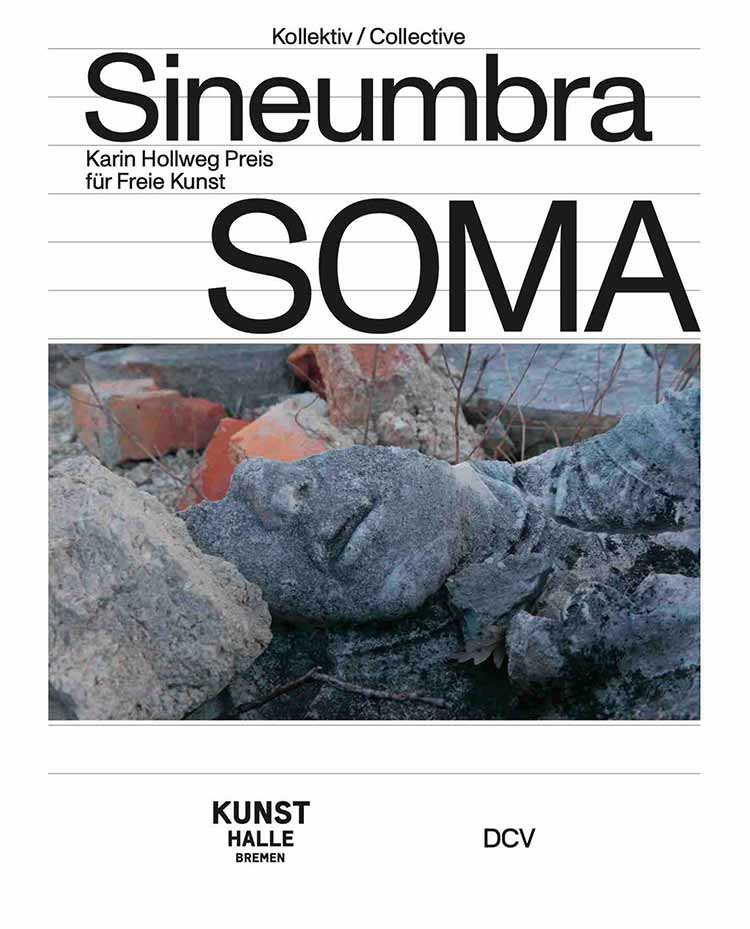
SOMA
Collective SineUmbra18€ Add to cartOn the Disappearance of Italian Culture
Under the collective label SineUmbra, the artists Luisa Eugeni (b. Assisi, Italy, 1987; lives and works in Berlin) and Mattia Bonafini (b. Legnago, Italy, 1980; lives and works in Bremen) develop interdisciplinary projects that they realize as sprawling multimedia installations comprising video projections, sound, and performative elements. The point of departure for their project SOMA was Pier Paolo Pasolini’s 1975 essay Disappearance of the Fireflies, which probes the wrenching transformation that Italian society and the country’s very landscapes have undergone since the 1960s. SOMA melds performance art, the visitors’ movements, geography, and psychology in a space of experience that speaks to all senses for an exploration of the impact that traumata inflicted on individuals and communities by natural disasters and social changes have on the human soul and perceptual capacities. In keeping with the artists’ collective and dynamic creative vision, the catalogue embeds the multimedia installation in a context fleshed out by rich photographic documentation and numerous texts.
On occasion of the master class graduate exhibition at the Bremen University of the Arts in 2019, the two artists were awarded the renowned Karin Hollweg Prize for Fine Art. The publication accompanies their first solo show at Kunsthalle Bremen.
-
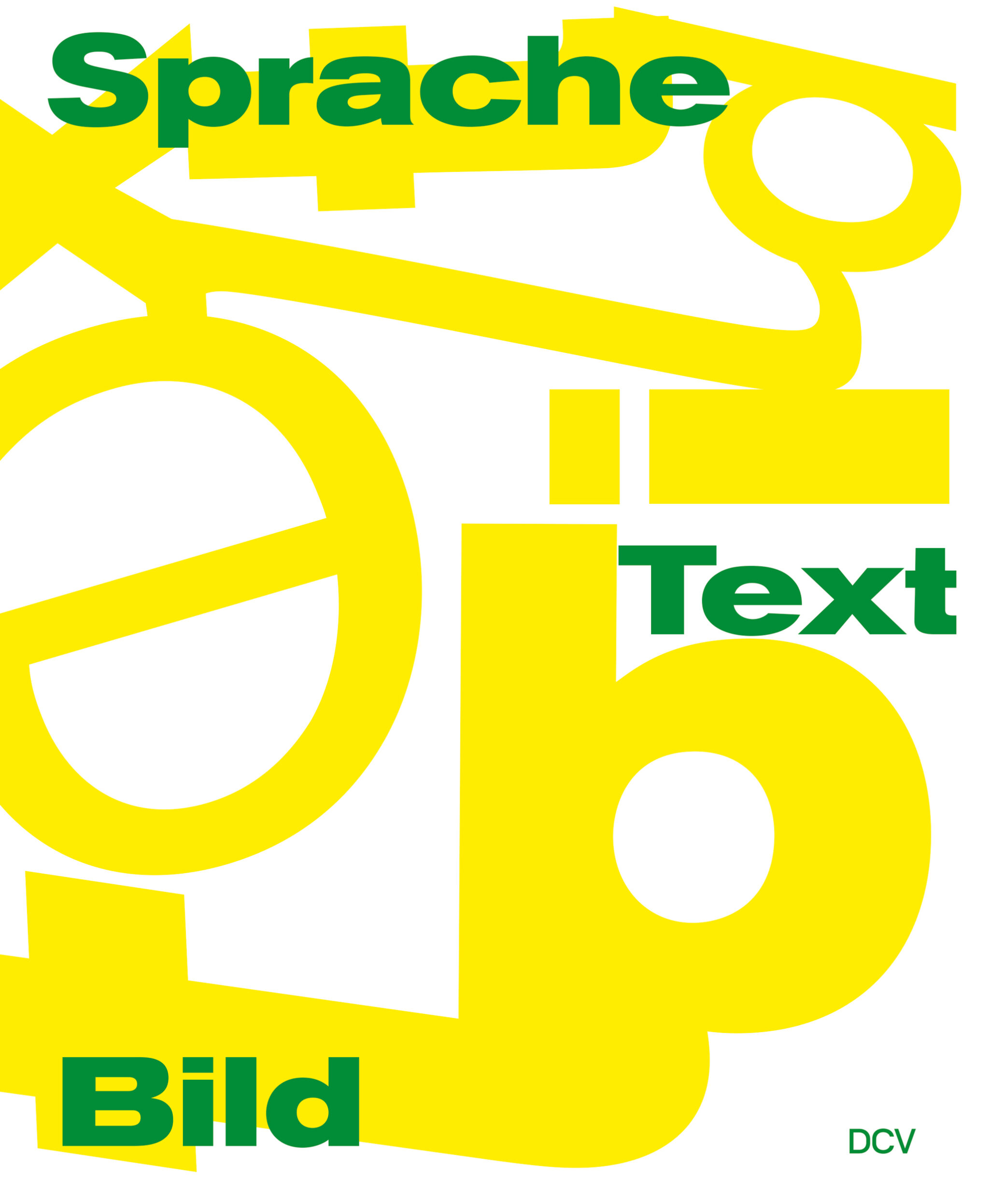
Sprache/Text/Bild
32€ Add to cartSpoken words, writing, and images originate in social and cultural contexts and so are fraught with meanings, are vehicles of values and norms. They inevitably also demarcate boundaries, serving to class people as members of groups or outsiders. This adds to the urgency of the question of what can in fact be said and shown, and who or what determines those limits. The present catalog addresses these concerns through a survey of eminent art of the twentieth and twenty-first centuries. The works gathered in it speak to mechanisms of inclusion and exclusion, to categorizations and the narratives that were created to sustain them. And they remind us that these phenomena are human-made, which is also to say, susceptible to change—that we share responsibility for them.
Artists: John Baldessari, Maria Bartuszová, Alice Bidault, Alejandro Cesarco, Ayşe Erkmen, Nadine Fecht, Gary Hill, Janice Kerbel, Gabriel Kladek, Gordon Parks, The National AIDS Memorial, Markus Vater, Gillian Wearing
-

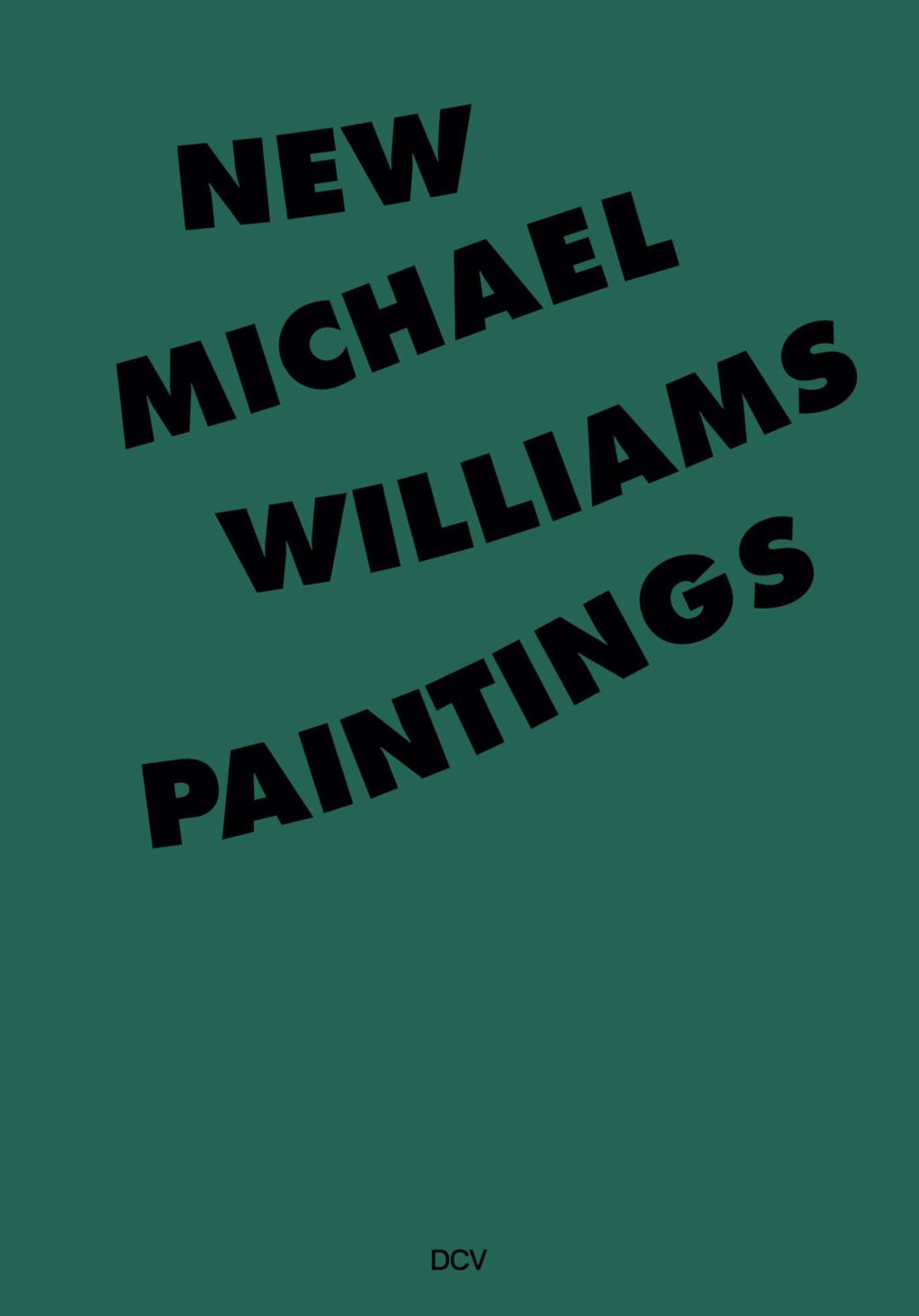
Michael Williams
New Paintings40€ Add to cartAwkward Uncertainty
Michael Williams (b. 1978, Doylestown, Pa.; lives and works in Los Angeles) makes work that interrogates the history of painting, often by dismantling its components into their constituent parts. His pictures employ form to reflect on the complexity and contradictions of modern life. He works on canvas, availing himself of a range of techniques including oil painting, collage, and inkjet prints. In his new works, Williams examines the relationship between painting and photography, transferring the chilly aloofness that is characteristic of the latter onto the former. The photographic “negative” yields a smooth canvas disencumbered of its painterly qualities and the medium’s historic ballast. The book includes several foldout plates that illustrate Williams’s creative approach, and a brief essay by his Austrian fellow painter Tobias Pils.
Michael Williams studied fine arts at Washington University, St. Louis, and has exhibited widely, including at the Wiener Secession, Vienna, and the Museum of Modern Art, New York.
-

Jenny Michel
Doors, Windows and Cells38€ Add to cartThe Detritus of Our Society
For around two decades, the artist Jenny Michel (b. Worms, 1975; lives and works in Berlin) has devoted herself to minute particles such as dust, cobwebs, and electromagnetic fields in space. Her fascination with orders of knowledge, symbolism, and utopian visions is reflected by installations, drawings, prints, and sculptures that she exhibits in carefully composed sprawling ensembles. Aggregating fantastic fragments of the world manufactured from paper, adhesive tape, staples, and other industrially made small parts, Michel builds disconcertingly dense structures—human knowledge is transformed into the debris of civilization, its legibility lost beneath palimpsestic layers of meanings and resignifications. The extensive monograph surveys major series in the artist’s oeuvre and presents new works on paper.
Jenny Michel studied at Kunsthochschule Kassel and the Academy of Fine Arts Vienna. Her work has been on view at Museum Wiesbaden, the Draiflessen Collection, the Schirn Kunsthalle, Frankfurt, and Berlinische Galerie, among other venues. In 2010, Michel was honored with the HAP Grieshaber Prize.
-

Andreas Wegner
Wir fahren mit der Schneckenpost, weil die uns keinen Pfennig kost50€ Add to cartThe art of Andreas Wegner is an inquiry into capitalist urbanity. His interventions explore alternative models for urban interaction, trade, city development, traffic, or the use of public space. Inspired by Joseph Beuys’s social sculpture and Charles Fourier’s social utopias, Wegner founded, e.g. a cooperative department store in Berlin, a grocery store in Vienna, and conducted real estate business as a form of creative resistance. This monograph illustrates the artist’s most important projects with ample imagery, essays by renowned authors, interviews, and his own texts. Alongside collective initiatives, installations, photography, film, and sculpture, painting remains a constant in Wegner’s oeuvre to this day.
-
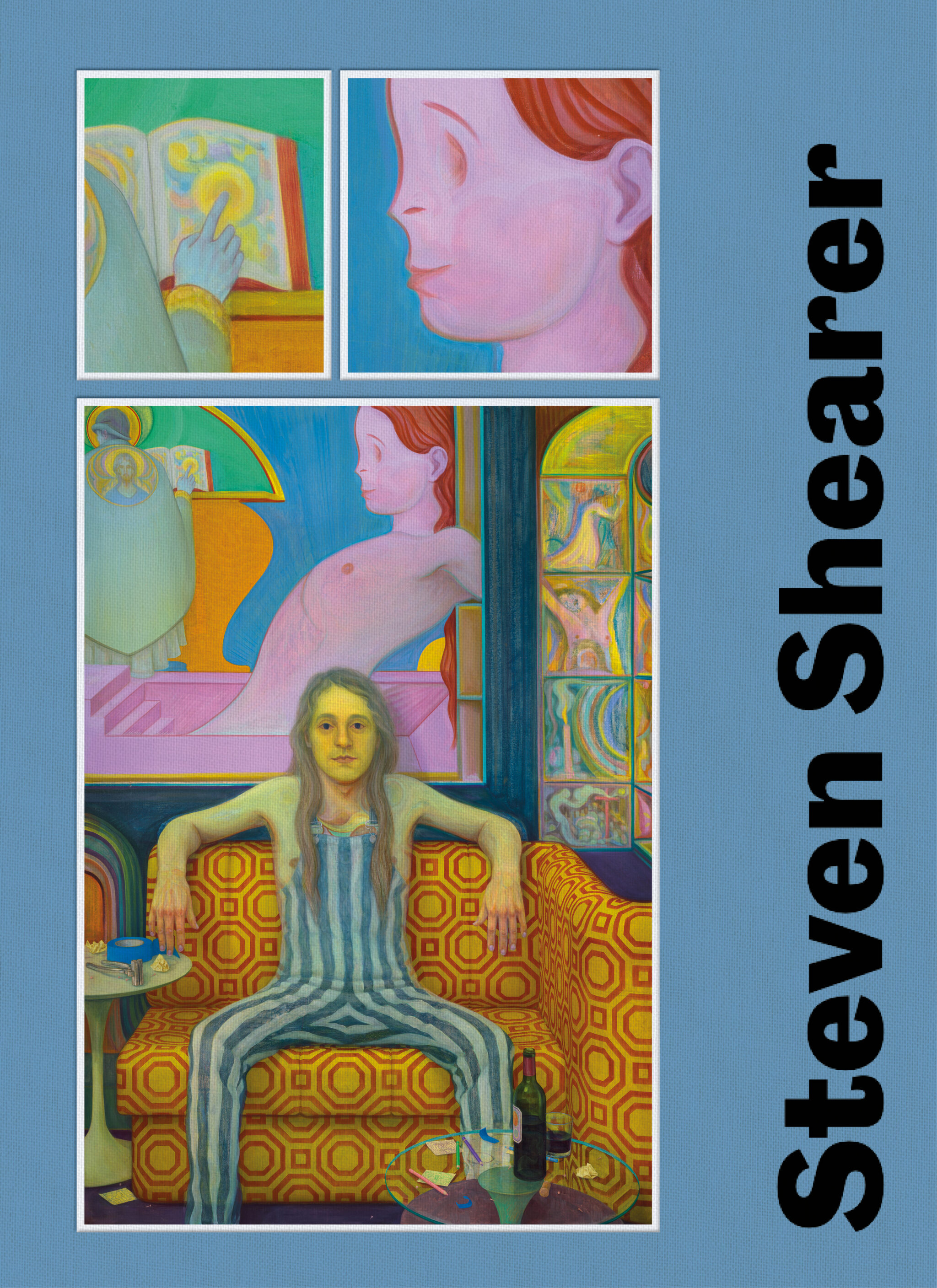
Steven Shearer
Working from Life58€ Add to cart“Today’s images are echoes of how people have always been depicted.”
Steven Shearer (b. New Westminster, BC, 1968; lives and works in Vancouver) works in a range of media including printmaking, sculpture, painting, drawing, and collages of found photographs. His portraits of individuals in decorated settings earned Shearer international acclaim. They show heroes from the past—protagonists of musical subcultures or the history of art. The archetypal creative minds in their studios appear together with their works; the interiors surrounding them reflect their psychological constitution. Shearer paints them in the style of Symbolism, the German Romantics, or the Fauves. Imitating the perspective painting of the Renaissance, he virtually pulls the beholder into his pictures.
Steven Shearer participated in the Nova Scotia College of Art and Design New York Summer Studio Programme in 1992 and studied at the Emily Carr College of Art, Vancouver, in 1992. In 2011, he represented Canada at the 54th Venice Biennale.
-

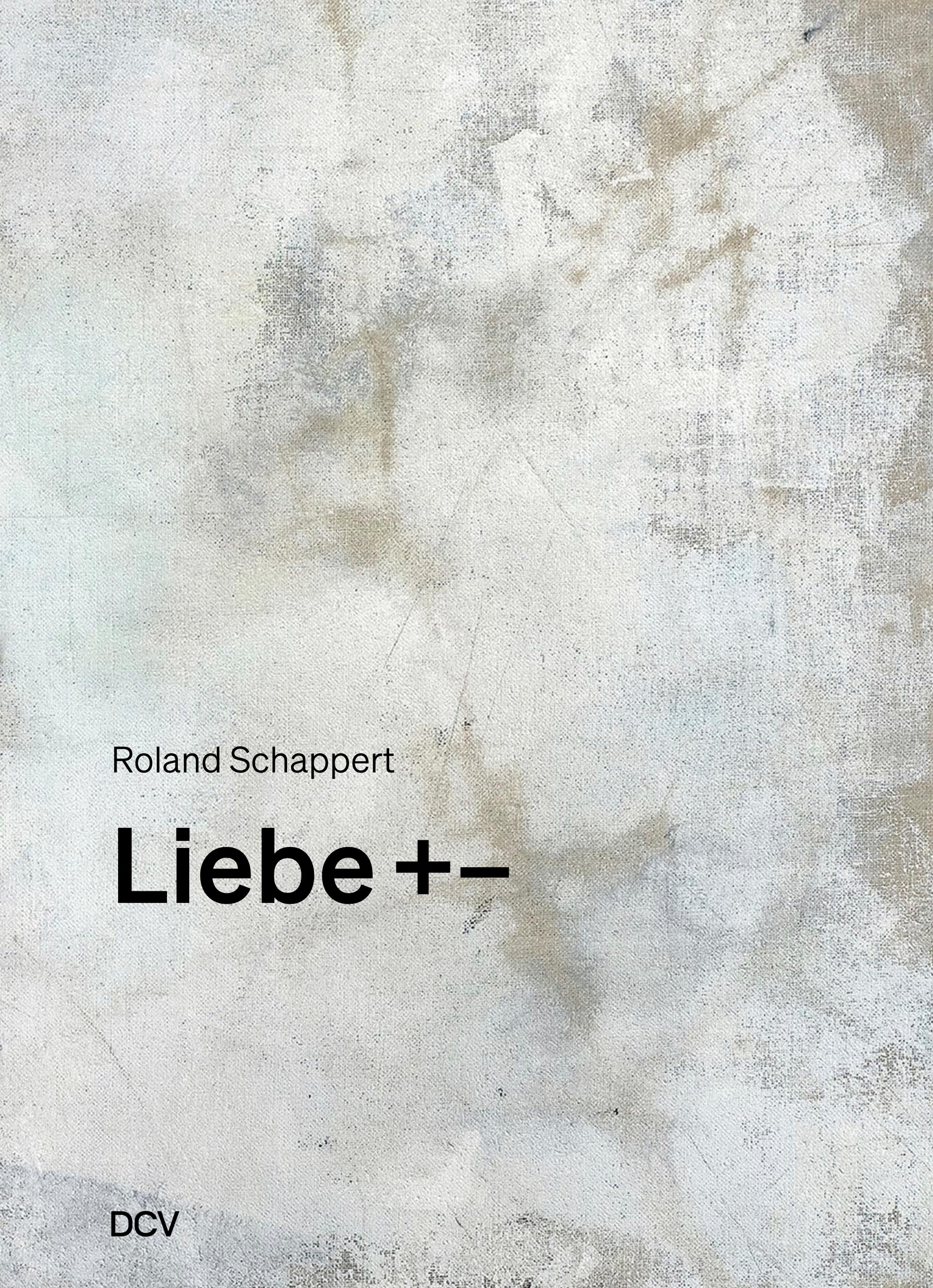
Roland Schappert
Liebe +–24€ Add to cartRoland Schappert’s Liebe+– is a poetic voyage into the mysterious and paradoxical landscapes of love. Combining an unrelenting eye with lyrical precision, Schappert captures the fragile equilibrium between intimacy and distance, between the longing for union and the need for detachment. The +– in the title is a symbolic shorthand for the ambivalence of love: attraction and repulsion, delight and pain, their constant interplay defining the dynamic of love.
The terse and sometimes aphoristic writings enter into a dialogue with the author’s artful and enigmatic pictures and sculptures—text images sewn out of strings of beads or painted in Champagne chalk that subtly mirror and refract the emotional tension of the poems. Nimbly balancing on the fine line between devotion and disaffection, Schappert’s verses are interspersed with ironic allusions to our digital and urban contemporary world.
By forging a symbiosis of poetry and image, this artist’s book charts a world unto itself in which the boundaries between I and you blur and subject and object are fused in a collective we. It invites us to contemplate love with a fresh eye—as tender touch and fractious idea, as a play of expectation and disappointment that we begin anew every day.
‘Love in the age of social media and dating apps, but not from a Gen Z perspective – but from someone who has known this feeling for much longer. And who brings his experiences – which are certainly representative of many – in ever new combinations of text and images into a form that makes reading and viewing a memorable experience.’ – Wolfgang Ullrich
-

Beate Passow
Monkey Business24€ Add to cartDrawing on the Past to Build a Better Future
Beate Passow (b. Stadtoldendorf, Germany, 1945; lives and works in Munich) creates installations, photodocumentaries, and collages that seek to salvage her subjects from oblivion, though as she sees it, her art is an effort to come to terms not so much with the past as with the present. When her compositional inventions touch on painful memories, their objective is not to arrive at new insights. Rather, she aims to uncover visible and verifiable states of affairs and throw them into sharp relief. In her cycle of pictures Monkey Business, the artist unfolds a mysterious fairy-tale world with a political edge. Strange animals and mythical figures populate the large-format black-and-white tableaux, which a closer look reveals to be woven tapestries. The unusual protagonists roam readily identifiable locations: Gibraltar, New York’s Wall Street, Brussels, or the island of Lampedusa. Behind these ostensibly simple facts of geography loom the darker aspects of contemporary European politics: Passow’s work calls for a debate on the systems, economic structures, and political movements that rule the continent.
-
Leszek Skurski
Catalogue raisonné Vol. 1: Works from 1990–202459€ Add to cartLeszek Skurski (b. Gdańsk, 1973; lives and works in Fulda and Mallorca) is known for his singular and immediately recognizable white paintings. Small black and gray figures emerge from the white landscapes, always set in relation to one another, in pairs or groups. Exposed on the expansive and boundless-seeming plane, they silently tell a story that remains as open-ended as the pictures. In a few spare brushstrokes or lines drawn with the palette knife, Skurski’s superb neoimpressionism deftly captures the atmosphere that weighs down on his characters and holds his compositions in suspense.
The extensive monograph presents over two thousand works from more than three decades. Essays embed the various bodies of work in their art-historical contexts.