Ilit Azoulay
Facts and Tales. Truth be Told
 | |
|---|---|
| Editor(s) | Valerie Groth |
| Author(s) | Ilit Azoulay, Shira Backer, Kida Noyman, Sarit Shapira, Estee Balsam, Nir Shauloff |
| Design | Marek Polewski, Janis Gildein |
| Size | 30.2 x 21.2 x 4.2 cm |
| Cover | Cardboard box |
| Pages | ca. 251 |
| Illustrations | 174 |
| Language(s) | English |
| ISBN | 978-3-96912-221-1 |
In an era in which multiple perspectives and oral histories are increasingly vital, Facts and Tales—Truth Be Told delves into the haunting work of Ilit Azoulay. The artist, who was born in Jaffa in 1972, transforms objects, archives, and museum holdings into vessels, challenging traditional hierarchies of knowledge. In her most recent solo exhibition Mere Things at the Jewish Museum, New York, Azoulay presents works that probe the delicate balance between factual representation and nuanced storytelling.
The publication accompanying the exhibition includes archival pages, the artist’s notes, and depictions of the works as well as an introduction by curator Shira Backer and an essay by the art critic, curator, and writer Sarit Shapira, who passed away in 2018. Titled Houses of Junk and Specters: On Ilit Azoulay’s Early Works, it underscores the importance of honoring both factual accuracy and oral histories and invites readers to explore the complex interplay between concrete evidence and the rich and nuanced stories.
Azoulay has devised a singular method to shed light on the blanks in hegemonic narratives and expose them. As though to produce an extortion letter, she clips her pictures from archival materials and photographs of the walls of abandoned buildings and composes them in collages interweaving a multiplicity of views. The resulting works question the exclusive truth claim of museum expertise and reveal its constructed quality. The catalog of her works, designed as a box replete with texts and images, reflects this approach, aiming to dismantle established narratives and open up diverse perspectives.
Box containing 6 different standalone publications, limited edition of 500 copies
THIS PUBLICATION WAS MADE POSSIBLE BY THE GENEROUS SUPPORT OF THE GALLERY LOHAUS SOMINSKY, MUNICH
More books
-

Martin Krumbholz
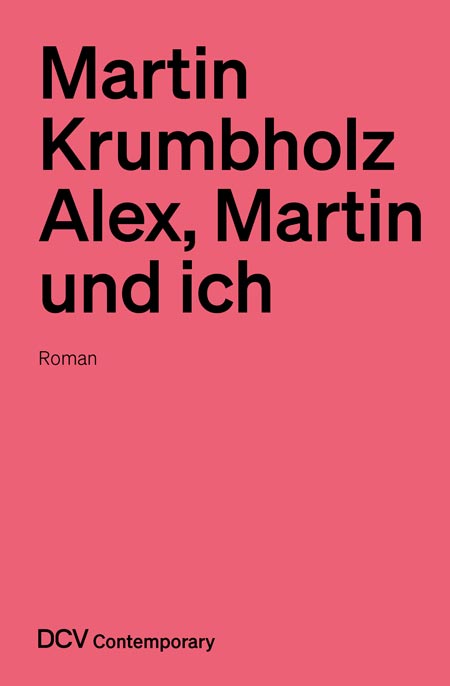
Alex, Martin und Ich14€ Add to cart“The Vocation of Saint Matthew”: that is the title that Martin Krug has chosen for his novella, after Caravaggio’s iconic painting at the Church of San Luigi degli Francesi in Rome. The irony is unmistakable—Martin, the protagonist of his narrative, hesitates to accept a promotion: he has been offered the job of his boss, for whose wife, Marion, he has fallen on a shared vacation. Yet Martin’s friend, whom he has asked for advice, proposes a different title: Ghost Story—a key element of the plot is the mysterious Alexander’s disappearance, seemingly forever, in the sea …
Martin’s friend and interlocutor, the novel’s first-person narrator, embeds the novella in a narrative framework that mirrors its motifs: love as passion, eros and sex, loyalty and betrayal, manliness and chivalry, art, film, and music. Alberto Moravia’s novel Contempt, glamorously adapted for the silver screen by Jean-Luc Godard, is reread and discussed as a MeToo story.
Martin Krumbholz (b. Wuppertal-Elberfeld, Germany, 1954; lives and works in Düsseldorf) is a writer and theater critic. His first novel, Eine kleine Passion, came out in 2013.
-

Tobias Pils
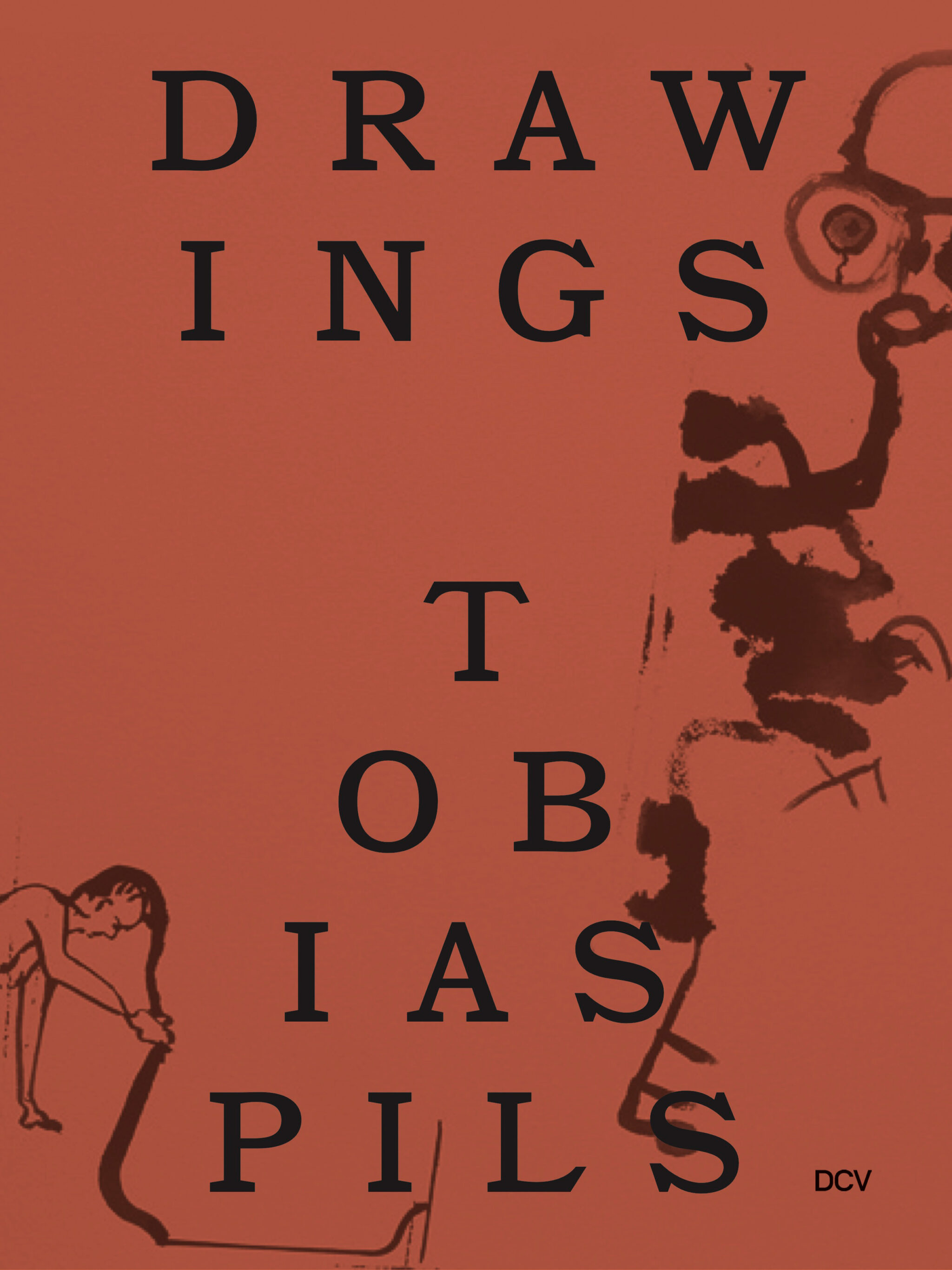
Drawings55€ Add to cartDrawings is the first book dedicated exclusively to the painter Tobias Pils’s (b. Linz, 1971; lives and works in Vienna) drawings. His graphical forms—the lines, figurations, even the intervening spaces—constantly change the direction in which they set out. Their ambivalence destabilizes any attempt at interpretation. One would think that the indeterminacy of Pils’s visual idiom must torment him, yet in fact this state of existential tension fills him with absurd pleasure. Rather than conceiving his works with a clear objective in mind, he allows himself to fall into them. He—his art—remains open to everything that happens in the creative process. Taken together, Pils’s drawings operate along the diffuse boundary between order and disorder, as though, acknowledging the disordered present (the life we lead), they came from an ordered past (the life we have constructed for ourselves).
Tobias Pils studied at the Academy of Fine Arts Vienna from 1990 until 1994. His works have been displayed in museums around the world, including at the mumok, Vienna (2021); the Pinakothek der Moderne, Munich (2020); the Musée Picasso, Paris (2020); the Kunstmuseum Bonn (2020); Le Consortium, Dijon (2018); the Aspen Art Museum (2018); the Chinati Foundation’s John Chamberlain Building, Marfa (2016); and the National Art Museum of China, Beijing (2010). In 2020, he executed a large wall painting at the École normale supérieure in Paris-Saclay.
-

Heike Negenborn
Terra Cognita24€ Add to cartLebensraum of our Time: Contemporary Landscape Painting
The central theme of Heike Negenborn (b. 1964, Bad Neuenahr-Ahrweiler; lives and works in Windesheim) is the seen lebensraum. In reference to seventeenth-century Dutch landscape painting, her works stand in a specific tradition of capturing reality. With her new group of works titled Net-Scape – Landscape in Transition, Negenborn transfers art historical references into contemporary images. The artist is interested in the possibilities of media transfer and the increasing appropriation of analog reality by the digital image. The present volume provides impressive insights into the developments of the landscape painter from 2007 to 2020.
Heike Negenborn studied fine arts at Austin College, Texas, Art Education at Johannes Gutenberg Universität Mainz, and Painting and Printmaking at the Akademie für Bildende Künste Mainz.
-

Christian Boltanski
Die Zwangsarbeiter – Erinnerung in der Völklinger Hütte27,50€ Add to cartErinnerungen | Souvenirs | Memoirs
Christian Boltanski (b. 1944, Paris; lives and works in Paris) combines industrial architecture with relics of the working culture in his impressive installation for the Völklingen ironworks – a highly emotional approach to the subject of forced labor.
-

schneider+schumacher
39€ Add to cartA Review and Prospect of the Work of the Frankfurt‑based Architectural Office on the Occasion of its Thirtieth Anniversary
schneider+schumacher is an internationally operating team of architects with headquarters in Frankfurt am Main. On the occasion of its 30th anniversary they present a book in the shape of a red box, whose chapters “Beauty,” “Endurance,” “Curiosity,” “Land Art,” “Integrating,” “Transitions,” and “Made in Germany” cover issues and values that have determined their work since its founding. Renowned authors shed light on the respective concept and its significance for the history of schneider+schumacher, while the office’s works are presented in large-format illustrations – including the extension to the Städel Museum in Frankfurt, the Siegerland motorway church, and the new pavilion of the Frankfurt Book Fair. In architectural practice, it becomes clear how Till Schneider and Michael Schumacher and their team implement their thematic and theoretical orientation into their working methods, design approach, and understanding of architecture.
-

Me, Family
Portrait of a Young Planet40€ Add to cartA Journey Through Many Worlds
In these times of great uncertainty, the themes that surface in the works of the thirty-six international artists gathered in Me, Family are more relevant than ever. Compiled by Francesco Bonami with a nod to Edward Steichen’s historic exhibition The Family of Man, the volume paints a multifaceted portrait of humanity in the early decades of the twenty-first century. The original installation of photographs and excerpts from writers opened at the Museum of Modern Art in New York in 1955 and then went on a seven-year tour of one hundred and fifty museums all over the world. Matching the radicalism of Steichen’s conception, Me, Family presents works by contemporary artists who harness a wide range of media and genres to explore the ways in which humans today engage with their manifold coexistent histories and the diverse challenges they confront. Including reproductions of contemporary art as well as representations of social networks, fashions, information technologies, advertising, sound, music, and performances, the book captures a reality that is beautiful, dramatic, and intoxicating by turns. With writings by Roland Barthes, Francesco Bonami, Edward Steichen, and others.
With works by Lawrence Abu Hamdan, Doug Aitken, Sophia Al Maria, Yuri Ancarani, Darren Bader, Lara Baladi, Cao Fei, Cheng Ran, Clément Cogitore, István Csákány, Christian Falsnaes, Harun Farocki, Simon Fujiwara, Rainer Ganahl, Theaster Gates, Jack Goldstein, Andreas Gursky, Thomas Hirschhorn, Hassan Khan, Ga Ram Kim, Olia Lialina, Li Ming, Cristina Lucas, Karolina Markiewicz & Pascal Piron, Eva & Franco Mattes, Shirin Neshat, Philippe Parreno, Mario Pfeifer, Jon Rafman, Cindy Sherman, Marianna Simnett, Rudolf Stingel, Thomas Struth, Wolfgang Tillmans, Jordan Wolfson, Wong Ping, and Akram Zaatari.
-

B.A.R.O.C.K.
24,80€ Add to cartArtistic Interventions in the Caputh Palace. Contemporary Parallels to the Baroque Era
Four international women artists spent more than three years studying Caputh Palace near Potsdam and creating works specifically for this magnificent location. The tapestries by Margret Eicher (b. 1955, Viersen; lives and works in Berlin), the floral scans by Luzia Simons (b. 1953, Quixadá, Brazil; lives and works in Berlin), the wax sculptures by Rebecca Stevenson (b. 1971; lives and works in London), and the ceiling painting projections by Myriam Thyes (b. 1963, Luxembourg; lives and works in Düsseldorf) blend into the surrounding space both naturally and surprisingly. With twelve double-page collages, the large-sized catalog is an artistic commentary on the ambitious project.
-

Considering Finland
14€ Add to cartContemporary Art from Finland
With fourteen artistic positions from the fields of photography, video, and installation, Considering Finland offers fascinating insight into the Finnish art scene. The themes of the artists from one of the least populated and most densely forested countries in Europe is the relationship between humankind and nature, as well as the political, social, and economic implications of this. Their works point to cultural dispositions and standardizations of the individual within a society based on unattainable maxims, such as permanent success, lasting recognition, and limitless growth. Pictorial traditions, geographical structures, and socio-political and infrastructural factors are the bases of a mental construction that summarizes their artistic work under a national heading. With works by Kenneth Bamberg, Elina Brotherus, Ville Lenkkeri, Aurora Reinhard, Iiu Susiraja, Nestori Syrjälä, and Pilvi Takala.
-
Michelle Jezierski
Verge28€ Add to cartHow does a simple line become a horizon? When do we begin to see colors and shapes as a landscape? Michelle Jezierski’s painting homes in on the tipping point at which our perception begins to oscillate between color/surface and space/representation. At that very point, she captures the essence of the landscape as such, which is not a concrete place but a metaphor for inner states of affairs. To get there, Jezierski distills what she sees in her surroundings down to the elements of painting—shapes and colors—which just barely intimate a pictorial space while persistently drifting toward abstraction. The defining feature of her technique is that she layers several pictorial planes and spaces on the canvas in staggered arrangements. “Perpetually discovering new ways to unsettle the visual space,” as she puts it, she engenders ruptures and structures that open up multiple perspectives and a portal for reflection on one’s own perception. Above all, however, the cuts lend her pictures a peculiar rhythm that powerfully pulls in the gaze, making the reader paging through this catalogue forget time and space.
- Release January 2026

Bettina Buck
Finding Form45€ Add to cartThe German sculptor Bettina Buck (1974-2018) called attention to herself with her “performative sculptures,” which she often presented vis-à-vis museal objects. Buck’s preferred materials came from the hardware store: corrugated cardboard, ceramic tiles, pressed foam, or plastic foil, which are all not meant to last. Out of these materials she created a kind of changeable and transient “protagonists,” who didn’t have a final form but rather emphasized the actual process of finding form (as well as losing form). In a provocative action in 2015, Buck dragged an oversized foam bloc through a museum collection and let it rest next to famous artworks, which gained a new dynamic in this interplay. Buck herself said once that her works were meant to “simultaneously attract and alienate the viewer.” In the exhibition space the objects should “create a tremor, a vibration and a conversation with its surroundings.”
Finding Form, a posthumous monograph presents Bucks complete sculptural works on over 300 pages and contains texts by Phyllida Barlow, Paolo Icaro, Cecilia Canziani, and Andrea Maria Popelka. The book was conceived and published by the artist’s estate, Bureau Bettina Buck.
-

Larissa Kikol
Neue abstrakte Malerei26€ Add to cartAbstract painting has reinvented itself: rid of political and ideological burdens, it now stands for pure creative autonomy. From the Abstract Expressionism of the postwar era to today’s expansive ease—in essays and conversations, Larissa Kikol sheds light on how this art form broke free of the narratives that attended its emergence and performed a “great reset.” From the seminal innovations of Katharina Grosse or Albert Oehlen and radically subjectivist approaches in Cecily Brown or André Butzer to cutting-edge tendencies like Dirty Minimalism and Post Vandalism, the book presents thrilling insights into a painting that puts emotion, color, and shapes center stage. An inspiring look at the renaissance of abstract art in the 21st century and a must-have reference work for all art lovers.
Artists: Frederic Anderson, Karla Black, Frank Bowling, Andreas Breunig, Jenny Brosinski, Cecily Brown, André Butzer, Diamonds Crew, Willehad Eilers, Jadé Fadojutimi, Helen Frankenthaler, Katharina Grosse, Antwan Horfee, Aneta Kajzer, Joan Mitchell, Michael Müller, Oscar Murillo, NEU, NUG, Albert Oehlen, David Ostrowski, Over, Daisy Parris, Marco Pariani, Jackson Pollock, Christopher Wool
-

Harte Zeiten
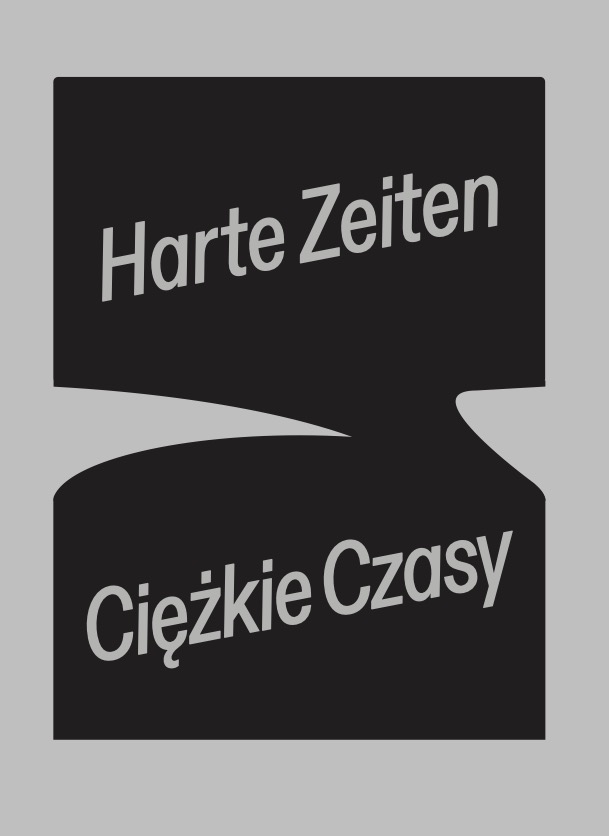
Ciężkie Czasy34€ Add to cartIncreasingly pressing global political and societal challenges are always also rewarding subjects of creative engagement, and sometimes artists devise anticipative approaches to real-world problems.
Harte Zeiten—Ciężkie Czasy is a cooperative venture launched by Künstlerbund Baden-Württemberg; Port25—Raum für Gegenwartskunst, Mannheim; and Galeria Miejska bwa, Bydgoszcz, Poland. It showcases works by altogether ten Polish and ten German contemporary artists. Putting the principle that art knows no boundaries into practice, the publication, with statements from Wolfgang Ullrich, Joanna Kiliszek, Schamma Schahadat, and others as well as documentation of the symposium held in September 2021, inspires forward-looking reflections on the conditions in which cultures thrive and similarities and differences between the two countries and beyond.
-
Can Yasar Köklü
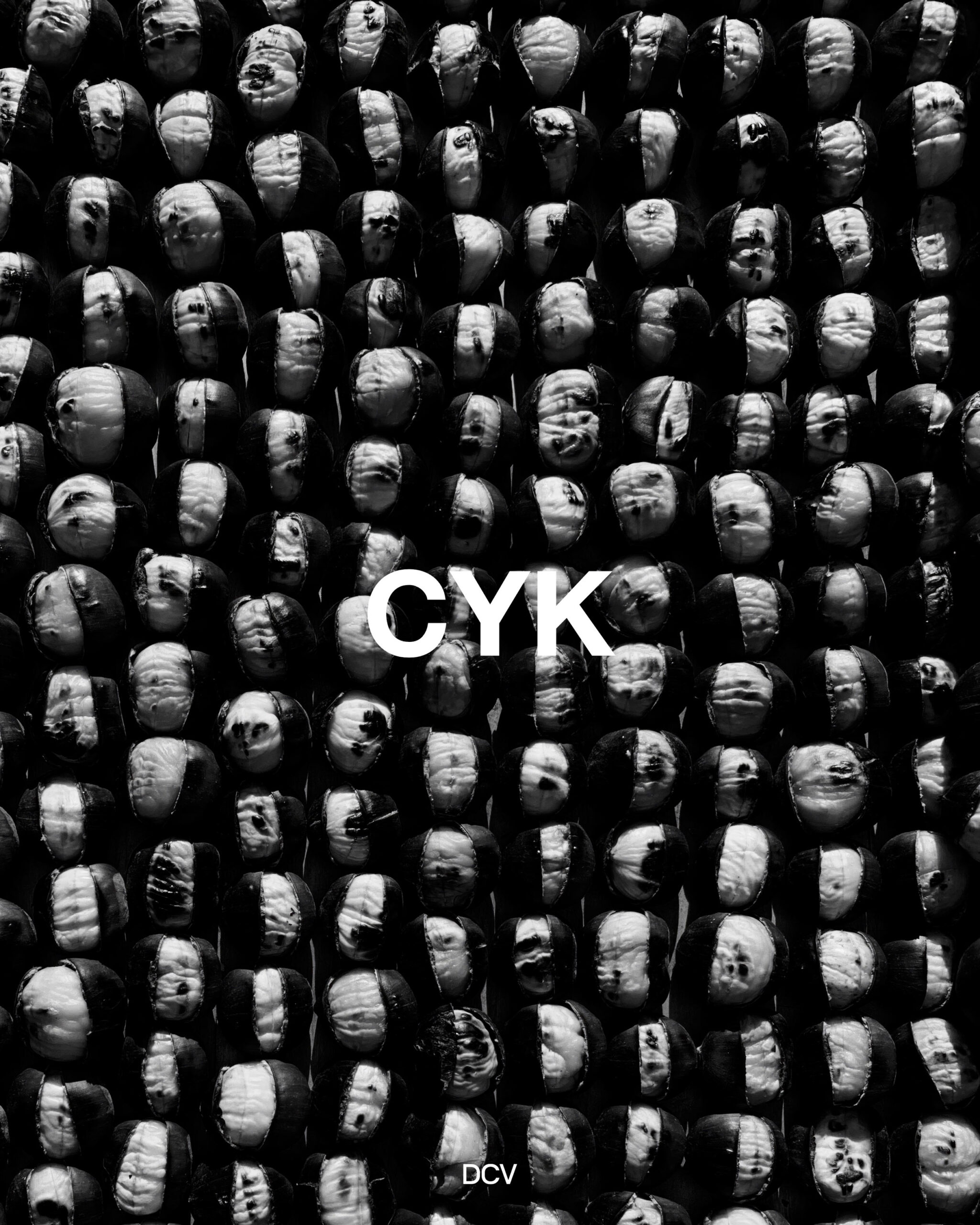
CYK55€ Add to cartThe young photographer, graphic designer, and filmmaker Can Yasar Köklü (b. Schwelm, 2003; lives and works in Brooklyn) grew up between Cologne and Istanbul and currently studies at New York’s renowned Pratt Institute. In his first publication CYK—an artist’s book featuring breathtakingly beautiful photographs and personal writings—he explores his experiences growing up, the traditions that inform his art, and his feelings in three different cultures: “Heimat” charts his native Germany, where he spent most of his life; “Memleket” is dedicated to Turkey, where his roots are; and “Home” presents the impressions Köklü gathered during a year in high school in Los Angeles and now in New York, where he continues his education. Driven by a passion for storytelling, he captures singular—fascinating and deeply moving—moments in time.
-

Thomas Lehnerer
Grott18€ Add to cartA Facsimile by the Theologian and Artist
The genesis of images is a central aspect of the work of the Munich-based theologian and artist Thomas Lehnerer (b. Munich, 1955; d. ibid., 1995). In drawings and sculptures, as well as in spatial and conceptual works, the production of images creates a counter-world to our own lives. By transferring fundamental experiences of human existence into art, Lehnerer creates an equivocal, anthropological space for observation and reflection. The artist’s book Grott, published in 1986, contains ambiguous elements. All drawings are positioned on the right page. In the not yet dried state, a double image was formed on the left side, which relativizes the “primary image.” The depictions of animals, people, and the environment were drawn nearly without interruption from a single line. In this style of continuous movement, the overall image can be traced back to its beginning. For Lehnerer, it was important to understand human (self-)consciousness from the perspective of the history of evolution, since there are countless models of thought and belief within this narrative. Grott refers in the title, as well as in the drawings, to the charged relationship between the earthly and the spiritual.
-
HALBwertsZeit
Zum Umgang mit ‚abgelaufenen‘ Sammlungen28€ Add to cartDo collections have an expiration date? Shifting interests, evolving social contexts, and discursive developments influence when a collection or its presentation is said to be outdated and what that implies for the constraints on, or options for, the actions to be taken in response. The revision or reorientation of a collection presuppose a critical engagement with the criteria regarded as valid at the time, which concern the origins, composition, objectives, and significance of a collection, among other aspects.
The contributions to this volume intertwine historical case studies with contemporary questions about the reasons and circumstances that give rise to the assessment that a collection has outlived its shelf life.
-

Cudelice Brazelton IV
Mortal Surface35€ Add to cartCudelice Brazelton IV’s works are magnets. He uses them to glean what he finds in the urban landscape, in the street, in factories and studios: fabric, leather, metal, cardboard, and all sorts of implements. He arranges these materials and things atop one another and side by side in collages, assemblages, and sculptures, staging encounters also between the contexts in which they originated and what he calls their “undercurrents,” their subtexts. Such frames of reference, including that of the exhibition space, play a key role in his art, an aspect he will occasionally engage quite explicitly, creating site-specific works for some settings. This makes the space the context and a part of the piece, sometimes physically so, as when Brazelton works directly on the walls. The recent works gathered in this catalogue were displayed in a former railcar repair workshop. It is hard to imagine a more industrial, “metallic” environment. There, as between the covers of this catalogue, Brazelton’s works appear to their fullest advantage, becoming veritable magnets drawing the gaze.
-

Jan Zöller
10€ Add to cartJan Zöller’s (b. Haslach, 1992; lives and works in Karlsruhe) art has the aura of a jerry-rigged, cosmic, comedic theater. Flames gutter, pant legs and elbows dance, run, and go up in fire. Wells, basins, and tubs are central motifs, symbolizing communal settings, but also the circulation of vital energies, of human and economic interconnections. Zöller’s paintings take fractured or antiquated systems, today’s art world among them, and reforge them into something new. In painting, he reflects on what being an artist means to him, driven by an interest less in a dialogue with art history or other contemporary painters than in the psychosocial relationships and conditions that inform his work. His paintings, sculptures, and installations probe the discrepancy between economic production and the spiritual and magical dimension of art.
-

Membrane
38€ Add to cartMembrane documents an eponymous exhibition at the Neue Galerie Gladeck as well as the gallery’s architectural extension. The works of the 7 invited artists are engaged to explore skin in a broader sense—membrane also encompasses clothing, veiling, and masking from various cultural perspectives. Well-known portraits by Thomas Ruff, Shirin Neshat, and Cindy Sherman appear in a new light alongside Helena Parade Kim’s exploration of iconographic and ceremonial fashion codes, Daniel Buetti’s critique of the commercialized body, and Nicola Samorì’s exploration of skin in historical masterpieces. The membrane concept also inspired the exterior and interior surfaces of the new gallery building, and an interesting text by the architect reveals his approach.
Artists: Daniele Buetti, Sławomir Elsner, Shirin Neshat, Helena Parada Kim, Thomas Ruff, Nicola Samorì & Cindy Sherman
-

Freeters
HELP! Artistic Intelligence38€ Add to cartFREETERS stands for an artist collective that designs, creates, transforms and plays with spaces, for and with the people who experience their time there. The artistic intelligence used in the process transforms into spaces for thinking, working, living, playing and learning, creating identity, emotion and inspiration.
This book is about the mediation of artistic thinking and artistic action in processes. The artistic practice of Freeters is characterized by strategies of thought and action that are needed in a society with constantly changing conditions, in a working world that overturns itself in its dynamics. The necessity of shaping the present through artistic thought and action can no longer be limited to the art context.
FREETERS’ AI approach should be understood less as a scientific methodology and more as a call not to reduce our intelligence to only rational thought processes with a utility maxim. Of course, AI has already made impressive progress in many areas of our public services via the hard components of machine learning. However, it is doubtful whether this approach alone can really give rise to a superintelligence that will one day create a resource-saving paradise on earth. Nor is it guaranteed that we as Homo Sapiens will be assigned a place in this paradise by such a unilaterally gifted superintelligence. Cognitively, this machine will be superior to us in any case – only the necessary feeling of happiness of a consensual coexistence does not seem quite conceivable.
- Release February 2026

BOOM!
7 years of nova space48€ Add to cartFrom 2019 to 2025, nova space, Bauhaus-Universität Weimar’s university gallery put up 21 projects, which this volume documents in image and text. As both an experimentation field and meeting place, nova connected international artists, students, faculty, and the public under the enthusiastic direction of curator Katharina Wendler. Her essay provides insight into the unique history of this mobile and interdisciplinary gallery, its program as well as the continuous development of new curatorial formats. The final act of nova is an exhibition in book form, for which artists, architects, designers, typographers, and filmmakers were invited to create work that freely associates around the theme of BOOM!—inspired by the image of the supernova.
ARTISTS: A.O. LAURA ABERHAM, MARGRÉT H. BLÖNDAL, ZUZANNA CZEBATUL, BJÖRN DAHLEM, DAVID DIAO, HANNAH SOPHIE DUNKELBERG, NADINE FECHT, LIAM GILLICK, JANA GUNSTHEIMER, NSCHOTSCHI HASLINGER, STEF HEIDHUES, JUDITH HOPF, VERENA ISSEL, CHRISTIN KAISER, IAN KIAER, RAGNAR KJARTANSSON, VERA KOX, SCHIRIN KRETSCHMANN, YUTAKA MAKINO, STEFAN MARX, ERIC MEIER, AD MINOLITI, BRUCE NAUMAN, PRINZ GHOLAM, HANNAH RATH, KARIN SANDER, FETTE SANS, KATRIN STEIGER, JAN TICHY, WOLFGANG TILLMANS, IGNACIO URIARTE, ROBIN WAART, YOUNG BOY DANCING GROUP, FRANCIS ZEISCHEGG, KARLA ZIPFEL AND MANY MORE