Ilit Azoulay
Facts and Tales. Truth be Told
 | |
|---|---|
| Editor(s) | Valerie Groth |
| Author(s) | Ilit Azoulay, Shira Backer, Kida Noyman, Sarit Shapira, Estee Balsam, Nir Shauloff |
| Design | Marek Polewski, Janis Gildein |
| Size | 30.2 x 21.2 x 4.2 cm |
| Cover | Cardboard box |
| Pages | ca. 251 |
| Illustrations | 174 |
| Language(s) | English |
| ISBN | 978-3-96912-221-1 |
In an era in which multiple perspectives and oral histories are increasingly vital, Facts and Tales—Truth Be Told delves into the haunting work of Ilit Azoulay. The artist, who was born in Jaffa in 1972, transforms objects, archives, and museum holdings into vessels, challenging traditional hierarchies of knowledge. In her most recent solo exhibition Mere Things at the Jewish Museum, New York, Azoulay presents works that probe the delicate balance between factual representation and nuanced storytelling.
The publication accompanying the exhibition includes archival pages, the artist’s notes, and depictions of the works as well as an introduction by curator Shira Backer and an essay by the art critic, curator, and writer Sarit Shapira, who passed away in 2018. Titled Houses of Junk and Specters: On Ilit Azoulay’s Early Works, it underscores the importance of honoring both factual accuracy and oral histories and invites readers to explore the complex interplay between concrete evidence and the rich and nuanced stories.
Azoulay has devised a singular method to shed light on the blanks in hegemonic narratives and expose them. As though to produce an extortion letter, she clips her pictures from archival materials and photographs of the walls of abandoned buildings and composes them in collages interweaving a multiplicity of views. The resulting works question the exclusive truth claim of museum expertise and reveal its constructed quality. The catalog of her works, designed as a box replete with texts and images, reflects this approach, aiming to dismantle established narratives and open up diverse perspectives.
Box containing 6 different standalone publications, limited edition of 500 copies
THIS PUBLICATION WAS MADE POSSIBLE BY THE GENEROUS SUPPORT OF THE GALLERY LOHAUS SOMINSKY, MUNICH
More books
-

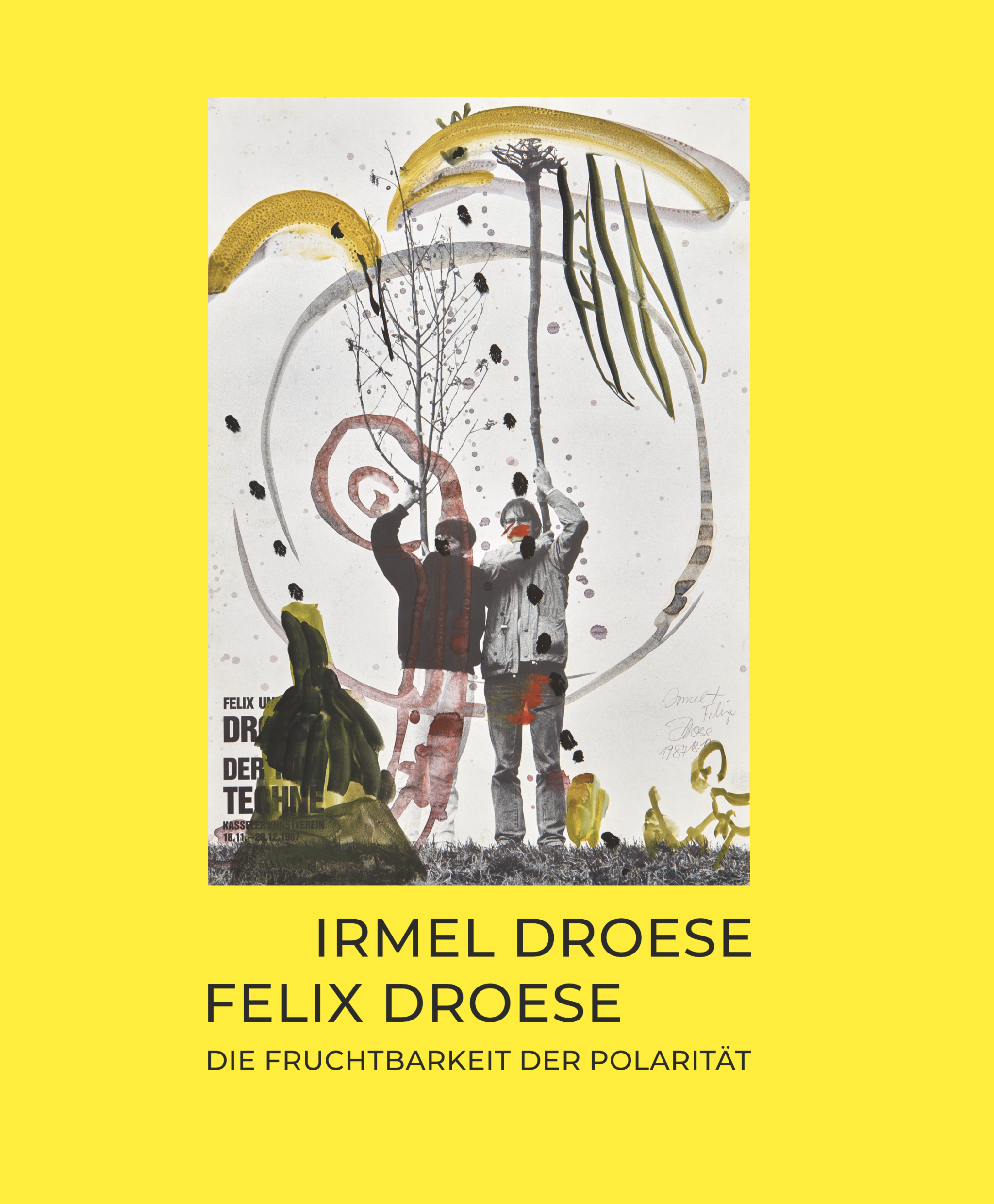
Irmel Droese. Felix Droese
Die Fruchtbarkeit der Polarität28€ Add to cartA Tribute to the Artist Couple
Irmel Droese (b. 1943, Landsberg an der Warthe) and Felix Droese (b. 1950, Singen/Hohentwiel) first met in 1970, when both were students in Joseph Beuys’s class at the Kunstakademie Düsseldorf. In a decades-long partnership in life and art, they have built oeuvres that, both each for itself and in dialogue with each other, scrutinize a rapidly changing reality. Irmel Droese creates expressive stage characters, sculptural oil paper figures, and depictions of humans on paper, while Felix Droese’s diverse ensembles and large-format papercuts grapple with money, economic questions, and the rising predominance of commercial considerations. His art gained international renown with his participation in documenta 7 in 1982 and the 43rd Biennale di Venezia in 1988. Designed in close collaboration with the artists, the publication documents their separate and joint oeuvres, drawing attention to societal questions.
-

Wolfgang Gäfgen
Photographic Miracles45€ Add to cartA Mysterious Play of Light and Shadow
While Wolfgang Gäfgen’s (b. Hamburg, 1936; lives and works in Stuttgart and Esslingen) hand drawings and woodprints are widely acclaimed, only connoisseurs are familiar with his photographic oeuvre. The extensive body of analog black-and-white and color photographs spans the decades from the late 1960s to the present and is no less accomplished than the artist’s graphic works and prints. This book, with essays by Christian Gögger, Olivier Kaeppelin, Clemens Ottnad and Michel Poivert, is the first to gather a large selection of these pictures, illustrating the interdependencies between works in the different visual media of expression. Artfully arranged still lifes breathe a spectral animation into ostensibly trivial everyday objects. The human figures that appear now and then seem to be engaged in cultic performances; many of the photographic works are accompanied by ironic quotes from the earlier history of art or allusions to historic myths.
- temporarily not available

Shara Hughes
Day by Day by DayRead moreGraphic Manifestations of the Unconscious
The painter Shara Hughes (b. Atlanta, GA, 1981; lives and works in Brooklyn, NY, USA) is one of the rising stars of the American arts scene. Her colorful imaginary landscapes, executed in a radiant palette and with an expressive gesture, pay homage to the Symbolists, the Fauves, and the Expressionists, whose artful handling of lighting and depth she deftly emulates. In an intuitive approach, Hughes applies paints to the canvas that match her present state of mind. She calls her pictures “emotional landscapes” and notes that she does not know what will happen next; her work on them touches on a vulnerable boundary. The lavish book presents numerous works on paper, most of them in large formats, and contains an essay by the New York-based art critic Andrew Russeth.
Shara Hughes graduated from the Rhode Island School of Design and later attended the Skowhegan School of Painting & Sculpture in Madison, ME. She has had solo shows at the Arts Club, London, the Newport Art Museum, the Metropolitan Opera, New York, and the Museum of Contemporary Art of Georgia, Atlanta. In 2017, her work was included in the Whitney Biennial at the Whitney Museum of American Art, New York.
-

Larry Rivers
An American-European Dialogue38€ Add to cartBetween French Modernism and the New York School
The American painter, musician, and filmmaker Larry Rivers (b. 1923, New York; d. 2002, New York) is considered one of the most influential protagonists of the New York art scene in the period from the 1950s to the 1970s. He played with Miles Davis and Charlie Parker, was a close friend of Frank O’Hara, and pioneered Pop Art. In dealing with contemporary artist colleagues and historical role models, he always strived to making painting visible as a medium of reflection. From an early age, Rivers was preoccupied with French painting of the late nineteenth century. During his stay in Paris in 1961/62, he met Jean Tinguely and Niki de Saint Phalle, whereupon the range of materials he used was extended to wood, cardboard, and electric light. For the first time, the present volume – the first monograph in twenty years – sheds light on Larry Rivers’ idiosyncratic art with a view to the tension between traditional French painting and Abstract Expressionism around Willem de Kooning.
-

Beyond the Box
Dohmen Collection30€ Add to cartBreaking the Mold of Convention
Presenting installations, sculptures, objects, and paintings from Mexico, Cuba, West Africa, Israel, Bulgaria, Russia, South Korea, and Japan, rounded out by extraordinary works from the U.S. and Europe, this selection from the Dohmen Collection features artists from countries that did not typically register on “Western” art radars until fifteen years ago. It was the seminal documenta 11 (2002), curated by a team led by Okwui Enwezor, that ushered in a departure from the contemporary art world’s entrenched geopolitical ideas. This book showcases a treasure that has long been ahead of its time yet did not attract public attention: the private collection of Werner Dohmen, a physician in Aachen. It includes works by Mariana Castillo Deball, Wim Delvoye, Jimmie Durham, Diango Hernández, Rodney McMillian, Pavel Pepperstein, Nora Turato, Haegue Yang, and other artists who continue to provoke audiences, ask probing questions, and prompt fresh thinking.
Dr. med. Werner Dohmen has been head of the board of Neuer Aachener Kunstverein since 1988. In addition to building his own collection, he has been a committed supporter of the intercultural project No es arte, which advocates for the return of goldwork of the pre-Colombian Tairona people that was stolen from sacred sites during the colonial conquest of South America.
-
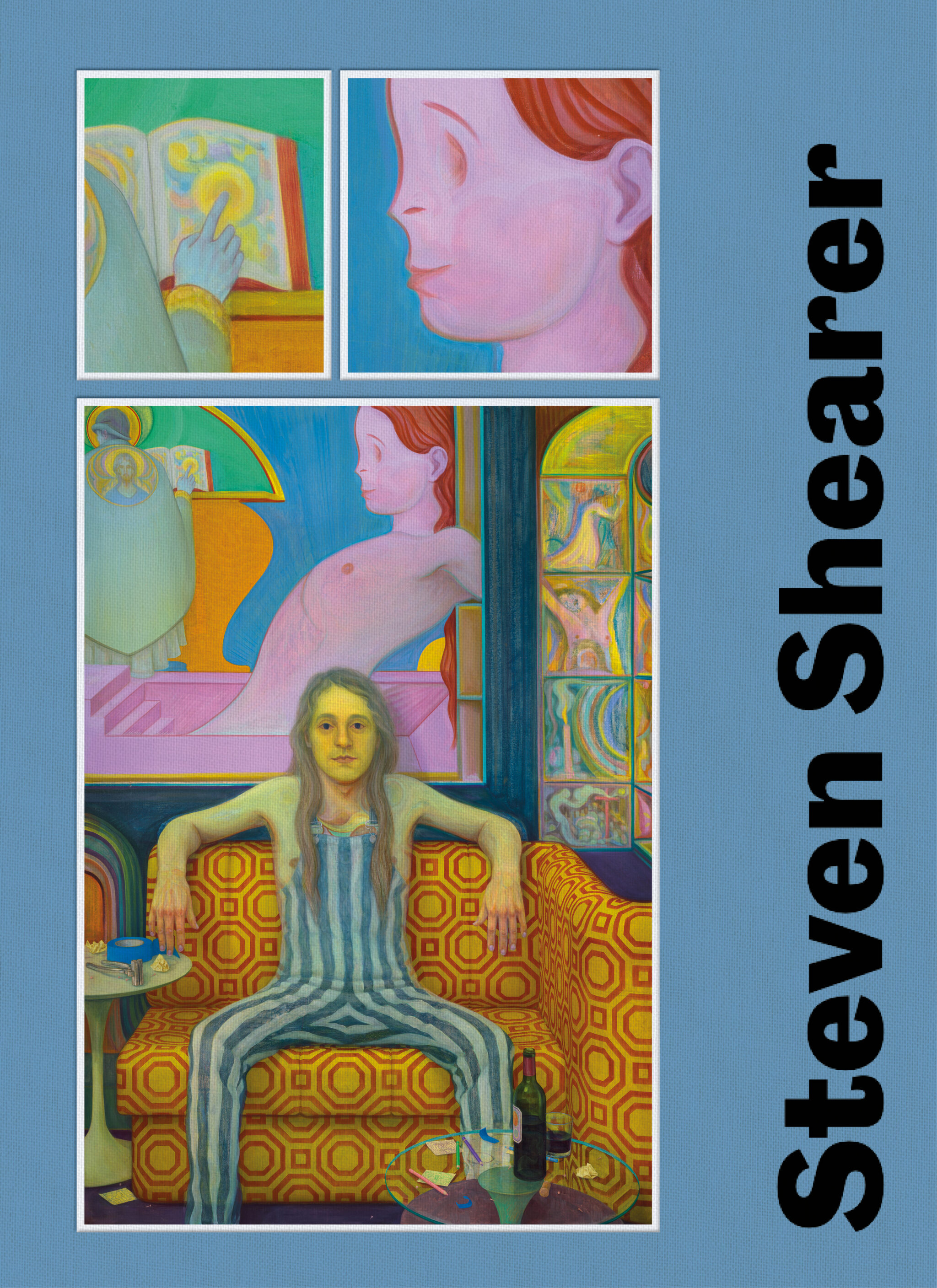
Steven Shearer
Working from Life58€ Add to cart“Today’s images are echoes of how people have always been depicted.”
Steven Shearer (b. New Westminster, BC, 1968; lives and works in Vancouver) works in a range of media including printmaking, sculpture, painting, drawing, and collages of found photographs. His portraits of individuals in decorated settings earned Shearer international acclaim. They show heroes from the past—protagonists of musical subcultures or the history of art. The archetypal creative minds in their studios appear together with their works; the interiors surrounding them reflect their psychological constitution. Shearer paints them in the style of Symbolism, the German Romantics, or the Fauves. Imitating the perspective painting of the Renaissance, he virtually pulls the beholder into his pictures.
Steven Shearer participated in the Nova Scotia College of Art and Design New York Summer Studio Programme in 1992 and studied at the Emily Carr College of Art, Vancouver, in 1992. In 2011, he represented Canada at the 54th Venice Biennale.
-

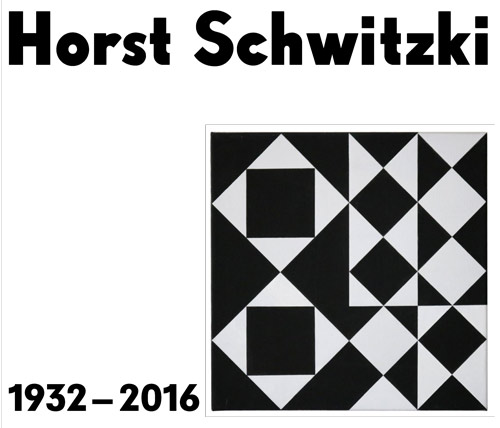
Horst Schwitzki (1932–2016)
Eine Werkmonografie38€ Add to cart“I have my place in concrete painting!”
Horst Schwitzki’s (b. Marburg/Lahn, 1932; d. Frankfurt/Main, 2016) talent was recognized early on by renowned painters including Arnold Bode and Fritz Winter. During his studies at the Werkakademie, today’s Kunsthochschule, in Kassel, Schwitzki came into contact with concrete art. The network he built there opened doors for him, leading to exhibitions with prestigious galleries such as Rolf Ricke’s and Rudolf Zwirner’s. By the 1970s, however, he found himself compelled to make a living by working first as a graphic artist for an advertising agency and then as a construction draftsman. Although these day jobs left him little time for painting, he kept working on his art until 2010. This book is the first to present a comprehensive survey of Schwitzki’s oeuvre, which spans almost six decades and shows him continually devising novel creative solutions within the formal repertoire of concretion. The biography, rounded out by statements from contemporaries, colleagues, and friends, offers profound insights into the highs and lows of an artist’s life that stands as a characteristic example of the experiences of the generation born in the 1930s.
-

Thomas Lehnerer
Freies Spiel44€ Add to cartThe function of art in human existence
Throughout his short life, the Munich-based theologian and artist Thomas Lehnerer (1955–1995) did not take the existence of art for granted. In his writings, above all in Methode der Kunst (Methods of Art), he developed a concept of art in the continuation of key texts from the fields of aesthetics, cultural theory, and art history, which can also be found in his own artistic work. The small-format figurative sculptures by Lehnerer, as well as his drawings, watercolors, and early installations, follow theoretical premises and address comprehensive themes of human existence. The present volume documents his examination of human existence, which is deepened by the inclusion of cultural historical figures and idols.
- Release September 2021

Paul Uwe Dreyer
Werkverzeichnis der Gemälde, Zeichnungen und Druckgrafiken68€ Add to cartA Painter, Draftsman, and Draftsman of Concrete Art
Paul Uwe Dreyer (b. 1939, Osnabrück; d. 2008, Stuttgart) taught painting as a professor at the Staatliche Akademie der Bildenden Künste Stuttgart for more than three decades. His oeuvre shows the hallmarks of geometric constructive art: inspired by subjective experiences of reality, Dreyer’s compositions visualize the dialectics of organizing principles and their potentials for variation, a guiding interest that is already evident in his early work since the 1960s and especially in the pairs and series of pictures he begins creating in the early 1970s. His art unfolds a fascinatingly dynamic yet nonhierarchical dialogue between colors, surfaces, and lines. The chronological catalogue raisonné reveals the consistency with which motifs evolve from his early to his late oeuvre, from architectural, figural, and ornamental tokens through elements resembling symbols and icons to complex penetrations of spaces.
-
Spaces Embodied (ENGLISH)
Draiflessen Collection32€ Add to cartWe live in spaces that we shape in accordance with our own ideas. Our everyday lives leave traces in them that speak to our habits. Spaces promise shelter and belonging, but they can also instill a sense of constraint. We grow into the spaces we inhabit—and they in turn become expressions of our personalities. Conversely, spaces, depending on their architecture and location, inform our existence. RÄUME HAUTNAH gathers works of art that, rather than conceiving of the human sphere and the spatial domain as separate, comprehend them in their complex entanglements: in bodily experience, emotional dependency, or the instinctive need for protection. An essay by Olesja Nein, the project’s curator, offers an introduction to the exhibition and takes the reader on a tour, describing each artist’s space of activity and supplying helpful information. Philipp Zitzlsperger, meanwhile, zooms in on a key aspect of the art in the exhibition, the imprint as an artistic technique with a distinctive aura, and illuminates its origins and significance since the dawn of modernism.
Artists: Absalon, Shannon Bool, Heidi Bucher, Eileen Gray, Do Ho Suh, Mary Mattingly, Tracey Snelling, Francesca Woodman
-

Stefan Knauf
10€ Add to cartStefan Knauf (b. Munich, 1990; lives and works in Berlin) uses selected materials such as construction supplies or plants to investigate the histories of botany, migration, trade, science, and architecture and critique an idealized and anthropocentric conception of nature that is still prevalent. His sculptures, geometric-abstract pictures, and installations, with echoes of constructivism and minimal art, are contact zones in which everything is related to everything: human and non-human history, the natural and the artificial, ecology and ideology. Knauf’s works do not propose to unravel these entanglements. Rather, they suggest alternative perspectives and topographies guided by the idea of the “modified landscape” and devise material and alchemistic forms of knowledge and a novel and multiperspectival approach to the history and reality of the Anthropocene.
-

Urban Art! Biennale® 2019
27,50€ Add to cartThe World’s Most Important Exhibition of Urban Art — Presented for the Fifth Time in 2019
Its themes are the city and urban lifestyle, its can-vases walls, doors, or windows, its artists cosmo-politan. Since the turn of the millennium, Urban Art has developed out of the non-commercial, often illegal art forms of graffiti and street art. Although it makes use of the same stylistic means — spraying, tagging, the deliberate inclusion of drips, the use of graffiti scripts, etc. — it transports these as commis-sioned works into the legal space of the museum, gallery, or architecture. The Urban Art Biennial at the World Cultural Heritage Site Völklinger Hütte is the largest international exhibition of its kind. Fifty individual works and twenty-five installations by one hundred artists shed light on the latest developments and positions from Western metropolises, as well as from current hot spots around the globe.
-
Verena Issel
Yellow Pages. Installations and their individual components45€ Add to cartVerena Issel’s installations feel friendly and inviting, they are soft, round, colorful—we cannot but smile when we look at them. The sculptures and pictures she makes for them are replicas, sometimes laced with irony, of familiar objects from nature and culture—palm trees, ancient columns, and more—which she manufactures out of materials that surround us in everyday life and the domestic sphere such as an old bag, foamed plastic fragments, or a drainpipe. They are awkward giants, monochrome, simplified, two- and three-dimensional forms that wish us no ill. Taking a closer look, we realize that they embody what has been lost, that they are a plastic version of what we are destroying or have destroyed already: nature, obviously, but also ourselves and our cultural and social achievements. Their merriment and sympathy are tinged with melancholy, and the loss is doubly painful when we consider that the sculptures and graphic art are filled with no more than an imitation of life, and an exaggerated one. This catalogue presents a survey of Issel’s diverse and sprawling oeuvre. Expertly choreographed shots of the colorful works convey vivid impressions of her installations.
- out of stock

Drucksache Bauhaus
38€ Add to cartThe Early Years of the Weimar Print Workshop
At the Staatliches Bauhaus in Weimar, the print workshop began operation in the spring of 1919 as the first workshop. Printmaking corresponded to the basic idea of the Bauhaus in that it realized the unity of art and craftsmanship in an ideal manner. With the groundbreaking project Bauhaus-Drucke. Neue Europaeische Graphik, four portfolios were created in which forty-five representatives of the European artistic avant-garde participated. In the announcement brochure of 1921, it stated: “The many who do not yet know about the work of the Bauhaus, and who cannot know, are to be made aware of us through this work.” The book presents the portfolios published between 1921 and 1924, together with other works printed at the Bauhaus by Lyonel Feininger, Wassily Kandinsky, and Oskar Schlemmer. The Stuttgarter Prolog also sheds light on the influence of Adolf Hölzel, whose students and later Bauhaus masters Oskar Schlemmer and Johannes Itten brought many of his ideas to the Bauhaus.
-

Ilit Azoulay
Facts and Tales. Truth be Told120€ Add to cartIn an era in which multiple perspectives and oral histories are increasingly vital, Facts and Tales—Truth Be Told delves into the haunting work of Ilit Azoulay. The artist, who was born in Jaffa in 1972, transforms objects, archives, and museum holdings into vessels, challenging traditional hierarchies of knowledge. In her most recent solo exhibition Mere Things at the Jewish Museum, New York, Azoulay presents works that probe the delicate balance between factual representation and nuanced storytelling.
The publication accompanying the exhibition includes archival pages, the artist’s notes, and depictions of the works as well as an introduction by curator Shira Backer and an essay by the art critic, curator, and writer Sarit Shapira, who passed away in 2018. Titled Houses of Junk and Specters: On Ilit Azoulay’s Early Works, it underscores the importance of honoring both factual accuracy and oral histories and invites readers to explore the complex interplay between concrete evidence and the rich and nuanced stories.
Azoulay has devised a singular method to shed light on the blanks in hegemonic narratives and expose them. As though to produce an extortion letter, she clips her pictures from archival materials and photographs of the walls of abandoned buildings and composes them in collages interweaving a multiplicity of views. The resulting works question the exclusive truth claim of museum expertise and reveal its constructed quality. The catalog of her works, designed as a box replete with texts and images, reflects this approach, aiming to dismantle established narratives and open up diverse perspectives.
Box containing 6 different standalone publications, limited edition of 500 copies
THIS PUBLICATION WAS MADE POSSIBLE BY THE GENEROUS SUPPORT OF THE GALLERY LOHAUS SOMINSKY, MUNICH
-

Slawomir Elsner
Precision and Chance38€ Add to cartComplex Processes of Abstraction
International audiences know Sławomir Elsner (b. Wodzisław Śląski, Poland, 1976; lives and works in Berlin) for his naturalistic paintings and abstract watercolors, but it was his brilliantly executed colorful drawings that made him famous. The technique of his work in crayons is as formidable as it is singular and underlies his many adaptations of legendary works from the history of painting that seem blurry but are actually drawn in accurate lines.
More generally, Elsner’s art probes the effect of different media and the stories they tell. He interrogates the images they transport and challenges the consumers to subject their own visual experiences to a similar critical review. Do pictures represent reality or distort it? That is the question that guides his inquiries.
Elsner works almost exclusively in series. What makes this book special is that it includes an index in which eleven of these bodies of work are reproduced in their entirety. The Old Masters series alone comprises 143 works made in the years after 2014. It is complemented by the series Windows on the World (2008–2010), Feuerwerk- und Luftabwehr (2004), Unsere Sonnen (2004–2005), the watercolors of Tagstücke and Nachtstücke (2014–2021), and others.
Many of the works frame accidents, disasters, wars, nuclear tests, or other horrible events. By harnessing the means of art to detach their depiction from a documentary setting, Sławomir Elsner achieves an unrivaled degree of aestheticization; his works are fascinating at first glance, only to fill the beholder with a creeping dread.
- Release February 2026

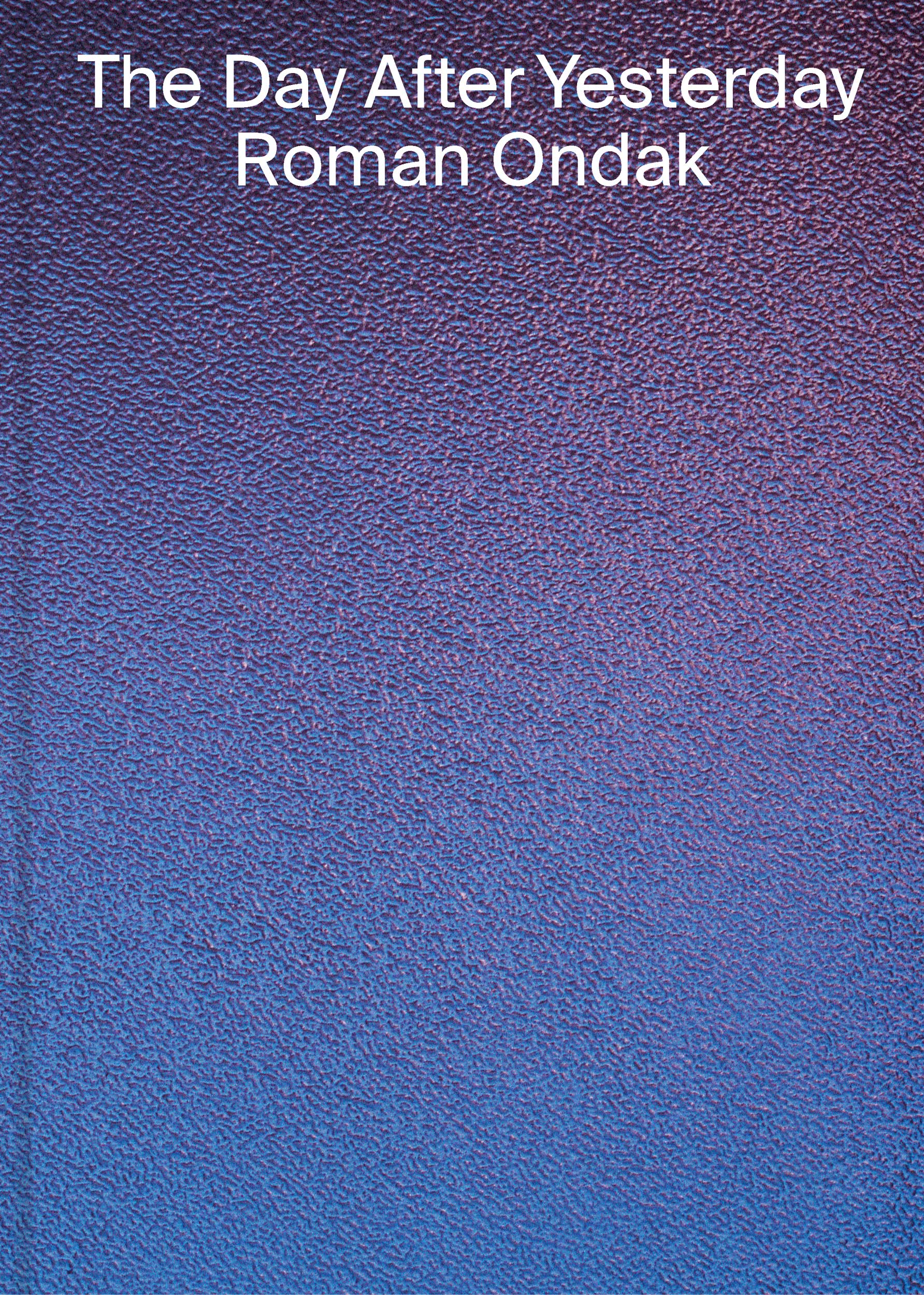
Roman Ondak
The Day After Yesterday48€ Add to cartThe internationally acclaimed Slovakian conceptual artist Roman Ondak (b. 1966) responds to the historical specificities of Central Europe while also reflecting on the functioning of society in today’s global world in works that highlight the cyclical nature of processes and the reciprocal mirroring of the past and the present. His distinctive creative traits include the use of ordinary objects and materials as well as everyday situations, which he transfers into the exhibition space. This richly illustrated catalogue with essays by Barbora Ropková and Dieter Roelstraete accompanies the exhibition The Day After Yesterday at Kunsthalle Praha and explores Ondak’s artistic universe, in which existential and societal themes naturally intertwine with a biography of his own family.
THE DAY AFTER YESTERDAY
KUNSTHALLE PRAHA, PRAGUE, CZECH REPUBLIC
NOVEMBER 13, 2025 UNTIL MARCH 9, 2026
more info here -

Francis Alÿs
The Nature of the Game
Special Edition60€ Add to cartSPECIAL EDITION in clothbound slipcase
The Belgian artist Francis Alÿs (b. Antwerp, 1959) makes work that is as multifaceted as it is poetically subversive. Straddling the line between performative conceptual art and community intervention, his films and drawings chart the political and social realities of urban spaces. One of his most imposing long-term projects is Children’s Games, for which he documents children playing all over the world, from Paris and Mexico City to the Yezidi refugee camp Sharya in Iraq. The richly illustrated book contains ideas and sketches he compiled in preparation for this series. It lets us glimpse into the engine room of his artistic practice, revealing key elements of his filmic poetics. An essay by the ethnographer and filmmaker David MacDougall embeds Alÿs’s observations of children’s play in the contexts of childhood studies as well as the history of ethnographic documentary film.
Francis Alÿs (b. Antwerp, 1959) is widely regarded as one of the foremost artists working today. His oeuvre, which has garnered numerous prizes and been featured in solo exhibitions around the world, encompasses films, photographs, performances, drawings, and paintings, many of them explorations of the social and political realities of urban spaces. Since 1986, Alÿs, who trained as an architect, has lived in Mexico City, where he moved after the major earthquake of 1985 to help in the rebuilding effort.
Francis Alÿs – The Nature of the Game is the official publication of the Belgian pavilion at the 59th Biennale di Venezia, curated by Hilde Teerlinck.
- Out of stock

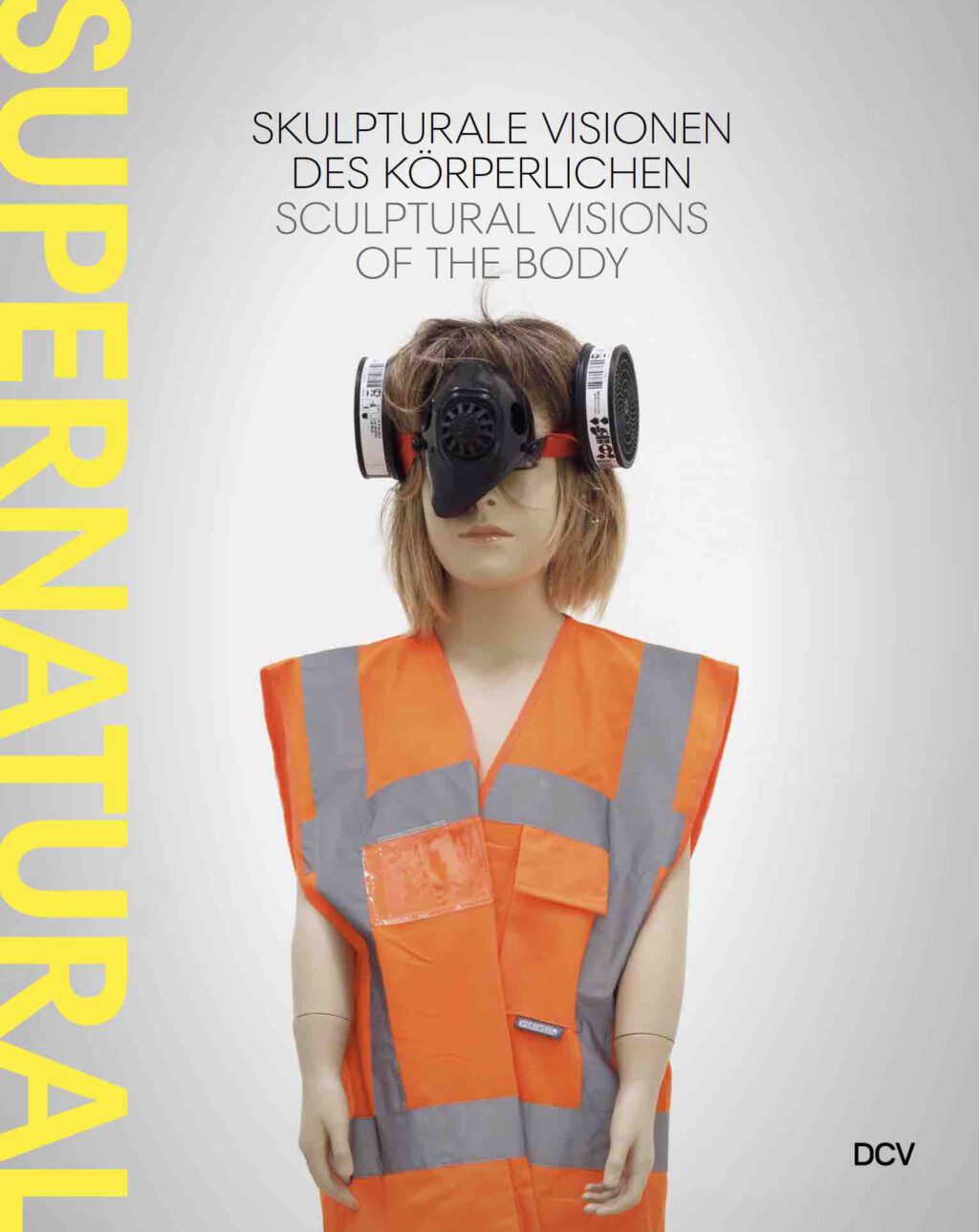
Supernatural
Sculptural Visions of the BodyRead moreThe future of human corporeality in the Anthropocene era
Given the technological development in biogenetics, humans will be able to make existential modifications to all living things, Nature, the animal world and human likenesses in future. What will bodies of the future look like? Who or what will we be? Supernatural offers us some answers in its hyperrealistic and realistic sculptures. These visionary works not only exemplify the impact of the digital revolution and genetic engineering on “posthumans” and the environment, but also illustrate, including in their own hybrid creations, how increasingly blurred the line between nature and culture is now becoming. Technological innovations are also having more and more effects on trends in the latest hyperrealistic sculptures. In using 3D printing to perfect their creation processes and pushing sculptural boundaries to encompass robotics and synthetic biology, artists are opening the door to new design possibilities in artefact, biology and technology for themselves as well.
The book presents works by Anne Carnein, Isa Genzken, Glaser/Kunz, Thomas Grünfeld, Sam Jinks, Josh Kline, Krištof Kintera, Reiner Maria Matysik, Alex May and Anna Dumitriu, Fabien Mérelle, Patricia Piccinini amongst others.
-

Beate Höing
It’s all about Love28€ Add to cartRecollections—What remains?
The painter and ceramist-sculptor Beate Höing (b. 1966, lives and works in Coesfeld and Münster) creates works of art whose aesthetic is deeply informed by the ornamentation and manual techniques of folk art. Drawing inspiration for her motifs from souvenir culture, but also from fairy tales and myths, she unfurls her burgeoning imagination in works defined by an unmistakable style and a singular allure. Poetic pictures and sculptures deftly toy with the conventions of kitsch and forms of traditional craftsmanship. Tangible objects, associations, and recollections coalesce in an ambivalent play between reality and fiction in which only a fine line separates dream from nightmare, congeniality from alarm.
The lavishly illustrated monograph presents a comprehensive survey of the artist’s output between 2011 and 2021.