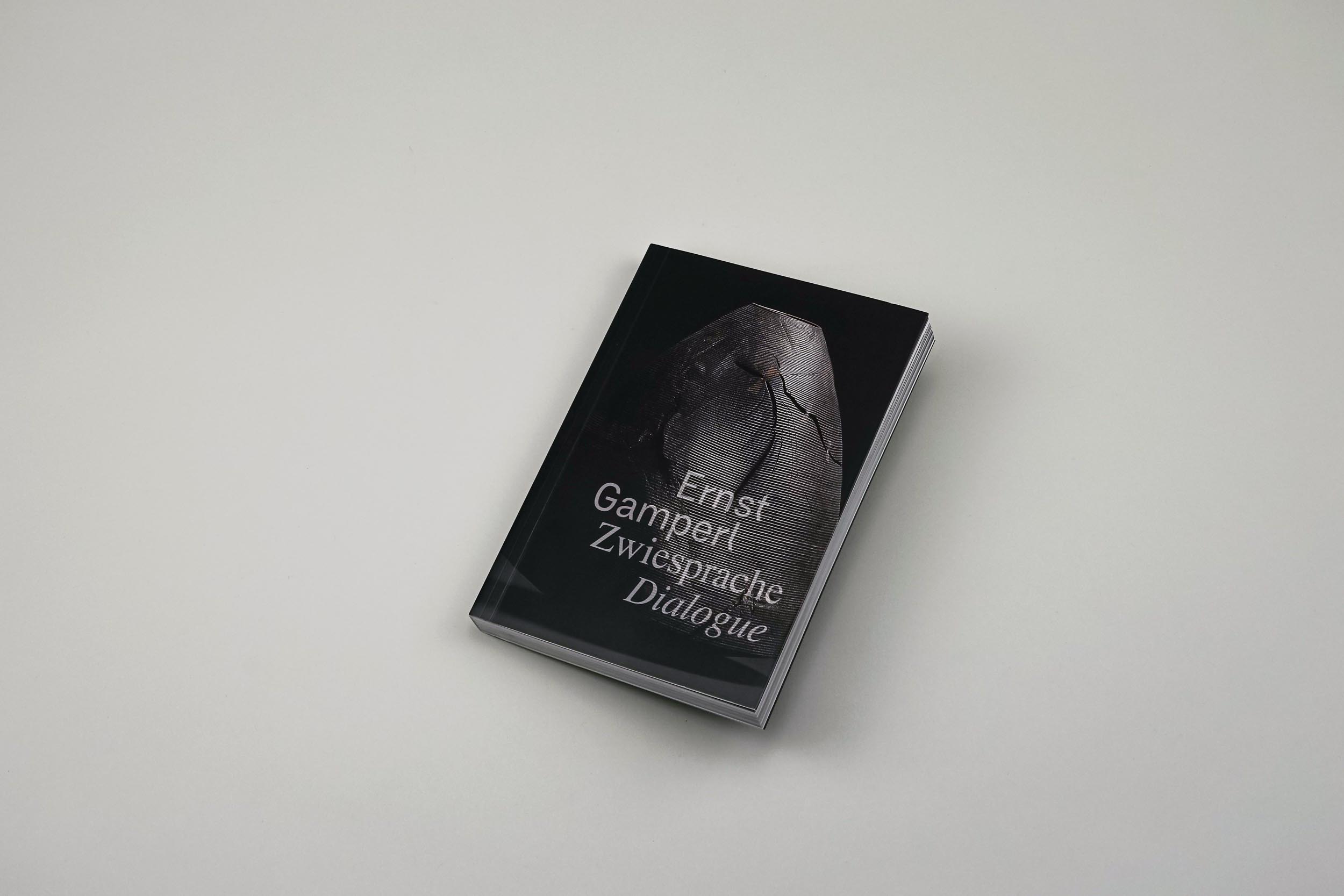
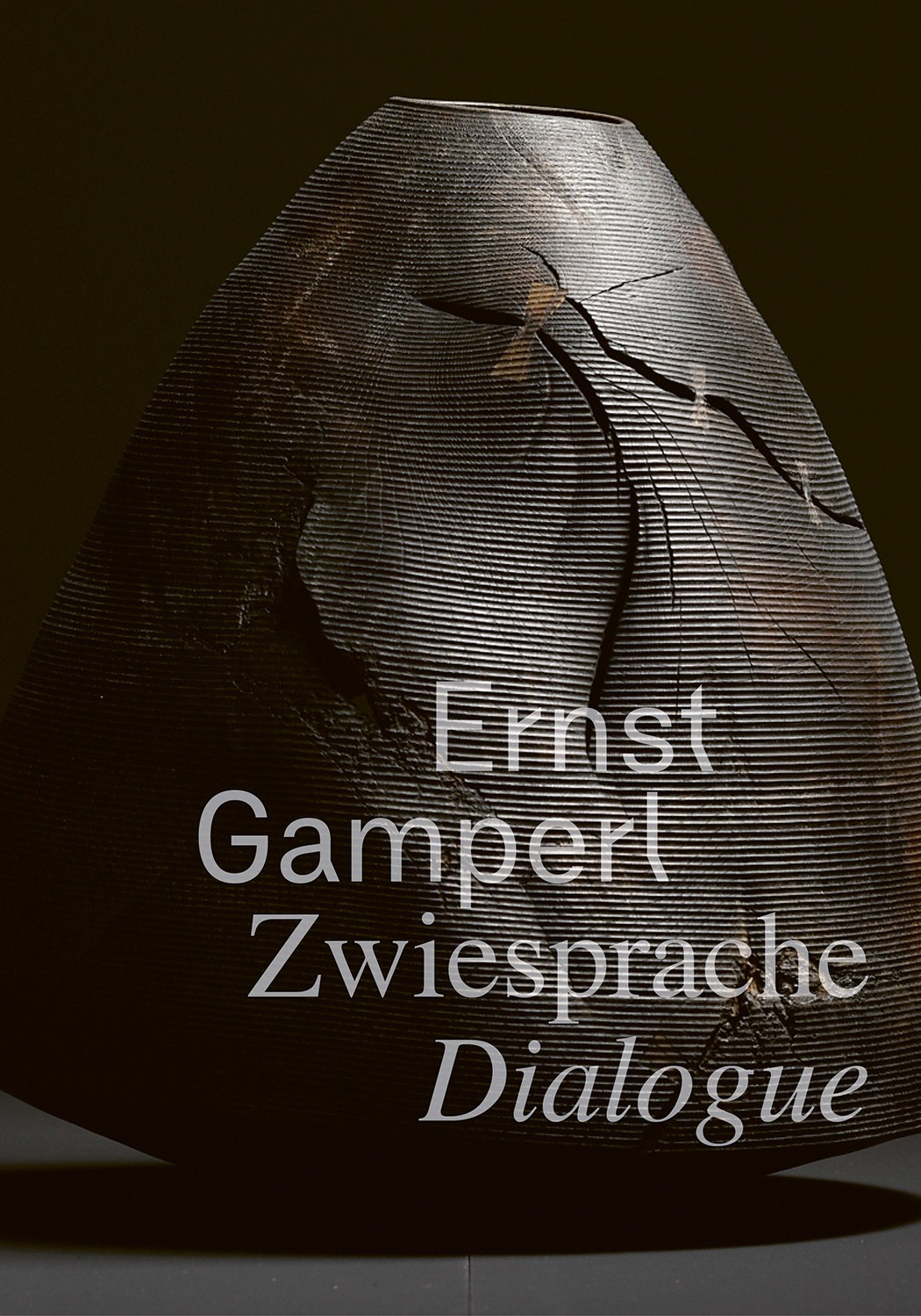
Ernst Gamperl
Zwiesprache Dialogue
 | |
|---|---|
| Editor(s) | Achim Heine, Ulrike Spengler |
| Author(s) | Achim Heine, Ernst Gamperl, Markus Rigert |
| Design | Heine/Lenz/Zizka |
| Size | 17 x 24 cm |
| Pages | 252 |
| Illustrations | 80 color and 45 duplex |
| Cover | Softcover |
| Language(s) | German, English |
| ISBN | 978-3-947563-57-9 | Out of stock |
Unique wooden sculptures as the result of a ten‑year process
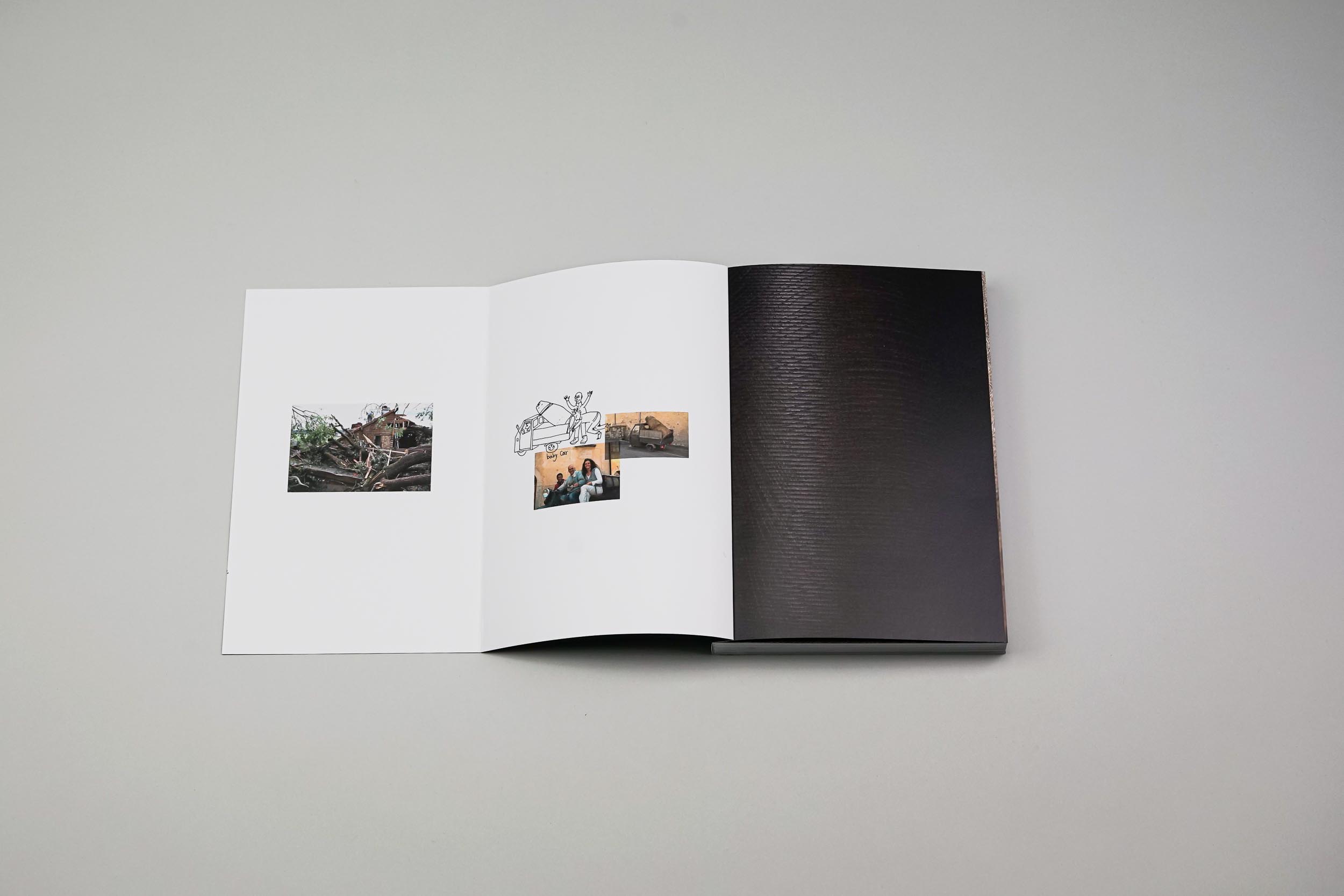
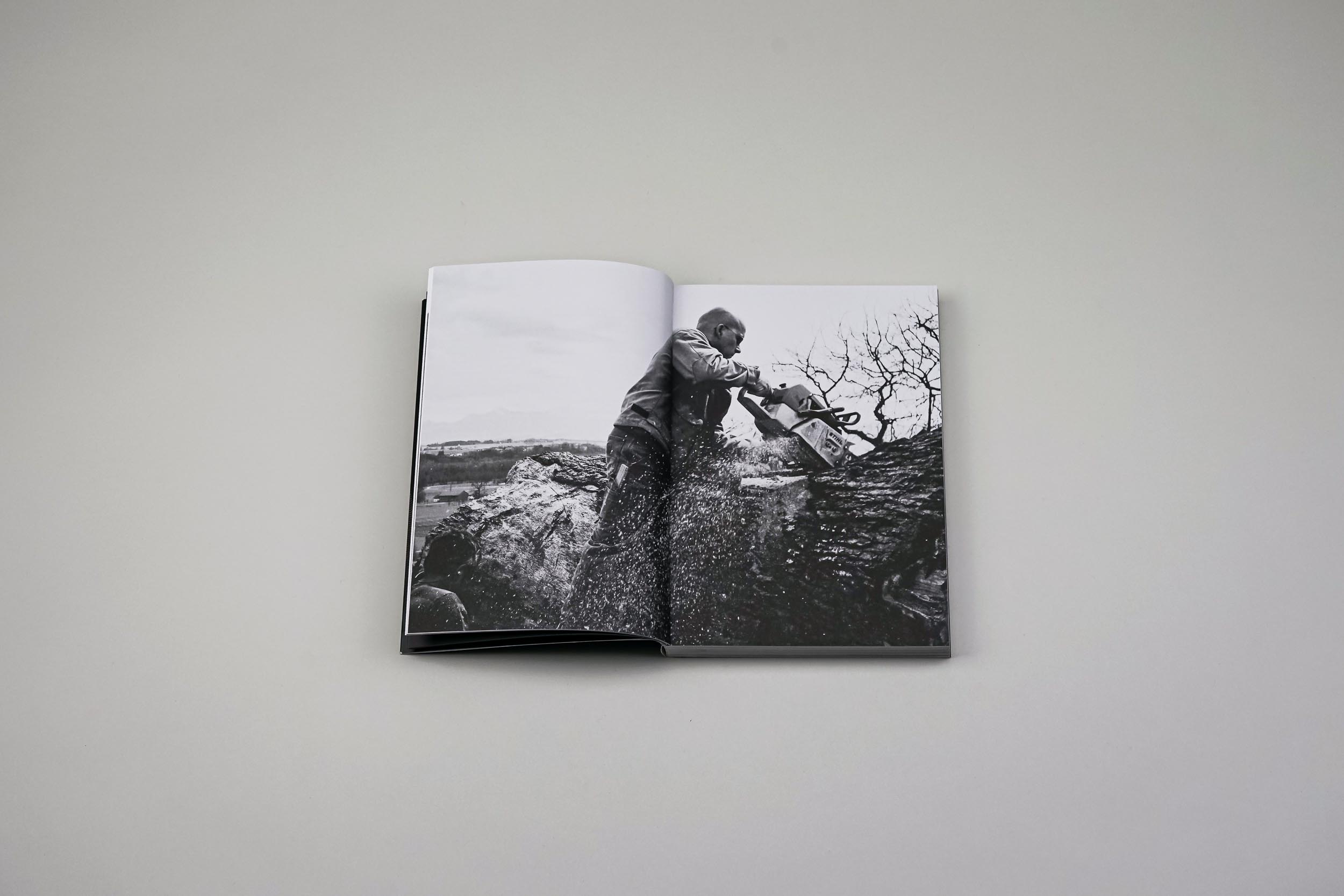
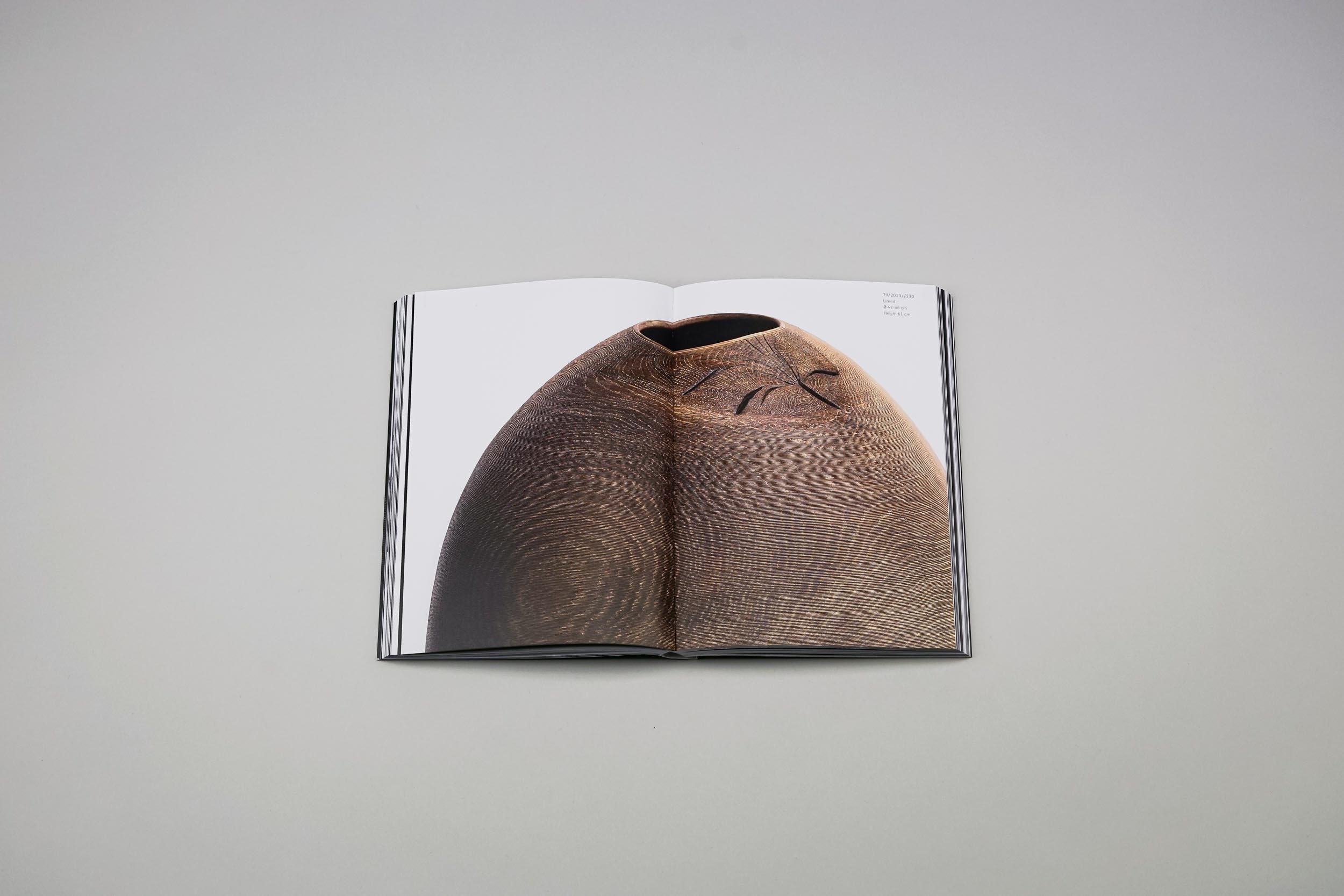
Ernst Gamperl (b. 1965, Munich; lives and works in Tremosine) is fascinated by the dialogue with living material and the quality of the unpredictable. He creates room-sized wooden objects, into the design of which he incorporates the natural drying process, cracks, and irregularities—a revolutionary technique of woodturning which has led to completely new standards, technically often at the limits of what is feasible. In a ten-year process, Gamperl transformed a roughly 230-year-old uprooted oak into an ensemble of vessels and sculptures. The artist’s book conveys the fascination of the material and the craft, brings us close to the objects, and documents the challenging work process.
Out of stock
Out of stock
More books
-

René Holm
Let me be your everlasting light25€ Add to cartLight is the theme of the new paintings by René Holm (b. Esbjerg, 1967). Faceless protagonists traversing symbolic forests with leafless trees occurred already in previous works, stripping them of individual or local signifiers and moving them into a spiritual and universal realm. Skulls with burning candles in Still lifes symbolize the fragility of life and unavoidability of death. Holm goes a step further and makes his figures carry the symbols in their hands or even has them become themselves live “still lifes” with burning candles on their backs. The presence of death is not a picture to behold from afar but a truth to be aware of and carry with us every day. The burning candles also mean that we’re here with our sorrow as well as our light. We must burn to shine. This book accompanies the artist’s gallery exhibition Let me be your everlasting light in Horsens, Denmark.
- Out of stock

Weltkulturerbe Völklinger Hütte 1999 – 2019
29,90€ Read moreDie Geschichte einer neuen Industriekultur
Die Völklinger Hütte gehört zu den wichtigsten Industriedenkmälern der Welt. Mit herausragenden Ausstellungen und Veranstaltungen ist das Kulturprojekt weit über die Grenzen des Saarlands hinaus bekannt geworden. Der Künstler Ottmar Hörl konzipierte hier sein großangelegtes Skulpturenprojekt 100 Arbeiter und Christian Boltanskis Installation in der Sinteranlage wurde zum hochemotionalen Erinnerungsort für die hier verpflichteten Zwangsarbeiter. Noch bis zum Jahr 1986 war die Völklinger Eisenhütte in Betrieb und wurde 1994 als erstes Industriekulturdenkmal aus der Hochphase der Industrialisierung in die renommierte Liste des UNESCO-Weltkulturerbes aufgenommen. Das Buch zum 25. Jubiläum dieser Auszeichnung zeigt die vielfältigen und eindrucksvollen Aufnahmen einer Transformation – vom größten Schrotthaufen Europas zum Begnungszentrum der Menschen mit der Kunst. Es dokumentiert die gelungene Umstrukturierung einer hochproduktiven Eisenverhüttungsstätte zu einem Ort für Kultur im 21. Jahrhundert.
-

Vera Mercer
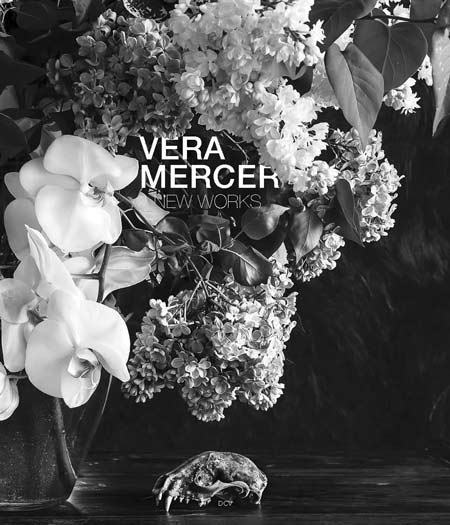
New Works28€ Add to cartBeauty and Melancholy, Joie de Vivre and Vanity
The American photographer Vera Mercer’s (b. Berlin, 1936; lives and works in Omaha and Paris) oeuvre defies easy summary. She started taking pictures in Paris in the 1960s, making portraits of her then husband Daniel Spoerri—who, like she, was initially training as a dancer—and other members of the Fluxus group and Nouveaux Réalistes, including Emmett Williams and Robert Filiou, Jean Tinguely and Jacques Villeglé. Around the same time, she also photographed Andy Warhol and Marcel Duchamp for various magazines; her friends Eva Aeppli and Niki de Saint Phalle were among her favorite sitters.
In the 1970s, she took a long creative hiatus: after moving to Omaha, Nebraska, she poured all her energy into starting a number of restaurants and developing an entire downtown neighborhood. But then, in the early years of the new millennium, she returned to photography, capturing breathtaking neo-baroque still lifes featuring flowers, fruits, freshly killed game, antique glasses, and illuminating candles in large formats.
Vera Mercer’s fourth monograph presents her most recent opulent still lifes in color, as well as a novelty in her oeuvre: restrained black-and-white flower pictures and portraits realized as small-format platinum prints.
-

Stephan Kaluza
Das Rheinprojekt48€ Add to cartReinterpreting the Classical Panorama
The mythical character of the Rhine as a ‘German symbol’ has long been of profound interest to poets and visual artists. Today, however, the Rhine has lost the aura of a great romantic river along much of its course: from Basel to Rotterdam, it serves as a high-volume shipping lane, and sprawling industrial installations line its banks.
At the dawn of the new millennium, Stephan Kaluza (b. Bad Iburg, 1964; lives and works in Düsseldorf) went on an almost eight-months-long walking tour, following the Rhine from its source at the foot of Piz Badus in Switzerland to its debouchment into the North Sea near Rotterdam. During this thousand-mile trek along the river’s right bank, he stopped every minute—after between two and three hundred feet—to take a photograph of the opposite shore. In this way, his camera compiled a painstaking record of the Rhine in 21,449 individual shots. Digitally assembled in a single six-inch-tall composite image, the pictures form a two-and-a-half-mile stream.
What Kaluza created in this project would have been inconceivable before the development of digital photography, which made the seamless presentation of the pictures in a single panoramic band possible. What is more, the computers capable of processing the enormous quantities of data did not arrive until a few years ago. It took the artist’s assistants a full two years just to edit the images. Harnessing digital technology, Kaluza creates for photography what had been the exclusive precinct of painting: a sweeping holistic perspective. A large number of the fascinating panorama photographs were published in the imposing tome Der Rhein in 2007. Das Rheinprojekt now presents a freshly composed selection from this treasure trove.
Stephan Kaluza received a comprehensive education in Düsseldorf in the 1990s, studying photography at the city’s University of Applied Sciences, art history at the Academy of Fine Arts, and history and philosophy at Düsseldorf University. Since 1995, his work has been shown at numerous galleries in Seoul, Shanghai, Jerusalem, Los Angeles, Berlin and elsewhere. Kaluza’s plays have been performed in Düsseldorf, Berlin, and Stuttgart.
-

Jan Zöller
Ritual Believer40€ Add to cartJan Zöller’s (b. Haslach, 1992; lives and works in Karlsruhe) paintings, sculptures, and installations probe the discrepancy between economic production and the spiritual and magical dimension of art. The artist’s book Ritual Believer surveys the so-called charcoal paintings series, created between 2019 and 2023. For these works, the artist paints directly in charcoal on the unprimed canvas, making it impossible to correct “blunders.” Another distinguishing feature is the virtual absence of color; the austerity of the compositions contrasts with Zöller’s other, often intensely colorful paintings. The motifs that are the hallmark of his oeuvre—birds, running legs—are complemented by writing and text. Another aspect of this shift is that the works’ titles play a central part and almost figure as a creative element in their own right. For the text in the book, the artist sent the titles of the works shown to his brother, who wove them into a story. An appendix presents scanned archival materials. Notebooks and zines Zöller produced between 2015 and 2017 provide interesting insight into how he finds his motifs and his compositional process.
Jan Zöller studied with Marijke van Warmerdam and Leni Hoffmann at the Akademie der Bildenden Künste Karlsruhe from 2012 until 2017 and with Jean-Marc Bustamante and Götz Arndt at the École Nationale Supérieure des Beaux-Arts de Paris in 2016.
-

Heike Negenborn
Terra Cognita24€ Add to cartLebensraum of our Time: Contemporary Landscape Painting
The central theme of Heike Negenborn (b. 1964, Bad Neuenahr-Ahrweiler; lives and works in Windesheim) is the seen lebensraum. In reference to seventeenth-century Dutch landscape painting, her works stand in a specific tradition of capturing reality. With her new group of works titled Net-Scape – Landscape in Transition, Negenborn transfers art historical references into contemporary images. The artist is interested in the possibilities of media transfer and the increasing appropriation of analog reality by the digital image. The present volume provides impressive insights into the developments of the landscape painter from 2007 to 2020.
Heike Negenborn studied fine arts at Austin College, Texas, Art Education at Johannes Gutenberg Universität Mainz, and Painting and Printmaking at the Akademie für Bildende Künste Mainz.
-

6 U L
Lust and Desire in Art and Design28€ Add to cart“Whose Jizz is this?” Sechs-u-ell: to make sense of the publication title, trust your college German and your phonetic ear. “Sexual,” here, comprises the entire broad spectrum of what we associate with carnal pleasure. Lust, desire, ecstasy, repression, obsession—the world of art, fashion, and design abounds with specimens of eroticism and sexuality in their infinite variety, shopworn stereotypes be damned. Looking back on the thorough revision of society’s ideas about sexuality in the past three decades, the book inquires into how the works of visual artists, fashion creatives, and designers reflect today’s public debates over biological and social gender roles, power structures, and sexual violence or the fading of taboos over sexual practices. With works and designs by Walter Van Beirendonck, Monica Bonvicini, Tracey Emin, Hans-Peter Feldmann, Jürgen Klauke, Peaches, Cindy Sherman, Kara Walker, Vivienne Westwood, and many more. This book documents a grand exhibition scheduled for the past summer at the GRASSI Museum of Applied Arts, Leipzig, which had to be canceled due to the Covid-19 pandemic.
-

Martin Krumbholz
Alex, Martin und Ich14€ Add to cart“The Vocation of Saint Matthew”: that is the title that Martin Krug has chosen for his novella, after Caravaggio’s iconic painting at the Church of San Luigi degli Francesi in Rome. The irony is unmistakable—Martin, the protagonist of his narrative, hesitates to accept a promotion: he has been offered the job of his boss, for whose wife, Marion, he has fallen on a shared vacation. Yet Martin’s friend, whom he has asked for advice, proposes a different title: Ghost Story—a key element of the plot is the mysterious Alexander’s disappearance, seemingly forever, in the sea …
Martin’s friend and interlocutor, the novel’s first-person narrator, embeds the novella in a narrative framework that mirrors its motifs: love as passion, eros and sex, loyalty and betrayal, manliness and chivalry, art, film, and music. Alberto Moravia’s novel Contempt, glamorously adapted for the silver screen by Jean-Luc Godard, is reread and discussed as a MeToo story.
Martin Krumbholz (b. Wuppertal-Elberfeld, Germany, 1954; lives and works in Düsseldorf) is a writer and theater critic. His first novel, Eine kleine Passion, came out in 2013.
- Release January 2026

Frank Morrison
38€ Add to cartThe dynamic Neo-Mannerist images of painter and illustrator Frank Morrison (born 1971, lives in Atlanta) celebrate the resilience and dignity of African Americans in everyday life. A child of institutionalized racism in the US, he can testify that creativity and solidarity could never be suppressed in the segregated and brutally marginalized communities. Hip-hop and graffiti are resistance. Clichés of inner-city struggle are vividly refuted in this book. The volume documents Morrison’s recent exhibitions, one of which is dedicated to the younger generation: frame-braking images that interweave narrative forms of comics and pop art with illustration. Morrison’s gallery calls the book an explosive tribute to genius flourishing in institutionalized exile.
-

Pokorny
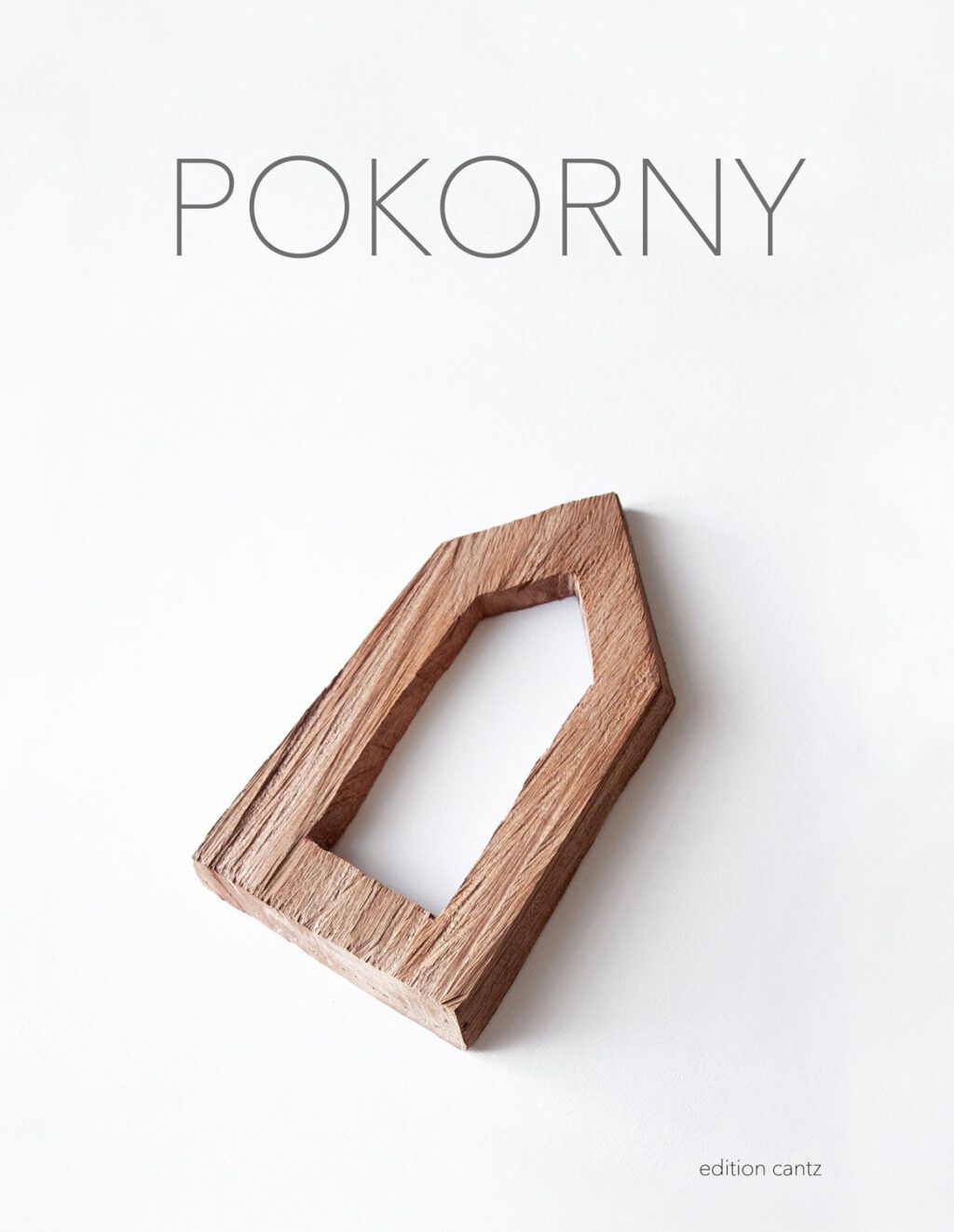
25€ Add to cart“Abstraction means the omission of the irrelevant and the unnecessary in order to find more substantial content and form.”—Werner Pokorny
His often monumental sculptures can be found in many places in Germany and abroad, including Aachen, Berlin, Busan (South Korea), Frankfurt am Main, Freiburg, Karlsruhe, Riehen, Saarbrücken, and Stuttgart. Werner Pokorny works (b. 1949, Mosbach; lives and works in Ettlingen) exclusively with Corten steel for his outdoor sculptures and with wood, steel, and bronze for his indoor works. Well-known basic forms such as bowls, spheres, cuboids, and houses serve as points of departure and reference, which are abstracted by reduction, rotation, tilting, or combination with other elements. The artistic field of tension characteristic of Pokorny’s impressive sculptural oeuvre is due to the oscillation between form and abstraction, figure and reduction, hard edges and soft curves.
-

Martin Noël
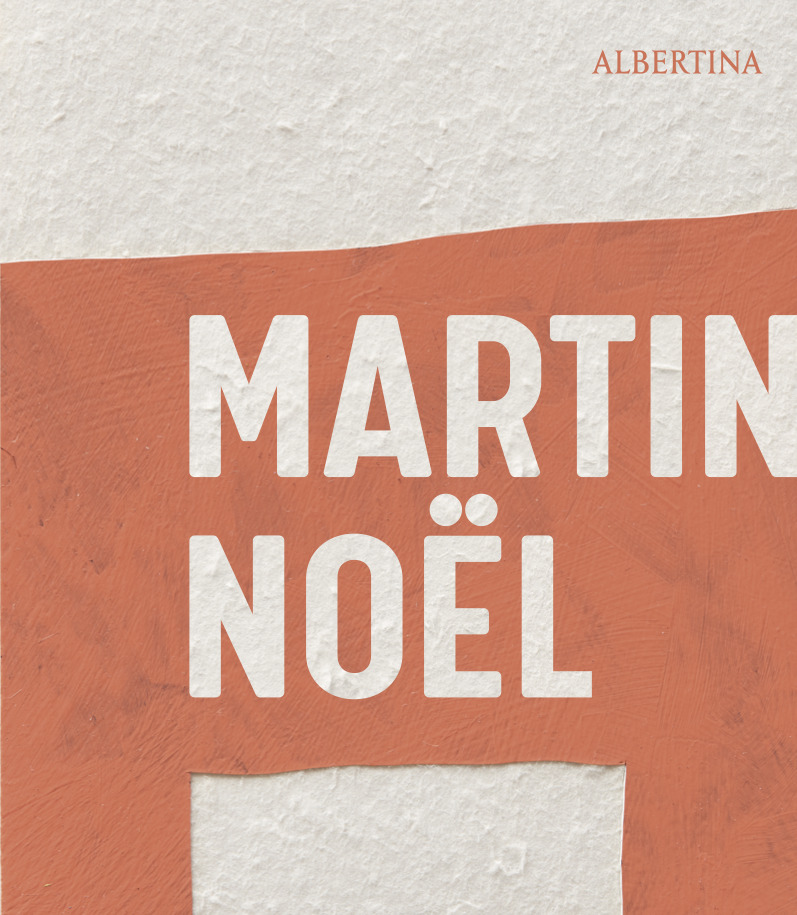
The Retrospective38€ Add to cartThe Protagonist of the Modern Woodcut
The German painter, draftsman, and graphic artist Martin Noël (b. Berlin, 1956; d. Bonn, 2010) played a leading role in reviving the linocut and the woodcut, two techniques that had long been eclipsed by other media. In his large-format works on paper, he staked out a widely regarded and distinctive position in contemporary art. Noël was especially interested in the compositional relationship between line and surface. Released on occasion of the retrospective of his oeuvre at the Albertina, Vienna, this book presents an overview of the most important periods in the artist’s creative evolution, with an emphasis on the woodcut carved into the printing plate and the woodblock’s subsequent emancipation as an art object in its own right. Particular attention is paid to the application of ink to the surface and its painterly structure as well as the picture’s migration from object to canvas. The resulting paintings are exemplary of Noël’s late oeuvre.
Martin Noël studied graphic art and painting at what is now the Cologne University of Arts and Sciences. His art garnered numerous prizes and other honors, including fellowships from Kunststiftung NRW, Stiftung Kunstfonds, and Letter Stiftung. Works by Noël are in the German Federal Collection of Contemporary Art, Kunstsammlung Chemnitz, and the collection of Museum Pfalzgalerie Kaiserslautern.
-

Horst Schwitzki (1932–2016)
Eine Werkmonografie38€ Add to cart“I have my place in concrete painting!”
Horst Schwitzki’s (b. Marburg/Lahn, 1932; d. Frankfurt/Main, 2016) talent was recognized early on by renowned painters including Arnold Bode and Fritz Winter. During his studies at the Werkakademie, today’s Kunsthochschule, in Kassel, Schwitzki came into contact with concrete art. The network he built there opened doors for him, leading to exhibitions with prestigious galleries such as Rolf Ricke’s and Rudolf Zwirner’s. By the 1970s, however, he found himself compelled to make a living by working first as a graphic artist for an advertising agency and then as a construction draftsman. Although these day jobs left him little time for painting, he kept working on his art until 2010. This book is the first to present a comprehensive survey of Schwitzki’s oeuvre, which spans almost six decades and shows him continually devising novel creative solutions within the formal repertoire of concretion. The biography, rounded out by statements from contemporaries, colleagues, and friends, offers profound insights into the highs and lows of an artist’s life that stands as a characteristic example of the experiences of the generation born in the 1930s.
-

Stephen Buckley
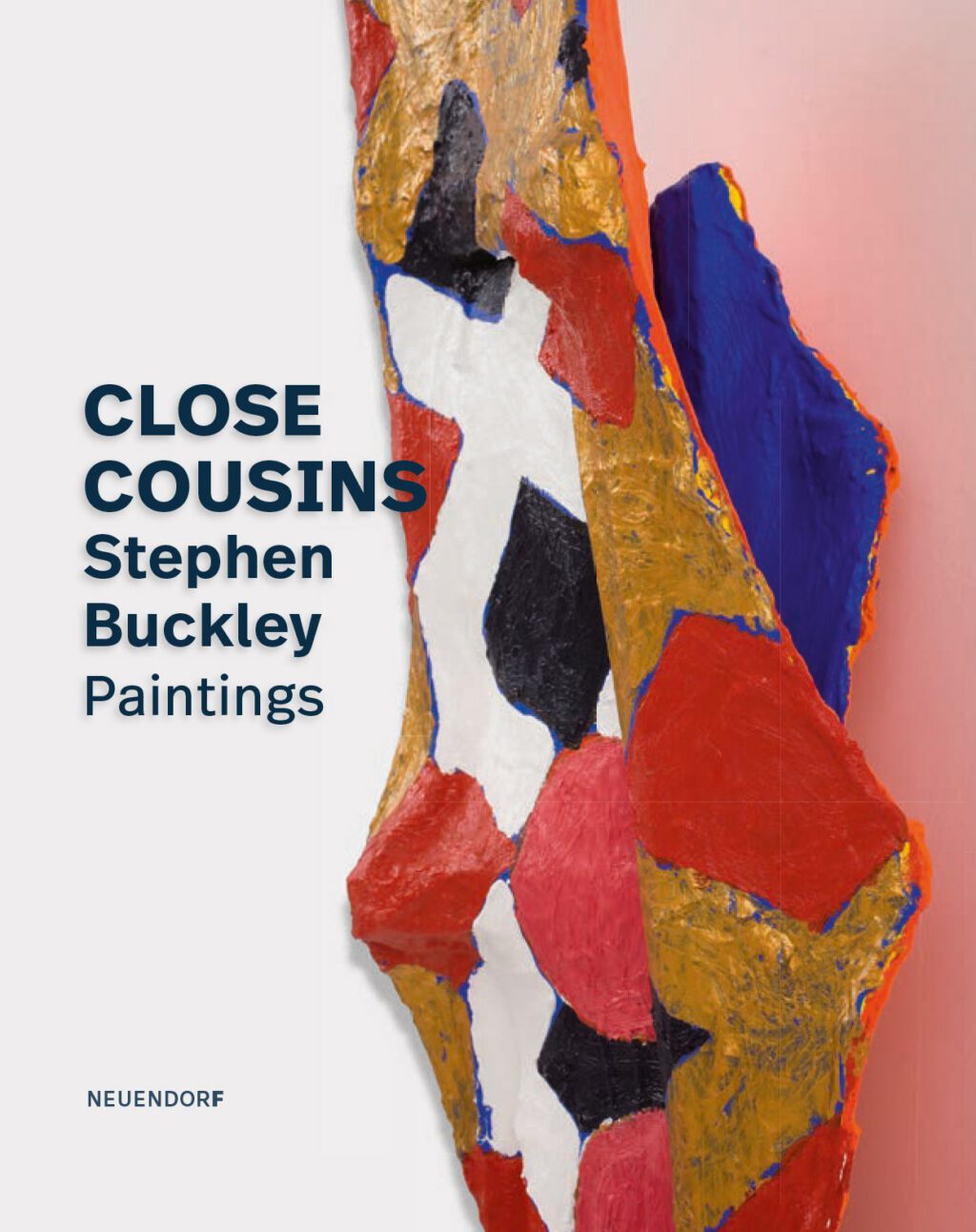
Close Cousins. Paintings48€ Add to cartThe Artist’s First Publication in more than Thirty Years
For more than forty years Stephen Buckley (b. 1944, Leicester) has concerned himself with addressing the major themes of the twentieth century through a personal style oscillating between the matière of Kurt Schwitters, the dandyism of Francis Picabia and the intellectual rigour of Marcel Duchamp. He takes the two most basic components of a conventional painting (canvas and stretcher), and makes multi-dimensional constructions, joins groups of single canvases together in overlapping structures, makes shaped canvases, cuts a stretcher with a variegated edge, stitches and weaves together strips of canvas, patches pieces of canvas onto another support, and adds cardboard tubing, rope, found objects and cut out shapes. In the 1970’s and 1980’s, Buckley saw extended prominence in the art press, starting with the artist being described as “the Punk Rock of contemporary painting” and ending with him gaining the title of “the ubiquitous Stephen Buckley”. There is now a large portfolio of themes, references, motifs and symbols which are continually reworked and reinvented. Since then, he has made some of his most compelling paintings, lush pop canvases full of symbols and colour, a far cry from the pared-down, industrial feel of some of his early works.
- Release February 2026

BOOM!
7 years of nova space48€ Add to cartFrom 2019 to 2025, nova space, Bauhaus-Universität Weimar’s university gallery put up 21 projects, which this volume documents in image and text. As both an experimentation field and meeting place, nova connected international artists, students, faculty, and the public under the enthusiastic direction of curator Katharina Wendler. Her essay provides insight into the unique history of this mobile and interdisciplinary gallery, its program as well as the continuous development of new curatorial formats. The final act of nova is an exhibition in book form, for which artists, architects, designers, typographers, and filmmakers were invited to create work that freely associates around the theme of BOOM!—inspired by the image of the supernova.
ARTISTS: A.O. LAURA ABERHAM, MARGRÉT H. BLÖNDAL, ZUZANNA CZEBATUL, BJÖRN DAHLEM, DAVID DIAO, HANNAH SOPHIE DUNKELBERG, NADINE FECHT, LIAM GILLICK, JANA GUNSTHEIMER, NSCHOTSCHI HASLINGER, STEF HEIDHUES, JUDITH HOPF, VERENA ISSEL, CHRISTIN KAISER, IAN KIAER, RAGNAR KJARTANSSON, VERA KOX, SCHIRIN KRETSCHMANN, YUTAKA MAKINO, STEFAN MARX, ERIC MEIER, AD MINOLITI, BRUCE NAUMAN, PRINZ GHOLAM, HANNAH RATH, KARIN SANDER, FETTE SANS, KATRIN STEIGER, JAN TICHY, WOLFGANG TILLMANS, IGNACIO URIARTE, ROBIN WAART, YOUNG BOY DANCING GROUP, FRANCIS ZEISCHEGG, KARLA ZIPFEL AND MANY MORE
-

Larissa Fassler
Building Worlds20€ Add to cartThe drawings and sculptures of Larissa Fassler (born 1975 in Canada, lives in Berlin) both document and question the modern metropolis, its public squares, train stations, and functional buildings. Fassler researches her chosen locations extensively in city archives and online. She tracks trends such as economic disparity, gentrification, homelessness, or drug consumption. She supplements these statistical facts with her own subjective survey methods, such as repeatedly visiting and observing the sites. All of the information gathered finds its way into Fassler’s complex cartographic drawings and sculptures, which reflect the socioeconomic and geopolitical challenges of our time. This book accompanies Fassler’s exhibition at the Kunstverein Lingen.
-
Angelika J. Trojnarski
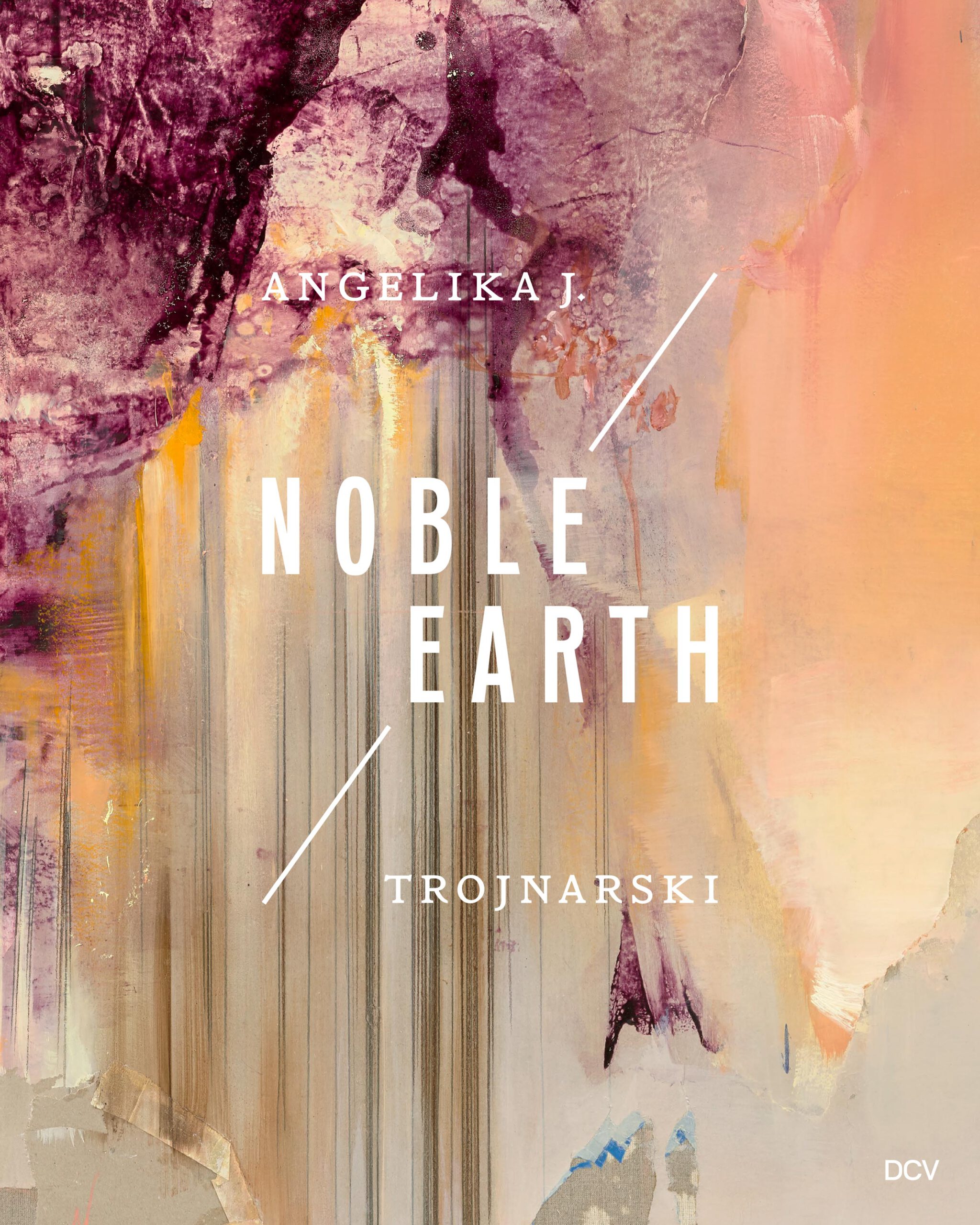
Noble Earth38€ Add to cartAngelika J. Trojnarski (born 1979 in Mrągowo/Polen; lives and works in Düsseldorf) examines facets of nature through an ecological, scientific, poetic study of their phenomena. Through a process centered on painting, her art articulates allegorical relationships between some of the most significant contentions of our time: humans and nature, strength and fragility, crisis and hope. She expresses a desire to understand nature by reproducing its workings, pointing to its incredible might while underscoring its increasing fragility. Trojnarski overlays raw canvases with paper fragments, employing brushwork and collage to apply materials like graphite or soot, generating a source of energy and suspense through color and contrast. The monograph offers an overview of the last decade of Trojnarski’s work.
Angelika J. Trojnarski 2006–2013 studies at Kunstakademie Düsseldorf. 2006–2009 Painting with Jörg Immendorff, Markus Lüpertz and Herbert Brandl, from 2010 Free Art with Andreas Gursky.
-

Stephan Kaluza
Die dritte Natur14€ Add to cartThe Nature of Art as Totality and Idyll
The philosophy of nature is central to the artist Stephan Kaluza’s (b. Bad Iburg, 1964; lives and works in Düsseldorf) work. As he sees it, there exists a succession of different natures: first nature is Kaluza’s designation for a world as immediately felt by (early) humans, part of an encompassing and close-range experiential totality they labeled ‘nature’ and perceived as a physical, but also spiritual and emotional concatenation of events. Second nature is stripped down to an objective and utilitarian quality; nature becomes a resource, the basis of life, the environment. In a kind of linguistic turn, speech mediates a surrogate, an alternative world, that positions nature as culture’s opposite; the former becomes replaceable in favor of latter. Yet this culture is far from devoid of yearnings for the immediacy that it has lost, and so develops an ‘artificial idyllic nature’ in turn. This third nature of the arts—a purely human nature—harks back to the archetypes of a first nature in escapism and totalized immersion.
-

Ion Bitzan
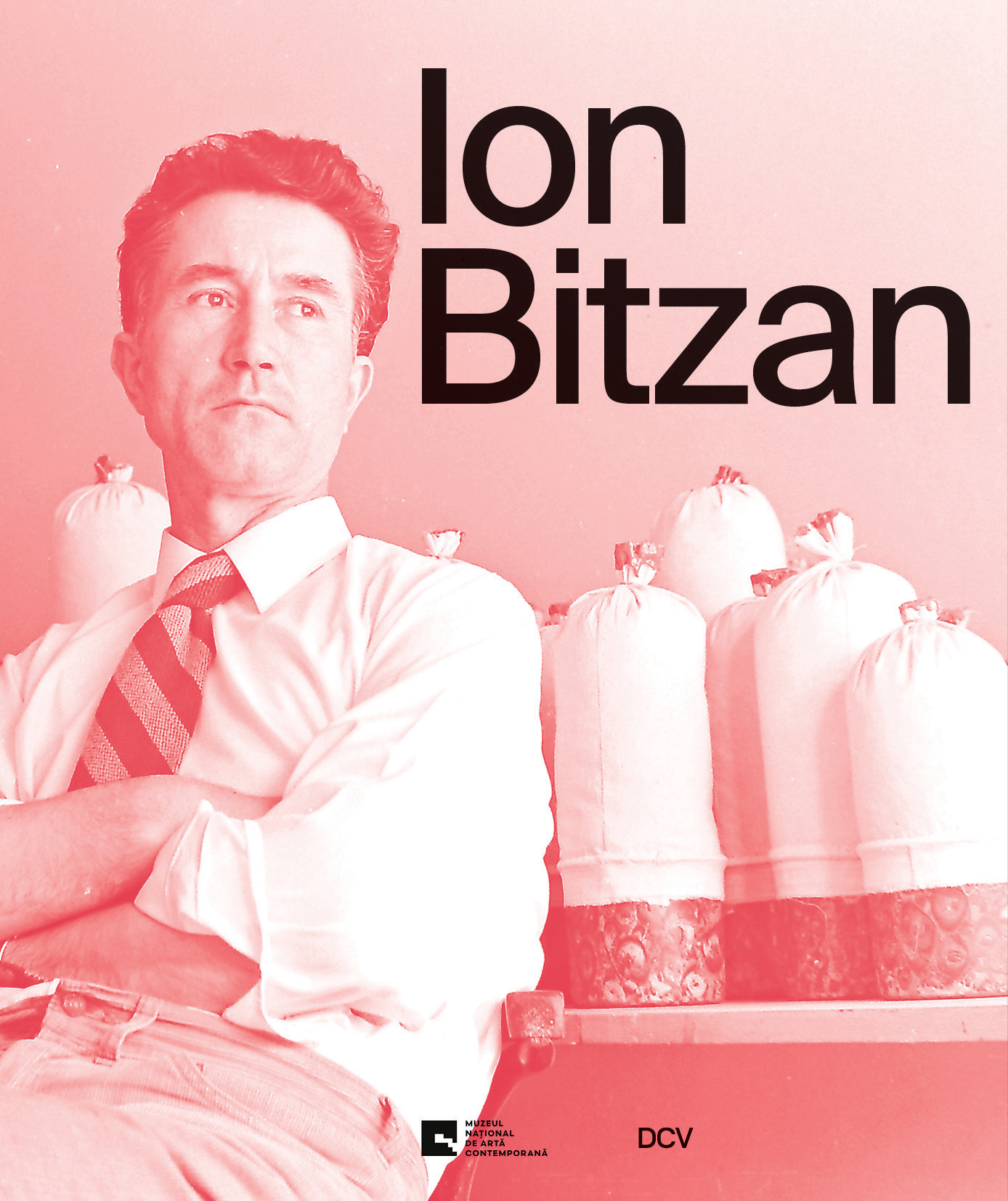
48€ Add to cartThe painter and object artist Ion Bitzan (b. Limanu, 1924; d. Bucharest, 1997) belonged to the generation of Romanian artists who, in the 1960s and 1970s, broke through their country’s isolation to connect to the international avant-garde. His creativity and the quality of his artistic experiments, which drew inspiration from conceptual art, Dada, and other sources, made him a leading figure in the Romanian art of the Ceaușescu era. This book also sheds light on the complex relationship between artistic innovation and political (propaganda) art behind the Iron Curtain during this period, in which nothing was ever black or white. Bitzan represented Romania at the Venice (1964) and São Paulo Biennales (1967, 1969, 1981). In 2017, the National Museum of Contemporary Art (MNAC) in Bucharest mounted a major retrospective of his oeuvre.
-
Mihai Olos
42€ Add to cartMihai Olos (b. Ariniș, Romania, 1940; d. Endingen am Kaiserstuhl, 2015) ranks among the most fascinating artists of the second half of the twentieth century. His adaptations of the formal vocabulary pioneered by Constantin Brâncuși are unrivaled in their creative originality. His works evince an utterly novel approach to the combination of materials from the culture of rural Romania with the visual strategies of modernism. His formidable oeuvre engages with conceptual and minimal art and comprises paintings, drawings, and sculptures, sometimes in the dimensions of land-art projects, as well as performances and poetry. Despite the constraints imposed by the communist system, his art and travels—during which he also met his kindred spirit Joseph Beuys—were dedicated to the unerring pursuit of his vision of social sculpture and radical utopian architecture.
-
Alexandra Tretter
24€ Add to cartThe art of Alexandra Tretter (*1988) is as deep as it is playful. Owing just as much to the gentle spirituality of Hilma af Klint’s late geometries as it does to Sonia Delaunay’s exuberant disc paintings, almost bursting with sheer chromatic pleasure. Her compassionately designed artist’s book combines monumental paintings with intimate works on paper, all of which are imbued with the contexts of Tretter’s own life as an artist, as a woman, as a mother.
Her kaleidoscopic figurations unfold from a center at rest in itself and multiply in symmetry and asymmetry towards all sides. She contrasts the circular form, the unchanging basic element of her compositions, with the oval, which constantly strives beyond itself, transforming itself in ever-new permutations from one figure into the next, into eyes, mouths, breasts, petals or vulvas.
Her images strive for composure, unfold and blossom, only to let go of all gestalt-like form. Once gained stability is instantly pushed into turmoil. Colors flare up violently or flow delicately about, lighten or shade each other, carry or throw each other off course. Tretter equally realizes materialization and dissolution as basic principles of her painting.
Whereby all, what her images absorb, preserve and release, is experience, growth and slow maturing. Her paintings are “figurations of affection”, in which each individual turns towards something else, doubts or grows, at times turns away or surrenders all the more consciously. They question everything, start anew and yet find their way back to themselves, into their very own.