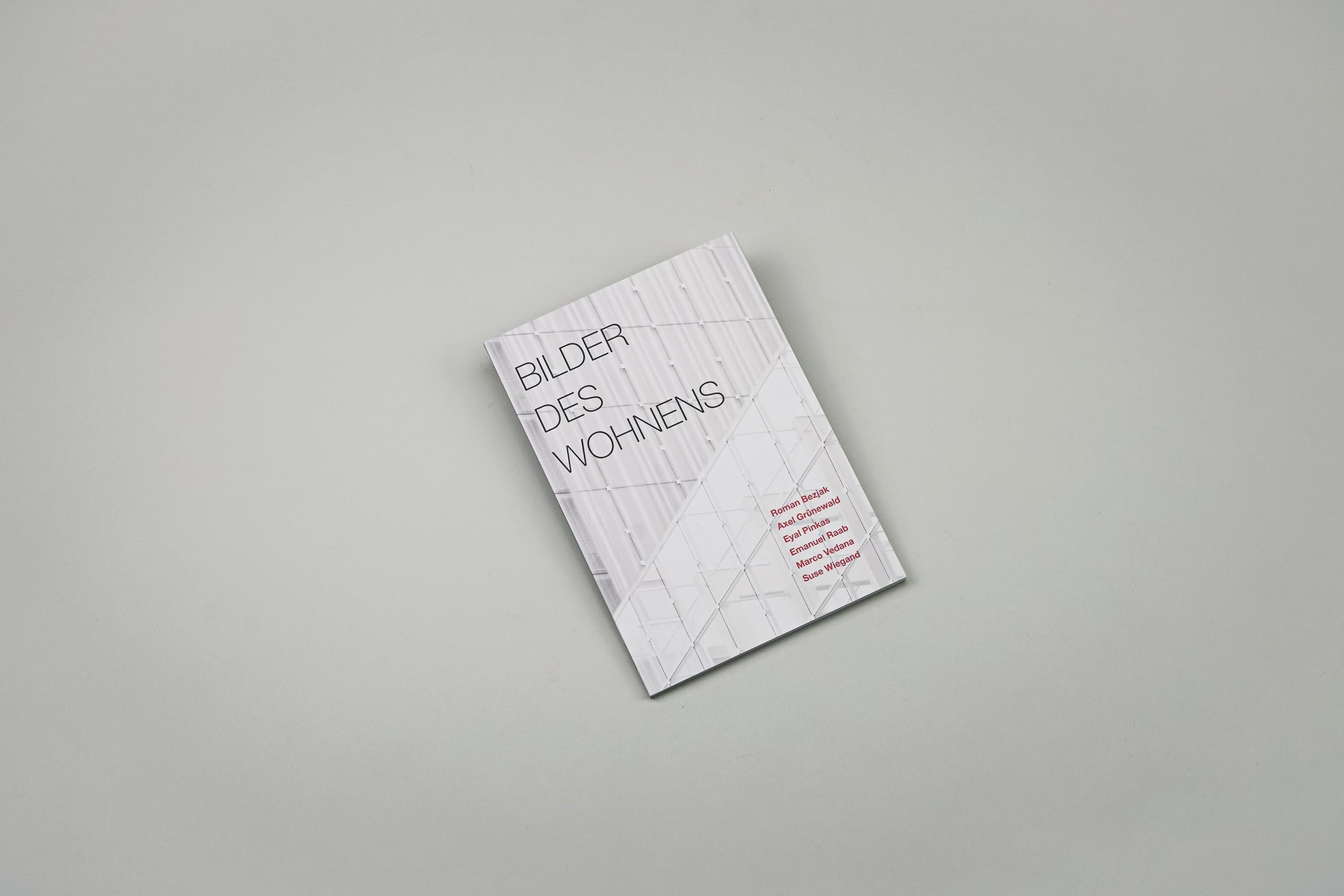
Bilder des Wohnens
 | |
|---|---|
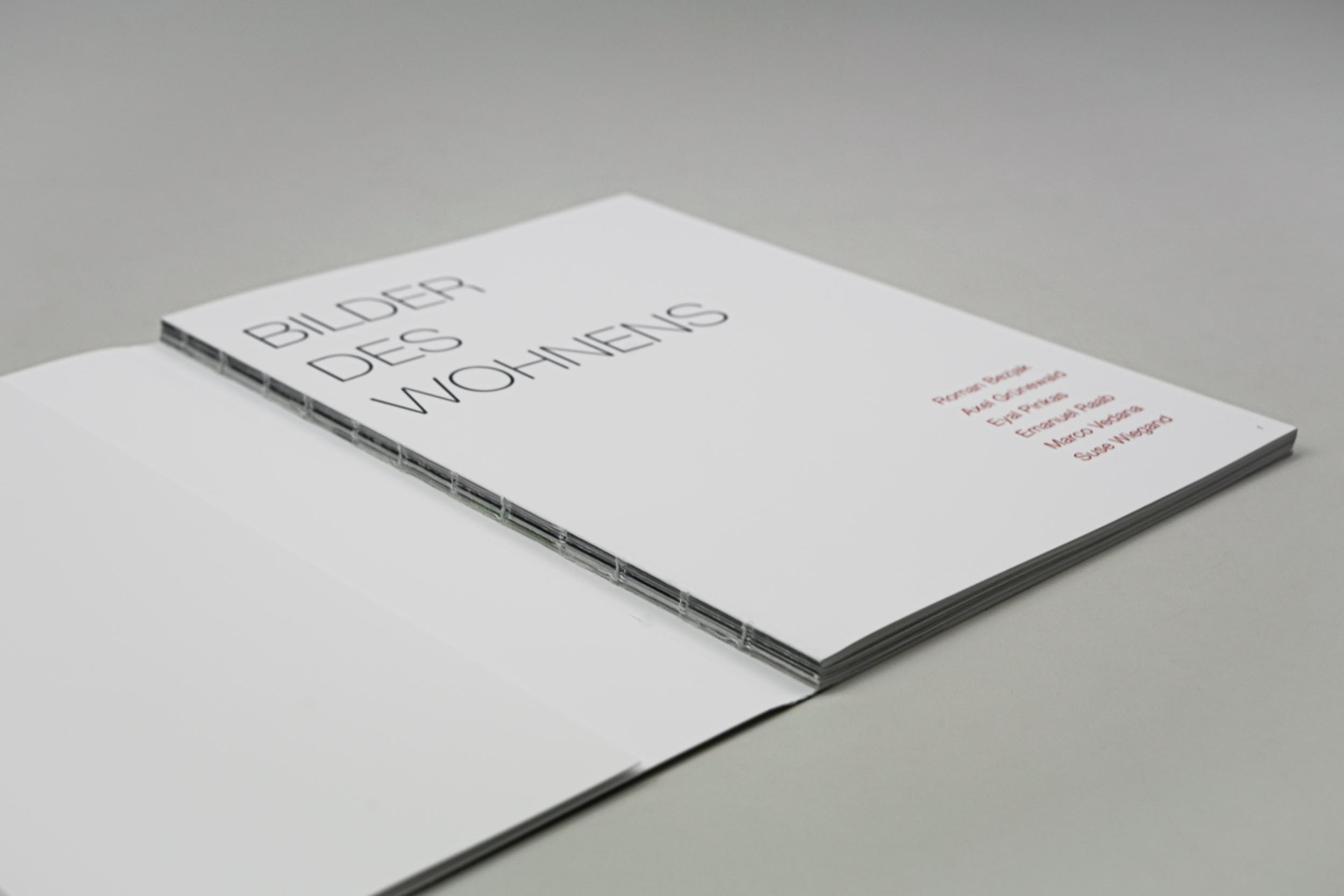
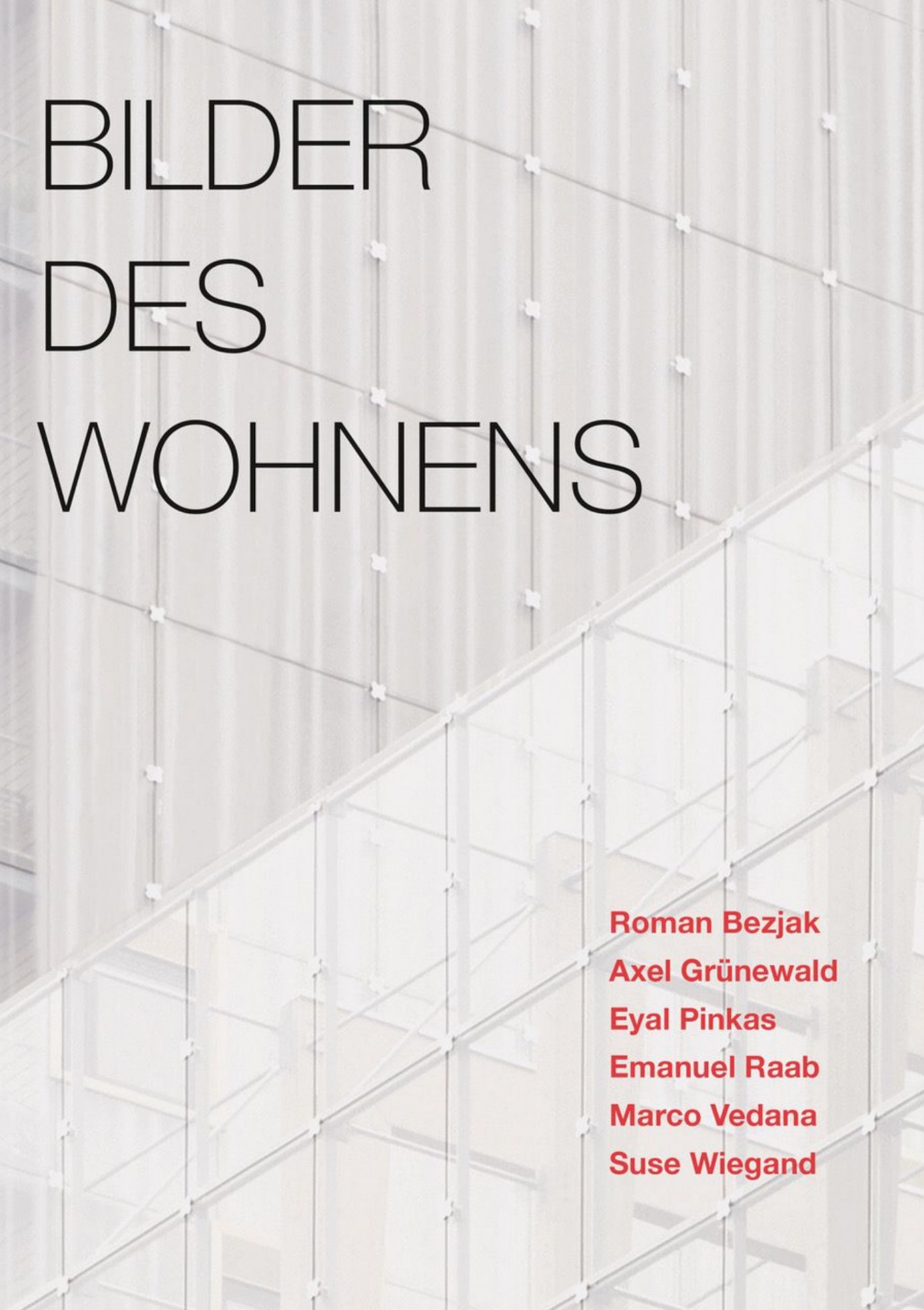
| Editor(s) | Axel Grünewald, Emanuel Raab, Roman Bezjak, Suse Wiegand |
| Author(s) | Anna Zika, Stefanie Kleinsorge |
| Design | Toni Montana Studios |
| Size | 17 x 24 cm |
| Pages | 64 |
| Illustrations | 42 |
| Cover | Softcover with flaps and Swiss brochure |
| Language(s) | German |
| ISBN | 978-3-947563-88-3 |
The Cognitive Registers of Photography
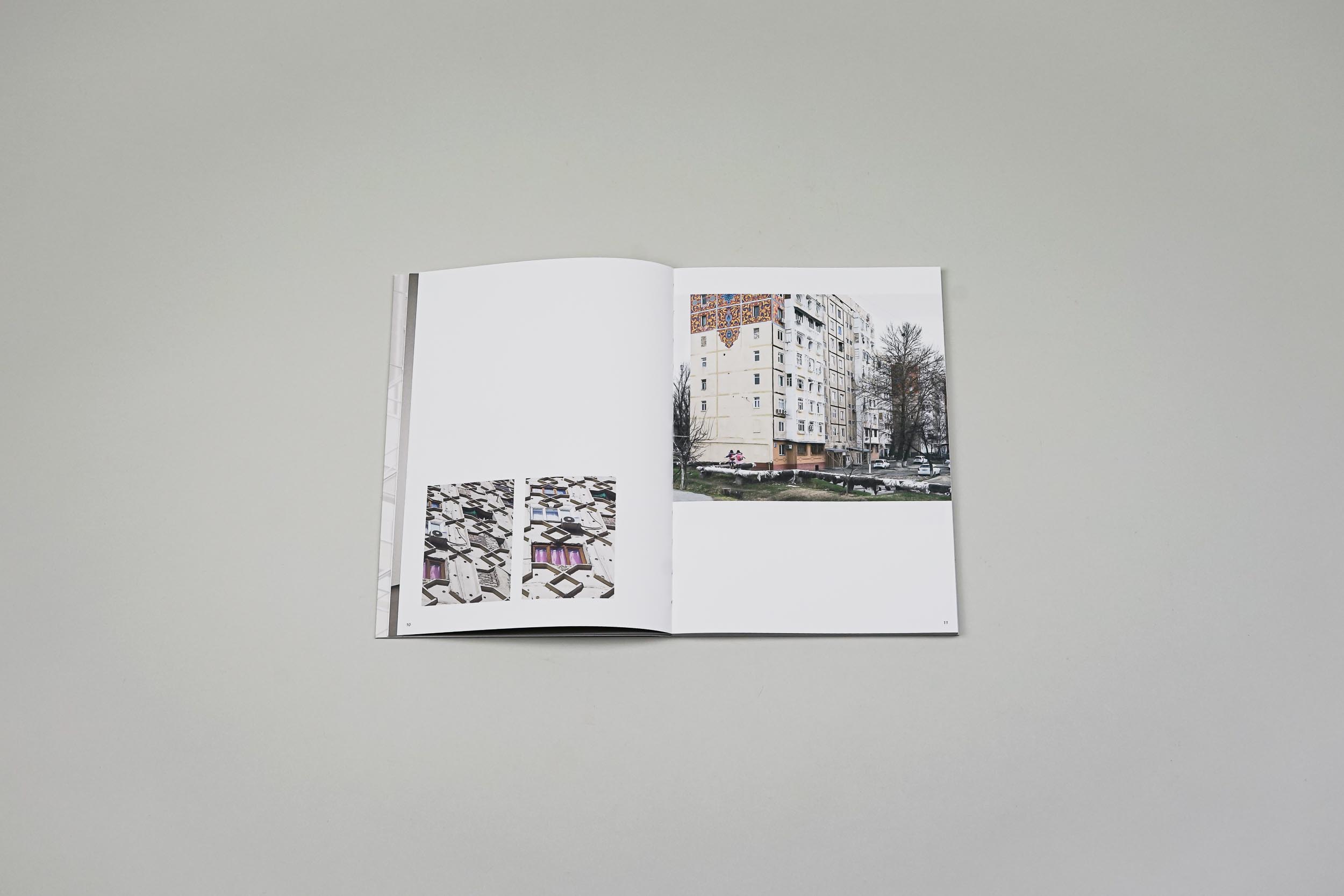
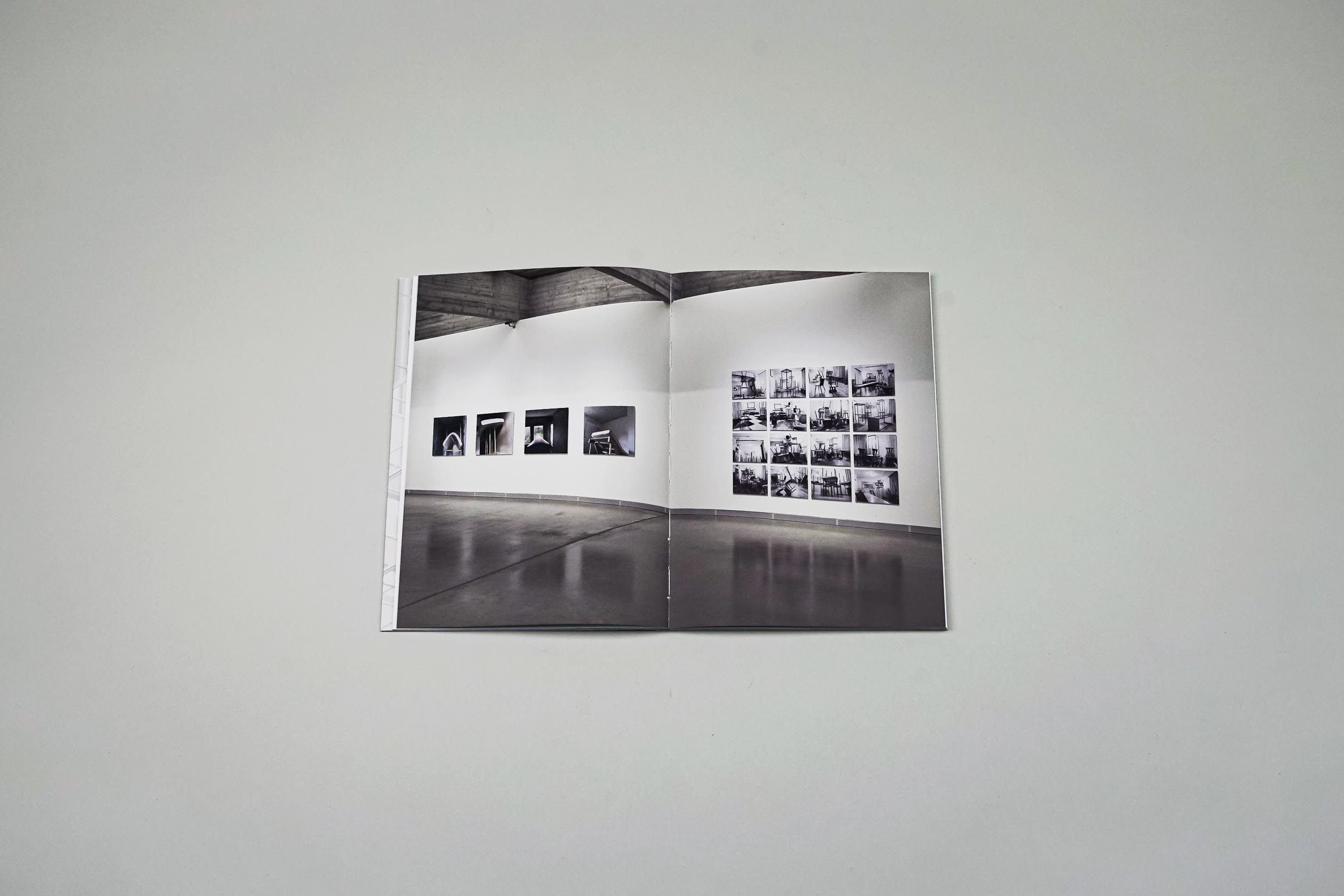
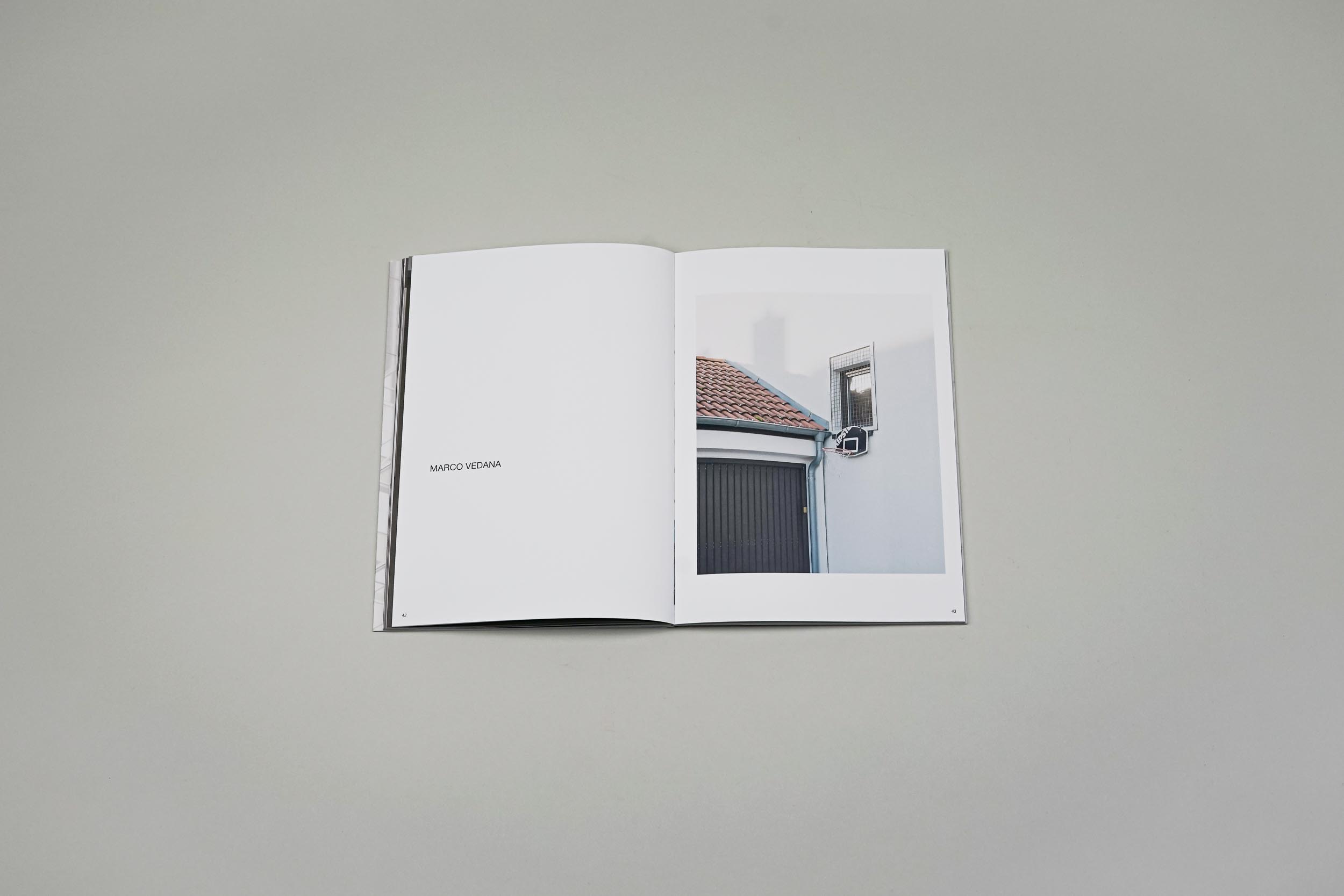
All over the world, housing shortages and living conditions are urgent concerns of political and academic debates. Scholars at the FH Bielefeld conducted a three-year research project on Bilder des Wohnens. Architekturen im Bild, focusing on questions of the representation of space and hybrid forms of visualization between documentation and staging as well as photography as an archive of architectural knowledge and tool in the planning process. The book draws on studies of twentieth-century social utopias such as Tashkent, Uzbekistan, an embodiment of the urban-planning ideal of Soviet modernism, and explorations of social and cultural spaces along the coasts of northern Morocco and southern Spain, as well as a photographic typology of urban fabrics in Germany and other sociocultural studies that grapple with the significance of living spaces today.
More books
-

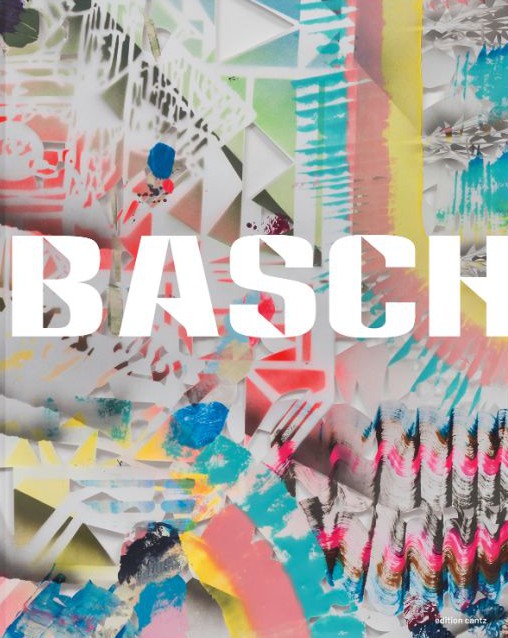
Gabriele Basch
fortuna24€ Add to cartPaper and Foil Cut‑Outs in an Innovative Language of Forms: An Overview of the Works of Gabriele Basch from 2008 to 2019
Since the 1990s, Gabriele Basch (b. 1964, Bad Homburg; lives and works in Berlin) has been working with cut-outs and translating the age-old tradition of silhouettes into an idiosyncratic and innovative language of forms. The artist interweaves creation and destruction, planning and chance into a complex, multi-layered reality and makes views into the spatial environment an integral part of her work. In her paper and foil cut-outs, foreground and background, materiality and void combine to form a whole that oscillates between painting and drawing, as well as between urban structures and hints of the biomorphic – in delicate color gradients, swirling structures, spontaneous gestures, and stenciled surfaces. The generously illustrated monograph offers a comprehensive overview of the artist’s work from 2008 to 2019.
-

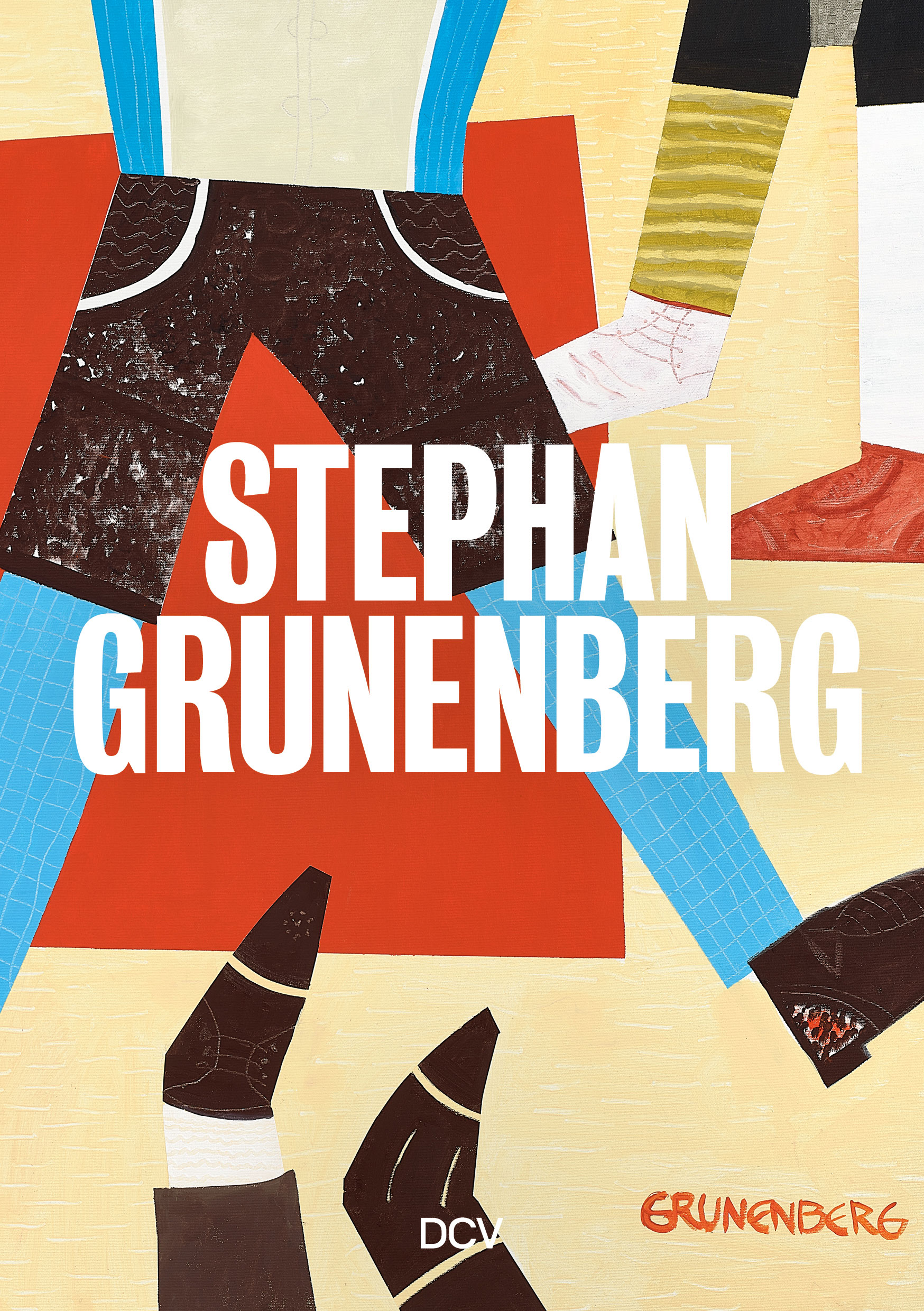
Stephan Grunenberg
10€ Add to cartStephan Grunenberg (b. 1954) paints peculiar portraits: not heads or sitting and reclining figures but seemingly independent feet, legs, trousers, socks or soles of shoes. These and other under-appreciated motives are playfully arranged in captivating compositions which take issue with our hierarchical habits while looking at art. “Leaving out the ‘civilized’, educated head and centering on neglected parts such as the legs, including the lower abdomen—which is either eroticized or made taboo—is the artist’s point”, writes Oliver Koerner von Gustorf in an essay that accompanies the images inside this small and attractive new book. The paintings reproduced in this volume were all exhibited in Grunenberg’s latest exhibition in 2024, which was titled tongue-in-cheek „Representatives Regional To Earth.”
-

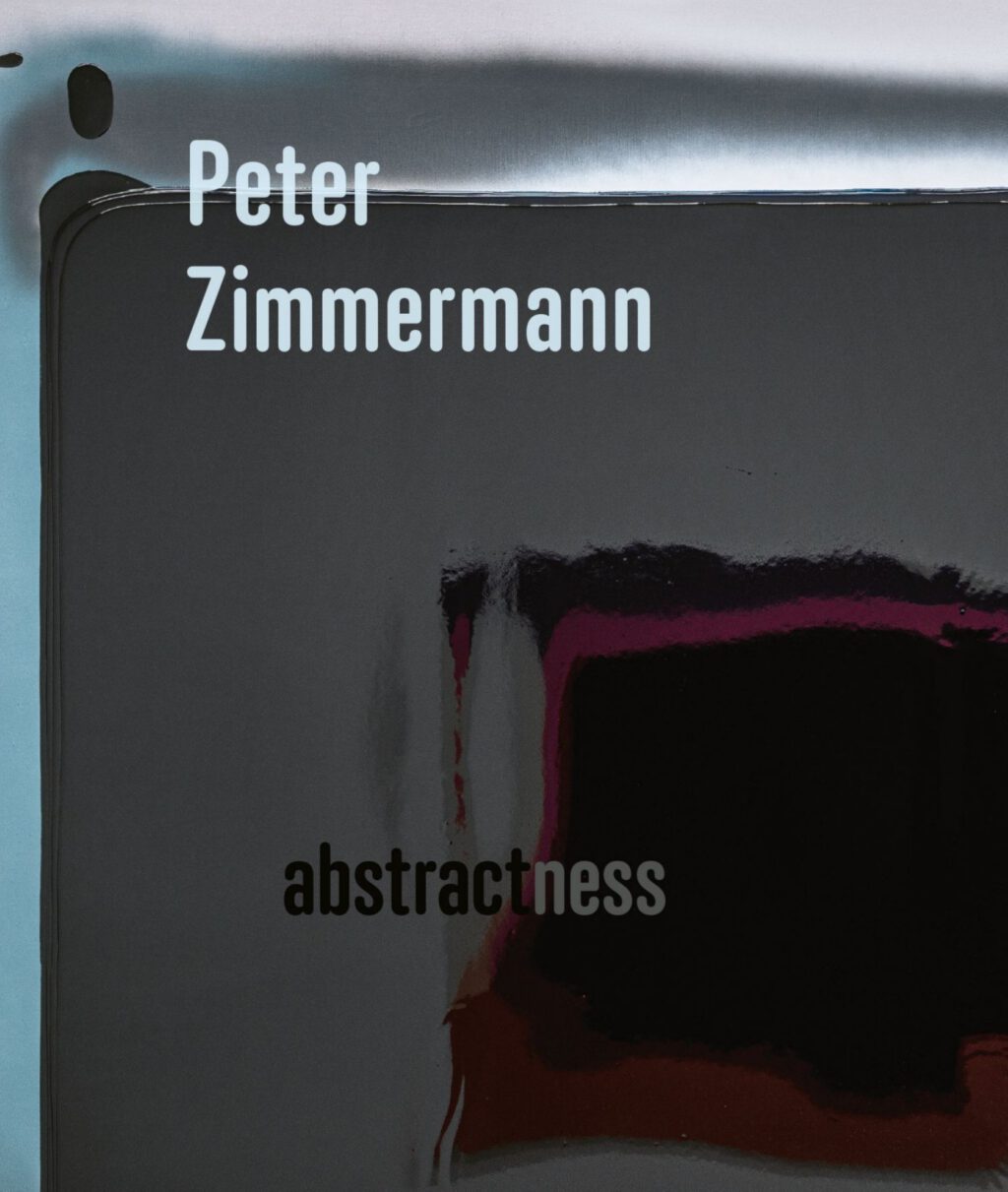
Peter Zimmermann
abstractness26€ Add to cartTreading the Limits of Originality
Peter Zimmermann (b. 1956, Freiburg; lives and works in Cologne) is one of the most important conceptual media artists. With his work, he consistently experiments with visual reproduction techniques and gained international recognition in the late 1980s with his Book Cover Paintings: motifs from book covers such as that of the Diercke Weltatlas or the Polyglott travel guides, which Zimmermann transfers to the canvas with oil and epoxy resins. The relationship between original and copy is the central theme of his work, with which he addresses the ambivalence of artistic and digital authorship. This monograph brings together early works and a selection of current productions.
Peter Zimmermann studied at the Staatliche Akademie der Bildenden Künste Stuttgart and was professor at the Kunsthochschule für Medien Köln, Cologne, from 2002 to 2007.
-

Ivonne Thein
TECHNO BODIES28€ Add to cartIn her multidisciplinary work, Ivonne Thein (born 1979 in Meiningen, lives and works in Berlin) addresses the current body images of a digital culture that is undergoing fundamental change due to extensive technologization. Today, new technologies are profoundly shaping both the physical body and its virtual representations in the visual culture of our time. Thein works with AI systems for her installations and places the question of the problem of imitating nature, and thus the relationship between art, technology and body, at the center of her artistic work. To do this, she combines digital techniques with sculptures that she creates by hand from silicone. Thein thereby evokes an intrusive closeness in the exhibition space, as the images generated with the AI no longer remain just a pure data set on the screen. The book presents works from 2020–2023.
-

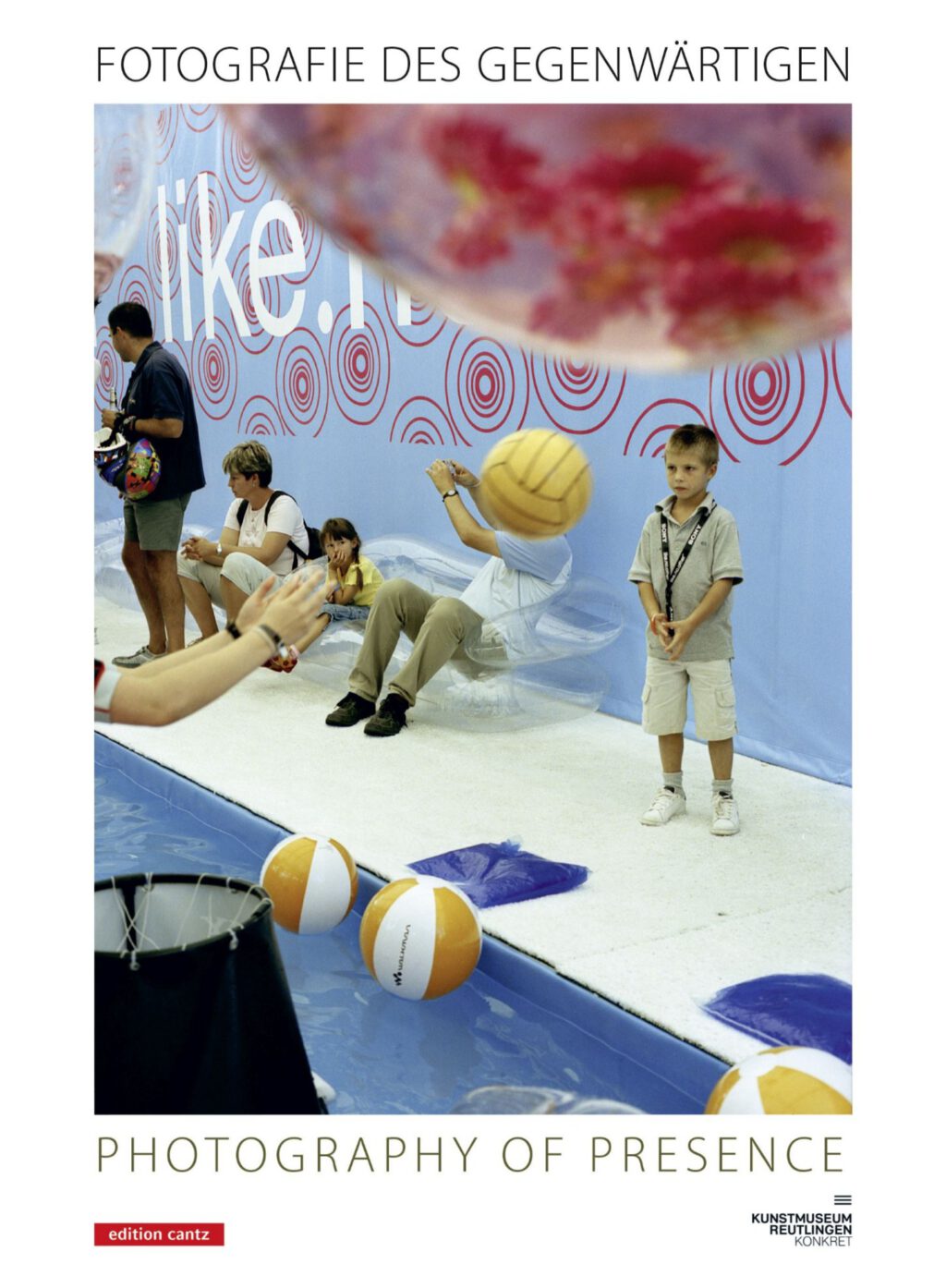
Photography of Presence
24€ Add to cartThe Importance of the Moment in Artistic Photography
Can photographs exist which represent concrete places? In view of the daily flood of images, this question seems superfluous at first. Only on closer inspection does the distance between the visual experience of places and the media images generated from them become apparent. “There is nothing in this world that does not have a decisive moment,” Henri Cartier-Bresson once stated. The present volume examines this decisive moment and explores the question of how artistic photography can describe the gap between spatial reality and photographic image and make the present at the time the photograph was taken visible.
With works by Viktoria Binschtok, Julian Faulhaber, Mareike Foecking, Stephanie Kiwitt, Nikolaus Koliusis, Barbara Probst, and Wolfgang Zurborn as well as texts by Holger Kube Ventura.
-

FREIGEISTER
FRAGMENTS OF AN ART SCENE IN LUXEMBOURG AND BEYOND35€ Add to cartThinking Otherwise—the Mudam in Luxembourg at Fifteen
A free spirit, Friedrich Nietzsche wrote, is someone who “thinks otherwise than is expected of him in consideration of his origin, surroundings, position, and office, or by reason of the prevailing contemporary views” (Human, All Too Human,1878). As the German philosopher saw it, one must seek to become “untimely” and remain a “stranger” to one’s time in order to question its premises. This view to states of alienation unites the positions of fourteen young Luxembourgish artists in Freigeister, the publication accompanying the celebrations on occasion of the fifteenth anniversary of the Musée d’Art Moderne Grand-Duc Jean.
In recent years, Luxembourg’s art scene has grappled in a wide variety of ways with the challenges that come with the small yet economically successful country’s ongoing transformation. Charting realities between the familiar and the unknown, the artists featured in Freigeister employ photography, painting, and installation as well as film, sculpture, printmaking, and performance art to paint a carefully considered but by no means dispassionate portrait of today’s society in an effort to build bridges between identity and the future.
The book presents works by Yann Annicchiarico, Laurianne Bixhain, Aline Bouvy, Marco Godinho, Sophie Jung, Catherine Lorent, Filip Markiewicz, Karolina Markiewicz & Pascal Piron, Claudia Passeri, Daniel Reuter, Nina Tomàs, Daniel Wagener, and Jeff Weber.
-

schneider+schumacher
39€ Add to cartA Review and Prospect of the Work of the Frankfurt‑based Architectural Office on the Occasion of its Thirtieth Anniversary
schneider+schumacher is an internationally operating team of architects with headquarters in Frankfurt am Main. On the occasion of its 30th anniversary they present a book in the shape of a red box, whose chapters “Beauty,” “Endurance,” “Curiosity,” “Land Art,” “Integrating,” “Transitions,” and “Made in Germany” cover issues and values that have determined their work since its founding. Renowned authors shed light on the respective concept and its significance for the history of schneider+schumacher, while the office’s works are presented in large-format illustrations – including the extension to the Städel Museum in Frankfurt, the Siegerland motorway church, and the new pavilion of the Frankfurt Book Fair. In architectural practice, it becomes clear how Till Schneider and Michael Schumacher and their team implement their thematic and theoretical orientation into their working methods, design approach, and understanding of architecture.
-

Marion Anna Simon
Gemaltes Kaddisch14€ Add to cartAn artist paints the Kaddish
In roughly 330 self-portraits, Marion Anna Simon (b. 1972, Bitburg; lives and works in Cologne) dares to undertake an unusual transcription of Jewish prayer as a sign of mourning. On January 7, 2017, one day after the death of her mother, Marion Anna Simon began work on her painted Kaddish. What initially began as a very personal process of grieving quickly developed into an artistic concept: Roughly 330 painted and drawn self-portraits were created within eleven months—in daily notes, with acrylic and watercolor, pencil and ballpoint pen, oil crayon and pastel, on paper and canvas, wallpaper and cardboard, in lined exercise books and cheap notepads. Marion Anna Simon’s cycle explores her own face as a place of mourning and self-affirmation, documenting an artistic ritual beyond the Jewish prohibition of images and patriarchal attributions to sons in the tradition of the sanctification prayer for the memory of the dead.
-

Spaces Embodied (ENGLISH)
Draiflessen Collection32€ Add to cartWe live in spaces that we shape in accordance with our own ideas. Our everyday lives leave traces in them that speak to our habits. Spaces promise shelter and belonging, but they can also instill a sense of constraint. We grow into the spaces we inhabit—and they in turn become expressions of our personalities. Conversely, spaces, depending on their architecture and location, inform our existence. RÄUME HAUTNAH gathers works of art that, rather than conceiving of the human sphere and the spatial domain as separate, comprehend them in their complex entanglements: in bodily experience, emotional dependency, or the instinctive need for protection. An essay by Olesja Nein, the project’s curator, offers an introduction to the exhibition and takes the reader on a tour, describing each artist’s space of activity and supplying helpful information. Philipp Zitzlsperger, meanwhile, zooms in on a key aspect of the art in the exhibition, the imprint as an artistic technique with a distinctive aura, and illuminates its origins and significance since the dawn of modernism.
Artists: Absalon, Shannon Bool, Heidi Bucher, Eileen Gray, Do Ho Suh, Mary Mattingly, Tracey Snelling, Francesca Woodman
- temporarily not available

Norbert Bisky
Im FreienRead moreThe beauty of male bodies, hedonism, bold colors—Norbert Bisky (b. Leipzig, 1970; lives and works in Berlin) is widely regarded as the most successful exponent of contemporary figurative painting in Germany. Now the artist has created a series of seventeen works on canvas and paper based on associations sparked by the oeuvre of the Expressionist Max Pechstein (1881–1955). The title “Im Freien” not only refers to the scenes they depict, which play out under the open sky; Bisky—who grew up in East Germany, which is to say, in what he calls “circumstances that were not free”—also grapples with the question of what liberty means to us today and what we do with it. The preoccupation with freedom led both painters to a quest for a personal utopia. Pechstein found it in the South Seas, where he had visited Palau, then a German colony, in 1914; the archipelago seemed paradisiacal to him, an idyll far removed from political and social reality. Bisky, by contrast, focuses less on the exotic landscape than on its residents, whom he stages as individual members of a globalized society.
Norbert Bisky enrolled at Humboldt-Universität in Berlin in 1994 to read German literature and art history but switched to the Berlin University of the Arts before year’s end; he studied painting with Georg Baselitz and entered Baselitz’s master class in 1999. He was a visiting professor at the Haute école d’art et de design, Geneva, in 2008–2010 and at the Braunschweig University of Art (HBK) in 2016–2018.
-

Susanne Rottenbacher
Radiationen40€ Add to cartIn expansive compositions in light, Susanne Rottenbacher (b. Göttingen, 1969; lives and works in Berlin) visualizes the fire of life in its timebound and fluid dimension. Plotinus called fire the “spiritual potency of beauty.” Pursuing a similar vision, Rottenbacher’s works orchestrate light as energy in space. To this end, the artist, who studied light and stage design in the United States and the United Kingdom, creates weightless luminous choreographies realized in colorful LED technology in combination with acrylic glass as a translucent vehicle of form. The results are installations in three dimensions that are deeply silent yet unfold in a magical ecstasy of light.
In Christian sacred architecture, light has been deployed and perceived since the Middle Ages as the aesthetic equivalent of the divine mind’s lucidity. The history of light art, by contrast, is much younger, going back to the years after the First World War. Having built her creative practice over the past fifteen years, Rottenbacher not only continues a century-old tradition of light art in Europe and the U.S.; her works also anticipate a future in which humanity will have room for feelings no less than for scientific knowledge.
- temporarily not available

Sonia Gomes
I Rise – I’m a Black Ocean, Leaping and WideRead more“My Work is Black, it is Feminine, and it is Marginal. I‘m a Rebel.”
The biomorphic sculptures of Sonia Gomes (b. 1948, Caetanópolis, Brazil; lives and works in Belo Horizonte, Brazil) have an eerie, almost magical presence. As the daughter of a black mother and a white textile industrialist, she grew up between two worlds. But the African culture and spirituality of her mother and grandmother, as well as an interest in rituals, processions, and myths, made a lasting impact on her life and her later work as an artist. As a teenager, Gomes began deconstructing textiles and items of clothing to create her own style and to make both items for practical use and craft objects. Having previously participated in the 56th Biennale di Venezia in 2015, Sonia Gomes now counts among the most influential artists in Brazil.
-

Erich Hörtnagl
Unforgettable – Unforgotten48€ Add to cartHow can a life be remembered—what remains, what vanishes?
In Unforgettable | Unforgotten, Erich Hörtnagl brings together photographic fragments that are more than just memories: they are symbols of lived time. Roland Barthes’ concept of the “punctum” experience—that instant when a detail in an image pierces the heart—provides a key to Hörtnagl’s photographic gaze. It is not the spectacular events but the quiet and incidental things that move us. The seemingly insignificant becomes a projection screen for memory, loss, and emotion. The focus is not on what is staged, but on what eludes creative control.
Accompanied by insightful writings by Alois Schöpf and Kurt Höretzeder, a quiet monologue emerges about happiness and missed opportunities, about what we receive—and what we give. A book that doesn’t provide answers but asks questions: What makes a life worth living? What remains unforgettable or unforgotten?
-
Feuer und Farbe
Gemälde und Grafiken von Walter Jacob35€ Add to cartWalter Jacob (1893-1964) was a painter whose oeuvre and life reflected the discontinuities of the twentieth century in condensed form. Contemplative natural scenes and the self-portraits were constants to which he hewed throughout his career; in stylistic terms, however, his oeuvre could hardly be more contradictory. Working first in the Impressionist, then in the Expressionist style, he eventually forged a form of expression tending toward abstraction, although he rejected modernist painting throughout his life. The Nazis considered his early work “degenerate,” which led him—a committed National Socialist and active member of the SA—to adapt not just his ideological convictions, but also his aesthetics to the new era: starting in the mid-1930s, he produced naturalistic depictions, sometimes suggestive of the New Objectivity, of “popular” motifs like landscapes, animals, soldiers, and more. Tellingly, though, the backs of some of his canvases are taken up by works that suggest the pleasure he took in experimenting with color and form. The same tension is palpable in the abstract landscapes of his late oeuvre. This catalog gathers works to retrace Jacob’s checkered career, complemented by (art) historical essays that embed his output in its context.
-
Brandon Lipchik
10€ Add to cartIn recent years, a Wagnerian night has settled over Brandon Lipchik’s (b. Erie, PA, 1993; lives and works in Brooklyn, NY, and Berlin) pictures. Moons rise; beasts and titans populate a homogeneous world of swimming pools, white picket fences, and neatly mowed lawns. Synthesized on a computer screen and then transferred to canvas by hand, the artist’s paintings revolve around the backyard as a mythically fraught scene of popular culture. The garishly lit multiperspectival pictures replicate characteristic shots from 1980s gay porn films and quote a clean American Apparel look. Lipchik subjects men’s bodies, spaces, plants, objects, and animals to digital deconstruction, obtaining rudimentary and abstract shapes. Staring at smartphones or gazing on water surfaces, his characters recall early digital animations and seem oddly hollow, like empty avatars waiting to be filled with new speculative content.
-

Liam Gillick
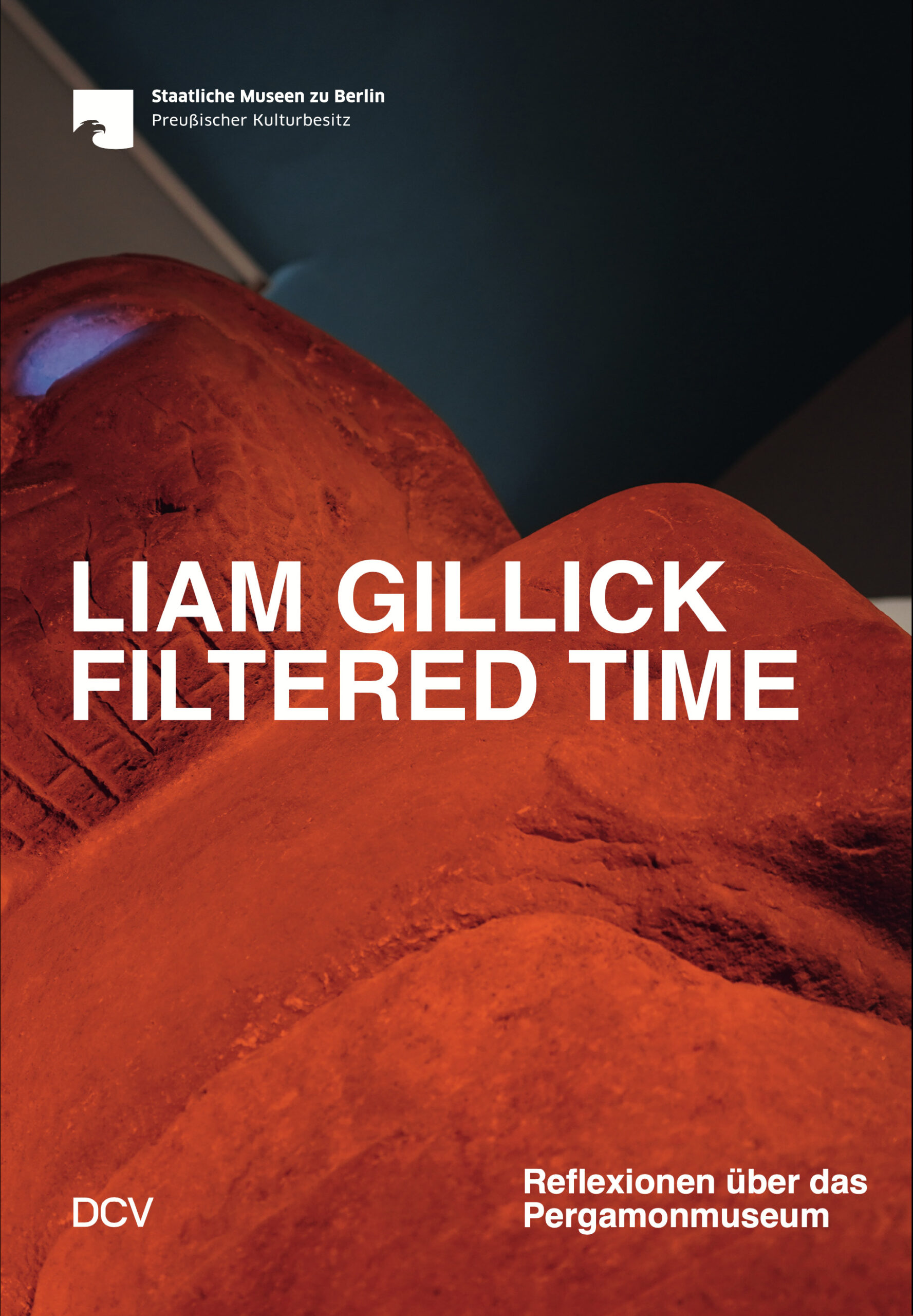
Filtered Time (GERMAN)28€ Add to cartThe sculptor and object artist Liam Gillick (b. Aylesbury, UK, 1964; lives and works in New York) has created an intervention titled Filtered Time for the historic galleries of the Pergamon Museum in Berlin. Projections of light and color and acoustic effects condense six thousand years of cultural history into an immersive spatial experience. Gillick initiates a conversation between the iconic Processional Way and the Ishtar Gate from Babylon, the monumental sculptures of Tell Halaf, and other exhibits, engendering new layers of meaning across all historical periods. The first joint project of the Vorderasiatisches Museum and the Hamburger Bahnhof—Nationalgalerie der Gegenwart makes for a singular visual and sensory experience. Designed by the artist himself, the publication not only documents the richly colorful production, but also provides insight into the eventful history of the museum, which is approaching its centennial.
Liam Gillick studied at the Hertfordshire College of Art in 1983–1984 and at Goldsmiths, University of London from 1984 until 1987. Gillick is a prolific published writer as well, producing essays, reviews, fiction, and theatrical scenarios.
-

Cudelice Brazelton IV
Mortal Surface35€ Add to cartCudelice Brazelton IV’s works are magnets. He uses them to glean what he finds in the urban landscape, in the street, in factories and studios: fabric, leather, metal, cardboard, and all sorts of implements. He arranges these materials and things atop one another and side by side in collages, assemblages, and sculptures, staging encounters also between the contexts in which they originated and what he calls their “undercurrents,” their subtexts. Such frames of reference, including that of the exhibition space, play a key role in his art, an aspect he will occasionally engage quite explicitly, creating site-specific works for some settings. This makes the space the context and a part of the piece, sometimes physically so, as when Brazelton works directly on the walls. The recent works gathered in this catalogue were displayed in a former railcar repair workshop. It is hard to imagine a more industrial, “metallic” environment. There, as between the covers of this catalogue, Brazelton’s works appear to their fullest advantage, becoming veritable magnets drawing the gaze.
-
Francesca Martí
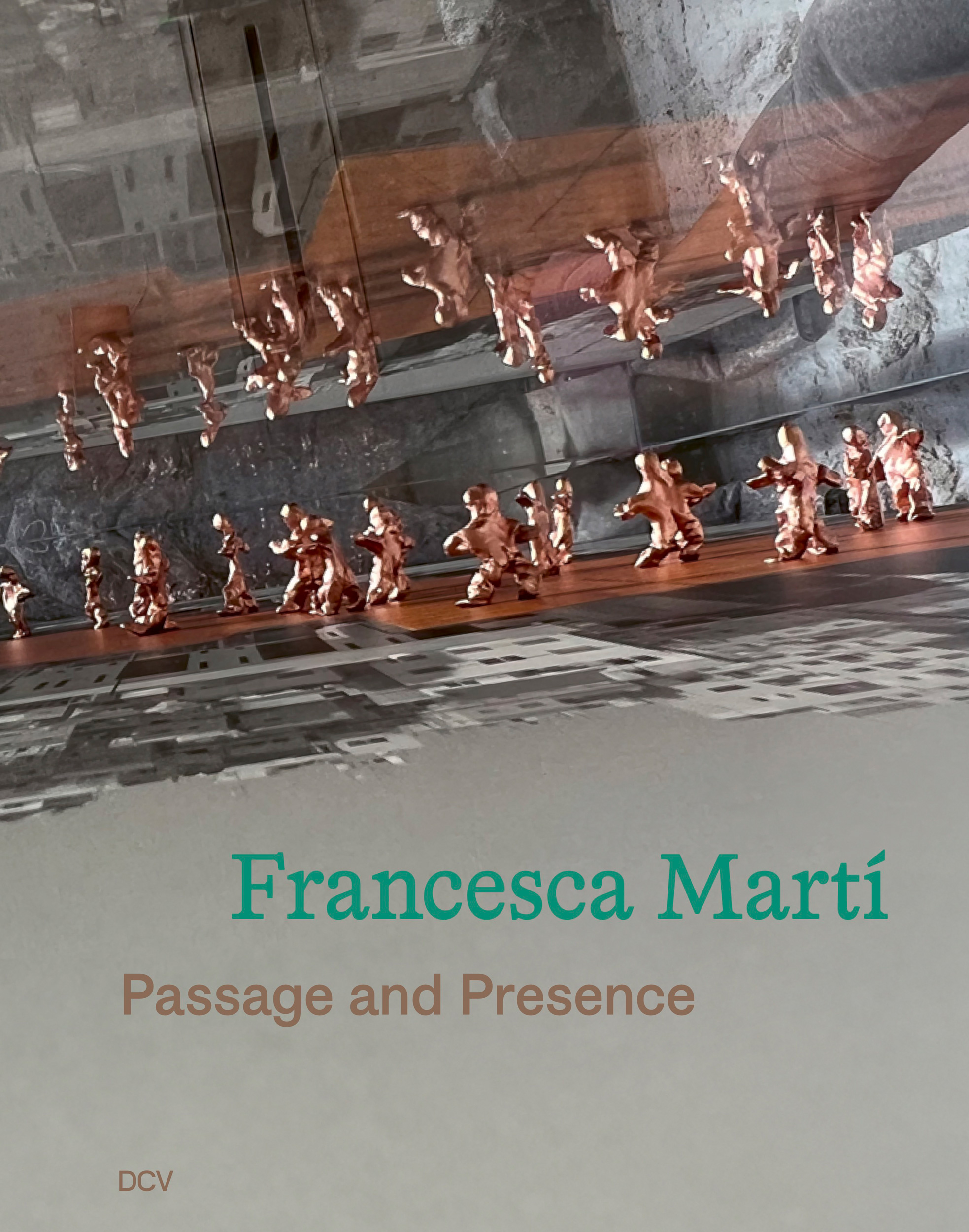
Passage and Presence42€ Add to cartFrancesca Martí’s (b. Sóller, Mallorca; lives in Mallorca and Stockholm) art revolves around themes like transformation, communication, and deformation, the power of self-determination, the instability of memory, and the effects of the chaos caused by migration and the migration prompted by chaos. In a collaborative process, a multitude of performers, dancers, and musicians help make her vision a reality. The book presents performances, sculptures, and visual works from Francesca Martí’s most important exhibitions in Spain, Germany, the Netherlands, Slovakia, and China. The portraits of the various series the artist has developed over the past ten years, including Cocoon, Planet of Fusions, Migrant Angel, Dreamers & Believers, Copper and Flux, are rounded out by her drawings, photographs, and making-of shots from her studio in Mallorca.
-

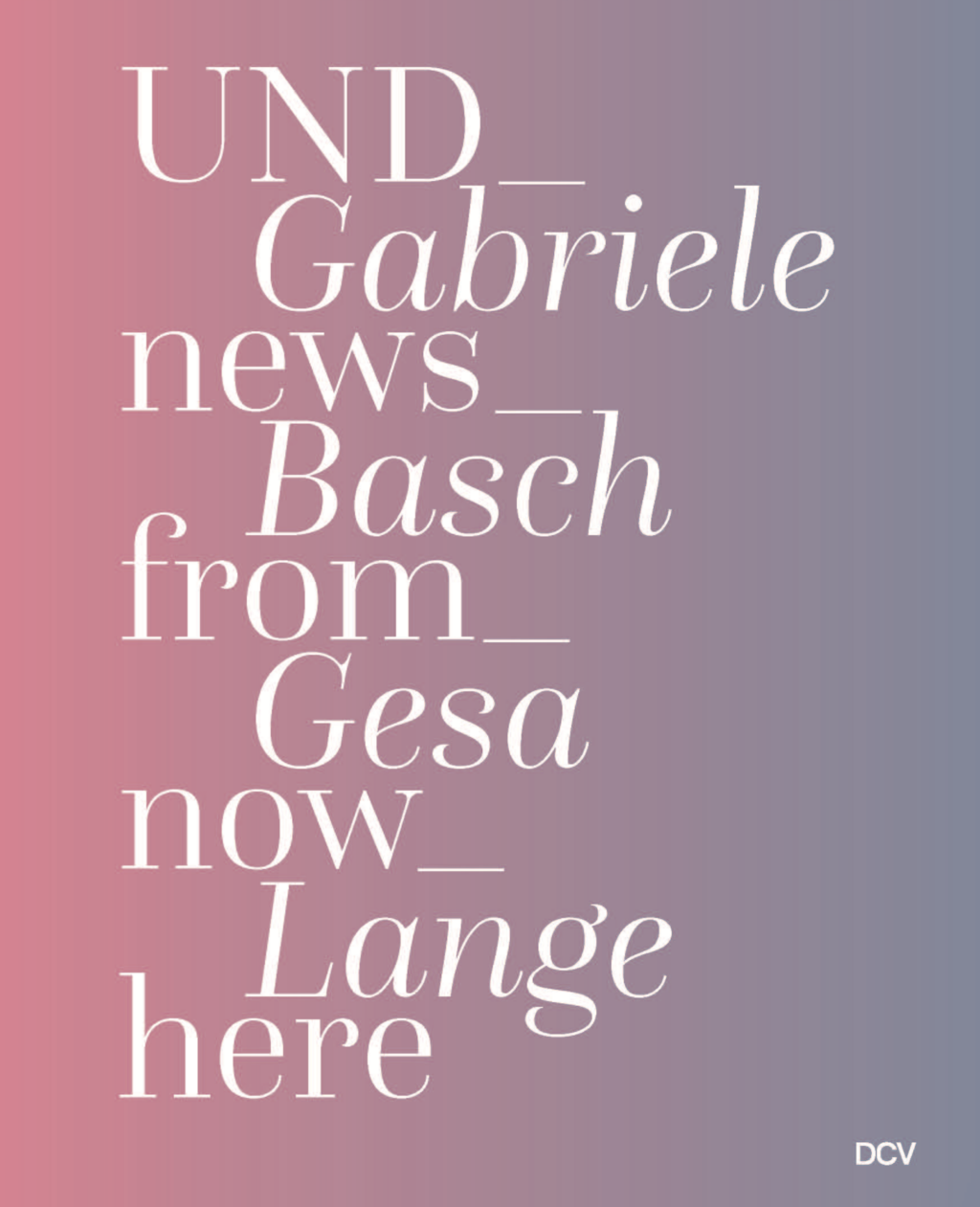
GABRIELE BASCH, GESA LANGE
UND_NEWS_FROM_NOW_HERE18€ Add to cartBeyond Painting
Gabriele Basch’s (b. 1964, Bad Homburg; lives and works in Berlin) cut-outs and Gesa Lange’s (b. 1972, Tongeren, Belgium; lives and works in Hamburg) drawings are meditations on construction and deconstruction as well as doubts and how to overcome them. Both artists expand the range of painting: Basch, with incisions into the medium and a creative handling of the tinged shadows that transform the painted panel into a wall-mounted object; Lange, by embroidering her canvases with colorful threads that open up the pictorial space on all sides. The book presents works by both artists, initiating an animated and dynamic dialogue between their nonrepresentational visual idioms. Gabriele Basch is professor of painting at the Hochschule für Angewandte Wissenschaften Hamburg. Gesa Lange is professor of graphic art at the Hochschule für Angewandte Wissenschaften Hamburg. She has received the Kunsthalle Rostock Prize and other awards.
- Release February 2026
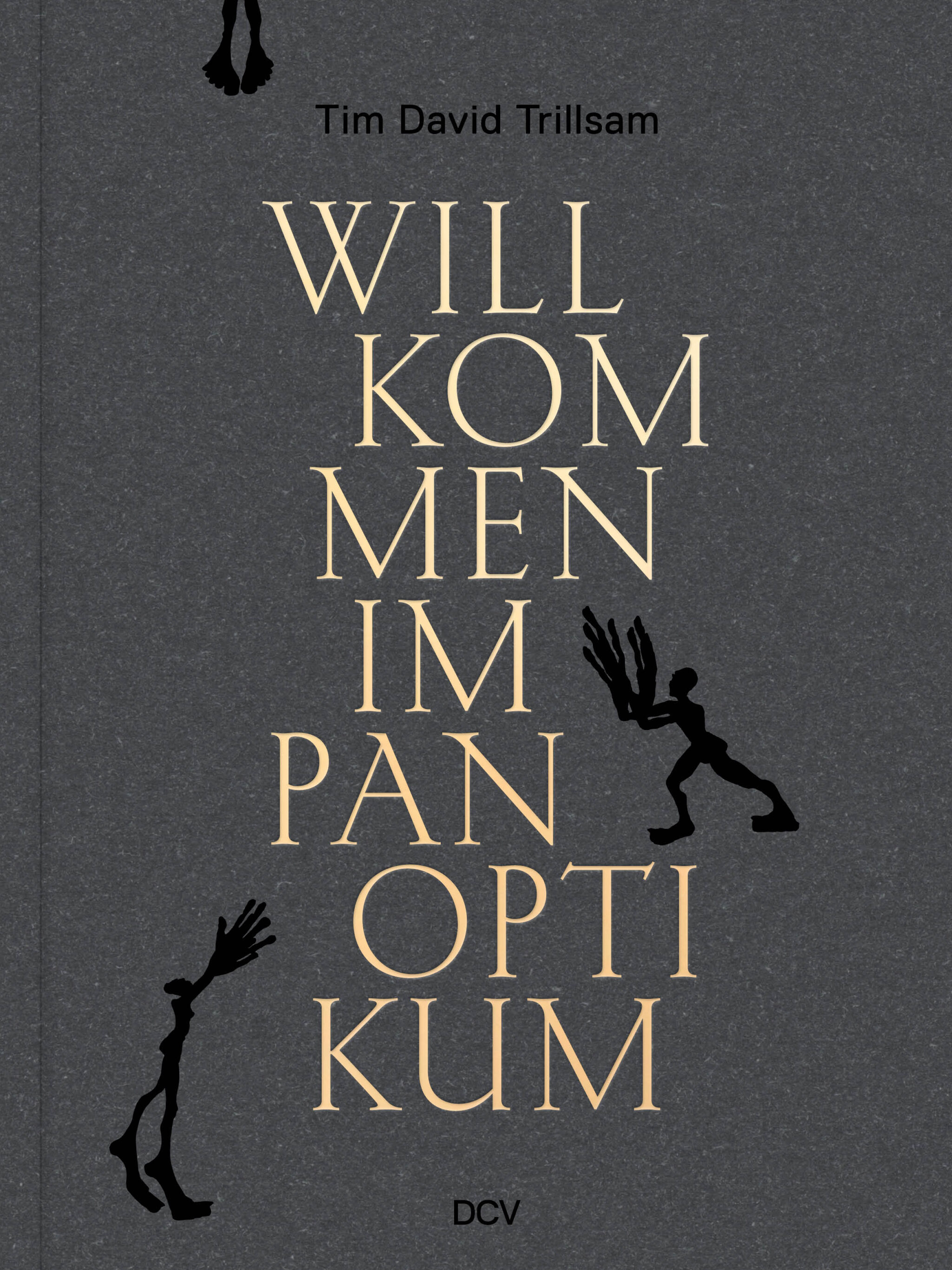
Tim David Trillsam
Willkommen im Panoptikum38€ Add to cartWith his idiosyncratic figurative bronze sculptures Tim David Trillsam (born 1985 in the Swabian Alb) has hit a nerve. The artist’s “self memorials” ask the viewer to remember the transience and illusion of this very self. Although Trillsam employs a loaded material that evokes many great sculptors before him, his own sculptures resist the past. His figures are tangibly protagonist of the present and they provoke with their exaggerated sensuality, twisted bodies, and oversized hands and feet. “The oversizing is programmatic. As is the skeptical approach to the human species. Trillsam proceeds as a thoughtful questioner with doubt yet also irritation,” writes Dorothee Baer-Bogenschütze. Her in-depth art-historical analysis is part of this forthcoming book about Trillsam’s oeuvre since 2012.